Unlock your full potential by mastering the most common Instrumentation and Data Acquisition interview questions. This blog offers a deep dive into the critical topics, ensuring you’re not only prepared to answer but to excel. With these insights, you’ll approach your interview with clarity and confidence.
Questions Asked in Instrumentation and Data Acquisition Interview
Q 1. Explain the difference between analog and digital data acquisition.
Analog data acquisition deals with continuous signals, like the smoothly varying voltage representing a temperature. Think of it like a smoothly flowing river. Digital data acquisition, on the other hand, converts these continuous signals into discrete numerical values, representing the river’s level at specific points in time. It’s like taking snapshots of the river’s level at regular intervals. The key difference lies in the nature of the data: analog is continuous, while digital is discrete. This impacts how we process and store the data; analog data requires specialized processing, while digital data is easily processed and stored by computers.
For instance, a thermocouple measuring temperature produces an analog voltage proportional to temperature. An analog-to-digital converter (ADC) is needed to turn this continuous voltage into a digital number for a computer to understand. Digital data is easier to store, transmit, and process using digital signal processing techniques.
Q 2. Describe various types of sensors and their applications.
Sensors are the fundamental building blocks of any data acquisition system, translating physical phenomena into measurable signals. There’s a vast array of sensors, each tailored to specific applications:
- Temperature Sensors: Thermocouples (for high temperatures), RTDs (Resistance Temperature Detectors, for precise measurements), thermistors (for cost-effective applications).
- Pressure Sensors: Strain gauge-based pressure sensors, piezoelectric pressure sensors, capacitive pressure sensors; used in industrial process control, weather monitoring, and medical devices.
- Force Sensors: Load cells, strain gauges; essential for weighing scales, robotics, and structural health monitoring.
- Flow Sensors: Turbine flow meters, ultrasonic flow meters, orifice plates; applied in pipelines, HVAC systems, and biomedical engineering.
- Light Sensors: Photodiodes, phototransistors, photoresistors; widely used in cameras, automation, and environmental monitoring.
- Accelerometers: Measure acceleration, commonly used in smartphones, automotive safety systems, and inertial navigation systems.
- Gyroscopes: Measure angular velocity, often paired with accelerometers in inertial measurement units (IMUs) for motion tracking.
The choice of sensor depends heavily on factors like the desired accuracy, the range of the measured quantity, the environment, and the cost.
Q 3. What are the common signal conditioning techniques used in instrumentation?
Signal conditioning is crucial because raw sensor signals are often weak, noisy, or incompatible with the data acquisition system. Common techniques include:
- Amplification: Boosting the signal strength to improve accuracy and reduce the impact of noise. Operational amplifiers (op-amps) are frequently used.
- Filtering: Removing unwanted noise components through low-pass, high-pass, band-pass, or notch filters. Digital filters are commonly implemented using software.
- Linearization: Converting a non-linear sensor output into a linear signal for easier data processing. This can involve using lookup tables or mathematical transformations.
- Isolation: Preventing unwanted electrical interference from affecting the signal, often using isolation amplifiers.
- Shielding: Protecting the sensor and signal wires from electromagnetic interference using conductive shielding.
For example, a small signal from a strain gauge might be amplified to a level suitable for an ADC, and a low-pass filter can remove high-frequency noise from the amplified signal. Proper signal conditioning ensures the accuracy and reliability of the acquired data.
Q 4. Explain the concept of signal-to-noise ratio (SNR) and its importance.
Signal-to-noise ratio (SNR) is a crucial metric that represents the strength of the desired signal relative to the unwanted noise. It’s usually expressed in decibels (dB) and calculated as 20 * log10(Signal amplitude / Noise amplitude). A higher SNR indicates a cleaner signal with less interference. A low SNR can lead to inaccurate measurements and difficulty in extracting meaningful information. Think of it like listening to a radio; a high SNR means clear reception, while a low SNR results in static and muffled audio.
In data acquisition, a high SNR is essential for obtaining reliable and accurate measurements. Low SNR can lead to erroneous conclusions and undermine the validity of any analysis performed on the data. For instance, in medical imaging, a high SNR is vital for accurate diagnosis. In industrial processes, a low SNR can lead to incorrect control actions, potentially resulting in safety hazards or production losses.
Q 5. How do you handle noise in data acquisition systems?
Noise is inevitable in data acquisition systems, originating from various sources such as electromagnetic interference, thermal noise, and sensor noise. Several techniques can be employed to mitigate noise:
- Proper Shielding and Grounding: Reduce electromagnetic interference by shielding cables and ensuring proper grounding.
- Filtering: Employing analog or digital filters to remove frequency components associated with the noise.
- Averaging: Repeatedly sampling and averaging the data to reduce the impact of random noise. This is particularly useful for reducing high-frequency noise.
- Signal Conditioning: Using techniques like amplification and isolation to improve the signal-to-noise ratio.
- Calibration: Regular calibration of the sensor and data acquisition system helps compensate for systematic errors and drift.
Choosing appropriate sensors and careful system design are critical for minimizing noise from the outset.
Q 6. What are the different types of data acquisition systems?
Data acquisition systems vary greatly depending on the application and complexity. Some common types include:
- Standalone Data Loggers: Compact devices capable of collecting data from various sensors and storing it internally. They’re ideal for simple applications with limited data volume.
- PC-Based Data Acquisition Systems: Utilize a computer as the central processing unit, offering greater flexibility and processing power. They’re suitable for more complex applications with extensive data analysis needs.
- Embedded Systems: Integrate the data acquisition system into a microcontroller or other embedded system, commonly found in IoT devices and industrial control applications.
- Modular Data Acquisition Systems: Allow for customization and expansion by incorporating different modules for various sensor types and signal conditioning needs.
- Wireless Data Acquisition Systems: Utilize wireless communication to transmit data from remote sensors to a central location, useful for environmental monitoring or applications with difficult cabling.
The selection of a specific system depends on the application requirements such as data rate, accuracy, number of channels, and budget.
Q 7. Explain the role of ADCs and DACs in data acquisition.
Analog-to-digital converters (ADCs) and digital-to-analog converters (DACs) are essential components in most data acquisition systems. ADCs convert continuous analog signals from sensors into discrete digital values that can be processed by a computer. DACs perform the reverse operation, converting digital data into analog signals for controlling actuators or displaying results. They form a bridge between the analog world of sensors and actuators and the digital world of computers.
Imagine a robotic arm controlled by a computer: sensors provide analog position feedback, which is converted to digital data by the ADC for the computer to process. The computer then sends control signals in digital format, which are converted to analog signals by the DAC to drive the motors and move the arm. The accuracy and speed of ADCs and DACs significantly impact the overall performance of the data acquisition system.
Q 8. Discuss different sampling techniques and their implications.
Sampling techniques determine how frequently we capture data from a signal. The choice significantly impacts the accuracy and fidelity of the acquired data. Incorrect sampling can lead to aliasing, where high-frequency components are misrepresented as lower frequencies, distorting the original signal.
- Periodic Sampling: Data is collected at regular intervals. This is the most common method, easy to implement, and works well for stationary signals (signals that don’t change rapidly). Think of taking your blood pressure every hour – periodic sampling. However, if something significant changes between readings, you might miss it.
- Aperiodic Sampling: Data is collected at irregular intervals. This is useful when dealing with dynamic systems or events where you need to capture data around a specific trigger, like capturing data around a sudden pressure surge in a pipeline.
- Random Sampling: Data points are selected randomly within a time frame. This is less common in DAQ but finds application in statistical analysis and situations where a truly representative sample is crucial, despite the potential inefficiency.
- Multi-rate Sampling: This combines different sampling rates for different signals. If you have a slow-changing temperature signal and a rapidly changing pressure signal, you might sample temperature less frequently than pressure. It optimizes efficiency and storage.
The Nyquist-Shannon sampling theorem is fundamental: to accurately reconstruct a signal, the sampling frequency must be at least twice the highest frequency component present in the signal. Failing to meet this requirement results in aliasing.
For instance, consider monitoring vibrations. If the machine has a resonant frequency of 1kHz, we need a sampling rate above 2kHz to avoid misinterpreting the vibration frequencies.
Q 9. What are the advantages and disadvantages of different communication protocols (e.g., RS-232, RS-485, Ethernet, Modbus)?
Communication protocols dictate how data is transmitted between instruments and the data acquisition system. Each offers unique advantages and disadvantages.
- RS-232: Simple, low-cost, short-range serial communication. Good for point-to-point connections, but limited range and susceptible to noise.
- RS-485: Differential signaling allows for longer distances and greater noise immunity compared to RS-232. Suitable for multi-point connections, making it ideal for industrial environments. Think connecting multiple sensors along a single cable.
- Ethernet: High-speed, long-range communication based on TCP/IP. Excellent for large networks and high data throughput but requires more complex setup and higher costs.
- Modbus: Widely used industrial protocol for communication between programmable logic controllers (PLCs) and other devices. Simple, reliable, and supports various communication mediums (RS-485 is common).
The choice depends on factors like distance, speed, noise level, cost, and complexity. A simple laboratory setup might use RS-232, while a large industrial plant would likely use Ethernet or Modbus over RS-485 for robustness and scalability.
Q 10. How do you ensure data integrity in a data acquisition system?
Data integrity is paramount in DAQ. It refers to the accuracy, completeness, and consistency of the acquired data. Ensuring data integrity involves several strategies:
- Redundancy: Use multiple sensors measuring the same parameter. Discrepancies can reveal errors.
- Error Detection and Correction Codes: Implement techniques like parity checks or CRC (Cyclic Redundancy Check) to detect and potentially correct data transmission errors.
- Data Logging and Timestamping: Record data with accurate timestamps, providing context and facilitating analysis. This is critical for tracking changes over time.
- Calibration and Verification: Regularly calibrate sensors and verify the system’s accuracy against known standards.
- Data Validation: Implement software checks to identify outliers or inconsistencies. For example, setting reasonable bounds based on the expected range of values.
- Secure Storage: Protect the data from unauthorized access or modification using appropriate security measures, such as encryption and access control.
Imagine monitoring a nuclear reactor. A single bit error in temperature data could have catastrophic consequences. Robust data integrity measures are absolutely crucial.
Q 11. Describe your experience with different data acquisition software packages.
My experience includes working with several data acquisition software packages, including LabVIEW, DASYLab, and MATLAB’s data acquisition toolbox. Each offers a distinct set of features and strengths.
LabVIEW is particularly strong in graphical programming, ideal for creating custom DAQ applications with interactive visualizations. Its extensive libraries simplify integrating diverse hardware. I used it to develop a real-time monitoring system for a wind turbine, visualizing power output and environmental conditions.
DASYLab is a user-friendly package with a straightforward drag-and-drop interface suitable for rapid prototyping and less complex projects. I utilized it for a project involving vibration analysis in a manufacturing setting, quickly configuring channels and analyzing the data.
MATLAB‘s data acquisition toolbox provides powerful data analysis capabilities. It’s perfect for more in-depth signal processing and statistical analysis. I used it for extensive data analysis in a research project involving acoustic emissions from materials under stress.
Selecting the appropriate software depends on the project’s complexity, available hardware, and desired analysis techniques.
Q 12. Explain the concept of calibration and its importance in instrumentation.
Calibration is the process of comparing a measuring instrument’s output to a known standard to determine its accuracy. It’s crucial for ensuring reliable and trustworthy measurements. An uncalibrated instrument can lead to significant errors, potentially causing safety hazards or faulty decisions.
Calibration involves adjusting the instrument’s output to match the standard. This might involve making adjustments to the instrument’s internal settings or using a calibration curve to compensate for deviations. The frequency of calibration depends on the instrument’s stability and the required accuracy. Some instruments require daily calibration while others might be calibrated annually.
Consider a thermometer. If you haven’t calibrated it, readings might be off, affecting everything from medical diagnoses to industrial processes. Regular calibration is essential for confidence in your measurements.
Q 13. How do you troubleshoot a malfunctioning data acquisition system?
Troubleshooting a malfunctioning DAQ system requires a systematic approach:
- Visual Inspection: Begin with a visual check of all connections, wiring, and hardware for obvious issues. Loose connections are a common culprit.
- Signal Tracing: Using appropriate test equipment (multimeters, oscilloscopes), trace the signal path from sensor to DAQ to identify signal degradation or noise.
- Software Checks: Verify that the software is correctly configured and communicating with the hardware. Check for error messages or warnings.
- Hardware Checks: Test the individual components of the system (sensors, cables, DAQ device) to isolate the faulty component.
- Calibration Verification: Check the calibration status of sensors and the DAQ system itself. An out-of-calibration sensor can lead to inaccurate measurements.
- Documentation Review: Consult system documentation, schematics, and operational manuals for troubleshooting guidance.
For example, if you’re getting noisy data from a temperature sensor, you might check the sensor’s wiring for interference, verify its calibration, or investigate potential electromagnetic interference (EMI) near the sensor.
Q 14. What are the different types of transducers used in measurement systems?
Transducers are devices that convert one form of energy into another, typically converting a physical quantity into an electrical signal that can be measured and processed by the DAQ system. There’s a wide variety:
- Temperature Sensors: Thermocouples, RTDs (Resistance Temperature Detectors), thermistors. These convert temperature variations into changes in voltage or resistance.
- Pressure Sensors: Piezoresistive, capacitive, piezoelectric sensors. They convert pressure into an electrical signal.
- Strain Gauges: Measure strain (deformation) in materials by changes in resistance. Used in load cells and stress analysis.
- Accelerometers: Measure acceleration using piezoelectric or capacitive effects.
- Flow Sensors: Various types including ultrasonic, turbine, and vortex shedding flow meters, which measure flow rate.
- Optical Sensors: Photodiodes, phototransistors, used for light detection.
- Proximity Sensors: Detect the presence of an object without physical contact (e.g., inductive, capacitive, ultrasonic).
The choice of transducer depends on the specific physical quantity to be measured, its range, accuracy requirements, and environmental conditions. For instance, a thermocouple is preferred for high-temperature applications while an RTD might be better for precision temperature measurement.
Q 15. Describe your experience with different types of programmable logic controllers (PLCs).
My experience with PLCs spans various brands and applications, including Allen-Bradley (primarily Rockwell Automation’s PLCs like the CompactLogix and ControlLogix), Siemens (S7-1200 and S7-1500), and Schneider Electric (Modicon M340). I’ve worked extensively with their programming languages, primarily ladder logic (LD) and structured text (ST). For example, in one project involving a high-speed bottling line, I used Allen-Bradley’s ControlLogix PLC to manage complex sequencing, motion control, and data logging for production monitoring. The ControlLogix’s robust capabilities handled the high-speed, real-time demands of the line, significantly improving efficiency. In another project with a water treatment plant, I used Siemens S7-1200 PLCs for process control, leveraging their integrated communication capabilities for seamless data integration with the SCADA system. My familiarity extends to PLC hardware configuration, including I/O module selection, network communication setup (Ethernet/IP, Profinet), and troubleshooting hardware and software issues. I’m comfortable working with both legacy and modern PLC systems.
Career Expert Tips:
- Ace those interviews! Prepare effectively by reviewing the Top 50 Most Common Interview Questions on ResumeGemini.
- Navigate your job search with confidence! Explore a wide range of Career Tips on ResumeGemini. Learn about common challenges and recommendations to overcome them.
- Craft the perfect resume! Master the Art of Resume Writing with ResumeGemini’s guide. Showcase your unique qualifications and achievements effectively.
- Don’t miss out on holiday savings! Build your dream resume with ResumeGemini’s ATS optimized templates.
Q 16. Explain the concept of a SCADA system and its components.
A SCADA (Supervisory Control and Data Acquisition) system is a centralized system for monitoring and controlling industrial processes. Imagine it as the central nervous system of a factory or power plant. Its key components include:
- Human-Machine Interface (HMI): This is the user interface, typically a computer screen, presenting real-time data and allowing operators to interact with the process.
- Supervisory Software: This software collects data from PLCs and other devices, performs calculations, and triggers alarms based on pre-defined parameters. Think of this as the ‘brain’ interpreting the data from the field devices.
- RTUs (Remote Terminal Units) and PLCs: These are the field devices that collect data from sensors and actuators in the process. They act as the ‘eyes and ears’ of the system. They’re responsible for gathering data from the real world and acting on commands from the supervisory system.
- Communication Network: This network connects all the components, allowing for efficient data transfer. This could include Ethernet, Modbus, or other industrial communication protocols.
- Databases: These store historical data for analysis and reporting purposes. This data is crucial for trend analysis, predictive maintenance and process optimization.
For example, in a water distribution network, the SCADA system might monitor water levels in reservoirs, pressure in pipes, and flow rates. If a pressure drops unexpectedly, the system would trigger an alarm, alerting operators to a potential leak. They can then use the HMI to identify the location of the problem and take corrective action.
Q 17. How do you design a data acquisition system for a specific application?
Designing a data acquisition system involves a systematic approach:
- Define Requirements: Clearly identify what data needs to be collected (temperature, pressure, flow rate, etc.), the accuracy required, and the sampling rate. For instance, a high-speed data acquisition system for a wind turbine might require a much faster sampling rate than a system monitoring the temperature in a warehouse.
- Select Sensors and Transducers: Choose appropriate sensors to measure the required parameters, considering factors like accuracy, range, and environmental conditions. The selection will depend on the specific parameters needing measurement, such as thermocouple for temperature, strain gauge for strain and pressure transducer for pressure.
- Choose Data Acquisition Hardware: Select a data acquisition device (DAQ) based on the number of channels, sampling rate, resolution, and required interfaces (e.g., analog, digital, communication protocols). This might involve selecting a specific DAQ card for a computer or a standalone data logger.
- Design the Data Acquisition Software: Develop software to control the DAQ, process the data, and store it. This often involves writing code in languages like LabVIEW, Python, or C++. This software will often include functions for data filtering, signal conditioning and error handling.
- Develop Data Storage and Processing Strategies: Determine how the data will be stored (e.g., on a local computer, a network server, or a cloud-based storage solution) and how it will be processed and analyzed. This might involve using databases or specialized data analysis software.
- Testing and Calibration: Rigorously test and calibrate the entire system to ensure accuracy and reliability. This is essential for the dependability and accuracy of any readings.
For instance, in designing a system to monitor the structural integrity of a bridge, I’d use strain gauges as sensors, a high-resolution DAQ with multiple channels to accommodate numerous sensors, and robust software to handle the large volume of data and trigger alarms if strain levels exceed predefined thresholds.
Q 18. What are the safety considerations in instrumentation and data acquisition?
Safety is paramount in instrumentation and data acquisition. Considerations include:
- Intrinsic Safety: This involves designing systems to prevent ignition of flammable materials in hazardous locations. Special circuits and devices are used to limit energy levels.
- Electrical Safety: Proper grounding, shielding, and isolation techniques are essential to prevent electrical shocks and equipment damage. This requires following relevant electrical codes and standards.
- Environmental Protection: Equipment should be chosen and installed to withstand harsh environmental conditions (temperature, humidity, dust, etc.) and avoid any potential hazards to the environment.
- Emergency Shutdown Systems (ESD): These systems are designed to safely shut down processes in case of emergencies. These systems are designed for critical safety functions and require redundancy to ensure reliability and safety.
- Data Integrity and Security: Robust data logging, backup, and security measures prevent data loss and ensure the reliability of the data collected. This includes protection against unauthorized access and cyber threats.
For example, in an oil refinery, intrinsic safety is critical to prevent explosions. All instrumentation must be certified for hazardous locations, and regular safety audits are essential. In addition, data integrity is crucial to ensure the reliability of measurements that inform operational decisions.
Q 19. Explain the concept of real-time data acquisition.
Real-time data acquisition means acquiring and processing data with minimal delay, allowing for immediate responses to changing conditions. Think of it like watching a live sporting event versus watching a recording; in real-time, you react instantly to what’s happening.
Key aspects include:
- High Sampling Rates: The system needs to sample data quickly enough to capture relevant changes. The sampling rate is determined by the dynamics of the process.
- Low Latency: The time delay between data acquisition and processing should be minimized.
- Deterministic Processing: The system should guarantee a consistent response time to ensure timely action.
- Real-time Operating Systems (RTOS): These specialized operating systems are often used to guarantee predictable timing and task scheduling. This is especially crucial in control applications where timing is critical.
A classic example is a flight control system where sensor data (altitude, speed, orientation) needs to be processed in real-time to make adjustments and maintain stability. Delays can have catastrophic consequences.
Q 20. Discuss your experience with data logging and analysis.
My experience with data logging and analysis involves utilizing various software tools and techniques. I’m proficient in using data acquisition software such as LabVIEW and DASYLab to configure data logging parameters, collect data from various sources, and perform initial data processing. I’ve extensively used tools like MATLAB and Python (with libraries like Pandas and NumPy) for advanced data analysis, including signal processing, statistical analysis, and visualization. For example, in a recent project involving vibration analysis of a rotating machine, I logged vibration data using accelerometers, then used MATLAB to perform Fast Fourier Transforms (FFTs) to identify specific frequencies associated with potential bearing faults. This enabled predictive maintenance, preventing costly downtime.
I have experience using various data formats, including CSV, binary files, and specialized data formats used by specific DAQ devices. The choice of data format often depends on data volume, structure and subsequent analysis requirements.
Q 21. How do you handle large volumes of data acquired from various sources?
Handling large volumes of data from multiple sources requires a strategic approach:
- Data Compression: Reducing the size of the data using compression algorithms can significantly reduce storage space and improve processing speed. The choice of compression algorithm depends on data type and acceptable loss of information.
- Data Filtering and Preprocessing: Removing irrelevant or redundant data early in the process reduces the volume of data that needs to be processed and stored. The filtering will depend on the type of data and the subsequent analysis.
- Database Management Systems (DBMS): Using a robust database such as SQL Server or MySQL provides efficient storage and retrieval of large datasets. This is especially important for long-term data storage and retrieval for analysis.
- Cloud Computing: Cloud-based storage and processing solutions can provide scalability and cost-effectiveness when dealing with massive datasets. This often includes the use of cloud platforms such as AWS, Azure, or Google Cloud.
- Distributed Processing: Distributing the processing workload across multiple computers can reduce processing time for computationally intensive tasks. This would typically involve the use of tools and technologies for parallel processing and distributed computing.
For example, in a smart grid application, enormous amounts of data are generated from various sources (smart meters, power transformers, etc.). Cloud-based solutions are often used for storage and processing, enabling real-time monitoring and analysis of the entire grid.
Q 22. Explain the importance of grounding and shielding in instrumentation.
Grounding and shielding are crucial in instrumentation for minimizing noise and ensuring accurate measurements. Think of it like this: your instruments are trying to listen to a very faint signal, but there’s a lot of unwanted static (noise) around. Grounding and shielding help to reduce that static.
Grounding connects the instrument’s metal chassis and other conductive parts to the earth, providing a common reference potential. This prevents voltage differences between the instrument and the surrounding environment from influencing the measurement. Imagine a lightning storm – grounding protects your equipment from surges. A faulty ground can lead to inaccurate readings, equipment damage, and even safety hazards.
Shielding involves enclosing signal wires or components in a conductive material, like metal foil or braid, to prevent electromagnetic interference (EMI) and radio frequency interference (RFI) from affecting the signal. This is like wrapping a microphone in a soundproof box to minimize background noise. The shield acts as a Faraday cage, preventing external electromagnetic fields from inducing unwanted currents in the signal wires.
In practice, I always specify both grounding and shielding in my instrumentation designs. For instance, in a high-voltage application, we might use multiple layers of shielding and a robust grounding system to ensure the safety of personnel and the accuracy of the measurements.
Q 23. What are the different types of filters used in signal processing?
Filters are essential for removing unwanted frequencies or noise from signals. They’re like sieves, separating the desired information from the undesirable components.
- Low-pass filters: Allow frequencies below a cutoff frequency to pass through while attenuating higher frequencies. Think of it as a filter that lets only the bass notes of a song pass through.
- High-pass filters: Allow frequencies above a cutoff frequency to pass through while attenuating lower frequencies. This is like a filter that lets only the treble notes pass through.
- Band-pass filters: Allow only a specific range of frequencies to pass through, blocking both lower and higher frequencies. This is like isolating a specific instrument’s sound from a musical piece.
- Band-stop filters (notch filters): Attenuate frequencies within a specific range while allowing others to pass through. This is useful to remove power line noise (60Hz or 50Hz) from the signal.
- Butterworth, Chebyshev, Bessel filters: These are filter types categorized by their frequency response characteristics (e.g., steepness of roll-off, ripple in the passband). The choice depends on the specific application needs. For instance, a Butterworth filter offers a smooth response, while Chebyshev filters provide steeper roll-offs but have ripples in their passbands.
The choice of filter depends on the application. For example, in a vibration monitoring system, a band-pass filter might be used to isolate the frequencies of interest, while a low-pass filter could remove high-frequency noise.
Q 24. How do you select appropriate sensors for a specific measurement?
Sensor selection is crucial for accurate and reliable measurements. It’s like choosing the right tool for a job; a hammer is not suitable for screwing.
The selection process involves considering several factors:
- Measurand: What physical quantity needs to be measured (temperature, pressure, flow, etc.)?
- Range: What is the expected range of values?
- Accuracy and precision: What level of accuracy and precision is required?
- Sensitivity: How much does the sensor output change for a given change in the measurand?
- Environmental conditions: Will the sensor be exposed to harsh environments (high temperatures, vibrations, etc.)?
- Cost: What is the budget for the sensor?
- Output type: Analog or digital?
For instance, if I need to measure high-temperature gas flow in a harsh industrial environment, I’d likely choose a robust thermocouple-based flow meter with appropriate high-temperature and pressure ratings. If I need to measure very small pressure changes with high accuracy in a laboratory setting, a capacitance manometer would be a better choice.
Q 25. Describe your experience with different data visualization techniques.
Data visualization is key to understanding and interpreting acquired data. I have extensive experience with various techniques, choosing the most appropriate one depends entirely on the nature and volume of data and the message I need to convey.
- Line graphs: Ideal for showing trends and changes over time, perfect for time-series data.
- Scatter plots: Useful for exploring correlations between two variables.
- Bar charts and histograms: Excellent for displaying categorical data and distributions.
- Pie charts: Effectively show proportions or percentages.
- Heatmaps: Illustrate data density or correlations across two dimensions.
- 3D plots: Useful for visualizing data with three or more variables, but can become difficult to interpret if overused.
- Interactive dashboards: Using tools like Tableau or Power BI, I can create dynamic dashboards that allow users to explore data interactively, filter data, and drill down to specific details. This is extremely useful in industrial settings for monitoring performance in real-time.
For example, in a recent project analyzing vibration data from a turbine, I used a combination of line graphs to show vibration amplitude over time, and a spectrogram to analyze the frequency content of the vibrations. This allowed for effective diagnostics of potential machine failures.
Q 26. Explain the concept of data redundancy and its importance.
Data redundancy refers to storing the same data in multiple places. It’s like having a backup copy of an important document – you have it in case the original gets lost or damaged.
In data acquisition, redundancy is crucial for ensuring data integrity and reliability. Data loss can be caused by various factors, including sensor failures, communication errors, or software glitches. Redundancy mitigates these risks. Methods for implementing redundancy include:
- Multiple sensors: Using multiple sensors to measure the same parameter provides cross-checking and helps identify faulty sensors.
- Data replication: Copying data to multiple storage locations.
- Error detection and correction codes: Employing codes that detect and correct errors in data transmission.
The level of redundancy depends on the criticality of the data and the consequences of data loss. In critical applications, such as flight control systems, a high degree of redundancy is essential. The trade-off is increased storage and processing requirements.
Q 27. What are the challenges in wireless data acquisition?
Wireless data acquisition offers flexibility and convenience, but it also presents several challenges:
- Limited bandwidth: Wireless communication channels often have lower bandwidth than wired connections, which can limit the amount of data that can be transmitted.
- Signal interference and attenuation: Wireless signals are susceptible to interference from other devices and environmental factors. This can lead to data loss or corruption. Signal strength can also decrease with distance.
- Security risks: Wireless systems are vulnerable to unauthorized access and data breaches. Robust security measures are critical.
- Power consumption: Wireless sensors typically require batteries, which need to be regularly replaced or recharged. This can be challenging in remote locations.
- Reliability: Wireless connections can be less reliable than wired connections due to interference, signal degradation and other environmental factors. This requires careful consideration of error handling and fault tolerance measures.
Addressing these challenges often involves using robust communication protocols, employing error detection and correction techniques, and implementing strong security measures. Choosing the appropriate wireless technology (e.g., Zigbee, Wi-Fi, LoRaWAN) for a given application is essential to balancing range, data rate, power efficiency, and cost.
Q 28. Describe your experience with industrial communication protocols such as Profibus or Fieldbus.
I have significant experience with industrial communication protocols such as Profibus and Fieldbus. These protocols are essential for reliable and efficient communication in industrial automation systems. They allow various devices, like sensors, actuators, and PLCs (Programmable Logic Controllers), to communicate with each other.
Profibus (Process Fieldbus) is a widely used fieldbus protocol known for its high speed and reliability. It’s suitable for both discrete and process automation applications. I’ve used it in projects involving distributed control systems (DCS) where real-time data exchange between numerous devices is crucial, such as in chemical plant process control.
Fieldbus is a family of protocols that offer various options for industrial communication. Examples include Foundation Fieldbus and Profibus. My experience includes configuring and troubleshooting Fieldbus networks, ensuring the reliable exchange of data between field devices and the control system. For instance, in a recent project involving a large-scale manufacturing plant, I successfully implemented a Foundation Fieldbus network to improve the efficiency of data acquisition and control.
Understanding the intricacies of these protocols is paramount for efficient system design, troubleshooting, and maintenance. Proper configuration and network design are vital for optimal performance and avoid issues like communication bottlenecks and data loss. This includes aspects like addressing, network topology, and error detection.
Key Topics to Learn for Instrumentation and Data Acquisition Interview
- Sensor Technologies: Understanding various sensor types (e.g., temperature, pressure, flow, level), their operating principles, and limitations. Consider exploring calibration techniques and error analysis.
- Signal Conditioning: Mastering techniques for amplifying, filtering, and converting signals to usable formats. Practical application includes designing circuits for noise reduction and signal amplification in real-world scenarios.
- Data Acquisition Systems (DAS): Familiarize yourself with the architecture and components of DAS, including analog-to-digital converters (ADCs), multiplexers, and digital signal processors (DSPs). Explore different sampling techniques and their impact on data accuracy.
- Data Transmission and Communication Protocols: Learn about various communication protocols (e.g., RS-232, RS-485, Modbus, Ethernet) used in data acquisition systems and their advantages and disadvantages. Practical application involves selecting appropriate protocols for specific applications.
- Data Processing and Analysis: Gain proficiency in analyzing acquired data using software tools and programming languages (e.g., MATLAB, Python). Focus on techniques for data visualization, filtering, and statistical analysis.
- Troubleshooting and Calibration: Develop your skills in identifying and resolving issues in instrumentation and data acquisition systems. Understanding calibration procedures and their importance in ensuring accurate measurements is crucial.
- Industrial Applications: Explore real-world applications of instrumentation and data acquisition in various industries, such as process control, manufacturing, and environmental monitoring. This demonstrates practical understanding and problem-solving skills.
Next Steps
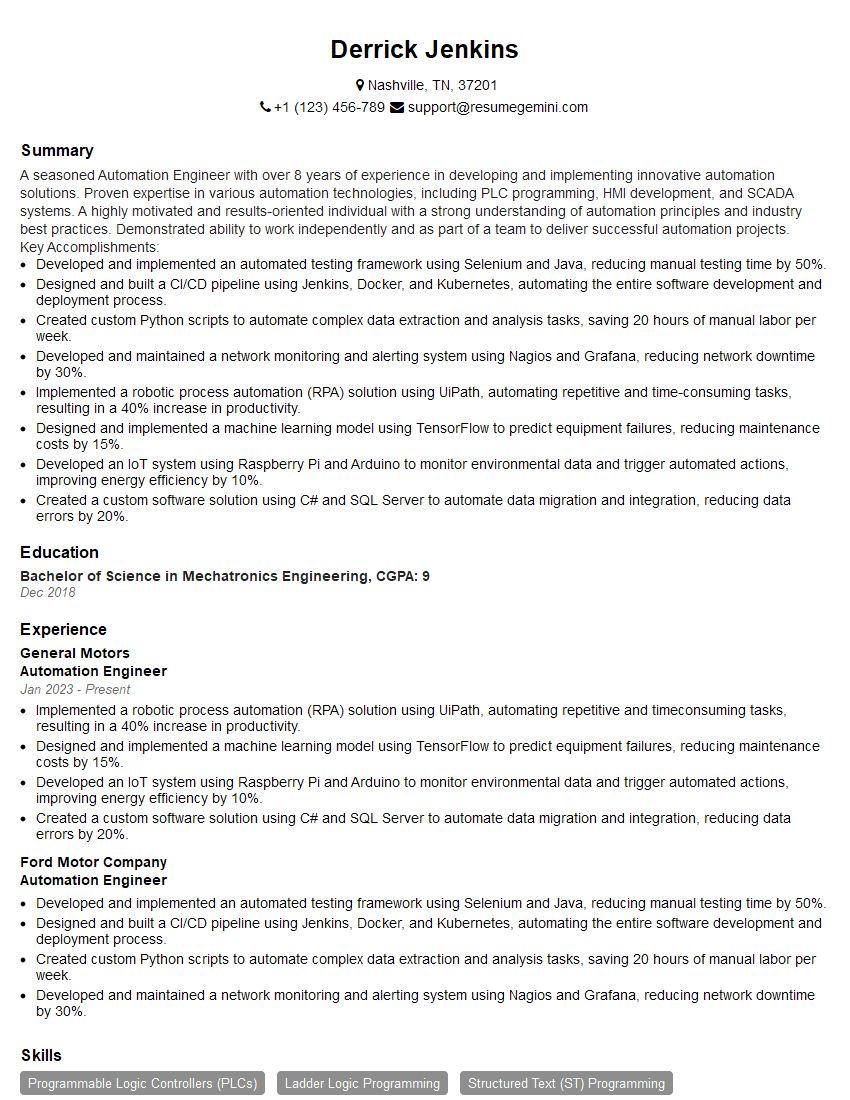
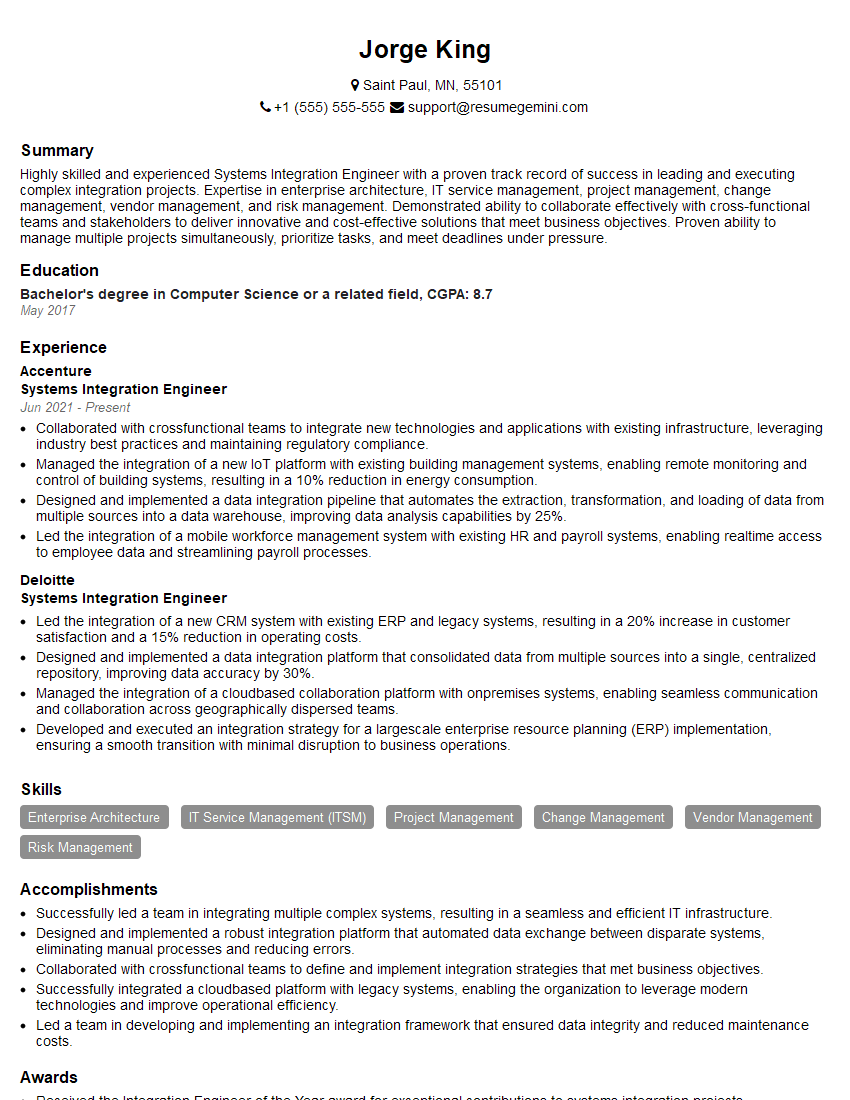
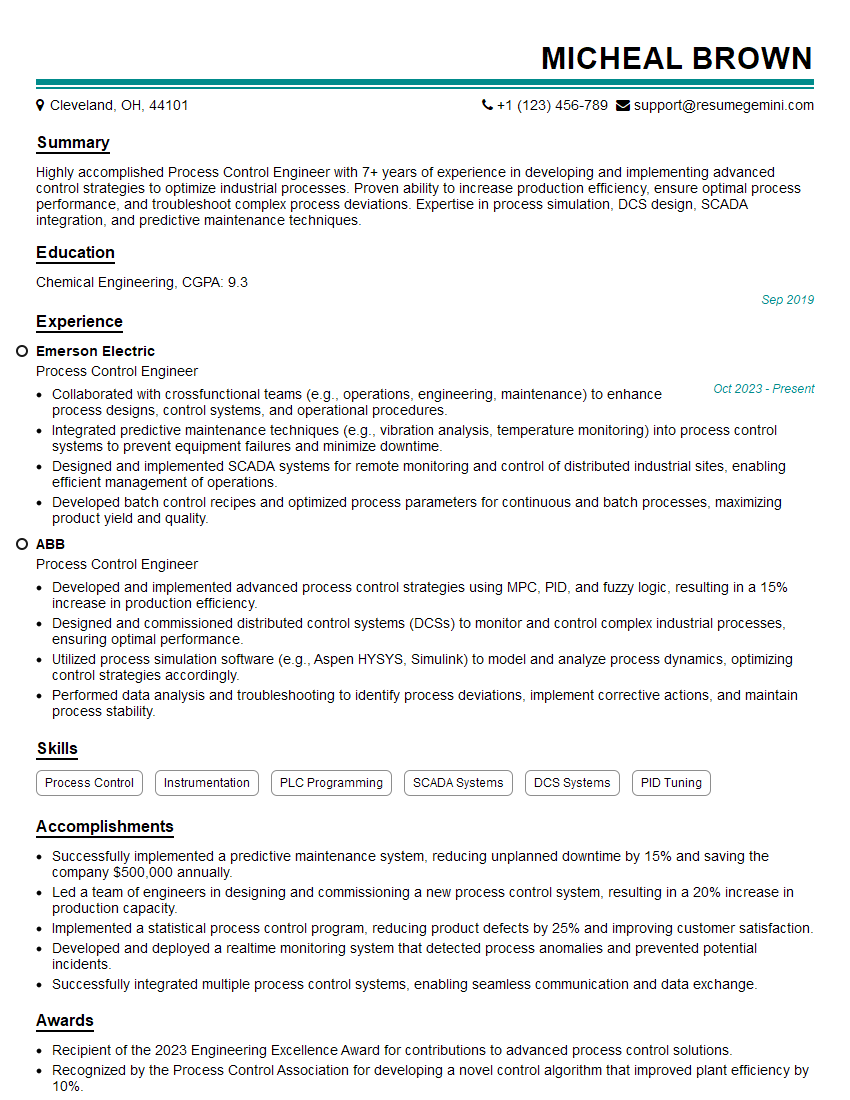
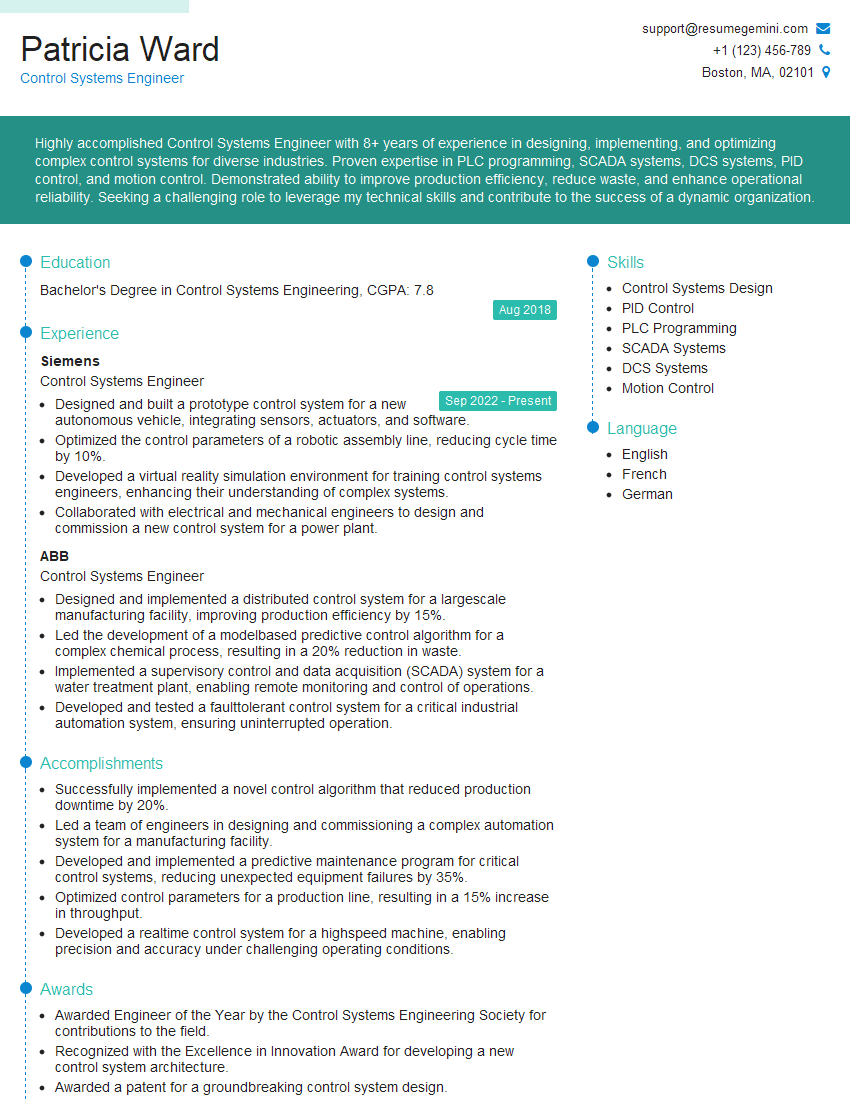
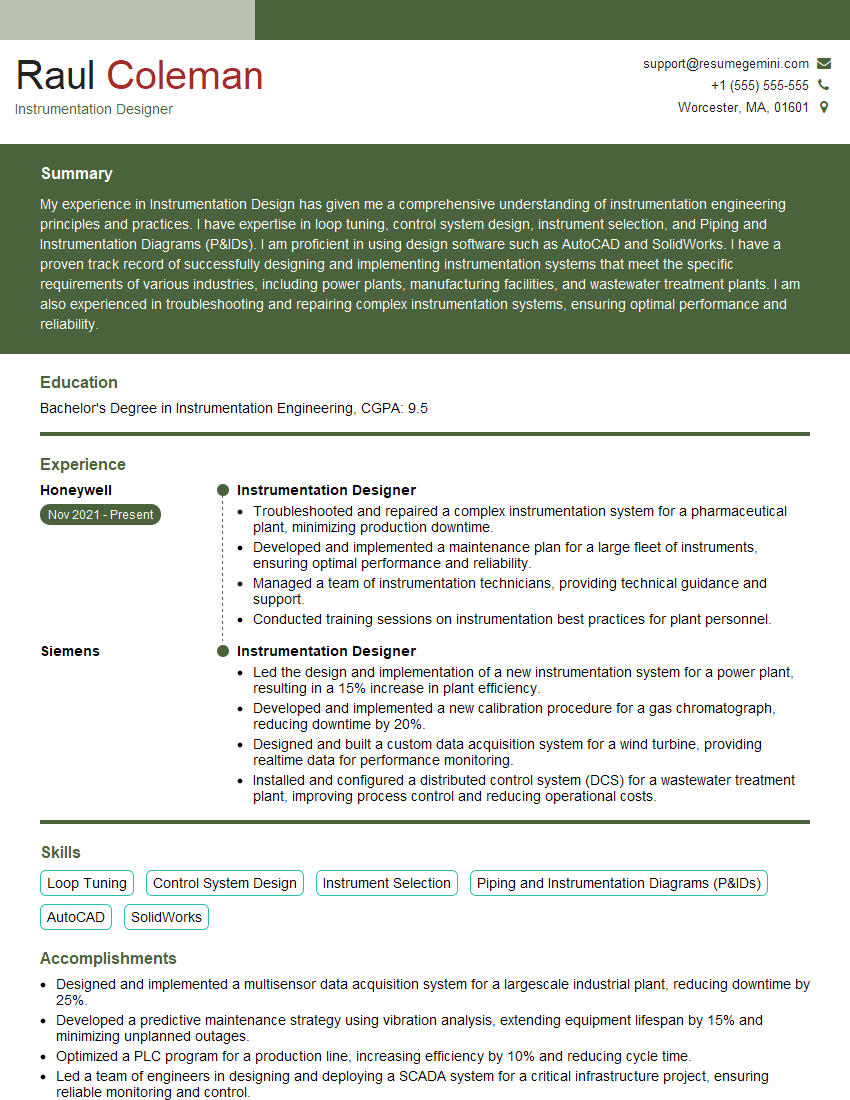
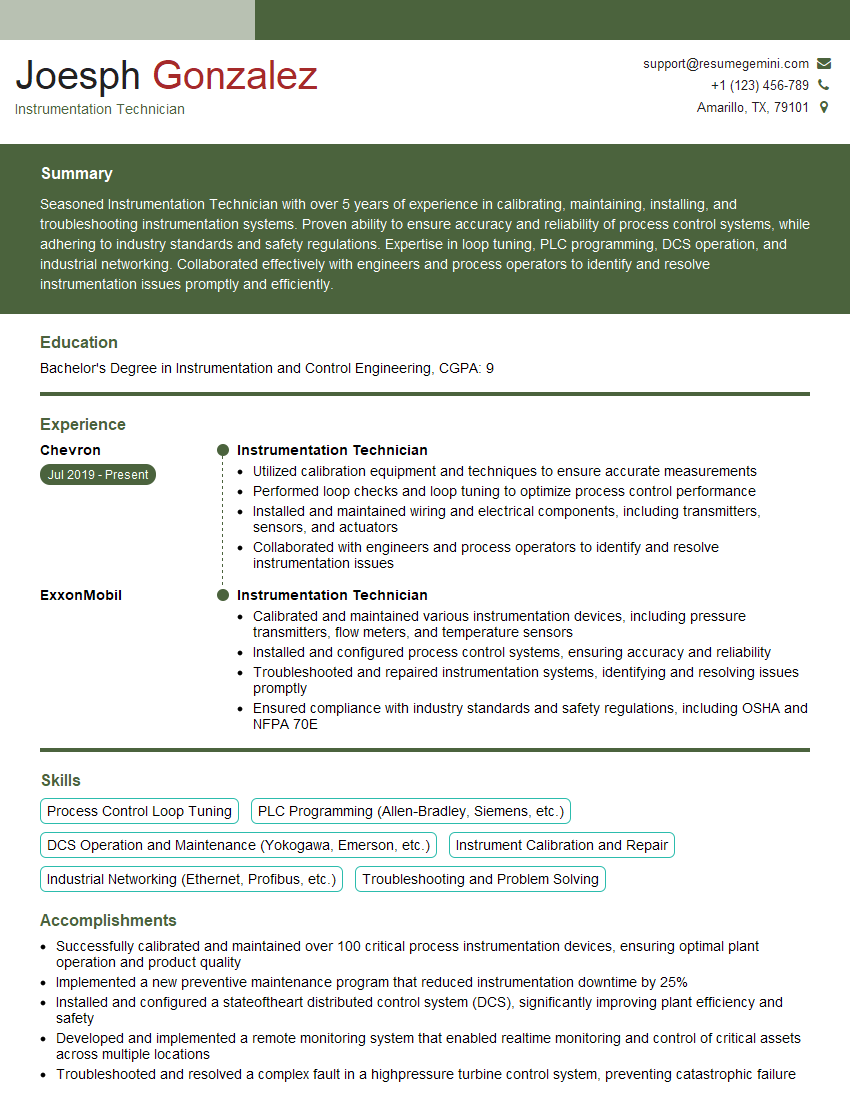
Mastering Instrumentation and Data Acquisition opens doors to exciting careers in various high-demand fields. A strong understanding of these principles is vital for career advancement and securing your dream role. To significantly boost your job prospects, crafting an ATS-friendly resume is essential. ResumeGemini is a trusted resource that can help you build a professional and impactful resume, highlighting your skills and experience effectively. We offer examples of resumes tailored specifically to Instrumentation and Data Acquisition to give you a head start. Invest time in creating a compelling resume – it’s your first impression on potential employers.
Explore more articles
Users Rating of Our Blogs
Share Your Experience
We value your feedback! Please rate our content and share your thoughts (optional).
What Readers Say About Our Blog
Very informative content, great job.
good