Preparation is the key to success in any interview. In this post, we’ll explore crucial Instrumentation Engineering interview questions and equip you with strategies to craft impactful answers. Whether you’re a beginner or a pro, these tips will elevate your preparation.
Questions Asked in Instrumentation Engineering Interview
Q 1. Explain the difference between a sensor and a transducer.
While the terms ‘sensor’ and ‘transducer’ are often used interchangeably, there’s a subtle but important distinction. A sensor is a device that detects a physical phenomenon, like temperature, pressure, or light, and converts it into a measurable signal. Think of it as the ‘eyes’ of the system. A transducer, on the other hand, is a broader term encompassing any device that converts one form of energy or signal into another. A sensor is a *type* of transducer, but not all transducers are sensors. For example, a loudspeaker is a transducer that converts electrical signals into sound, but it’s not a sensor.
Example: A thermistor (a temperature-sensitive resistor) acts as a sensor because it detects temperature changes. It’s also a transducer because it converts temperature variations into changes in electrical resistance, a signal we can measure. A microphone is a transducer converting sound waves into electrical signals, but it isn’t a sensor in the same way a thermometer is.
Q 2. Describe the working principle of a thermocouple.
A thermocouple works based on the Seebeck effect. This effect states that when two dissimilar metals are joined at two different temperatures, a voltage difference is generated between the two junctions. This voltage is directly proportional to the temperature difference. The magnitude of this voltage is measured and used to infer the temperature at the measuring junction (the ‘hot’ junction).
Imagine two different metal wires, like copper and constantan, twisted together at one end. This twisted end is placed where you want to measure the temperature. The other ends are connected to a measuring instrument. The temperature difference between the measurement point and the reference junction (usually kept at a known temperature) creates a measurable voltage, which is then calibrated to provide a temperature reading.
Practical Application: Thermocouples are widely used in high-temperature applications like furnaces, ovens, and engines due to their robustness and wide temperature range.
Q 3. What are the different types of pressure transmitters?
Several types of pressure transmitters exist, each utilizing different principles for measurement:
- Strain Gauge Pressure Transmitters: These employ a diaphragm that deflects under pressure, causing strain on a bonded strain gauge. The change in resistance of the strain gauge is proportional to the applied pressure.
- Capacitive Pressure Transmitters: These use a diaphragm that changes capacitance as it deflects under pressure. The change in capacitance is then measured and converted into a pressure reading.
- Piezoresistive Pressure Transmitters: These use a piezoresistive element that changes its resistance when subjected to pressure. This change in resistance is proportional to the applied pressure.
- Piezoelectric Pressure Transmitters: These rely on a piezoelectric crystal that generates a charge proportional to the applied pressure. They are often used for dynamic pressure measurements.
The choice of transmitter depends on the application’s pressure range, accuracy requirements, and environmental conditions.
Q 4. Explain the concept of a control loop.
A control loop is a closed-loop system that maintains a process variable at a desired setpoint. It’s like a thermostat regulating room temperature. The loop consists of several key components:
- Sensor: Measures the process variable (e.g., temperature, level, flow).
- Controller: Compares the measured value to the setpoint and calculates the necessary corrective action.
- Actuator: Executes the corrective action (e.g., opening or closing a valve, adjusting a heater).
- Process: The system being controlled.
The sensor feeds information to the controller, which compares it to the setpoint. If there’s a deviation, the controller sends a signal to the actuator, which adjusts the process to bring the variable back to the setpoint. This continuous feedback loop ensures precise control.
Example: In a chemical reactor, a temperature sensor monitors the reaction temperature. If it deviates from the setpoint, the controller adjusts the cooling system (actuator) to maintain the desired temperature.
Q 5. What is PID control and how does it work?
PID control is a widely used control algorithm that adjusts the controller output based on three terms: Proportional (P), Integral (I), and Derivative (D).
- Proportional (P): The output is proportional to the error (difference between the setpoint and measured value). A larger error leads to a larger corrective action. However, this alone can result in steady-state error (the controlled variable never perfectly reaches the setpoint).
- Integral (I): This term addresses steady-state error by accumulating the error over time. The longer the error persists, the stronger the corrective action.
- Derivative (D): This term anticipates future changes by considering the rate of change of the error. It helps to damp oscillations and improve response speed.
The combined action of P, I, and D terms allows for precise and stable control. The tuning of the PID parameters (Kp, Ki, Kd) is crucial for optimal performance. Improper tuning can lead to oscillations or sluggish response.
Example: In a self-driving car, PID control could be used to maintain a constant speed. The P term would react to immediate speed variations, the I term would correct for slow drifts, and the D term would anticipate changes in road slope or friction.
Q 6. Describe the different types of valves used in process control.
Many valve types are used in process control, categorized based on their actuation mechanism and flow characteristics:
- Globe Valves: Widely used for throttling and on/off control. They offer good controllability but can be prone to cavitation.
- Ball Valves: Simple on/off valves that provide quick and complete shut-off. Not suitable for precise flow control.
- Butterfly Valves: Relatively inexpensive and offer good flow capacity. Suitable for large-diameter lines but less precise than globe valves.
- Control Valves: Designed for precise control of fluid flow. They often incorporate pneumatic or electric actuators for automated operation. Various valve bodies (e.g., globe, ball, butterfly) can be used.
- Diaphragm Valves: Used for handling slurries and viscous fluids. The diaphragm isolates the valve mechanism from the process fluid, preventing leakage.
The selection of valve type depends on factors like fluid properties, pressure, flow rate, required controllability, and maintenance considerations.
Q 7. What is the purpose of a flow meter?
The purpose of a flow meter is to measure the volumetric or mass flow rate of a fluid (liquid or gas) in a pipe or duct. This information is crucial for various industrial processes and applications.
Flow meters are used for:
- Process Control: Maintaining desired flow rates in chemical reactors, pipelines, and other processes.
- Energy Management: Monitoring fuel consumption in power plants and industrial furnaces.
- Inventory Control: Tracking the flow of liquids in storage tanks and pipelines.
- Safety Monitoring: Detecting leaks or unusual flow conditions.
Different types of flow meters exist, each suited for specific fluids and flow conditions (e.g., orifice plates, Venturi meters, Coriolis flow meters, ultrasonic flow meters).
Q 8. Explain the concept of calibration and its importance in instrumentation.
Calibration is the process of comparing a measuring instrument’s readings to a known standard to ensure accuracy. Think of it like setting your watch to the correct time – you’re comparing it to a reliable source (atomic clock, for example) to ensure it’s showing the right time. In instrumentation, this is crucial because inaccurate readings can lead to incorrect decisions, inefficiencies, and even safety hazards. For example, an improperly calibrated flow meter in a chemical process could result in an incorrect mixture ratio, potentially leading to a dangerous reaction. The calibration process involves adjusting the instrument to minimize the difference between its readings and the known standard, often documented in a calibration certificate. Regular calibration is essential to maintain the integrity and reliability of measurements over time, as instruments can drift due to wear and tear, temperature fluctuations, or other environmental factors.
Different calibration methods exist, such as comparison calibration (using a known standard), in-situ calibration (calibrating the instrument while it’s in the process), and remote calibration (calibrating using wireless communication). The frequency of calibration depends on the criticality of the measurement and the instrument’s stability, with some needing daily calibration while others might only require it annually.
Q 9. What are the different types of signal transmission methods used in instrumentation?
Signal transmission in instrumentation involves conveying measured data from sensors to the control system or display. Several methods exist, each with its strengths and weaknesses.
- Analog Transmission: This involves transmitting a continuous signal, often a voltage or current, that directly reflects the measured value. Think of a simple potentiometer where the rotation angle directly corresponds to a voltage. It’s simple and inexpensive but susceptible to noise and signal degradation over long distances.
- Digital Transmission: This uses digital codes (0s and 1s) to represent the measured value. It’s more immune to noise and allows for longer transmission distances. Common digital protocols include RS-232, RS-485, and various fieldbuses (discussed later).
- Wireless Transmission: This method uses radio waves or other wireless technologies to transmit data. It’s convenient for remote or hard-to-reach locations, but can be affected by interference and security concerns. Common protocols include Wi-Fi, Bluetooth, and Zigbee.
- Optical Transmission: This utilizes light signals to transmit data. It is highly immune to electromagnetic interference and offers high bandwidth, commonly used in long-distance or high-speed data transmission.
The choice of transmission method depends on factors like distance, noise levels, cost, bandwidth requirements, and environmental conditions.
Q 10. What is HART communication protocol?
HART (Highway Addressable Remote Transducer) is a communication protocol used in industrial process automation. It’s a digital communication protocol superimposed on a 4-20 mA analog signal. What this means is that a single wire can carry both a traditional analog signal (for backward compatibility with older systems) and a digital signal (for more advanced communication). Imagine having two conversations on the same phone line – one standard voice call, and another using a separate coded message. The 4-20 mA analog signal provides a simple, readily available means for basic process monitoring, while the digital HART protocol allows for advanced communication like configuring the instrument, accessing diagnostic information, and transferring large datasets. This digital layer adds significant flexibility, allowing for remote monitoring and control of field devices, simplifying maintenance, and reducing downtime.
Q 11. What is Fieldbus and its advantages?
Fieldbus is a digital communication system that allows multiple field devices (sensors, actuators, etc.) to communicate with a control system over a shared network. Think of it as a digital highway for industrial instruments. Instead of each instrument having its own dedicated wire, they all share a common network, greatly reducing wiring complexity and cost.
- Advantages of Fieldbus:
- Reduced Wiring: Fewer wires mean lower installation and maintenance costs.
- Improved Diagnostics: Fieldbuses often provide advanced diagnostic capabilities, enabling early detection and prevention of problems.
- Increased Data Availability: More data can be accessed from the field devices, leading to better process control and optimization.
- Simplified Configuration: Centralized configuration of multiple field devices via software simplifies commissioning and troubleshooting.
- Enhanced Interoperability: Various fieldbus standards allow for seamless communication between different manufacturers’ devices.
Examples of common fieldbus standards include PROFIBUS, FOUNDATION Fieldbus, and Modbus TCP.
Q 12. Explain the concept of redundancy in instrumentation systems.
Redundancy in instrumentation systems involves incorporating backup components or systems to ensure continued operation even if a primary component fails. Imagine having two engines in a plane – if one fails, the other takes over. This is analogous to redundancy in instrumentation. Redundancy significantly improves system reliability and safety. If a critical sensor malfunctions, a redundant sensor immediately takes over, preventing process upsets or safety hazards. This is vital in safety-critical applications like nuclear power plants or chemical processing, where failure can have catastrophic consequences.
Redundancy can be implemented at different levels: multiple sensors measuring the same parameter, duplicate controllers, or even redundant communication networks. The level of redundancy required depends on the criticality of the system and the acceptable level of risk. Implementing redundancy requires careful design and planning to ensure proper switching between primary and backup components, and to eliminate single points of failure.
Q 13. Describe different types of safety instrumented systems (SIS).
Safety Instrumented Systems (SIS) are independent systems designed to protect personnel, equipment, and the environment from hazardous conditions. They are typically triggered by abnormal events and activate safety functions to mitigate the hazard. Different types of SIS exist, depending on the specific safety function and application.
- High-integrity Pressure Protective Systems (HIPPS): Designed to prevent overpressure in vessels or pipelines.
- Emergency Shutdown Systems (ESD): Used to safely shut down a process in case of an emergency.
- Fire & Gas Detection and Suppression Systems: Detect and suppress fires or gas leaks.
- Trip Systems: Activate safety actions (e.g., valve closures) in response to process deviations.
SIS design adheres to strict safety standards (e.g., IEC 61508) to ensure a high level of reliability and safety. This includes aspects like component selection, architecture design, testing, and maintenance.
Q 14. How do you troubleshoot a malfunctioning instrument?
Troubleshooting a malfunctioning instrument is a systematic process that requires a methodical approach. The first step is to identify the problem by examining the symptoms and gathering data, such as error messages, unusual readings, or changes in the process.
- Gather Information: What are the symptoms? When did the problem start? Have there been any recent changes to the process or environment?
- Check the Obvious: Ensure power is supplied to the instrument, connections are secure, and there are no obvious physical damages.
- Consult Documentation: Refer to the instrument’s manual, wiring diagrams, and calibration certificates for relevant information.
- Inspect the Instrument: Visually inspect the instrument for any signs of damage or wear.
- Use Diagnostic Tools: Employ built-in diagnostics (if available), loop calibrators, and other testing equipment to help pinpoint the cause.
- Check Calibration: Verify that the instrument is properly calibrated.
- Test Signals: Check the input and output signals to isolate the faulty component.
- Check Wiring: Examine the wiring for any loose connections, shorts, or breaks.
- Seek External Support: If the problem persists, contact the instrument manufacturer or a qualified technician for assistance.
Accurate record-keeping throughout the troubleshooting process is crucial for future reference and to prevent similar issues from occurring again. Remember to always prioritize safety and follow appropriate lockout/tagout procedures before working on any electrical or mechanical components.
Q 15. What is a PLC and its application in industrial automation?
A Programmable Logic Controller (PLC) is essentially a ruggedized computer specifically designed for industrial automation. Think of it as the brain of a manufacturing process or any automated system. It receives input signals from sensors monitoring various parameters like temperature, pressure, or flow rate, and based on programmed logic, sends output signals to control actuators such as valves, motors, or conveyors.
For example, in a bottling plant, PLCs monitor the filling level of bottles and control the filling mechanism to ensure each bottle is filled to the correct level. If a bottle is not properly positioned, the PLC can stop the filling process, preventing waste or damage. Another common application is in robotics, where PLCs coordinate the movements and actions of robotic arms in assembly lines, ensuring precise and efficient operation.
- Applications: Process control, machine automation, robotics, packaging, material handling, building automation.
Career Expert Tips:
- Ace those interviews! Prepare effectively by reviewing the Top 50 Most Common Interview Questions on ResumeGemini.
- Navigate your job search with confidence! Explore a wide range of Career Tips on ResumeGemini. Learn about common challenges and recommendations to overcome them.
- Craft the perfect resume! Master the Art of Resume Writing with ResumeGemini’s guide. Showcase your unique qualifications and achievements effectively.
- Don’t miss out on holiday savings! Build your dream resume with ResumeGemini’s ATS optimized templates.
Q 16. Explain the role of SCADA in process monitoring and control.
Supervisory Control and Data Acquisition (SCADA) systems are software and hardware systems used to monitor and control industrial processes over geographically dispersed areas. They act as a centralized management system, providing a bird’s-eye view of the entire operation. SCADA systems gather real-time data from multiple PLCs and other field devices, displaying it on a human-machine interface (HMI) for operators to monitor and control the process. Think of it as a sophisticated dashboard for a large industrial plant.
For instance, an oil pipeline company might use a SCADA system to monitor pressure and flow rate at various points along the pipeline. If a pressure drop is detected, the SCADA system can automatically shut down the pipeline section to prevent leaks and maintain safety. SCADA also allows for remote diagnostics, troubleshooting, and control, enhancing efficiency and reducing downtime.
- Role in monitoring: Real-time data acquisition, trend analysis, alarm management, historical data logging.
- Role in control: Remote control of field devices, automated responses to alarms, process optimization.
Q 17. What are the different types of DCS systems?
Distributed Control Systems (DCS) are advanced process control systems designed for large-scale, complex processes like those found in chemical plants, refineries, and power generation facilities. Unlike PLCs which are typically used for individual machines or small processes, DCS systems are distributed, meaning control logic and I/O are spread across multiple controllers. This allows for redundancy and better scalability.
There isn’t a fixed classification of DCS types, but they can be categorized based on architecture and functionality:
- Redundant Systems: These systems have backup controllers and communication paths to ensure continuous operation even if one component fails. This is crucial for safety-critical processes.
- Modular Systems: Modular DCS offer flexibility and scalability, allowing users to add or remove modules to meet changing needs.
- Networked Systems: Modern DCS leverage advanced networking technologies for efficient data communication and centralized monitoring.
The choice of DCS depends on the specific requirements of the process, including the size, complexity, safety requirements, and budget constraints.
Q 18. What are the advantages and disadvantages of using digital versus analog instrumentation?
The choice between digital and analog instrumentation depends heavily on the application’s needs. Both have their strengths and weaknesses.
- Digital Instrumentation: Advantages include higher accuracy, better noise immunity, easier calibration, and the ability to transmit data over long distances digitally. Disadvantages can include higher initial cost and potential vulnerability to digital communication errors.
- Analog Instrumentation: Advantages include lower initial cost and simplicity, making them suitable for basic measurements. Disadvantages include susceptibility to noise and drift, lower accuracy, and limited communication range.
Example: A precise temperature measurement in a chemical reactor might demand a digital instrument for its superior accuracy and stability. However, monitoring the level of a simple water tank might suffice with a simpler, cheaper analog level sensor.
Q 19. Explain the concept of loop checking and its significance.
Loop checking is a crucial process in instrumentation to verify the integrity and proper functioning of the control loop. A control loop involves sensors, transmitters, controllers, and final control elements (e.g., valves) working together to maintain a process variable at a desired setpoint. Loop checking involves systematically inspecting each component in the loop, often using dedicated handheld instruments or built-in diagnostic tools within the control system.
Significance: Loop checking identifies malfunctions early on preventing production inefficiencies, ensures safety by preventing hazardous conditions, aids in troubleshooting problems, and ensures compliance with safety and quality standards.
Steps involved: Visual inspection of wiring and connections, verification of sensor calibration and accuracy, checking the controller’s output signal, and verifying the final control element’s response. Often this involves using calibration tools, checking signal strength, or even performing simulated fault injection.
Q 20. How do you handle instrumentation related emergencies?
Handling instrumentation emergencies requires a structured approach prioritizing safety and minimizing damage.
- Immediate Actions: Isolate the affected area to prevent further escalation, ensure the safety of personnel, and activate emergency shutdown procedures if necessary. This may involve cutting off power to the faulty instrument or section of the plant.
- Diagnostics: Identify the root cause of the emergency, using available instrumentation data, logs and troubleshooting techniques. This may require tracing signals, analyzing data logs from the DCS or PLC, and visually inspecting the malfunctioning equipment.
- Corrective Actions: Implement temporary repairs or workarounds, depending on the nature of the emergency. This might include replacing a faulty sensor or implementing manual control. Simultaneously, start the process of ordering replacement parts or arranging for repair services.
- Documentation: Thoroughly document the entire event: the cause, the actions taken, and the outcome. This documentation is essential for future analysis and preventing similar incidents.
- Post-Incident Review: After the emergency is resolved, conduct a post-incident review to identify system weaknesses and implement preventive measures to avoid future occurrences.
Q 21. Describe your experience with different types of instrumentation software.
Throughout my career, I’ve gained significant experience using various instrumentation software packages. This includes:
- HMI/SCADA Software: I am proficient in using industry-standard SCADA software like Wonderware InTouch, Rockwell Automation FactoryTalk, and Siemens WinCC. My experience extends to configuring alarms, creating user interfaces, and managing historical data. I’ve worked with both legacy and modern cloud-based SCADA platforms, gaining experience in integrating different field devices and protocols.
- PLC Programming Software: I am well-versed in programming PLCs using various platforms, including Rockwell Automation RSLogix 5000, Siemens TIA Portal, and Allen-Bradley Studio 5000. My expertise includes ladder logic, function block diagrams, and structured text programming. I understand the complexities of developing efficient and robust control programs for diverse industrial processes.
- Calibration and Maintenance Software: I’m experienced with calibration software used to manage, schedule, and track calibrations of instruments. My knowledge also encompasses the use of specialized software for asset management and predictive maintenance.
My experience extends to working with databases for storing and analyzing process data, which are frequently integrated with these software packages.
Q 22. What are the common sources of error in instrumentation systems?
Errors in instrumentation systems are inevitable, stemming from various sources. Understanding these sources is crucial for designing robust and reliable systems. They can be broadly categorized into:
- Sensor Errors: These arise from limitations in the sensor’s physical properties, such as non-linearity, hysteresis (difference in output for increasing vs. decreasing input), drift (slow change in output over time), and resolution (smallest measurable change). For example, a thermocouple might drift slightly over time due to oxidation, leading to inaccurate temperature readings. Calibration is essential to minimize these errors.
- Signal Conditioning Errors: Errors can occur during signal amplification, filtering, and conversion. Noise from the environment (electrical interference) can corrupt the signal. Improper grounding can introduce significant error. For instance, a poorly shielded amplifier might pick up 60Hz hum from the power lines, contaminating the measured signal.
- Data Acquisition Errors: Issues in the analog-to-digital conversion (ADC) process introduce quantization error (rounding off to the nearest digital value). Software bugs or glitches in the data acquisition system can also lead to data corruption or loss. Consider an ADC with only 8 bits of resolution: it can’t capture subtle variations in the analog signal.
- Environmental Errors: Temperature, pressure, humidity, and vibrations can affect the performance of sensors and instrumentation components. A pressure sensor, for example, might be highly sensitive to temperature changes, requiring temperature compensation.
- Human Errors: Incorrect calibration, improper installation, faulty wiring, and operator mistakes contribute significantly to errors. A simple mistake like a loose connection can lead to significant inaccuracies or even system failure.
Minimizing these errors involves careful selection of components, proper calibration procedures, robust signal conditioning techniques, effective shielding and grounding, and thorough testing.
Q 23. Explain the importance of proper grounding and shielding in instrumentation.
Proper grounding and shielding are paramount in instrumentation for minimizing noise and ensuring signal integrity. They act as a preventative measure against errors and ensure safety.
- Grounding: Provides a common reference point for all signals, preventing ground loops (circular current paths causing voltage differences and noise) and ensuring that all components operate at the same potential. A single-point grounding strategy is usually preferred to minimize ground loops. Without proper grounding, you might get spurious signals that aren’t related to the measured process.
- Shielding: Protects signal wires from electromagnetic interference (EMI) and radio frequency interference (RFI) from external sources. Shielding typically involves using metallic conduits or braided cables to enclose the signal wires, acting as a Faraday cage. Imagine a sensitive microphone in a noisy environment. Shielding keeps the external noise from contaminating the microphone’s signal, leading to cleaner audio.
Improper grounding and shielding can manifest as noisy signals, inaccurate readings, unexpected behavior in the instrumentation system, and, in some cases, even safety hazards.
Q 24. How do you ensure the safety and integrity of instrumentation systems?
Ensuring the safety and integrity of instrumentation systems involves a multi-faceted approach. It begins at the design stage and continues throughout the system’s lifecycle.
- Intrinsic Safety: Using intrinsically safe components and circuits that limit energy levels to prevent ignition of hazardous materials in explosive environments. This is critical in industries like oil and gas.
- Redundancy: Incorporating backup systems or sensors to provide fault tolerance. If one sensor fails, the backup will maintain operation. Think of airplane flight controls, where redundant systems ensure safety even if one component malfunctions.
- Regular Calibration and Verification: Performing periodic calibration checks to ensure accuracy and maintaining traceable records. This builds confidence in the data’s reliability. Industry regulations often dictate calibration frequencies.
- Emergency Shutdown Systems (ESD): Implementing reliable ESD systems that quickly shut down processes in hazardous situations. These systems might be triggered by sensors detecting critical conditions (e.g., high temperature, low pressure).
- Lockout/Tagout (LOTO) Procedures: Following strict LOTO procedures before performing maintenance or repairs to prevent accidental energization or activation of hazardous equipment.
- Proper Documentation: Maintaining comprehensive documentation of the system’s design, operation, maintenance, and safety procedures. This facilitates troubleshooting and ensures consistent safety practices.
Safety is paramount, and a layered approach is required. Neglecting any of these aspects can have significant consequences, ranging from inaccurate measurements to catastrophic failures.
Q 25. Describe your experience with preventative maintenance of instrumentation equipment.
My experience with preventative maintenance spans various industrial settings. I’ve been involved in developing and executing preventative maintenance programs for instrumentation systems, encompassing both routine tasks and more complex procedures.
My approach is systematic and data-driven. It starts with a comprehensive understanding of the instrumentation system, including its components, operating parameters, and manufacturer recommendations. This allows me to create a customized maintenance schedule.
Routine Tasks typically include: visual inspections for loose connections, corrosion, or damage; cleaning sensors and probes; verifying calibration; and checking the functionality of alarms and safety interlocks. I use CMMS (Computerized Maintenance Management System) software to schedule and track tasks and generate reports.
More complex procedures might involve replacing worn-out components, repairing faulty circuits, or recalibrating sophisticated instruments. I always document every maintenance action precisely, including parts replaced and calibration results. I also incorporate lessons learned from past maintenance activities to continually improve the program’s effectiveness.
For example, in a chemical plant, I implemented a preventative maintenance program that reduced unscheduled downtime by 25% and improved the overall accuracy of process measurements.
Q 26. What are your strengths and weaknesses as an instrumentation engineer?
My strengths as an instrumentation engineer lie in my problem-solving abilities, strong analytical skills, and practical experience. I’m adept at troubleshooting complex instrumentation systems, identifying root causes of failures, and implementing effective solutions. I’m also a quick learner and readily adapt to new technologies and challenges.
One of my weaknesses is occasionally getting bogged down in the details of a problem. To mitigate this, I consciously utilize structured problem-solving techniques, such as the 5 Whys method, to stay focused and efficiently reach solutions. I actively seek feedback from colleagues and collaborate effectively to leverage diverse perspectives.
Q 27. Describe your experience working with different types of process industries.
I’ve had the opportunity to work with diverse process industries, including:
- Oil and Gas: Experience in designing and maintaining instrumentation systems for refineries, pipelines, and offshore platforms, including expertise in handling hazardous environments and implementing safety systems.
- Chemical Processing: Working with instrumentation in chemical plants, focusing on process control, data acquisition, and ensuring the safety of personnel and equipment.
- Pharmaceuticals: Involvement in the design and maintenance of highly regulated instrumentation systems that meet stringent quality and safety standards, emphasizing GMP (Good Manufacturing Practices) compliance.
- Power Generation: Experience with instrumentation in power plants, particularly focusing on monitoring and control of power generation processes and ensuring reliable operation.
This diverse experience allows me to readily adapt to different environments and apply my knowledge to a wide range of industrial challenges. I can easily translate my expertise across these industries by understanding the specific requirements and constraints of each environment.
Q 28. Explain your familiarity with relevant safety standards and regulations.
I am familiar with a range of relevant safety standards and regulations, including but not limited to:
- IEC 61508: Functional safety of electrical/electronic/programmable electronic safety-related systems.
- IEC 61511: Functional safety: safety instrumented systems for the process industry sector.
- ISA 84.01: Application of safety instrumented systems.
- NFPA 70 (NEC): National Electrical Code.
- OSHA regulations (relevant to the specific industry): Occupational Safety and Health Administration standards.
My understanding extends to both the general principles of these standards and their practical application in various industrial settings. I ensure that designs and maintenance procedures adhere to the relevant standards to minimize risks and ensure the safety of personnel and equipment. My experience includes performing risk assessments and designing safety instrumented systems (SIS) in accordance with these standards.
Key Topics to Learn for Instrumentation Engineering Interview
- Process Control: Understand fundamental control strategies (PID, cascade, feedforward), control loop tuning methods, and their applications in industrial processes. Consider practical examples like temperature control in a chemical reactor or level control in a water tank.
- Sensors and Transducers: Master the principles of operation, selection criteria, calibration techniques, and limitations of various sensors (temperature, pressure, flow, level). Explore real-world applications like using pressure sensors in pipeline monitoring or thermocouples in furnace control.
- Signal Conditioning and Data Acquisition: Learn about signal amplification, filtering, analog-to-digital conversion (ADC), and digital-to-analog conversion (DAC). Understand the importance of signal integrity and noise reduction in data acquisition systems. Consider applications in data logging and SCADA systems.
- Instrumentation Systems and Networks: Familiarize yourself with different types of industrial communication protocols (e.g., Profibus, Modbus, Ethernet/IP) and their applications in distributed control systems (DCS). Understand the architecture and functionality of industrial networks.
- Calibration and Maintenance: Understand the importance of regular calibration and preventive maintenance of instrumentation equipment. Explore different calibration techniques and procedures for various types of instruments.
- Industrial Automation: Explore Programmable Logic Controllers (PLCs), their programming languages (Ladder Logic, etc.), and their role in automating industrial processes. Understand the integration of PLCs with other instrumentation systems.
- Troubleshooting and Problem-Solving: Develop strong analytical and problem-solving skills to effectively diagnose and resolve issues in instrumentation systems. Practice applying your theoretical knowledge to practical scenarios.
Next Steps
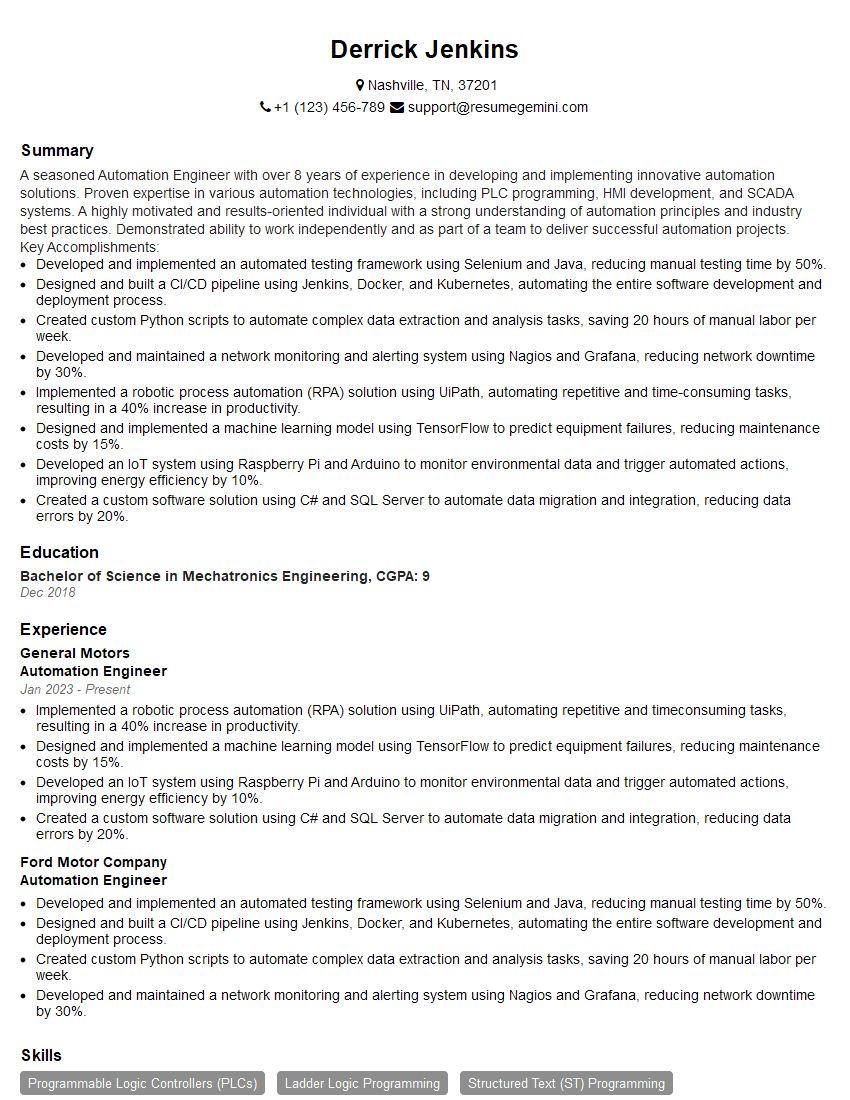
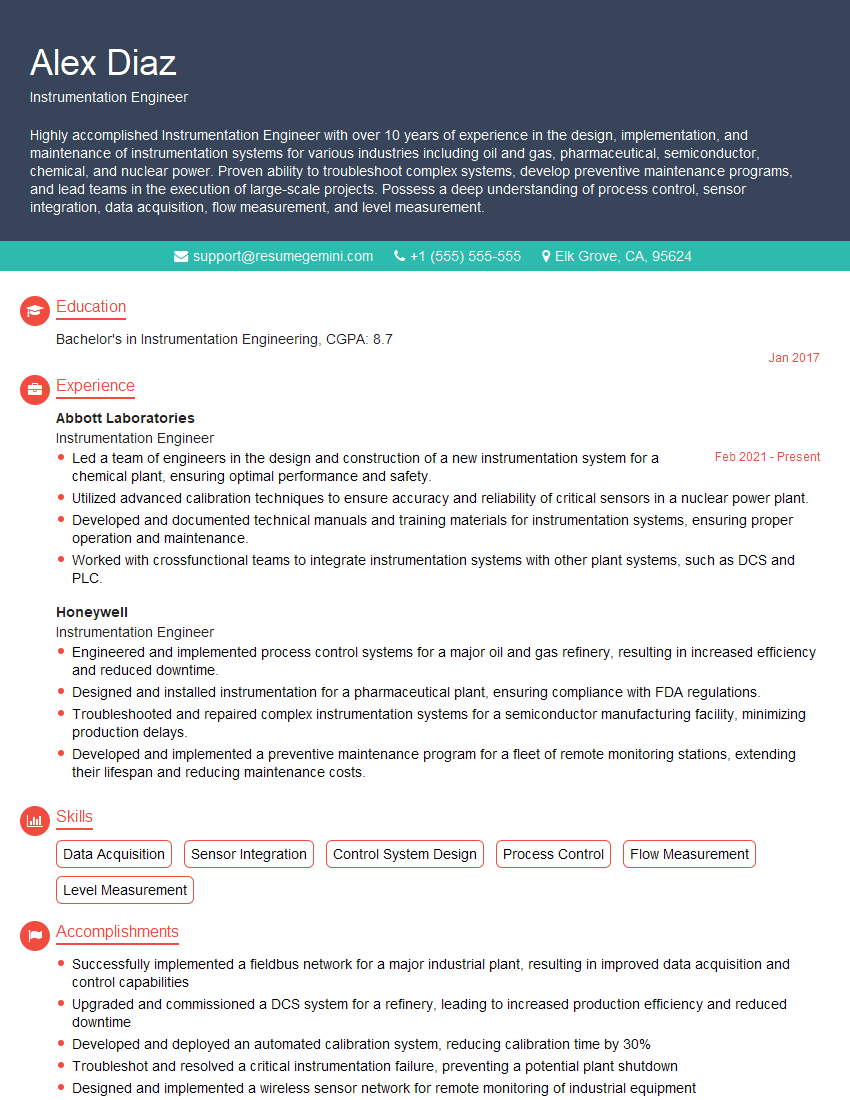
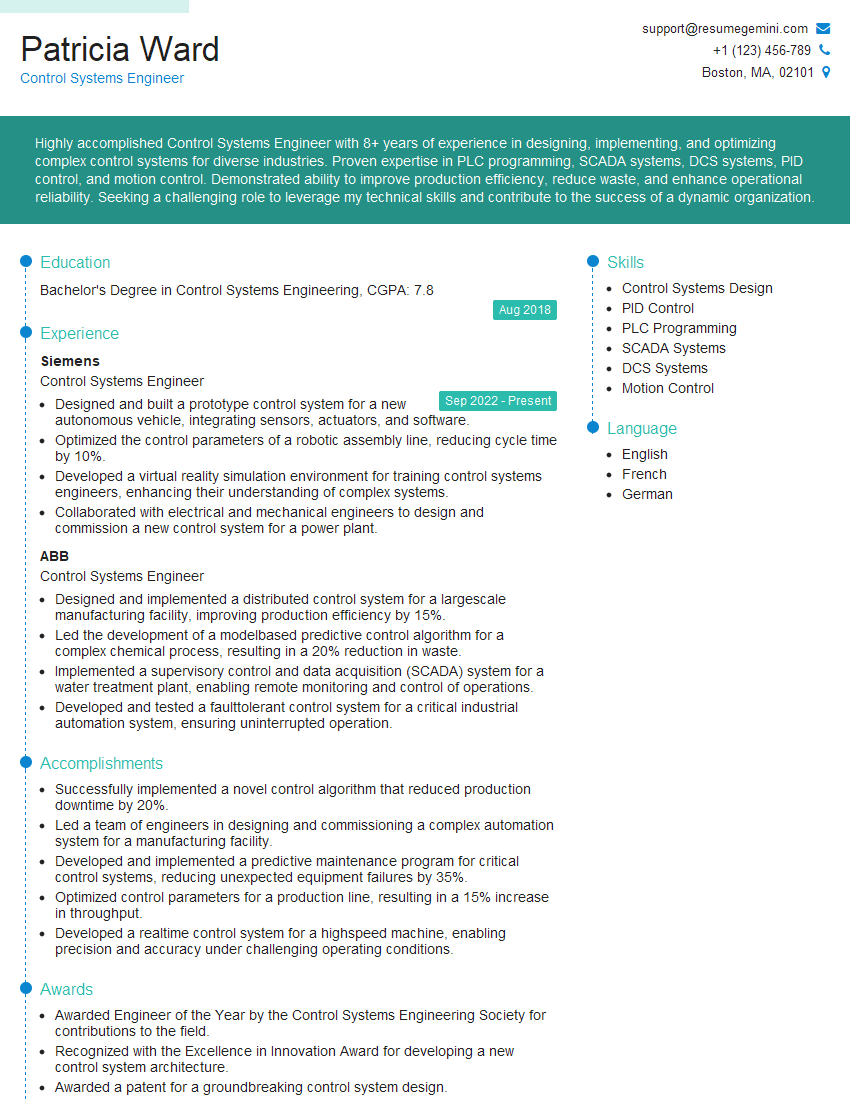
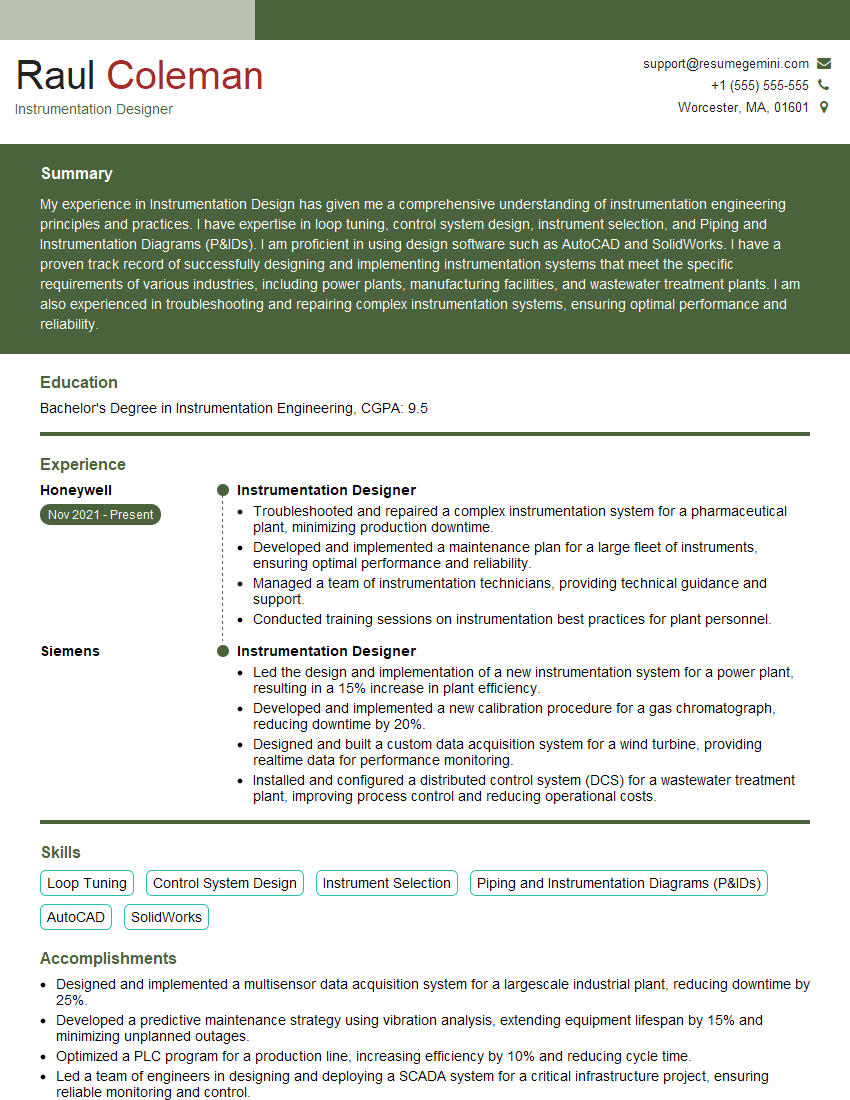
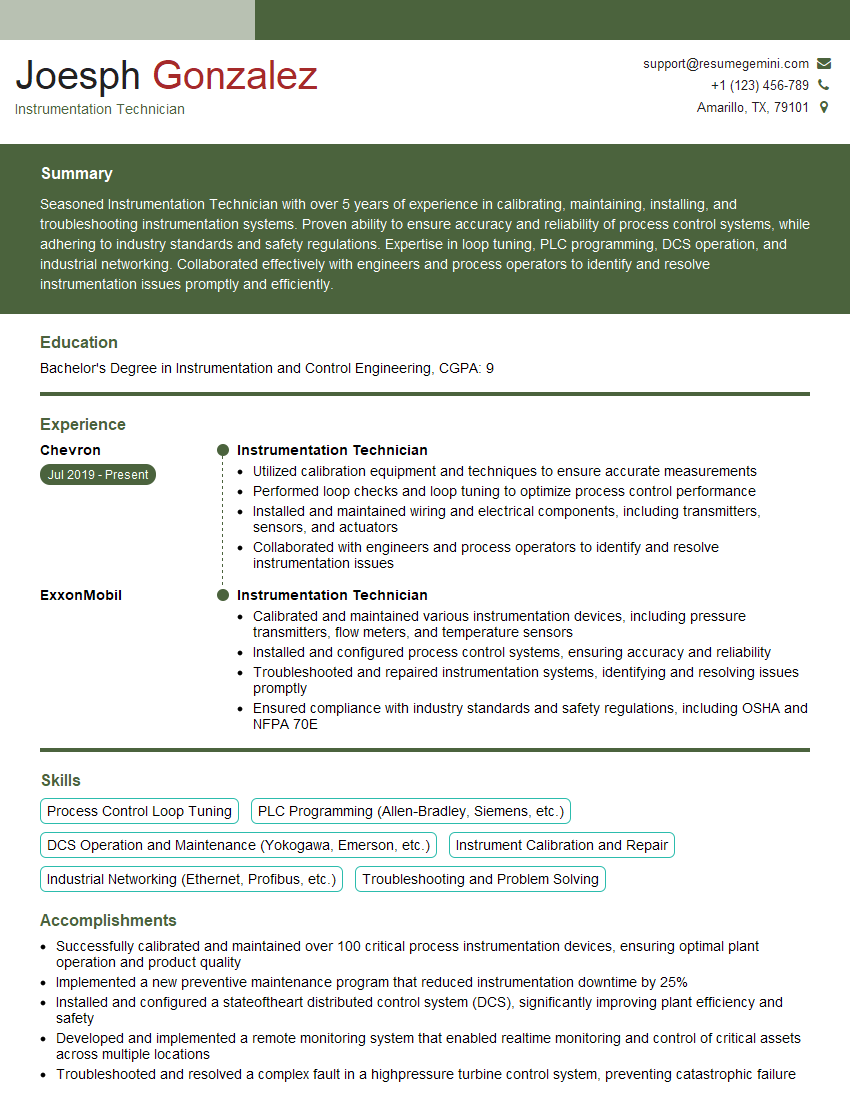
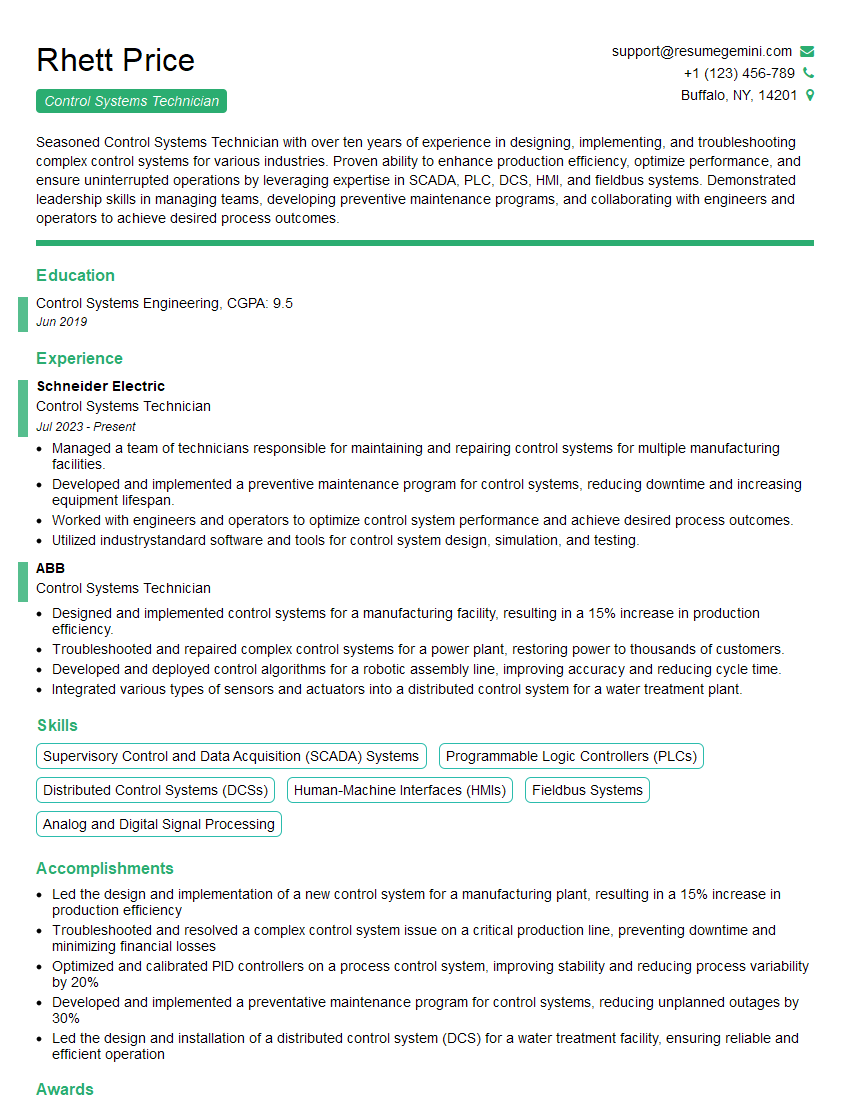
Mastering Instrumentation Engineering opens doors to a rewarding career in diverse industries, offering exciting challenges and opportunities for growth. A well-crafted resume is crucial for showcasing your skills and experience effectively to potential employers. An ATS-friendly resume, optimized for Applicant Tracking Systems, significantly increases your chances of getting your application noticed. To build a professional and impactful resume, leverage the power of ResumeGemini. ResumeGemini provides a trusted platform with user-friendly tools and resources to create a compelling resume. Examples of resumes tailored to Instrumentation Engineering are available to guide you. Take the next step towards your dream career today!
Explore more articles
Users Rating of Our Blogs
Share Your Experience
We value your feedback! Please rate our content and share your thoughts (optional).
What Readers Say About Our Blog
Very informative content, great job.
good