Interviews are more than just a Q&A session—they’re a chance to prove your worth. This blog dives into essential Intelligence Evaluation interview questions and expert tips to help you align your answers with what hiring managers are looking for. Start preparing to shine!
Questions Asked in Intelligence Evaluation Interview
Q 1. Explain the difference between strategic and tactical intelligence analysis.
Strategic and tactical intelligence analysis differ primarily in their scope and timeframe. Think of it like this: strategic analysis is the ‘big picture,’ focusing on long-term trends, overarching threats, and broad policy implications. Tactical analysis, on the other hand, is the ‘here and now,’ concentrating on immediate threats, short-term operations, and specific actions.
For example, a strategic intelligence assessment might analyze the long-term geopolitical implications of climate change on resource scarcity and potential conflict zones across multiple regions. A tactical intelligence assessment, conversely, might focus on identifying the immediate security threats posed by a specific group planning a terrorist attack within the next 24 hours in a particular city. Strategic analysis informs high-level decision-making, while tactical analysis supports real-time operational needs.
- Strategic: Long-term, broad scope, high-level decision-making, e.g., assessing the rise of a global power.
- Tactical: Short-term, narrow scope, immediate action, e.g., identifying the location of a hidden weapons cache.
Q 2. Describe your experience with the intelligence cycle.
My experience with the intelligence cycle is extensive. I’ve worked across all its phases numerous times. The cycle – planning and direction, collection, processing, analysis, and dissemination – is a crucial framework.
In my previous role, I was involved in planning the collection of information on a transnational criminal organization. We determined the specific intelligence needed to understand their structure, finances, and operations. Then, we used a variety of collection methods, including human intelligence, signals intelligence, and open-source intelligence, to gather data. This data underwent rigorous processing and quality control before I, as the analyst, dove into the analysis phase. I used various analytical methods to synthesize this information, identifying key patterns and connections to inform our understanding of the threat. Finally, this analysis, formatted into concise intelligence reports, was disseminated to relevant stakeholders who could then leverage the information to inform policy and operations.
I am proficient in managing competing demands within the cycle. For example, during a rapidly evolving crisis, prioritization of collection efforts to provide timely analysis for immediate operational needs is critical while maintaining the long-term strategic view.
Q 3. How do you assess the credibility of sources and information?
Assessing source credibility is paramount in intelligence analysis. I use a multi-faceted approach, considering several factors:
- Source Track Record: Has this source provided accurate information in the past? What’s their history of reliability? Past performance is a strong indicator.
- Motivation: What are the source’s motives for providing this information? Are they seeking reward, revenge, or something else? Understanding the motivation helps to gauge potential biases.
- Corroboration: Can the information be verified by other independent sources? Multiple independent confirmations significantly increase credibility.
- Method of Collection: How was the information obtained? Human intelligence (HUMINT) might require more scrutiny than open-source intelligence (OSINT).
- Plausibility: Does the information make sense within the larger context of what we know? Is it consistent with other intelligence?
For example, if a source provides information about a potential terrorist attack but their past track record shows inconsistencies, the information must be carefully checked with other corroborating evidence before it’s considered credible.
Q 4. What methods do you use to identify biases in intelligence reporting?
Identifying biases in intelligence reporting is crucial for objective analysis. I employ several techniques:
- Source Bias: I consider the potential biases of each source, based on their background, affiliations, and motivations as previously described.
- Analyst Bias: I’m aware of my own cognitive biases and actively work to mitigate them through techniques like structured analytic techniques, and using multiple analysts to review the same information.
- Cultural Bias: Cultural differences can influence interpretation. I look for biases stemming from different cultural perspectives and strive for a nuanced understanding.
- Confirmation Bias: I actively search for information that contradicts my initial hypotheses, avoiding the trap of only focusing on evidence that confirms them. This requires a deliberate effort to seek out dissenting opinions.
- Use of Structured Analytic Techniques (SATs): Techniques like Analysis of Competing Hypotheses (ACH) force a more rigorous and systematic approach, actively challenging assumptions and biases.
For instance, if a report focuses heavily on one particular interpretation, possibly neglecting alternative explanations, I would scrutinize the evidence base to uncover any systematic bias or omission of relevant information.
Q 5. Explain your understanding of the limitations of intelligence analysis.
Intelligence analysis is inherently limited. We often work with incomplete or contradictory information, and our conclusions are always subject to uncertainty. Key limitations include:
- Incomplete Information: We rarely have the complete picture. Gaps in information are common, leading to uncertainty in analysis.
- Unreliable Sources: Sources can be unreliable or deliberately misleading.
- Time Constraints: Analysts often work under tight deadlines, potentially compromising the depth of analysis.
- Cognitive Biases: Analysts, like everyone else, are susceptible to cognitive biases that can cloud judgment.
- Technological Limitations: Technology plays a role in intelligence collection and analysis, but limitations exist in technology itself.
It’s vital to acknowledge these limitations and clearly communicate the level of uncertainty associated with our findings in intelligence reports, using qualifiers such as ‘likely,’ ‘possible,’ or ‘unlikely’ to convey degrees of confidence.
Q 6. How do you handle conflicting information from multiple sources?
Handling conflicting information from multiple sources requires a methodical approach. I don’t simply disregard conflicting information. Instead, I analyze the discrepancies systematically.
- Identify the Discrepancies: Carefully note the specific points of conflict between the various sources.
- Assess Source Credibility: Evaluate the credibility of each source based on factors such as track record, motivation, and corroboration.
- Analyze the Context: Consider the broader context in which the information was gathered. Are there differences in perspective, time, or location that could explain the discrepancies?
- Reconcile or Identify Unresolved Conflicts: Attempt to reconcile the conflicting information if possible. If reconciliation isn’t possible, clearly identify and document the unresolved conflicts in the final analysis.
- Weigh the Evidence: Give more weight to information from highly credible sources and from multiple, independent sources that corroborate each other.
Imagine two sources reporting on the location of a weapons cache. One source is known for reliability, the other is less so. Even if the less reliable source seems plausible, the more reliable source should be weighted more heavily until additional evidence emerges.
Q 7. Describe your experience with data visualization and presentation of intelligence findings.
Data visualization and clear presentation of intelligence findings are crucial for effective communication. I’m proficient in various tools and techniques.
I’ve utilized tools such as Tableau, Power BI, and even simpler tools like Excel to create charts, graphs, and maps to visually represent complex data. This helps stakeholders quickly understand key findings and patterns. For instance, a map showing the geographical distribution of a criminal organization’s activities is much more impactful than a long textual description.
In presentations, I prioritize clarity and avoid jargon. I use clear language, strong visuals, and a structured approach, beginning with a summary of key findings, proceeding with supporting evidence and detailed analysis, followed by a concise conclusion and recommendations. My experience extends to tailoring presentations to different audiences, adjusting the level of detail and technical complexity as appropriate. Ultimately, the goal is to convey the information effectively and ensure it is understood and acted upon.
Q 8. How do you prioritize competing intelligence requirements?
Prioritizing competing intelligence requirements is crucial for efficient resource allocation. It’s essentially a decision-making process that balances urgency, importance, and feasibility. I typically use a multi-criteria decision analysis (MCDA) approach, combining qualitative and quantitative factors.
For example, I might use a weighted scoring system. Let’s say we have three requirements: A (imminent terrorist threat), B (long-term economic espionage), and C (emerging political instability). I’d assign weights based on the potential impact (e.g., A gets a weight of 5, B gets 3, and C gets 2), the likelihood (probability of occurrence), and the time sensitivity. Then, I’d score each requirement based on these criteria and calculate a weighted score. The requirement with the highest weighted score would get top priority. This ensures that resources are directed towards the most critical issues.
Another method I employ is a prioritization matrix, mapping requirements based on their urgency and importance (a 2×2 matrix). This visual tool helps quickly assess which requirements demand immediate attention (high urgency, high importance) and which can be tackled later.
Q 9. How do you use open-source intelligence (OSINT) in your analysis?
Open-source intelligence (OSINT) is a cornerstone of my analytical process. It’s the first place I go to gather information, providing context and often revealing valuable leads that need further investigation. I leverage various OSINT tools and techniques to sift through vast amounts of publicly available data.
For instance, I regularly use social media monitoring tools to track individuals, groups, and events. News articles, academic papers, government publications, and even commercially available satellite imagery can yield critical pieces of information. I’m proficient in using search engines effectively, employing Boolean operators and advanced search techniques to find specific information efficiently. I verify information from multiple sources to ensure accuracy and build a robust understanding of the subject.
A recent case involved tracking the movements of a suspected arms dealer. While classified intelligence offered some leads, OSINT from social media posts, flight data (available publicly), and shipping records painted a more complete picture, significantly improving the accuracy and timeliness of our assessment.
Q 10. How familiar are you with different intelligence collection methods (HUMINT, SIGINT, GEOINT, etc.)?
I have extensive experience with various intelligence collection methods.
- HUMINT (Human Intelligence): This involves cultivating sources and managing human relationships to gather information. I understand the complexities of source validation and the ethical considerations involved.
- SIGINT (Signals Intelligence): I’m familiar with the technical aspects of intercepting and analyzing communications signals, including radio, satellite, and internet traffic. Understanding the limitations and biases inherent in SIGINT is crucial.
- GEOINT (Geospatial Intelligence): I regularly use satellite imagery, maps, and other geographic data to analyze situations and identify patterns. Geo-referencing and image analysis techniques are essential skills.
- MASINT (Measurement and Signature Intelligence): This involves collecting and analyzing data from various physical and chemical phenomena. For example, acoustic, seismic, or electromagnetic emissions can yield valuable insights.
- OSINT (Open-Source Intelligence): As discussed previously, this is a critical aspect of my analytical work.
Understanding the strengths and weaknesses of each method, and how to integrate them effectively, is paramount to developing comprehensive intelligence assessments.
Q 11. Describe your experience using analytical tools and software.
I’m proficient in using a variety of analytical tools and software, from basic spreadsheet programs like Excel to sophisticated data visualization and analysis platforms such as Tableau and R. These tools help me to manage large datasets, identify trends and patterns, and create compelling visual representations of my findings.
For example, I use network analysis software to map relationships between individuals and organizations, helping identify key players and potential vulnerabilities. Data mining techniques are useful to sift through large databases, and statistical software allows for more rigorous analysis. I’m also familiar with specialized intelligence analysis platforms, including those used for link analysis and geospatial modeling.
Furthermore, my coding proficiency (in Python, for example) allows me to automate data processing tasks and develop custom analytical scripts tailored to specific needs. This efficiency frees up time for more in-depth analysis and interpretation.
Q 12. How do you ensure the timeliness and relevance of your intelligence assessments?
Ensuring the timeliness and relevance of intelligence assessments is paramount. This involves a combination of efficient information gathering, rapid analysis, and continuous monitoring.
I maintain a rigorous process for tracking information sources and setting up automated alerts for relevant events. This allows me to be immediately notified of breaking developments. My analytical approach emphasizes speed and clarity, focusing on delivering key findings in a timely manner. Regular reviews and updates ensure assessments remain relevant as the situation evolves.
For instance, in a rapidly changing crisis scenario, I might produce preliminary assessments quickly, highlighting the most urgent aspects, followed by more in-depth analysis as more data becomes available. This iterative approach allows for continuous refinement and ensures the assessment reflects the current situation.
Q 13. Explain your experience in risk assessment and threat modeling.
Risk assessment and threat modeling are integral components of my work. I use a structured approach to identify, analyze, and evaluate potential threats and vulnerabilities.
For threat modeling, I often use methods like STRIDE (Spoofing, Tampering, Repudiation, Information disclosure, Denial of service, Elevation of privilege) to systematically assess different types of threats to a system or organization. For risk assessment, I use frameworks that combine the likelihood and impact of potential threats to determine the overall risk level. This helps prioritize mitigation strategies.
For example, in assessing the cybersecurity risk of a critical infrastructure system, I would identify potential vulnerabilities, assess the likelihood of exploitation, and evaluate the potential impact of a successful attack. This would lead to a prioritized list of security recommendations based on the overall risk score.
Q 14. How do you deal with incomplete or ambiguous information?
Dealing with incomplete or ambiguous information is a common challenge in intelligence analysis. My approach involves several strategies to overcome these limitations.
Firstly, I utilize all available information, even if incomplete, to build a preliminary understanding of the situation. This may involve making reasonable assumptions, supported by evidence where possible. Secondly, I actively seek out additional information from different sources to fill knowledge gaps. I use multiple collection methods to improve the quality of information. Finally, I acknowledge the limitations of my assessment and explicitly state the uncertainties. This transparency ensures the client understands the context and confidence level of the analysis.
In a situation where intelligence is scarce, I might use techniques like red teaming to challenge my assumptions and identify potential biases in my analysis, recognizing the inherent uncertainties and potential alternative explanations. This helps create more robust and nuanced assessments.
Q 15. Describe your process for validating intelligence findings.
Validating intelligence findings is crucial for ensuring the accuracy and reliability of our assessments. My process involves a multi-faceted approach, starting with source validation. This means rigorously assessing the credibility and reliability of the sources providing the information. I consider factors such as the source’s track record, motivation, access to information, and potential biases. For example, if a source consistently provides accurate information, but this time their report seems implausible, I will scrutinize it more deeply.
Next, I employ corroboration. This involves seeking evidence from multiple independent sources to confirm the information. If several reliable sources independently report similar information, the likelihood of accuracy increases significantly. However, it’s important to note that corroboration doesn’t always guarantee truth – sometimes multiple sources can be wrong or deliberately misleading.
Analytical validation is the third key step. This involves applying analytical techniques to assess the consistency and plausibility of the information within a broader context. This might include examining the information against known facts, analyzing patterns and trends, and applying relevant analytical models. Inconsistencies or anomalies that are flagged during analysis will trigger further investigation to resolve discrepancies.
Finally, I document the entire validation process meticulously. This documentation serves as an audit trail, showing how conclusions were reached and allowing for later review and reassessment. This transparency is vital for building trust and confidence in our assessments.
Career Expert Tips:
- Ace those interviews! Prepare effectively by reviewing the Top 50 Most Common Interview Questions on ResumeGemini.
- Navigate your job search with confidence! Explore a wide range of Career Tips on ResumeGemini. Learn about common challenges and recommendations to overcome them.
- Craft the perfect resume! Master the Art of Resume Writing with ResumeGemini’s guide. Showcase your unique qualifications and achievements effectively.
- Don’t miss out on holiday savings! Build your dream resume with ResumeGemini’s ATS optimized templates.
Q 16. How do you communicate complex intelligence information to non-technical audiences?
Communicating complex intelligence information to non-technical audiences requires careful tailoring of the message. I prioritize clarity and conciseness, avoiding jargon and technical terms whenever possible. Instead of using complex phrases, I focus on using clear and simple language, supplemented with visual aids like charts, graphs, and maps. Think of it like translating a highly technical document into everyday language.
Storytelling is a powerful tool. Framing intelligence information within a compelling narrative can help audiences grasp the significance of the information and engage more actively with the presented analysis. This helps connect the intelligence to the wider context and impact, making it more relatable and memorable.
For example, instead of saying ‘the probability of an imminent attack is assessed at 70% based on indicators X, Y, and Z,’ I would say, ‘Based on our analysis of recent events, there’s a significant chance of an attack in the near future. We’ve identified key indicators such as increased troop movements, heightened cyber activity and suspicious financial transactions that lead us to this conclusion.’ This approach makes the information more accessible, avoiding the potential for confusion.
Q 17. What are some common pitfalls in intelligence analysis, and how do you avoid them?
Common pitfalls in intelligence analysis include confirmation bias (favoring information that confirms pre-existing beliefs), groupthink (suppressing dissenting opinions within a team), analysis paralysis (over-analyzing and delaying decision-making), and cognitive biases more broadly (shortcuts in thinking that can lead to errors).
To avoid these, I employ several strategies. First, I actively seek out diverse perspectives and challenge my own assumptions. Second, I cultivate a culture of open and critical discussion within my team, encouraging dissenting views and rigorous debate. Third, I use structured analytical techniques (like SWOT analysis, Matrix Analysis etc.) to ensure a thorough and systematic approach to the analysis. Finally, I rigorously document all assumptions and sources, allowing for later review and revision.
For example, if I have a strong hunch about a particular outcome, I will actively seek evidence that contradicts it. This rigorous self-challenge helps to ensure that any conclusions are based on sound evidence and not just pre-existing notions.
Q 18. How do you ensure objectivity and avoid confirmation bias in your analysis?
Ensuring objectivity and avoiding confirmation bias is paramount in intelligence analysis. My approach involves several key strategies. First, I employ structured analytical techniques. These techniques provide a framework for analyzing information systematically, reducing the influence of personal biases. Second, I actively seek out and incorporate information that challenges my initial assumptions. This ensures that my analysis is not unduly influenced by pre-conceived notions.
Third, I maintain a detailed record of my analytical process, including all assumptions and sources. This promotes transparency and enables others to scrutinize my work, which helps to detect and correct any biases that might have crept in. Fourth, I collaborate with colleagues to gain diverse perspectives. Presenting my work to others forces me to clearly articulate my reasoning and address any potential weaknesses in my analysis.
For instance, before presenting findings, I will have a peer review where colleagues challenge my conclusions and assumptions, offering alternative interpretations of the evidence. This process ensures I have thoroughly considered all viewpoints and avoided any significant biases.
Q 19. Explain your experience with intelligence report writing and formatting.
My experience in intelligence report writing encompasses a wide range of formats, from concise executive summaries for senior decision-makers to detailed analytical reports for operational teams. I understand the importance of tailoring the format and level of detail to the specific audience and purpose. All my reports follow a standard structure: an introduction outlining the issue, a detailed analysis of the relevant information, a conclusion summarizing the key findings, and a concise assessment of the implications for decision-making. This is complemented with appendices containing all the supporting data and source materials used.
I adhere to strict standards of clarity, accuracy, and objectivity. My reports are concise and avoid unnecessary jargon, ensuring the information is readily understood. I prioritize the use of visual aids, such as maps, charts, and timelines, to make complex information easier to grasp. For example, when presenting information about a complex network, I would use a network diagram to show the relationships between various actors and entities to make it easily digestible.
Security and classification are paramount. I am adept at handling sensitive information and applying appropriate classification markings to my reports in accordance with established procedures. The security classification of the information is always prominently displayed, alongside the date of preparation and any relevant limitations.
Q 20. Describe your understanding of different analytical frameworks and methodologies.
My understanding of analytical frameworks and methodologies is extensive. I’m proficient in using various methods, including: Structured Analytic Techniques (SATs) such as analysis of competing hypotheses (ACH), matrix analysis, and scenario planning; trend analysis to identify patterns and predict future events; network analysis to map relationships between individuals and organizations; and red teaming to challenge assumptions and identify vulnerabilities in our own analyses. I select the most appropriate methodology based on the specific intelligence challenge at hand.
For example, when faced with a situation where there is a range of possible explanations, I’d apply ACH to systematically weigh the evidence supporting each hypothesis and identify the most likely scenario. Alternatively, if analyzing a complex network of individuals, entities or events I might use network analysis to uncover connections between them.
I also have experience with more qualitative methods such as open-source intelligence (OSINT) gathering and qualitative analysis of textual data. The choice of framework is determined by the specifics of the intelligence problem, the available data, and the desired outcome.
Q 21. How do you measure the effectiveness of your intelligence analysis?
Measuring the effectiveness of intelligence analysis is a complex task, as it’s often difficult to directly observe the impact of our work. However, I use several approaches. One crucial method is feedback from consumers of intelligence – the policymakers and operational teams who use our products. Regular engagement with these stakeholders allows us to understand how our analysis is being used, its impact on their decision-making, and any areas where improvements are needed.
Outcome assessment involves tracking relevant events and assessing how accurately our predictions and assessments aligned with reality. This, however, necessitates a cautious approach – a missed prediction doesn’t automatically mean the analysis was flawed, and a correct prediction doesn’t guarantee flawless analysis. Context matters significantly here.
Finally, I assess the internal quality of analysis through peer reviews, self-reflection, and process audits. This ensures our work is methodologically sound, adheres to standards of rigor, and follows best practices. A comprehensive evaluation considers both the quality of the process and the results achieved, ensuring a holistic approach to measuring effectiveness.
Q 22. How do you stay current with the latest developments in the intelligence field?
Staying current in the dynamic intelligence field requires a multi-pronged approach. It’s not just about reading reports; it’s about actively engaging with the community and seeking diverse perspectives.
Professional Journals and Publications: I regularly read publications like Studies in Intelligence (CIA), Joint Force Quarterly, and other relevant academic journals to understand emerging trends and methodologies.
Conferences and Workshops: Attending industry conferences, such as those hosted by intelligence agencies or professional organizations, provides invaluable networking opportunities and exposure to cutting-edge research.
Online Resources and Databases: I utilize online databases such as LexisNexis and specialized government resources (access dependent on security clearance) to access real-time information and reports. This allows me to stay abreast of breaking news and geopolitical shifts impacting intelligence assessments.
Networking and Mentorship: Building relationships with colleagues and experts within the intelligence community allows for the exchange of knowledge and insights, leading to a more comprehensive understanding of evolving threats and challenges.
Continuous Learning: I actively seek out professional development opportunities, such as specialized courses and workshops, to enhance my analytical skills and stay proficient in the latest technologies and analytical tools used in intelligence gathering and assessment.
Q 23. Describe a situation where your intelligence analysis directly influenced a decision.
During my time at [Previous Agency/Organization – Redacted for Security], I was tasked with analyzing the potential for civil unrest in [Region – Redacted for Security]. My analysis, which involved integrating open-source intelligence (OSINT), human intelligence (HUMINT), and signals intelligence (SIGINT), revealed a significant increase in social media activity indicating growing discontent, coupled with a decline in government responsiveness to citizen concerns. My assessment highlighted several key indicators, such as escalating rhetoric, planned protests, and the potential for extremist groups to exploit the situation. This analysis directly influenced the decision to deploy additional resources to the region, including diplomatic envoys and potentially proactive security measures. The timely intervention, informed by my assessment, mitigated the risk of widespread violence and contributed to a more stable situation.
Q 24. How do you handle pressure and tight deadlines in an intelligence environment?
The intelligence environment is often characterized by pressure and tight deadlines. My approach involves a combination of efficient time management, prioritization, and a focus on clear communication.
Prioritization: I use a matrix to prioritize tasks based on urgency and importance, ensuring critical intelligence needs are addressed first.
Time Management: I break down large tasks into smaller, manageable steps with realistic deadlines. Utilizing project management tools helps me track progress and identify potential bottlenecks.
Teamwork: Open communication with colleagues allows for task delegation and efficient resource allocation, reducing overall workload and stress. Knowing when to ask for help is critical.
Stress Management Techniques: I employ techniques like mindfulness and regular breaks to avoid burnout. Maintaining a healthy work-life balance is essential for long-term effectiveness under pressure.
Q 25. What are your strengths and weaknesses as an intelligence analyst?
My strengths as an intelligence analyst lie in my strong analytical skills, my ability to synthesize diverse information sources, and my meticulous attention to detail. I’m adept at identifying patterns and drawing meaningful conclusions, even from seemingly disparate data points. I am also a quick learner and adapt easily to new technologies and analytical methods.
My weakness, which I am actively working to improve, is my tendency to over-analyze. While thoroughness is essential, I am mindful of the need for timely delivery and focus on the most critical aspects of an assessment to avoid analysis paralysis.
Q 26. How do you collaborate effectively with other analysts and stakeholders?
Effective collaboration is paramount in intelligence analysis. I believe in fostering open communication, active listening, and a collaborative mindset.
Open Communication: I maintain clear and consistent communication with team members, sharing information, insights, and potential challenges proactively.
Active Listening: I prioritize active listening to ensure that all perspectives are considered and incorporated into the analysis.
Collaborative Tools: I utilize collaboration platforms and technologies to facilitate information sharing and ensure that everyone is working from the same set of data.
Respectful Debate: I encourage healthy debate and differing viewpoints, recognizing that multiple perspectives enrich the analytic process and lead to more robust conclusions.
Q 27. Explain your experience working with classified information.
Throughout my career, I have consistently handled classified information at [Security Clearance Level – Redacted for Security]. I am thoroughly familiar with the procedures, protocols, and regulations governing the handling, storage, and dissemination of classified materials. I understand the implications of unauthorized disclosure and adhere strictly to all security requirements. My experience includes managing sensitive information, conducting secure communications, and participating in secure facilities and operations. I have a proven track record of maintaining strict confidentiality and adhering to all security guidelines.
Q 28. Describe your familiarity with relevant intelligence regulations and policies.
I am familiar with a range of intelligence regulations and policies, including [Specific Regulations – Redacted for Security]. My understanding extends to the legal frameworks governing intelligence collection, analysis, and dissemination. I am well-versed in the ethical considerations surrounding intelligence work and strive to maintain the highest standards of integrity and professionalism in all my activities. My knowledge of these regulations guides my work, ensuring compliance and maintaining the confidentiality and integrity of sensitive information.
Key Topics to Learn for Intelligence Evaluation Interview
- Information Gathering and Analysis: Understanding various intelligence sources (open-source, human intelligence, signals intelligence, etc.), methods of data collection, and techniques for verifying information credibility.
- Analytical Techniques: Mastering methods like the analysis of competing hypotheses (ACH), structured analytic techniques (SAT), and scenario planning to generate insightful assessments.
- Strategic Thinking and Problem Solving: Applying critical thinking skills to analyze complex situations, identify key trends and patterns, and formulate well-supported conclusions and recommendations.
- Report Writing and Presentation: Developing clear, concise, and persuasive written and oral communication skills to effectively convey complex intelligence findings to diverse audiences.
- Ethical Considerations in Intelligence: Understanding and applying ethical guidelines, ensuring data privacy, and maintaining objectivity in the intelligence process.
- Technological Proficiency: Familiarity with relevant software and tools used in intelligence analysis, such as data visualization platforms and intelligence databases.
- Geopolitical Awareness: Demonstrating a broad understanding of current global events and their implications for national security.
Next Steps
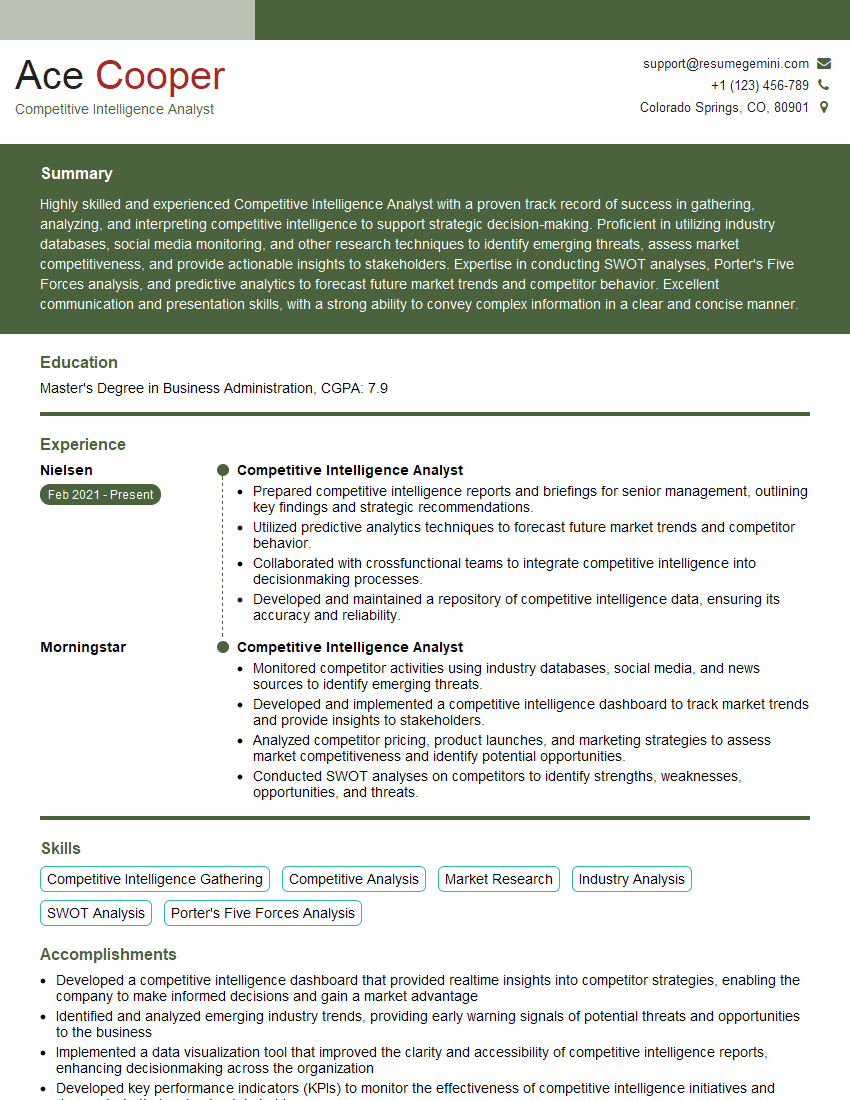
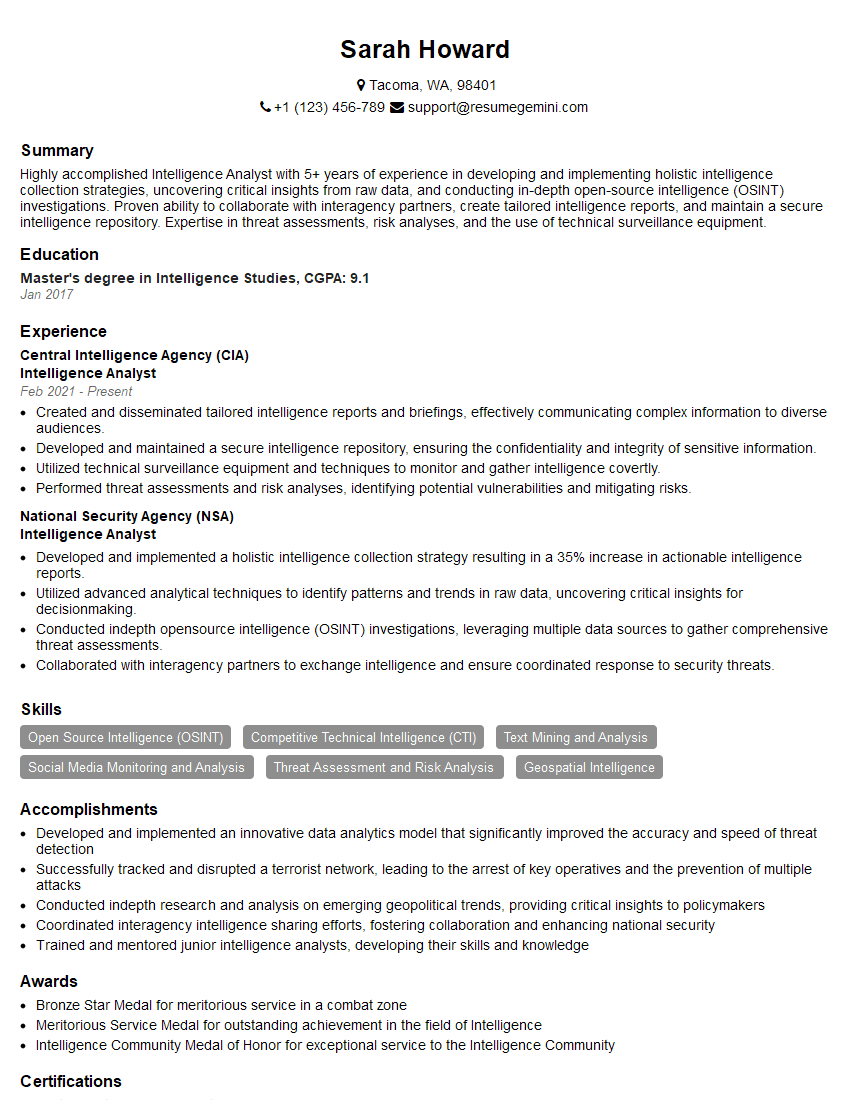
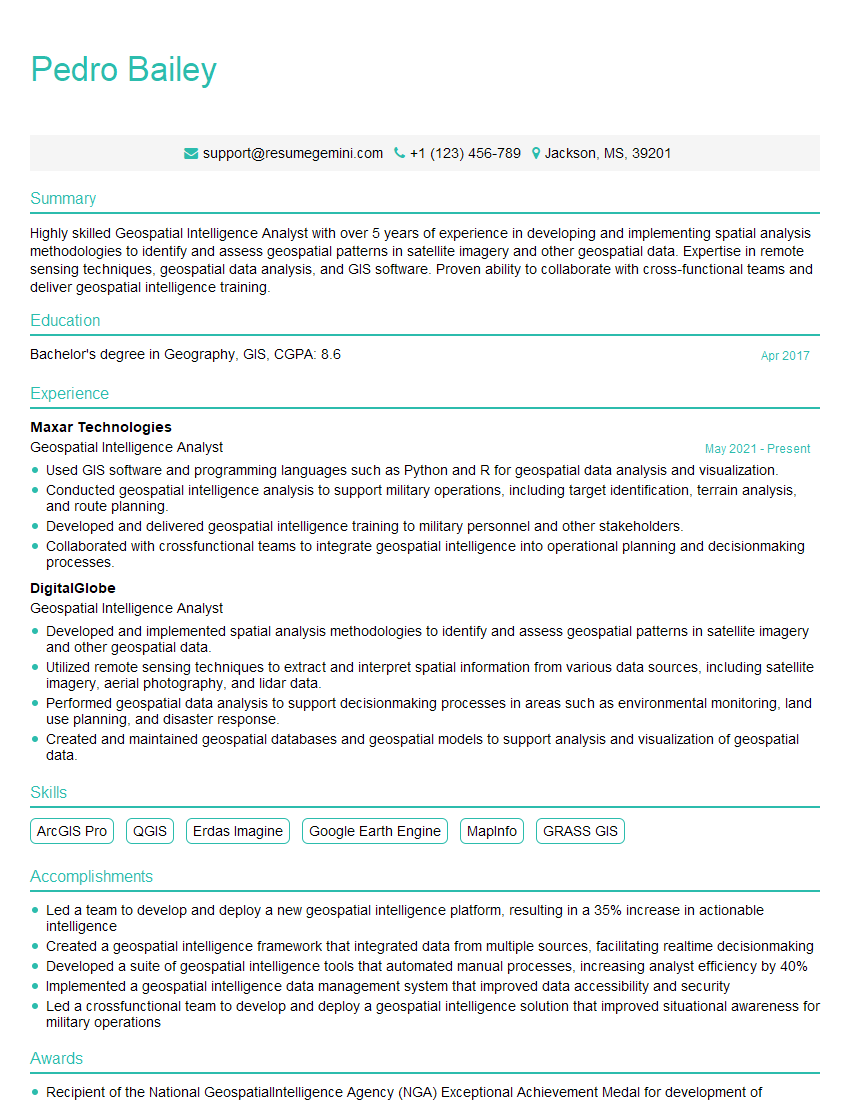
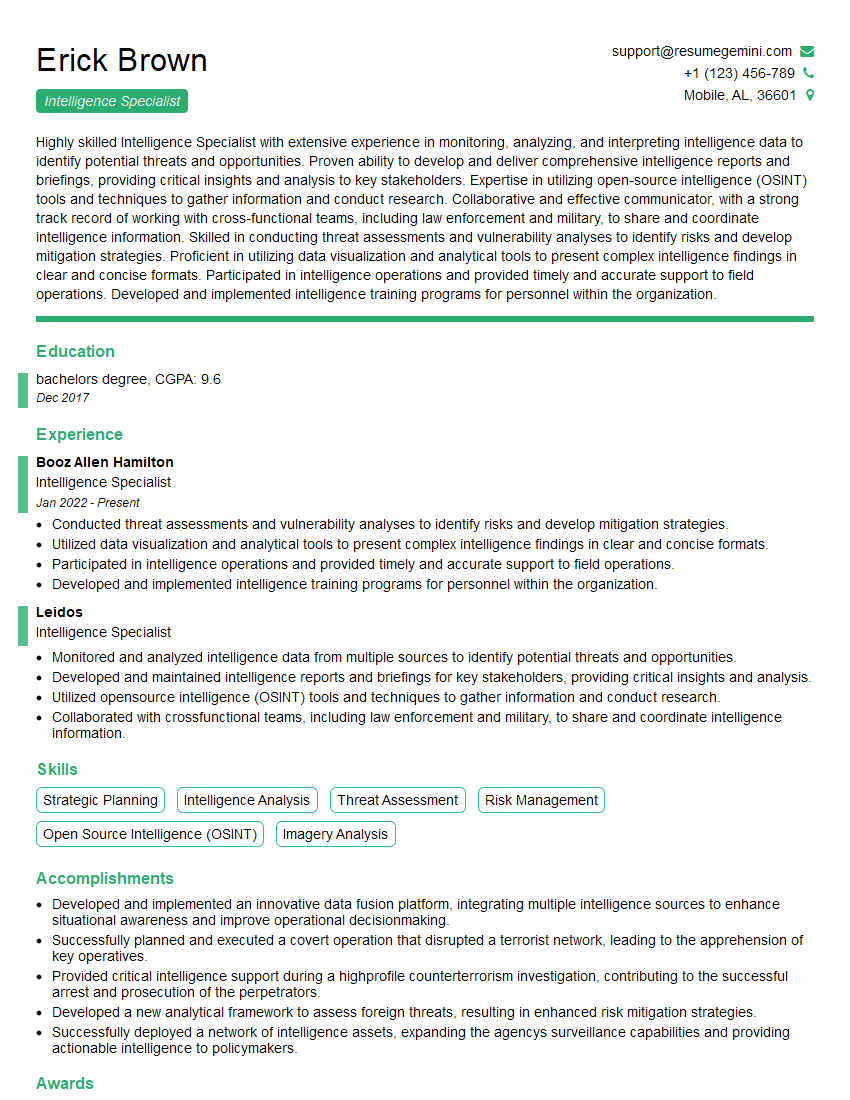
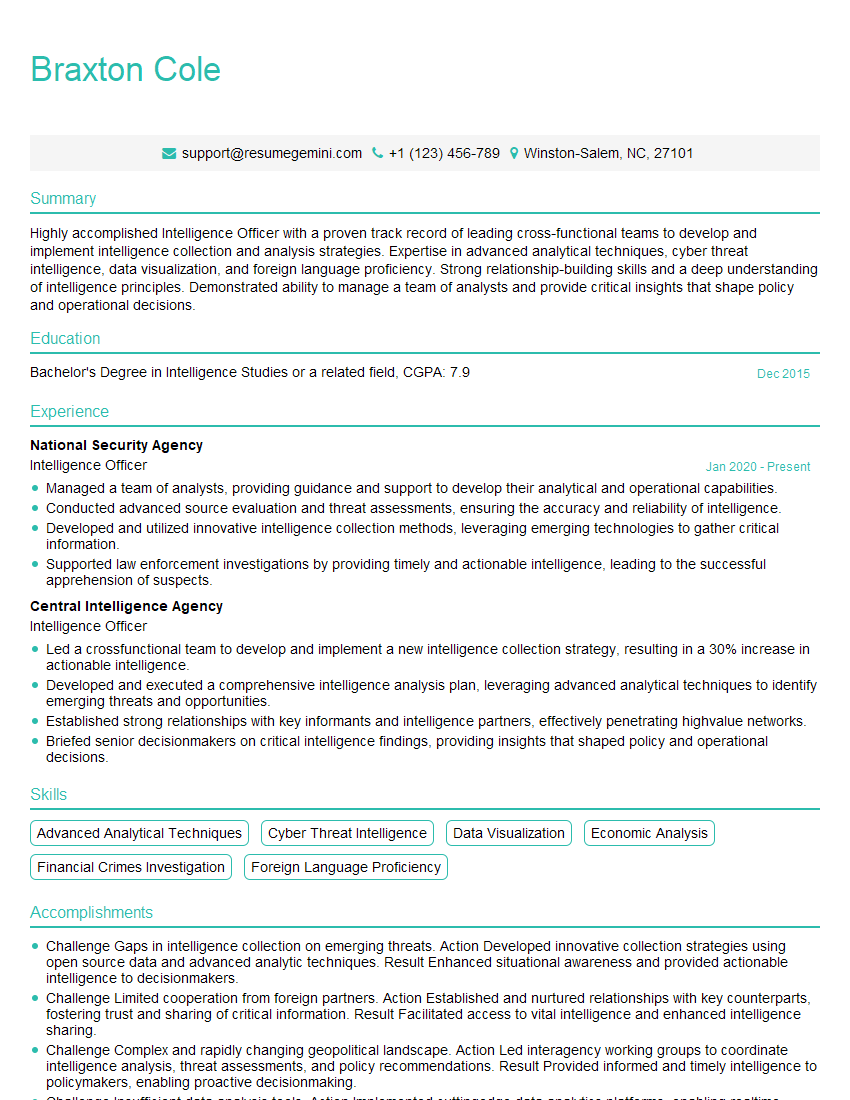
Mastering Intelligence Evaluation opens doors to a rewarding career with significant impact. To maximize your job prospects, creating an ATS-friendly resume is crucial. A well-structured resume highlights your skills and experience effectively, increasing your chances of getting noticed by recruiters. We highly recommend using ResumeGemini to craft a professional and compelling resume. ResumeGemini provides a user-friendly platform and offers examples of resumes tailored to Intelligence Evaluation, helping you present your qualifications in the best possible light. Take the next step towards your dream career – build your best resume with ResumeGemini today.
Explore more articles
Users Rating of Our Blogs
Share Your Experience
We value your feedback! Please rate our content and share your thoughts (optional).
What Readers Say About Our Blog
Very informative content, great job.
good