The right preparation can turn an interview into an opportunity to showcase your expertise. This guide to Intelligence Processing interview questions is your ultimate resource, providing key insights and tips to help you ace your responses and stand out as a top candidate.
Questions Asked in Intelligence Processing Interview
Q 1. Explain the intelligence cycle in detail.
The intelligence cycle is a systematic process used by intelligence agencies to gather, process, and disseminate information. It’s a continuous loop, not a linear process, constantly adapting to new information and evolving threats. Think of it like a well-oiled machine, each part crucial for the functioning of the whole.
- Planning and Direction: This initial phase identifies intelligence needs based on national security priorities, potential threats, or specific policy objectives. For example, a sudden increase in cyberattacks might trigger an intelligence requirement to understand the perpetrators and their motives.
- Collection: This stage involves gathering raw intelligence data using various methods (HUMINT, SIGINT, OSINT, etc., discussed in the next answer). This is where the ‘boots on the ground’ or the sophisticated technological tools do their work. Imagine gathering clues at a crime scene – each piece of information is a potential piece of the puzzle.
- Processing: Raw data collected in the previous stage is organized, reviewed for accuracy, and converted into usable intelligence. This involves data cleaning, translation, and the initial assessment of information reliability. Think of this as organizing the crime scene evidence – cataloging, analyzing, and preparing for further investigation.
- Analysis and Production: This stage involves interpreting the processed intelligence to draw conclusions, predict future events, and assess potential outcomes. Analysts use various methodologies (discussed later) to synthesize the data into actionable intelligence reports, providing valuable insights and making sense of the evidence.
- Dissemination: Finally, the finished intelligence product is shared with relevant policymakers, decision-makers, and other stakeholders who need this information to make informed decisions. This ensures the intelligence generated is actually used to inform strategy and action – effectively bringing the puzzle together and solving the case.
- Feedback: The cycle is closed by reviewing the effectiveness of the intelligence produced, identifying any gaps, and refining future collection and analysis efforts. This continuous feedback loop ensures the process is always improving and adapting to the ever-changing landscape.
Q 2. Describe your experience with different intelligence collection methods (HUMINT, SIGINT, OSINT, etc.).
My experience encompasses a broad range of intelligence collection methods. I’ve been involved in projects utilizing:
- HUMINT (Human Intelligence): This involves cultivating sources and developing relationships to gather information. I’ve worked on projects where we built trust with individuals, carefully managing relationships to gain access to sensitive information. Ethical considerations are paramount in this field, ensuring that sources are protected and legal boundaries are respected.
- SIGINT (Signals Intelligence): This relies on intercepting and analyzing various electronic signals, such as communications, radar, and electronic emissions. I have experience analyzing intercepted communications to identify patterns, reveal networks, and predict actions. This often requires specialized software and a deep understanding of signal processing techniques.
- OSINT (Open-Source Intelligence): This involves collecting information from publicly available sources such as news reports, social media, and academic publications. I’ve designed and implemented systems for automated OSINT collection and analysis, using natural language processing and machine learning to identify relevant trends and insights. The effectiveness of this method depends on effectively sifting through vast amounts of data to find meaningful clues.
- IMINT (Imagery Intelligence): I have experience analyzing satellite and aerial imagery to identify targets, assess infrastructure, and track movements. This often involves using specialized software for image enhancement and analysis, drawing conclusions from what appears at first to be just a picture.
- MASINT (Measurement and Signature Intelligence): This is a broader category encompassing various technical collection methods, such as acoustic, seismic, and nuclear monitoring. I’ve worked on projects interpreting data from various sensors to gain unique insights about an adversary’s capabilities and intentions. This often requires multi-disciplinary expertise and collaboration across scientific fields.
Each method has its strengths and weaknesses. Success often requires a multi-faceted approach, integrating data from several sources to build a comprehensive understanding of a situation.
Q 3. How do you prioritize intelligence requirements?
Prioritizing intelligence requirements is crucial, as resources are always limited. I use a multi-faceted approach:
- Urgency and Immediacy: Threats posing imminent danger are naturally prioritized. For example, a credible threat of an imminent terrorist attack would take precedence over a long-term geopolitical analysis.
- Impact and Significance: Requirements that could significantly impact national security or policy decisions receive higher priority. A potential large-scale cyberattack, for example, would be prioritized over smaller, isolated incidents.
- Feasibility and Collectibility: Some intelligence requirements might be highly desirable but difficult or impossible to obtain with available resources and methods. A realistic assessment of the potential for success is crucial. It’s crucial to assess if a requirement is even actionable given the limitations.
- Policy Relevance: Requirements directly related to current policy objectives are given priority. For example, intelligence relevant to ongoing diplomatic negotiations will take precedence over tangential issues.
- Cost-Benefit Analysis: A cost-benefit analysis, weighing the potential value of the intelligence against the resources required to collect and analyze it, is crucial. This ensures the agency spends resources wisely and efficiently.
This prioritization process is dynamic; priorities shift as new information becomes available and threats evolve.
Q 4. How do you evaluate the credibility of intelligence sources?
Evaluating source credibility is paramount in intelligence analysis. I employ several techniques:
- Source Track Record: Past performance is a significant indicator. A source with a history of accurate reporting is naturally more reliable than a source with a history of misinformation. This is similar to checking a witness’s past credibility in a legal investigation.
- Source Motivation: Understanding the source’s motives is crucial. Is the source seeking personal gain, political advantage, or genuinely trying to provide accurate information? This is akin to understanding the potential biases of witnesses.
- Information Corroboration: The most reliable intelligence is corroborated by multiple independent sources. If several unrelated sources confirm the same information, confidence in its accuracy increases significantly. This strengthens conclusions, similar to finding several pieces of evidence confirming a criminal’s identity.
- Method of Collection: The method used to collect information affects credibility. Information gathered through direct observation is generally more reliable than hearsay. The method needs to be taken into account for potential biases or weaknesses.
- Bias Detection: All sources have inherent biases. I critically analyze the information to identify and mitigate potential biases, ensuring these do not distort the analysis. Recognizing these biases is crucial in achieving impartial analysis.
Evaluating source credibility is an iterative process. As new information becomes available, the assessment of source credibility can be refined and updated.
Q 5. Describe your experience with data analysis techniques used in intelligence processing.
Data analysis in intelligence processing is multifaceted. My experience involves:
- Statistical Analysis: Identifying trends, patterns, and anomalies within large datasets using statistical methods. This can reveal connections and predict future events. For example, analyzing patterns in financial transactions might reveal money laundering activities.
- Network Analysis: Mapping relationships and connections between individuals, organizations, and events. This can identify key players in a network and understand the flow of information or resources. This might unveil a terrorist organization’s hierarchical structure.
- Link Analysis: Establishing connections between seemingly unrelated pieces of information. Connecting seemingly isolated events or data points can often reveal hidden patterns and reveal a bigger picture. This is akin to piecing together a complex puzzle.
- Data Mining and Machine Learning: Employing advanced algorithms to automatically identify patterns, anomalies, and correlations within large, complex datasets. This can automate the discovery of hidden patterns and trends, assisting human analysts.
- Text Analysis and Natural Language Processing (NLP): Extracting key insights from large volumes of textual data through techniques such as sentiment analysis, topic modeling, and named entity recognition. This allows extracting meaning from massive amounts of unstructured data, like news articles or social media posts.
These techniques are often used in conjunction to achieve a comprehensive understanding of the data.
Q 6. How do you handle conflicting or ambiguous intelligence information?
Handling conflicting or ambiguous intelligence is a common challenge. My approach involves:
- Identifying the Source of Conflict: Determining whether the conflict stems from differing methodologies, biases, or simply errors in reporting is the first crucial step. This often requires a meticulous review of the source material.
- Verifying and Validating: Cross-referencing the information with other sources and employing additional verification techniques is key. Independent corroboration can resolve conflicts and identify misinformation.
- Assessing the Quality of Sources: Evaluating the reliability and credibility of conflicting sources is crucial. Information from a highly credible source might outweigh conflicting data from a less credible source.
- Qualitative Analysis: While quantitative data is important, qualitative assessments, such as expert judgment and contextual analysis, can resolve ambiguity. Expert knowledge can aid in interpreting ambiguous data and making informed decisions.
- Acknowledging Uncertainty: It’s sometimes necessary to acknowledge that complete certainty cannot be achieved. Presenting different interpretations and acknowledging uncertainty enhances transparency and allows for cautious action. This demonstrates intellectual honesty and avoids misleading conclusions.
The goal is to present the most likely interpretation of the information, while acknowledging the potential for error or ambiguity.
Q 7. Explain your understanding of different intelligence analytic methodologies.
Various intelligence analytic methodologies exist, each with its strengths and weaknesses. My understanding includes:
- Structured Analytic Techniques (SATs): These techniques, such as analysis of competing hypotheses (ACH) and key assumptions check (KAC), help overcome cognitive biases and ensure thorough analysis. They provide a structured framework for examining multiple perspectives and ensuring completeness.
- Red Teaming: This involves simulating an adversary’s perspective to anticipate their actions and vulnerabilities. This provides a means of challenging assumptions and identifying potential blind spots.
- Indicators and Warning (I&W): This approach focuses on identifying indicators that might suggest the onset of a particular event or crisis. This is an anticipatory approach to detecting early signs of trouble.
- Trend Analysis: Examining long-term trends and patterns to predict future events. This is essential for understanding long-term geopolitical shifts.
- Comparative Analysis: This compares and contrasts different situations, events, or actors to draw meaningful parallels and lessons learned. This approach can provide valuable insights into potential future developments.
Selecting the appropriate methodology depends on the specific intelligence requirement and the nature of the available information. Often, a combination of methodologies is employed for a more comprehensive approach.
Q 8. How do you synthesize information from multiple sources to form a coherent assessment?
Synthesizing information from multiple sources requires a structured approach to ensure a coherent assessment. Think of it like assembling a puzzle – each piece of information (from different sources like open-source reporting, human intelligence, signals intelligence, etc.) contributes to the bigger picture. I use a multi-step process:
- Data Collection and Triangulation: I gather information from diverse and reliable sources, prioritizing those with established credibility. Then, I cross-reference data points to identify corroboration and inconsistencies. This triangulation helps validate information and reveal potential biases.
- Data Analysis and Interpretation: Once data is collected, I analyze it using various techniques such as trend analysis, comparative analysis, and network analysis to identify patterns, relationships, and anomalies. I consider the context and potential implications of each data point.
- Hypothesis Formation and Testing: Based on the analysis, I develop hypotheses to explain the observed patterns. These hypotheses are then tested against additional data and subjected to rigorous scrutiny. This iterative process refines our understanding and reduces uncertainty.
- Assessment and Conclusion: Finally, I formulate a coherent assessment by integrating the validated findings into a comprehensive narrative. This includes acknowledging uncertainties, limitations, and potential alternative interpretations. The goal is not only to present the facts but also to provide a clear and nuanced understanding of the situation.
For example, assessing a potential political uprising might involve analyzing social media trends, news reports, intelligence intercepts, and reports from human sources on the ground. By cross-referencing this information, I can identify patterns of mobilization, pinpoint potential leaders, and anticipate possible actions.
Q 9. Describe a time you had to work under pressure to deliver critical intelligence.
During a major international cyberattack, our team was tasked with identifying the perpetrators and mitigating the damage in real-time. The pressure was immense, as every minute counted. We worked around the clock, analyzing massive datasets of network traffic, logs, and malware samples. The challenge lay not just in the volume of data, but also in the need for rapid, accurate analysis under intense scrutiny.
To manage this, we utilized agile methodologies, breaking down the problem into smaller, manageable tasks. Each team member focused on a specific area, allowing for parallel processing. We implemented rigorous quality control checks at every stage to ensure accuracy and prevent errors. Open communication and regular briefings were crucial in keeping everyone informed and coordinated. Successfully identifying the attackers and limiting the damage within a critical timeframe was a testament to teamwork and efficient workflow under pressure. We created a detailed report, including technical details of the attack, the attributed actor, and recommendations for future mitigation.
Q 10. How do you ensure the accuracy and timeliness of your intelligence products?
Ensuring the accuracy and timeliness of intelligence products is paramount. It involves a multi-faceted approach:
- Source Validation: We rigorously assess the credibility of all sources, considering their track record, potential biases, and motivations. This involves a thorough vetting process that includes checking for consistency across multiple independent sources.
- Data Verification and Quality Control: We employ strict quality control procedures, including peer review and independent verification, to detect and correct errors. The use of automated tools for data cleaning and consistency checking enhances efficiency.
- Timely Dissemination: We utilize secure and efficient communication channels to ensure that timely dissemination of the intelligence to the appropriate recipients is accomplished promptly. This might involve customized briefings, secure email, or secure portals, depending on the sensitivity of the intelligence.
- Continuous Improvement: Regularly reviewing our processes and using feedback to refine our methodologies is key to refining our accuracy and timeliness. After-action reviews of past reports highlight areas for improvement.
Imagine a scenario where we’re tracking a potential terrorist threat. Any delay or inaccuracy in our assessment could have severe consequences. Our rigorous approach ensures the timely delivery of accurate and reliable information to decision-makers.
Q 11. What software and tools are you proficient in using for intelligence analysis?
My proficiency spans a range of software and tools crucial for intelligence analysis. This includes:
- Data Analysis Software:
R,Python(with libraries likePandas,NumPy, andScikit-learn), andTableaufor data manipulation, statistical analysis, and visualization. - Geospatial Intelligence (GEOINT) Software:
ArcGIS,QGIS, andGoogle Earth Profor map creation, spatial analysis, and imagery interpretation. - Network Analysis Software:
GephiandPalantirfor visualizing and analyzing complex relationships within datasets. - Database Management Systems:
SQLand experience with various relational and NoSQL databases for data storage and retrieval. - Intelligence-Specific Platforms: I am also familiar with various classified and proprietary platforms used for intelligence gathering, analysis, and dissemination, which I am unable to discuss publicly.
These tools are essential for handling the diverse data types involved in intelligence analysis and present findings effectively.
Q 12. Explain your experience with geospatial intelligence analysis.
My experience with geospatial intelligence (GEOINT) analysis is extensive. GEOINT involves the integration of imagery, geospatial data, and other information to produce intelligence assessments. I’ve worked extensively with satellite imagery, aerial photography, and map data to analyze various situations. For instance, during a humanitarian crisis in a disaster-stricken area, I used satellite imagery to assess the extent of the damage, identify areas needing immediate aid, and map the location of critical infrastructure.
My skills encompass:
- Imagery Analysis: Identifying and interpreting features in satellite and aerial imagery, using techniques like change detection and object recognition.
- Geospatial Data Management: Working with various geospatial data formats (shapefiles, GeoTIFFs, etc.) and integrating them with other datasets.
- Spatial Analysis: Using GIS software to perform spatial queries, overlay analysis, and proximity analysis to understand the geographic context of events.
- 3D Modeling and Visualization: Creating 3D models of terrain and infrastructure to improve situational understanding.
My experience demonstrates a capability to translate raw geospatial data into actionable intelligence, providing crucial insights for decision-makers in diverse scenarios.
Q 13. How do you identify and assess threats based on intelligence information?
Identifying and assessing threats involves a systematic approach, combining intelligence analysis with threat modeling techniques.
- Threat Identification: This starts with collecting and analyzing information from various sources to identify potential threats. This includes open-source intelligence (OSINT), human intelligence (HUMINT), signals intelligence (SIGINT), and more. We look for indicators of intent and capability.
- Threat Assessment: Once potential threats are identified, we conduct a detailed assessment, including:
- Likelihood: How likely is the threat to materialize?
- Impact: What would be the potential consequences if the threat occurs?
- Vulnerability: How vulnerable are our assets or interests to the threat?
- Capability: Does the threat actor possess the resources and capabilities to carry out the threat?
- Prioritization: Based on the likelihood and impact, we prioritize threats to focus our resources where they are most needed.
- Mitigation: Finally, we develop mitigation strategies to reduce the likelihood and impact of the most significant threats. This might involve implementing security measures, developing contingency plans, or working with other agencies.
For instance, if we detect indicators of a potential cyberattack, we will analyze its likelihood, its potential impact (data breach, system disruption), our vulnerability, and the attacker’s capability. This assessment allows us to develop effective countermeasures and to prioritize our resources effectively.
Q 14. Describe your experience with intelligence reporting and dissemination.
My experience in intelligence reporting and dissemination encompasses the entire lifecycle, from initial analysis to final product delivery. I understand the importance of creating clear, concise, and accurate reports that effectively communicate intelligence findings to diverse audiences. My experience includes:
- Report Writing: Crafting intelligence reports tailored to specific audiences and needs, ranging from detailed analytical assessments to concise executive summaries. I ensure that reports are well-structured, factually accurate, and free of biases.
- Dissemination Strategies: Selecting the most appropriate dissemination methods based on the sensitivity of the information and the recipient’s needs. This includes briefings, secure email, classified portals, and tailored reports.
- Presentation Skills: Effectively presenting intelligence findings to decision-makers, both orally and visually. I use data visualization techniques to enhance the clarity and impact of my presentations.
- Feedback Incorporation: Regularly incorporating feedback from recipients to enhance the quality and usefulness of my intelligence products. This iterative approach leads to continuous improvements in reporting and dissemination processes.
Effective communication of intelligence is as important as the analysis itself. My goal is to ensure that critical information reaches the right people at the right time, in a format that facilitates informed decision-making.
Q 15. How do you ensure the security and confidentiality of intelligence information?
Securing intelligence information is paramount. It involves a multi-layered approach encompassing technical, physical, and procedural safeguards. Think of it like a fortress with multiple walls.
Technical Security: This includes encryption of data both in transit and at rest, using strong algorithms like AES-256. Access control systems, like role-based access control (RBAC), limit who can view sensitive data. Intrusion detection systems (IDS) and firewalls monitor network traffic for suspicious activity. For example, classified documents might be stored on encrypted drives accessible only through secure networks.
Physical Security: This involves securing the physical location where the information is stored. Think secure facilities with controlled access, surveillance systems, and robust backup and disaster recovery plans. Imagine a highly secured server room with biometric access and 24/7 monitoring.
Procedural Security: This focuses on the processes and protocols that govern how intelligence is handled. This includes strict data handling procedures, background checks for personnel, and regular security audits. For instance, a clear protocol might dictate how classified information is shared, stored, and destroyed. Compartmentalization of information—limiting access based on need-to-know—is crucial.
These layers work together to create a robust security posture. Regular training and awareness programs for personnel are crucial to ensure everyone understands their responsibility in maintaining confidentiality.
Career Expert Tips:
- Ace those interviews! Prepare effectively by reviewing the Top 50 Most Common Interview Questions on ResumeGemini.
- Navigate your job search with confidence! Explore a wide range of Career Tips on ResumeGemini. Learn about common challenges and recommendations to overcome them.
- Craft the perfect resume! Master the Art of Resume Writing with ResumeGemini’s guide. Showcase your unique qualifications and achievements effectively.
- Don’t miss out on holiday savings! Build your dream resume with ResumeGemini’s ATS optimized templates.
Q 16. Explain your understanding of ethical considerations in intelligence analysis.
Ethical considerations are central to intelligence analysis. Our work directly impacts individuals, organizations, and nations. We must adhere to strict ethical guidelines to ensure our actions are lawful, fair, and morally sound.
Accuracy and Objectivity: We must strive for unbiased analysis, presenting information fairly and avoiding manipulation. This means acknowledging limitations in data and avoiding confirmation bias—seeking to prove a pre-existing belief rather than objectively analyzing information.
Privacy and Human Rights: We must respect the privacy rights of individuals and ensure our actions do not violate human rights. The collection and use of personal data must be lawful, justified, and proportionate.
Transparency and Accountability: Our work should be conducted transparently, and we should be accountable for our actions. This includes following established procedures and being open to scrutiny when necessary.
Minimizing Harm: We must consider the potential consequences of our analysis and take steps to minimize harm. This includes considering the potential impact on individuals, communities, and international relations.
Ethical dilemmas are common in this field. For example, balancing the need to collect information for national security with the protection of privacy rights requires careful judgment and adherence to strict legal and ethical standards.
Q 17. How do you stay current on the latest developments in your field?
Staying current is vital in this rapidly evolving field. I utilize a multifaceted approach:
Professional Journals and Publications: I regularly read journals like Studies in Intelligence and other relevant publications to stay updated on the latest research and methodologies.
Conferences and Workshops: Attending industry conferences and workshops allows me to network with peers and learn about cutting-edge techniques and emerging challenges. This includes both academic and government-sponsored events.
Online Courses and Webinars: Many reputable organizations offer online courses and webinars on various aspects of intelligence processing. This allows for convenient and continuous learning.
Professional Networks: Engaging in professional networks and online forums helps me learn from the experiences and insights of others.
Monitoring News and Developments: I closely follow relevant news sources and geopolitical developments to understand the context in which intelligence is collected and analyzed.
This continuous learning ensures my skills remain sharp and my knowledge base remains up-to-date.
Q 18. Describe your experience with risk assessment and mitigation related to intelligence.
Risk assessment and mitigation are crucial in intelligence processing. It’s about identifying potential threats and vulnerabilities and developing strategies to minimize their impact. This often involves a structured approach:
Identify Threats and Vulnerabilities: This involves considering all potential risks, including data breaches, compromise of sources, and misinterpretation of information. For example, a vulnerability might be a weakness in a database system, while a threat might be a state-sponsored hacking attempt.
Assess Likelihood and Impact: This step involves analyzing the probability of each risk occurring and its potential impact. A risk matrix can be used to visualize this, with likelihood and impact rated on a scale (e.g., low, medium, high).
Develop Mitigation Strategies: Based on the risk assessment, we develop strategies to reduce the likelihood or impact of each risk. This might involve implementing stronger security measures, improving data validation processes, or strengthening communication protocols.
Monitor and Review: Risk assessments are not one-time events. They need to be regularly monitored and reviewed to adapt to changing circumstances and emerging threats.
For example, if a risk assessment identifies a high likelihood of a data breach, mitigation strategies might include encrypting sensitive data, implementing multi-factor authentication, and conducting regular security audits.
Q 19. How do you use predictive analytics in intelligence processing?
Predictive analytics uses historical data and statistical modeling to forecast future events. In intelligence processing, it helps anticipate threats, identify patterns, and support decision-making.
For example, we might use predictive modeling to analyze historical data on terrorist attacks to identify potential future targets or hotspots. This might involve using machine learning algorithms to identify patterns and correlations in the data, such as geographical location, timing, and the types of attacks used. The output would not be a definitive prediction but rather a probability assessment of potential future events. It’s crucial to remember that these are probabilistic assessments and not certainties. Human judgment and contextual understanding remain essential in interpreting the results.
Other applications include predicting the spread of disinformation campaigns, forecasting economic trends with national security implications, and anticipating the movements of high-value targets. The success of predictive analytics depends on the quality and quantity of the data used, the accuracy of the models, and the ability to interpret the results in a nuanced and contextual way.
Q 20. Explain your experience with open-source intelligence (OSINT) collection and analysis.
Open-source intelligence (OSINT) is invaluable. It’s the process of collecting and analyzing publicly available information to support intelligence gathering. This is a cost-effective and often surprisingly effective way to gather information.
My experience involves using a variety of tools and techniques to collect and analyze OSINT data. This includes using search engines, social media platforms, news websites, government publications, and academic databases. Data is often unstructured and requires careful curation and analysis. I utilize techniques like keyword searches, web scraping, social network analysis, and geospatial analysis to find relevant information.
For example, I might use social media to monitor online discussions about a particular event or topic, analyze satellite imagery to identify infrastructure changes, or use news reports to track the movements of key individuals. The key is to be systematic and methodical in collecting and analyzing the data, and to be aware of the biases and limitations of open-source information.
Verification is crucial. Information from multiple sources should be cross-referenced to ensure accuracy and avoid the spread of misinformation or disinformation.
Q 21. How do you use data visualization techniques to communicate intelligence findings?
Data visualization is crucial for communicating complex intelligence findings effectively. Instead of presenting long, dense reports, visuals make it easier to understand patterns, trends, and relationships in data.
Maps: Geographic information systems (GIS) are essential for visualizing locations, movements, and events on a map. This is crucial in situations where geographic context is important.
Charts and Graphs: Bar charts, line graphs, pie charts, and other graphical representations can effectively communicate trends, comparisons, and proportions.
Networks: Network diagrams can illustrate the relationships between individuals, organizations, or events. This is particularly useful for visualizing complex networks of actors or relationships.
Dashboards: Interactive dashboards can present multiple visualizations in a single view, allowing analysts to explore data from different angles.
Choosing the right visualization depends on the data and the message you are trying to convey. For instance, a network diagram might be ideal for showing the connections within a terrorist organization, while a map could illustrate the spread of a disease outbreak. Effective visualizations are clear, concise, and easy to interpret, enhancing the understanding and impact of intelligence findings.
Q 22. Describe your understanding of different types of biases that can affect intelligence analysis.
Biases in intelligence analysis are systematic errors in thinking that can lead to inaccurate conclusions. They stem from various sources, affecting how we collect, process, and interpret information. These biases can significantly impact the effectiveness and reliability of intelligence products.
Confirmation Bias: This is the tendency to favor information that confirms pre-existing beliefs and disregard contradictory evidence. For example, an analyst might focus on intelligence supporting a particular hypothesis while downplaying evidence that challenges it.
Mirror Imaging: This involves assuming that other actors, particularly adversaries, think and act like we do. This can lead to misjudgments of their intentions and capabilities. Imagine assuming a rival company will react to a market shift in the same way your company would.
Availability Bias: This is the tendency to overemphasize readily available information, often because it’s recent or emotionally charged, while neglecting less accessible but potentially crucial data. A vivid recent event might overshadow a pattern of behavior that indicates a different trend.
Groupthink: This occurs when the desire for consensus within a group overrides critical thinking and independent evaluation of information. It can lead to the suppression of dissenting opinions and the acceptance of flawed analyses.
Anchoring Bias: This is when an initial piece of information (the ‘anchor’) unduly influences subsequent judgments, even if the anchor is irrelevant or inaccurate. An analyst might be anchored to an initial estimate of an adversary’s strength, making it hard to adjust to later, contradictory intelligence.
Mitigating these biases requires rigorous methods, such as employing structured analytic techniques, seeking diverse perspectives, actively challenging assumptions, and using multiple sources of information.
Q 23. How would you handle a situation where your analysis contradicts established assumptions?
Contradicting established assumptions is a crucial aspect of intelligence analysis. It’s not about rejecting assumptions outright but about rigorously evaluating them against new evidence. My approach involves a structured process:
Document the Discrepancy: Carefully record the conflict between the new analysis and the established assumption, specifying the sources and reasoning behind both.
Assess the Quality of Evidence: Evaluate the reliability and validity of the new information, considering its source, methodology, and potential biases. Compare this to the evidence supporting the established assumption.
Explore Alternative Explanations: Brainstorm potential explanations for the discrepancy. Is there a methodological flaw? Are there missing data points? Could the established assumption be partially true but not fully accurate?
Develop Testable Hypotheses: Formulate hypotheses that explain the discrepancy, and devise ways to test them with additional research and analysis.
Communicate Findings: Present the findings, including the discrepancy, the assessment of evidence, alternative explanations, and the results of testing, in a clear and transparent manner. Clearly explain the limitations of the analysis.
Update Assumptions: Based on the evidence and analysis, update the assumptions accordingly. If the new evidence strongly challenges the assumption, a revision or even replacement may be necessary. This might involve updating models or intelligence assessments.
For example, during a project analyzing a geopolitical situation, my analysis revealed economic indicators that were inconsistent with the widely held belief about a nation’s stability. I documented this, assessed the reliability of the new data, proposed alternative explanations, tested my hypotheses through further research, and then presented my revised assessment, ultimately leading to a more nuanced understanding of the situation.
Q 24. Explain your experience with collaborative intelligence analysis.
Collaborative intelligence analysis is essential for effective intelligence work. It leverages the diverse expertise and perspectives of multiple analysts to produce more comprehensive and robust intelligence products. My experience in collaborative settings emphasizes the importance of:
Effective Communication: Clear, concise, and timely communication is crucial. This involves using shared platforms for data sharing and employing consistent terminology and analytical frameworks.
Structured Methodologies: Employing structured analytical techniques, such as red teaming, ensures a systematic and unbiased approach to analysis, even within a collaborative environment. This helps to prevent groupthink.
Conflict Resolution: Disagreements are inevitable. It’s crucial to establish a process for managing conflict constructively, promoting respectful debate, and reaching consensus based on evidence.
Data Fusion: Combining data from various sources requires skill in reconciling inconsistencies and integrating diverse information into a coherent narrative. This involves leveraging technology and human expertise to effectively filter, analyze, and interpret information from disparate sources.
Shared Understanding: Maintaining a common understanding of the problem, the analytical task, and the final product’s objectives is essential for effective teamwork. Regular check-ins and briefings help ensure everyone is on the same page.
In a recent project, I collaborated with a team of analysts with expertise in different fields (e.g., open-source intelligence, signals intelligence, and human intelligence). Through structured discussions, data sharing, and the use of collaborative software, we were able to produce a far more comprehensive and accurate analysis than any of us could have achieved alone.
Q 25. Describe a time you had to overcome a challenge in intelligence processing.
One challenge I faced involved analyzing a complex cyberattack where the attackers employed sophisticated techniques to mask their origins and activities. The challenge was in piecing together fragmented data from multiple sources (network logs, malware samples, and open-source reporting) to reconstruct the attack timeline and identify the perpetrators. This involved overcoming several hurdles.
Data Scarcity: The available data was incomplete and often inconsistent across sources, demanding meticulous cross-referencing and data validation.
Technical Complexity: The attack involved advanced encryption and obfuscation techniques, requiring specialized knowledge and tools to analyze the technical data.
Time Constraints: The need for timely intelligence made it necessary to rapidly process and analyze large volumes of data under pressure.
I overcame these challenges by leveraging a multi-faceted approach. This included: using advanced data analysis tools to identify patterns in the data; collaborating with specialists in malware analysis and network forensics; employing structured analytic techniques to synthesize information from multiple sources; and prioritizing data collection to address critical gaps. Through persistence and a systematic approach, we successfully reconstructed the attack, identified the perpetrators, and contributed to a preventative strategy.
Q 26. How do you assess the validity and reliability of open-source information?
Assessing the validity and reliability of open-source information (OSINT) is crucial due to its inherent variability in quality and accuracy. A robust approach considers several factors:
Source Evaluation: Identify the source’s origin, reputation, and potential biases. Is it a reputable news organization, a government agency, a blog, or social media post? What is the source’s known perspective or agenda?
Content Analysis: Evaluate the information’s content for accuracy, consistency, and completeness. Does the information corroborate with other sources? Are there any inconsistencies or contradictions within the information itself?
Triangulation: Verify information through multiple independent sources. This reduces the risk of relying on a single biased or unreliable source.
Contextualization: Consider the information’s context and timeliness. Is the information relevant to the current situation? Is it up-to-date or outdated?
Data Corroboration: Compare information across various sources to determine consistency and convergence of facts. The more sources concur, the higher the confidence in the information.
For example, when analyzing OSINT regarding a particular event, I’d cross-reference information from several news articles, government reports, social media posts, and academic papers, carefully assessing each source’s credibility before drawing conclusions. This multi-layered validation process helps ensure more accurate and reliable intelligence products.
Q 27. Explain your experience with social network analysis in intelligence gathering.
Social network analysis (SNA) is a powerful tool for intelligence gathering, providing insights into relationships, communication patterns, and influence within groups or organizations. My experience with SNA has focused on:
Identifying Key Players: SNA helps identify central figures within a network, whether it’s a terrorist organization, a criminal syndicate, or a social movement. Identifying these key players assists in targeting efforts, identifying vulnerabilities, and predicting behaviour.
Understanding Communication Flows: SNA reveals how information flows within a network. This provides insights into communication strategies, propaganda dissemination, and operational planning. This can help identify information leaks or vulnerabilities.
Predicting Behavior: By analyzing network structures and dynamics, we can predict future behavior, such as the spread of misinformation or the planning of an attack.
Network Visualization: Software tools can visualize complex networks, making it easier to identify clusters, key players, and other patterns. This provides valuable insights for the development of disruption strategies and predictive models.
For instance, in one project, I used SNA to analyze a social media network used by a disinformation campaign. By visualizing the network and identifying key influencers, we were able to develop strategies to counteract the spread of misinformation and identify the sources of the campaign.
Q 28. How do you communicate complex intelligence findings to a non-technical audience?
Communicating complex intelligence findings to a non-technical audience requires clear, concise, and accessible language. My approach focuses on:
Simplifying Terminology: Avoid technical jargon or replace it with plain language explanations. Use analogies and real-world examples to illustrate complex concepts.
Visual Aids: Incorporate charts, graphs, and maps to present key findings visually. Visual aids make complex data easier to understand and remember.
Storytelling: Frame the intelligence findings as a narrative, focusing on the key events, actors, and motivations. Narratives help audiences engage with the information on an emotional level.
Focusing on the ‘So What?’: Explain the significance of the findings and their implications. Why should the audience care? What are the practical implications of the intelligence?
Tailoring the Message: Adapt the communication style and content to the specific audience and their level of knowledge. The same presentation wouldn’t work for a group of policymakers as it would for the general public.
For example, when briefing policymakers on a complex cyber threat, I used simplified language, charts illustrating attack patterns, and a narrative that highlighted the potential consequences of the threat. By focusing on the practical implications and avoiding technical jargon, I ensured the policymakers understood the urgency and the nature of the threat.
Key Topics to Learn for Intelligence Processing Interview
- Data Collection & Analysis: Understanding various data sources, techniques for data gathering, and methods for assessing data reliability and validity. Practical application: Analyzing social media trends to predict potential threats.
- Signal Processing & Feature Extraction: Mastering techniques to identify key features and patterns within complex datasets. Practical application: Developing algorithms to detect anomalies in network traffic.
- Pattern Recognition & Machine Learning: Applying algorithms to identify trends, predict outcomes, and automate the analysis process. Practical application: Building predictive models for risk assessment.
- Data Visualization & Presentation: Effectively communicating insights derived from complex data analysis through clear and concise visualizations. Practical application: Creating compelling dashboards to present findings to stakeholders.
- Intelligence Gathering & Fusion: Understanding how to integrate information from multiple sources to create a holistic understanding of a situation. Practical application: Combining open-source intelligence with classified data for a comprehensive analysis.
- Ethical Considerations & Privacy: Understanding the legal and ethical implications of intelligence processing and ensuring data privacy and security. Practical application: Implementing protocols to protect sensitive information.
- Problem-Solving & Critical Thinking: Developing strong analytical skills to identify problems, formulate solutions, and evaluate outcomes. Practical application: Designing robust solutions to overcome challenges in data analysis.
Next Steps
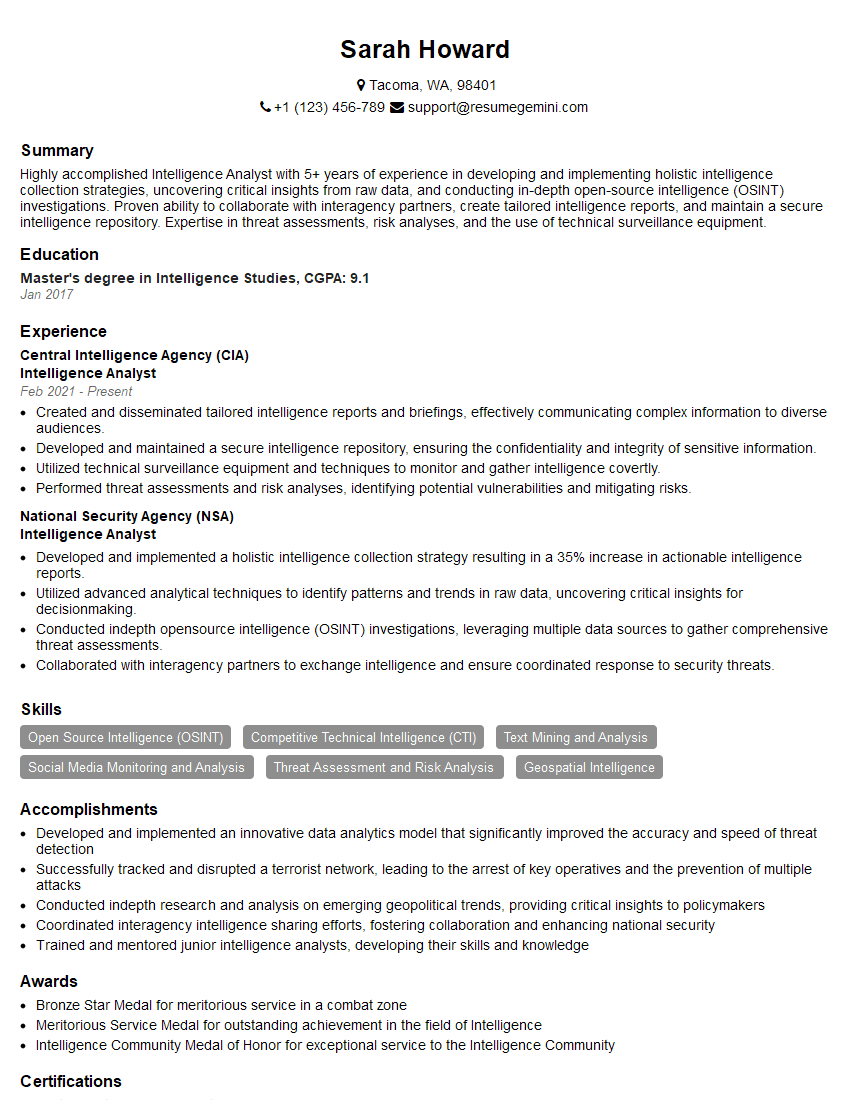
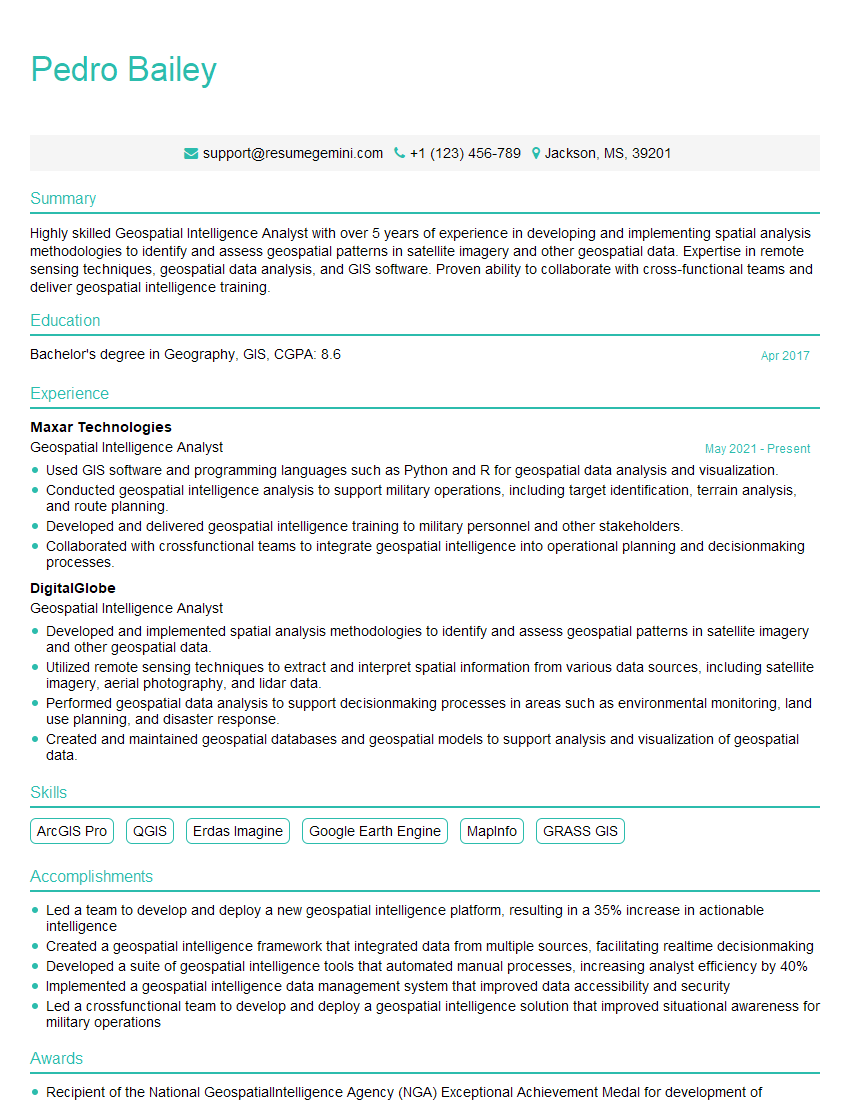
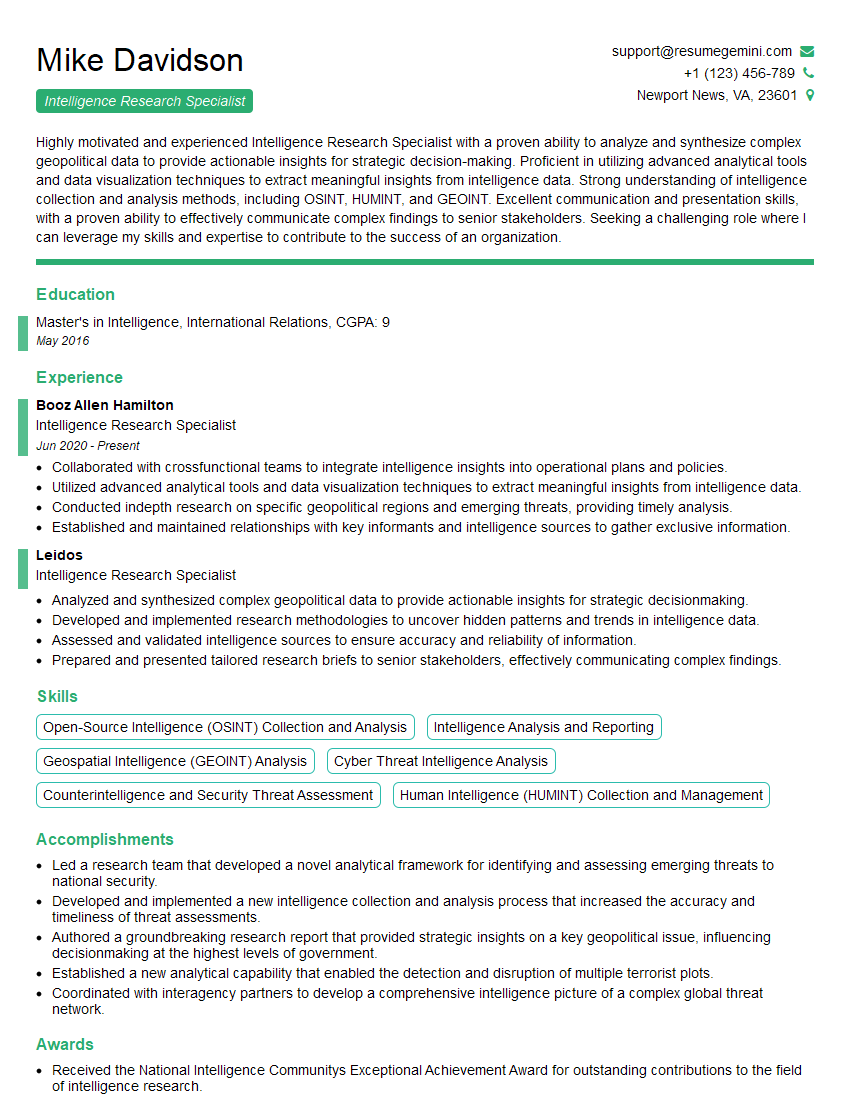
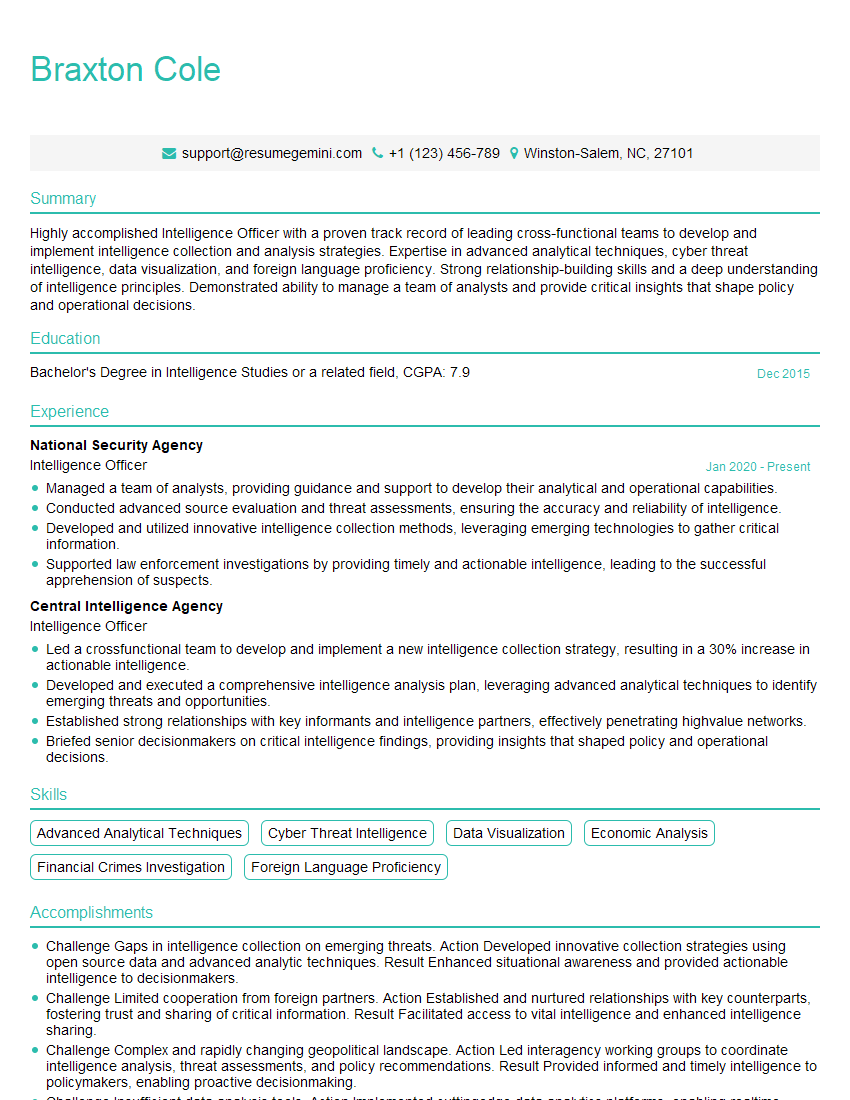
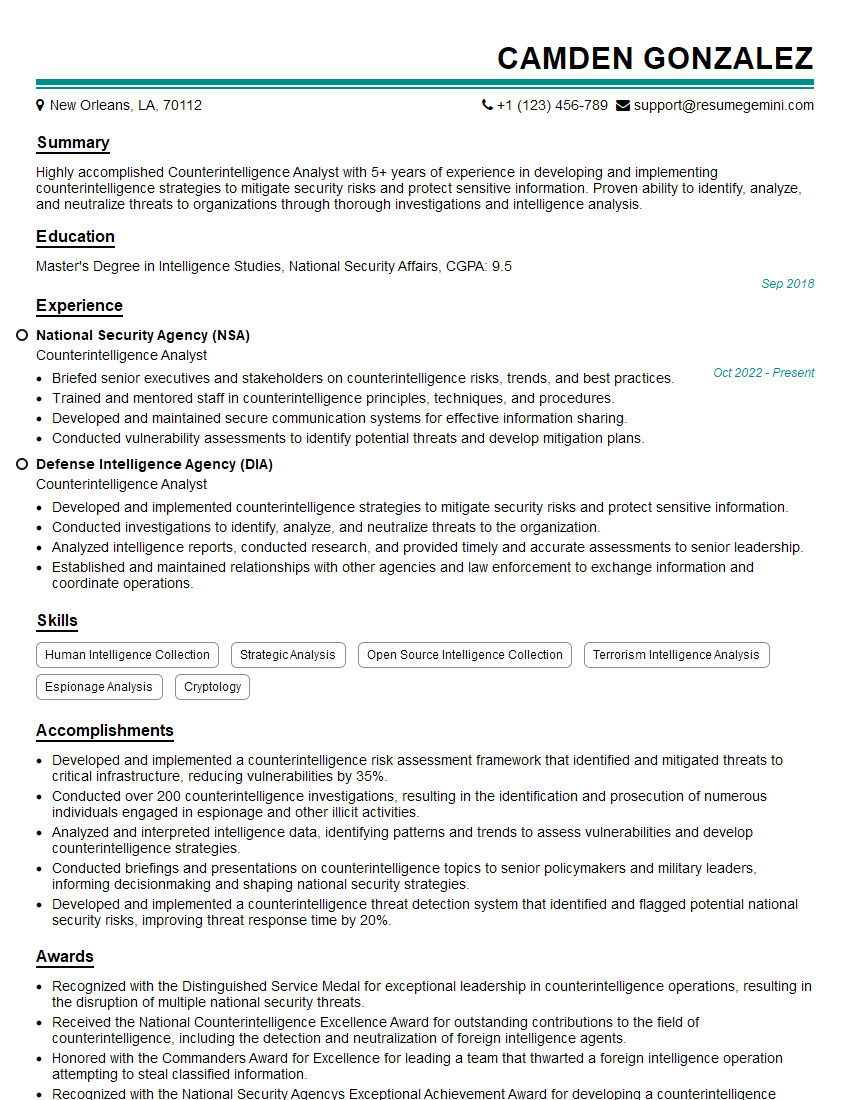
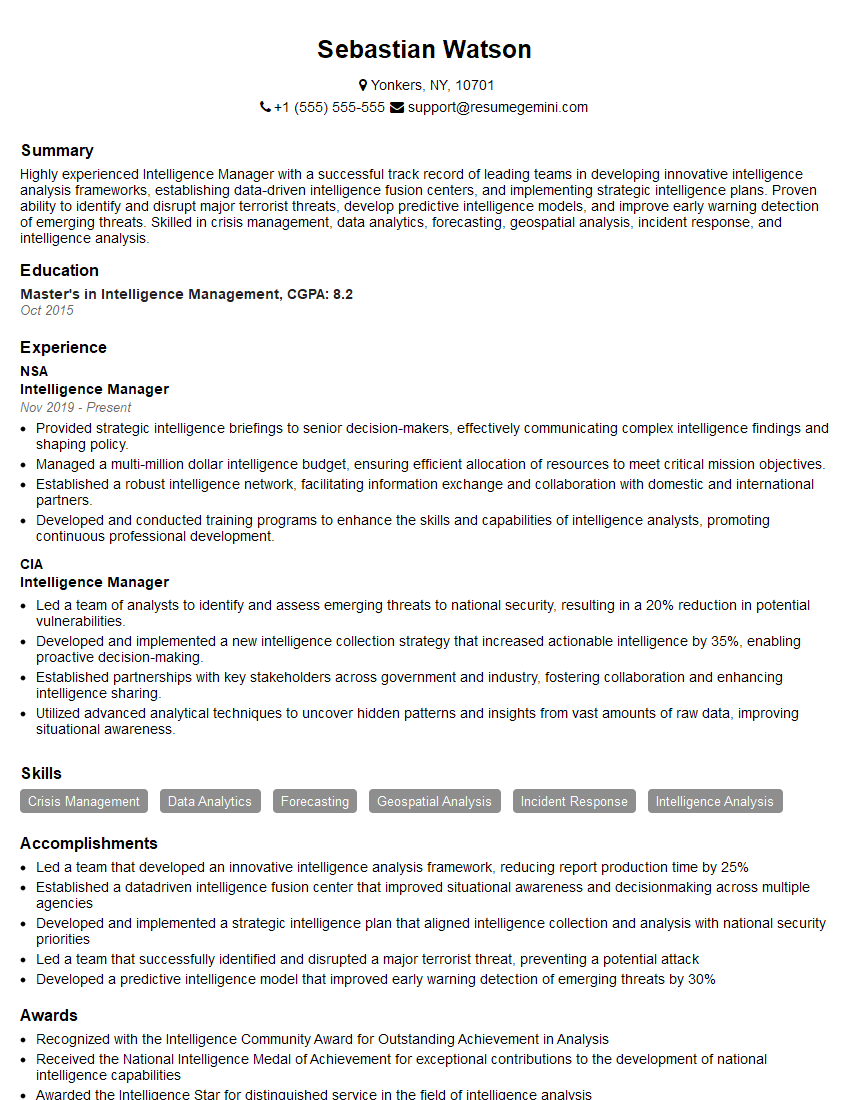
Mastering Intelligence Processing opens doors to exciting and impactful careers, offering opportunities for continuous learning and professional growth within dynamic and challenging environments. To significantly increase your chances of landing your dream role, crafting an ATS-friendly resume is crucial. This ensures your application gets noticed by recruiters and hiring managers. We highly recommend using ResumeGemini to build a professional and impactful resume tailored to the Intelligence Processing field. Examples of resumes specifically crafted for Intelligence Processing roles are available to help guide you.
Explore more articles
Users Rating of Our Blogs
Share Your Experience
We value your feedback! Please rate our content and share your thoughts (optional).
What Readers Say About Our Blog
Very informative content, great job.
good