Feeling uncertain about what to expect in your upcoming interview? We’ve got you covered! This blog highlights the most important Intelligence Reporting and Analysis interview questions and provides actionable advice to help you stand out as the ideal candidate. Let’s pave the way for your success.
Questions Asked in Intelligence Reporting and Analysis Interview
Q 1. Explain the difference between strategic and tactical intelligence.
Strategic and tactical intelligence differ primarily in their scope and timeframe. Think of it like planning a military campaign: strategic intelligence is the big picture – long-term goals, geopolitical analysis, understanding the overall threat landscape, and anticipating future challenges. For example, analyzing the long-term economic and political stability of a region to predict potential future conflicts would be strategic intelligence. Tactical intelligence, on the other hand, focuses on immediate, short-term objectives. It’s the detailed information needed for specific operations. This might include real-time enemy positions, troop movements, or the layout of a target building during a planned raid.
In essence, strategic intelligence informs what needs to be done, while tactical intelligence informs how it should be done. They are interconnected; tactical success contributes to the achievement of strategic goals.
Q 2. Describe your experience with open-source intelligence (OSINT) gathering and analysis.
My experience with OSINT is extensive. I’ve utilized a wide range of publicly available sources, from news articles and social media platforms (Twitter, Facebook, etc.) to government reports, academic papers, and specialized websites. For instance, in one project, we used social media sentiment analysis to gauge public opinion toward a political figure in a specific region, augmenting information from traditional news sources. My analysis involves not just data gathering but also critically evaluating the reliability and potential biases of each source. I regularly employ techniques like triangulation, corroborating information from multiple independent sources to build a more complete and accurate picture.
I am proficient in using OSINT tools to sift through large datasets, identify relevant information, and extract key insights. This includes using keyword searches, advanced search operators (e.g., Boolean operators), and data visualization techniques to present findings clearly and effectively.
Q 3. How do you assess the credibility and reliability of intelligence sources?
Assessing source credibility is crucial. I use a multi-faceted approach: First, I consider the source’s track record. Has this source provided reliable information in the past? Is it known for accuracy and objectivity, or is it biased or prone to misinformation? Second, I look at the methodology used to obtain the information. Was the data collected systematically and rigorously, or is it anecdotal? Third, I evaluate the source’s motivation. Does the source have any vested interest in the outcome? Are there potential biases or incentives to misrepresent the truth? Fourth, I look for corroboration. Do other independent sources support the information provided? If multiple credible sources corroborate the same information, it increases its reliability significantly.
This process is iterative. I might start with a potentially unreliable source, but if its information can be verified through multiple reliable channels, its value increases. It’s a judgment call, but experience helps refine this process significantly.
Q 4. What techniques do you use to identify biases and limitations in intelligence data?
Identifying biases and limitations is paramount to objective analysis. I use several techniques: First, I actively seek out alternative perspectives and challenge my own assumptions. This includes seeking out information that contradicts initial findings. Second, I apply structured analytic techniques like Analysis of Competing Hypotheses (ACH) to systematically evaluate different explanations for an event or phenomenon. This helps to expose hidden biases and ensure all possibilities are considered. Third, I consider the contextual limitations of the data. Was the information collected under duress? Was it subject to censorship or manipulation? Understanding these limitations informs how I interpret the data.
For example, relying solely on government reports might overlook dissenting viewpoints. Similarly, social media data can be heavily influenced by echo chambers and bots. Understanding these limitations helps to paint a more accurate picture. I often document these biases and limitations transparently in my reports, enhancing their credibility and helping end-users to make informed decisions.
Q 5. Explain the process of developing an intelligence report, from data collection to final product.
Developing an intelligence report is a multi-stage process: It begins with defining the intelligence requirement – what specific information is needed? Next is collection – gathering relevant data from various sources (HUMINT, SIGINT, OSINT, etc.). Then comes processing – organizing, analyzing, and evaluating the collected data to identify patterns, trends, and anomalies. This often involves data cleaning and validation. The analysis phase involves interpreting the processed data, drawing conclusions, and developing assessments. This is where techniques like ACH or matrixes are used. Finally, the dissemination phase involves crafting a clear, concise, and well-structured report tailored to the intended audience, with appropriate security measures and considerations for protecting sensitive information.
Each stage requires careful planning and execution. Poor data collection, flawed analysis, or inadequate dissemination can render the entire process ineffective. The final product is a decision-support tool, not just a collection of facts.
Q 6. How do you prioritize intelligence requirements and allocate resources effectively?
Prioritizing intelligence requirements and resource allocation requires a strategic approach. I typically use a combination of methods: First, I consider the impact of potential threats or opportunities. Which issues pose the greatest risks or offer the most significant potential benefits? Second, I assess the feasibility of gathering intelligence on each requirement. Can we realistically collect the necessary data within the available resources and timeframe? Third, I consider the urgency of the information need. Is the information needed immediately, or can it be gathered at a later date?
I typically employ a matrix approach, ranking intelligence requirements based on impact, feasibility, and urgency. This allows me to objectively prioritize needs and allocate resources to the most critical areas. This means making difficult choices – sometimes, we have to forgo gathering information on less critical issues to focus on high-priority intelligence gaps.
Q 7. Describe your experience with different intelligence analysis methodologies (e.g., Structured Analytic Techniques).
I have extensive experience with various intelligence analysis methodologies, including Structured Analytic Techniques (SATs). I regularly employ Analysis of Competing Hypotheses (ACH) to systematically evaluate multiple explanations for a given event. This helps to mitigate bias and improve the objectivity of the analysis. I also utilize other SATs such as key assumptions check, indicator validation, and red teaming to rigorously test the robustness of our analyses.
Furthermore, I am proficient in using matrixes and other visual aids to organize data, identify patterns, and communicate findings effectively. The choice of methodology depends on the specific task and the nature of the data available. The goal is always to enhance the objectivity, rigor, and validity of our intelligence assessments.
Q 8. How do you handle conflicting information from multiple sources?
Handling conflicting information is crucial in intelligence analysis. It’s rarely a case of finding one definitive truth; instead, we often encounter discrepancies between sources. My approach involves a systematic process:
- Source Evaluation: I first assess the credibility and reliability of each source. This considers factors like the source’s track record, motivation, access to information, and potential biases. For example, an anonymous source with a history of accurate reporting holds more weight than a known competitor with a vested interest in spreading misinformation.
- Data Triangulation: I look for corroborating evidence. If multiple independent sources report similar information, it strengthens the likelihood of accuracy. Conversely, if only one source provides a specific claim, I treat it with greater skepticism and seek additional verification.
- Contextual Analysis: I consider the broader context. Sometimes, seemingly conflicting information can be reconciled by understanding the different perspectives or timelines involved. For instance, one source might report a planned event, while another reports an unexpected delay; both could be accurate, reflecting different stages of the event.
- Bias Identification and Mitigation: I actively identify and account for potential biases within sources. Understanding the motivations and perspectives allows for a more objective assessment. For example, a government report might unintentionally downplay negative domestic issues, requiring cross-referencing with independent media outlets.
- Uncertainty Management: Ultimately, acknowledging uncertainty is key. If conflicting information cannot be reconciled, I clearly state the discrepancies and the level of confidence in various claims within the report.
This multi-faceted approach allows for a more nuanced and comprehensive understanding, avoiding jumping to conclusions based on a single source or biased information.
Q 9. How do you communicate complex intelligence findings to both technical and non-technical audiences?
Communicating complex intelligence findings requires tailoring the message to the audience. For technical audiences, I can use detailed jargon and complex data visualizations. For non-technical audiences, I focus on clear, concise language, avoiding acronyms and technical terms whenever possible. I utilize visual aids like charts, graphs, and maps to make data easier to understand.
For example, when presenting to a technical team about a cyber threat, I might include detailed code samples and network diagrams. When briefing senior management, I would focus on the overall risk, potential impact, and recommended mitigation strategies, using simple language and visualizations to illustrate key findings.
Regardless of the audience, I always strive for transparency and clarity. I explain the limitations of the intelligence, highlighting any uncertainties or assumptions. A well-structured narrative, supported by evidence, is crucial, regardless of the audience’s technical expertise.
Q 10. What are some common challenges in intelligence analysis, and how have you addressed them?
Intelligence analysis faces several recurring challenges:
- Information Overload: The sheer volume of data can be overwhelming. I address this through effective filtering and prioritization techniques, focusing on the most relevant and credible information.
- Data Gaps: Incomplete or missing information is common. To overcome this, I use various techniques including open-source intelligence gathering, human intelligence networks, and making reasonable assumptions based on available evidence while clearly documenting these assumptions.
- Time Constraints: Often, analysis needs to be conducted under significant time pressure. I address this through efficient workflow management, prioritization of critical information, and the use of automated tools where applicable.
- Bias and Cognitive Biases: Confirmation bias, anchoring bias, and other cognitive biases can affect judgment. I counter this through structured analytical techniques, rigorous review processes, and collaboration with colleagues to challenge assumptions.
- Ambiguity and Uncertainty: Intelligence often deals with incomplete information and uncertain outcomes. Transparency and acknowledging uncertainty within my reports is key.
I’ve addressed these challenges through continuous improvement of my analytical skills, rigorous application of structured analytic techniques, and collaboration with colleagues from diverse backgrounds to gain different perspectives.
Q 11. Describe your experience using intelligence analysis software and tools.
My experience with intelligence analysis software and tools is extensive. I’m proficient in using various platforms for data collection, processing, and visualization. This includes:
- Data mining and analysis tools: I’m familiar with software that allows me to sift through large datasets and identify patterns and anomalies. Examples include tools that perform text analysis, social network analysis, and geospatial analysis.
- Intelligence databases: I have experience working with secure databases containing sensitive intelligence information, ensuring compliance with all security protocols.
- Mapping and visualization software: I’m proficient in using tools to create maps and visualizations to present intelligence findings clearly and effectively. This includes mapping geographic locations, visualizing networks, and creating timelines.
- Collaboration platforms: I’m comfortable using secure collaboration platforms to share information and work with colleagues remotely. This facilitates efficient team-based analysis.
The specific software used depends on the task at hand, but my ability to adapt and utilize various tools effectively is a key strength.
Q 12. How do you ensure the accuracy and timeliness of intelligence reports?
Ensuring accuracy and timeliness in intelligence reports requires a rigorous approach:
- Source Validation: Thorough source verification is crucial. This involves cross-referencing information with multiple sources and verifying the credibility of those sources.
- Quality Control Measures: Implementing rigorous quality control measures, including peer reviews and editorial checks, is crucial before disseminating the report.
- Structured Analytic Techniques: Employing structured analytical techniques like analysis of competing hypotheses (ACH) helps in reducing biases and improves the objectivity of the analysis.
- Time Management: Efficient time management is key to meeting deadlines. This includes prioritizing tasks, delegating responsibilities when possible, and streamlining the reporting process.
- Feedback Mechanisms: Establishing feedback mechanisms allows for continuous improvement and identifies areas needing enhancement. Post-report analysis helps to evaluate the accuracy and effectiveness of the report.
Ultimately, it’s a combination of meticulous attention to detail, efficient workflow management, and a commitment to accuracy that ensures the quality of intelligence reports.
Q 13. How do you maintain confidentiality and security when handling sensitive intelligence information?
Maintaining confidentiality and security when handling sensitive intelligence information is paramount. My approach involves adherence to strict protocols:
- Need-to-Know Basis: I only share information on a strict need-to-know basis, limiting access to individuals with appropriate security clearances and a legitimate need for the information.
- Secure Communication Channels: I use secure communication channels, such as encrypted emails and secure messaging platforms, to protect information during transmission.
- Data Encryption: I ensure that all sensitive data is encrypted both at rest and in transit.
- Access Control Measures: I comply with all access control measures put in place by the organization to restrict access to sensitive information.
- Regular Security Training: I participate in regular security training and updates to stay abreast of current security threats and best practices.
- Reporting Security Breaches: I immediately report any suspected or confirmed security breaches.
Protecting classified information is not merely a procedural matter; it’s a professional and ethical responsibility.
Q 14. Describe your experience with geopolitical risk assessment.
Geopolitical risk assessment involves identifying and evaluating potential risks stemming from political, economic, and social factors in different regions. My experience encompasses a structured process:
- Identifying Key Risks: I start by identifying potential geopolitical risks relevant to a specific region or issue, such as political instability, economic sanctions, social unrest, or terrorism.
- Data Collection and Analysis: I collect and analyze data from various sources, including open-source intelligence, academic research, government reports, and news media. I use various analytical tools to identify trends and patterns.
- Risk Assessment Matrix: I employ risk assessment matrices to evaluate the likelihood and potential impact of identified risks. This involves assigning probabilities and consequences to different risks.
- Scenario Planning: I use scenario planning to explore different possible future outcomes, taking into account various variables and uncertainties.
- Risk Mitigation Strategies: Finally, I develop risk mitigation strategies to address potential risks. These could include diversification of investments, political risk insurance, and crisis management planning.
For example, I might assess the geopolitical risks associated with investing in a specific country, considering factors like political stability, regulatory changes, and the risk of civil unrest. The final assessment would provide a comprehensive understanding of the geopolitical landscape and help inform decision-making.
Q 15. Explain the concept of ‘all-source intelligence’ and its advantages.
All-source intelligence is the integration and analysis of information gathered from diverse sources to create a comprehensive understanding of a subject. Think of it like assembling a puzzle – instead of relying on just one piece (one source of information), you use many pieces (multiple sources) to get a clearer picture. This holistic approach is vital for accurate and reliable intelligence.
- Advantages:
- Reduced Bias: Relying on a single source can introduce bias. All-source intelligence mitigates this by comparing and contrasting information from various perspectives.
- Improved Accuracy: Combining information from multiple sources enhances the validity and reliability of the analysis.
- Enhanced Situational Awareness: Provides a more complete understanding of the subject, allowing for better prediction and anticipation of events.
- Identifying Gaps: Highlights inconsistencies and omissions, which can then be investigated further.
Example: Investigating a potential terrorist threat might involve analyzing intercepted communications (SIGINT), open-source news reports (OSINT), financial transactions (FININT), and human intelligence (HUMINT) to build a comprehensive profile and assess the threat level.
Career Expert Tips:
- Ace those interviews! Prepare effectively by reviewing the Top 50 Most Common Interview Questions on ResumeGemini.
- Navigate your job search with confidence! Explore a wide range of Career Tips on ResumeGemini. Learn about common challenges and recommendations to overcome them.
- Craft the perfect resume! Master the Art of Resume Writing with ResumeGemini’s guide. Showcase your unique qualifications and achievements effectively.
- Don’t miss out on holiday savings! Build your dream resume with ResumeGemini’s ATS optimized templates.
Q 16. How do you evaluate the impact and effectiveness of intelligence products?
Evaluating the impact and effectiveness of intelligence products is crucial for continuous improvement. This involves a multi-faceted approach focusing on both the process and the outcome. We use a combination of methods including:
- Timeliness: Was the intelligence provided in a timely manner to allow for effective action?
- Accuracy: Was the information correct and reliable? Were there any significant inaccuracies or omissions?
- Relevance: Did the intelligence directly address the questions or concerns that prompted the analysis?
- Actionability: Did the intelligence directly inform decision-making and lead to effective actions?
- Impact Assessment: What were the consequences (positive or negative) of using this intelligence? Did it help prevent an event, shape policy, or support an operation successfully?
- Feedback Mechanisms: Gathering feedback from consumers (decision-makers, operational units) is critical to assess value and identify areas for refinement.
Example: If an intelligence report predicted a specific market crash, the effectiveness would be measured by how accurately it predicted the crash’s timing, magnitude, and underlying causes, and whether this information influenced beneficial actions by relevant stakeholders.
Q 17. Describe a time you had to deal with incomplete or ambiguous intelligence data.
During an investigation into a potential cyberattack, we received fragmented information from various sources. Some logs were incomplete, others were encrypted, and there were discrepancies between witness accounts.
To handle this, we employed a structured approach:
- Data Triangulation: We cross-referenced available information to find patterns and corroborate findings, even if individual sources were incomplete.
- Gap Analysis: We identified the missing information and prioritized filling those gaps through additional investigation techniques.
- Assumption Mapping: We consciously identified and documented any assumptions we made based on incomplete data, flagging the associated uncertainties in our final report.
- Alternative Hypotheses: We considered multiple explanations for the observed data, acknowledging the range of possibilities.
- Visualizations: We used various visualization techniques (network graphs, timelines) to represent relationships between data points and spot anomalies.
While we couldn’t achieve complete certainty, our thorough methodology allowed us to present a plausible scenario with a clear indication of the uncertainties and limitations of our analysis, allowing for informed decision-making.
Q 18. What is your understanding of the intelligence cycle?
The intelligence cycle is a continuous process that involves the systematic collection, processing, analysis, and dissemination of information to support decision-making. It’s typically represented as a circular process, with each stage feeding into the next. The key stages are:
- Planning and Direction: Identifying intelligence needs and setting priorities.
- Collection: Gathering information from various sources using various methods (HUMINT, SIGINT, OSINT, etc.).
- Processing: Transforming raw data into usable information through cleaning, organizing and formatting.
- Analysis: Interpreting the information to produce actionable intelligence.
- Production: Creating intelligence reports and other products.
- Dissemination: Sharing the intelligence with relevant decision-makers and consumers.
- Feedback: Evaluating the effectiveness of the intelligence and refining the process.
Think of it like a well-oiled machine, where each component is essential for the final product to be effective. Each stage requires careful planning, execution and review.
Q 19. How do you incorporate technological advancements into your intelligence analysis workflow?
Technological advancements are revolutionizing intelligence analysis. We leverage these advancements by:
- Data Mining and Analytics: Utilizing sophisticated software tools to analyze large datasets and identify patterns and anomalies that would be impossible to detect manually. This includes natural language processing (NLP) for text analysis and machine learning algorithms for predictive modeling.
- Geospatial Intelligence (GEOINT): Using satellite imagery, geographic information systems (GIS), and other geospatial technologies to analyze locations, movement patterns and infrastructure.
- Open Source Intelligence (OSINT): Utilizing web scraping tools, social media monitoring, and other online resources to gather and analyze publicly available information.
- Data Visualization: Employing interactive dashboards and visualizations to present complex information in a clear and concise manner.
- Collaboration Platforms: Utilizing secure collaboration tools to facilitate information sharing and teamwork amongst analysts.
Example: We use NLP to automatically analyze vast quantities of social media data to detect potential threats or shifts in public opinion, saving analysts considerable time and effort, allowing them to focus on more in-depth analysis.
Q 20. What are the ethical considerations involved in intelligence gathering and analysis?
Ethical considerations are paramount in intelligence gathering and analysis. We must always adhere to strict legal and ethical guidelines, including:
- Privacy: Protecting the privacy of individuals and ensuring that intelligence gathering activities comply with relevant laws and regulations.
- Legality: Operating strictly within the bounds of the law, obtaining appropriate authorizations for surveillance or other intrusive methods.
- Accuracy and Objectivity: Ensuring that intelligence products are free from bias, distortion, or manipulation and are based on accurate and verifiable information.
- Proportionality: Ensuring that the means used to collect intelligence are proportionate to the threat or objective.
- Accountability: Maintaining transparency and accountability for all intelligence activities.
- Non-Discrimination: Avoiding discrimination based on race, religion, gender, or any other protected characteristic.
A robust ethical framework prevents abuses of power and maintains public trust, critical for the long-term effectiveness of intelligence organizations.
Q 21. Describe your experience working with different data formats (e.g., text, images, video).
My experience working with various data formats is extensive. I’m proficient in handling:
- Text data: Analyzing reports, transcripts, news articles, and other textual information using various techniques, including keyword searches, content analysis, and NLP.
- Image data: Analyzing satellite imagery, photographs, and other visual information using image processing software and techniques.
- Video data: Reviewing video recordings and extracting relevant information, often using video analysis tools to identify objects, movement patterns, and other details.
- Audio data: Analyzing intercepted communications, recordings of meetings, and other audio data using transcription software and acoustic analysis techniques.
- Database data: Working with structured and unstructured data from various databases using SQL and other query languages.
The ability to seamlessly integrate information across different data formats is crucial for producing holistic and insightful intelligence products. I’m adept at using a variety of software tools and techniques to achieve this.
Q 22. How do you stay up-to-date on current events and emerging threats?
Staying current in the dynamic world of intelligence requires a multi-faceted approach. It’s not just about reading the news; it’s about actively seeking diverse perspectives and utilizing specialized resources.
News Aggregation and Analysis: I use a variety of reputable news sources, both mainstream and specialized publications focusing on geopolitical events, cybersecurity, and technological advancements. I don’t passively consume information; I critically analyze it, comparing different narratives to identify biases and synthesize a comprehensive understanding.
Open-Source Intelligence (OSINT) Tools and Techniques: Proficient use of OSINT tools is crucial. This includes utilizing social media monitoring tools, analyzing publicly available datasets, and employing advanced search techniques to uncover hidden patterns and connections. For example, monitoring specific hashtags on Twitter can provide early warnings of developing crises.
Subscription to Intelligence Journals and Databases: I subscribe to specialized journals and databases such as Jane’s Intelligence Review or similar publications providing in-depth analysis and forecasts on emerging threats. These resources provide a level of expertise and analysis often lacking in mainstream news.
Networking and Professional Development: Attending conferences, workshops, and participating in professional organizations within the intelligence community allows me to engage with other experts, share insights, and learn about the latest trends and research. It is crucial for staying abreast of the ever-evolving landscape.
Q 23. How do you contribute to team collaboration and knowledge sharing in an intelligence setting?
Effective team collaboration is paramount in intelligence analysis. My approach focuses on clear communication, active listening, and leveraging the diverse expertise within the team.
Knowledge Management Systems: I actively contribute to and utilize our team’s knowledge management system. This ensures that everyone has access to relevant information, analysis, and assessments. I also consistently update our shared databases and repositories with my findings.
Regular Briefings and Debriefings: I participate actively in regular briefings and debriefings, sharing my findings and perspectives while actively listening to the input of others. This facilitates collective sense-making and helps us refine our assessments.
Mentorship and Training: I actively mentor junior analysts, sharing my experience and expertise to foster their growth and development within the team. This strengthens the team’s overall knowledge base and facilitates knowledge transfer.
Collaborative Tools: I utilize collaborative tools like shared online documents and communication platforms to facilitate real-time collaboration and knowledge sharing. This approach reduces communication barriers and ensures that everyone is on the same page.
Q 24. Describe your experience presenting intelligence findings to senior management.
Presenting intelligence findings to senior management requires clear, concise communication and the ability to tailor the message to the audience’s needs and level of understanding. My approach is based on several key principles.
Structured Briefing: I prepare structured briefings that begin with a clear executive summary, followed by a concise explanation of the methodology, key findings, and their implications. I avoid jargon and use visuals to enhance understanding.
Data Visualization: I utilize data visualization techniques such as charts, graphs, and maps to present complex information in an easily digestible format. This makes it easier for senior managers to quickly grasp the key insights.
Scenario Planning: I often incorporate scenario planning into my presentations to illustrate potential future outcomes based on the intelligence findings. This helps senior management anticipate and prepare for various contingencies.
Q&A Session: I allocate ample time for a question-and-answer session. This provides an opportunity to clarify any ambiguities and address any concerns that senior management might have.
For example, in a recent briefing on cyber threats, I used a combination of charts showing the frequency of attacks and a map illustrating their geographic spread to effectively communicate the urgency and scope of the threat.
Q 25. What are the key differences between competitive intelligence and threat intelligence?
While both competitive intelligence and threat intelligence involve the analysis of information, they serve distinct purposes and focus on different types of data.
Competitive Intelligence: Focuses on understanding competitors’ activities, strategies, and capabilities to gain a competitive advantage. It involves analyzing market trends, competitor products and services, and their overall business strategies. The goal is to improve a company’s market position.
Threat Intelligence: Focuses on identifying, analyzing, and mitigating threats to an organization’s assets, reputation, or operations. This includes analyzing cyber threats, geopolitical risks, and other potential dangers. The goal is to protect the organization from harm.
The key difference lies in the objective. Competitive intelligence aims to improve a company’s performance relative to its competitors, while threat intelligence aims to protect an organization from harm. The data sources also differ, with competitive intelligence often relying on publicly available information and market research, while threat intelligence often incorporates classified or sensitive information.
Q 26. How do you use predictive analysis in your work?
Predictive analysis plays a vital role in intelligence work, allowing us to anticipate future events and trends based on historical data and current indicators. I utilize various techniques to achieve this.
Statistical Modeling: I employ statistical models such as time series analysis, regression analysis, and Bayesian networks to identify patterns and relationships within data sets. This helps predict future trends based on historical patterns.
Machine Learning Algorithms: I leverage machine learning algorithms such as anomaly detection and predictive modeling to identify potential threats or anomalies that might not be readily apparent through traditional methods.
Scenario Planning: I use predictive analysis to inform scenario planning exercises, helping organizations prepare for a range of potential future outcomes. This combines quantitative data with qualitative assessments to produce more robust future projections.
For example, by analyzing historical data on terrorist attacks and combining it with real-time information on social media activity and geopolitical developments, I can develop models to predict potential future attacks.
Q 27. Explain your understanding of different intelligence community standards and guidelines.
Understanding and adhering to intelligence community standards and guidelines is critical for maintaining the integrity and credibility of intelligence analysis. This includes adhering to strict rules regarding data handling, classification, and dissemination.
Data Handling and Classification: I am rigorously trained in handling classified information and follow strict protocols to ensure the protection of sensitive data. This involves adhering to specific guidelines based on the classification level of the information.
Source Credibility Assessment: I consistently evaluate the credibility and reliability of sources before incorporating their information into my analysis. This helps minimize the risk of including false or misleading information.
Dissemination Control: I understand and follow all guidelines regarding the dissemination of intelligence information. This involves carefully controlling who receives the information and what format it is shared in to protect both sources and the integrity of the intelligence product.
Attribution and Transparency: I always ensure proper attribution and transparency in my analyses, clearly identifying the sources of information and acknowledging any limitations or uncertainties.
Adherence to these standards is not merely a matter of compliance; it is fundamental to the trust and reliability of intelligence products and ensures responsible use of sensitive information.
Q 28. How would you address a situation where your analysis contradicts the prevailing view?
When my analysis contradicts the prevailing view, it’s crucial to approach the situation carefully and methodically. My approach focuses on thorough documentation, clear communication, and a commitment to evidence-based reasoning.
Thorough Documentation: I meticulously document my analysis, including the data sources, methodologies, and reasoning behind my conclusions. This provides a clear audit trail to support my findings.
Peer Review: I seek independent peer review of my analysis to ensure its rigor and validity. This provides an objective assessment of my work and helps identify potential flaws in my reasoning.
Data Validation: I carefully validate all data sources used in my analysis, verifying their authenticity and accuracy. This helps to eliminate any biases or errors that may be influencing my findings.
Presentation of Evidence: I clearly and concisely present my analysis, highlighting the evidence that supports my conclusions and addressing any potential counterarguments. This facilitates a constructive dialogue with colleagues who hold different perspectives.
Respectful Dialogue: I engage in respectful dialogue with colleagues who disagree with my findings, seeking to understand their perspectives and address their concerns in a professional and collaborative manner.
Ultimately, the goal is to arrive at the most accurate and informed assessment possible. Even if my analysis doesn’t immediately overturn the prevailing view, it might contribute to a more nuanced and comprehensive understanding of the issue.
Key Topics to Learn for Intelligence Reporting and Analysis Interview
- Data Collection & Source Evaluation: Understanding various intelligence sources (open-source, human intelligence, signals intelligence, etc.), their reliability, and biases; developing effective strategies for data gathering and verification.
- Analytical Techniques: Applying analytical methodologies like Structured Analytic Techniques (SAT), hypothesis generation and testing, and competitor analysis to interpret complex data sets and draw informed conclusions.
- Report Writing & Presentation: Mastering the art of concise, clear, and persuasive reporting; adapting communication style to different audiences; effectively presenting findings visually and verbally.
- Threat Assessment & Risk Management: Analyzing potential threats, assessing risks, and developing strategies for mitigation; using analytical frameworks to understand the implications of various scenarios.
- Technology & Tools: Familiarity with relevant software and databases used in intelligence analysis, including data visualization tools and analytical platforms.
- Ethical Considerations & Legal Frameworks: Understanding the ethical implications of intelligence work and adhering to relevant legal and regulatory guidelines concerning data handling and reporting.
- Problem-Solving & Critical Thinking: Demonstrating strong analytical skills, logical reasoning, and the ability to approach complex problems systematically and creatively; showcasing effective decision-making under pressure.
Next Steps
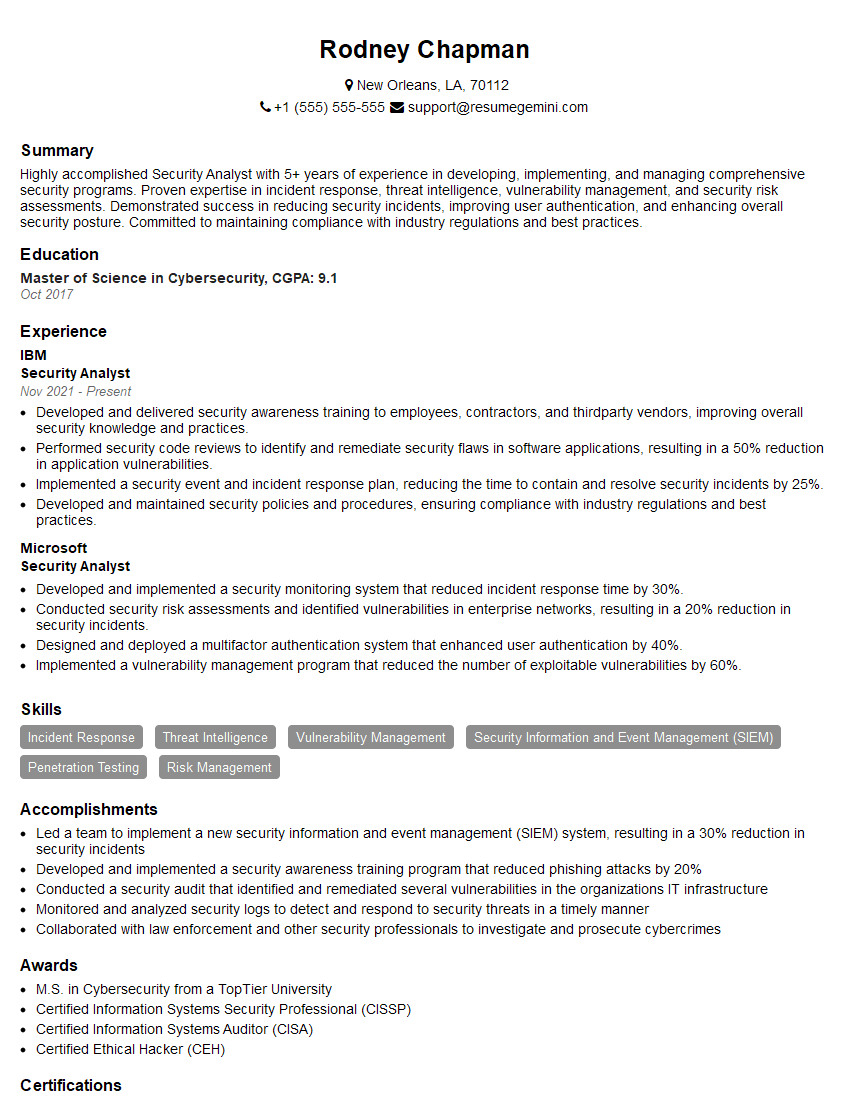
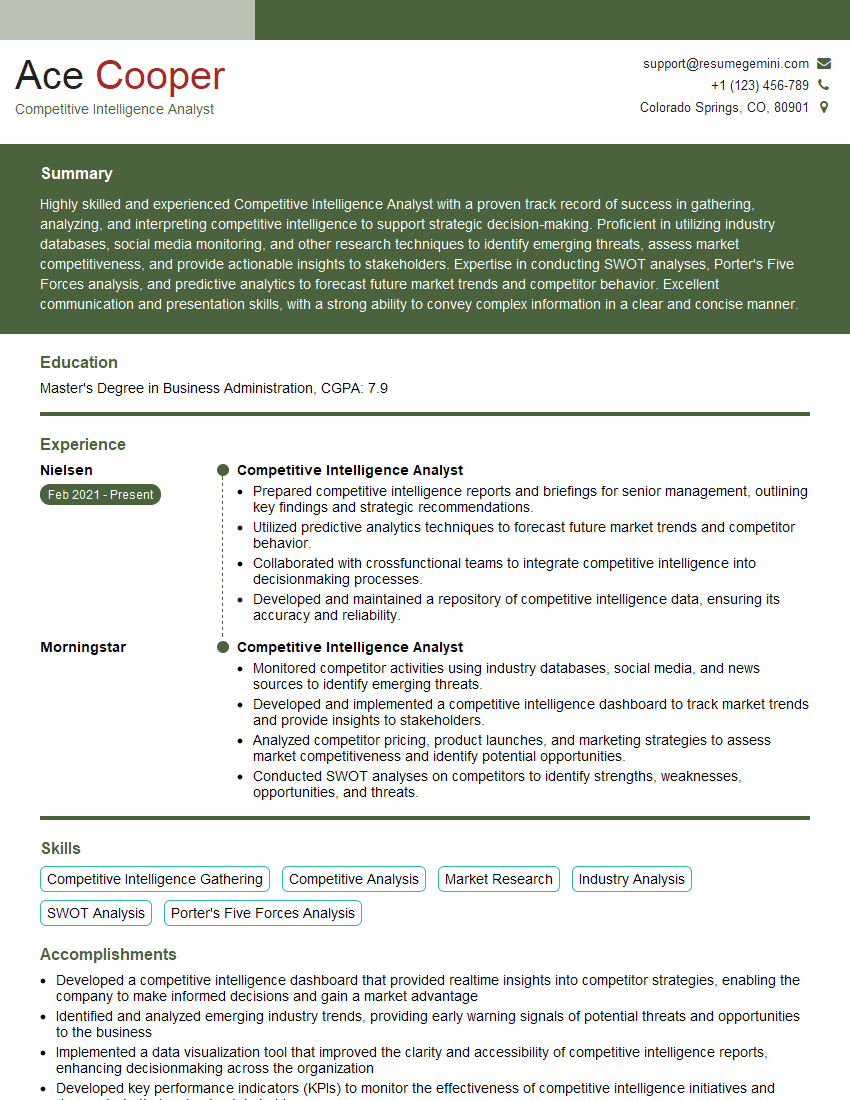
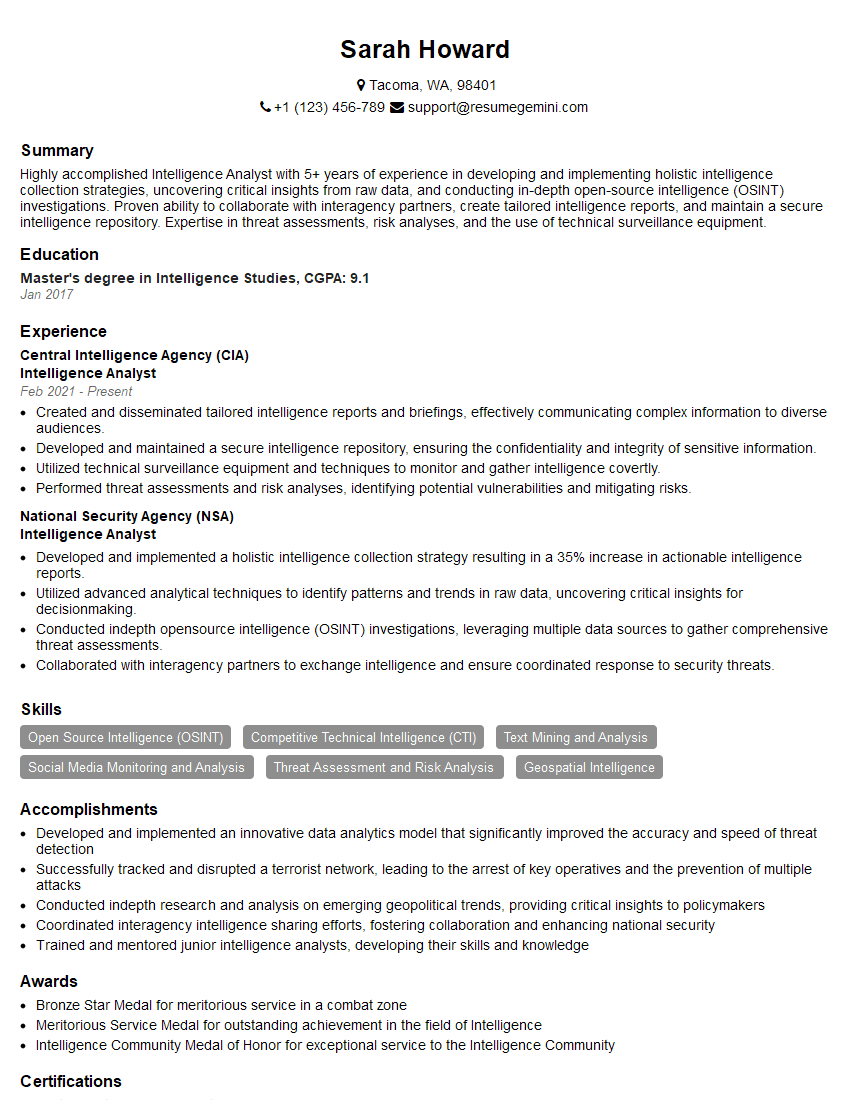
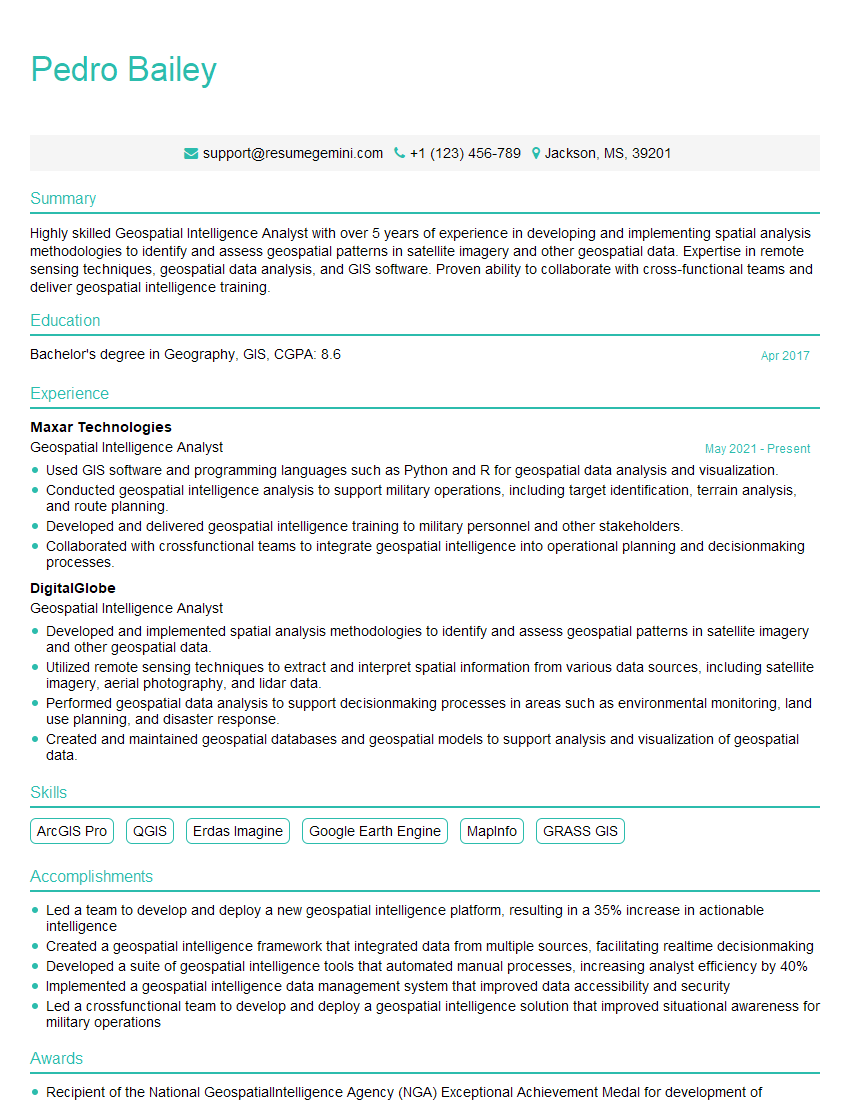
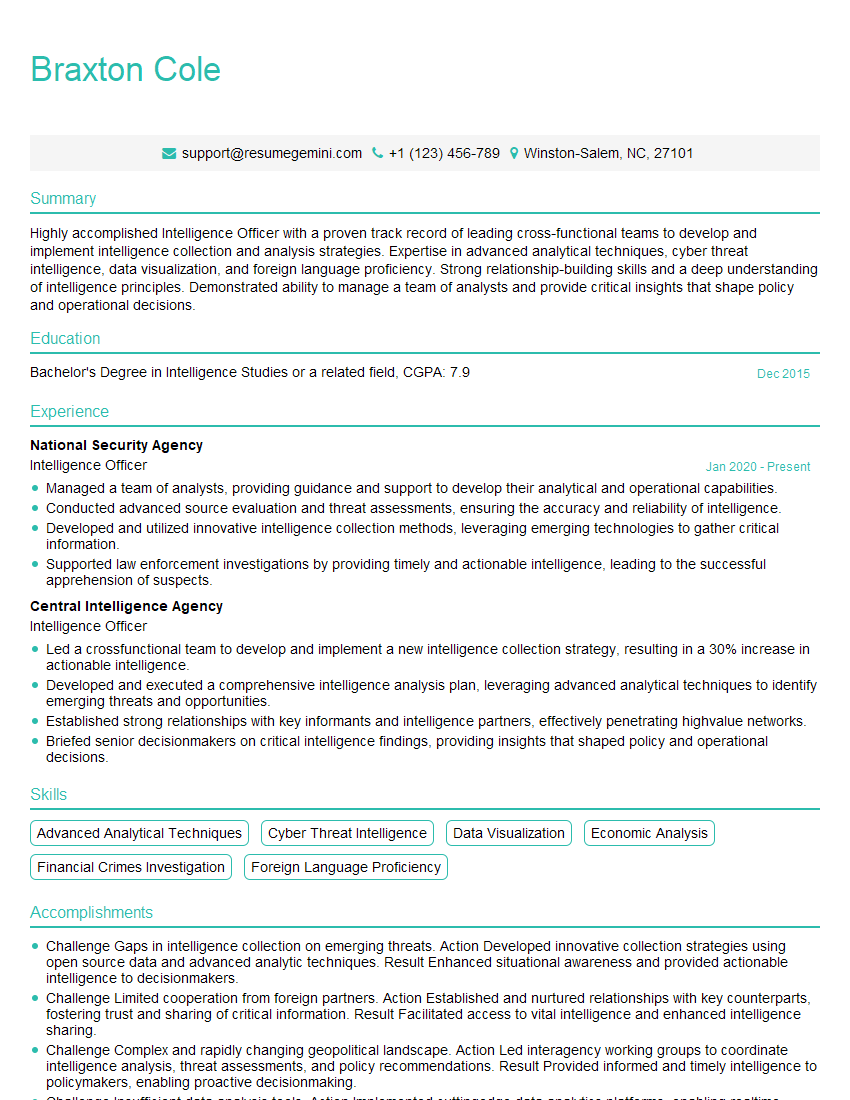
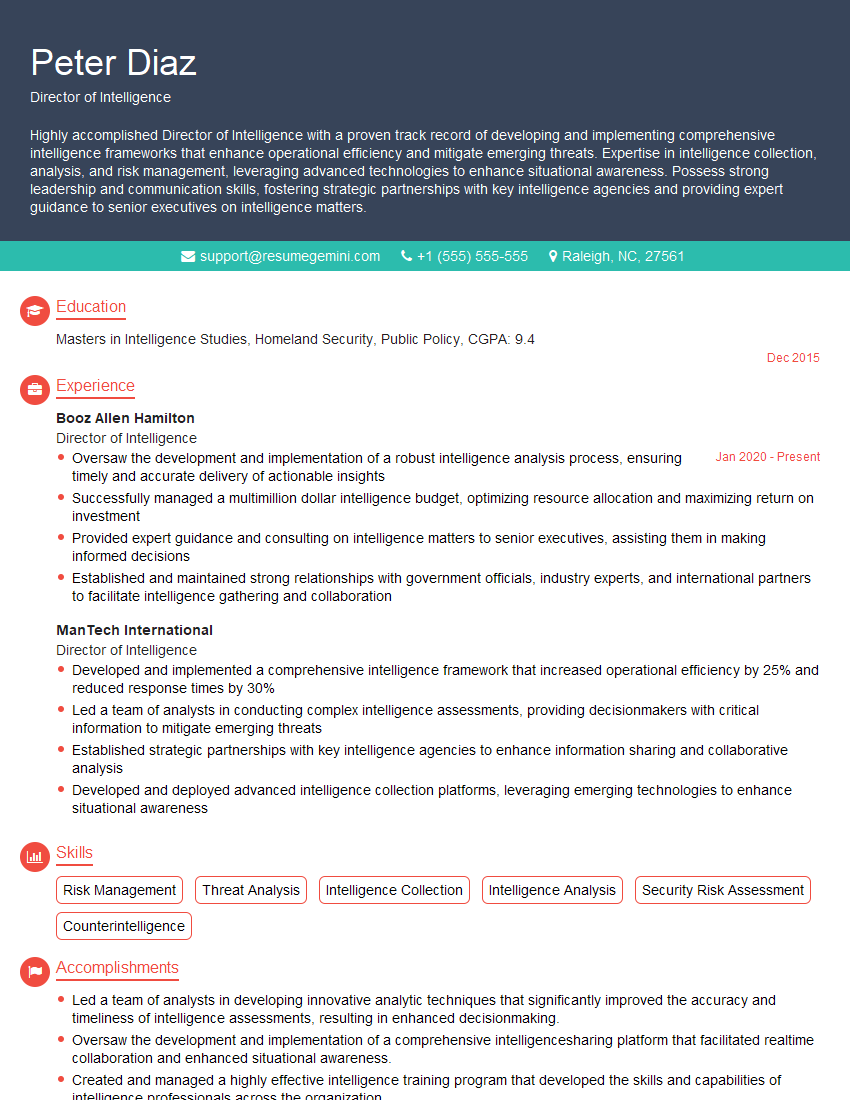
Mastering Intelligence Reporting and Analysis opens doors to exciting and impactful careers, offering opportunities for continuous learning and professional growth within dynamic and challenging environments. To significantly boost your job prospects, invest time in crafting an ATS-friendly resume that highlights your skills and experience effectively. ResumeGemini is a trusted resource that can help you build a professional and compelling resume tailored to the specific requirements of Intelligence Reporting and Analysis roles. Examples of resumes tailored to this field are available to further guide your preparation. Take the next step towards your dream career today!
Explore more articles
Users Rating of Our Blogs
Share Your Experience
We value your feedback! Please rate our content and share your thoughts (optional).
What Readers Say About Our Blog
Very informative content, great job.
good