The thought of an interview can be nerve-wracking, but the right preparation can make all the difference. Explore this comprehensive guide to Intelligence reporting and briefing interview questions and gain the confidence you need to showcase your abilities and secure the role.
Questions Asked in Intelligence reporting and briefing Interview
Q 1. Explain the intelligence cycle in detail.
The intelligence cycle is a cyclical process used to gather, analyze, and disseminate intelligence information. Think of it as a continuous loop, ensuring a constant flow of relevant information to decision-makers. It’s typically broken down into five key phases:
- Planning and Direction: This initial phase identifies the intelligence needs. What questions need answering? What threats need to be assessed? This stage involves identifying the specific intelligence requirements (IRs) based on strategic objectives and policy priorities.
- Collection: This involves gathering raw data from various sources using different intelligence methods (HUMINT, SIGINT, OSINT, etc., which I’ll detail later). This is the ‘gathering of facts’ stage.
- Processing: Raw data is transformed into usable intelligence. This might involve translating foreign languages, decoding signals, or verifying information from multiple sources. It’s like sifting through sand to find the gold nuggets.
- Analysis and Production: This is where the processed information is analyzed to answer the initial intelligence requirements (IRs). Analysts identify patterns, trends, and draw conclusions, ultimately producing reports and briefings.
- Dissemination: The finished intelligence product is distributed to the appropriate decision-makers. This is crucial to ensure the information reaches those who need it, when they need it. Consider this the stage where information empowers action.
Each phase is iterative; feedback from later phases often influences the earlier ones, ensuring the process remains relevant and efficient. For example, the analysis phase might reveal gaps in the collected information, leading to a re-evaluation of the collection phase.
Q 2. Describe your experience with different intelligence collection methods (HUMINT, SIGINT, OSINT, etc.).
My experience spans a wide range of intelligence collection methods. I’ve worked extensively with:
- HUMINT (Human Intelligence): This involves interacting with human sources to obtain information. I’ve managed the recruitment and handling of human sources, meticulously documenting their information and evaluating its reliability. One successful case involved cultivating a source within a transnational criminal organization, leading to the disruption of a significant drug trafficking operation.
- SIGINT (Signals Intelligence): My work here involved analyzing intercepted communications, such as phone calls, emails, and encrypted messages. I’m proficient in various signal processing techniques and software tools for analyzing large datasets and identifying patterns. I recall a situation where analyzing intercepted radio transmissions revealed a planned terrorist attack, which was successfully thwarted.
- OSINT (Open-Source Intelligence): I’ve extensively used publicly available information – news articles, social media, academic papers – to build comprehensive situational awareness. This method is particularly valuable for initial assessments and validating information gathered through other means. One example involved using social media trends to understand the public sentiment towards a specific political event, providing crucial context for intelligence reports.
- IMINT (Imagery Intelligence): I’ve utilized satellite imagery and aerial photography to assess infrastructure, troop deployments, and other physical aspects of a situation. Interpretation of IMINT requires strong analytical skills, including understanding various sensor types and their limitations. In one case, analyzing satellite imagery revealed the clandestine construction of a weapons facility.
Each method has its strengths and weaknesses, and a successful intelligence operation often involves combining multiple methods for a complete picture.
Q 3. How do you assess the credibility and reliability of intelligence sources?
Assessing source credibility and reliability is paramount in intelligence analysis. It’s a multi-faceted process that uses several techniques:
- Source Track Record: Has this source provided accurate information in the past? A history of reliable information enhances credibility.
- Source Motivation: Why is this source providing information? Is it out of self-interest, ideology, or genuine concern for public safety? Understanding motivation helps assess potential biases.
- Information Corroboration: Does this information align with other intelligence or open-source data? Corroboration from multiple independent sources strengthens the reliability of the information.
- Source Handling: How was the source contacted and managed? Was the relationship built on trust and understanding? Proper handling minimizes the risk of manipulation or misinformation.
- Bias Detection: Are there any potential biases influencing the information provided? It is essential to evaluate this from multiple perspectives.
For example, information from a known enemy agent would be viewed with greater skepticism than information from a long-standing, trusted asset.
Q 4. What techniques do you use to analyze large amounts of data to identify key trends and patterns?
Analyzing large datasets requires a structured approach. I utilize a combination of techniques:
- Data Mining and Filtering: Using specialized software tools, I can filter irrelevant information and focus on relevant data points, narrowing the scope of the analysis.
- Statistical Analysis: Identifying patterns and trends in data through statistical methods allows detection of anomalies or significant shifts in behavior.
- Machine Learning (ML): ML algorithms can identify patterns and correlations that would be impossible to identify manually, particularly helpful in identifying complex relationships between seemingly unrelated data points.
- Network Analysis: Visualizing relationships between entities (individuals, organizations, locations) can reveal hidden connections and networks of influence.
- Visualization Tools: Transforming raw data into visual representations (charts, graphs, maps) makes it easier to understand and communicate complex patterns. Dashboards are very useful in this area.
A practical example would be using these techniques to identify key players in a terrorist network by analyzing communication data, financial transactions, and travel patterns.
Q 5. How do you prioritize intelligence requirements based on urgency and importance?
Prioritizing intelligence requirements involves a careful assessment of urgency and importance. I use a framework that considers:
- Time Sensitivity: How urgently is this information needed? Information needed for an imminent threat naturally takes precedence.
- Impact Assessment: What is the potential impact of this information on decision-making? Information with high potential consequences receives higher priority.
- Policy Relevance: Does this information directly address current policy goals or strategic objectives? This context is key to prioritization.
- Resource Constraints: Given resource limitations, what information can yield the greatest return on investment? Prioritization optimizes the use of time and resources.
A simple matrix can be used to visually represent the urgency and importance. Items placed in the high urgency/high importance quadrant are addressed first.
Q 6. Describe your experience in producing intelligence reports and briefings.
I have extensive experience in producing intelligence reports and briefings. My reports are tailored to the specific audience and purpose, ensuring clarity and relevance. I’ve prepared reports for various levels of decision-makers, from field operatives to senior government officials. My process generally involves:
- Developing a clear narrative: Structuring information in a clear and concise manner, focusing on the key findings and their implications.
- Using visual aids: Including charts, graphs, and maps to enhance understanding and aid quick comprehension.
- Maintaining objectivity: Presenting findings fairly and accurately, avoiding personal biases and opinions.
- Ensuring proper security classification: Protecting sensitive information according to established protocols.
- Tailoring language to the audience: Adapting the language, tone, and level of technical detail to the knowledge and needs of the intended audience.
One noteworthy example involved presenting a critical intelligence briefing to a high-level government committee, which directly influenced their decision to deploy resources to prevent an escalating regional conflict.
Q 7. What are the key elements of an effective intelligence report?
An effective intelligence report should contain several key elements:
- Clear and concise executive summary: The most critical information presented upfront, allowing readers to quickly grasp the core message.
- Specific intelligence requirements addressed: Clearly stating the questions the report answers.
- Well-structured analysis: Logical presentation of findings, supporting evidence, and conclusions.
- Objectivity and neutrality: Avoiding biased interpretations and focusing on the facts.
- Proper sourcing and attribution: Clearly indicating the sources of information used to build credibility.
- Assessment of uncertainty: Acknowledging any limitations in the data or analysis, providing context to the findings.
- Actionable recommendations: If appropriate, offering concrete recommendations to decision-makers.
- Appropriate level of detail: Tailoring the level of detail to the audience and the purpose of the report. This includes using clear and concise language.
The goal is to provide decision-makers with timely, relevant, and actionable information that supports informed choices.
Q 8. How do you tailor your intelligence briefings to different audiences?
Tailoring intelligence briefings requires understanding the audience’s needs and knowledge level. Imagine briefing a military commander versus a civilian political leader – their priorities and comprehension of technical details differ drastically.
- For senior leaders: Focus on the ‘so what?’ – the strategic implications and high-level recommendations. Use concise language, bullet points, and visuals. Avoid overwhelming them with granular detail.
- For technical specialists: Provide in-depth analysis, raw data, and detailed methodologies. They need the evidence to support your conclusions and may challenge your assumptions.
- For general audiences: Use clear, accessible language, avoiding jargon. Focus on the narrative and the key takeaways. Analogies and relatable examples are crucial here.
In practice, I always begin by considering the audience’s background, their decision-making responsibilities, and the time constraints of the briefing. I then structure the briefing accordingly, adjusting the level of detail and the presentation style to optimize comprehension and impact.
Q 9. How do you ensure your intelligence products are timely, accurate, and relevant?
Timeliness, accuracy, and relevance are paramount in intelligence. Think of a rapidly evolving situation like a cyberattack – a delayed report is useless.
- Timeliness: This involves establishing efficient workflows, utilizing real-time data feeds where possible, and prioritizing urgent requests. We use automated alerts and dashboards to track emerging threats and critical information.
- Accuracy: This requires rigorous source validation, cross-referencing information from multiple sources, and employing analytical techniques to identify biases and inconsistencies. We regularly review our analytical methods and update them as needed.
- Relevance: This means focusing on information directly related to the client’s needs and objectives. Close collaboration with clients is essential to understand their priorities and tailor our analysis accordingly. We conduct regular feedback sessions to assess the effectiveness of our products.
For example, during a major international crisis, we might use a tiered approach, providing quick initial assessments followed by more detailed reports as the situation unfolds. Maintaining clear communication channels and employing robust quality control measures at each stage is crucial.
Q 10. Explain your understanding of different intelligence methodologies.
Intelligence methodologies encompass a range of techniques for collecting, analyzing, and disseminating information.
- OSINT (Open-Source Intelligence): This involves collecting information from publicly available sources like news articles, social media, and academic papers. Think of it like investigative journalism on a grand scale.
- HUMINT (Human Intelligence): This relies on information gathered from human sources, often through clandestine operations or interviews. This is the classic ‘spy’ method.
- SIGINT (Signals Intelligence): This focuses on intercepting and analyzing communications, including radio transmissions, satellite imagery, and electronic signals.
- IMINT (Imagery Intelligence): This involves analyzing imagery from satellites, drones, and other sources to identify patterns and gain situational awareness. Think of Google Earth but far more advanced and detailed.
- MASINT (Measurement and Signature Intelligence): This uses scientific and technical data, such as acoustic or seismic signals, to draw inferences about activities or capabilities. This might involve analyzing unusual electromagnetic emissions or seismic activity.
- All-Source Intelligence: This is a crucial methodology, combining data from various intelligence sources to achieve a more comprehensive and accurate understanding of a situation. This involves correlating data from different sources, identifying patterns, and resolving inconsistencies.
Proficient intelligence analysts are adept at using a combination of these methodologies to build a complete picture, recognizing the strengths and limitations of each.
Q 11. How do you handle conflicting information from multiple sources?
Conflicting information is the norm, not the exception, in intelligence work. It demands a systematic approach to conflict resolution.
- Identify and document the discrepancies: Carefully note the sources of the conflicting information, their potential biases, and the specific points of disagreement.
- Evaluate the credibility of sources: Consider the track record of each source, their motivations, and the methods used to collect the information. Are some more reliable than others?
- Analyze the context: Examine the circumstances surrounding the information. Are there logical explanations for the discrepancies? Could there be multiple interpretations of the same event?
- Seek additional information: Use open-source or other intelligence methods to gather further evidence that might help resolve the conflict.
- Develop a reasoned judgment: Based on your analysis, reach a conclusion regarding the most likely scenario. It’s acceptable to acknowledge remaining uncertainty if the evidence is inconclusive.
It’s crucial to document the process and reasoning behind your judgment, allowing for transparency and future review. Sometimes, you might need to present multiple plausible scenarios rather than a single definitive answer.
Q 12. Describe your experience with using intelligence analysis software and tools.
I have extensive experience with various intelligence analysis software and tools, including Palantir Gotham, ArcGIS, and various data visualization and mapping platforms. These tools are crucial for handling large volumes of data efficiently and effectively.
Palantir Gotham, for example, enables the integration of various data sources to identify relationships and patterns that might be missed using manual methods. ArcGIS provides powerful capabilities for visualizing geographic data and mapping out potential scenarios. These tools allow us to conduct sophisticated analysis, generate insightful reports, and deliver timely briefings.
My skills also extend to programming languages like Python, which I use for data cleaning, processing, and automation of analytical tasks. The ability to write efficient scripts enhances my ability to quickly analyze large data sets and produce reliable insights.
Q 13. How do you deal with ambiguous or incomplete intelligence data?
Dealing with ambiguous or incomplete data requires a structured and analytical approach. It’s about making informed judgments based on available evidence, acknowledging uncertainty, and continuously seeking additional information.
- Identify information gaps: Clearly define what information is missing and what the consequences of that missing information are.
- Develop hypotheses: Formulate several possible explanations based on the available data, even if they are tentative.
- Prioritize information needs: Decide which pieces of missing information are most critical to the analysis and prioritize efforts to obtain them.
- Use analytical techniques: Employ methods like trend analysis, scenario planning, and red teaming to explore the implications of different hypotheses.
- Present findings transparently: Clearly articulate what is known, what is unknown, and the level of uncertainty associated with the analysis. This includes acknowledging the limitations of the analysis due to data gaps.
For instance, when analyzing a suspected terrorist plot with limited intelligence, we might create various scenarios based on the limited information, highlighting the uncertainties and potential consequences of each scenario. This allows policymakers to make informed decisions despite the ambiguity.
Q 14. How do you maintain the confidentiality and security of sensitive intelligence information?
Confidentiality and security are non-negotiable in intelligence work. A single breach can have devastating consequences.
- Classification and handling procedures: I strictly adhere to all classification guidelines, using appropriate security protocols and handling procedures for each level of classified information.
- Secure data storage and transmission: I use encrypted storage, secure communication channels, and access control mechanisms to protect sensitive information both at rest and in transit.
- Background checks and security clearances: I understand the importance of background checks and security clearances for personnel involved in handling sensitive information.
- Data minimization and need-to-know basis: I only access and process the information necessary for my work, adhering to the ‘need-to-know’ principle to limit potential exposure.
- Incident reporting: I am aware of the protocols for reporting any suspected security breaches or unauthorized access attempts immediately.
Security is an ongoing process. Regular training and awareness of evolving threats are paramount to ensuring the confidentiality and security of sensitive information. It’s a commitment, not just a checklist.
Q 15. What is your experience with open-source intelligence (OSINT) gathering and analysis?
Open-source intelligence (OSINT) is the practice of gathering information from publicly available sources. My experience encompasses a wide range of techniques, from basic web searches to sophisticated data mining and social media analysis. I’m proficient in using various tools and techniques to identify, collect, and analyze information from sources like news articles, social media platforms, government websites, academic journals, and blogs. For example, during a recent project involving assessing the public perception of a new government policy, I utilized a combination of Google Alerts, social listening tools, and sentiment analysis software to track online discussions and gauge public opinion. This allowed us to identify key concerns and potential points of contention early on, influencing the policy’s communication strategy.
Furthermore, I’m adept at verifying the credibility of OSINT sources, a critical aspect of ensuring the accuracy and reliability of intelligence reports. This involves cross-referencing information from multiple sources, assessing the reputation and bias of each source, and applying critical thinking skills to identify inconsistencies or inaccuracies. My expertise ensures that OSINT findings are not only informative but also reliable and actionable.
Career Expert Tips:
- Ace those interviews! Prepare effectively by reviewing the Top 50 Most Common Interview Questions on ResumeGemini.
- Navigate your job search with confidence! Explore a wide range of Career Tips on ResumeGemini. Learn about common challenges and recommendations to overcome them.
- Craft the perfect resume! Master the Art of Resume Writing with ResumeGemini’s guide. Showcase your unique qualifications and achievements effectively.
- Don’t miss out on holiday savings! Build your dream resume with ResumeGemini’s ATS optimized templates.
Q 16. How do you use technology to enhance intelligence analysis?
Technology is fundamental to modern intelligence analysis. I utilize a variety of tools and technologies to enhance my work, significantly improving efficiency and accuracy. This includes using data analytics platforms for processing large datasets, like those from social media or financial transactions. For instance, I’ve used Python libraries like pandas and networkx to analyze network relationships and identify key players within a specific group.
I also leverage Geographic Information Systems (GIS) software to visualize spatial data, helping identify patterns and correlations that would be difficult to discern manually. Imagine investigating a series of related crimes – GIS allows me to plot crime locations on a map, revealing potential patterns or connections between incidents that might otherwise be missed. Furthermore, I’m proficient in using various intelligence-related software and databases, along with advanced search techniques, to effectively collect and process information from a multitude of sources.
Q 17. Explain your experience in threat assessment and risk analysis.
Threat assessment and risk analysis are crucial components of my work. My approach involves a structured process that begins with identifying potential threats, analyzing their capabilities and intentions, and evaluating their likelihood of occurring. I then assess the potential impact of each threat, considering both the severity and the probability of the impact. This often involves using frameworks like the STRIDE threat modeling method or similar methodologies to ensure a comprehensive assessment.
For example, in a previous role, I conducted a threat assessment for a major international corporation. This involved examining a wide range of potential threats, from cyberattacks and physical security breaches to reputational damage and political instability in key operating regions. My analysis resulted in a prioritized list of threats, along with recommended mitigation strategies that the company implemented to reduce their overall risk exposure. The process was iterative, regularly reviewed, and adjusted based on evolving circumstances.
Q 18. Describe your approach to developing intelligence forecasts.
Developing intelligence forecasts requires a blend of analytical rigor and intuitive judgment. My approach combines quantitative and qualitative methods. I begin by reviewing historical data, identifying trends, and using statistical modeling to project future outcomes. This often involves analyzing time-series data, forecasting models, and scenario planning.
However, quantitative analysis alone is insufficient. I incorporate qualitative analysis by considering geopolitical factors, emerging technologies, and the intentions and capabilities of key actors. This might involve conducting expert interviews, reviewing open-source intelligence, and synthesizing information from multiple sources. For example, forecasting economic growth often involves looking at past trends but also considering potential external shocks, such as pandemics or natural disasters. These are incorporated into alternative scenarios to present a range of possible outcomes rather than a single, definitive prediction.
Q 19. How do you identify and mitigate biases in your intelligence analysis?
Cognitive biases are inherent in human decision-making, and intelligence analysis is no exception. To mitigate biases, I employ several strategies. Firstly, I strive for rigorous objectivity, focusing on verifiable evidence and avoiding assumptions. This involves using a structured analytical approach, documenting all assumptions, and regularly reviewing my conclusions to check for potential biases.
Secondly, I promote diverse perspectives within the team. Collaboration with colleagues from different backgrounds and analytical styles helps to expose blind spots and challenge preconceived notions. Finally, I utilize techniques like red teaming and adversarial analysis, where I actively seek to challenge my own conclusions by considering alternative perspectives and potential flaws in my reasoning. Thinking critically about my own thinking is a vital safeguard against bias creeping into the analysis.
Q 20. Explain your understanding of geopolitical factors influencing intelligence assessments.
Geopolitical factors are inextricably linked to intelligence assessments. Understanding the global political landscape is crucial for interpreting events and forecasting future trends. My approach involves a deep understanding of international relations, including the dynamics of power, alliances, and conflicts between nations. I consider factors such as economic interdependence, ideological differences, and historical grievances to understand motivations and predict potential actions by various state and non-state actors.
For instance, assessing the stability of a particular region requires considering factors like the presence of competing great powers, the internal political dynamics of the country, its economic vulnerability, and the presence of transnational criminal organizations. These geopolitical factors heavily influence the threat landscape and shape the nature and intensity of conflicts or cooperation in that region.
Q 21. How do you collaborate effectively within an intelligence team?
Effective collaboration is essential in intelligence analysis. My approach centers around open communication, mutual respect, and shared understanding of objectives. I actively participate in team meetings, sharing information transparently and providing constructive feedback to colleagues. I actively listen to others’ perspectives and value their contributions, recognizing that diverse viewpoints are essential for comprehensive analysis.
I’m proficient in using collaborative tools to share information and track progress on projects. This might involve using shared databases, online platforms for document collaboration, or secure communication channels to maintain confidentiality and facilitate efficient knowledge sharing. Building strong working relationships, based on trust and respect, is crucial for a successful collaborative environment. This allows for the seamless sharing of information, the identification of errors, and the achievement of collective intelligence far surpassing individual efforts.
Q 22. Describe your experience in presenting intelligence findings to senior leadership.
Presenting intelligence findings to senior leadership requires a clear, concise, and impactful delivery. My experience involves crafting briefings tailored to the audience’s specific needs and priorities. This includes understanding their existing knowledge base and framing the information in a way that is easily digestible and action-oriented, even under time constraints. For instance, in one case, I prepared a briefing on a rapidly evolving geopolitical situation for a group of generals. I used a combination of maps, charts, and concise bullet points to highlight key threats and potential courses of action, ensuring the information was quickly understood and facilitated immediate decision-making. In another instance, I presented complex financial data analysis regarding potential money laundering schemes to a group of financial regulators. Here, I focused on the key findings, highlighting the supporting evidence and presenting clear recommendations for further investigation. The key is always to focus on the ‘so what’ and ‘now what’ – the implications of the findings and recommended actions. I always practice the briefing beforehand, refining my delivery and ensuring a smooth and efficient presentation.
Q 23. How do you stay current with the latest intelligence trends and developments?
Staying current in the dynamic world of intelligence requires a multi-faceted approach. I regularly consume a range of materials, including classified and open-source intelligence reports. This involves closely following reputable news organizations, academic journals, and think tanks specializing in geopolitical analysis, economic trends, and technological advancements. I actively participate in professional development courses and conferences, networking with peers to exchange information and insights. Furthermore, I leverage online intelligence databases and analytical tools, which provide real-time updates and access to a wealth of data. For example, I use specific keyword searches on various platforms to track developments related to my area of expertise. Finally, I engage in continuous self-learning by reading books, articles, and reports related to evolving intelligence methodologies and technologies. This holistic approach ensures I remain abreast of the latest trends and developments.
Q 24. What are the ethical considerations related to intelligence collection and analysis?
Ethical considerations are paramount in intelligence collection and analysis. We must always operate within a strict legal and moral framework. This includes respecting individual privacy rights, ensuring the legality of our methods, and avoiding bias in our assessments. For example, we adhere to strict guidelines on surveillance and data collection, and we have rigorous procedures in place to ensure the accuracy and objectivity of our analyses. We must critically evaluate our sources and avoid confirmation bias – seeking to disprove our hypotheses rather than simply confirm them. The principle of proportionality is also crucial; the means of intelligence gathering should always be proportionate to the threat. Transparency and accountability are key. We must be prepared to justify our methods and findings, subject to internal and external scrutiny. A failure to uphold ethical standards can severely compromise an agency’s credibility and its ability to perform its crucial role.
Q 25. How do you validate and verify intelligence information before dissemination?
Validating and verifying intelligence is a critical step before dissemination. We use a multi-source triangulation approach, corroborating information from multiple independent sources before reaching any conclusions. This includes verifying the credibility and reliability of our sources, as well as considering potential biases or motivations. We use techniques like open-source intelligence (OSINT) verification, comparing findings against publicly available data, and employing advanced analytical tools to identify patterns and inconsistencies. For instance, if a single source claims a specific event, we would cross-reference this information against multiple news articles, social media posts, and official statements. If the information is consistent across independent sources, it gains credibility. Furthermore, we use rigorous analytical methodologies to ensure that our assessment is unbiased and objective. Any uncertainties or limitations in our assessment are clearly stated in the final report to ensure transparency.
Q 26. Describe your experience in working under pressure and meeting tight deadlines.
Working under pressure and meeting tight deadlines is an inherent part of intelligence work. I have consistently demonstrated my ability to handle high-pressure situations, prioritizing tasks effectively and managing my time efficiently. I often employ time management techniques like prioritizing tasks according to urgency and importance, breaking down large projects into smaller, manageable components, and setting realistic goals and deadlines. During crisis situations, I maintain a clear head and focus on delivering accurate and timely information. For example, during a major international incident, I was able to quickly analyze a flood of incoming information and produce a concise, accurate briefing for senior leadership within a severely limited timeframe. The key is to remain calm, focus on the task at hand, and leverage teamwork to ensure timely and accurate delivery.
Q 27. How do you deal with challenging situations or unexpected developments?
Dealing with challenging situations or unexpected developments requires adaptability, critical thinking, and a problem-solving approach. I approach unexpected developments by first gathering and assessing all available information, identifying potential impacts, and then developing contingency plans. This may involve consulting with colleagues from various disciplines to gain a more comprehensive perspective. For example, during an unforeseen change in a target’s behavior, I re-evaluated the existing intelligence, incorporated new data, and adjusted the analysis and reporting accordingly, ensuring that decision-makers remained well-informed. Effective communication and collaboration with colleagues are key to overcoming such challenges. My approach is always data-driven, using the available evidence to guide my decision-making and ensure that responses are both effective and responsible.
Q 28. What are your strengths and weaknesses as an intelligence analyst?
My strengths lie in my analytical skills, attention to detail, and ability to synthesize complex information into concise and actionable intelligence. I excel at identifying patterns, drawing inferences, and making sound judgments based on incomplete or ambiguous data. I’m also a strong team player, comfortable collaborating with others to achieve common goals. However, like any analyst, I recognize areas for improvement. One weakness is my tendency to over-focus on details at times, potentially impacting the speed of delivery. I am actively working on improving my time management skills to better balance detail-orientation with efficiency. This is something I mitigate by actively practicing time-management techniques and seeking feedback from colleagues.
Key Topics to Learn for Intelligence Reporting and Briefing Interviews
- Intelligence Cycle: Understand the complete intelligence cycle – from planning and collection to analysis, production, and dissemination. Focus on your role within each stage.
- Analytic Tradecraft: Master techniques like hypothesis generation, evidence evaluation, and argument construction to support your analysis. Practice structuring your reasoning clearly and concisely.
- Report Writing & Formatting: Develop proficiency in crafting clear, concise, and persuasive intelligence reports tailored to diverse audiences. Practice adapting your writing style for different levels of seniority.
- Briefing Techniques: Practice delivering effective oral briefings, considering audience needs and tailoring your presentation for impact. Consider different briefing styles (e.g., formal, informal).
- Data Analysis & Visualization: Demonstrate your ability to interpret and present complex data effectively using charts, graphs, and other visual aids. Practice using data to support your conclusions.
- Threats & Risk Assessment: Showcase your understanding of threat assessment methodologies and the ability to articulate risks and their potential impacts. Practice evaluating credibility and bias in information.
- Ethical Considerations: Understand and be prepared to discuss the ethical implications of intelligence work, including data privacy, source protection, and the responsible use of information.
- Technology & Tools: Familiarize yourself with common intelligence analysis tools and technologies used in the field. Be ready to discuss your experience (or willingness to learn) related technologies.
Next Steps
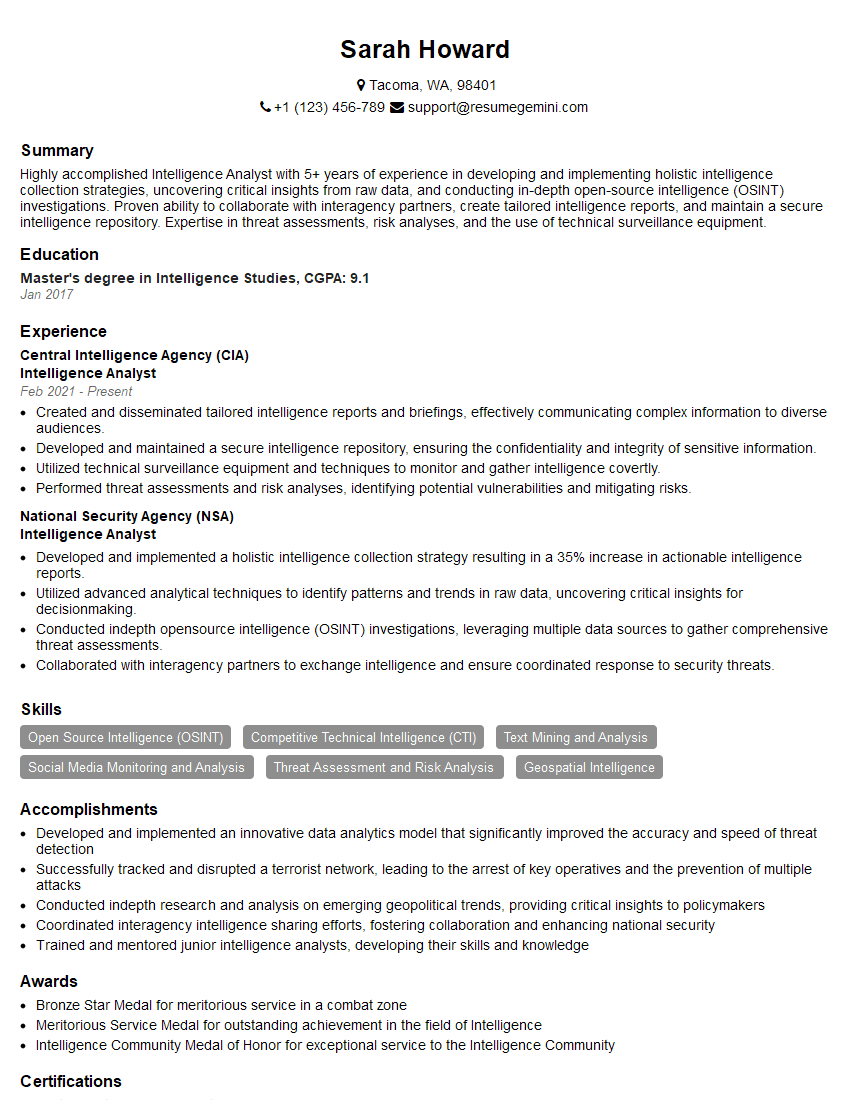
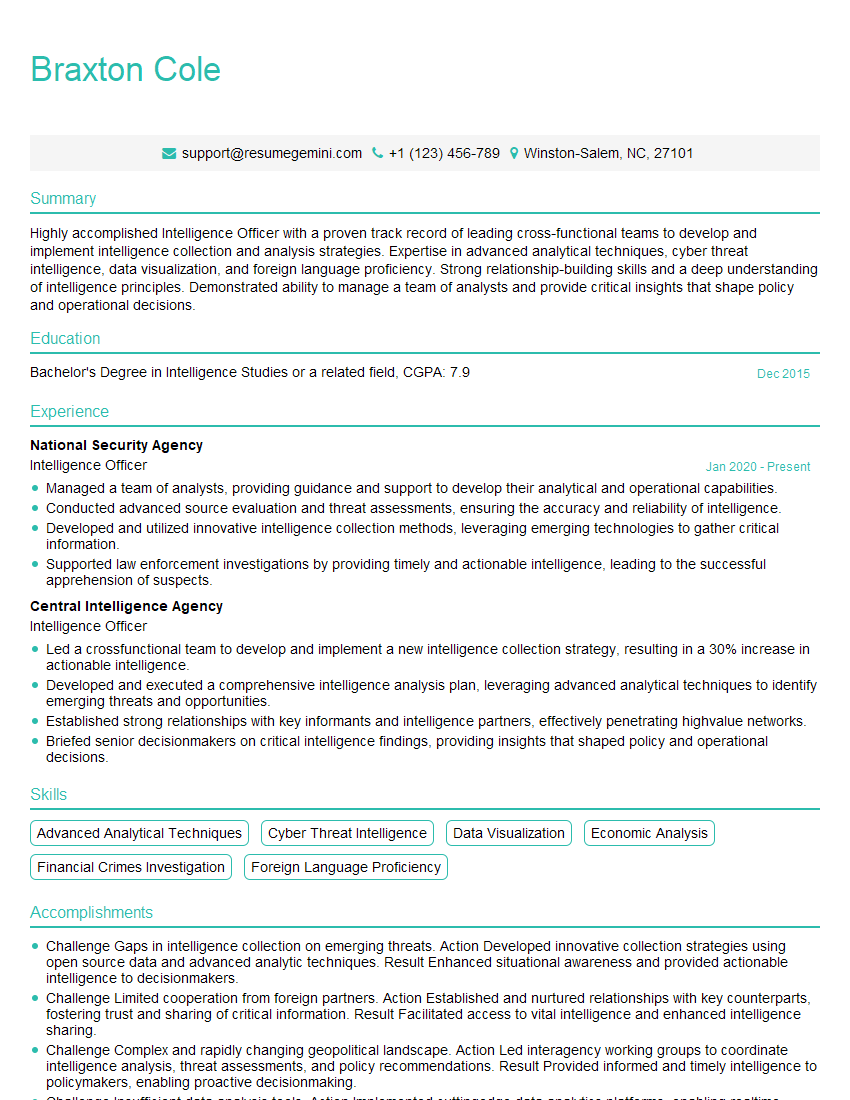
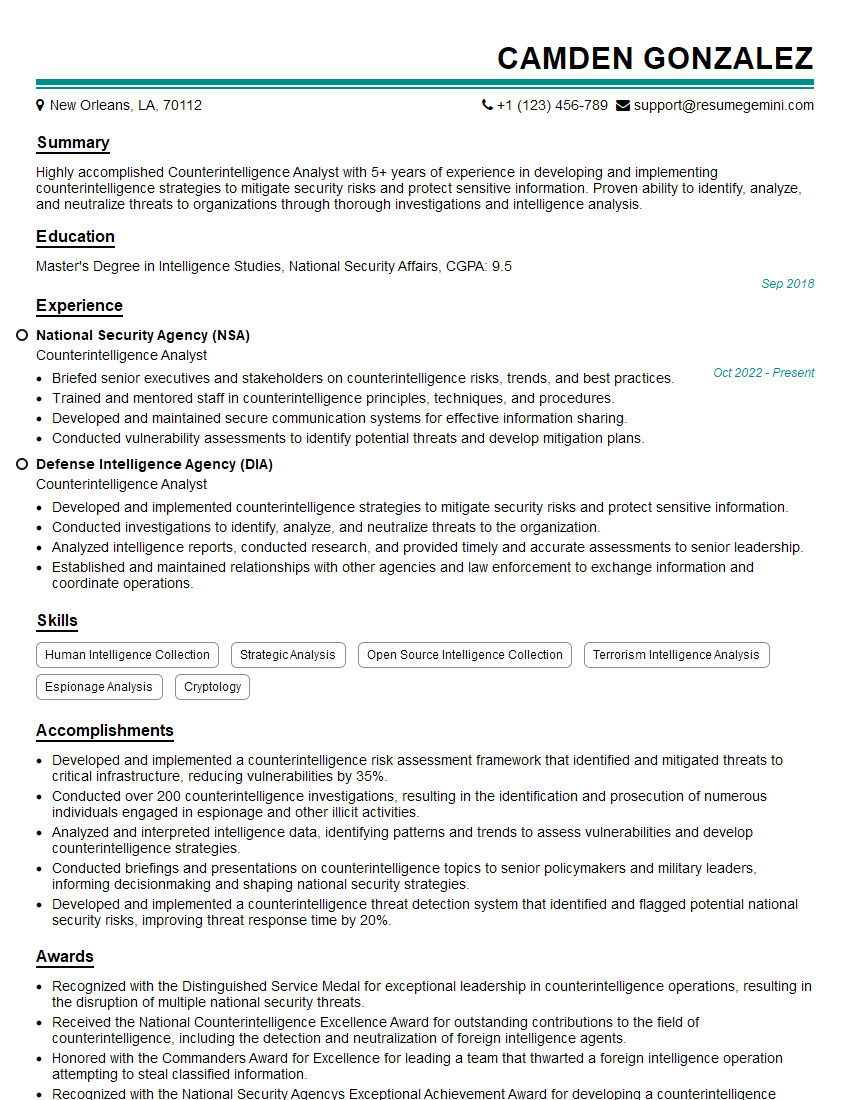
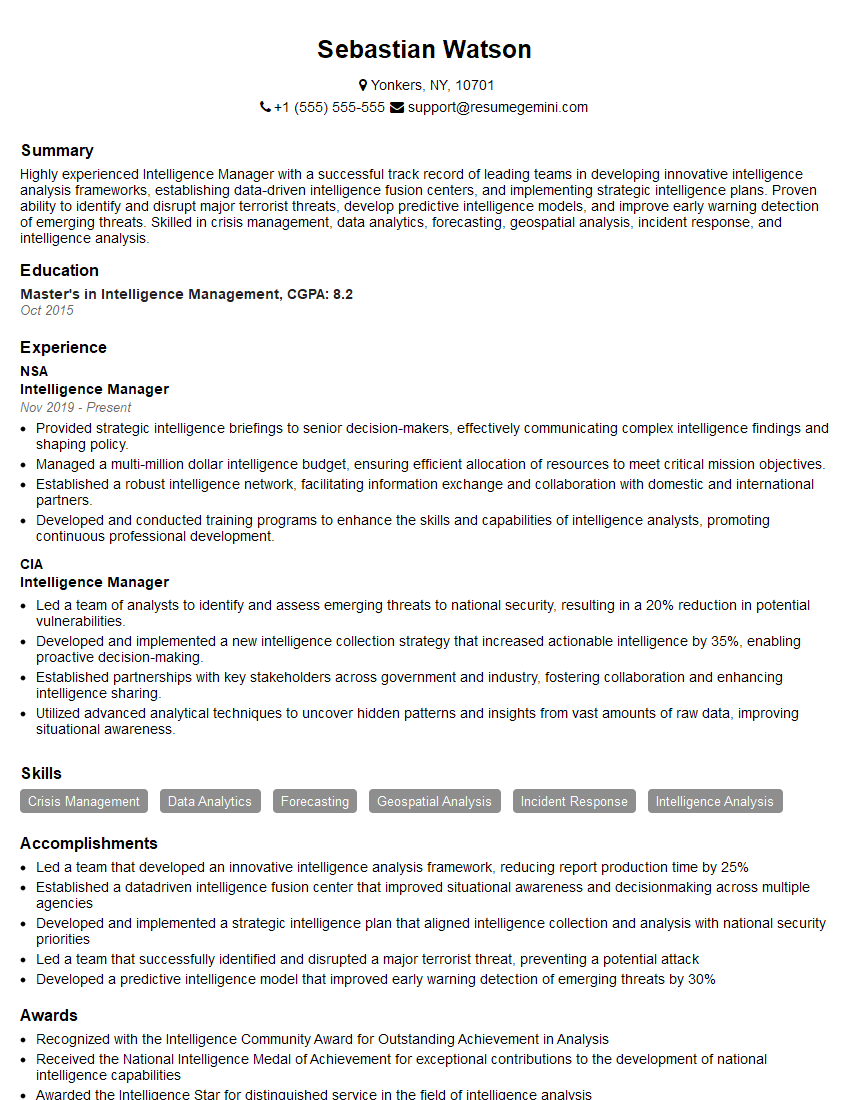
Mastering intelligence reporting and briefing is crucial for career advancement in this dynamic field. It demonstrates your ability to critically analyze information, communicate effectively, and contribute to informed decision-making. To maximize your job prospects, it’s essential to present your skills effectively. Building an ATS-friendly resume is key to getting your application noticed. ResumeGemini is a trusted resource to help you create a professional and impactful resume that highlights your unique qualifications. Examples of resumes tailored to Intelligence reporting and briefing positions are available to guide you.
Explore more articles
Users Rating of Our Blogs
Share Your Experience
We value your feedback! Please rate our content and share your thoughts (optional).
What Readers Say About Our Blog
Very informative content, great job.
good