The right preparation can turn an interview into an opportunity to showcase your expertise. This guide to International Maritime Organization Standards Compliance interview questions is your ultimate resource, providing key insights and tips to help you ace your responses and stand out as a top candidate.
Questions Asked in International Maritime Organization Standards Compliance Interview
Q 1. Explain the key principles of the International Safety Management (ISM) Code.
The International Safety Management (ISM) Code is a mandatory international standard for the safe management and operation of ships and for pollution prevention. Its core principle is to establish a Safety Management System (SMS) on board every ship, ensuring a safety culture is embedded throughout the organization. Think of it as a comprehensive rulebook for ship safety, not just focusing on equipment, but on people, procedures, and the overall management of safety risks.
- Safety First: Prioritizing safety above all else, from planning to execution.
- Responsibility and Accountability: Clearly defining roles and responsibilities at all levels of the organization. Everyone from the captain to the office staff has their part to play.
- Continuous Improvement: Regularly reviewing and updating the SMS to adapt to changing conditions and learn from incidents.
- Proactive Approach: Focusing on preventing accidents rather than just reacting to them. This involves identifying potential hazards and putting measures in place to mitigate those risks.
- Compliance: Adhering to all relevant international and national regulations and standards.
For example, a company implementing the ISM Code might develop detailed procedures for emergency drills, including clear roles for each crew member and regular training sessions. This proactive approach is crucial in ensuring readiness for any unexpected event.
Q 2. Describe the role of the Designated Person Ashore (DPA).
The Designated Person Ashore (DPA) is a key figure in the ISM Code, acting as the onshore representative for the company’s maritime operations. They are responsible for ensuring that the company’s SMS is properly implemented and maintained across its fleet. They are the company’s single point of contact for all things concerning the SMS, bridging the gap between the ship and the company’s shore-side management.
- Oversight: The DPA monitors the effectiveness of the SMS on board each vessel.
- Resource Allocation: They ensure sufficient resources are provided to maintain the SMS.
- Communication: They act as the main communication channel between the ship and the shore-side management regarding safety and operational matters.
- Compliance Monitoring: The DPA ensures compliance with the ISM Code and other relevant regulations.
- Incident Investigation: In case of accidents, the DPA is involved in incident investigations and corrective actions.
Imagine the DPA as the safety manager for the company’s shipping operations, ensuring that all aspects of safety are managed effectively, not just for compliance but to maintain a high standard of operation and to reduce the risk of accidents.
Q 3. What are the main objectives of the International Convention for the Prevention of Pollution from Ships (MARPOL)?
The MARPOL Convention (International Convention for the Prevention of Pollution from Ships) aims to minimize pollution of the marine environment caused by ships. It’s a multi-faceted convention addressing various types of pollution, all with the overarching goal of protecting our oceans.
- Oil Pollution: Preventing the discharge of oil and oily mixtures into the sea.
- Noxious Liquid Substance Pollution: Controlling the discharge of harmful liquid substances.
- Garbage Pollution: Regulating the disposal of garbage from ships, including plastics.
- Sewage Pollution: Managing the discharge of sewage from ships.
- Air Pollution: Controlling the emission of air pollutants from ships (this is particularly relevant with the recent focus on reducing greenhouse gas emissions).
For example, MARPOL regulations specify the types of equipment required for oil discharge, such as oil-water separators, and set limits on the amount of oil that can be discharged. These regulations are critical for protecting marine life and the health of our oceans.
Q 4. Outline the requirements of the Safety of Life at Sea (SOLAS) Convention.
The SOLAS Convention (Safety of Life at Sea) is a crucial international maritime treaty focusing on the safety of ships and their passengers and crew. It covers a wide range of safety aspects, establishing minimum safety standards for ship construction, equipment, and operations.
- Hull Integrity: Ensuring the ship’s structure is strong enough to withstand the rigors of the sea.
- Fire Safety: Implementing measures to prevent and combat fires on board.
- Life Saving Appliances: Providing adequate lifeboats, life rafts, and other survival equipment.
- Safety Management: Implementing effective safety management systems (although this is further detailed by the ISM Code).
- Cargo Security: Ensuring the security of cargo and preventing acts of terrorism (this is covered more extensively in the ISPS Code).
SOLAS regulations mandate regular inspections and surveys to ensure compliance. For example, a ship must have a sufficient number of lifeboats for all persons on board, regularly inspected and maintained in good working order. This ensures that in case of emergency, everyone has a reasonable chance of survival.
Q 5. Explain the International Ship and Port Facility Security (ISPS) Code and its implications.
The International Ship and Port Facility Security (ISPS) Code enhances maritime security by creating a framework for security assessments and measures for ships and port facilities. Its aim is to prevent acts of terrorism and other unlawful and malicious acts against ships and port facilities.
- Security Assessments: Ships and port facilities must conduct security assessments to identify vulnerabilities.
- Security Plans: Development and implementation of Ship Security Plans (SSPs) and Port Facility Security Plans (PFSPs).
- Security Levels: Establishment of different security levels (e.g., Level 1, Level 2, Level 3) to adapt to varying threat levels.
- Communication: Effective communication between ships, port facilities, and relevant authorities.
- Personnel Security: Ensuring the security and vetting of personnel.
Imagine a scenario where a credible terror threat is detected. The ISPS Code allows for an immediate increase in security measures, such as stricter access controls and enhanced patrols, to minimize the risk of an attack.
Q 6. What are the key elements of a Ship Security Plan (SSP)?
A Ship Security Plan (SSP) is a crucial document under the ISPS Code, outlining the security measures a ship will implement to protect itself against terrorism and other threats. It’s a tailored document that should be specific to the ship’s characteristics and operational profile.
- Ship Security Assessment: A detailed assessment of the ship’s vulnerabilities.
- Security Responsibilities: Clearly defined security responsibilities for crew members.
- Security Procedures: Detailed procedures for various security-related scenarios (e.g., boarding, access control, communication).
- Emergency Response Plan: A plan to manage security-related emergencies.
- Communication Procedures: Procedures for communication with port authorities and other relevant entities.
For instance, an SSP might detail procedures for verifying the identity of visitors, responding to suspicious activities, or securing the ship during berthing. It’s a dynamic document that should be regularly reviewed and updated based on the evolving security landscape and feedback from the crew.
Q 7. Describe the different types of surveys required under the ISM Code.
Under the ISM Code, several types of surveys are required to ensure continuous compliance and the effective operation of the SMS.
- Initial Survey: A comprehensive initial audit of the company’s SMS to ensure it meets the requirements of the ISM Code. This happens before the company can get its Document of Compliance (DOC).
- Annual Internal Audits: Internal audits conducted by the company itself to evaluate its own SMS, checking for shortcomings and areas for improvement. The results of these audits are then reported to the company’s management.
- Documented Management Review: The company’s management reviews the SMS’s effectiveness, identifies corrective actions and improvements, and makes necessary changes to the SMS.
- Annual Verification Audits: An external auditor verifies the company’s SMS and the results of their internal audits. This external verification is needed to maintain the company’s DOC.
- Intermediate Surveys: These surveys take place between the annual surveys and verify that the ship is compliant with the SMS. This can be focused on certain aspects or equipment.
These surveys, whether internal or external, ensure that the SMS remains effective and adapts to the changing circumstances and regulations.
Q 8. What are the responsibilities of a company concerning the carriage of dangerous goods?
A shipping company’s responsibility for carrying dangerous goods is paramount to maritime safety and environmental protection. It begins with proper classification and identification of the goods according to the International Maritime Dangerous Goods (IMDG) Code. This code provides a comprehensive list of hazardous materials, their classification, and the required packaging, labeling, and handling procedures.
The company must ensure that:
- Proper Documentation: All necessary documentation, including the Dangerous Goods Declaration (DGD), is accurately completed and readily available to relevant authorities.
- Segregation and Stowage: Dangerous goods are segregated and stowed according to the IMDG Code’s requirements to minimize the risk of interaction and accidents.
- Training and Competency: Crew members are adequately trained in the safe handling, stowage, and emergency procedures related to dangerous goods carriage.
- Emergency Response: The company has established procedures and resources for handling emergencies involving dangerous goods, including spill response and emergency contact information.
- Compliance Audits: Regular internal audits and external inspections ensure continuous compliance with the IMDG Code and relevant regulations.
For instance, imagine a company shipping lithium batteries. Failure to adhere to the IMDG Code’s specific packaging and labeling requirements could lead to a fire onboard, causing significant damage and loss of life. This highlights the crucial importance of thorough compliance.
Q 9. How does the STCW Convention contribute to maritime safety?
The Standards of Training, Certification and Watchkeeping for Seafarers (STCW) Convention is a cornerstone of maritime safety. It sets minimum standards for the training, certification, and watchkeeping of seafarers worldwide, ensuring that personnel onboard ships possess the necessary skills and knowledge to perform their duties safely and efficiently. This directly impacts safety through enhanced competency.
The Convention covers a broad spectrum of areas, including:
- Navigation: Ensuring seafarers have the skills to navigate safely using modern technologies and traditional methods.
- Communication: Equipping seafarers with the ability to communicate effectively in various scenarios, including emergencies.
- Emergency Response: Training in fire-fighting, search and rescue, and other emergency procedures.
- Cargo Operations: Providing the necessary knowledge and skills for safe handling of various types of cargo.
- Ship Security: Addressing security threats and implementing appropriate security measures.
Consider a scenario where a ship encounters heavy weather. A crew trained to the STCW standards will be better equipped to handle the situation, reducing the risk of accidents and damage to the vessel. The STCW Convention’s impact on maritime safety is undeniable, contributing significantly to reducing human error, a major cause of maritime accidents.
Q 10. Explain the importance of a Safety Management System (SMS) in a shipping company.
A Safety Management System (SMS) is a crucial tool for shipping companies to proactively manage safety and environmental risks. It’s a systematic approach to identifying hazards, assessing risks, and implementing preventative measures to minimize the likelihood of accidents and incidents. Think of it as a comprehensive safety roadmap.
Key elements of an effective SMS include:
- Safety Policy: A clearly defined statement of the company’s commitment to safety and environmental protection.
- Risk Assessment: Regular identification and assessment of potential hazards and risks.
- Preventive Measures: Implementation of measures to mitigate identified risks, including safety procedures, training, and maintenance.
- Emergency Preparedness: Development and implementation of emergency plans and drills.
- Internal Audits: Regular internal audits to evaluate the effectiveness of the SMS.
- Nonconformity Reporting and Corrective Action: System for reporting and addressing safety deficiencies and nonconformities.
A well-implemented SMS not only reduces the likelihood of accidents but also enhances operational efficiency, improves crew morale, and strengthens the company’s reputation. Without it, a shipping company faces a significantly higher risk of accidents, environmental damage, and legal repercussions.
Q 11. What are the key provisions of the Ballast Water Management Convention?
The International Convention for the Management of Ballast Water and Sediments aims to prevent the spread of invasive aquatic species through ballast water discharge. This is a serious environmental concern, as invasive species can disrupt ecosystems and cause significant economic damage.
Key provisions of the convention include:
- Ballast Water Management Plans: Ships must have an approved Ballast Water Management Plan detailing procedures for ballast water management.
- Ballast Water Treatment Systems: Ships must install and operate an approved ballast water management system to reduce the number of organisms in ballast water before discharge.
- Record-Keeping: Ships must maintain accurate records of their ballast water management operations.
- Survey and Certification: Ships must undergo surveys and certification to ensure compliance with the convention’s requirements.
The convention establishes performance standards for ballast water treatment systems, ensuring that they effectively reduce the number of organisms in discharged ballast water, protecting the environment from harmful invasions.
Q 12. How does Port State Control (PSC) ensure compliance with IMO conventions?
Port State Control (PSC) is a mechanism for ensuring that ships comply with international maritime regulations while in port. PSC officers from a coastal State board ships to inspect their compliance with various IMO conventions and other relevant international regulations.
PSC inspections cover a wide range of aspects, including:
- Safety: Checking the ship’s safety equipment and procedures.
- Pollution Prevention: Ensuring compliance with regulations related to the prevention of marine pollution.
- Crew Competency: Verifying crew certificates and training records.
- Documentation: Inspecting the ship’s certificates and documents.
- Structural Integrity: Assessing the ship’s structural condition.
If deficiencies are found, PSC officers can detain the ship until they are rectified. This acts as a strong deterrent against non-compliance and promotes a higher level of safety and environmental protection. Think of PSC as a ‘police force’ for international maritime regulations.
Q 13. Explain the role of flag state control in maintaining maritime safety.
The flag State, the country whose flag a ship flies, is ultimately responsible for ensuring the safety and security of its registered vessels. Flag State control involves the administration of maritime regulations and the oversight of shipping companies registered under its flag.
Key aspects of flag State control include:
- Issuing Certificates: Issuing various certificates required for ships, including the International Safety Management (ISM) Code certificate.
- Conducting Inspections: Carrying out regular inspections of ships to ensure compliance with regulations.
- Enforcing Regulations: Taking enforcement action against ships and companies that fail to comply with regulations.
- Promoting Safety: Developing and promoting safety initiatives within its maritime industry.
- Providing oversight of shipping companies: Ensuring that ship management companies operating under its flag comply with international standards.
Effective flag State control is crucial for maintaining overall maritime safety. A well-functioning flag State ensures that ships operating under its flag comply with international standards, reducing the risk of accidents and environmental damage. Conversely, weak flag State control can lead to substandard ships and practices, posing a serious threat to safety.
Q 14. Describe the procedures for reporting a marine casualty.
Reporting a marine casualty involves a prompt and accurate notification to the relevant authorities. The procedures vary somewhat depending on the severity of the casualty and the flag State of the vessel, but generally involve the following steps:
- Immediate Notification: The master of the vessel must immediately notify the flag State administration and, where appropriate, the coastal State of any casualty involving loss of life, serious injury, or significant damage to the ship or environment.
- Preliminary Report: A preliminary report, providing initial details of the casualty, should be submitted promptly. This often involves a short message detailing the event’s nature, location, and any immediate concerns.
- Formal Investigation: A formal investigation may be conducted by the flag State or coastal State to determine the cause of the casualty and to identify any contributing factors.
- Detailed Report: A detailed report is typically required following the formal investigation, outlining the findings, causal factors, and any recommendations to prevent similar incidents.
- Use of designated reporting systems: Many countries utilize online systems for casualty reporting, streamlining the process.
For example, a collision at sea would necessitate immediate notification to the relevant authorities, potentially via satellite communication, along with a detailed report outlining the circumstances, damage, and any injuries sustained. Failure to report casualties could result in severe penalties and impede efforts to improve maritime safety.
Q 15. What is the role of the International Maritime Organization (IMO)?
The International Maritime Organization (IMO) is a specialized agency of the United Nations responsible for improving maritime safety and security and preventing marine pollution by ships. Think of it as the global traffic cop and environmental protection agency for the world’s oceans. It sets international standards for shipbuilding, crew training, navigation practices, and pollution prevention. Essentially, it aims to create a level playing field, ensuring all ships operate to a minimum acceptable standard, regardless of their flag state.
The IMO achieves this through the development and adoption of international conventions, codes, and resolutions. These are legally binding instruments for member states and influence how ships are built, operated, and maintained worldwide. Key areas of focus include:
- Safety of life at sea (SOLAS)
- Prevention of marine pollution (MARPOL)
- Standards for ship construction and equipment
- Seafarer training, certification, and watchkeeping (STCW)
- Maritime security (ISPS Code)
Career Expert Tips:
- Ace those interviews! Prepare effectively by reviewing the Top 50 Most Common Interview Questions on ResumeGemini.
- Navigate your job search with confidence! Explore a wide range of Career Tips on ResumeGemini. Learn about common challenges and recommendations to overcome them.
- Craft the perfect resume! Master the Art of Resume Writing with ResumeGemini’s guide. Showcase your unique qualifications and achievements effectively.
- Don’t miss out on holiday savings! Build your dream resume with ResumeGemini’s ATS optimized templates.
Q 16. Explain the concept of ‘due diligence’ in relation to maritime compliance.
Due diligence, in the context of maritime compliance, refers to the proactive steps a company takes to ensure it meets all relevant IMO regulations and other legal requirements. It’s not just about reacting to problems; it’s about anticipating and preventing them. Imagine it as a proactive approach to risk management, focusing on prevention rather than cure.
This involves establishing robust safety and environmental management systems, providing adequate training to staff, and regularly auditing and updating processes. A company demonstrating due diligence might, for example, have a comprehensive plan for ballast water management to minimize the introduction of invasive species, or a well-documented procedure for handling oil spills. Failure to exercise due diligence can lead to significant penalties, including fines, port state control detentions, and reputational damage.
Q 17. Describe your experience conducting internal audits of maritime safety management systems.
Throughout my career, I’ve conducted numerous internal audits of Safety Management Systems (SMS) onboard various vessel types, from container ships to tankers. These audits are crucial for ensuring compliance with the International Safety Management (ISM) Code. My approach involves a thorough review of documentation, interviews with crew members at all levels, and physical inspections of equipment and operational areas.
I focus on verifying that the SMS is properly implemented, documented, and effective in practice. This includes assessing the adequacy of procedures, the effectiveness of training, and the competence of personnel. For example, I’d examine the ship’s oil record book for accuracy and completeness, check the maintenance records for critical equipment like lifeboats, and verify that emergency drills are conducted regularly and documented properly. Any non-conformities identified are meticulously documented and reported, paving the way for corrective action plans.
Q 18. How do you stay up-to-date with changes in IMO regulations and conventions?
Keeping abreast of the ever-evolving IMO regulations requires a multifaceted approach. I subscribe to the IMO’s official publications and newsletters, attend industry conferences and workshops, and actively participate in online forums and professional associations. This allows me to understand not only the new regulations themselves but also the industry’s best practices for implementing them.
Furthermore, I maintain a network of contacts within the maritime industry, including regulatory bodies and classification societies, ensuring a constant flow of information and insights. Utilizing specialized maritime compliance software and databases streamlines access to updated regulations and related information, allowing for prompt identification and integration of any changes into our company’s procedures.
Q 19. Explain the process of conducting a non-conformity investigation.
A non-conformity investigation follows a structured approach to determine the root cause of a deviation from established procedures or regulations. This typically involves:
- Identifying the Non-Conformity: Clearly define the issue, including date, time, location, and involved personnel.
- Gathering Information: Collect data from various sources, including interviews with crew, review of logs and records, and inspection of equipment.
- Analyzing the Root Cause: Use techniques such as the ‘5 Whys’ to delve beyond surface-level causes and identify the underlying factors. This ensures that corrective actions address the fundamental problem, not just the symptoms.
- Documenting Findings: A detailed report outlines the non-conformity, the investigative process, root cause analysis, and supporting evidence.
For example, if a safety drill was incompletely documented, the investigation might reveal insufficient training, unclear procedures, or lack of time allocation. The investigation’s outcome informs the development of corrective actions.
Q 20. Describe your experience with corrective and preventive actions (CAPA).
My experience with Corrective and Preventive Actions (CAPA) involves developing and implementing strategies to rectify identified non-conformities and prevent their recurrence. This is a crucial part of continuous improvement within a safety management system.
The process typically starts with a thorough root cause analysis, followed by the development of specific corrective actions to address the immediate problem. Preventive actions aim to prevent similar issues from happening again. For example, if a non-conformity revealed a lack of adequate training, the corrective action might be to conduct refresher training immediately, and the preventive action might be to revise the training schedule to include more frequent updates and assessments. Effective CAPA requires verification that the implemented actions are effective in achieving their objectives, ensuring lasting improvements.
Q 21. How do you handle conflicts arising from differing interpretations of IMO regulations?
Conflicts arising from differing interpretations of IMO regulations are often resolved through a collaborative and structured process. It’s important to approach these with a focus on understanding rather than confrontation.
First, a thorough review of the relevant regulations and any supporting guidance documents is conducted, ensuring everyone involved has a clear understanding of the regulatory text. Then, if the discrepancies persist, consultation with classification societies or other recognized experts in maritime law and regulations can provide independent clarification. Finally, if necessary, seeking an official interpretation from the IMO itself can be a viable approach for reaching a mutually agreed upon solution. Open communication, evidence-based reasoning, and a commitment to finding a solution that upholds safety and environmental protection are essential components of this process.
Q 22. Explain your understanding of the different classes of dangerous goods.
Dangerous goods, as classified by the International Maritime Organization (IMO), are substances or articles that pose a risk to safety, health, or the environment during transportation. They’re categorized into nine classes based on their inherent hazards. Think of it like organizing a toolbox – each tool (dangerous good) has specific properties requiring specific handling.
- Class 1: Explosives: Substances or articles that can explode or undergo a rapid self-sustaining exothermic chemical reaction.
- Class 2: Gases: Flammable, non-flammable, or toxic gases.
- Class 3: Flammable Liquids: Liquids that can easily ignite and burn.
- Class 4: Flammable Solids: Solids that can easily ignite and burn, including self-reactive substances and substances which readily evolve flammable gases.
- Class 5: Oxidizing Substances and Organic Peroxides: Substances that can readily release oxygen and enhance combustion, or substances that can undergo exothermic decomposition.
- Class 6: Toxic and Infectious Substances: Substances poisonous to humans or animals, including infectious substances capable of causing disease.
- Class 7: Radioactive Materials: Materials that emit ionizing radiation.
- Class 8: Corrosive Substances: Substances that can cause chemical burns or damage to skin and other materials.
- Class 9: Miscellaneous Dangerous Goods: Substances or articles not classified in other classes, but which pose hazards during transport. This includes environmentally hazardous substances.
Understanding these classes is crucial for safe stowage, segregation, and emergency response planning.
Q 23. Describe your experience with documentation required for the carriage of dangerous goods.
My experience with dangerous goods documentation centers on ensuring complete and accurate paperwork for every shipment. This involves meticulous attention to detail, as any error can have serious consequences. The key documents include the:
- Dangerous Goods Declaration (DGD): This crucial document lists all dangerous goods on board, their class and UN number, packaging details, and emergency contact information. It’s the single most important document.
- Shipper’s Declaration: The shipper’s responsibility to accurately classify the goods, pack them securely, and provide detailed documentation.
- Cargo Manifest: The ship’s overall cargo list, which integrates details from the DGD for all dangerous goods transported.
- Emergency Response Plan: A detailed plan specifying procedures for handling accidents or spills involving dangerous goods.
- Safety Data Sheets (SDS): Detailed information about the dangerous goods, their properties, handling procedures, and emergency response protocols.
I’ve personally handled hundreds of DGDs, ensuring compliance with the IMDG Code and other relevant regulations. In one instance, a missing entry on a DGD almost resulted in a port state control detention, highlighting the critical role accurate and complete documentation plays in preventing accidents and ensuring legal compliance.
Q 24. How do you ensure that crew members are properly trained on safety procedures?
Crew training is paramount for safe dangerous goods handling. I ensure compliance through a multi-layered approach:
- Initial Training: All crew members handling dangerous goods receive initial training covering the IMDG Code, emergency procedures, and specific procedures for the types of dangerous goods regularly carried. This is often done via accredited courses and tested with examinations.
- Refresher Training: Regular refresher training keeps the crew up-to-date on the latest regulations and best practices. This might include updates on new dangerous goods or updated emergency procedures.
- Practical Drills: We conduct regular drills simulating scenarios like spills or leaks to test response procedures and crew proficiency. This is crucial for reinforcing theoretical knowledge and building confidence in the crew.
- Documentation: All training and drill records are meticulously maintained to demonstrate compliance to auditors and port state control inspectors.
- Competency Assessments: Regular assessments evaluate the crew’s understanding and practical skills. This is not simply a tick-box exercise but provides a means to identify gaps and reinforce training in areas where deficiencies are identified.
A well-trained crew is the best safeguard against accidents involving dangerous goods.
Q 25. Explain your experience with environmental protection measures on board a vessel.
Environmental protection is a core responsibility. My experience involves implementing and monitoring various measures to minimize pollution:
- Oil Record Book: Maintaining accurate records of all oil transfers, discharges, and disposal activities as required by MARPOL Annex I. This is a vital legal document and essential for environmental compliance.
- Waste Management Plan: Implementing a comprehensive plan for the management of garbage, sewage, and other waste to prevent pollution. This includes segregating waste, using approved disposal methods and maintaining detailed records.
- Ballast Water Management: Ensuring compliance with the Ballast Water Management Convention to prevent the introduction of invasive species. This might include using approved ballast water management systems or operational procedures to manage ballast water.
- Air Emission Control: Monitoring and controlling air emissions to comply with MARPOL Annex VI regulations, which address the emission of sulphur oxides, nitrogen oxides, and other pollutants.
- No-discharge Zones: Strictly adhering to regulations regarding discharge restrictions in designated sensitive areas, such as protected marine ecosystems.
I actively participate in environmental audits and actively strive to improve our environmental performance. For instance, we implemented a new waste segregation system that reduced our waste disposal volume by 15%.
Q 26. Describe your understanding of the various IMO conventions and their interrelationships.
The IMO’s conventions form a comprehensive framework for maritime safety and environmental protection. Key conventions and their interrelationships include:
- SOLAS (Safety of Life at Sea): The cornerstone convention setting minimum safety standards for ships, including structure, fire protection, life-saving appliances, and radio communications.
- MARPOL (International Convention for the Prevention of Pollution from Ships): Addresses marine pollution from ships, with Annexes covering oil, noxious liquid substances, garbage, sewage, air pollution, and ballast water.
- STCW (Standards of Training, Certification and Watchkeeping for Seafarers): Sets standards for training and certification of seafarers to ensure competent crew.
- LLMC (Liability of the Carrier of Cargo): Governs liability and compensation for loss or damage to cargo.
- CLCs (Civil Liability Conventions): Establish a system of liability and compensation in the event of oil pollution incidents.
These conventions are interconnected; for instance, SOLAS regulations affect the design and construction of ships, impacting their ability to comply with MARPOL standards. STCW ensures that crew are adequately trained to meet the safety and environmental standards required by SOLAS and MARPOL. A holistic understanding of these interrelationships is crucial for effective compliance.
Q 27. How would you handle a situation where a vessel is found to be non-compliant during a port state control inspection?
A port state control inspection revealing non-compliance is a serious matter. My approach involves a structured response:
- Immediate Assessment: Identify the nature and severity of the non-compliance. Is it a minor deficiency or something more serious affecting safety or the environment?
- Documentation Review: Thoroughly review relevant documentation to establish the cause of the non-compliance. This will aid in determining the actions required to bring the ship back into compliance.
- Corrective Actions: Implement immediate corrective actions to address the deficiency. This might involve repairs, modifications, or crew retraining.
- Reporting and Documentation: Document all actions taken to rectify the non-compliance. Prepare a comprehensive report for the port state control authority and the company.
- Follow-Up: Follow up with the port state control authority to ensure the deficiencies have been adequately addressed and to obtain any necessary certifications or approvals.
- Root Cause Analysis: Conduct a root cause analysis to identify the underlying factors leading to the non-compliance. This may involve reviewing procedures, maintenance schedules, or crew training programs.
- Preventive Measures: Implement preventive measures to prevent similar incidents from recurring. This might involve changes to operational procedures, enhanced crew training, or improved maintenance practices.
Proactive collaboration with the port state control authorities is key to a positive resolution. Transparency and willingness to address deficiencies are crucial. In one case, a minor deficiency in documentation was promptly addressed, preventing a detention and maintaining a positive relationship with the port authorities.
Q 28. Explain your understanding of the legal and regulatory framework governing maritime safety and environmental protection.
The legal and regulatory framework governing maritime safety and environmental protection is complex and multifaceted, encompassing international conventions, national legislation, and port state control regulations. The core of this framework is formed by the IMO conventions, but each nation implements and enforces these conventions through its own laws and regulations.
For example, the IMO’s SOLAS convention sets minimum safety standards, but each flag state must enact legislation to meet or exceed these standards. Similarly, MARPOL Annexes provide detailed regulations for pollution prevention, but national laws determine how these standards are implemented and enforced within a nation’s jurisdiction. Port state control inspections enforce these regulations, ensuring compliance by vessels calling at their ports. Failure to comply can lead to detention, fines, and other penalties.
Furthermore, various other laws and regulations may apply depending on the nature of the cargo, vessel type, and the flag state’s regulations. The framework is dynamic, constantly evolving to reflect new technologies, safety concerns, and environmental challenges. Keeping abreast of these changes and ensuring full compliance is a continuous and vital process.
Key Topics to Learn for International Maritime Organization Standards Compliance Interview
- International Convention for the Safety of Life at Sea (SOLAS): Understanding its key chapters, amendments, and practical implications for vessel operations and safety management.
- International Convention for the Prevention of Pollution from Ships (MARPOL): Focusing on Annexes I-VI, including oil, noxious liquid substances, garbage, sewage, air pollution, and ballast water management. Practical application includes understanding discharge criteria and record-keeping requirements.
- International Safety Management (ISM) Code: Deep dive into the implementation and maintenance of a Safety Management System (SMS), including documentation, internal audits, and non-conformity reporting. Practical application involves understanding the role of the Designated Person Ashore (DPA).
- Port State Control: Understanding the role of PSC inspections, common deficiencies found during inspections, and the consequences of non-compliance. Practical application includes familiarity with the Paris MOU and Tokyo MOU.
- Flag State Compliance: Understanding the responsibilities of flag states in ensuring compliance with IMO conventions and the implications for ship operators.
- Auditing and Inspections: Familiarize yourself with various audit methodologies and inspection techniques used to verify compliance with IMO standards. This includes understanding the process of identifying and rectifying non-conformances.
- Environmental Regulations and Sustainability: Explore the latest IMO regulations related to reducing greenhouse gas emissions and promoting sustainable shipping practices. Consider the practical application of these regulations within a shipping company.
- Legal and Regulatory Framework: Gain a firm understanding of the legal basis for IMO regulations and the mechanisms for enforcement.
Next Steps
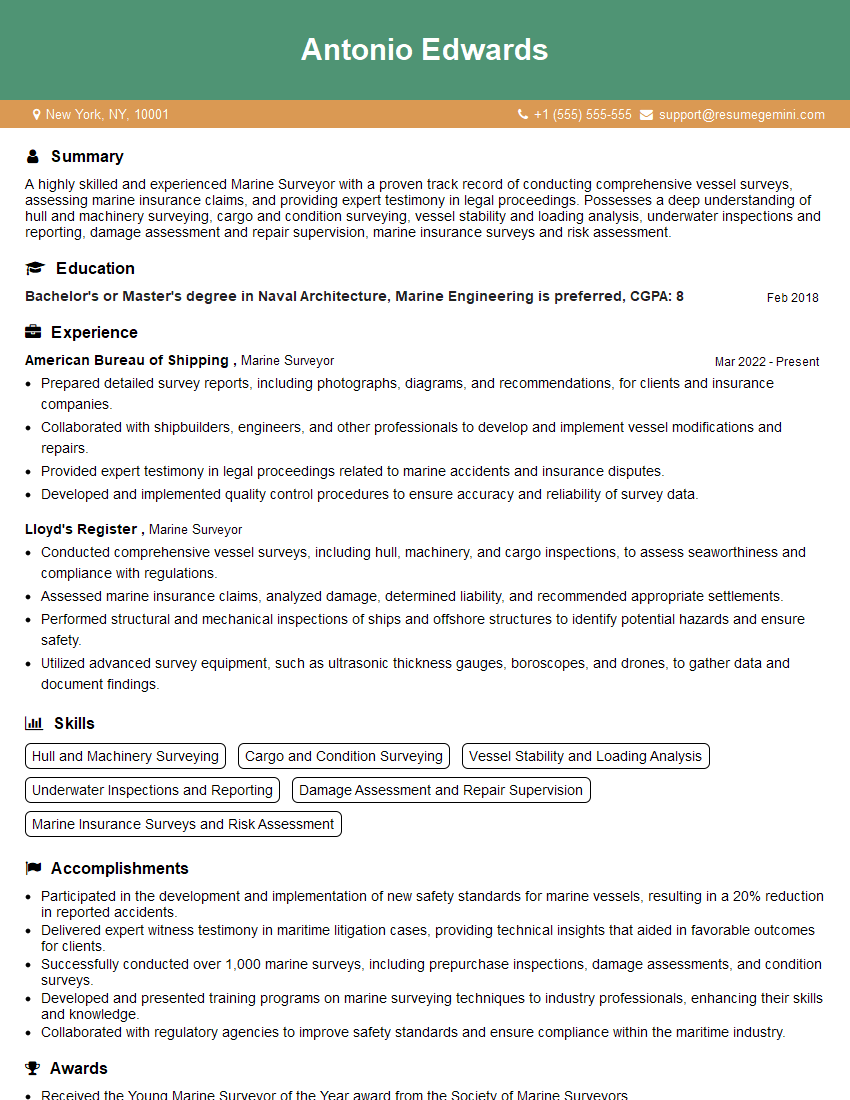
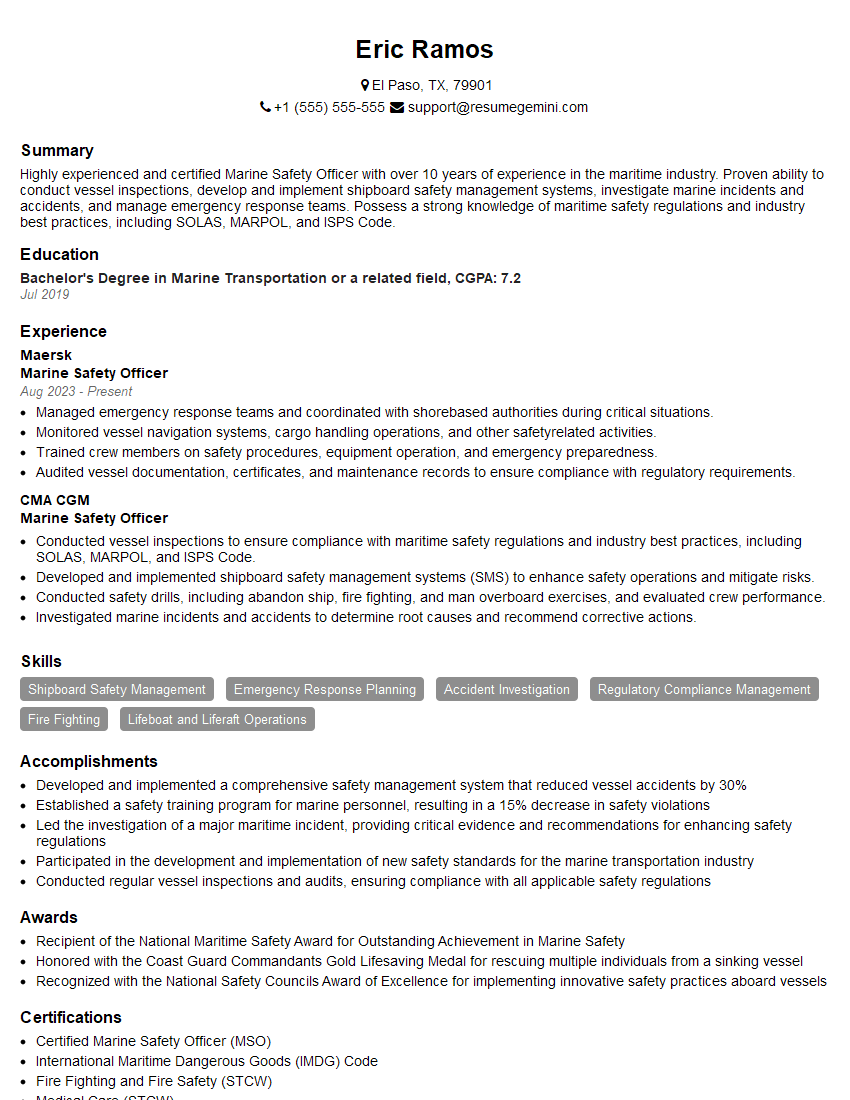
Mastering International Maritime Organization Standards Compliance is crucial for career advancement in the maritime industry, opening doors to senior roles with increased responsibility and higher earning potential. A well-crafted resume is your key to unlocking these opportunities. Creating an ATS-friendly resume ensures your application reaches the hiring manager. We strongly recommend using ResumeGemini to build a professional and impactful resume. ResumeGemini provides tools and resources to help you craft a compelling narrative, showcasing your expertise and experience in International Maritime Organization Standards Compliance. Examples of resumes tailored to this specific field are available to help you get started.
Explore more articles
Users Rating of Our Blogs
Share Your Experience
We value your feedback! Please rate our content and share your thoughts (optional).
What Readers Say About Our Blog
Very informative content, great job.
good