Unlock your full potential by mastering the most common Fire Safety Code Compliance interview questions. This blog offers a deep dive into the critical topics, ensuring you’re not only prepared to answer but to excel. With these insights, you’ll approach your interview with clarity and confidence.
Questions Asked in Fire Safety Code Compliance Interview
Q 1. What are the key differences between NFPA and IBC fire codes?
NFPA (National Fire Protection Association) codes and IBC (International Building Code) codes both address fire safety, but they differ in scope and approach. NFPA codes are consensus standards developed by experts and focus on specific hazards and systems, offering detailed technical requirements. Think of them as highly specialized manuals for various fire-related aspects. The IBC, on the other hand, is a broader building code that incorporates fire safety requirements alongside structural, mechanical, and electrical provisions. It adopts many NFPA standards by reference, essentially saying “Use this specific NFPA standard for this area.” For example, NFPA 13 covers sprinkler systems in detail, while the IBC references NFPA 13 for the requirements related to sprinkler systems within the building code.
In essence, NFPA codes delve into the ‘how’ of fire safety (detailed technical specifications), while the IBC provides the overall framework and requirements integrating fire safety into the broader construction and building regulations. A building needs to comply with both – the IBC sets the general framework, and specific NFPA standards fulfill the detailed requirements within that framework.
Q 2. Explain the process of conducting a fire safety inspection.
A fire safety inspection involves a systematic evaluation of a building or facility to identify fire hazards and ensure compliance with applicable codes. It’s like a thorough health checkup for your building’s fire safety. The process typically includes:
- Initial Review: Reviewing building plans, permits, and existing fire safety documentation.
- On-site Inspection: A physical inspection of the premises, checking fire alarm systems, sprinkler systems, fire extinguishers, emergency lighting, means of egress (exits), storage of flammable materials, and overall building construction related to fire safety.
- Testing and Verification: Testing the functionality of fire alarm systems, sprinkler systems, and other fire protection equipment.
- Documentation: Thorough documentation of findings, including photos and descriptions of any observed violations or deficiencies. This creates a comprehensive record for future reference and tracking of corrective actions.
- Report Generation: Preparing a detailed report summarizing the inspection findings, identifying any code violations, and outlining recommended corrective actions.
- Follow-up Inspection (if necessary): A follow-up inspection to verify that corrective actions have been implemented.
For instance, I recently inspected a commercial kitchen and found several violations, including improperly stored flammable cooking oil and a malfunctioning fire suppression system. The report highlighted these issues, specified corrective actions, and included photos as evidence.
Q 3. How do you identify and address fire code violations?
Identifying fire code violations requires keen observation and a thorough understanding of applicable codes. It’s akin to being a detective, looking for clues that indicate potential fire hazards. I identify violations by comparing what I observe during the inspection against the requirements of relevant codes. Common violations include:
- Obstructed exits: Blocked fire exits, which can impede evacuation.
- Malfunctioning fire alarms/sprinklers: Systems that fail to function correctly during testing or are improperly maintained.
- Improper storage of hazardous materials: Flammable liquids or other hazardous materials stored improperly increase the risk of fire.
- Inadequate fire extinguishers: Insufficient number or incorrect type of fire extinguishers for the occupancy.
Addressing violations involves issuing a detailed report outlining each violation, referencing the specific code section violated, and recommending appropriate corrective actions. I usually follow up to ensure the violations are corrected promptly and correctly, rescheduling inspections if needed. This ensures the safety of occupants and compliance with the fire codes.
Q 4. Describe your experience with fire alarm system testing and maintenance.
I have extensive experience in fire alarm system testing and maintenance, including performing routine inspections, functional testing, and troubleshooting. This involves a combination of practical skills and detailed knowledge of the system’s components and operation. My approach follows established best practices, including:
- Regular Inspections: Conducting regular visual inspections to check for any damage, corrosion, or signs of tampering.
- Functional Testing: Activating various system components, such as smoke detectors, heat detectors, manual pull stations, and horns, to verify they are functioning correctly.
- Troubleshooting: Identifying and resolving any malfunctions or faults in the system, such as faulty detectors or wiring issues.
- Documentation: Maintaining comprehensive records of all testing and maintenance activities, including dates, results, and corrective actions taken.
For instance, during a recent inspection, I discovered a faulty smoke detector in a high-traffic area. I immediately replaced it, documented the incident, and ensured all system functionalities were restored. Regular testing prevents critical failures and ensures the building occupants are protected.
Q 5. What is your understanding of means of egress requirements?
Means of egress refers to the paths people use to safely evacuate a building in case of fire. It’s a critical aspect of fire safety, ensuring occupants can escape quickly and efficiently. Requirements focus on providing sufficient, unobstructed, and well-marked exits. Key aspects include:
- Number and location of exits: Buildings must have a sufficient number of exits strategically located to ensure easy access from any point within the building.
- Exit width and capacity: Exits must be wide enough to accommodate the anticipated number of occupants during evacuation.
- Exit signage and illumination: Clear and visible signage and adequate lighting must guide occupants to the nearest exits.
- Accessibility for people with disabilities: Exits must be accessible to people with disabilities, adhering to relevant accessibility codes.
- Maintenance and unobstruction: Exits must be kept free from obstructions at all times.
Think of it like building escape routes; they need to be wide, clear, well-marked, and easily accessible, ensuring everyone can escape safely.
Q 6. How do you ensure compliance with fire sprinkler system regulations?
Ensuring compliance with fire sprinkler system regulations involves a multi-faceted approach that includes regular inspections, testing, and maintenance. This is crucial because sprinkler systems are a vital element of passive fire protection. My approach involves:
- Regular Inspections: Visual inspections to check for damage, corrosion, obstructions, or any signs of tampering.
- Testing and Maintenance: Regular testing of the system’s components, including flow tests, pressure tests, and inspections of the sprinkler heads, pipes, and valves.
- Record Keeping: Maintaining detailed records of all inspections, tests, and maintenance activities, including any corrective actions taken.
- Compliance with relevant standards: Strict adherence to NFPA 13 and other relevant standards and regulations.
For example, I recently discovered a partially blocked pipe during a routine inspection, which could have severely impaired the system’s effectiveness. This was immediately reported and resolved, preventing a potential catastrophe.
Q 7. Explain your experience with fire suppression system inspections.
My experience with fire suppression system inspections encompasses a wide range of systems, including sprinkler systems, clean agent systems, and fire suppression systems for specific hazards like kitchen fires or server rooms. Each system type has unique requirements and inspection protocols. A typical inspection includes:
- Visual inspection: Checking for physical damage, corrosion, or obstructions.
- Testing: Performing functional tests to verify that the system is operating correctly. This could involve flow tests for sprinkler systems or activation tests for other systems.
- Component checks: Inspecting individual components such as cylinders, piping, nozzles, and control panels.
- Documentation: Maintaining thorough records of all inspections, tests, and maintenance activities.
For instance, I once inspected a kitchen fire suppression system that used a wet chemical agent. The inspection revealed that the agent’s pressure had dropped significantly, posing a safety risk. The system was promptly serviced, and the pressure was restored, preventing a possible failure during an emergency.
Q 8. What are the common fire hazards in different building types (e.g., residential, commercial, industrial)?
Fire hazards vary significantly depending on the building type. Think of it like this: each building type has its own unique recipe for potential fires, and understanding those ingredients is crucial for prevention.
- Residential Buildings: Common hazards include cooking equipment (unattended stoves, faulty wiring in ovens), heating appliances (space heaters, fireplaces), smoking materials (cigarettes, cigars), overloaded electrical circuits, and faulty wiring. For example, a frayed electrical cord near flammable furniture presents a significant risk.
- Commercial Buildings: These often involve a higher density of people and equipment, leading to hazards like faulty electrical systems, improper storage of flammable materials (e.g., chemicals, paper), kitchen fires (restaurants, hotels), and inadequate fire suppression systems. A malfunctioning sprinkler system in a large retail space is a serious concern.
- Industrial Buildings: These settings frequently handle highly flammable materials and machinery, increasing the risk of explosions and large-scale fires. Examples include welding sparks igniting combustible dust, chemical spills, and malfunctioning machinery. Proper ventilation and specialized fire suppression systems are critical in these environments.
Identifying these specific hazards requires thorough inspections and understanding the unique processes and materials within each building.
Q 9. How do you develop and implement a fire safety plan?
Developing and implementing a fire safety plan is a multi-step process that requires careful planning and ongoing maintenance. It’s like building a strong defense against a potential threat.
- Hazard Identification: Conduct a thorough assessment of all potential fire hazards within the building, considering the building’s occupancy, construction, and the activities taking place.
- Risk Assessment: Evaluate the likelihood and potential consequences of each identified hazard. This determines the level of risk and guides the selection of appropriate control measures.
- Emergency Action Plan: Detail procedures for evacuating the building, including assembly points, evacuation routes, and responsibilities of designated personnel. Practice drills regularly to ensure everyone knows what to do.
- Fire Prevention Measures: Implement measures to control identified hazards, such as installing fire alarms, sprinklers, fire extinguishers, and conducting regular maintenance.
- Training and Education: Train occupants on the fire safety plan, including how to use fire extinguishers, evacuation procedures, and reporting procedures. Regular training keeps everyone prepared.
- Documentation and Maintenance: Maintain detailed records of inspections, tests, and training sessions. Regularly review and update the plan as the building’s use or occupancy changes.
A well-executed fire safety plan minimizes risks and enhances the safety of building occupants and their property.
Q 10. Describe your experience with fire risk assessments and mitigation strategies.
Fire risk assessments are crucial for proactive fire safety. My experience involves a systematic approach using various techniques.
I start with a detailed site survey, identifying potential ignition sources, flammable materials, and the building’s construction. Then I assess the likelihood and severity of potential fire scenarios. For instance, a building with combustible materials near a malfunctioning electrical panel presents a higher risk than one with non-combustible materials and well-maintained electrical systems.
Mitigation strategies are then developed based on the identified risks. These strategies could involve installing fire suppression systems, modifying building layout to improve evacuation routes, enhancing employee training, implementing stricter housekeeping measures, and using fire-retardant materials. For example, we might recommend installing a sprinkler system in a high-risk area or implementing a stricter policy for storing flammable liquids.
Following implementation, regular inspections and monitoring are essential to ensure that mitigation measures remain effective. This continuous improvement cycle guarantees the effectiveness of the risk mitigation strategies.
Q 11. How familiar are you with the process of obtaining fire permits and approvals?
Obtaining fire permits and approvals is a vital aspect of ensuring compliance. My experience includes navigating the complexities of local and national fire codes.
The process typically begins with submitting a detailed application to the relevant authority, which often includes building plans, specifications for fire protection systems, and a detailed fire safety plan. The application is reviewed by fire safety inspectors who ensure that the proposed design meets all applicable codes and standards. Inspections are conducted at various stages of construction to verify compliance.
Any necessary revisions or modifications are addressed before the permit is issued. Post-construction inspections are also usually required to confirm that the installed systems are functional and meet the specified requirements. Failure to comply can result in significant delays and potential fines. Familiarity with local ordinances and building codes is essential for a smooth process.
Q 12. What are your strategies for communicating fire safety information to building occupants?
Communicating fire safety information effectively is critical. It’s about making sure everyone understands the risks and knows how to respond.
- Clear and Concise Messaging: Use simple language, visuals, and easily understood instructions. Avoid technical jargon.
- Multiple Communication Channels: Utilize various methods such as posters, brochures, fire drills, email announcements, and regular training sessions. Multiple channels ensure the message reaches everyone.
- Targeted Communication: Tailor the messaging to specific audiences, considering their roles and responsibilities in case of fire.
- Regular Reinforcement: Don’t just communicate once; regularly reinforce key safety messages through reminders and updates. Regular drills and training are crucial.
- Feedback Mechanisms: Encourage feedback from building occupants to understand their understanding and identify areas for improvement in communication.
Effective communication leads to better preparedness and a safer environment for everyone.
Q 13. How would you handle a fire code violation that poses an immediate threat?
Handling a fire code violation posing an immediate threat requires swift and decisive action. It’s a situation where speed and precision are paramount.
- Immediate Assessment: Determine the nature and extent of the violation and the immediate danger it poses. This might involve a quick site visit to evaluate the situation.
- Emergency Measures: Implement immediate corrective actions to mitigate the risk. This could involve shutting down equipment, removing hazardous materials, or evacuating the affected area.
- Notification: Notify the relevant authorities (fire department, building management) immediately. This ensures coordinated response and appropriate action.
- Documentation: Document all actions taken, including photographs and witness statements. Detailed documentation helps in future investigations and compliance efforts.
- Follow-up: Work with the authorities to address the underlying causes of the violation and implement a long-term solution to prevent recurrence. This may include developing a remediation plan.
Prioritizing safety and working collaboratively with authorities ensures that the threat is neutralized and prevents future incidents.
Q 14. Explain your familiarity with various fire detection and suppression technologies.
My familiarity with fire detection and suppression technologies spans a wide range of systems. Think of it as having a comprehensive toolkit for different fire scenarios.
- Detection Systems: I’m proficient with various types including ionization smoke detectors (sensitive to fast-flaming fires), photoelectric smoke detectors (better for smoldering fires), heat detectors (respond to temperature changes), flame detectors (detect the visible or infrared radiation of flames), and carbon monoxide detectors.
- Suppression Systems: My expertise includes sprinkler systems (wet pipe, dry pipe, pre-action), fire extinguishers (various classes for different fire types), clean agent systems (inert gas or chemical agents), foam systems, and water mist systems. Understanding the limitations and applications of each system is crucial for selecting the right one for a given environment.
- Integrated Systems: I’m familiar with how these systems integrate with fire alarm control panels, emergency lighting, and building management systems. A well-integrated system maximizes efficiency and response times.
Choosing the right technology depends on several factors such as the type of occupancy, the potential hazards present, and the level of risk. I can assess and recommend the most suitable technologies based on a thorough risk assessment.
Q 15. Describe your experience with fire investigation and report writing.
My experience in fire investigation encompasses a wide range of scenarios, from small incidents to large-scale complex fires. I’m proficient in conducting thorough scene examinations, collecting evidence (physical samples, witness statements, etc.), analyzing data, and reconstructing the events leading to the fire. My reports adhere to NFPA standards and include detailed findings, conclusions, and recommendations for preventative measures. For example, I recently investigated a fire in a multi-family dwelling. Through meticulous examination, I determined the cause to be faulty wiring in a kitchen appliance, which led to recommendations for regular appliance maintenance and stricter electrical inspections in similar buildings.
My reports are structured clearly and concisely, outlining the methodology employed, the evidence gathered, the analysis performed, and the ultimate conclusion. They always incorporate high-quality photographs and diagrams to visually support the narrative and ensure clarity for all stakeholders, from insurance adjusters to legal professionals. This ensures accurate and reliable information is conveyed, crucial for determining liability and preventing future incidents.
Career Expert Tips:
- Ace those interviews! Prepare effectively by reviewing the Top 50 Most Common Interview Questions on ResumeGemini.
- Navigate your job search with confidence! Explore a wide range of Career Tips on ResumeGemini. Learn about common challenges and recommendations to overcome them.
- Craft the perfect resume! Master the Art of Resume Writing with ResumeGemini’s guide. Showcase your unique qualifications and achievements effectively.
- Don’t miss out on holiday savings! Build your dream resume with ResumeGemini’s ATS optimized templates.
Q 16. How do you stay current with changes in fire safety codes and regulations?
Staying updated on fire safety codes and regulations is a continuous process. I actively participate in professional development courses, workshops, and seminars offered by organizations like the NFPA (National Fire Protection Association) and local fire marshal offices. I subscribe to relevant industry publications and journals, and I regularly check for updates on governmental websites responsible for issuing and amending fire safety codes, both at the federal and local levels. Moreover, I maintain membership in professional organizations which provide access to the latest research, best practices, and code changes. Think of it like being a doctor – staying current with medical advancements is crucial; similarly, staying updated on fire codes is essential for ensuring the safety and well-being of the public.
Q 17. What is your experience with working with different stakeholders on fire safety compliance?
I have extensive experience collaborating with various stakeholders, including building owners, architects, contractors, insurance representatives, and fire marshals. Effective communication and strong interpersonal skills are crucial for successful compliance. I work to build trust and understanding by clearly explaining fire codes, addressing concerns, and offering practical solutions. For instance, during the renovation of a historic building, I worked closely with the architects and contractors to ensure all fire safety upgrades met the necessary standards while preserving the building’s historical integrity. This involved many meetings, careful review of plans, and on-site inspections to ensure compliance.
I find that adopting a collaborative approach, actively listening to all perspectives, and providing clear, concise information leads to greater success in achieving compliance. This often involves compromise and finding solutions that meet the needs of all parties involved while upholding the highest fire safety standards.
Q 18. Explain your understanding of the legal liabilities associated with fire safety violations.
Legal liabilities associated with fire safety violations can be substantial. These can range from fines and penalties to criminal charges, especially in cases involving negligence or willful disregard for safety regulations. Building owners and managers are legally obligated to maintain a safe environment, and failure to comply can result in significant financial consequences and potential legal action from injured parties. For example, a failure to provide adequate fire suppression systems can lead to hefty fines and lawsuits if a fire results in injury or property damage. Moreover, in cases of fatalities, criminal charges can be filed against individuals responsible for negligence leading to a loss of life.
Understanding these liabilities is crucial for fostering a proactive approach to fire safety compliance. It’s not just about avoiding penalties; it’s about safeguarding lives and property.
Q 19. How would you address resistance from building owners to comply with fire safety regulations?
Addressing resistance to fire safety compliance requires a multifaceted strategy. First, I would begin by clearly outlining the legal and ethical obligations associated with non-compliance, emphasizing the potential risks and liabilities involved. I’d then present the benefits of compliance, highlighting how improved safety can actually enhance property value and reduce insurance premiums. Sometimes, financial incentives, such as grant programs or tax breaks for implementing safety improvements, can be very persuasive. In many cases, I’ve found that demonstrating the long-term cost savings associated with preventing fires is effective. For instance, replacing outdated fire detection systems might seem costly initially, but it prevents far larger expenses associated with fire damage and potential lawsuits.
If necessary, I would work with legal counsel to explore all available options, potentially including enforcement actions if other measures fail. My approach prioritizes education and collaboration, but I’m prepared to take firm action when needed to ensure compliance and public safety.
Q 20. What is your experience with emergency response planning and drills?
My experience with emergency response planning and drills involves developing comprehensive plans tailored to specific building types and occupancy loads. These plans include evacuation routes, assembly points, communication protocols, and roles and responsibilities for staff and occupants. I conduct regular drills to test the effectiveness of these plans and identify any areas for improvement. For example, I recently developed a comprehensive emergency response plan for a large hospital, incorporating specific procedures for handling patients, medical equipment, and critical infrastructure during an evacuation. These plans are not static documents – they are continually reviewed and updated based on the results of drills and changes in the building or its occupancy.
Effective emergency response planning and drills are crucial for mitigating the impact of a fire, minimizing injuries, and ensuring the safe evacuation of occupants.
Q 21. Describe a time you had to troubleshoot a fire safety system malfunction.
I once encountered a malfunction in a high-rise building’s fire alarm system. The system was repeatedly generating false alarms, causing disruption and desensitizing occupants. The initial troubleshooting involved checking the system’s power supply, inspecting wiring and connections, and testing individual components. The problem turned out to be a faulty sensor in the kitchen of a restaurant on the ground floor, constantly triggering the system due to excess steam. Once that sensor was replaced, the system functioned correctly.
This experience highlighted the importance of thorough diagnostics when troubleshooting fire safety systems. A systematic approach, starting with the basics and progressively checking more complex components, is essential for efficient and accurate problem resolution. Documentation is also key, allowing for future reference and preventing similar issues.
Q 22. How do you document your findings from a fire safety inspection?
Thorough documentation is crucial for demonstrating compliance and facilitating future inspections. My process involves a multi-step approach. First, I conduct a comprehensive visual inspection, noting all observations, including any deficiencies. This is recorded using a standardized checklist tailored to the specific building type and occupancy. I then utilize digital photography to document the location and nature of any fire safety hazards. These photos are meticulously labelled and stored with the inspection report. Finally, I create a detailed report that summarizes findings, clearly identifies any violations, and provides specific recommendations for remediation. This report includes a prioritized list of critical, major, and minor deficiencies, alongside suggested corrective actions and timelines. For instance, a missing fire extinguisher would be classified as a critical deficiency demanding immediate attention, whereas a minor crack in a fire door could be designated as a minor deficiency requiring attention within a specified timeframe. The report is always digitally archived for easy retrieval and auditing purposes, complying with relevant regulations and ensuring a clear audit trail.
Q 23. What are your preferred methods for educating building occupants on fire safety procedures?
Educating building occupants is paramount for effective fire safety. My approach is multifaceted and combines several strategies. I believe in utilizing a variety of methods to ensure the message resonates with diverse audiences. This includes conducting interactive training sessions, utilizing clear and concise visual aids like diagrams and infographics, and distributing well-written handbooks explaining procedures and emergency routes. I also strongly advocate for practical fire drills and evacuation exercises to familiarize occupants with emergency procedures. These drills are tailored to the specific building layout, and feedback is gathered to improve future drills. For instance, for a high-rise building, I would incorporate the use of elevators and emergency stairwells during the drills, while for a smaller building, I might focus on specific evacuation routes. I also leverage technology, using videos or online modules, where appropriate, to reinforce training. For those with limited literacy, I supplement written materials with visual cues and utilize alternative communication methods.
Q 24. How familiar are you with accessibility requirements related to fire safety?
I am very familiar with accessibility requirements in fire safety. These are critical for ensuring the safety of all building occupants, including those with disabilities. My understanding encompasses the ADA (Americans with Disabilities Act) guidelines and relevant building codes. This includes considerations for accessible routes of egress, signage, alarm systems (visual and auditory), and emergency communication systems. For example, I ensure that emergency exits are appropriately marked with tactile signage and that audible alarms are supplemented with visual strobe lights for those with hearing impairments. I am experienced in reviewing plans to ensure compliance with these codes, and I carefully inspect existing facilities to identify and rectify accessibility deficiencies related to fire safety. A specific example would be identifying and correcting the obstruction of an accessible route by improperly stored materials, ensuring smooth and accessible pathways for safe evacuation.
Q 25. What is your understanding of the role of fire modeling in design and compliance?
Fire modeling plays a crucial role in modern fire safety design and compliance. It allows us to simulate fire behavior and predict its spread within a building under different scenarios. This data is invaluable in optimizing building design for fire safety, determining the required fire protection systems, and evaluating the effectiveness of evacuation strategies. I am familiar with various fire modeling software packages, allowing me to analyze parameters such as heat release rate, smoke spread, and temperature distribution. For instance, if we are designing a new high-rise building, fire modeling can help us determine the appropriate placement of sprinklers, predict how long it will take for the fire department to arrive, and inform the design of fire-rated compartments. These simulations assist in ensuring compliance with fire codes and minimizing the risk of life and property loss. The results of these models are meticulously documented and integrated into the overall fire safety plan.
Q 26. Describe your experience in conducting fire drills and emergency evacuations.
I have extensive experience in conducting fire drills and emergency evacuations. My approach is focused on ensuring these exercises are realistic, effective, and inclusive. I start by developing a detailed plan outlining the procedures, roles, and responsibilities for each participant. Before conducting a drill, I thoroughly brief all participants, emphasizing the importance of safety and adherence to procedures. During the drills, I closely monitor the evacuation process, identifying any bottlenecks or areas for improvement. Following the drill, I conduct a comprehensive debriefing session with all participants, reviewing both positive aspects and areas requiring refinement. For example, I might discover a problem with a specific exit door, or that certain employees require additional training on evacuation procedures. This feedback is then incorporated into the improvement of future drills and overall emergency preparedness strategies. Detailed records of each drill are maintained, documenting any issues encountered and corrective actions taken.
Q 27. How do you balance safety compliance with operational needs?
Balancing safety compliance with operational needs requires a careful and considered approach. It’s not about choosing one over the other; it’s about finding creative and practical solutions that ensure both safety and operational efficiency. I believe in open communication and collaboration with building management and occupants. Often, we discover that perceived operational obstacles can be addressed with innovative solutions that enhance safety. For example, rather than having fire extinguishers obstructing walkways, we could find alternative, more accessible locations without compromising safety. Using technology can also be helpful; for example, a remotely monitored sprinkler system provides operational convenience while guaranteeing reliable fire protection. A key aspect of this balance involves risk assessment; identifying the level of risk, evaluating potential hazards, and implementing proportionate safety measures. By actively working with building occupants, we can develop a fire safety plan that is effective, compliant, and minimally disruptive to their operations.
Q 28. Explain your experience with using fire safety software or databases.
I am proficient in using several fire safety software and databases. These tools are invaluable for managing inspection data, tracking compliance, generating reports, and storing crucial information. I am familiar with software that allows for digital inspections, generating reports directly in the field. I can easily upload pictures, videos and complete inspection checklists, consolidating all information in a single location. Additionally, I have experience with databases for managing fire safety plans, occupant information, and training records. This allows for efficient tracking and reporting. Using these tools streamlines the entire process, improving efficiency and accuracy while ensuring compliance. For instance, the use of such software reduces the risk of human error when creating reports, and the database ensures that the information is readily available for audits and for easy access when needed. The software’s features allows for improved data management and assists in proactive fire safety planning.
Key Topics to Learn for Fire Safety Code Compliance Interview
- Building Codes and Regulations: Understanding the intricacies of local, state, and national fire codes, including NFPA standards and their practical application in various building types.
- Fire Protection Systems: Knowledge of different fire suppression systems (sprinklers, fire alarms, smoke detectors), their installation requirements, inspection procedures, and testing methodologies. Practical application includes troubleshooting malfunctions and ensuring system integrity.
- Life Safety Systems: Familiarity with emergency evacuation plans, exit strategies, signage requirements, and the design considerations for ensuring safe occupant egress. This includes understanding accessibility needs and emergency lighting.
- Fire Risk Assessment and Mitigation: Ability to conduct thorough fire risk assessments, identifying potential hazards, and developing effective mitigation strategies. Practical application includes evaluating building designs, identifying fire hazards, and recommending corrective actions.
- Inspection and Enforcement: Understanding the processes involved in conducting fire safety inspections, identifying code violations, issuing citations, and ensuring compliance through corrective actions. This includes familiarity with documentation procedures and reporting requirements.
- Fire Prevention and Education: Knowledge of effective fire prevention strategies, public education programs, and the role of fire safety professionals in community outreach and risk reduction. This might involve understanding the different types of fire hazards and their prevention.
- Plan Review and Design: Ability to review building plans and specifications to ensure compliance with fire safety codes. This involves understanding blueprints and architectural drawings.
- Emergency Response and Incident Management: Understanding procedures for handling fire emergencies, including coordinating with emergency responders and managing evacuation processes. This might involve practical knowledge of incident command systems.
Next Steps
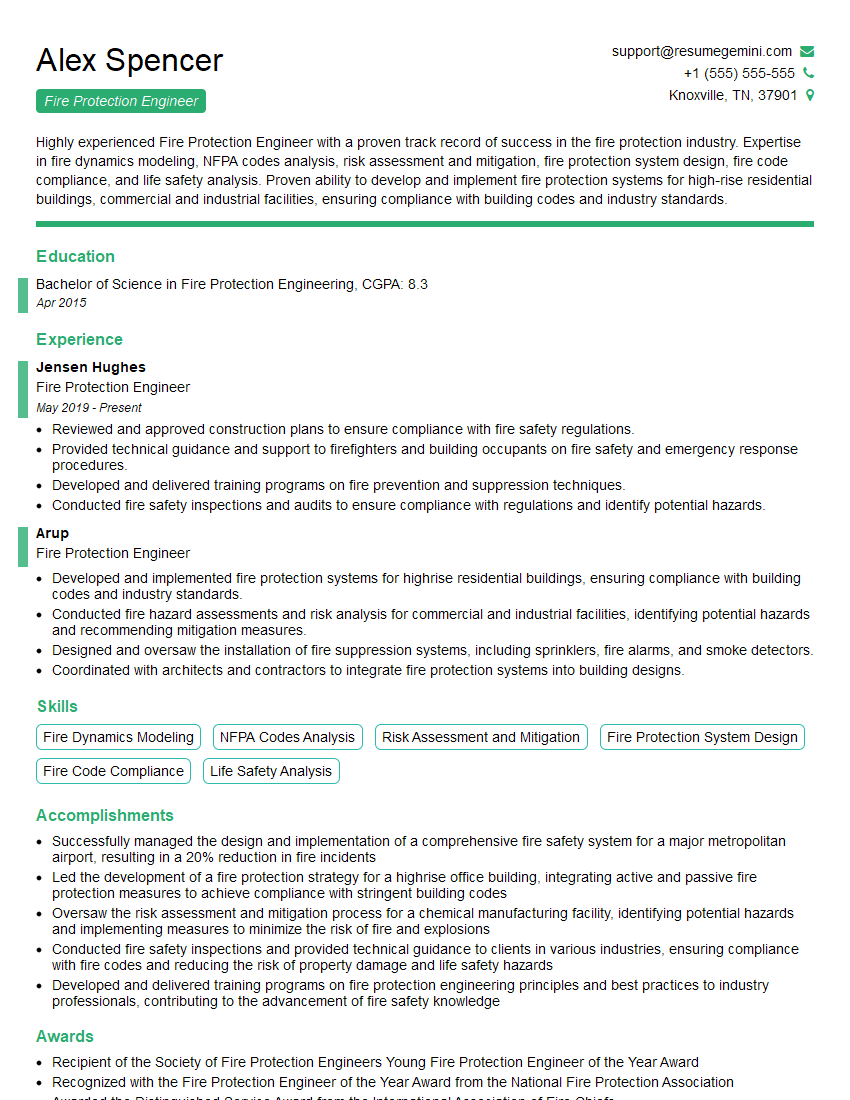
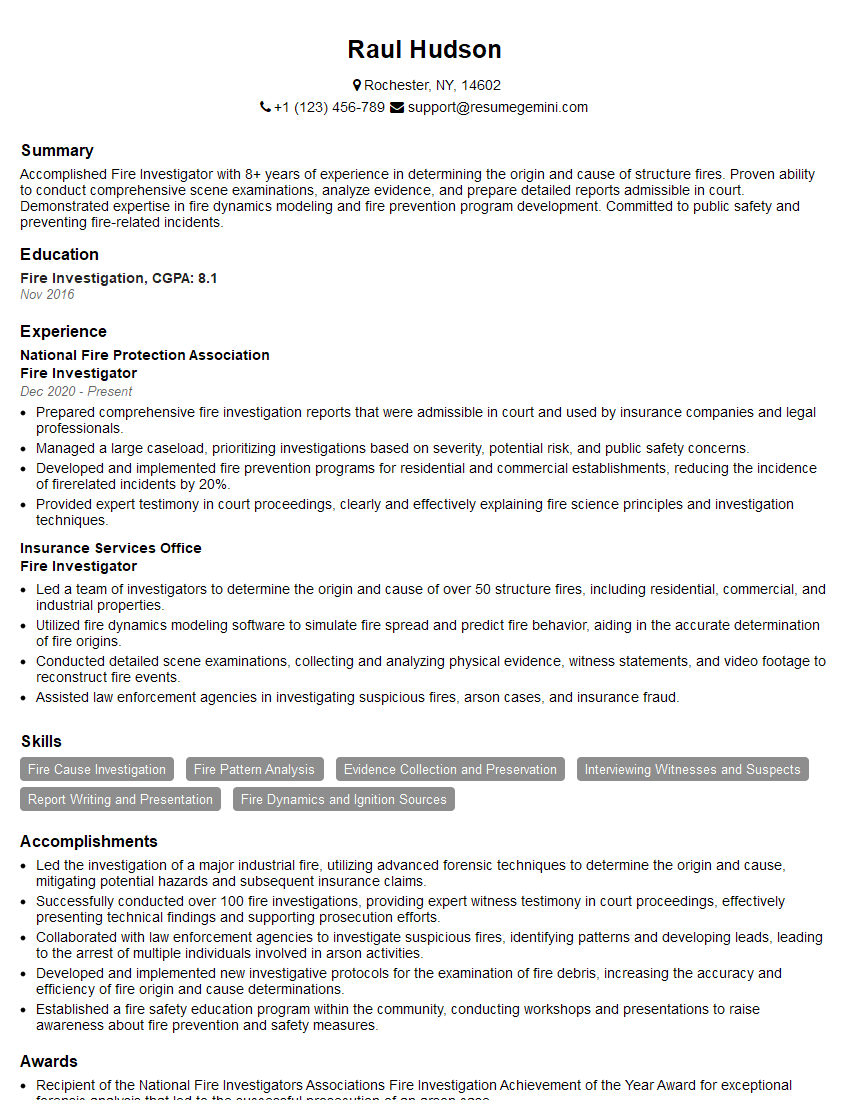
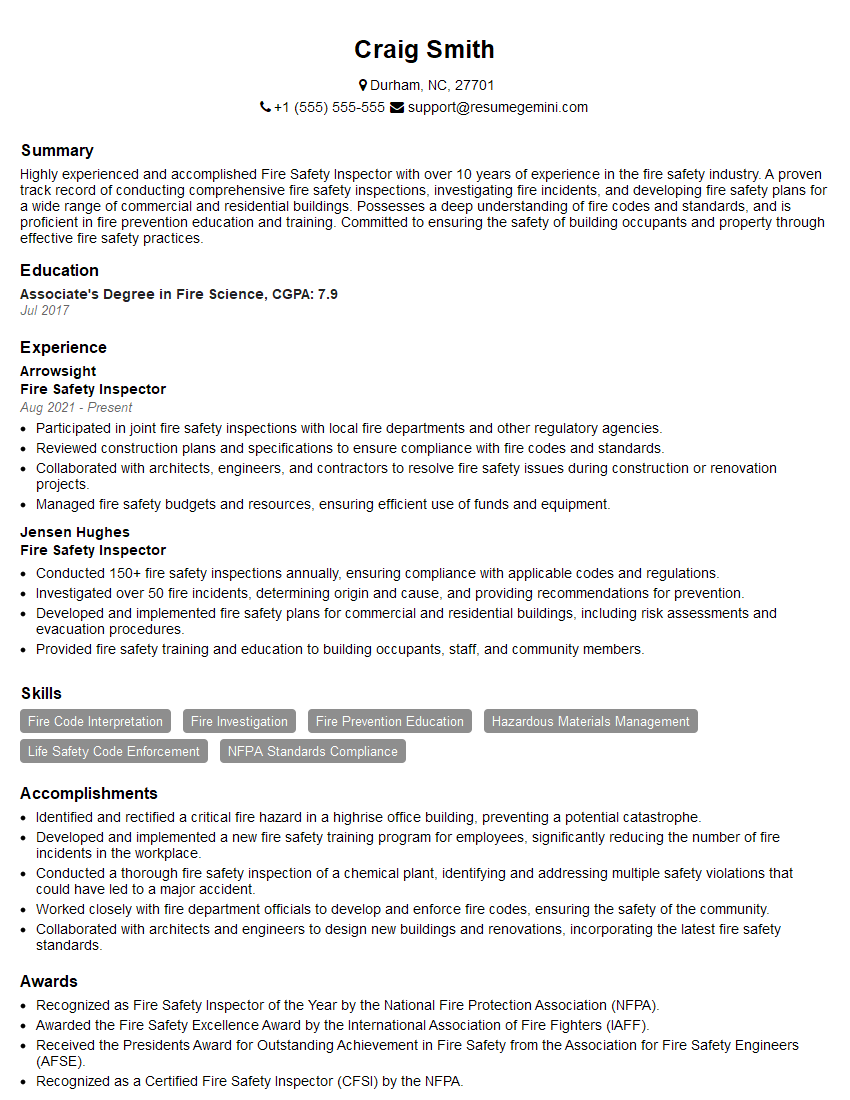
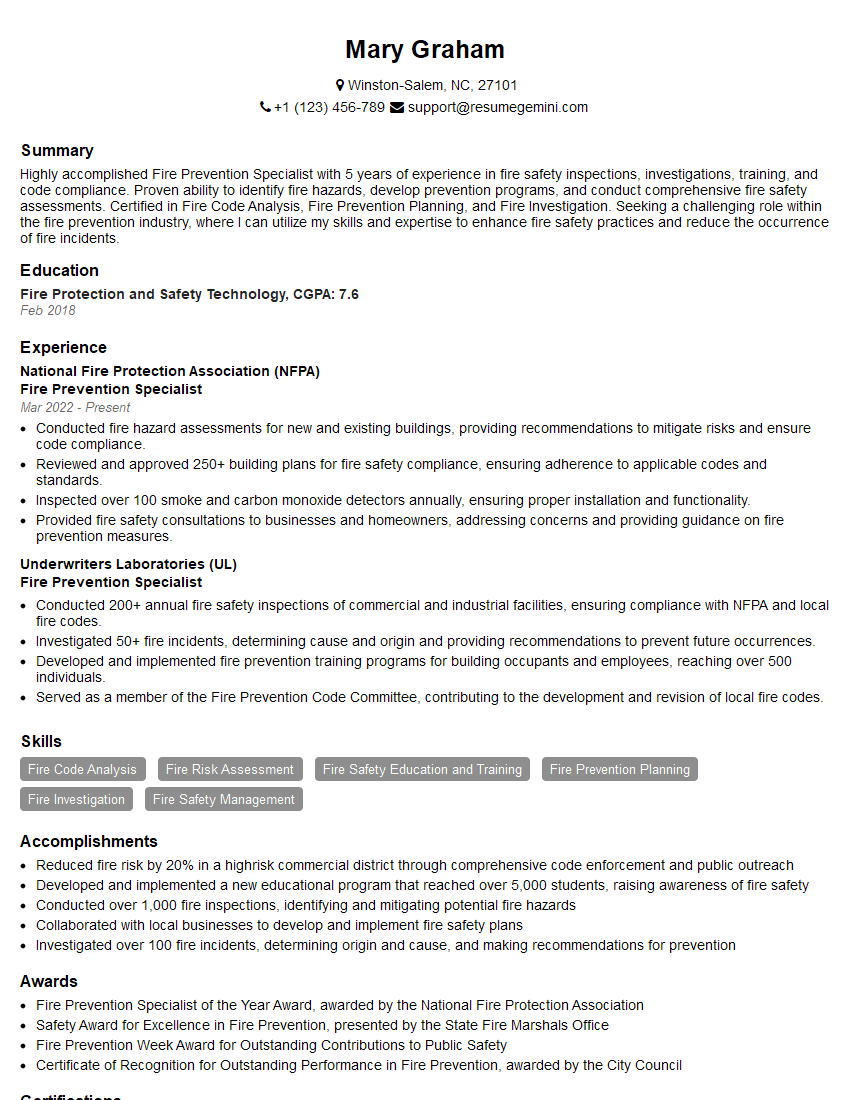
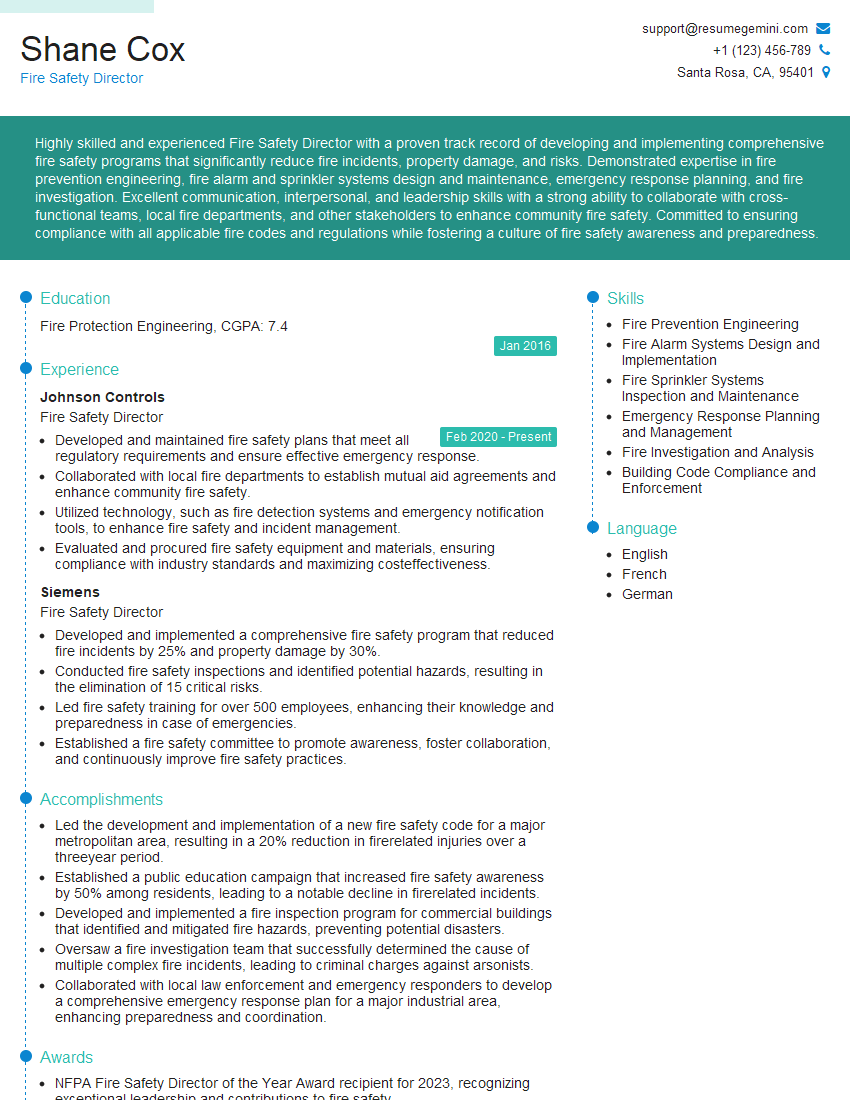
Mastering Fire Safety Code Compliance is crucial for career advancement in a field dedicated to protecting lives and property. A strong understanding of these codes opens doors to leadership roles, specialized certifications, and increased earning potential. To maximize your job prospects, it’s essential to create an ATS-friendly resume that highlights your skills and experience effectively. ResumeGemini is a trusted resource to help you build a professional and impactful resume that catches the eye of recruiters. We provide examples of resumes tailored specifically to Fire Safety Code Compliance to guide you in showcasing your qualifications. Take the next step towards your dream career – build a winning resume with ResumeGemini today!
Explore more articles
Users Rating of Our Blogs
Share Your Experience
We value your feedback! Please rate our content and share your thoughts (optional).
What Readers Say About Our Blog
Very informative content, great job.
good