Interviews are more than just a Q&A session—they’re a chance to prove your worth. This blog dives into essential International Solar Energy Society (ISES) Membership interview questions and expert tips to help you align your answers with what hiring managers are looking for. Start preparing to shine!
Questions Asked in International Solar Energy Society (ISES) Membership Interview
Q 1. Describe the benefits of ISES membership for professionals in the solar energy field.
ISES membership offers a wealth of benefits for solar energy professionals. It’s like joining a prestigious club dedicated to advancing the field, providing access to resources and opportunities that significantly boost your career.
- Enhanced Credibility: Being an ISES member instantly elevates your professional standing, demonstrating your commitment to the solar industry and your dedication to staying current with best practices.
- Networking Opportunities: ISES provides unparalleled networking possibilities through conferences, workshops, and online platforms, connecting you with leading experts and potential collaborators globally.
- Access to Information: Members gain access to a vast library of publications, research papers, and industry news, keeping them ahead of the curve on technological advancements and market trends. This is invaluable for staying competitive.
- Professional Development: ISES offers educational resources and professional development opportunities, helping members enhance their skills and knowledge through workshops and training programs. This is critical for career growth.
- Influence and Advocacy: As a member, you contribute to a global community advocating for sustainable energy policies and promoting the wider adoption of solar technologies. Your voice matters.
Q 2. What are the different membership categories offered by ISES, and what are their respective advantages?
ISES offers several membership categories tailored to different professional needs and levels of involvement. Think of it as choosing the right membership tier based on your current stage in your solar energy journey.
- Individual Membership: This is the standard membership for professionals working in the solar energy field. It grants access to all member benefits, including publications and networking opportunities.
- Student Membership: This discounted option is designed for students pursuing studies related to solar energy, providing them with access to resources and the ISES community at a lower cost.
- Institutional Membership: This category is for organizations and institutions involved in solar energy research, development, or deployment. It often includes multiple memberships for staff members and enhanced benefits.
- Corporate Membership: Targeted at companies in the solar industry, it offers benefits such as enhanced brand visibility and opportunities for participation in ISES initiatives.
The advantages vary slightly depending on the category, but all members benefit from access to the ISES network and resources.
Q 3. How does ISES contribute to the advancement of solar energy technology and research?
ISES plays a crucial role in driving progress in solar energy technology and research. It acts as a central hub for the exchange of knowledge and ideas, fostering collaboration and innovation. Imagine it as a global think tank dedicated solely to solar energy advancement.
- Conferences and Workshops: ISES organizes numerous international conferences and workshops, bringing together researchers, engineers, and policymakers to share their findings and discuss the latest advancements.
- Publications: ISES publishes renowned journals and reports, disseminating cutting-edge research and technological breakthroughs to the wider scientific community.
- Grants and Funding: ISES facilitates connections and may provide support for research projects and initiatives focused on advancing solar energy technologies.
- Collaboration and Networking: By fostering a vibrant community of experts, ISES enables collaborative research efforts and promotes the rapid dissemination of new knowledge.
Q 4. Explain the role of ISES in promoting sustainable energy practices globally.
ISES is deeply committed to promoting sustainable energy practices worldwide. It aims to accelerate the global transition to a cleaner energy future through education, advocacy, and collaboration. Think of it as a powerful advocate for solar energy on the global stage.
- Advocacy for Policies: ISES advocates for supportive policies and regulations that encourage the growth of solar energy at national and international levels.
- Education and Awareness: ISES works to educate the public and policymakers about the benefits of solar energy and the importance of transitioning to sustainable energy sources.
- International Collaboration: ISES brings together experts from around the globe, fostering collaboration and knowledge sharing across diverse geographical and cultural contexts.
- Capacity Building: ISES actively supports capacity building initiatives in developing countries, helping them to harness the potential of solar energy for economic development and social progress.
Q 5. What are some key publications or resources provided by ISES to its members?
ISES provides a range of valuable publications and resources to its members, offering a treasure trove of knowledge and insights within the solar energy field. These resources are constantly updated to reflect the latest industry advancements.
- Solar Energy Magazine: This widely read publication provides articles on the latest research, technological developments, and industry news.
- Technical Reports and Papers: ISES publishes numerous technical reports and research papers covering various aspects of solar energy, from photovoltaic technology to solar thermal applications.
- Conference Proceedings: Access to presentations and papers from ISES conferences offers valuable insights into cutting-edge research and technological innovations.
- Online Resources: ISES maintains an extensive online library of resources accessible to members, providing a vast collection of information, case studies, and best practices.
Q 6. How can ISES membership enhance professional networking opportunities?
ISES membership significantly enhances professional networking opportunities, creating a fertile ground for collaboration and career advancement. It’s like joining a global professional community dedicated to advancing the solar energy industry.
- Conferences and Workshops: These events provide exceptional networking opportunities, allowing members to connect with leading experts, potential employers, and collaborators in a focused setting.
- Online Forums and Communities: ISES facilitates online communication and collaboration through forums and online communities, enabling members to exchange information and share experiences regularly.
- Mentorship Programs: Some ISES chapters or initiatives might offer mentorship programs, connecting experienced professionals with emerging talent, providing valuable guidance and support.
- Job Boards: Certain ISES platforms may include job boards, listing employment opportunities within the solar energy industry, making it easier to discover new career paths.
Q 7. Describe your experience with attending ISES conferences or workshops.
Attending ISES conferences and workshops has been incredibly enriching. It’s like attending a high-level, global think tank devoted to solar energy innovation. I’ve been particularly impressed by the diversity of attendees and the quality of presentations.
One memorable conference focused on advancements in photovoltaic technology. I had the opportunity to engage in in-depth discussions with researchers from around the world, leading to a collaboration on a research project that significantly advanced my own work. The networking opportunities were invaluable and broadened my understanding of the global solar energy landscape. I’ve also participated in workshops on specific technologies and policy discussions, leading to tangible improvements in my professional practice. The structured learning environment fostered deeper engagement and knowledge transfer that has been directly applicable to my work.
Q 8. How has ISES influenced your professional development in solar energy?
My involvement with the International Solar Energy Society (ISES) has profoundly shaped my career in solar energy. ISES membership provides access to a global network of experts, fostering collaboration and knowledge sharing that’s invaluable for professional growth. For example, attending ISES conferences has allowed me to present my research, learn about cutting-edge technologies, and network with professionals from diverse backgrounds. This exposure has broadened my understanding of the field beyond my immediate research area and has helped me stay at the forefront of technological advancements. The resources available through ISES membership, such as publications and online forums, have also been instrumental in keeping me updated on the latest developments and best practices in the industry.
Q 9. What are the ethical considerations related to solar energy development and how does ISES address them?
Ethical considerations in solar energy development are paramount. Issues such as environmental impact (land use, habitat disruption), social equity (access to benefits for local communities), and responsible sourcing of materials (conflict minerals, fair labor practices) are crucial. ISES actively addresses these concerns by promoting sustainable practices, encouraging responsible research, and advocating for policies that prioritize ethical considerations. For instance, ISES publishes guidelines on lifecycle assessments for solar projects, helping members understand the environmental impact throughout the product’s lifespan. They also champion initiatives that ensure equitable access to the benefits of solar energy for marginalized communities worldwide, fostering a more just and sustainable energy transition.
Q 10. What are the key challenges facing the global solar energy industry, and how can ISES contribute to their solutions?
The global solar energy industry faces significant challenges, including the intermittency of solar power (dependence on sunlight), the need for efficient energy storage solutions, the high initial costs of installation, and the challenges associated with large-scale deployment and grid integration. ISES contributes to overcoming these challenges through several avenues. They facilitate research and development into next-generation solar technologies, like perovskite solar cells and advanced energy storage systems. They also advocate for supportive policies and regulations that create a favorable environment for solar energy adoption. ISES’s role in educating the public and policymakers about the benefits of solar energy is also crucial in overcoming misconceptions and fostering widespread acceptance.
- Intermittency: ISES promotes research on smart grids and energy storage to mitigate the effects of intermittent solar power.
- Cost: ISES advocates for policies that reduce the upfront costs of solar installations, making them more accessible.
- Grid Integration: ISES supports research and development on grid-scale integration strategies for solar power.
Q 11. How familiar are you with ISES’s commitment to education and outreach programs?
I am very familiar with ISES’s substantial commitment to education and outreach. They offer numerous educational programs, including workshops, conferences, and online courses, catering to a broad audience, from students to industry professionals. ISES actively promotes solar energy education in schools and universities, aiming to cultivate future generations of solar energy experts. They also engage in public awareness campaigns to educate the public about the benefits of solar energy and dispel common myths. Their outreach initiatives include collaborations with NGOs and government agencies to promote solar energy adoption globally. Their commitment to making solar energy knowledge widely accessible is a cornerstone of their mission.
Q 12. Explain your understanding of the different types of solar technologies and their applications.
Solar technologies encompass various methods of harnessing solar energy. The most common are photovoltaic (PV) systems, which convert sunlight directly into electricity using solar cells, and concentrated solar power (CSP) systems, which use mirrors or lenses to concentrate sunlight onto a receiver, generating heat to drive a power generation system. Other technologies include solar thermal collectors, which utilize sunlight to heat water or air for domestic or industrial applications, and solar architecture, which integrates solar energy systems into the design of buildings. PV systems are widely used for residential, commercial, and utility-scale applications. CSP systems are typically used for large-scale power generation, while solar thermal collectors are commonly used for water heating and space heating. The choice of technology depends on factors such as the application, available resources, and economic considerations.
Q 13. Describe your experience with solar energy project development or implementation.
My experience involves the development and implementation of several solar energy projects. I was involved in a 5MW ground-mounted PV project where I led the technical due diligence, ensuring the project’s feasibility and compliance with regulatory standards. This included site assessments, energy yield estimations, and grid connection studies. Another project involved the integration of a solar thermal system into a new industrial facility, where my role focused on optimizing the system’s design for maximum efficiency and cost-effectiveness. These experiences have provided me with valuable hands-on knowledge of all stages of solar project development, from initial conceptualization to final commissioning and operation. I am proficient in using various software tools for project design, modeling, and analysis.
Q 14. What are the economic and environmental benefits of solar energy compared to fossil fuels?
Solar energy offers significant economic and environmental advantages over fossil fuels. Economically, the cost of solar energy has decreased dramatically in recent years, making it increasingly competitive with fossil fuels. The operational costs of solar systems are also very low, resulting in long-term cost savings. Environmentally, solar energy is a clean and renewable source of energy, producing no greenhouse gas emissions during operation. This significantly reduces carbon emissions, contributing to mitigating climate change. Furthermore, solar energy reduces dependence on imported fossil fuels, enhancing energy security and reducing geopolitical risks. In contrast, fossil fuel-based energy production causes significant air and water pollution and contributes substantially to climate change through greenhouse gas emissions.
Q 15. How would you utilize your ISES membership to contribute to a solar energy project?
My ISES membership provides invaluable resources and networking opportunities to significantly contribute to solar energy projects. For instance, access to ISES publications and conferences allows me to stay abreast of the latest advancements in technology, best practices, and policy developments. This ensures that any project I’m involved in utilizes the most efficient and effective techniques. Furthermore, the network of professionals within ISES allows for collaboration on technical challenges, access to expert advice, and the possibility of securing funding through collaborative research initiatives. For example, if a project faces a specific technical hurdle, I can leverage my ISES network to connect with specialists who have experience overcoming similar challenges. This collaborative approach ensures quicker problem solving and a higher probability of project success.
Specifically, I can use my ISES membership to contribute in the following ways:
- Technical Expertise: Applying knowledge gained from ISES publications and events to optimize project design, ensuring maximum efficiency and minimizing environmental impact.
- Networking: Connecting with other ISES members for potential collaborations, partnerships, and securing funding.
- Professional Development: Continuously updating my skills and knowledge through ISES training programs and workshops, directly benefiting the project.
- Advocacy: Using my platform to promote the project and its positive impact, aligning with the ISES mission.
Career Expert Tips:
- Ace those interviews! Prepare effectively by reviewing the Top 50 Most Common Interview Questions on ResumeGemini.
- Navigate your job search with confidence! Explore a wide range of Career Tips on ResumeGemini. Learn about common challenges and recommendations to overcome them.
- Craft the perfect resume! Master the Art of Resume Writing with ResumeGemini’s guide. Showcase your unique qualifications and achievements effectively.
- Don’t miss out on holiday savings! Build your dream resume with ResumeGemini’s ATS optimized templates.
Q 16. Discuss the importance of international collaboration in addressing climate change through solar energy.
International collaboration is absolutely crucial in addressing climate change through solar energy. The scale of the problem requires a global response, and solar energy, as a clean and widely available resource, presents a powerful solution. International collaboration facilitates several key aspects:
- Technology Transfer: Sharing advanced solar technologies and best practices between developed and developing nations ensures equitable access to clean energy and accelerates global adoption.
- Research and Development: Joint research efforts can expedite innovation in areas like photovoltaic efficiency, energy storage, and grid integration, leading to more cost-effective and reliable solar solutions.
- Policy Harmonization: Consistent and supportive policies across nations are essential to create a stable and attractive investment climate for large-scale solar deployment. International agreements and collaborations can pave the way for such harmonization.
- Financial Cooperation: International funding mechanisms, like the Green Climate Fund, are crucial for supporting solar projects in developing countries. Collaborative efforts ensure funding reaches the areas most in need.
- Capacity Building: Sharing expertise and training programs helps build local capacity in areas like installation, maintenance, and project management, fostering sustainable growth in the solar energy sector globally.
For example, initiatives like the International Energy Agency (IEA) Solar Energy Technology Programme, bring together experts from around the world to address key challenges and accelerate the global transition to solar energy. Without this international collaboration, the progress in deploying solar energy worldwide would be drastically slower and less effective.
Q 17. How can solar energy contribute to achieving the Sustainable Development Goals?
Solar energy plays a vital role in achieving the Sustainable Development Goals (SDGs) set by the United Nations. Its contribution spans multiple goals:
- SDG 7 (Affordable and Clean Energy): Solar power is a key component of providing clean, affordable, and reliable energy access to all, especially in underserved communities lacking access to traditional power sources.
- SDG 8 (Decent Work and Economic Growth): The solar energy industry creates numerous jobs across the entire value chain, from manufacturing to installation and maintenance, boosting local economies.
- SDG 9 (Industry, Innovation, and Infrastructure): The solar sector fosters innovation and technological advancements, leading to improved energy efficiency and sustainable infrastructure development.
- SDG 13 (Climate Action): Solar energy is a crucial solution for mitigating climate change by reducing greenhouse gas emissions from fossil fuel-based energy systems.
- SDG 1 (No Poverty): Affordable solar energy can improve living standards, particularly in remote areas, enabling access to electricity for essential services like healthcare, education, and communication.
- SDG 3 (Good Health and Well-being): Access to clean energy for healthcare facilities enhances the quality of healthcare services, especially in developing nations.
For instance, solar-powered water pumps improve access to clean drinking water, impacting goals 6 (clean water and sanitation) and 3 (good health and well-being) simultaneously. The interconnected nature of these goals highlights the far-reaching benefits of widespread solar energy adoption.
Q 18. Explain your understanding of grid integration challenges related to large-scale solar power plants.
Grid integration of large-scale solar power plants presents several significant challenges. The intermittent nature of solar energy, its variability depending on weather conditions, requires careful management to maintain grid stability.
- Intermittency and Variability: Solar power generation fluctuates throughout the day and across seasons. This necessitates advanced forecasting techniques and grid management strategies to compensate for these variations and prevent power outages.
- Voltage Regulation: Large solar power plants can inject significant amounts of power into the grid, potentially causing voltage fluctuations. Sophisticated control systems are necessary to regulate voltage and ensure the safe operation of the grid.
- Frequency Stability: Maintaining the frequency of the electrical grid is crucial. The intermittent nature of solar power can impact frequency stability, necessitating solutions like advanced energy storage systems or demand-side management strategies.
- Transmission Infrastructure: Existing transmission infrastructure may need upgrades to handle the large volumes of power generated by large-scale solar plants. This can involve building new transmission lines and substations.
- Protection and Control Systems: Reliable protection and control systems are crucial to prevent grid faults and ensure the safe operation of the solar plant and the grid.
Consider a scenario where a large solar farm suddenly experiences a cloud cover. The drop in power generation needs to be managed seamlessly to prevent a cascade failure in the electrical grid. This requires sophisticated grid management systems with advanced forecasting capabilities and fast-acting control mechanisms.
Q 19. Describe your knowledge of different solar energy financing mechanisms.
Various financing mechanisms are available for solar energy projects, each with its own advantages and disadvantages.
- Equity Financing: Investors provide capital in exchange for an ownership stake in the project. This can be suitable for large-scale projects with strong growth potential.
- Debt Financing: Loans from banks or other financial institutions provide capital, which needs to be repaid with interest. This is a common approach for projects with predictable revenue streams.
- Public Funding: Governments or international organizations provide grants, subsidies, or concessional loans to support solar energy development, often focused on projects with societal benefits.
- Power Purchase Agreements (PPAs): A long-term contract between a solar power plant developer and a buyer of electricity guarantees a stable revenue stream for the project, reducing financial risk.
- Lease Financing: Instead of buying outright, the solar panels are leased. This option reduces the initial investment for consumers and organizations.
- Crowdfunding: Raising capital from many individuals through online platforms, often used for smaller-scale projects.
- Green Bonds: Bonds specifically issued to fund environmentally friendly projects, including solar energy, attracting investors seeking ESG (Environmental, Social, and Governance) compliance.
The choice of financing mechanism depends on several factors including the project size, risk tolerance, investor preferences, and the availability of public funding programs. For example, a large utility-scale solar farm might utilize a combination of debt financing and equity investment, while a residential rooftop solar installation might benefit from a PPA or lease financing.
Q 20. What are the potential impacts of policies on solar energy development?
Policies significantly impact solar energy development. Supportive policies can accelerate growth, while restrictive policies can hinder it.
- Feed-in Tariffs (FITs): Government-mandated prices paid for solar electricity generated, providing a guaranteed revenue stream and encouraging investment.
- Renewable Portfolio Standards (RPS): Regulations requiring electricity suppliers to generate a certain percentage of their electricity from renewable sources, including solar energy.
- Tax Incentives: Tax credits, deductions, and exemptions that reduce the cost of installing and operating solar power systems, making it more financially attractive.
- Building Codes and Standards: Regulations that require new buildings to incorporate solar energy systems or meet certain energy efficiency standards.
- Net Metering: Policies that allow solar energy system owners to receive credit for excess electricity generated and fed back into the grid.
- Permitting and Approvals: Streamlined permitting processes reduce bureaucratic hurdles and expedite solar project development.
For example, countries with strong FIT programs, such as Germany in the past, have experienced rapid growth in solar energy deployment. Conversely, countries with overly complex permitting processes or limited tax incentives often experience slower solar development. A well-designed policy framework is crucial for establishing a favorable environment for solar energy investment and deployment.
Q 21. How does ISES promote best practices in solar energy safety and installation?
ISES actively promotes best practices in solar energy safety and installation through various avenues:
- Publications and Guidelines: ISES publishes technical reports, guidelines, and best practice documents that address safety concerns, installation standards, and operational procedures. These resources provide valuable information to professionals in the field.
- Conferences and Workshops: ISES organizes conferences and workshops that focus on safety issues, enabling professionals to learn from experts and share their experiences. These events provide valuable platforms for discussing safety challenges and developing effective solutions.
- Training Programs: ISES supports training programs that equip professionals with the knowledge and skills necessary to install and maintain solar energy systems safely and efficiently. These courses emphasize safety protocols and best practices.
- Networking: The ISES network connects professionals worldwide, facilitating the exchange of best practices and the dissemination of crucial safety information.
- Collaboration with other Organizations: ISES actively collaborates with other international organizations, regulatory bodies, and industry associations to promote safety standards and harmonize best practices globally. This collaborative effort ensures international consistency in safety standards and promotes safer installation practices.
For instance, ISES may publish guidelines on proper handling of photovoltaic modules and safe grounding procedures, emphasizing the importance of adhering to specific safety protocols during the installation and operation of solar power systems. Through these collective efforts, ISES strives to enhance the safety profile of the solar energy sector.
Q 22. What are the key technical considerations for designing efficient solar energy systems?
Designing efficient solar energy systems requires careful consideration of several technical factors. It’s like building a finely tuned machine – every component needs to work harmoniously for optimal performance. Key aspects include:
- Solar Resource Assessment: Understanding the amount of sunlight available at a specific location is paramount. This involves analyzing solar irradiance data, considering factors like shading from trees or buildings, and using tools to predict energy generation. For example, using software to model the impact of cloud cover on a rooftop system is crucial.
- Panel Selection and Placement: Choosing the right photovoltaic (PV) panels is critical. This involves considering factors such as panel efficiency, temperature coefficients, and degradation rates. Optimal panel placement ensures maximum sunlight exposure and minimizes shading. A south-facing roof (in the Northern Hemisphere) will generally yield the best results, but this varies with latitude.
- Inverter Selection and Sizing: Inverters convert the DC electricity generated by PV panels into usable AC electricity. Correct sizing is crucial to maximize efficiency and avoid overloading. A poorly sized inverter can lead to significant energy losses.
- System Design and Wiring: Proper system design and wiring minimize energy losses due to resistance and ensure system safety. This includes choosing appropriate cables, connectors, and protection devices such as fuses and circuit breakers. Poor wiring can create significant voltage drops and even fire hazards.
- Energy Storage (Optional): Incorporating battery storage allows for the use of solar energy even when the sun isn’t shining. The choice of battery technology and sizing depends on energy demands and budget constraints. Lithium-ion batteries are a popular choice, but others exist.
- Monitoring and Control: Modern solar systems often include monitoring systems that provide real-time data on system performance. This allows for early detection of problems and optimization of energy production. Remote monitoring tools allow users to track their energy usage and production efficiency.
Ignoring even one of these factors can significantly impact the overall efficiency and cost-effectiveness of the solar energy system.
Q 23. How does ISES promote diversity and inclusion in the solar energy sector?
ISES actively promotes diversity and inclusion through various initiatives. They recognize that a diverse workforce brings a wider range of perspectives and innovative solutions to the challenges facing the solar industry. Their efforts include:
- Scholarship programs: These programs support students from underrepresented groups pursuing education and careers in solar energy, leveling the playing field and ensuring greater access to opportunities.
- Networking and mentorship opportunities: ISES provides platforms for individuals from diverse backgrounds to connect, share experiences, and learn from each other. Mentorship programs pair experienced professionals with aspiring individuals, providing guidance and support.
- Inclusive conferences and workshops: ISES organizes events that actively promote diversity, providing safe and welcoming environments for participants from all backgrounds. Speakers from diverse backgrounds are actively sought out.
- Outreach programs: ISES engages with communities to raise awareness about solar energy and career opportunities in the sector, particularly within underrepresented populations.
- Advocacy for equitable policies: ISES actively lobbies for policies that promote diversity and inclusion within the solar industry and ensure equitable access to solar energy benefits.
By fostering a welcoming and inclusive environment, ISES helps ensure that the solar energy sector reflects the diversity of the global community and harnesses the full potential of its talent pool. Think of it as a garden – the more diverse the plants, the stronger and more resilient the entire ecosystem.
Q 24. Discuss your understanding of lifecycle assessment of solar energy technologies.
Lifecycle assessment (LCA) of solar energy technologies examines the environmental impacts associated with each stage of a technology’s life, from raw material extraction and manufacturing to operation, decommissioning, and disposal. It’s a holistic approach to understanding the true environmental cost. It’s similar to auditing a business – you analyze each stage for its contributions.
- Material Extraction and Manufacturing: This stage includes the environmental impacts of mining raw materials (e.g., silicon, aluminum), energy consumption during manufacturing, and waste generation. LCA considers greenhouse gas emissions, water usage, and land use.
- Transportation and Installation: The transport of components from manufacturing sites to installation locations generates greenhouse gas emissions and contributes to air pollution. Installation itself can have minor environmental impacts.
- Operation and Maintenance: During operation, solar PV systems have minimal environmental impact. However, maintenance activities can require energy and resources. Waste generation from replacing components is considered here.
- Decommissioning and Disposal: At the end of its lifespan, a solar PV system must be decommissioned. Recycling efforts and responsible disposal of hazardous materials are crucial in reducing environmental impacts during this stage.
By conducting an LCA, we can identify the ‘hot spots’ – the stages with the greatest environmental impact – and develop strategies to mitigate those impacts. For example, using recycled materials or implementing more efficient manufacturing processes can significantly reduce environmental burdens. The result allows for a more informed comparison of different solar energy technologies and helps in making environmentally sound choices.
Q 25. How do you stay up-to-date with the latest advancements in solar energy research and technology?
Staying current in the rapidly evolving field of solar energy research and technology requires a multifaceted approach. It’s like following a thrilling sports competition – you need to know the scores, but also how they are playing!
- ISES Publications and Conferences: ISES publishes journals, conference proceedings, and technical reports covering the latest advancements. Attending ISES conferences provides a chance to hear from leading researchers and network with peers.
- Scientific Journals and Databases: Regularly reviewing reputable scientific journals like Solar Energy and Renewable and Sustainable Energy Reviews and utilizing databases like Scopus and Web of Science helps to stay abreast of peer-reviewed research findings.
- Industry News and Trade Publications: Following industry news sources and trade publications keeps me informed about technological developments, market trends, and policy changes.
- Online Courses and Webinars: Numerous online courses and webinars are available, focusing on specific aspects of solar energy, from panel design to grid integration. These can provide valuable continuing professional development.
- Networking: Engaging with researchers, industry professionals, and policymakers through online forums, conferences, and industry events enables the sharing of knowledge and insights.
By combining these strategies, I ensure that my understanding of solar energy research and technology remains comprehensive and up-to-date, enabling me to make informed decisions and contribute meaningfully to the field.
Q 26. What are your career aspirations within the solar energy industry and how can ISES help you achieve them?
My career aspirations revolve around contributing to the wider adoption of solar energy and its integration into smart grids. I envision a future where solar energy plays a leading role in the global energy transition. My goals align directly with ISES’s mission.
- Research and Development: I aim to contribute to cutting-edge research and development, focusing on improving the efficiency and affordability of solar technologies.
- Policy and Advocacy: I want to advocate for policies that promote the deployment of solar energy on a global scale.
- Education and Training: I’m keen to educate and train future generations of solar energy professionals.
ISES can help me achieve these aspirations through:
- Networking opportunities: Connecting with leading researchers and industry professionals facilitates collaboration and knowledge exchange.
- Professional development resources: ISES offers training, workshops, and certifications that enhance my professional skills.
- Publication opportunities: Sharing my research findings and insights through ISES publications enhances my visibility and impact.
- Advocacy platform: ISES provides a platform to advocate for supportive policies, aligning with my commitment to promoting the widespread adoption of solar energy.
In short, ISES offers a comprehensive ecosystem to support my growth and career progression within the solar energy industry, helping me reach my full potential and make a significant contribution to a cleaner energy future.
Q 27. Describe your experience with using any ISES online resources or platforms.
I have extensively used ISES’s online resources, particularly their journal archives and conference proceedings. The online database provides easy access to a wealth of information, spanning several decades of solar energy research and development. This is essential for my work, providing a comprehensive view of advancements in the field.
The search functionality is intuitive, enabling efficient retrieval of specific research papers or articles based on keywords, authors, or publication dates. I’ve also found the digital versions of conference proceedings incredibly useful. The ability to quickly locate and download relevant papers saves considerable time and effort. The well-organized structure and comprehensive indexing of the online resources make them indispensable tools for researchers and professionals in the solar energy field.
Furthermore, I have participated in online discussions and forums hosted by ISES, engaging with experts and peers on various topics relevant to solar energy. These online platforms provide valuable opportunities for learning, networking, and knowledge sharing.
Q 28. Explain your understanding of the role of ISES in advocating for supportive policies for solar energy.
ISES plays a crucial role in advocating for supportive policies that accelerate the global transition to solar energy. It’s like being a voice for solar energy in governmental settings.
ISES achieves this through:
- Policy research and analysis: ISES conducts research to inform policy discussions and provide evidence-based recommendations to governments and policymakers.
- Lobbying and advocacy: ISES actively engages with policymakers at national and international levels to promote policies that support the growth of the solar energy sector.
- Public awareness campaigns: ISES conducts outreach initiatives to educate the public about the benefits of solar energy and the importance of supportive policies.
- International collaboration: ISES works with other organizations and stakeholders around the world to advocate for consistent and supportive policies across various jurisdictions. This ensures harmonization of efforts for maximum impact.
- Publication of policy briefs and reports: ISES disseminates its research findings and policy recommendations through various channels, making them accessible to a broader audience.
By advocating for policies such as feed-in tariffs, net metering, renewable portfolio standards, and tax incentives for solar energy projects, ISES helps create a favorable environment for the growth of the industry, ultimately contributing to a cleaner and more sustainable energy future. Their efforts directly impact the economic viability and social acceptance of solar energy globally.
Key Topics to Learn for International Solar Energy Society (ISES) Membership Interview
- ISES Mission and Values: Understand ISES’s core goals, its commitment to sustainable energy, and its global impact. Consider how your own values align.
- ISES Activities and Programs: Familiarize yourself with ISES conferences, publications, working groups, and educational initiatives. Think about how you could contribute.
- Solar Energy Technologies: Demonstrate a solid understanding of various solar technologies (photovoltaic, concentrated solar power, solar thermal) and their applications.
- Solar Energy Policy and Regulations: Research current global and regional policies impacting the solar energy sector and how ISES advocates for its advancement.
- Sustainable Development Goals (SDGs) and Solar Energy: Explore the role of solar energy in achieving the UN SDGs, particularly in relation to access to clean energy and climate action.
- Challenges and Opportunities in Solar Energy: Discuss the current limitations of solar energy technologies and the innovative solutions being developed to overcome them. Consider the economic, environmental, and social aspects.
- Networking and Collaboration within ISES: Reflect on the importance of collaboration in the solar energy field and how ISES membership facilitates professional networking.
- Professional Development and Continuing Education: Discuss the benefits of professional development opportunities within ISES and how they contribute to career advancement.
Next Steps
Mastering the key aspects of ISES membership significantly enhances your career prospects in the dynamic solar energy sector. It demonstrates your commitment to sustainability and your professional dedication. To make the most of your job search, create a compelling and ATS-friendly resume that effectively highlights your skills and experience. ResumeGemini is a trusted resource to help you build a professional and impactful resume. We provide examples of resumes tailored to International Solar Energy Society (ISES) Membership to help you craft a document that stands out. Take advantage of these tools to present yourself confidently to potential employers.
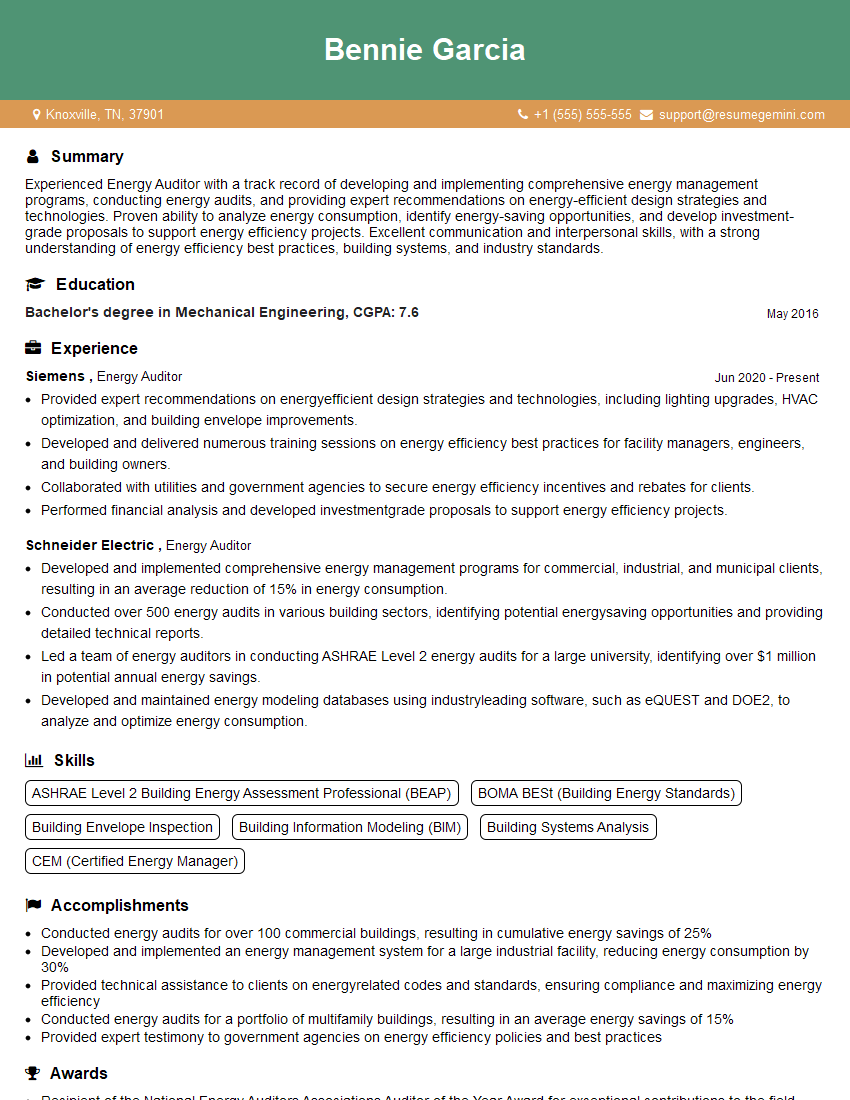
Energy Auditor Resume Sample
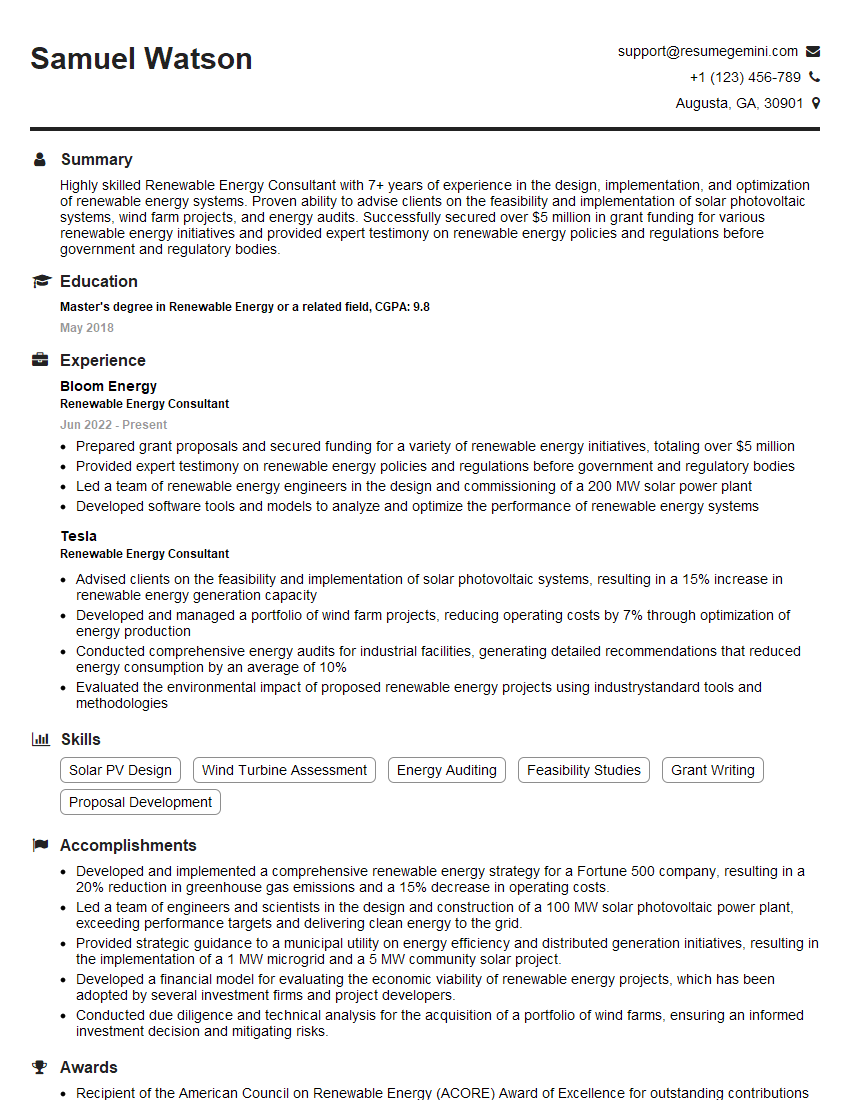
Renewable Energy Consultant Resume Sample

Sustainability Consultant Resume Sample
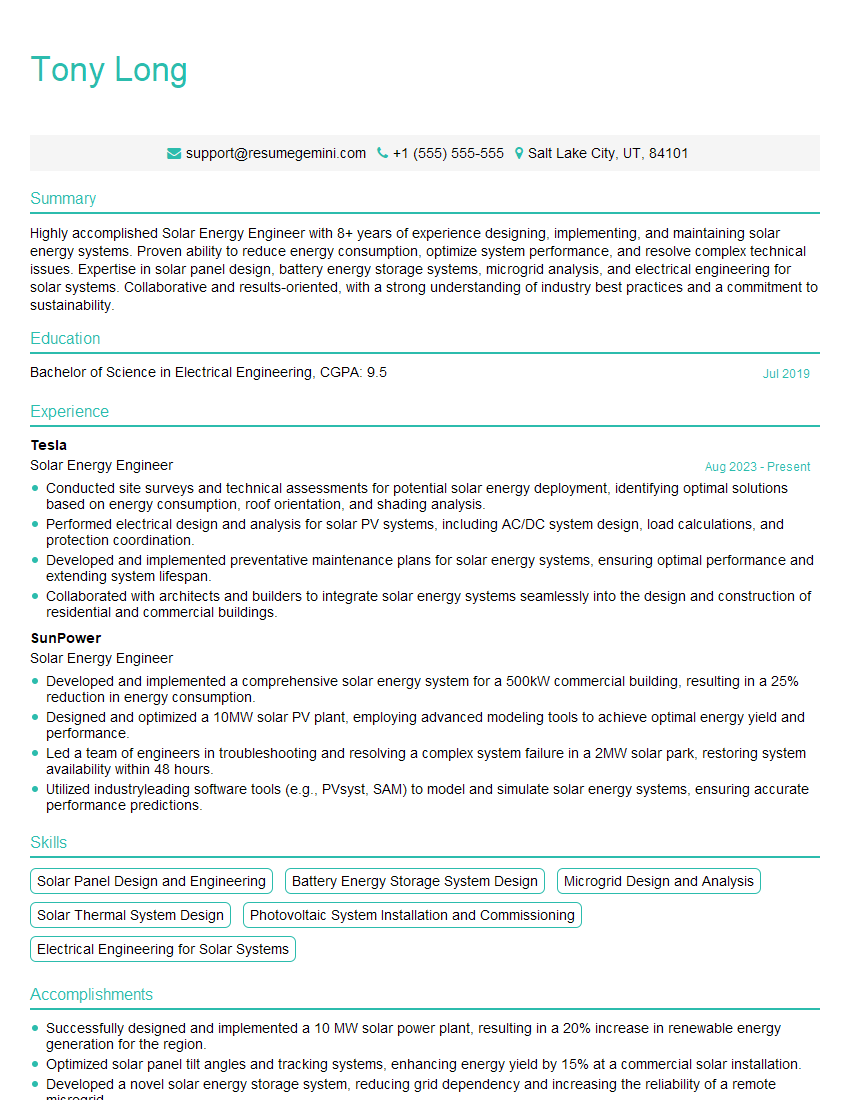
Solar Energy Engineer Resume Sample
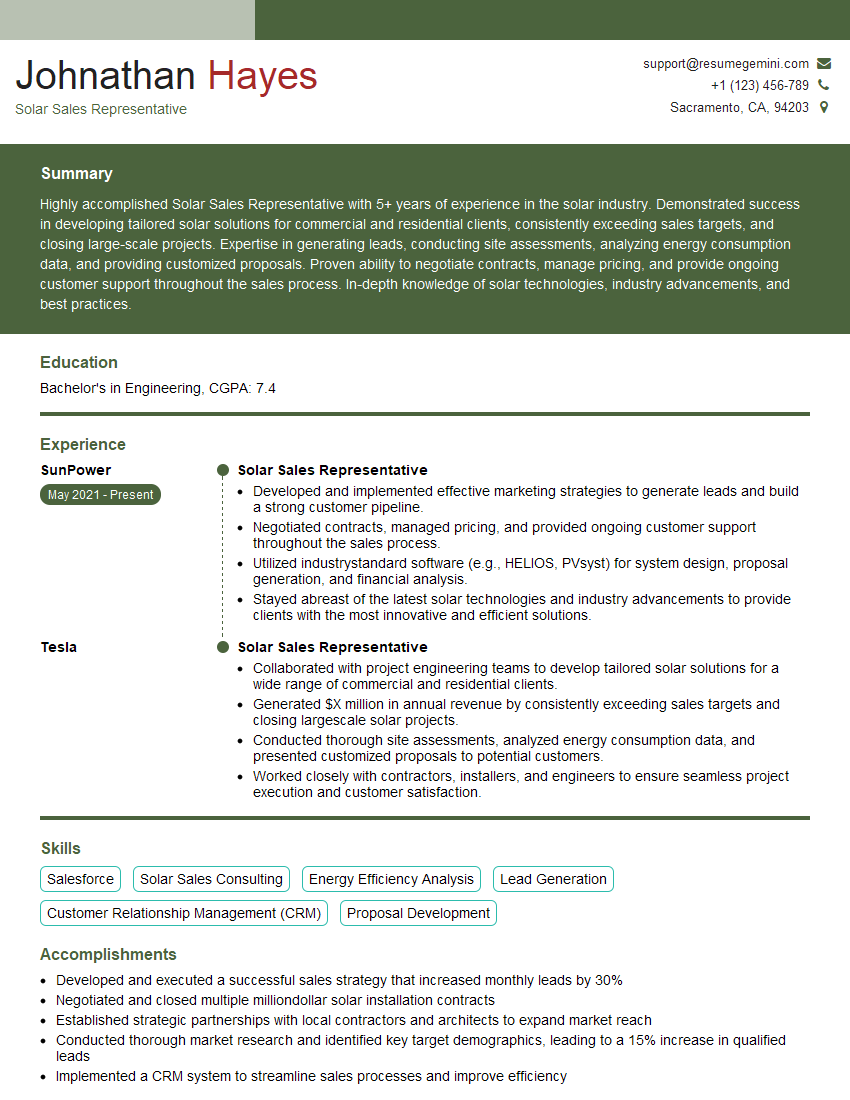
Solar Sales Representative Resume Sample
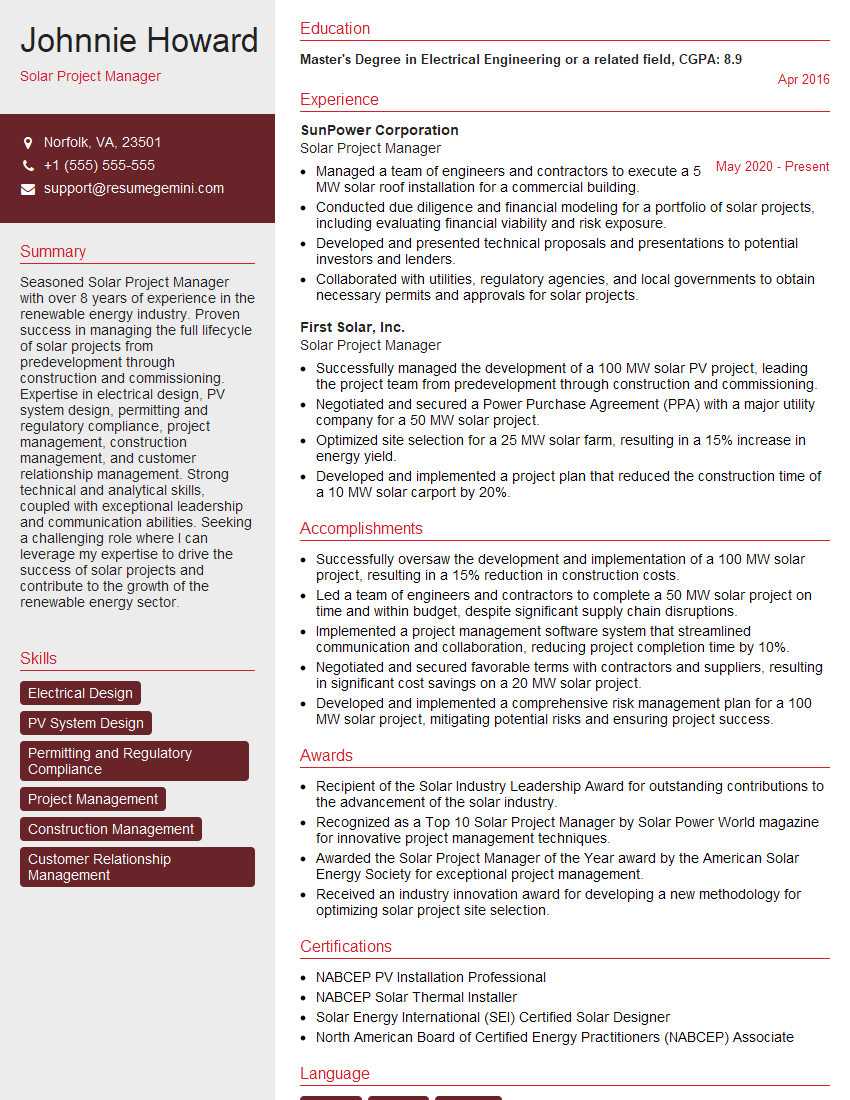
Solar Project Manager Resume Sample
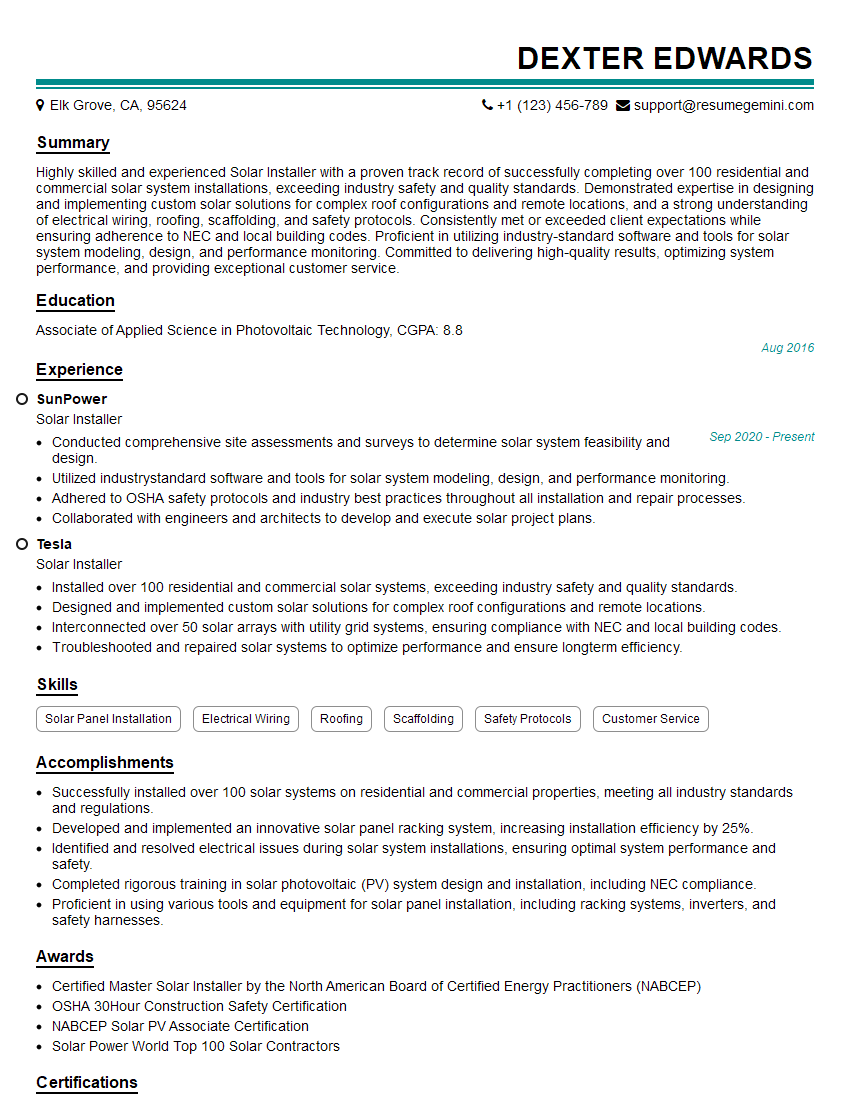
Solar Installer Resume Sample
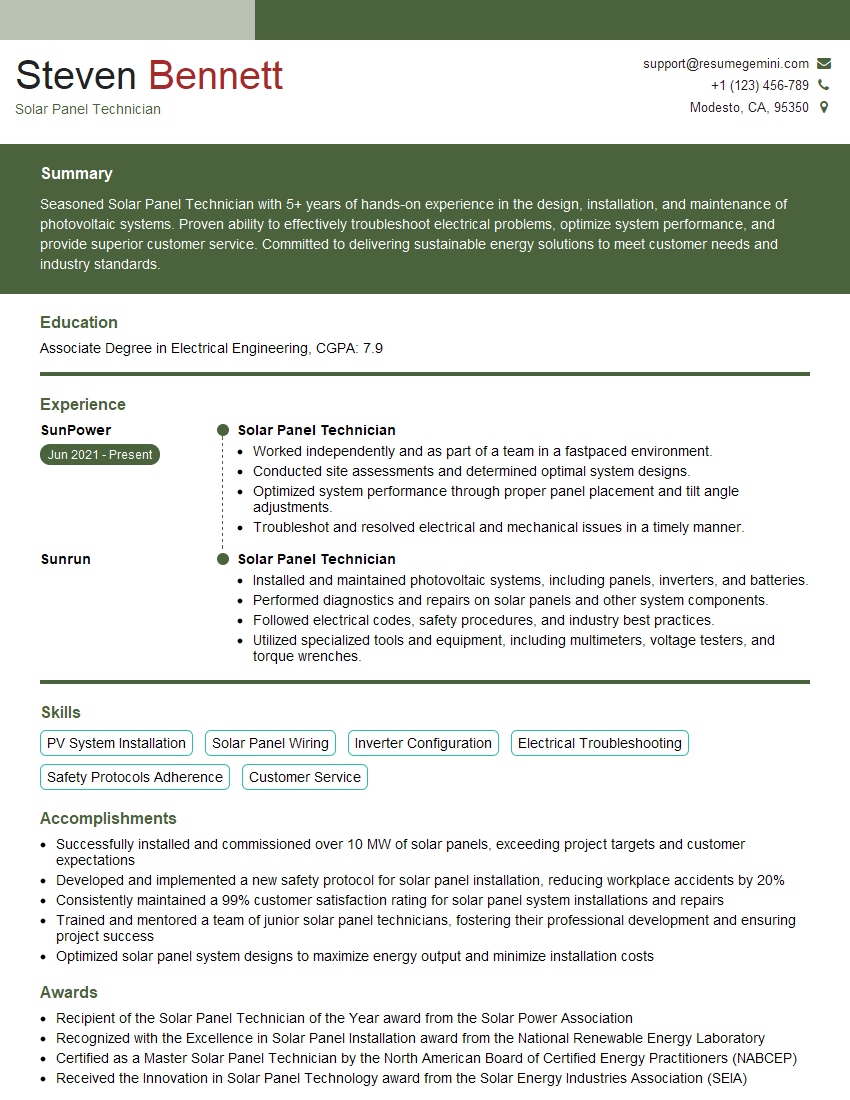
Solar Panel Technician Resume Sample
Explore more articles
Users Rating of Our Blogs
Share Your Experience
We value your feedback! Please rate our content and share your thoughts (optional).
What Readers Say About Our Blog
Very informative content, great job.
good