Cracking a skill-specific interview, like one for International Touring Experience, requires understanding the nuances of the role. In this blog, we present the questions you’re most likely to encounter, along with insights into how to answer them effectively. Let’s ensure you’re ready to make a strong impression.
Questions Asked in International Touring Experience Interview
Q 1. Describe your experience managing international travel logistics for a tour.
Managing international tour logistics is like orchestrating a complex symphony. It requires meticulous planning and execution across multiple domains. My experience encompasses everything from securing optimal flight and ground transportation itineraries to arranging accommodation, coordinating equipment shipping, and managing customs clearances. For instance, during a recent tour with a band to Southeast Asia, I negotiated discounted bulk airfare for the entire crew and band members, secured reliable ground transportation that catered to the specific equipment needs, and pre-arranged all necessary permits and licenses for each concert venue. Effective communication with all stakeholders – the band, crew, local promoters, and transport companies – is crucial for seamless execution.
- Flight Bookings: Negotiating bulk fares, selecting suitable airlines based on baggage allowances and flight schedules, and managing potential flight delays.
- Ground Transportation: Coordinating buses, vans, or private cars suitable for equipment transport and artist comfort.
- Accommodation: Securing hotels or rental properties based on location, budget, and the artist’s preferences.
- Equipment Shipping: Arranging international shipping of instruments, sound equipment, and stage production materials, including customs documentation and insurance.
- Permits and Licenses: Obtaining the necessary work permits for the crew, concert licenses for venues, and other relevant permits required by local authorities.
Q 2. How have you handled visa and passport issues for international touring artists?
Visa and passport issues are a constant challenge in international touring. My approach is proactive and involves meticulous record-keeping and detailed planning well in advance of the tour. This includes verifying passport validity, collecting all required documentation for visa applications (like proof of financial means and itinerary), and submitting applications well ahead of deadlines. I often work with immigration lawyers specializing in artist visas to navigate complex requirements and ensure timely processing. For example, for a South American tour, we encountered varying visa requirements across different countries. We compiled a detailed document outlining each country’s specific needs and worked with our legal team to secure visas for each member of the touring party, avoiding any last-minute travel disruptions. In cases of emergency or unexpected delays, we have a contingency plan in place that includes contacting embassies and expediting the visa application process where necessary.
Q 3. Explain your process for negotiating contracts with international venues.
Negotiating contracts with international venues involves a deep understanding of local industry practices and legal frameworks. It’s a delicate balance between securing a favourable deal for the artist and ensuring a mutually beneficial relationship with the venue. My process usually begins with reviewing the venue’s proposal and identifying potential areas for negotiation, including rider stipulations, payment terms, and marketing responsibilities. I then formulate a counter-proposal, supporting our requests with market data and comparable agreements. Clear and concise communication throughout the process, and a willingness to compromise on certain points, often leads to a successful agreement. A recent negotiation involved securing a higher payment guarantee for the artist based on their prior performance history and projected ticket sales at the venue. The final contract clearly outlined all aspects of the agreement, protecting both the artist and the venue.
Q 4. Detail your experience with international crew recruitment and management.
International crew recruitment and management demands careful consideration of skills, experience, work permits, and cultural sensitivities. I usually start by defining the necessary roles and responsibilities, creating detailed job descriptions, and then sourcing candidates through various channels—online job boards, industry contacts, and recommendations. For international hires, I thoroughly verify their work permits and visas before confirming employment, ensuring compliance with local labor laws. Clear communication, regular check-ins, and cultural sensitivity training are crucial for maintaining a productive and harmonious crew environment. During a European tour, I recruited local stagehands to supplement our core crew, reducing travel costs and fostering a deeper understanding of local performance practices. Effective team management involves resolving conflicts, providing timely feedback, and motivating the team to work effectively as a cohesive unit.
Q 5. How do you manage currency exchange and budgeting for international tours?
Managing currency exchange and budgeting for international tours requires a proactive and strategic approach. We begin with a detailed budget that accounts for all anticipated expenses in the local currency of each tour stop. This includes artist fees, crew salaries, transportation, accommodation, equipment rentals, marketing, and unforeseen costs. We then use real-time currency exchange rates to track spending and project potential cost overruns. We typically work with reputable financial institutions to secure favorable exchange rates and manage funds efficiently. Utilizing budgeting software and implementing regular financial reports helps us stay on track and identify any deviations from the planned budget early on. Careful planning and financial transparency are paramount in avoiding unexpected financial issues during the tour.
Q 6. Describe your experience resolving unexpected issues on international tours (e.g., flight cancellations, equipment malfunctions).
Unexpected issues are inevitable on international tours. My experience includes dealing with flight cancellations, equipment malfunctions, and even political unrest. My approach to resolving these issues is calm, decisive, and proactive. For instance, when a flight was cancelled during a tour in South America, I immediately secured alternative flights, re-arranged ground transportation, and notified all stakeholders of the changes. When equipment malfunctioned mid-concert, our experienced crew was able to quickly troubleshoot the issue, minimizing downtime and preventing a major disruption to the show. A well-defined contingency plan, including backup equipment and alternative transportation arrangements, is crucial. Moreover, maintaining strong relationships with local contacts, such as transportation providers and venue staff, aids in quickly resolving issues efficiently.
Q 7. What strategies do you use to ensure the safety and security of artists and crew during international tours?
Ensuring the safety and security of the artists and crew is a top priority. Our strategies include thorough risk assessment before the tour, choosing reputable transportation and accommodation providers, utilizing local security personnel where necessary, and providing regular safety briefings to the crew. We also establish clear emergency procedures and communication protocols. We may also invest in travel insurance policies providing medical coverage, baggage loss protection, and even political risk insurance. For instance, in regions with higher security concerns, we hired local security personnel to escort the artist and crew to and from venues. Proactive communication with local law enforcement and the embassy or consulate of the touring party’s home country creates a collaborative approach to security planning and emergency response. This multifaceted approach prioritizes the well-being and safety of the touring party above all else.
Q 8. Explain your understanding of international labor laws and regulations relevant to touring.
International labor laws and regulations governing touring are complex and vary significantly by country. They encompass aspects like work permits, visa requirements, minimum wage, working hours, health and safety standards, and tax obligations. For example, a musician touring Europe needs to understand the specific regulations of each country they perform in, including the potential need for a work permit or artist visa which might involve proving the tour’s economic impact. Similarly, crew members, from stagehands to tour managers, must have the appropriate documentation. Failure to comply can lead to hefty fines, tour cancellations, and legal issues for both the artist and the organization. I approach this by working closely with immigration lawyers and employing local agents in each territory to ensure full compliance. We meticulously research and obtain all necessary permits and licenses, ensuring our teams are legally protected and our operations remain compliant.
- Work Permits/Visas: Securing the correct documentation for all personnel in advance.
- Minimum Wage/Overtime: Ensuring we adhere to local labor laws regarding compensation and overtime pay.
- Health and Safety: Implementing rigorous health and safety protocols according to local regulations, especially pertaining to equipment usage and venue safety.
- Tax Compliance: Understanding and fulfilling tax obligations in every location to avoid penalties.
Q 9. How familiar are you with international freight forwarding and customs procedures?
My familiarity with international freight forwarding and customs procedures is extensive. I’ve managed the logistical complexities of shipping countless tons of equipment across continents. This includes everything from musical instruments and stage lighting to backline gear and merchandise. Understanding the intricacies of customs declarations, import/export regulations, and the various incoterms (Incoterms Rules) is critical for smooth operations. A common challenge is navigating varying customs regulations concerning the temporary importation of equipment; this requires precise documentation and advance planning to avoid delays and additional costs. For instance, ensuring proper documentation for CITES (Convention on International Trade in Endangered Species) for items made with protected materials, or securing necessary permits for hazardous materials.
I utilize specialized freight forwarders with experience in the entertainment industry, and we meticulously document each shipment using standardized customs documentation. We pre-alert customs agencies when possible to facilitate a smoother process. I’m also adept at navigating potential issues like customs inspections or delays.
Q 10. Describe your experience coordinating transportation (air, land, sea) for international tours.
Coordinating transportation across air, land, and sea for international tours involves meticulous planning and a detailed understanding of logistical networks. I’ve organized everything from chartered flights for bands and crew to trucking itineraries for equipment across countries, and ocean freight for larger-scale tours. For example, a recent tour involved coordinating a chartered Boeing 737 for the band and crew to fly between major cities, while all the equipment was shipped in sea freight containers, arriving at each venue ahead of time. We utilized an efficient trucking company for land transport between airports and venues in the same country. The key is to create a comprehensive transportation plan well in advance, accounting for potential delays and alternate routes. The plan includes contingency measures to manage unexpected events, such as flight cancellations or equipment damage.
- Air Freight: Charter flights, commercial airlines for personnel and smaller equipment.
- Land Transport: Trucking companies for efficient and safe land-based transportation.
- Sea Freight: Container shipping for large-scale equipment and materials.
- Tracking and Monitoring: Utilizing GPS tracking and real-time updates to monitor shipments and ensure timely arrival.
Q 11. How do you manage communication across time zones and cultural differences during an international tour?
Managing communication across time zones and cultural differences is paramount in international touring. Clear and consistent communication protocols are crucial. We use project management software (mentioned later) to centralize communication and keep everyone informed. We establish clear communication channels – including daily status reports, dedicated communication platforms for different teams (e.g., separate groups for musicians, crew, and management). We also leverage translation services when necessary. It’s also vital to be culturally sensitive and aware of different communication styles. For example, what may be acceptable direct communication in one culture might be considered rude in another. I proactively build strong relationships with local contacts in each country, understanding their cultural norms to facilitate smoother interaction.
Q 12. What software or technology do you utilize for international tour management?
I utilize a combination of software and technology to streamline international tour management. This typically includes:
- Project Management Software (e.g., Asana, Trello): For task management, scheduling, and communication.
- Accounting Software (e.g., Xero, QuickBooks): For expense tracking, budgeting, and financial reporting.
- CRM (Customer Relationship Management) Software: For managing client communications and tour participant details.
- Communication Platforms (e.g., Slack, WhatsApp): For quick and efficient communication across teams and time zones.
- GPS Tracking Systems: For monitoring equipment transport and the location of crew members.
These tools enable us to centralize information, track progress effectively, and ensure everyone is kept informed throughout the process, leading to a more efficient and less stressful tour for all involved.
Q 13. Describe your experience with international marketing and promotion of a tour.
International marketing and promotion for a tour requires a multi-faceted approach tailored to each target market. It’s not simply about translating marketing materials; it’s about understanding the nuances of local culture and preferences. This involves analyzing target audiences, local media outlets, digital marketing strategies, public relations, and collaborations with local promoters. For instance, a recent tour involved partnering with local radio stations and influencers in each country to promote the tour to a wider audience. We also utilized targeted social media campaigns with content tailored to the specific cultural contexts. This included creating separate content in local languages, using appropriate imagery, and partnering with influencers relevant to each market. We also ensured appropriate channels were used in different regions; using channels like WeChat for mainland China, or focusing on Instagram and Facebook in other regions. Careful analysis of successful past campaigns and market research is vital to determining the best strategy.
Q 14. How do you track and manage expenses during an international tour?
Tracking and managing expenses during an international tour is a critical aspect of financial control. We utilize dedicated accounting software, creating detailed budgets beforehand. Each expense is meticulously documented with receipts and categorized. This allows for real-time tracking and analysis of expenditures. Regular reconciliation is key to ensure accuracy. We also employ a robust expense reporting system, where team members submit expense reports in a timely manner, following established guidelines. Detailed budgets are developed for all aspects of the tour including flights, accommodations, transportation, venue fees, marketing, and talent costs. This is a crucial element in keeping the tour financially viable and identifying potential cost overruns at an early stage. We also have detailed reconciliation processes at the end of each leg or tour to ensure complete accuracy.
Q 15. Explain your experience with rider management for international artists.
Rider management for international artists is a crucial aspect of ensuring smooth tour operations. A rider is a document outlining the artist’s technical and hospitality requirements. My experience encompasses creating, negotiating, and managing riders for diverse artists, from solo musicians to large bands. This involves:
- Understanding artist needs: Close collaboration with the artist or their management to accurately capture their technical specifications (e.g., specific sound equipment, lighting rigs), dietary requirements, and hospitality preferences (e.g., green room setup, catering).
- Negotiating with venues: Ensuring venues can accommodate the rider requirements, sometimes involving compromise and alternative solutions. For example, if a specific type of microphone isn’t available, finding a suitable substitute within the same quality range.
- Monitoring rider fulfillment: On-site verification that all rider requests are met, addressing any discrepancies promptly to avoid disruptions to the performance. This often involves working closely with the venue’s technical crew.
- Documentation and communication: Maintaining clear and concise records of all rider requests, negotiations, and fulfillments for accountability and future reference. This might involve creating digital rider sheets, spreadsheets, or dedicated management software.
For instance, I once worked with a band requiring a very specific type of drum kit. We had to coordinate its transportation internationally and ensure it was properly set up and maintained throughout the tour. This involved close communication with the band’s drum technician and the venue’s stage managers.
Career Expert Tips:
- Ace those interviews! Prepare effectively by reviewing the Top 50 Most Common Interview Questions on ResumeGemini.
- Navigate your job search with confidence! Explore a wide range of Career Tips on ResumeGemini. Learn about common challenges and recommendations to overcome them.
- Craft the perfect resume! Master the Art of Resume Writing with ResumeGemini’s guide. Showcase your unique qualifications and achievements effectively.
- Don’t miss out on holiday savings! Build your dream resume with ResumeGemini’s ATS optimized templates.
Q 16. How do you ensure compliance with local regulations and permits in different countries?
Compliance with local regulations and permits is paramount for successful international tours. This involves a multi-faceted approach:
- Research and planning: Thorough research of each country’s specific regulations regarding visas, work permits for the artist and crew, import/export of equipment, and performance licensing.
- Seeking expert advice: Collaborating with immigration lawyers, customs brokers, and local promoters to ensure all necessary documentation is prepared and submitted well in advance of the tour dates.
- Proactive problem-solving: Identifying and addressing potential compliance issues early in the planning stages. This might include obtaining necessary waivers or exemptions for certain equipment or performance elements.
- Ongoing monitoring: Staying abreast of changes in regulations and adapting the tour plan accordingly. Rules can change, so ongoing monitoring is key.
In one instance, we had to navigate complex regulations for importing specialized lighting equipment into a country with stringent import duties. We worked with a customs broker to secure the necessary permits and minimize delays and associated costs. A detailed plan allowed us to avoid potentially costly fines and tour delays.
Q 17. Describe your experience working with international ticketing platforms and agencies.
Experience with international ticketing platforms and agencies is crucial for maximizing ticket sales and managing ticket distribution effectively. My experience includes:
- Platform selection: Evaluating various international ticketing platforms based on their reach, fees, and integration capabilities, taking into account regional preferences and market dynamics.
- Contract negotiation: Negotiating favorable terms with ticketing agencies regarding fees, sales reporting, and customer service, ensuring transparency in commission structures.
- Sales optimization: Implementing strategies to maximize ticket sales using different marketing channels, and utilizing the platform’s analytical features to understand sales patterns.
- Customer support coordination: Working with ticketing agencies to address customer inquiries and resolve issues, ensuring a positive ticket-buying experience.
For example, I’ve worked with ticketing platforms like Ticketmaster in several countries and local agencies to ensure the best reach and minimize disputes. We tailored our strategies to the particular market, considering cultural differences in purchasing habits. For example, payment methods varied significantly between regions.
Q 18. How do you handle emergency situations and crises during international tours?
Handling emergencies and crises is an essential skill in international touring. A well-defined crisis management plan is critical. My experience involves:
- Proactive planning: Developing a comprehensive crisis management plan that outlines procedures for dealing with various scenarios (illness, injury, equipment failure, natural disasters, security threats).
- Communication protocols: Establishing clear and efficient communication channels between the tour team, artist management, venue staff, and emergency services.
- Resource allocation: Identifying and securing necessary resources (medical personnel, security, backup equipment) in advance or on short notice.
- Damage control: Taking swift action to mitigate the impact of a crisis, minimizing disruptions to the tour schedule and protecting the reputation of the artist.
One memorable instance involved a sudden illness within the band’s crew during a European tour. We quickly secured medical attention, rearranged travel plans, and implemented contingency plans to avoid show cancellations. This involved close collaboration with local medical providers, transportation companies, and the venue to ensure the crew member received proper care while minimizing the disruption to the tour.
Q 19. What is your experience with risk assessment and mitigation for international tours?
Risk assessment and mitigation is a cornerstone of successful international touring. My approach involves:
- Identifying potential risks: A comprehensive identification of potential risks across all aspects of the tour – logistical, financial, security, health, and legal. This often involves brainstorming sessions with the tour team.
- Assessing risk likelihood and impact: Evaluating the likelihood and potential impact of each identified risk, prioritizing those with the highest potential for disruption or damage.
- Developing mitigation strategies: Implementing practical strategies to reduce the likelihood and impact of each identified risk. This can include purchasing insurance, developing contingency plans, hiring security personnel, and obtaining necessary permits.
- Monitoring and review: Continuously monitoring the effectiveness of mitigation strategies and adapting them as needed based on ongoing assessments. Risk is dynamic.
For instance, when planning a tour through politically unstable regions, we conducted thorough security assessments, hired private security details, and developed detailed evacuation plans. Insurance policies covered unforeseen circumstances.
Q 20. How do you build and maintain relationships with international stakeholders (venues, promoters, agents)?
Building and maintaining strong relationships with international stakeholders is essential for successful touring. My approach focuses on:
- Open communication: Maintaining consistent and transparent communication with all stakeholders, including venues, promoters, agents, and local suppliers. This includes regular updates, proactive problem-solving, and seeking feedback.
- Mutual respect and trust: Building relationships based on mutual respect, trust, and understanding of each other’s perspectives and needs. This fosters cooperation and problem-solving.
- Professionalism and reliability: Delivering on commitments and consistently demonstrating professionalism in all interactions. This builds credibility and strengthens long-term relationships.
- Networking and relationship building: Actively participating in industry events and networking opportunities to build and maintain strong connections with international stakeholders.
I’ve built lasting relationships with promoters across different countries by consistently delivering exceptional service, adapting to local customs and practices, and prioritizing their needs along with our artist’s requirements. This has resulted in numerous successful tours and repeat collaborations.
Q 21. Describe your process for preparing and distributing tour itineraries.
The tour itinerary is the backbone of any international tour. My process involves:
- Detailed planning: Creating a detailed itinerary that includes all travel arrangements, venue information, performance times, load-in/load-out schedules, accommodation, and other critical information.
- Collaboration and input: Close collaboration with the artist’s management, local promoters, and venue staff to ensure accuracy and feasibility of the schedule. This iterative process addresses the diverse needs and constraints of the stakeholders.
- Version control: Maintaining multiple versions of the itinerary for different stakeholders (artist, crew, management, promoters), ensuring all parties have access to the most up-to-date information.
- Clear and concise communication: Distributing the itinerary to all relevant parties in a clear, concise, and accessible format (e.g., shared digital document, dedicated tour management software).
- Regular updates: Regularly updating the itinerary to reflect any changes or revisions throughout the tour lifecycle.
I use a combination of spreadsheet software and dedicated tour management software to create and distribute itineraries. A clearly defined and regularly updated itinerary helps to minimize confusion and ensures everyone is on the same page, leading to a smoother operation. It also serves as a vital record for future reference.
Q 22. How do you manage artist accommodations and travel arrangements internationally?
Managing artist accommodations and travel arrangements internationally requires meticulous planning and attention to detail. It’s akin to orchestrating a complex symphony, where every musician (artist, crew, etc.) needs to be in the right place at the right time. This involves securing appropriate lodging – from boutique hotels to comfortable tour buses – based on the artist’s preferences and budget. We use a combination of online booking platforms and established relationships with local agents in each country to ensure the best rates and availability.
For travel, we consider various factors like flight schedules, visa requirements, and transportation within the host city. We often charter private transportation for efficiency and artist comfort, especially for time-sensitive situations. For instance, when working with a high-profile artist, we’d meticulously plan private jet travel to minimize airport delays and enhance security. Detailed itineraries with contingency plans are crucial. This ensures smooth transitions between venues and minimizes stress for the artist and crew. Furthermore, we always factor in time for unforeseen circumstances, such as flight delays or cancellations.
- Hotel Bookings: We leverage online travel agencies (OTAs) for competitive pricing and secure bookings, supplemented by local contacts for special requests or negotiated rates.
- Ground Transportation: We often utilize chartered buses or private cars, coordinating with local transportation companies for reliable and secure service.
- Flight Bookings: We work with travel agents specializing in international travel to secure the best flight options, considering factors like flight duration, layovers, and potential disruptions.
- Visa & Immigration: We handle all visa applications and immigration procedures in advance, ensuring seamless border crossings for the entire team.
Q 23. Explain your experience in developing and implementing a post-tour financial reporting process.
Post-tour financial reporting is essential for understanding profitability and identifying areas for improvement. Think of it as a detailed post-mortem of the tour, allowing us to learn from both successes and challenges. My process starts with meticulous data collection during the tour, including all income and expenses. This isn’t just about the big numbers, but also includes detailed receipts and contracts. We use a specialized accounting software designed for tour management that tracks every transaction in real-time.
Upon tour completion, I reconcile all accounts, generating comprehensive financial statements, including profit and loss statements, balance sheets, and cash flow statements. These reports are then analyzed to determine the tour’s overall profitability, highlighting areas of overspending or unexpectedly high revenue. We also create detailed expense reports, categorized by expenditure type (e.g., travel, accommodation, marketing) and correlated to specific tour locations. This allows for pinpointing areas where budget improvements can be made for future tours.
Crucially, this process also involves generating detailed reports for all stakeholders: the artist, management, and sponsors. These reports are clear, concise and readily understood by all, regardless of their financial expertise. This transparency is crucial for building and maintaining trust.
Q 24. What are your methods for assessing the success of an international tour?
Assessing the success of an international tour is multifaceted, extending beyond just financial performance. It’s like judging a painting – you look at the overall composition, the technical skill, and the emotional impact. We use a combination of quantitative and qualitative metrics.
Quantitative metrics include: ticket sales, merchandise sales, attendance figures, and return on investment (ROI). However, these metrics alone don’t tell the whole story. Qualitative metrics are equally important and include: audience reception (measured through social media engagement, reviews, and anecdotal feedback), media coverage, and artist satisfaction. For example, a tour might have high ticket sales but poor reviews, suggesting areas needing improvement in the show or audience engagement. Conversely, a tour might have modest ticket sales but generate significant positive media coverage, resulting in long-term brand building and future growth potential.
A successful tour achieves a balance between strong financial performance and positive critical and audience reception. We use a dashboard that tracks all of these key performance indicators (KPIs) to gain a holistic view of the tour’s success. We also conduct post-tour surveys with audience members and the touring team to gather valuable feedback.
Q 25. How familiar are you with different types of international tour contracts?
My familiarity with international tour contracts is extensive. Tour contracts are the bedrock of the entire operation, protecting both the artist and the promoters. They’re complex legal documents needing careful scrutiny. I’m well-versed in different contract types, including:
- Rider Agreements: These detail the artist’s technical and hospitality requirements (backstage areas, equipment, catering).
- Performance Agreements: These outline the dates, venues, and payment schedule for performances.
- Merchandise Agreements: These govern the production, sales, and revenue sharing of merchandise.
- Sponsorship Agreements: These detail the terms of sponsorship deals, including marketing rights and promotional activities.
I’m particularly adept at negotiating favorable terms for artists, ensuring their rights are protected. This includes clauses covering payment schedules, cancellation policies, and intellectual property rights. A key aspect of this expertise is understanding different legal jurisdictions and their impact on contract enforcement.
Q 26. Describe your experience working with international insurance providers for tour coverage.
Working with international insurance providers is crucial for mitigating risk in international touring. It’s like buying insurance for your house – you hope you won’t need it, but if something goes wrong, you’re protected. We work with several reputable international insurance brokers who specialize in entertainment and events.
We ensure comprehensive coverage across several key areas:
- Cancellation Insurance: Protects against financial losses due to unforeseen circumstances such as illness, natural disasters, or venue closures.
- Liability Insurance: Covers potential legal liabilities resulting from accidents or injuries during the tour.
- Equipment Insurance: Protects valuable musical instruments and other equipment against damage or theft.
- Travel Insurance: Covers medical emergencies and other unforeseen events related to travel.
The selection of the right insurance provider and policy is crucial and demands careful consideration of potential risks and coverage needs, varying by the specific tour’s requirements and destinations. We meticulously review policies to ensure complete coverage and negotiate favorable terms. We maintain strong relationships with multiple providers to ensure competitive pricing and flexibility.
Q 27. What is your strategy for handling cultural sensitivities and differences during international tours?
Handling cultural sensitivities is paramount for successful international tours. It’s about respecting local customs and traditions, ensuring the tour is both commercially viable and culturally respectful. Our approach is proactive and multifaceted.
Before the tour, we conduct thorough cultural research of each country, paying particular attention to local customs, etiquette, and potential cultural nuances. This includes researching local sensitivities around language, gestures, dress codes, and religious practices. For example, we might adjust merchandise designs to avoid culturally insensitive symbols or adapt stage presentation to be more respectful of local traditions. We often consult with local cultural advisors to get valuable insights and avoid potential pitfalls.
During the tour, we foster open communication between the artist and the local team, encouraging them to share cultural insights and address any concerns proactively. We empower our team on the ground to make decisions based on their understanding of the local context. We also implement clear guidelines for interaction with local audiences and stakeholders to promote respectful interactions.
Q 28. How do you adapt your management style to diverse international teams and environments?
Adapting my management style to diverse international teams requires flexibility and cultural intelligence. It’s about recognizing that different cultures have different communication styles and work ethics. I leverage a collaborative and inclusive approach, recognizing that everyone brings unique strengths and perspectives.
Instead of imposing a single management style, I adapt my approach based on the team’s composition and the specific context of each location. For example, in some cultures, direct communication is preferred, while in others, a more indirect approach is more effective. I prioritize active listening and clear communication, ensuring that instructions are understood and expectations are clearly defined. Building trust and rapport is paramount. I use regular team meetings to create a forum for open discussion, allowing everyone to share their insights and concerns.
I also recognize the importance of training and development, providing opportunities for team members to enhance their skills and knowledge. This empowers them to contribute more effectively and develop a strong sense of ownership and responsibility. Cultural sensitivity training is a critical component for international teams, helping all members understand and respect cultural differences.
Key Topics to Learn for International Touring Experience Interview
- Logistics and Itinerary Management: Understanding the complexities of international travel, including visa requirements, transportation logistics (air, ground, sea), accommodation arrangements, and itinerary planning for large groups.
- Budgeting and Financial Management: Developing and managing budgets for international tours, tracking expenses, negotiating with vendors, and understanding foreign exchange rates and their impact on tour costs.
- Risk Management and Contingency Planning: Identifying potential risks associated with international travel (e.g., health emergencies, political instability, natural disasters) and developing comprehensive contingency plans to mitigate these risks.
- International Regulations and Compliance: Familiarity with international laws, regulations, and customs procedures relevant to touring (e.g., import/export regulations, work permits, artist visas).
- Vendor Management and Negotiation: Establishing and maintaining relationships with international vendors (e.g., hotels, transportation companies, local promoters), negotiating contracts, and ensuring service quality.
- Teamwork and Collaboration: Understanding the importance of effective communication and collaboration within a diverse international team, including artists, crew, and local partners.
- Problem-Solving and Decision-Making Under Pressure: Demonstrating the ability to handle unexpected challenges and make informed decisions quickly and effectively in high-pressure situations.
- Cultural Sensitivity and Awareness: Demonstrating understanding of and respect for different cultures and customs, and the ability to adapt to diverse work environments.
- Technical Proficiency: Proficiency in relevant software and tools for tour planning, budgeting, and communication (e.g., spreadsheets, project management software).
Next Steps
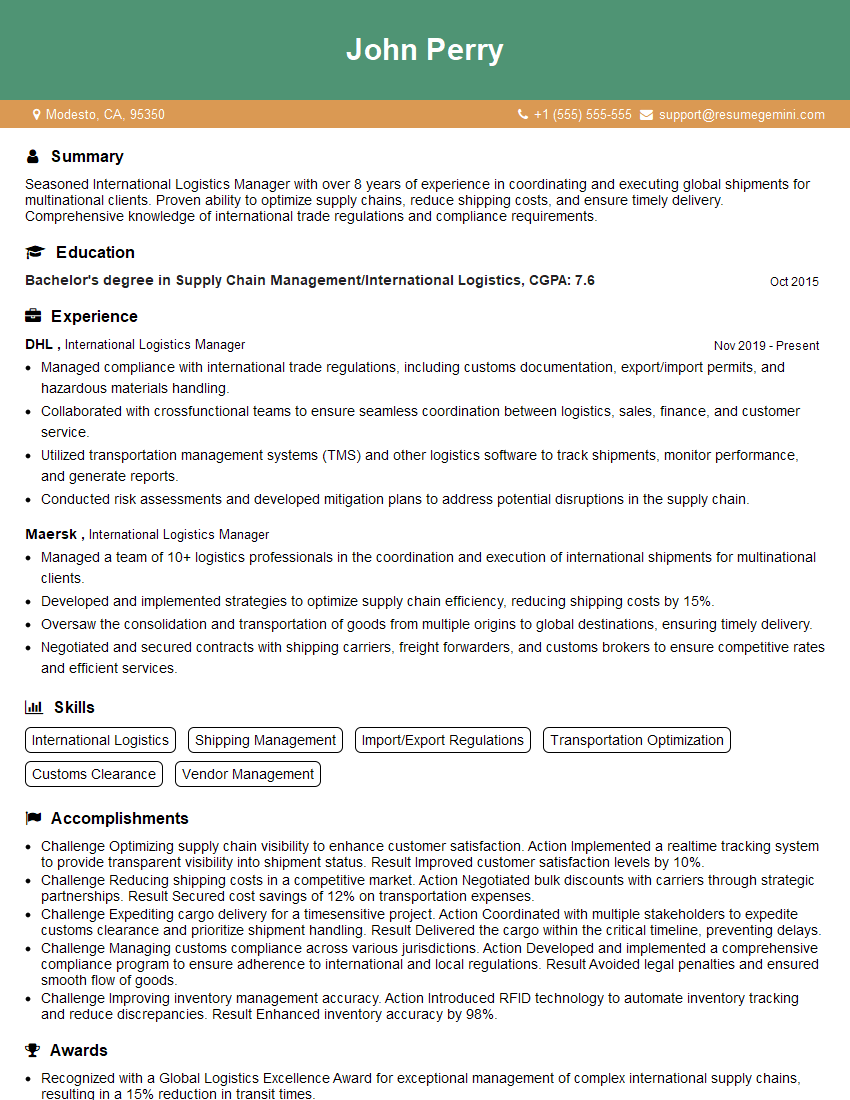
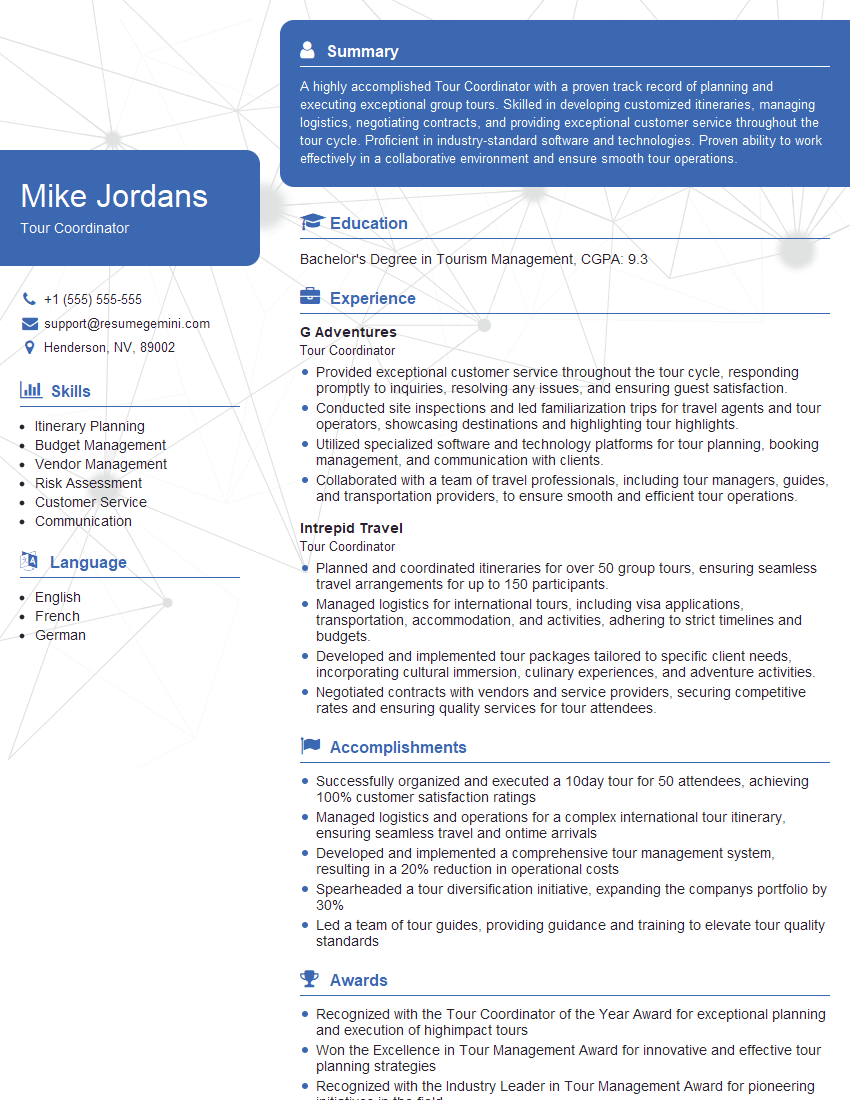
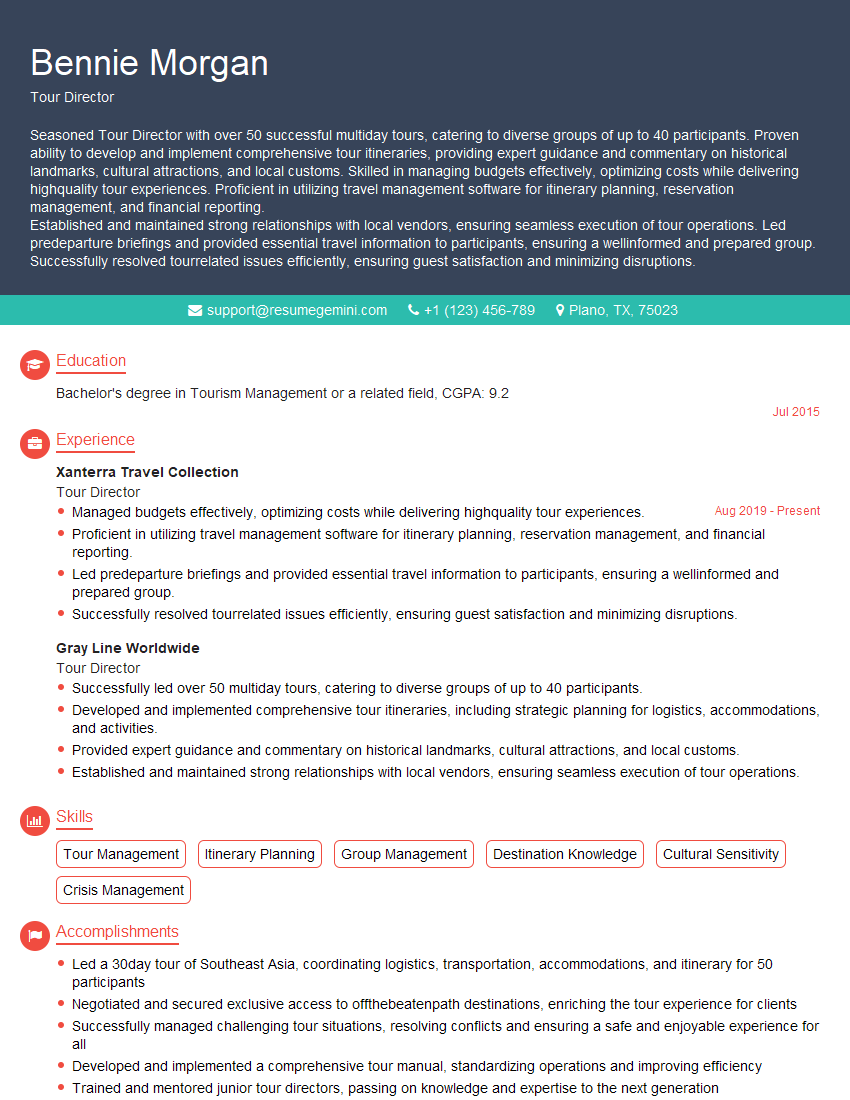
Mastering International Touring Experience opens doors to exciting and rewarding careers in the entertainment industry. It showcases your organizational skills, adaptability, and problem-solving abilities – highly sought-after qualities in today’s competitive job market. To significantly improve your chances of landing your dream role, focus on building an ATS-friendly resume that highlights your relevant skills and experience. ResumeGemini is a trusted resource that can help you craft a professional and impactful resume that gets noticed. They offer examples of resumes tailored to International Touring Experience, providing you with a valuable template to guide your creation. Take the next step and elevate your resume today!
Explore more articles
Users Rating of Our Blogs
Share Your Experience
We value your feedback! Please rate our content and share your thoughts (optional).
What Readers Say About Our Blog
Very informative content, great job.
good