Cracking a skill-specific interview, like one for Nutrient Management and Feed Formulation, requires understanding the nuances of the role. In this blog, we present the questions you’re most likely to encounter, along with insights into how to answer them effectively. Let’s ensure you’re ready to make a strong impression.
Questions Asked in Nutrient Management and Feed Formulation Interview
Q 1. Explain the concept of metabolizable energy (ME) and its importance in feed formulation.
Metabolizable energy (ME) represents the energy available to an animal after accounting for energy losses in feces and urine. It’s the most practical energy measure in feed formulation because it directly reflects the energy the animal can actually use for maintenance, growth, production (like milk or eggs), and other bodily functions. Think of it like this: Gross energy is the total energy in the feed, but some is lost as unusable waste. ME is what’s left, the usable part.
In feed formulation, ME is crucial because it allows us to accurately determine the amount of feed needed to meet an animal’s energy requirements. For example, a dairy cow needs a certain amount of ME to maintain her body weight and produce a specific quantity of milk. By knowing the ME content of various feed ingredients, we can create a balanced ration that provides the optimal energy level without overfeeding or underfeeding. Underfeeding leads to reduced production, while overfeeding can cause health problems and waste resources.
Q 2. Describe the different methods used to determine the nutrient content of feedstuffs.
Determining nutrient content involves several methods, each suited for specific nutrients. We use:
- Near-Infrared Reflectance Spectroscopy (NIRS): A rapid and cost-effective method that analyzes the spectral reflectance of feed to predict nutrient content. Think of it as a ‘fingerprint’ of the feed; the machine recognizes the patterns and estimates the nutrients.
- Wet Chemistry Methods: These traditional methods involve chemical digestion and analysis to determine specific nutrients like crude protein (Kjeldahl method), crude fat (ether extraction), and fiber components (Weende method). They’re more accurate but time-consuming and require specialized equipment.
- Chromatography (e.g., HPLC): Used to analyze amino acid profiles and vitamin content. This method separates individual components of a mixture for precise quantification.
- Atomic Absorption Spectroscopy (AAS): Measures the concentration of mineral elements in the feed.
The choice of method depends on the available resources, the desired accuracy, and the types of nutrients being analyzed. Often, a combination of methods is used to provide a comprehensive nutrient profile.
Q 3. How do you formulate a balanced ration for dairy cows considering their energy, protein, and mineral requirements?
Formulating a balanced ration for dairy cows is a complex process. It starts with understanding the cow’s requirements based on factors such as stage of lactation, milk production level, and body weight. We then use computer software or manual calculations to:
- Determine Energy Requirements: Calculate the total ME needed using prediction equations that consider milk production, body weight, and activity levels. This dictates the proportion of energy-rich ingredients in the ration.
- Assess Protein Needs: Protein requirements are also stage-dependent; lactating cows need more protein than dry cows. We determine the amount of crude protein (CP) needed and ensure an adequate supply of essential amino acids like methionine and lysine. We might utilize protein sources like soybean meal, corn gluten meal, or alfalfa hay.
- Meet Mineral Requirements: Dairy cows have high demands for calcium, phosphorus, magnesium, and other trace minerals. Feed ingredients are selected to meet these demands; deficiencies can lead to milk fever or other metabolic disorders. Mineral supplements may be added to balance the ration.
- Balance the Ration: A balanced ration considers the proportions of energy, protein, fiber, and minerals to ensure optimal cow health and productivity. We also consider the palatability and physical characteristics of the feed. This involves adjusting the ingredient ratios until the nutritional needs are met. We need to consider nutrient interactions as well.
For example, a high-producing cow might receive a ration with a higher percentage of corn silage (energy), soybean meal (protein), and potentially mineral supplements to optimize milk yield and overall health.
Q 4. What are the key factors to consider when selecting feed ingredients for poultry?
Selecting feed ingredients for poultry requires careful consideration of several factors:
- Energy Density: Poultry require high energy levels for rapid growth. Ingredients like corn, sorghum, and wheat are commonly used.
- Protein Quality and Quantity: The protein source should provide essential amino acids in the right proportions, especially lysine and methionine, for optimal growth and feather development. Soybean meal is a widely used protein source in poultry feed.
- Amino Acid Profile: Precise amino acid balance is critical, as deficiencies can limit growth and efficiency. Synthetic amino acids may be added to ensure the correct ratios.
- Digestibility and Nutrient Availability: Feed ingredients must be easily digestible for optimal nutrient absorption. Processing techniques like pelleting can improve digestibility.
- Cost and Availability: Feed formulation balances nutrition with economic feasibility. The price and availability of ingredients influence the final formulation.
- Palatability: Poultry must find the feed appealing; this affects feed intake and growth.
- Anti-nutritional factors: Certain ingredients like soybeans can contain anti-nutritional factors that limit the nutrient’s effectiveness. Processing can mitigate some of these factors.
For example, broiler chickens have a high demand for energy and protein during the growth phase, requiring a formulation that emphasizes energy-dense ingredients like corn and high-quality protein sources.
Q 5. Explain the importance of amino acid balance in swine nutrition.
Amino acid balance is paramount in swine nutrition because swine, like all animals, cannot synthesize all essential amino acids. They must obtain them from their diet. An imbalance can severely limit growth, reduce feed efficiency, and negatively impact overall health.
Lysine is the first limiting amino acid in many swine diets, meaning it’s often the amino acid in shortest supply relative to the animal’s needs. If lysine is deficient, even if other amino acids are abundant, the animal cannot utilize them efficiently for growth. This is similar to having all the ingredients for a cake except for the flour. You can’t bake a complete cake.
Achieving proper amino acid balance involves careful selection of feed ingredients and potentially supplementing with synthetic amino acids, especially lysine, methionine, and threonine, to ensure all essential amino acids are present in the optimal ratios for different growth stages.
Q 6. How do you assess the quality of protein sources in feed?
Assessing protein quality involves evaluating several factors:
- Amino Acid Profile: Determining the levels of essential amino acids and their ratios. A complete amino acid profile is crucial for evaluating protein quality.
- Digestibility: Measuring the percentage of protein that is digested and absorbed by the animal. In vitro and in vivo methods are used to assess digestibility.
- Biological Value (BV): A measure of how efficiently the absorbed amino acids are utilized for protein synthesis in the body. A high BV indicates a higher quality protein.
- Net Protein Utilization (NPU): A more comprehensive measure combining digestibility and BV, reflecting the overall efficiency of protein use.
- Protein Efficiency Ratio (PER): Measures the gain in body weight per unit of protein consumed. This is important for evaluating protein’s contribution to growth.
For example, soybean meal has a high BV and NPU, making it a superior protein source compared to some other plant-based protein sources which may have lower digestibility or unbalanced amino acid profiles. We often use a combination of these measures to determine the overall quality of a protein source for optimal feed formulation.
Q 7. What are the common nutritional deficiencies encountered in livestock and their consequences?
Common nutritional deficiencies in livestock include:
- Calcium deficiency: Leads to rickets in young animals and milk fever in dairy cows (hypocalcemia). Symptoms include weakness, bone abnormalities, and reproductive problems.
- Phosphorus deficiency: Similar to calcium deficiency, resulting in bone abnormalities and reduced growth.
- Vitamin A deficiency: Causes impaired vision, reproductive issues, and increased susceptibility to infections.
- Vitamin D deficiency: Affects calcium and phosphorus metabolism, leading to rickets or osteomalacia.
- Iron deficiency: Results in anemia, characterized by weakness, pale mucous membranes, and poor growth.
- Protein deficiency: Causes reduced growth, poor body condition, and reduced immunity.
- Trace mineral deficiencies (e.g., copper, zinc, selenium, iodine): Can lead to a variety of metabolic disorders and decreased productivity.
The consequences of nutritional deficiencies can be significant, ranging from reduced growth and production to severe health problems and even death. Careful feed formulation and regular monitoring are essential to prevent these deficiencies.
Q 8. Describe the role of fiber in ruminant nutrition.
Fiber plays a crucial role in ruminant nutrition, primarily acting as a source of energy and impacting rumen function. Unlike monogastric animals, ruminants possess a complex four-compartment stomach allowing them to digest fiber efficiently.
Energy Source: Ruminants rely on the microbes in their rumen to ferment fiber (cellulose, hemicellulose, and pectin). This fermentation process produces volatile fatty acids (VFAs) – acetate, propionate, and butyrate – which are the primary energy source for the animal.
Rumen Function: Fiber is essential for maintaining a healthy rumen environment. It provides a physical structure for microbial growth and activity. Adequate fiber intake prevents rumen acidosis (a dangerous drop in rumen pH), which can occur when high-concentrate diets are fed without enough fiber to buffer the acidity.
Example: Dairy cows require a substantial amount of fiber in their diet (typically 20-30% of dry matter intake). Insufficient fiber intake can lead to decreased milk production, digestive disorders, and metabolic problems. Conversely, excessive fiber might lead to reduced energy intake and suboptimal milk production.
Q 9. How do you interpret a feed analysis report?
Interpreting a feed analysis report requires a methodical approach. The report provides the proximate analysis, including dry matter (DM), crude protein (CP), crude fiber (CF), ether extract (EE), ash, and nitrogen-free extract (NFE). It may also include more detailed information on specific vitamins and minerals.
Step-by-step interpretation:
- Dry Matter (DM): This indicates the portion of the feed that is not water. It’s crucial for comparing feeds and formulating rations on a consistent basis.
- Crude Protein (CP): Represents the total nitrogen content, indicating the potential protein available. It’s not a direct measure of digestible protein, but a good starting point.
- Crude Fiber (CF): Measures the indigestible fiber content. Helps assess the amount of fiber in the feed.
- Ether Extract (EE): Represents the fat content in the feed, providing an energy source.
- Ash: Indicates the mineral content; high ash can signal contamination or undesirable minerals.
- Nitrogen-Free Extract (NFE): Calculated by difference, this estimates the readily available carbohydrates.
Beyond the proximate analysis: A complete feed analysis should also include information about specific vitamins and minerals, as well as antinutritional factors. It’s crucial to understand the limitations of a feed analysis and the need for careful interpretation in the context of animal requirements.
Example: A feed analysis showing a high CP and low CF might suggest a high-energy concentrate, suitable for finishing pigs but potentially problematic for dairy cows, which require more fiber.
Q 10. Explain the concept of nutrient digestibility and its implications for feed formulation.
Nutrient digestibility refers to the proportion of a nutrient in the feed that is digested and absorbed by the animal. It’s a critical factor in feed formulation because it directly impacts the animal’s nutritional status and productivity.
Measuring Digestibility: Digestibility is determined through digestibility trials, which involve feeding animals a known amount of feed and measuring the amount of nutrient excreted in their feces. The difference represents the amount digested and absorbed.
Implications for Feed Formulation: Understanding nutrient digestibility is paramount because you cannot simply rely on the nutrient content of the feed as an indication of what the animal will actually absorb. A feed with high crude protein, for example, may have low digestible protein, rendering it less effective in meeting the animal’s protein needs. Therefore, formulating diets requires considering the digestibility coefficient of each ingredient to ensure adequate nutrient intake.
Example: Two feeds might both contain 15% crude protein, but one has a digestibility coefficient of 70% while the other is at 85%. The second feed is superior despite having the same initial protein level, since more protein will be available to the animal.
Practical Application: Feed formulation software utilizes digestibility coefficients to accurately calculate nutrient provision in a diet, ensuring that the animal’s nutritional needs are met cost-effectively.
Q 11. What are the different types of feed additives and their functions?
Feed additives are substances added to feed to enhance its nutritional value, improve animal health, or improve feed processing and storage. They are categorized in several ways.
Types and Functions:
- Enzymes: Improve nutrient digestibility (e.g., phytase improves phosphorus availability).
- Probiotics: Enhance gut health and microbial balance.
- Prebiotics: Promote beneficial bacterial growth in the gut.
- Antibiotics (used judiciously): Control bacterial infections and improve growth performance. Note: The use of antibiotics in animal feed is increasingly restricted in many regions due to concerns about antibiotic resistance.
- Acidifiers: Lower stomach pH, improving nutrient digestibility and reducing bacterial growth.
- Antioxidants: Prevent oxidation of fats and other nutrients, preserving feed quality.
- Mineral supplements: Provide necessary minerals, correcting deficiencies in the diet.
- Vitamins: Supplement essential vitamins often deficient in staple feeds.
Example: Adding phytase to a poultry diet can increase phosphorus availability, reducing the need for supplemental inorganic phosphorus and lowering feed costs.
Q 12. How do you determine the appropriate feeding level for different livestock species and production stages?
Determining appropriate feeding levels involves considering various factors and utilizing established nutrient requirements for different livestock species and production stages.
Factors to Consider:
- Species: Nutrient requirements differ greatly among species (poultry vs. cattle vs. swine).
- Production Stage: Nutrient requirements change dramatically throughout the animal’s life (e.g., gestation, lactation, growth). A pregnant sow needs more energy and specific nutrients than a growing pig.
- Genetic potential: High-producing animals require more nutrients to reach their genetic potential.
- Environmental conditions: Temperature, humidity, and disease can influence nutrient requirements.
- Feed quality: The digestibility and nutrient composition of the feed greatly affect feeding levels.
Methods for Determining Feeding Levels:
- Nutrient requirement tables: Published data from organizations like the National Research Council (NRC) provide guidelines on the nutrient requirements of different livestock.
- Feed formulation software: Sophisticated software helps determine feed formulations that meet nutrient requirements cost-effectively.
- Practical experience and observation: Observing the animal’s performance (growth rate, milk production, etc.) helps refine feeding strategies.
Example: A dairy cow in early lactation has significantly higher energy and protein requirements than a dry (non-lactating) cow, reflecting her milk production. A growing pig needs significantly more protein for muscle growth than a finishing pig.
Q 13. Describe the challenges in formulating diets for animals with specific nutritional needs (e.g., pregnant animals, young animals).
Formulating diets for animals with specific nutritional needs presents significant challenges, requiring a deep understanding of their physiology and unique nutrient demands.
Challenges for Pregnant Animals: Pregnant animals require increased energy to support fetal growth and placental development. They also have heightened requirements for specific nutrients, such as calcium and phosphorus for bone development and various vitamins for fetal development. Ensuring adequate nutrient intake without causing obesity is a key challenge.
Challenges for Young Animals: Young animals have higher nutrient requirements per unit of body weight than adult animals to support rapid growth. Diets need to be highly digestible and balanced to meet their increased protein and energy needs. The immature digestive system also dictates ingredient selection to enhance nutrient bioavailability and minimize digestive upsets.
Example: Gestating sows require diets with higher energy density and specific mineral balances to avoid pregnancy toxemia. Young calves need high-quality colostrum and milk replacers to ensure immunity and proper gut development. Improper diet formulation in these stages leads to increased mortality, health problems, and decreased productivity.
Strategies: Using high-quality ingredients, precisely balancing nutrients, supplementing with specific vitamins and minerals, and using appropriate feed processing techniques are crucial to address these challenges.
Q 14. Explain the principles of nutrient partitioning in animals.
Nutrient partitioning describes how nutrients are allocated among different metabolic processes in an animal’s body. This process prioritizes essential functions, influencing growth, reproduction, lactation, and maintenance.
Factors Affecting Partitioning:
- Nutrient availability: The amount of nutrients available influences how much is allocated to different functions. Nutrient deficiency limits growth and reproduction.
- Hormonal regulation: Hormones like insulin, growth hormone, and glucocorticoids play critical roles in regulating nutrient partitioning.
- Genetic factors: An animal’s genetic makeup influences how efficiently it utilizes nutrients.
- Environmental factors: Stress, disease, and temperature can affect nutrient partitioning, diverting nutrients away from production towards maintenance.
Examples of Partitioning:
- Lactating cows: A significant portion of nutrients is prioritized for milk production, potentially impacting body condition if energy intake is inadequate.
- Growing pigs: Nutrients are mainly directed towards growth and muscle development, demanding high-protein diets.
- Pregnant animals: Nutrients are channeled towards fetal development, impacting the mother’s body condition and overall performance.
Practical Implications: Understanding nutrient partitioning helps in optimizing diets to maximize productivity. For example, a lactating cow needs a diet tailored to her high energy and nutrient demand to balance milk production and maintain adequate body condition.
Q 15. What are the considerations for sustainable feed production and nutrient management?
Sustainable feed production and nutrient management are crucial for environmentally responsible and economically viable livestock farming. It involves minimizing environmental impact while maximizing animal health and productivity. This requires a holistic approach, considering:
- Reducing reliance on synthetic fertilizers and pesticides: Promoting the use of organic fertilizers like composted manure and cover cropping to improve soil health and reduce reliance on chemical inputs. For example, integrating legumes into crop rotations can fix nitrogen naturally, lessening the need for nitrogen-based fertilizers.
- Improving feed efficiency: Formulating diets that optimize nutrient utilization by animals. This reduces feed wastage and minimizes the land required for feed production. Precision feeding techniques, adjusting feed rations based on animal needs and performance data, play a key role.
- Minimizing waste and pollution: Implementing proper manure management practices to prevent nutrient runoff into water bodies. Anaerobic digestion of manure can generate biogas, a renewable energy source, further reducing environmental impact.
- Sustainable sourcing of feed ingredients: Prioritizing locally sourced, sustainably produced feed ingredients. This reduces transportation costs and emissions while promoting local economies. Careful consideration of deforestation and biodiversity impact is critical when sourcing ingredients.
- Water conservation: Implementing efficient irrigation techniques and selecting drought-resistant crops to reduce water consumption in feed production.
In essence, sustainable feed production aims for a closed-loop system where waste is minimized, resources are efficiently utilized, and the environment is protected.
Career Expert Tips:
- Ace those interviews! Prepare effectively by reviewing the Top 50 Most Common Interview Questions on ResumeGemini.
- Navigate your job search with confidence! Explore a wide range of Career Tips on ResumeGemini. Learn about common challenges and recommendations to overcome them.
- Craft the perfect resume! Master the Art of Resume Writing with ResumeGemini’s guide. Showcase your unique qualifications and achievements effectively.
- Don’t miss out on holiday savings! Build your dream resume with ResumeGemini’s ATS optimized templates.
Q 16. How do you address mycotoxin contamination in feedstuffs?
Mycotoxin contamination in feedstuffs is a significant challenge impacting animal health and productivity. Addressing this involves a multi-pronged strategy:
- Prevention: This is the most effective approach. It includes proper storage of feed ingredients in dry, well-ventilated areas, minimizing insect infestation, and selecting high-quality, low-risk ingredients. Regular monitoring of feedstuffs for mycotoxin contamination is also essential.
- Detection: Implementing regular testing of feedstuffs for mycotoxins using reliable analytical methods like ELISA or HPLC. The frequency of testing depends on the risk level of the ingredients and the history of mycotoxin contamination.
- Mitigation: If mycotoxin contamination is detected, several strategies can be employed. These include:
- Physical methods: Separation of contaminated parts of the feedstuff.
- Chemical methods: Use of mycotoxin binders, such as activated charcoal or aluminosilicates, which can adsorb mycotoxins in the digestive tract, preventing their absorption.
- Biological methods: Use of microbial enzymes or probiotics to degrade or deactivate mycotoxins.
- Feed management: Implementing appropriate feed storage and handling practices to minimize the risk of mycotoxin contamination and proliferation. Regular cleaning and disinfection of storage facilities are crucial.
For example, I once worked with a poultry farm experiencing decreased egg production and poor bird health. Testing revealed high levels of aflatoxin in their feed. We implemented a combination of strategies, including switching to a supplier with a better quality control program, incorporating a mycotoxin binder in the feed formulation, and improving storage conditions. This resulted in a significant improvement in bird health and egg production.
Q 17. What are the regulatory requirements for feed labeling and safety?
Feed labeling and safety regulations vary by country and region, but the core principles remain similar. Regulations typically cover:
- Ingredient listing: Accurate declaration of all ingredients present in the feed, including their percentages. This is crucial for transparency and allows farmers to make informed decisions.
- Guaranteed analysis: A statement of the minimum or maximum levels of certain nutrients (e.g., protein, fat, fiber) in the feed. This ensures the feed meets the advertised nutritional specifications.
- Additives: Complete declaration of any additives used in the feed, including vitamins, minerals, antibiotics, and other substances. The use of specific additives might be subject to restrictions or requires specific approvals.
- Species intended for: Clear identification of the animal species for which the feed is intended. Using the wrong feed type for a given animal can lead to health problems.
- Health warnings and cautions: Clear labelling if the feed contains substances that could pose a health risk, including mycotoxins or potential allergens.
- Manufacturer information: Name and address of the manufacturer or distributor of the feed.
Non-compliance with these regulations can result in penalties, product recalls, and legal action. It’s crucial for feed manufacturers and distributors to stay abreast of the latest regulations and ensure their products fully comply.
Q 18. Describe your experience with feed formulation software.
I have extensive experience using various feed formulation software packages, including [mention specific software examples, e.g., Alltech’s Nutricion, FeedXL, or others]. These programs allow for efficient formulation of diets that meet specific nutritional requirements while optimizing cost and ingredient availability. Key features I utilize include:
- Database management: Access to large databases of ingredient information, including nutrient composition, cost, and availability.
- Linear programming algorithms: To generate optimal feed formulations based on defined constraints, such as nutrient requirements, cost limitations, and ingredient availability.
- Recipe generation and reporting: Creating detailed feed recipes and generating reports on nutrient composition, cost, and ingredient sources.
- Formulation simulation: Testing different ingredient combinations and evaluating their impact on nutrient profile and cost.
For example, using these software packages, I recently formulated a cost-effective diet for dairy cows that met their high nutrient needs while minimizing the use of expensive imported ingredients. The software helped me optimize the blend of locally available feedstuffs to achieve the desired nutritional profile.
Q 19. How do you manage feed costs while maintaining optimal animal performance?
Managing feed costs while maintaining optimal animal performance requires a balanced approach. It is a delicate balance between cost optimization and maximizing nutrient value for the animal. My approach involves:
- Ingredient selection: Careful evaluation of various ingredients considering their nutrient content, cost, and availability. Substituting expensive ingredients with cost-effective alternatives while maintaining nutritional adequacy is critical. For instance, I might replace some soybean meal with locally sourced alternative protein sources such as sunflower meal.
- Formulation optimization: Utilizing feed formulation software to generate optimal diet formulations considering cost constraints. Sensitivity analysis helps understand the impact of price changes on the optimal formulation.
- Feed efficiency monitoring: Tracking feed conversion ratios (FCR) to assess how efficiently animals are converting feed into body weight gain or milk production. This helps identify areas for improvement in feed utilization.
- Inventory management: Efficient management of feed inventory to minimize storage losses and spoilage.
- Negotiation with suppliers: Developing strong relationships with feed ingredient suppliers to secure competitive pricing and reliable supply chains.
This integrated approach ensures that the animals receive the nutrition they need while keeping overall costs under control, resulting in better profit margins for the operation.
Q 20. Explain the importance of monitoring feed intake and animal performance.
Monitoring feed intake and animal performance is essential for ensuring animal health, optimizing production efficiency, and making informed management decisions. Regular monitoring provides valuable insights into:
- Feed intake: Tracking daily or weekly feed consumption per animal or per group to detect variations and potential problems. Reduced feed intake can indicate health issues, while excessive intake might suggest dietary imbalances.
- Growth rate: Regular weighing of animals to monitor growth rate and assess the effectiveness of the feeding program. Slow growth can indicate nutritional deficiencies or health problems.
- Milk production (for dairy animals): Daily milk yield provides crucial data to evaluate the adequacy of the diet. A drop in milk yield might suggest nutritional shortcomings.
- Egg production (for poultry): Monitoring egg production rate, egg weight, and egg quality indicators helps gauge the effectiveness of the feeding strategy.
- Body condition score (BCS): Assessing the animal’s body condition visually or using more objective measurement techniques can reveal overall health status and adequacy of the nutrition provided.
By tracking these parameters, we can identify problems early, make timely adjustments to the feeding strategy, and prevent significant economic losses.
Q 21. How do you troubleshoot nutritional problems in livestock?
Troubleshooting nutritional problems in livestock requires a systematic approach. It typically involves:
- Collecting data: Gathering information on animal performance (growth rates, milk production, etc.), feed intake, clinical signs of disease, and the current feeding program.
- Analyzing the data: Assessing feed intake records, growth rates, and other performance indicators for patterns and deviations from the norm. Comparing these to nutritional targets helps pinpoint potential areas of concern.
- Laboratory analysis: Testing feed samples for nutrient content and mycotoxin presence. Blood or fecal samples from animals can also be analyzed to identify nutrient deficiencies or metabolic disorders.
- Identifying the problem: Based on the collected and analyzed data, formulate a hypothesis about the cause of the nutritional problem. This may involve consulting with veterinary or animal science experts.
- Implementing corrective measures: Develop and implement solutions, which might involve adjusting the feed formulation, providing supplemental nutrients, improving feed management practices, or addressing underlying health problems.
- Monitoring the results: Closely monitor animal performance and health after implementing corrective measures. Track changes in feed intake, growth rate, and other relevant parameters to assess the effectiveness of the interventions.
For example, if I observe reduced milk production in a dairy herd, I would systematically check feed composition, analyze feed intake, conduct blood tests for mineral deficiencies, and assess the overall health of the animals to identify the root cause of the problem before recommending appropriate solutions.
Q 22. What are the different methods for evaluating the effectiveness of a feed formulation?
Evaluating the effectiveness of a feed formulation isn’t a single-step process; it’s a multi-faceted approach requiring careful monitoring and data analysis. We look at several key performance indicators (KPIs) to gauge success.
Performance Metrics: This is the most direct approach. We track weight gain, feed conversion ratio (FCR – the amount of feed needed to produce a unit of weight gain), milk yield (in dairy animals), egg production (in poultry), and overall animal health. Significant improvements in these metrics directly indicate a successful formulation. For example, a lower FCR suggests the feed is efficiently utilized, maximizing profitability.
Nutrient Digestibility: We analyze the digestibility of key nutrients in the feed. This can be done using in-vivo (animal trials) or in-vitro (laboratory) methods. Higher digestibility means more nutrients are absorbed and utilized by the animal, leading to better performance. For instance, we might compare the digestibility of different protein sources – say, soybean meal versus canola meal – to optimize the formulation.
Blood and Tissue Analysis: Examining blood and tissue samples helps us assess nutrient status. Deficiencies or excesses of certain nutrients can directly impact animal performance and health. Analyzing blood urea nitrogen (BUN) levels can indicate protein utilization, while mineral levels in bone samples can reveal mineral status. This approach helps fine-tune the formulation to correct imbalances.
Economic Analysis: A successful formulation needs to be economically viable. We consider the cost of ingredients, the performance metrics achieved, and the overall profitability of the feed. It’s not enough to have a nutritionally sound feed; it must also be cost-effective.
In practice, we use a combination of these methods to get a comprehensive picture of the feed’s effectiveness. We might start with performance metrics, then delve deeper with digestibility and blood analysis if needed, always keeping the economic implications in mind.
Q 23. Explain the concept of ideal protein in feed formulation.
Ideal protein in feed formulation refers to a strategy that aims to supply amino acids in the exact amounts and ratios required by the animal for optimal growth and production, without excess nitrogen excretion. Instead of focusing solely on crude protein (the total protein content), which can be wasteful and environmentally problematic, ideal protein focuses on meeting the animal’s specific amino acid requirements.
It involves analyzing the amino acid profile of the feed ingredients and precisely balancing the essential amino acids (those the animal can’t synthesize) to match the animal’s needs based on its age, breed, and production level. This approach reduces environmental impact (less nitrogen pollution) and improves feed efficiency by minimizing excess nitrogen in the diet.
For example, a piglet growing rapidly needs a different amino acid profile than a mature sow. An ideal protein formulation will tailor the amino acid supply to meet those specific needs, ensuring optimal performance without excessive protein in the diet. This also translates into better financial returns for producers because of reduced feed costs and improved animal production.
Q 24. Discuss the role of minerals and vitamins in animal nutrition.
Minerals and vitamins are essential micronutrients playing vital roles in numerous physiological processes, influencing overall animal health, growth, and productivity. Their deficiency can lead to various health issues and significantly reduce production efficiency.
Minerals: Macrominerals (required in larger quantities) like calcium (bone formation), phosphorus (energy metabolism), potassium (fluid balance), magnesium (muscle function), sodium (fluid balance), chlorine (acid-base balance), and sulfur (protein synthesis) are crucial. Microminerals (trace minerals) like iron (oxygen transport), copper (enzyme function), zinc (immune function), manganese (bone formation), iodine (thyroid hormone production), selenium (antioxidant), and cobalt (vitamin B12 synthesis) are equally important, even in smaller amounts.
Vitamins: Vitamins are organic compounds categorized into fat-soluble (A, D, E, K) and water-soluble (B vitamins, C). Fat-soluble vitamins are stored in the body’s fat tissues, while water-soluble vitamins need regular intake. Vitamin A is essential for vision and immune function; Vitamin D regulates calcium absorption; Vitamin E is an antioxidant; Vitamin K is vital for blood clotting; B vitamins are involved in energy metabolism, and Vitamin C is an antioxidant.
Imbalances in mineral and vitamin levels can manifest in various ways, such as skeletal abnormalities (calcium deficiency), reduced immunity (zinc deficiency), impaired reproduction (vitamin E deficiency), and anemia (iron deficiency). Therefore, accurate supplementation based on animal requirements and feed analysis is critical for optimal health and productivity.
Q 25. How do you handle feed ingredient variations in feed formulation?
Feed ingredient variations are a significant challenge in feed formulation. Ingredient quality and composition fluctuate due to factors like growing conditions, harvest time, and processing methods. These variations directly impact nutrient content and ultimately the animal’s performance. To manage these variations, a robust approach is required.
Ingredient Analysis: Regular analysis of incoming ingredients is vital to understand their nutrient profile. This involves proximate analysis (determining moisture, crude protein, crude fat, crude fiber, and ash) and other specific tests depending on the ingredient. This data informs adjustments to the formulation.
Formulation Software: Sophisticated feed formulation software can handle ingredient variability. These programs allow for setting ranges for nutrient contents within ingredient specifications. When an ingredient analysis falls outside these ranges, the software adjusts the formulation accordingly to maintain the desired nutrient profile while considering economic factors.
Safety Margins: We build safety margins into our formulations to compensate for potential nutrient deficiencies. This is particularly crucial when dealing with ingredients of uncertain quality. This approach minimizes the risk of nutrient deficiencies, even with variability.
Supplier Relationships: Strong relationships with reliable suppliers are essential. This allows for consistent quality control and early notification of any significant changes in ingredient composition. It also enables better communication and collaboration for sourcing the best quality feed materials.
A multi-pronged approach combining ingredient analysis, robust software, safety margins, and strong supplier relationships provides resilience to the challenge of ingredient variability, enabling the production of consistent, high-quality feed.
Q 26. Explain the difference between proximate analysis and in-vitro digestibility methods.
Proximate analysis and in-vitro digestibility methods are both crucial in feed evaluation but differ in their approach and what they measure.
Proximate Analysis: This is a basic chemical analysis that determines the major components of the feed: moisture, crude protein, crude fat, crude fiber, and ash. It gives a general overview of the feed’s composition but doesn’t directly measure nutrient digestibility or bioavailability. Think of it as a snapshot of the feed’s overall makeup.
In-vitro Digestibility: This method simulates the digestive process in the laboratory. Feed samples are subjected to enzymatic digestion under controlled conditions, mimicking the breakdown of nutrients in the animal’s gut. It measures the amount of nutrients released during digestion, giving an estimate of their digestibility. This method provides a better estimate of the actual nutrient availability than proximate analysis alone. It is more informative but is not an exact replica of in vivo digestion.
For example, two feeds might have similar crude protein levels (proximate analysis), but in-vitro digestibility might reveal that one has a significantly higher proportion of digestible protein than the other. In practice, we often use both methods. Proximate analysis provides a quick overview, and in-vitro digestibility offers more precise data on nutrient availability, leading to more accurate and effective feed formulations.
Q 27. Describe your experience with different feeding systems (e.g., total mixed ration, pasture-based systems).
My experience spans a range of feeding systems, and each presents unique challenges and opportunities in nutrient management and feed formulation.
Total Mixed Ration (TMR): I have extensive experience formulating and managing TMR systems, particularly in dairy and beef cattle operations. The key is to precisely balance nutrients to meet the animals’ needs while ensuring a consistent and palatable mix. This requires precise ingredient weighing and mixing, regular monitoring of feed intake and animal performance, and adjustment of the formulation based on data analysis. I’ve worked on optimizing TMR systems to improve feed efficiency, milk production, and overall animal health.
Pasture-Based Systems: I’ve also worked with pasture-based systems, including rotational grazing and supplementary feeding. The challenge here is to understand the nutrient content of the pasture, which fluctuates depending on the season, plant species, and weather. Supplementary feed needs to be carefully formulated to complement the pasture’s nutritional profile and meet any nutrient gaps. I have experience optimizing grazing management and designing targeted supplementation strategies to enhance animal performance and pasture utilization.
My experience in both systems highlights the importance of adapting the feeding strategy and formulation to the specific context. In TMR, precision and consistency are key, while in pasture-based systems, adaptability and understanding of pasture dynamics are paramount.
Q 28. How do you stay current with the latest advances in animal nutrition and feed formulation?
Staying current in animal nutrition and feed formulation requires continuous learning and engagement with the field. I actively employ several strategies:
Peer-Reviewed Publications: I regularly read journals like the Journal of Animal Science, Poultry Science, and Animal Feed Science and Technology to stay updated on the latest research and findings.
Industry Conferences and Workshops: Attending conferences and workshops allows for interaction with leading experts and learning about the latest technologies and innovations in feed formulation and animal nutrition.
Professional Organizations: Membership in organizations like the American Society of Animal Science (ASAS) provides access to resources, networking opportunities, and continuing education.
Online Resources and Databases: I utilize online databases like CAB Abstracts and Web of Science to search for specific topics and access relevant research articles. Online courses and webinars are also valuable resources for continuous learning.
Collaboration and Networking: I engage in collaborative projects with researchers and industry professionals. This fosters knowledge exchange and helps me stay abreast of current trends and challenges.
This multi-faceted approach ensures that my knowledge base remains current and relevant, enabling me to apply the best practices in feed formulation and animal nutrition for optimal performance and sustainability.
Key Topics to Learn for Nutrient Management and Feed Formulation Interview
- Nutrient Requirements: Understanding the nutritional needs of different animal species (poultry, swine, ruminants etc.) at various life stages. This includes knowledge of essential amino acids, vitamins, minerals, and energy requirements.
- Feed Ingredient Analysis: Proficiency in interpreting feed ingredient analyses, understanding nutrient content variability, and calculating nutrient density.
- Feed Formulation Techniques: Mastering different feed formulation methods, including linear programming and least-cost formulation software, to create balanced and cost-effective diets.
- Digestibility and Metabolism: Knowledge of the digestive processes in different animal species and how this impacts nutrient utilization and feed efficiency.
- Manure Management: Understanding the environmental impact of animal agriculture, and the principles of responsible manure management to minimize nutrient runoff and pollution.
- Feed Quality and Safety: Awareness of mycotoxins, pathogens, and other potential contaminants in feedstuffs and strategies for mitigation.
- Economic Considerations: Analyzing the cost-effectiveness of different feed formulations and their impact on overall farm profitability.
- Regulatory Compliance: Familiarity with relevant regulations and guidelines related to feed formulation and nutrient management.
- Data Analysis and Interpretation: Ability to analyze data from various sources (e.g., feed analysis, performance records) to optimize feeding strategies and improve animal health and productivity.
- Problem-Solving in Practical Scenarios: Developing the ability to diagnose and solve nutrient-related issues in livestock production, such as feed refusal, suboptimal growth rates, or health problems.
Next Steps
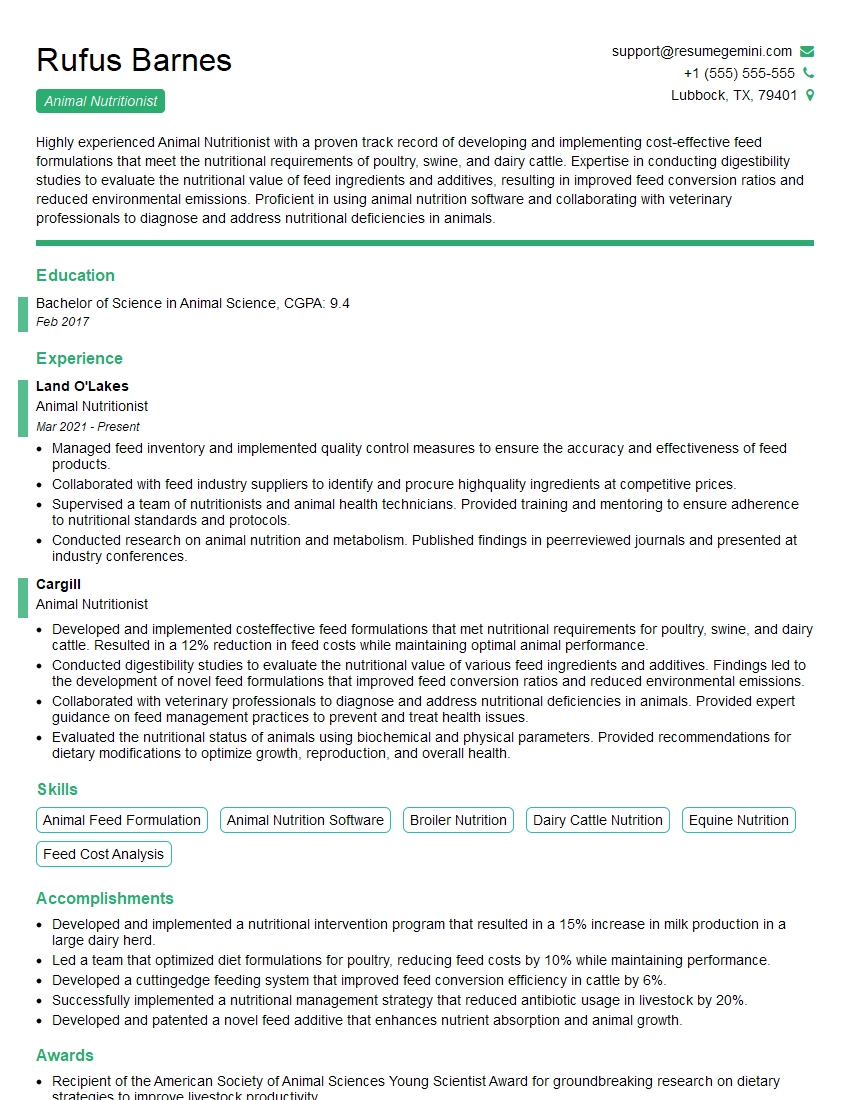
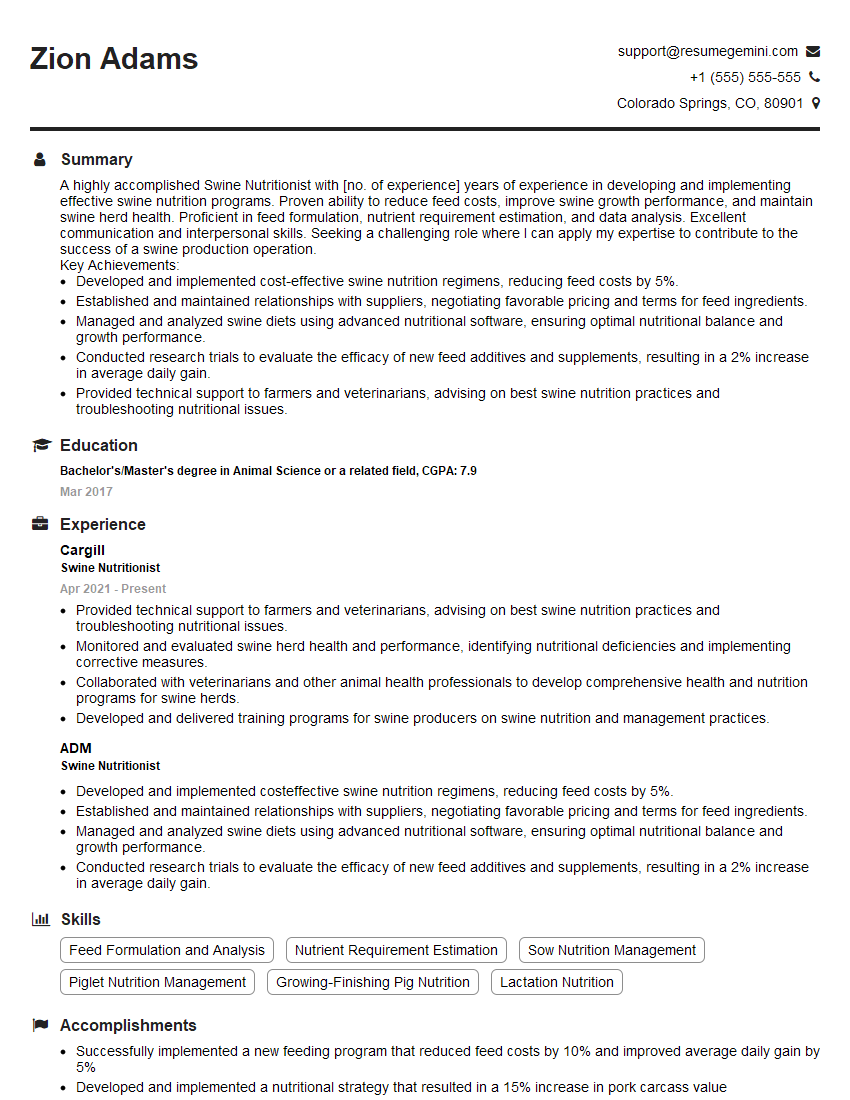
Mastering Nutrient Management and Feed Formulation is crucial for career advancement in the animal agriculture industry. A strong understanding of these principles opens doors to diverse and rewarding roles. To significantly increase your job prospects, crafting a compelling and ATS-friendly resume is essential. ResumeGemini is a trusted resource that can help you build a professional and impactful resume tailored to highlight your skills and experience in this field. Examples of resumes specifically designed for Nutrient Management and Feed Formulation roles are available to guide you. Invest in your future—build a winning resume today.
Explore more articles
Users Rating of Our Blogs
Share Your Experience
We value your feedback! Please rate our content and share your thoughts (optional).
What Readers Say About Our Blog
Very informative content, great job.
good