The thought of an interview can be nerve-wracking, but the right preparation can make all the difference. Explore this comprehensive guide to Internationalization and Globalization interview questions and gain the confidence you need to showcase your abilities and secure the role.
Questions Asked in Internationalization and Globalization Interview
Q 1. Explain the difference between internationalization and globalization.
Internationalization (i18n) and globalization (g11n) are often used interchangeably, but they represent distinct processes. Internationalization focuses on designing a product or service so it can easily be adapted to different locales without engineering changes. Think of it as building a house with adaptable rooms – you can easily furnish it for different cultures later. Globalization, on the other hand, is the actual process of expanding your product or service to those different markets. It’s the act of furnishing and inhabiting that adaptable house.
For example, internationalizing a website means building it using separate files for text and images, making it easy to swap out content for different languages and cultural contexts. Globalization then involves translating the text, adapting the images, and marketing the website in specific target countries. Internationalization is the preparation; globalization is the execution.
Q 2. Describe your experience with market research in international contexts.
My experience in international market research involves conducting extensive qualitative and quantitative research across diverse geographical regions. For instance, while working on a project for a food company launching a new product line in Southeast Asia, I employed a mixed-methods approach. This included surveys to gauge consumer preferences across various demographics in Thailand, Vietnam, and the Philippines, followed by focus groups to understand cultural sensitivities surrounding food consumption in those specific regions. The data analysis revealed significant differences in preferred flavors and ingredients across countries, allowing us to tailor the product and its marketing accordingly, maximizing market penetration. Another project involved ethnographic studies in Latin America, observing consumer behaviour in their natural environments to understand the social and cultural factors influencing their purchase decisions.
Q 3. How would you adapt a marketing campaign for a different cultural market?
Adapting a marketing campaign for a different cultural market requires a deep understanding of that culture’s values, beliefs, and communication styles. A successful adaptation isn’t merely translation; it’s cultural transformation. Consider the following steps:
- Market Research: Conduct thorough research to understand the target market’s demographics, psychographics, media consumption habits, and cultural nuances.
- Localization: Translate the campaign materials, but also adapt the messaging, imagery, and tone to resonate with the local culture. For example, humor that works in one culture might be offensive in another.
- Messaging: Tailor your message to reflect the local values and preferences. What are their priorities, concerns, and aspirations? What kind of storytelling will resonate?
- Imagery: Use images and visuals that are culturally relevant and appropriate. Avoid stereotypes and ensure the imagery reflects the local aesthetic.
- Channels: Choose the appropriate marketing channels based on the target market’s media consumption habits. What platforms are most popular? What types of advertising will be most effective?
- Testing: Before launching the campaign, conduct pre-testing to ensure the messaging and imagery resonate with the target market. Gather feedback and make necessary adjustments.
For example, a campaign promoting a coffee brand might emphasize its energizing properties in a fast-paced market like Japan, but focus on its social aspect and relaxation qualities in a more laid-back market like Italy.
Q 4. What strategies would you use to overcome language barriers in a global team?
Overcoming language barriers in a global team requires a multi-pronged strategy. While technology plays a crucial role, fostering effective communication involves more than just tools.
- Communication Platforms: Utilize translation tools like Google Translate (while acknowledging its limitations) and consider professional translation services for critical documents. Project management software with built-in translation features can be invaluable.
- Common Language: If feasible, establish a common working language that team members can understand and use for meetings and written communication. Provide language training resources for those who need to improve their skills in that language.
- Clear Communication Protocols: Establish clear written communication protocols, including style guides and preferred communication methods. Keep communication concise and avoid jargon.
- Cultural Sensitivity Training: Train team members on cultural awareness and sensitivity. This is crucial for understanding communication styles and preventing misunderstandings.
- Regular Check-ins: Conduct regular check-ins to ensure all team members understand project goals, deadlines, and their individual responsibilities. Provide opportunities for questions and clarifications.
- Diverse Team Members: Consider the strengths of diverse team members. For instance, someone fluent in a target language can act as a translator/cultural advisor for specific projects.
Q 5. Explain your understanding of cultural nuances in international business.
Cultural nuances are critical in international business. Ignoring them can lead to costly mistakes and damaged relationships. My understanding encompasses several key areas:
- Communication Styles: Different cultures have varying communication styles. Some are direct and explicit, while others are indirect and implicit. Understanding these differences prevents misinterpretations and conflict.
- Business Etiquette: Knowing the appropriate business etiquette is crucial for building trust and rapport. This includes understanding greetings, gift-giving customs, meeting procedures, and social interactions.
- Decision-Making Processes: Decision-making processes can vary greatly across cultures. Some cultures are highly hierarchical, while others are more collaborative. Understanding these differences is vital for effective teamwork.
- Time Perception: Concepts of time can differ significantly. Some cultures are very time-conscious, while others are more flexible. This affects scheduling, deadlines, and project management.
- Values and Beliefs: Respecting the values and beliefs of different cultures is fundamental. This shows cultural sensitivity and avoids unintentional offense.
For example, in some cultures, direct confrontation is seen as rude, while in others it’s a sign of honesty. Understanding this prevents conflict and allows for more effective negotiations.
Q 6. How familiar are you with international legal frameworks and compliance?
I have a strong understanding of international legal frameworks and compliance, specifically concerning data privacy regulations (GDPR, CCPA), intellectual property rights, and contract law. My experience includes working with legal teams to ensure compliance with local laws and regulations in various jurisdictions. I understand the importance of conducting thorough due diligence before entering new markets to avoid legal issues and reputational damage. For example, I’ve been involved in reviewing marketing materials to ensure they comply with advertising regulations in different countries, and I understand the nuances of data protection laws and how they impact data collection and processing practices in international projects.
Q 7. Describe your experience managing international projects or teams.
I have extensive experience managing international projects and teams, particularly in the technology and consumer goods sectors. My approach involves establishing clear communication channels, defining roles and responsibilities, setting realistic timelines, and using project management tools to track progress. I’ve successfully led teams across diverse time zones and cultural backgrounds, emphasizing collaboration and cultural sensitivity. In one particular project, we launched a new software product simultaneously in Europe and Asia. By utilizing agile methodologies, leveraging technology for real-time communication, and fostering strong relationships with local partners, we successfully navigated logistical challenges and cultural differences to achieve a timely and successful product launch.
Q 8. How would you handle a conflict arising from cultural differences in a global team?
Handling conflicts stemming from cultural differences in a global team requires a multifaceted approach prioritizing empathy, understanding, and clear communication. It’s not just about resolving the immediate conflict but about fostering a culture of respect and inclusivity.
My strategy involves:
- Active Listening: Truly understanding each individual’s perspective, acknowledging their feelings, and avoiding judgment are crucial first steps. This involves not interrupting and paraphrasing to confirm understanding.
- Cultural Sensitivity Training: Providing regular training to team members on cultural awareness and communication styles can significantly reduce misunderstandings. We should learn about various communication styles – direct vs. indirect, high-context vs. low-context – to avoid misinterpretations.
- Neutral Third-Party Mediation: Involving a neutral facilitator, especially someone familiar with intercultural communication, can help navigate complex situations and facilitate a constructive dialogue. This removes emotional bias from the resolution process.
- Establishing Clear Communication Protocols: Implementing written communication guidelines, specifying preferred methods (email, video calls, etc.), and emphasizing the importance of clarity and conciseness can mitigate potential misinterpretations caused by cultural nuances.
- Focus on Shared Goals: Reiterating shared team objectives and reminding everyone of their collective contribution helps to shift focus from individual differences to the overarching project aims. For instance, if a project is delayed due to a cultural misunderstanding, bringing the team’s attention back to the overall goals helps de-escalate the tension and move forward more effectively.
For example, I once worked with a team where a disagreement arose between American and Japanese team members regarding project timelines. The American team favoured a more direct, aggressive approach to scheduling, while the Japanese team preferred a more indirect, consensus-based approach. By facilitating a discussion focused on respecting each team’s approach while clarifying project milestones, we were able to find a compromise that met everyone’s needs.
Q 9. What is your experience with localization of software or other products?
My experience in software localization spans several projects, encompassing diverse languages and regions. This includes adapting software interfaces, user manuals, and marketing materials to suit specific cultural contexts. It’s a critical aspect of ensuring the product resonates and is usable by a global audience.
In one project, we localized a customer relationship management (CRM) system for the Latin American market. This required translating the interface into Spanish and Portuguese but also involved adapting date and time formats, currency symbols, and even the color schemes to match regional preferences. We also had to consider variations in regional dialects within Spain and Brazil, ensuring the software felt native to each user.
Beyond simple translation, localization also encompasses adapting the software’s functionality. For instance, the handling of addresses may need modifications to accommodate differences in postal codes and address structures. Similarly, payment gateway integration needs adaptation for different regional payment preferences.
I’ve also been involved in the localization of marketing materials, which involves not only translating text but also adapting imagery, tone, and messaging to appeal to the local culture. This ensures that the marketing campaign is effective and doesn’t inadvertently offend or alienate potential customers.
Q 10. Explain your understanding of global supply chain management.
Global supply chain management (SCM) involves the coordination and management of the flow of goods, services, and information across international borders. It’s a complex process that requires careful planning, execution, and monitoring to ensure efficiency and resilience.
A successful global SCM strategy considers several key elements:
- Sourcing: Identifying and selecting reliable suppliers across different geographical locations, considering factors such as cost, quality, risk, and compliance with local regulations.
- Logistics: Managing the transportation of goods, including choosing appropriate modes of transport (sea, air, land), managing customs procedures, and tracking shipments.
- Inventory Management: Optimizing inventory levels to minimize storage costs and prevent stockouts while managing the complexities of international warehousing and distribution.
- Risk Management: Identifying and mitigating potential risks, including political instability, natural disasters, supply chain disruptions, and geopolitical uncertainty. This frequently involves diversification of suppliers and having contingency plans in place.
- Technology: Implementing advanced technologies, such as supply chain management software, to improve visibility, track performance, and streamline processes. Examples include ERP systems and blockchain technology.
- Compliance: Ensuring compliance with various international regulations, including trade laws, environmental standards, and labor laws. This is critical to avoid legal issues and maintain a positive brand image.
For instance, a company manufacturing electronics might source components from different countries (e.g., chips from Taiwan, screens from South Korea, and assembly in China), requiring sophisticated coordination to ensure timely delivery and avoid disruptions. Effective global SCM necessitates robust communication, collaboration, and a deep understanding of international trade practices.
Q 11. How would you measure the success of an internationalization strategy?
Measuring the success of an internationalization strategy requires a multi-faceted approach, going beyond simple financial metrics. We need to consider market penetration, brand perception, and operational efficiency.
Key metrics include:
- Market Share: Tracking the percentage of the market captured in each target region. This directly reflects the strategy’s impact on revenue and growth.
- Customer Acquisition Cost (CAC): Monitoring the cost of acquiring new customers in each market. This helps determine the efficiency of marketing and sales efforts.
- Customer Lifetime Value (CLTV): Evaluating the long-term value of each customer, reflecting the strategy’s ability to retain customers.
- Brand Awareness and Perception: Measuring brand recognition and sentiment in target markets through surveys, social media monitoring, and focus groups. This provides insights into the effectiveness of branding and messaging.
- Operational Efficiency: Assessing the efficiency of supply chain operations, logistics, and other operational aspects in each target market. Key performance indicators (KPIs) include delivery times, inventory turnover, and production costs.
- Localization Effectiveness: Analyzing user feedback, satisfaction ratings, and customer support interactions to gauge how well the product or service has been localized. This includes analyzing metrics like application usage rates, customer support ticket volume, and app store reviews in each region.
Using a balanced scorecard approach, combining quantitative data with qualitative feedback, provides a comprehensive picture of the internationalization strategy’s effectiveness.
Q 12. What are some common challenges in global business expansion?
Global business expansion presents a unique set of challenges. These can be broadly categorized into:
- Cultural Differences: Navigating diverse cultural norms, communication styles, and business practices can be complex, requiring cultural sensitivity and adaptability. Misunderstandings can easily lead to conflicts or missed opportunities.
- Regulatory Compliance: Adhering to varying legal and regulatory frameworks across different countries can be a significant hurdle, requiring expert legal counsel and thorough due diligence. This includes tax laws, labor laws, environmental regulations, and data privacy regulations.
- Logistical Challenges: Managing international shipping, customs procedures, and supply chain complexities can be expensive and time-consuming, particularly in regions with underdeveloped infrastructure.
- Political and Economic Risks: Political instability, economic fluctuations, and currency exchange rate volatility can significantly impact business operations and profitability. Risk assessment and mitigation strategies are critical.
- Language Barriers: Effective communication is key, but language barriers can hinder interactions with customers, partners, and employees. Translation and interpretation services are essential.
- Market Entry Strategies: Choosing the right market entry strategy (e.g., direct investment, joint ventures, franchising) requires careful analysis of market conditions, competitive landscape, and risk tolerance.
For example, a company expanding into a new market might face challenges due to unforeseen tariffs, differing consumer preferences, or difficulties in navigating the local regulatory environment.
Q 13. How familiar are you with international trade regulations and tariffs?
I have a solid understanding of international trade regulations and tariffs, recognizing their significant impact on global business. My knowledge encompasses various aspects, including:
- World Trade Organization (WTO) Agreements: I’m familiar with the WTO’s rules and regulations governing international trade, including dispute settlement mechanisms.
- Trade Agreements: I understand the implications of various bilateral and multilateral trade agreements, such as NAFTA (now USMCA) and the EU’s trade agreements.
- Tariffs and Non-Tariff Barriers: I understand how tariffs, quotas, and other non-tariff barriers (e.g., sanitary and phytosanitary regulations) affect the cost and feasibility of importing and exporting goods.
- Customs Procedures: I’m familiar with customs procedures, documentation requirements, and import/export regulations in various countries.
- Trade Compliance: I understand the importance of ensuring compliance with all applicable trade laws and regulations to avoid penalties and legal issues.
For example, I’ve assisted companies in navigating the complexities of trade regulations when exporting goods to the European Union, ensuring compliance with rules of origin and other regulatory requirements. Understanding these regulations is crucial for minimizing costs and avoiding legal repercussions.
Q 14. Describe your experience with international financial transactions.
My experience with international financial transactions includes managing payments, currency exchange, and financial reporting in multiple currencies. This involves understanding and applying various financial instruments and practices to mitigate risks and optimize efficiency.
This includes:
- Letters of Credit: Utilizing letters of credit to secure international payments, reducing risks associated with cross-border transactions.
- Foreign Exchange (FX) Markets: Navigating the FX market to manage currency risk and optimize exchange rates. This involves hedging strategies to protect against currency fluctuations.
- International Payment Systems: Using international payment systems like SWIFT for efficient and secure cross-border payments.
- International Accounting Standards: Applying International Financial Reporting Standards (IFRS) or other relevant accounting standards for accurate financial reporting in a global context.
- Transfer Pricing: Understanding transfer pricing rules and regulations for optimizing the tax efficiency of transactions between related entities in different countries.
For example, I’ve been involved in managing payments for international projects, ensuring timely and secure transfer of funds while optimizing currency exchange rates to minimize costs. Understanding these complexities is critical for ensuring the financial soundness of international operations.
Q 15. How would you adapt a product to meet the needs of a specific international market?
Adapting a product for a specific international market requires a multifaceted approach encompassing localization and internationalization. Internationalization focuses on designing the product to be easily adaptable to different locales without engineering changes, while localization tailors the product to specific cultural contexts.
- Language: Translate all text, including user interface elements, documentation, and marketing materials, into the target language. Consider using professional translation services to ensure accuracy and cultural appropriateness. For example, a simple translation of “OK” might not be suitable for all cultures; a more context-appropriate term might be needed.
- Cultural Nuances: Adapt imagery, colors, and symbols to align with cultural norms. Colors, for instance, can carry different meanings across cultures. What’s considered lucky in one might be unlucky in another. Images should reflect the demographics and aesthetic preferences of the target market.
- Legal and Regulatory Compliance: Ensure compliance with local laws and regulations regarding data privacy, intellectual property, and product safety standards. This often requires legal consultation specific to the target market.
- Format and Functionality: Adjust date, time, currency, and number formats to match local standards. Consider different keyboard layouts and character encodings. Functionality might need adaptation as well; for example, a product relying heavily on credit cards might need alternative payment methods in regions where cash or mobile money is dominant.
- Testing: Conduct thorough user testing with individuals from the target market to identify any remaining cultural or usability issues before launch. This is crucial for ensuring product acceptance and preventing costly mistakes.
For example, when launching a social media platform in Japan, you would need to consider the prevalence of emojis and the importance of politeness in communication, adjusting the platform’s interface and functionality to reflect these cultural nuances. Similarly, launching in Europe necessitates adherence to GDPR regulations regarding data privacy.
Career Expert Tips:
- Ace those interviews! Prepare effectively by reviewing the Top 50 Most Common Interview Questions on ResumeGemini.
- Navigate your job search with confidence! Explore a wide range of Career Tips on ResumeGemini. Learn about common challenges and recommendations to overcome them.
- Craft the perfect resume! Master the Art of Resume Writing with ResumeGemini’s guide. Showcase your unique qualifications and achievements effectively.
- Don’t miss out on holiday savings! Build your dream resume with ResumeGemini’s ATS optimized templates.
Q 16. How do you prioritize different international market opportunities?
Prioritizing international market opportunities requires a systematic approach, balancing potential return on investment (ROI) with risk. I typically use a framework that considers several key factors:
- Market Size and Growth Potential: Assessing the size of the potential customer base and its projected growth rate is paramount. Larger, faster-growing markets are generally prioritized.
- Competitive Landscape: Analyzing the existing competition, their strengths and weaknesses, and barriers to entry. Markets with less intense competition are more attractive.
- Market Access and Infrastructure: Evaluating the ease of market entry, including regulatory hurdles, logistical challenges, and the availability of distribution channels. Markets with established infrastructure are preferred.
- Cultural Fit: Assessing the cultural compatibility of the product or service with the target market. Products with a strong cultural alignment are more likely to succeed.
- Political and Economic Stability: Considering the political and economic stability of the target country. High levels of risk in these areas can significantly impact profitability.
- Resource Allocation: Determining the resources required to enter and operate in each market, including financial investments, human capital, and technology.
I often employ a scoring system to weigh these factors, allowing for a quantitative comparison of different market opportunities. This data-driven approach ensures that resources are allocated efficiently to the most promising markets.
Q 17. Explain your understanding of international marketing strategies.
International marketing strategies encompass a broad range of approaches designed to adapt marketing efforts to different cultural contexts. Key strategies include:
- Standardized Marketing: Utilizing a consistent marketing message and approach across all international markets. This works best when there’s a high degree of cultural similarity and the product resonates universally. Think of global brands like Coca-Cola who maintain a core brand identity while adapting elements like flavor profiles to local tastes.
- Adapted Marketing: Tailoring the marketing message and approach to the specific cultural nuances of each target market. This ensures better resonance with consumers and requires more investment in market research.
- Glocalization: A blend of standardization and adaptation, combining elements of a global marketing strategy with local customizations. This approach balances cost efficiency with cultural relevance.
- Digital Marketing: Leveraging online channels, such as social media, search engine optimization (SEO), and e-commerce, to reach international audiences. This is especially crucial in markets with high internet penetration.
The choice of strategy depends on factors like budget, product characteristics, and target market characteristics. A thorough understanding of the target market’s culture, values, and consumer behavior is essential for effective international marketing.
Q 18. How would you build and maintain relationships with international partners?
Building and maintaining relationships with international partners is crucial for successful international business ventures. It’s based on mutual trust, respect, and clear communication.
- Due Diligence: Thoroughly vet potential partners to ensure they are reliable, trustworthy, and have the necessary capabilities and resources. This might involve background checks, financial audits, and references.
- Clear Contracts: Develop clear, comprehensive contracts that outline the responsibilities, expectations, and liabilities of each party. Legal counsel familiar with international business law is advisable.
- Open Communication: Establish open and transparent communication channels to facilitate regular updates and address any potential conflicts promptly. This often involves regular meetings and frequent communication using appropriate channels, considering time zone differences.
- Cultural Sensitivity: Demonstrate respect for different cultural norms and communication styles. Be mindful of language barriers and potential misunderstandings.
- Mutual Benefit: Ensure that the partnership is mutually beneficial, with both parties achieving their objectives. A win-win approach fosters long-term collaboration.
- Relationship Building: Invest time and effort in building personal relationships with key individuals within the partner organization. This can involve social events, business trips, and consistent engagement.
For example, when partnering with a manufacturer in China, I’d emphasize clear communication about production standards, quality control, and intellectual property protection in the contract, as well as building a strong personal relationship with the key personnel responsible for manufacturing.
Q 19. How familiar are you with different cultural communication styles?
I have a strong understanding of different cultural communication styles. Effective communication across cultures requires awareness of several key elements:
- High-context vs. Low-context Communication: High-context cultures (e.g., Japan) rely heavily on nonverbal cues and shared understanding, while low-context cultures (e.g., Germany) emphasize explicit verbal communication. This requires adjusting communication style based on the partner’s cultural context.
- Direct vs. Indirect Communication: Some cultures prefer direct, frank communication, while others favor indirect, more nuanced approaches to avoid confrontation. Understanding this distinction is vital for building trust and preventing misunderstandings.
- Nonverbal Communication: Gestures, body language, eye contact, and personal space all carry different meanings across cultures. Being aware of these nuances is crucial for effective interaction.
- Language Barriers: Effective communication might require professional translation services or interpreters to ensure accuracy and avoid misinterpretations. This is particularly true for complex negotiations or legal documents.
- Time Perception: Different cultures have different perceptions of time. Some prioritize punctuality, while others have a more flexible approach. Awareness of these differences helps avoid scheduling conflicts and frustration.
For instance, in negotiations with a Japanese business partner, I would expect a more indirect and relationship-focused approach, compared to a more direct and task-oriented style with a German counterpart. This adaptability is essential for successful international collaborations.
Q 20. How would you manage risk in an international business venture?
Managing risk in international business ventures requires a proactive and comprehensive approach. Key risk areas include:
- Political Risk: Changes in government policies, political instability, and conflicts can significantly impact business operations. Strategies include conducting thorough political risk assessments, diversifying operations across multiple countries, and purchasing political risk insurance.
- Economic Risk: Fluctuations in currency exchange rates, inflation, and economic downturns can affect profitability. Hedging strategies and diversification can help mitigate these risks.
- Legal and Regulatory Risk: Differences in laws and regulations across countries can create compliance challenges. This includes employing local legal counsel and adhering to all relevant laws and regulations.
- Operational Risk: Disruptions to supply chains, logistics issues, and natural disasters can impact operations. Building resilient supply chains and having contingency plans are crucial.
- Reputational Risk: Negative publicity, ethical breaches, and cultural missteps can damage a company’s reputation. Developing a strong corporate social responsibility (CSR) strategy and proactively addressing any issues are vital.
A risk management framework that includes risk identification, assessment, mitigation, and monitoring is essential. This allows for proactive identification of potential issues and implementation of appropriate strategies to minimize their impact.
Q 21. What is your experience with international market entry strategies?
I have extensive experience with various international market entry strategies, each with its own advantages and disadvantages:
- Exporting: Selling goods or services to international markets without establishing a physical presence. This is a low-risk, low-cost option, suitable for smaller businesses. However, it may limit market share and control.
- Licensing: Granting a foreign company the right to manufacture or sell your product in their market. This provides access to new markets with minimal investment but requires careful selection of licensees to protect brand reputation.
- Franchising: Granting a foreign company the right to use your business model and brand in exchange for fees. This enables rapid expansion with reduced financial risk but necessitates strong franchisee management.
- Joint Ventures: Collaborating with a local partner to establish a new business entity in the target market. This offers access to local expertise and resources but requires sharing profits and control.
- Foreign Direct Investment (FDI): Establishing a wholly-owned subsidiary in the target market. This provides maximum control but requires significant capital investment and carries higher risk.
The optimal entry strategy depends on several factors including the company’s resources, risk tolerance, market characteristics, and long-term objectives. A thorough market analysis and feasibility study are crucial before selecting an appropriate strategy.
Q 22. Describe your understanding of global branding and its challenges.
Global branding is the process of creating a consistent brand image and message across all international markets. It’s about building a global brand identity that resonates with diverse audiences while maintaining brand coherence. The key is to balance standardization (consistent messaging and branding elements) with adaptation (catering to local cultural nuances and preferences).
However, significant challenges exist. Cultural differences are paramount – a slogan that works brilliantly in one country might be offensive or meaningless in another. Legal and regulatory variations across jurisdictions necessitate careful consideration of trademark laws, advertising regulations, and product labeling requirements. Economic disparities influence pricing strategies and product features. For instance, a premium product might need adaptation for price-sensitive markets. Logistical complexities regarding supply chain management and distribution channels add to the operational challenges. Finally, managing brand consistency across various local teams and agencies requires robust communication and control mechanisms.
For example, McDonald’s successfully employs a global branding strategy but adapts its menu offerings to local tastes. They might offer McSpicy Paneer in India, reflecting the local preference for vegetarian options, while maintaining the familiar Golden Arches logo globally.
Q 23. How do you stay up-to-date on global economic and political trends?
Staying current on global economic and political trends is crucial for international business success. My approach is multi-faceted.
- Subscription to reputable news sources and analytical services: This includes publications like the Financial Times, The Economist, and specialized reports from organizations like the World Bank and IMF.
- Active participation in professional networks: Attending industry conferences, webinars, and engaging in online forums allows me to learn from peers and experts about emerging trends.
- Monitoring social media and online discussions: Observing trending topics and sentiment analysis on platforms like Twitter and LinkedIn provides insights into public opinion and emerging market dynamics.
- Regular review of government reports and policy changes: I monitor official websites of relevant ministries and international organizations to stay abreast of policy updates impacting international trade and investment.
This combination provides a comprehensive understanding of macro-level trends and their potential impact on specific markets and industries.
Q 24. Describe your experience working with cross-functional global teams.
I have extensive experience working with diverse cross-functional global teams. My approach emphasizes clear communication, establishing shared goals, and fostering a collaborative environment.
- Utilizing project management tools: Tools like Asana or Jira help track progress, manage tasks, and ensure transparency across teams located in different time zones.
- Establishing clear communication protocols: This includes regular virtual meetings, documented decision-making processes, and the use of common communication platforms.
- Promoting cultural awareness and sensitivity: I actively encourage team members to understand and respect each other’s cultural backgrounds and communication styles.
- Fostering trust and psychological safety: A safe environment allows team members to voice concerns and contribute ideas openly, regardless of their location or background.
In a past project, we launched a new product simultaneously in five countries. Successfully coordinating marketing, sales, and technical teams across multiple time zones and cultures required meticulous planning and proactive conflict resolution. Clear communication and regular status updates were key to ensuring a smooth, coordinated launch.
Q 25. How would you address cultural sensitivity in international communication?
Addressing cultural sensitivity in international communication requires a deep understanding of cultural nuances and adapting communication styles accordingly.
- Researching target audiences: Thorough research about cultural values, communication styles, and etiquette is crucial. This includes understanding non-verbal communication cues, like gestures and eye contact.
- Using inclusive language: Avoiding jargon, idioms, and slang that might not translate well or be understood by diverse audiences is important. Opting for simple, clear language is key.
- Respecting local customs and traditions: Awareness of holidays, religious observances, and social norms allows for culturally appropriate messaging and avoids potential offense.
- Localizing content: This involves translating materials into the appropriate language, but also adapting the content to resonate with local contexts and sensibilities. Simple things like color choices can have significant cultural meanings.
- Seeking feedback from local experts: Consulting with native speakers or individuals deeply familiar with the target culture ensures accuracy and cultural sensitivity.
For instance, a marketing campaign featuring imagery or themes that are considered taboo or disrespectful in a specific culture could severely damage the brand’s reputation.
Q 26. What are the key performance indicators (KPIs) you would use to track international business success?
Key Performance Indicators (KPIs) for international business success vary depending on the specific goals and strategies, but generally include:
- Revenue growth in target markets: This measures the financial performance and market penetration in specific regions.
- Market share: This indicates the brand’s competitive position within a particular international market.
- Customer acquisition cost (CAC): This helps evaluate the efficiency of marketing and sales efforts in acquiring new customers internationally.
- Customer lifetime value (CLTV): This measures the long-term profitability of customer relationships in different markets.
- Brand awareness and perception: Tracking brand perception and sentiment in different markets through surveys, social listening, and brand tracking studies provides crucial insights.
- Operational efficiency: KPIs like cost of goods sold, supply chain efficiency, and logistics performance should also be tracked for evaluating operational success in various markets.
Monitoring these KPIs provides a holistic view of international business performance and informs strategic decision-making.
Q 27. Explain your experience with international data privacy regulations.
International data privacy regulations are extremely complex and vary significantly across jurisdictions. My experience involves a deep understanding of regulations such as GDPR (General Data Protection Regulation) in the EU, CCPA (California Consumer Privacy Act) in the US, and similar laws in other countries. My approach focuses on compliance and risk mitigation.
- Data mapping and classification: Understanding what data we collect, where it’s stored, and how it’s used is fundamental.
- Implementation of data protection policies and procedures: This includes establishing clear guidelines for data handling, access control, and data security measures.
- Conducting data privacy impact assessments (DPIAs): DPIAs help identify and mitigate risks associated with data processing activities.
- Working with legal counsel: Compliance with complex international regulations often requires specialized legal expertise.
- Staying up-to-date on regulatory changes: Data privacy regulations are constantly evolving, so continuous monitoring and adaptation are crucial.
Failure to comply with these regulations can result in significant financial penalties and reputational damage. A proactive, well-informed approach is vital.
Q 28. Describe your approach to navigating cultural differences in business negotiations.
Navigating cultural differences in business negotiations requires careful preparation, adaptability, and respect for diverse communication styles.
- Pre-negotiation research: Understanding the cultural background and business practices of the other party is crucial. This includes understanding their communication styles (direct vs. indirect), decision-making processes, and negotiation tactics.
- Adapting communication style: Being mindful of nonverbal cues, such as eye contact and personal space, is essential. Adjusting communication to match the other party’s preferred style (e.g., formal vs. informal) fosters trust and understanding.
- Building rapport: Taking the time to build a personal connection with the other party helps to establish trust and facilitate open communication.
- Patience and flexibility: Negotiations may take longer and require more patience in some cultures. Flexibility in approach and willingness to compromise are key to a successful outcome.
- Using a mediator or interpreter: In situations with significant cultural or language barriers, engaging a trusted mediator or interpreter can significantly improve communication and understanding.
For example, in some cultures, relationship building is prioritized over immediate results. A rushed approach could be counterproductive, whereas investing time in relationship building can unlock long-term opportunities.
Key Topics to Learn for Internationalization and Globalization Interview
- Globalization Strategies: Understanding different approaches to global market entry (e.g., exporting, foreign direct investment, joint ventures) and their implications.
- Cultural Nuances in Business: Applying cultural awareness and sensitivity in international communication, marketing, and negotiation. Practical application: Analyzing case studies of successful and unsuccessful international business ventures.
- International Marketing and Branding: Adapting marketing strategies and branding to resonate with diverse cultural contexts. Consider the impact of localization on marketing materials.
- Legal and Regulatory Compliance: Navigating international laws, regulations, and trade agreements relevant to the industry. Problem-solving approach: Identifying potential legal hurdles and proposing mitigation strategies.
- Global Supply Chain Management: Optimizing international supply chains for efficiency, cost-effectiveness, and risk mitigation. Practical application: Analyzing case studies of global supply chain disruptions and effective responses.
- Cross-Cultural Communication: Effective communication strategies across diverse linguistic and cultural backgrounds. Problem-solving approach: Developing strategies for overcoming communication barriers in international teams.
- International Human Resource Management (IHRM): Managing international teams, addressing cultural differences in recruitment, compensation, and performance management. Consider the impact of globalization on HR practices.
- Technology and Globalization: Exploring the role of technology in facilitating globalization, including e-commerce, digital marketing, and remote collaboration. Practical application: Analyzing the impact of specific technologies on international business operations.
Next Steps
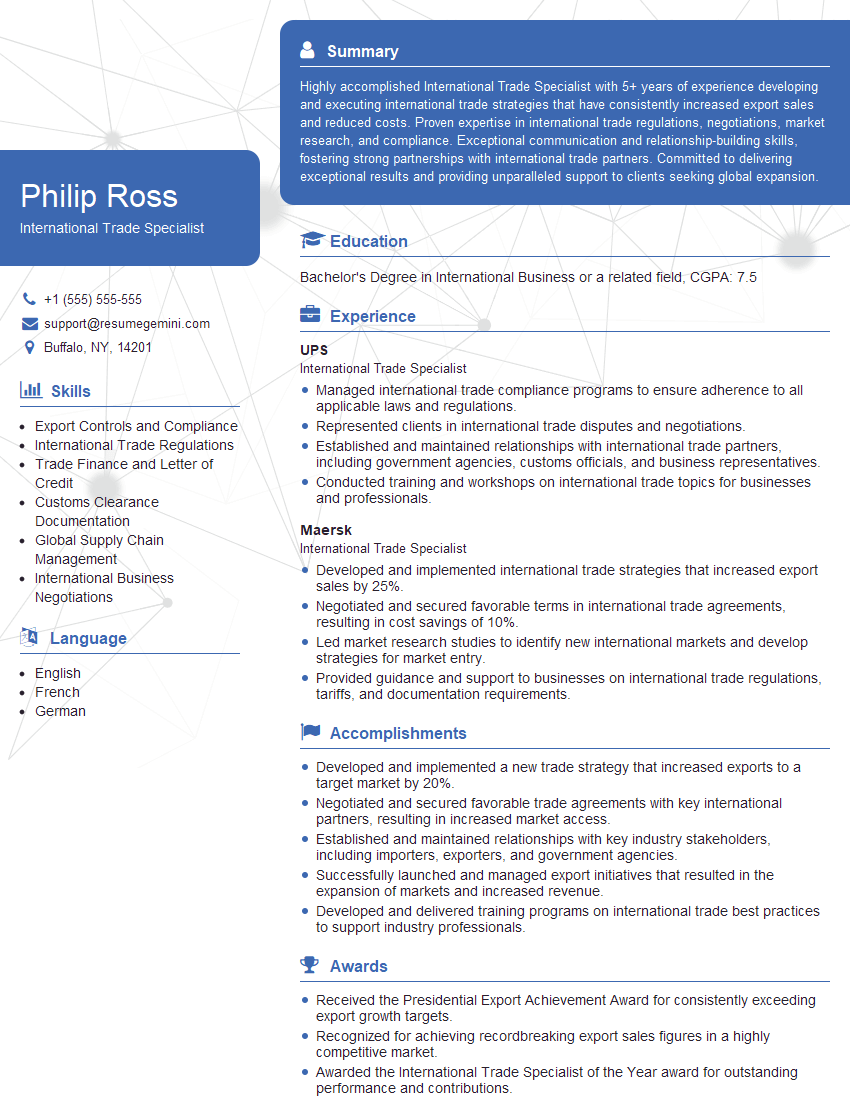
Mastering Internationalization and Globalization opens doors to exciting global career opportunities and positions you as a highly valuable asset in today’s interconnected world. To significantly boost your job prospects, invest time in creating a strong, ATS-friendly resume that highlights your relevant skills and experience. ResumeGemini is a trusted resource that can help you build a professional and impactful resume. Leverage their expertise and create a compelling narrative that showcases your capabilities. Examples of resumes tailored to Internationalization and Globalization roles are available through ResumeGemini to provide you with valuable inspiration and guidance.
Explore more articles
Users Rating of Our Blogs
Share Your Experience
We value your feedback! Please rate our content and share your thoughts (optional).
What Readers Say About Our Blog
Very informative content, great job.
good