Interviews are opportunities to demonstrate your expertise, and this guide is here to help you shine. Explore the essential Music Therapy and Music for Healing interview questions that employers frequently ask, paired with strategies for crafting responses that set you apart from the competition.
Questions Asked in Music Therapy and Music for Healing Interview
Q 1. Describe your experience using different music therapy techniques (e.g., improvisation, songwriting, receptive music listening).
My experience encompasses a wide range of music therapy techniques. Improvisation, for instance, allows clients to express themselves non-verbally through spontaneous music-making. I’ve used this with children struggling with communication, guiding them to explore emotions through sounds and rhythms. Songwriting is another powerful tool; I’ve worked with adults experiencing trauma, helping them process their experiences by creating and sharing their own songs. This offers a safe space for emotional expression and catharsis. Receptive music listening involves carefully selecting music to evoke specific emotional responses or cognitive processes, often used to promote relaxation, focus, or memory recall. For example, I’ve used calming classical music with individuals managing anxiety, and upbeat music with those experiencing depression to lift their mood.
- Improvisation: Facilitating spontaneous musical expression to unlock emotions and enhance communication.
- Songwriting: Empowering clients to articulate experiences through the creative process of composing and performing.
- Receptive Music Listening: Utilizing pre-composed music to elicit specific therapeutic effects.
Q 2. How do you assess a client’s musical preferences and abilities to tailor a music therapy session?
Assessing a client’s musical preferences and abilities is crucial for tailoring effective sessions. I begin by engaging in a thorough intake interview, exploring their musical background, preferred genres, instruments they play (if any), and their overall comfort level with music. I also observe their responses to different musical stimuli during the initial sessions. For example, I might play short excerpts of various musical styles and observe their reactions – their body language, facial expressions, and any verbal feedback. This helps me understand their emotional responses to different rhythms, tempos, and melodies. I use this information to create a personalized playlist or to guide improvisation sessions in a way that feels safe and comfortable.
For clients with limited musical abilities, I might focus on simple rhythmic activities or vocalizations, gradually introducing more complex musical elements as they become more comfortable. The key is to build a foundation of trust and to create a supportive environment where the client feels empowered to participate actively in the therapeutic process.
Q 3. Explain your understanding of the neurobiological effects of music on the brain and how you utilize this knowledge in your practice.
Music’s impact on the brain is fascinating and well-documented. It activates multiple brain regions simultaneously, including those involved in emotion (amygdala), memory (hippocampus), motor skills (cerebellum), and language (Broca’s and Wernicke’s areas). Music therapy leverages these effects. For instance, rhythmic activities can improve motor skills in stroke patients by stimulating brain areas responsible for movement. Similarly, listening to calming music can reduce anxiety by activating the parasympathetic nervous system, lowering heart rate and blood pressure. I use this understanding in my practice by selecting music and activities specifically designed to target the desired neurological outcomes. For a client with dementia, I might use familiar songs from their younger years to stimulate memory retrieval, while with someone experiencing anxiety, I might utilize guided imagery combined with calming music to promote relaxation. Understanding the neurobiological pathways allows me to create highly individualized and effective treatment plans.
Q 4. How do you adapt your music therapy approach to different populations (e.g., children, adults, elderly)?
Adapting my approach is essential for working effectively with diverse populations. With children, I often employ playful and interactive techniques, incorporating movement, instruments, and creative activities into the sessions. For adults, sessions might focus on deeper emotional exploration through songwriting or improvisation, drawing on their life experiences. With the elderly, I often use familiar songs and gentle rhythmic activities to stimulate memory, enhance cognitive function, and foster a sense of community. For example, I might lead group singalongs with seniors with dementia, focusing on songs from their youth. The key is to adapt the musical elements and the overall session structure to meet the specific developmental, cognitive, and emotional needs of each population group.
Q 5. Describe your experience working with clients with specific diagnoses (e.g., autism, PTSD, dementia).
My experience with clients diagnosed with autism, PTSD, and dementia highlights the versatility of music therapy. With autistic clients, I use music to improve communication, social interaction, and emotional regulation. Sensory integration techniques, using different instruments and sounds, can help regulate their sensory experiences. With PTSD, I utilize music to process traumatic memories and promote emotional healing. Improvisation and songwriting can be extremely effective for safely expressing pent-up emotions. Finally, with dementia patients, I use familiar music to stimulate memories and improve cognitive function. The familiar melodies can unlock memories and improve mood. In each case, careful assessment and adaptation of techniques are essential for creating a safe and therapeutic experience.
Q 6. How do you measure the effectiveness of your music therapy interventions?
Measuring the effectiveness of music therapy interventions requires a multi-faceted approach. I use both quantitative and qualitative data. Quantitative measures can include standardized assessments of mood, anxiety levels, cognitive function, or motor skills before, during, and after intervention. These assessments provide objective data on changes in specific parameters. Qualitative data, collected through interviews, observations, and client feedback, provide valuable insights into the client’s subjective experience and overall well-being. For example, observing a reduction in anxiety symptoms during a session, or hearing a client express increased self-confidence after a songwriting session, are valuable qualitative indicators of progress. Combining quantitative and qualitative methods provides a comprehensive picture of the therapy’s effectiveness and informs ongoing treatment modifications.
Q 7. What ethical considerations guide your practice as a music therapist?
Ethical considerations are paramount in my practice. Confidentiality is critical; I maintain client privacy rigorously, adhering to all relevant professional guidelines. Informed consent is essential; clients must understand the nature of music therapy, its potential benefits and risks, and have the autonomy to participate fully or withdraw at any time. Maintaining professional boundaries is crucial; I am transparent about my role and avoid dual relationships. Cultural sensitivity is also vital; I adapt my approach to respect the client’s cultural background and beliefs. Finally, I am committed to ongoing professional development, ensuring my practice remains ethically sound and aligned with the best available evidence-based practices. I continuously evaluate my work and seek supervision when necessary.
Q 8. Explain your knowledge of relevant legal and regulatory frameworks concerning music therapy.
Legal and regulatory frameworks governing music therapy vary by location, but generally center on licensing, scope of practice, and ethical conduct. In many places, music therapists must be licensed or registered with a relevant governing body to practice legally. This often involves completing an accredited music therapy program and passing a national board exam. The scope of practice defines the types of interventions and populations a music therapist is legally permitted to work with. For instance, a music therapist may not independently prescribe medication or provide psychological counseling outside their defined scope. Finally, ethical conduct guidelines, often developed by professional organizations like the American Music Therapy Association (AMTA), dictate professional behavior, including maintaining client confidentiality, avoiding conflicts of interest, and adhering to high standards of clinical practice. These regulations are crucial for ensuring client safety and maintaining the integrity of the profession. Violating these regulations can lead to sanctions, including license suspension or revocation.
Q 9. How do you handle challenging client behaviors or situations during a music therapy session?
Handling challenging client behaviors requires a calm, empathetic, and adaptable approach. The key is to understand the underlying cause of the behavior. For example, a client expressing aggression might be experiencing frustration due to physical limitations or emotional distress. I utilize various techniques based on the specific situation and the client’s needs. This could include:
- Redirection: Shifting the client’s focus to a different activity or musical element. For instance, if a client is agitated, I might gently guide them toward playing a calming melody on an instrument.
- Sensory Regulation: Modifying the environment or the music to adjust sensory input. If a client is overwhelmed, I might reduce the volume or tempo of the music or use quieter, less stimulating instruments.
- Communication: Using verbal or nonverbal cues to help the client communicate their needs or feelings. This might involve active listening, asking open-ended questions, or using visual aids.
- Collaboration: Working with the client’s support network (family, caregivers, other therapists) to develop strategies for managing challenging behaviors outside of sessions.
Q 10. Describe your experience in creating and implementing individualized music therapy treatment plans.
Creating individualized music therapy treatment plans is a core aspect of my practice. It begins with a thorough assessment to understand the client’s strengths, weaknesses, goals, and preferences. This involves gathering information from various sources, including the client themselves, family members, medical records, and other professionals involved in their care. For example, with a client experiencing anxiety, my assessment might include exploring their musical background, preferred genres, and their response to different musical stimuli. Based on this assessment, I develop a plan that outlines specific, measurable, achievable, relevant, and time-bound (SMART) goals. The plan details the therapeutic techniques that will be employed, the types of music to be used, the frequency and duration of sessions, and methods for evaluating progress. For the anxious client, my plan might include incorporating relaxation techniques through guided imagery set to calming music, songwriting to process emotions, and improvisational activities to foster self-expression. Regular monitoring and adjustments ensure that the treatment plan remains effective and responsive to the client’s evolving needs.
Q 11. How do you collaborate with other healthcare professionals (e.g., doctors, nurses, social workers)?
Collaboration is essential in providing holistic care. I regularly communicate with other healthcare professionals such as doctors, nurses, social workers, and occupational therapists to ensure a coordinated approach. This involves attending interdisciplinary team meetings, sharing assessment findings and treatment progress, and integrating my recommendations into the overall treatment plan. For instance, I might collaborate with a psychiatrist to understand a client’s medication regimen and its potential impact on their music therapy responses. Similarly, working with a social worker can help address the client’s psychosocial needs, which can significantly affect their progress in music therapy. Open and transparent communication ensures that all professionals are aligned in their efforts to support the client’s well-being.
Q 12. How do you maintain client confidentiality and privacy?
Maintaining client confidentiality and privacy is a paramount ethical and legal responsibility. I strictly adhere to HIPAA (Health Insurance Portability and Accountability Act) guidelines and other relevant privacy regulations. This includes securing client records, using encrypted communication methods, and obtaining informed consent before sharing any information with third parties. I only disclose client information when legally required or when it’s necessary to ensure the client’s safety or the safety of others. Transparency with clients about how their information is handled and their rights is critical. I also maintain a professional boundary, never discussing client matters in public or with individuals who are not directly involved in their care.
Q 13. How do you manage your own emotional well-being while working with challenging clients?
Working with challenging clients can be emotionally taxing. To maintain my own well-being, I prioritize self-care practices such as regular exercise, mindfulness techniques, and spending time engaging in activities I enjoy outside of work. Supervision from a qualified music therapist helps me process challenging cases, receive support, and ensure I am practicing ethically and effectively. It’s also essential to recognize the potential for compassion fatigue and seek professional support if needed. Maintaining a healthy work-life balance and setting boundaries are crucial to prevent burnout and ensure I can continue to provide high-quality care to my clients.
Q 14. What are your strengths and weaknesses as a music therapist?
My strengths include strong interpersonal skills, a deep understanding of music theory and its therapeutic applications, and a creative and adaptable approach to treatment. I am adept at building rapport with clients from diverse backgrounds and tailoring my interventions to meet their specific needs. One area I am continually working to develop is my proficiency in using technology to enhance music therapy interventions. While I am familiar with several music therapy software programs, I aim to become more proficient in incorporating emerging technologies in my practice. This involves continuously learning and attending workshops to update my skills and explore innovative approaches to treatment.
Q 15. Describe a time you had to problem-solve a situation during a music therapy session.
Problem-solving is crucial in music therapy. Sessions rarely unfold exactly as planned. For instance, I once worked with a young boy diagnosed with autism who initially refused to participate in any structured musical activities. He’d only respond to loud, repetitive noises. This presented a challenge because my goal was to facilitate communication and emotional expression through music, which required his active engagement.
Instead of forcing him to participate in pre-planned activities, I adapted my approach. I started by subtly mirroring his repetitive noises with instrumental sounds on my keyboard, gradually modifying the rhythm and timbre to see if I could elicit a response. This approach, based on mirroring and gradual change, demonstrated respect for his boundaries and preferences. Once he started to engage with these sounds, we could move to simpler songs, using the repetitive noises as building blocks. Over several sessions, we slowly incorporated more complex melodies and improvisation, leading to improved communication and emotional expression.
This situation highlighted the importance of flexibility and creativity in music therapy. It’s not just about following a pre-determined plan but about adapting to the individual’s needs and responses in real-time.
Career Expert Tips:
- Ace those interviews! Prepare effectively by reviewing the Top 50 Most Common Interview Questions on ResumeGemini.
- Navigate your job search with confidence! Explore a wide range of Career Tips on ResumeGemini. Learn about common challenges and recommendations to overcome them.
- Craft the perfect resume! Master the Art of Resume Writing with ResumeGemini’s guide. Showcase your unique qualifications and achievements effectively.
- Don’t miss out on holiday savings! Build your dream resume with ResumeGemini’s ATS optimized templates.
Q 16. What are your professional goals for the next 5 years?
My professional goals for the next five years center around expanding my expertise and contributing to the field of music therapy. Specifically, I aim to complete a doctoral program focusing on the neurobiological effects of music therapy on individuals with neurological conditions. This will allow me to conduct advanced research and contribute meaningfully to evidence-based practices. Secondly, I plan to develop and implement a specialized music therapy program for individuals experiencing trauma. This program will integrate elements from various modalities and innovative technology to enhance effectiveness and reach a wider population.
Finally, I want to increase my involvement in professional organizations and advocacy work to promote the recognition and availability of music therapy services within healthcare systems. This includes mentoring other aspiring music therapists and contributing to the body of knowledge through publications and presentations.
Q 17. What is your experience with different music therapy modalities (e.g., Nordoff-Robbins, Dalcroze, Bonny Method)?
My experience encompasses several music therapy modalities, each with its unique approach. I have extensive training in the Nordoff-Robbins approach, which emphasizes improvisation and relational musical interactions. This approach has been especially effective in working with children with developmental disabilities, fostering communication and emotional expression through spontaneous musical exchanges.
I also have experience with elements of the Dalcroze method, which focuses on eurhythmics – movement and music coordination – to improve rhythmic understanding and body awareness. This method is particularly beneficial for individuals recovering from strokes or those with movement disorders. Finally, while I haven’t formally specialized in the Bonny Method of Guided Imagery and Music (GIM), I understand its principles and have incorporated elements of guided imagery into my practice to help clients access and process their emotions during musical experiences.
Q 18. How do you integrate music technology into your practice?
Music technology significantly enhances my practice, allowing for more individualized and engaging interventions. I utilize digital audio workstations (DAWs) such as GarageBand and Ableton Live to create customized musical compositions tailored to clients’ preferences and therapeutic goals. This includes creating calming soundscapes for anxiety reduction, rhythmic patterns for improving motor skills, or personalized musical narratives to facilitate storytelling and self-expression.
Furthermore, I use music technology to document sessions. Recording sessions allows for careful analysis of progress, identification of patterns, and collaborative review with other healthcare professionals. I also use apps and software to facilitate remote music therapy sessions, extending access to care for clients with limited mobility.
Q 19. Explain your understanding of evidence-based practice in music therapy.
Evidence-based practice (EBP) in music therapy means integrating the best available research evidence with clinical expertise and client values to guide clinical decision-making. It’s about using research findings to inform our therapeutic choices and ensure that the interventions we use are effective and ethical. This involves staying current with the latest research in music therapy and related fields, critically evaluating the quality of studies, and understanding how research findings apply to different client populations and contexts.
For example, before implementing a specific music intervention for a client with depression, I would research existing literature on the effectiveness of various musical approaches in treating depression. I would then consider the client’s preferences and cultural background and tailor the intervention accordingly. This ensures the approach is not only effective according to scientific evidence but also appropriate and respectful of the client’s individual needs.
Q 20. Describe your experience with documentation and record-keeping in music therapy.
Documentation and record-keeping are essential for ethical and professional practice. I maintain detailed session notes, including the client’s responses to musical interventions, observed behaviors, goals, progress, and any challenges encountered. These notes adhere to relevant legal and ethical standards and guidelines, ensuring client confidentiality and professional accountability. My documentation includes information about the types of music used, the client’s emotional state, any significant events or insights from the session, and plans for future sessions.
I use electronic health record (EHR) systems for storing and managing session notes, ensuring easy access to the information. This digital system facilitates better collaboration with other healthcare providers involved in the client’s care.
Q 21. How do you engage families or caregivers in the music therapy process?
Engaging families and caregivers is crucial for successful music therapy outcomes, especially when working with children or individuals with cognitive impairments. I believe in a collaborative approach where families are active participants, not just observers. This involves regular communication, including updates on progress, explanations of the therapeutic goals, and opportunities for them to share observations and concerns.
I often invite families to participate in music-making activities during sessions, creating shared experiences and strengthening the therapeutic bond. I also provide education to families about the role of music in promoting well-being and coping mechanisms. This fosters a sense of empowerment and enables them to support their loved one’s progress beyond the therapy room.
Q 22. What is your understanding of the role of music in healing and wellbeing?
Music’s role in healing and wellbeing is multifaceted and deeply rooted in its ability to connect with us on emotional, cognitive, and physical levels. It’s not simply about entertainment; it’s a powerful tool that can facilitate therapeutic change. Music can evoke powerful memories, emotions, and sensations, providing a non-verbal pathway for expression and processing, particularly for individuals who struggle with verbal communication. This is particularly relevant in situations such as trauma therapy or working with individuals with communication disorders. For example, a patient experiencing anxiety might find solace in the calming rhythms of classical music, while someone with depression may find empowerment in the energetic sounds of a favorite song.
Furthermore, music therapy utilizes musical elements – such as rhythm, melody, and harmony – to achieve specific therapeutic goals. These elements can be used to improve motor skills, cognitive function, and emotional regulation. Active music making, such as playing an instrument or singing, allows individuals to experience a sense of accomplishment and self-efficacy, boosting self-esteem and reducing feelings of isolation. Passive music listening can promote relaxation, reduce stress, and improve overall mood.
Q 23. How do you ensure culturally sensitive and inclusive music therapy practices?
Culturally sensitive and inclusive music therapy practices are paramount. This begins with acknowledging that music is inherently cultural; its expression varies vastly across different communities. I always start by building a strong rapport with the client, understanding their cultural background, musical preferences, and any potential sensitivities. This involves open communication and active listening. I avoid making assumptions and actively seek input from the client regarding their musical preferences and comfort levels. For instance, I wouldn’t assume a preference for Western classical music if my client comes from a background where traditional folk music is prevalent.
My approach involves adapting the music therapy techniques to be compatible with the client’s cultural context. This may include incorporating familiar musical instruments, songs, or styles from their culture into our sessions. It also necessitates a deep understanding of cultural norms and sensitivities, such as appropriate verbal and non-verbal communication practices. Continuous professional development focusing on cultural competency and inclusivity is crucial to ensure ethical and effective practice.
Q 24. Describe your experience with supervision and mentorship in music therapy.
Supervision and mentorship have been integral to my professional development. I’ve benefited immensely from regular supervision sessions with experienced music therapists, providing opportunities for case conceptualization, ethical reflection, and technical skill refinement. These sessions aren’t just about reviewing past sessions; they offer valuable insight into best practices and approaches for challenging cases. My supervisors have provided invaluable guidance in navigating complex clinical situations and tailoring my therapeutic approach to the individual needs of each client.
Mentorship extends beyond formal supervision. I actively seek out opportunities for collaboration and learning from colleagues. Networking with other professionals allows me to share experiences, discuss new research, and learn about innovative approaches to music therapy. This collaborative environment fosters continuous learning and keeps my practice fresh and aligned with current standards.
Q 25. How do you maintain professional development and stay updated with current research in music therapy?
Maintaining professional development is an ongoing commitment. I regularly attend conferences, workshops, and continuing education courses to stay abreast of the latest research, developments, and best practices in music therapy. I actively seek out opportunities for training in specific areas, such as trauma-informed care or working with neurodiverse populations. Additionally, I maintain memberships in professional organizations, such as the American Music Therapy Association (AMTA), which provides access to research journals, publications, and networking opportunities.
I also dedicate time to reviewing current research publications and journals related to music therapy. This includes exploring studies on the effectiveness of various music therapy interventions and the neurobiological mechanisms through which music impacts the brain and body. Keeping up to date on research ensures my practice remains evidence-based and effective.
Q 26. What is your understanding of the different roles music can play in various therapeutic settings?
Music plays diverse roles across therapeutic settings. In medical settings like hospitals and rehabilitation centers, music can reduce pain, anxiety, and stress for patients undergoing treatment. It can also be used to improve motor skills and cognitive function during rehabilitation. In mental health settings, music therapy addresses emotional regulation, self-expression, and interpersonal communication. For example, songwriting can be a powerful tool for processing trauma or expressing difficult emotions.
In educational settings, music therapy supports learning and development, addressing social-emotional learning and enhancing communication skills. In geriatric care, music can stimulate memory, improve mood, and provide a sense of connection for individuals with dementia or other cognitive impairments. Music’s adaptability allows for its application across diverse populations and clinical needs.
Q 27. Explain your understanding of the benefits of music for stress reduction and emotional regulation.
Music offers significant benefits for stress reduction and emotional regulation. The rhythmic and melodic aspects of music can entrain brainwave activity, promoting relaxation and reducing physiological markers of stress such as heart rate and blood pressure. Listening to calming music can activate the parasympathetic nervous system, counteracting the effects of the stress response. Active music making, such as playing an instrument or singing, can be cathartic, providing a healthy outlet for expressing pent-up emotions.
For example, guided imagery techniques combined with music can help individuals manage anxiety by creating a sense of safety and control. Music can also be used to regulate emotional states, helping individuals transition from heightened emotional arousal to a more calm and centered state. The choice of music is crucial; for instance, upbeat and energetic music might be contraindicated for someone experiencing high anxiety but may be beneficial for someone experiencing low mood.
Q 28. How do you assess and address the contraindications of music therapy in a given clinical context?
Assessing and addressing contraindications in music therapy is crucial for ensuring client safety and well-being. Contraindications could include acute psychosis, where intense emotional responses to music could be detrimental; certain neurological conditions that may negatively interact with musical stimulation; or physical limitations that may prevent participation in active music-making. A thorough assessment of the client’s medical history, psychological status, and physical capabilities is essential.
My approach involves a careful consideration of the potential risks and benefits of using music therapy for each individual. If contraindications exist, I may need to modify the treatment approach, for instance, using passive music listening instead of active music making. In cases where music therapy is deemed inappropriate, I would consult with other healthcare professionals to ensure the client receives appropriate care. Open communication with the client and their family is essential throughout the assessment process.
Key Topics to Learn for Music Therapy and Music for Healing Interview
- Theoretical Foundations: Understand the core principles of music therapy, including its history, philosophical underpinnings, and diverse theoretical models (e.g., psychodynamic, behavioral, humanistic). Explore the neurobiological effects of music on the brain and body.
- Clinical Applications: Familiarize yourself with various music therapy techniques and their applications across different populations (e.g., children, adults, elderly, individuals with disabilities). Practice explaining how you would adapt your approach based on client needs and goals.
- Assessment and Treatment Planning: Master the skills of assessing client needs through musical means and developing individualized treatment plans. Be prepared to discuss your approach to goal setting, progress monitoring, and documentation.
- Ethical and Legal Considerations: Understand the ethical guidelines and legal requirements surrounding music therapy practice, including confidentiality, informed consent, and professional boundaries.
- Music for Healing Modalities: Explore different approaches to music for healing outside of formal music therapy settings, such as sound healing, vibrational therapy, and music-based relaxation techniques. Understand their applications and limitations.
- Interprofessional Collaboration: Discuss your experience and understanding of working effectively with other healthcare professionals (e.g., doctors, nurses, psychologists) within a multidisciplinary team.
- Research and Evidence-Based Practice: Demonstrate an understanding of the research base supporting music therapy and music for healing. Be able to discuss current trends and emerging research in the field.
- Case Study Analysis: Prepare to discuss hypothetical or real-life case studies, demonstrating your problem-solving abilities and clinical judgment in applying music therapy principles.
Next Steps
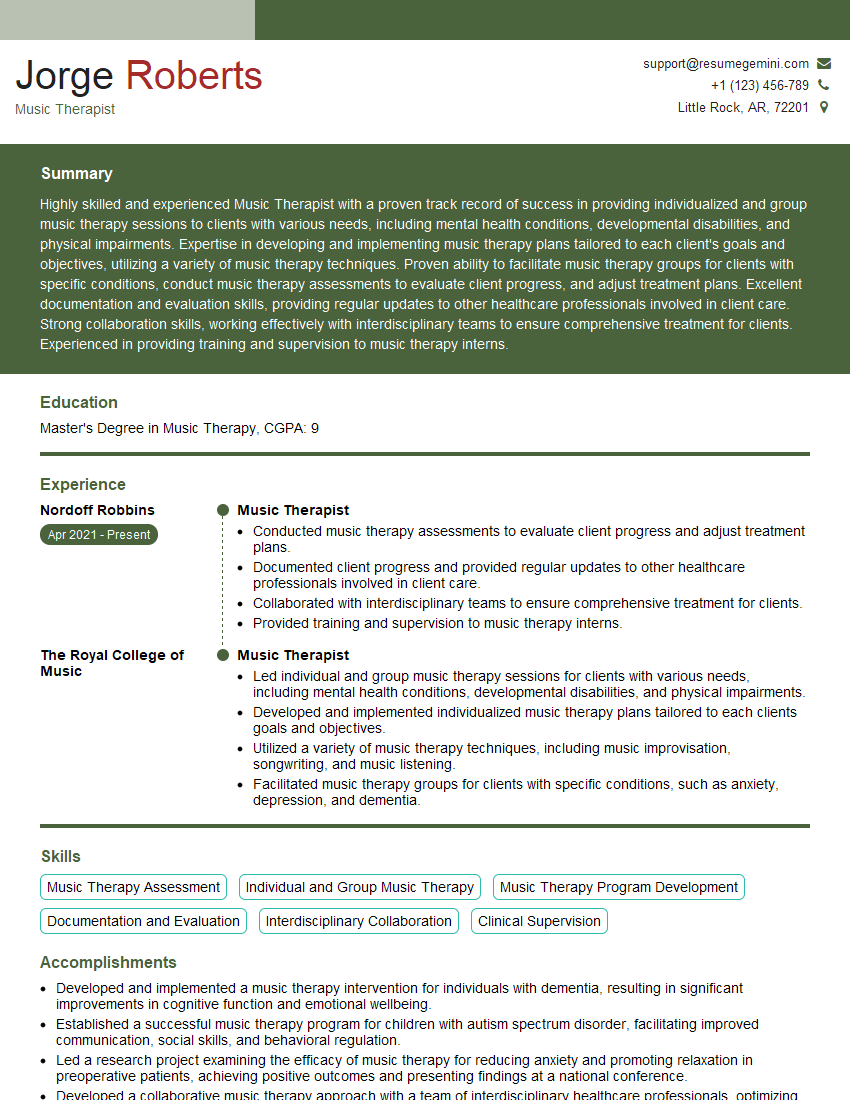
Mastering Music Therapy and Music for Healing principles is crucial for building a successful and fulfilling career. A strong understanding of these concepts will significantly enhance your interview performance and ultimately, your career prospects. To stand out from other applicants, creating an ATS-friendly resume is essential. This ensures your qualifications are easily recognized by applicant tracking systems used by many employers. ResumeGemini is a trusted resource that can help you build a professional and effective resume tailored to your specific skills and experience. Examples of resumes specifically tailored to Music Therapy and Music for Healing are available to guide you through the process. Take the next step and build a resume that truly reflects your capabilities and passions.
Explore more articles
Users Rating of Our Blogs
Share Your Experience
We value your feedback! Please rate our content and share your thoughts (optional).
What Readers Say About Our Blog
Very informative content, great job.
good