The right preparation can turn an interview into an opportunity to showcase your expertise. This guide to Ironing and steaming interview questions is your ultimate resource, providing key insights and tips to help you ace your responses and stand out as a top candidate.
Questions Asked in Ironing and steaming Interview
Q 1. What fabrics require steaming rather than ironing?
Steaming, unlike ironing, uses moist heat to gently relax fabric fibers and remove wrinkles. It’s the preferred method for delicate fabrics that can be easily damaged by the direct heat and pressure of an iron.
- Fabrics that benefit most from steaming: Silk, wool, velvet, lace, and other delicate materials. These fabrics are prone to scorching or losing their shape under the pressure of an iron.
- Why steaming is better: Steaming penetrates the fabric gently, releasing wrinkles without direct contact and high heat. This prevents damage and maintains the fabric’s texture and drape.
- Example: A silk blouse would be significantly better steamed than ironed. Ironing could easily lead to shiny patches or irreversible damage.
Q 2. How do you identify different fabric types before ironing/steaming?
Identifying fabric types before ironing or steaming is crucial to prevent damage. Several methods exist:
- Care labels: Always check the care label for specific instructions. These labels typically provide washing, drying, and ironing recommendations.
- Visual inspection: Examine the fabric’s texture, weave, and weight. Loosely woven fabrics, like linen, are generally more prone to wrinkling. Tightly woven fabrics, such as cotton poplin, are usually more resilient.
- Burn test (use with caution): As a last resort, a tiny, inconspicuous corner of the fabric can be gently held to a flame. The way it burns (melts, ignites, etc.) and the smell produced gives clues about its composition (though this is generally not recommended for valuable items).
- Touch test: The fabric’s texture offers valuable clues. Silk is smooth, wool is soft but dense, cotton is relatively coarse, and linen is crisp.
Example: A crisp, sturdy fabric likely indicates cotton, while a flowing, luxurious fabric might be silk or rayon, both requiring a gentler approach.
Q 3. Explain the process of ironing a delicate garment like silk.
Ironing silk requires a delicate touch and the right tools. Always use a low heat setting and a pressing cloth to protect the fabric from direct heat.
- Prepare the garment: Turn the silk garment inside out to prevent shiny patches. Ensure it is clean and slightly damp (a light spritz with water from a spray bottle is sufficient).
- Choose the right temperature: Set your iron to the lowest heat setting, ideally a silk setting if your iron offers one. Always test a small, inconspicuous area first.
- Use a pressing cloth: Place a thin, clean pressing cloth (such as a cotton handkerchief or a special pressing cloth) over the garment to prevent direct contact with the iron.
- Iron gently: Glide the iron smoothly and lightly over the fabric, using minimal pressure. Avoid any harsh back-and-forth motions, instead opting for a single stroke.
- Steam carefully: Steam can be helpful, but use it sparingly to avoid saturating the silk. A gentle steam setting is ideal.
- Hang to dry: After ironing, hang the garment on a padded hanger to allow it to cool and retain its shape.
Example: I once ironed a client’s delicate silk scarf by placing it between two pressing cloths and using a low-heat setting. The result was flawless, preserving both the vibrancy of the colours and the silk’s luxurious sheen.
Q 4. Describe your experience with different types of irons (e.g., steam, dry).
My experience encompasses various iron types, each with its strengths and weaknesses.
- Steam irons: These are my most frequently used tools. The steam function is essential for most fabrics, easing wrinkles and creases with minimal direct heat and pressure. Different steam irons vary in their steam output and tank capacity, affecting efficiency and duration of use. I prefer models with variable steam settings for better control.
- Dry irons: These are suited for fabrics that don’t respond well to steam, such as some synthetics or when pressing delicate fabrics without a pressing cloth (though this isn’t recommended for most fabrics).
- Steam generators: These high-end irons produce a powerful and constant stream of steam, making quick work of larger items like curtains or bedsheets. They are efficient for large-scale ironing, but are more expensive.
I have learned to adapt my techniques based on the iron’s capabilities, understanding that precise temperature control and even steam distribution are key factors.
Q 5. How do you adjust iron temperature for various fabrics?
Adjusting iron temperature is fundamental to preventing fabric damage. Most modern irons have fabric settings (cotton, linen, silk, etc.), but if not, understanding the relationship between temperature and fiber type is critical:
- High heat (cotton, linen): Sturdy fabrics that require higher temperatures for crease removal.
- Medium heat (wool, synthetics): Moderate heat is necessary to avoid scorching. Test on a less visible part first.
- Low heat (silk, rayon, delicate fabrics): These require the lowest heat settings to minimize risk of damage.
Example: For a linen shirt, I’d set the iron to the highest setting, while for a silk scarf, I’d use the lowest setting with a pressing cloth.
Q 6. What are the common problems encountered while ironing/steaming and how do you solve them?
Common ironing/steaming problems and their solutions:
- Shiny patches: Caused by too much heat or pressure, especially on synthetic materials. Solution: Use a lower heat, a pressing cloth, and gentle pressure. Avoid lingering in one spot.
- Wrinkles remain: Often caused by insufficient heat or moisture. Solution: Increase the temperature (if appropriate for the fabric), use more steam, or pre-treat stubborn wrinkles with a spray bottle.
- Scorch marks: Caused by excessive heat. Solution: Prevention is key. Always test a hidden area first and use a suitable temperature for the fabric.
- Water stains: Usually result from hard water in the iron. Solution: Clean your iron regularly, use distilled water, and ensure the iron is fully heated before steaming.
Q 7. How do you prevent scorching or burning fabrics while ironing?
Preventing scorching or burning is paramount. Here’s how:
- Always check the care label: This provides crucial information about appropriate ironing temperatures.
- Test a hidden area: Before ironing, test a small, inconspicuous area with your chosen temperature setting to ensure it won’t damage the fabric.
- Use a pressing cloth: This protects delicate fabrics from direct heat and pressure. It acts as a barrier, allowing the heat to distribute evenly without directly touching the garment.
- Iron at the correct temperature: Use a lower heat setting for delicate materials and a higher setting for sturdy fabrics.
- Don’t press too hard: Gentle pressure is usually sufficient; harsh pressure can damage fabrics.
- Keep the iron moving: Avoid leaving the iron in one spot, as this can lead to scorching.
By following these guidelines, you’ll greatly reduce the risk of damaging your garments.
Q 8. Describe your experience with industrial ironing equipment.
My experience with industrial ironing equipment spans over a decade, encompassing various types of machinery from smaller, commercial-grade steam presses to large-scale industrial flatwork ironers. I’ve worked extensively with both steam and dry iron systems, including those used in laundromats, dry cleaners, and even hospital linen services. This experience covers not only the operation but also the preventative maintenance and troubleshooting of these machines. For instance, I’m proficient in understanding the intricacies of boiler systems, pressure regulators, and various heating elements – crucial aspects of keeping industrial ironers running smoothly and efficiently. I’ve also dealt with different types of feeding mechanisms, from conveyor belts to manual loading systems. Understanding the specific demands of different fabrics and their suitability for various industrial ironing methods is a key part of my expertise.
One memorable project involved troubleshooting a malfunctioning industrial flatwork ironer in a large hotel. The machine was experiencing inconsistent heat distribution, resulting in unevenly ironed linens. Through systematic checks, I pinpointed the issue to a faulty steam valve, which I successfully replaced, restoring the machine’s functionality and saving the hotel considerable downtime and expense. This experience highlights my ability to diagnose problems and implement effective solutions in a high-pressure environment.
Q 9. How do you maintain the cleanliness of an iron and ironing board?
Maintaining a clean iron and ironing board is crucial for optimal performance and preventing damage to clothes. For the iron, the process starts after every use. First, unplug the iron and let it cool completely. Then, use a damp, soft cloth to wipe away any starch, soil, or burnt residue from the soleplate. Avoid abrasive cleaners or scouring pads, which can scratch the surface. For stubborn stains, a mixture of mild dish soap and water can be effective. For self-cleaning irons, utilize that function according to the manufacturer’s instructions. The water tank should be emptied and rinsed periodically to prevent mineral buildup which can lead to reduced steam output and even damage the heating element.
The ironing board requires regular cleaning as well. The cover should be regularly removed and washed according to the care instructions. The board itself can be wiped down with a damp cloth and mild soap. If it’s a padded board, ensure that the padding is adequately protected to avoid moisture damage and mildew.
Q 10. What safety precautions do you follow while using an iron and steamer?
Safety is paramount when working with irons and steamers. Always ensure the iron is unplugged when not in use and when filling or emptying the water reservoir. Never leave a hot iron unattended. Place it on its heel rest or a heat-resistant surface. Keep the cord away from hot surfaces and out of reach of children and pets. Avoid pulling the cord to unplug the iron; always grasp the plug itself. Always check the water level before use and never overfill the tank. When steaming, be mindful of the steam’s high temperature; keep a safe distance from the nozzle and avoid directing the steam towards your face or body. Also, make sure you know the care instructions for your garments – certain fabrics are more sensitive to steam than others.
In professional settings, regular safety checks on equipment, clear instructions for staff, and the implementation of designated work areas can further enhance safety practices. The use of heat resistant gloves can provide an added layer of protection.
Q 11. How do you handle stubborn wrinkles or creases?
Stubborn wrinkles require a multi-pronged approach. First, correctly identify the fabric; delicate fabrics need gentler treatment than durable materials like cotton. For persistent creases, try increasing the iron’s temperature (always within the fabric’s limits!). Another crucial step is to use plenty of steam – this helps to relax the fibers and release deep wrinkles. A damp pressing cloth can be employed for added moisture and protection for sensitive materials. For extremely stubborn creases, consider using a steam press instead of an iron, or using a spray bottle to lightly mist the fabric before ironing. The key is to work systematically, starting from the center of the wrinkle and carefully pressing outwards. If the wrinkle persists after repeated attempts, professional dry cleaning might be necessary.
Sometimes, the problem isn’t the ironing technique, but the ironing board itself. An uneven board might inadvertently cause creases. Ensuring a smooth and well-padded ironing surface is a critical factor to get rid of stubborn wrinkles.
Q 12. What are the best practices for steaming delicate fabrics?
Steaming delicate fabrics requires extra care. Always use a low temperature and a low-pressure steam setting. Test the heat on a hidden area of the garment first to prevent damage. Never iron directly on delicate fabrics; always place a pressing cloth between the iron and the garment. For especially sensitive fabrics like silk or lace, consider using a handheld garment steamer, which offers more precise control. Hold the steamer at a safe distance from the fabric and use gentle, sweeping motions. Avoid lingering in one area for too long, as this can lead to scorching. Always check the care label for specific instructions, and if unsure, hand steaming or dry cleaning is often the safest option.
An example of a delicate fabric that requires gentle steaming is silk. Overheating silk during steaming can result in irreversible damage such as shine marks or discoloration. The pressing cloth helps to safeguard the fibers and keep the steam from directly contacting the fabric.
Q 13. Explain your understanding of different types of steam irons.
Steam irons come in various types, each with unique features. The most basic type is the standard steam iron, which features a water reservoir and adjustable temperature settings. Dry irons offer only heat, with no steam function, and are mostly suitable for pressing certain materials that don’t respond well to moisture. Then, there are travel irons, compact and lightweight, ideal for portability. High-end models may feature advanced features like automatic shut-off, precise temperature controls, or even self-cleaning capabilities. Some irons include different steam settings, such as a shot of steam for quick wrinkle removal or a continuous stream of steam for even coverage. Finally, we also have garment steamers, which utilize steam without the pressing plate of a traditional iron, better suited for delicate garments.
Choosing the right type of steam iron depends on individual needs and frequency of use. A standard steam iron is suitable for most households, while a travel iron is ideal for those who frequently travel. Those who work with various fabrics might want a high-end model with variable temperature and steam control.
Q 14. Describe the appropriate techniques for ironing various garments (shirts, pants, dresses).
Ironing different garments requires different techniques. For shirts, start with the collar, ironing it flat and crisp. Then, move to the cuffs, followed by the sleeves. Iron each sleeve separately, starting from the inside and working your way out. Finally, iron the front and back panels, ensuring smooth transitions between sections. Pants require ironing each leg separately, beginning at the seams and working outwards. A crease is usually ironed down the center, so pay attention to keeping that line straight. For dresses, the approach depends on the style and fabric. Typically, start with the bodice, then the skirt, smoothing out any wrinkles. Delicate fabrics or embellishments may require specific attention, often using a pressing cloth or garment steamer.
Understanding the grain of the fabric is crucial when ironing. Ironing with the grain reduces wrinkles and maintains the garment’s shape. Always refer to the care label and choose appropriate settings for specific fabrics and colors to avoid damage or discoloration.
Q 15. How do you manage large volumes of laundry efficiently?
Managing large laundry volumes efficiently requires a systematic approach. Think of it like an assembly line, but for clothing. It’s all about optimizing workflow and utilizing the right tools.
- Pre-sorting: Categorizing laundry by fabric type (e.g., delicates, cottons, linens) and soil level is crucial. This allows for tailored ironing and steaming techniques and prevents damage.
- Teamwork and Specialization: Assigning team members specific tasks – pre-treatment, ironing, folding – streamlines the process and increases overall speed and accuracy. One person might specialize in delicate garments, while another tackles heavy linens.
- Efficient Equipment: Investing in industrial-grade irons, steamers, and pressing equipment significantly boosts productivity. Features like larger water tanks, variable steam settings, and ergonomic designs reduce fatigue and increase output.
- Process Optimization: Analyzing the workflow for bottlenecks and inefficiencies is vital. For example, if folding is slowing things down, you might add another folding station or train staff in faster techniques. Data tracking can identify where improvements are needed.
- Quality Control Checkpoints: Implementing checks throughout the process ensures quality. Regular inspections at different stages – after pre-treatment, after ironing, and before final folding – can catch mistakes early and save time.
For example, in my previous role, we implemented a color-coded system for sorting laundry, which decreased processing time by 15%.
Career Expert Tips:
- Ace those interviews! Prepare effectively by reviewing the Top 50 Most Common Interview Questions on ResumeGemini.
- Navigate your job search with confidence! Explore a wide range of Career Tips on ResumeGemini. Learn about common challenges and recommendations to overcome them.
- Craft the perfect resume! Master the Art of Resume Writing with ResumeGemini’s guide. Showcase your unique qualifications and achievements effectively.
- Don’t miss out on holiday savings! Build your dream resume with ResumeGemini’s ATS optimized templates.
Q 16. What is your experience with different types of steaming equipment?
My experience encompasses a wide range of steaming equipment, from small handheld steamers ideal for touch-ups to large industrial garment steamers used in commercial laundries. Each type has its strengths and weaknesses.
- Handheld Steamers: Excellent for quick wrinkle removal on smaller items or delicate fabrics. They are portable and convenient but have limited steam output and may not be suitable for large-scale operations.
- Professional Garment Steamers: These offer higher steam output, larger capacity boilers, and often include features like adjustable steam intensity and garment racks. They are more powerful and efficient than handheld models, better suited for bulk work.
- Industrial Steam Generators: These are the workhorses of large-scale operations. They provide consistent, high-pressure steam for continuous use, often connected to multiple ironing boards or pressing stations. They demand more specialized training due to their complexity and safety considerations.
I’ve worked extensively with all three types and can confidently adapt my techniques depending on the equipment available.
Q 17. Explain the difference between ironing and pressing.
While both ironing and pressing involve using heat to remove wrinkles, they differ significantly in technique and application.
- Ironing: This involves sliding the iron back and forth across the fabric, often using pressure to smooth out wrinkles. It’s suitable for most fabrics but requires more skill and can be time-consuming. Think of it as ‘smoothing’ the fabric.
- Pressing: This involves placing the fabric on a hard surface and applying pressure with the iron, usually in short bursts, without sliding the iron across the fabric. It’s ideal for creating crisp creases and sharp folds in items like shirts and trousers. Imagine it as ‘setting’ the fabric.
For instance, you would iron a casual shirt, but you would press a formal dress shirt to achieve a perfectly crisp collar and cuffs.
Q 18. How do you handle emergencies like iron malfunctions or spills?
Handling emergencies is crucial for maintaining efficiency and safety. My approach involves quick thinking and a methodical solution.
- Iron Malfunctions: If an iron malfunctions (e.g., leaks, overheating), immediately unplug it and assess the situation. Never attempt repairs yourself unless you’re qualified. Contact maintenance or replace the iron with a backup if necessary. Safety is paramount.
- Spills: Spills should be cleaned up immediately to avoid stains or damage to equipment. Use appropriate cleaning agents depending on the type of spill (water, starch, etc.). If it involves a significant spill or hazardous material, follow established safety protocols.
In one instance, a steam generator malfunctioned mid-shift. By quickly switching to backup equipment and re-organizing tasks, we minimized downtime and ensured we met our deadline.
Q 19. How do you maintain quality control in a large-scale ironing/steaming operation?
Maintaining quality control in a large-scale ironing/steaming operation is essential for customer satisfaction. I use a multi-pronged approach.
- Standardized Procedures: Implementing clear, documented procedures for each task ensures consistency across the team. This includes ironing techniques, steam settings for different fabrics, and folding methods.
- Regular Inspections: Regular spot checks throughout the process, performed by experienced personnel, identify any deviations from the standard procedure or quality issues. This prevents large batches of incorrectly processed laundry.
- Staff Training: Thorough and ongoing training keeps employees up-to-date on the latest techniques and quality standards. Regular refresher courses are vital.
- Feedback Mechanisms: Establishing a system for feedback – from team members, supervisors, or even customers – identifies areas for improvement. This could be a suggestion box or regular team meetings.
Using these methods, we can establish and maintain high quality and reduce costly rework.
Q 20. How would you train new employees on ironing and steaming techniques?
Training new employees involves a structured approach combining theory and hands-on practice.
- Safety First: Begin with safety training, emphasizing safe handling of equipment, and appropriate personal protective equipment (PPE) use.
- Theory and Demonstration: Explain the principles of ironing and steaming, different fabric types, and their specific needs (e.g., temperature, steam level). Demonstrate proper techniques using various items.
- Hands-on Practice: Supervised practice sessions allow employees to hone their skills under expert guidance. Start with simple items and gradually increase complexity.
- Feedback and Assessment: Provide regular feedback and conduct assessments to monitor progress and identify areas requiring further attention.
- Ongoing Mentorship: Pairing new employees with experienced staff for ongoing support and guidance ensures continuous skill improvement.
I believe in a supportive and encouraging learning environment where mistakes are seen as opportunities for learning.
Q 21. What is your experience with starching and other laundry finishing techniques?
Starching and other finishing techniques add a professional touch and enhance the appearance of garments. My experience covers a range of techniques.
- Starching: I’m proficient in applying different types of starch – liquid, spray, or powder – to achieve varying levels of stiffness and crispness. The correct starch type and application method depends on the fabric and desired outcome.
- Pressing Aids: I’m familiar with using pressing cloths, press mitts, and other aids to protect delicate fabrics during pressing and achieve a professional finish.
- Specialty Finishes: My experience also includes other finishing techniques like pleating, creasing, and specialized treatments for specific garments (e.g., tailored suits).
For example, I’ve used specialized starch to create crisp pleats in curtains or a subtle sheen on dress shirts, depending on the client’s requirements. The goal is always a flawless finish.
Q 22. How do you identify and address damage to clothing during ironing/steaming?
Identifying and addressing damage during ironing or steaming requires a keen eye and a gentle touch. Before I even begin, I always inspect the garment carefully. Look for any existing damage like tears, stains, loose seams, or delicate embellishments. These areas need special attention or may even require alternative cleaning methods.
Burns: A shiny, scorched mark indicates a burn. This is usually irreversible, but preventing further damage is key. I avoid applying further heat to the area and recommend a professional dry cleaner for potential repair.
Pressing marks: These are usually caused by too much pressure or heat. A gentle press with a lower temperature and less pressure can often mitigate these marks. Using a pressing cloth is crucial for preventing further damage.
Stretching or shrinking: Over-ironing can stretch or shrink fabrics, particularly knits and delicate materials. I always check the garment’s care label for specific instructions and work with a lower heat setting, always using a press cloth to protect the garment and prevent shine.
Embellishments: Beads, sequins, and embroidery require extra care. I either avoid ironing these areas altogether or use a pressing cloth and very low heat, lightly touching the surface to remove wrinkles. In some cases, steaming is a safer alternative.
Prevention is key! Always checking the care label, sorting items by fabric type, using the appropriate heat setting, and utilizing a pressing cloth are all crucial steps in minimizing ironing-related damage.
Q 23. Describe your experience working under pressure and meeting deadlines in a fast-paced environment.
I thrive in fast-paced environments. During my previous role at a high-end laundry service, we often faced last-minute rushes before major events like weddings or galas. Imagine receiving 50 formal dresses needing impeccable ironing within four hours – that’s a typical peak time scenario.
My strategy involves prioritizing tasks based on urgency and fabric type. I employ time management techniques like dividing the work into manageable chunks and focusing intensely on each task. I utilize the team effectively, delegating simpler tasks while focusing on complex pieces that demand my expertise. Communication is critical; I keep the team informed about progress and potential delays, ensuring transparency and allowing us to adapt quickly to changing priorities. I’ve consistently met all deadlines, even under significant pressure, through efficient planning and a proactive approach.
Q 24. What are the different types of ironing boards and their advantages/disadvantages?
Ironing boards come in various designs, each with its own pros and cons:
Standard Ironing Board: This is the most common type, usually featuring a padded surface and foldable legs. Advantages: Affordable, readily available, and easily stored. Disadvantages: Can be less stable than other options, may lack features for specialized ironing.
Professional Ironing Board: These offer a larger ironing surface, more stable construction, and often include features like a built-in sleeve board. Advantages: Better stability and larger workspace for larger items. Disadvantages: More expensive and typically bulkier for storage.
Compact Ironing Board: Designed for small spaces, these boards fold down to a very small size. Advantages: Easy storage, space-saving. Disadvantages: Smaller ironing surface, may feel less stable during use.
Ironing Table: A dedicated stand-alone ironing surface, often found in professional settings. Advantages: Maximum stability, generous ironing area. Disadvantages: Takes up significant space, expensive.
The ideal ironing board depends entirely on the ironing needs and available space. For home use, a standard board often suffices, but a professional or compact board can be advantageous depending on the volume and type of clothing being ironed.
Q 25. How do you organize and prioritize your workload during peak times?
During peak times, organization and prioritization are crucial. My approach is a combination of strategic planning and flexible adaptation. I begin by reviewing all incoming items, categorizing them by fabric type, urgency, and complexity.
I then prioritize based on deadlines and client needs. Items with immediate deadlines or specific client requests are tackled first. I batch similar items together to improve efficiency – all cotton shirts together, all silk blouses, etc. I also delegate tasks appropriately, utilizing the team’s strengths to optimize productivity. Throughout the process, I maintain a system for tracking progress, and I communicate transparently with colleagues to ensure coordination and avoid bottlenecks.
Q 26. Describe a time you had to troubleshoot a problem related to ironing/steaming equipment.
I once encountered a situation where our industrial steamer malfunctioned mid-rush. The steam output was drastically reduced, slowing down the entire process. Instead of panicking, I immediately assessed the problem. I checked the water level, inspected the power cord, and examined the steam control valve. The issue turned out to be a clogged mineral deposit in the steam vent.
My solution was a quick yet effective one. I followed the manufacturer’s instructions for descaling the unit using a mixture of vinegar and water. After a thorough cleaning, the steamer worked flawlessly. This experience taught me the importance of understanding my equipment and having the problem-solving skills to address unexpected technical issues efficiently.
Q 27. What is your understanding of different types of fabric finishes and their impact on ironing?
Understanding fabric finishes is essential for effective ironing. Different finishes affect how a fabric responds to heat and moisture.
Cotton: A natural fiber that can withstand higher heat. Ironing cotton usually requires a high heat setting and moisture.
Linen: Similar to cotton, linen can tolerate high heat but may require a damp cloth for best results. Its natural texture means wrinkles may not entirely disappear.
Silk: A delicate fabric that requires low heat and a pressing cloth. Never iron silk directly.
Wool: This fabric is best steamed, or ironed at a low temperature with a pressing cloth to prevent damage or shine.
Synthetic Fabrics (Polyester, Nylon, etc.): These are generally ironed on low heat. High heat can melt or cause damage. A pressing cloth is recommended.
Understanding these differences is vital to achieving a professional finish without damaging the garment. Always check the garment’s care label for specific instructions.
Q 28. How do you ensure the longevity and quality of fabrics through proper ironing and steaming techniques?
Proper ironing and steaming techniques are critical for maintaining the longevity and quality of fabrics. Using the correct heat setting, avoiding excessive pressure, and using a pressing cloth when necessary are essential steps. For example, ironing delicate fabrics like silk directly with high heat will likely lead to irreversible damage – always check the care label and use a low heat setting and a press cloth. Similarly, using too much pressure can cause stretching or sheen on certain fabrics.
Steaming is a gentler alternative for many fabrics, helping to refresh garments and remove wrinkles without the direct heat of ironing. Steaming can be especially beneficial for delicate fabrics, reducing the risk of damage. Storing clothes properly, away from direct sunlight and moisture, also plays a role in preserving their quality. Ultimately, a combination of correct ironing/steaming techniques and careful storage habits will significantly extend the life of your clothes.
Key Topics to Learn for Ironing and Steaming Interview
- Fabric Types and Properties: Understanding different fabric compositions (cotton, linen, silk, synthetics) and their specific ironing and steaming requirements. This includes knowing how heat and moisture affect various fabrics.
- Ironing Techniques: Mastering techniques for various garments (shirts, blouses, trousers, dresses), including proper pressure, temperature control, and ironing direction to avoid creases and damage.
- Steaming Techniques: Understanding the benefits of steaming versus ironing, and mastering techniques for removing wrinkles and refreshing garments using a steamer. This includes knowing how to use different types of steamers (handheld, garment steamers).
- Equipment Operation and Maintenance: Safe and efficient use of irons and steamers, including understanding different features (temperature settings, steam settings, auto-shutoff), and performing basic maintenance (cleaning, descaling).
- Stain Removal and Pre-Treatment: Knowledge of basic stain removal techniques relevant to ironing and steaming, and understanding when pre-treatment is necessary to prevent setting stains.
- Health and Safety: Safe handling of hot equipment, proper posture to avoid injury, and understanding workplace safety guidelines related to ironing and steaming.
- Quality Control and Inspection: Developing a keen eye for detail to ensure garments are flawlessly ironed and steamed, meeting high standards of quality and presentation.
- Problem-Solving: Identifying and resolving common ironing and steaming problems (e.g., scorch marks, creases, uneven steaming), and knowing when to seek assistance.
Next Steps
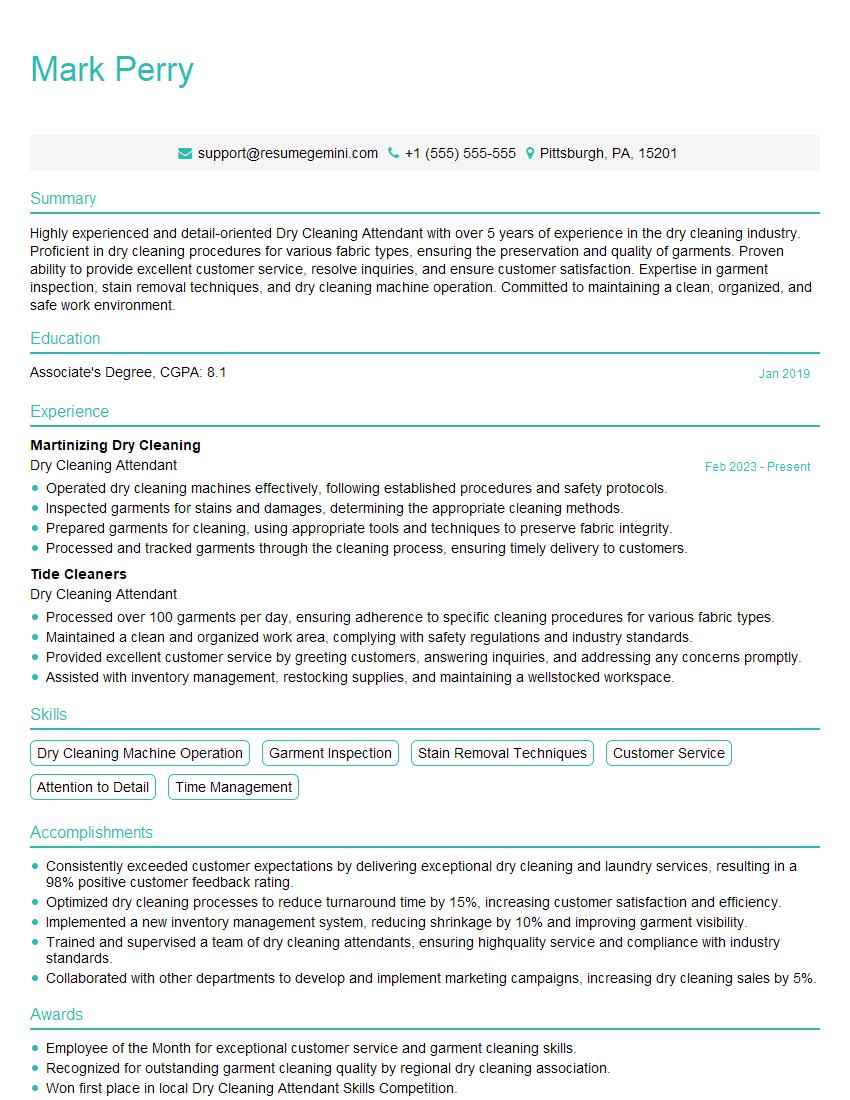
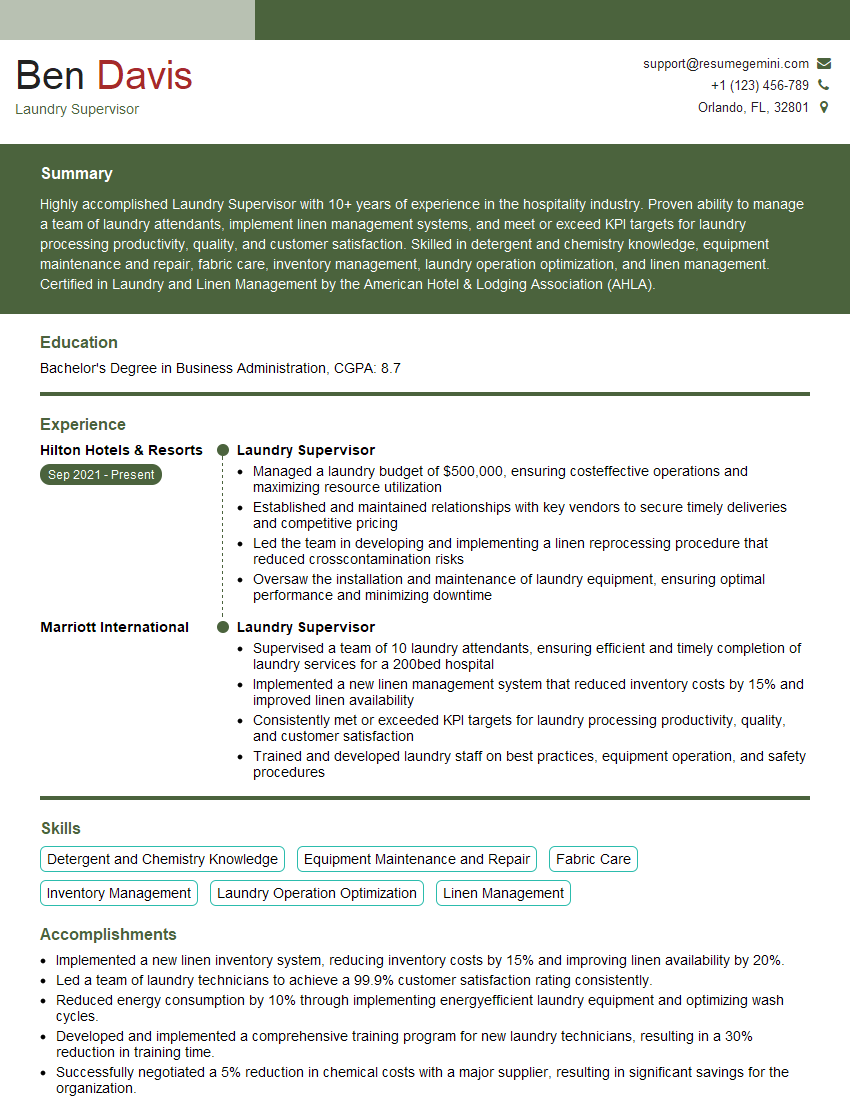
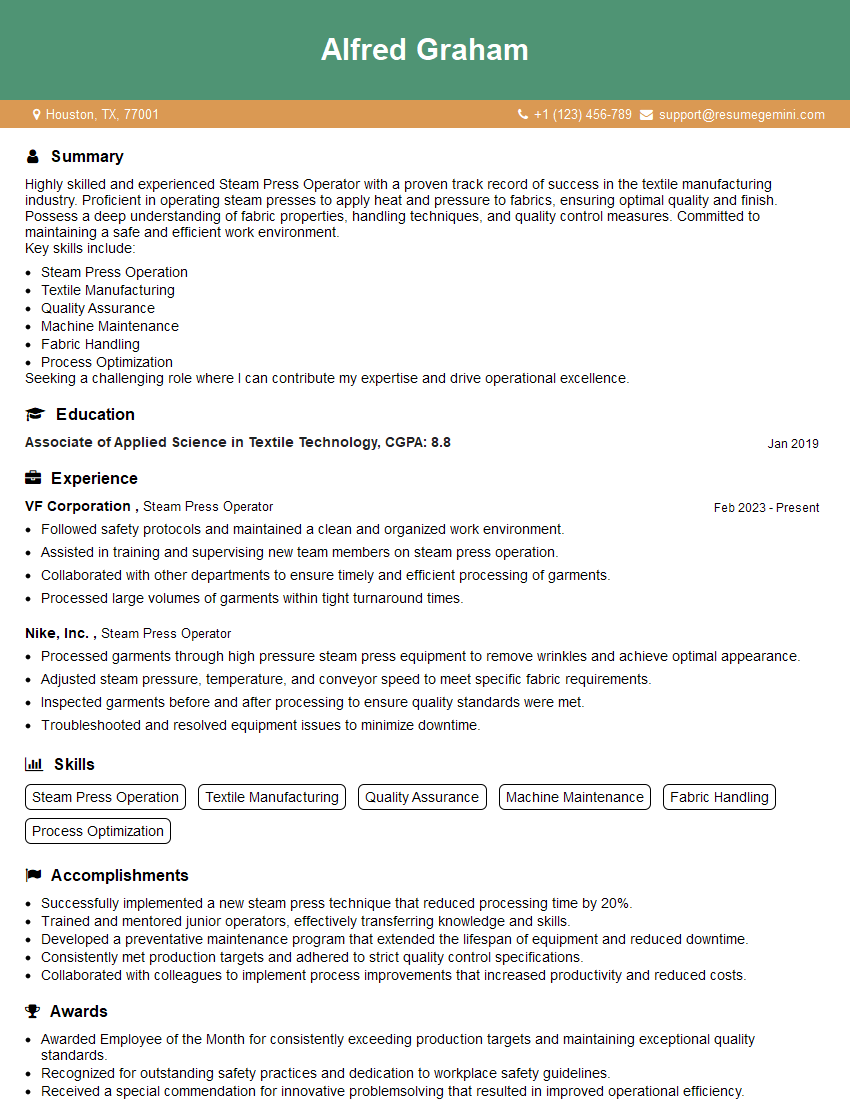
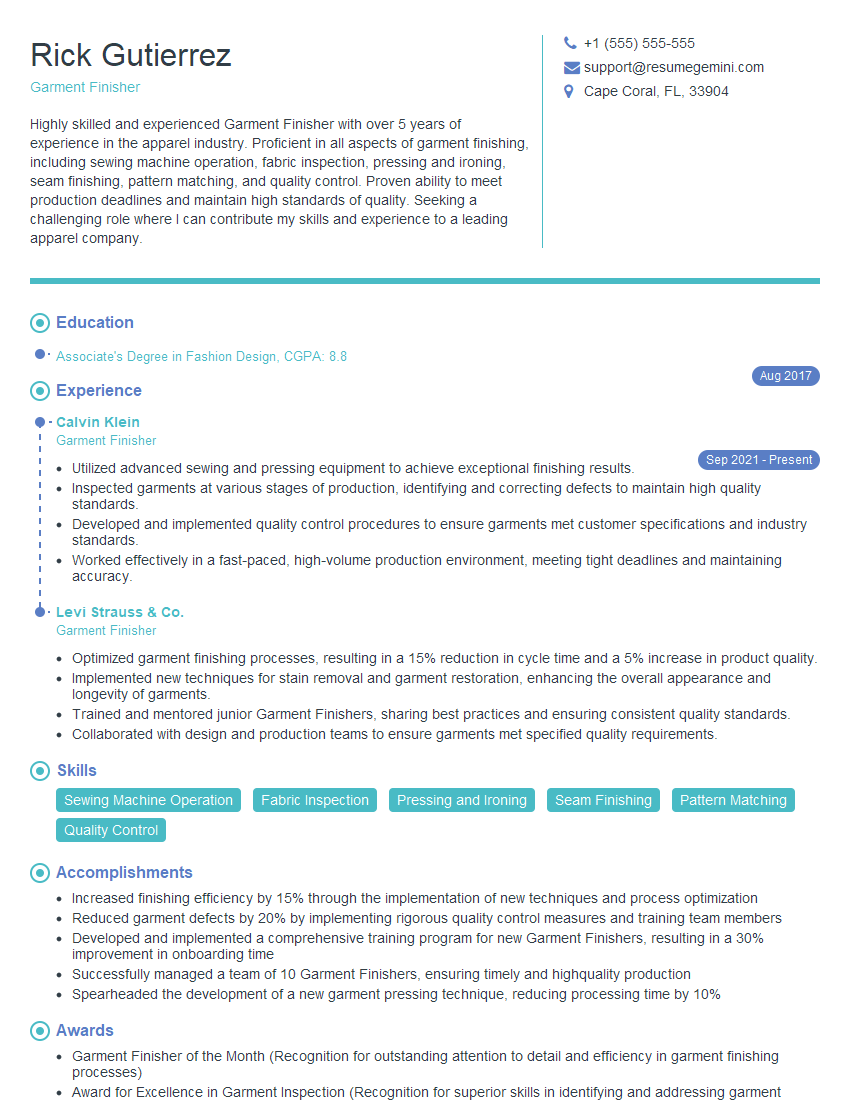
Mastering ironing and steaming techniques opens doors to various opportunities in the hospitality, laundry, and fashion industries. A strong foundation in these skills showcases attention to detail, precision, and a commitment to quality – highly valued attributes in many professional settings. To enhance your job prospects, creating an ATS-friendly resume is crucial. ResumeGemini is a trusted resource that can help you build a professional and impactful resume that gets noticed by recruiters. Examples of resumes tailored to the Ironing and Steaming field are available to help guide your resume creation process.
Explore more articles
Users Rating of Our Blogs
Share Your Experience
We value your feedback! Please rate our content and share your thoughts (optional).
What Readers Say About Our Blog
Very informative content, great job.
good