The thought of an interview can be nerve-wracking, but the right preparation can make all the difference. Explore this comprehensive guide to Roping and Wrangling interview questions and gain the confidence you need to showcase your abilities and secure the role.
Questions Asked in Roping and Wrangling Interview
Q 1. Describe the different types of ropes used in roping and their applications.
Roping utilizes various ropes, each suited for specific tasks. The choice depends on the animal being roped, the terrain, and the roping style.
- Manila Rope: A classic, strong, and durable natural fiber rope. Its relative stiffness makes it excellent for durability in demanding situations but can be less flexible than others. Ideal for cattle roping and general ranch work.
- Polypropylene Rope: A synthetic rope known for its lightness, buoyancy (important around water), and resistance to rot and mildew. It’s less strong than manila but more flexible, often used in team roping or when a lighter rope is needed.
- Nylon Rope: A strong, versatile synthetic rope that stretches less than polypropylene. It offers a good balance of strength, flexibility, and durability, making it suitable for various applications, including calf roping.
- Braided Nylon Rope: A smoother, more refined version of nylon rope, offering increased flexibility and less friction, making it ideal for fast-paced roping events and minimizing wear on the hands and horse.
The diameter of the rope is also crucial. Thicker ropes are more durable but less flexible, while thinner ropes offer greater maneuverability but may break more easily under stress. Experience dictates the ideal rope selection for each situation.
Q 2. Explain the proper techniques for throwing a lasso.
Throwing a lasso effectively involves a combination of technique, practice, and feel. Here’s a breakdown:
- The Dally: Begin by holding the rope in your preferred hand, forming a loop with the appropriate size. The loop should be smooth and even. This loop is your dally (the part of the rope that will capture the animal).
- The Swing: Using a smooth, circular motion, swing the rope overhead, maintaining a consistent speed and rhythm. The goal is to create a consistent arc; a wobbly swing is inconsistent.
- The Release: At the optimal point in your swing, release the dally, allowing the loop to extend out. The timing of this release is crucial. A premature release will result in an un-successful cast, while a late release may result in a poor loop formation.
- The Follow-Through: After releasing, continue your follow-through. This isn’t a forceful motion but a continuation of your smooth swing, ensuring accuracy.
- Practice: The only way to truly master this technique is through persistent practice. Start with practicing the swing alone, aiming for consistency. Then incorporate releasing the loop, focusing on timing and accuracy.
Remember, accuracy and consistency are key. Begin with smaller targets before progressing to larger ones. A calm, controlled approach is paramount.
Q 3. How do you handle a spooked or aggressive animal during roping?
Handling a spooked or aggressive animal during roping demands caution and skill. Your primary goal is to keep yourself, the animal, and your horse safe.
- Assess the Situation: Remain calm and observe the animal’s behavior to understand its level of agitation. Is it just startled, or is it actively aggressive?
- Maintain Distance: Create space to avoid provoking the animal further. A spooked animal needs room to calm down.
- Communicate Calmly: Use soft tones and slow, deliberate movements to reassure the animal, if possible. Avoid sudden motions or loud noises.
- Strategic Approach: If possible, try to maneuver the animal into an area with more barriers or a more contained space. This limits its movement and reduces stress on both animal and handler.
- Seek Assistance: If the situation escalates and you feel unsafe, do not hesitate to call for assistance from experienced handlers or professionals.
In some cases, it’s best to simply back away and wait for the animal to settle, rather than risk further confrontation. Knowing when to disengage is a crucial skill in roping.
Q 4. What safety precautions do you take while roping?
Safety is paramount in roping. Neglecting safety can lead to serious injury for both the handler and the animal.
- Proper Equipment: Ensure your rope, saddle, and chaps are in good condition and appropriately fitted. Regular inspections are crucial.
- Protective Gear: Always wear a helmet, gloves, and sturdy boots to minimize potential injuries. Chaps offer leg protection.
- Horse Handling: A well-trained, calm horse is essential. Poor horse control dramatically increases the risk of accidents.
- Awareness of Surroundings: Be aware of your surroundings, and those of the animal. Avoid obstacles and ensure sufficient space for safe maneuvers.
- Controlled Movements: Maintain smooth, deliberate movements. Avoid jerky or sudden actions that could startle the animal or cause a loss of balance.
Regular training and practice are key for building muscle memory and confidence. A calm, deliberate approach to the sport is paramount.
Q 5. Describe your experience with various roping styles (e.g., heel roping, team roping).
My roping experience encompasses various styles, each presenting unique challenges and rewards.
- Heel Roping: I have extensive experience in heel roping, specializing in accurate and swift lassoing of the animal’s hind legs. This style demands precise timing, a steady hand, and excellent horse control.
- Team Roping: I’ve actively participated in team roping events, mastering both the header (lassoing the animal’s horns or head) and heeler (lassoing the hind legs) roles. Teamwork and communication are vital in this dynamic, fast-paced discipline.
- Calf Roping: I’m proficient in calf roping, which involves tackling a young calf with speed and precision. This demands quick reflexes and a deep understanding of the calf’s movements.
Through years of practice and competition, I’ve refined my techniques in each style and consistently strive to improve my skills, adapting my approach based on the specific event and animal.
Q 6. How do you maintain and care for your roping equipment?
Proper maintenance extends the lifespan of your roping equipment and ensures optimal performance.
- Rope Care: After each use, thoroughly clean your rope to remove dirt and debris. Avoid leaving it exposed to direct sunlight or moisture. Regular inspection for fraying or damage is crucial. A well-maintained rope performs reliably.
- Saddle and Tack Care: Clean and condition your saddle and tack regularly. Regularly check the leather for cracking or wear, and oil it to maintain its suppleness and durability.
- Storage: Store your equipment in a cool, dry place, away from direct sunlight and extreme temperatures. Proper storage minimizes wear and tear.
Investing time in equipment maintenance not only saves money in the long run but also ensures safety and consistency in your roping.
Q 7. Explain the importance of horse handling skills in roping.
Horse handling is inextricably linked to successful roping; the horse is your partner, and their skills and temperament directly impact your ability to rope effectively.
- Responsiveness: A well-trained horse responds instantly to subtle cues, turning and stopping precisely as needed. This allows for smooth and controlled maneuvers, crucial for accuracy in roping.
- Calmness: A calm and collected horse is essential for handling agitated animals. An anxious horse can transfer its anxiety to the roper, resulting in mistakes.
- Strength and Stamina: The horse needs strength and stamina for the physical demands of roping, whether it’s the quick turns or holding a struggling animal.
- Trust and Partnership: Building a strong relationship of trust and partnership with your horse is fundamental. This fosters a natural rhythm and enhances both performance and safety.
Without solid horse handling skills, roping becomes significantly more difficult, increasing both the chance of error and the risk of injury.
Q 8. Describe your experience with different breeds of horses used in roping.
Many breeds excel in roping, each with strengths and weaknesses. Quarter Horses are incredibly popular due to their athleticism, quick reflexes, and cow sense – an innate ability to understand and anticipate cattle movements. Their compact build and powerful hindquarters provide the explosive power needed for quick stops and turns. Appaloosas, known for their distinctive coats, also make excellent roping horses, offering a good combination of speed, agility, and stamina. Some prefer Paints for their versatility and athleticism. Ultimately, the best breed is subjective and depends on the individual horse’s training and temperament, rather than solely on breed characteristics. For example, I’ve worked with a phenomenal roping horse that was a mixed breed – a testament to the fact that a horse’s suitability isn’t defined by its lineage alone.
Q 9. How do you assess the temperament and suitability of a horse for roping?
Assessing a horse’s suitability for roping requires a holistic approach. Temperament is paramount. A good roping horse needs to be calm, responsive, and willing to work cooperatively. Signs of a suitable temperament include a calm demeanor when approached, a willingness to take direction, and a lack of nervousness around cattle. I look for responsiveness to subtle cues – a horse that anticipates my movements, rather than reacting slowly, will be much more effective. Physical attributes are equally important; a horse needs soundness, a strong back, and athleticism. I’ll evaluate their gait, their ability to stop and turn quickly, and their overall fitness. I’ll also assess their cow sense – do they naturally pay attention to the cattle? Do they exhibit an interest in following and working with them? A successful roping horse is a partnership forged from mutual respect and understanding.
Q 10. How do you respond to a missed throw or a failed roping attempt?
A missed throw or failed roping attempt is a learning opportunity, not a failure. My immediate response is to assess the situation: Was it a problem with my throw, my horse’s positioning, or the cattle’s movement? I’ll calmly reset, reposition my horse, and analyze what went wrong. I may adjust my technique or approach based on the factors contributing to the miss. For example, if the horse wasn’t positioned correctly, I’ll practice specific maneuvers to improve our coordination. Open communication and patience are key. I’ll reinforce positive behavior from my horse with praise and reward. I’ll also analyze the cattle’s behavior – understanding their movements is vital to anticipation and a successful throw. It’s important not to let frustration affect my approach. Consistency and a focus on incremental improvement are the keys to success.
Q 11. What are the signs of an injured animal, and how would you respond?
Recognizing signs of injury in an animal is crucial for their well-being. Obvious signs include visible wounds, lameness (limping), unusual behavior (restlessness, reluctance to move), excessive panting, or unusual swelling. Less obvious signs might include changes in appetite or demeanor. My immediate response to a suspected injury is to prioritize safety, both for the animal and myself. If the injury is minor, I’ll assess the situation and provide immediate first aid if needed, such as cleaning a minor wound. For more serious injuries, I’ll immediately contact a veterinarian. The key is to act calmly and efficiently, prioritizing the animal’s comfort and minimizing further stress or injury. Prevention is always better than cure – ensuring proper handling techniques and appropriate equipment is crucial to minimizing the risk of injury.
Q 12. Describe your experience working with cattle, horses, and other livestock.
My experience with cattle, horses, and other livestock spans decades. I’ve worked extensively with various cattle breeds, understanding their individual temperaments and herd dynamics. This experience has taught me the importance of patience, observation, and understanding animal behavior. My work with horses goes beyond roping; I’ve trained horses for various disciplines, developing a deep understanding of their training, care, and well-being. I’ve also worked with other livestock, such as sheep and goats, gaining a broader perspective on animal husbandry. This diverse experience has given me a well-rounded understanding of animal behavior and handling, which is crucial for both safety and effective work.
Q 13. How do you ensure the safety and well-being of animals during roping?
Ensuring the safety and well-being of animals during roping is my top priority. This starts with proper training and handling techniques – both for the horses and myself. Using appropriate equipment, including well-maintained ropes and saddles, is crucial. I always prioritize the animal’s comfort and avoid aggressive or forceful actions. I carefully observe the cattle’s reactions, ensuring they are not stressed or frightened. Regular health checks for both horses and cattle are a must. I believe in fostering a calm and respectful atmosphere during roping, minimizing stress and potential harm. Knowing when to stop and reassess the situation is important for maintaining a safe and positive environment.
Q 14. How do you handle difficult or unpredictable situations during roping?
Difficult or unpredictable situations require calm, decisive action. This might involve a spooked horse, a stubborn steer, or unexpected weather changes. My approach involves assessing the situation quickly, prioritizing safety, and adapting my techniques accordingly. For instance, if a horse gets spooked, I’ll calmly regain control, using soothing techniques and positive reinforcement. If a steer is particularly resistant, I’ll adjust my roping technique to account for its behavior without causing unnecessary stress or injury. Experience and a thorough understanding of animal behavior are essential in navigating these challenges. Maintaining composure is crucial in maintaining control and ensuring everyone’s safety.
Q 15. What is your experience with livestock sorting and handling?
Livestock sorting and handling is fundamental to responsible animal management. It involves skillfully separating individual animals or groups from a larger herd based on various criteria, such as age, sex, health, or intended purpose (e.g., sale, breeding, veterinary treatment). This requires a keen understanding of animal behavior, patience, and the ability to use appropriate equipment safely and effectively.
My experience includes working with various livestock including cattle, sheep, and goats. For example, I’ve sorted calves from a herd of 200 using a combination of low-stress handling techniques and strategically placed panels to gently guide them into a separate pen. This involved anticipating their movements, using subtle body language cues, and avoiding any sudden or forceful actions that might cause stress or injury.
In another instance, I helped sort sheep for shearing based on their fleece quality, utilizing a combination of herding dogs and well-placed gates to direct the animals smoothly and efficiently. Effective sorting minimizes stress on the animals, improves the efficiency of the operation, and enhances overall animal welfare.
Career Expert Tips:
- Ace those interviews! Prepare effectively by reviewing the Top 50 Most Common Interview Questions on ResumeGemini.
- Navigate your job search with confidence! Explore a wide range of Career Tips on ResumeGemini. Learn about common challenges and recommendations to overcome them.
- Craft the perfect resume! Master the Art of Resume Writing with ResumeGemini’s guide. Showcase your unique qualifications and achievements effectively.
- Don’t miss out on holiday savings! Build your dream resume with ResumeGemini’s ATS optimized templates.
Q 16. How do you manage a large herd of animals?
Managing a large herd necessitates a proactive and well-planned approach. It’s not just about keeping them together; it’s about ensuring their well-being, safety, and productivity. This involves several key aspects:
- Strategic Grazing Management: Rotating pastures to prevent overgrazing and maintain forage quality is vital. This also helps minimize the risk of parasites and soil erosion.
- Health Monitoring: Regular checks for illness, injury, or parasite infestations are crucial. Early detection allows for prompt treatment and prevents larger outbreaks.
- Water Availability: Ensuring a consistent supply of clean and fresh water is non-negotiable. Multiple water sources might be needed for larger herds.
- Supplementary Feeding: Providing supplemental feed, particularly during periods of drought or harsh weather, ensures optimal animal health and performance.
- Safe Handling Techniques: Employing low-stress handling techniques, including proper use of equipment and understanding of animal behavior, reduces stress and injuries to both animals and handlers.
For instance, I once managed a herd of 500 cattle across a large ranch. We implemented a rotational grazing system, which ensured sufficient forage for all animals. We regularly monitored the health of the herd, promptly addressing any health issues and implementing preventative measures.
Q 17. Describe your experience with different types of livestock handling equipment.
My experience encompasses a wide range of livestock handling equipment, from basic to specialized tools. This includes:
- Panels and Gates: Essential for creating temporary holding areas, directing animal flow, and safely separating animals.
- Sorting Systems: These can range from simple chutes to automated systems that use scales and electronic identification to efficiently separate animals based on weight, breed, etc.
- Roping Equipment: I am proficient in using various types of ropes and saddles, including reata ropes and specialized roping saddles, tailored for specific roping styles.
- Herding Dogs: Skilled herding dogs are invaluable for controlling and moving large herds with minimal stress.
- Loading Chutes and Trailers: Safe and efficient loading and transport of livestock require appropriate equipment and handling techniques.
For example, I’ve extensively used curved chutes with quiet gates to minimize stress during cattle processing, and I’m skilled in using different types of ropes for different livestock and situations, understanding when a heavier rope is needed versus a lighter one.
Q 18. What is your knowledge of animal behavior and how it affects roping techniques?
Understanding animal behavior is paramount to successful roping and wrangling. Animals react differently based on factors such as breed, temperament, age, and past experiences. This knowledge directly informs my roping techniques.
For instance, a nervous or flighty animal might require a gentler approach, with slower movements and less aggressive roping techniques. In contrast, a dominant or aggressive animal may require a more assertive, but still controlled, technique to maintain control without causing undue stress or injury. Recognizing body language cues – such as tail swishing, ear position, and overall posture – allows me to anticipate their reactions and adjust my approach accordingly.
Understanding flight zones and pressure points is also crucial. The flight zone is the animal’s personal space; encroaching too closely can trigger a flight response. Applying pressure strategically to guide the animal’s movements, rather than directly confronting it, is a key to safe and efficient handling.
Q 19. How do you train a horse for roping?
Training a horse for roping is a gradual process requiring patience, consistency, and positive reinforcement. It builds upon the horse’s existing training and focuses on developing specific skills crucial for roping.
The process typically starts with groundwork, focusing on responsiveness to commands like ‘whoa,’ ‘back,’ and ‘go.’ This establishes a strong communication foundation. Next, the horse is introduced to the roping dummy, gradually desensitizing it to the motion and feel of the rope. Then, the rider practices controlled maneuvers, such as circling, stopping, and backing up under the control of reins and leg cues, simulating the movements required during roping.
The training incorporates the use of positive reinforcement – rewarding the horse with praise and treats for desired behavior. Gradually, the horse learns to associate specific cues with desired actions. Safety is always paramount; training sessions should be short, engaging, and end on a positive note to maintain the horse’s motivation and prevent any negative associations.
Q 20. What is your experience with rodeo competition?
I have participated in various rodeo competitions throughout my career, competing in both team roping and tie-down roping. I’ve consistently placed well in local and regional events. Competition sharpens skills, promotes consistency, and builds confidence in handling livestock under pressure. It also fosters camaraderie within the roping community.
My experience includes successfully navigating challenging scenarios in high-pressure settings, adapting strategies as needed. For example, I’ve had to adjust my roping technique in response to unexpected animal movements or environmental conditions. This experience has honed my ability to maintain composure under pressure, a crucial skill in any high-stakes endeavor.
Q 21. Describe your knowledge of rodeo rules and regulations.
Rodeo rules and regulations vary depending on the sanctioning body (e.g., PRCA, USTRC), but there are common themes focused on safety, animal welfare, and fair competition. These regulations cover various aspects including:
- Animal Handling: Rules dictate acceptable roping techniques to ensure the safety and well-being of the livestock. Rough handling or causing undue stress to animals results in penalties.
- Equipment Specifications: Specific rules govern the type and condition of ropes, saddles, and other equipment used in competition.
- Competition Procedures: Rules outline the procedures for each event, including the timing, scoring, and disqualification criteria.
- Safety Regulations: Regulations emphasize safety measures for both competitors and animals. This includes requirements for protective gear and appropriate handling procedures.
Understanding these rules is crucial for fair competition and safety. In my experience, strict adherence to regulations is essential, and a thorough knowledge of the specific rules governing a given event is paramount for success and respect within the community.
Q 22. How do you maintain a positive and productive work environment?
Maintaining a positive and productive work environment in roping and wrangling relies heavily on clear communication, mutual respect, and a shared understanding of safety protocols. Think of it like a well-oiled machine – each part needs to function smoothly for optimal performance.
- Open Communication: Regularly checking in with my team, addressing concerns promptly, and ensuring everyone feels comfortable voicing their opinions are crucial. For example, if a new technique is being introduced, I’ll explain its benefits and answer any questions to prevent misunderstandings.
- Safety First: Prioritizing safety is paramount. This involves regular equipment checks, clear instructions on procedures (like proper cattle handling techniques), and immediate responses to any safety concerns. If someone isn’t comfortable with a task, we find a way to adapt the approach.
- Teamwork & Collaboration: Roping and wrangling often involve quick thinking and coordination. Team building exercises and regular debriefs after challenging events can strengthen collaboration and mutual understanding. Celebrating successes together also boosts morale.
- Respectful Environment: Treating everyone with respect, regardless of their experience level, is key to fostering a positive atmosphere. Recognizing individual contributions, both big and small, reinforces the value of each team member’s role.
Q 23. How do you adapt to changes in work conditions or demands?
Adapting to changes in roping and wrangling is essential, as weather, livestock behavior, and client needs can fluctuate. It’s like navigating a river – you need to adjust your course constantly to avoid obstacles.
- Flexibility: I’m comfortable adjusting my plans based on the situation. For instance, if a storm rolls in during a cattle drive, I’ll immediately seek shelter and reassess the situation to ensure the safety of the livestock and my team.
- Problem-Solving: Unforeseen events require creative solutions. Maybe a rope breaks mid-roping – I need to quickly assess the situation, improvise with available resources, and ensure the animal is safely secured.
- Continuous Learning: Staying updated on best practices in livestock handling and roping techniques is crucial. Attending workshops, reading industry publications, and learning from experienced colleagues helps me adapt to new methods and technologies.
- Positive Attitude: Approaching changes with a positive and proactive mindset helps to navigate unexpected challenges effectively. Instead of viewing change as an obstacle, I see it as an opportunity for growth and improvement.
Q 24. Describe your problem-solving skills in relation to roping and livestock management.
Problem-solving in roping and livestock management is a blend of practical skills, critical thinking, and quick decision-making. It’s about reading the situation, assessing risks, and executing the most effective solution.
- Analyzing the Situation: Before reacting, I carefully assess the situation. Is the animal agitated? What is the terrain like? What are the potential risks? For example, if a cow is stuck in a muddy ditch, I wouldn’t just try to pull it out; I’d first determine the best way to approach it, minimizing stress on the animal and ensuring my own safety.
- Developing Strategies: Based on my assessment, I develop a plan of action. This could involve using different roping techniques, calling for assistance, or utilizing specific equipment. If a horse is spooked, my strategy might involve calming it down before attempting to rope it.
- Execution and Adaptation: I execute my plan, but remain flexible enough to adapt if necessary. Livestock are unpredictable; the original plan might need to change based on their reactions. I might need to switch techniques or call for backup.
- Post-Event Review: After the event, I reflect on what worked well and what could be improved. This continuous learning process enhances my problem-solving skills over time. This is like a post-game analysis in sports: what did we do well, what could we have done better?
Q 25. How do you work effectively as part of a team?
Effective teamwork is the backbone of successful roping and wrangling operations. It’s about clear communication, trust, and mutual respect. Imagine a finely tuned orchestra – each musician plays their part, but the beauty lies in the harmonious blend.
- Clear Communication: Before any operation, clear instructions are essential. Everyone needs to understand their roles and responsibilities. Using hand signals and clear verbal cues is crucial in noisy environments.
- Trust and Support: Trusting my teammates to do their job efficiently and supporting them when needed is vital. Knowing that my colleagues have my back builds confidence and increases overall effectiveness.
- Shared Responsibility: We share the workload and responsibilities, ensuring that no one is overburdened. If one person is struggling, the team steps in to assist. This promotes a sense of camaraderie and shared success.
- Constructive Feedback: Providing and receiving constructive feedback helps us learn and improve as a team. Openly discussing successes and failures enables us to refine our processes and strengthen our collaborations.
Q 26. What are your strengths and weaknesses as a roper and wrangler?
As a roper and wrangler, my strengths lie in my quick thinking, adaptability, and strong work ethic. However, I’m constantly striving to improve my weaknesses.
- Strengths: I excel at quickly assessing situations and adapting my techniques based on the animal’s behavior and the environment. My work ethic is strong, and I’m always willing to go the extra mile. I also have excellent horsemanship skills and a deep understanding of animal behavior.
- Weaknesses: While I’m proficient in various roping techniques, I’m constantly working on refining my speed and precision. I’m also working on delegating tasks more effectively to maximize team efficiency. Sometimes I tend to be a bit of a perfectionist, which can slow down the process. I’m actively working on balancing this with efficient task completion.
Q 27. What are your career goals in the field of roping and wrangling?
My career goals involve continued growth and expertise in roping and wrangling, potentially focusing on specialized areas like competitive roping or advanced livestock management techniques. I aspire to become a respected leader in the field, known for my skills, knowledge, and commitment to animal welfare.
- Advanced Skills: I plan to continue refining my roping techniques, exploring specialized methods and participating in competitions to challenge myself and enhance my skills.
- Leadership Roles: I aim to take on leadership roles within my organization, mentoring and training new team members and contributing to the overall improvement of our operations.
- Specialization: I’m interested in exploring potential specialization in areas such as working with specific breeds of cattle or focusing on challenging livestock management situations.
- Industry Contribution: Ultimately, I’d like to contribute to the advancement of the roping and wrangling profession through sharing my knowledge and promoting best practices in animal welfare.
Q 28. Describe a time you overcame a challenge in roping or livestock handling.
During a cattle drive in a severe thunderstorm, a young, inexperienced horse panicked and bolted, dragging the rider. The situation required immediate action to prevent serious injury.
My first priority was the rider’s safety. I quickly signaled to the team to cut off the horse’s escape route, creating a contained space. While others secured the rider, I cautiously approached the horse, using calming vocalizations and gentle body language to reduce its stress. It took time and patience, but I was eventually able to coax the horse to a stop without causing further harm. The rider was unharmed, and the situation highlighted the importance of training, teamwork, and effective crisis management. It reinforced the need for constant vigilance and a well-rehearsed emergency plan. This experience solidified my understanding of animal behavior under stress and improved my ability to respond calmly and effectively to unexpected events.
Key Topics to Learn for Roping and Wrangling Interview
- Livestock Handling Techniques: Understanding various roping styles (e.g., heel roping, heading roping), proper knotting techniques, and safe animal handling procedures. Consider the ethical implications and animal welfare aspects.
- Equipment Knowledge: Familiarity with different types of ropes (materials, construction, strengths), saddles, spurs, and other necessary equipment. Be prepared to discuss maintenance and repair of your equipment.
- Horse Handling and Riding Skills: Demonstrating proficiency in riding and controlling a horse, particularly under pressure. Discuss your experience with different breeds and temperaments.
- Safety Procedures: Thorough understanding and application of safety protocols to minimize risks for both the handler and the livestock. Be prepared to discuss incident prevention and response.
- Problem-Solving and Decision-Making: Describe situations requiring quick thinking and decisive action in challenging scenarios. This could include dealing with difficult animals or unexpected equipment malfunctions.
- Teamwork and Communication: Highlight experiences collaborating effectively with other wranglers and team members in a fast-paced environment. Effective communication is crucial for safety and efficiency.
- Cattle and Horse Behavior: Demonstrate a deep understanding of animal behavior, including recognizing signs of stress, illness, or aggression. Knowing how to react appropriately is critical.
- Range Management and Practices: Familiarity with sustainable range management techniques and best practices for maintaining healthy livestock and grazing lands (if applicable to the position).
Next Steps
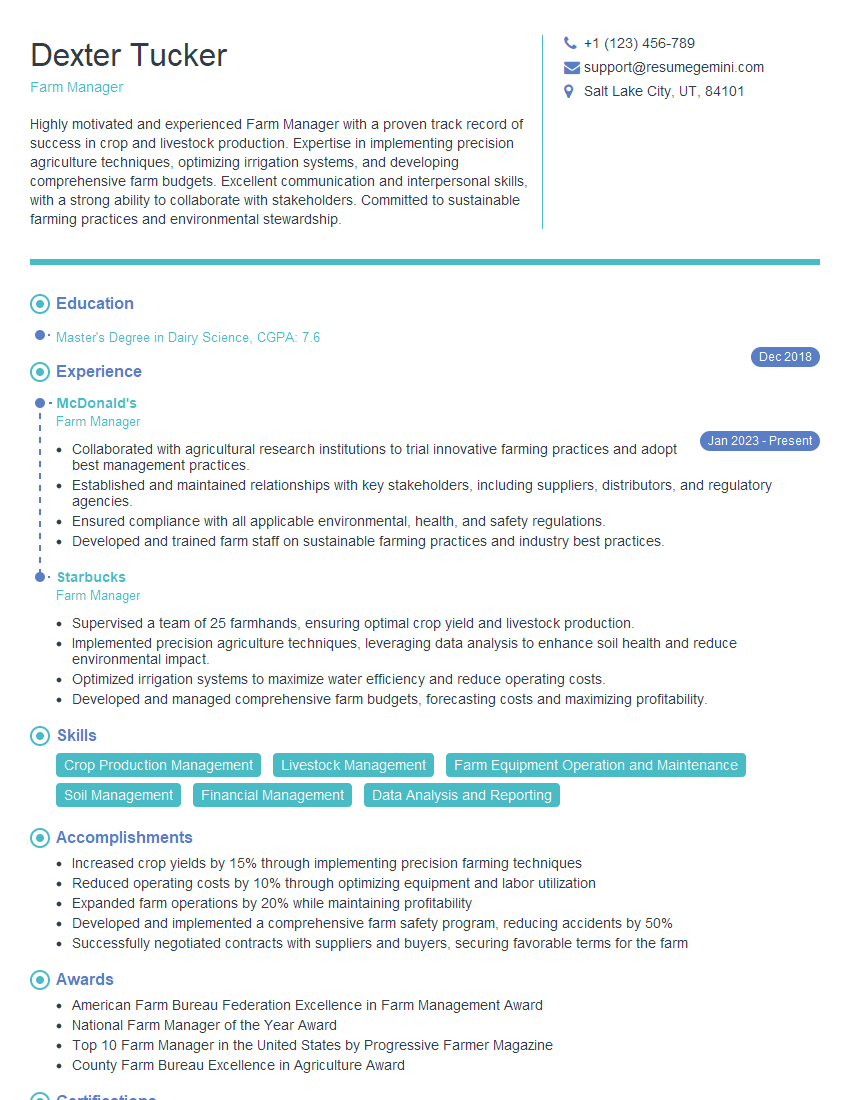
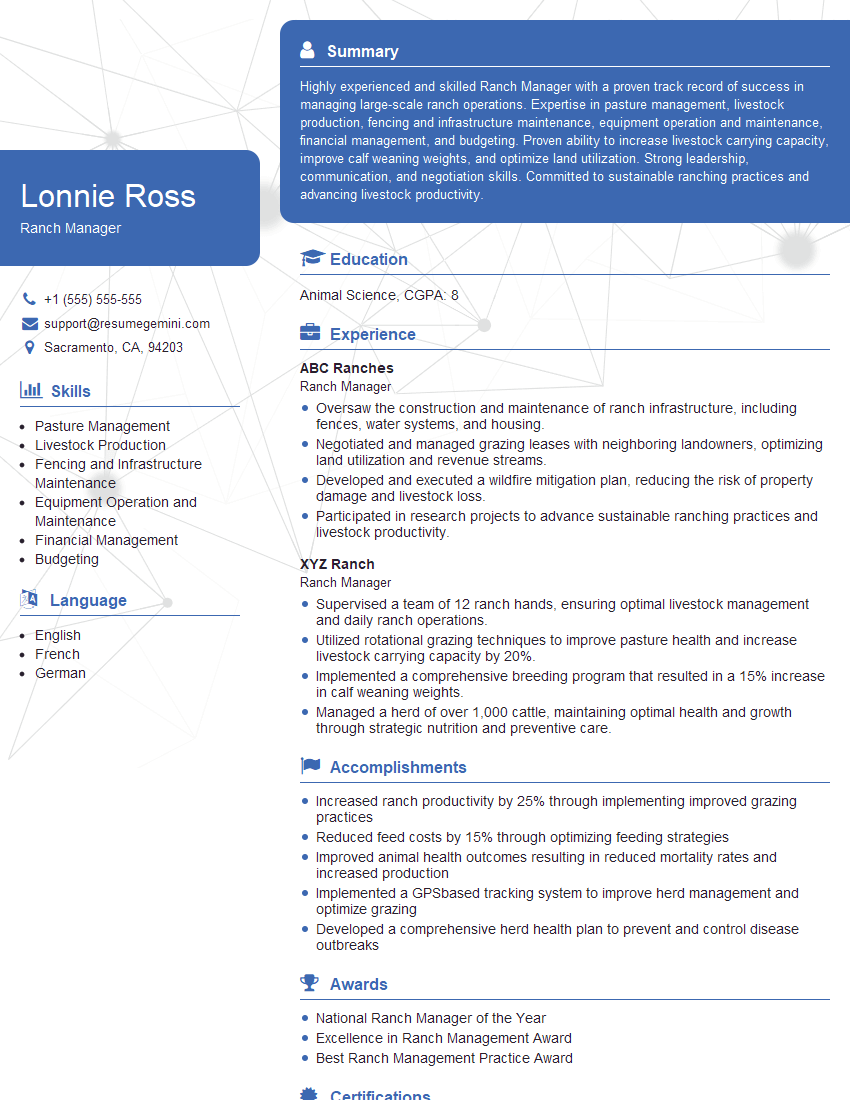
Mastering roping and wrangling skills opens doors to exciting and rewarding careers in agriculture, ranching, and related industries. To maximize your job prospects, it’s essential to present your qualifications effectively. Creating an ATS-friendly resume is key to ensuring your application gets noticed by potential employers. We highly recommend using ResumeGemini to craft a professional and impactful resume that highlights your unique skills and experience. ResumeGemini provides examples of resumes tailored to the Roping and Wrangling field to help you create a standout application.


Explore more articles
Users Rating of Our Blogs
Share Your Experience
We value your feedback! Please rate our content and share your thoughts (optional).
What Readers Say About Our Blog
Very informative content, great job.
good