Preparation is the key to success in any interview. In this post, we’ll explore crucial ITIL Process Implementation interview questions and equip you with strategies to craft impactful answers. Whether you’re a beginner or a pro, these tips will elevate your preparation.
Questions Asked in ITIL Process Implementation Interview
Q 1. Explain the five core publications of ITIL 4.
ITIL 4 simplifies the previous ITIL framework, focusing on guiding principles rather than rigid processes. While not strictly ‘publications’ in the traditional sense, the core ITIL 4 content is structured around five key publications that provide a holistic view of service management. These are not separate manuals, but rather integrated components of a cohesive whole:
- ITIL Foundation: This provides a basic understanding of ITIL 4 concepts, terminology, and principles. It’s the entry point for anyone wanting to learn about ITIL 4.
- ITIL Guiding Principles: This publication outlines the seven guiding principles that underpin successful service management within the ITIL 4 framework. These principles guide decision-making and provide a strategic direction.
- ITIL Practices: This is the core of the framework. It details various practices that organizations can adopt and adapt to manage their IT services. Each practice is described independently to allow for flexibility in implementation. Examples include Incident Management, Problem Management, and Change Management.
- Create, Deliver, and Support: This publication focuses on the lifecycle of a service, from its initial design and creation through its delivery and ongoing support. It ties together the practices and principles in a practical context.
- Improve: This publication emphasizes the continuous improvement aspect of ITIL 4, focusing on how to continuously optimize service management processes based on data and feedback. It promotes a culture of learning and adaptation.
Think of it like building a house: the foundation provides a solid base, the guiding principles are your blueprints, the practices are the building materials and tools, the lifecycle guides the construction process, and the improvement aspect ensures the house remains well-maintained and adapted to changing needs.
Q 2. Describe the four dimensions of service management in ITIL 4.
ITIL 4 introduces the four dimensions of service management, which provide a holistic perspective on how services are created, delivered, and supported. They are interconnected and influence each other significantly. Think of them as four lenses through which you view your service management operations:
- Organizations and People: This dimension focuses on the structure, culture, skills, and capabilities of the organization providing and using the services. It includes aspects like organizational design, teamwork, leadership, and employee empowerment.
- Information and Technology: This dimension encompasses the technology infrastructure, data, and information needed to support and deliver services. It considers hardware, software, networks, databases, and security aspects.
- Partners and Suppliers: This dimension highlights the relationships with external parties that contribute to service delivery. It involves managing vendor relationships, ensuring service level agreements (SLAs) are met, and fostering collaborative partnerships.
- Value Streams and Processes: This dimension focuses on the processes and value streams that create and deliver services to customers. It emphasizes the end-to-end flow of work, identifying areas for improvement, and aligning processes to deliver business value. This involves mapping the processes and visualizing the flow of work from start to finish.
For example, a successful software deployment requires a well-defined organizational structure (people), a robust IT infrastructure (information and technology), collaboration with external developers (partners and suppliers), and a streamlined deployment process (value streams and processes).
Q 3. What are the key principles of ITIL 4?
The ITIL 4 framework is guided by seven key principles that should be considered throughout all aspects of service management. These aren’t rigid rules, but rather guiding lights to ensure successful service management. They are:
- Focus on Value: Everything should be aligned to delivering value to the customer. This means understanding customer needs and aligning service delivery to meet those needs.
- Start Where You Are: Begin with an assessment of your current state and build upon existing capabilities, rather than attempting a complete overhaul.
- Progress Iteratively with Feedback: Embrace an iterative approach, focusing on continuous improvement through regular feedback and adaptation.
- Collaborate and Promote Visibility: Foster collaboration across teams and stakeholders, ensuring transparency and open communication.
- Think and Work Holistically: Consider the interconnectedness of all aspects of service management and avoid siloed approaches.
- Keep It Simple and Practical: Aim for simplicity and avoid unnecessary complexity. Focus on practical solutions and avoid over-engineering.
- Optimize and Automate: Leverage automation and optimization techniques to increase efficiency and reduce manual effort.
These principles provide a framework for making decisions and ensuring that service management activities are aligned with business objectives. They help organizations to create a more effective and efficient service management system.
Q 4. Define the purpose of the Incident Management process.
The purpose of Incident Management is to restore normal service operation as quickly as possible, minimizing the impact on business operations and users. It’s about reacting to disruptions and getting things back to normal. Think of it as the ‘firefighting’ aspect of IT service management. An incident is any unplanned interruption to an IT service or reduction in the quality of an IT service.
A key aspect is to minimize the impact of incidents on business operations and end-users. This includes providing timely communication, restoring service quickly, and learning from incidents to prevent future occurrences. Efficient incident management ensures business continuity and prevents escalation of minor issues into major problems.
Q 5. Explain the difference between a known error and a problem.
While both known errors and problems relate to service disruptions, they differ significantly in scope and lifecycle:
- Known Error: A known error is a documented fault in a system or service that has been identified and characterized. It’s already been investigated, and a workaround or fix may exist, but a permanent resolution might not yet be implemented. It’s a specific problem instance with a known root cause.
- Problem: A problem is a more encompassing term, representing the underlying cause of one or more incidents. It’s the ‘why’ behind the incidents. Investigating a problem aims to find the root cause and implement a permanent fix to prevent further incidents. A problem might encompass multiple incidents related to the same underlying issue.
Example: Imagine a website consistently crashing between 2 PM and 3 PM every day (multiple incidents). The problem might be insufficient server capacity during peak hours. The known error would be the specific documentation detailing this recurring crash and possibly listing a temporary workaround, like limiting access during peak hours until the server upgrade is complete. The problem management process will address the root cause of the insufficient capacity, whereas incident management will focus on restoring the service immediately. The known error allows incident management to quickly respond with the temporary solution.
Q 6. How does Change Management contribute to service availability?
Change Management plays a crucial role in maintaining service availability by ensuring that any changes made to the IT infrastructure or services are carefully planned, tested, and implemented, minimizing the risk of disruption. Think of it as a controlled process for making improvements or modifications to an already working system.
Effective Change Management reduces the likelihood of unplanned outages, service degradation, and security vulnerabilities. By following a structured process, organizations can manage risk, maintain stability, and enhance the reliability of their services. A well-managed change reduces the possibility of an incident in the first place, ensuring higher service availability.
Q 7. Describe the stages of the Change Management process.
The Change Management process typically involves several key stages, though the specifics can vary depending on the organization’s implementation. A common approach would include:
- Identification and Request: A change request is initiated, detailing the proposed change, its impact, and justification. This could range from a simple software update to a major infrastructure change.
- Assessment and Planning: The change is evaluated for its impact on business operations, risks, and resource requirements. A detailed plan is developed, outlining the steps involved, timelines, and testing procedures.
- Authorization: The proposed change is reviewed and authorized by an appropriate authority, typically based on the risk level and impact of the change. This ensures alignment with organizational objectives and minimizes negative impacts.
- Implementation: The change is implemented according to the approved plan. This involves deploying new software, upgrading hardware, or making other modifications. This step often includes thorough testing to ensure the changes work correctly.
- Verification and Closure: After implementation, the change is verified to ensure it has achieved its intended outcome. Once verified, the change request is formally closed.
- Post-Implementation Review (PIR): Following the implementation, a review is carried out to analyze the effectiveness of the process and identify any areas for improvement. This learning is fed back into the overall Change Management process to prevent issues in the future.
This structured approach ensures that changes are implemented in a controlled manner, reducing the risk of incidents and maintaining service availability.
Q 8. What is the purpose of the Problem Management process?
The purpose of Problem Management is to prevent incidents from happening in the first place. Instead of just reacting to incidents as they arise, Problem Management proactively identifies the underlying causes of incidents and implements permanent solutions. Think of it like this: Incident Management is putting out fires, while Problem Management is figuring out why the building keeps catching fire and installing sprinklers to prevent future blazes.
This involves identifying, analyzing, and resolving the root cause of incidents to prevent their recurrence. It’s about moving from reactive problem-solving to proactive problem prevention. A key aspect is the creation and maintenance of a problem database, allowing for the identification of trends and patterns.
Q 9. Explain the relationship between Incident, Problem, and Change Management.
Incident, Problem, and Change Management are interconnected processes working together to maintain service stability and availability. Imagine a car breaking down:
- Incident Management deals with the immediate impact – the car is broken down, you need a tow truck (restoration of service).
- Problem Management investigates why the car broke down – was it a faulty part, lack of maintenance? (Root cause analysis and permanent fixes).
- Change Management is the process of implementing a fix – replacing the faulty part, performing scheduled maintenance, preventing similar failures in the future (controlled implementation of solutions).
An incident is a disruption to a service. A problem is the underlying cause of one or more incidents. Change Management often arises as a result of Problem Management’s findings, implementing solutions to prevent future incidents. They are interdependent; a poorly managed change can cause incidents, and unresolved problems lead to recurring incidents.
Q 10. Describe the key metrics used to measure the effectiveness of ITIL processes.
Key metrics for measuring ITIL process effectiveness vary depending on the specific process, but some common examples include:
- Incident Management: Mean Time To Restore (MTTR), Mean Time Between Failures (MTBF), Incident Resolution Rate, Number of Incidents.
- Problem Management: Problem Resolution Rate, Number of Known Errors, Percentage of Incidents Resolved by Known Errors.
- Change Management: Change Failure Rate, Average Change Implementation Time, Number of Emergency Changes.
- Service Level Management: Service Availability, Meeting Service Level Targets (SLAs).
These metrics help assess efficiency, effectiveness, and areas for improvement. For example, a high MTTR indicates slow incident resolution, while a low problem resolution rate suggests inefficiencies in identifying root causes. Regular monitoring of these metrics is crucial for continuous service improvement.
Q 11. How does ITIL support continuous improvement?
ITIL supports continuous improvement through its inherent focus on iterative processes and feedback loops. The Continual Service Improvement (CSI) model is central to this. CSI uses data from various ITIL processes, such as incident, problem, and change management, to identify areas for improvement. This data is analyzed to understand trends, patterns, and weaknesses.
The resulting improvements are then implemented through change management, and the impact is measured using metrics. This cycle repeats continuously, fostering a culture of learning and improvement within IT operations. Think of it as a feedback loop: identify problems, implement solutions, measure results, and repeat.
Q 12. What is the role of the Service Desk in ITIL?
The Service Desk is the single point of contact for users to report incidents and service requests. It’s the front line of IT support, acting as the gateway to all ITIL processes. Its key roles include:
- Incident Logging and Management: Recording and managing incidents, escalating them when necessary.
- Service Request Fulfillment: Handling and resolving simple service requests, such as password resets or account unlocks.
- Communication: Keeping users informed about the status of their requests and incidents.
- Incident Triage: Determining the urgency and priority of incidents.
- Knowledge Management: Contributing to and utilizing a knowledge base to resolve common issues quickly.
A well-functioning Service Desk ensures a positive user experience and efficient resolution of issues, fostering user satisfaction and minimizing disruption.
Q 13. Explain the concept of Service Level Agreements (SLAs).
Service Level Agreements (SLAs) are formal agreements between a service provider and a customer that define the level of service expected. They outline specific metrics, targets, and responsibilities for ensuring service availability, performance, and quality. Think of it as a contract outlining what the customer can expect and what penalties there might be if those expectations aren’t met.
SLAs typically include details like uptime guarantees, response times for incidents, resolution times for problems, and performance metrics (e.g., acceptable transaction response times). They provide a clear understanding of expectations and help to manage performance against defined targets, offering a baseline against which service performance can be measured.
Q 14. How do you prioritize incidents and problems?
Prioritizing incidents and problems involves assessing their impact and urgency. Common frameworks include:
- Urgency: How quickly the problem needs to be resolved (e.g., immediate, high, medium, low). This is based on the severity of the disruption.
- Impact: How much of an effect the problem has on business operations (e.g., critical, major, minor). This considers the scope and consequences.
A matrix combining urgency and impact is often used. For example:
- High Urgency, High Impact: System outage affecting critical business operations – immediate attention required.
- Low Urgency, High Impact: Security vulnerability – needs attention but isn’t immediately critical.
- High Urgency, Low Impact: User experiencing slow performance – needs attention but not as critical as a system outage.
- Low Urgency, Low Impact: Minor cosmetic issue – can be addressed later.
This matrix ensures that the most critical issues receive immediate attention, while less urgent problems are addressed in a timely manner.
Q 15. What are the key components of a robust Change Management process?
A robust Change Management process is the cornerstone of stable and reliable IT services. It ensures that changes are implemented smoothly, minimizing disruption and maximizing positive impact. Key components include:
- Change Request Management: A structured process for submitting, reviewing, approving, and tracking all changes. This includes a clear categorization system (e.g., standard, normal, emergency) to prioritize requests.
- Risk Assessment and Management: Thorough evaluation of potential risks associated with each change, including impact assessment on business services and mitigation strategies. This often involves a risk matrix to visualize and manage potential issues.
- Change Approval Process: A defined workflow for authorizing changes, involving stakeholders with appropriate authority based on the change’s impact. This could range from simple approvals for minor changes to a full Change Advisory Board (CAB) review for high-risk changes.
- Change Implementation and Testing: A clearly defined process for implementing changes, including thorough testing in a non-production environment before deployment to production. This might involve creating test cases, documenting results, and obtaining sign-off from testing teams.
- Change Documentation and Reporting: Maintaining comprehensive records of all changes, including details of the request, approval, implementation, and post-implementation review. This allows for auditing, trend analysis, and continuous improvement.
- Post-Implementation Review (PIR): A formal process to evaluate the success of a change and identify areas for improvement in the future. This provides valuable feedback to refine the Change Management process itself.
Think of it like construction: You wouldn’t build a house without blueprints, inspections, and quality control. Change Management provides the blueprints, inspections, and quality control for your IT infrastructure.
Career Expert Tips:
- Ace those interviews! Prepare effectively by reviewing the Top 50 Most Common Interview Questions on ResumeGemini.
- Navigate your job search with confidence! Explore a wide range of Career Tips on ResumeGemini. Learn about common challenges and recommendations to overcome them.
- Craft the perfect resume! Master the Art of Resume Writing with ResumeGemini’s guide. Showcase your unique qualifications and achievements effectively.
- Don’t miss out on holiday savings! Build your dream resume with ResumeGemini’s ATS optimized templates.
Q 16. Describe your experience with ITIL process implementation.
I have extensive experience implementing ITIL processes across diverse organizations, including a large financial institution and a global telecommunications company. In the financial institution, I led the implementation of ITIL 4 framework, focusing on Service Value System and integrating it with their existing governance structure. This involved mapping existing processes to ITIL best practices, identifying gaps, and developing customized solutions to address these gaps. For example, we implemented a new incident management system that drastically reduced resolution times by leveraging automation and improved knowledge management. At the telecommunications company, I focused on improving their Change Management process, implementing a standardized change request form and workflow using a service management tool. This resulted in a 25% reduction in change-related incidents.
My work included:
- Process mapping and documentation: Creating detailed process flowcharts and documentation to ensure clarity and consistency.
- Training and awareness: Conducting workshops and training sessions to educate staff on ITIL best practices and the new processes.
- Tool selection and implementation: Evaluating and implementing service management tools to automate and streamline ITIL processes.
- Metrics and reporting: Developing key performance indicators (KPIs) to track progress and identify areas for improvement.
Q 17. Explain how you’ve used ITIL to improve service quality.
I’ve directly improved service quality using ITIL by focusing on several key areas:
- Incident Management: Implementing a robust incident management process with clear escalation paths and SLAs resulted in faster resolution times and improved customer satisfaction. For example, we implemented a knowledge base that reduced the time spent resolving recurring incidents.
- Problem Management: Proactively identifying and addressing underlying causes of incidents reduced the frequency of recurring issues. By analyzing trends in incident data, we identified a recurring network connectivity problem, leading to a system upgrade that eliminated the issue completely.
- Change Management: Implementing a structured change management process reduced the risk of disruptions caused by changes to the IT infrastructure. A standardized change review process, including thorough testing, significantly decreased the number of failed changes and minimized service downtime.
- Service Level Management (SLM): Defining and agreeing upon clear service level agreements (SLAs) with stakeholders ensured that IT services met their expectations and requirements. This provided transparency and accountability for IT service delivery.
By consistently applying ITIL principles and improving each process iteratively, service quality metrics like mean time to resolution (MTTR) and customer satisfaction significantly improved, leading to a more stable and reliable IT environment.
Q 18. How do you handle conflicting priorities in ITIL processes?
Conflicting priorities are inevitable in IT, especially when dealing with multiple stakeholders and limited resources. I handle them using a prioritization framework that considers several factors:
- Business Impact: Assessing the impact of each task on the business, prioritizing those with the highest business criticality.
- Urgency: Evaluating the time sensitivity of each task, prioritizing urgent requests needing immediate attention.
- Risk: Identifying and assessing the potential risks associated with delaying each task. High-risk tasks requiring urgent attention are prioritized.
- Resource Availability: Considering resource constraints, assigning tasks based on available skills and capacity. Tasks that can leverage available resources are prioritized.
- Dependency Management: Understanding interdependencies between tasks and sequencing them appropriately to avoid bottlenecks. Critical path analysis often helps in this.
This approach often involves using a prioritization matrix or a Kanban board to visualize the tasks and their priorities. Open communication with stakeholders is crucial to ensure transparency and buy-in to the prioritization decisions. Sometimes, negotiation and compromise are necessary to balance conflicting priorities.
Q 19. Describe a situation where you had to troubleshoot a complex IT issue.
During a major system upgrade, we experienced an unexpected outage affecting a critical business application. Initial troubleshooting pointed to a database connectivity issue, but standard checks yielded no obvious problems. Using a systematic approach:
- Gather information: I collected logs from various servers, network devices, and the application itself.
- Isolate the problem: Through log analysis and network tracing, we identified that the problem wasn’t a database issue, but rather a misconfiguration in the load balancer directing traffic to an inactive server instance.
- Develop and implement a solution: After identifying the root cause, we corrected the load balancer configuration, redirecting traffic to active instances.
- Test and validate: We thoroughly tested the fix before deploying it to production, ensuring the application was fully functional.
- Document the resolution: We documented the entire troubleshooting process, including the root cause, resolution steps, and preventive measures to avoid similar issues in the future. This was added to our knowledge base to assist in future similar instances.
This experience highlighted the importance of methodical troubleshooting, comprehensive logging, and proactive measures to mitigate risks.
Q 20. What tools or technologies have you used in relation to ITIL implementation?
I’ve used a variety of tools and technologies for ITIL implementation. These include:
- ServiceNow: A comprehensive service management platform used for incident, problem, change, and release management.
- Jira Service Desk: A popular ITSM tool used for ticket management and workflow automation.
- BMC Remedy: Another established ITSM suite offering similar functionalities to ServiceNow.
- Microsoft Azure DevOps: Used for managing development projects and integrating with ITIL processes for release management.
- Monitoring tools (e.g., Nagios, Zabbix): Integrated with ITSM platforms to provide real-time visibility into system health and proactively identify potential problems.
The choice of tools depends on the organization’s specific needs and existing infrastructure. My experience lies in selecting, implementing, and customizing these tools to optimize ITIL process efficiency.
Q 21. How do you ensure compliance with ITIL best practices?
Ensuring compliance with ITIL best practices involves a multifaceted approach:
- Process adherence: Regularly auditing processes to ensure they align with ITIL guidelines and are consistently followed. This may involve reviewing process documentation, interviewing staff, and analyzing performance data.
- Training and awareness: Providing regular training to IT staff on ITIL principles and processes to improve understanding and compliance. This should include reinforcement through regular refresher courses or updates.
- Metric monitoring: Tracking key performance indicators (KPIs) to measure the effectiveness of ITIL processes and identify areas needing improvement. This needs to be reviewed regularly and adjusted as needed.
- Continuous improvement: Regularly reviewing processes for effectiveness and identifying opportunities for improvement. This might involve post-incident reviews, regular process improvement initiatives, and feedback gathering from both internal staff and external clients.
- Documentation: Maintaining comprehensive documentation of ITIL processes, including procedures, guidelines, and roles and responsibilities. This ensures continuity and helps in effective onboarding of new staff.
Compliance is not a one-time event but an ongoing commitment that requires consistent monitoring, improvement, and adaptation to evolving business needs.
Q 22. Explain your understanding of the Continual Service Improvement (CSI) model.
Continual Service Improvement (CSI) is the heart of ITIL, focusing on constantly improving IT services to better meet business needs. It’s not a one-time project but an ongoing cycle of identifying areas for improvement, implementing changes, and measuring the impact. Think of it like regularly tuning a car engine – small adjustments over time lead to significant performance gains.
The CSI model typically involves these steps:
- Identify areas for improvement: This often starts with analyzing service performance data, gathering feedback from stakeholders, and proactively identifying potential risks.
- Prioritize improvement initiatives: Not every improvement idea is equally valuable. Prioritization helps focus resources on initiatives with the biggest impact.
- Develop and implement improvement plans: This involves creating detailed plans, allocating resources, and executing the chosen improvements.
- Measure and evaluate results: This step is crucial for understanding if the improvements were effective. Key Performance Indicators (KPIs) are essential here.
- Review and adapt: Based on the evaluation, the process is refined. What worked? What didn’t? This feedback loop drives continuous enhancement.
For example, if a service desk receives numerous complaints about slow response times, CSI would involve investigating the root cause, perhaps through analyzing call logs and implementing changes like improved scripting or additional staffing. The success of the improvements would then be measured by tracking the average resolution time.
Q 23. Describe your experience with different ITIL frameworks (e.g., ITIL v3, ITIL 4).
I have extensive experience with both ITIL v3 and ITIL 4. ITIL v3, with its lifecycle approach (Service Strategy, Service Design, Service Transition, Service Operation, and Continual Service Improvement), provided a strong foundation for many organizations. I’ve successfully implemented several service management frameworks based on ITIL v3, focusing on process optimization and automation. For instance, I led a project to optimize incident management using ITIL v3 best practices, resulting in a 20% reduction in mean time to resolution.
ITIL 4, however, represents a significant evolution. It shifts focus to a more holistic and integrated approach, emphasizing value streams and guiding principles. I have been involved in several projects transitioning from ITIL v3 to ITIL 4, which included streamlining processes, adopting a more value-driven approach, and leveraging the new concepts of practices and the four dimensions of service management (organizations and people, information and technology, partners and suppliers, value streams and processes).
A key difference I’ve observed is ITIL 4’s greater flexibility. It provides a framework rather than a rigid methodology, allowing organizations to tailor their implementation based on their specific needs and context. This adaptability is crucial in today’s dynamic IT landscape.
Q 24. How do you communicate effectively with stakeholders during ITIL implementation?
Effective communication is paramount during ITIL implementation. I use a multi-pronged approach to engage stakeholders at all levels.
- Regular meetings and updates: I schedule regular meetings with different stakeholder groups to provide updates, gather feedback, and address concerns. These can be formal presentations or more informal discussions, depending on the audience.
- Clear and concise communication: I avoid technical jargon and tailor my communication to the audience’s level of understanding. Visual aids like charts and graphs are also very helpful.
- Active listening and feedback: I encourage stakeholders to share their perspectives and actively listen to their concerns. Feedback is incorporated into the implementation plan whenever possible.
- Documentation and reporting: Comprehensive documentation ensures everyone is on the same page. Regular reports provide transparency and track progress.
- Collaboration tools: Using collaborative platforms for document sharing, communication, and task management facilitates teamwork and keeps everyone informed.
For example, during one implementation, I created a dedicated communication plan outlining the communication channels, frequency, and key messages for different stakeholder groups, ensuring everyone received relevant information in a timely manner.
Q 25. How do you measure the success of an ITIL implementation project?
Measuring the success of an ITIL implementation is a multifaceted process. It goes beyond just completing the project. Instead, it involves assessing whether the implementation delivered the intended value.
Key metrics include:
- Improved service availability and performance: This can be measured by KPIs such as mean time to resolution (MTTR), mean time between failures (MTBF), and service level agreements (SLAs) adherence.
- Increased customer satisfaction: Regular surveys and feedback mechanisms are essential to gauge customer perception of the improved services.
- Reduced operational costs: ITIL aims for efficiency. Tracking cost reductions demonstrates the financial benefits of the implementation.
- Improved efficiency and productivity: Measuring the time saved on tasks, reduced number of incidents, and improved automation helps demonstrate ROI.
- Enhanced risk management: Tracking the reduction in security breaches or other incidents shows the effectiveness of risk mitigation strategies.
A balanced scorecard approach can be used to track both qualitative and quantitative measures, providing a comprehensive view of the implementation’s success. It’s also important to establish baselines before the implementation to measure the impact accurately.
Q 26. Describe your experience with risk management in relation to ITIL processes.
Risk management is integral to successful ITIL implementation. I approach it through a structured process that integrates with all ITIL processes. This involves identifying potential risks, analyzing their likelihood and impact, developing mitigation strategies, and monitoring the effectiveness of those strategies.
Examples of risks and their mitigation strategies include:
- Resistance to change: Mitigation: Proactive communication, training, and involvement of stakeholders in the process.
- Lack of resources: Mitigation: Detailed resource planning, securing necessary budget and personnel.
- Inadequate training: Mitigation: Comprehensive training programs for staff on new processes and tools.
- Integration challenges: Mitigation: Careful planning for system integration, thorough testing and validation.
- Data migration issues: Mitigation: Robust data migration planning, thorough testing and validation.
I typically use a risk register to document identified risks, their likelihood, impact, mitigation strategies, and owners. This register is regularly reviewed and updated throughout the implementation process. Regular risk assessments are conducted to identify new or emerging risks.
Q 27. What are some common challenges in ITIL process implementation, and how do you overcome them?
Common challenges in ITIL implementation include resistance to change, lack of management support, inadequate training, insufficient resources, and poorly defined processes. Overcoming these challenges requires a strategic and proactive approach.
- Resistance to change: Addressing this requires strong communication, emphasizing the benefits of ITIL, involving staff in the implementation process, and providing adequate training.
- Lack of management support: Securing executive sponsorship is crucial. This involves demonstrating the business value of ITIL and aligning the implementation with organizational goals.
- Inadequate training: Comprehensive training programs are essential to ensure staff understand and can effectively use new processes and tools.
- Insufficient resources: Careful resource planning, securing necessary budget and personnel, and prioritizing initiatives are vital.
- Poorly defined processes: Clearly defining processes and documenting them thoroughly is crucial. This often involves process mapping and improvement workshops.
A phased approach, starting with a pilot project before full-scale implementation, can help manage risks and build confidence. Continuous monitoring and improvement are essential throughout the implementation and beyond.
Q 28. How do you stay updated on the latest ITIL best practices and changes?
Staying updated on ITIL best practices is a continuous process. I employ several strategies:
- Professional certifications: Maintaining relevant certifications (like ITIL 4 Foundation, ITIL 4 Managing Professional, or ITIL 4 Strategic Leader) ensures I’m abreast of the latest developments.
- Industry publications and conferences: I regularly read industry publications and attend conferences to learn about new trends and best practices.
- Online communities and forums: Engaging with online communities and forums allows for knowledge sharing and interaction with other professionals in the field.
- Vendor training and webinars: Many vendors offer training and webinars on their ITIL-related products and services.
- Networking: Building relationships with other ITIL professionals helps me stay informed about new developments and best practices.
Continuous learning is essential in the ever-evolving IT landscape. By utilizing these methods, I can ensure my knowledge remains current and relevant.
Key Topics to Learn for ITIL Process Implementation Interview
- Service Strategy: Understanding the strategic alignment of IT services with business goals. This includes defining service level agreements (SLAs) and understanding financial management within IT.
- Service Design: Designing and developing new services or improving existing ones. Practical application includes designing a new incident management process or optimizing a change management workflow.
- Service Transition: Planning and executing the transition of new or changed services into a live operational environment. Consider real-world scenarios like migrating a system to a new platform.
- Service Operation: Managing the day-to-day operation of IT services. This involves incident, problem, and request management – be ready to discuss practical solutions for common service disruptions.
- Continual Service Improvement (CSI): Constantly seeking ways to improve IT services. This includes understanding metrics, analyzing data, and implementing improvements based on data-driven insights. Be prepared to discuss specific improvement methodologies.
- ITIL 4 Guiding Principles: Understanding and applying the core principles of ITIL 4, such as focusing on value, collaborating and engaging, thinking holistically, progressing iteratively, optimizing and automating, and observing and measuring.
- Process Integration and Automation: How different ITIL processes interact and how automation can improve efficiency and reduce manual effort. Explore tools and technologies used in automation within ITIL processes.
- Risk Management and Compliance: Identifying, assessing, and mitigating risks related to IT service delivery and ensuring compliance with relevant regulations and standards.
Next Steps
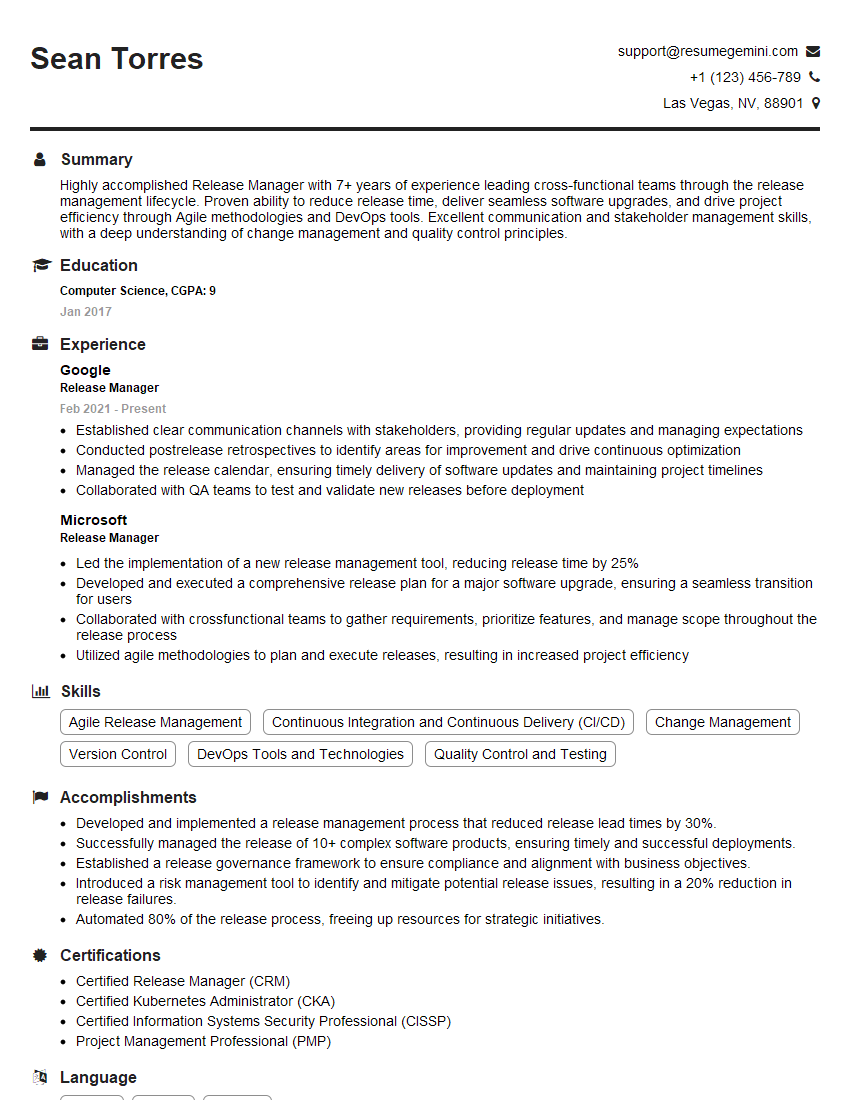
Mastering ITIL Process Implementation significantly enhances your career prospects, opening doors to leadership roles and higher earning potential. A strong understanding of these processes demonstrates your ability to optimize IT service delivery, a highly sought-after skill in today’s competitive market. To maximize your job search success, create an ATS-friendly resume that highlights your relevant skills and experience. ResumeGemini is a trusted resource that can help you build a professional and impactful resume tailored to the ITIL Process Implementation field. Examples of resumes specifically crafted for this area are available to guide you.

Explore more articles
Users Rating of Our Blogs
Share Your Experience
We value your feedback! Please rate our content and share your thoughts (optional).
What Readers Say About Our Blog
Very informative content, great job.
good