Interviews are opportunities to demonstrate your expertise, and this guide is here to help you shine. Explore the essential Job Safety and Health Administration (OSHA) Regulations interview questions that employers frequently ask, paired with strategies for crafting responses that set you apart from the competition.
Questions Asked in Job Safety and Health Administration (OSHA) Regulations Interview
Q 1. Explain the General Duty Clause of OSHA.
The General Duty Clause, found in Section 5(a)(1) of the Occupational Safety and Health Act, is OSHA’s foundational requirement. It mandates that every employer must furnish to each of his employees employment and a place of employment which are free from recognized hazards that are causing or are likely to cause death or serious physical harm. Think of it as OSHA’s ‘catch-all’ provision. If a hazard isn’t specifically addressed by a particular OSHA standard, the General Duty Clause still applies. For example, if a new piece of machinery is introduced that poses an unforeseen hazard, even without a specific OSHA standard covering it, the employer is still responsible under the General Duty Clause to eliminate or control that hazard. Failure to comply can result in citations and penalties.
Q 2. Describe the process for reporting a workplace injury under OSHA.
Reporting a workplace injury under OSHA is crucial for both employee safety and compliance. The process typically begins immediately after the incident. First, first aid should be administered if needed. Then, the employer must record the injury or illness on OSHA’s 300 Log (Log of Work-Related Injuries and Illnesses) within seven calendar days of learning about it. This log is for internal record-keeping and is not directly submitted to OSHA. The employer must also report fatalities and hospitalizations to OSHA within 24 hours. If a specific OSHA standard has been violated, the circumstances must also be reported. Finally, OSHA Form 301, the Injury and Illness Incident Report, should be completed and kept on file. Failing to report as required can lead to substantial fines and penalties. Imagine a construction worker falling from a scaffold – this would require immediate reporting to OSHA, along with thorough documentation.
Q 3. What are the OSHA requirements for Hazard Communication?
OSHA’s Hazard Communication Standard (HazCom) aims to ensure that employees are informed of the hazards associated with the chemicals they handle in the workplace. Key requirements include developing and maintaining a written hazard communication program, providing safety data sheets (SDSs) for all hazardous chemicals, and labeling containers of hazardous chemicals with appropriate hazard warnings. Employee training is also vital; employees must be educated on the hazards of the chemicals they work with, the proper use of PPE, and emergency procedures. For example, a lab technician handling corrosive acids would need access to SDSs detailing the chemical properties, safety precautions, and first aid measures; they must also receive comprehensive training on safe handling procedures.
Q 4. How do you conduct a Job Hazard Analysis (JHA)?
A Job Hazard Analysis (JHA) is a systematic process for identifying hazards associated with a specific job. It’s a proactive approach to risk management. The process typically involves these steps:
- Select the job to be analyzed: Choose a specific task or job function.
- List the steps involved: Break the job down into individual steps.
- Identify potential hazards: For each step, identify potential hazards such as falls, cuts, electrical shock, etc.
- Identify potential consequences: What could happen if a hazard occurs (e.g., injury, damage to equipment)?
- Develop preventive measures: Develop ways to eliminate or control the hazards (e.g., use PPE, implement safe work procedures).
- Implement controls: Put the preventive measures into place.
- Review and update: Regularly review and update the JHA as needed, perhaps after an incident or when new equipment is introduced.
Q 5. What are the OSHA requirements for Personal Protective Equipment (PPE)?
OSHA’s PPE requirements mandate that employers must provide employees with necessary PPE when hazards are present that cannot be eliminated or controlled through engineering or administrative controls. This means that PPE is generally a last line of defense. The employer must select appropriate PPE, train employees in its proper use and maintenance, and ensure it’s properly used. Examples of PPE include hard hats, safety glasses, gloves, hearing protection, and respirators. The employer also needs to provide appropriate PPE for specific hazards, such as fall protection harnesses for workers at heights. Employers must ensure the PPE fits correctly and is properly maintained.
Q 6. Explain the difference between an OSHA citation and a violation.
An OSHA violation is the act of not complying with an OSHA standard or regulation. A citation is the official notification from OSHA that a violation has occurred. The citation will typically describe the nature of the violation, the relevant OSHA standard, and the proposed penalty. Think of it this way: the violation is the ‘crime,’ and the citation is the ‘arrest warrant.’ An employer may receive multiple citations for multiple violations within a single inspection. Each citation details the specific violation and proposes a penalty, whereas the violation itself refers to the act of non-compliance.
Q 7. What are your strategies for preventing workplace accidents?
Preventing workplace accidents requires a multi-faceted approach. My strategies focus on proactive measures, including:
- Comprehensive safety training: Regular, thorough training on relevant hazards and safe work practices.
- Thorough hazard assessments: Proactive identification of hazards through JHAs and regular workplace inspections.
- Effective engineering controls: Design changes that eliminate hazards at the source, such as guarding machinery.
- Strong safety culture: Creating an environment where employees feel empowered to report hazards and participate in safety initiatives.
- Regular maintenance: Ensuring equipment is properly maintained to prevent malfunctions.
- Use of PPE: Proper selection, training, and use of personal protective equipment.
- Incident investigation: Thoroughly investigating accidents to identify root causes and prevent recurrence.
Q 8. How would you handle an OSHA inspection?
Handling an OSHA inspection involves proactive preparation and a collaborative approach. Think of it like preparing for a friendly but thorough audit of your safety practices. First, ensure your workplace complies with all applicable OSHA standards. This means having a comprehensive safety program in place, including written safety policies, regular safety inspections, and employee training records. During the inspection, I would cooperate fully with the inspector, providing prompt access to records and facilities. I’d clearly identify the safety officer and designated personnel to answer questions. We would conduct a walk-through, allowing the inspector to observe our operations. If any violations are cited, I would listen carefully, document the findings, and develop a corrective action plan to address them promptly and effectively. Open communication and professionalism are key to a successful inspection. I’ve found that addressing concerns quickly and demonstrating a commitment to worker safety often leads to a more positive outcome.
For example, in a previous role, we had a surprise OSHA inspection. Because we had a robust safety program and meticulous record-keeping, we were able to readily demonstrate our compliance. The inspector was impressed with our proactive approach, and the inspection concluded with minimal citations.
Q 9. What is your experience with OSHA recordkeeping requirements (300 logs)?
OSHA’s 300 log (Log of Work-Related Injuries and Illnesses) is crucial for tracking workplace incidents. Think of it as a detailed health record for your company, documenting injuries and illnesses to help identify trends and improve safety. My experience includes maintaining accurate and up-to-date 300 logs, ensuring all recordable injuries and illnesses are documented according to OSHA’s guidelines. This involves recording the date of injury, the nature of the injury, the part of the body affected, and the days away from work. I understand the importance of proper record-keeping, including the completion of the 300A summary, which is submitted annually. I’ve also been involved in analyzing 300 log data to identify recurring safety issues and implement targeted preventative measures. For instance, by analyzing injury data, we discovered a high incidence of back injuries in our warehouse. This led us to implement a comprehensive ergonomic training program and invest in better lifting equipment, resulting in a significant reduction in back injuries.
Q 10. Describe your knowledge of lockout/tagout procedures.
Lockout/Tagout (LOTO) procedures are critical for preventing accidental energy release during maintenance or repair work. Think of it as a fail-safe mechanism to ensure equipment is completely de-energized before anyone works on it. My understanding of LOTO procedures involves a step-by-step process: First, energy isolation; then, lockout and tagging the equipment; followed by verifying energy isolation before commencing work; and finally, tag removal after ensuring the equipment is safe to operate again. I’m experienced in developing, implementing, and enforcing LOTO procedures, ensuring all employees involved are properly trained and understand the critical importance of following these procedures meticulously. I have experience with various energy sources, including electrical, hydraulic, pneumatic, and mechanical. We use a multi-step verification process to ensure all energy sources are locked out before work begins. In one instance, our rigorous LOTO procedures prevented a serious accident when a worker almost inadvertently started a machine during maintenance.
Q 11. What are the OSHA regulations regarding confined space entry?
OSHA’s confined space entry regulations are designed to protect workers from hazards associated with entering enclosed spaces with limited access and egress. Think of spaces like tanks, vessels, silos, or manholes. These regulations require a comprehensive permit-required confined space program. This includes identifying and classifying confined spaces, developing written procedures, selecting and training entrants, using appropriate personal protective equipment (PPE), and having rescue plans in place. The program mandates atmospheric testing before entry to ensure the space is safe to enter, and continuous monitoring during the work. Also, a designated attendant must be present outside the confined space to monitor the entrant’s condition and provide assistance in case of emergency. Failure to follow these regulations can result in serious injury or death. For example, we implemented a rigorous confined space program at a chemical plant I worked at, which included atmospheric testing equipment, rescue harnesses, and detailed emergency response procedures, drastically reducing the risk for our workers.
Q 12. Explain the importance of safety training programs.
Safety training programs are the cornerstone of a strong safety culture. Think of them as your investment in your employees’ safety and your company’s success. They ensure employees are aware of and understand the hazards in their workplace, how to work safely, and what to do in an emergency. Comprehensive training programs must cover a wide range of topics, including hazard identification, safe work practices, use of PPE, emergency procedures, and specific training based on the tasks performed. Regular refresher training is essential to keep knowledge current and reinforce safe habits. Documenting training attendance and verifying employee competency is crucial for demonstrating compliance. For example, a detailed, hands-on training program on the proper use of forklifts resulted in a significant reduction of forklift-related incidents at a previous warehouse I managed.
Q 13. How do you identify and mitigate ergonomic hazards?
Identifying and mitigating ergonomic hazards involves assessing the physical demands of a job and adapting the workplace to minimize the risk of musculoskeletal disorders (MSDs). Think of it as designing the job to fit the worker, not the other way around. This involves observing workers performing their tasks to identify awkward postures, repetitive motions, forceful exertions, and other physical stressors. We then analyze these factors to determine the ergonomic risk level. Mitigation strategies can include job redesign, workstation modifications, providing adjustable equipment, implementing job rotation, and providing ergonomic training and education. For instance, in an office setting, we identified repetitive strain injuries from prolonged computer use. We addressed this by providing ergonomic chairs, adjustable keyboards and monitors, and implementing regular stretch breaks. Similarly, in a manufacturing setting, we redesigned workstations to reduce awkward reaching and lifting motions, resulting in fewer workplace injuries.
Q 14. What is your experience with OSHA’s process safety management (PSM) standard?
OSHA’s Process Safety Management (PSM) standard applies to facilities handling highly hazardous chemicals. Think of it as a comprehensive approach to preventing catastrophic accidents involving these materials. My experience with PSM includes working with facilities to develop and implement PSM programs that meet OSHA’s requirements. This involves hazard assessment, process safety information management, operating procedures, employee training, and emergency planning and response. I have experience in conducting hazard reviews, developing safety instrumented systems (SIS), and performing regular inspections to ensure compliance with the PSM standard. PSM requires a thorough understanding of the processes involved, the hazards associated with them, and the controls necessary to prevent incidents. In one instance, we successfully implemented a PSM program at a chemical processing facility, resulting in a substantial reduction in process-related incidents and improved safety performance.
Q 15. Explain your understanding of OSHA’s requirements for fall protection.
OSHA’s fall protection requirements are extensive and aim to prevent falls from heights, a leading cause of workplace fatalities. The regulations focus on hazard assessment, providing appropriate fall protection, and training employees. Essentially, if a worker is at risk of falling 4 feet or more, fall protection measures are mandated.
This involves a hierarchy of controls, starting with elimination of the fall hazard (e.g., redesigning the work area). If elimination isn’t feasible, then engineering controls, like guardrails, are prioritized. Next comes administrative controls, like restricting access to hazardous areas. Finally, personal protective equipment (PPE), such as harnesses, lanyards, and safety nets, is used as the last line of defense.
Specific requirements include:
- Fall hazard assessment: Identifying all work areas where falls are possible.
- Guardrail systems: Meeting specific height, spacing, and strength requirements.
- Safety net systems: Proper installation and inspection to ensure adequate protection.
- Personal fall arrest systems: Including harnesses, lanyards, shock-absorbing lanyards, and anchorage points; regular inspections are vital.
- Training: Employees must be trained on how to use fall protection equipment correctly and safely.
For example, in construction, I’ve ensured that all workers on scaffolding over 6 feet high wore full-body harnesses with appropriate anchorage points, and that regular inspections of the scaffolding and equipment were conducted. Similarly, in manufacturing, I implemented guardrails on elevated platforms and provided training to ensure employees understood the importance of maintaining a safe working distance from the edges.
Career Expert Tips:
- Ace those interviews! Prepare effectively by reviewing the Top 50 Most Common Interview Questions on ResumeGemini.
- Navigate your job search with confidence! Explore a wide range of Career Tips on ResumeGemini. Learn about common challenges and recommendations to overcome them.
- Craft the perfect resume! Master the Art of Resume Writing with ResumeGemini’s guide. Showcase your unique qualifications and achievements effectively.
- Don’t miss out on holiday savings! Build your dream resume with ResumeGemini’s ATS optimized templates.
Q 16. How familiar are you with OSHA’s bloodborne pathogen standard?
I am very familiar with OSHA’s Bloodborne Pathogens Standard (29 CFR 1910.1030). This standard protects employees from exposure to blood and other potentially infectious materials (OPIM) in the workplace. The standard establishes comprehensive requirements for preventing and managing exposures. It’s a crucial element in maintaining a safe and healthy work environment, especially in healthcare, first response, and laboratory settings.
Key aspects of the standard include:
- Exposure Control Plan (ECP): A written plan that details procedures to minimize exposure risks.
- Engineering controls: Using devices like needleless systems, sharps disposal containers, and self-sheathing needles to reduce exposure risk.
- Work practice controls: Following proper techniques during procedures to minimize the risk of needle sticks and other exposures.
- Personal Protective Equipment (PPE): Using gloves, gowns, masks, eye protection, etc., when appropriate.
- Hepatitis B vaccination: Employers must provide free Hepatitis B vaccination to employees at risk.
- Post-exposure prophylaxis (PEP): Providing immediate medical care and treatment if an exposure occurs.
- Housekeeping: Maintaining a clean and sanitary work area.
- Training: Employees must receive comprehensive training on the hazards of bloodborne pathogens and the standard’s requirements.
In a previous role, I assisted in developing and implementing an ECP for a healthcare facility, covering aspects from proper disposal of sharps to employee training on universal precautions. We also ensured compliance with all aspects of the standard and conducted regular evaluations to improve our safety protocols.
Q 17. What is your experience with developing safety programs?
I have extensive experience in developing comprehensive safety programs, aligning them with OSHA standards and specific industry requirements. My approach is always to start with a thorough hazard assessment – identifying potential risks and vulnerabilities within a workplace, then building a program to mitigate those hazards. This includes everything from developing safety policies and procedures to implementing training programs and conducting regular inspections.
A typical safety program I develop includes:
- Hazard identification and risk assessment: Using methods like job safety analyses (JSAs) and walkthrough inspections.
- Safety policies and procedures: Clearly outlining expectations and responsibilities.
- Emergency response plans: Detailing procedures for different emergency situations.
- Training programs: Tailored to specific job tasks and hazards.
- Personal Protective Equipment (PPE) program: Providing appropriate PPE and ensuring its proper use.
- Recordkeeping: Maintaining accurate records of incidents, inspections, and training.
- Regular inspections and audits: To monitor program effectiveness and identify areas for improvement.
For example, I once developed a safety program for a construction company, which significantly reduced their incident rate by implementing detailed JSAs for every task, reinforcing PPE usage, and providing regular safety training. The program included specific procedures for working at heights, handling hazardous materials, and operating machinery.
Q 18. How would you implement a safety culture within a company?
Implementing a strong safety culture isn’t about simply following rules; it’s about fostering a mindset where safety is everyone’s responsibility. It’s a continuous process that requires leadership commitment, employee engagement, and a culture of open communication.
My approach would involve:
- Leadership commitment: Visible and consistent support from top management is critical. Leaders need to actively participate in safety initiatives and demonstrate their commitment to safety.
- Employee empowerment: Encouraging employees to report hazards, participate in safety meetings, and provide feedback without fear of retribution.
- Effective communication: Regular safety meetings, training sessions, and communication channels to share safety information and best practices.
- Recognition and rewards: Acknowledging and rewarding safe behaviors and contributions to safety.
- Continuous improvement: Regularly reviewing the safety program, evaluating its effectiveness, and making necessary adjustments based on data and feedback.
- Incident investigation: Thorough investigations of incidents to determine root causes and implement corrective actions to prevent future occurrences.
I’ve found that leading by example is crucial. When leaders actively participate in safety inspections and demonstrate safe work practices, it significantly influences the overall safety culture. I would also utilize tools like safety suggestion boxes and anonymous reporting mechanisms to encourage employee participation.
Q 19. Describe your experience with conducting safety audits.
I have extensive experience conducting safety audits, both internal and external. My approach is systematic and thorough, following a pre-defined checklist tailored to the specific industry and OSHA standards. I aim to not only identify deficiencies but also to understand the underlying causes and propose practical solutions.
My audit process generally includes:
- Planning and preparation: Reviewing relevant OSHA standards, company safety policies, and prior inspection reports.
- Walkthrough inspections: A thorough visual inspection of the workplace to identify hazards and potential violations.
- Documentation: Taking detailed notes, photographs, and collecting samples as evidence of findings.
- Interviews: Talking to employees at all levels to gather information and assess their understanding of safety procedures.
- Review of records: Examining safety records, training records, incident reports, and other relevant documents.
- Report writing: Summarizing findings, identifying areas of non-compliance, and providing recommendations for corrective actions.
- Follow-up: Monitoring the implementation of corrective actions and ensuring they are effective.
In a past audit of a manufacturing facility, I discovered a lack of proper lockout/tagout procedures on machinery, posing a serious safety risk. My report detailed the deficiencies, provided recommendations for improvement, and emphasized the importance of employee training. The follow-up confirmed that the facility implemented the recommendations, significantly improving their safety performance.
Q 20. Explain the difference between leading and lagging indicators in safety.
Leading and lagging indicators are both crucial for evaluating safety performance, but they provide different perspectives. Lagging indicators tell you what has already happened, while leading indicators predict what might happen in the future.
Lagging indicators are reactive metrics that measure the results of safety efforts. Examples include:
- Number of accidents or injuries: A high number indicates poor safety performance.
- Lost-time injury rate (LTIR): Measures the number of lost workdays due to injuries.
- Total Recordable Incident Rate (TRIR): Measures the number of recordable incidents per 100 full-time employees.
Leading indicators, on the other hand, are proactive metrics that predict future safety performance. They focus on identifying potential hazards and assessing the effectiveness of safety programs. Examples include:
- Number of safety observations: A high number of observations indicates a proactive approach to identifying hazards.
- Near miss reports: Tracking near misses helps identify potential hazards before they lead to accidents.
- Employee safety training completion rates: High completion rates suggest a strong emphasis on training.
- Safety inspection scores: High scores reflect a well-maintained workplace.
Using both leading and lagging indicators provides a comprehensive view of safety performance, allowing for proactive improvements and reactive adjustments based on data. For instance, a high number of near misses (leading indicator) might suggest the need for additional training or process improvements, which would in turn reduce the number of accidents (lagging indicator).
Q 21. How do you investigate workplace accidents to determine root cause?
Investigating workplace accidents to determine root cause requires a systematic and thorough approach. The goal is to not simply identify what happened, but to understand why it happened so similar incidents can be prevented in the future. I typically use a root cause analysis (RCA) methodology.
My approach generally involves:
- Gathering information: Interviewing witnesses, reviewing incident reports, examining physical evidence, and reviewing relevant documents.
- Reconstructing the event: Creating a timeline of events leading up to the accident.
- Identifying contributing factors: Identifying all factors that contributed to the accident, including human error, equipment failure, environmental factors, and procedural deficiencies.
- Using RCA techniques: Employing methods like the “5 Whys” technique, fault tree analysis, or fishbone diagrams to identify the root causes.
- Developing corrective actions: Implementing actions to eliminate the root causes and prevent future accidents.
- Monitoring and evaluating: Tracking the effectiveness of the corrective actions and making further adjustments if necessary.
For example, in investigating a fall from a ladder, a simple initial analysis might blame the employee for not using proper safety equipment. However, a thorough RCA might reveal that the ladder was not properly maintained (root cause), leading to a fall. The corrective actions would then focus on implementing a ladder inspection program and providing appropriate training on ladder safety.
Q 22. How do you prioritize safety risks?
Prioritizing safety risks involves a systematic approach using risk assessment methodologies. I typically employ a combination of qualitative and quantitative methods. First, I identify all potential hazards through workplace inspections, hazard checklists, and employee feedback. Then, I assess each hazard’s likelihood and severity using a matrix, often assigning numerical scores. For instance, a hazard with high likelihood and high severity (e.g., unguarded machinery) would receive a high priority score, demanding immediate attention. Lower scoring hazards (e.g., minor trip hazards) might be addressed later, though still documented and tracked. This prioritization ensures that resources are focused on the most critical risks, minimizing potential for serious incidents.
Finally, I consider the feasibility of implementing control measures. A high-scoring hazard with easily implemented controls (e.g., installing a guard) will jump ahead of a similarly ranked hazard requiring extensive and expensive remediation.
Q 23. What is your experience with OSHA’s respiratory protection standard?
My experience with OSHA’s Respiratory Protection Standard (29 CFR 1910.134) is extensive. I’ve been involved in developing and implementing respiratory protection programs across various industries, including manufacturing, construction, and healthcare. This includes conducting hazard assessments to determine the need for respirators, selecting appropriate respirators based on the identified hazards, fitting testing respirators, and providing comprehensive training to employees on respirator use and maintenance. I understand the importance of medical evaluations, proper storage, and program documentation as crucial elements of compliance. I’m familiar with the different types of respirators, their limitations, and when specific types are necessary, like air-purifying respirators (APRs) versus supplied-air respirators (SARs).
For example, in a manufacturing plant with silica dust, we implemented a program using half-mask respirators with appropriate filters, coupled with engineering controls like local exhaust ventilation. We conducted fit testing to ensure proper seal and provided comprehensive training that included respirator selection, donning, doffing, maintenance, and recognizing limitations. We also documented all aspects of the program in accordance with OSHA guidelines.
Q 24. What are the OSHA requirements for machine guarding?
OSHA’s machine guarding requirements (29 CFR 1910 Subpart O) are designed to prevent contact with dangerous moving parts of machinery. The regulations mandate that all point-of-operation hazards, in-running nip points, rotating parts, flying chips and sparks, and other potential hazards must be guarded. The guarding methods must be chosen to effectively prevent access to the hazardous parts while allowing for safe operation and maintenance. These can include fixed guards, interlocks, presence-sensing devices, and other safety devices. Guards must be securely fastened, durable enough to withstand the stresses of operation, and should not create new hazards.
For instance, a power press must have a point-of-operation guard to prevent hands from entering the danger zone. A rotating shaft should have a guard to prevent contact with clothing or body parts. The selection of the appropriate guard depends on the specific hazard, the type of machine, and the work process involved. A failure to properly guard machinery can result in serious injuries such as amputations or crushing injuries.
Q 25. How familiar are you with OSHA’s emergency action plan requirements?
I am very familiar with OSHA’s Emergency Action Plan (EAP) requirements (29 CFR 1910.38). An EAP details procedures for emergency response, including evacuation, reporting procedures, and emergency response protocols. It’s a crucial element of workplace safety. A well-developed EAP includes clear procedures for handling various emergencies such as fire, chemical spills, medical emergencies, and natural disasters. It should specify alarm signals, evacuation routes, designated assembly points, and the roles and responsibilities of employees and emergency response personnel. Regular training and drills are essential to ensure the plan is effective. The plan should also be communicated to all employees, including those with disabilities, and be reviewed and updated regularly to reflect any changes in the workplace.
In a previous role, I helped develop and implement an EAP for a manufacturing facility. This included creating floor plans showing evacuation routes, conducting regular drills, and training employees on emergency procedures. We also conducted a risk assessment to identify potential emergencies and developed procedures specific to each risk, such as using spill kits for chemical spills.
Q 26. Describe your experience with implementing and managing safety programs for different industries.
I have extensive experience implementing and managing safety programs across diverse industries. In manufacturing, this involved implementing lockout/tagout procedures, machine guarding programs, and hazard communication programs. In construction, I’ve focused on fall protection, trenching and excavation safety, and hazard communication. In healthcare, I’ve worked on infection control protocols, sharps safety, and ergonomics programs. Each industry presented unique challenges, requiring a tailored approach. My approach always involves a thorough hazard assessment, development of detailed safety procedures, employee training, and ongoing monitoring and evaluation of the program’s effectiveness. This includes tracking key metrics, such as incident rates, near misses, and employee feedback, to identify areas for improvement and demonstrate continuous improvement.
For example, in a construction project, we implemented a comprehensive fall protection program, including the use of fall arrest systems, guardrails, and safety nets, significantly reducing the risk of falls from heights. In a healthcare setting, we developed an ergonomics program to address musculoskeletal disorders, resulting in a decrease in work-related injuries.
Q 27. Explain your experience with conducting safety training for employees at all levels.
I have extensive experience conducting safety training for employees at all levels, from hourly workers to management. My training programs are tailored to the specific hazards and risks associated with each job role and include both classroom instruction and hands-on training. I use a variety of methods to engage learners, including interactive presentations, videos, and practical demonstrations. I emphasize the importance of participation and provide opportunities for questions and feedback. My training programs are always aligned with OSHA standards and best practices, focusing on practical application and skill development. I also develop and maintain training records to ensure compliance with regulatory requirements.
For example, I have developed and delivered training programs on lockout/tagout, hazard communication, forklift operation, and fall protection. For management personnel, I’ve provided training on leadership roles in safety, conducting safety audits, and incident investigation.
Q 28. What strategies would you use to reduce workplace injuries and illnesses?
Reducing workplace injuries and illnesses requires a multi-faceted approach that combines engineering controls, administrative controls, and personal protective equipment (PPE). Engineering controls address hazards at their source, such as using machine guards or improving ventilation. Administrative controls focus on managing work practices, such as implementing job rotations, implementing safe work procedures, providing adequate rest breaks, and enforcing rules and regulations. PPE protects individual workers from hazards when engineering and administrative controls are insufficient. In addition, a strong safety culture, fostered by open communication, employee involvement, and a commitment to safety from leadership is critical. This culture encourages employees to report hazards, participate in safety training, and follow safety procedures. Regular safety audits and inspections, as well as robust incident investigation and corrective action processes, are essential for identifying and addressing potential hazards before they lead to injuries or illnesses.
A practical example: In a manufacturing environment, reducing repetitive strain injuries might involve implementing ergonomic assessments of workstations, providing adjustable chairs and equipment, rotating employees between tasks, and providing training on proper lifting techniques. This combines engineering controls (equipment adjustments), administrative controls (job rotation, training), and might also include using PPE such as wrist braces if other methods are not fully effective.
Key Topics to Learn for Job Safety and Health Administration (OSHA) Regulations Interview
- Understanding OSHA’s Mission and Structure: Learn the agency’s overall goals and how different departments contribute to workplace safety.
- General Duty Clause (Section 5(a)(1)): Understand its broad application and how it’s used to address hazards not specifically covered by other standards. Practice applying it to hypothetical scenarios.
- Hazard Communication Standard (HazCom): Master the requirements for identifying, labeling, and training employees on hazardous chemicals. Be prepared to discuss practical implementation and record-keeping.
- Personal Protective Equipment (PPE): Know the different types of PPE, when they are required, and how to ensure proper selection, use, and maintenance. Consider examples of specific workplace situations.
- Lockout/Tagout (LOTO): Understand the procedures for controlling hazardous energy sources during maintenance and repair. Be ready to discuss best practices and potential failure points.
- Fall Protection: Discuss various fall protection methods, their applications, and limitations. Be prepared to analyze fall hazards and recommend appropriate solutions.
- Emergency Action Plans (EAPs): Understand the components of a comprehensive EAP, including evacuation procedures, emergency contact information, and employee training. Be able to discuss how to tailor an EAP to a specific workplace.
- Recordkeeping and Reporting: Familiarize yourself with OSHA’s recordkeeping requirements, including incident reporting and 300 logs. Be prepared to discuss strategies for accurate and efficient record management.
- Inspections and Citations: Understand the process of an OSHA inspection, common citation types, and employer rights and responsibilities during an inspection.
- OSHA Compliance Programs: Explore voluntary protection programs (VPP) and other initiatives designed to improve workplace safety and health beyond minimum requirements.
Next Steps
Mastering OSHA regulations is crucial for a successful and rewarding career in safety and health. A strong understanding of these regulations demonstrates your commitment to workplace safety and will significantly enhance your job prospects. Creating an ATS-friendly resume is essential for getting your application noticed. ResumeGemini can help you build a compelling and effective resume that highlights your skills and experience in the best possible light. We provide examples of resumes tailored to Job Safety and Health Administration (OSHA) Regulations to guide you through the process.
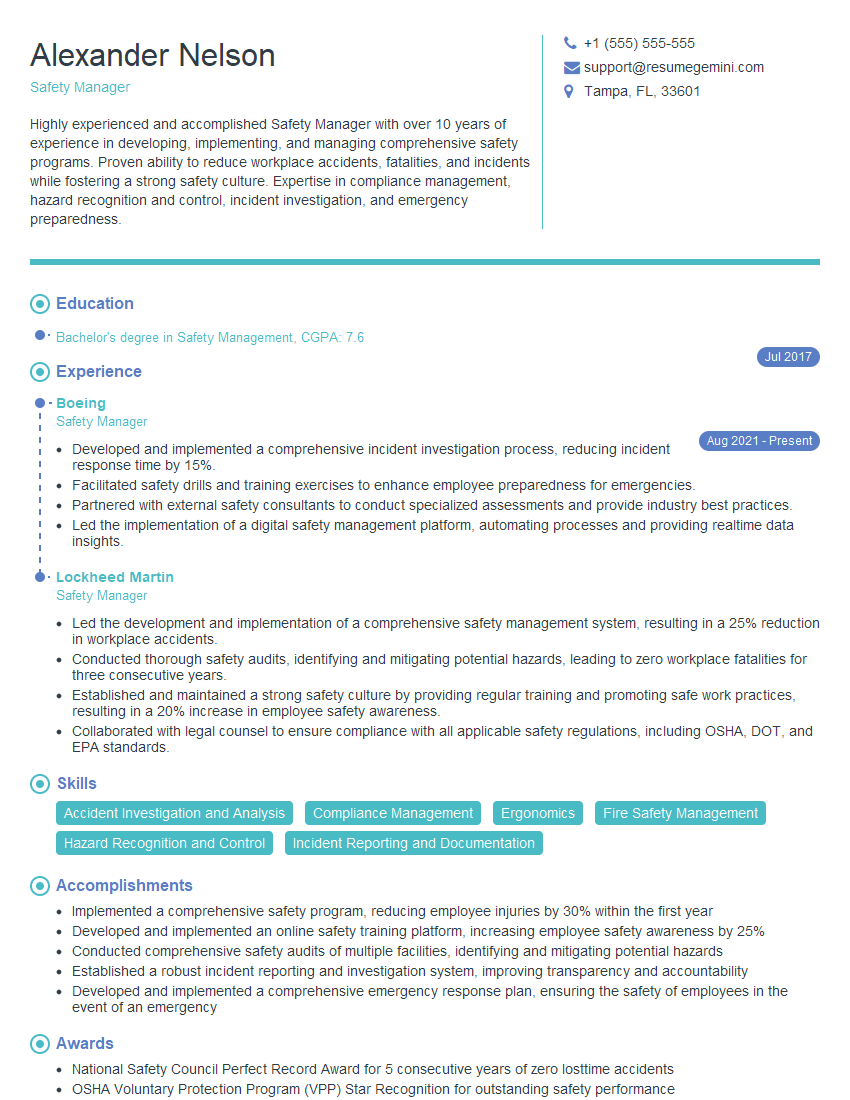
Safety Manager Resume Sample
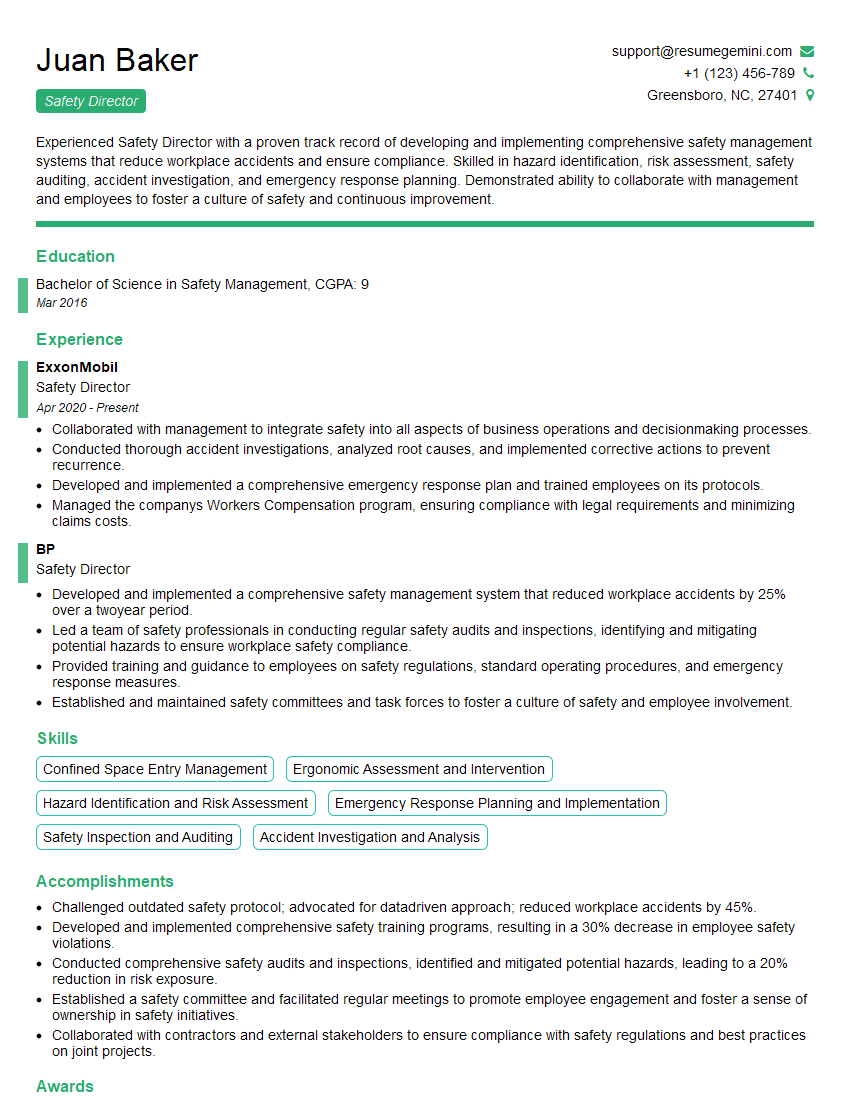
Safety Director Resume Sample

Compliance Officer Resume Sample
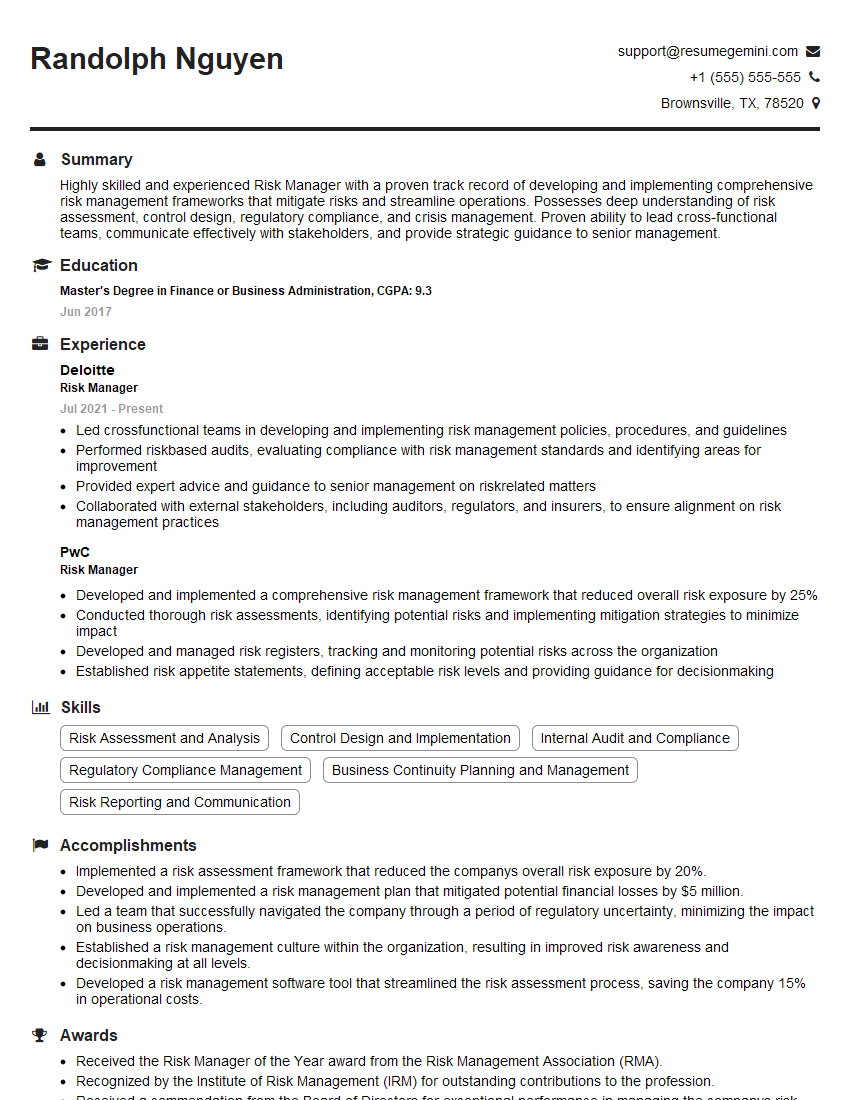
Risk Manager Resume Sample
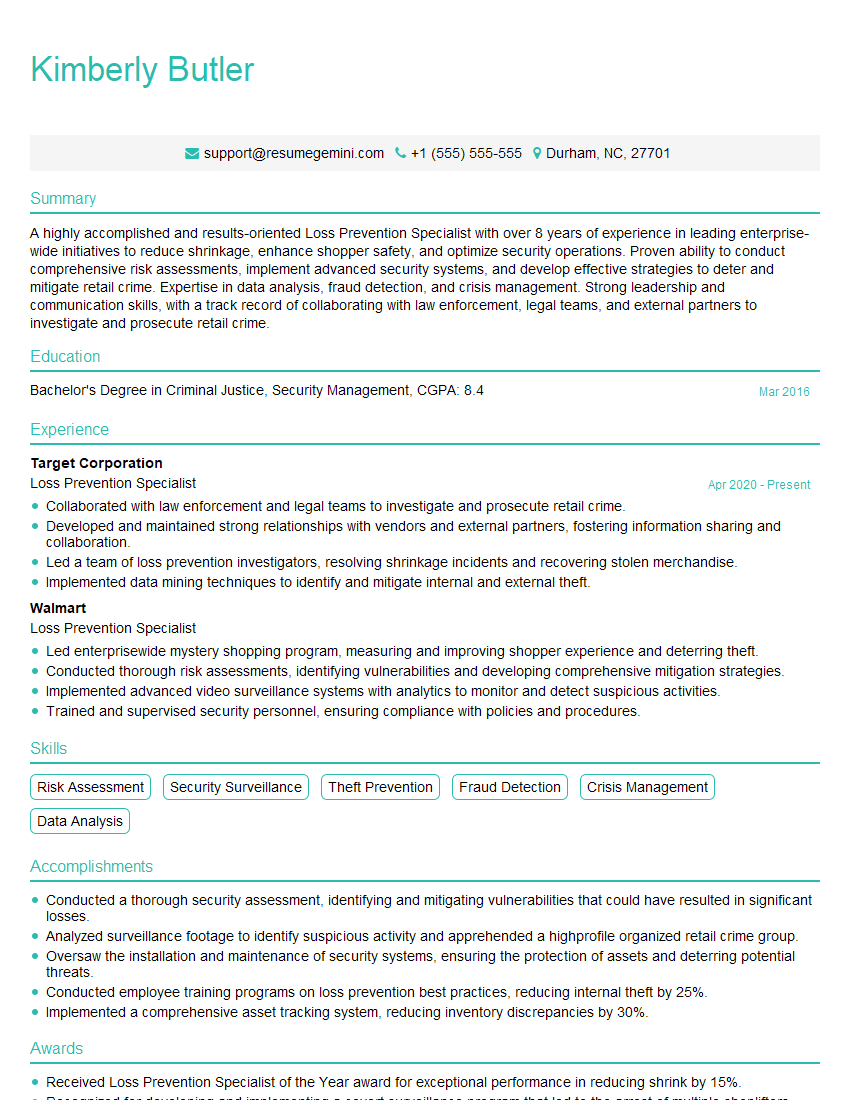
Loss Prevention Specialist Resume Sample
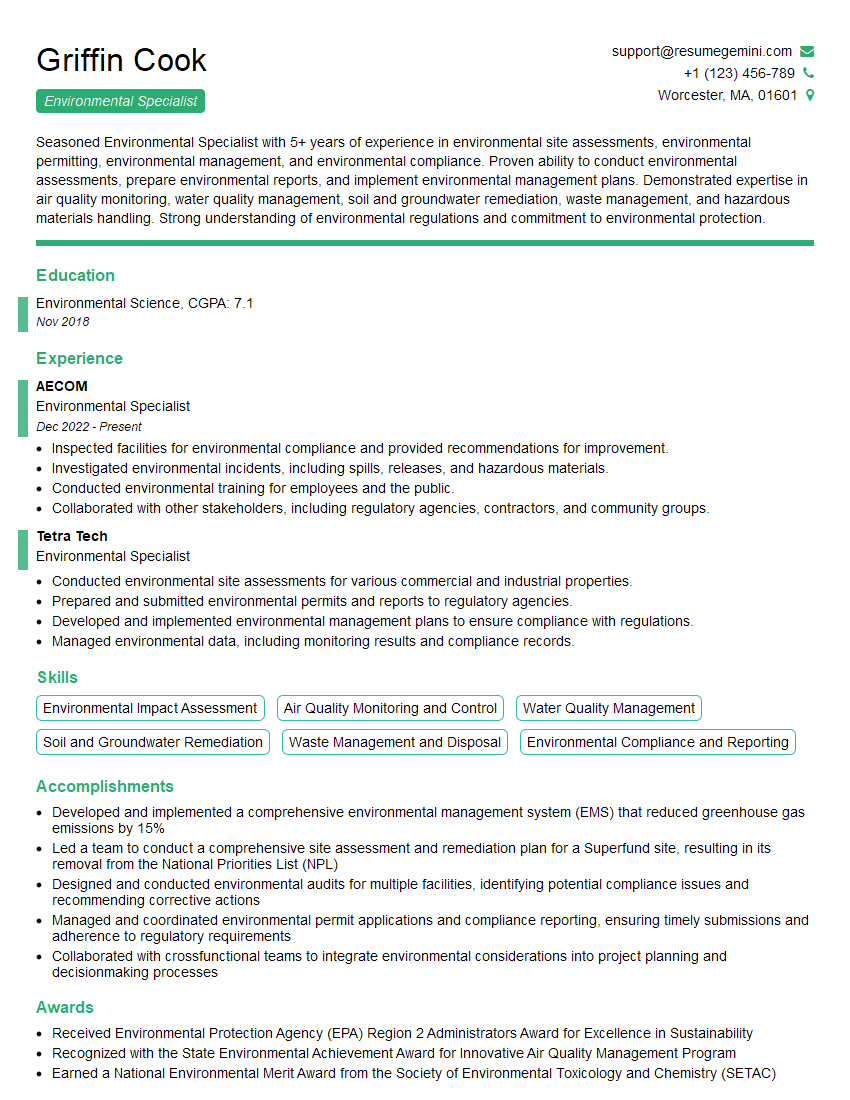
Environmental Specialist Resume Sample
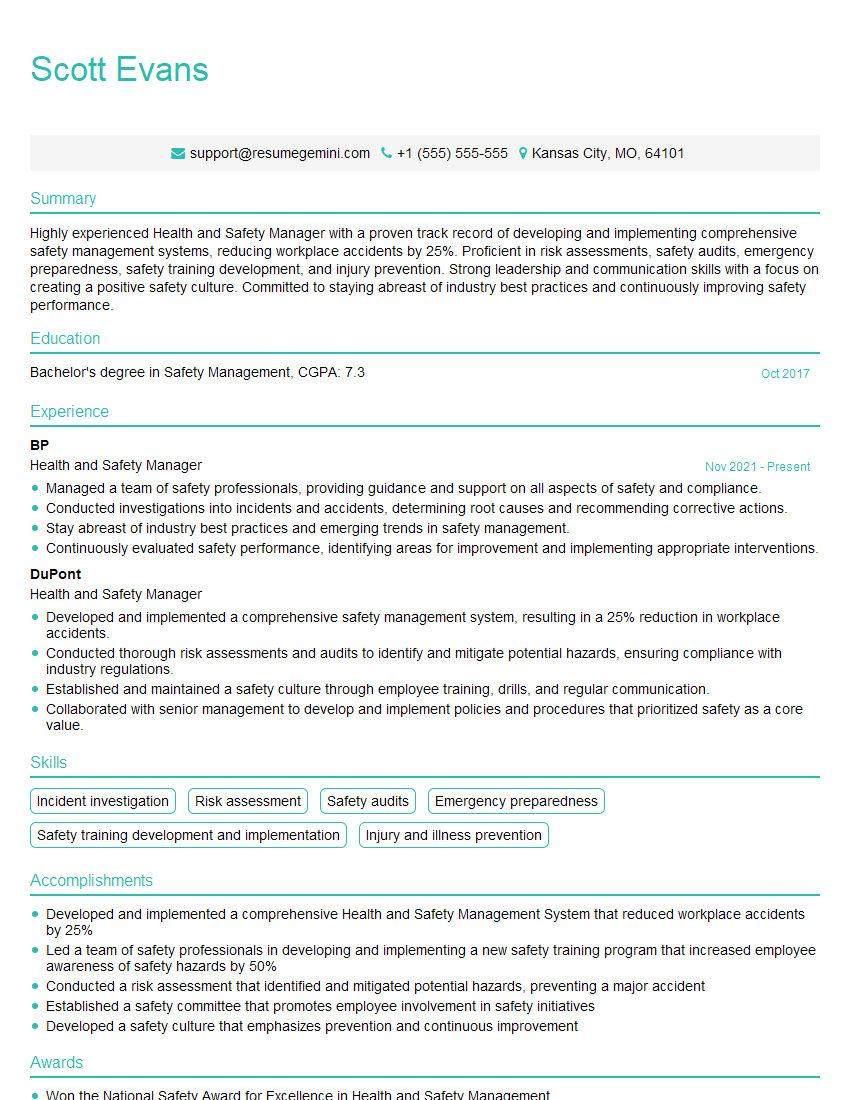
Health and Safety Manager Resume Sample
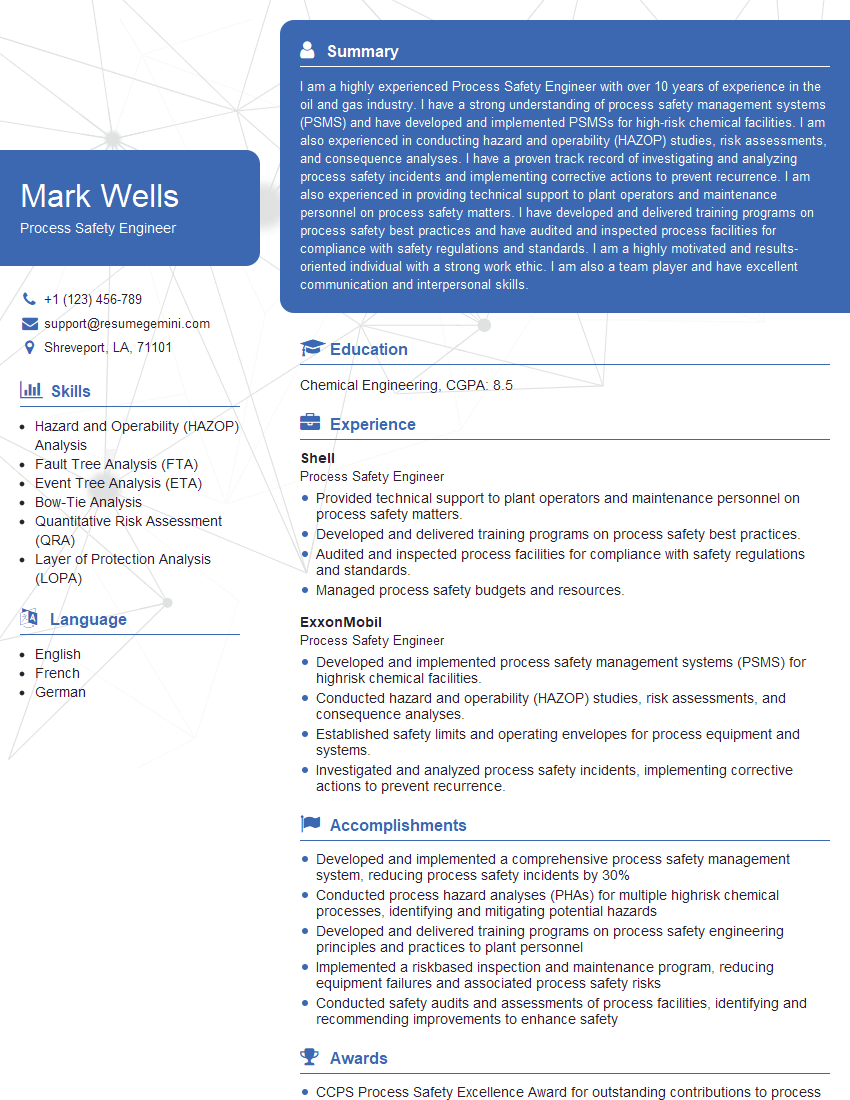
Process Safety Engineer Resume Sample
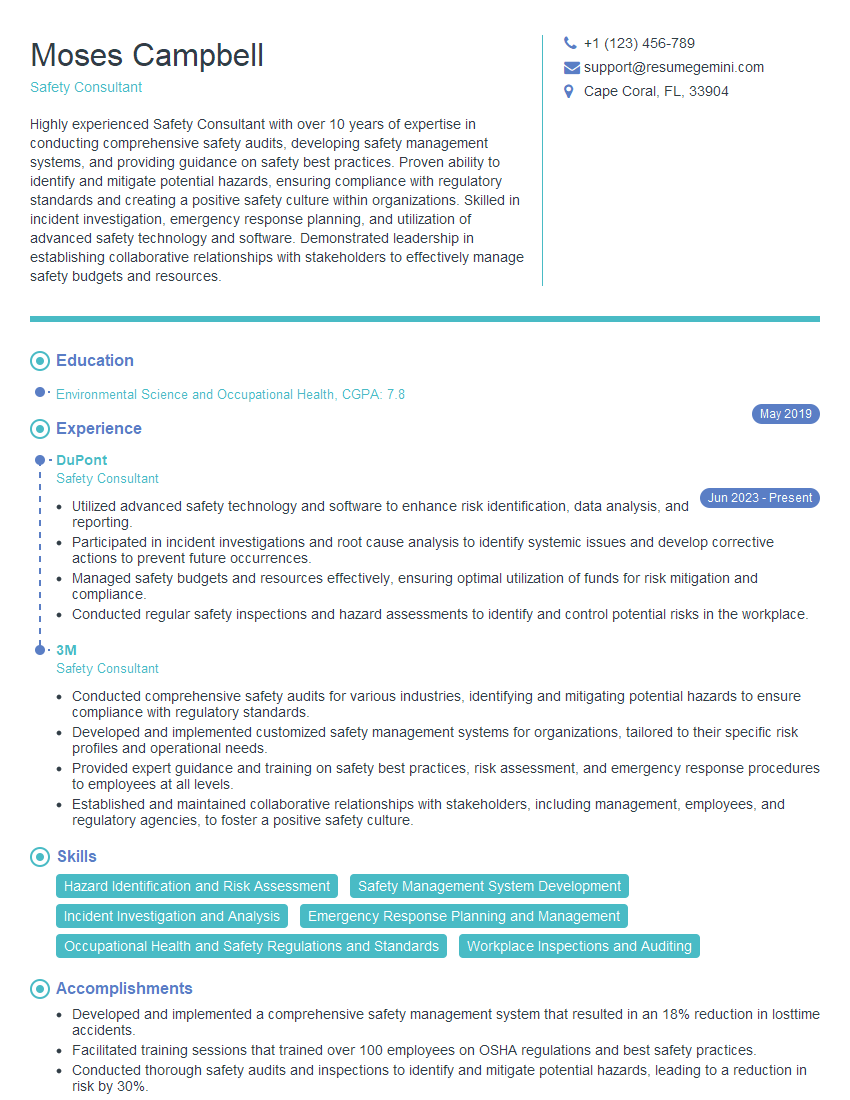
Safety Consultant Resume Sample
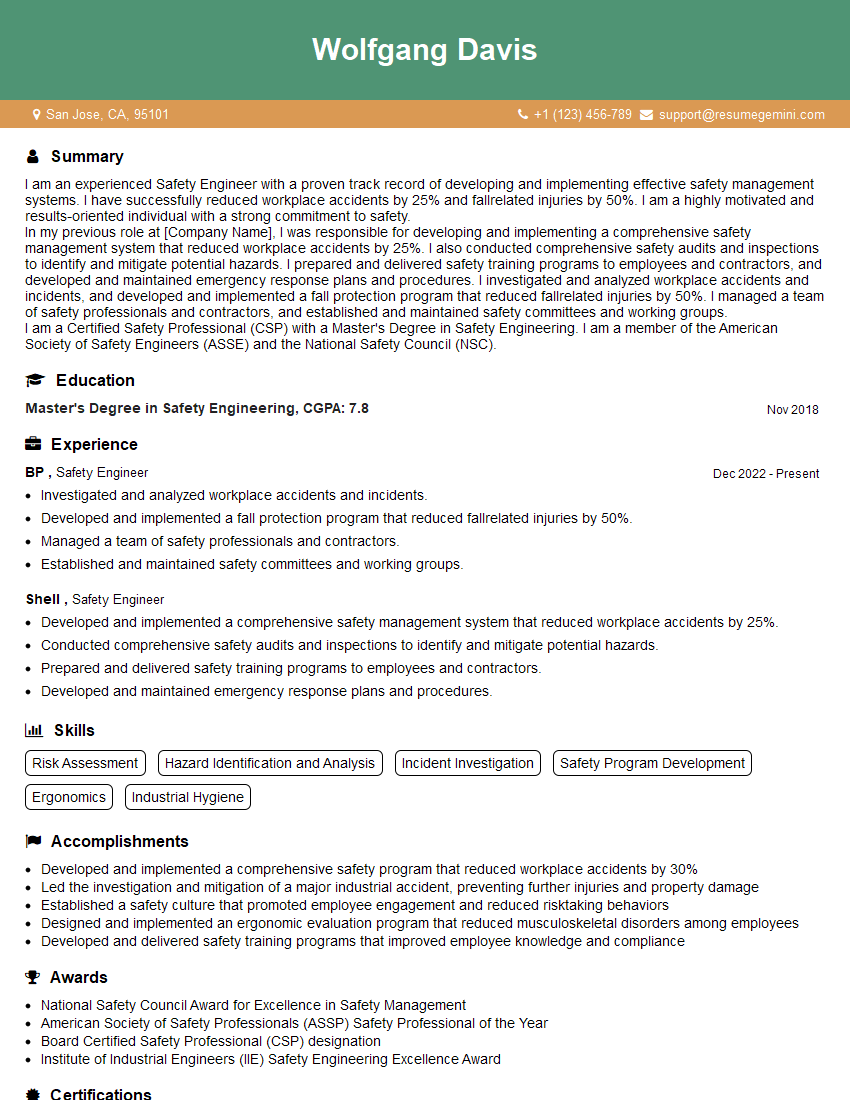
Safety Engineer Resume Sample
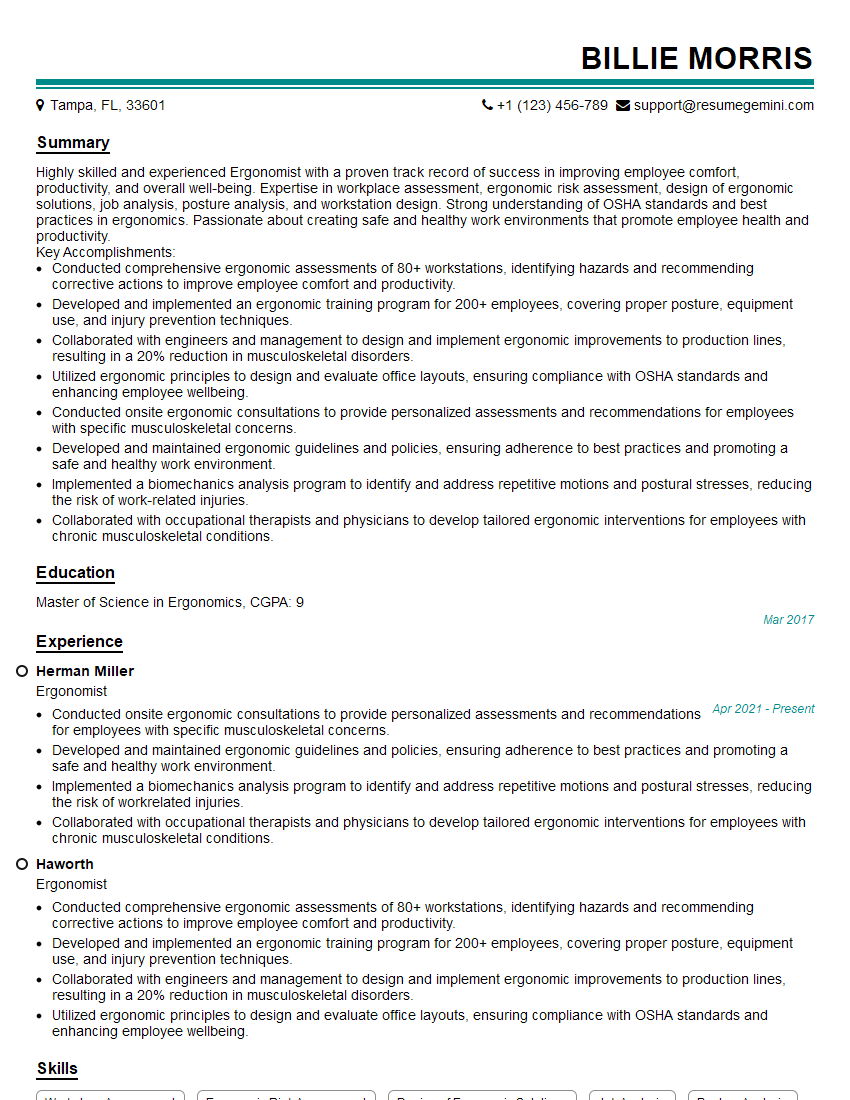
Ergonomist Resume Sample
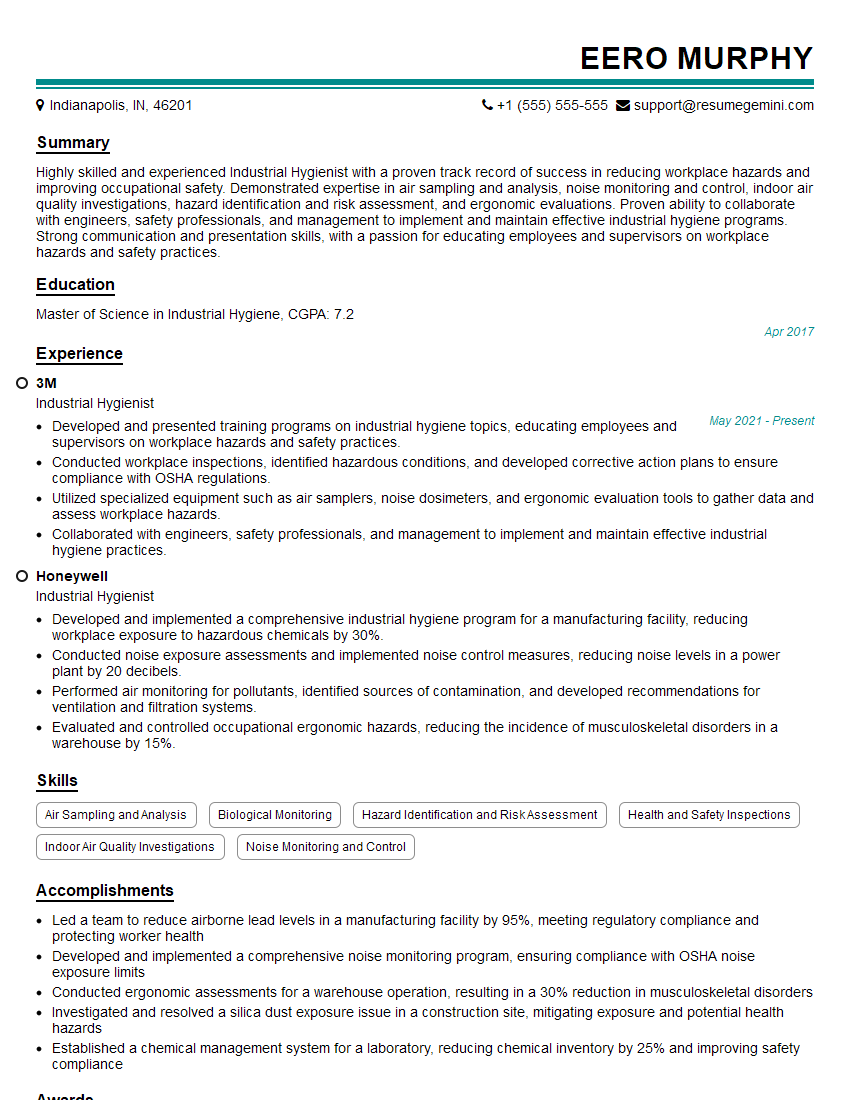
Industrial Hygienist Resume Sample
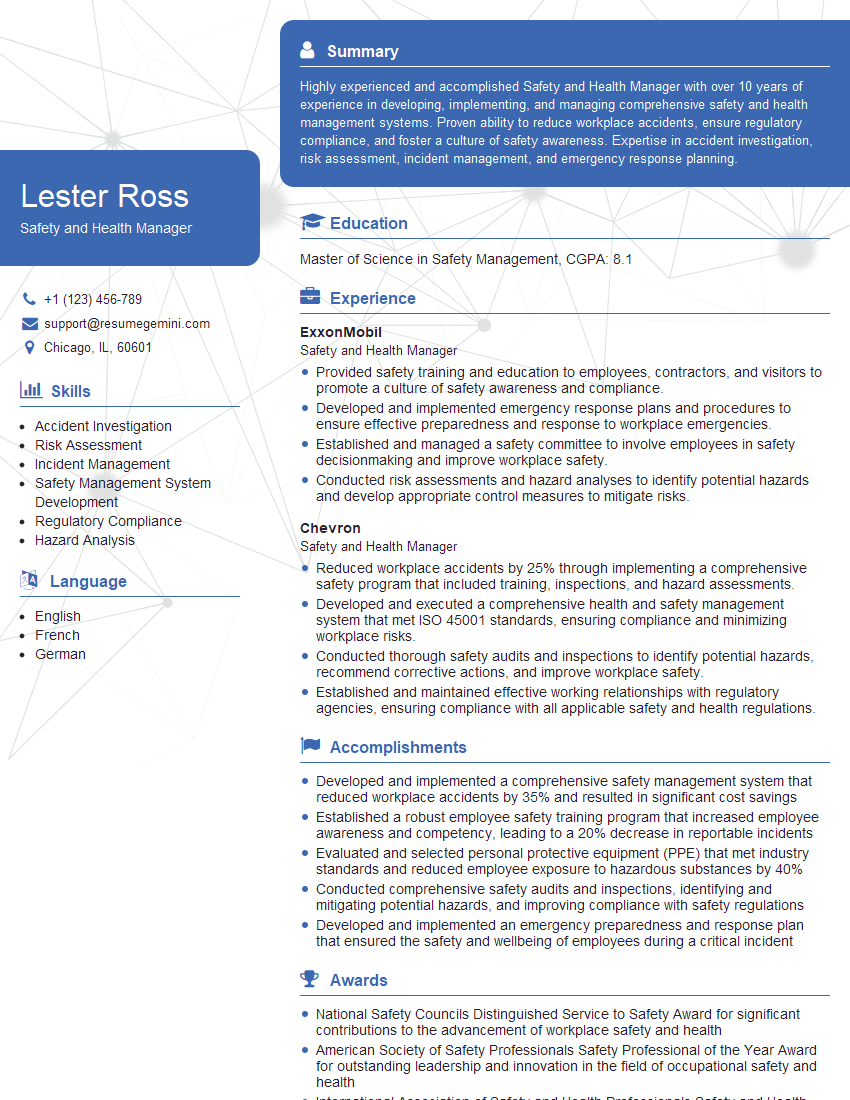
Safety and Health Manager Resume Sample
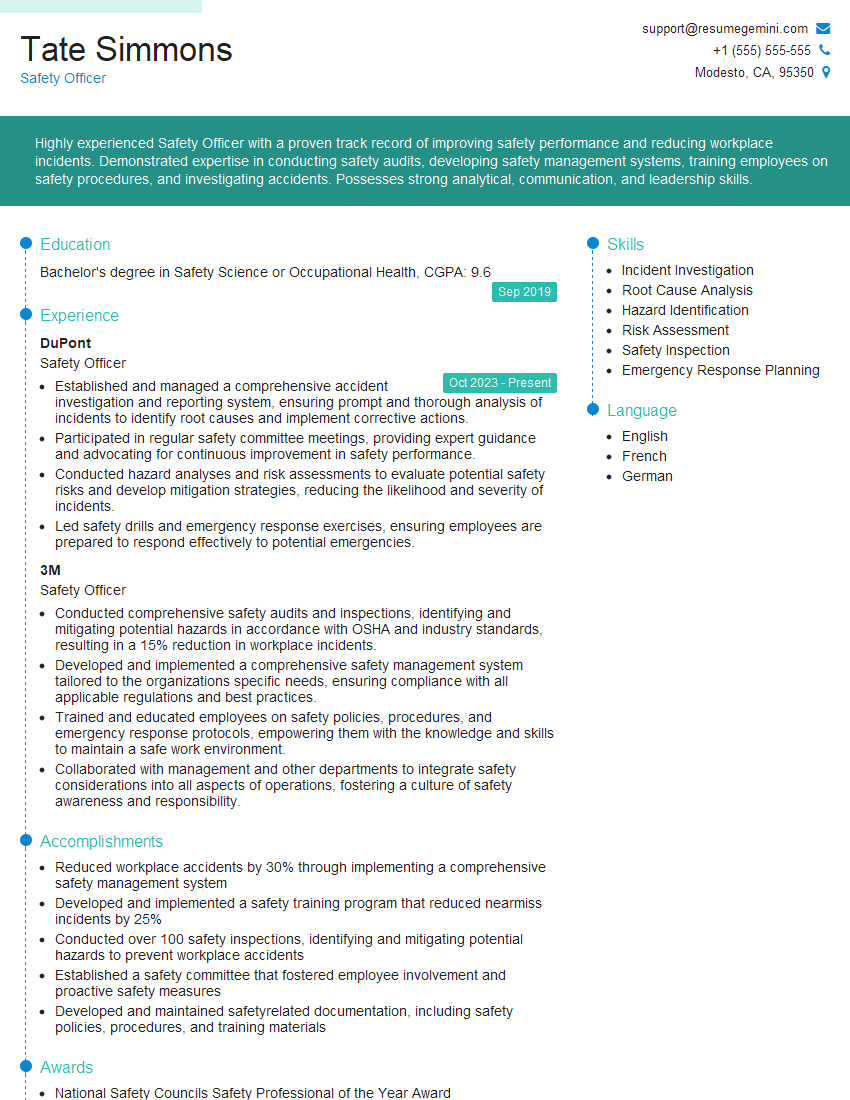
Safety Officer Resume Sample
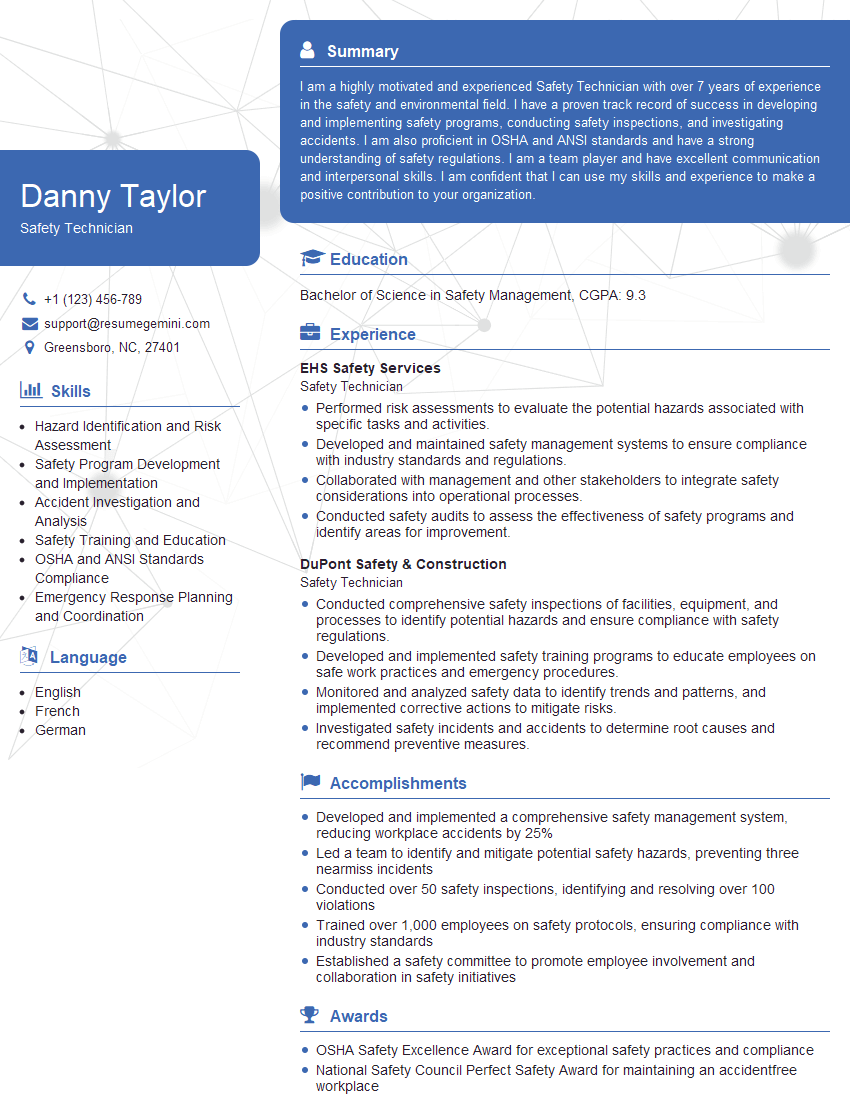
Safety Technician Resume Sample
Explore more articles
Users Rating of Our Blogs
Share Your Experience
We value your feedback! Please rate our content and share your thoughts (optional).
What Readers Say About Our Blog
Very informative content, great job.
good