Every successful interview starts with knowing what to expect. In this blog, we’ll take you through the top Joint Air Operations interview questions, breaking them down with expert tips to help you deliver impactful answers. Step into your next interview fully prepared and ready to succeed.
Questions Asked in Joint Air Operations Interview
Q 1. Describe your experience in planning and executing joint air operations.
My experience in planning and executing joint air operations spans over a decade, encompassing various roles from mission planning to execution and post-mission analysis. I’ve been involved in operations ranging from small-scale contingency operations to large-scale theater campaigns. This includes developing air tasking orders (ATO), coordinating with various national and coalition partners, and ensuring the seamless integration of diverse air assets to achieve operational objectives. For example, during Operation [Redacted], I was responsible for the air tasking order development for a multi-national force, successfully integrating fighter aircraft, bomber support, and close air support helicopters to achieve decisive effects against the enemy. This required detailed understanding of the capabilities of each asset, risk management, and careful consideration of the overall operational context.
A crucial aspect of this process is utilizing advanced planning tools and simulations to predict potential scenarios and optimize resource allocation. We leverage digital modeling to visualize the air battle space, factoring in weather conditions, threat assessments, and the capabilities of both friendly and enemy forces. This iterative planning process ensures the mission remains flexible and adaptable to changes in the operational environment.
Q 2. Explain the process of coordinating air support with ground forces.
Coordinating air support with ground forces is a critical aspect of joint air operations, demanding close collaboration and a shared understanding of objectives and timelines. This begins with establishing clear communication channels between the air and ground components, often using a combination of dedicated communication networks and established liaison officers. The process is typically initiated by a ground force request for close air support (CAS), which provides specific details such as target location, type of ordnance needed, and timelines.
The request then goes through a rigorous vetting process to confirm target identification, assess collateral damage risks, and ensure compatibility with air asset capabilities. This includes coordinate the type of munitions to be used, the altitude of the aircraft, and the trajectory of the munitions to minimize the risk of collateral damage. This often involves multiple layers of approval, and a joint team of Air Force and Army personnel collaboratively decides the best route of action, ensuring that air support actions are aligned with the overall ground force objectives and minimizing civilian casualties. After successful engagement, post-mission assessments are conducted to analyze the effectiveness of the air support provided, identifying areas for improvement in future coordination efforts. Using a standardized format for requests, as well as consistent communication protocols, streamlines this process significantly.
Q 3. How do you integrate different air assets (fighters, bombers, helicopters) in a joint operation?
Integrating different air assets – fighters, bombers, and helicopters – requires a comprehensive understanding of each platform’s capabilities and limitations, and a well-defined plan to leverage their synergistic effects. Fighters excel in air superiority and precision strikes, bombers provide sustained firepower and deep strike capabilities, and helicopters provide close air support and troop transport. The key is to orchestrate their actions in a coordinated manner, optimizing the use of each asset to achieve maximum effect.
For example, fighters might establish air superiority, suppressing enemy air defenses to allow bombers to penetrate deeper into enemy territory and conduct sustained attacks. Helicopters, meanwhile, provide close air support to ground troops, engaging targets of opportunity and providing critical support during assaults. This integration requires careful planning, often using a matrix that outlines the roles and responsibilities of each asset. It also requires robust communication networks and highly trained personnel who understand the tactical interdependencies among the different air platforms. Mission rehearsal and simulation tools are invaluable in refining the integration process prior to the actual operation.
Q 4. What are the key challenges in managing air space during a complex joint operation?
Managing airspace during a complex joint operation presents significant challenges, demanding precise coordination and adherence to strict protocols. The key challenges include:
- Air Traffic Control (ATC): Coordinating the movement of numerous aircraft from various nations, each with different communication protocols and operational procedures, is a complex task. Deconfliction of aircraft to prevent mid-air collisions requires sophisticated ATC systems and highly skilled controllers.
- Electronic Warfare (EW): The threat of enemy EW systems complicates airspace management, requiring robust countermeasures and careful planning to maintain situational awareness and protect friendly forces.
- Weather: Unforeseen weather changes can impact flight plans and operations, necessitating flexibility and adaptive planning.
- Civilian Airspace: Integration of military operations within civilian airspace demands careful coordination with civil aviation authorities to ensure safety and minimize disruptions to commercial air travel.
Effective airspace management depends on robust command and control systems, clear communication protocols, and collaborative efforts among all stakeholders. This includes close collaboration with civilian air traffic control to ensure safe integration of military and civilian flights.
Q 5. How do you ensure the safety of aircrews in a dynamic combat environment?
Ensuring aircrew safety in a dynamic combat environment is paramount. This involves a multi-layered approach encompassing:
- Pre-flight Planning: Meticulous mission planning, incorporating thorough threat assessments, comprehensive risk mitigation strategies, and contingency plans for various scenarios.
- Aircraft Maintenance: Stringent maintenance schedules and rigorous checks to ensure aircraft are airworthy and in optimal operational condition.
- Combat Search and Rescue (CSAR): Establishing robust CSAR capabilities, with dedicated rescue teams and aircraft readily available to respond to emergencies.
- Communication Systems: Utilizing reliable and secure communication systems to maintain constant contact with aircrews and provide real-time support and updates.
- Intelligence and Surveillance: Leveraging intelligence and surveillance assets to provide aircrews with accurate information about threats, allowing them to avoid dangerous situations.
Regular training exercises, pilot proficiency programs and ongoing risk management contribute to fostering a robust safety culture that prioritizes aircrew well-being. Post-mission debriefings and continuous improvement of safety procedures are essential in preventing accidents and maintaining the highest safety standards.
Q 6. Explain your understanding of the Joint Air Operations Center (JAOC) structure and function.
The Joint Air Operations Center (JAOC) serves as the central hub for planning, executing, and assessing joint air operations. It’s a highly dynamic environment where personnel from various services and nations collaborate to coordinate airpower. The structure is generally hierarchical, with dedicated sections focused on specific functions such as planning, execution, intelligence, and surveillance.
The JAOC’s functions include developing and disseminating air tasking orders (ATOs), coordinating air support with ground forces, managing airspace, and monitoring the progress of missions. The personnel within the JAOC, which includes experienced Air Force, Navy, and potentially Army/Marine personnel, work as a team to make critical decisions concerning the execution of air operations. The JAOC is equipped with state-of-the-art communication and information systems, enabling seamless information sharing and collaborative decision-making. In essence, the JAOC is the brain of the air campaign, ensuring the efficient and effective use of airpower to achieve operational objectives.
Q 7. Describe your experience with air-to-ground targeting and coordination.
My experience with air-to-ground targeting and coordination includes extensive work in selecting appropriate ordnance, validating target coordinates, and coordinating with ground forces to ensure accurate engagement. This process begins with detailed intelligence gathering to confirm target location, size, and surrounding environment, minimizing the risk of civilian casualties and collateral damage. Once a target is identified and validated, the next step involves selecting the appropriate ordnance based on target characteristics, collateral damage concerns, and desired effect.
Effective coordination with ground forces is crucial throughout this process. This often involves using joint targeting boards and sharing real-time intelligence and reconnaissance data. The use of digital tools, such as advanced targeting systems and sophisticated modeling software, play a crucial role in improving the accuracy and efficiency of air-to-ground targeting operations. Post-strike assessments are critical for evaluating the effectiveness of the attack and identifying lessons learned for future operations.
Q 8. How do you assess and mitigate risks associated with air operations?
Risk assessment and mitigation in air operations is a crucial, multi-faceted process. It involves identifying potential hazards across the entire mission lifecycle, from planning to execution and recovery. We utilize a systematic approach, often employing a risk matrix that considers the likelihood and severity of various threats.
- Threat Identification: This includes analyzing potential enemy actions (e.g., air defenses, fighter interceptors), environmental factors (e.g., weather, terrain), and operational risks (e.g., mechanical failure, communication disruptions).
- Risk Assessment: We quantitatively assess each identified threat, assigning probabilities and impact levels. This allows prioritization of mitigation efforts.
- Mitigation Strategies: Based on the assessment, we implement appropriate mitigation strategies. These may involve altering flight paths to avoid known threats, employing electronic warfare countermeasures, increasing aircraft maintenance frequency, or incorporating redundant communication systems. For example, if we anticipate strong enemy air defenses in a particular area, we might employ suppression of enemy air defenses (SEAD) assets before main force attacks.
- Contingency Planning: We develop detailed contingency plans for various scenarios. This includes having pre-planned alternate routes, fuel-up points, and emergency landing sites. This is crucial for dealing with unforeseen events like equipment malfunctions or unexpected enemy activity.
- Post-Mission Debriefing: Thorough post-mission analysis is vital. We review what worked, what didn’t, and what could be improved for future missions. This continuous improvement cycle is key to minimizing risks over time.
For instance, during Operation Desert Storm, meticulous risk assessment and detailed contingency planning involving coalition air forces played a significant role in minimizing losses despite facing a formidable Iraqi air defense system.
Q 9. What are the different types of air-to-air refueling techniques?
Air-to-air refueling (AAR) is a critical capability enabling extended range and endurance for combat aircraft. There are primarily two techniques:
- Probe-and-drogue: This is the most common method. The receiving aircraft uses a probe to connect to a drogue (a refueling receptacle) extended from the tanker aircraft. This system is relatively simple and robust but requires precise maneuvering.
- Boom system: The tanker aircraft extends a boom that is manually controlled by the boom operator to connect with a receptacle on the receiving aircraft. This method allows for a higher refueling rate and is often preferred for larger aircraft. However, it is more complex and requires a higher level of skill and coordination between the tanker and receiver.
The choice of technique depends on factors such as the aircraft types involved, weather conditions, and mission requirements. For example, the smaller, more agile F-16 fighter would likely use a probe-and-drogue system, while a larger bomber might use a boom system for its higher refueling rate.
Q 10. Explain your knowledge of air defense systems and their integration into air operations.
Air defense systems (ADS) are a major consideration in joint air operations. Understanding their capabilities and limitations is critical for mission planning and execution. ADS encompass a wide range of sensors and weapons, including:
- Radars: Used to detect and track airborne threats.
- Surface-to-air missiles (SAMs): Guided missiles designed to intercept aircraft.
- Anti-aircraft artillery (AAA): Guns used to engage low-flying aircraft.
- Electronic warfare (EW) systems: Used to jam or disrupt enemy radars and communications.
The integration of ADS into air operations planning involves:
- Threat assessment: Identifying the types and capabilities of enemy ADS.
- Route planning: Selecting flight paths that minimize exposure to enemy defenses.
- Suppression of enemy air defenses (SEAD): Employing dedicated assets to neutralize or degrade enemy ADS before the main attack.
- Electronic attack (EA): Using electronic warfare to jam enemy radars or disrupt their communications.
- Defensive countermeasures (DCM): Equipping aircraft with systems to evade or defeat enemy weapons, such as chaff and flares.
Effective integration of ADS considerations is crucial for minimizing friendly casualties and maximizing operational effectiveness. Failure to adequately account for ADS can lead to mission failure or significant losses.
Q 11. How do you use air intelligence to inform air operation planning?
Air intelligence is the lifeblood of effective air operation planning. It provides the critical information necessary to make informed decisions about mission objectives, targeting, and risk mitigation. This includes:
- Target intelligence: Detailed information about enemy assets, their location, and their vulnerabilities.
- Order of battle (OB): Information about the enemy’s military organization and capabilities.
- Electronic intelligence (ELINT): Information gathered from intercepting enemy radar and communication signals.
- Signals intelligence (SIGINT): Intelligence derived from intercepting communications.
- Imagery intelligence (IMINT): Intelligence derived from satellite and aerial imagery.
We use this intelligence to:
- Identify targets: Pinpoint high-value targets that best support overall campaign objectives.
- Assess risks: Identify potential threats and vulnerabilities along planned flight paths.
- Develop tactics: Develop strategies to maximize effectiveness while minimizing risk.
- Evaluate success: Measure the effectiveness of air operations.
For example, during the Kosovo War, extensive use of intelligence gathering and analysis allowed for precise targeting of Serbian military infrastructure, minimizing collateral damage while achieving significant military objectives.
Q 12. Describe your experience in developing and implementing air campaign plans.
Developing and implementing air campaign plans is a complex, iterative process that requires collaboration amongst various stakeholders. It typically involves:
- Defining objectives: Clearly defining the political and military goals of the campaign.
- Targeting: Identifying and prioritizing targets based on their military significance and vulnerability.
- Force allocation: Assigning the appropriate aircraft and weapons systems to each mission.
- Timeline development: Establishing a sequence of operations to achieve campaign objectives.
- Risk assessment: Identifying and mitigating potential risks throughout the campaign.
- Contingency planning: Developing plans for unforeseen circumstances.
The process involves multiple iterations of planning and refinement based on feedback and intelligence updates. I’ve been involved in developing campaigns involving various scenarios, from large-scale air superiority operations to precision strike campaigns targeting specific high-value assets. This experience has honed my ability to balance competing priorities, manage resources efficiently, and adapt to changing circumstances.
Q 13. How do you manage communication and coordination among various air and ground units?
Effective communication and coordination are paramount in joint air operations. This requires a robust and integrated communication architecture using various systems including:
- Data links: Secure digital communication links enabling the exchange of real-time information between aircraft, ground stations, and command centers.
- Voice communication: Maintaining clear and concise voice communication channels for critical situational awareness and coordination.
- Link 16: A tactical data link system allowing for secure and rapid communication between multiple platforms and units. It’s essential for collaborative engagements involving numerous aircraft and ground control assets.
We use standardized procedures and protocols to ensure consistent communication and avoid confusion. This includes clearly defined roles and responsibilities, standardized terminology, and regular briefings and debriefings. We also leverage various communication tools to ensure real-time awareness of the operational environment and to relay critical information to all participating units efficiently.
For instance, coordinating a complex air strike involving multiple aircraft requires real-time data exchange regarding target location, enemy air defenses, and friendly force positions. Link 16 enables that efficient and secure information sharing for a successful mission.
Q 14. What are your experiences in handling unforeseen circumstances during air operations?
Handling unforeseen circumstances is an inherent part of air operations. Effective response requires adaptability, sound judgment, and swift decision-making. I’ve encountered numerous situations requiring immediate problem-solving, such as:
- Equipment malfunctions: Dealing with aircraft mechanical issues requiring emergency landing procedures or alternative mission strategies.
- Unexpected enemy activity: Adapting flight plans or tactics in response to unexpected enemy actions, such as the sudden appearance of hostile aircraft or air defense systems.
- Adverse weather conditions: Adjusting mission plans to account for changes in weather patterns that could impact mission safety or effectiveness. This might involve diverting to alternate airfields or delaying operations until conditions improve.
- Communication failures: Implementing backup communication plans to ensure the continued flow of information when primary communication systems fail.
My experience has taught me the importance of thorough pre-planning, contingency planning, and maintaining a flexible mindset. The ability to quickly assess the situation, make informed decisions under pressure, and communicate those decisions effectively to all involved parties is crucial for mitigating risks and ensuring mission success, even amidst unforeseen circumstances.
Q 15. How do you prioritize air assets based on operational needs?
Prioritizing air assets hinges on a dynamic process that balances operational needs against available resources. It’s not a simple checklist, but a constant reassessment based on the evolving situation. We utilize a tiered approach:
- Immediate Needs: Assets are allocated first to address the most pressing threats, such as downed pilots requiring immediate rescue or imminent attacks on friendly forces. This is often driven by real-time intelligence and immediate combat necessity.
- High-Priority Objectives: Next, we allocate resources to objectives directly contributing to the overall mission goals. This might involve suppressing enemy air defenses to enable other operations or conducting precision strikes on high-value targets identified by intelligence. Here, careful assessment of risk versus reward is critical.
- Supporting Operations: Resources are then assigned to support missions, such as reconnaissance, close air support, or airlift. This involves assessing the impact on the broader operational plan and ensuring overall effectiveness.
- Contingency Planning: Finally, we allocate a reserve of assets for unforeseen circumstances or emergencies that may arise. This ensures flexibility and responsiveness to unexpected developments.
This process often involves sophisticated battle management systems that provide real-time updates on asset availability, location, and status, aiding in making data-driven decisions.
For example, during a large-scale operation, we might prioritize fighter jets for suppressing enemy air defenses before committing bombers to strike high-value targets, while simultaneously deploying transport aircraft for troop movements. This sequential prioritization ensures efficient use of our assets and reduces risk.
Career Expert Tips:
- Ace those interviews! Prepare effectively by reviewing the Top 50 Most Common Interview Questions on ResumeGemini.
- Navigate your job search with confidence! Explore a wide range of Career Tips on ResumeGemini. Learn about common challenges and recommendations to overcome them.
- Craft the perfect resume! Master the Art of Resume Writing with ResumeGemini’s guide. Showcase your unique qualifications and achievements effectively.
- Don’t miss out on holiday savings! Build your dream resume with ResumeGemini’s ATS optimized templates.
Q 16. Describe your understanding of the rules of engagement (ROE) in air operations.
Rules of Engagement (ROE) in air operations are legally binding directives specifying the circumstances under which military force may be used. They define the boundaries of acceptable engagement, balancing the need for decisive action with the imperative to minimize civilian casualties and collateral damage. ROEs are usually tailored to each specific operation and often encompass:
- Identification of targets: Strict procedures ensure positive identification to avoid friendly fire incidents and collateral damage. This often involves multiple layers of confirmation before engaging a target.
- Weapons systems and munitions: Specific weapons systems and types of munitions may be authorized depending on the circumstances and the target. Precision-guided munitions are favored whenever possible to limit collateral damage.
- Engagement criteria: This outlines specific conditions under which force can be employed, for example, only when under direct attack, or when engaged in self-defense.
- De-escalation and proportionality: ROEs stress the importance of de-escalation measures, only using the minimum force necessary to achieve military objectives. Proportional response to threats is paramount, avoiding excessive force that might cause unnecessary harm.
ROEs are critical in maintaining operational legality, fostering trust among allies, and mitigating potential negative consequences. Strict adherence is essential for successful mission execution and for maintaining public and international support.
Q 17. How do you ensure compliance with International Humanitarian Law (IHL) during air operations?
Compliance with International Humanitarian Law (IHL) is paramount in air operations. IHL comprises customary international law and treaties, including the Geneva Conventions, that aim to protect civilians and limit the harm caused during armed conflict. To ensure compliance, several measures are implemented:
- Strict Targeting Procedures: We use rigorous procedures to ensure that all targets are legally valid military objectives. This involves meticulously analyzing intelligence, using multiple sources to verify information and minimizing the risk of civilian harm.
- Precision-Guided Munitions: The use of precision-guided munitions is prioritized whenever feasible to minimize civilian casualties and collateral damage. This improves the accuracy of strikes and reduces the risk of unintended harm.
- Risk Assessment and Mitigation: Before any air operation, a thorough risk assessment is undertaken to identify potential threats to civilian populations and develop mitigation strategies. This often involves identifying and avoiding areas with high civilian density.
- Post-Strike Assessments: After every strike, a comprehensive assessment is conducted to evaluate the effectiveness of the operation, assess collateral damage, and identify lessons learned for future operations. Independent assessments are beneficial in maintaining transparency and accountability.
- Training and Education: All personnel involved in air operations receive extensive training on IHL principles and their practical application. Regular refresher courses and updates on relevant case law are necessary to maintain proficiency.
A failure to comply with IHL can result in serious legal and political ramifications. The ultimate aim is to conduct air operations effectively while upholding the highest standards of humanitarian principles.
Q 18. What are the key performance indicators (KPIs) used to measure the effectiveness of air operations?
Key Performance Indicators (KPIs) for measuring the effectiveness of air operations are multifaceted and depend on the specific operational objectives. However, some common KPIs include:
- Target Acquisition and Destruction: This measures the success rate in acquiring and destroying designated targets. Data includes the number of targets engaged, the percentage of successful strikes, and the overall accuracy of munitions used.
- Mission Success Rate: This evaluates the overall achievement of operational objectives, taking into account all aspects of the mission, from planning and execution to post-mission analysis.
- Collateral Damage Assessment: While aiming to minimize it, it’s vital to accurately assess and document any collateral damage and civilian casualties to understand the consequences and improve future operations.
- Sortie Rate and Availability of Assets: Measuring the number of sorties flown, alongside the rate of aircraft availability (uptime versus downtime for maintenance), helps us assess operational readiness and the efficient use of assets.
- Timeliness and Response: This KPI evaluates the responsiveness to the evolving situation. It considers the speed at which air assets were deployed and how effectively they addressed time-sensitive threats.
- Cost-Effectiveness: Evaluating the resources used against the results achieved helps determine operational efficiency and optimize future resource allocation.
These KPIs are tracked and analyzed to identify areas for improvement, enhance future planning, and demonstrate accountability for the effective use of military resources.
Q 19. How do you assess the impact of air operations on civilian populations?
Assessing the impact of air operations on civilian populations is a complex and critical responsibility. We employ a multi-layered approach:
- Pre-Strike Intelligence Gathering: Thorough intelligence gathering before any strike is crucial. This involves analyzing the potential presence of civilians in the target area, assessing the likelihood of collateral damage, and exploring alternative courses of action.
- Real-time Monitoring: During the operation itself, we maintain situational awareness to identify and respond to any unforeseen civilian presence or unintended effects.
- Post-Strike Assessment and Damage Reports: After each air operation, a comprehensive assessment of the impact on civilian populations is undertaken. This frequently uses imagery and ground reports to determine collateral damage and civilian casualties.
- Humanitarian Aid and Support: In cases of unintentional civilian harm, we actively engage in humanitarian aid and support efforts to mitigate the negative consequences and provide assistance to affected communities.
- Independent Verification: Independent verification of assessments can be sought from impartial sources such as humanitarian organizations and international observers to ensure objective evaluation and accountability.
This comprehensive approach is vital for managing potential risks and ensuring our operations align with international humanitarian law and ethical standards.
Q 20. Describe your experience with deconfliction procedures for air operations.
Deconfliction procedures are crucial in preventing accidents and maintaining safety in a complex air space. These procedures involve coordinating the movement of multiple aircraft and other air assets to prevent collisions or unintended engagements. The process usually involves:
- Detailed Flight Planning: Precise flight paths, altitudes, and timing are meticulously planned and communicated to all relevant parties.
- Real-time Communication: Continuous communication between aircrews, air traffic control, and other coordinating entities is vital in identifying and resolving potential conflicts.
- Use of Identification and Tracking Systems: Sophisticated identification systems and tracking technologies allow for real-time monitoring of air assets, aiding in predicting and preventing potential clashes.
- Clear Communication Protocols: Establishing clear communication protocols, including standardized terminology and procedures, minimizes ambiguity and ensures efficient resolution of potential conflicts.
- Conflict Resolution Mechanisms: Clear procedures are established for handling conflicts that may arise despite meticulous planning. This frequently involves adjusting flight paths, altitudes, or timing to ensure safe separation.
A failure in deconfliction could result in serious accidents, loss of life, and damage to equipment. It’s therefore a constantly practiced and vital element of maintaining a safe air operational environment.
Q 21. How do you maintain situational awareness in a fast-paced air operation environment?
Maintaining situational awareness (SA) in fast-paced air operations is critical for mission success and safety. This is achieved through a combination of:
- Sensor Integration: This involves integrating data from various sensors, such as radar, satellite imagery, and electronic warfare systems, to provide a comprehensive picture of the operational environment.
- Real-time Data Fusion: Advanced data fusion technologies consolidate and interpret data from multiple sources to provide a cohesive and accurate picture, minimizing conflicting or incomplete information.
- Communication Networks: Robust communication networks facilitate the rapid exchange of critical information between aircrews, ground stations, and command centers.
- Battle Management Systems: Sophisticated battle management systems integrate various data streams and provide a common operational picture to decision-makers, enabling efficient resource allocation and coordination.
- Human-Machine Interfaces: Effective human-machine interfaces, such as intuitive displays and decision-support tools, allow aircrew and operators to efficiently process information and react to changing conditions.
- Continuous Training and Rehearsal: Regular training exercises and rehearsals improve the collective situational awareness of teams, improving coordination, communication, and reaction times.
Think of it as having a 360-degree view that continuously updates. Losing situational awareness can lead to disastrous consequences, making the constant vigilance and integration of information streams paramount.
Q 22. Explain your understanding of the Joint Publication 3-0 (JP 3-0) doctrine.
Joint Publication 3-0, or JP 3-0, is the foundational doctrine for joint operations. It outlines the principles, processes, and procedures for planning and executing military operations involving forces from two or more Military Services. At its core, JP 3-0 emphasizes the importance of unified action under a single commander, despite the diverse capabilities and organizational structures of the participating services. It stresses the need for clear command and control, effective communication, and a shared operational understanding to achieve a common objective.
The doctrine covers a wide range of aspects, including:
- Joint Force Commander’s role: Defining the JFC’s responsibilities and authority in planning and executing operations.
- Operational design: The process of translating political and military objectives into a comprehensive operational plan.
- Planning processes: Establishing the procedures for collaborative planning, including the development of concepts of operations, plans, and orders.
- Execution: The process of putting the plan into action and monitoring its progress.
- Assessment: Evaluating the effectiveness of the operation and making necessary adjustments.
Understanding JP 3-0 is crucial for anyone involved in joint operations, ensuring everyone is operating under the same set of rules and principles. A good analogy would be a complex orchestra: JP 3-0 provides the score, allowing diverse instruments (military services) to play in harmony, producing a cohesive and effective performance.
Q 23. Describe your experience with different types of air support missions (CAS, interdiction, etc.).
I’ve extensive experience across various air support missions, each demanding unique coordination and execution. Close Air Support (CAS) involves providing air power directly to ground forces in close proximity to the enemy. This requires extremely precise targeting and coordination to minimize civilian casualties and friendly fire incidents. I’ve participated in numerous CAS missions, leveraging advanced technologies like Joint Terminal Attack Controllers (JTACs) for real-time target identification and engagement. One notable experience involved supporting a ground unit pinned down by enemy fire; accurate CAS strikes enabled their disengagement and ultimately contributed to the mission’s success.
Interdiction, on the other hand, focuses on disrupting enemy forces and supplies before they reach the battlefield. This involves targeting enemy logistical lines, troop movements, and weapon systems further removed from the frontline. I’ve planned and executed interdiction missions involving both manned and unmanned aerial vehicles, coordinating strikes with intelligence data to maximize effectiveness and minimize collateral damage. For instance, a successful interdiction mission we conducted targeted a key bridge used by the enemy to transport supplies; destroying it severely hampered their logistics capabilities. Other mission types, such as Suppression of Enemy Air Defenses (SEAD) and Air Interdiction, are also integral to the success of broader joint air operations, and all require detailed planning and flawless execution.
Q 24. How do you utilize technology such as command and control systems in joint air operations?
Command and control (C2) systems are the backbone of joint air operations. Modern C2 systems provide a real-time, integrated view of the battlespace, allowing commanders to monitor the situation, track assets, and issue directives. I have significant experience using various C2 systems, including those employed at the theater, operational, and tactical levels. These systems integrate data from multiple sources, including radar, satellites, and intelligence networks, providing a comprehensive picture.
For example, we utilized a theater-level C2 system during a large-scale operation, integrating data from various national and allied forces. This enabled efficient allocation of assets, real-time conflict resolution, and coordination of air-to-air and air-to-ground missions. These systems are not merely technological tools; they are crucial components of the decision-making process, enabling timely and informed responses to changing battlefield conditions. They are the nervous system of any successful joint air operation and must be expertly managed and utilized.
Q 25. Describe your experience with pre-mission briefings and post-mission debriefings.
Pre-mission briefings are critical for establishing a shared understanding and ensuring mission success. They involve a detailed review of the operational plan, including objectives, timelines, potential risks, communication protocols, and contingency plans. Each aircrew and supporting element receives specific instructions tailored to their roles. I always emphasize clear communication, active listening, and a collaborative approach during these briefings, fostering a climate of open discussion and ensuring all queries are addressed. The objective is to ensure everyone has the same picture and is prepared for any eventuality.
Post-mission debriefings are equally important for identifying lessons learned and improving future operations. These sessions involve a critical review of the mission execution, analyzing successes, failures, and areas for improvement. I actively encourage open dialogue, seeking feedback from all participants, regardless of their rank. The goal is not to assign blame but to identify areas for improvement in tactics, procedures, and equipment. Detailed reports are often produced, incorporating feedback which then inform future training and operational planning. This iterative process of learning from each mission significantly enhances operational effectiveness over time.
Q 26. Explain your understanding of the different levels of command and control in joint air operations.
Command and control in joint air operations is hierarchical, typically operating across strategic, operational, and tactical levels. At the strategic level, national command authorities provide overall direction and policy guidance. The operational level focuses on the overall execution of the campaign, while the tactical level addresses specific missions and engagements. Each level possesses its own command structure and responsibilities. This hierarchical structure is crucial for efficient resource allocation and coordination. Each command level also has specific responsibilities. The operational command is responsible for managing the deployment and employment of the air assets in the battlespace. The tactical commands are responsible for the execution of individual missions.
For instance, a strategic command might set the overall objective for an air campaign. The operational command would then develop the plan to achieve that objective. The tactical commands would execute the individual missions within that plan. This layering ensures that actions are planned and executed in a coordinated manner at each operational level, while also maintaining overall alignment with the higher strategic objectives. Clear communication and delegation of authority are crucial for seamless transitions between these levels.
Q 27. How do you address communication breakdowns in a multi-national joint air operation?
Communication breakdowns in multinational joint air operations are a serious concern. Addressing them requires a multi-pronged approach. Proactive measures, such as establishing clear communication protocols, utilizing standardized terminology, and conducting thorough pre-mission briefings in a common language are crucial.
When breakdowns occur, the first step is to identify the root cause. This might involve technical malfunctions, language barriers, or cultural misunderstandings. Then, immediate corrective actions are implemented such as switching to backup communication systems, clarifying ambiguous instructions, or using interpreters. Post-mission analysis helps to identify patterns and weaknesses in communication systems and processes, leading to improved protocols and training. Regular communication exercises and joint training enhance interoperability and build trust among participating nations. Emphasis is placed on establishing clear lines of communication and employing robust communication systems, as well as utilizing communication channels that are readily understood by all participants.
Q 28. Describe your experience working within a joint, interagency, intergovernmental, and multinational (JIIM) environment.
My experience in Joint, Interagency, Intergovernmental, and Multinational (JIIM) environments has been extensive. These operations require exceptional coordination skills and cultural sensitivity. Successful JIIM operations necessitate a clear understanding of each partner’s capabilities, priorities, and limitations. Building strong relationships and establishing trust are paramount. I’ve worked on numerous operations with forces from diverse backgrounds, including NATO allies and partner nations.
A key element of success has been adapting communication strategies to suit varying cultural norms and communication styles. This includes being mindful of differing decision-making processes and incorporating various perspectives into operational planning. Respect for varying organizational structures and decision-making authorities was critical in achieving shared goals. The challenges associated with integrating different organizational structures, military doctrines, and national policies have been consistently addressed with open communication and collaboration. The ability to navigate these complexities is crucial for effective JIIM engagement and has been a cornerstone of my professional development.
Key Topics to Learn for Joint Air Operations Interview
- Command and Control (C2) Structures in Joint Air Operations: Understand the hierarchical structures, communication protocols, and decision-making processes involved in coordinating air power across multiple services and nations. Consider the challenges of integrating diverse systems and platforms.
- Air Power Doctrine and Theory: Familiarize yourself with the fundamental principles of air power, including its application in various operational environments and its integration with land and maritime forces. Analyze how these principles translate into practical mission planning and execution.
- Joint Air Operations Planning Process: Grasp the steps involved in planning complex air operations, from initial concept development to detailed execution plans. Understand the roles and responsibilities of different players in the planning process, and the importance of collaborative planning.
- Air-to-Ground Integration: Explore the intricacies of coordinating air support with ground forces, including close air support (CAS), air interdiction, and other forms of air-ground cooperation. Analyze potential challenges and solutions in achieving effective integration.
- Space and Cyber Integration with Joint Air Operations: Understand the emerging role of space-based assets and cyber capabilities in supporting and enhancing Joint Air Operations. Consider the implications of these technologies for future operations.
- Air Mobility and Logistics: Examine the critical role of airlift and air refueling in sustaining Joint Air Operations. Understand the planning and execution challenges associated with moving personnel and materiel across vast distances.
- Risk Management and Contingency Planning: Develop a strong understanding of risk assessment and mitigation strategies within the context of Joint Air Operations. Be prepared to discuss how contingency plans are developed and implemented to address unforeseen circumstances.
Next Steps
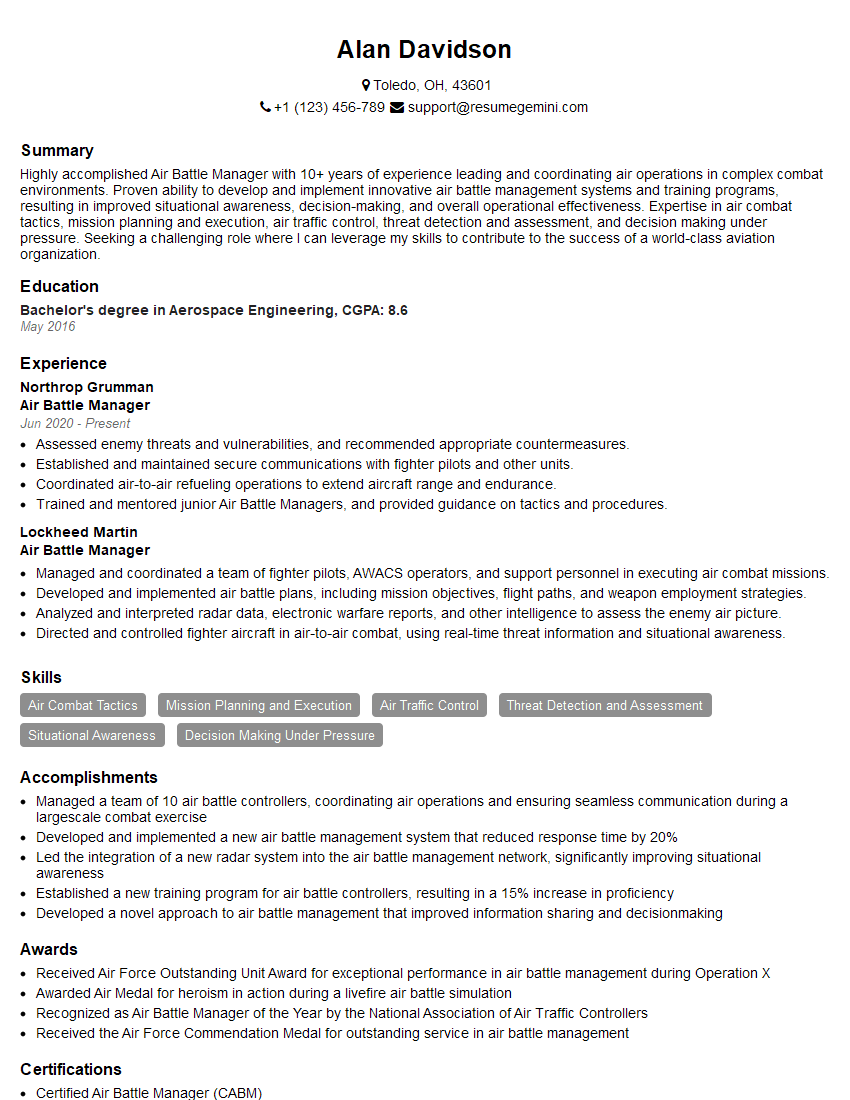
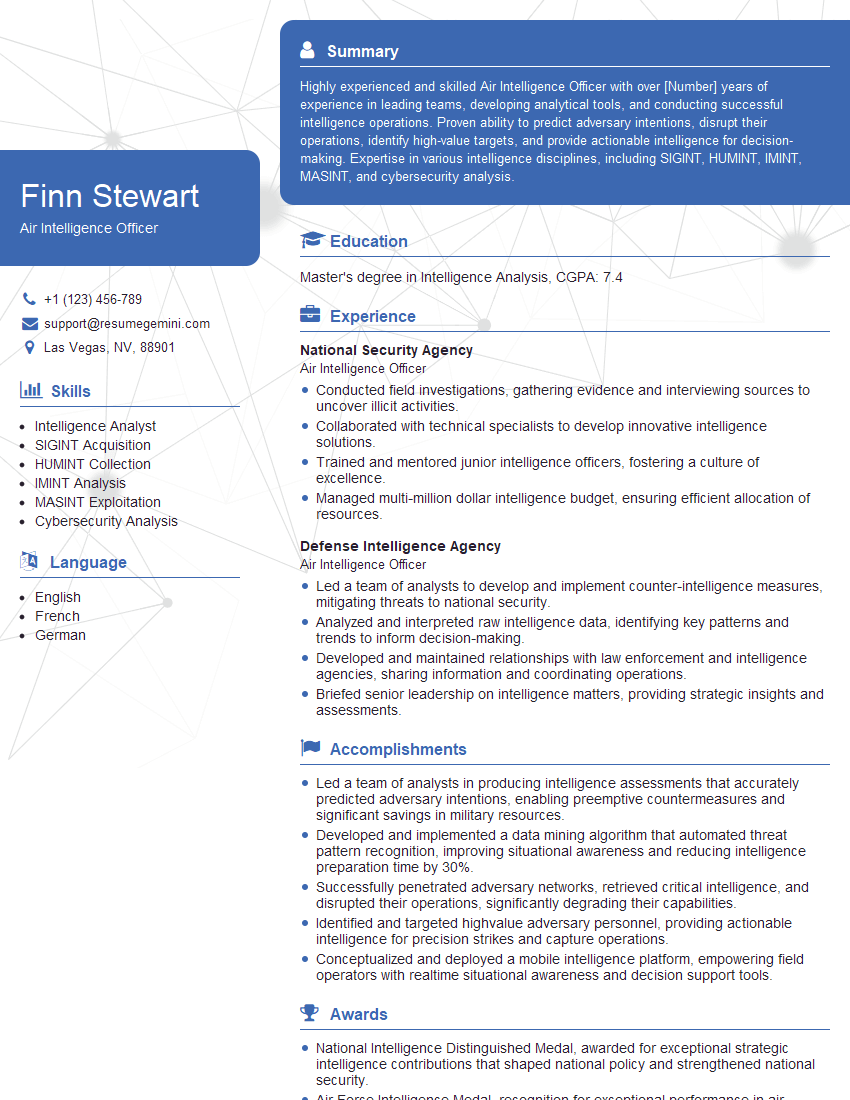
Mastering Joint Air Operations is crucial for career advancement in the aerospace and defense sectors. A strong understanding of these concepts demonstrates your strategic thinking, problem-solving abilities, and collaborative spirit – highly valued attributes in leadership roles. To maximize your job prospects, creating a compelling and ATS-friendly resume is essential. ResumeGemini is a trusted resource to help you build a professional resume that showcases your skills and experience effectively. Examples of resumes tailored specifically to Joint Air Operations are available to help guide you. Take the next step towards your dream career today!
Explore more articles
Users Rating of Our Blogs
Share Your Experience
We value your feedback! Please rate our content and share your thoughts (optional).
What Readers Say About Our Blog
Very informative content, great job.
good