Are you ready to stand out in your next interview? Understanding and preparing for Knowledge of Apparel Terminologies and Standards interview questions is a game-changer. In this blog, we’ve compiled key questions and expert advice to help you showcase your skills with confidence and precision. Let’s get started on your journey to acing the interview.
Questions Asked in Knowledge of Apparel Terminologies and Standards Interview
Q 1. Define ‘selvedge’ and explain its importance in garment construction.
Selvedge is the self-finished edge of a fabric, created during the weaving process. Unlike cut edges, which fray easily, selvedge edges are tightly woven and prevent unraveling. Think of it as the fabric’s natural, reinforced border. Its importance in garment construction lies in its durability and clean finish. Selvedge denim, for example, is highly prized for its strength and the unique character of its edges, often visible as a distinct stripe on the fabric. Using selvedge in areas requiring strength, like side seams or hems, ensures the garment’s longevity and a professional appearance. In high-end apparel, visible selvedge detailing can be a significant design element, showcasing quality and craftsmanship.
Q 2. What is the difference between a ‘mock-up’ and a ‘prototype’ in apparel development?
In apparel development, a mock-up and a prototype serve distinct purposes. A mock-up is a rough, quick version of a garment, often made from inexpensive materials. Its primary function is to visualize the design’s fit and drape. It allows designers to assess the garment’s overall silhouette, identify potential issues in construction, and make adjustments to the pattern before committing to a more expensive prototype. Think of it as a ‘proof-of-concept’ model. A prototype, on the other hand, is a more refined version, constructed with the intended fabrics and manufacturing techniques. It serves as a near-final representation of the garment, allowing for a thorough evaluation of the design’s functionality, comfort, and overall quality. It’s the pre-production sample used for fit testing, material assessment, and refinement before mass production. The difference is in their level of detail and their purpose in the development process; mock-ups are for early design visualization, while prototypes are for final pre-production assessment.
Q 3. Explain the significance of the AQL (Acceptable Quality Limit) in apparel quality control.
AQL, or Acceptable Quality Limit, is a statistical measure used in apparel quality control to define the acceptable level of defects in a batch of garments. It’s expressed as a percentage and represents the maximum number of defective units that a buyer will tolerate in a sample inspected from a larger shipment. For example, an AQL of 2.5% means that, on average, the buyer accepts a maximum of 2.5% defective items in a randomly selected sample. Different AQL levels are chosen based on the garment’s type, the level of quality required, and the buyer’s specifications. The lower the AQL, the higher the quality standard. AQL is crucial because it provides a standardized method to assess quality across different production runs and suppliers, ensuring consistent quality control and minimizing the risk of receiving substandard goods.
Q 4. Describe the different types of closures used in apparel manufacturing.
Apparel manufacturing uses a wide variety of closures. These can be broadly categorized into:
- Zippers: Metal, plastic, or invisible zippers offer versatile closure options for various garments.
- Buttons: From simple shank buttons to decorative pearl buttons, buttons offer a classic and customizable closure.
- Hooks and Eyes: Used for closures that require a secure, discreet fastening, often as a supporting closure with zippers or buttons.
- Snaps: Small, pressure-fastened closures that are commonly used in shirts, trousers, and children’s wear.
- Velcro: A convenient and easy-to-use hook and loop fastener, ideal for casual wear and sportswear.
- Drawstrings: Used primarily in trousers, hoodies, and bags for adjustable fit and closure.
- Buckles: Often used for belts, straps, and bags, they offer a strong and adjustable closure mechanism.
The choice of closure depends on factors such as garment type, target audience, cost, and desired aesthetic.
Q 5. What are the key elements of a technical design specification (Tech Pack)?
A Technical Design Specification, or Tech Pack, is a comprehensive document that serves as a blueprint for garment production. It contains all the crucial information needed to manufacture a garment accurately and consistently. Key elements include:
- Design Sketches and Illustrations: Visual representation of the garment from different angles.
- Measurement Charts: Detailed measurements for each garment size, ensuring consistent sizing across production.
- Fabric Specifications: Detailed information on the type, composition, weight, and color of fabrics.
- Pattern Pieces: The actual pattern pieces, either digital or physical, showing the layout of the garment.
- Construction Specifications: Instructions on how to assemble the garment, including seam types, stitching specifications, and details about trims and embellishments.
- Bill of Materials (BOM): A comprehensive list of all materials required for garment production.
- Label Specifications: Details regarding the placement and content of the garment labels.
- Technical Drawings: Detailed illustrations showing the garment’s construction, including seams, pockets, and other details.
The Tech Pack ensures seamless communication between designers, pattern makers, sample machinists, and manufacturers, minimizing errors and ensuring consistent production of the designed garment.
Q 6. Explain the difference between ‘woven’ and ‘knit’ fabrics.
Woven and knit fabrics are fundamentally different in their construction methods. Woven fabrics are created by interlacing two sets of yarns at right angles—the warp (lengthwise) and weft (crosswise). This interlacing creates a strong, stable structure. Think of a traditional woven fabric like cotton or linen; you can see the distinct warp and weft yarns. Knit fabrics, on the other hand, are created by looping yarns together in a continuous process. Knit fabrics tend to be more flexible, stretchy, and often have a softer drape compared to woven fabrics. Examples include jersey, rib knit, and double knit fabrics. The difference impacts the drape, stretch, and durability of the resulting garment.
Q 7. What are the different types of seams used in garment construction, and when would you use each?
Numerous seam types are used in garment construction, each with specific applications:
- French Seam: Encloses raw edges, creating a very clean and durable seam; best for fine fabrics and lingerie.
- Flatlock Seam: A decorative and durable seam with a clean finish, often used in sportswear and activewear.
- Overlock Seam (Serged Seam): Prevents fraying and is commonly used for finishing raw edges; functional rather than decorative.
- Double-Needle Seam: Creates a strong, durable seam with a decorative topstitching effect; used in jeans and other heavy-duty garments.
- Topstitch Seam: A decorative seam with visible stitching used to enhance the garment’s aesthetics and reinforce the seam.
- Lapped Seam: One fabric layer overlaps the other; often used in areas where strength and durability are required, such as in pockets or sleeve seams.
The choice of seam depends on the fabric type, garment design, desired durability, and aesthetic considerations. For instance, a delicate silk garment would benefit from a French seam for its clean finish, whereas sturdy jeans may use a double-needle seam for added strength.
Q 8. How do you identify and address common fit issues in apparel?
Identifying and addressing fit issues in apparel involves a multi-step process combining technical knowledge with an understanding of the human body. It starts with recognizing the problem, whether it’s tightness across the shoulders, gaping at the neckline, or pulling at the seams. This requires a keen eye for detail and an ability to visualize how the garment interacts with the wearer’s body shape.
Addressing these issues involves several methods:
- Pattern Adjustment: This is the most common solution. Using precise measurements and fit adjustments, the pattern is modified to accommodate different body types. For example, if a shirt is too tight across the chest, the pattern’s chest width can be increased. This adjustment is then graded to fit different sizes.
- Muslin Mock-up: Before production, a muslin (inexpensive fabric) version is made using the pattern. This allows for fitting on a model or mannequin to identify and rectify problems *before* investing in the final fabric. This is crucial for avoiding costly errors.
- Grading Adjustments: Once fit issues are identified in the muslin, the corrections are applied to the master pattern and then graded across all the different sizes ensuring consistent fit across the size range.
- Understanding Body Types: Fit issues are often related to specific body types. A garment might fit one body type perfectly, yet be problematic for another. A designer should consider a range of body types during the design and pattern-making process.
- Fabric Choice: The fabric’s drape and stretch significantly influence the garment’s fit. A fabric with less drape may require more ease in the pattern, while a highly stretchy fabric might need less.
For instance, I once worked on a project where a dress consistently showed gaping at the back neckline. By using a muslin mock-up, we identified that the back neckline was too low. Adjusting the pattern to raise the neckline by a mere half-inch completely solved the issue.
Q 9. Explain the process of grading a pattern.
Grading a pattern involves systematically enlarging or reducing a base pattern to create a range of sizes. This process requires precision and attention to detail, ensuring that the proportions remain consistent across all sizes. It’s not simply scaling up or down; certain areas require more or less adjustment than others depending on how the body changes with size.
The process generally involves these steps:
- Establishing a Base Pattern: This is the starting point – a perfectly fitting pattern for one size (usually a size medium or 8).
- Measuring and Calculating Grading Increments: This depends on the type of garment and target audience. A specific amount of increase (e.g., 1/4 inch) is determined for each body measurement (e.g., chest, waist, hip). Different increments will be needed for different areas.
- Applying Grading Increments: The grading increments are then added or subtracted from the base pattern’s key points – these are strategic points where the body’s measurements affect the garment’s dimensions, such as the bust apex, waistline, and hipline. Specialized software (like CAD software) is typically used to automate the process and ensure accuracy.
- Checking and Adjusting: After grading, the patterns are checked for consistency and accuracy. Sometimes manual adjustments are needed in specific areas to ensure optimal fit and proportion across all sizes. For instance, sleeve lengths often need specific adjustments.
Imagine grading a sweater pattern. The shoulder width, chest circumference, and sleeve length will all require increases as the size increases, but not necessarily at the same rate. The waist might increase at a slower rate than the hip.
Q 10. What are the common fabric content labeling standards?
Common fabric content labeling standards aim to provide consumers with accurate information about the composition of a garment. This is crucial for care instructions, identifying potential allergies, and understanding the garment’s quality. Several standards exist globally, though the most widely recognized is the one set by the Federal Trade Commission (FTC) in the United States. Other countries have their own regulations, which may have subtle differences.
Key aspects of these standards include:
- Fiber Content Percentage: The label must list the percentage of each fiber present, starting with the fiber making up the largest percentage. For instance, a label might say “60% Cotton, 40% Polyester”.
- Generic Fiber Names: The labels must use standardized generic fiber names, avoiding proprietary names unless accompanied by the generic name. For example, ‘Nylon’ rather than a brand-specific name.
- Order of Fiber Listing: Fibers are listed in descending order of weight percentage.
- Accuracy: The percentages should accurately reflect the fiber content of the material.
- Exceptions: There are exceptions for certain fibers used in small quantities (e.g., fibers used for ornamentation).
Failure to comply with labeling standards can lead to legal repercussions for manufacturers and brands. This emphasizes the importance of accurate and compliant labeling.
Q 11. What are some common quality control checkpoints during garment production?
Quality control checkpoints during garment production are essential for ensuring that the finished products meet the required standards. These checkpoints are implemented at various stages of the process, from the initial fabric inspection to the final packaging.
Common checkpoints include:
- Fabric Inspection: Checking the quality, color consistency, and freedom from defects in the raw fabric.
- Pattern Cutting: Ensuring accurate cutting to avoid size and shape discrepancies.
- Sewing Quality: Inspecting seams for straightness, even stitching, and secure construction.
- Finishing: Checking for proper pressing, trimming, and overall neatness.
- Hardware Inspection: Verifying the quality and functionality of buttons, zippers, and other accessories.
- Final Inspection: A comprehensive check of the finished garment for defects, inconsistencies, and adherence to the design specifications.
- Measurement Checks: Ensuring that the garment meets the specified measurements for each size.
For instance, during sewing quality control, a stitch count per inch might be checked to ensure consistency and prevent breakage. During the final inspection, a garment may be rejected for loose seams, uneven hemming, or incorrect button placement. A robust quality control system minimizes defects, customer returns, and brand reputation damage.
Q 12. What is the role of a ‘strike-off’ in textile printing?
In textile printing, a strike-off is a small sample print produced to test the design and color before mass production. It’s essentially a trial run, allowing for adjustments and refinements to the printing process and design before committing to printing a large quantity of fabric.
The role of a strike-off includes:
- Color Matching: The strike-off is used to ensure the final printed colors accurately match the design specifications. Adjustments to inks and printing techniques are made based on this comparison.
- Design Evaluation: The printed sample allows for an evaluation of the design’s appearance, clarity, and overall effect on the fabric. Any necessary changes to the design can be made before bulk printing.
- Printing Technique Optimization: The strike-off reveals any potential issues with the printing technique, such as bleeding, uneven color distribution, or distortion. These issues are corrected before large-scale production to prevent wasted fabric and resources.
- Fabric Compatibility: The strike-off ensures that the printing process doesn’t negatively impact the fabric’s texture or hand-feel.
Imagine a complex floral design. A strike-off allows the printer to check for clarity of each petal, the evenness of color gradients, and to adjust ink density as needed. This avoids costly reprints of large fabric rolls if flaws were only discovered in mass production.
Q 13. Explain the difference between ‘single jersey’ and ‘double jersey’ knit fabrics.
Single jersey and double jersey are both types of knit fabrics, but they differ significantly in their construction and properties. The difference lies in the number of layers of fabric produced by the knitting machine.
Single Jersey:
- Construction: A single jersey fabric is created with a single layer of interlocking loops, resulting in a fabric with a distinct face (right side) and back (wrong side). The face is smooth, while the back has a slightly raised texture.
- Properties: Generally more lightweight, stretchy in one direction, drapes well, and can be prone to curling at the edges.
- Uses: Commonly used for T-shirts, blouses, and other lightweight garments.
Double Jersey:
- Construction: A double jersey fabric consists of two layers of interlocking loops knitted simultaneously. The result is a more stable fabric with less stretch and curling.
- Properties: Heavier, more durable, less prone to curling, offers better shape retention, and is usually more opaque.
- Uses: Suitable for sweatshirts, sweatpants, and other heavier garments.
Think of a t-shirt versus a sweatshirt. The t-shirt’s fabric is usually single jersey, thin and soft, allowing for comfort and drape. The sweatshirt, on the other hand, benefits from the stability and warmth of a double jersey knit. The double jersey is less likely to show through.
Q 14. What are some sustainable fabric options and their impact on the apparel industry?
The apparel industry is increasingly focusing on sustainable fabric options to reduce its environmental impact. Several sustainable fabrics have emerged, each with its own advantages and disadvantages.
Some examples of sustainable fabric options:
- Organic Cotton: Grown without harmful pesticides and fertilizers, reducing water pollution and soil degradation. However, organic cotton farming might yield less per acre compared to conventional methods.
- Tencel (Lyocell): Made from sustainably harvested wood pulp using a closed-loop process that minimizes waste and pollution. It’s known for its softness and drape, but is often more expensive than conventional fabrics.
- Hemp: A strong, durable fiber requiring less water and pesticides than cotton. It’s naturally resistant to pests and UV radiation, but can be stiff and challenging to process.
- Recycled Polyester: Made from recycled plastic bottles, significantly reducing plastic waste. While it reduces landfill waste, it’s still a petroleum-based product and the recycling process itself has an energy cost.
- Piñatex (Pineapple Leaf Fiber): An innovative fiber made from waste pineapple leaves, utilizing agricultural byproducts to create a sustainable and unique material.
Impact on the Apparel Industry: The adoption of sustainable fabrics addresses several key concerns within the industry, including resource depletion, water pollution, and greenhouse gas emissions. While often more expensive upfront, the increasing consumer demand and potential for long-term cost savings through reduced waste are driving the transition to sustainable practices.
The move towards sustainability also encourages more transparent and ethical supply chains, improving working conditions and environmental responsibility across the entire production process.
Q 15. Describe your experience with different CAD software used in apparel design.
My experience with CAD software in apparel design spans several industry-leading platforms. I’m proficient in Adobe Illustrator, which I use extensively for creating initial sketches, developing flat sketches, and refining detailed technical drawings. For pattern making and grading, I’m highly skilled in using Lectra Modaris, a powerful system that allows for precise pattern manipulation and efficient scaling across different sizes. I’ve also worked with Gerber Accumark, primarily for its 3D visualization capabilities, which are invaluable for visualizing drape and fit before production. Each software offers unique strengths; Illustrator excels in design aesthetics, Modaris in technical accuracy, and Gerber Accumark in realistic 3D simulations. My experience integrating these tools allows me to streamline the design-to-production process significantly.
For example, in a recent project designing a tailored blazer, I used Illustrator to create the initial design concept, including fabric texture simulations. Then, I moved to Modaris to construct the pattern, meticulously grading it for a range of sizes, ensuring accurate measurements across the size spectrum. Finally, I utilized Gerber Accumark to create a 3D model of the blazer, which helped identify and correct potential fit issues before sampling.
Career Expert Tips:
- Ace those interviews! Prepare effectively by reviewing the Top 50 Most Common Interview Questions on ResumeGemini.
- Navigate your job search with confidence! Explore a wide range of Career Tips on ResumeGemini. Learn about common challenges and recommendations to overcome them.
- Craft the perfect resume! Master the Art of Resume Writing with ResumeGemini’s guide. Showcase your unique qualifications and achievements effectively.
- Don’t miss out on holiday savings! Build your dream resume with ResumeGemini’s ATS optimized templates.
Q 16. Explain the process of creating a production sample.
Creating a production sample involves a meticulous process that bridges the gap between design and mass production. It begins with the finalized technical package, which includes the approved pattern pieces, fabric specifications, and detailed construction instructions. A skilled sample maker then constructs a garment using these specifications. This first sample, often called a ‘prototype’ or ‘first sample’, is critically evaluated for fit, construction, and overall quality. Based on this evaluation, adjustments are made to the pattern, construction details, or even fabric choice. This process of iterative refinement continues until the sample perfectly aligns with the design intent and production specifications. Once approved, this final sample serves as the gold standard for mass production, ensuring consistency in quality and fit across all manufactured garments.
Imagine creating a new dress design. After the pattern is made, the first sample might reveal the neckline is too wide or the sleeve length is slightly off. These issues are addressed by tweaking the pattern and making further samples. This iterative process might involve several samples before achieving the final approved version.
Q 17. How do you manage discrepancies between a design and the final product?
Discrepancies between design and final product are inevitable, but effective management is crucial. My approach involves a multi-step process. First, I thoroughly document every detail of the approved design, including fabric swatches, color specifications, and detailed construction diagrams. Second, I maintain close communication with the factory, providing clear instructions and regular quality control checks throughout the production process. Third, I establish a rigorous inspection procedure to identify any deviations from the approved sample. Finally, if discrepancies arise, I use root cause analysis to pinpoint the problem – whether it’s a pattern error, fabric inconsistency, or a manufacturing defect. Based on the root cause, I implement corrective actions, which may involve adjustments to the pattern, production processes, or even factory training.
For instance, if a final product’s color is slightly off, a thorough investigation is needed. This might involve comparing the original fabric swatch to the production fabric, checking dye lot consistency, and reviewing the factory’s dyeing process. The solution could range from re-dyeing the fabric to adjusting the color specification for future production runs.
Q 18. What are the different types of trims used in garment construction?
Trims are the supplementary components that enhance the aesthetic appeal and functionality of a garment. They include a wide array of items, broadly categorized as:
- Fasteners: Buttons, zippers, hooks and eyes, snaps, and Velcro.
- Labels: Brand labels, size labels, care labels, and composition labels.
- Embellishments: Ribbons, braids, laces, embroidery, sequins, beads, and patches.
- Interlinings and Underlinings: Fabrics used for support and structure, like fusible interfacings.
- Elastic: Used for waistbands, cuffs, and other areas requiring stretch.
- Threads: Used for stitching and seams.
The selection of trims is crucial as they contribute significantly to both the look and feel of the garment. For a high-end evening gown, you might choose delicate lace and Swarovski crystals, whereas a functional work uniform would employ durable zippers and reinforced stitching.
Q 19. Explain the concept of ‘sizing’ and ‘fit’ in apparel.
Sizing and fit are fundamental aspects of apparel manufacturing. ‘Sizing’ refers to the standardized system of numerical measurements that represent garment dimensions (e.g., XS, S, M, L, XL, etc.). These measurements are based on body measurements taken from target demographics. ‘Fit’ refers to how well a garment conforms to the body shape of the wearer. A well-fitting garment sits comfortably and flatteringly, neither too tight nor too loose. It should accommodate the wearer’s movement without undue restriction.
Different cultures and countries may utilize different sizing systems, leading to challenges in global apparel production and retail. Achieving a consistent fit across diverse body types requires careful consideration of factors like body proportions, cultural preferences, and fabric drape.
Q 20. What is the role of a bill of materials (BOM) in apparel manufacturing?
The bill of materials (BOM) is a comprehensive document listing all the components needed to manufacture a garment, including fabrics, trims, and packaging. It serves as a crucial roadmap for production, detailing the quantity and specifications of each component. It’s vital for accurate cost estimation, efficient procurement, and smooth production flow. A well-structured BOM minimizes material waste, streamlines the supply chain, and helps to ensure consistent quality across production runs. The BOM typically includes item descriptions, quantities, and unit costs, enabling precise cost calculation and inventory management.
For example, a BOM for a simple t-shirt might include details like the type and quantity of fabric, the number of buttons, the type of thread, and the packaging materials.
Q 21. How do you ensure compliance with relevant industry regulations and standards?
Ensuring compliance with industry regulations and standards is paramount. This involves meticulous adherence to ethical sourcing, labor practices, safety standards, and environmental regulations. I have a thorough understanding of international standards such as those set by the Global Organic Textile Standard (GOTS), OEKO-TEX Standard 100 (testing for harmful substances), and various country-specific labor and environmental laws. My approach includes rigorous supplier audits, documentation of compliance processes, and maintaining up-to-date knowledge on evolving regulations. I integrate these considerations into every stage of the design and production process, from material selection to factory oversight.
For instance, before selecting a fabric, I verify its compliance with OEKO-TEX standards to ensure it is free from harmful chemicals. Similarly, I regularly review factory practices to ensure ethical labor standards are met.
Q 22. Describe your experience with different types of pattern cutting techniques.
Pattern cutting is the foundation of garment construction. My experience encompasses various techniques, including:
- Basic Pattern Drafting: This involves creating a base pattern from body measurements, using drafting tools and understanding fundamental principles like ease and grainlines. I’ve extensively used this for creating slopers (basic patterns) for various body types and garment styles. For instance, I successfully drafted a sloper for a tailored blazer, adjusting for ease based on the desired fit and fabric drape.
- Draping: This technique uses fabric directly on a dress form to create a three-dimensional pattern. I’ve employed draping for flowing dresses and asymmetric designs, where the fluidity of the fabric dictates the design. A recent project involved draping a silk gown, resulting in a beautifully sculpted silhouette.
- Flat Pattern Manipulation: This involves altering existing patterns to achieve a desired design. I’m proficient in techniques like adding darts, shaping seams, and adjusting sleeve caps. For example, I successfully adapted a simple shirt pattern into a more fitted silhouette by manipulating the side seams and adding princess seams.
- Computer-Aided Design (CAD): I am proficient in using CAD software like Gerber Technology or Lectra for pattern making, grading, and marker making, streamlining the process and increasing efficiency. I’ve used this to create production-ready patterns, including complex styles like jackets and trousers.
My experience spans different garment types, from simple t-shirts to complex tailored garments, allowing me to adapt my techniques to the specific requirements of each project.
Q 23. Explain the importance of fabric testing in apparel manufacturing.
Fabric testing is crucial for ensuring the quality and performance of garments. It helps identify potential issues early in the production process, preventing costly mistakes later. Key tests include:
- Fiber Content Analysis: Verifying the fiber composition to ensure it meets specifications and predicts fabric behavior.
- Strength Testing: Assessing the fabric’s tensile strength and tear resistance to ensure durability.
- Shrinkage Testing: Determining the potential for fabric shrinkage during washing or processing, helping to pre-shrink fabrics before cutting.
- Colorfastness Testing: Evaluating the fabric’s resistance to fading due to light exposure, washing, or rubbing.
- Drape and Hand Testing: Subjective assessments of the fabric’s drape and texture that are crucial for design and fit.
For example, failing to test for shrinkage can lead to garments shrinking significantly after washing, resulting in customer dissatisfaction and returns. Similarly, inadequate colorfastness testing can result in garments fading unevenly or bleeding color when washed.
Q 24. How do you handle fabric shrinkage during garment production?
Fabric shrinkage is addressed proactively through several methods:
- Pre-shrinking: This involves washing or steaming the fabric before cutting to remove any potential shrinkage. This is a standard practice for most natural fibers like cotton and wool.
- Pattern Adjustment: Based on the shrinkage percentage determined through testing, the patterns are adjusted to account for shrinkage during the garment’s life cycle. This is particularly crucial for woven fabrics with significant shrinkage potential.
- Fabric Selection: Choosing inherently less-shrinkage-prone fabrics or using pre-shrunk fabrics from the outset significantly minimizes this issue.
- Proper Washing Instructions: Providing clear and accurate washing instructions on the garment label helps prevent unintended shrinkage caused by incorrect laundering methods.
Imagine producing a batch of 1000 shirts only to discover they all shrink after the first wash. Pre-shrinking and pattern adjustment prevent such costly and damaging situations.
Q 25. What are the advantages and disadvantages of different manufacturing processes (e.g., cut and sew, CMT)?
Different manufacturing processes offer unique advantages and disadvantages:
- Cut and Sew: This involves all stages of garment production from cutting to sewing under one roof.
- Advantages: Greater control over quality, lead times, and production processes. Easier communication and collaboration.
- Disadvantages: Higher upfront investment in equipment and infrastructure. Less flexibility for scaling down production quickly.
- CMT (Cut, Make, Trim): The manufacturer only handles cutting, making (sewing), and trimming the garment. The client provides the fabric and patterns.
- Advantages: Lower initial investment for the client. More flexibility to outsource different parts of the production to specialized suppliers.
- Disadvantages: Less control over quality and lead times. Increased communication challenges and potential for miscommunication.
The choice depends on factors such as production volume, budget, required level of control, and the complexity of the garment.
Q 26. What is your experience with different apparel costing methods?
My experience encompasses various apparel costing methods, including:
- Cost Sheet Method: This involves a detailed breakdown of all costs associated with garment production, including materials, labor, overhead, and profit margin. It’s a highly detailed method offering granular cost transparency.
- Standard Costing: This uses pre-determined costs for labor, materials, and overhead, based on historical data. It’s efficient for large-scale production but less adaptable to frequent design changes.
- Activity-Based Costing (ABC): This assigns costs based on the activities involved in production, providing a more accurate cost allocation for complex products or processes. It is valuable for identifying areas of inefficiency.
Choosing the right method depends on the complexity of the garment, production volume, and the level of detail required.
Q 27. How do you resolve conflicts between design, production, and quality control teams?
Resolving conflicts between design, production, and quality control requires a collaborative approach emphasizing clear communication and mutual respect. My strategy involves:
- Open Communication: Facilitating open dialogue between all parties to understand their perspectives and concerns.
- Compromise and Negotiation: Working with each team to find mutually acceptable solutions that meet the overall project goals and constraints.
- Data-Driven Decision Making: Using objective data from quality control reports and production metrics to support decisions.
- Regular Meetings: Establishing regular meetings to track progress, address issues promptly, and prevent conflicts from escalating.
- Mediation (if necessary): If conflicts persist, involving a neutral third party to mediate and facilitate resolution.
A recent example involved a design change that impacted production timelines. By collaborating with all teams, we adjusted the production schedule and found an alternative manufacturing method, minimizing delays and maintaining quality.
Q 28. Describe your experience with global apparel sourcing and supply chain management.
My experience in global apparel sourcing and supply chain management encompasses:
- Supplier Selection: Identifying and evaluating potential suppliers based on factors such as capacity, quality standards, compliance, and cost-effectiveness.
- Negotiation and Contracting: Negotiating favorable terms with suppliers, including pricing, lead times, and quality specifications.
- Production Monitoring: Tracking production progress, ensuring adherence to timelines and quality standards, and addressing any challenges that arise.
- Logistics and Transportation: Managing the logistics of importing materials and finished goods, ensuring timely delivery and minimizing costs.
- Risk Management: Identifying and mitigating potential risks within the supply chain, such as political instability, natural disasters, and supplier disruptions.
My experience includes sourcing fabrics from various regions, managing overseas production, and ensuring compliance with international trade regulations. I’ve successfully navigated complex logistical challenges and established strong, reliable relationships with global suppliers.
Key Topics to Learn for Knowledge of Apparel Terminologies and Standards Interview
- Fabric Construction and Properties: Understanding weave types (plain, twill, satin), knit structures (jersey, rib), fabric weight, drape, and hand feel. Consider how these properties influence garment design and manufacturing.
- Apparel Measurements and Sizing: Familiarity with standard measurement systems (e.g., inches, centimeters), sizing charts, and grade rules. Practice applying these to create consistent and accurate patterns.
- Sewing Techniques and Construction: Knowledge of various seams (e.g., French seam, flatlock seam), stitching types, and their applications. Understand the impact of different construction methods on garment durability and aesthetics.
- Apparel Manufacturing Processes: Understanding the stages of garment production, from pattern making and cutting to sewing and finishing. Consider the role of technology and automation in modern apparel manufacturing.
- Quality Control and Standards: Knowledge of industry standards (e.g., AQL, ISO standards) and quality control procedures used to ensure consistent product quality. Be prepared to discuss problem-solving approaches related to quality issues.
- Apparel Design Elements: Understanding design principles like silhouette, proportion, balance, and color theory as they relate to garment construction and aesthetics. Consider how these elements contribute to overall garment appeal.
- Textile Care and Labeling: Knowledge of fiber content labeling requirements, care instructions, and the impact of different cleaning methods on fabric performance. Consider how to communicate these details to consumers effectively.
Next Steps
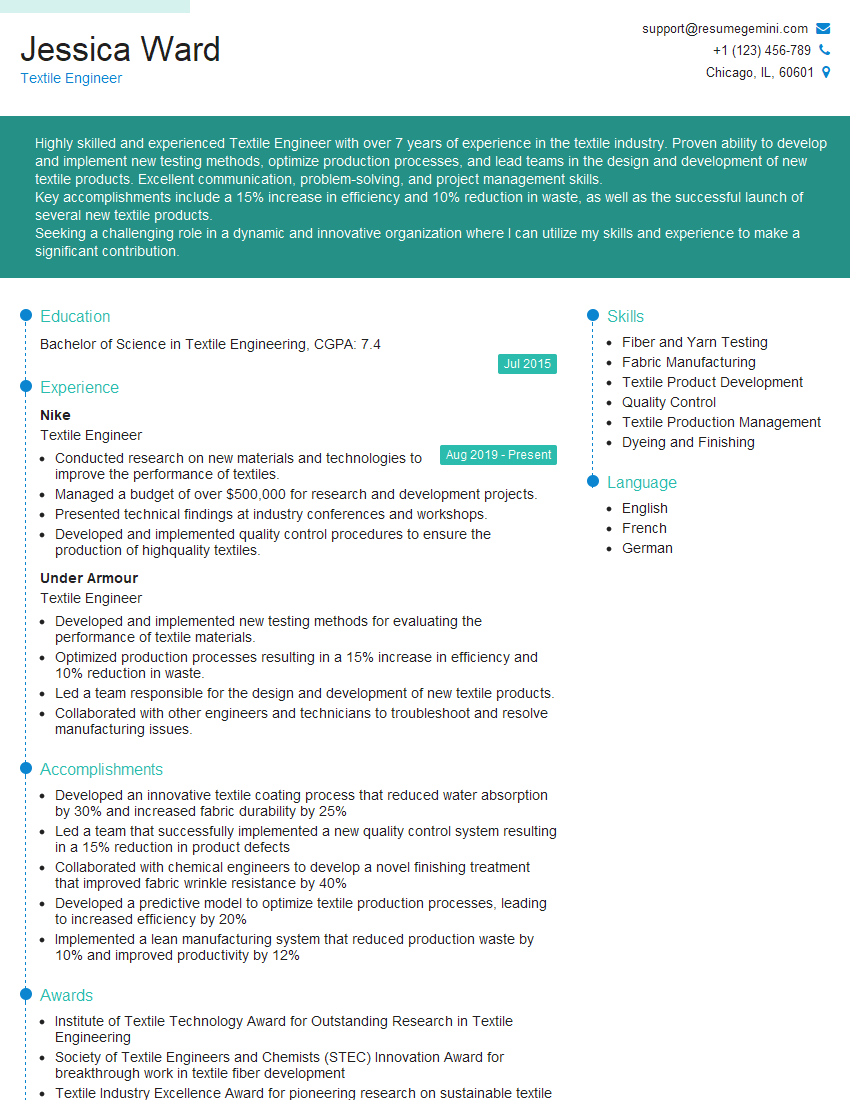
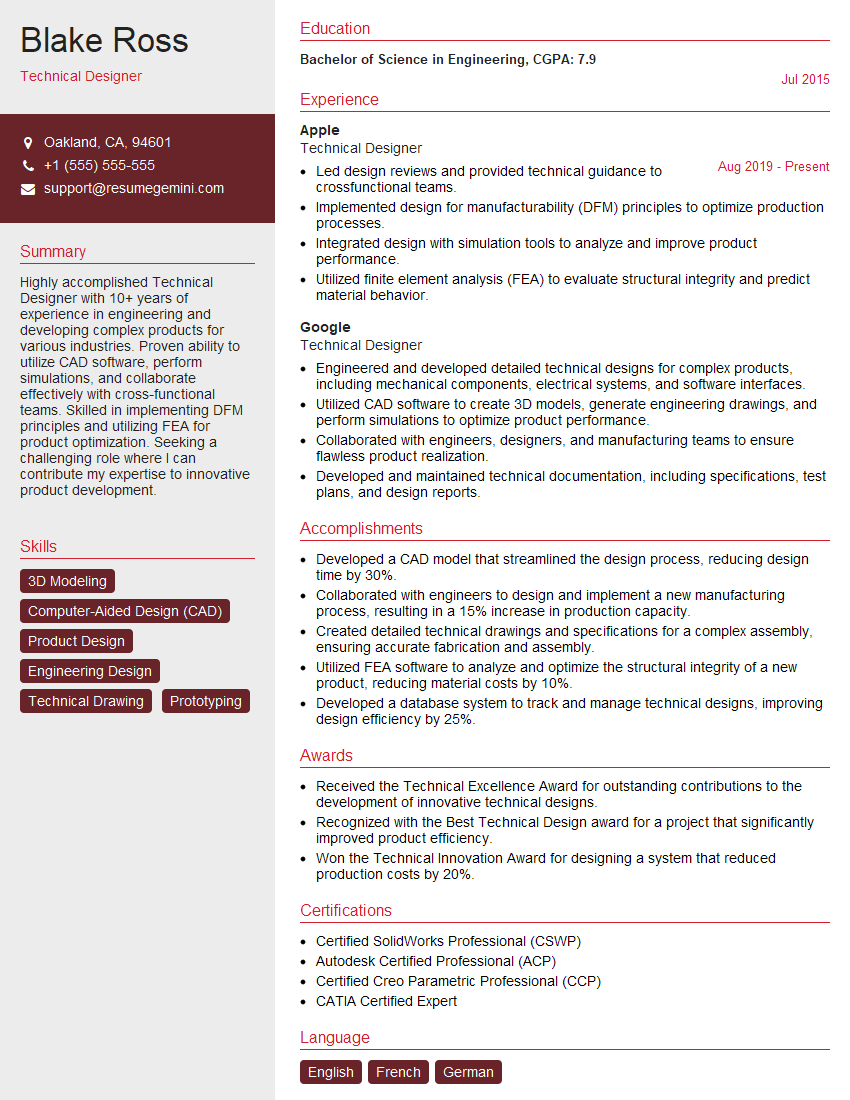
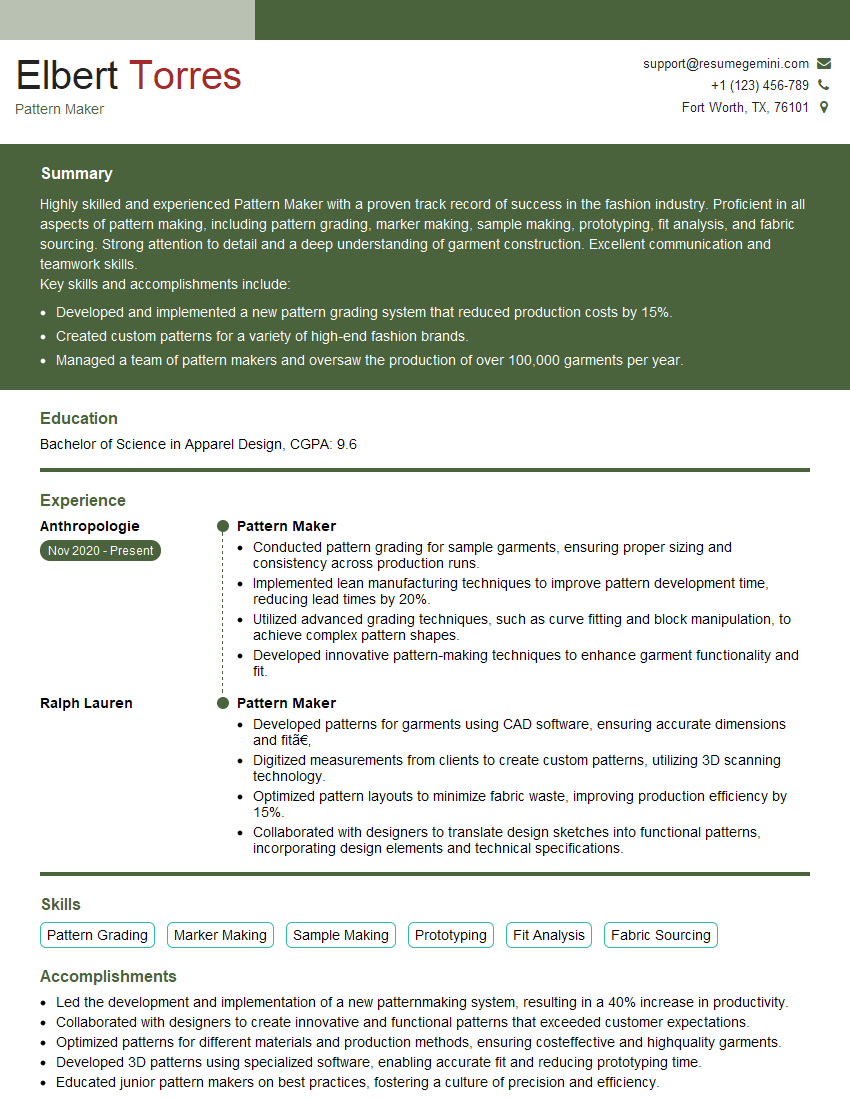
Mastering apparel terminologies and standards is crucial for career advancement in the fashion and textile industries. A strong understanding of these concepts showcases your technical expertise and professionalism, opening doors to more challenging and rewarding roles. To maximize your job prospects, it’s essential to create an ATS-friendly resume that highlights your skills and experience effectively. ResumeGemini is a trusted resource that can help you build a professional and impactful resume, tailored to the specific requirements of the jobs you’re targeting. We offer examples of resumes specifically designed for candidates with expertise in Knowledge of Apparel Terminologies and Standards to help guide your resume creation process.




Explore more articles
Users Rating of Our Blogs
Share Your Experience
We value your feedback! Please rate our content and share your thoughts (optional).
What Readers Say About Our Blog
Very informative content, great job.
good