Are you ready to stand out in your next interview? Understanding and preparing for Knowledge of Bookbinding Techniques interview questions is a game-changer. In this blog, we’ve compiled key questions and expert advice to help you showcase your skills with confidence and precision. Let’s get started on your journey to acing the interview.
Questions Asked in Knowledge of Bookbinding Techniques Interview
Q 1. Describe the different types of bookbinding techniques.
Bookbinding techniques are diverse, each suited to different needs and aesthetics. They can be broadly categorized based on how the pages and cover are joined. Key methods include:
- Case Binding: Used for high-quality books, involves sewing sections together, creating a spine, and applying a separate cover. Think hardback novels or textbooks.
- Perfect Binding: Common for paperback books and magazines. The edges of the pages are glued together, and a cover is wrapped around the block. Think mass-market paperbacks.
- Saddle Stitch Binding: The simplest method, suitable for booklets or pamphlets. Pages are folded in half and stapled along the spine. Think brochures or small magazines.
- Spiral Binding (Coil Binding): Pages are punched with holes and a plastic or metal comb is inserted. Ideal for notebooks, calendars, or documents requiring easy page turning.
- Wire-O Binding: Similar to spiral binding but uses double-loop wire for a more professional and durable finish. Often seen in high-quality notebooks or planners.
- Concertina Binding (Accordion Binding): Pages are folded in a zig-zag pattern to create a self-standing booklet. Popular for invitations or promotional materials.
Each method offers a unique balance of durability, cost-effectiveness, and aesthetic appeal.
Q 2. Explain the process of case binding.
Case binding is a sophisticated process resulting in a robust and long-lasting book. It involves several steps:
- Section Sewing: Individual sheets of paper are folded and gathered into sections (signatures). These sections are then sewn together, traditionally using a sewing frame, creating a durable spine. Different sewing techniques exist, such as kettle stitch or oversew.
- Spine Preparation: After sewing, the spine is prepared by applying adhesive (often PVA) and then gluing the spine to create a solid block.
- Case Making: The cover boards (typically made of cardboard or binder’s board) are covered with cloth, leather, or paper. The spine is then glued to the cover boards forming the ‘case’.
- Case Attachment: The prepared text block is then carefully adhered to the case, ensuring alignment and a clean finish.
- Finishing: This stage might include headbands (decorative material at the top and bottom of the spine), tooling (decorative embossing), and the application of endpapers (decorative sheets that bridge the text block and the cover).
The entire process demands precision and skill, making case binding a testament to the bookbinder’s artistry.
Q 3. What are the advantages and disadvantages of perfect binding?
Perfect binding, while cost-effective and widely used, presents certain trade-offs:
- Advantages: Relatively inexpensive, quick, suitable for high-volume production, allows for a flat-opening book.
- Disadvantages: The spine can be weak, prone to cracking or breaking, pages can easily fall out, and it’s not suitable for books needing a very durable spine or high page counts. The spine also cannot lie completely flat.
For instance, a paperback novel might benefit from perfect binding due to its cost-effectiveness, but a high-end coffee table book would likely require a more robust method like case binding.
Q 4. How do you choose the appropriate binding method for a specific project?
Selecting the appropriate binding method depends on several factors:
- Number of Pages: Saddle stitch is ideal for under 48 pages, while perfect binding is better suited for 50-250 pages. Case binding is used for anything significantly larger and requires more structural integrity.
- Budget: Saddle stitch is the cheapest, followed by perfect binding, then spiral binding, with case binding being the most expensive.
- Aesthetic Requirements: Case binding provides the most elegant and professional look, while spiral and wire-O bindings offer a more functional and modern aesthetic.
- Intended Use: A notebook needs a binding that allows for easy page turning (spiral or wire-O), while a novel needs a durable spine (case binding or perfect binding for less expensive versions).
Choosing the right method is a balancing act between cost, durability, and aesthetic appeal. A thorough understanding of each technique and careful consideration of the project’s specifications are vital for a successful outcome.
Q 5. Describe your experience with different types of adhesives used in bookbinding.
My experience encompasses a range of adhesives, each with its own properties and applications:
- Polyvinyl Acetate (PVA): A water-based adhesive commonly used in case binding for its strength and flexibility. It’s widely available and relatively easy to work with.
- Hot Melt Adhesives: These are thermoplastic adhesives that are melted and applied using a hot melt glue gun. They offer quick drying times, making them suitable for high-volume production, particularly for perfect binding. However, they can be less flexible than PVA.
- Animal Glue: A traditional adhesive made from animal hides, it offers strong adhesion but requires careful application and is sensitive to moisture. Its use is less common now due to its higher cost and preparation.
- PUR (Polyurethane Reactive) Adhesives: These are strong, flexible, and offer excellent adhesion to a wide range of materials, including various papers and boards. Often chosen for high-quality case binding as it produces a very strong bond resistant to moisture and aging.
The selection of the right adhesive hinges upon the specific binding method, the materials used, and the required durability and flexibility of the final product. It is essential to consider factors such as drying time, open time, and environmental conditions for optimal performance.
Q 6. Explain the importance of proper paper selection in bookbinding.
Paper selection is crucial for the overall quality and longevity of a bound book. Factors to consider include:
- Paper Weight: Heavier papers (higher gsm) offer better durability but can increase the overall weight and cost of the book. Lighter papers are more economical but might be less resistant to tearing or creasing.
- Paper Type: Different paper types (coated, uncoated, acid-free) impact the book’s appearance, printability, and archival properties. Acid-free paper is vital for books intended for long-term preservation as it prevents yellowing and deterioration.
- Paper Finish: The surface finish (glossy, matte, textured) impacts the visual appeal and feel of the book. The finish should be appropriate for the printing method used.
For instance, a high-quality art book would benefit from using a heavier, archival-quality paper with a smooth finish that enhances the reproduction of images. Conversely, a paperback novel might use a lighter, less expensive paper suitable for mass production.
Q 7. How do you ensure the durability and longevity of a bound book?
Ensuring the durability and longevity of a bound book involves careful attention to detail throughout the process:
- Material Selection: Using high-quality, acid-free paper and durable cover materials is paramount. This minimizes degradation over time.
- Proper Binding Technique: Applying the correct binding method for the project’s needs ensures the pages are securely attached and resistant to damage. Imperfect techniques or the wrong choice of binding can shorten lifespan.
- Adhesive Selection and Application: Using the appropriate adhesive and applying it correctly prevents the pages from detaching. Over- or under-application affects the final product.
- Storage Conditions: Storing the bound book in a cool, dry environment, away from direct sunlight and moisture, helps maintain its integrity.
- Careful Handling: Avoiding rough handling and keeping the book upright prevents damage to the spine and pages.
By meticulously following best practices at each stage, a bookbinder can create a lasting product that stands the test of time. I personally always emphasize using archival-quality materials whenever possible for projects that require long-term preservation.
Q 8. What are the common tools and equipment used in bookbinding?
Bookbinding involves a fascinating array of tools, each playing a crucial role in creating a durable and aesthetically pleasing book. The essential tools can be broadly categorized into those for preparing the sections, sewing the book together, and finishing the cover.
- Cutting tools: Bone folders (for creasing and scoring), paper cutters (for trimming pages to size), and knives (for trimming and cutting material).
- Sewing tools: Awls (for piercing holes), needles (various sizes and types, depending on the thread and material), and different types of thread (linen is traditional, but nylon or other synthetic options are also used).
- Pressing and gluing tools: A book press (for compressing and flattening the sewn sections), various brushes (for applying glue evenly), and different types of adhesives (animal glues, PVA, etc., depending on the material).
- Covering tools: Cover boards (prepared boards that form the book covers), various glues (specific glues for cover materials), and tools for decorating the cover, such as stamps, lettering tools, and possibly even specialized tools for tooling or embossing.
- Finishing tools: Headbands (decorative caps at the top and bottom of the spine), spine liners (protecting the spine), and a variety of finishing materials like cloth, leather, or paper.
The specific tools needed will depend on the binding method being used; for instance, case binding requires more specialized equipment than simpler methods like saddle stitching.
Q 9. Describe your experience with hand-sewing techniques.
Hand-sewing is the heart of many traditional binding techniques. My experience spans various methods, including kettle stitch, long stitch, and coptic stitch. Each stitch has its own unique characteristics and lends itself to different types of books.
For example, the kettle stitch, with its characteristic knotting, is exceptionally strong and creates a very secure binding, ideal for books that will receive heavy use. The long stitch, on the other hand, is simpler and faster to execute, suitable for journals or books where strength isn’t the paramount concern. I’ve even worked on projects that combined different stitches for a unique and personalized aesthetic. My proficiency involves not just the mechanics of the stitches but also the understanding of appropriate thread tension and stitch spacing to ensure the durability and appearance of the finished product.
I find immense satisfaction in the precision and artistry required for hand-sewing. It’s a method that truly connects me to the long history of bookmaking.
Q 10. How do you repair damaged book covers?
Repairing damaged book covers involves a careful assessment of the damage and a tailored approach. The process often begins with a thorough cleaning to remove any dirt or debris.
Minor tears or scuffs might be repaired with appropriate adhesives and possibly some patching with matching material. More significant damage, such as a detached spine or severely damaged corners, requires more extensive work. This can involve carefully removing the old cover material, repairing or replacing the boards, and applying a new cover. In such cases, I prioritize preserving as much of the original cover as possible, but structural integrity is paramount. If the original cover is beyond repair, I select a suitable replacement material which best complements the style and age of the book.
For example, repairing a cracked spine might involve reinforcing it with Japanese tissue and then applying a layer of PVA adhesive to protect the repair. I always strive to maintain the book’s original character while making necessary repairs.
Q 11. Explain the process of preparing book sections for binding.
Preparing book sections is a crucial step that directly impacts the final product’s quality and durability. This process typically involves several stages:
- Gathering and collating: Accurately sequencing the pages into the correct order.
- Folding and sectioning: Folding printed sheets into sections (signatures) of typically 8 or 16 pages, depending on the format and page count. Precise folding is crucial for accurate alignment and even stitching.
- Sewing preparation: Creating even holes along the spine of the sections for stitching. The placement and number of holes are determined by the chosen binding method and the thickness of the sections.
- Stitching: The sections are sewn together, with each stitch contributing to the overall structural integrity of the book. Many different stitching methods exist.
- Gluing and pressing: Once sewn, the sections are glued (typically along the spine) and placed under a press to flatten and adhere the spine.
These steps must be done meticulously; any inaccuracies in these early stages can significantly impact the book’s final look and feel.
Q 12. How do you handle different types of paper and materials during binding?
Handling different types of paper and materials is fundamental to successful bookbinding. Different papers have varying thicknesses, textures, and absorbency, each requiring a tailored approach.
For instance, thin papers are more prone to tearing and require careful handling during the sewing process. Thicker papers, conversely, might need more robust stitching. The type of glue used also varies depending on the material. Animal glues are traditional and ideal for many papers, while modern adhesives might be necessary for certain synthetics. Understanding how various materials react to different adhesives is crucial; for example, some materials might be damaged by certain glues. Leather, for example, requires specialized tools and techniques for cutting, stitching, and finishing.
Adaptability and a deep knowledge of materials are vital in this area.
Q 13. Describe your experience with gold leaf application.
Gold leaf application is a meticulous and rewarding aspect of bookbinding, often used for decorative purposes, lettering, or highlighting details. It involves applying extremely thin sheets of gold to a prepared surface.
The process generally involves applying an adhesive (usually called a size) to the area where the gold will be placed. Once the adhesive is slightly tacky, a sheet of gold leaf is carefully applied using a specialized brush or other tool. Excess gold is removed using a soft brush or cotton swab. Finally, a protective layer might be applied to preserve the gilding.
I’ve worked with both traditional methods and modern alternatives. Mastering the technique requires precision, patience, and a delicate touch to achieve a clean and even result. It’s a skill that adds an element of luxury and prestige to the finished product.
Q 14. What are some common challenges you face in bookbinding, and how do you overcome them?
Bookbinding presents unique challenges. One common problem is ensuring even sewing and consistent tension throughout the stitching process. Inconsistent tension can lead to a wonky spine or even damage to the pages. To overcome this, I focus on maintaining consistent pressure and stitch length while carefully monitoring the tension throughout the process.
Another challenge is working with delicate or fragile materials. Damaged pages or fragile covers require careful handling and specialized techniques to prevent further damage during the binding process. This requires using appropriate tools and techniques, such as using Japanese tissue repair for damaged areas.
Finally, achieving perfect alignment and a visually appealing result is always a challenge, especially on intricate projects. Careful planning and meticulous execution are vital to overcoming this. The key is to combine experience with a patient and thoughtful approach.
Q 15. How do you maintain quality control throughout the bookbinding process?
Maintaining quality control in bookbinding is a multifaceted process that begins even before the first stitch is sewn. It’s a continuous cycle of checks and balances, ensuring the final product meets the highest standards. I approach this through several key methods:
- Material Selection: I meticulously inspect all materials – paper, thread, boards, and leather – for any defects before starting. This includes checking for consistent thickness, color, and texture. A single flawed piece of paper could compromise the entire book’s integrity.
- Process Monitoring: Each stage of the process, from sewing the sections to applying the cover, requires careful attention. Regular checks ensure proper alignment, tension, and adhesion. For instance, during sewing, consistent stitch tension is vital to prevent pages from loosening or the spine from becoming uneven.
- Tool Maintenance: My tools, from bone folders to sewing frames, are regularly cleaned and sharpened. Dull tools can lead to inconsistent results, damaging the materials and affecting the final look of the book.
- Quality Checks at Key Stages: I conduct thorough inspections after key milestones. For example, after sewing, I check the section alignment and the strength of the stitching. Before casing-in (attaching the cover), I verify the cover’s fit and the spine’s preparation. A final, rigorous inspection is performed before the book is considered complete.
- Documentation: Maintaining detailed records of materials used and processes followed is crucial. This allows for troubleshooting problems and ensures consistent quality across projects.
Think of it like building a house – you wouldn’t build the roof before laying a solid foundation. Similarly, each step in bookbinding is critical, and consistent quality control throughout is essential for a durable and beautiful final product.
Career Expert Tips:
- Ace those interviews! Prepare effectively by reviewing the Top 50 Most Common Interview Questions on ResumeGemini.
- Navigate your job search with confidence! Explore a wide range of Career Tips on ResumeGemini. Learn about common challenges and recommendations to overcome them.
- Craft the perfect resume! Master the Art of Resume Writing with ResumeGemini’s guide. Showcase your unique qualifications and achievements effectively.
- Don’t miss out on holiday savings! Build your dream resume with ResumeGemini’s ATS optimized templates.
Q 16. Describe your experience with working with different types of leather.
My experience with various leathers spans many years and encompasses a wide range of types, from the supple and delicate calfskin to the robust and durable goatskin. Each type presents unique challenges and rewards.
- Calfskin: Known for its fine grain and softness, calfskin requires careful handling to prevent scratches and marks. It’s ideal for elegant, finely detailed books.
- Goatskin: More durable than calfskin, goatskin offers excellent resilience and is suitable for heavily used books. Its slightly pebbled texture adds a unique character.
- Sheepskin: Often softer than goatskin, sheepskin is a good all-around choice for many projects. It’s less expensive than calfskin but still produces a high-quality finish.
- Pigskin: A very strong leather known for its durability, it’s often chosen for books that need to withstand rough handling. Its texture is distinctive, more pebbled than other leathers.
Choosing the right leather depends entirely on the book’s intended use and the desired aesthetic. For example, a delicate manuscript might be best suited to calfskin, while a journal intended for frequent use might benefit from the robustness of goatskin. I always advise clients on the best leather choice for their project, considering both the practical and aesthetic aspects.
Q 17. How do you estimate the time and materials required for a bookbinding project?
Estimating time and materials for a bookbinding project requires a blend of experience and meticulous planning. It’s not simply about the number of pages; it’s about the complexity of the binding style, the type of materials used, and the level of finishing required.
My estimation process generally includes:
- Assessing the Project Scope: This involves carefully reviewing the specifications, including the number of pages, the desired binding style (e.g., case binding, coptic binding), the material choices (paper type, cover material, thread), and the level of finishing desired (e.g., embossing, gilding).
- Reviewing Past Projects: My past project records provide a valuable benchmark. I analyze similar projects’ time and material consumption to create a realistic estimate.
- Material Cost Calculation: This involves obtaining quotes from suppliers for the required materials, factoring in potential waste and additional needs.
- Labor Time Estimation: Based on my experience, I allocate specific time blocks for each stage of the process, accounting for potential delays or unforeseen challenges. For example, intricate hand-tooled leather covers naturally take longer than simple cloth covers.
- Contingency Planning: I always add a buffer to account for unexpected issues, such as material defects or technical difficulties. This prevents cost overruns and delays.
This detailed approach ensures accurate time and material estimations, allowing me to provide clients with transparent and reliable quotes.
Q 18. What are your preferred methods for finishing bound books?
My preferred methods for finishing bound books depend heavily on the style and material of the book, but generally involve a combination of techniques aimed at both aesthetics and durability.
- Headbands: These decorative fabric coverings at the top and bottom of the spine protect the text block and add a touch of elegance. I use both hand-sewn and machine-made headbands depending on the project’s requirements.
- Sprinkling: This involves applying colored edges to the pages, adding a visually appealing detail. I use a variety of pigments and techniques to achieve different effects.
- Gilding: Applying gold leaf or other metallic foil to the edges of the pages or the cover adds a luxurious touch. This is a meticulous process requiring precision and patience.
- Embossing: Using heated dies or tools to create raised designs on the cover is another popular choice. This can add intricate patterns or custom designs, further personalizing the book.
The selection of finishing techniques enhances the overall aesthetic appeal and adds a layer of professionalism to the finished book. The selection always starts with a collaborative discussion with the client to determine the best way to achieve their vision.
Q 19. Explain the difference between coptic and long stitch binding.
Coptic and long stitch binding are both hand-sewing techniques, but they differ significantly in their structure and appearance.
- Coptic Binding: This method involves sewing the sections together using a series of vertical stitches that run through the folded edges of the pages. The stitches are visible on the spine, creating a unique, decorative feature. Think of it like stitching together a series of small booklets, and then binding them together.
- Long Stitch Binding: This technique involves sewing the pages together with a single, continuous stitch running along the spine’s exterior. The spine’s appearance is cleaner than coptic binding because the stitches are predominantly visible on the outside.
The choice between these methods depends on the desired aesthetic and the book’s size and thickness. Coptic binding works well for thinner books and adds a visual interest to the spine, while long stitch is suitable for a range of thicknesses and results in a simpler, more streamlined spine.
Q 20. How do you handle large-scale bookbinding projects?
Handling large-scale bookbinding projects requires efficient organization, meticulous planning, and effective teamwork. It’s not a solo endeavor; it demands a collaborative approach.
- Project Breakdown: I divide the project into manageable stages, assigning specific tasks to team members based on their expertise. This ensures efficient workflow and prevents bottlenecks.
- Inventory Management: For large projects, managing materials is crucial. A detailed inventory system is necessary to track materials and avoid shortages.
- Quality Control System: Implementing a robust quality control system throughout the process is critical to maintaining consistency across a high volume of books. Regular checkpoints and detailed documentation are key.
- Timeline Management: Developing a detailed timeline with specific deadlines ensures the project is completed on schedule. Regular progress meetings help identify potential issues early.
Think of it like an orchestra – each musician plays their part, but the conductor ensures the harmony and synchronization. Similarly, effective coordination and communication are key to success in large-scale bookbinding.
Q 21. Describe your experience with archival materials and techniques.
Archiving requires specialized materials and techniques to ensure the longevity of the book. My experience includes working with materials and methods designed for maximum preservation:
- Acid-Free Materials: I utilize acid-free paper, boards, and adhesives to prevent acid degradation, a major cause of book deterioration. This is crucial for preserving materials for future generations.
- Archival-Quality Adhesives: The adhesives used must be specifically designed for archival purposes, ensuring they won’t damage the materials over time and will maintain their integrity. Regular glues are not suitable.
- Proper Storage Conditions: Understanding appropriate environmental conditions – temperature and humidity control – is crucial for long-term preservation. Books should be stored in a cool, dry environment, away from direct sunlight and extreme temperature fluctuations.
- Conservation-Grade Materials: When repairing or restoring damaged books, I use conservation-grade materials and techniques to ensure minimal intervention and maximum preservation of the original materials.
Preserving books for the future demands a holistic approach. It’s more than just choosing special materials; it’s about meticulous craftsmanship combined with a deep understanding of preservation principles. Working with archival materials is a privilege and a responsibility that I take very seriously.
Q 22. How familiar are you with different types of book cloth?
My familiarity with book cloths is extensive. I’m proficient in identifying and selecting various types based on project requirements, understanding their properties and limitations. Book cloths are the protective outer covering of a book, and their choice significantly impacts the book’s durability and aesthetic appeal.
- Hollands: These are linen cloths, strong and durable, often used for library bindings and high-quality books due to their longevity. They come in various weights and colors.
- Buckrams: A heavier-weight cloth, often made from cotton or linen, coated with a stiffening agent. Buckrams are ideal for providing a sturdy cover and are excellent for protecting the book’s contents. They’re great for books expected to experience heavy use.
- Fabrics: Beyond traditional book cloths, various fabrics like cotton, silk, and even leather can be used, offering diverse textures and appearances. The choice depends greatly on the book’s intended purpose and aesthetic design.
- Paper-Covered Boards: While not strictly book cloth, this common method uses heavy paper or pasted paper board for covers which is appropriate for certain types of books, providing a lighter feel than cloth covers.
I consider the archival properties, colorfastness, and the ability to withstand handling when choosing a book cloth. For instance, an acid-free cloth is crucial for preserving archival materials.
Q 23. What is your experience with book repair and conservation?
Book repair and conservation are central to my bookbinding practice. I have extensive experience in various techniques, from simple repairs to complex conservation projects. My work involves careful assessment of the damage, selecting appropriate materials, and employing precise techniques to ensure the book’s longevity without compromising its historical integrity.
- Repairs: I’ve repaired torn pages, strengthened weakened spines, and replaced missing endpapers using traditional methods and archival materials.
- Conservation: I’ve worked on delicate antique books, employing specialized techniques to clean, stabilize, and preserve fragile materials. This includes addressing issues such as foxing (brown spotting) and insect damage.
- Case Binding Reconstruction: I’ve successfully reconstructed the case bindings of significantly damaged books. This involves careful dismantling, repair of individual sections, and meticulous reconstruction, ensuring structural soundness.
I understand that ethical book conservation practices prioritize minimal intervention and the use of reversible techniques to allow future repair work if needed.
Q 24. Explain the importance of understanding the historical context of bookbinding techniques.
Understanding the historical context of bookbinding techniques is paramount. It informs material selection, construction methods, and the overall aesthetic approach. By understanding the evolution of techniques, we can appreciate the ingenuity and craftsmanship of past binders and make informed decisions in our own work.
For example, the development of sewing structures like the ‘ket stitch’ (used in centuries past) differs significantly from modern techniques like ‘long stitch’. Understanding these differences allows for appropriate repairs and informed choices during restoration or reproduction. Knowing the prevalent materials and tools of a specific era ensures that any conservation or restoration work is both authentic and respectful to the original book’s history.
Ignoring historical context can lead to inappropriate interventions that damage a book’s integrity or diminish its historical significance. A deep understanding of history allows for sensitive and effective practice.
Q 25. Describe your experience with working in a team environment on a bookbinding project.
I thrive in collaborative team environments. I’ve worked on numerous large-scale bookbinding projects, where efficient teamwork was essential for project success. These projects involved coordinating with conservators, librarians, designers, and other bookbinders.
For instance, in one project involving the restoration of a collection of 18th-century manuscripts, my team consisted of a paper conservator, a book conservator (myself), and a specialist in historic book structures. Our teamwork ensured the careful handling and restoration of these fragile documents, resulting in a successful and high-quality outcome. Effective communication and role clarity were crucial throughout the project.
Q 26. How do you stay updated on the latest advancements in bookbinding techniques?
Staying current in the field of bookbinding requires continuous learning and engagement with the professional community. I accomplish this through several avenues:
- Professional Organizations: Active membership in organizations like the [insert relevant bookbinding organization] provides access to workshops, conferences, and publications, showcasing the latest techniques and research.
- Workshops and Courses: I regularly participate in advanced workshops and short courses focusing on specific techniques, new materials, and conservation methodologies. This allows me to acquire practical skills and expand my knowledge base.
- Publications and Journals: I subscribe to professional journals and read relevant books and publications, both historical and contemporary, to stay updated on new developments.
- Online Resources and Communities: I utilize online forums and communities dedicated to bookbinding to learn from colleagues’ experiences, share knowledge, and discover new techniques.
Continuous learning is essential in this ever-evolving field, ensuring that I employ the best and most ethical practices in my work.
Q 27. Describe your approach to troubleshooting problems during the binding process.
Troubleshooting is a critical skill in bookbinding. My approach involves a systematic process that begins with careful observation and identification of the problem.
First, I meticulously assess the situation, analyzing the cause of the issue. This often includes checking the materials used, the tools employed, and the steps followed. Once the cause is identified, I consult my knowledge base – this might involve referencing previous experience, professional literature, or seeking advice from colleagues. I then develop a solution using the most appropriate repair or mitigation strategies, ensuring it respects the integrity of the book.
For example, if a book’s spine is breaking, I would first examine the sewing, the adhesive, and the covering material to understand the underlying cause before selecting a repair method. It might be as simple as reinforcing the spine with appropriate adhesive or as complex as resewing the sections. A systematic, analytical approach prevents further damage and ensures a durable and effective repair.
Q 28. What are your salary expectations for this bookbinding position?
My salary expectations are commensurate with my experience and expertise in the field of bookbinding. Considering my qualifications and the demands of this position, I expect a salary within the range of $[lower bound] to $[upper bound] annually. I am happy to discuss this further based on the specifics of the role and benefits package offered.
Key Topics to Learn for Knowledge of Bookbinding Techniques Interview
- Historical Context: Understanding the evolution of bookbinding techniques and their cultural significance. This demonstrates a broad understanding beyond just the practical applications.
- Materials & Tools: Familiarity with various papers, boards, adhesives, threads, and tools used in different binding methods. Be prepared to discuss their properties and appropriate uses.
- Binding Methods: In-depth knowledge of various binding techniques, including (but not limited to) perfect binding, saddle stitching, case binding, and coptic binding. Discuss the strengths and weaknesses of each method and when they are most appropriate.
- Structural Design: Understanding the principles of book structure, including the importance of spine construction, text block preparation, and cover attachment for durability and aesthetics.
- Finishing Techniques: Knowledge of different finishing options such as stamping, embossing, and edge gilding, and their impact on the final product’s presentation.
- Troubleshooting & Problem-Solving: Be ready to discuss common issues encountered during the bookbinding process and how you would approach resolving them, demonstrating practical experience.
- Conservation & Repair: Understanding the principles of book conservation and repair, and the techniques involved in restoring damaged books. This showcases a commitment to the longevity of the craft.
- Production & Workflow: Understanding efficient workflows, time management, and the practical aspects of book production within a professional setting.
Next Steps
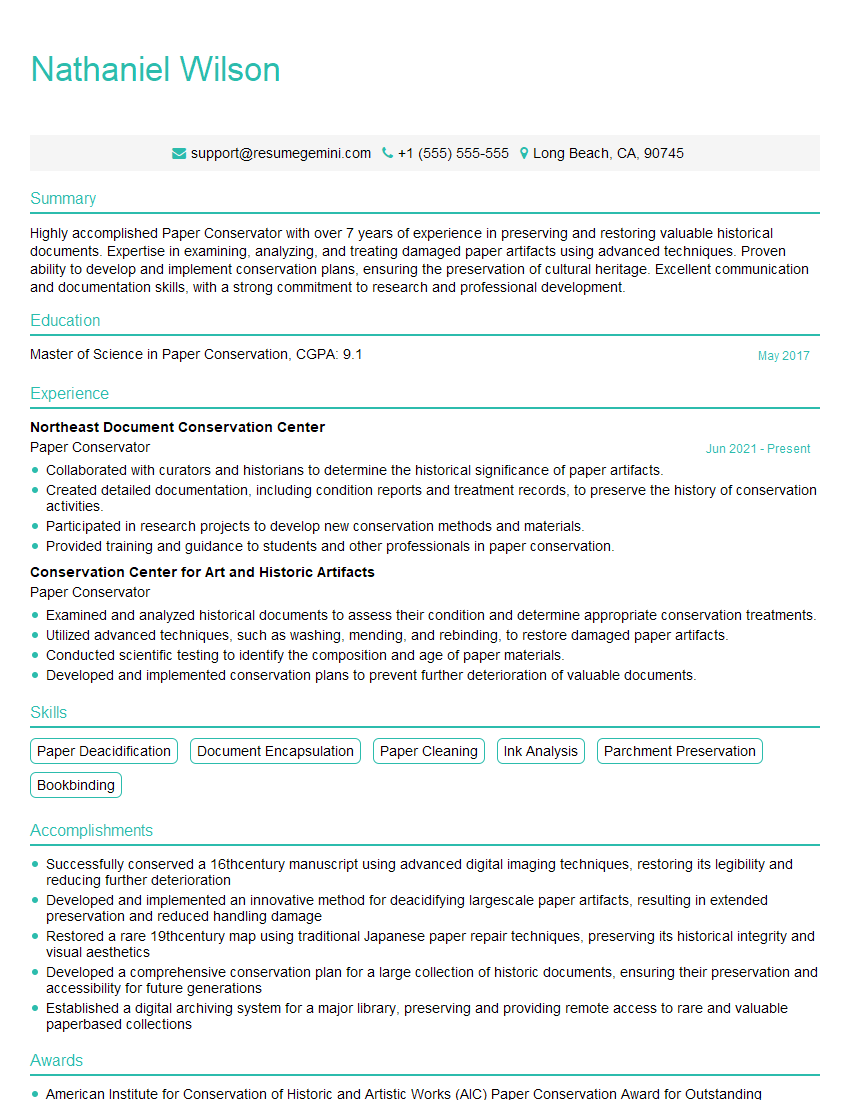
Mastering bookbinding techniques opens doors to exciting career opportunities in publishing, archival work, art conservation, and independent craftsmanship. A strong grasp of these skills significantly enhances your employability and allows you to showcase your expertise to potential employers. To maximize your chances, create an ATS-friendly resume that highlights your skills and experience effectively. ResumeGemini is a trusted resource to help you build a professional and impactful resume, ensuring your qualifications shine. Examples of resumes tailored to showcasing expertise in Knowledge of Bookbinding Techniques are available to help guide you.
Explore more articles
Users Rating of Our Blogs
Share Your Experience
We value your feedback! Please rate our content and share your thoughts (optional).
What Readers Say About Our Blog
Very informative content, great job.
good