Unlock your full potential by mastering the most common Knowledge of different types of sewing techniques interview questions. This blog offers a deep dive into the critical topics, ensuring you’re not only prepared to answer but to excel. With these insights, you’ll approach your interview with clarity and confidence.
Questions Asked in Knowledge of different types of sewing techniques Interview
Q 1. Explain the difference between a straight stitch and a zigzag stitch.
The straight stitch and zigzag stitch are fundamental sewing stitches, each with distinct characteristics and applications. A straight stitch creates a simple, straight line of stitching, ideal for seams that need strength and a clean finish. Think of it as the workhorse of sewing – it’s used for most seams and construction elements. It’s created by a single line of stitches going forward, back and forth.
In contrast, a zigzag stitch produces a series of diagonal stitches that move back and forth across the fabric. This stitch is primarily used for finishing raw edges (to prevent fraying), for decorative purposes, or for sewing stretchy fabrics that require more give. The width and length of the zigzag can be adjusted, creating varying effects. Imagine it as a protective fence for your fabric’s edges, or a flexible line that can accommodate movement.
For example, I’d use a straight stitch to sew the side seams of a pair of trousers, ensuring strength and durability. However, I’d use a zigzag stitch to finish the raw edge of a silk scarf to prevent it from unraveling.
Q 2. Describe your experience with different types of sewing machine needles.
My experience with sewing machine needles is extensive. Choosing the right needle is crucial for achieving high-quality results and preventing damage to both the fabric and the machine. I’ve worked with a wide range of needles, each designed for specific fabric types and sewing tasks. For instance, universal needles are versatile and suitable for most woven fabrics. Ballpoint needles are essential for knit fabrics as their rounded tips glide between the loops instead of piercing them, preventing snags. Jeans needles, with their reinforced points, can easily handle heavy-duty fabrics. I’ve also used stretch needles designed for highly elastic fabrics, and microtex needles for fine fabrics like silk or chiffon. The needle size, denoted by a number (e.g., 80/12, where 80 is the European size and 12 is the American size), should be matched to the fabric weight; a heavier fabric generally requires a larger needle.
Incorrect needle selection can lead to skipped stitches, broken needles, or damaged fabric. I always take the time to assess the fabric type and choose the appropriate needle accordingly – it’s a critical step in ensuring a successful sewing project.
Q 3. What are the common types of seams used in garment construction?
Garment construction relies on a variety of seams, each serving a specific purpose. Some of the most common types include:
- French seam: This seam is enclosed, creating a clean and professional finish, often used for fine garments. It involves sewing a narrow seam, then trimming and enclosing it within a wider seam.
- Seam allowance: This is the unfinished edge of the fabric between the stitching and the cut edge. The amount varies depending on the fabric and the garment style.
- Flat felled seam: This strong, durable seam is commonly used in men’s shirts. One seam allowance is folded over and stitched down to the other.
- Hong Kong seam: A high-end finish where bias binding is enclosed in the seam, creating a decorative and durable seam line.
- Overlocked seam: Created with a serger, this seam is finished and prevents fraying; ideal for knits.
Choosing the right seam depends on the fabric weight, the garment’s intended use, and the desired aesthetic. For example, I’d use a French seam for a delicate silk blouse, whereas a flat felled seam would be more appropriate for durable workwear.
Q 4. How do you choose the appropriate stitch length for different fabrics?
Stitch length is directly related to fabric type and the desired outcome. Generally, shorter stitch lengths (e.g., 1.5 – 2.0 mm) are preferred for delicate or lightweight fabrics as they offer better control and prevent puckering. They’re also better for curves or areas needing precision. Longer stitch lengths (e.g., 3.0 – 4.0 mm) can be used for thicker or more stable fabrics, allowing for faster sewing speed and minimizing the risk of fabric breakage during stitching.
For instance, I would use a shorter stitch length when sewing silk, and a longer stitch length when sewing denim. I always test the stitch length on a scrap of fabric before beginning the actual sewing project to ensure the chosen length works well with the particular fabric and needle. Adjusting stitch length is a subtle yet critical skill that significantly affects the quality and longevity of the garment.
Q 5. Explain the importance of proper fabric preparation before sewing.
Proper fabric preparation is paramount to achieving professional-looking results and preventing common sewing issues. This crucial step involves several key actions:
- Pre-washing: Washing and drying the fabric before cutting helps to prevent shrinkage after the garment is completed.
- Pressing: Pressing the fabric removes wrinkles and ensures that the fabric lies flat, leading to more accurate cutting and sewing.
- Cutting: Using sharp shears and following pattern instructions carefully ensures accurate cutting, which directly impacts the final fit and appearance of the garment.
- Notching and clipping: This step helps to create smooth curves and prevent puckering in areas with sharp angles.
Skipping fabric preparation often leads to ill-fitting garments, uneven seams, and frustration. By taking the time to properly prepare the fabric, I ensure a smoother sewing process and a higher-quality final product. I view fabric preparation as the foundation upon which a successful sewing project is built.
Q 6. Describe your experience with pattern making and grading.
Pattern making and grading are integral parts of garment design and production. I have extensive experience in both areas. Pattern making involves creating a paper pattern based on measurements and desired design elements. This is a creative process involving drafting, draping, and modifying patterns to achieve the desired silhouette. It requires a strong understanding of garment construction and body measurements.
Grading is the process of adjusting a pattern to accommodate different sizes. I use both manual and computer-aided design (CAD) methods for grading. Manual grading involves meticulously adjusting pattern pieces to create accurate size variations, while CAD utilizes specialized software to automate the process, making it faster and more efficient. Understanding grading is essential for ensuring a consistent fit across a range of sizes. Accurate grading is fundamental to offering a garment in multiple sizes and ensuring proper fit across body types.
Q 7. What types of fabrics are best suited for specific sewing techniques?
The suitability of a fabric for a specific sewing technique depends heavily on its properties. For instance:
- Lightweight fabrics like silk or chiffon are best suited for delicate hand-sewing techniques or machine stitching with a fine needle and short stitch length. Their delicate nature necessitates careful handling.
- Medium-weight fabrics such as cotton or linen are versatile and can be used with a variety of techniques, from machine stitching to appliqué.
- Heavy-duty fabrics like denim or canvas are best suited for techniques that can handle their thickness, such as topstitching or heavier seams. A sturdy needle and appropriate machine settings are required.
- Stretch fabrics like jersey or lycra require special needles (ballpoint or stretch) and stitches (zigzag or stretch stitches) to accommodate their elasticity. Using the wrong needle or stitch can result in the fabric being damaged.
Choosing the right fabric for a sewing technique ensures a seamless process and a high-quality finished product. I always consider the fabric’s weight, drape, and stretch characteristics before deciding on the appropriate techniques. This holistic approach consistently leads to superior results.
Q 8. How do you identify and repair common sewing machine problems?
Identifying and repairing sewing machine problems requires a systematic approach. First, I always ensure the machine is unplugged for safety. Then, I listen for unusual noises – a grinding sound might indicate a need for lubrication, while a clicking sound could point to a timing issue. I visually inspect the machine, looking for anything out of place, like a loose screw or tangled thread. Common issues include thread breakage, skipped stitches, and inconsistent tension.
- Thread Breakage: This often stems from incorrect threading, dull needles, or improper tension. I’d check the threading path carefully, replace the needle, and adjust the tension dial (usually found on the top or side of the machine).
- Skipped Stitches: This can be caused by a dull needle, incorrect needle type for the fabric, improper tension, or lint build-up under the needle plate. I’d start by replacing the needle and cleaning the bobbin case and needle area thoroughly. Then, I’d adjust the tension and check the needle plate for obstructions.
- Inconsistent Tension: Uneven stitching, with some areas loose and others tight, points to issues with the upper or lower tension. I’d check and adjust both, consulting my machine’s manual for specific instructions.
For more complex issues, I might refer to the machine’s manual or consult a qualified repair technician. Remember, preventative maintenance like regular cleaning and lubrication goes a long way in avoiding problems.
Q 9. Explain your experience with different types of sewing machine feet.
I have extensive experience with various sewing machine feet, each designed for a specific task. These attachments significantly enhance the versatility of the machine, allowing for precise and efficient stitching on a wide range of projects.
- General Purpose Foot: The workhorse foot used for most straight stitching and zigzag stitching. It’s my go-to for everyday sewing.
- Zipper Foot: This foot has a groove that allows it to sew close to the zipper coil, creating a neat and even seam. I’ve used this extensively for installing zippers in garments and bags.
- Buttonhole Foot: This specialized foot creates consistent buttonholes, either automatically or by following a series of steps. It has greatly improved the quality of my buttonholes.
- Walking Foot: This is invaluable for working with multiple layers of fabric or difficult-to-manage materials like leather or vinyl, preventing slippage and ensuring even feed of all layers. I frequently use this when quilting or sewing heavy fabrics.
- Overlock/Serger Foot: While not always included on domestic machines, if my machine has this feature, it’s great for creating neat, professional-looking seams that prevent fraying, particularly useful in knitwear and delicate fabrics.
Choosing the right foot is critical. The wrong foot can lead to poor quality stitching, fabric damage, or even machine damage. I always select the foot appropriate for the project and the technique I am using.
Q 10. How do you measure and cut fabric accurately?
Accurate fabric measurement and cutting are fundamental. I always use a sharp rotary cutter and self-healing mat to ensure clean cuts. For straight lines, a ruler and cutting mat are essential. I double-check measurements before cutting, especially on expensive fabrics. To add precision:
- Pre-washing Fabric: Pre-washing prevents shrinkage after the garment is sewn, so I always do this, especially with natural fibers like cotton and linen.
- Marking Fabric: I use tailor’s chalk, disappearing ink pens, or pins to mark cutting lines and pattern pieces ensuring precision.
- Laying Fabric Correctly: It’s crucial to lay fabric out smoothly and accurately according to the pattern instructions, accounting for the fabric’s nap or direction if necessary. This ensures the final product looks consistent.
- Using Pattern Weights: Pattern weights keep fabric flat and prevent shifting during cutting, providing consistent accuracy.
I always cut slowly and methodically, paying close attention to the grain lines, pattern markings, and seam allowances, to guarantee the final garment fits and looks exactly as intended.
Q 11. What are some common methods for finishing seams?
Seam finishing is essential for creating durable and professional-looking garments. It prevents fraying and adds to the overall quality.
- Serging/Overlocking: Uses a serger or overlock machine to create a neat, finished edge, preventing fraying and adding durability. I use this on most knits and fabrics prone to unraveling.
- Zigzag Stitch: A simple zigzag stitch along the raw edge provides a basic form of seam finishing and is a good alternative if you don’t have a serger.
- Pinking Shears: These shears create a jagged edge that reduces fraying, a good choice for less visible seams.
- French Seams: These seams encase the raw edges inside the seam, creating a very clean and durable finish, often used in higher-end garments.
- Hong Kong Finish: This involves binding the raw edge of the seam with bias tape for a beautiful, professional finish. It’s more time-consuming, but perfect for show-stopping projects.
The choice of seam finish depends on the fabric type, garment style, and desired aesthetic. I always consider these factors when selecting the most appropriate technique.
Q 12. Describe your experience with different types of interfacing.
Interfacing provides structure and support to garments. Different types of interfacing offer unique properties.
- Fusible Interfacing: This is applied with heat and pressure using an iron, and is my go-to for collars, cuffs, and other areas needing crispness. I choose the weight and type based on the fabric’s weight and drape.
- Sew-in Interfacing: This requires stitching to the fabric and is generally used for areas where more flexibility is needed, such as curved seams or areas that need to stretch.
- Knit Interfacing: This is designed for knit fabrics, providing support without sacrificing the knit’s stretch and flexibility. It’s my choice for knit garments to maintain the drape.
- Woven Interfacing: A more structured option; I use it for tailored garments, collars, or when I need maximum support and stiffness.
Choosing the wrong interfacing can ruin a garment. I always consider the fabric weight, drape, and the desired effect when selecting the correct interfacing.
Q 13. How do you troubleshoot common sewing problems, such as skipped stitches or broken needles?
Troubleshooting sewing problems involves a methodical approach.
- Skipped Stitches: This often points to a dull needle, incorrect needle type for the fabric, incorrect threading, or lint under the needle plate. I’d check each, starting with the easiest solutions (cleaning the needle plate and replacing the needle).
- Broken Needles: This can result from hitting pins or other hard objects while sewing. I would inspect the needle and replace it. I also double-check that I’m using the correct needle for my fabric type.
- Puckering: Puckering is often caused by improper tension, incorrect stitch length, or too much bulk under the needle. I’d adjust the tension, stitch length, and consider reducing the number of layers stitched.
- Uneven Stitches: This suggests issues with the upper or lower tension, or a problem with the bobbin winding. I’d check and adjust the tension and ensure the bobbin is wound correctly.
When faced with a problem, I start with the simplest solutions and progressively move to more complex troubleshooting steps. Consulting the machine’s manual often helps identify the root cause.
Q 14. Explain your understanding of different types of closures (zippers, buttons, hooks and eyes).
Closures are a key element of garment construction. I have experience with various types:
- Zippers: I’m proficient in installing various types of zippers, including invisible zippers, separating zippers, and coil zippers, using appropriate techniques for each. I pay attention to zipper alignment for a clean, professional finish.
- Buttons: I’m skilled in attaching buttons using different methods, such as shank buttons, four-hole buttons, and decorative buttons, ensuring they are securely fastened and appropriately sized for the buttonhole.
- Hooks and Eyes: I know how to hand-sew or machine-sew hooks and eyes, ensuring correct placement and alignment for a secure and discreet closure. I choose the size and type depending on the garment weight and stress placed on the closure.
The selection of closure depends on the garment style, weight, and aesthetic. Each closure requires precision to ensure both function and appearance.
Q 15. Describe your experience with industrial sewing machines.
My experience with industrial sewing machines spans over 15 years, encompassing a wide range of models and applications. I’m proficient in operating high-speed, single-needle machines for mass production, as well as specialized machines like overlockers, coverstitch machines, and buttonhole sew-ers. I understand the intricacies of machine maintenance, including needle changes, tension adjustments, and lubrication. For instance, while working on a large apparel production run, I identified a recurring stitching defect caused by inconsistent thread tension on a lockstitch machine. By adjusting the differential feed and meticulously checking the tension settings, I was able to resolve the issue, significantly improving production efficiency and product quality. I’m also familiar with computerized industrial sewing machines and their programming functionalities. This experience includes troubleshooting malfunctions and performing basic repairs.
Career Expert Tips:
- Ace those interviews! Prepare effectively by reviewing the Top 50 Most Common Interview Questions on ResumeGemini.
- Navigate your job search with confidence! Explore a wide range of Career Tips on ResumeGemini. Learn about common challenges and recommendations to overcome them.
- Craft the perfect resume! Master the Art of Resume Writing with ResumeGemini’s guide. Showcase your unique qualifications and achievements effectively.
- Don’t miss out on holiday savings! Build your dream resume with ResumeGemini’s ATS optimized templates.
Q 16. What are the different types of embroidery techniques you’re familiar with?
My embroidery expertise covers a broad spectrum of techniques. I’m skilled in both free-motion and machine embroidery. Free-motion allows for creative, hand-guided designs, ideal for unique pieces or smaller-scale projects. I’ve used this technique to add intricate details to garments and home décor items. Machine embroidery, on the other hand, is perfect for high-volume production or intricate, repetitive designs. I’m proficient in using various embroidery machine software packages to create and digitize designs. Specifically, I’m experienced with techniques like satin stitch, appliqué, chain stitch, and shadow work. For example, I recently completed a project involving the creation of a customized logo on hundreds of corporate polo shirts using a multi-needle embroidery machine, ensuring precise placement and consistent quality across all items.
Q 17. How do you ensure quality control in your sewing work?
Quality control is paramount in my sewing work. My process begins with a thorough inspection of the fabric before cutting. I carefully check for flaws like holes, inconsistencies in weave, or color variations. After cutting, I meticulously inspect each garment piece for any defects before assembly. During the sewing process itself, I regularly check the stitch quality, ensuring consistent tension and proper seam allowance. I use a variety of tools like seam gauges and rulers to maintain accuracy. Finally, a comprehensive final inspection is performed on each completed garment to ensure it meets the highest quality standards. I document any issues found during each stage, allowing for corrective actions and tracking potential problem areas within the production process. Think of it like a quality control checkpoint at every stage – from raw materials to the final product.
Q 18. Describe your experience working with different types of sewing patterns.
I have extensive experience working with various sewing patterns, from simple, commercially-produced patterns to complex, custom-designed ones. I understand how to interpret pattern markings, adjust for sizing, and understand different grading systems. I’m comfortable working with both paper and digital patterns and adept at adapting patterns to different fabrics and designs. For example, I recently adapted a vintage dress pattern to create a contemporary jumpsuit using a different fabric and adding modern details. This involved understanding the original pattern’s construction and making the necessary adjustments to achieve the desired silhouette and fit with the new fabric weight.
Q 19. What are your strategies for managing time and workload in a sewing production environment?
Managing time and workload in a sewing production environment requires meticulous planning and prioritization. I utilize project management tools to break down large projects into smaller, manageable tasks. I create detailed timelines, assigning specific timeframes to each task. Effective communication with team members (if applicable) is critical to ensure everyone understands deadlines and responsibilities. I also prioritize tasks based on urgency and complexity, ensuring the most time-sensitive items are handled first. In instances of unexpected delays, I assess the situation and make appropriate adjustments to the timeline to prevent setbacks. For instance, if a specific fabric order is delayed, I may focus on completing other tasks in the meantime and readjust the project schedule accordingly. Flexibility and adaptable problem-solving skills are key.
Q 20. How do you maintain your sewing machines and equipment?
Regular maintenance of sewing machines and equipment is crucial for optimal performance and longevity. This includes daily cleaning of lint and debris from the machine’s bobbin case, feed dogs, and other areas. I regularly oil and lubricate moving parts according to the manufacturer’s recommendations. Needle changes are frequent, depending on the fabric type and workload, ensuring sharp needles for quality stitches. I also perform routine checks of the tension mechanisms, stitch length controls, and presser foot pressure. Any major repairs or adjustments are referred to qualified technicians. Preventive maintenance like this minimizes downtime and prevents costly repairs down the line. It’s like regularly servicing a car – the more you maintain it, the better it functions and the longer it lasts.
Q 21. Describe your experience with working with different types of sewing threads.
My experience working with different types of sewing threads is extensive. I understand the characteristics of various thread types, including their fiber content (cotton, polyester, silk, rayon), weight (denier), and strength. I know which thread types are best suited for different fabrics and projects. For instance, I might choose a strong polyester thread for durable denim garments, while a finer silk thread might be ideal for delicate silk fabrics. I also understand the importance of proper thread selection for different sewing machine types and techniques. The wrong thread can lead to poor stitch quality, breakage, and ultimately, a compromised finished product. Selection considerations include thread color, sheen, and its ability to withstand washing and wear over time. Just as a painter selects the right paint for a particular surface, a seamstress must carefully choose the thread best suited to the project’s specific needs.
Q 22. How do you handle fabric that is difficult to sew?
Sewing challenging fabrics requires a nuanced approach. The key is understanding the fabric’s properties – is it slippery (like silk), stretchy (like jersey), thick (like denim), or prone to fraying (like linen)?
- Slippery Fabrics: Use a walking foot on your sewing machine to prevent slippage. A spray-on fabric glue can temporarily hold layers together before stitching.
- Stretchy Fabrics: A ballpoint needle is crucial to prevent snagging. Use a zigzag stitch or a stretch stitch to accommodate the fabric’s give. Consider using a serger for clean finishes.
- Thick Fabrics: Reduce pressure on your presser foot. Use a denim needle and possibly a slower stitch speed to prevent skipped stitches. Pre-punching holes with a large needle can also help.
- Fraying Fabrics: Always pre-wash and finish raw edges using serging, zigzag stitching, or pinking shears before sewing. This prevents unraveling during construction.
For example, when sewing a silk blouse, I’d use a fine needle, a low stitch speed, and a walking foot to ensure the delicate fabric is handled gently and with precision. With denim, I’d opt for a heavier needle and a sturdier stitch for durability.
Q 23. Explain your experience with different types of pressing techniques.
Pressing is as crucial to sewing as stitching itself. It shapes the garment, sets seams, and creates a professional finish. My experience encompasses various techniques:
- Basic Pressing: Using an iron with the correct temperature setting for the fabric to smooth out wrinkles and seams.
- Pressing with a Clapper: This technique involves using a clapper (a hard, flat object) to flatten seams and prevent shine or indentations. It’s particularly useful with heavier fabrics.
- Tailor’s Ham: A curved form that provides support when pressing curved seams like collars and sleeves, eliminating wrinkles and creating a natural shape.
- Ironing Board: The cornerstone of pressing; choosing the right board (with a sturdy surface and proper padding) is key. Using a sleeve board provides support when working on tricky areas.
- Steam Pressing: Using the steam function of the iron adds moisture to the fabric, aiding in the smoothing process and particularly helpful for stubborn wrinkles.
For instance, when making a tailored jacket, I would use a tailor’s ham to press the curved seams of the sleeves, achieving a flawless, professional look. I’d also utilize steam pressing to remove creases from the fabric before cutting.
Q 24. What are the safety precautions you take while operating sewing machines?
Safety is paramount in my sewing practice. I always:
- Keep my work area clean and organized: This prevents accidents caused by tripping or tangling.
- Use the correct needle and tension for the fabric: Incorrect settings can lead to needle breakage or injury.
- Never leave a running sewing machine unattended: Always switch off the machine before leaving it, even for a moment.
- Keep fingers clear of the needle and presser foot: I use a seam guide or finger guard when necessary.
- Unplug the sewing machine when cleaning or performing maintenance: This prevents electrical shocks.
- Regularly check the power cord for damage: Frayed or damaged cords are a serious hazard.
For example, if I’m working with a thick fabric like leather, I ensure that the needle is appropriate for the material and the presser foot pressure is adjusted to prevent jamming and potential needle breakage. A properly adjusted machine minimizes strain and prevents accidents.
Q 25. Describe your experience in different sewing projects and fabric handling.
My sewing journey has spanned a wide range of projects and fabrics, honing my skills in fabric handling and construction. I’ve worked on:
- Garments: Dresses, skirts, blouses, pants – employing a variety of techniques like darts, zippers, and buttonholes.
- Home Decor: Curtains, cushions, quilts – involving working with a wide range of fabrics, from delicate linens to heavy upholstery materials.
- Accessories: Bags, hats, scarves – requiring precise cutting and specialized finishing techniques.
Working with linen, I learn to appreciate its tendency to crease; pre-washing and careful ironing are essential. With delicate silks and chiffons, I master slow and controlled sewing and gentle pressing. Each project presented unique challenges and taught me the importance of adapting my techniques to each fabric type.
Q 26. How do you stay updated on new sewing techniques and technologies?
Staying current in the ever-evolving world of sewing involves continuous learning. I utilize several methods:
- Sewing Magazines and Blogs: Publications like Threads Magazine and online blogs offer insights into new techniques and technologies.
- Workshops and Classes: Hands-on learning from experienced sewists provides invaluable practical experience.
- Online Courses: Platforms like Skillshare and Craftsy offer structured learning experiences on specialized techniques.
- Industry Events: Attending trade shows and conferences exposes me to the latest innovations in sewing equipment and materials.
- Following Industry Experts: Engaging with experienced sewists on social media and online forums keeps me abreast of the latest trends.
For example, recently I completed an online course on advanced garment construction, learning innovative techniques for creating perfectly fitted garments.
Q 27. Describe your experience with using CAD software for pattern making.
My experience with CAD software for pattern making is extensive. I’m proficient in using industry-standard software like [mention specific software, e.g., Pattern Design, OptiTex]. This allows me to:
- Create accurate and precise patterns: CAD software eliminates manual drafting errors, resulting in superior fit and precision.
- Grade patterns easily: Scaling patterns for different sizes is efficient and straightforward using CAD software.
- Experiment with design variations: I can quickly explore different design elements and make adjustments without redrawing the entire pattern.
- Generate cutting layouts: Optimizing fabric usage for maximum efficiency and reduced waste.
Using CAD, I recently designed a complex, asymmetrical dress pattern, easily modifying and grading it for various sizes—a task significantly more time-consuming and error-prone with traditional methods.
Q 28. Explain your experience with different types of finishing techniques (e.g., hemming, binding).
Finishing techniques are crucial for a professional-looking garment. My expertise includes:
- Hemming: Various hemming techniques like machine stitching, hand-stitching, and blind hemming ensure a clean and invisible finish, depending on the fabric and garment type.
- Binding: Creating clean, durable finishes for edges, using bias tape or self-fabric binding. This is particularly useful for raw edges that need a polished look and reinforcement.
- Facing: Constructing clean and professional necklines, armholes, and other openings using interfacing and precise stitching.
- Zippers: Installing various types of zippers (invisible, center, exposed) to add functionality to garments.
- Buttonholes and Buttons: Creating strong and aesthetically pleasing buttonholes using either a sewing machine or hand-sewing techniques and applying buttons securely.
For example, when constructing a tailored blouse, I would use a narrow, professional-looking hem, a facing for the neckline, and possibly an invisible zipper for a polished, high-end finish.
Key Topics to Learn for Knowledge of Different Sewing Techniques Interview
- Hand Sewing Techniques: Understanding various stitches (running stitch, backstitch, blanket stitch, etc.), their applications (e.g., mending, embellishment), and appropriate thread selection for different fabrics.
- Machine Sewing Techniques: Familiarity with different machine stitches (straight stitch, zigzag stitch, overlock stitch, etc.), their uses (e.g., seams, decorative stitching, finishing edges), and troubleshooting common machine problems (e.g., skipped stitches, tension issues).
- Fabric Selection and Preparation: Knowledge of various fabric types (cotton, silk, linen, etc.), their properties (e.g., drape, weight, shrinkage), and appropriate pre-sewing preparation (e.g., pre-washing, cutting techniques).
- Pattern Interpretation and Cutting: Ability to read and understand sewing patterns, accurately cut fabric pieces, and mark pattern markings for precise construction.
- Seam Construction and Finishing: Understanding different seam types (French seams, flat-felled seams, etc.), their applications, and appropriate finishing techniques (e.g., serging, pinking, overcasting) to ensure durability and a professional finish.
- Garment Construction: Knowledge of the basic steps involved in constructing garments, including techniques for setting in sleeves, attaching collars, and creating closures.
- Specialized Techniques (Optional): Consider exploring advanced techniques like quilting, embroidery, tailoring, or other specialized skills relevant to your target role. Highlight your expertise in any area.
- Problem-Solving and Adaptability: Be prepared to discuss how you approach challenges during the sewing process, such as fabric mishaps, pattern adjustments, or machine malfunctions.
Next Steps
Mastering various sewing techniques is crucial for career advancement in the fashion, textile, or related industries. A strong command of these skills demonstrates competence and opens doors to more challenging and rewarding opportunities. To significantly increase your chances of landing your dream role, create an ATS-friendly resume that highlights your expertise. ResumeGemini is a trusted resource that can help you build a professional and impactful resume. We offer examples of resumes tailored to showcase expertise in Knowledge of different types of sewing techniques, to help you present your skills effectively.
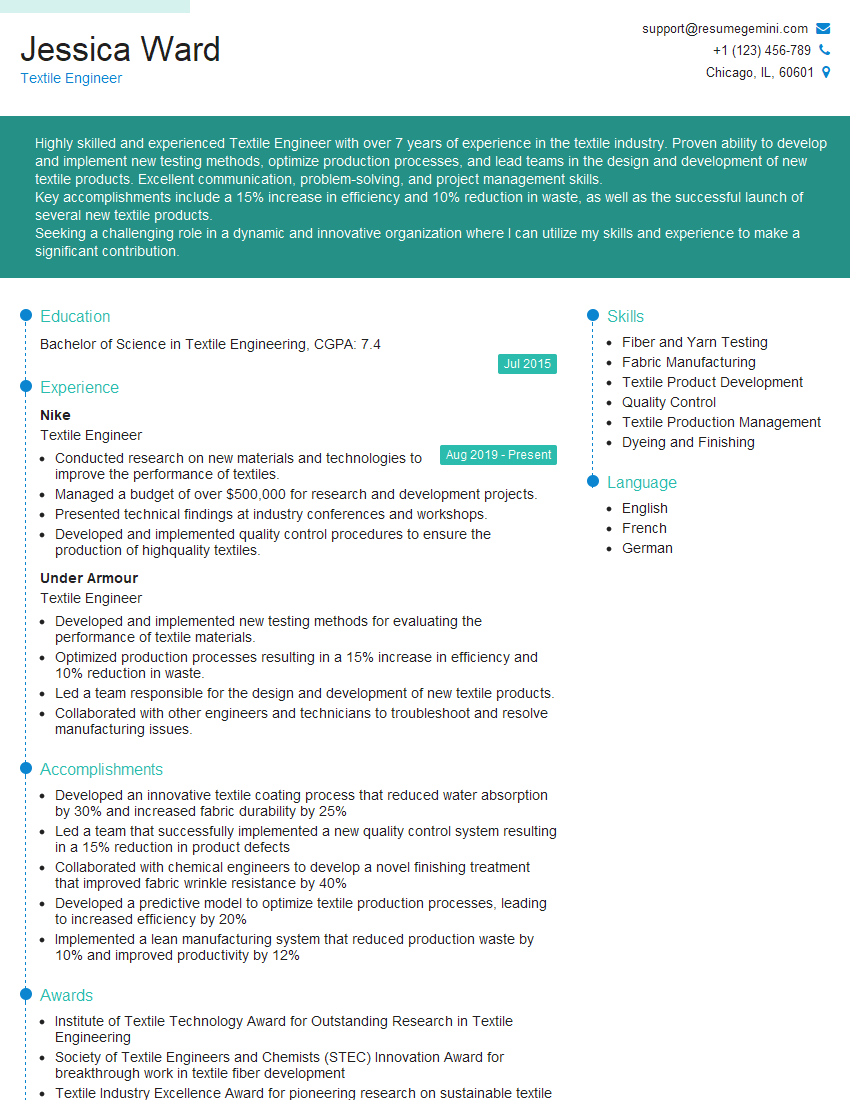
Textile Engineer Resume Sample

Quilter Resume Sample

Textile Designer Resume Sample
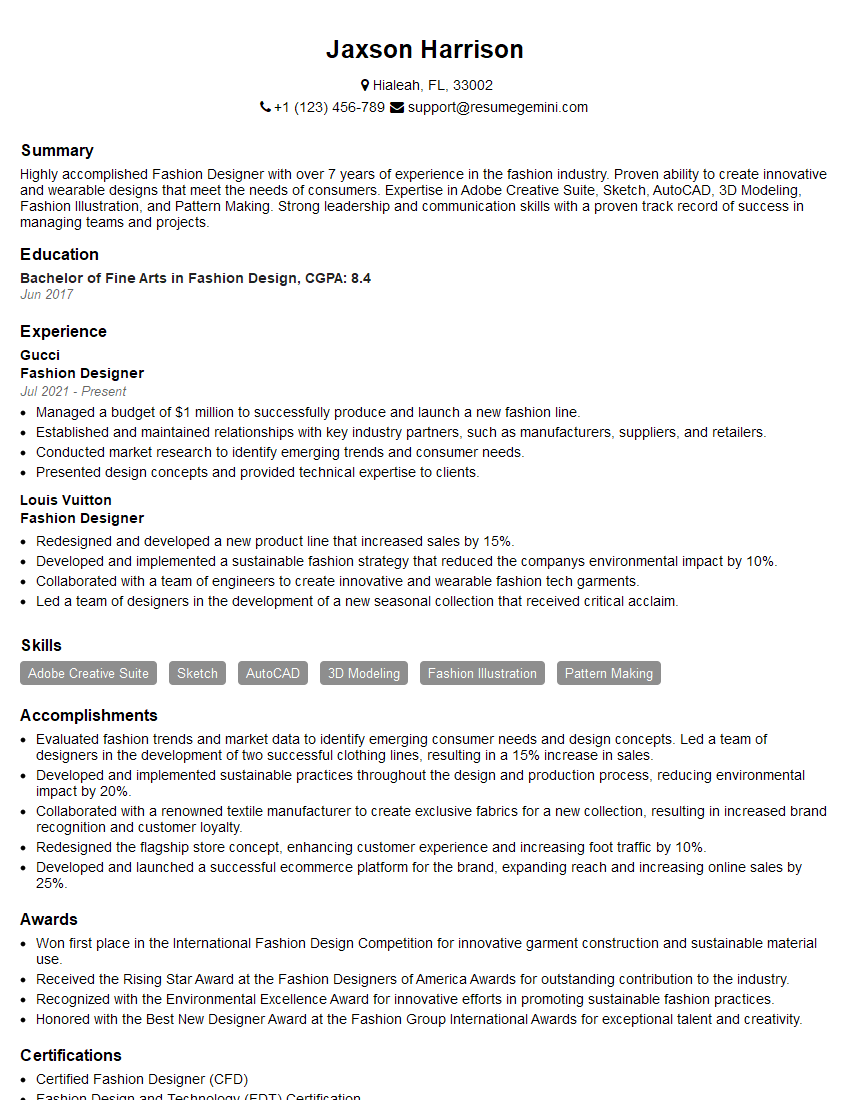
Fashion Designer Resume Sample

Draper Resume Sample

Seamstress Resume Sample
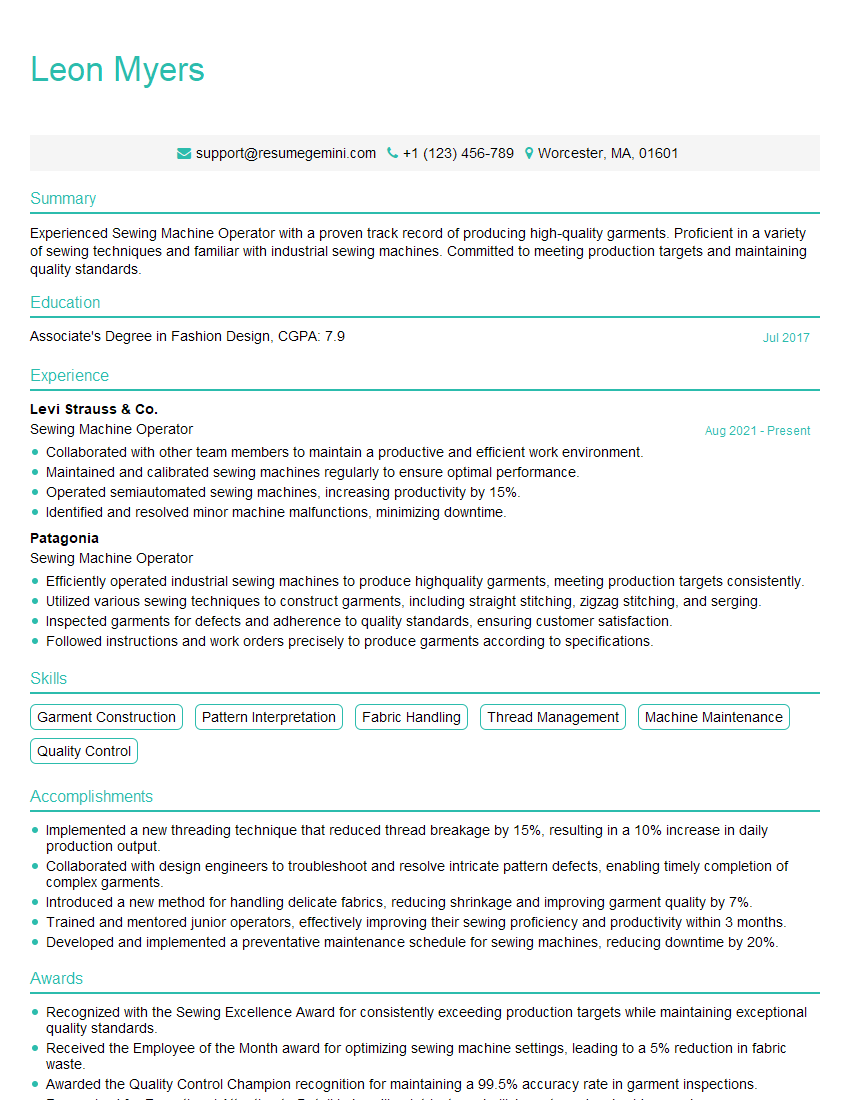
Sewing Machine Operator Resume Sample
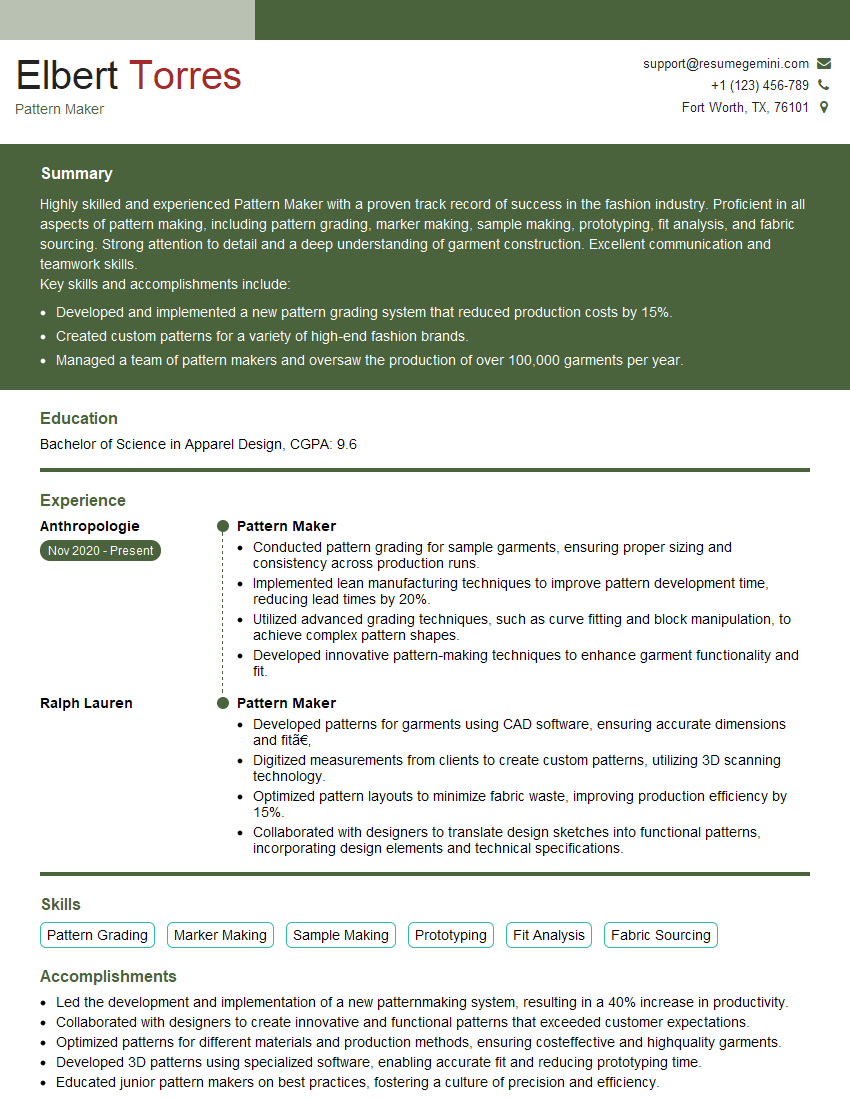
Pattern Maker Resume Sample
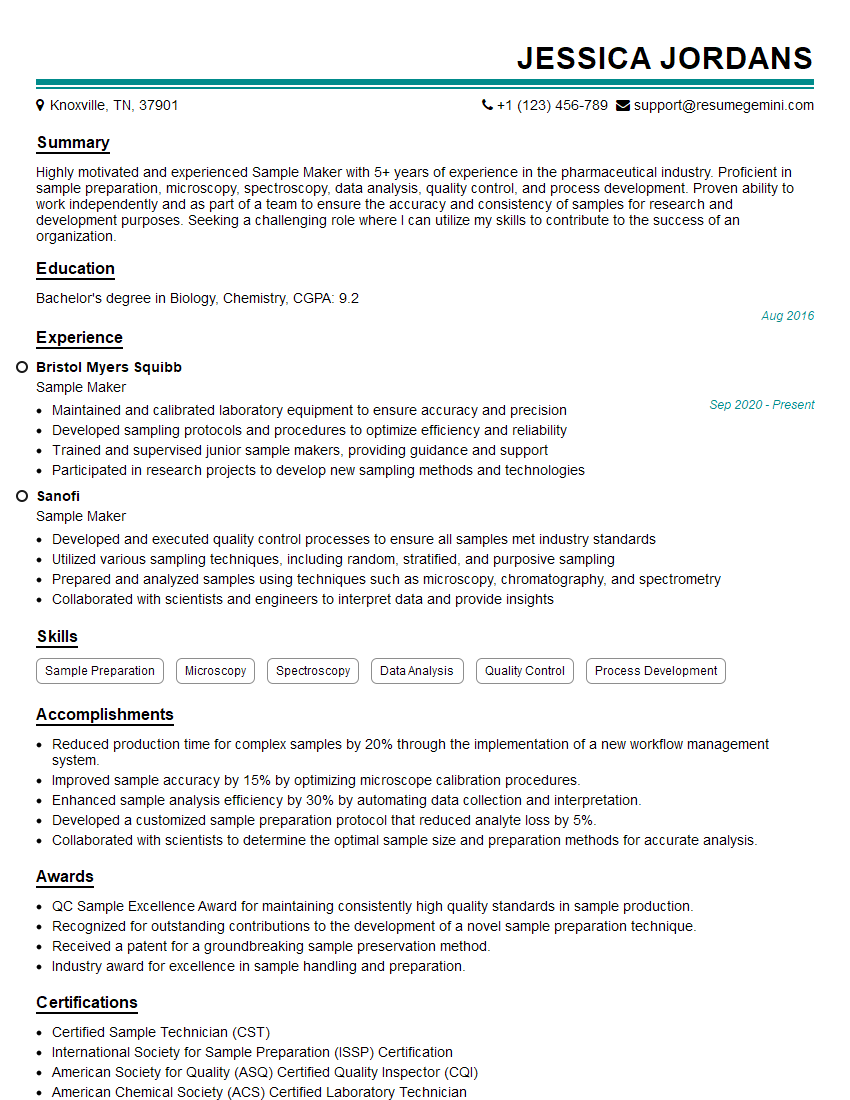
Sample Maker Resume Sample
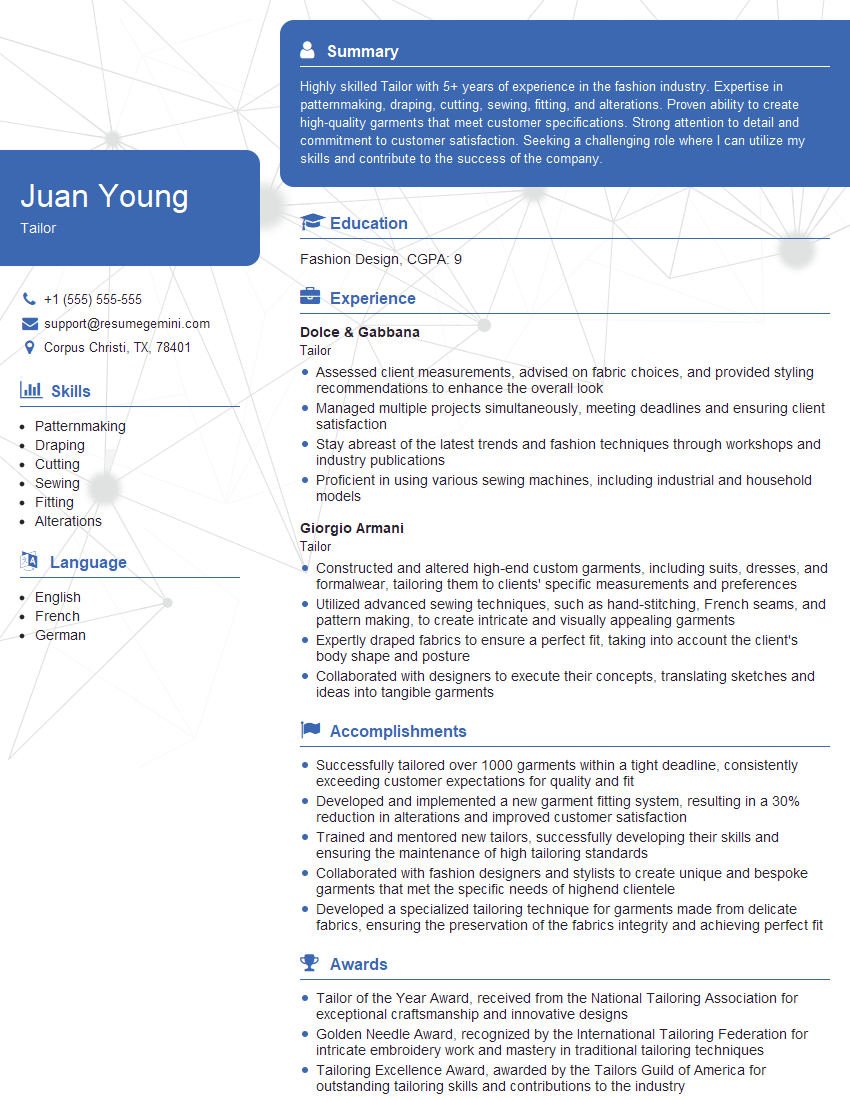
Tailor Resume Sample

Embroidery Specialist Resume Sample

Upholsterer Resume Sample
Explore more articles
Users Rating of Our Blogs
Share Your Experience
We value your feedback! Please rate our content and share your thoughts (optional).
What Readers Say About Our Blog
Very informative content, great job.
good