The thought of an interview can be nerve-wracking, but the right preparation can make all the difference. Explore this comprehensive guide to Knowledge of different types of wood and their properties interview questions and gain the confidence you need to showcase your abilities and secure the role.
Questions Asked in Knowledge of different types of wood and their properties Interview
Q 1. Describe the difference between hardwood and softwood.
The terms “hardwood” and “softwood” are not solely about the wood’s actual hardness. They refer to the type of tree the wood comes from. Hardwoods come from deciduous trees – broadleaf trees that lose their leaves annually, like oak, maple, and cherry. Softwoods come from coniferous trees – cone-bearing evergreens like pine, fir, and cedar. While hardwoods tend to be denser and harder than softwoods, there are exceptions. For instance, Balsa wood, a hardwood, is famously soft, and some softwoods like Yew are incredibly dense and strong.
- Hardwoods: Generally denser, harder, more durable, often more expensive, finer grain patterns, and used in furniture, flooring, and fine cabinetry.
- Softwoods: Generally less dense, softer, less expensive, often used in construction, framing, pulp and paper production.
Q 2. What are the key characteristics of oak wood, and for what applications is it best suited?
Oak is a highly prized hardwood renowned for its strength, durability, and beautiful grain patterns. Its characteristics include:
- Strength and Durability: Exceptional resistance to wear and tear, making it ideal for high-traffic areas.
- Hardness: Scores high on the Janka hardness scale, signifying its resistance to dents and scratches.
- Grain Pattern: Often exhibits prominent, attractive grain patterns, particularly in quartersawn oak.
- Water Resistance: Naturally resistant to water damage, making it suitable for outdoor applications (though proper treatment is always recommended).
Oak is best suited for:
- Furniture: Tables, chairs, cabinets, and flooring.
- Flooring: High-traffic areas like hallways and living rooms.
- Wine Barrels: Its tight grain and resistance to water make it ideal for aging wine.
- Architectural details: Moldings, trim, and paneling.
I once worked on a project restoring an antique oak table; the wood’s strength and beauty after all those years were truly impressive.
Q 3. Compare and contrast the properties of pine and cedar.
Both pine and cedar are softwoods, but they possess distinct characteristics:
- Pine: Generally less expensive, readily available, relatively soft, prone to warping if not properly dried, and has a straight, often simple grain pattern. It’s commonly used in construction framing, cheaper furniture, and pulpwood.
- Cedar: Known for its aromatic scent, natural resistance to decay and insects (though treatment still enhances durability), and often has a tighter, more visually appealing grain. Commonly used in outdoor applications like fencing, siding, and decking; also popular for chests and closets to repel moths.
In short: Pine is the workhorse, ideal for structural applications where cost is a factor; cedar is more luxurious, suited for applications requiring natural insect and decay resistance and visual appeal. Choosing between the two depends heavily on the application’s requirements and budget.
Q 4. Explain the Janka hardness scale and its significance in wood selection.
The Janka hardness scale measures the resistance of wood to denting and wear. It’s determined by measuring the force required to embed a 0.444-inch steel ball halfway into the wood. The higher the Janka hardness score, the harder and more resistant to dents and scratches the wood is. This scale is crucial in wood selection because it helps predict:
- Durability: A higher Janka score means the wood is more likely to withstand wear and tear.
- Suitability for applications: Harder woods are better for flooring in high-traffic areas, while softer woods might be more appropriate for carving.
- Maintenance: Softer woods may require more frequent maintenance to prevent damage.
For example, a very hard wood like Brazilian Walnut scores around 3680 on the Janka scale, whereas a softer wood like Pine scores around 420. This huge difference dictates where each would be suitably used.
Q 5. What are the common defects found in wood, and how do they impact its use?
Wood defects can significantly impact its quality and usability. Common defects include:
- Knots: Branches embedded in the wood, reducing strength and sometimes causing splitting.
- Checks: Splits or cracks that extend across the grain, often due to drying stresses.
- Shakes: Splits or separations within the wood that run parallel to the grain.
- Decay: Rotting of the wood caused by fungi, weakening its structure.
- Warping: Bending or twisting of the wood due to uneven drying.
The impact of these defects depends on their severity and location. Small knots in a piece of furniture might be considered character, while large checks could render the wood unusable for structural purposes. Careful inspection and grading are essential to ensure wood is suitable for its intended use.
Q 6. Describe different wood drying methods and their effects on wood properties.
Wood drying is critical to prevent warping, checking, and decay. Methods include:
- Air Drying (or Stack Drying): The simplest method, involving stacking lumber outdoors under cover to allow slow, natural drying. It’s slow (months to years) but preserves wood quality.
- Kiln Drying: A faster method using controlled temperature and humidity in a kiln. It’s more precise and efficient but can sometimes negatively impact wood properties if not done correctly (over-drying can lead to brittleness).
- Solar Drying: Utilizes solar energy to dry wood, often in combination with air drying. This is often a more sustainable method.
The chosen method affects the wood’s final properties. Air-dried wood is generally considered superior in terms of stability, but kiln-dried wood is more readily available and allows for faster project turnaround times. The selection depends on time constraints and desired quality.
Q 7. Explain the process of wood preservation and the types of treatments used.
Wood preservation protects wood from decay, insects, and fire. Methods include:
- Pressure Treatment: Wood is placed in a pressure vessel and treated with preservatives, forcing the chemicals deep into the wood’s structure.
- Surface Treatments: Applying preservatives to the surface, offering less protection than pressure treatment but suitable for some applications.
- Heat Treatment: Exposing wood to high temperatures modifies its cellular structure, increasing its natural resistance to decay and insects.
Common preservatives include chromated copper arsenate (CCA), creosote, and borates. The choice of treatment depends on the wood species, intended use, and environmental regulations (some preservatives are being phased out due to environmental concerns). Proper preservation significantly extends the lifespan of wood, especially in outdoor applications. For example, pressure-treated lumber is standard in decks and fences due to its increased resistance to rot.
Q 8. What are the different wood finishes and their suitability for various applications?
Wood finishes are crucial for protecting wood and enhancing its aesthetic appeal. They range from simple oils to complex varnishes, each with its own properties and suitability for different applications.
- Oils (e.g., linseed oil, tung oil): Penetrate the wood, enhancing its natural beauty and providing some protection against moisture. Suitable for furniture, cutting boards, and other items needing a natural look and feel. They are relatively easy to apply and renew, but offer less protection than other finishes.
- Varnishes: Form a hard, protective film over the wood, shielding it from scratches, moisture, and UV damage. Excellent for flooring, furniture exposed to high traffic, and outdoor applications. Varnishes can be glossy, semi-gloss, or matte depending on the desired effect.
- Lacquers: Similar to varnishes but dry faster, offering a smooth, durable surface. Often used on furniture and musical instruments where a quick drying time and high gloss are important.
- Polyurethanes: Very durable and water-resistant, making them ideal for high-traffic areas and outdoor furniture. They can be applied as a varnish or in a spray. Available in various gloss levels.
- Stains: Penetrate the wood, changing its color without forming a film. Used to enhance the natural grain or create a desired color effect. Often used as a base coat before applying a protective topcoat.
Choosing the right finish depends on the specific needs of the project. For instance, a durable polyurethane is best for a kitchen countertop, while a natural oil might be preferred for a handcrafted wooden bowl.
Q 9. How does grain orientation affect the strength and workability of wood?
Grain orientation significantly impacts wood’s strength and workability. Grain refers to the direction of the wood fibers, typically parallel to the trunk’s growth.
Strength: Wood is strongest along its grain. Imagine trying to break a pencil – it’s much easier to snap it across its width (against the grain) than along its length (with the grain). Construction projects rely heavily on this principle, utilizing wood members oriented for maximum strength along the lines of stress.
Workability: Wood is easier to work with along the grain. Cutting, planing, and sanding are simpler and create a smoother finish when done parallel to the grain. Working against the grain can cause splintering, tearing, and a rough surface. For example, when shaping a piece of wood using a chisel, following the grain prevents the wood from chipping and ensures a clean cut.
Understanding grain orientation is vital for any woodworking project. A well-planned project will always consider grain direction to ensure both strength and ease of construction. Misaligned grain can lead to structural weakness and aesthetic flaws.
Q 10. Explain the concept of wood density and its relationship to strength.
Wood density is the mass of wood per unit volume, typically expressed as kilograms per cubic meter (kg/m³) or pounds per cubic foot (lb/ft³). It’s a crucial factor determining wood’s strength, stiffness, and durability.
Relationship to Strength: Generally, denser wood is stronger. Denser wood has more tightly packed fibers, making it more resistant to bending, compression, and shear forces. Think of it like comparing foam to solid steel – the denser material is far stronger.
Examples: Iroko, a dense African hardwood, is renowned for its strength and durability, making it suitable for demanding applications like shipbuilding and outdoor construction. Conversely, balsa wood, an extremely lightweight and low-density wood, is mainly used in model-making and where lightweight material is necessary.
However, density isn’t the sole indicator of strength. The species, growth conditions, and even the specific part of the tree (heartwood is usually denser and stronger than sapwood) all influence strength. Still, density is a good first approximation for comparing the relative strength of different wood types.
Q 11. What are the sustainability concerns related to wood harvesting?
Sustainable wood harvesting is paramount to protecting forests and biodiversity. Unsustainable practices lead to deforestation, habitat loss, soil erosion, and a depletion of valuable resources.
- Deforestation: Over-harvesting and illegal logging contribute to widespread deforestation, releasing significant amounts of carbon dioxide and harming ecosystems. This is the most severe sustainability concern.
- Habitat Loss: Clearing forests destroys habitats for numerous plant and animal species, impacting biodiversity and ecological balance. The loss of old-growth forests is particularly damaging.
- Soil Erosion: Removing tree cover leaves the soil vulnerable to erosion, leading to reduced fertility and increased sedimentation in waterways.
- Water Cycle Disruption: Trees play a vital role in the water cycle. Deforestation can alter rainfall patterns and lead to water scarcity.
To mitigate these concerns, responsible forestry practices are critical. These include selective logging, reforestation efforts, sustainable forest management certification (like FSC), and combating illegal logging.
Consumers can also play a part by purchasing wood products from certified sustainable sources, supporting responsible businesses, and reducing their overall wood consumption where possible.
Q 12. How do you identify different wood species?
Identifying wood species requires a combination of techniques and observation skills. There’s no single foolproof method, but here are key approaches:
- Visual Inspection: Examine the wood’s color, grain pattern, texture, and presence of distinctive markings. Each species has unique characteristics. For example, the distinctive grain of quarter-sawn oak is easily recognizable.
- Smell: Some woods have characteristic scents. Cedar, for instance, has a distinct aromatic smell.
- Density and Weight: Different species have varying densities. A heavier piece of wood generally indicates higher density.
- Hardness Test: A scratch test using a knife or similar tool can provide an indication of hardness (though this should be done cautiously on a small, inconspicuous area).
- Microscopic Examination: For accurate identification, microscopic analysis of the wood’s cellular structure can be used.
- Reference Guides and Apps: Many field guides and mobile apps are available to assist in wood identification, comparing characteristics to known species.
Experienced woodworkers often develop an ‘eye’ for recognizing different species. Combining several identification techniques provides a higher level of confidence in accurate identification. It’s important to note that even experts sometimes require further testing for definitive identification.
Q 13. Describe the different types of wood joints used in woodworking.
Wood joints are crucial for joining wood pieces securely and aesthetically. There’s a wide variety, each suited to different applications and strength requirements.
- Butt Joint: The simplest joint, where two ends are butted together. Relatively weak unless reinforced with glue and screws or dowels.
- Lap Joint: Overlapping pieces for added strength. Variations include half-lap, quarter-lap, and miter lap joints.
- Mortise and Tenon: A strong and traditional joint, featuring a projecting tenon fitting into a mortise (hole). Often used in furniture and joinery.
- Dovetail Joint: Interlocking finger-like projections for exceptional strength and visual appeal. Common in high-quality drawers and boxes.
- Dado Joint: A groove cut into one piece of wood to receive the edge of another piece. Often used in shelving and cabinet construction.
- Miter Joint: Two pieces angled and joined, commonly used for picture frames.
- Biscuit Joint: Uses oval-shaped biscuits to align and strengthen butt joints. Relatively easy to create.
The choice of joint depends on the project’s requirements and the woodworker’s skill level. Stronger joints are needed for load-bearing structures, while simpler joints might suffice for decorative items.
Q 14. What are the challenges of working with exotic hardwoods?
Exotic hardwoods, while beautiful and desirable, present several challenges:
- Cost: Exotic hardwoods are often expensive due to rarity, difficulty in harvesting, and transportation costs. This can significantly increase project budgets.
- Availability: Sourcing exotic woods can be difficult due to import restrictions and sustainability concerns. Finding consistent supplies of specific species may be challenging.
- Hardness and Density: Many exotic hardwoods are exceptionally hard and dense, requiring specialized tools and techniques for cutting, shaping, and finishing. Dull tools will quickly wear down.
- Durability and Stability: Some exotic hardwoods may be prone to warping, checking, or other movement issues, particularly if not properly dried and acclimated.
- Toxicity: Certain exotic hardwoods contain oils or compounds that can be toxic to humans or cause allergic reactions, requiring appropriate safety precautions during processing.
Working with exotic hardwoods requires experience, specialized tools, and an understanding of the specific challenges each species presents. Thorough research and planning are essential for successful projects involving these materials.
Q 15. How would you assess the quality of lumber?
Assessing lumber quality involves a multifaceted approach, considering several key factors. Think of it like judging a gemstone – you need to look at several aspects to determine its true value.
- Visual Inspection: Look for knots, cracks, splits, discoloration, and any signs of decay or insect infestation. Fewer imperfections generally indicate higher quality. Straight grain is usually preferred over twisted or erratic grain patterns.
- Moisture Content: Properly dried lumber is crucial for stability and preventing warping. A moisture meter is used to measure the moisture content; ideal levels vary depending on the wood species and its intended use. Too much moisture leads to shrinkage and cracking, while too little can make it brittle.
- Grading: Lumber is often graded according to established standards (e.g., those from the American Lumber Standard Committee). Grades reflect the number and size of defects, impacting the structural integrity and aesthetic appeal. Higher grades have fewer imperfections.
- Species and Density: Hardwoods generally have higher density than softwoods, leading to greater strength and durability. The species itself influences properties like workability, resistance to rot, and overall appearance.
- Straightness and Dimensions: Lumber should be straight and true to its specified dimensions for ease of use and to minimize waste. Variations can affect construction and finishing.
For example, a high-grade oak board intended for fine furniture would require almost flawless visual appeal, tight grain, low moisture content, and precise dimensions. Conversely, a lower-grade pine board for framing a house might tolerate more knots and imperfections as long as its structural integrity remains sufficient.
Career Expert Tips:
- Ace those interviews! Prepare effectively by reviewing the Top 50 Most Common Interview Questions on ResumeGemini.
- Navigate your job search with confidence! Explore a wide range of Career Tips on ResumeGemini. Learn about common challenges and recommendations to overcome them.
- Craft the perfect resume! Master the Art of Resume Writing with ResumeGemini’s guide. Showcase your unique qualifications and achievements effectively.
- Don’t miss out on holiday savings! Build your dream resume with ResumeGemini’s ATS optimized templates.
Q 16. What safety precautions are necessary when working with wood?
Safety is paramount when working with wood. Think of it as a form of respect for the material and yourself.
- Eye Protection: Always wear safety glasses or a face shield to protect against flying debris.
- Hearing Protection: Power tools can be very loud. Earplugs or earmuffs are essential, especially during extended use.
- Respiratory Protection: When working with certain woods or using chemicals like finishes or stains, a respirator is crucial to protect against dust inhalation or harmful fumes.
- Hand Protection: Gloves should be worn to prevent cuts and splinters. Choose gloves appropriate for the task; leather for heavy work, nitrile for finishing.
- Proper Tool Use: Learn how to use each tool correctly and keep tools sharp and well maintained. A dull tool is more dangerous than a sharp one.
- Dust Collection: Wood dust is a respiratory hazard. Use dust collection systems whenever possible, and clean up thoroughly after each project.
- Machine Guarding: Table saws, planers, and other woodworking machinery must have proper guards in place to prevent injuries. Never operate machinery without understanding its safety features.
Ignoring these precautions can lead to serious injuries, ranging from minor cuts and splinters to more severe eye injuries, hearing loss, or respiratory illnesses. Always prioritize safety!
Q 17. Explain the difference between plywood, MDF, and particleboard.
Plywood, MDF (Medium-Density Fiberboard), and particleboard are all engineered wood products, but they differ significantly in their construction and properties. Think of them as three different types of cake, each with a unique texture and flavor.
- Plywood: Made from thin layers (plies) of wood veneer glued together with the grain of adjacent plies running perpendicularly. This cross-grain construction provides strength and stability. It’s strong, relatively stable, and can be used structurally.
- MDF: Made from wood fibers mixed with resin and pressed under high heat and pressure. It’s very dense and has a smooth surface, ideal for painting or finishing. However, it’s less strong and water-resistant than plywood.
- Particleboard: Made from wood particles or chips bonded together with resin. It’s the least dense and strongest of the three, and more susceptible to moisture damage. Often used in less demanding applications.
For example, plywood is frequently chosen for shelving or cabinet construction due to its strength, while MDF might be selected for furniture because of its smooth surface. Particleboard is often used in less visible applications like backing for cabinets.
Q 18. Describe the properties of bamboo and its applications.
Bamboo is a fast-growing grass, not a wood, but it shares many similar properties and applications. It’s a remarkably sustainable material.
- Properties: Bamboo is known for its high strength-to-weight ratio, making it surprisingly strong and durable. It’s also relatively flexible and aesthetically pleasing.
- Applications: Used extensively in flooring, furniture, construction (scaffolding, decking), textiles (fabric), and even food (shoots). Its rapid growth makes it an environmentally friendly alternative to traditional lumber.
For instance, bamboo flooring is a popular choice due to its durability and sustainability. Its use in scaffolding demonstrates its surprising strength.
Q 19. What are the advantages and disadvantages of using reclaimed wood?
Reclaimed wood, salvaged from old buildings or structures, offers unique advantages and disadvantages.
- Advantages: Environmentally friendly (reduces waste), often has unique character and beauty due to weathering and age, and can add historical value to projects. It’s usually very strong.
- Disadvantages: Can be more expensive than new lumber, may contain embedded nails or other metal, requires more careful inspection for structural soundness (some may be damaged or decayed), and may contain harmful substances like lead paint.
For example, reclaimed barn wood is highly sought after for its rustic appeal, while reclaimed lumber from demolished factories can offer a unique industrial aesthetic, but careful cleaning and treatment are needed.
Q 20. How do environmental conditions affect wood performance?
Environmental conditions significantly affect wood performance. Think of it as the weather affecting your car’s paint.
- Moisture: High humidity causes wood to swell, leading to warping, cracking, and decay. Conversely, extremely dry conditions cause shrinkage and cracking. This is why proper drying is critical.
- Temperature: Extreme temperature fluctuations can accelerate the deterioration process, especially in combination with fluctuating moisture levels. This contributes to dimensional instability.
- UV Radiation: Sunlight’s ultraviolet radiation degrades the wood’s surface, leading to discoloration, fading, and reduced strength. This is why outdoor wood often needs protective finishes like paint or stain.
- Insects and Fungi: Specific environmental conditions favor the growth of insects and fungi that attack wood, leading to decay and structural weakening. Proper treatment and selection of resistant species can help mitigate this.
For instance, outdoor furniture exposed to harsh sun and rain will deteriorate much faster than indoor furniture. Selecting the appropriate wood species for a given climate is crucial for longevity.
Q 21. Explain the process of wood turning.
Wood turning is a subtractive manufacturing process where wood is shaped by rotating it on a lathe and cutting away material using various tools. Think of it as sculpting with a spinning piece of wood.
- Setup: The wood is securely mounted on a lathe, which rotates it at various speeds. Appropriate safety precautions must be taken.
- Rough Turning: Initial shaping is done with coarser tools to remove large amounts of wood. This sets the basic form.
- Finishing Cuts: Finer tools are used to refine the shape, create details, and achieve the desired surface finish. This involves a gradual process of refinement.
- Sanding: Various grades of sandpaper are used to smooth the surface, creating a polished or matte finish. This is essential for a final quality.
- Finishing: A finish, such as oil, varnish, or lacquer, is applied to protect the wood and enhance its appearance. This helps prevent wear and tear.
A skilled wood turner can create a wide range of objects, from simple bowls and spindles to intricate decorative pieces. The process requires practice, precision, and a good understanding of the wood’s properties.
Q 22. Describe the different types of wood stains and their effects on wood color.
Wood stains are coloring agents used to alter the appearance of wood, enhancing its natural beauty or creating a completely new look. They work by penetrating the wood’s surface to some degree, coloring the wood fibers themselves rather than simply sitting on top like paint. Different types offer varying effects:
- Oil-based stains: These penetrate deeply, providing rich, natural-looking color with good durability. They tend to enhance the wood grain more prominently. Think of a deep, mahogany finish on a cherry wood table.
- Water-based stains: Easier to clean up and faster drying than oil-based stains, they offer a more translucent finish. They’re less likely to raise the wood grain, making them suitable for smooth surfaces. A light oak stain on a pine dresser is a good example.
- Gel stains: Thicker than oil or water-based stains, they provide excellent coverage and are ideal for filling in imperfections. They work well on porous woods, creating a uniform color. Imagine using a gel stain to cover knots in a rustic pine floor.
- Nitor stains: These are alcohol based stains that offer quick drying times and strong penetration. They are ideal for use with fine woods but must be used with care as they can dry quickly and easily.
- Acid stains: These are used to create a chemical reaction with the wood, altering the color in a more dramatic way. They can give an antique or weathered effect. Think of the grayed look of reclaimed wood.
The final effect depends not only on the stain type but also the wood’s species, its grain, and the application technique. A darker stain on a lighter wood like pine will provide a significant color change, whereas the same stain on a darker wood like walnut will yield a more subtle result.
Q 23. How do you choose the right wood for a specific project?
Choosing the right wood hinges on several crucial factors related to the project’s requirements and the wood’s properties. First, consider the intended use: Will it be a structural element (requiring strength and durability), a decorative item (emphasizing aesthetics), or something that will be exposed to the elements (needing weather resistance)?
Next, examine the wood’s physical properties:
- Hardness: Hardwoods like oak and maple are excellent for high-traffic areas, whereas softer woods like pine are better suited for less demanding applications.
- Durability: Teak and cedar are naturally resistant to rot and decay, making them ideal for outdoor furniture.
- Workability: Some woods are easier to carve and shape than others. Balsa wood is soft and easy to manipulate, whereas ebony is very dense and requires specialized tools.
- Grain pattern: The grain significantly affects the wood’s appearance and strength. A straight grain is usually stronger and easier to work with than a highly figured grain.
- Cost: Exotic hardwoods can be significantly more expensive than common domestic species.
Finally, account for aesthetic considerations: Do you need a specific color, grain pattern, or texture? For instance, a finely figured mahogany is prized for its rich color and beautiful grain, suitable for fine furniture, while simple pine may be chosen for a rustic look.
For example, building a deck requires a durable, weather-resistant wood like cedar or redwood. Crafting a delicate carving might call for a softer wood like basswood. A kitchen countertop would necessitate a durable, hard wood that can withstand heat and moisture, possibly maple or cherry.
Q 24. What are the common tools and equipment used in woodworking?
Woodworking involves a range of tools, from basic hand tools to sophisticated power equipment. The specific tools needed depend on the project’s complexity. Here are some common examples:
- Hand Tools: Chisels, hand saws (rip and crosscut), planes, mallets, hammers, screwdrivers, measuring tapes, squares, marking gauges.
- Power Tools: Circular saw, jigsaw, planer, jointer, router, drill press, belt sander, random orbital sander.
- Other Essential Equipment: Workbenches, clamps, vises, safety glasses, dust masks, hearing protection.
Choosing the right tools is crucial for efficiency and safety. For instance, a circular saw is faster for ripping long boards than a hand saw, but a hand saw provides more control and precision for intricate cuts. Similarly, a router can create complex shapes, but a chisel offers greater control for fine details. Always prioritize safety by using appropriate safety equipment.
Q 25. Describe your experience in identifying wood defects and grading lumber.
Identifying wood defects and grading lumber is a critical skill for any woodworker. I have extensive experience in assessing lumber for quality. Common defects include knots, splits, checks, shakes, warp, and decay. The presence and severity of these defects influence the wood’s strength and suitability for a given application.
Knots are branches embedded in the wood. Large, loose knots weaken the wood. Splits are cracks running along the grain, while checks are small cracks across the grain. Shakes are separations between growth rings. Warp refers to the wood’s deviation from a straight or flat plane. Decay indicates fungal damage.
Lumber grading systems, like those used by the American Lumber Standards Committee (ALSC), classify lumber based on the presence and size of defects. Higher grades have fewer defects and are suitable for more demanding applications. For example, selecting high-grade lumber is vital for structural components, while lower grades might suffice for less critical applications like furniture framing. My experience allows me to quickly assess the quality of lumber and choose the appropriate grade for any project, minimizing waste and ensuring a structurally sound finished product.
Q 26. What is your experience working with different wood species and their unique properties?
My experience spans a wide range of wood species, each possessing unique properties that influence its suitability for specific projects. For example:
- Hardwoods: Oak (strength, durability, beautiful grain), Maple (hardness, smooth finish, excellent for turning), Cherry (rich color, smooth texture, prized for fine furniture), Mahogany (rich color, luxurious feel, often used in high-end projects).
- Softwoods: Pine (versatile, affordable, easy to work with), Fir (strong, durable, suitable for construction), Cedar (naturally resistant to decay, often used for outdoor applications), Redwood (weather-resistant, beautiful reddish color).
- Exotic Hardwoods: Ebony (extremely dense, dark color, used for fine inlays and musical instruments), Rosewood (beautiful grain, rich color, used for musical instruments and fine furniture), Teak (extremely durable, weather-resistant, popular for outdoor furniture).
Understanding these differences is crucial. Choosing a wood with inappropriate properties can lead to structural failure, aesthetic issues, or significant challenges during the construction process. For instance, using a soft wood for a highly stressed structural element would be unwise. Conversely, using a very hard wood for fine carving might require specialized tools and techniques.
Q 27. Explain your knowledge of different wood joinery techniques.
Wood joinery techniques are critical for creating strong, durable, and aesthetically pleasing joints. I am proficient in a variety of techniques, including:
- Butt Joints: Simple joints, often reinforced with glue, screws, or dowels. Suitable for less-stressed applications.
- Miter Joints: Angled joints used for framing and decorative elements. Require precise cuts and often glue reinforcement.
- Lap Joints: Overlapping joints, offering increased strength. Variations include half-lap, dado, and mortise and tenon joints.
- Mortise and Tenon Joints: Strong, traditional joints. A tenon (projection) fits into a mortise (hole). Used in furniture and structural applications.
- Dovetail Joints: Strong, interlocking joints, known for their attractive appearance. Primarily used in drawers and fine furniture.
- Biscuit Joints: Use small, oval-shaped biscuits to align and strengthen joints. Faster than traditional methods but might not be as strong for heavy loads.
The choice of joinery technique depends on factors such as the type of wood, the joint’s intended load, and the desired aesthetic. A simple butt joint may suffice for a small shelf, whereas a mortise and tenon or dovetail joint is better suited for furniture that will bear significant weight.
Q 28. Describe a challenging woodworking project and how you overcame the difficulties.
One challenging project involved building a custom-designed, curved staircase with intricate balusters. The challenge lay in accurately cutting and assembling the curved stringers (the supporting beams) while ensuring the balusters were consistently spaced and aligned. The wood chosen was a highly figured walnut, which presented its own difficulties due to its tendency to split along the grain.
To overcome these challenges, I employed several strategies:
- Careful Planning and Design: I created detailed drawings and templates to ensure precise measurements and cuts.
- Specialized Tools: I used a bandsaw with a fine-tooth blade for the curved cuts, ensuring minimal wood loss and a smooth finish.
- Strategic Joint Selection: I chose mortise and tenon joints for the balusters, providing exceptional strength and stability.
- Gradual Approach: Instead of attempting the entire staircase in one go, I tackled it in manageable sections, meticulously assembling each piece and regularly checking for alignment.
- Wood Stabilization Techniques: To mitigate the walnut’s tendency to split, I applied wood glue to the ends of the stringers before cutting and allowed the glue to cure thoroughly.
Through meticulous planning, appropriate tool selection, and a step-by-step approach, I successfully completed the staircase, resulting in a beautiful and structurally sound piece that exceeded the client’s expectations. The project underscored the importance of precision, careful planning, and adaptable problem-solving in high-end woodworking.
Key Topics to Learn for Knowledge of Different Types of Wood and Their Properties Interview
- Wood Classification: Hardwood vs. Softwood – understanding the botanical differences and how they impact properties.
- Wood Anatomy: Familiarize yourself with the cellular structure of wood (grain, rings, etc.) and how it affects strength, durability, and workability.
- Mechanical Properties: Learn about key properties like strength (compressive, tensile, shear), stiffness, hardness, and density. Understand how these properties vary between species.
- Physical Properties: Explore properties like moisture content, shrinkage, and expansion. Understand the impact of these on wood stability and performance.
- Durability and Decay Resistance: Learn about factors influencing wood durability, such as natural resistance to decay and insect attack, and the use of preservatives.
- Working with Wood: Understand different woodworking techniques (sawing, planing, joining) and how wood properties influence the choice of tools and methods.
- Wood Species Identification: Develop the ability to identify common wood species based on visual characteristics (grain, color, texture).
- Sustainability and Sourcing: Understand the importance of sustainable forestry practices and responsible wood sourcing.
- Practical Applications: Be prepared to discuss applications of different wood types in various industries (e.g., construction, furniture making, musical instrument crafting).
- Problem-Solving: Consider how knowledge of wood properties can be used to solve practical problems, such as selecting the right wood for a specific application or addressing issues related to wood movement or decay.
Next Steps
Mastering the knowledge of different types of wood and their properties is crucial for career advancement in many fields, demonstrating a strong foundation in materials science and practical application. A well-crafted resume is essential for showcasing this expertise to potential employers. To maximize your job prospects, create an ATS-friendly resume that highlights your skills and experience effectively. ResumeGemini is a trusted resource to help you build a professional and impactful resume. Examples of resumes tailored to highlight expertise in wood knowledge are available to guide you. Take the next step towards your dream career today!
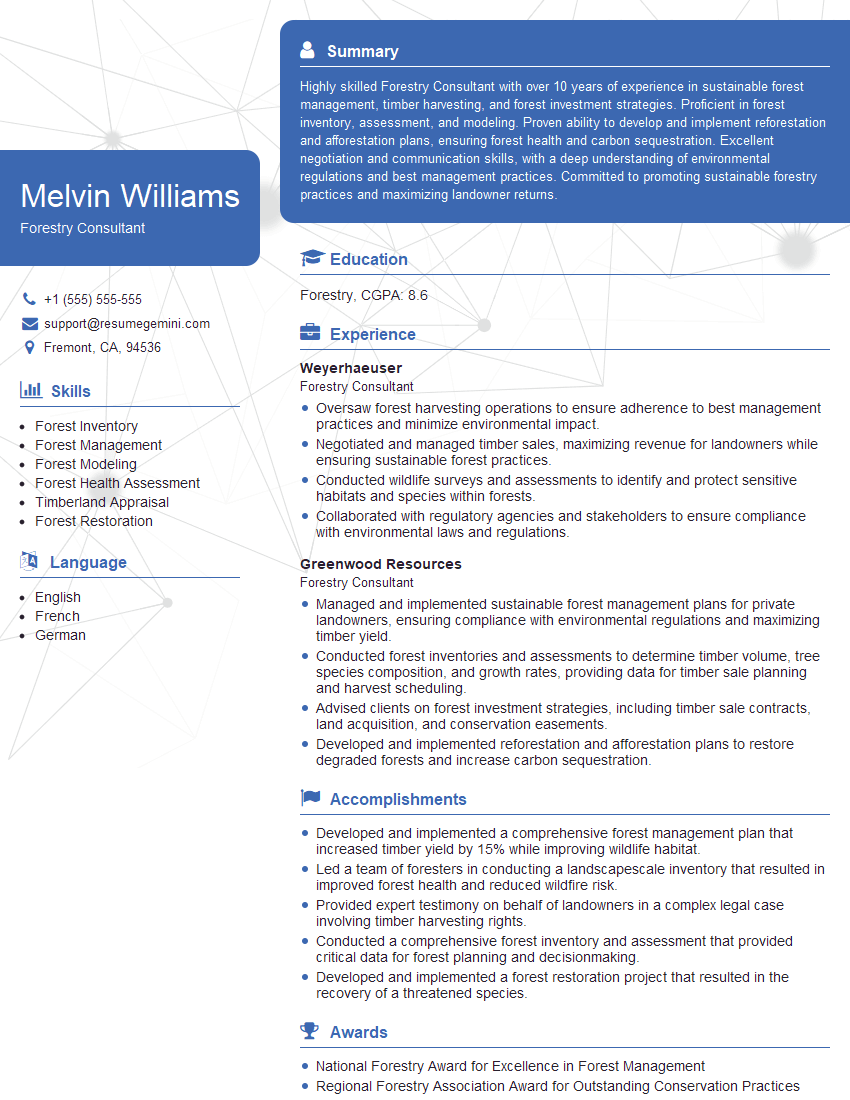
Forestry Consultant Resume Sample

Wood Technologist Resume Sample

Furniture Designer Resume Sample
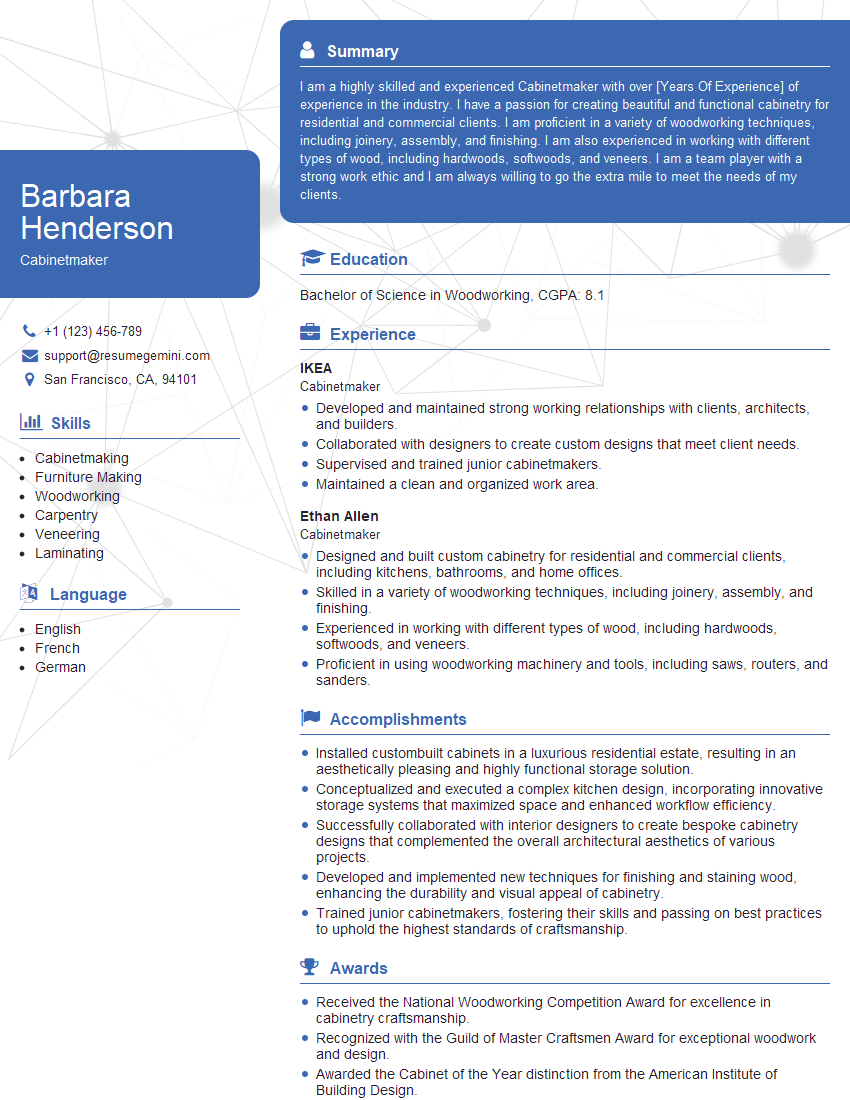
Cabinetmaker Resume Sample

Carpenter Resume Sample

Timber Framer Resume Sample

Millwright Resume Sample

Joiner Resume Sample

Wood Finisher Resume Sample

Wood Turner Resume Sample

Lumber Inspector Resume Sample
Explore more articles
Users Rating of Our Blogs
Share Your Experience
We value your feedback! Please rate our content and share your thoughts (optional).
What Readers Say About Our Blog
Very informative content, great job.
good