Unlock your full potential by mastering the most common Knowledge of glass cutting techniques interview questions. This blog offers a deep dive into the critical topics, ensuring you’re not only prepared to answer but to excel. With these insights, you’ll approach your interview with clarity and confidence.
Questions Asked in Knowledge of glass cutting techniques Interview
Q 1. What types of glass cutting tools are you familiar with?
Glass cutting tools range from simple hand tools for small projects to sophisticated machinery for industrial applications. I’m proficient with a variety of tools, including:
- Glass cutters: These are essential for scoring glass. They come in various types, such as oil-fed cutters for smoother scoring and standard wheel cutters. The quality of the cutter’s wheel significantly impacts the cleanness of the cut.
- Running pliers (or grozing pliers): These are used to snap the glass along the score line. Different sizes cater to various glass thicknesses.
- Safety Glasses and Gloves: Crucial safety equipment, always used.
- Measuring tools: Accurate measurements are paramount; I utilize rulers, squares, and measuring tapes, depending on the project scale. For large sheets, laser measuring tools are invaluable.
- Wet saw (or water-fed saw): Used for precise, intricate cuts, particularly on thicker or more delicate glass types. It uses a diamond blade and water coolant to minimize chipping and dust.
- Glass grinder and polisher: For smoothing cut edges and achieving high-quality finishes.
My experience encompasses using both manual and power tools, allowing me to adapt to diverse projects and glass types.
Q 2. Describe your experience with different glass cutting techniques (e.g., scoring, snapping, wet cutting).
My experience with glass cutting techniques is extensive. I’ve mastered several methods:
- Scoring: This involves using a glass cutter to create a controlled fracture line on the glass surface. The scoring pressure, angle, and speed are critical for a clean break. Too much pressure can create a jagged cut, while too little may lead to an incomplete fracture. I’ve learned to adjust my technique based on the type of glass and its thickness.
- Snapping: After scoring, snapping involves applying controlled pressure to the glass along the score line to break it cleanly. I use running pliers for this, applying pressure on both sides of the score line to ensure a straight break. Practice and a steady hand are key to preventing chipping or shattering.
- Wet cutting: This technique involves using a water-fed saw, especially valuable for thicker glass or intricate cuts. The water coolant prevents the glass from overheating and chipping, resulting in smoother, more precise cuts. I’ve used this extensively in creating custom-shaped glass pieces.
I have extensive experience using all these techniques in various projects, from simple window repairs to complex artistic installations.
Q 3. What safety precautions do you take when cutting glass?
Safety is my top priority when cutting glass. I always adhere to the following precautions:
- Eye protection: Safety glasses are mandatory to protect against flying glass fragments.
- Hand protection: Gloves protect my hands from sharp edges and splinters.
- Appropriate clothing: Long sleeves and closed-toe shoes minimize skin exposure.
- Work area: A clean, well-lit, and spacious workspace minimizes risks. I always ensure the glass is properly supported to prevent accidental slippage.
- Proper tools: Using well-maintained, sharp tools reduces the chance of slippage and uneven cuts. Dull tools require more force, increasing the risk of accidents.
- Disposal: Glass fragments are disposed of responsibly in designated containers to prevent injury.
I’ve witnessed firsthand the consequences of neglecting safety protocols, so I always treat glass cutting with the utmost caution.
Q 4. How do you ensure accurate cuts when working with large glass sheets?
Accurate cuts on large glass sheets demand meticulous planning and precision. My approach involves:
- Precise measurements: Using laser measuring tools and precise marking techniques is crucial for accuracy. I double-check all measurements before proceeding to avoid costly mistakes.
- Stable support: Large sheets must be supported evenly to prevent sagging or warping, which can lead to inaccurate cuts. This might involve specialized supports or workbenches.
- Scoring guides: Straight edges and rulers are essential to ensure straight score lines. For intricate cuts, templates or patterns are used as guides.
- Multiple score lines: For particularly thick or large sheets, I might employ multiple score lines to ensure a clean break along the entire length. This helps to control the fracturing process.
- Controlled snapping: Slow, steady pressure along the score line minimizes the risk of deviations and unintended breaks.
For particularly large or sensitive projects, I would leverage specialized equipment like a glass cutting table with built-in scoring guides.
Q 5. What are the different types of glass and their respective cutting methods?
Different glass types necessitate varied cutting techniques due to their varying compositions and properties.
- Float glass (soda-lime glass): This is the most common type, readily scored and snapped using standard techniques. Its relatively soft nature makes it easy to cut.
- Tempered glass (safety glass): Cutting tempered glass is extremely dangerous, as it shatters unpredictably. Specialized equipment and expertise are required, and often it’s impractical to cut after tempering.
- Laminated glass: Consists of two or more layers bonded together. While it can be cut with standard tools, care is needed to avoid damaging the interlayer.
- Borosilicate glass (Pyrex): This is more resistant to thermal shock but can still be cut with standard tools. However, it requires a sharper cutter and may require more pressure.
- Specialty glass (e.g., stained glass, textured glass): These often require specialized techniques and tools, depending on their properties and design.
Understanding the properties of each glass type is crucial for choosing the appropriate cutting method and tools to ensure a safe and successful outcome.
Q 6. Explain your experience with glass handling and transportation.
Safe and efficient glass handling and transportation are paramount to prevent breakage and injury. My experience includes:
- Proper lifting techniques: Using the correct posture and employing lifting aids like suction cups for larger sheets is crucial to prevent strains and drops.
- Protective padding: Glass sheets are always cushioned with appropriate materials such as cardboard, foam, or specialized glass blankets to prevent chipping or cracking during transport.
- Secure transportation: Suitable containers and transport methods are used depending on size and fragility. Larger sheets may require specialized carriers or even forklifts.
- Weather protection: Glass is susceptible to damage from extreme temperatures and moisture; protection from these elements during transit is essential.
- Storage: Proper storage involves keeping glass sheets flat, supported, and away from potential hazards like sharp objects or extreme temperatures.
I’ve developed robust procedures to ensure glass is handled with utmost care from acquisition to installation.
Q 7. How do you troubleshoot common problems encountered during glass cutting?
Troubleshooting is a regular part of glass cutting. Common problems and solutions include:
- Chipped or jagged edges: This usually indicates improper scoring or snapping. Solutions include using a sharper cutter, applying more consistent pressure during scoring and snapping, or using a wet saw for more precise cuts.
- Incomplete breaks: This might result from insufficient scoring pressure or a dull cutter. I rectify this by rescoring the glass with a sharper cutter and applying more pressure during snapping. Using a glass breaker tool for stubborn breaks might also be necessary.
- Cracking outside the score line: This suggests too much pressure during snapping. A gentler approach, using running pliers carefully, and applying pressure evenly are crucial to avoid this.
- Uneven cuts: This can stem from an unsteady hand or an inaccurate score line. Careful attention to measuring and using a straightedge during scoring helps maintain accuracy.
- Glass shattering: This is usually due to improper handling or using blunt tools. Ensuring adequate support and using sharp tools are preventative measures.
My experience allows me to quickly identify the root cause of these issues and implement appropriate corrective actions.
Q 8. Describe your experience with various glass cutting machines (e.g., automated, manual).
My experience spans both manual and automated glass cutting. With manual cutting, I’ve honed my skills using various hand-held tools, from simple scoring wheels to specialized carbide cutters, developing a keen eye for precision and consistent scores. This method requires a steady hand and a good understanding of glass properties. I’ve worked with glass ranging from thin sheets for artwork to thicker panes for windows and doors, adapting my technique accordingly. Automated systems, on the other hand, allow for high-volume production with greater speed and accuracy. I’m proficient with CNC glass cutting machines, capable of handling complex designs and intricate cuts with minimal waste. These machines use computer-aided design (CAD) files to precisely control the cutting process. My expertise extends to understanding the different parameters within these systems—from feed rate and cutting depth to the selection of appropriate cutting tools for various glass types.
- Manual Cutting: Think of it like using a very sharp pencil to make a precise line on paper. The score needs to be consistent and deep enough to control the break.
- Automated Cutting: Imagine a highly precise laser cutter. It’s faster, more accurate, and capable of handling complex cuts that would be extremely difficult to achieve manually.
Q 9. What is the importance of using the correct scoring depth when cutting glass?
Scoring depth is paramount. An insufficient score won’t cleanly break the glass, resulting in jagged edges or a complete failure to separate the piece. Too deep a score, conversely, can cause the glass to chip or crack unpredictably. The ideal score is a clean, consistent groove that penetrates the surface tension of the glass, creating a weakened point for controlled fracture. This depth varies depending on the thickness and type of glass—thicker glass demands a deeper score. Think of it like cutting a rope – you need to cut deep enough to sever the fibers but not so deep you damage what lies beneath.
A poorly scored cut can lead to:
- Jagged edges: Requiring extensive grinding and polishing to achieve a finished look.
- Fractures outside the score line: Resulting in wasted material and potentially injuring the operator.
- Incomplete breaks: Requiring excessive force to break the glass, leading to further potential damage.
Q 10. How do you handle different glass thicknesses?
Handling different glass thicknesses requires adjusting the cutting technique and tools. Thinner glass (e.g., 3mm) is relatively easy to score and snap using a manual cutter and controlled pressure. Thicker glass (e.g., 12mm or more) necessitates a deeper score using a carbide scoring wheel or specialized equipment. For significantly thick glass, automated CNC systems with diamond-tipped cutting wheels are typically employed. Additionally, the snapping process must be adapted for thicker glass, often requiring the use of special tools or even a controlled breaking mechanism to avoid damage. In some cases, pre-scoring multiple times along the cut line is necessary before breaking.
Q 11. How do you measure and mark glass accurately for cutting?
Accurate measurement and marking are crucial for precise cuts. I use a combination of tools including a steel rule, a marking pencil specifically designed for glass, and a square to ensure right angles. For complex shapes, I rely on templates or CAD drawings. Before making the score, I always double-check my measurements and markings to prevent errors. This step saves time and material in the long run. For example, when cutting a glass tabletop, using an inaccurate measurement could result in a mismatched piece and necessitate a whole new sheet of glass. Even slight errors can drastically alter the aesthetic and functionality of a finished piece.
Q 12. What are the best practices for storing cut glass to prevent breakage?
Proper storage is essential to prevent breakage and maintain the quality of cut glass. Cut pieces should be stored flat on a clean, padded surface, preferably using soft materials like foam or felt to prevent scratches and chipping. Stacking glass should be done with protective layers between each piece. It’s critical to avoid storing glass in direct sunlight or extreme temperatures, which can lead to expansion and contraction, increasing the chance of breakage. Vertical storage should only be used with proper support to prevent bending or bowing of the glass. Think of storing glass like storing fine china – delicate handling and thoughtful organization are key.
Q 13. What are the differences between annealed, tempered, and laminated glass?
Annealed, tempered, and laminated glass differ significantly in their properties and applications.
- Annealed Glass: This is standard, or float glass, and is relatively inexpensive. It’s easy to cut and shape but shatters into sharp shards when broken.
- Tempered Glass (or toughened glass): This is heat-treated annealed glass and is significantly stronger and more resistant to impact than annealed glass. When broken, it crumbles into small, relatively harmless pieces, making it safer for applications like shower doors and automotive windows. Tempered glass is much more difficult to cut and should ideally be cut during its initial manufacturing process, not after it’s been tempered. Attempting to cut tempered glass after it has been treated is very difficult and dangerous.
- Laminated Glass: This consists of two or more layers of annealed glass bonded together with an interlayer, typically polyvinyl butyral (PVB). This interlayer holds the glass fragments together even when shattered, enhancing safety and preventing penetration. Laminated glass is also used to reduce sound transmission and UV light.
Q 14. How do you calculate the amount of glass needed for a project?
Calculating the amount of glass needed involves careful consideration of the project’s dimensions and any potential waste. First, I determine the precise dimensions of each glass component. Next, I account for the cutting process, adding extra material for cuts and potential errors. I typically add a margin of 10-20% depending on the complexity of the project. For example, if a project requires ten 12”x12” squares, I wouldn’t order precisely ten 12”x12” sheets. Instead, I’d consider the sheet size available, assess how many squares I can cut from each, and add extra to allow for any minor miscuts.
For more complex projects, I often create a detailed cutting diagram to optimize material usage and minimize waste. Software programs can assist in this process.
Q 15. Describe your experience working with patterns or templates during glass cutting.
Working with patterns and templates is crucial for precise glass cutting, especially in projects requiring intricate shapes or repetitive cuts. I’ve extensively used both paper templates and digitally printed adhesive vinyl patterns. For paper templates, I carefully align and secure them to the glass using low-tack masking tape, ensuring no air bubbles are trapped. For vinyl templates, the adhesive provides a more robust hold, particularly beneficial when working with complex designs or curves. Once the template is firmly in place, I use a sharp scoring tool to meticulously trace the pattern onto the glass, maintaining consistent pressure to create a clean score line. After scoring, the glass is carefully snapped along the score line using a pair of running pliers. This process guarantees consistent accuracy and minimizes waste, especially important when working with expensive glass materials or when creating multiple identical pieces. For example, I recently used this method to cut dozens of identical circular pieces for a mosaic project, each one perfectly sized and consistent in shape.
Career Expert Tips:
- Ace those interviews! Prepare effectively by reviewing the Top 50 Most Common Interview Questions on ResumeGemini.
- Navigate your job search with confidence! Explore a wide range of Career Tips on ResumeGemini. Learn about common challenges and recommendations to overcome them.
- Craft the perfect resume! Master the Art of Resume Writing with ResumeGemini’s guide. Showcase your unique qualifications and achievements effectively.
- Don’t miss out on holiday savings! Build your dream resume with ResumeGemini’s ATS optimized templates.
Q 16. How do you deal with chipped or cracked glass during a project?
Dealing with chipped or cracked glass requires careful assessment and a strategic approach. First, I assess the extent of the damage: is it superficial or structural? If it’s minor surface chipping on an otherwise usable piece, I might be able to work around it by carefully repositioning the template or modifying the design. For example, I once salvaged a piece with a small chip on the edge by incorporating it into the design of a decorative border. However, if the crack compromises the structural integrity of the glass, the piece must be discarded to prevent further breakage and ensure safety. There’s no quick fix for a significantly damaged piece of glass. Safety is paramount; damaged pieces can easily shatter, leading to injury.
Q 17. What are the common causes of glass breakage during cutting or handling?
Glass breakage during cutting or handling stems from several factors. Improper scoring is a major culprit – insufficient pressure, uneven scoring, or a dull scoring tool can all lead to uneven breaks and shattering. Applying excessive force during snapping can also cause breakage. Another common cause is internal stress within the glass itself. Some glass types are more prone to stress fractures than others, and even seemingly minor impacts can trigger a break. Poor handling is also a significant factor. Dropping or jarring the glass, even slightly, can cause unseen damage. Finally, the type of glass itself plays a role; annealed glass is more prone to breakage than tempered or laminated glass. For instance, I once experienced a project setback when a seemingly insignificant bump caused the annealed glass sheet I was using to shatter completely.
Q 18. Describe your experience using various types of scoring tools (e.g., oil-fed, carbide-tipped).
I’ve worked extensively with various scoring tools, each with its own advantages and disadvantages. Oil-fed scoring tools are excellent for smooth, consistent scoring. The oil lubricates the scoring wheel, reducing friction and preventing the wheel from getting clogged with glass dust. They’re ideal for delicate work and precise cuts, especially with thinner glass. Carbide-tipped scoring tools, on the other hand, are more durable and can handle thicker, tougher glass types. However, they require more experience to use effectively and can be prone to chipping if not handled carefully. The choice of tool depends heavily on the glass type and the complexity of the project. For detailed work on thinner glass, I’d favor an oil-fed scorer. For thicker or tougher glass, a carbide-tipped tool provides the needed durability. In my experience, proper tool selection significantly impacts the quality and precision of the cut.
Q 19. How do you maintain and clean your glass cutting tools?
Maintaining and cleaning my glass cutting tools is crucial for both safety and precision. After each use, I clean the scoring wheel thoroughly using a soft brush to remove any glass dust. For oil-fed scorers, I regularly replenish the oil reservoir. I also inspect the wheel for any signs of wear or damage; a dull or chipped wheel needs immediate replacement to ensure clean, consistent scores and prevent accidental breakage. I store my tools in a dry, safe place, away from any potential impact or damage. Regular maintenance and a keen eye for tool condition are vital for consistently high-quality work.
Q 20. What types of personal protective equipment (PPE) do you utilize when cutting glass?
Safety is paramount when working with glass, so I always utilize appropriate personal protective equipment (PPE). This includes safety glasses to protect my eyes from flying glass fragments. Cut-resistant gloves are essential to protect my hands from sharp edges and potential cuts. Depending on the project size and dust generation, I may also use a dust mask to prevent inhalation of glass dust. Finally, I ensure the workspace is clean and free of clutter to prevent accidental slips or falls that could lead to injury.
Q 21. How do you identify different types of glass by visual inspection?
Identifying different types of glass through visual inspection requires experience and a keen eye for detail. I look for several key characteristics. Color is one indicator – some glasses are inherently tinted, while others are clear. Thickness is another important factor; thicker glass is often more robust, while thinner glass is more delicate. The surface texture also provides clues; some glasses have a smooth, polished finish, while others have a textured or frosted appearance. In addition, looking for manufacturer’s marks or labels that help determine the glass type is valuable. Finally, checking for any embedded patterns or features helps in glass identification. For example, the presence of bubbles could indicate a less refined glass type. This visual assessment helps in choosing the correct cutting tools and techniques.
Q 22. Explain your understanding of glass properties (e.g., hardness, fragility, thermal expansion).
Glass, while seemingly simple, possesses a fascinating array of properties crucial to understanding its cutting. Its hardness, measured on the Mohs scale, sits around 5-6, meaning it’s harder than many common materials but susceptible to harder substances like diamond. This hardness influences the type of cutting tools we use. Its fragility stems from its amorphous structure – the atoms aren’t arranged in a regular crystalline pattern, making it prone to cracking and shattering under stress. Understanding this fragility is paramount to safe and precise cutting. Finally, thermal expansion, the change in volume with temperature, is significant. Glass expands and contracts with heat, meaning uneven heating can cause internal stress leading to cracking. This requires careful consideration during cutting and subsequent heat treatments.
- Hardness Example: We use diamond-tipped wheels or tungsten carbide blades for cutting because they are harder than the glass itself.
- Fragility Example: We must use steady, controlled pressure during cutting to avoid chipping or fracturing. We also utilize supports to prevent bending or stress on the glass piece.
- Thermal Expansion Example: After cutting large pieces, we allow them to cool slowly to avoid thermal shock and cracking. Rapid temperature changes are a major cause of failure.
Q 23. How do you ensure consistent quality in your glass cutting work?
Consistent quality in glass cutting relies on a multi-pronged approach. It begins with selecting the right tools for the job – ensuring blades are sharp, wheels are properly dressed, and scoring tools are precise. Precise measuring and marking are critical; I use high-quality rulers and marking tools to ensure accurate cuts. Consistent cutting pressure and speed are also vital. Too much pressure leads to chipping, while too little results in incomplete cuts. Finally, I meticulously inspect each cut for flaws, ensuring edges are clean and the overall piece meets specifications. Regular maintenance of the equipment is key, preventing issues before they affect the quality of the cut.
For instance, I regularly check the alignment of my glass cutter’s blade and ensure that the scoring depth is consistent. I only use high-quality glass to ensure it has the right strength, and I work in a well-lit environment for clear visibility.
Q 24. Describe a time you had to overcome a challenging glass cutting task. What was the challenge, and how did you solve it?
I once had to cut a very large, unusually thick piece of curved tempered glass for a custom shower enclosure. The challenge was maintaining a smooth, consistent curve throughout the cut, avoiding shattering the tempered glass, which is notoriously difficult to work with. The standard straight-line cutting techniques weren’t applicable here.
My solution involved a combination of techniques. First, I created a precise template to guide the cutting process, ensuring consistent curvature. Then, I used a specialized diamond-tipped grinding wheel on a slow-speed machine, making multiple passes to gradually shape the glass. Cooling the glass frequently with water was essential to prevent cracking from heat buildup. Finally, I polished the edges to remove any imperfections. It was a lengthy process requiring meticulous precision, but the result was a beautifully crafted, perfectly curved piece of glass, demonstrating the value of adapting techniques to handle unconventional materials and designs.
Q 25. What is your experience with different types of glass edges (e.g., polished, beveled, seamed)?
I’m experienced with various glass edges. Polished edges are smooth and highly refined, offering a sophisticated look and feel; they are ideal for high-end applications where visual appeal is paramount. Beveled edges involve sloping the glass at an angle, creating a decorative chamfer. This technique adds visual interest and can improve safety by reducing sharp edges. Seamed edges, often used in structural applications, involve joining two pieces of glass precisely for strength and stability. I’m proficient in creating all three using various tools, from grinding and polishing wheels to specialized edge grinders and seaming equipment.
- Polished Edges Example: High-end mirrors, picture frames.
- Beveled Edges Example: Tabletops, decorative glass panels.
- Seamed Edges Example: Large-scale glass facades, aquariums.
Q 26. What software or tools are you familiar with for designing glass cuts?
While I’m adept at manual glass cutting, I’m also familiar with several software packages used for glass design and cutting optimization. AutoCAD is frequently used for creating precise designs and generating cutting patterns. Some specialized glass-cutting software programs offer features like nesting (optimizing the placement of cuts to minimize waste) and generating CNC machine toolpaths. My experience with these tools allows me to translate designs into efficient and accurate cutting plans.
Q 27. Are you familiar with any industry standards or safety regulations related to glass cutting?
Absolutely. Safety is paramount in glass cutting. I’m well-versed in OSHA (Occupational Safety and Health Administration) guidelines and industry best practices for handling and cutting glass, including the use of appropriate personal protective equipment (PPE) like safety glasses, gloves, and dust masks. Proper disposal of glass waste is also a key concern. Understanding the properties of different types of glass (e.g., tempered vs. annealed) and their associated safety implications is essential. I’m also familiar with local regulations concerning the transportation and handling of glass.
Q 28. Describe your experience with quality control procedures for glass cutting.
Quality control is integrated throughout my entire process. It starts with inspecting the raw materials for defects before any cutting begins. During the cutting phase, I meticulously examine each cut for flaws such as chipping or cracking. After cutting, each piece undergoes a final inspection to ensure accuracy, smoothness of edges, and overall quality. Detailed records are kept for traceability and quality assurance purposes. Any defects are carefully documented, allowing for process improvements and preventing future errors. I believe in a proactive approach to quality control, aiming for perfection in every step.
Key Topics to Learn for Knowledge of Glass Cutting Techniques Interview
- Types of Glass and Cutting Methods: Understanding the properties of different glasses (e.g., annealed, tempered, laminated) and selecting appropriate cutting techniques for each.
- Scoring and Snapping: Mastering the precise scoring technique to ensure clean breaks and minimizing chipping. Practical application includes demonstrating consistent accuracy in scoring lines of varying lengths and curves.
- Safety Procedures and Equipment: Detailed knowledge of safety glasses, gloves, and other protective equipment, alongside safe handling of cutting tools and glass shards.
- Tools and Techniques: Familiarity with various cutting tools (e.g., glass cutters, oil-fed cutters, scoring wheels) and their proper usage, including understanding the maintenance and sharpening of these tools.
- Advanced Cutting Techniques: Explore techniques like wet cutting, curved cutting, and intricate pattern cutting to showcase advanced skill and adaptability.
- Troubleshooting and Problem Solving: Analyzing and resolving common issues such as chipping, uneven breaks, and inaccurate cuts. This includes understanding the causes and implementing corrective actions.
- Glass Thickness and Material Considerations: Knowing how glass thickness impacts cutting techniques and the selection of appropriate tools for different glass materials.
- Post-Cutting Processes: Understanding the importance of edge finishing and smoothing techniques to improve safety and aesthetics of the cut glass.
Next Steps
Mastering knowledge of glass cutting techniques is crucial for career advancement in various industries, from construction and manufacturing to art and design. A strong understanding of these techniques demonstrates precision, skill, and attention to detail – highly valued attributes in many workplaces. To significantly boost your job prospects, focus on creating an ATS-friendly resume that highlights your expertise effectively. ResumeGemini is a trusted resource to help you build a professional and impactful resume tailored to your skills and experience. Examples of resumes specifically designed for candidates with knowledge of glass cutting techniques are available to help guide you. Take the next step towards your dream job today!
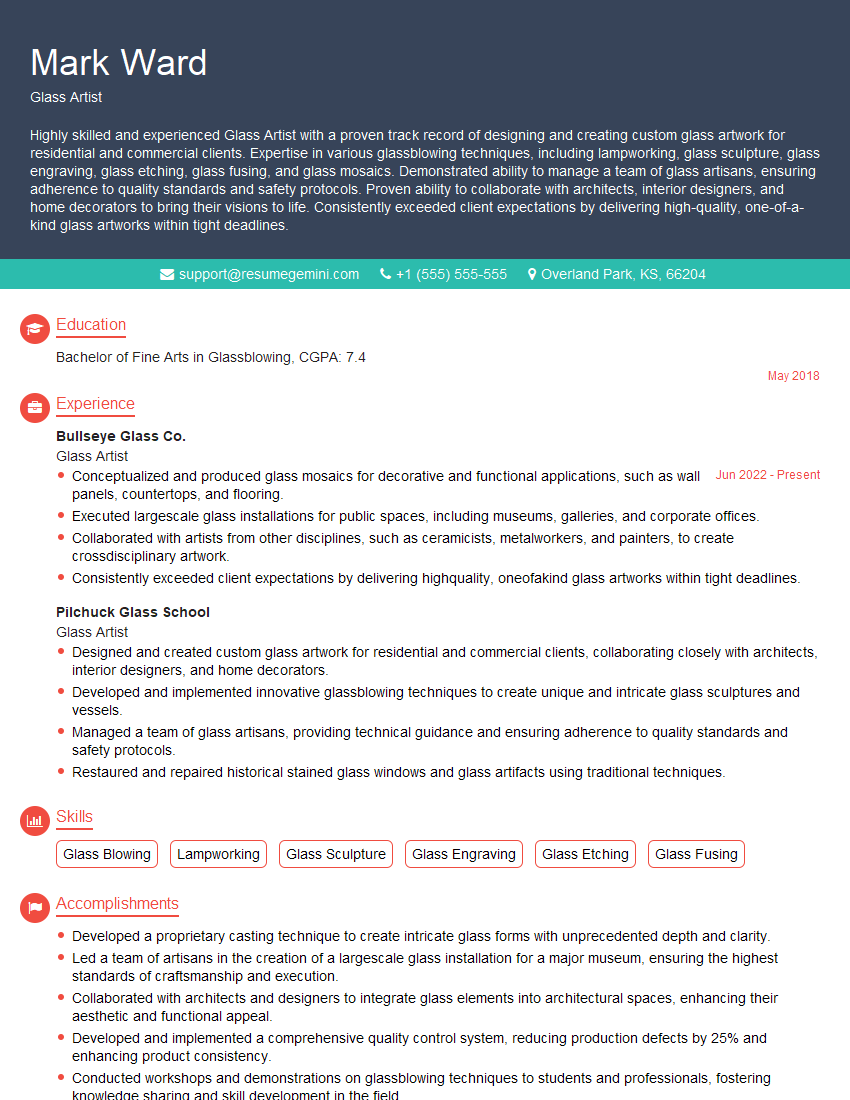
Glass Artist Resume Sample
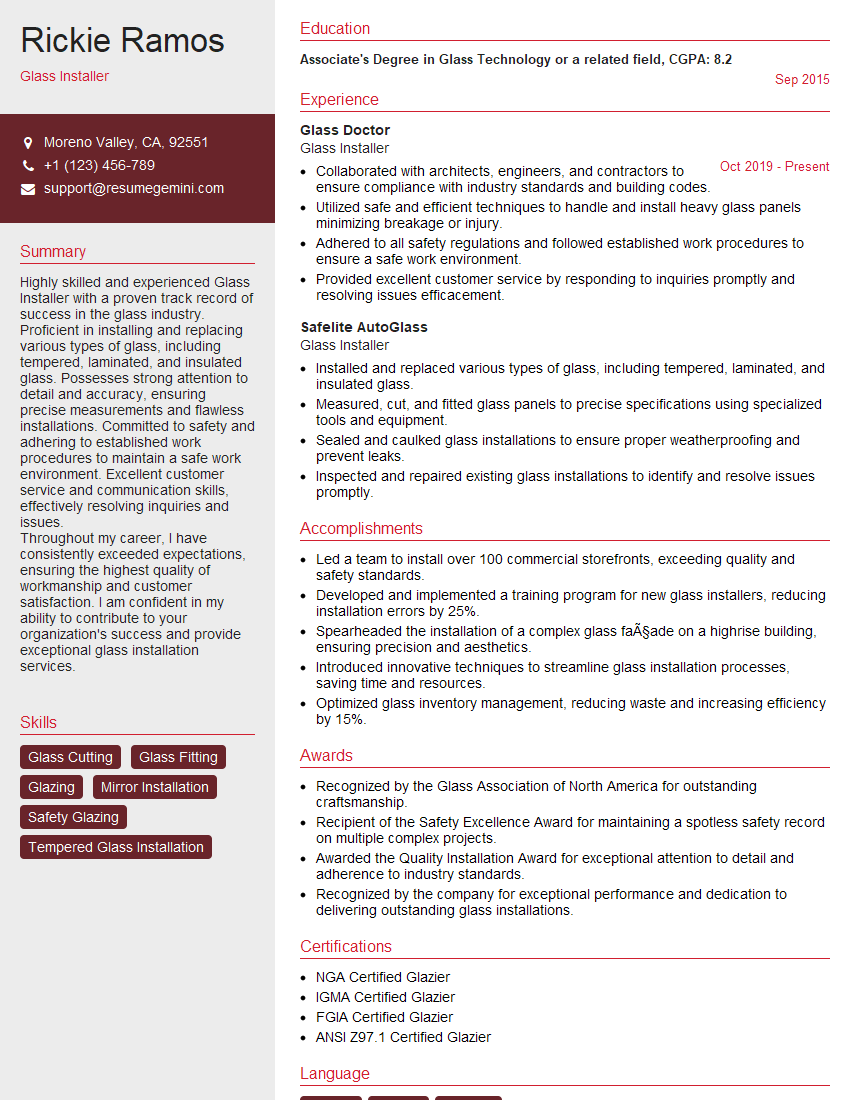
Glass Installer Resume Sample
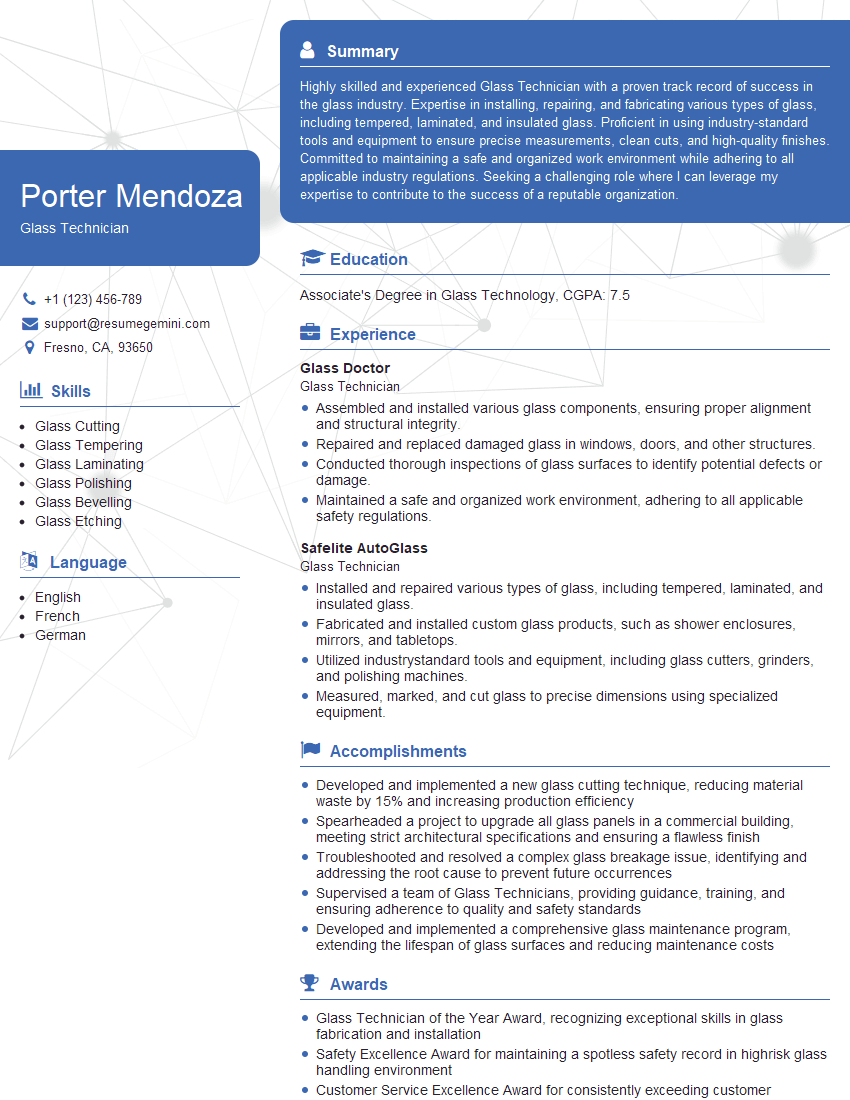
Glass Technician Resume Sample
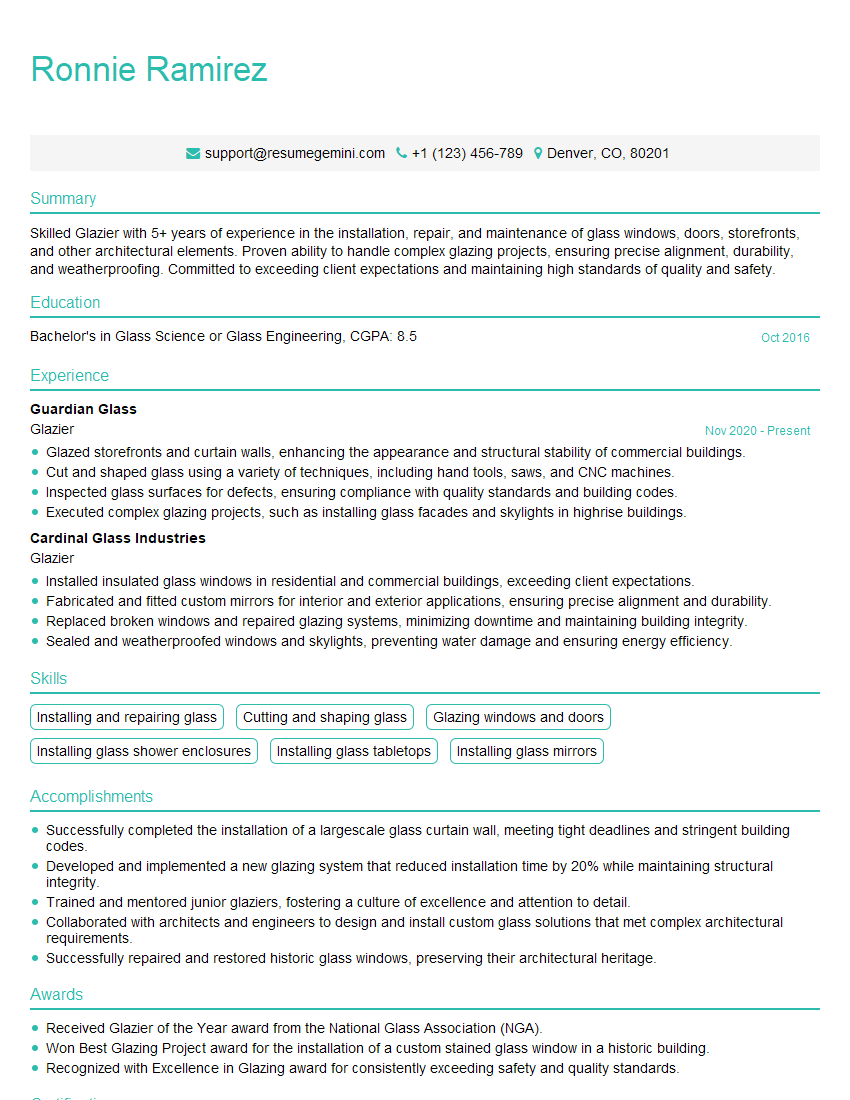
Glazier Resume Sample
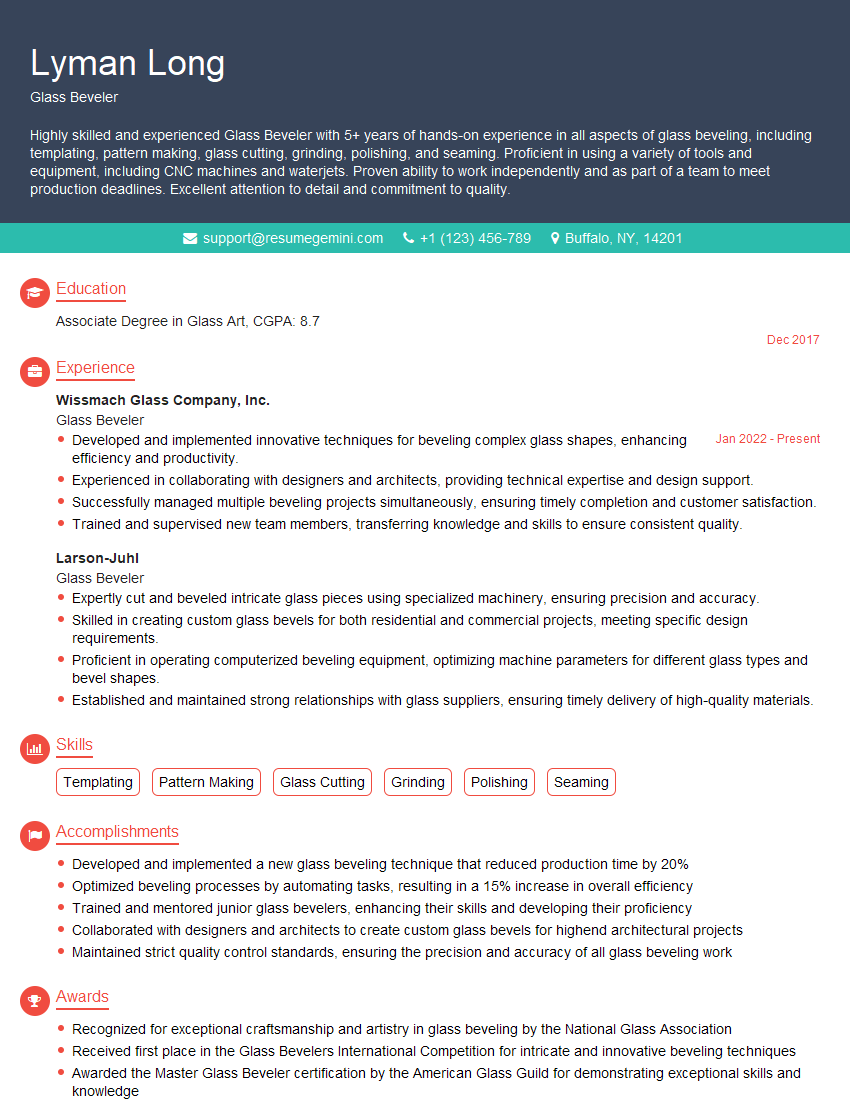
Glass Beveler Resume Sample
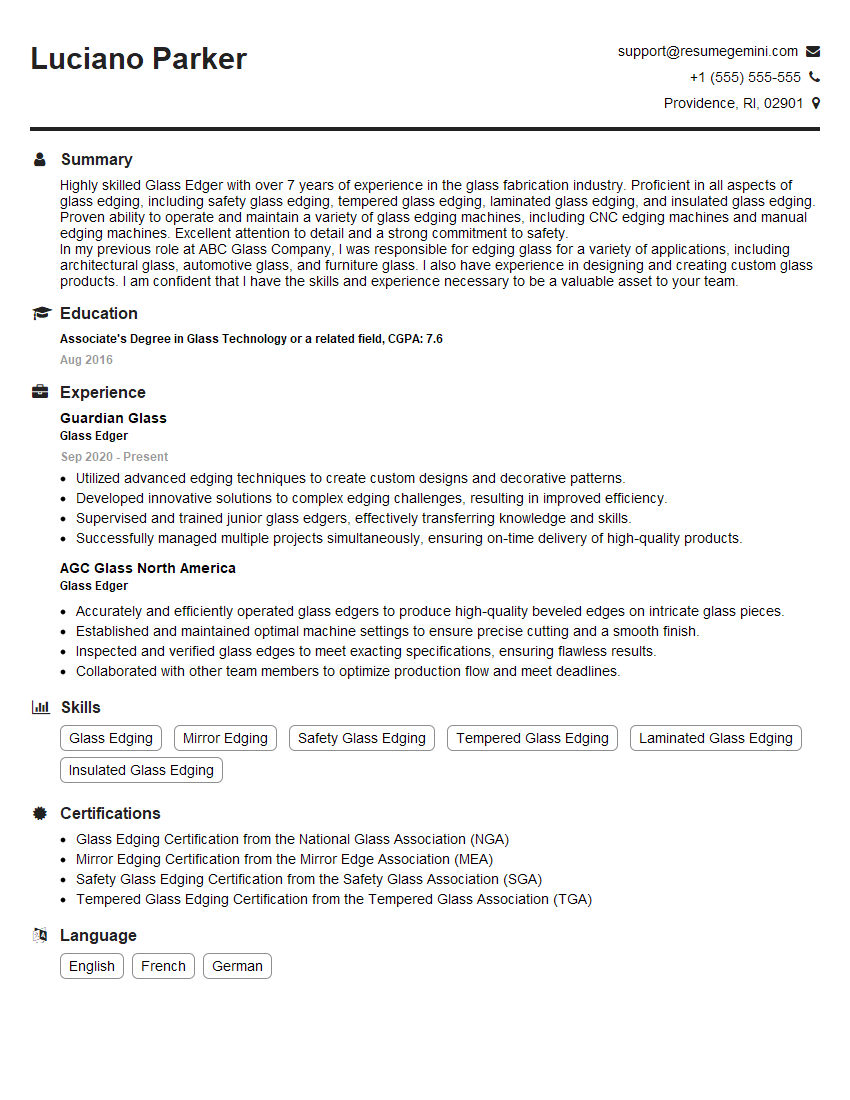
Glass Edger Resume Sample
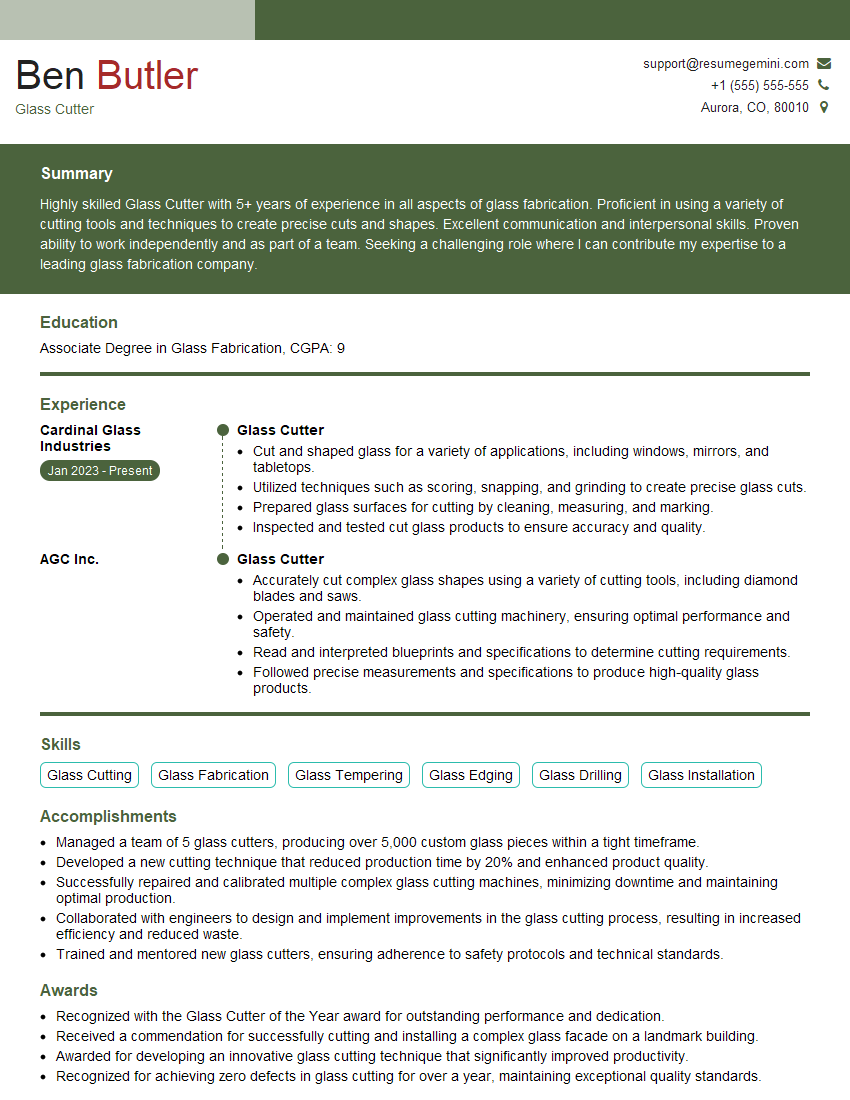
Glass Cutter Resume Sample
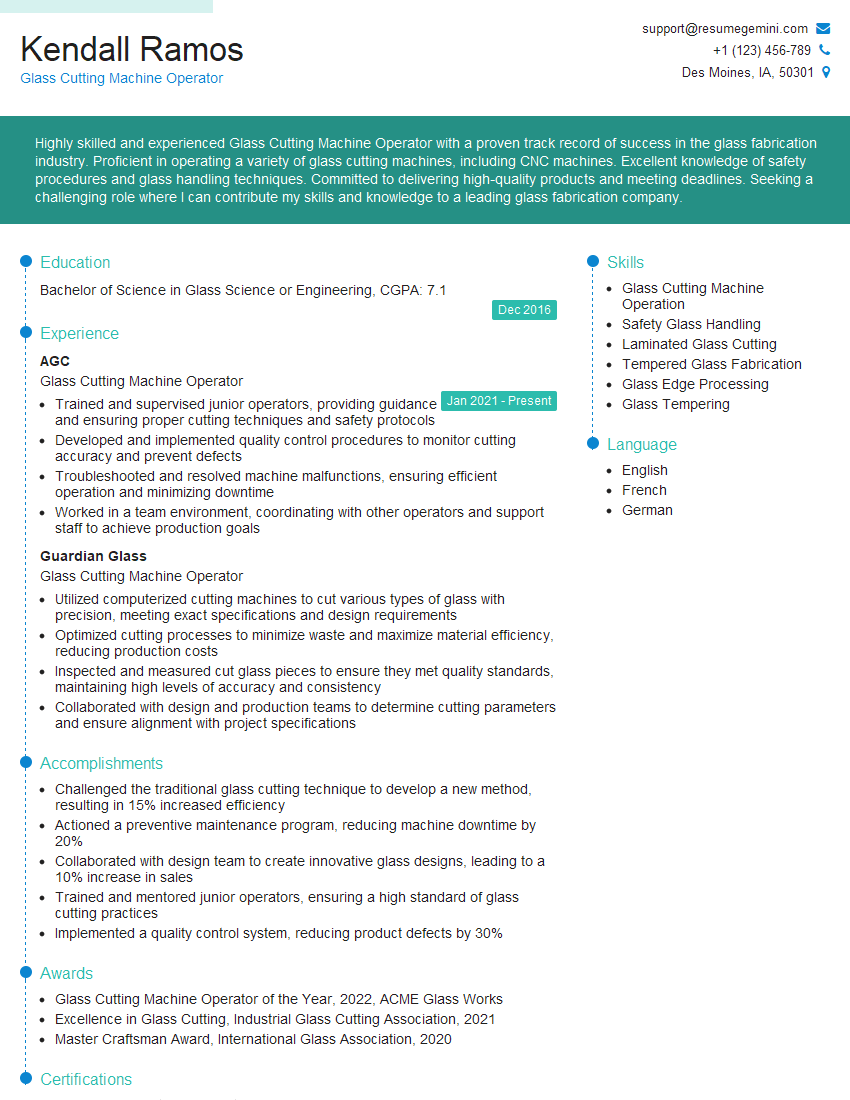
Glass Cutting Machine Operator Resume Sample
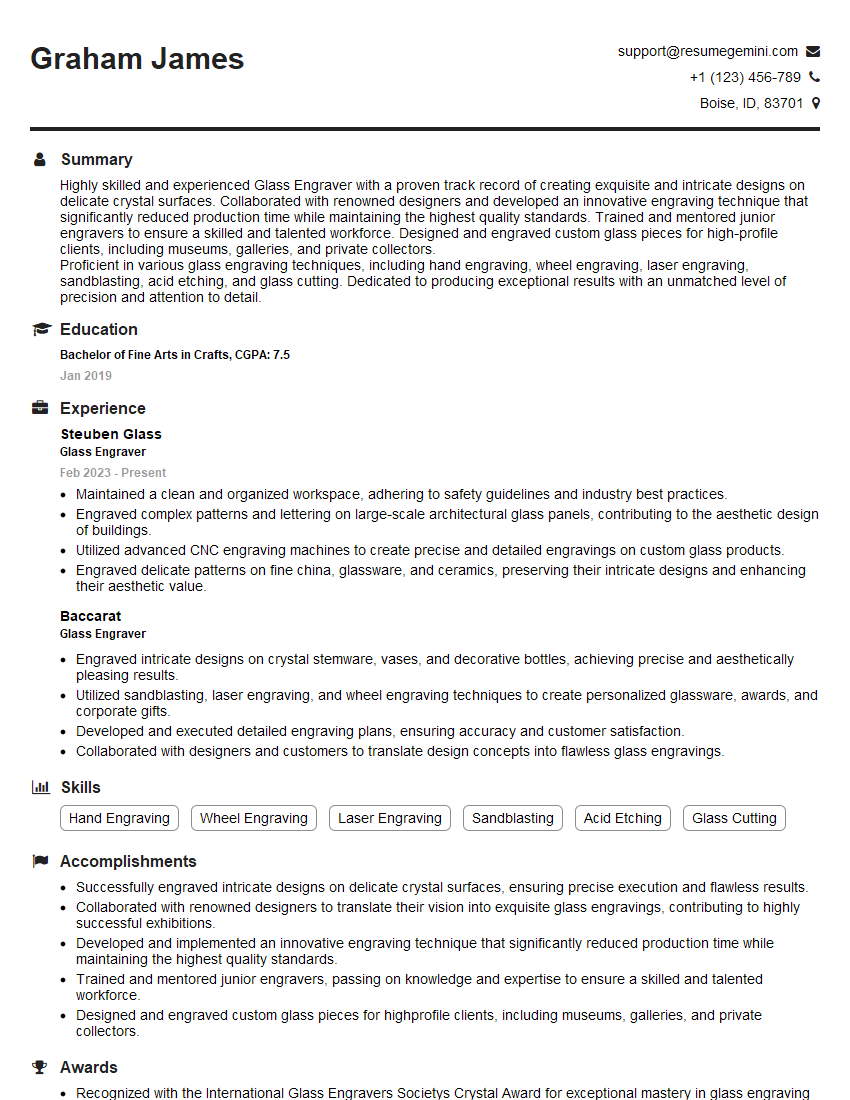
Glass Engraver Resume Sample

Glass Etcher Resume Sample
Explore more articles
Users Rating of Our Blogs
Share Your Experience
We value your feedback! Please rate our content and share your thoughts (optional).
What Readers Say About Our Blog
Very informative content, great job.
good