The right preparation can turn an interview into an opportunity to showcase your expertise. This guide to Knowledge of International Bank Note Standards (e.g., ISO 4217) interview questions is your ultimate resource, providing key insights and tips to help you ace your responses and stand out as a top candidate.
Questions Asked in Knowledge of International Bank Note Standards (e.g., ISO 4217) Interview
Q 1. What is ISO 4217 and why is it important in international finance?
ISO 4217 is the international standard for representing currencies. Think of it as a universal language for money. It’s published by the International Organization for Standardization (ISO) and provides three-letter codes for every currency in the world. In international finance, it’s crucial because it eliminates ambiguity and ensures consistent communication across borders. Without a standardized system, imagine the chaos of trying to process payments and exchange rates if every country used its own unique code or name for its currency!
Its importance stems from its use in countless financial transactions: from international wire transfers and foreign exchange trading to accounting software and financial reporting. Consistency prevents errors and misunderstandings that can lead to significant financial losses.
Q 2. Explain the structure of an ISO 4217 currency code.
The ISO 4217 currency code is always three characters long. It’s a simple yet powerful structure that allows for unique identification of every currency. Let’s break down a typical example: USD (United States dollar).
Q 3. What are the three alphabetic characters representing in an ISO 4217 code?
The three alphabetic characters represent the currency code itself. It’s not an abbreviation, but a unique identifier assigned by the ISO. For example, USD doesn’t stand for ‘United States Dollar’ in a literal sense; it’s simply the designated code for the US dollar. The same is true for all other currency codes – they are codes, not acronyms. This allows for consistency even if the country’s name changes or the full currency name is different in other languages.
Q 4. What are some common pitfalls when using ISO 4217 codes?
Several pitfalls exist when using ISO 4217 codes. One common mistake is using an outdated code. Currencies can be renamed or even cease to exist, so it’s crucial to use the most up-to-date ISO 4217 standard. Another pitfall is using incorrect capitalization; the codes are always uppercase (e.g., USD, not usd). Another error is confusing currency codes with country codes; they are different standards. Finally, using unofficial codes or variations can create issues in international transactions. Imagine the confusion (and potential financial loss) if a payment system doesn’t recognize an invalid currency code. Always rely on the official ISO 4217 list to avoid these issues.
Q 5. How does ISO 4217 relate to SWIFT codes?
ISO 4217 codes and SWIFT codes are distinct but related. SWIFT (Society for Worldwide Interbank Financial Telecommunication) codes identify specific financial institutions. Within a SWIFT message, the ISO 4217 code specifies the currency involved in the transaction. Essentially, SWIFT provides the ‘where’ (the bank), and ISO 4217 provides the ‘what’ (the currency) in a financial communication. It’s like sending a package: the SWIFT code is the destination address, and the ISO 4217 code is what’s written on the package itself specifying its contents (currency).
Q 6. Name five currencies and their corresponding ISO 4217 codes.
USD– United States dollarEUR– EuroGBP– British pound sterlingJPY– Japanese yenCNY– Chinese yuan renminbi
Q 7. How can inconsistencies in ISO 4217 usage lead to financial errors?
Inconsistencies in ISO 4217 usage can lead to a range of financial errors. Using incorrect codes in payment systems can result in failed transactions, causing delays and potential fees. Errors in accounting and reporting can lead to inaccurate financial statements and regulatory non-compliance. Inconsistencies in foreign exchange trading can lead to miscalculations of exchange rates and significant financial losses for individuals and institutions. For example, imagine an international trade deal involving millions of dollars; a simple mistake in using the currency code can lead to massive financial ramifications. Always double-check currency codes and adhere strictly to ISO 4217 to avoid these significant errors.
Q 8. Describe a scenario where incorrect use of ISO 4217 could cause significant losses.
Incorrect use of ISO 4217, the international standard for currency codes, can lead to significant financial losses in numerous ways. Imagine an international trading company processing a large order from a client in Japan. If, during the transaction processing, the system mistakenly uses the code for the South African Rand (ZAR) instead of the Japanese Yen (JPY), the resulting currency conversion will be drastically wrong. This could mean a massive loss for the company, particularly when dealing with large sums.
Another example: a bank transferring funds internationally. If the receiving bank’s system doesn’t recognize or properly interpret the ISO 4217 code, the transaction might be delayed, rejected, or even routed to the wrong account. This leads to financial penalties, reputational damage, and potential legal issues.
Errors in data entry, outdated systems, or a lack of understanding of ISO 4217 are all potential causes. The severity of the loss depends on the transaction volume and the currency exchange rate difference.
Q 9. What are the implications of using obsolete or invalid ISO 4217 codes?
Using obsolete or invalid ISO 4217 codes has several serious implications. Firstly, it can lead to transaction failures. Systems designed to process international payments rely on the accuracy of these codes. An invalid code acts like a roadblock, preventing the transaction from completing successfully. This can cause delays, fees, and frustrated customers.
Secondly, reporting and reconciliation will be inaccurate. If your accounting system uses outdated codes, your financial records will be riddled with errors, making it very difficult to track your finances accurately. This inaccuracy can impact business decisions and audits.
Finally, using invalid codes can lead to regulatory non-compliance. Many financial regulations stipulate the use of up-to-date ISO 4217 codes for reporting and transaction processing. Using obsolete ones will result in a violation of these rules, possibly attracting penalties.
Q 10. How do you ensure accuracy and consistency when working with ISO 4217 codes in a database?
Ensuring accuracy and consistency with ISO 4217 codes in a database requires a multi-faceted approach. Firstly, you need a regularly updated reference table. This table should contain all current codes, their associated currency names, and potentially other relevant information like minor units. This table should be sourced from a reliable and frequently updated provider – ideally, the ISO itself.
Secondly, implement data validation rules. Every time a currency code is entered or updated in your database, your system should cross-reference it against the reference table. Any discrepancy should trigger an error or warning, preventing incorrect codes from entering the system.
Thirdly, use a consistent data entry format. Enforce the use of three-letter alphabetic codes (e.g., USD, EUR, JPY) instead of relying on user-entered numeric codes, which are less standardized. This consistency minimizes errors due to different input methods. Regular data audits and cleaning help maintain accuracy over time.
Q 11. What is the difference between a numeric and alphabetic ISO 4217 code?
ISO 4217 codes come in both numeric and alphabetic formats. The alphabetic code is a three-letter abbreviation, such as USD for the US dollar, EUR for the euro, and JPY for the Japanese yen. These are the most commonly used in practice due to their ease of recognition.
The numeric code is a three-digit number, such as 840 for the US dollar, 978 for the euro, and 392 for the Japanese yen. While less prevalent in everyday use, they are useful for certain system integrations and data processing where numeric values are more efficient. In many applications, the alphabetic codes are preferred because they are more human-readable.
Q 12. Are there any regional variations or exceptions to ISO 4217 standards?
While ISO 4217 is a globally recognized standard, some regional variations and exceptions exist. These are primarily historical and often related to legacy systems or specific national preferences. For instance, although ISO 4217 doesn’t officially recognize sub-units (like cents or pence), these are often still included in accounting and financial data locally. In some regions, local currencies might retain their historical codes for compatibility with legacy systems even after a currency change.
It’s crucial to remain aware of these regional nuances to avoid errors and ensure accurate financial processing. Consulting up-to-date resources and maintaining a comprehensive understanding of local practices is essential.
Q 13. How do you handle situations where a transaction involves multiple currencies?
Handling transactions involving multiple currencies necessitates a robust and well-defined process. The first step is clear identification of all currencies involved using their correct ISO 4217 codes. Then, a system needs to accurately convert the transaction values using up-to-date exchange rates. This requires access to a reliable exchange rate source, ideally one providing historical exchange rates for reconciliation purposes.
For example, a purchase of goods from a supplier in the UK (GBP) by a client in the USA (USD) requires converting the price from GBP to USD. The chosen exchange rate needs to be documented, preferably with a timestamp, to allow for later auditing. The transaction should then be recorded in a unified accounting system capable of handling multi-currency transactions.
Q 14. How are ISO 4217 codes used in accounting software?
ISO 4217 codes are fundamental to accounting software. They are used to identify the currency of each transaction, allowing the software to maintain accurate accounting records in different currencies. This is crucial for preparing financial statements, generating reports, and handling tax obligations. The software typically uses these codes in fields related to currency, allowing for automated currency conversion and reporting functionalities. Without ISO 4217 codes, accounting software would be severely limited in its ability to handle international transactions and multi-currency accounts.
For instance, when recording an invoice in accounting software, you’d specify the currency using the ISO 4217 three-letter code (e.g., EUR). This code is then used throughout the processing of that invoice, ensuring consistency and accuracy. The software uses this information for reporting, conversions, and generating financial statements in the correct currency.
Q 15. Explain the process of validating ISO 4217 codes in a financial transaction.
Validating ISO 4217 codes in financial transactions is crucial for ensuring accuracy and preventing errors. This process typically involves a two-step approach: checking the format and then verifying the existence of the code in an up-to-date register.
Format Validation: First, the system checks if the code adheres to the ISO 4217 standard. This means verifying that it’s either a three-letter alphabetic code (e.g., USD, EUR, JPY) or a three-digit numeric code (e.g., 840 for USD). Incorrect formatting, such as extra characters, spaces, or numerical values in an alphabetic field, automatically flags it as invalid.
Code Existence Validation: After format validation, the system cross-references the code against a constantly updated list of valid ISO 4217 codes. This registry is maintained by ISO and is usually downloaded or accessed via an API. If the code isn’t found in this registry, it’s deemed invalid. Imagine it like checking a dictionary – if the word isn’t in there, it’s not a valid word, and similarly, if a currency code isn’t in the ISO 4217 registry, it’s invalid.
Career Expert Tips:
- Ace those interviews! Prepare effectively by reviewing the Top 50 Most Common Interview Questions on ResumeGemini.
- Navigate your job search with confidence! Explore a wide range of Career Tips on ResumeGemini. Learn about common challenges and recommendations to overcome them.
- Craft the perfect resume! Master the Art of Resume Writing with ResumeGemini’s guide. Showcase your unique qualifications and achievements effectively.
- Don’t miss out on holiday savings! Build your dream resume with ResumeGemini’s ATS optimized templates.
Q 16. What resources would you consult to verify the validity of an ISO 4217 code?
To verify the validity of an ISO 4217 code, several reliable resources exist. The primary source is the official ISO 4217 website itself, although access may be subscription-based. Many financial institutions also maintain their internal, up-to-date copies of the ISO 4217 standard to avoid relying on external sources. Other trustworthy sources include reputable financial data providers and international banking organizations. It’s essential to use a source that’s frequently updated to avoid using outdated information, as currency codes can be added or removed over time. Regularly checking for updates is vital.
Q 17. How does the maintenance and updating of ISO 4217 codes affect financial processes?
The maintenance and updating of ISO 4217 codes directly impact financial processes. When a new currency is introduced (like the Euro), a new code is added to the standard. Financial systems must be updated to recognize and process transactions using this new code. Similarly, if a currency is withdrawn or its code is changed, all systems must be updated to avoid processing errors and data inconsistencies. Failure to update can result in transaction failures, incorrect reporting, and compliance violations. Think of it as updating your phone’s software – it needs constant updates to handle new features, fixes, and security patches; similarly, financial systems require constant updates to remain compatible with the latest ISO 4217 standard.
Q 18. What are the potential risks associated with using outdated ISO 4217 code lists?
Using outdated ISO 4217 code lists presents several risks. The most significant risk is processing errors. Transactions using invalid or obsolete codes might be rejected or processed incorrectly, leading to financial losses and reputational damage. For example, if a bank’s system still uses an old code for a currency that no longer exists, it could lead to significant errors in accounting and reporting. Further, outdated lists can cause compliance issues, as regulatory bodies often require adherence to the latest ISO standards. This can result in hefty fines or legal repercussions. Therefore, maintaining updated code lists is paramount for smooth operations and compliance adherence.
Q 19. How do you ensure data integrity when dealing with ISO 4217 codes?
Ensuring data integrity when dealing with ISO 4217 codes requires a multi-layered approach. This includes regular validation of codes against the latest official registry, implementing robust data entry checks to prevent manual input errors, and using standardized data formats to maintain consistency. Additionally, employing data validation routines within applications and using checksums or hash functions can help detect inconsistencies. Regular audits and reconciliations are also critical to identify and correct any errors that might have slipped through. Imagine it like building a secure house – you need strong foundations (data validation), sturdy walls (consistent data formats), and regular inspections (audits) to ensure the structure (data integrity) remains secure.
Q 20. Can you explain the significance of the numeric code within the ISO 4217 standard?
The numeric code within the ISO 4217 standard provides an alternative way to represent currencies. While the alphabetic codes are more user-friendly and widely used, the numeric codes are particularly useful in automated systems and data processing. They are essential for streamlining data exchange between different systems and countries. The numeric code often allows for simpler data sorting and comparison in computer applications, and it minimizes the risk of character encoding problems that can occur with alphabetic codes. For example, 840 for USD is easier to machine-process than USD. This numerical representation is essential for efficient and error-free automated transactions.
Q 21. How does ISO 4217 relate to compliance regulations?
ISO 4217 is intrinsically linked to compliance regulations in the financial industry. Many international and national regulations require the use of ISO 4217 codes for reporting purposes, cross-border payments, and data exchange. Adherence to this standard ensures consistency, clarity, and interoperability in financial transactions. Non-compliance can lead to penalties, regulatory scrutiny, and operational inefficiencies. This means that using the correct and up-to-date ISO 4217 codes is not just a best practice but a regulatory requirement for many financial institutions operating globally.
Q 22. How would you explain the importance of ISO 4217 to someone with no finance background?
Imagine you’re ordering goods from a website in another country. To ensure everyone understands what currency you’re paying in, we need a standardized system. That’s where ISO 4217 comes in. It’s like a global dictionary for currencies, assigning unique three-letter codes to every currency in the world. For example, USD for US Dollars, EUR for Euros, and JPY for Japanese Yen. This standard prevents confusion and makes international transactions much smoother and less error-prone.
Without ISO 4217, imagine the chaos! People might use different abbreviations or spellings for the same currency, leading to mistakes in payments, accounting, and financial reporting. The standard provides a common language for all international financial transactions, making them efficient and reliable.
Q 23. What are some common errors to avoid when handling currency codes according to ISO 4217?
Common errors when using ISO 4217 codes often stem from typos, using outdated codes, or mixing upper and lowercase letters. The standard is case-sensitive; ‘usd’ is not the same as ‘USD’.
- Typos: A simple typo like ‘USd’ instead of ‘USD’ can cause a transaction to fail or be routed incorrectly.
- Outdated Codes: ISO 4217 is occasionally updated. Using an obsolete code will lead to rejection.
- Case Sensitivity: Always use uppercase letters for the codes as defined by the standard. Inconsistency can create issues for systems that rely on accurate data.
- Incorrect Number of Digits/Characters: ISO 4217 currency codes are always three characters long. Any deviation is invalid.
Careful data entry and validation are crucial. Always double-check your codes against the official ISO 4217 list before using them in any financial application.
Q 24. Describe the process of converting currency values using ISO 4217 codes and current exchange rates.
Converting currency values involves using both the ISO 4217 code and a current exchange rate. Let’s say you want to convert 100 USD to Euros (EUR).
- Identify the ISO 4217 codes: You have USD and EUR.
- Find the current exchange rate: You’ll need to obtain the USD/EUR exchange rate from a reliable source, such as a reputable financial website or an API provided by a currency data provider. Let’s assume the current exchange rate is 1 USD = 0.92 EUR.
- Perform the conversion: Multiply the amount in the source currency by the exchange rate: 100 USD * 0.92 EUR/USD = 92 EUR.
This process is easily automated using programming languages like Python with libraries capable of fetching real-time exchange rates and performing the calculations. Accuracy depends entirely on the reliability of the exchange rate source. It’s important to use a frequently updated source to ensure accuracy.
Q 25. How are ISO 4217 codes used in international wire transfers?
In international wire transfers, ISO 4217 codes are essential for unambiguous identification of the currencies involved. They are included in the payment instructions to specify both the sending and receiving currencies.
For example, a wire transfer instruction might include:
Sender Currency: USD
Receiver Currency: EUR
This clearly communicates that the sender is paying in US Dollars and the recipient will receive Euros. The use of these codes ensures that the financial institutions involved understand precisely which currencies are being transferred, preventing errors and delays.
Q 26. What is the role of ISO 4217 in preventing fraud in international transactions?
ISO 4217 plays a critical role in fraud prevention because its standardized codes provide a mechanism for data validation and error detection. Any discrepancy between the stated currency codes and the actual transaction details can trigger alerts. For example, if a transaction claims to be in USD but the code used is JPY, this inconsistency would be flagged as suspicious.
Automated systems use ISO 4217 validation to detect inconsistencies that might indicate fraudulent activity. This significantly enhances the security of international transactions.
Q 27. How do you stay updated on changes and updates to the ISO 4217 standard?
To stay updated on ISO 4217 changes, I regularly consult the official ISO website. This is the primary and most reliable source for changes, additions, or deletions to the currency codes. Many financial data providers and API services also provide updated listings, but always cross-reference with the official ISO source to ensure accuracy.
Subscribing to newsletters or alerts from these organizations can also ensure I’m informed about updates promptly. Keeping abreast of these updates is vital for maintaining the accuracy and integrity of financial systems that rely on ISO 4217.
Q 28. Discuss the importance of data validation and error handling when working with ISO 4217 codes.
Data validation and error handling are paramount when working with ISO 4217 codes. Robust validation ensures that only valid codes are processed, preventing issues stemming from typos, outdated codes, or incorrect formats.
This often involves checks such as:
- Length check: Ensure the code is exactly three characters long.
- Case check: Confirm that all characters are uppercase.
- Code lookup: Verify that the code exists in the current ISO 4217 list.
Error handling involves defining procedures for when an invalid code is detected, such as rejecting the transaction, logging the error, or prompting the user for correction. Implementing these measures safeguards against data integrity issues and ensures financial transactions are processed accurately and securely. Without thorough validation and error handling, even a small error can cause significant problems in financial systems.
Key Topics to Learn for Knowledge of International Bank Note Standards (e.g., ISO 4217) Interview
- Understanding ISO 4217: A thorough grasp of the standard’s purpose, structure, and the significance of alphabetic and numeric currency codes.
- Currency Code Structure and Usage: Knowing how to interpret and utilize currency codes correctly in various financial contexts (e.g., transactions, reporting).
- Practical Applications in Finance: Exploring real-world scenarios where accurate currency code application is crucial, such as international payments, forex trading, and financial data analysis.
- Common Errors and Pitfalls: Recognizing potential issues related to misinterpreting or incorrectly using currency codes, and understanding the consequences.
- Relationship to Other Standards: How ISO 4217 interacts with other relevant financial and banking standards.
- Problem Solving with Currency Codes: Developing the ability to identify and resolve issues arising from currency code discrepancies or ambiguities.
- Data Validation and Error Handling: Understanding techniques for verifying the accuracy of currency codes in datasets and handling potential errors.
Next Steps
Mastering the nuances of ISO 4217 is paramount for career advancement in international finance, banking, and related fields. A strong understanding of currency codes demonstrates attention to detail and a commitment to accuracy – highly valued qualities in these professions. To significantly boost your job prospects, create an ATS-friendly resume that highlights your expertise effectively. ResumeGemini is a trusted resource that can help you build a professional, impactful resume tailored to showcase your skills. We provide examples of resumes specifically designed for candidates with Knowledge of International Bank Note Standards (e.g., ISO 4217) to help guide you. Take the next step toward your dream career today!
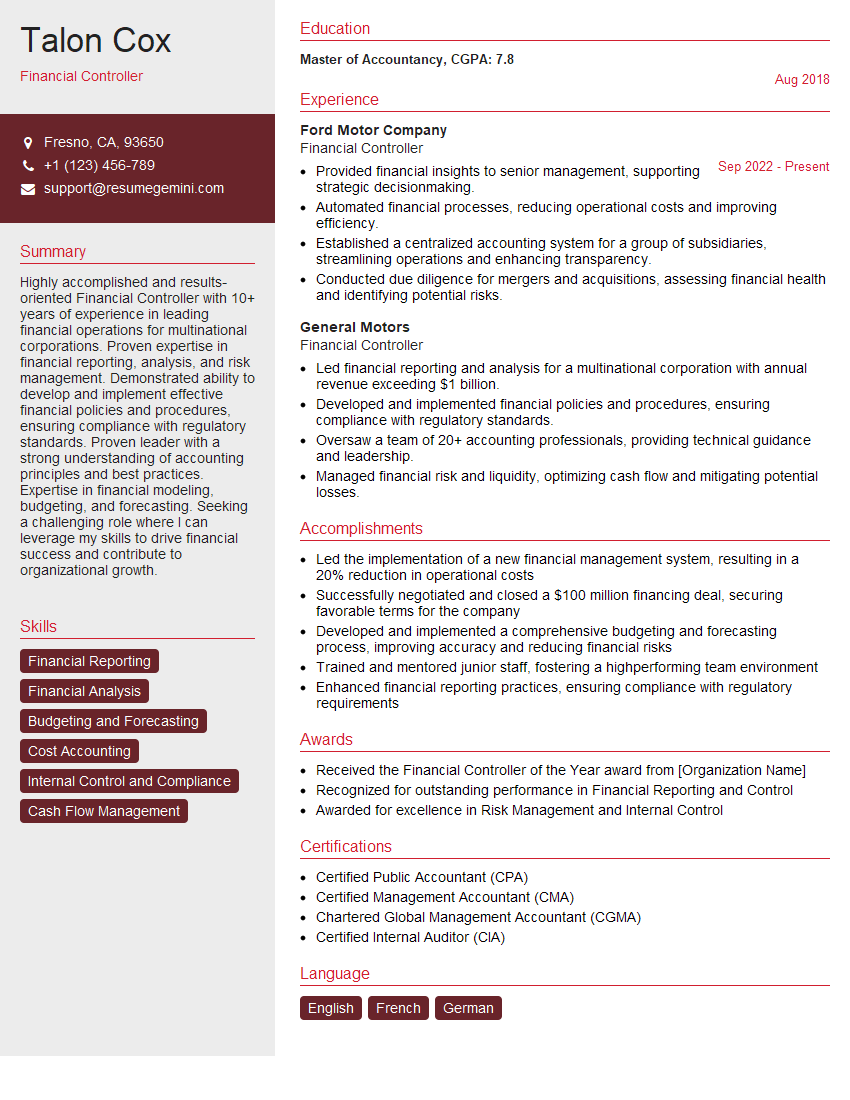
Financial Controller Resume Sample
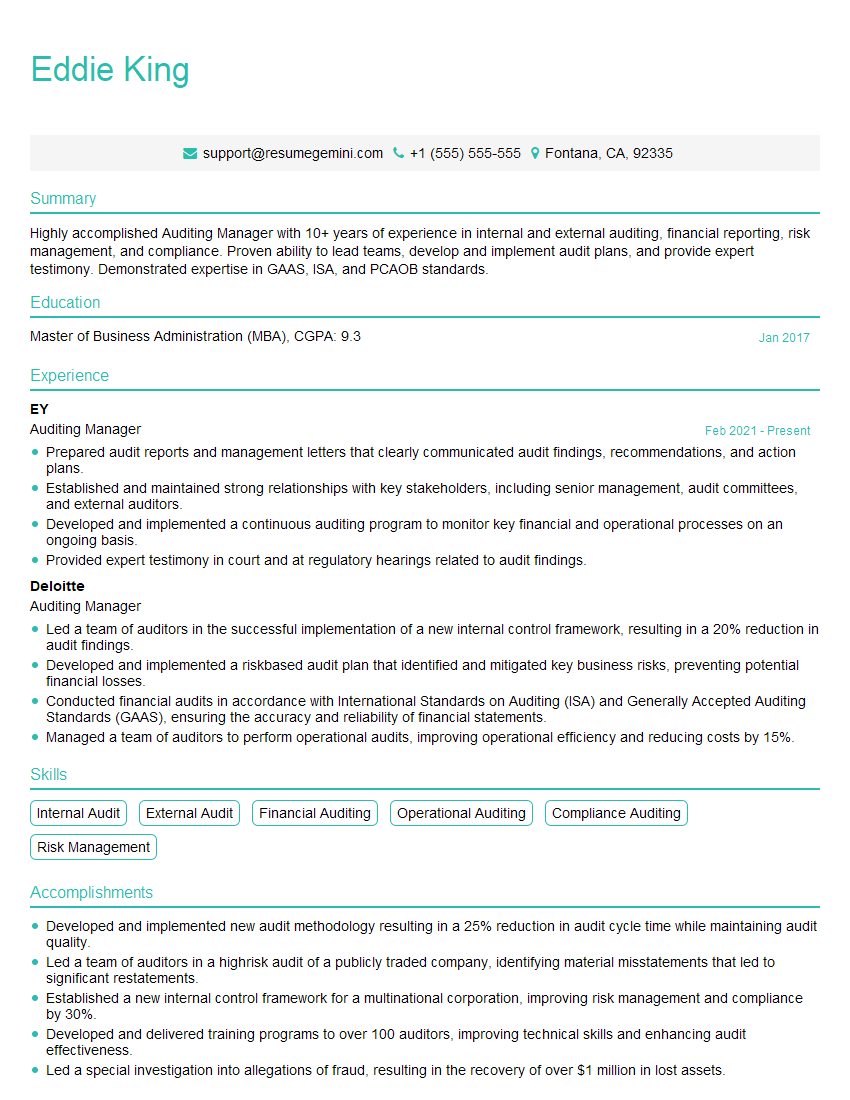
Auditing Manager Resume Sample

Compliance Officer Resume Sample
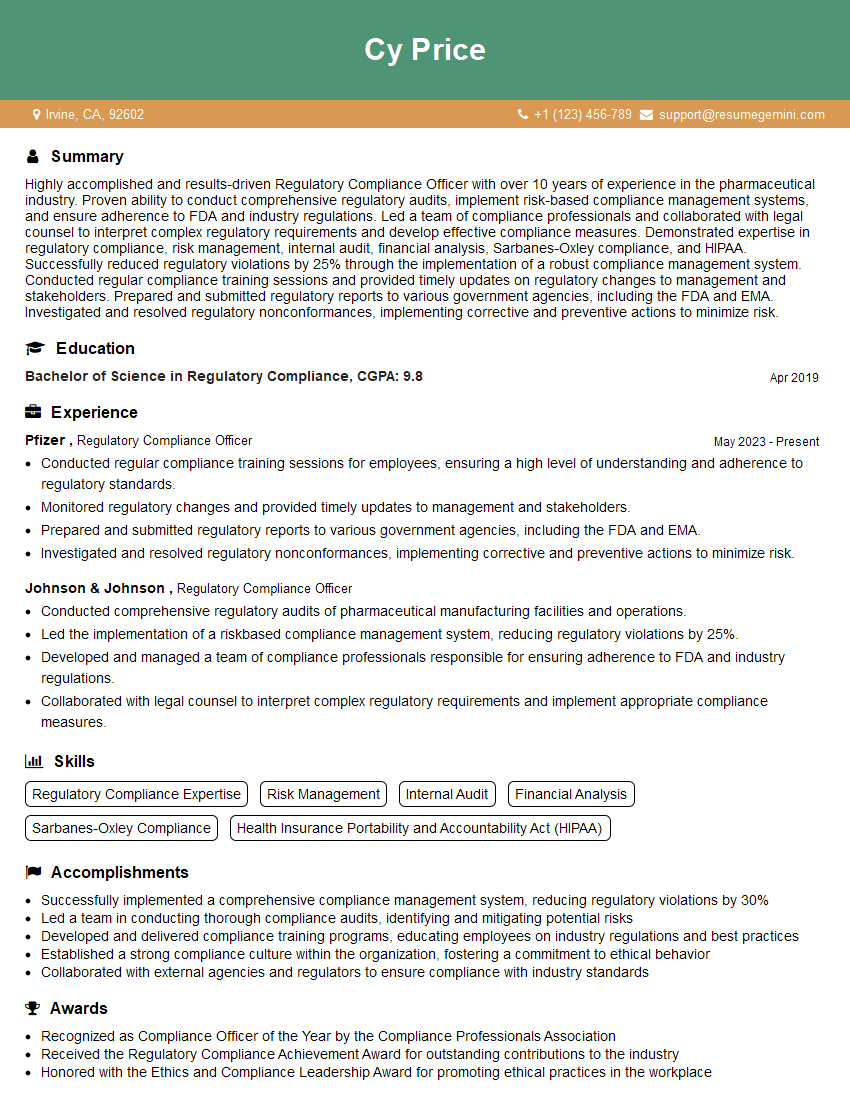
Regulatory Compliance Officer Resume Sample
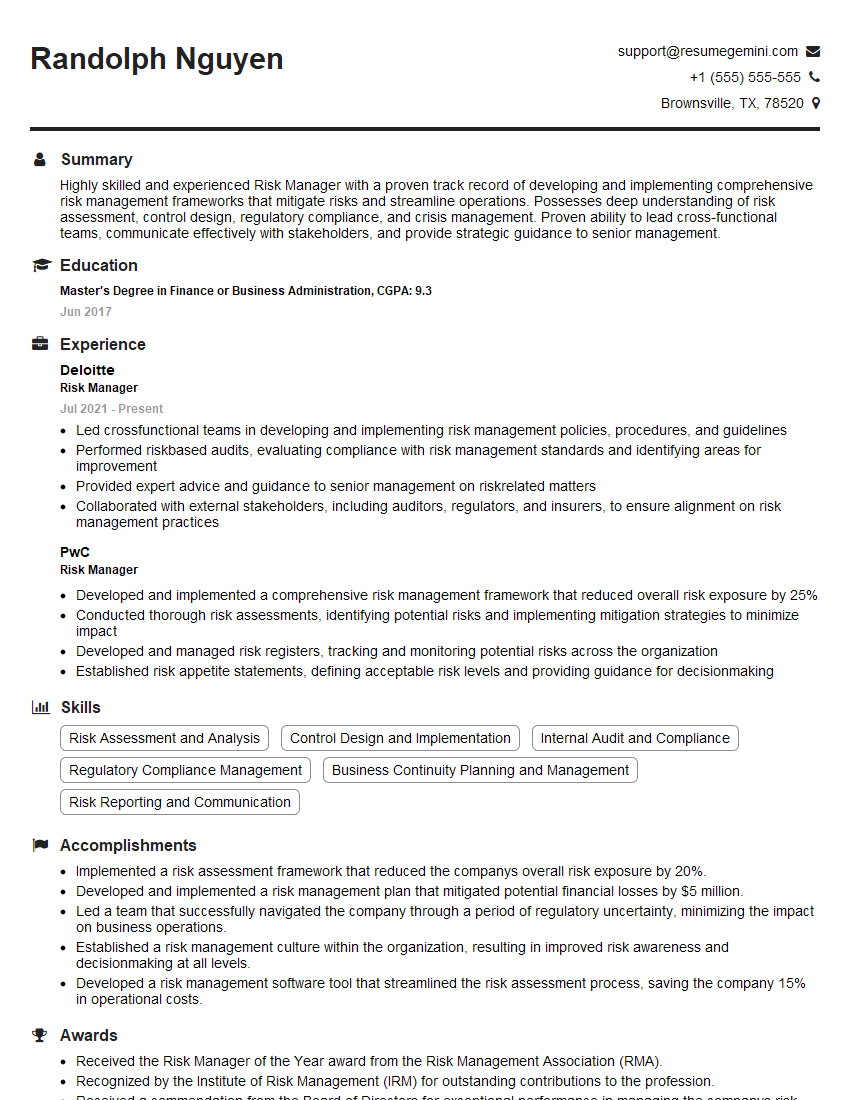
Risk Manager Resume Sample
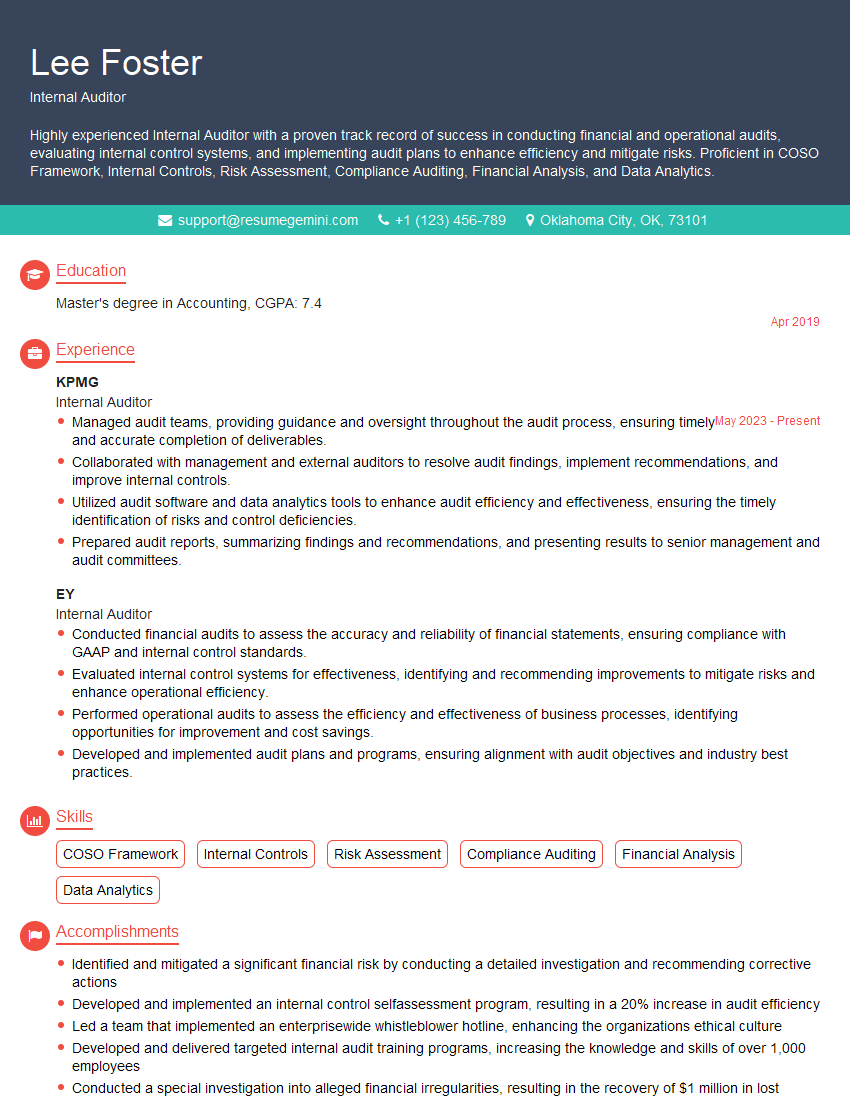
Internal Auditor Resume Sample
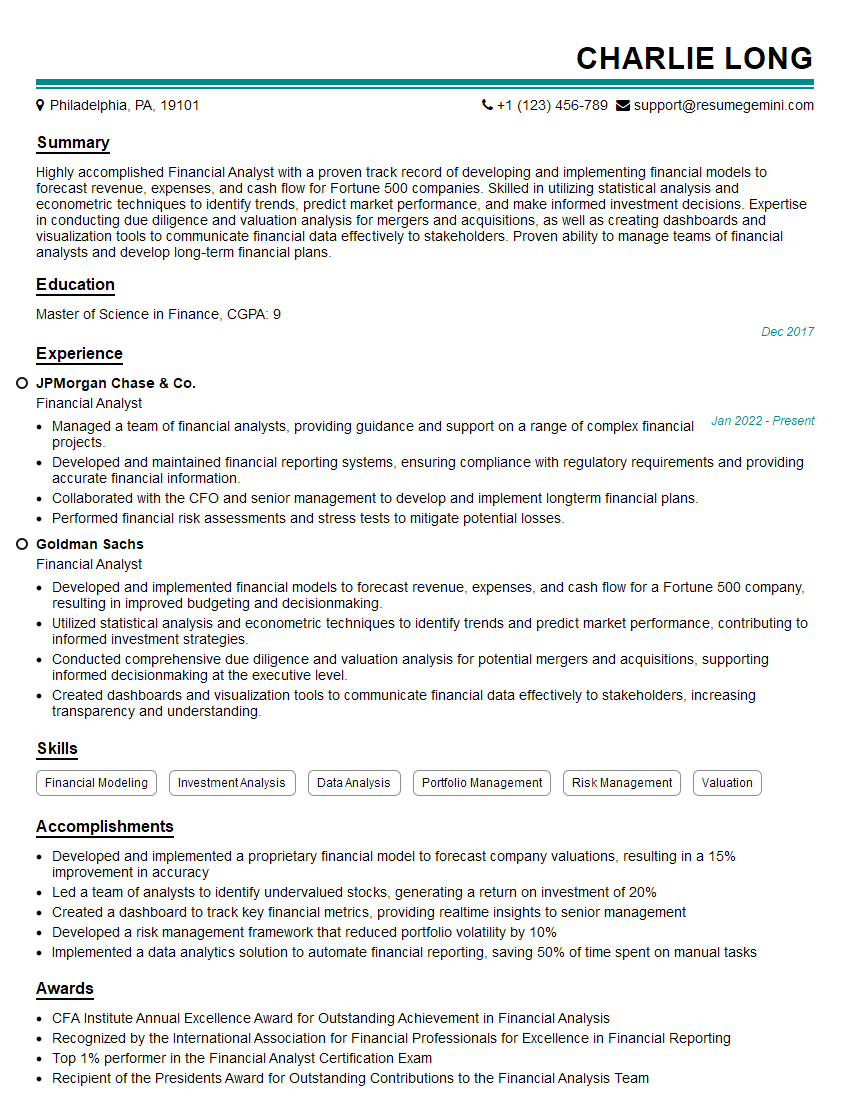
Financial Analyst Resume Sample
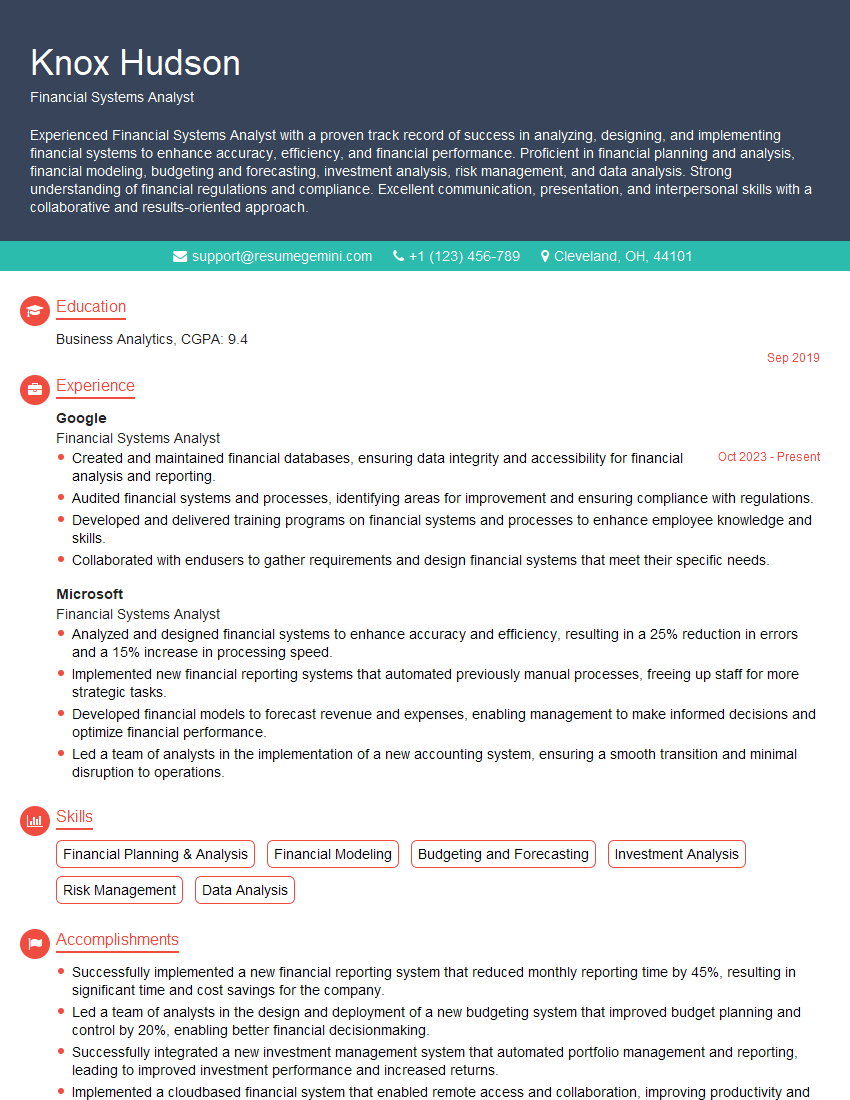
Financial Systems Analyst Resume Sample
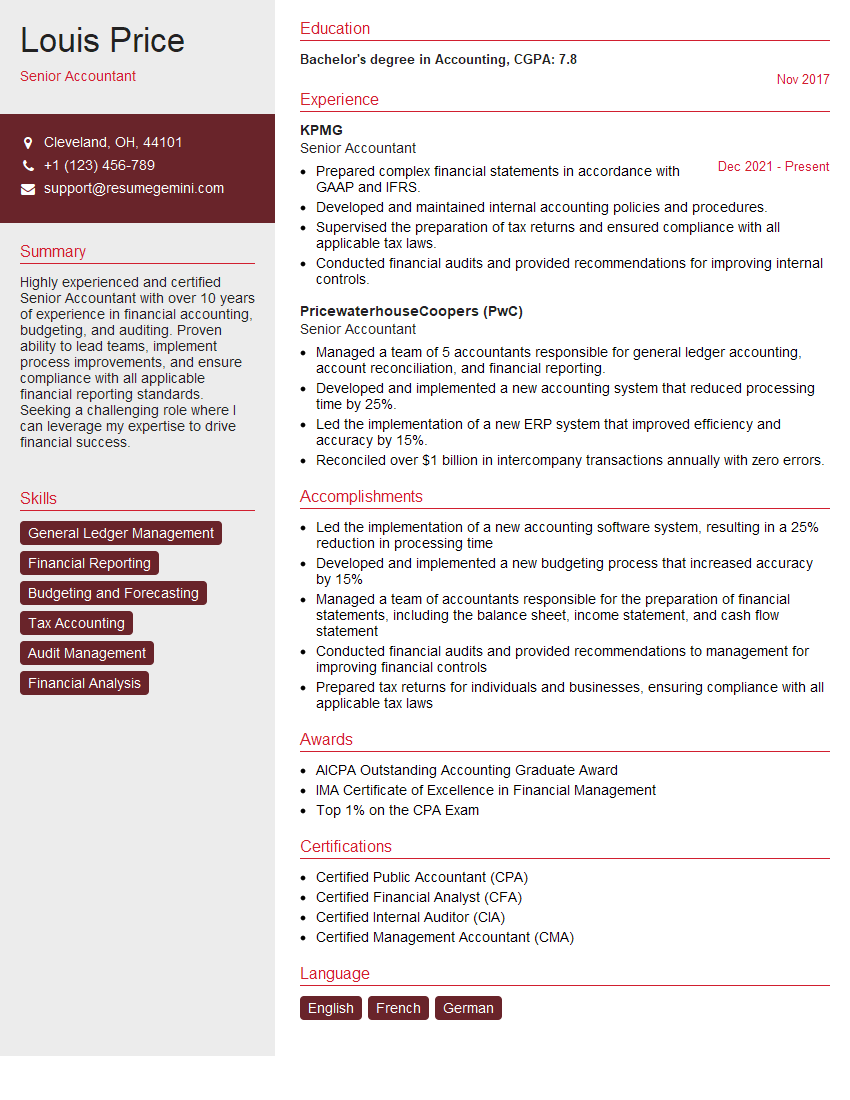
Senior Accountant Resume Sample
Explore more articles
Users Rating of Our Blogs
Share Your Experience
We value your feedback! Please rate our content and share your thoughts (optional).
What Readers Say About Our Blog
Very informative content, great job.
good