Cracking a skill-specific interview, like one for Knowledge of lean design principles, requires understanding the nuances of the role. In this blog, we present the questions you’re most likely to encounter, along with insights into how to answer them effectively. Let’s ensure you’re ready to make a strong impression.
Questions Asked in Knowledge of lean design principles Interview
Q 1. Explain the five principles of Lean.
Lean’s five principles form the foundation for eliminating waste and maximizing value. They aren’t just steps, but a guiding philosophy:
- Specify Value: Define value strictly from the customer’s perspective. What are they willing to pay for? This isn’t about *your* definition of value, but theirs. For example, a car customer values reliable transportation, safety, and perhaps fuel efficiency; they don’t necessarily value the specific type of bolt used in the engine.
- Map the Value Stream: Visually represent all the steps involved in delivering that value, identifying both value-added and non-value-added activities. This often involves Value Stream Mapping, discussed later.
- Create Flow: Smoothly connect the value-adding steps, eliminating interruptions and bottlenecks. Think of it like a river flowing smoothly to the ocean; any blockage creates a buildup and inefficiency.
- Establish Pull: Only produce what’s needed, when it’s needed, based on actual customer demand (think ‘pull’ system, as opposed to a ‘push’ system that anticipates demand). This prevents overproduction, a major type of waste.
- Pursue Perfection: Continuous improvement (Kaizen) is key. Lean is not a destination but a journey of constant refinement and optimization. It’s about always striving to eliminate waste and improve efficiency.
Q 2. Describe the concept of Value Stream Mapping.
Value Stream Mapping (VSM) is a lean tool used to visually represent the flow of materials and information needed to bring a product or service to a customer. It’s like a detailed roadmap of your entire process.
A VSM typically includes:
- Current State Map: Shows the existing process, highlighting bottlenecks, delays, and waste.
- Future State Map: Illustrates the improved process after implementing Lean principles.
Creating a VSM involves walking through the process step-by-step, timing each activity, and documenting the flow of materials and information. It helps identify areas for improvement and facilitates communication among team members.
For example, in a manufacturing plant, a VSM might show the movement of raw materials through different workstations, highlighting delays at specific points in the assembly line. This visualization helps pinpoint bottlenecks and areas where inventory is unnecessarily building up.
Q 3. How would you identify waste in a manufacturing process?
Identifying waste in a manufacturing process starts with observing the process, engaging with the workers, and using tools like Value Stream Mapping. I would focus on the seven types of Muda (waste), described below. In a manufacturing setting, I’d look for:
- Excess Inventory: Too much raw material, work-in-progress, or finished goods tying up capital and space.
- Overproduction: Making more than is needed or making it too early.
- Waiting: Idle time between steps in the process, often caused by bottlenecks.
- Transportation: Unnecessary movement of materials or information.
- Motion: Unnecessary movement of people or equipment.
- Over-processing: Performing more work than is necessary to satisfy customer needs.
- Defects: Products or services that don’t meet specifications, leading to rework, scrap, and customer dissatisfaction.
By observing the process and using data collection techniques, I could quantify the amount of waste in each category and prioritize areas for improvement. Data analysis would be crucial to demonstrating the impact of implemented changes.
Q 4. What are the seven types of Muda (waste)? Provide examples.
The seven types of Muda (waste) are:
- Transportation (Muri): Unnecessary movement of materials. Example: Moving parts across a large factory unnecessarily when workstations could be reorganized.
- Inventory (Muda): Excess materials, WIP, or finished goods. Example: Large piles of raw materials sitting idle waiting to be processed.
- Motion (Muda): Unnecessary movements by workers. Example: Workers repeatedly bending or stretching to reach materials.
- Waiting (Muda): Idle time. Example: Workers waiting for parts or equipment.
- Overproduction (Muda): Producing more than needed. Example: Making products before they are ordered.
- Over-processing (Muda): Doing more work than needed. Example: Adding unnecessary features to a product.
- Defects (Muda): Errors leading to rework or scrap. Example: Producing faulty parts that require fixing or discarding.
Addressing these wastes requires careful analysis of the process and often involves collaboration across different departments.
Q 5. Explain the concept of Kanban and its application.
Kanban is a visual signaling system used to manage workflow and limit work-in-progress (WIP). Imagine it like a supermarket shelf – you only replenish what’s been sold. It’s a pull system.
Application:
- Visualize Workflow: A Kanban board shows the tasks and their status (to do, in progress, done).
- Limit WIP: Restricting the number of tasks in progress at any given time prevents multitasking and bottlenecks.
- Manage Flow: Kanban helps visualize the flow of work, identifying bottlenecks and areas for improvement.
- Improve Collaboration: The visual nature of Kanban promotes team communication and coordination.
In software development, for example, a Kanban board might track the progress of features through different stages (analysis, design, development, testing, deployment). By limiting the number of features in progress, developers can focus on completing tasks more efficiently, reducing context switching, and improving overall delivery speed.
Q 6. What is Kaizen, and how does it differ from Kaikaku?
Both Kaizen and Kaikaku are Japanese terms relating to continuous improvement, but they differ in scope and approach.
Kaizen refers to small, incremental improvements made continuously. It’s about making small changes regularly to improve efficiency and quality. Think of it as continuous fine-tuning. Examples include streamlining a small process, reducing defects in a specific workstation, or improving a small aspect of the workflow.
Kaikaku, on the other hand, involves radical or breakthrough changes, often requiring significant investment and restructuring. It’s about making dramatic improvements to the whole system, not just small parts. This might involve implementing a new technology, redesigning the entire production line, or fundamentally changing the business model.
The difference lies in scale and magnitude. Kaizen is about gradual refinement, while Kaikaku is about revolutionary transformation.
Q 7. Describe your experience with 5S methodology.
I have extensive experience applying the 5S methodology in various manufacturing and office environments. 5S is a workplace organization method that uses a list of five Japanese words: Seiri (Sort), Seiton (Set in Order), Seisō (Shine), Seiketsu (Standardize), and Shitsuke (Sustain).
In a previous role, we implemented 5S in a warehouse.
- Seiri (Sort): We eliminated unnecessary items from the warehouse floor, discarding obsolete materials and properly disposing of waste. This freed up valuable space and improved safety.
- Seiton (Set in Order): We organized the remaining items logically, ensuring easy access and minimizing search time. We clearly labeled storage areas and established a standardized system for storing materials.
- Seisō (Shine): We implemented a regular cleaning schedule to keep the warehouse clean and well-maintained. This improved safety and reduced the risk of accidents.
- Seiketsu (Standardize): We documented the 5S procedures and created a checklist to ensure consistent implementation. This standardized approach ensured that the improvements were maintained over time.
- Shitsuke (Sustain): We established a system of regular audits and reviews to maintain the gains achieved through 5S. This helped embed the 5S principles into the organizational culture.
The result was a significant increase in efficiency, improved safety, and a more organized and productive work environment. The improved organization also contributed to a reduction in waste, as we could easily identify and eliminate unnecessary items.
Q 8. Explain the concept of Poka-Yoke.
Poka-Yoke, meaning ‘mistake-proofing’ in Japanese, is a Lean manufacturing method designed to prevent errors from occurring in the first place. Instead of relying on inspection to catch defects, Poka-Yoke incorporates simple mechanisms and techniques to make it physically impossible or extremely difficult to make a mistake. Think of it as adding safeguards to your process to ensure consistent quality.
- Example 1: A simple Poka-Yoke mechanism in a car assembly line might be a design that prevents a part from being installed incorrectly. Perhaps the part only fits one way, eliminating the possibility of incorrect orientation.
- Example 2: In a software application, a Poka-Yoke might be a warning message that pops up if a user tries to submit a form with a missing required field. This prevents the user from submitting incomplete data.
The core principle is to design the process to eliminate the possibility of human error, leading to improved quality, reduced waste, and increased efficiency.
Q 9. How would you implement a Lean approach in a service industry?
Implementing Lean in a service industry requires focusing on value from the customer’s perspective. It’s about streamlining processes to deliver services more efficiently and effectively while minimizing waste.
- Identify Value Streams: Map out the entire process of service delivery, from initial customer contact to final resolution. Identify any steps that don’t add value to the customer’s experience.
- Reduce Waste: In service industries, waste can manifest as waiting time, unnecessary paperwork, errors, defects in service, transportation of information, and over-processing. For example, reducing wait times through better scheduling or streamlining processes, or minimizing unnecessary paperwork by using digital systems.
- Empower Employees: Give employees the authority to make decisions and solve problems quickly. This promotes faster response times and improved customer satisfaction. For example, providing customer service agents with more decision making authority to resolve problems quickly without involving supervisors.
- Continuous Improvement (Kaizen): Regularly review processes to find areas for improvement. Encourage employees to suggest changes and implement small, incremental improvements over time. Regular meetings to discuss customer feedback and identify opportunities for improvement are key.
For example, a fast-food restaurant can reduce wait times by optimizing order taking and food preparation processes, improve training and efficiency of employees to reduce errors, and implement systems for managing ingredient stock to prevent waste.
Q 10. What is the role of leadership in a Lean transformation?
Leadership plays a crucial role in successful Lean transformations. Leaders must champion the change, provide the resources needed, and create a culture that supports continuous improvement.
- Vision and Communication: Leaders must clearly articulate the vision and goals of the Lean transformation and communicate them effectively to all employees. It is important to build consensus and enthusiasm.
- Removal of Barriers: Leaders need to identify and remove any organizational barriers to Lean implementation. This might involve addressing resistance to change, providing necessary training, or allocating resources.
- Empowerment and Training: Leaders should empower employees to participate in Lean initiatives and provide them with the necessary training and support. Lean training programs, coaching sessions, and mentoring is important.
- Leading by Example: Leaders should demonstrate their commitment to Lean principles through their own actions and behaviors. They must be involved in kaizen events, problem-solving, and actively participate in continuous improvement activities.
Without strong leadership, Lean initiatives are unlikely to succeed. Leaders must foster a culture of continuous improvement, where every team member is empowered to identify and solve problems.
Q 11. How do you measure the success of Lean initiatives?
Measuring the success of Lean initiatives requires a multi-faceted approach, focusing on both quantitative and qualitative data.
- Lead Time Reduction: Measure the time it takes to complete a process from start to finish. Reductions indicate improved efficiency.
- Cycle Time Improvement: Track the time it takes to complete individual steps in a process. Reductions show improved process flow.
- Defect Rate Reduction: Monitor the number of defects or errors produced. A decrease indicates improved quality.
- Inventory Reduction: Measure the amount of inventory held. Reductions reduce storage costs and risks of obsolescence.
- Customer Satisfaction: Gather feedback from customers to assess their satisfaction with the improved process or product. Surveys, feedback forms, and reviews can provide valuable insights.
- Employee Engagement: Monitor employee morale and engagement levels. Improved engagement demonstrates increased satisfaction with the Lean initiatives.
It is important to establish baseline metrics before implementation to accurately track progress and demonstrate the impact of the Lean initiatives.
Q 12. Describe your experience with root cause analysis techniques.
I have extensive experience with various root cause analysis (RCA) techniques, including the 5 Whys, Fishbone Diagrams (Ishikawa diagrams), and Fault Tree Analysis.
- 5 Whys: This is a simple yet powerful technique that involves repeatedly asking “Why?” to uncover the root cause of a problem. By drilling down through layers of explanation, you can often get to the fundamental issue.
- Fishbone Diagrams: This visual tool helps to brainstorm and organize potential causes of a problem, categorized by different factors such as people, methods, machines, materials, environment, and measurement. It’s particularly useful for complex problems with multiple contributing factors.
- Fault Tree Analysis: This more formal technique uses a hierarchical tree structure to map out the different events and conditions that can lead to a specific failure or undesirable outcome. It is often used for critical systems where a detailed analysis is needed.
The choice of technique depends on the complexity of the problem and the information available. I typically start with the 5 Whys as a quick initial assessment and then employ other techniques if needed for a more thorough analysis. For instance, I recently used Fishbone Diagram to troubleshoot repeated failures in a packaging line, identifying a faulty machine component as the root cause after analyzing factors like machine settings, operator training, and material quality.
Q 13. Explain the difference between pull and push systems.
Pull and push systems are two fundamental approaches to production and service delivery. They differ fundamentally in how they respond to demand.
- Push System: In a push system, production is based on forecasts of demand. Products or services are produced and then pushed downstream to the next stage in the process, regardless of whether there’s immediate demand. This often leads to excess inventory and waste. Think of a factory producing goods based on a sales forecast; if the forecast is inaccurate, surplus inventory can arise.
- Pull System: In a pull system, production is triggered only by actual demand. Downstream stages “pull” materials or services from upstream stages only as needed. This minimizes waste and ensures that only what is needed is produced. The Kanban system is a classic example of a pull system, where production cards signal the need for more components.
The key difference is that push systems anticipate demand, while pull systems respond to demand. Pull systems are generally preferred in Lean environments as they lead to better inventory control, reduced waste, and improved responsiveness to customer needs.
Q 14. What is the role of data analysis in Lean?
Data analysis is essential for effective Lean implementation. It provides the evidence needed to identify waste, track progress, and make data-driven decisions.
- Process Mapping and Value Stream Mapping: Data from process mapping provides visual representation of workflows, highlighting areas of inefficiency. Value stream mapping is a more detailed analysis of the value added vs. non-value added steps.
- Tracking Key Metrics: Collecting data on lead times, cycle times, defect rates, inventory levels, and customer satisfaction allows for objective measurement of Lean initiatives’ success. This data needs to be tracked and analyzed consistently.
- Root Cause Analysis: Data is crucial for conducting effective root cause analysis. Data helps identify patterns and correlations, leading to more informed decision-making and problem-solving.
- Continuous Improvement: Data analysis enables the identification of areas for improvement and provides a way to assess the effectiveness of implemented changes. It facilitates continuous learning from experiences.
For example, analyzing customer feedback data can reveal critical areas where service delivery can be improved, while tracking cycle times can pinpoint bottlenecks in manufacturing processes. Using control charts will visualize the variations in processes allowing for proactive interventions.
Q 15. How do you handle resistance to change during a Lean implementation?
Resistance to change is a common hurdle in Lean implementations. It stems from fear of the unknown, disruption to established routines, or perceived loss of control. Addressing this requires a multifaceted approach focusing on communication, education, and engagement.
- Open Communication: Transparency is key. Clearly articulate the reasons for change, the benefits expected, and the potential challenges. Actively solicit feedback and address concerns directly and honestly.
- Education and Training: Ensure all stakeholders understand Lean principles and how the changes will impact their roles. Provide training sessions, workshops, and readily available resources.
- Involve Employees: Don’t just *tell* people about changes; *involve* them in the process. Form teams, solicit input, and give employees ownership of improvement projects. This fosters a sense of shared responsibility and ownership.
- Celebrate Successes: Acknowledge and celebrate small wins along the way. Positive reinforcement builds momentum and confidence, making the transformation less daunting.
- Address Concerns Emphatically: Don’t dismiss concerns. Actively listen to and address individual anxieties and fears. Where feasible, offer support and retraining to help employees adapt to the new processes.
For example, in a previous implementation, I encountered resistance from a team whose established workflow was being altered. By actively engaging them in designing the new process, empowering them to identify and solve potential issues, and recognizing their contributions throughout the transition, I successfully overcame the initial resistance and garnered their buy-in.
Career Expert Tips:
- Ace those interviews! Prepare effectively by reviewing the Top 50 Most Common Interview Questions on ResumeGemini.
- Navigate your job search with confidence! Explore a wide range of Career Tips on ResumeGemini. Learn about common challenges and recommendations to overcome them.
- Craft the perfect resume! Master the Art of Resume Writing with ResumeGemini’s guide. Showcase your unique qualifications and achievements effectively.
- Don’t miss out on holiday savings! Build your dream resume with ResumeGemini’s ATS optimized templates.
Q 16. Describe your experience with Lean software tools.
My experience with Lean software tools includes using Kanban boards (both physical and digital, such as Trello and Jira), value stream mapping software (like Lucidchart), and data analysis tools for tracking key metrics (e.g., Excel, Tableau). These tools are invaluable for visualizing workflows, identifying bottlenecks, and tracking progress.
For instance, I used Jira to manage a Kanban board for a software development team. This enabled us to visualize the workflow, identify bottlenecks in the development process (e.g., testing delays), and implement changes like limiting work in progress (WIP) to improve efficiency and reduce lead times. The visual nature of the Kanban board significantly enhanced team collaboration and transparency.
Beyond specific software, I’m proficient in utilizing data from various systems to quantify process improvements. This involves collecting metrics, building dashboards and visualizing progress against targeted outcomes. The key is choosing the right tool for the job. Over-reliance on complex tools can be counterproductive; simplicity and practicality should always be prioritized.
Q 17. How would you prioritize improvement projects in a Lean environment?
Prioritizing improvement projects in a Lean environment relies heavily on understanding the impact on value delivery. We employ a framework often combining several methods:
- Value Stream Mapping (VSM): VSM helps visually identify bottlenecks and areas of waste throughout the entire process. This provides a clear picture of where improvements will have the most significant impact.
- The 5 Whys: This technique helps drill down to the root cause of a problem, ensuring that improvements are targeted at the source rather than just treating symptoms.
- Pareto Analysis (80/20 Rule): This helps focus on the most impactful areas by identifying the 20% of problems that cause 80% of the issues.
- Prioritization Matrix: A simple matrix can be created prioritizing projects based on their impact (high/low) and effort (high/low). High-impact, low-effort projects are prioritized first.
For example, during a previous engagement, a VSM revealed that a significant bottleneck existed in the procurement process, causing delays in product delivery. By prioritizing improvements in procurement (high impact, moderate effort), we achieved a significant reduction in lead times and improved customer satisfaction.
Q 18. Explain the concept of Takt Time.
Takt time is the rate at which a company must produce goods or services to meet customer demand. It’s calculated by dividing the available production time by the customer demand. Essentially, it represents the pace required to perfectly match production with customer needs.
Takt Time = Available Production Time / Customer Demand
For example, if a factory has 8 hours of production time per day (480 minutes) and needs to produce 240 units of a product to meet daily demand, then the takt time is:
Takt Time = 480 minutes / 240 units = 2 minutes/unit
This means the factory must produce one unit every 2 minutes to keep up with demand. Takt time is a crucial metric because it aligns production with customer needs, minimizing waste associated with overproduction or underproduction.
Q 19. What is Gemba and why is it important in Lean?
Gemba is a Japanese term meaning ‘the real place.’ In Lean, it refers to the actual place where work is performed – the shop floor, the office, the customer interaction point. Going to Gemba is crucial for understanding the real-world challenges and opportunities for improvement.
It is important because observing the process firsthand provides invaluable insights that cannot be gleaned from reports or documents alone. By observing processes in Gemba, one can identify bottlenecks, waste, and areas for improvement that are often missed when relying on secondary data.
For instance, reviewing reports might show high defect rates in a manufacturing process. However, going to Gemba and observing the process directly might reveal that the defects are caused by poorly calibrated machinery or inadequate training of operators – insights that wouldn’t be apparent from data alone.
Q 20. Describe your experience with visual management techniques.
Visual management techniques are essential for creating a transparent and easily understandable workplace. They make it easy to monitor progress, identify problems, and track performance. My experience includes implementing various techniques, including:
- Kanban Boards: Visualizing workflow and managing work in progress (WIP).
- Andon Boards: Displaying real-time production status and alerting to problems.
- 5S Methodology (Sort, Set in Order, Shine, Standardize, Sustain): Creating an organized and efficient work environment.
- Value Stream Maps: Visually representing the entire process flow to identify waste and bottlenecks.
In one project, we implemented a Kanban board in a software development team. This improved team communication, reduced lead times, and increased transparency by making the status of each task clearly visible to everyone. The visual nature of the board dramatically improved team collaboration and problem-solving.
Q 21. How do you ensure continuous improvement within a Lean system?
Continuous improvement in a Lean system relies on fostering a culture of ongoing learning and adaptation. This requires a structured approach, including:
- Regular Gemba Walks: Consistent observation of processes in Gemba to identify areas for improvement.
- Kaizen Events (Improvement Events): Short, focused events dedicated to identifying and implementing process improvements.
- A3 Problem Solving: A structured approach to problem-solving that uses a single sheet of paper to document the problem, analysis, and solution.
- PDCA Cycle (Plan-Do-Check-Act): A cyclical approach for testing and implementing improvements, ensuring continuous learning and refinement.
- Regular Metrics Tracking: Monitoring key performance indicators (KPIs) to track progress and identify areas requiring further attention.
For example, we implemented a daily huddle in a team to review progress, identify roadblocks, and initiate problem-solving using the A3 method. This facilitated quick responses to challenges, prevented issues from escalating, and enabled small, continuous improvements over time.
Q 22. Explain the concept of Andon.
Andon is a visual system used in lean manufacturing to signal problems or abnormalities on a production line. Think of it as a brightly colored light or a flashing sign that instantly alerts everyone involved that something needs attention. It’s not just about stopping the line; it’s about immediately identifying and addressing the root cause of the issue.
Imagine a car assembly line. If a worker encounters a faulty part, they can immediately activate the Andon system. This will stop the line, preventing further defective products and drawing the attention of supervisors and engineers who can diagnose and resolve the problem quickly. The effectiveness relies on having a rapid response team trained to resolve issues rapidly, often directly at the point of failure. This immediate action minimizes downtime and prevents the propagation of defects downstream. Different Andon systems can signal various types of issues, from equipment malfunctions to quality defects.
- Types of Andon Systems: These can range from simple lights and buttons to sophisticated digital displays with detailed information.
- Benefits of Andon: Improved quality, reduced waste, faster problem resolution, increased employee empowerment, and enhanced overall production efficiency.
Q 23. Describe your experience with value stream mapping software.
I have extensive experience utilizing various value stream mapping (VSM) software packages, including [mention specific software, e.g., LeanKit, Aris, or similar]. My experience goes beyond simply using the software; I understand the underlying lean principles and use the software to facilitate effective collaborative VSM creation and analysis. This includes conducting workshops with cross-functional teams to identify value-added and non-value-added steps, measuring lead times and cycle times, and developing future state maps to visualize improved processes.
For instance, in a recent project for a logistics company, we used [mention specific software] to map their order fulfillment process. The software allowed us to dynamically simulate different scenarios and quantify the impact of proposed improvements, such as implementing Kanban systems or optimizing warehouse layouts. This provided valuable data to support our recommendations and helped secure buy-in from stakeholders. I’m proficient in using these tools to generate reports, track progress, and communicate findings effectively.
Q 24. How do you deal with unexpected events or disruptions in a Lean system?
Unexpected events are inevitable in any system, but lean principles equip us to handle them efficiently. The cornerstone is a system built on transparency and rapid response. My approach involves a combination of strategies:
- Problem Identification & Containment: Immediately identify the disruption using visual management tools (like Andon). Contain the problem’s impact by preventing further defects or delays.
- Root Cause Analysis: Utilize a structured approach like the 5 Whys or fishbone diagrams to pinpoint the root cause of the disruption, not just the symptoms.
- Countermeasures: Implement corrective actions to address the root cause and prevent recurrence. This could involve process improvements, equipment upgrades, or retraining employees.
- Standard Work & Poka-Yoke: Robust standard work procedures, including error-proofing mechanisms (Poka-Yoke), minimize the likelihood of future disruptions. This means designing processes to prevent errors from occurring in the first place.
- Continuous Improvement (Kaizen): Use the event as a learning opportunity to improve the overall system’s resilience. Document lessons learned and integrate them into standard work procedures.
For example, during a previous project, a supplier delivered defective components. We immediately stopped production (Andon), used the 5 Whys to determine the root cause (poor quality control at the supplier), implemented countermeasures (a stricter quality inspection process with the supplier), and ultimately improved our supplier relationship through collaboration and proactive communication.
Q 25. What is your understanding of the Lean philosophy?
Lean philosophy is a systematic approach to identifying and eliminating waste in any process, maximizing value for the customer. It’s about continuous improvement, not just cost reduction. It emphasizes respect for people and involves empowering employees at all levels to identify and solve problems. This is achieved by focusing on:
- Value: Defining value from the customer’s perspective.
- Value Stream: Mapping all steps involved in delivering value, identifying waste.
- Flow: Optimizing the flow of value to the customer.
- Pull: Producing only what is needed, when it’s needed.
- Perfection: Continuously striving to eliminate waste and improve processes.
I see lean as more than just a set of tools; it’s a mindset that encourages continuous learning and adaptation. It’s about creating a culture of problem-solving and collaboration.
Q 26. Explain your experience with implementing a Lean project from start to finish.
In a recent project at a manufacturing facility, I led the implementation of a lean initiative focused on reducing production lead times. This involved the following phases:
- Assessment & Planning: We began by mapping the current state value stream, identifying bottlenecks and areas of waste using VSM software. We also involved key stakeholders from across the organization to ensure alignment and buy-in.
- Implementation: We focused on implementing quick wins to build momentum. This included streamlining material handling processes, implementing a Kanban system for inventory management, and improving communication between departments. We used A3 reporting to track progress.
- Monitoring & Control: We continuously monitored key performance indicators (KPIs), such as lead times, cycle times, and inventory levels. Regular Gemba walks (process walkthroughs) helped us identify and address emerging issues.
- Continuous Improvement (Kaizen): We established a Kaizen event framework to regularly conduct small, incremental improvements. This involved empowering employees to participate and suggest changes to their own processes.
The project resulted in a significant reduction in lead times (approximately 25%), improved on-time delivery, and a reduction in inventory costs. The success was largely due to the collaborative nature of the project, focusing on empowering the workforce and enabling a culture of continuous improvement.
Q 27. How would you measure the effectiveness of a Lean implementation?
Measuring the effectiveness of a lean implementation requires a multi-faceted approach, going beyond simple cost savings. Key metrics include:
- Lead Time Reduction: How much faster is the process now?
- Cycle Time Reduction: How much faster are individual steps?
- Inventory Reduction: How much less inventory is needed?
- Defect Rate Reduction: How many fewer defects are there?
- Throughput Improvement: How much more output is produced?
- Employee Engagement: How empowered and involved are employees in the process?
- Customer Satisfaction: How satisfied are customers with the improved service or product?
It’s important to establish baseline metrics before implementing lean initiatives to accurately measure the impact. Regular monitoring and reporting are crucial to identify areas for further improvement and ensure the sustainability of the improvements.
Q 28. What are some common challenges encountered during Lean implementation, and how have you overcome them?
Common challenges during lean implementation often include:
- Resistance to Change: Employees may be resistant to new processes or methods. This requires effective communication, training, and leadership involvement to ensure buy-in.
- Lack of Management Support: Lean implementation requires strong leadership commitment and resources. Without this, efforts can stall or fail.
- Data Collection Challenges: Accurate data collection is crucial, but it can be challenging to implement and maintain. This requires a robust system for tracking key metrics.
- Defining Value: Clearly defining value from the customer’s perspective can be challenging and requires a deep understanding of customer needs.
To overcome these challenges, I employ several strategies: actively engaging employees in the change process through training and empowerment, securing strong management sponsorship early on, implementing a clear and consistent data collection system, and working collaboratively with cross-functional teams to understand and define value.
For example, in one project, I addressed resistance to change by involving employees in the design and implementation of new processes. This participatory approach built ownership and enthusiasm for the lean initiatives, leading to greater success.
Key Topics to Learn for a Knowledge of Lean Design Principles Interview
- Value Stream Mapping: Understanding how to identify and eliminate waste in your design processes. Practical application: Analyze a current design process, map it, and propose improvements to reduce lead times and costs.
- Kaizen (Continuous Improvement): Applying iterative improvements to designs and workflows. Practical application: Describe a situation where you implemented small, incremental changes to improve a design or process. Focus on the methodology and results.
- Waste Elimination (Muda): Identifying and eliminating the seven types of waste (Transportation, Inventory, Motion, Waiting, Overproduction, Over-processing, Defects). Practical application: Explain how you would apply this framework to streamline a complex design project.
- 5S Methodology: Implementing organizational techniques (Sort, Set in Order, Shine, Standardize, Sustain) to improve efficiency and reduce errors. Practical application: Describe how you have applied 5S principles to improve a workspace or design process.
- Lean Principles in Software Development: Applying lean thinking to agile methodologies and software design. Practical application: Discuss your experience with Agile methodologies and how you have applied lean principles to optimize sprints or releases.
- Problem Solving Methodologies (e.g., PDCA): Using structured problem-solving frameworks such as Plan-Do-Check-Act to tackle design challenges. Practical application: Describe a design problem you solved using a structured methodology and the results achieved.
- Metrics and Measurement: Tracking key performance indicators (KPIs) to monitor progress and identify areas for improvement. Practical application: Describe relevant metrics you would use to measure the effectiveness of lean design principles in a project.
Next Steps
Mastering lean design principles significantly enhances your problem-solving skills and makes you a highly valuable asset in any design-focused role. This expertise translates to improved efficiency, reduced costs, and higher-quality outcomes – all highly sought-after qualities by employers. To maximize your job prospects, create an ATS-friendly resume that clearly showcases your skills and experience. ResumeGemini is a trusted resource to help you build a professional resume that grabs recruiters’ attention. Examples of resumes tailored to highlight expertise in lean design principles are available to guide you through the process. Take the next step towards your dream job today!

Operations Manager Resume Sample
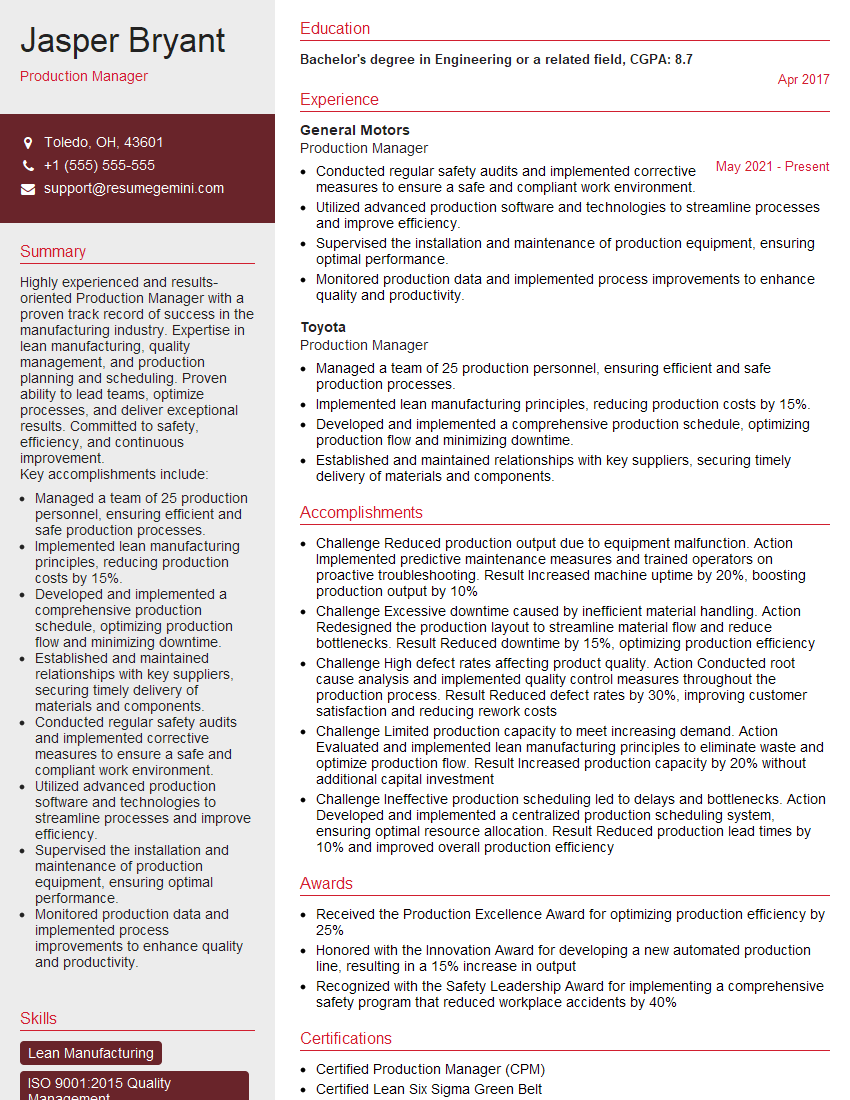
Production Manager Resume Sample
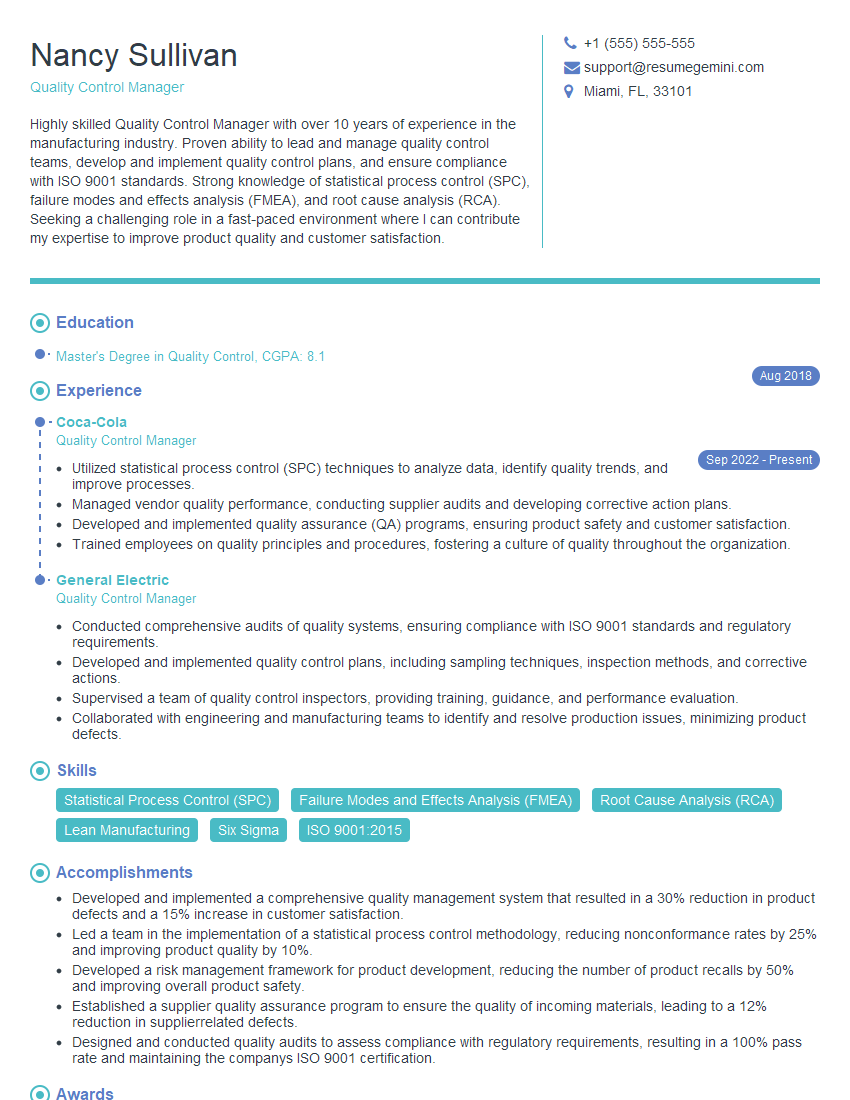
Quality Control Manager Resume Sample
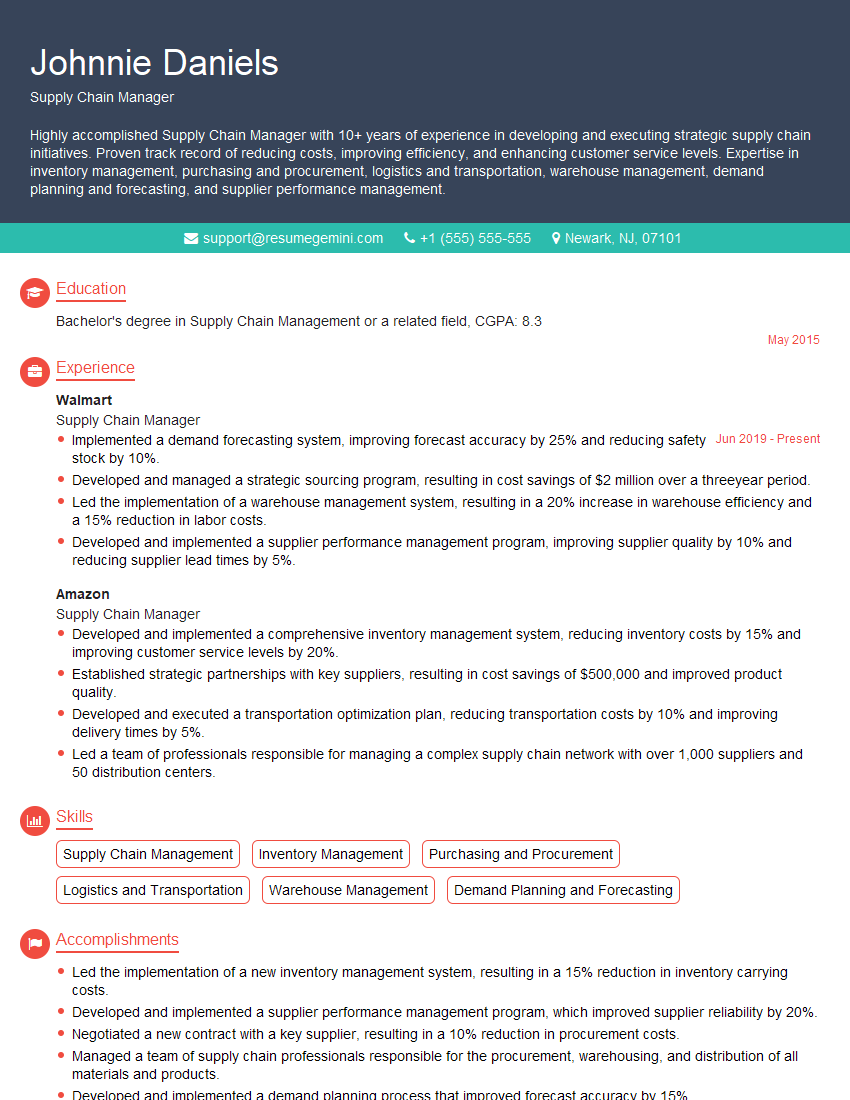
Supply Chain Manager Resume Sample
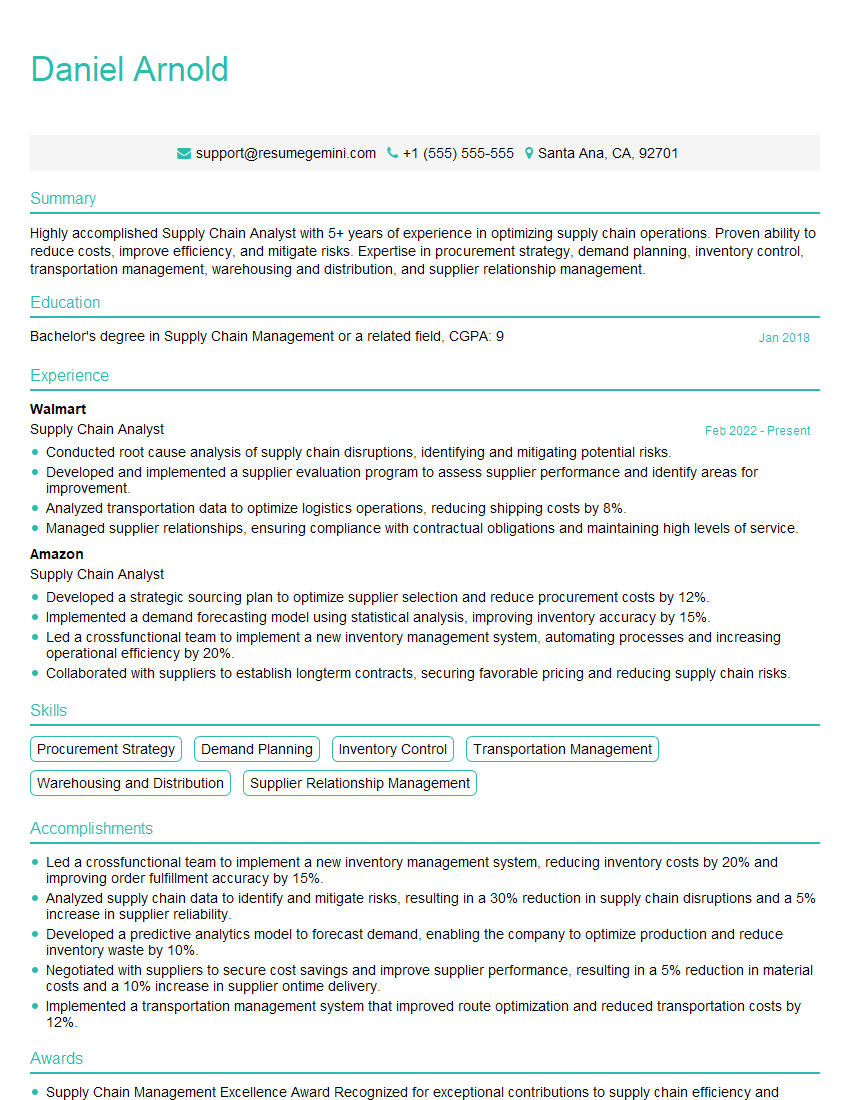
Supply Chain Analyst Resume Sample
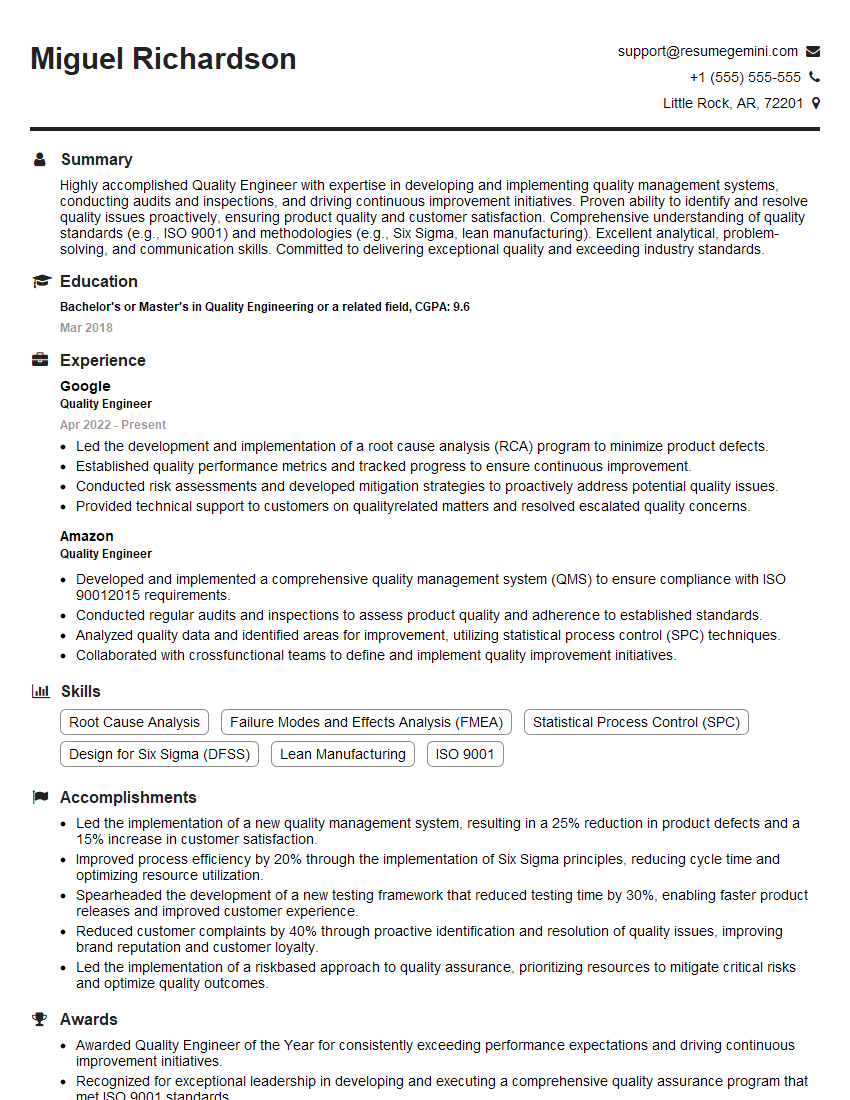
Quality Engineer Resume Sample
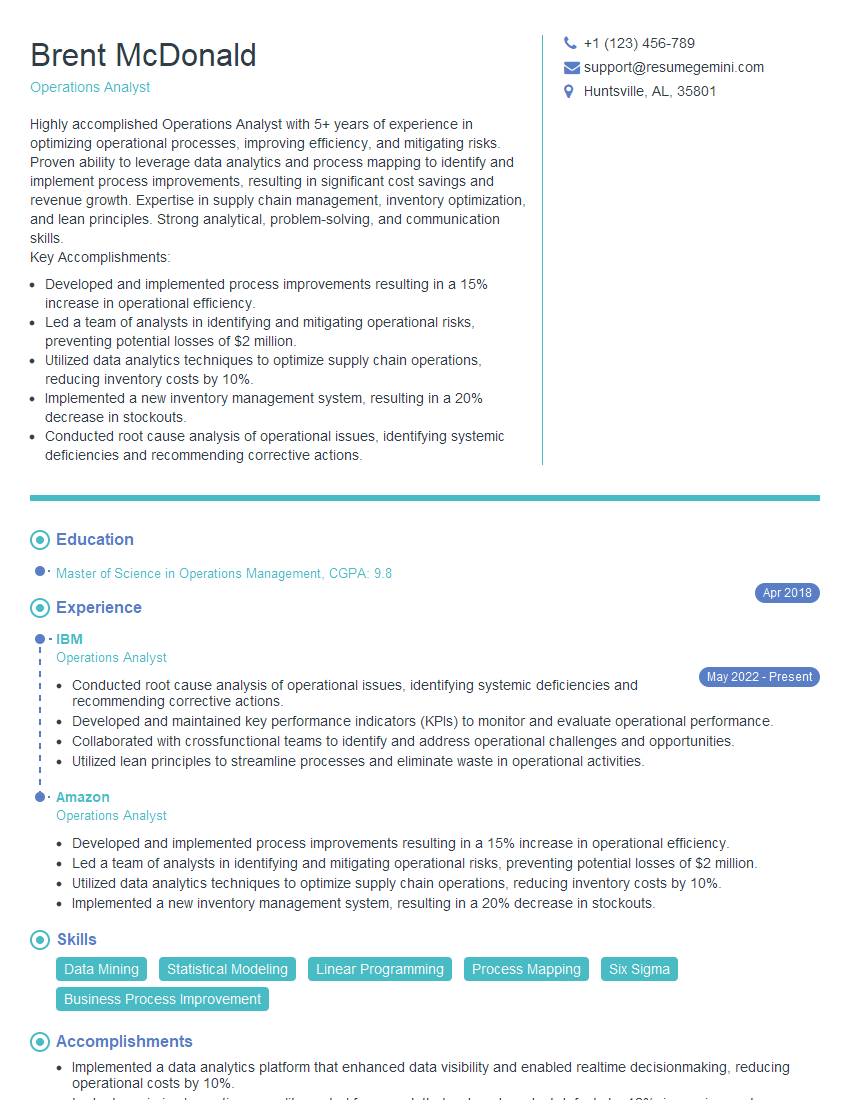
Operations Analyst Resume Sample
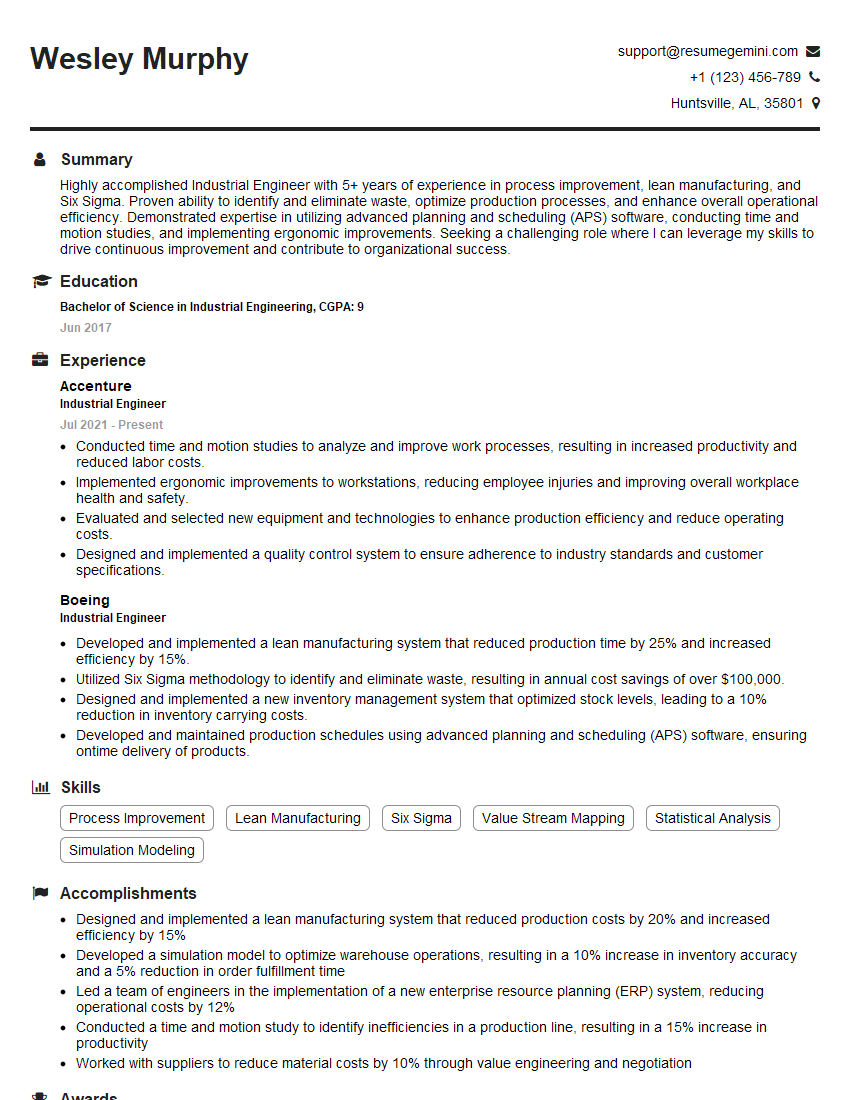
Industrial Engineer Resume Sample
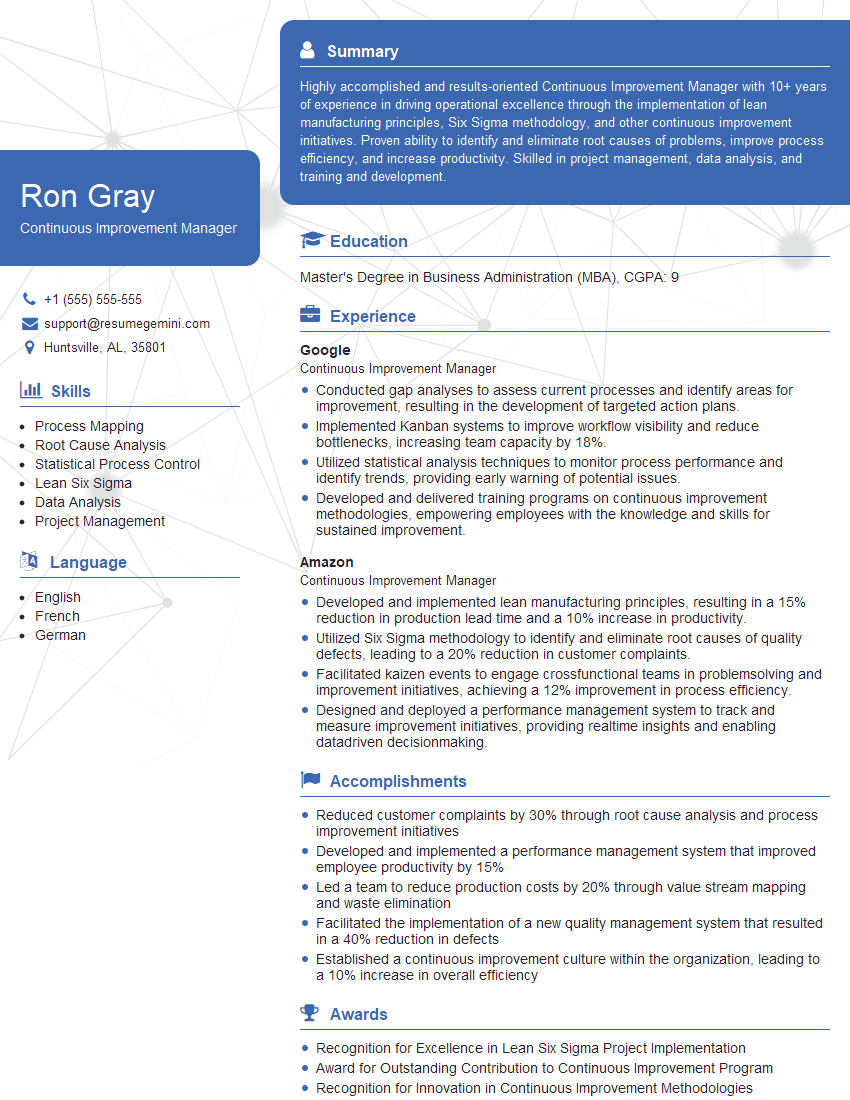
Continuous Improvement Manager Resume Sample
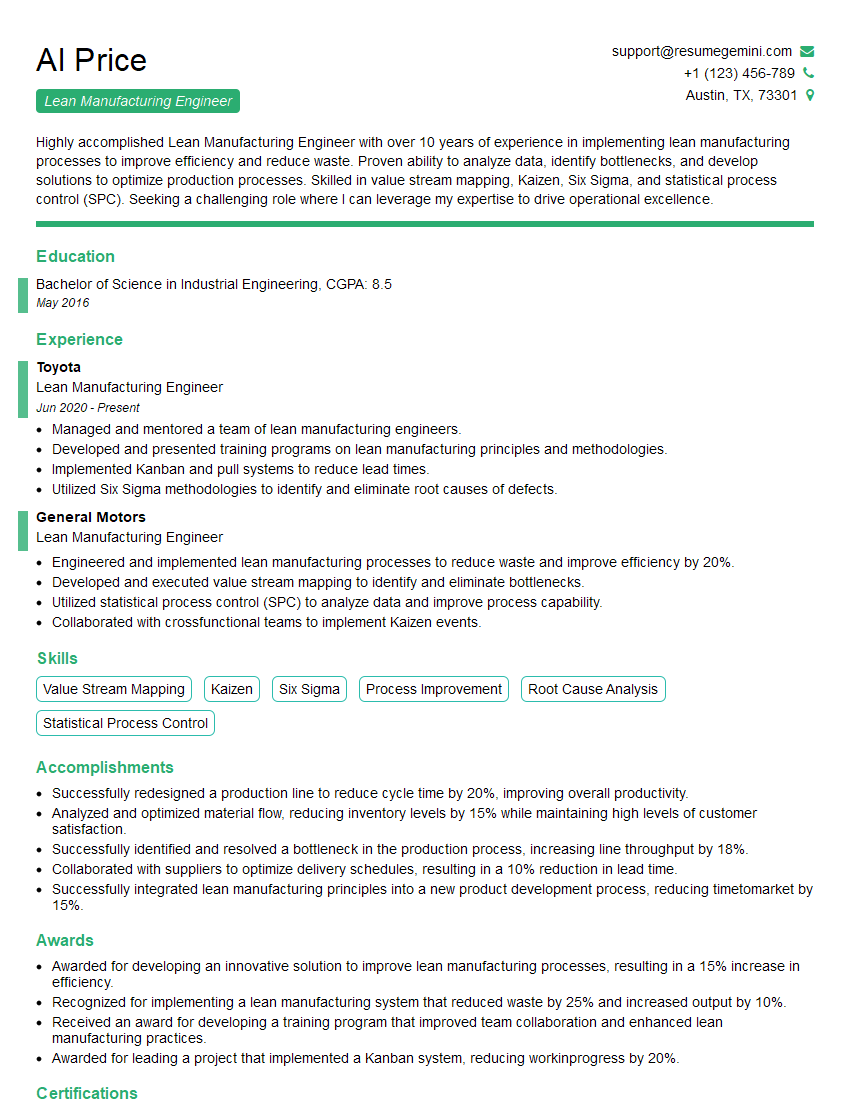
Lean Manufacturing Engineer Resume Sample
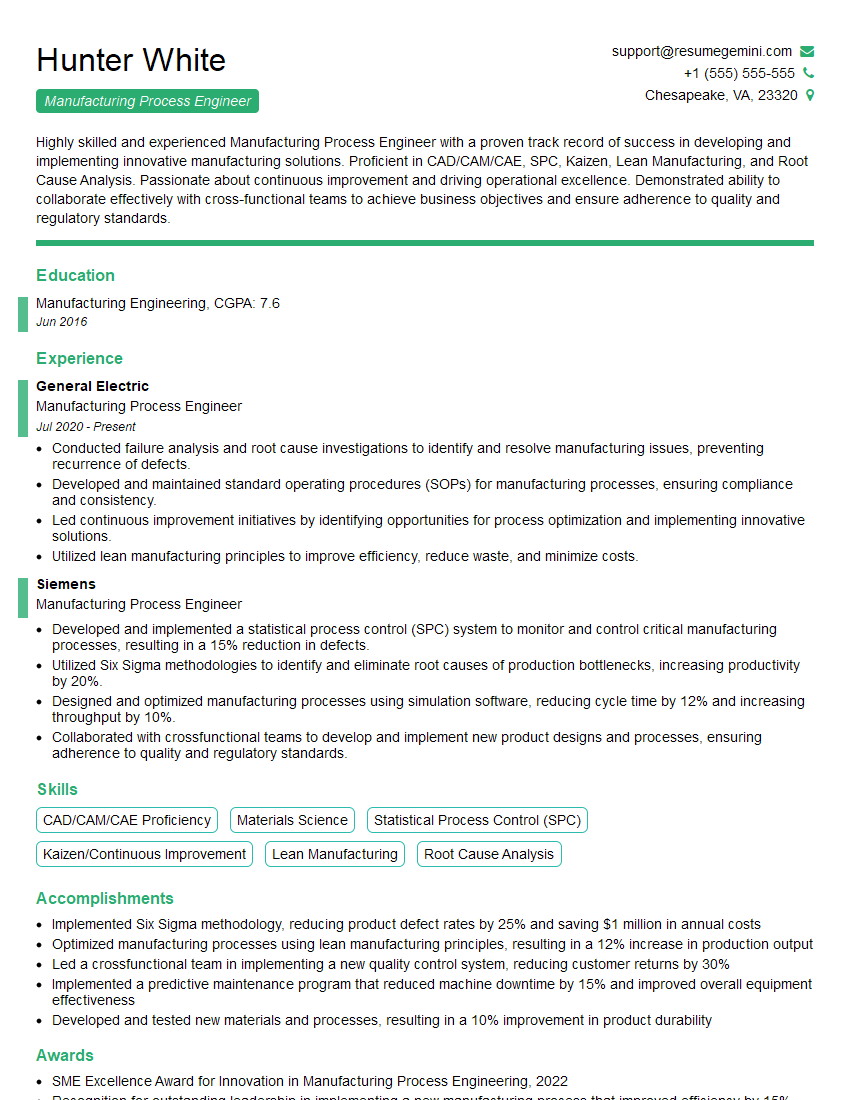
Manufacturing Process Engineer Resume Sample
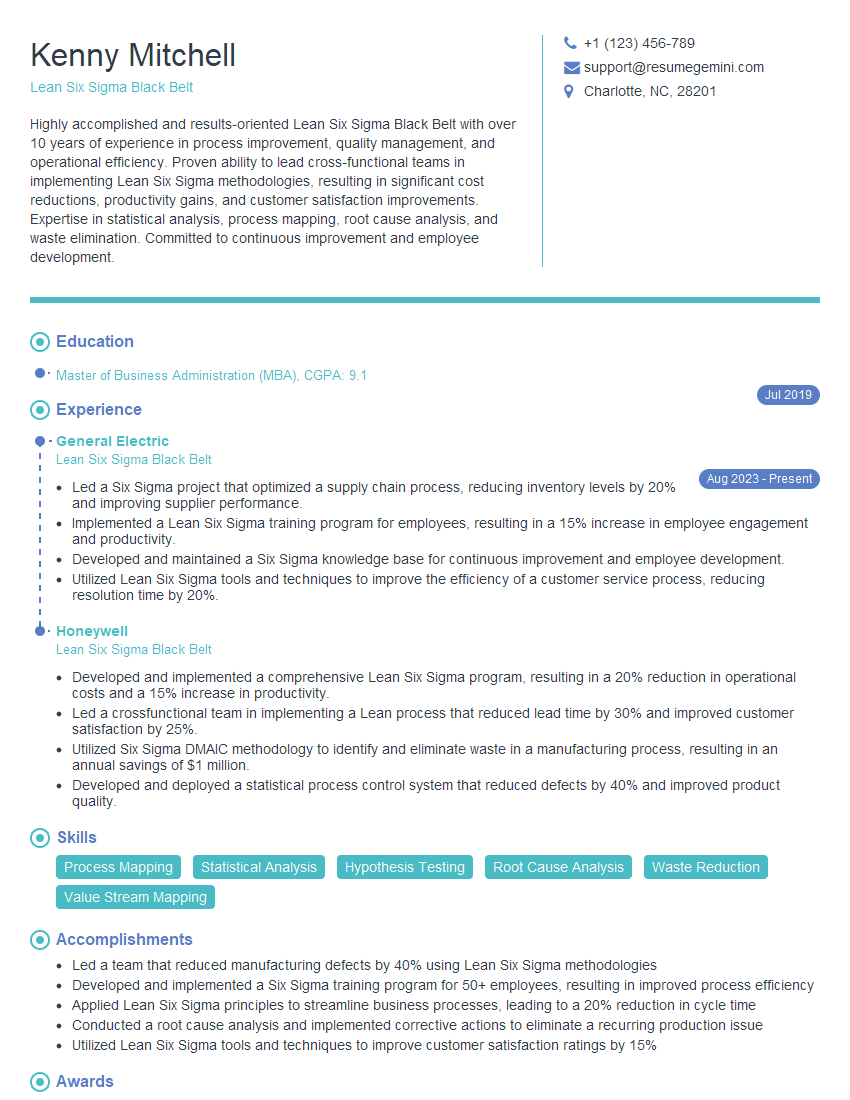
Lean Six Sigma Black Belt Resume Sample
Explore more articles
Users Rating of Our Blogs
Share Your Experience
We value your feedback! Please rate our content and share your thoughts (optional).
What Readers Say About Our Blog
Very informative content, great job.
good