Unlock your full potential by mastering the most common Knowledge of medical insurance billing interview questions. This blog offers a deep dive into the critical topics, ensuring you’re not only prepared to answer but to excel. With these insights, you’ll approach your interview with clarity and confidence.
Questions Asked in Knowledge of medical insurance billing Interview
Q 1. Explain the process of medical billing from patient encounter to payment.
Medical billing is a multi-step process that begins the moment a patient receives services and concludes with payment. Think of it like a carefully choreographed dance between the healthcare provider, the patient, and the insurance company.
- Patient Encounter: The process starts with the patient’s visit. The doctor or other healthcare professional provides services, and these services are meticulously documented, including the diagnosis (using ICD codes) and procedures performed (using CPT codes).
- Charge Capture: The medical codes are entered into the billing system along with patient demographics and insurance information. This ensures the claim accurately reflects the services provided.
- Claim Submission: The completed claim, which includes all necessary codes, is electronically submitted (most commonly) to the patient’s insurance payer. This often involves using billing software that directly interfaces with the insurance company’s system.
- Claim Adjudication: The insurance company processes the claim, checking for accuracy, verifying eligibility, and determining the amount they will cover. This step may involve manual review by a claims adjuster.
- Payment (or Denial): If approved, the payer remits payment to the healthcare provider. If denied, the provider receives an explanation of benefits (EOB) outlining the reasons for denial.
- Payment Posting: The healthcare provider receives and posts the payment (or denial) to the patient’s account. If there is a patient balance (copay, deductible, coinsurance), they are billed accordingly.
- Accounts Receivable Management: The provider manages outstanding balances, following up on denials, and resolving any discrepancies.
For example, a patient with a broken arm might receive an X-ray (CPT code 73500), a cast application (CPT code 29500), and a diagnosis of a fractured radius (ICD-10 code S42.0). These codes are crucial for proper billing.
Q 2. Describe your experience with different insurance payers (e.g., Medicare, Medicaid, private insurance).
I possess extensive experience working with a wide array of insurance payers. My experience includes:
- Medicare: I’m proficient in navigating the complexities of Medicare billing, including understanding different parts (Part A, Part B, etc.), managing Medicare Secondary Payer (MSP) situations, and adhering to their specific claim submission requirements. I’ve successfully processed thousands of Medicare claims, ensuring timely reimbursement.
- Medicaid: Medicaid billing is state-specific, and I have experience working with different state Medicaid programs. I understand the nuances of eligibility verification, prior authorizations, and other regulatory requirements that vary between states. This often requires detailed knowledge of state-specific billing procedures.
- Private Insurance: I’m familiar with a wide range of private insurers, from large national payers to smaller regional plans. I understand the importance of adhering to each payer’s unique guidelines on claim submission, coding conventions, and pre-authorization processes. Successfully managing claims with differing payer policies requires organizational skills and meticulous attention to detail.
This experience has equipped me to handle the diverse payment methods, claim formats, and reimbursement policies associated with each payer, maximizing reimbursements and minimizing claim rejections.
Q 3. How do you handle denied claims? What’s your process for appealing denials?
Handling denied claims is a critical aspect of medical billing. My process involves:
- Review the Denial Reason: Carefully examine the denial reason provided by the payer in the EOB. The reason will often indicate the next steps to take. Common reasons include missing information, incorrect coding, or lack of authorization.
- Investigate and Correct Errors: If the denial is due to an error on our part (e.g., incorrect coding, missing documentation), I correct the error and resubmit the claim with supporting documentation.
- Gather Supporting Documentation: If the denial is due to a lack of information, I gather the necessary medical documentation (progress notes, operative reports, etc.) to support the claim.
- Appeal the Denial (if necessary): If the denial is not due to an error on our end, I prepare and submit a formal appeal following the payer’s specific instructions. This typically involves providing additional information or contesting the denial.
- Track Appeal Status: I maintain a log of all denied claims and their appeal status, ensuring timely follow-up.
For instance, a denial due to lack of pre-authorization would necessitate contacting the payer, obtaining necessary authorization, and then resubmitting the claim. Appeals may require communicating with a payer’s medical review department.
Q 4. What experience do you have with medical coding (CPT, ICD, HCPCS)?
I have extensive experience with medical coding, including CPT, ICD, and HCPCS codes. I understand the critical role accurate coding plays in ensuring appropriate reimbursement.
- CPT (Current Procedural Terminology): I am proficient in selecting the appropriate CPT codes to represent the procedures and services performed. I understand the nuances of coding guidelines, modifiers, and the proper sequencing of codes.
- ICD (International Classification of Diseases): I’m skilled in identifying the correct ICD codes to represent the patient’s diagnosis. I stay up-to-date with the latest ICD-10 coding updates.
- HCPCS (Healthcare Common Procedure Coding System): I’m familiar with HCPCS codes, particularly Level II codes, which are used for supplies, equipment, and other services not covered by CPT codes. Accurate HCPCS coding is important for billing items like medical supplies and durable medical equipment.
I regularly participate in continuing education to stay current with coding updates and guidelines, ensuring that my coding is accurate and compliant.
Q 5. What software programs are you proficient in (e.g., EPIC, Cerner, Practice Fusion)?
I am proficient in several medical billing software programs, including:
- EPIC: I’m experienced in using EPIC’s billing module for charge capture, claim submission, and accounts receivable management.
- Cerner: I have experience with Cerner’s billing system and understand its various features for managing patient accounts, claims, and payments.
- Practice Fusion: I am familiar with Practice Fusion’s billing capabilities, including its streamlined claim submission process and reporting tools.
My software proficiency allows me to quickly and efficiently process claims, manage patient accounts, and generate reports to track key performance indicators (KPIs).
Q 6. How do you ensure accurate and timely claim submissions?
Ensuring accurate and timely claim submissions is paramount. My strategy involves:
- Data Validation: I meticulously review all claim data before submission, checking for accuracy in patient information, medical codes, and insurance details. This is critical for preventing claim denials.
- Clean Claims Initiative: I adhere to the Clean Claims Initiative guidelines to minimize errors and ensure timely processing of claims. This involves using standardized formats and submitting complete and accurate information.
- Regular Software Updates: I keep my billing software up-to-date to ensure compatibility with payer systems and to take advantage of new features that can improve efficiency.
- Automated Processes: I leverage automated processes whenever possible to reduce manual data entry and minimize the risk of human error. This includes electronic claims submission and automated payment posting.
- Regular Audits: I conduct regular audits of claims to identify any trends or patterns that may indicate potential issues. This proactive approach helps catch errors before they result in denials or delays.
By following these steps, I consistently achieve high rates of clean claim submissions, leading to faster reimbursements.
Q 7. What is your understanding of medical billing compliance and regulations (e.g., HIPAA)?
Medical billing compliance is crucial. My understanding encompasses:
- HIPAA (Health Insurance Portability and Accountability Act): I understand and adhere to HIPAA regulations regarding patient privacy and data security. This includes protecting electronic protected health information (ePHI) and following proper procedures for handling patient data.
- False Claims Act: I’m aware of the implications of the False Claims Act and its prohibition against submitting fraudulent claims. I understand the importance of accurate coding and billing practices.
- State and Federal Regulations: I’m knowledgeable about various state and federal regulations related to medical billing, including those governing specific payer requirements and fraud prevention. Staying current with changes in regulations is an ongoing process.
- Coding Compliance: I follow established coding guidelines and stay abreast of changes to ensure my coding practices are accurate and compliant. This often requires participating in ongoing educational programs to maintain expertise.
Maintaining compliance is a top priority. I prioritize accurate coding, secure data handling, and adherence to all relevant regulations to ensure ethical and legal billing practices.
Q 8. How do you prioritize tasks and manage your workload in a fast-paced environment?
In a fast-paced medical billing environment, effective prioritization is crucial. I use a combination of techniques, starting with a clear understanding of the urgency and financial impact of each task. I employ a system that prioritizes tasks based on deadlines, payer requirements (some payers have stricter timelines than others), and potential revenue impact. For instance, claims nearing denial deadlines are top priority, followed by those needing immediate follow-up with providers or insurance companies to avoid delays in payment. I utilize task management tools like project management software to track progress, set deadlines, and visually organize my workload. This allows me to see at a glance what needs immediate attention and what can be handled later. This system is further enhanced by regular review and adjustments based on changing priorities and workload fluctuations. Think of it like a triage system in a hospital – the most critical cases get addressed first.
Q 9. Explain your experience with electronic health records (EHR) systems.
My experience with EHR systems is extensive. I’ve worked with several leading systems, including Epic, Cerner, and Meditech. My proficiency goes beyond simple data entry; I understand how different EHR systems integrate with billing software, impacting claim generation and data accuracy. For example, I’m adept at identifying and correcting coding discrepancies directly within the EHR before claim submission, preventing costly denials down the line. I understand the importance of accurate data entry in the EHR, realizing that errors here directly translate into billing errors. I also know how to extract necessary information for billing from various modules within the EHR – from patient demographics to procedure codes and diagnosis codes. Knowing which codes to pull and how to interpret them is key to accurate and timely billing.
Q 10. Describe your experience with patient accounts receivable and collections.
Managing patient accounts receivable (A/R) and collections requires a strategic and empathetic approach. My experience involves identifying outstanding balances, analyzing denial reasons, initiating follow-up with patients and insurance companies, and resolving discrepancies. I utilize various techniques, including automated billing systems, to send timely statements and reminders. I also employ a system of prioritizing accounts based on aging, dollar amount, and payer complexity. For example, I might focus on resolving high-dollar accounts first or those with imminent statute of limitations. I’m well-versed in navigating patient payment plans and working with collections agencies when necessary, always ensuring compliance with all applicable regulations and prioritizing patient communication. For example, if a patient calls with a question about their bill, I’m trained to explain the charges clearly and work to resolve any confusion or discrepancies.
Q 11. How do you identify and resolve billing errors?
Identifying and resolving billing errors is a systematic process. It begins with regularly analyzing claim rejection reports and denial reasons provided by payers. These reports often highlight common issues, such as incorrect coding, missing information, or invalid procedure codes. I use this data to identify trends and proactively implement corrective actions, such as training staff on proper coding guidelines or updating our internal billing processes. When a specific claim is flagged, I systematically investigate the error: verifying patient information, procedure codes, and diagnosis codes against the EHR and supporting documentation. I cross-reference information with the Explanation of Benefits (EOB) to pinpoint the source of the error. Once identified, I correct the error and resubmit the claim with appropriate supporting documentation, ensuring compliance with payer-specific requirements. Sometimes, it might require communication with providers to clarify or amend information.
Q 12. What is your familiarity with Explanation of Benefits (EOB) documents?
EOB documents are critical for tracking claim status and identifying potential billing issues. I am very familiar with interpreting EOBs, understanding the different payment codes, adjustments, and denials. I use EOBs to verify that payments received are accurate and to identify areas needing follow-up, such as outstanding balances, partial payments, or denials. The information contained within an EOB helps me understand why a claim was paid (or not paid), and this allows me to address issues quickly and efficiently. For instance, if an EOB shows a denial due to a missing authorization number, I can immediately start the process of obtaining the missing information and resubmitting the claim. This prevents delays and ensures timely reimbursement.
Q 13. How do you maintain patient confidentiality?
Maintaining patient confidentiality is paramount. I adhere strictly to HIPAA regulations and internal policies to protect patient Protected Health Information (PHI). This includes limiting access to patient data on a need-to-know basis, using secure electronic systems, and following proper disposal procedures for any physical documents. I never discuss patient information with unauthorized individuals and am always mindful of my surroundings when handling sensitive data. I also participate regularly in HIPAA compliance training to stay updated on best practices and current regulations. I understand that breaches of confidentiality can have serious legal and ethical consequences, and I take my responsibility to protect patient data very seriously.
Q 14. Describe your experience with pre-authorization and pre-certification processes.
Pre-authorization and pre-certification are essential steps in many medical billing processes, significantly impacting claim reimbursement. My experience involves obtaining these approvals from insurance payers before services are rendered. I’m proficient in navigating different payer portals and completing the necessary forms accurately and efficiently. This includes collecting the required information from providers, including diagnoses, planned procedures, and medical necessity documentation. I understand that failing to obtain pre-authorization or pre-certification can lead to claim denials and significant financial losses. I actively track the status of authorization requests and proactively follow up with payers to prevent delays. For example, if I encounter an issue while trying to get an authorization, I have processes for escalating it to the appropriate personnel and ensuring that we get the authorization in a timely manner.
Q 15. What is your experience with different billing methods (e.g., fee-for-service, capitation)?
My experience encompasses various medical billing methods, primarily fee-for-service and capitation. Fee-for-service, the most traditional model, involves billing for each individual service rendered. Think of it like a plumber charging per hour or per repair. This approach is straightforward but can incentivize a higher volume of procedures. Capitation, on the other hand, is a payment model where providers receive a fixed, per-patient, per-period payment. This shifts the focus from the number of services to the overall health of the patient population. Imagine a monthly subscription for healthcare services. In my previous role at [Previous Company Name], I managed both systems, successfully navigating the nuances of each. For example, I developed a system for accurately tracking fee-for-service claims while simultaneously implementing a risk-adjusted capitation model for a specific patient demographic, which significantly improved our revenue predictability and patient management.
Career Expert Tips:
- Ace those interviews! Prepare effectively by reviewing the Top 50 Most Common Interview Questions on ResumeGemini.
- Navigate your job search with confidence! Explore a wide range of Career Tips on ResumeGemini. Learn about common challenges and recommendations to overcome them.
- Craft the perfect resume! Master the Art of Resume Writing with ResumeGemini’s guide. Showcase your unique qualifications and achievements effectively.
- Don’t miss out on holiday savings! Build your dream resume with ResumeGemini’s ATS optimized templates.
Q 16. How do you handle difficult patients or situations?
Handling difficult patients or situations requires empathy, clear communication, and a systematic approach. First, I actively listen to understand the patient’s concerns, whether regarding billing processes, insurance coverage, or payment options. Next, I clearly explain the billing process, using simple terms to avoid confusion. For instance, I might explain how co-pays and deductibles work using an analogy, comparing it to a monthly gym membership with an initial joining fee. If a patient expresses frustration or disagreement, I try to validate their feelings before calmly addressing their concerns. If the issue is financial, I explore payment plans or connect them with financial assistance programs. Documenting every interaction and attempted resolution is crucial. One memorable instance involved a patient with a complex billing issue involving multiple insurance plans. By calmly walking them through the process step-by-step, and by involving their insurance providers directly, we successfully resolved the issue and avoided unnecessary stress and potential legal ramifications.
Q 17. What are your strategies for improving efficiency in the medical billing process?
Improving efficiency in medical billing involves a multi-pronged approach focusing on technology, process optimization, and staff training. Firstly, we can leverage electronic health records (EHR) and billing software to automate tasks like claim submission, eligibility verification, and follow-up on denied claims. This reduces manual work and errors. Secondly, streamlining workflows through standardized procedures ensures consistency and eliminates bottlenecks. This may involve redesigning the claim processing workflow to minimize delays and ensure proper documentation. Thirdly, regular staff training on the latest coding guidelines, insurance regulations, and billing software enhances their skills and improves accuracy. In my past role, I implemented a new billing software system that reduced claim processing time by 20% and improved the clean claim rate by 15%, demonstrating the positive impact of technology implementation and training.
Q 18. What metrics do you use to track the performance of the billing department?
We track several key metrics to assess billing department performance. These include the clean claim rate (percentage of claims submitted without errors), days in accounts receivable (the average time it takes to receive payment for submitted claims), denial rate (percentage of claims rejected by payers), and revenue cycle length (total time from service delivery to payment received). We also track key performance indicators (KPIs) like the number of claims processed per employee, the average cost per claim processed, and the time spent resolving appeals or denials. These metrics provide a comprehensive view of efficiency and help us identify areas for improvement. For example, a consistently high denial rate might indicate a need for improved coding accuracy or staff training.
Q 19. Explain your understanding of clean claims and what contributes to a ‘dirty’ claim.
A clean claim is one that is submitted accurately and completely, requiring no additional information from the payer for processing. It’s like a perfectly filled-out tax form – no corrections needed. This includes accurate patient demographics, proper coding, and sufficient supporting documentation. Conversely, a dirty claim has errors or omissions, requiring manual intervention and delaying payment. Common reasons for dirty claims include incorrect patient information, missing CPT/HCPCS codes, or inadequate documentation. For example, missing authorization for a procedure or an incorrect diagnosis code would render a claim dirty. Identifying and correcting these errors promptly is crucial for efficient billing and revenue generation.
Q 20. How do you stay updated on changes in medical billing regulations and coding guidelines?
Staying updated on medical billing regulations and coding guidelines is vital. I achieve this through several avenues: regular subscriptions to professional journals like the AAPC (American Academy of Professional Coders) publications and webinars, active participation in industry conferences and workshops, and ongoing engagement with professional organizations. I also frequently check government websites such as CMS (Centers for Medicare & Medicaid Services) for updates and announcements concerning changes in coding, payment policies, and compliance guidelines. Following changes in regulations is crucial because non-compliance can lead to claim denials, fines, and even legal action.
Q 21. Describe your experience with analyzing billing reports and identifying trends.
Analyzing billing reports and identifying trends is a key aspect of my role. I use data analysis techniques to identify patterns in claim denials, payment delays, and revenue fluctuations. For example, I might analyze data to identify specific CPT codes or providers consistently resulting in higher denial rates, allowing us to address the root cause – potentially inadequate documentation or coding errors. Similarly, analyzing accounts receivable trends helps us project cash flow and improve collection efficiency. I utilize tools like Excel and specialized billing analytics software to visualize data, identify trends, and create actionable insights. A recent analysis revealed a recurring issue with specific insurance payers, leading to targeted communication and improved claim submission accuracy, resulting in a significant reduction in denials for that payer.
Q 22. How do you handle high-volume claim submissions?
Handling high-volume claim submissions efficiently requires a strategic approach combining technology and optimized workflows. Think of it like managing a busy airport – you need systems in place to ensure smooth processing and avoid bottlenecks.
- Automated Claim Submission: We leverage electronic health record (EHR) systems and clearinghouses to automate claim submissions. This dramatically reduces manual data entry errors and speeds up the process. For example, our previous company used a clearinghouse that could batch and submit thousands of claims daily with 99% accuracy.
- Data Validation and Error Prevention: Before submission, robust data validation checks are crucial. This involves verifying patient demographics, procedure codes (CPT, HCPCS), and diagnosis codes (ICD) for accuracy. A single incorrect digit can delay payment. We use software that automatically flags potential errors, similar to a spell-checker, catching problems before they reach the payer.
- Regular Monitoring and Reporting: We use dashboards and reports to track key metrics like claim submission rates, rejection rates, and payment turnaround times. This allows for proactive identification of issues and timely intervention. Imagine a flight tracker – we constantly monitor the progress of our claims to identify delays or potential problems.
- Denial Management System: A robust denial management system is key to minimizing revenue loss. This involves tracking denied claims, analyzing reasons for denial, and taking corrective actions like resubmissions or appeals. It’s like handling passenger complaints – addressing issues promptly and efficiently is crucial.
Q 23. What is your experience with revenue cycle management?
Revenue cycle management (RCM) is the entire process of creating, submitting, and collecting payments for healthcare services. It’s the lifeblood of any healthcare provider. My experience spans all aspects, from pre-authorization to payment posting and accounts receivable management.
- Pre-Authorization and Pre-Certification: I have extensive experience obtaining pre-authorization and pre-certification for procedures, reducing denials due to lack of authorization. Think of it as obtaining travel insurance before booking a flight – you avoid potential issues later.
- Charge Capture and Coding: I’m proficient in accurate charge capture, using appropriate CPT and ICD codes to ensure proper reimbursement. Accuracy here is critical – an incorrect code could lead to underpayment or denial.
- Claims Submission and Follow-up: I’m adept at utilizing electronic claim submission methods and following up on outstanding claims with payers. This involves persistence and clear communication.
- Accounts Receivable Management: I have experience managing accounts receivable, identifying and addressing outstanding claims, and working on collections. This includes analyzing aged receivables and implementing strategies to improve cash flow.
- Reporting and Analysis: I can generate reports analyzing key performance indicators (KPIs) such as days in accounts receivable (DAR), collection rates, and denial rates. This allows for data-driven decisions to improve RCM efficiency.
Q 24. Explain your experience with working in a team environment.
I thrive in team environments. My previous roles involved close collaboration with coders, billing specialists, and administrative staff. I believe effective teamwork is essential for optimizing workflow and achieving common goals.
- Communication: I’m a strong communicator, proactively sharing updates and contributing to team discussions. I always ensure everyone is informed and on the same page.
- Collaboration: I actively participate in team projects, offering support and sharing my expertise to ensure collective success. In my previous role, we tackled a backlog of claims by working together, dividing tasks, and supporting each other.
- Problem-solving: I am adept at identifying and resolving challenges collaboratively, viewing challenges as opportunities for growth and improvement.
- Mentorship: I am happy to mentor junior team members, sharing my knowledge and experience. I believe in building a strong and supportive team environment.
Q 25. What are your salary expectations?
My salary expectations are in the range of $[Lower Bound] – $[Upper Bound] annually, commensurate with my experience and the responsibilities of this role. I am open to discussing this further based on the specifics of the position and the overall compensation package.
Q 26. What are your strengths and weaknesses as a medical billing specialist?
My greatest strengths as a medical billing specialist are my accuracy, attention to detail, and problem-solving skills. I’m meticulous in my work, ensuring every claim is processed correctly. I also have a knack for identifying and resolving complex billing issues.
An area I am continuously working on is expanding my knowledge of emerging payer regulations. The healthcare landscape is constantly evolving, and staying abreast of these changes is crucial for optimal performance. I actively participate in continuing education courses to address this weakness.
Q 27. Why are you interested in this position?
I’m interested in this position because [Company Name]’s reputation for excellence in patient care and commitment to innovative billing practices aligns perfectly with my professional values. I’m particularly drawn to [Specific aspect of the company or role that interests you]. The opportunity to contribute my skills to such a respected organization is very exciting.
Q 28. Where do you see yourself in 5 years?
In five years, I see myself as a valuable asset to [Company Name], potentially in a leadership role. I envision contributing to strategic improvements in the organization’s RCM processes and mentoring other billing specialists. I am eager to expand my expertise in medical billing and continue to contribute to the company’s success.
Key Topics to Learn for a Medical Insurance Billing Interview
- Medical Terminology and Coding: Understand common medical terms, ICD (International Classification of Diseases) codes, and CPT (Current Procedural Terminology) codes. Practice applying these codes to different medical scenarios.
- Insurance Claim Processing: Learn the entire claims process, from initial submission to payment or denial. Familiarize yourself with different claim formats (electronic vs. paper) and common reasons for claim denials.
- Payer Regulations and Compliance: Understand the regulations and guidelines of various insurance payers (Medicare, Medicaid, private insurance). Know how to ensure compliance with these regulations to avoid penalties.
- Healthcare Reimbursement Methods: Grasp different reimbursement methodologies (fee-for-service, capitation, etc.) and their implications for billing and revenue cycle management.
- Billing Software and Systems: Become proficient with common medical billing software and electronic health record (EHR) systems. Understand data entry procedures and reporting functionalities.
- Denial Management and Appeals: Learn how to effectively manage denied claims, identify the reasons for denial, and prepare appeals to ensure accurate reimbursement.
- Auditing and Compliance: Understand internal auditing procedures to ensure accurate billing practices and compliance with regulations.
- Problem-Solving and Analytical Skills: Practice identifying and resolving billing discrepancies, analyzing claim data, and troubleshooting system errors.
Next Steps
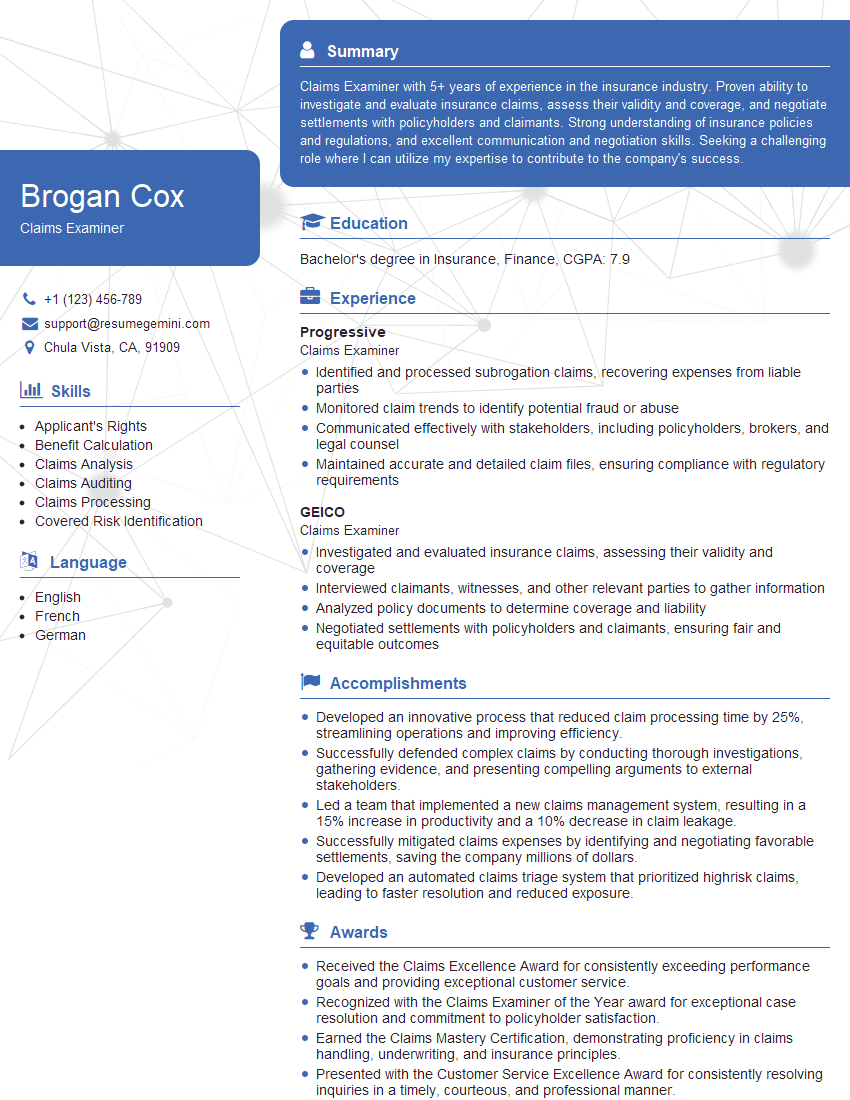
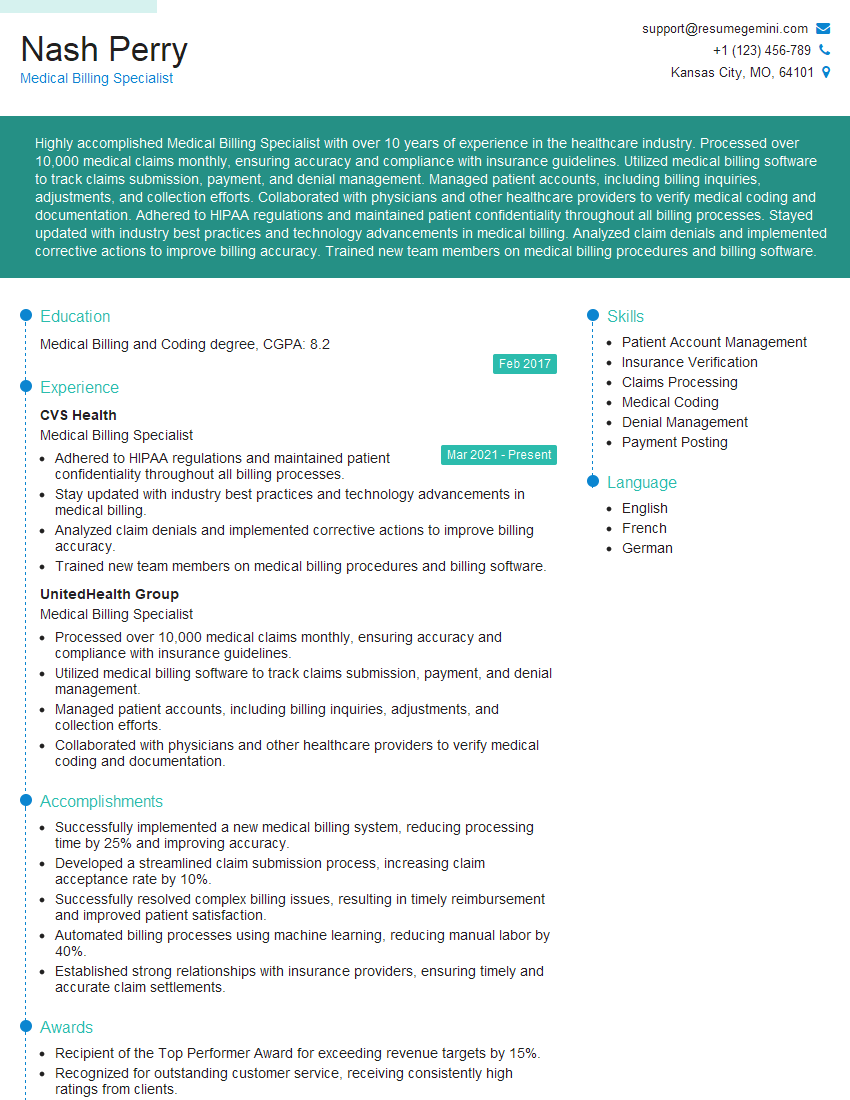
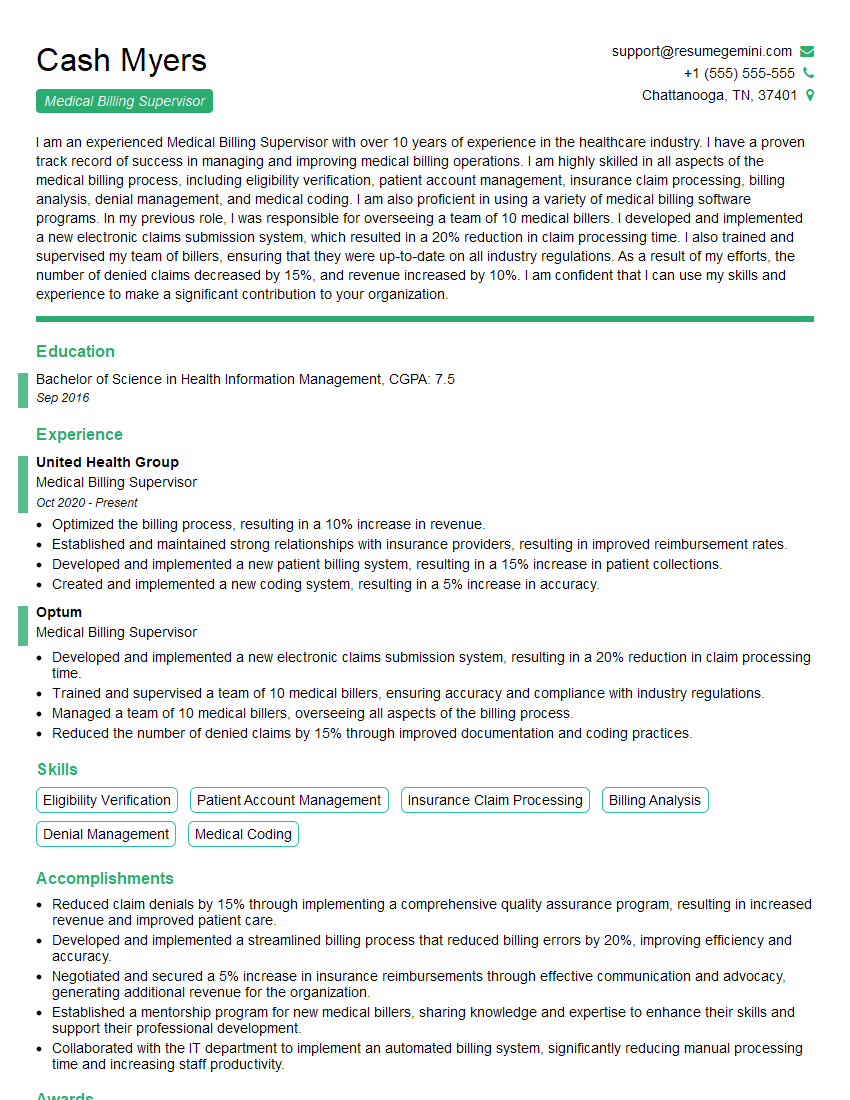
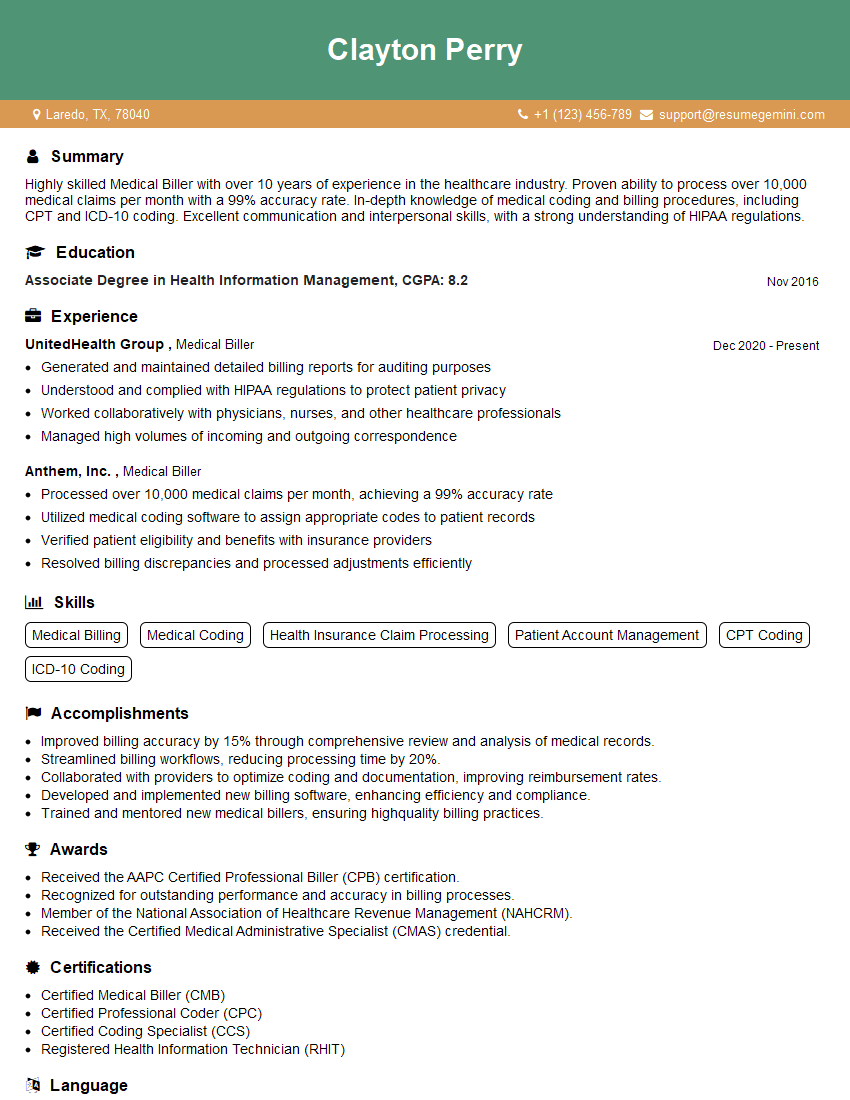
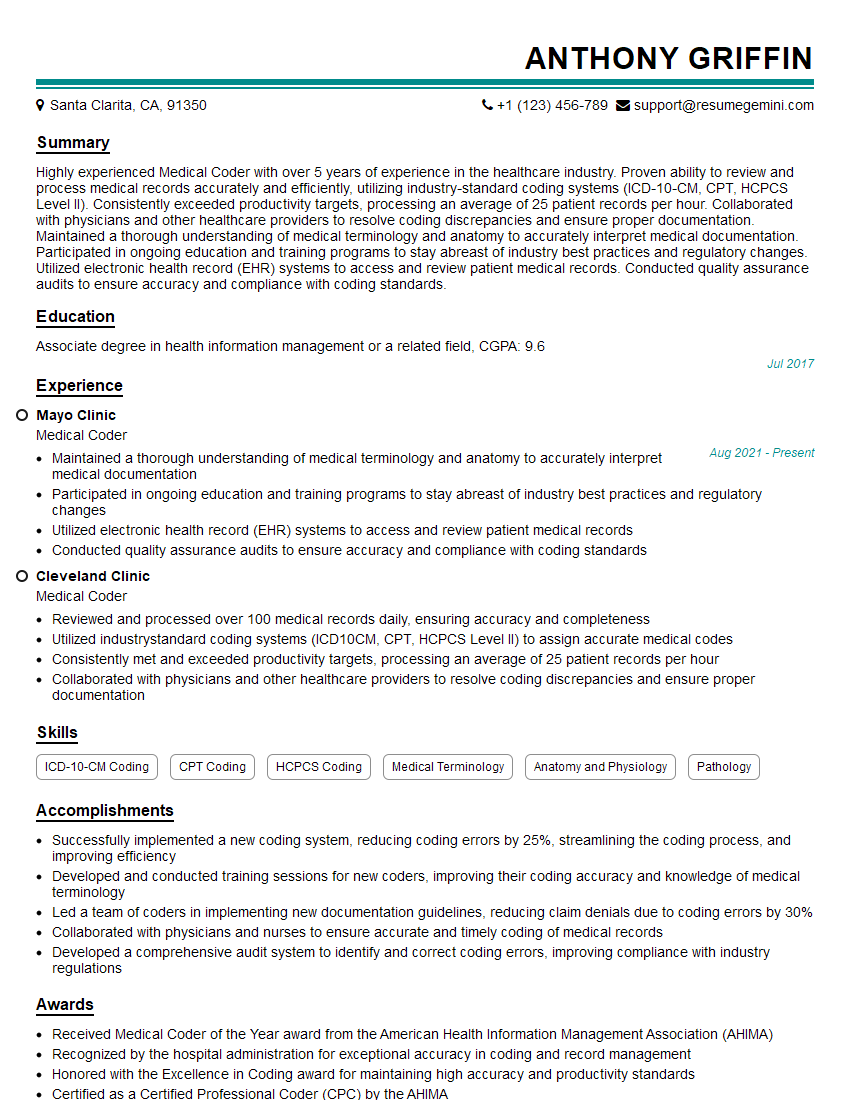
Mastering medical insurance billing opens doors to rewarding and stable careers in the healthcare industry. A strong understanding of these concepts is crucial for securing a competitive advantage in today’s job market. To significantly boost your job prospects, create an ATS-friendly resume that highlights your skills and experience effectively. ResumeGemini is a trusted resource to help you craft a professional and impactful resume that catches the eye of recruiters. They offer examples of resumes tailored specifically to medical insurance billing professionals, providing valuable templates and guidance to help you present your qualifications in the best possible light.

Explore more articles
Users Rating of Our Blogs
Share Your Experience
We value your feedback! Please rate our content and share your thoughts (optional).
What Readers Say About Our Blog
Very informative content, great job.
good