Interviews are opportunities to demonstrate your expertise, and this guide is here to help you shine. Explore the essential Knowledge of packaging materials and techniques interview questions that employers frequently ask, paired with strategies for crafting responses that set you apart from the competition.
Questions Asked in Knowledge of packaging materials and techniques Interview
Q 1. Explain the difference between corrugated board and solid fiberboard.
Both corrugated board and solid fiberboard are made from paperboard, but they differ significantly in their structure and properties. Think of corrugated board as a honeycomb structure, offering excellent cushioning and shock absorption, while solid fiberboard is more like a solid sheet, providing strength and rigidity.
- Corrugated Board: This is made by combining fluted (wavy) medium between flat linerboards. The fluting creates air pockets, resulting in its lightweight yet strong nature. It’s commonly used for shipping boxes due to its ability to protect contents from impact. The number of flutes (e.g., single-wall, double-wall, triple-wall) determines its strength and thickness.
- Solid Fiberboard: This is a single layer of compressed paperboard, offering a smooth and rigid surface. It’s denser and less flexible than corrugated board, making it suitable for applications requiring more strength and stability, such as book covers, cereal boxes, or display stands. It may also be laminated with other materials to enhance its properties.
In essence, choosing between them depends on the required level of protection, rigidity, and weight capacity for the packaged product. A fragile item would benefit from corrugated board’s cushioning, while a heavier item might need the strength of solid fiberboard, potentially combined with other protective measures.
Q 2. Describe the properties of various plastic films used in packaging (e.g., PET, PE, PP).
Plastic films are ubiquitous in packaging, each type offering unique properties. Here are some common examples:
- Polyethylene Terephthalate (PET): Known for its clarity, strength, and barrier properties against gases and moisture. It’s frequently used for bottled drinks, food containers, and blister packs because it’s easily recyclable and relatively inexpensive.
- Polyethylene (PE): A flexible and versatile plastic with excellent moisture resistance. Low-density polyethylene (LDPE) is commonly used for films, bags, and shrink wrap due to its flexibility and sealability. High-density polyethylene (HDPE) is tougher and more rigid, used for bottles and containers.
- Polypropylene (PP): Strong, resistant to chemicals, and heat-tolerant. It’s often used for food containers, labels, and packaging for products needing to withstand temperature changes. It’s also a good choice for applications requiring sterilisation.
The choice of plastic film depends on factors like product compatibility, desired barrier properties, recyclability, and cost. For example, a food product requiring a strong moisture barrier might use PET or a multilayer film combining different plastics to maximize protection.
Q 3. What are the advantages and disadvantages of using flexible vs. rigid packaging?
Flexible and rigid packaging offer distinct advantages and disadvantages:
- Flexible Packaging:
- Advantages: Lightweight, cost-effective, easily sealable, adaptable to different shapes and sizes, and often good barrier properties. Examples include pouches, bags, and wraps.
- Disadvantages: Can be less protective against impact or crushing forces, might require secondary packaging for protection, and less shelf-appealing compared to rigid packaging.
- Rigid Packaging:
- Advantages: Superior protection against damage, easier to stack and transport, offers good display opportunities, and generally provides a better presentation of the product. Examples include bottles, jars, and cartons.
- Disadvantages: Usually heavier, more expensive, and less versatile in terms of shapes and sizes. Requires more material and occupies more storage space.
The best choice depends on the product, its fragility, transportation needs, and marketing goals. A fragile item would need rigid packaging, while a lightweight snack might be better suited to flexible packaging.
Q 4. How do you choose the appropriate packaging material for a specific product?
Selecting the right packaging material is a crucial step. It involves a systematic evaluation of several factors:
- Product Characteristics: Consider the product’s weight, shape, fragility, sensitivity to moisture, oxygen, light, and temperature.
- Environmental Conditions: Evaluate the storage and transportation conditions, including temperature fluctuations, humidity, and potential for physical damage during shipping.
- Shelf Life: If the product has a limited shelf life, the packaging must provide adequate protection against degradation.
- Cost Considerations: Evaluate the cost of the packaging material, manufacturing, and transportation.
- Regulatory Requirements: Ensure compliance with all relevant regulations regarding food safety, labeling, and recyclability.
- Consumer Appeal: The packaging should be visually appealing and user-friendly.
- Sustainability: Choose materials that are recyclable, compostable, or made from recycled content to minimize environmental impact.
By carefully considering these factors, one can choose a packaging solution that optimally protects the product, meets regulatory standards, and appeals to consumers while considering the environmental footprint.
Q 5. Explain the importance of barrier properties in packaging.
Barrier properties are critical in packaging because they protect the product from external elements and vice versa. These properties prevent the transfer of gases (oxygen, carbon dioxide, nitrogen), moisture, aromas, and light, thus maintaining product quality and extending its shelf life.
For example, a bag of coffee needs strong barrier properties to prevent oxygen from entering and oxidizing the beans, compromising their flavor and aroma. Similarly, a pharmaceutical product might require a moisture barrier to prevent degradation. The lack of adequate barrier properties can result in spoilage, discoloration, loss of potency, or even safety issues. Different materials provide different levels of barrier performance. Multilayer films, often combining plastics and metal foils, are frequently employed for high-barrier applications.
Q 6. What are some common methods for sealing packaging materials?
Various methods exist for sealing packaging materials, each suitable for different materials and applications.
- Heat Sealing: Common for plastic films, this method uses heat to melt and fuse the plastic layers together. It’s widely used for pouches, bags, and flow wraps.
- Induction Sealing: This uses an electromagnetic field to heat a foil liner, creating a hermetic seal. Often used for bottles and jars to provide a tamper-evident seal.
- Ultrasonic Sealing: This uses high-frequency vibrations to create friction and heat, joining materials without the need for adhesives or heat. It’s suitable for non-heat-sensitive materials.
- Adhesive Sealing: This relies on an adhesive to bond the packaging materials. Hot-melt adhesives are commonly used for carton sealing, while pressure-sensitive adhesives are found in labels and tapes.
- Crimping: A mechanical process of interlocking or folding the edges of the packaging material to create a seal. Often used for metal cans and tubes.
The selection of the sealing method depends on the material properties, cost considerations, and the desired level of seal integrity. A food product requiring a sterile environment might utilize induction sealing, while a simple paper bag might just require adhesive sealing.
Q 7. Describe different types of closures used in packaging.
Closures play a critical role in packaging, providing convenience, tamper evidence, and protection against contamination. Here are some examples:
- Screw Caps: Commonly used for bottles and jars, offering a secure and easy-to-use closure.
- Press-on Lids: Simple closures that snap or press onto containers, often used for disposable cups and food containers.
- Child-Resistant Caps: Designed to prevent children from accessing potentially harmful contents. These caps require a specific mechanism to open, offering enhanced safety.
- Spout Pouches: Flexible pouches with a built-in spout for easy dispensing of liquids or semi-liquids.
- Resealable Closures: Ziploc-style closures or reclosable zipper mechanisms allow for repeated opening and closing, ensuring product freshness and convenience.
- Tamper-Evident Seals: These seals provide visual evidence of tampering, ensuring product integrity. Examples include foil seals on bottles or shrink bands around cartons.
The choice of closure depends on the product, the desired level of protection, ease of use, and aesthetic considerations. A pharmaceutical product might need a child-resistant cap, while a bottle of juice might use a screw cap with a tamper-evident seal.
Q 8. What are the key considerations for designing sustainable packaging?
Designing sustainable packaging goes beyond simply using eco-friendly materials. It’s a holistic approach encompassing the entire lifecycle of the package, from material sourcing to end-of-life disposal. Key considerations include:
- Material Selection: Prioritizing renewable, recyclable, or compostable materials like recycled paperboard, biodegradable plastics (PLA), or plant-based films. Avoid materials like PVC or polystyrene which are difficult to recycle and have a high environmental impact.
- Design for Recyclability: Simplifying the package design to minimize the number of different materials used and ensuring materials are easily separable for efficient recycling. For example, avoiding glued-together components or using materials that are incompatible in recycling streams.
- Reduced Material Usage: Optimizing the package size and shape to minimize material waste while still providing adequate product protection. This often involves using innovative design techniques or lightweight materials.
- Transportation Efficiency: Designing packages that optimize space utilization during shipping to reduce fuel consumption and emissions. This includes considering package dimensions and stacking capabilities.
- End-of-Life Management: Planning for the package’s end-of-life by making it easily recyclable, compostable, or biodegradable. This often requires clear labeling and guidance for consumers.
- Carbon Footprint Reduction: Evaluating and reducing the carbon footprint associated with material production, transportation, and disposal. This often involves life cycle assessments (LCA) to identify hotspots for improvement.
For instance, a company transitioning from plastic bottles to glass bottles might initially see increased costs, but the long-term benefits of recyclability and reduced environmental impact can outweigh the initial investment.
Q 9. How do you ensure the integrity of packaging during transportation and storage?
Ensuring packaging integrity during transportation and storage is crucial for preventing damage to the product and maintaining its quality. This involves a multi-faceted approach:
- Robust Package Design: Using strong materials and structures capable of withstanding the stresses of handling, stacking, and transit. This might include corrugated boxes with appropriate burst strength, protective inserts, or specialized cushioning materials.
- Protective Packaging Elements: Incorporating elements such as corner boards, edge protectors, and void fill to absorb shocks and vibrations during transport. The choice of cushioning material depends on the fragility of the product and the severity of the expected impacts.
- Proper Palletization and Stacking: Ensuring packages are properly palletized and stacked to maintain stability and prevent crushing or damage during transport. This requires knowledge of load-bearing capabilities and the use of appropriate strapping or shrink-wrapping.
- Climate Control: For temperature-sensitive products, maintaining appropriate temperature and humidity levels during storage and transport is essential. This often requires insulated containers and temperature monitoring systems.
- Testing and Simulation: Conducting drop tests, vibration tests, and compression tests to evaluate the package’s ability to withstand the stresses of transportation and storage. These tests simulate real-world conditions and help identify potential weaknesses in the design.
Imagine shipping fragile electronics: Without adequate cushioning and robust outer packaging, even minor impacts during transit could lead to significant damage and returns.
Q 10. What are the regulations and standards relevant to food packaging?
Food packaging regulations and standards are extensive and vary across countries and regions. They’re designed to ensure food safety, prevent contamination, and provide accurate labeling. Some key regulations and standards include:
- FDA (Food and Drug Administration) regulations (USA): These regulations govern the materials that can come into contact with food, setting limits on substances that might migrate into the food and posing health risks. They also dictate labeling requirements, including allergen information and nutritional facts.
- EFSA (European Food Safety Authority) regulations (EU): Similar to FDA regulations, EFSA establishes safety standards for food contact materials and regulates labeling requirements within the European Union.
- ISO standards: Various ISO standards provide guidelines for food packaging materials, testing methods, and quality management systems. These standards offer a framework for consistent practices across the industry.
- Specific regulations for materials: Regulations often exist for specific materials used in food packaging. For example, BPA-free plastics have become more prevalent due to concerns about the potential health effects of Bisphenol A.
- Labeling requirements: Accurate and clear labeling is crucial, including information on ingredients, nutritional content, best-before dates, storage instructions, and any potential allergens.
Non-compliance with these regulations can lead to significant penalties and product recalls. A thorough understanding of applicable regulations is vital for any food packaging company.
Q 11. Explain the concept of modified atmosphere packaging (MAP).
Modified Atmosphere Packaging (MAP) is a technique used to extend the shelf life of food products by altering the composition of the gas surrounding the product inside the package. This is typically done by reducing the oxygen levels and increasing the levels of other gases such as nitrogen or carbon dioxide.
How it works: The process typically involves flushing the package with a modified gas mixture before sealing it. The altered atmosphere inhibits the growth of aerobic bacteria and slows down enzymatic reactions that cause spoilage.
- Reduced Oxygen: Lowering oxygen levels slows down the growth of aerobic bacteria, which require oxygen to survive.
- Increased Carbon Dioxide: Carbon dioxide can inhibit microbial growth and also maintain the product’s firmness and texture.
- Increased Nitrogen: Nitrogen acts as an inert filler gas, displacing oxygen and helping to maintain package integrity.
Examples: MAP is commonly used for fresh produce, meat, and ready-to-eat meals. You’ll often see packages labeled as ‘packed in a protective atmosphere’.
Q 12. What are some common testing methods for evaluating packaging performance?
Evaluating packaging performance requires a range of testing methods, depending on the type of packaging and the desired properties. Common testing methods include:
- Drop Tests: Simulating the impact of drops from various heights to assess the package’s ability to protect its contents from damage.
- Vibration Tests: Subjecting the package to vibrations of different frequencies and amplitudes to mimic the vibrations experienced during transport.
- Compression Tests: Measuring the package’s ability to withstand compression forces, such as those experienced when stacked on a pallet.
- Burst Tests: Determining the maximum internal pressure the package can withstand before bursting.
- Seal Strength Tests: Evaluating the strength of the package’s seals to ensure they maintain integrity during transport and storage.
- Water Vapor Transmission Rate (WVTR) tests: Measuring the rate at which water vapor passes through the packaging material. This is especially important for moisture-sensitive products.
- Oxygen Transmission Rate (OTR) tests: Measuring the rate at which oxygen passes through the packaging material. Important for products sensitive to oxidation.
The choice of testing methods will depend on the specific requirements of the product and the packaging design. Results inform whether adjustments are needed to ensure product protection and quality.
Q 13. Describe the role of tamper-evident packaging.
Tamper-evident packaging is designed to provide visual evidence of any unauthorized tampering or opening. It’s commonly used for products where safety and security are critical, such as pharmaceuticals, food, and cosmetics.
How it works: Tamper-evident features create a noticeable change if the package is opened or altered. Common examples include:
- Seals: Seals that break or leave a visible mark when opened.
- Shrink bands: Plastic bands that shrink around the package and are difficult to remove without causing obvious damage.
- Labels: Labels that tear or change color if tampered with.
- Caps with tamper-evident seals: Caps with seals that break when opened.
Importance: Tamper-evident packaging is a critical deterrent to product tampering, providing reassurance to consumers and protecting brand reputation. It also helps prevent the introduction of contaminants or the substitution of the original product.
Q 14. How do you calculate the cost-effectiveness of different packaging options?
Calculating the cost-effectiveness of different packaging options requires a thorough analysis of all associated costs, considering both direct and indirect expenses. The process often involves comparing different packaging materials, designs, and manufacturing processes.
Factors to Consider:
- Material Costs: The cost of the raw materials used in packaging production.
- Manufacturing Costs: Costs related to manufacturing the packaging, including labor, machinery, and energy.
- Transportation Costs: Costs associated with transporting packaging materials and finished goods.
- Storage Costs: Costs related to storing packaging materials and finished goods.
- Waste Disposal Costs: Costs associated with managing and disposing of packaging waste.
- Product Damage Costs: Costs resulting from damaged products due to inadequate packaging.
- Marketing and Branding Costs: Costs related to the design and printing of packaging.
Calculating Cost-Effectiveness: A simple approach involves calculating the total cost per unit of product packaged for each option. You can also incorporate a life cycle cost analysis which includes factors across the entire product lifecycle. By comparing these costs, alongside considerations like recyclability and environmental impact, you can determine which packaging option offers the optimal balance of cost and performance.
Example: Comparing a cardboard box versus a plastic container might show that the plastic container has a lower initial material cost, but higher waste disposal fees and potentially more product damage resulting in higher overall costs.
Q 15. What are some examples of innovative packaging technologies?
Innovative packaging technologies are constantly evolving to meet the demands for sustainability, efficiency, and enhanced consumer experience. These advancements span material science, design, and manufacturing processes.
Active and Intelligent Packaging: This involves incorporating sensors or indicators into the packaging to monitor product freshness, temperature, or tampering. For example, time-temperature indicators (TTIs) on perishable goods show if the product has been exposed to unsafe temperatures. Another example is oxygen scavengers that extend shelf life.
Sustainable Packaging Materials: Bioplastics derived from renewable resources like corn starch or sugarcane bagasse are gaining traction. Mushroom packaging, created from mycelium, offers a completely compostable alternative to traditional foams. Recycled content and recyclable designs are also key components.
Edible Packaging: This futuristic concept uses edible films or coatings made from seaweed, proteins, or carbohydrates, eliminating the need for traditional wrappers in specific applications like confectionery or certain types of snacks.
3D-Printed Packaging: Customization and on-demand production are enabled by 3D printing, allowing for unique designs and shapes tailored to specific products, reducing waste from excess packaging materials.
Augmented Reality (AR) Packaging: Integrating AR technology allows brands to enhance the consumer experience. Consumers can interact with packaging through their smartphones to access information, games, or recipes, fostering a stronger connection with the product.
Career Expert Tips:
- Ace those interviews! Prepare effectively by reviewing the Top 50 Most Common Interview Questions on ResumeGemini.
- Navigate your job search with confidence! Explore a wide range of Career Tips on ResumeGemini. Learn about common challenges and recommendations to overcome them.
- Craft the perfect resume! Master the Art of Resume Writing with ResumeGemini’s guide. Showcase your unique qualifications and achievements effectively.
- Don’t miss out on holiday savings! Build your dream resume with ResumeGemini’s ATS optimized templates.
Q 16. Explain the importance of proper labeling and marking on packaging.
Proper labeling and marking on packaging are critical for several reasons: legal compliance, consumer safety, and brand integrity. Think of it as the packaging’s communication system – it talks to the consumer and regulatory bodies.
Legal Compliance: Regulations vary by region and product type, but generally require information like ingredients, nutritional facts (for food), weight, manufacturer details, and warnings. Failure to comply can result in hefty fines and product recalls.
Consumer Safety: Clear and concise warnings about allergens, potential hazards, and handling instructions are essential to protect consumers. This is particularly important for products that contain hazardous materials or require specific storage conditions.
Brand Identity & Marketing: Packaging labels contribute to brand recognition and communicate marketing messages. Effective design and clear labeling reinforce trust and loyalty.
Logistics & Traceability: Barcodes, QR codes, and other identifiers on packaging facilitate tracking, inventory management, and supply chain efficiency.
In essence, packaging labels are not just decorative; they’re a crucial component of product safety, regulatory compliance, and efficient supply chains.
Q 17. Describe your experience with different printing techniques for packaging.
My experience encompasses a broad range of printing techniques used in packaging, each with its own advantages and limitations. The choice of technique depends heavily on factors like the substrate (material), design complexity, budget, and required volume.
Flexographic Printing: This is a cost-effective technique ideal for high-volume printing on flexible materials like films and foils. It uses flexible printing plates and is suitable for repetitive designs.
Offset Lithography: Excellent for high-quality, detailed images and sharp text, this method is often used for cartons and labels printed on paper or board. It’s suitable for medium to high volumes.
Gravure Printing: This technique excels in high-speed, high-volume printing of continuous web materials like films, offering excellent color consistency and image quality. It’s favored for long print runs.
Digital Printing: Perfect for short runs, personalization, and rapid prototyping, digital printing offers flexibility in design changes and reduced setup times. However, it might be more expensive per unit for larger orders.
Screen Printing: Well-suited for printing thick inks, special effects, and textures on diverse substrates, this method allows for vibrant color and unique tactile qualities. However, it’s less efficient for high-volume production.
My expertise includes overseeing the entire process, from design and pre-press preparation to quality control and final output. I am proficient in selecting the most appropriate technique based on project requirements.
Q 18. How do you handle packaging material sourcing and supply chain management?
Sourcing packaging materials and managing the supply chain requires a strategic approach focusing on quality, cost-effectiveness, and sustainability. My experience involves establishing relationships with reliable suppliers, implementing efficient procurement processes, and monitoring the entire flow of materials.
Supplier Selection: I carefully vet potential suppliers based on factors such as their certifications (e.g., ISO, FSC), production capacity, quality control measures, and their commitment to sustainability. I leverage market analysis and competitive bidding to ensure optimal pricing.
Inventory Management: Employing techniques like Just-in-Time (JIT) inventory management helps to minimize storage costs and reduce waste. Predictive analytics and forecasting tools are critical in optimizing inventory levels and preventing shortages or overstocking.
Logistics and Transportation: I work closely with logistics providers to optimize transportation routes, reducing lead times and minimizing environmental impact through the selection of eco-friendly transportation modes.
Risk Management: Potential disruptions in the supply chain, such as material shortages or geopolitical events, are anticipated and mitigation strategies are put in place. This often includes identifying alternative suppliers and securing backup stock.
Sustainability Considerations: Choosing suppliers who prioritize sustainable practices, using recycled materials, and minimizing packaging waste are integral to our sourcing strategy. This also includes regular audits to monitor compliance.
Q 19. What are the challenges related to e-commerce packaging?
E-commerce packaging presents unique challenges compared to traditional retail packaging. The focus shifts to protecting goods during transit, minimizing damage, and enhancing the unboxing experience.
Increased Risk of Damage: Products shipped through e-commerce channels face a higher risk of damage due to rough handling during transit. Packaging must provide robust protection against shock, vibration, and compression.
Sustainability Concerns: The sheer volume of e-commerce shipments results in significant packaging waste. Finding eco-friendly alternatives and minimizing packaging materials without compromising product protection is a major challenge.
Cost Optimization: Balancing the cost of packaging materials with the need for sufficient protection is vital for profitability. Optimizing packaging design to minimize material usage while ensuring adequate protection is crucial.
Brand Experience: The unboxing experience significantly impacts customer perception. E-commerce packaging presents an opportunity to enhance brand image and foster customer loyalty through creative and aesthetically pleasing designs.
Dimensional Weight & Shipping Costs: Shipping costs are often determined by dimensional weight (size and volume). Optimizing package dimensions to minimize weight and shipping costs is a key consideration.
Q 20. How do you address packaging waste reduction strategies?
Packaging waste reduction is a critical aspect of sustainable business practices. My approach involves a multi-pronged strategy that targets material selection, design optimization, and waste management.
Sustainable Material Selection: Prioritizing recycled content, biodegradable materials (like compostable films), and renewable resources reduces reliance on virgin materials and minimizes environmental impact.
Packaging Design Optimization: Minimizing packaging size and material usage while maintaining adequate product protection is key. This often involves using lighter-weight materials and optimizing package dimensions.
Waste Management and Recycling: Implementing effective recycling programs and partnering with waste management companies is essential. This also includes clear labeling to guide consumers on proper disposal methods.
Circular Economy Principles: Embracing a circular economy model, where packaging materials are reused or recycled at the end of their life cycle, minimizes waste and resource consumption.
Collaboration & Innovation: Engaging with industry partners and exploring innovative packaging solutions are crucial for driving progress in packaging sustainability.
Q 21. Explain your experience with packaging design software (e.g., CAD).
I have extensive experience using CAD software (e.g., SolidWorks, AutoCAD) for packaging design. These tools are indispensable for creating accurate 3D models, simulating real-world conditions, and optimizing packaging design for functionality and efficiency.
3D Modeling: CAD software allows me to create realistic 3D models of packaging designs, enabling thorough visualization and evaluation of structural integrity, fit, and appearance before physical prototyping.
Structural Analysis: Using finite element analysis (FEA) capabilities within CAD software, I can simulate the stresses and strains on packaging during transportation and handling, ensuring sufficient protection for the product.
Design Optimization: CAD software enables iterative design improvements, allowing me to fine-tune packaging dimensions, material thicknesses, and structural elements to minimize material usage while maintaining optimal protection.
Collaboration and Communication: CAD models facilitate clear communication and collaboration with clients, manufacturers, and other stakeholders, ensuring everyone is aligned on the design specifications.
Prototyping: CAD models can be used to generate precise specifications for creating physical prototypes, allowing for real-world testing and validation before mass production.
My proficiency in CAD software significantly enhances my ability to design effective, sustainable, and cost-efficient packaging solutions.
Q 22. Describe your experience with quality control and testing procedures for packaging.
Quality control and testing in packaging is crucial for ensuring product safety and maintaining brand reputation. My experience encompasses the entire process, from raw material inspection to finished product testing. I’m proficient in using various techniques and instruments to assess parameters such as:
- Dimensional accuracy: Verifying that the packaging meets the specified dimensions using calipers, rulers, and automated measuring systems. Inaccurate dimensions can lead to inefficient use of space and even damage to the product.
- Strength testing: Evaluating the packaging’s ability to withstand various stresses during transportation and handling. This involves compression, burst, and edge crush tests to determine the packaging’s resistance to damage.
- Seal integrity: Checking the effectiveness of seals to ensure product protection and prevent leakage or contamination. This often involves visual inspection, pressure testing, or dye penetration testing.
- Print quality: Ensuring the clarity, color accuracy, and overall aesthetic appeal of printed packaging. This involves visual inspection and potentially using densitometers to measure color values.
- Material analysis: Utilizing techniques like spectroscopy or chromatography to verify the composition and quality of materials used, ensuring they meet specifications and industry standards.
I’m also experienced in implementing statistical process control (SPC) methodologies to identify and address potential quality issues proactively. For instance, I once identified a recurring issue with seal integrity on a particular packaging line by analyzing data from our SPC charts, leading to adjustments in the sealing machine’s parameters.
Q 23. How do you stay up-to-date on the latest trends in packaging technology?
Staying current in the dynamic field of packaging technology requires a multi-pronged approach. I actively engage in:
- Industry publications and journals: Regularly reading trade magazines such as Packaging World and Packaging Digest, as well as peer-reviewed journals to stay abreast of emerging technologies and best practices.
- Industry conferences and webinars: Attending conferences like PACK EXPO and participating in online webinars hosted by industry leaders to network with professionals and learn about new innovations. This hands-on learning is invaluable.
- Professional organizations: Being a member of organizations like the Institute of Packaging Professionals (IoPP) provides access to educational resources, networking opportunities, and the latest industry news. The collective knowledge within these communities is vast.
- Supplier engagement: Maintaining strong relationships with packaging material and machinery suppliers ensures access to their latest product offerings and technical expertise.
- Online resources: Utilizing online databases and research platforms such as Google Scholar and industry-specific websites allows for quick access to relevant information and case studies.
This constant learning ensures I remain at the forefront of packaging advancements and can effectively integrate new solutions into my work.
Q 24. What is your experience with different types of packaging machinery?
My experience encompasses a wide range of packaging machinery, including:
- Filling machines: I’m familiar with various types, including volumetric fillers, net weight fillers, and liquid fillers, each suited for different products and production volumes. Understanding the nuances of each is vital for efficient production.
- Closing machines: Experience with a variety of sealing, capping, and lidding machines for diverse packaging formats, including pouches, bottles, and cartons.
- Cartoning machines: Proficient in operating and troubleshooting automated cartoning systems, including those equipped with robotic arms for increased efficiency and speed. This is particularly valuable for high-throughput production lines.
- Labeling machines: Expertise in applying pressure-sensitive, wrap-around, and shrink sleeve labels, ensuring accurate and consistent application. Labeling is often a crucial part of the overall brand identity.
- Pallet wrappers and conveyors: Experience with automated systems for palletizing and transporting finished goods, improving logistics and reducing manual handling.
Troubleshooting these machines often involves understanding their mechanical and electrical components, using diagnostic tools, and coordinating with maintenance personnel. My problem-solving skills are key in minimizing downtime and maximizing output.
Q 25. Describe a time you had to troubleshoot a packaging problem. What was your approach?
During a project involving a new type of flexible packaging, we experienced a high rate of seal failures on our vertical form-fill-seal (VFFS) machine. My approach involved a systematic troubleshooting process:
- Data collection: I began by meticulously documenting the frequency and nature of the seal failures, noting the time of day, batch number, and any other relevant variables. This step is critical for pinpointing the root cause.
- Visual inspection: I then carefully examined the sealing jaws of the VFFS machine for any signs of wear, damage, or misalignment. Often, the simplest solutions are easily overlooked.
- Parameter adjustments: Based on my observations, I made incremental adjustments to the machine’s sealing temperature, pressure, and dwell time. Small adjustments can make a big difference.
- Material analysis: To rule out material defects, I also took samples of the packaging film for testing. This helped eliminate the possibility of faulty materials as the source of the problem.
- Collaboration: Throughout the process, I maintained open communication with the machine’s manufacturer and the packaging material supplier. Their expertise helped to validate my findings and explore additional solutions.
After carefully evaluating all the data and making the necessary adjustments, we successfully reduced the seal failure rate to an acceptable level. This experience reinforced the importance of a structured approach to troubleshooting and the value of collaboration.
Q 26. How do you balance functionality, cost, and sustainability in packaging design?
Balancing functionality, cost, and sustainability in packaging design is a critical aspect of my work. It often involves making trade-offs, but with careful planning, it’s possible to achieve an optimal balance. My approach involves:
- Material selection: Considering a range of materials—from recycled and renewable options to innovative bioplastics—to meet functionality and sustainability goals while remaining cost-effective. The material choice directly affects all three aspects.
- Design optimization: Minimizing material usage without compromising product protection. This might involve exploring different package shapes, sizes, or configurations. Even small changes can significantly reduce costs and waste.
- Manufacturing process: Optimizing the manufacturing process to reduce waste and improve efficiency. This can involve streamlining operations, improving yields, and adopting lean manufacturing principles.
- Lifecycle assessment: Conducting a full lifecycle assessment (LCA) to evaluate the environmental impact of the packaging throughout its entire lifespan. This helps inform sustainable design choices, including end-of-life disposal or recyclability.
- Cost analysis: Conducting a comprehensive cost analysis to identify cost-saving opportunities without sacrificing functionality or sustainability. This involves considering raw material costs, manufacturing costs, transportation costs, and end-of-life management costs.
For instance, on a recent project, we successfully replaced a conventional plastic container with a lighter-weight, recyclable alternative that reduced material costs by 15% and environmental impact by 20%, all while maintaining product protection.
Q 27. Explain your understanding of different types of packaging testing (e.g., compression, drop, vibration).
Packaging testing is essential to ensure the package can protect its contents throughout the supply chain. Different tests assess various aspects of packaging integrity:
- Compression testing: Measures the resistance of a package to vertical compressive forces, simulating the weight of other packages stacked on top during transportation. This is crucial for preventing damage to the product and the package itself.
- Drop testing: Evaluates the package’s ability to withstand impacts from various heights, simulating accidental drops during handling. Different drop orientations and heights are tested, mimicking real-world conditions.
- Vibration testing: Simulates the vibrations experienced during transportation, assessing the package’s ability to protect its contents from damage caused by continuous shaking. This is particularly important for fragile goods.
- Climate testing: Exposes the package to a range of temperature and humidity conditions to assess its performance in different environments. This is especially important for products sensitive to temperature fluctuations.
- Transit testing: Combines multiple stress factors (vibration, temperature, impact) to simulate a real-world transit journey. This gives a holistic assessment of the package’s ability to withstand the rigors of transportation.
These tests utilize specialized equipment, and the results provide valuable data to optimize the packaging design and materials to ensure product safety and preservation.
Q 28. What are your thoughts on the future of packaging materials and technology?
The future of packaging materials and technology is brimming with exciting possibilities, driven by the increasing focus on sustainability and technological advancements. I envision several key trends:
- Bio-based and compostable materials: Increased adoption of materials derived from renewable resources, such as plant-based polymers and mushroom packaging, reducing reliance on petroleum-based plastics.
- Active and intelligent packaging: Integration of sensors and indicators into packaging to monitor product quality, freshness, and tampering, providing valuable information to both manufacturers and consumers. This increases traceability and enhances quality control.
- Sustainable packaging design: A greater emphasis on designing packaging for recyclability, compostability, and reduced material usage, minimizing environmental impact. Circular economy principles will guide design decisions.
- Automation and robotics: Increased automation throughout the packaging process, from filling and sealing to palletizing and transportation, improving efficiency, reducing costs, and enhancing precision. Robotic solutions will increase speed and efficiency.
- Digital printing and personalization: Wider adoption of digital printing technologies to enable mass customization and personalized branding on packaging, enhancing customer experience and creating unique marketing opportunities. This improves the consumer experience and allows for targeted marketing.
These trends will lead to more sustainable, efficient, and innovative packaging solutions, benefiting both businesses and the environment.
Key Topics to Learn for Knowledge of Packaging Materials and Techniques Interview
- Material Properties: Understanding the characteristics of various packaging materials (e.g., paperboard, corrugated fiberboard, plastics, metals, films) including strength, durability, barrier properties, printability, and recyclability. Consider the impact of these properties on product protection and shelf life.
- Packaging Design Principles: Explore the fundamentals of effective packaging design, encompassing structural integrity, functionality (e.g., ease of opening, dispensing), and aesthetics. Think about how design choices affect cost, sustainability, and consumer appeal.
- Packaging Processes: Familiarize yourself with common packaging processes like printing, converting (e.g., die-cutting, folding), filling, sealing, and labeling. Understand the implications of each process on material selection and overall efficiency.
- Sustainability and Environmental Impact: Gain a solid understanding of sustainable packaging options, including biodegradable and compostable materials, reduced packaging weight, and efficient transportation strategies. Be prepared to discuss lifecycle assessments and environmental regulations.
- Regulations and Compliance: Learn about relevant food safety regulations (e.g., FDA guidelines), transportation regulations (e.g., DOT), and labeling requirements. This includes understanding hazard communication and proper labeling practices.
- Cost Optimization: Explore strategies for optimizing packaging costs while maintaining quality and performance. This includes understanding material costs, manufacturing processes, and supply chain management.
- Testing and Quality Control: Familiarize yourself with various testing methods used to ensure package integrity and product protection, such as drop tests, compression tests, and barrier testing. Understand quality control procedures and their importance.
- Emerging Trends: Stay updated on current trends in packaging technology, such as smart packaging, active packaging, and innovative sustainable materials. Demonstrating awareness of industry advancements showcases proactive learning.
Next Steps
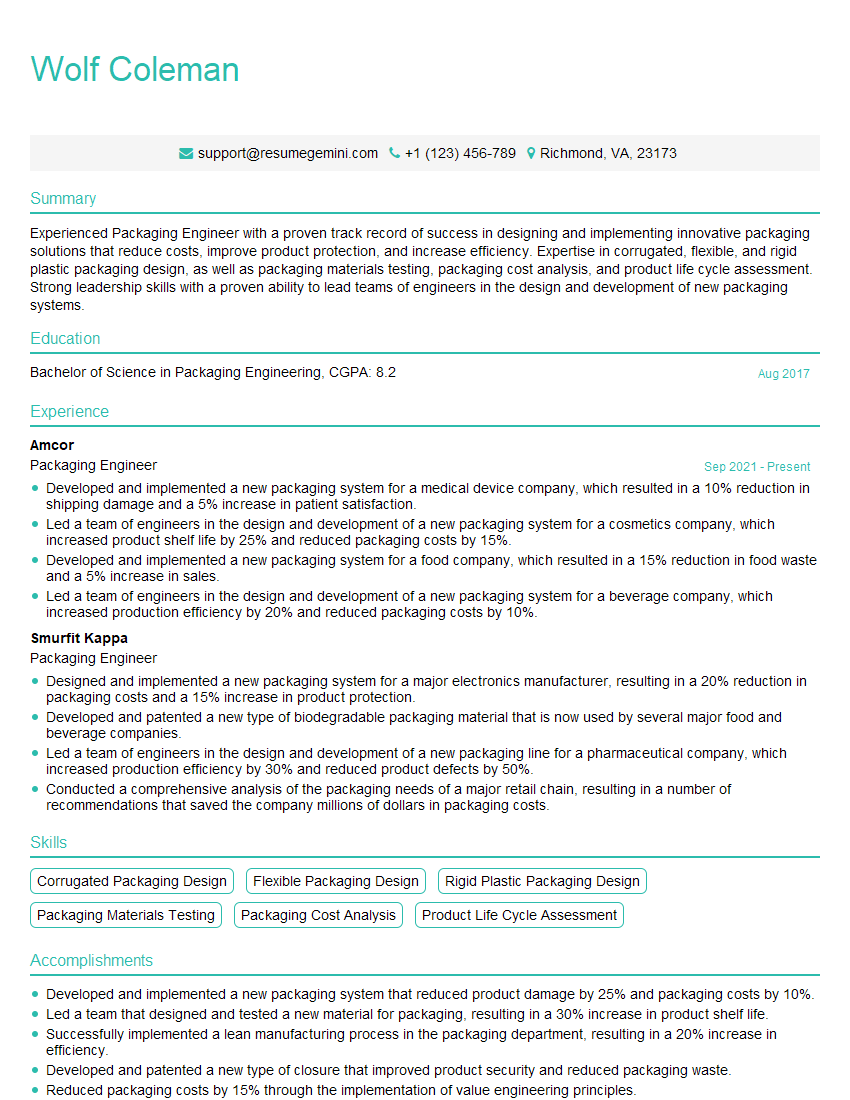
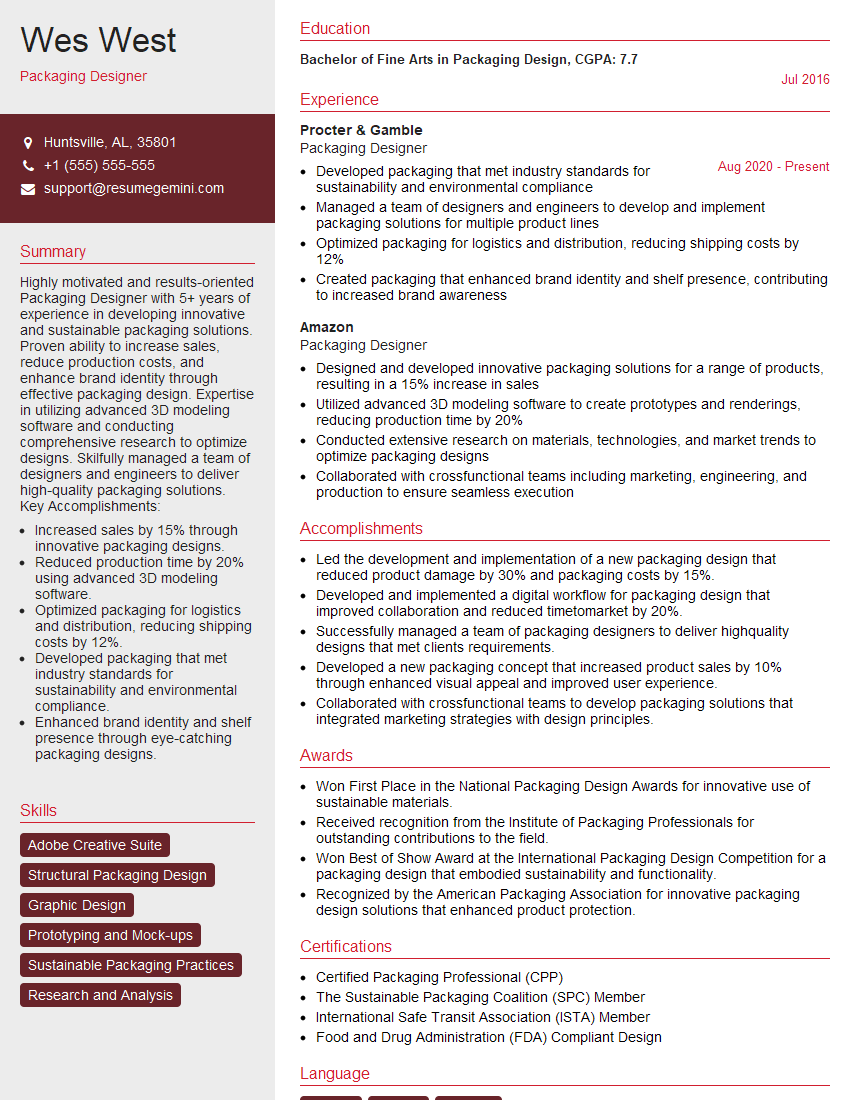
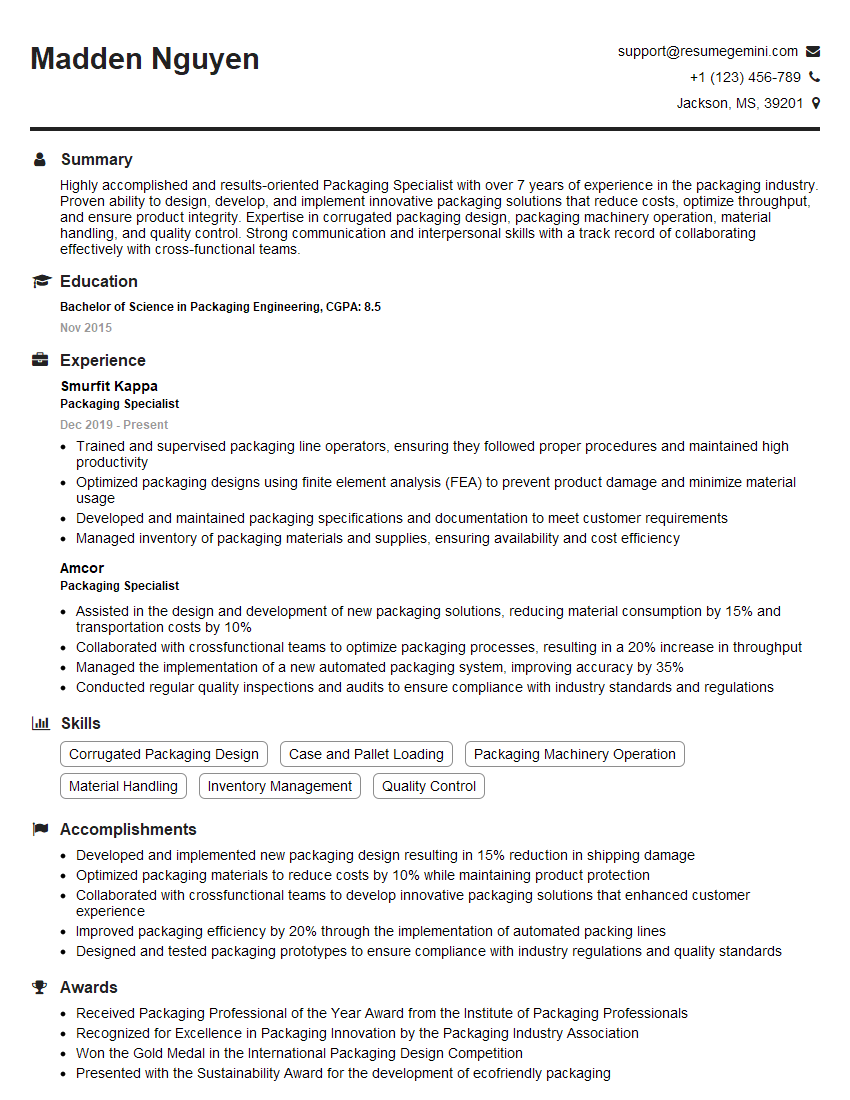
Mastering knowledge of packaging materials and techniques is crucial for career advancement in this dynamic field. A strong understanding of these principles allows you to contribute effectively to product development, supply chain optimization, and sustainability initiatives, leading to increased responsibility and earning potential. To significantly enhance your job prospects, create an ATS-friendly resume that effectively highlights your skills and experience. ResumeGemini is a trusted resource that can help you build a professional and impactful resume tailored to the specific requirements of packaging roles. Examples of resumes tailored to showcasing expertise in Knowledge of packaging materials and techniques are available to further guide you.
Explore more articles
Users Rating of Our Blogs
Share Your Experience
We value your feedback! Please rate our content and share your thoughts (optional).
What Readers Say About Our Blog
Very informative content, great job.
good