The thought of an interview can be nerve-wracking, but the right preparation can make all the difference. Explore this comprehensive guide to Consumer Product Safety interview questions and gain the confidence you need to showcase your abilities and secure the role.
Questions Asked in Consumer Product Safety Interview
Q 1. Explain the role of the Consumer Product Safety Commission (CPSC).
The Consumer Product Safety Commission (CPSC) is an independent federal regulatory agency in the United States that protects the public from unreasonable risks of injury or death associated with consumer products. Think of them as the safety net for everyday items. Their role is multifaceted, encompassing developing and enforcing safety standards, investigating product-related injuries, and recalling dangerous products from the market. They work to prevent injuries before they happen, but when accidents do occur, they investigate to learn from them and prevent future incidents.
- Standard Development: The CPSC works with industry experts to create voluntary and mandatory safety standards for a wide range of consumer products.
- Enforcement: They monitor the market, investigating complaints and conducting testing to ensure products meet safety standards. Manufacturers who violate these standards face fines and legal action.
- Recall Coordination: When a hazardous product is identified, the CPSC works with manufacturers to conduct a recall, notifying consumers and getting the unsafe products off the shelves.
- Public Education: The CPSC provides public education campaigns to inform consumers about product safety risks and how to use products safely.
Q 2. Describe the process of conducting a hazard analysis for a consumer product.
A hazard analysis for a consumer product is a systematic process to identify potential hazards and assess the risks associated with those hazards. It’s like a preemptive strike against potential dangers. We aim to anticipate issues before they become problems, minimizing the risk to consumers. This process typically follows these steps:
- Identify Potential Hazards: This involves brainstorming potential ways the product could cause harm – falls, cuts, burns, electric shocks, choking hazards, etc. Consider the product’s intended use, foreseeable misuse, and the different life stages of potential users (children, elderly, etc.).
- Assess the Severity of Each Hazard: How serious is the potential injury? Is it a minor scrape or a fatal injury? We rate the severity using a standardized scale.
- Assess the Probability of Each Hazard Occurring: How likely is it that this hazard will actually lead to an injury? This considers factors like the frequency of use, user error, product design flaws, and environmental factors.
- Calculate the Risk: This involves combining the severity and probability to quantify the overall risk of each hazard. A high severity combined with a high probability results in an unacceptable risk level.
- Develop Control Measures: Based on the risk assessment, we develop strategies to mitigate the identified hazards. These could involve redesigning the product, adding warnings or instructions, or changing the manufacturing process.
- Document the Analysis: The entire process is thoroughly documented, providing a record of the identified hazards, the risk assessment, and the control measures put in place.
For example, analyzing a children’s toy might reveal a small part that could be easily detached and pose a choking hazard. The risk assessment might show this as a high-severity, high-probability risk, leading to the removal of the small part in the design.
Q 3. What are the key elements of a product safety plan?
A comprehensive product safety plan is the cornerstone of responsible product development and manufacturing. It’s a detailed roadmap outlining the strategies and processes to ensure a product meets all safety requirements. Key elements include:
- Hazard Analysis: A thorough assessment of potential hazards as discussed earlier.
- Testing and Evaluation: A plan for rigorously testing the product to verify it meets or exceeds applicable safety standards. This includes testing materials, construction, electrical safety, and performance.
- Safety Standards Compliance: Clearly identifying and adhering to all relevant safety standards (e.g., ASTM, IEC, ANSI). Documentation of compliance is critical.
- Manufacturing Process Control: Ensuring that the manufacturing process maintains quality and consistency, minimizing the risk of defects that could lead to safety hazards.
- Packaging and Labeling: Using clear and effective packaging and labeling to inform consumers about safe usage and potential hazards.
- Post-Market Surveillance: Monitoring product performance after launch, collecting information on incidents and complaints, and promptly addressing any safety issues identified.
- Recall Plan: A pre-planned procedure to rapidly and effectively recall a product if a significant safety hazard is identified.
Think of it as a detailed insurance policy against safety issues. The more thorough the plan, the better protected the company and the consumer.
Q 4. How do you determine if a product recall is necessary?
The decision to recall a product is serious and should only be made after a thorough investigation and risk assessment. A recall is necessary when a product presents a significant risk of injury or death. We consider these factors:
- Number of Injuries or Complaints: A pattern of injuries or complaints related to a specific product defect indicates a significant risk.
- Severity of Injuries: Serious injuries, especially those resulting in death or permanent disability, strongly indicate a need for a recall.
- Probability of Future Injuries: Even with a small number of injuries, if the probability of future injuries is high due to a design flaw, a recall may be warranted.
- Regulatory Requirements: Regulatory agencies like the CPSC may mandate a recall if they determine a product poses an unreasonable risk.
Each situation is unique, but the underlying principle is to prioritize consumer safety. The cost of a recall is insignificant compared to the potential cost of injuries or lawsuits.
Q 5. What are your strategies for mitigating product safety risks during the design phase?
Mitigating product safety risks during the design phase is the most effective and cost-efficient approach. It’s far cheaper and more efficient to design safety in from the start rather than fix problems later. Here are some key strategies:
- Design for Safety: Incorporate safety considerations at every stage of the design process. For example, using safer materials, designing for strength and durability, and eliminating sharp edges or small parts that could pose hazards.
- Failure Mode and Effects Analysis (FMEA): Systematically identifying potential points of failure and evaluating their impact. This helps prioritize design changes to address the most critical risks.
- Human Factors Engineering: Designing the product to be intuitive and easy to use, reducing the potential for user error.
- Prototyping and Testing: Developing prototypes and testing them rigorously under various conditions to identify and correct potential safety issues early.
- Material Selection: Choosing materials that are safe, durable, and resistant to degradation over time.
For example, designing a children’s toy with rounded edges and no small parts that could be choked on drastically reduces the risk of injury.
Q 6. Explain your experience with different safety testing standards (e.g., ASTM, IEC).
My experience with safety testing standards is extensive. I’m proficient in applying and interpreting various standards from organizations like ASTM International (ASTM) and the International Electrotechnical Commission (IEC). These standards provide the benchmarks for testing the safety and performance of products. For example:
- ASTM: I’ve used ASTM standards extensively for testing the safety of toys, sporting goods, and other consumer products. These standards cover a wide range of tests, from impact resistance and flammability to chemical toxicity and mechanical strength.
Example: ASTM F963 covers the safety of toys. - IEC: IEC standards are crucial for testing the electrical safety of appliances and electronics. I have experience using standards relating to electrical insulation, shock hazards, and electromagnetic compatibility.
Example: IEC 60950-1 covers the safety of information technology equipment.
Understanding these standards is crucial to ensure products meet the minimum safety requirements. Additionally, knowing the limitations of the tests and understanding how to interpret the results is paramount in making informed safety decisions.
Q 7. How do you manage and prioritize multiple safety concerns concurrently?
Managing multiple safety concerns concurrently requires a structured and prioritized approach. I typically use a risk-based prioritization method, focusing resources on the most critical issues first. This involves:
- Risk Assessment: Conducting a risk assessment for each safety concern to determine its severity and probability.
- Prioritization Matrix: Using a matrix to visually prioritize concerns based on their risk level (high, medium, low). High-risk concerns receive immediate attention.
- Resource Allocation: Allocating resources (personnel, time, budget) to address the highest-priority concerns first.
- Communication and Collaboration: Maintaining clear communication across teams and stakeholders to ensure everyone is aware of the priorities and progress.
- Regular Monitoring and Review: Regularly reviewing the risk assessment and prioritization to adapt to changing circumstances and address newly identified concerns.
For example, if a product has both a high-severity fire hazard and a low-severity cosmetic defect, the fire hazard will be addressed first. This ensures we focus on what matters most – consumer safety.
Q 8. Describe your experience with risk assessment methodologies (e.g., FMEA, FTA).
Risk assessment methodologies are crucial for proactively identifying and mitigating potential hazards in consumer products. I have extensive experience using Failure Mode and Effects Analysis (FMEA) and Fault Tree Analysis (FTA). FMEA is a systematic approach to identifying potential failure modes in a product or process and assessing their severity, occurrence, and detectability. It helps prioritize risks and implement corrective actions. For example, in assessing a children’s toy, an FMEA would consider failure modes like small parts detaching (severity: high, occurrence: medium, detectability: low), leading to a choking hazard. FTA, on the other hand, works backward from an undesired event (like a product fire) to identify the underlying causes and their probabilities. This helps determine the most critical failure points to target for preventative measures. I’ve used both methods extensively, often in conjunction, to create comprehensive safety profiles for various products, from power tools to children’s apparel.
In practice, I lead workshops with cross-functional teams (engineering, design, manufacturing) to conduct FMEAs and FTAs. We use structured forms and software to document our findings, assign risk priority numbers (RPNs), and track mitigation efforts. The results directly inform design changes, material selection, and testing protocols, ensuring that potential hazards are addressed before a product reaches the market.
Q 9. How do you ensure compliance with relevant safety regulations (e.g., CPSIA, EN 71)?
Ensuring compliance with safety regulations is paramount. My approach involves a multi-stage process. First, we thoroughly identify all relevant regulations based on the product type and target market. This includes major standards like the Consumer Product Safety Improvement Act (CPSIA) in the US, EN 71 in Europe (covering toys’ chemical safety), and others specific to the product category (e.g., electrical safety standards). We then integrate these requirements into the product development lifecycle from the initial design phase onwards. This ensures that compliance isn’t an afterthought but a fundamental design constraint. We utilize a robust documentation system to meticulously track compliance activities, testing results, and certifications.
For instance, for a children’s toy, we’d ensure compliance with CPSIA’s lead and phthalate limits by specifying lead-free materials and conducting third-party lab testing to verify compliance. Similarly, for European markets, EN 71 testing for mechanical, flammability, and chemical properties would be crucial. Regularly scheduled audits and internal reviews further reinforce our commitment to ongoing compliance. This systematic and proactive approach minimizes risks and avoids costly recalls or legal issues.
Q 10. What is your experience with product certification processes?
I possess significant experience with various product certification processes. This includes working with nationally recognized testing laboratories (NRTL) to obtain safety certifications like UL, ETL, and CE marking. The process typically involves submitting detailed product documentation, undergoing rigorous testing to meet relevant standards, and addressing any identified non-conformances. I understand the importance of maintaining complete and accurate records throughout the certification process to ensure its smooth execution.
For example, securing a CE mark for a product sold within the European Economic Area requires demonstrating compliance with relevant EU directives and harmonized standards. This involves thorough testing and documentation, often involving multiple certifications depending on the product’s functionalities (e.g., electrical safety, electromagnetic compatibility). I’ve successfully managed this process for numerous products, fostering strong relationships with testing labs to streamline certification and ensure timely market entry.
Q 11. How do you communicate safety-related information to different stakeholders?
Communicating safety information effectively is essential for risk reduction. I tailor my communication strategy to the audience. For internal stakeholders (e.g., engineers, manufacturing teams), I use technical reports, data analyses, and risk assessments to communicate specific findings and needed actions. For external stakeholders (e.g., retailers, consumers), I employ clear, concise language, avoiding technical jargon, and utilizing visuals like infographics or videos to convey critical information easily.
In case of a potential safety issue, I develop and disseminate timely alerts and recall notifications through multiple channels, including retailer networks, regulatory agencies, and consumer websites. I ensure these communications are multilingual, complying with local regulations and culturally sensitive, to reach the intended audience effectively. Transparency and prompt communication are key to building and maintaining trust.
Q 12. Describe your experience in managing a product recall.
Managing a product recall is a complex process requiring swift action and precise coordination. My experience includes leading several recalls, encompassing all phases from initial hazard identification to final resolution. The process begins with a thorough investigation to confirm the hazard, its scope, and affected product batches. Then, a comprehensive recall plan is developed, outlining communication strategies, product retrieval mechanisms, and remediation measures (e.g., repair, replacement, refund).
Close collaboration with regulatory agencies (like the CPSC in the US) is crucial to ensure compliance and transparency. We establish clear communication channels with retailers to facilitate efficient product retrieval. Consumer support mechanisms are vital, including dedicated hotlines and online resources to address inquiries and concerns. Post-recall analysis helps identify root causes and implement corrective actions to prevent future incidents. Throughout the process, maintaining detailed records of all actions and communications is essential for regulatory compliance and internal review.
Q 13. What metrics do you use to measure the effectiveness of your product safety program?
Measuring the effectiveness of a product safety program requires a balanced approach using both qualitative and quantitative metrics. Quantitative metrics include the number of reported incidents, the rate of product recalls, and the cost of safety-related activities. These provide a tangible measure of program performance. However, it’s equally important to consider qualitative factors.
We track the effectiveness of training programs, the timeliness of corrective actions, and the overall improvement in safety culture within the organization. Regular internal audits and management reviews help assess the program’s effectiveness, identify areas for improvement, and ensure continuous compliance. Key Performance Indicators (KPIs) are established and regularly monitored to gauge progress towards safety objectives, highlighting trends and potential problems to ensure proactive improvements.
Q 14. How do you identify and address potential safety hazards in the supply chain?
Identifying and addressing safety hazards within the supply chain requires a proactive and collaborative approach. This includes rigorous supplier audits, thorough material inspections, and robust quality control procedures throughout the manufacturing process. We establish clear safety requirements and expectations with our suppliers, ensuring they are aware of our standards and committed to compliance.
Regular communication and collaboration are key to maintaining vigilance and transparency. We utilize a combination of on-site audits, remote inspections, and third-party testing to verify that materials and components meet our safety standards. Early detection of potential issues through proactive monitoring allows for timely intervention, preventing hazards from reaching the final product. This collaborative and preventative strategy strengthens the entire supply chain’s safety performance, ultimately improving consumer product safety.
Q 15. Explain your experience with incident investigation and root cause analysis.
Incident investigation and root cause analysis are crucial for preventing future product safety issues. My approach involves a systematic process, starting with securing the scene (if applicable), gathering evidence (photos, witness statements, product samples), and meticulously documenting everything. I utilize various analytical tools, including the ‘5 Whys’ technique to drill down to the root cause, and fault tree analysis to visually map potential contributing factors. For example, investigating a child’s toy that caused an injury might involve analyzing the materials used, the design flaws, and the manufacturing processes to pinpoint the precise cause of the failure. A comprehensive report is then prepared, detailing findings, root causes, and recommendations for corrective actions.
Consider a scenario where a coffee maker malfunctioned, causing a burn injury. I would meticulously examine the coffee maker itself, noting any visible defects. I’d interview the user to understand the circumstances of the incident. Applying the ‘5 Whys’ – Why did the coffee maker malfunction? Because the heating element overheated. Why did it overheat? Because the thermostat failed. Why did the thermostat fail? Because of a manufacturing defect. Why was there a manufacturing defect? Because of inadequate quality control. This process would lead to targeted corrective actions, such as improved quality control and thermostat design changes.
Career Expert Tips:
- Ace those interviews! Prepare effectively by reviewing the Top 50 Most Common Interview Questions on ResumeGemini.
- Navigate your job search with confidence! Explore a wide range of Career Tips on ResumeGemini. Learn about common challenges and recommendations to overcome them.
- Craft the perfect resume! Master the Art of Resume Writing with ResumeGemini’s guide. Showcase your unique qualifications and achievements effectively.
- Don’t miss out on holiday savings! Build your dream resume with ResumeGemini’s ATS optimized templates.
Q 16. What is your understanding of different types of product hazards (e.g., mechanical, chemical, electrical)?
Product hazards can be broadly categorized into several types. Mechanical hazards include sharp edges, pinch points, moving parts that can cause injuries. Think of a toy with small parts that a child could choke on, or a power tool with exposed moving parts. Chemical hazards involve exposure to toxic substances, irritants, or allergens. Examples include a toy containing lead paint or a cleaning product with harmful chemicals. Electrical hazards involve risks from electric shock, burns, or fire due to faulty wiring, inadequate insulation, or improper grounding. A faulty appliance with exposed wires or a damaged charger poses an electrical hazard. Beyond these, we also have thermal hazards (extreme temperatures causing burns or scalds), biological hazards (bacteria, viruses, etc.), and radiation hazards (exposure to harmful radiation). Understanding these hazard categories is crucial for effective risk assessment and mitigation.
Q 17. How do you develop and implement corrective actions to address safety concerns?
Developing and implementing corrective actions is a multi-step process that starts with identifying the root cause of the safety concern as discussed previously. Once the root cause is determined, corrective actions are designed to eliminate or mitigate the hazard. This could involve redesigning the product, changing the manufacturing process, adding safety features, improving labeling and instructions, or initiating a recall. The effectiveness of corrective actions is then verified through testing and monitoring. For example, if a toy is found to have small parts that are a choking hazard, the corrective actions could involve redesigning the toy to eliminate the small parts or adding a clear warning label. This would be followed by rigorous testing to ensure that the changes effectively address the hazard. Post-implementation monitoring helps to verify the long-term effectiveness of the corrective actions.
Q 18. How familiar are you with the regulatory requirements for children’s products?
I am extremely familiar with the regulatory requirements for children’s products. This includes a thorough understanding of the Consumer Product Safety Improvement Act (CPSIA) in the US and equivalent regulations in other countries. Key aspects of this knowledge include the requirements for lead and phthalate testing, small parts restrictions, flammability standards, and mandatory warnings and labeling. I am adept at navigating the complexities of these regulations, ensuring that products meet all relevant safety standards before they reach the market. My knowledge extends to certifications, such as ASTM (American Society for Testing and Materials) standards and their application to different types of children’s products. For example, I am well-versed in the specific testing procedures and requirements for cribs, car seats, toys, and other products intended for young children. I can identify specific requirements based on age ranges and product types.
Q 19. Explain your experience with safety data sheets (SDS) and their importance.
Safety Data Sheets (SDS) are crucial documents that provide comprehensive information on the hazards of chemical products, including their physical and chemical properties, potential health effects, and emergency procedures. My experience with SDS involves utilizing them to assess the risks associated with specific chemicals used in product manufacturing. I ensure that all hazardous materials are handled according to the recommendations outlined in the SDS. This includes providing appropriate training to employees on the safe handling and use of hazardous materials and implementing proper storage and disposal procedures. Failure to understand and utilize SDS can lead to significant safety risks, including worker injury and environmental contamination. The information provided in an SDS is essential for a safe and compliant manufacturing process. I’m also skilled at using SDS information to prepare safety labels and other compliance documents, adhering to GHS (Globally Harmonized System) standards.
Q 20. How do you stay updated on the latest consumer product safety regulations and standards?
Staying current with the latest regulations and standards is paramount in this field. I accomplish this through several methods. I regularly review publications from regulatory bodies such as the Consumer Product Safety Commission (CPSC) in the US, and equivalent agencies internationally. I subscribe to industry newsletters and journals that cover emerging safety concerns and updates in regulations. I actively participate in industry conferences and workshops to network with other professionals and learn about best practices. Furthermore, I utilize online resources and databases to access the most up-to-date information on safety standards and regulations. Continuous learning is key in this ever-evolving field, allowing me to remain proficient and informed on the latest developments.
Q 21. Describe a time you had to make a difficult decision regarding product safety.
One particularly challenging situation involved a product that passed all initial safety testing but later showed signs of potential failure in real-world use. The product, a children’s swing set, experienced a higher-than-expected rate of reported incidents, although none resulted in severe injury. The decision to initiate a voluntary recall was a difficult one, weighed against the potential cost of the recall and reputational damage. However, putting consumer safety first, we opted for a voluntary recall, initiating a detailed investigation to determine the precise cause of the issue. This involved working closely with our engineering team, suppliers, and regulatory bodies. The thorough investigation and resulting changes to the swing set design prevented further incidents. While the financial implications were substantial, prioritizing consumer safety was the right decision, even at a considerable cost. This experience emphasized the importance of post-market surveillance and proactive risk management.
Q 22. How do you balance safety concerns with product cost and functionality?
Balancing safety, cost, and functionality is a crucial aspect of consumer product safety. It’s essentially a risk assessment and mitigation exercise. We can’t eliminate all risks, but we aim to minimize them to an acceptable level. This involves a careful consideration of potential hazards, their severity, and the probability of occurrence. For example, a children’s toy might require more robust testing and stronger materials to meet safety standards even if it increases the production cost. The process often involves:
Hazard Analysis: Identifying potential hazards, like sharp edges, small parts, or toxic materials.
Risk Assessment: Evaluating the likelihood and severity of each hazard. A high likelihood and high severity hazard warrants more resources towards mitigation.
Mitigation Strategies: Implementing design changes, protective measures, or warnings to reduce risks. This might involve using safer materials, redesigning components, or adding clear and comprehensive safety labels.
Cost-Benefit Analysis: Comparing the cost of implementing safety measures against the potential costs of not implementing them (e.g., product recalls, lawsuits).
Continuous Improvement: Regularly reviewing and updating safety measures based on new information, technologies, and testing results.
For instance, in designing a power tool, we might choose a more expensive, but safer, motor design over a cheaper alternative that presents a higher risk of electric shock. The added cost is justified by the significantly reduced risk of injury.
Q 23. What is your approach to working with external testing laboratories?
Collaborating with external testing laboratories is essential for ensuring unbiased and credible safety evaluations. I select laboratories accredited by relevant bodies (e.g., ISO/IEC 17025) to ensure competence and adherence to international standards. My approach includes:
Clear Communication: Providing detailed specifications, test protocols, and expectations to the laboratory. Ambiguity can lead to inconsistent results.
Sample Selection: Carefully selecting representative samples for testing. This is critical as it reflects the overall product quality and safety.
Oversight and Monitoring: Regularly checking in with the laboratory on progress and ensuring adherence to the agreed-upon timelines and procedures.
Data Review and Validation: Carefully reviewing the test reports, verifying the methodology, and ensuring the data is accurate and reliable. I cross-check results if needed with internal testing data.
Ongoing Relationship Building: Establishing a long-term relationship with competent labs to ensure consistency and efficiency.
For example, when testing a new type of children’s car seat, we would use a lab specializing in crash testing to ensure it meets safety standards in various impact scenarios. The lab report would be rigorously reviewed before the product is launched.
Q 24. Describe your experience with different types of safety testing methods (e.g., destructive, non-destructive).
My experience encompasses a broad range of safety testing methods. Destructive testing involves damaging the product to evaluate its performance under extreme conditions, while non-destructive testing assesses product safety without causing damage. Examples include:
Destructive Testing: This includes drop tests (to evaluate impact resistance), tensile strength tests (to determine the material’s ability to withstand pulling forces), and flammability tests (to assess the product’s resistance to fire).
Non-Destructive Testing: This includes visual inspection (checking for defects), X-ray inspection (detecting internal flaws), and ultrasonic testing (measuring material thickness and detecting cracks).
In a real-world scenario, we might conduct a drop test on a mobile phone to assess its durability against accidental falls. Simultaneously, we’d use X-ray technology to detect any internal manufacturing defects without damaging the device. The combination provides a comprehensive assessment.
Q 25. Explain the importance of proactive versus reactive safety measures.
Proactive safety measures prevent accidents before they happen, while reactive measures address incidents after they occur. Proactive measures are far more cost-effective and efficient. Examples include:
Proactive Measures: Designing products with safety in mind from the beginning, conducting thorough risk assessments, performing rigorous testing, and implementing robust quality control procedures. This might involve utilizing safer materials, incorporating safety features, and designing intuitive interfaces to avoid user errors.
Reactive Measures: Responding to product recalls, investigating safety incidents, issuing safety warnings, and modifying designs after safety issues are detected. These are costly and often damage the brand’s reputation.
Imagine a children’s toy with small parts. A proactive approach would involve designing the toy without small parts or employing robust design that prevents detachment. A reactive approach would involve a recall after children choke on those parts. The proactive approach is clearly superior.
Q 26. How do you handle conflicting information from different sources regarding product safety?
Conflicting information regarding product safety requires a systematic approach. I handle this by:
Source Verification: Evaluating the credibility and reliability of each source. Consider the source’s expertise, objectivity, and track record.
Data Triangulation: Comparing information from multiple independent sources to identify patterns and inconsistencies. Agreement across multiple sources strengthens the validity of the findings.
Expert Consultation: Seeking guidance from independent experts in the field to resolve discrepancies and interpret complex data.
Documentation and Traceability: Maintaining comprehensive records of all data sources, analyses, and decisions made. This ensures transparency and accountability.
For instance, if one lab report shows a product failing a specific test, but another shows it passing, I will investigate the methodologies used by both labs, look for potential biases, and possibly conduct further testing using a third party to resolve the conflict.
Q 27. Describe your experience with safety audits and inspections.
I have extensive experience with safety audits and inspections, both internal and external. These are crucial for ensuring ongoing compliance with safety regulations and identifying potential hazards. My approach includes:
Planning and Preparation: Developing a detailed audit plan outlining the scope, objectives, and methodology. This includes a list of specific areas and processes to be reviewed.
On-site Assessment: Conducting thorough inspections of facilities, equipment, and processes to identify non-conformances and potential hazards.
Documentation Review: Examining relevant documentation (e.g., test reports, maintenance logs, safety procedures) to ensure compliance with safety regulations and internal standards.
Interviewing Personnel: Engaging with employees at all levels to understand their perspectives and identify areas for improvement.
Reporting and Follow-up: Preparing a comprehensive report outlining findings, recommendations, and corrective actions. Following up to ensure that identified issues are addressed promptly.
During an audit, I might discover a missing safety guard on a piece of machinery. The report would clearly document this, highlighting the potential risks and recommending immediate corrective action.
Q 28. How would you handle a situation where a safety violation is discovered?
Discovering a safety violation necessitates a swift and decisive response. My approach would involve:
Immediate Action: Immediately taking steps to mitigate the risk and prevent further harm. This might involve temporarily halting production, issuing a safety alert, or recalling the affected product.
Root Cause Analysis: Conducting a thorough investigation to determine the root cause of the violation. This helps prevent future occurrences.
Corrective Actions: Implementing effective corrective actions to address the root cause and prevent recurrence. This might involve design modifications, process improvements, or employee training.
Regulatory Reporting: Reporting the violation to the appropriate regulatory agencies as required by law. This is crucial for transparency and accountability.
Communication: Communicating transparently with all stakeholders (e.g., customers, employees, regulatory bodies) regarding the violation and the steps taken to address it.
For example, if a toy is found to contain excessive levels of lead, immediate recall would be initiated, the manufacturing process would be thoroughly investigated to identify the source of contamination, and corrective measures would be taken, along with reporting to the relevant consumer product safety commission.
Key Topics to Learn for Your Consumer Product Safety Interview
- Hazard Identification and Risk Assessment: Understand methodologies for identifying potential hazards in consumer products across various life cycles and evaluating associated risks using quantitative and qualitative methods. Consider the role of different testing standards and methodologies.
- Regulatory Compliance: Familiarize yourself with key consumer product safety regulations (e.g., CPSIA, various international standards). Practice applying these regulations to hypothetical scenarios and understanding the implications of non-compliance.
- Product Design and Engineering for Safety: Explore the principles of designing safe products from conception to disposal. This includes understanding materials science, manufacturing processes, and the role of safety engineering in mitigating risks.
- Incident Investigation and Reporting: Learn about effective investigative techniques for determining root causes of product-related incidents. Understand the importance of accurate reporting and data analysis in preventing future incidents.
- Communication and Stakeholder Management: Develop your ability to clearly communicate complex technical information to both technical and non-technical audiences. Practice explaining safety concerns and solutions to diverse stakeholders (e.g., consumers, manufacturers, regulatory bodies).
- Data Analysis and Statistical Methods: Understand how statistical methods are used to analyze product safety data, identify trends, and support risk assessment and decision-making. This may include familiarity with statistical software.
Next Steps: Unlock Your Career Potential in Consumer Product Safety
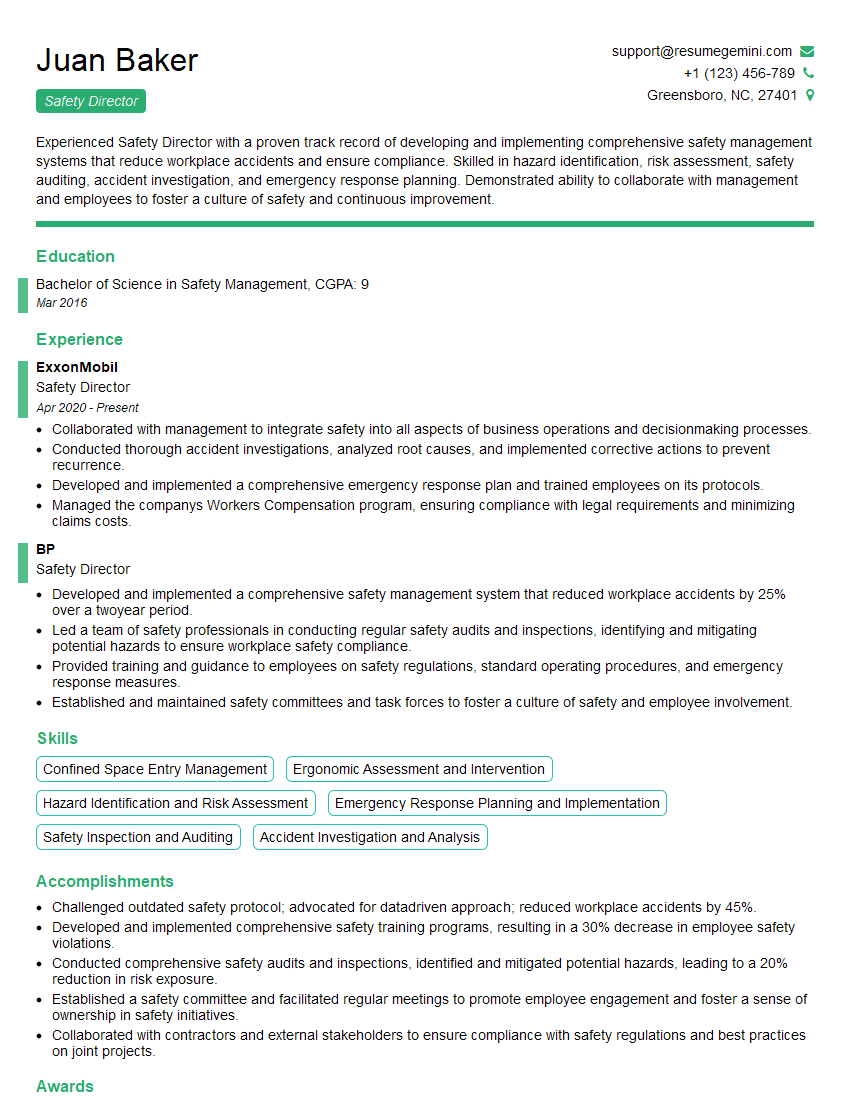
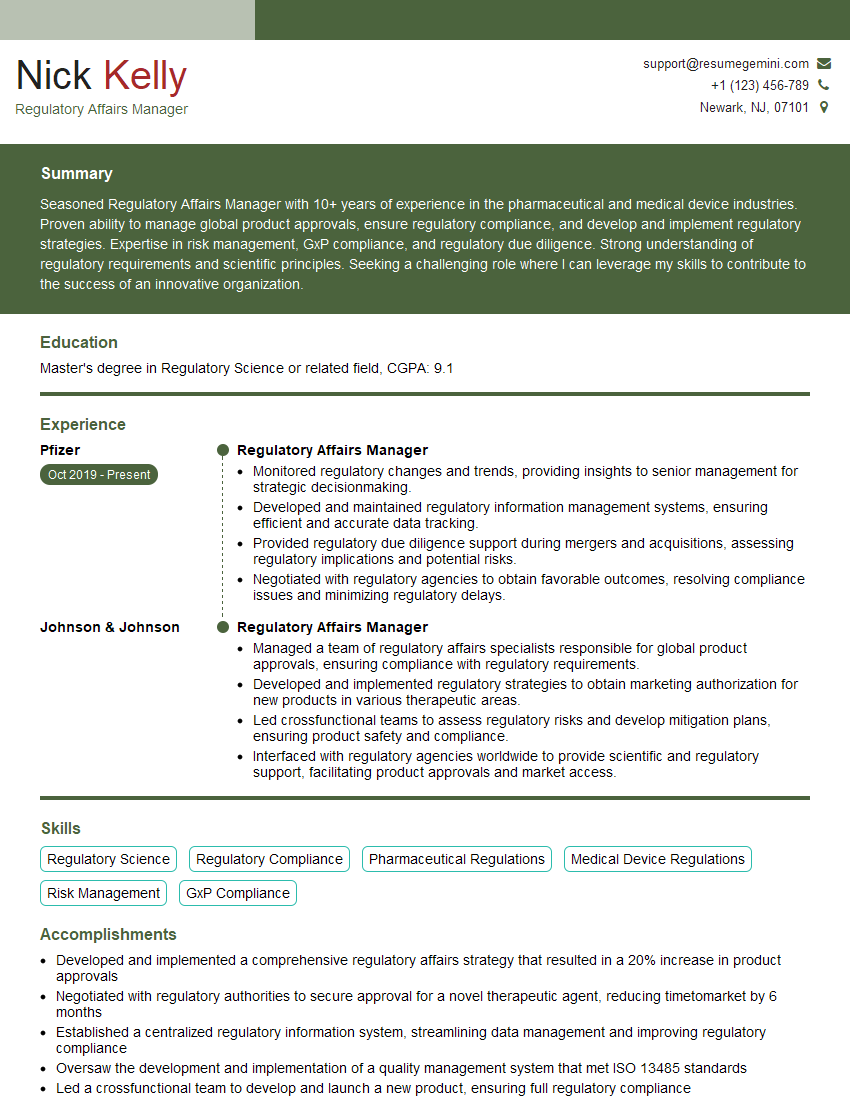
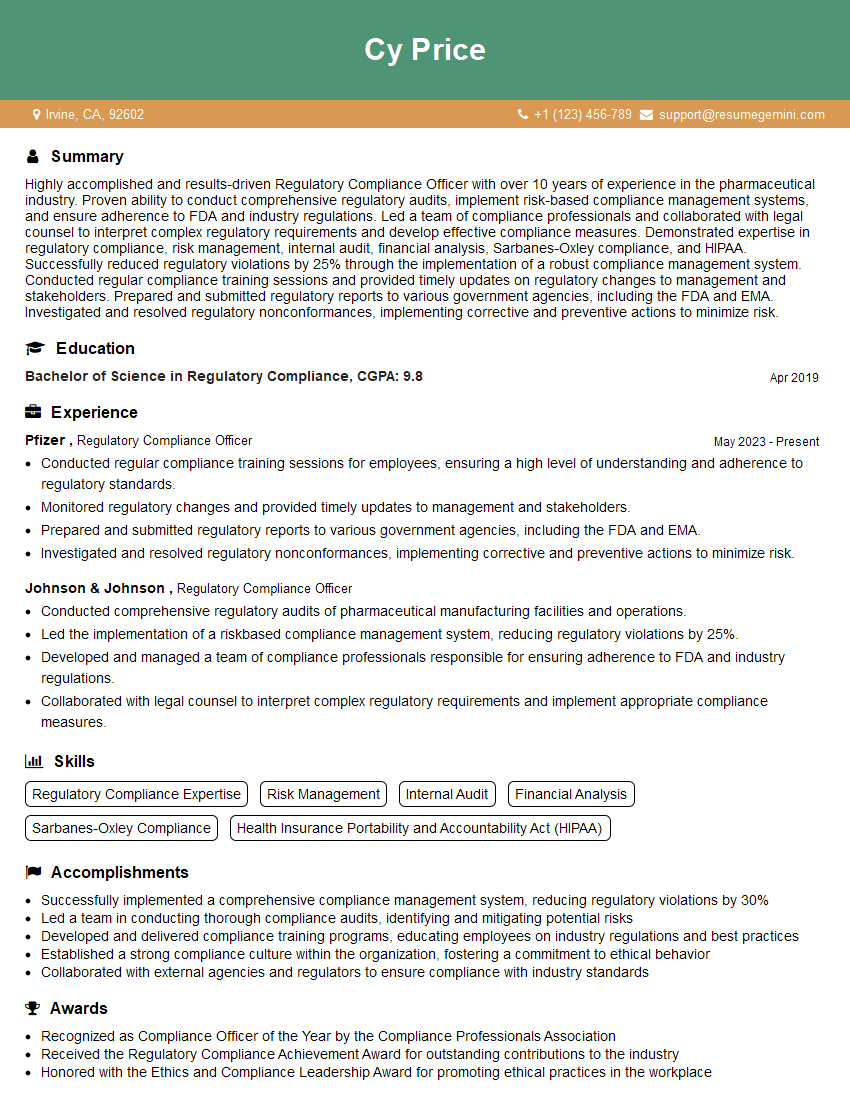
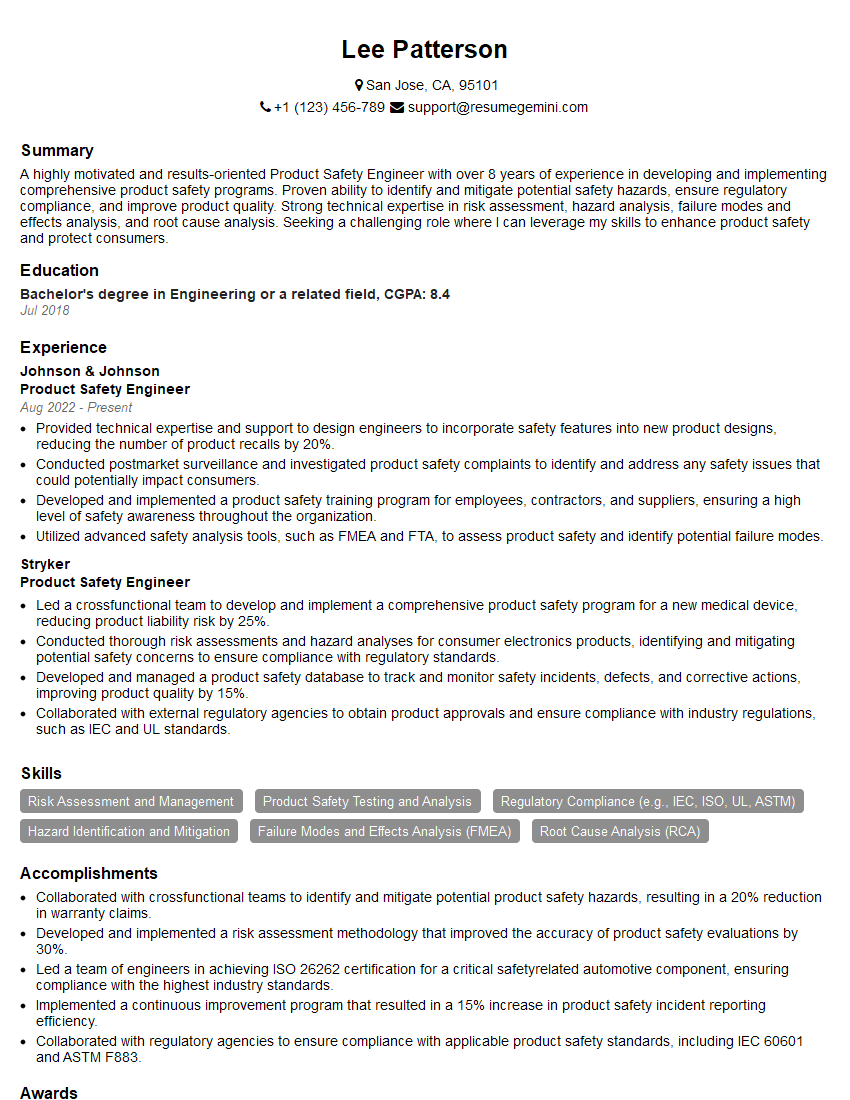
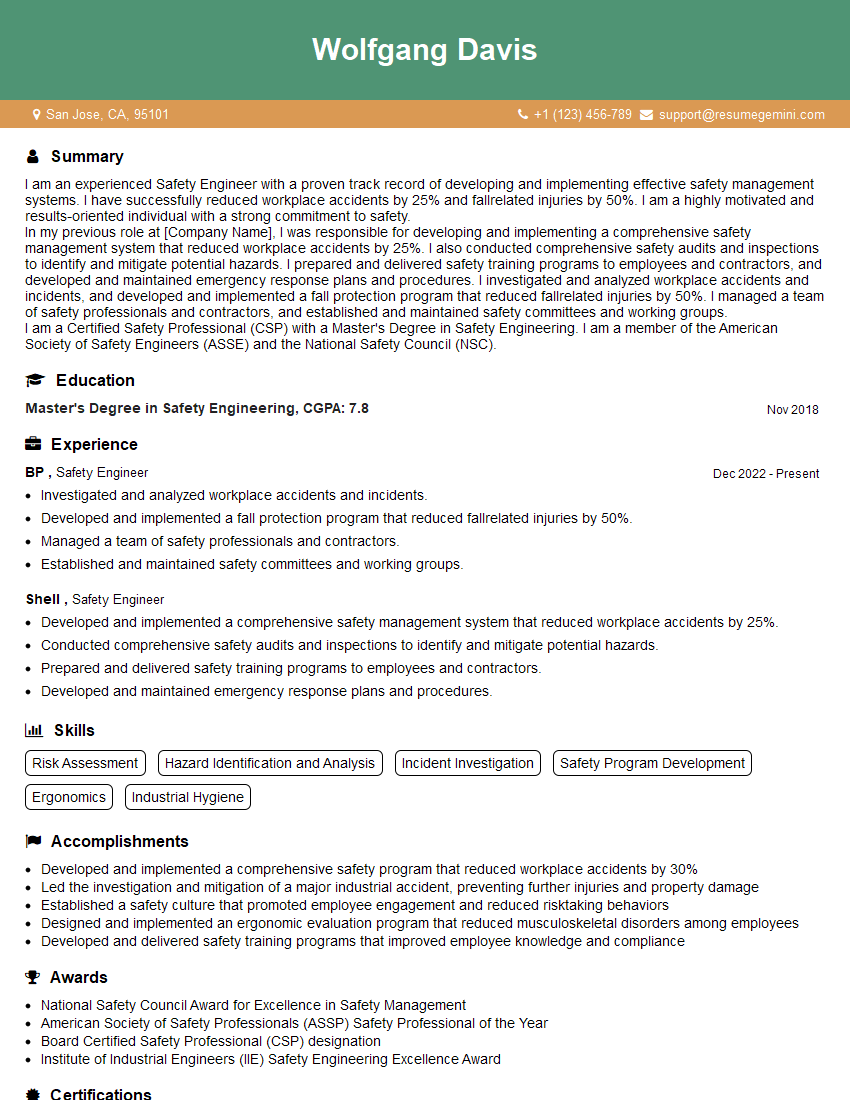
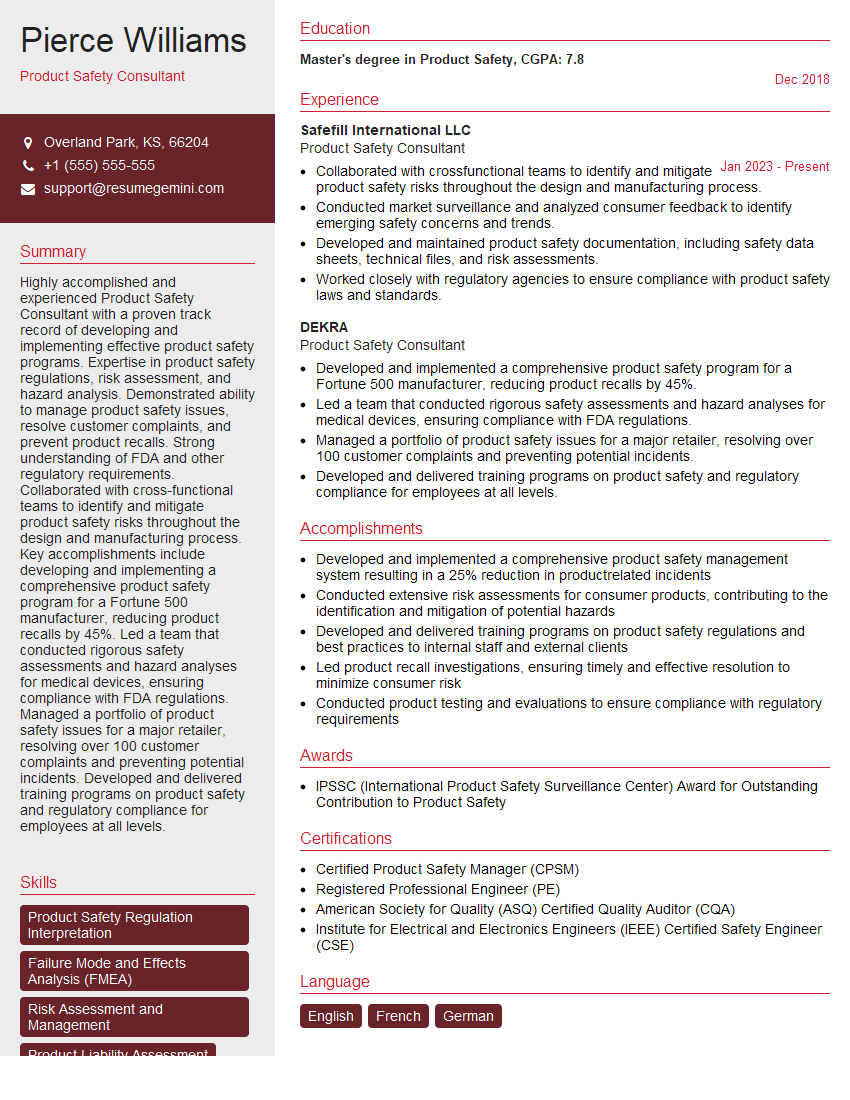
Mastering Consumer Product Safety opens doors to a rewarding career with significant impact on public health and well-being. A strong understanding of these principles is highly valued by employers and demonstrates your commitment to safety and responsibility. To maximize your job prospects, create an ATS-friendly resume that showcases your skills and experience effectively. ResumeGemini is a trusted resource to help you build a professional and compelling resume. We provide examples of resumes tailored to the Consumer Product Safety field to help you get started. Take the next step towards your dream career today!
Explore more articles
Users Rating of Our Blogs
Share Your Experience
We value your feedback! Please rate our content and share your thoughts (optional).
What Readers Say About Our Blog
Very informative content, great job.
good