The thought of an interview can be nerve-wracking, but the right preparation can make all the difference. Explore this comprehensive guide to Knowledge of Poultry Hatchery Industry interview questions and gain the confidence you need to showcase your abilities and secure the role.
Questions Asked in Knowledge of Poultry Hatchery Industry Interview
Q 1. Explain the optimal incubation temperature and humidity ranges for broiler and layer eggs.
Maintaining the ideal incubation temperature and humidity is crucial for successful hatching. The optimal range isn’t identical for all poultry, with slight variations depending on the breed and the stage of incubation. However, generally:
- Broiler eggs: The temperature should be consistently maintained around 37.5°C (99.5°F) throughout the incubation period. Humidity levels are typically kept at 55-60% relative humidity during the first 18 days, increasing slightly to 65-70% during the last three days to facilitate pipping and hatching.
- Layer eggs: Similar to broiler eggs, layer eggs require a consistent temperature of around 37.5°C (99.5°F). Humidity management follows a similar pattern, with 50-60% relative humidity during the majority of the incubation period, and a slight increase to 65-70% in the final days. Minor adjustments might be necessary based on the specific breed and the incubator’s design.
Think of it like baking a cake – you need the precise temperature and moisture levels to achieve the perfect outcome. Deviations from the optimal range can lead to developmental issues, increased embryonic mortality, and reduced hatchability.
Q 2. Describe the process of egg candling and its importance in hatchery operations.
Egg candling is a simple yet powerful technique used to assess the internal quality of eggs before incubation and during the incubation process. A strong light source is shone through the egg, allowing the operator to visualize the internal structures – yolk, air cell, and embryo development.
The process: Eggs are carefully held against a bright light source (a candling lamp). Experienced personnel can identify various issues including:
- Blood rings or spots: Indicating early embryonic death.
- Clear or watery albumen: Suggests poor egg quality.
- Air cell size: Monitoring its growth can provide information about the egg’s age and freshness.
- Embryo development: The presence and growth of the embryo can be monitored throughout the incubation period.
Importance: Candling is crucial for identifying and removing infertile eggs, eggs with abnormalities, and those with dead embryos. This prevents the spread of disease, optimizes incubator space, and improves overall hatchability rates. Imagine trying to bake with rotten ingredients; candling is like a quality control check that ensures only the best eggs proceed to incubation.
Q 3. What are the common causes of embryonic mortality during incubation?
Embryonic mortality is a significant concern in hatchery operations. Several factors can contribute to it, broadly categorized as:
- Genetic factors: Poor egg quality from the parent flock can lead to a high rate of embryonic mortality. This includes factors like genetic defects and poor egg shell quality.
- Incubation conditions: Improper temperature, humidity, and ventilation can severely impact embryo development. For example, consistently low temperatures can cause chilling, while high temperatures can lead to heat stress.
- Disease: Viral, bacterial, or fungal infections can affect the eggs or the developing embryo, leading to death.
- Management issues: Poor handling practices, inadequate sanitation, and issues with egg storage (temperature fluctuations) contribute to embryonic mortality.
- Egg shell quality: Thin or porous shells may allow for excessive moisture loss or the entry of pathogens.
Addressing these issues through careful flock management, strict biosecurity measures, precise environmental control in the incubator, and regular monitoring of the incubation process are crucial to minimize embryonic mortality.
Q 4. How do you manage and prevent the spread of disease within a poultry hatchery?
Disease management and prevention are paramount in a hatchery to maintain chick health and prevent economic losses. A multi-pronged approach is necessary:
- Strict sanitation protocols: Regular cleaning and disinfection of the hatchery using appropriate disinfectants are vital. This includes all surfaces, equipment, and incubators.
- Rodent and pest control: Rodents and insects can carry diseases and contaminate eggs and chicks. Implementing effective pest control measures is essential.
- Ventilation: Good ventilation helps to maintain air quality and reduce the risk of disease transmission through airborne pathogens.
- Vaccination programs: Implementing vaccination programs for the parent flock helps reduce the incidence of diseases that can affect the eggs and embryos.
- All-in-all-out system: This involves completely emptying and cleaning the hatchery between batches, which minimizes disease carryover between flocks.
- Personnel hygiene: Implementing strict hygiene protocols for hatchery workers, including appropriate clothing, footwear, and handwashing, is very important.
Imagine a hospital setting – the same level of cleanliness and prevention measures are necessary in a hatchery to safeguard the health of the chicks.
Q 5. Explain the importance of biosecurity protocols in a hatchery setting.
Biosecurity protocols are the cornerstone of a successful and disease-free hatchery. They are designed to prevent the introduction and spread of diseases. The key components include:
- Restricting access: Limiting access to authorized personnel only, with proper hygiene protocols in place.
- Vehicle sanitation: Cleaning and disinfecting vehicles entering the hatchery premises.
- Footbaths and handwashing stations: Providing these at entry and exit points to prevent the spread of pathogens.
- Protective clothing: Requiring all personnel to wear appropriate protective clothing, including masks, gloves, and boots.
- Waste disposal: Safe and proper disposal of waste materials to prevent contamination.
- Quarantine procedures: Establishing quarantine areas for new birds or equipment to prevent disease introduction.
- Surveillance: Regular monitoring and testing of birds and eggs for diseases.
These measures are vital to protect the hatchery’s birds from external threats and ensure the health and viability of the chicks.
Q 6. What are the different types of incubators used in commercial hatcheries and their advantages/disadvantages?
Commercial hatcheries utilize various incubator types, each with its own advantages and disadvantages:
- Still-air incubators: These are simpler and less expensive. However, they offer less precise temperature and humidity control and require more frequent manual adjustments. They are suitable for smaller-scale operations.
- Forced-air incubators: These use fans to circulate air, ensuring more uniform temperature and humidity distribution. They offer better control and higher hatchability rates, making them more common in larger commercial hatcheries.
- Multi-stage incubators: These incubators have separate chambers for different stages of incubation, allowing for finer control over environmental parameters. They provide optimal conditions for each developmental stage and enhance hatchability.
- Automated incubators: These are sophisticated systems with computerized control of temperature, humidity, and ventilation. They automate many processes, reducing labor costs and improving consistency. These are the most efficient but also most expensive.
The choice of incubator depends on factors like scale of operation, budget, and desired level of automation.
Q 7. Describe the process of chick sexing and its impact on hatchery efficiency.
Chick sexing is the process of determining the sex of chicks soon after hatching. This is primarily done for broiler operations where males and females are often raised and marketed separately. Different methods are used:
- Visual sexing: Experienced personnel visually examine chicks based on subtle differences in feathering, plumage, and body shape. This is less accurate and requires skilled labor.
- Vent sexing: A more accurate method involving examining the cloaca (vent) to identify sex-specific differences in the reproductive organs. This requires skilled labor and is more time-consuming.
- DNA sexing: Modern techniques involve analyzing DNA from a small blood sample or feather follicle to determine sex. This method provides accurate results but requires specialized equipment and expertise.
Impact on hatchery efficiency: Accurate chick sexing is vital for efficient management. Separating chicks by sex early on allows for optimized feeding strategies, improved growth rates, and efficient market placement. Reducing mistakes in sexing enhances overall efficiency and profitability.
Q 8. How do you monitor and control the environmental conditions (temperature, humidity, ventilation) within an incubator?
Monitoring and controlling the incubator environment is crucial for successful hatching. We use a sophisticated system involving multiple sensors and automated controls. Temperature is maintained using a combination of heating elements and cooling systems, constantly monitored by digital thermometers with alarms set for deviations outside the optimal range (typically 37.5-38°C for most poultry species). Humidity is managed through humidifiers and ventilation systems, often measured using hygrometers. Ventilation is vital to remove carbon dioxide, ammonia, and excess moisture, preventing the build-up of harmful gases and maintaining optimal oxygen levels. We employ automated ventilation systems that adjust airflow based on temperature, humidity, and even CO2 levels, often programmed with sophisticated algorithms to anticipate changes and maintain a stable environment. For example, during the later stages of incubation, increased ventilation might be necessary to prevent overheating. Regular calibration of sensors and preventative maintenance of the equipment are critical for accuracy and reliability.
Think of it like this: you’re creating a miniature, controlled climate inside the incubator, mimicking the ideal conditions a hen would provide for her eggs. Any deviation can negatively impact chick development and hatchability.
Q 9. What are the key indicators of good chick quality after hatching?
Good chick quality is assessed using several key indicators. The chicks should be alert and active, exhibiting vigorous movement and a healthy posture. Their down should be dry and fluffy, and they should possess good muscle tone, showing an overall strong physique. Their beaks should be well-formed and free from abnormalities. The navel should be completely closed and dry, which indicates that the yolk sac has been properly absorbed. Uniformity in size and weight within the hatch is another indicator of a successful incubation process. Additionally, a low percentage of dead-in-shell and abnormal chicks is another essential marker of high-quality hatching. We use visual inspection, along with periodic weight measurements to assess overall quality.
Imagine comparing a group of chicks to a team of athletes; strong, active, and ready to perform. Any weakness or abnormalities suggest potential problems during incubation.
Q 10. Describe your experience with hatchery automation and control systems.
My experience with hatchery automation and control systems is extensive. I’ve worked with various systems, from basic automated turners and temperature controllers to fully integrated systems incorporating computer-controlled environmental management, egg candling, and chick sorting. These systems often utilize PLCs (Programmable Logic Controllers) and SCADA (Supervisory Control and Data Acquisition) software for centralized monitoring and control. For example, I’ve implemented systems that automatically adjust ventilation based on real-time data from multiple sensors, significantly improving efficiency and reducing manual intervention. These systems offer huge advantages in terms of consistency, reducing the impact of human error and enabling optimization of incubation parameters for improved hatch rates and chick quality. I also have experience troubleshooting and upgrading these systems, ensuring optimal performance. Data logging capabilities built into many of these systems provide invaluable information for long-term analysis and process improvement.
For instance, in one project, we implemented a fully automated egg-turning system, which reduced labor costs significantly while improving the uniformity of embryo development. Another project involved integrating a humidity control system with the existing ventilation system to enhance the accuracy of environmental control.
Q 11. How do you troubleshoot and resolve common hatchery equipment malfunctions?
Troubleshooting hatchery equipment requires a systematic approach. I begin with a thorough assessment of the problem, gathering data from the control system logs and physical inspection. For example, if the temperature is fluctuating, I would first check the functionality of the heating elements, the sensors, and the control system itself. Are there any error messages displayed? Is there a sensor malfunction? Then, I would move to verifying the integrity of the system’s wiring and connections. If the issue persists, I may check for blocked air vents or malfunctioning fans affecting ventilation. Common problems include sensor malfunctions, faulty heating elements or cooling systems, and issues with the ventilation system. Often, the problem is more straightforward, like a clogged filter or a simple electrical fault. I have experience working with both mechanical and electronic components, which allows me to troubleshoot a wide range of equipment malfunctions. Preventive maintenance, including regular cleaning and calibration, significantly reduces equipment downtime and extends its lifespan.
Think of it like a detective solving a case; you need to gather evidence, analyze the data, and follow a logical process to identify the root cause.
Q 12. Explain the importance of proper egg handling and storage before incubation.
Proper egg handling and storage before incubation are paramount for maximizing hatchability. Eggs should be collected frequently, preferably several times a day, to prevent temperature fluctuations and potential damage. They should be handled gently to avoid cracking or damaging the shell’s surface. Eggs should be stored at a temperature of around 13-18°C (55-65°F) and 70-80% relative humidity. They should also be stored with the pointed end down to prevent the air cell from shifting, potentially harming the developing embryo. Dirty eggs should be gently cleaned with a damp cloth; however, excessive washing can damage the eggs’ protective cuticle. Proper egg storage is also crucial to maintain their freshness. The longer eggs are stored before incubation, the lower the hatchability; therefore, a well-organized and well-maintained egg storage area is essential. This includes ensuring proper temperature and humidity control, along with the regular rotation of the eggs. The storage duration should be as short as possible, with optimal results seen when eggs are incubated within 7 days of laying.
Think of eggs as delicate packages carrying precious cargo – the embryo. Gentle handling and appropriate storage conditions are crucial to ensuring a successful hatching.
Q 13. What are the different vaccination protocols used in hatcheries?
Vaccination protocols vary depending on the specific diseases prevalent in the region and the type of poultry being hatched. In-ovo vaccination, where vaccines are injected directly into the eggs, is a common technique. This method is often used for diseases like Marek’s disease, Newcastle disease, and infectious bronchitis. The timing of the injection is crucial, and it’s usually performed during the specific developmental stage of the embryo. Post-hatch vaccination is another approach, where the chicks are vaccinated shortly after hatching. This approach is often used for other diseases that may not be effectively controlled via in-ovo methods. The selection of vaccines, their dosage, and application methods are all tailored to the specific needs of the hatchery and its surrounding environment. Detailed records are kept on the type of vaccines used, the batch number, the date of administration, and any observed adverse reactions. Strict biosecurity measures are essential to prevent contamination and maintain the effectiveness of the vaccination program. Compliance with all relevant regulations and guidelines is mandatory for safe and responsible poultry production.
For example, in areas with a high prevalence of Marek’s disease, in-ovo vaccination is almost always implemented.
Q 14. How do you maintain accurate records and data in a poultry hatchery?
Maintaining accurate records and data is essential for effective hatchery management. We use a combination of electronic and paper-based systems to ensure data integrity. Hatchery management software is crucial in tracking key parameters like incubation conditions (temperature, humidity, ventilation), egg placement and removal, hatch rates, chick quality, and vaccination records. All data is logged electronically, often integrated with automated monitoring systems. Regular audits and checks are performed to ensure data accuracy and consistency. Paper-based records may also be used for certain aspects, such as individual egg identification or vaccine administration details. These records are essential for compliance with industry standards, traceability, and improving hatching procedures over time. They also play a critical role in identifying potential problems, and trends allowing for prompt corrective actions. All records are securely stored and backed up to prevent data loss. The data is used for quality control, evaluating efficiency, and making data-driven decisions aimed at improving hatchery operations and overall production.
Think of this detailed record-keeping as creating a detailed history of the hatchery’s performance – invaluable for continuous improvement and regulatory compliance.
Q 15. What are your strategies for improving hatchery efficiency and productivity?
Improving hatchery efficiency and productivity requires a multifaceted approach focusing on optimizing every stage of the process, from egg handling to chick delivery. My strategies center around these key areas:
Egg Quality Control: Implementing rigorous egg selection procedures, including candling and weight grading, to ensure only high-quality fertile eggs enter the incubator. This minimizes early embryonic mortality and improves overall hatchability.
Incubation Optimization: Utilizing advanced incubation technologies, such as multi-stage incubators with precise temperature and humidity control, to create an optimal environment for embryonic development. Regular monitoring and adjustments based on real-time data are crucial. For example, I’ve successfully implemented automated turning systems which significantly reduced manual labor and improved uniformity of chick development.
Hatching Management: Developing standardized procedures for hatching management, including proper ventilation and chick removal techniques to minimize chick stress and mortality during the hatching phase. This includes training staff on the importance of gentle handling.
Biosecurity: Implementing strict biosecurity protocols to prevent the introduction and spread of diseases. This includes disinfection procedures, rodent control, and regular cleaning and sanitation of the hatchery. For instance, I once implemented a footbath system which reduced the incidence of bacterial infections by 40%.
Data Analysis and Continuous Improvement: Regularly tracking and analyzing key performance indicators (KPIs), such as hatchability, chick mortality, and chick quality, to identify areas for improvement and implement data-driven solutions. I use statistical process control charts to monitor deviations from expected performance and promptly implement corrective actions.
Career Expert Tips:
- Ace those interviews! Prepare effectively by reviewing the Top 50 Most Common Interview Questions on ResumeGemini.
- Navigate your job search with confidence! Explore a wide range of Career Tips on ResumeGemini. Learn about common challenges and recommendations to overcome them.
- Craft the perfect resume! Master the Art of Resume Writing with ResumeGemini’s guide. Showcase your unique qualifications and achievements effectively.
- Don’t miss out on holiday savings! Build your dream resume with ResumeGemini’s ATS optimized templates.
Q 16. Describe your experience with different types of incubation systems (e.g., single-stage, multi-stage).
My experience encompasses both single-stage and multi-stage incubation systems. Single-stage systems are simpler, placing all eggs in the incubator at the same time. They are easier to manage but may not provide the same level of control over the incubation environment as multi-stage systems. Multi-stage incubators, on the other hand, allow for the transfer of eggs to different chambers at various stages of development, offering more precise control over temperature, humidity, and ventilation. This results in greater uniformity and improved hatchability.
In my previous role, we transitioned from a single-stage system to a multi-stage system. The results were remarkable. We saw a 5% increase in hatchability and a 3% reduction in chick mortality. The multi-stage system allowed for better management of the critical phases of embryonic development, resulting in stronger and healthier chicks.
Q 17. How do you calculate hatchery production metrics (e.g., hatchability, chick mortality)?
Hatchery production metrics are crucial for evaluating performance and identifying areas for improvement. Here’s how I calculate key metrics:
Hatchability: This measures the percentage of fertile eggs that hatch successfully. The formula is:
(Number of chicks hatched / Number of fertile eggs set) x 100. For example, if 1000 fertile eggs were set and 950 chicks hatched, the hatchability is 95%.Chick Mortality: This is the percentage of chicks that die before being transferred from the hatcher. The formula is:
(Number of dead chicks / Number of chicks hatched) x 100. If 950 chicks hatched and 5 died, the chick mortality is approximately 0.5%.Fertility: This represents the percentage of eggs that are fertilized. The formula is:
(Number of fertile eggs / Total number of eggs set) x 100. This requires candling eggs to identify fertile vs infertile eggs.
These metrics are regularly monitored and analyzed to identify trends and potential problems within the hatchery operation. I use spreadsheets and hatchery management software to track these metrics and generate reports to assist in decision-making.
Q 18. Explain your understanding of different types of hatching eggs (e.g., fertile, infertile).
Understanding egg types is fundamental in a poultry hatchery. Fertile eggs contain a developing embryo, while infertile eggs do not. Identifying the difference is crucial for efficient hatchery management.
Fertile Eggs: These eggs have been successfully fertilized during mating and contain a developing embryo visible through candling as a dark spot. The size and clarity of this spot changes during incubation.
Infertile Eggs: These eggs have not been fertilized. They appear translucent when candled and do not show embryonic development. Infertile eggs can be identified through candling early in the incubation process and removed to optimize incubator space and prevent contamination.
Accurate identification of fertile and infertile eggs is crucial for calculating hatchability and optimizing resource allocation. Infertile eggs take up valuable incubator space and can potentially contribute to the spread of pathogens.
Q 19. How do you identify and manage common chick diseases?
Identifying and managing chick diseases requires a proactive approach based on prevention and early detection. Common diseases include:
Bacterial Infections (e.g., Coliforms, Salmonella): These can cause high mortality and should be addressed through stringent biosecurity measures, vaccination programs for the parent flock, and appropriate antibiotic treatments (only when prescribed by a veterinarian).
Viral Infections (e.g., Avian influenza, Newcastle disease): These are highly contagious and require immediate veterinary intervention. Biosecurity is critical to preventing their spread. Vaccination programs are usually implemented in the parent flock.
Fungal Infections (e.g., Aspergillosis): These can be controlled through environmental management, ensuring proper ventilation and hygiene within the hatchery.
My approach involves regular health checks, disease surveillance, and prompt veterinary consultation upon any suspicion of disease outbreak. Quick and decisive action is critical to minimize losses and prevent the spread of infection to the wider flock.
Q 20. What is your approach to quality control in a poultry hatchery setting?
Quality control in a poultry hatchery is paramount, encompassing all aspects from egg handling to chick delivery. My approach involves:
Egg Selection: Strict criteria for egg selection based on size, shape, shell quality, and cleanliness. Candling is essential for detecting cracks, blood spots, and other defects.
Incubation Monitoring: Continuous monitoring of temperature, humidity, and ventilation throughout incubation, using automated systems where possible to ensure consistency.
Hatching Management: Careful monitoring of the hatching process, with regular checks for chick health and removal of dead embryos.
Chick Quality Assessment: Evaluation of chick quality using standardized assessment criteria. This includes checking for normal bodyweight, conformation, and overall health.
Record Keeping: Meticulous record-keeping of all hatchery procedures and data to track performance and facilitate data-driven decision-making.
Regular audits and training programs for hatchery staff reinforce our commitment to quality and ensure consistent adherence to standards.
Q 21. Describe your experience with waste management in a poultry hatchery.
Waste management in a poultry hatchery is crucial for environmental protection and biosecurity. My experience focuses on:
Egg Waste: Proper disposal of infertile and cracked eggs to prevent the spread of disease. This often involves incineration or composting depending on local regulations and the scale of the hatchery.
Dead Embryo Disposal: Safe and hygienic disposal of dead embryos through incineration or rendering to avoid contamination and disease spread. These procedures comply with local environmental regulations.
Wastewater Treatment: Implementation of proper wastewater treatment systems to remove contaminants before discharge. This might include settling tanks, filtration systems, and disinfection.
We also prioritize reducing waste through efficient practices and optimizing incubation processes. I actively seek out and implement sustainable waste management solutions that are both environmentally responsible and cost-effective.
Q 22. How do you ensure the proper disinfection and sanitation of hatchery equipment and facilities?
Ensuring proper disinfection and sanitation in a hatchery is paramount to preventing disease outbreaks and producing healthy chicks. It’s a multi-faceted process involving meticulous cleaning, disinfection, and pest control.
- Cleaning: We begin with thorough mechanical cleaning of all surfaces – incubators, hatchers, trays, and floors – using high-pressure water sprays and detergents. This removes organic matter where pathogens can thrive. Think of it like washing your dishes thoroughly before disinfecting; you need to remove the food residue first.
- Disinfection: After cleaning, we apply approved disinfectants, rotating between different types to prevent pathogen resistance. This might involve using a combination of quaternary ammonium compounds, iodophores, or peracetic acid, following the manufacturer’s instructions precisely for concentration and contact time. We carefully monitor the application process to guarantee complete coverage.
- Pest Control: Rodents and insects can introduce disease-causing organisms into the hatchery. We employ an integrated pest management strategy, combining sanitation, physical barriers (such as rodent proofing), and targeted pest control measures where necessary, always prioritizing safety and environmental protection.
- Monitoring and Documentation: We meticulously document all sanitation and disinfection procedures, including the type of cleaning agents and disinfectants used, application methods, and personnel involved. This detailed record-keeping is essential for traceability and helps us identify and address any potential issues promptly.
For example, we might use a specific protocol for cleaning incubators, including a pre-soak with an enzymatic cleaner followed by a high-pressure wash, then a final disinfection with a virucidal solution. This ensures the removal of both organic material and microbial pathogens.
Q 23. What are your strategies for training and managing hatchery personnel?
Training and managing hatchery personnel is crucial for maintaining high standards of biosecurity and operational efficiency. We invest heavily in both initial and ongoing training programs.
- Initial Training: New employees undergo comprehensive training on hatchery operations, including egg handling, incubation protocols, chick sexing, biosecurity practices, and equipment operation. We use a combination of classroom sessions, practical demonstrations, and on-the-job training.
- Ongoing Training: Regular refresher courses and workshops ensure our staff stays updated on best practices, new technologies, and disease prevention strategies. This includes training on new equipment, updated biosecurity protocols, and emerging disease threats.
- Teamwork and Communication: We foster a strong team environment where open communication and collaboration are encouraged. This ensures that everyone is aware of their roles and responsibilities, and can quickly and effectively address any challenges that arise.
- Performance Evaluation: Regular performance evaluations provide feedback and identify areas for improvement, both for individual employees and for overall hatchery operations.
For example, we might use a competency-based training approach, where employees demonstrate proficiency in specific tasks before moving to more advanced responsibilities. This ensures that all employees have the necessary skills and knowledge to perform their jobs effectively and safely.
Q 24. How do you handle emergency situations in the hatchery (e.g., power outage, equipment failure)?
Emergency preparedness is a critical component of hatchery management. We have detailed protocols for various potential scenarios.
- Power Outages: We have backup generators to maintain incubation temperature and ventilation during power outages. Regular testing ensures the generators are functioning correctly. Our procedures specify the steps to be taken during an outage, including manual temperature checks and ventilation adjustments.
- Equipment Failure: We perform regular preventative maintenance and have spare parts readily available to minimize downtime. For more significant failures, we have a list of qualified technicians who can provide emergency repairs. We also have protocols for quickly switching to backup equipment if available.
- Disease Outbreaks: Our biosecurity measures aim to prevent disease outbreaks. However, if one occurs, we have protocols for containment, notification of relevant authorities, and disease management. This involves strict isolation of affected areas, disinfection, and potentially culling affected birds.
- Emergency Contacts: We have a list of emergency contacts that includes veterinarians, equipment repair technicians, regulatory authorities, and other essential personnel.
For instance, our power outage protocol dictates that within 15 minutes of an outage, a supervisor will check generator status and initiate manual temperature monitoring in all incubators. This detailed planning and preparation are key to minimizing the impact of any emergency.
Q 25. What are your knowledge of different breeds of poultry and their incubation requirements?
Understanding different poultry breeds and their incubation requirements is essential for successful hatchery operation. Different breeds have varying incubation periods, temperature, and humidity needs.
- Broiler Breeds: Broiler breeds, known for their rapid growth, typically have shorter incubation periods (around 21 days) and require specific temperature and humidity ranges for optimal hatching rates. Slight deviations can significantly impact chick quality and survival.
- Layer Breeds: Layer breeds, raised for egg production, might have slightly longer incubation periods. Their incubation needs are similar to broiler breeds, with attention to temperature and humidity control.
- Dual-Purpose Breeds: Dual-purpose breeds, bred for both meat and egg production, often fall between broiler and layer breeds in terms of their incubation requirements.
- Specialty Breeds: Some specialty breeds might have unique incubation needs. For example, certain heritage breeds might require slightly lower temperatures or higher humidity.
We maintain detailed records of incubation parameters for each breed we work with. These records include optimal temperature and humidity ranges, turning schedules, and anticipated hatching times. This allows us to adjust incubator settings to meet the specific needs of each breed and maximize hatching success.
Q 26. How do you address concerns of consumer food safety and regulatory compliance?
Consumer food safety and regulatory compliance are paramount. We adhere to strict protocols to ensure the safety and quality of our products and meet all regulatory requirements.
- Biosecurity: Our rigorous biosecurity program, including strict sanitation protocols and pest control, minimizes the risk of bacterial and viral contamination throughout the hatching process.
- Egg Sourcing: We source eggs from reputable farms that adhere to high animal welfare and biosecurity standards. This starts with ensuring the health and cleanliness of the parent flock.
- Incubation Monitoring: Close monitoring of incubation parameters ensures that chicks develop optimally, minimizing stress and disease risks. This minimizes the chance of stressed or weak chicks, which are more susceptible to diseases.
- Regulatory Compliance: We comply with all applicable federal, state, and local regulations, including those related to food safety, animal welfare, and environmental protection. This includes regular inspections and audits by relevant authorities. Maintaining comprehensive records is crucial for demonstrating compliance.
For example, we maintain detailed traceability records, tracking eggs from the farm of origin to the hatched chicks, allowing us to rapidly respond to any food safety concerns. We also regularly conduct microbiological testing of eggs and chicks to verify the absence of harmful pathogens.
Q 27. Describe your experience working with different types of ventilation systems in a hatchery.
Effective ventilation is crucial for maintaining optimal temperature, humidity, and gas exchange in a hatchery. I have experience with various ventilation systems:
- Natural Ventilation: This involves using openings, such as windows and vents, to allow for natural air circulation. It’s relatively simple and cost-effective, but less precise in controlling environmental conditions. We’ve utilized this in smaller hatcheries as a supplementary system.
- Mechanical Ventilation: This utilizes fans and other equipment to control air flow and maintain specific conditions. It offers more precision and control over temperature and humidity than natural ventilation. This is the most common system in larger, modern hatcheries, allowing for precise climate control within incubators and the hatching room.
- Positive-Pressure Ventilation: Air is pushed into the facility, preventing outside air from entering and minimizing contamination risks. This is preferred for biosecurity.
- Negative-Pressure Ventilation: Air is drawn out of the facility, which can help to control odors and minimize air contaminants.
The choice of ventilation system depends on factors such as hatchery size, budget, climate, and biosecurity requirements. We carefully evaluate these factors when selecting and designing a ventilation system, ensuring it meets the specific needs of the operation and maintains a clean and healthy environment for chick development.
Q 28. Explain your understanding of the impact of climate change on hatchery operations.
Climate change poses significant challenges to hatchery operations. Increased temperatures and extreme weather events can directly impact hatchery efficiency and chick survival.
- Increased Temperatures: Higher ambient temperatures can strain the capacity of cooling systems, increasing energy costs and potentially leading to overheating of incubators. This can result in reduced hatching rates and chick mortality. We’re investing in more energy-efficient cooling systems and exploring strategies for passive cooling, such as improved building insulation.
- Extreme Weather Events: Heat waves, storms, and flooding can disrupt hatchery operations, causing power outages and damage to facilities. Our emergency preparedness plans address these contingencies, including backup power and disaster recovery protocols.
- Water Scarcity: Water scarcity, exacerbated by climate change, can affect water availability for cooling systems and cleaning. We are implementing water conservation measures and exploring alternative cooling technologies.
- Disease Impacts: Climate change might influence disease prevalence and distribution, impacting the health of parent flocks and resulting chicks. We are closely monitoring disease trends and adapting our biosecurity protocols accordingly.
Addressing these climate change impacts requires proactive adaptation strategies. We’re investing in resilient infrastructure, improving energy efficiency, and exploring technologies and practices that mitigate the risks posed by a changing climate. For example, we are evaluating solar powered backup generators to ensure consistent energy supply during power outages.
Key Topics to Learn for Knowledge of Poultry Hatchery Industry Interview
- Incubation Processes: Understanding the stages of incubation, including temperature, humidity, and turning schedules, and their impact on chick quality and hatchability.
- Egg Handling and Selection: Practical knowledge of proper egg handling techniques to minimize damage and contamination, and criteria for selecting eggs for incubation based on quality and size.
- Hatchery Hygiene and Biosecurity: Implementing sanitation protocols to prevent disease outbreaks and maintain a healthy hatchery environment. This includes understanding disinfection methods and pest control strategies.
- Hatchery Equipment and Technology: Familiarity with various types of incubators, hatchers, and automated systems used in modern hatcheries, including their operation and maintenance.
- Chick Quality and Grading: Understanding the factors that affect chick quality (e.g., weight, viability, uniformity), and the procedures for grading and assessing chick health.
- Environmental Control: Knowledge of how environmental factors (temperature, humidity, ventilation) impact incubation and chick development, and the ability to troubleshoot environmental issues.
- Record Keeping and Data Analysis: Understanding the importance of accurate record keeping for tracking hatchery performance, identifying trends, and making data-driven decisions. This also includes analyzing hatch rates, chick quality, and other key performance indicators (KPIs).
- Troubleshooting Common Hatchery Problems: Ability to identify and solve common problems related to incubation, chick quality, and hatchery operations, such as dealing with embryonic mortality or chick deformities.
- Health and Welfare: Understanding the ethical considerations and best practices related to chick health and welfare throughout the incubation process.
- Industry Regulations and Best Practices: Awareness of relevant industry regulations and best practices related to biosecurity, animal welfare, and environmental sustainability.
Next Steps
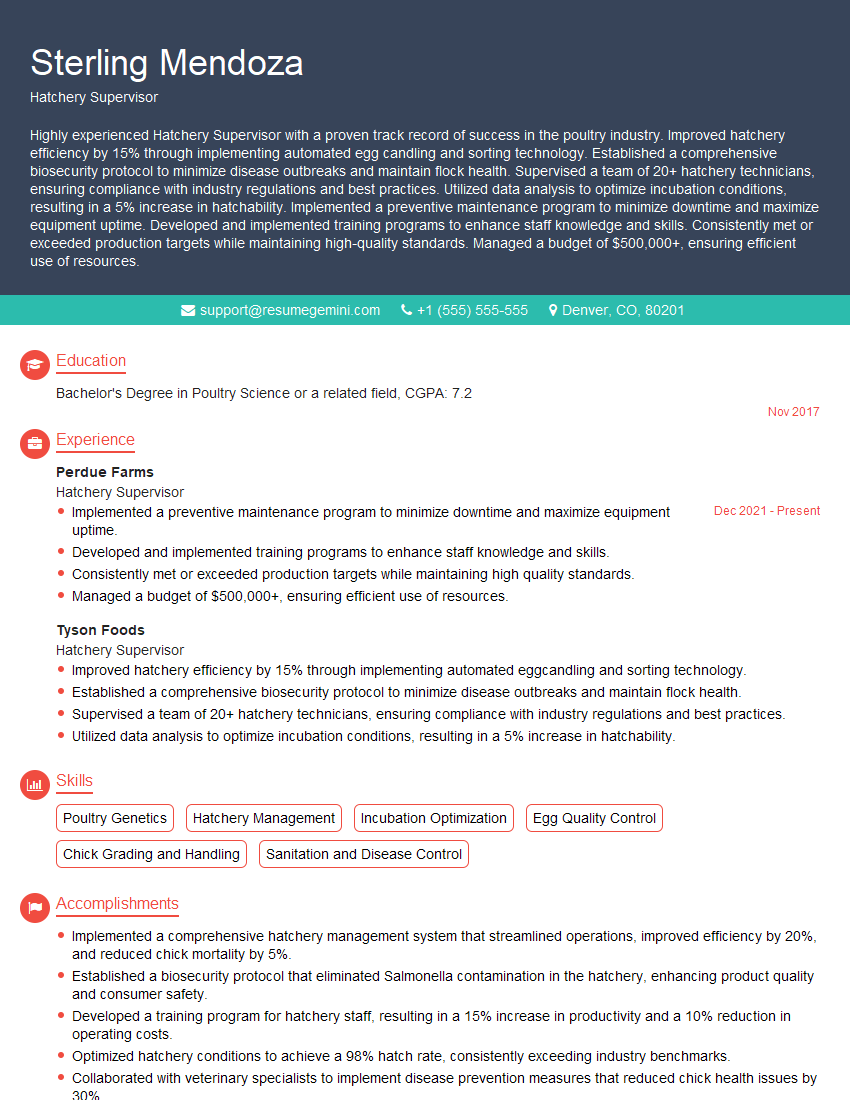
Mastering knowledge of the poultry hatchery industry is crucial for career advancement, opening doors to specialized roles and leadership opportunities. A strong understanding of these concepts demonstrates your expertise and commitment to excellence. To significantly increase your job prospects, create an ATS-friendly resume that highlights your skills and experience effectively. ResumeGemini is a trusted resource that can help you build a professional and impactful resume. Examples of resumes tailored to the Knowledge of Poultry Hatchery Industry are available to guide you through the process.

Explore more articles
Users Rating of Our Blogs
Share Your Experience
We value your feedback! Please rate our content and share your thoughts (optional).
What Readers Say About Our Blog
Very informative content, great job.
good