Unlock your full potential by mastering the most common Knowledge of stage lighting and sound equipment interview questions. This blog offers a deep dive into the critical topics, ensuring you’re not only prepared to answer but to excel. With these insights, you’ll approach your interview with clarity and confidence.
Questions Asked in Knowledge of stage lighting and sound equipment Interview
Q 1. Explain the difference between Fresnel and LED stage lighting.
Fresnel and LED stage lighting both serve the purpose of illuminating a stage, but they differ significantly in their technology and characteristics. Fresnel lights are traditional incandescent or tungsten-halogen fixtures. They produce a soft-edged, easily adjustable beam of light using a Fresnel lens. This lens allows for smooth transitions between a tightly focused beam and a wide flood. LED lights, on the other hand, utilize light-emitting diodes as their light source. They offer significant advantages in terms of energy efficiency, longevity, and color control, often offering a much wider range of color temperatures and hues than traditional Fresnels.
Think of it like this: a Fresnel is like a traditional spotlight – powerful, warm-toned, and requiring more energy and maintenance. An LED is like a highly adaptable and energy-efficient smart bulb; you can change its color and intensity with precision. In a practical sense, a theatre might use Fresnels for warmer, more classic looks, while LEDs would be employed where precise color mixing or energy conservation is crucial.
- Fresnel: High heat output, consumes more energy, limited color options, shorter lifespan.
- LED: Low heat output, energy efficient, extensive color options, longer lifespan, often dimmable.
Q 2. Describe the principles of sound reinforcement.
Sound reinforcement aims to amplify and distribute sound effectively throughout a venue, ensuring that everyone in the audience can hear clearly. It involves strategically placing microphones to capture sound sources, processing the audio signals through a mixing console to adjust levels and equalization, and using amplifiers and speakers to distribute the sound across the space. The principles revolve around careful consideration of acoustic properties, signal flow, and audience positioning. A well-executed sound reinforcement system should provide consistent volume and clarity, minimizing feedback and distortion.
Imagine a singer performing in a large hall. Without sound reinforcement, only those close to the stage would hear them properly. A good system would pick up their voice, amplify it, and distribute it evenly throughout the hall, ensuring a clear and balanced listening experience for everyone, regardless of their location. Key elements include proper microphone placement to minimize unwanted sounds, effective use of EQ to shape the sound, and speaker placement to ensure uniform coverage.
Q 3. What are the common types of microphones used in stage productions?
Many microphone types find use in stage productions, each suited to different applications. Common categories include:
- Dynamic Microphones: Robust, less susceptible to feedback, ideal for loud instruments and vocals. Examples include the Shure SM58 (popular for vocals) and the Shure SM57 (often used for guitar amplifiers).
- Condenser Microphones: More sensitive, capture a wider frequency range, excellent for delicate instruments and vocals. These often require phantom power from a mixing console.
- Wireless Microphones: Offer freedom of movement for performers but require careful frequency management to avoid interference.
- Boundary Microphones (also known as PZM microphones): Designed to be mounted on a flat surface, useful for capturing room ambience or close-miking instruments.
- Shotgun Microphones: Highly directional, ideal for picking up sounds from a distance while rejecting background noise.
The choice depends on the specific instrument or voice, the desired sound quality, and the environment. For instance, a dynamic mic would be a good choice for a rock band’s lead vocals, while a condenser mic would be better suited for a solo classical vocalist or a delicate acoustic instrument.
Q 4. How do you troubleshoot a faulty lighting fixture?
Troubleshooting a faulty lighting fixture involves a systematic approach. First, you’d visually inspect the fixture for obvious problems such as loose connections, damaged cables, or burnt-out bulbs. Then, check the power supply – make sure the circuit breaker hasn’t tripped and that the power is reaching the fixture. If using dimmers, ensure they’re functioning correctly and haven’t malfunctioned. You can often test this by temporarily bypassing the dimmer. If the problem persists, a multimeter can be invaluable for testing voltage and continuity in the wiring and components.
A methodical approach is key. Let’s say a spotlight isn’t working. First, I’d check the bulb. Then, I’d inspect the wiring both to and from the fixture, checking for any breaks. Next, I’d check the power source and dimmer if applicable. Finally, if I still couldn’t locate the issue, I’d utilize a multimeter to test for continuity in the circuit.
Q 5. Explain the concept of sound equalization (EQ).
Sound equalization (EQ) is the process of adjusting the balance of different frequencies in an audio signal. It allows you to boost or cut specific frequency ranges to shape the overall sound. This is essential for sound reinforcement to compensate for acoustic issues in a room or to tailor the sound of individual instruments or vocals. EQ is usually controlled by a graphic equalizer or parametric equalizer on a mixing console.
Imagine a vocalist whose voice sounds muddy in the low frequencies. By using a graphic equalizer, you can cut back on those low frequencies to make the voice clearer. Conversely, if an instrument sounds weak, you might boost specific mid-range frequencies to make it stand out more. EQ is like a sculptor working on a piece of sound – adjusting it to create a balanced and pleasing final product.
Q 6. What safety precautions should be taken when working with stage lighting?
Safety is paramount when working with stage lighting. Always ensure that fixtures are properly secured and cables are routed safely to prevent tripping hazards. Never touch hot light fixtures or bulbs. Use safety gloves when handling bulbs and always follow manufacturer’s safety guidelines. Be aware of the heat generated by lighting fixtures and keep flammable materials away. When working at heights, utilize appropriate safety equipment and follow fall protection procedures. Never work on electrical systems unless you’re qualified and familiar with lockout/tagout procedures to prevent accidental energization.
One crucial aspect is never to leave unattended lights that are producing excessive heat. A simple example would be to ensure that stage lights are properly shielded and that they’re not directly pointed at flammable materials. Always use proper safety gear when working with high wattage bulbs.
Q 7. Describe your experience with different types of audio consoles.
My experience encompasses a range of audio consoles, from smaller analog mixers suitable for smaller gigs to large digital consoles used in professional theatre productions and live events. I’ve worked extensively with brands like Yamaha, Soundcraft, and Allen & Heath, across both their analog and digital lines. I’m proficient in operating both analog and digital mixers, understanding their unique strengths and weaknesses. Digital consoles offer greater flexibility in terms of routing, processing, and recall capabilities, while analog consoles often provide a more direct and immediate feel for sound shaping. I can efficiently route signals, set up various effects, and perform accurate sound equalization across different applications, optimizing sound for the specific venue and performance.
For example, I’ve used a Yamaha M7CL digital console for large theatre productions, appreciating its extensive processing options and scene recall features. For smaller events, a Soundcraft analog console proved to be ideal for its straightforward operation and robust build quality. My experience spans the spectrum of console types, enabling me to adapt to various setups and requirements.
Q 8. How do you manage feedback in a sound system?
Feedback in a sound system occurs when sound from the speakers is picked up by the microphones, creating a loop that amplifies and distorts the sound, leading to a howling or screeching noise. Managing feedback involves a multi-pronged approach focusing on minimizing the loop.
Gain Staging: This is crucial. Lowering the input gain on your microphones and the output gain on your amplifiers reduces the overall signal level, making it harder for feedback to occur. Think of it like turning down the volume on both your microphone and your speakers—less signal to loop.
EQ (Equalization): A graphic equalizer allows you to cut frequencies prone to feedback. Typically, these are in the mid-range frequencies (around 500Hz-2kHz). By subtly attenuating these frequencies at the microphone and/or amplifier level, you reduce the potential for feedback loops. It’s like carefully removing specific notes from a song that are causing the unpleasant feedback.
Microphone Placement: Positioning microphones strategically minimizes the sound they pick up from the speakers. Moving a mic even a few inches can significantly reduce feedback. This involves careful consideration of speaker placement as well – aim for minimal direct sound projection towards the mics.
Directional Microphones: Using cardioid or supercardioid microphones focuses the pickup pattern, reducing the likelihood of picking up sound from the rear or sides, including from the speakers. They are like highly focused spotlights as opposed to floodlights.
Room Acoustics: Room shape and materials impact feedback. Absorbing materials on walls and ceilings can reduce reflections that contribute to feedback loops. Think of sound-dampening panels like sponges absorbing excess sound energy.
Q 9. What software are you proficient in for lighting or sound design?
My proficiency spans both lighting and sound design software. In lighting design, I am highly experienced with Vectorworks Spotlight, known for its powerful features and intuitive interface for creating complex lighting plots. I’m also well-versed in Chamsys MagicQ, a popular console software offering extensive control over lighting fixtures, ideal for large-scale productions. For sound design, I frequently use QLab, a versatile and powerful software that allows for sophisticated audio playback and control, ideal for immersive and complex sound designs. I am also proficient in Ableton Live for sound editing and creation, enabling me to produce custom sound effects and integrate pre-recorded audio precisely.
Q 10. Explain the importance of a lighting plot and a sound plot.
A lighting plot and a sound plot are essential blueprints for any successful production. They serve as detailed visual representations of the technical aspects, ensuring smooth coordination and execution.
Lighting Plot: This is a technical drawing showing the placement of every lighting fixture, including type, position, color, and angle. It’s a map guiding the lighting crew during setup and execution, ensuring the artistic vision is accurately translated. Without a plot, it would be like trying to paint a masterpiece without a sketch.
Sound Plot: This document visually represents the placement of microphones, speakers, and other audio equipment. It includes details like microphone types, speaker angles, and cable routing. It’s a roadmap to ensure clear audio, precise balance, and efficient signal flow throughout the performance space. This plot prevents audio chaos and ensures a cohesive soundscape.
Both plots are crucial for collaboration between technicians and the director/designer, facilitating clear communication and eliminating ambiguity. They act as a reference throughout the production process and are essential for efficient setup, troubleshooting, and documentation.
Q 11. How do you test and maintain sound equipment?
Testing and maintaining sound equipment is a critical aspect of ensuring a flawless performance. My process involves a multi-stage approach:
Visual Inspection: Begin by visually inspecting all equipment for any physical damage, loose connections, or frayed cables.
Functional Testing: I test each component individually – microphones, mixers, amplifiers, speakers – checking signal levels and output quality. I listen for any distortion, hum, or unusual noises.
Calibration: Using test tones, I calibrate levels and frequencies to ensure accurate sound reproduction. This involves setting appropriate gain levels and EQ curves.
Documentation: Detailed records of tests, maintenance tasks, and any issues encountered are crucial. This helps track equipment history and assists in future troubleshooting.
Preventive Maintenance: Regular cleaning of equipment and replacement of worn-out components (like cables or fuses) helps prevent unexpected failures during performances. Think of it like servicing a car—regular check-ups prevent bigger problems down the line.
This structured approach minimizes the risk of technical difficulties during performances, ensuring a smooth and professional experience.
Q 12. Describe your experience with rigging and safety procedures.
Rigging is a critical aspect of my work, demanding strict adherence to safety procedures. I have extensive experience with various rigging techniques and equipment, ensuring the safe hanging of lights, speakers, and other equipment.
Risk Assessment: Before any rigging activity, I conduct a thorough risk assessment, identifying potential hazards and developing mitigation strategies. This includes checking load limits, inspecting rigging hardware, and assessing structural integrity of the venue.
Safe Working Practices: I strictly adhere to all relevant safety regulations and best practices, including using appropriate safety harnesses, fall protection systems, and load-testing equipment before use.
Proper Training and Certification: I hold relevant certifications demonstrating proficiency in safe rigging practices. This ensures I’m qualified to handle the responsibilities and complexities of rigging work.
Teamwork and Communication: Effective communication with the rigging crew is essential to ensure everyone is aware of the plan and potential hazards.
Rigging is a high-risk area. My commitment to safety is paramount, and my focus is on minimizing risk through thorough planning, training, and adherence to best practices.
Q 13. How do you handle unexpected technical issues during a performance?
Handling unexpected technical issues requires a calm, methodical approach. My process is:
Assess the Situation: Quickly determine the nature and severity of the problem.
Isolate the Issue: Identify the affected equipment or system to prevent further problems. This might involve temporarily disconnecting a faulty component to limit the impact.
Implement a Solution: If possible, immediately implement a quick fix. This could range from replacing a blown fuse to switching to a backup system.
Communicate Effectively: Inform relevant personnel (stage manager, performers) about the issue and the mitigation plan. Transparent communication prevents panic and ensures everyone is on the same page.
Document the Issue: Record the problem, the solution, and any necessary follow-up steps. This data is valuable for future maintenance and preventing similar issues.
During one performance, a vital power supply failed. Having anticipated such scenarios, I swiftly switched to the backup power supply, minimizing the performance disruption to mere seconds. The documentation of the event allowed us to replace the faulty power supply promptly, preventing any future issues.
Q 14. What are your experience with different lighting control systems?
My experience encompasses a variety of lighting control systems, ranging from simple manual dimmers to sophisticated digital consoles.
Analog Dimmers: I am proficient in operating and troubleshooting traditional analog dimming systems. While less flexible, they are sometimes needed in certain situations or venues.
ETC Ion and Eos Consoles: I have extensive experience with ETC’s Ion and Eos consoles, industry-standard digital lighting consoles offering unparalleled control and flexibility. These are powerful systems used in professional theatres and large-scale productions. I am familiar with their advanced programming capabilities and networking features.
MA Lighting grandMA2 Consoles: I am also proficient in using MA Lighting’s grandMA2 consoles, another highly regarded system known for its intuitive interface and powerful features. These are incredibly versatile systems often found in top-tier productions.
Moving Light Protocols: My expertise extends to various moving light protocols such as DMX512, allowing me to integrate different lighting fixtures and control systems seamlessly.
My familiarity with different control systems enables me to adapt quickly to varying environments and production demands, making me a versatile asset to any production team.
Q 15. How would you address a sudden power outage during a show?
A sudden power outage during a show is a critical situation requiring immediate action. My first response would be to activate any backup power systems, such as generators, ensuring a seamless transition. Simultaneously, I’d communicate calmly and efficiently with the stage manager, performers, and technical crew, outlining the next steps.
Depending on the duration of the outage and the type of show, we might implement contingency plans. This could include switching to battery-powered instruments for essential lighting or sound, or even temporarily halting the performance until power is restored. If the outage is prolonged, we might need to gracefully conclude the show, announcing the situation clearly to the audience and providing appropriate refunds or rescheduling information. A thorough post-incident review would be crucial, analyzing the cause of the outage and implementing preventative measures to minimize the risk of future occurrences.
For example, during a recent outdoor concert, a sudden thunderstorm caused a power failure. Our pre-planned procedure kicked in immediately. The generator seamlessly took over, and we communicated the situation to the performers and the audience. With minimal interruption, the show continued until the storm passed.
Career Expert Tips:
- Ace those interviews! Prepare effectively by reviewing the Top 50 Most Common Interview Questions on ResumeGemini.
- Navigate your job search with confidence! Explore a wide range of Career Tips on ResumeGemini. Learn about common challenges and recommendations to overcome them.
- Craft the perfect resume! Master the Art of Resume Writing with ResumeGemini’s guide. Showcase your unique qualifications and achievements effectively.
- Don’t miss out on holiday savings! Build your dream resume with ResumeGemini’s ATS optimized templates.
Q 16. What is your experience with DMX and its applications?
DMX, or Digital Multiplex, is the industry-standard protocol for controlling stage lighting and other theatrical effects. It’s a digital communication system that transmits data over a single cable, allowing for precise control of multiple fixtures. My experience with DMX spans several years, encompassing various applications such as programming complex lighting cues for theatrical productions, concerts, and corporate events.
I’m proficient in using DMX consoles to create dynamic lighting designs, including chases, fades, and color mixing. I understand the importance of proper cable management and troubleshooting DMX signal issues. I’ve also worked with DMX software to program and store lighting cues, allowing for quick recall during performances. For example, in a recent musical production, I programmed a complex DMX sequence to create a dynamic and emotionally charged lighting scheme that perfectly complemented the storytelling.
Q 17. Explain different microphone polar patterns and their applications.
Microphone polar patterns describe the microphone’s sensitivity to sound from different directions. Understanding these patterns is crucial for achieving optimal sound quality. Common polar patterns include:
- Cardioid: Most sensitive to sound from the front, rejecting sound from the rear. Ideal for vocals and instruments where you want to minimize unwanted background noise.
- Supercardioid: Similar to cardioid but with a narrower pickup pattern and slightly more rear rejection. Great for live sound reinforcement where isolation is key.
- Hypercardioid: Even narrower than supercardioid, offering even greater rear rejection. Useful in noisy environments, but it’s more sensitive to sounds directly off-axis.
- Omnidirectional: Equally sensitive to sound from all directions. Suitable for ambient recording or situations requiring a 360-degree pickup.
- Figure-8 (Bidirectional): Sensitive to sound from the front and rear, rejecting sound from the sides. Used in specific recording applications or for stereo miking techniques.
The choice of polar pattern depends entirely on the application. For instance, a cardioid microphone is commonly used for vocals to minimize feedback, while an omnidirectional microphone might be used for recording a large ensemble.
Q 18. How do you achieve appropriate levels of sound clarity and intelligibility?
Achieving clear and intelligible sound involves a multi-faceted approach focusing on both technical aspects and artistic considerations. It starts with selecting the appropriate microphones for the sound source, ensuring proper microphone placement, and using high-quality cabling and signal processing equipment. EQ (Equalization) is crucial to shape the sound, reducing muddiness and highlighting important frequencies. Compression controls the dynamic range, preventing sudden loud peaks and ensuring a consistent audio level.
Careful attention must also be given to the PA system (Public Address system), making sure the speakers are adequately sized for the venue, properly positioned, and properly aligned to avoid phase cancellation or unwanted feedback. Room acoustics play a significant role, and acoustic treatment, including sound absorption and diffusion, should be implemented to optimize sound clarity. Finally, experienced sound engineers can make the difference. Their expertise in mixing and mastering the audio signal guarantees a polished, clear, and engaging listening experience.
For example, in a theatre production, ensuring the actors’ voices are clear and understandable over the sound of the orchestra requires careful microphone selection, placement, and mixing techniques.
Q 19. What is your understanding of acoustic treatment in a venue?
Acoustic treatment in a venue is essential for optimizing sound quality. It involves strategically placing sound-absorbing and sound-diffusing materials to control reflections, reduce reverberation, and improve sound clarity and intelligibility. Sound absorption materials, such as acoustic panels or bass traps, reduce unwanted echoes and reverberation, while diffusion materials, such as diffusers, scatter sound waves, creating a more even and natural sound field.
The type and placement of acoustic treatments depend on the venue’s size, shape, and intended use. For example, a recording studio requires meticulous acoustic treatment to minimize reflections and create a pristine listening environment, while a concert hall might use a combination of absorption and diffusion to balance reverberation and create a more immersive experience. Improper acoustic treatment can lead to muddy sound, echoes, and poor intelligibility, while well-executed acoustic treatment significantly enhances the overall listening experience.
Q 20. Describe different types of stage lighting instruments.
Stage lighting instruments are varied, each serving a specific function. Some common types include:
- Ellipsoidal Reflector Spotlight (ERS): Produces a sharp, focused beam, ideal for highlighting specific actors or objects. Often equipped with gobo holders for creating patterns.
- Fresnel: Produces a softer, more diffused beam, suitable for general area lighting or wash effects.
- Parabolic Aluminized Reflector (PAR): A powerful, simple fixture that produces a wide beam, often used for wash lighting or backlighting.
- LED Lighting Fixtures: Highly versatile, offering a wide range of colors, dimming capabilities, and energy efficiency. They are available in various forms, mirroring the functions of traditional lighting fixtures.
- Moving Head Lights: Automated fixtures that can pan, tilt, and zoom, offering dynamic lighting effects. Common types include spot, wash, and beam movers.
- Profile Spotlights: Similar to ERS, but often feature a larger aperture for greater flexibility.
The choice of lighting instrument depends on the specific lighting design, budget, and technical requirements of the production.
Q 21. How do you determine the appropriate microphone placement for a source?
Determining the appropriate microphone placement for a sound source is crucial for capturing optimal sound quality. It depends on several factors, including the type of microphone, the sound source characteristics, and the desired sound. For vocals, the microphone is typically placed close to the mouth, aimed at the mouth or slightly off-axis to reduce plosives. The distance and angle can be adjusted based on the singer’s proximity to the microphone.
For instruments, placement depends on the instrument itself. For instance, a guitar amplifier might be miked using multiple mics, including a microphone placed close to the speaker cone for direct sound, and a microphone further away to capture ambient room sound. For acoustic instruments like a piano, careful mic placement is crucial, to minimize the sound from other strings.
Listening critically to the captured sound and making adjustments is paramount. Sometimes, experimental placement is needed to discover the ideal position for a microphone to capture the optimal balance and quality of sound.
The concept of off-axis rejection, as explained in the polar patterns section, must be carefully considered. Proper microphone placement and polar pattern selection will reduce unwanted ambient noise.
Q 22. How familiar are you with different audio signal processing techniques?
My familiarity with audio signal processing techniques is extensive. I’m proficient in a wide range of techniques, from the fundamentals of equalization (EQ) and compression to more advanced processes like dynamic range processing, reverb, delay, and modulation effects.
Equalization (EQ) involves adjusting the frequency balance of an audio signal, boosting or cutting specific frequencies to shape the sound. For instance, a muddy bass sound can be clarified by cutting low-mid frequencies.
Compression reduces the dynamic range of a signal, making quiet sounds louder and loud sounds quieter. This is often used on vocals to ensure consistency in volume.
Reverb and Delay are effects that simulate the acoustic environment, adding depth and spaciousness to a sound. Reverb mimics the reflections of sound in a room, while delay creates echoes. Understanding how to properly use these techniques is critical for creating a polished and professional sound.
I also have experience with more advanced techniques like gating (removing unwanted noise), de-essing (reducing harsh sibilance in vocals), and multiband compression (applying compression to different frequency ranges independently).
Q 23. What is your understanding of signal flow in a professional audio system?
Understanding signal flow in a professional audio system is crucial. It’s essentially a chain reaction where the audio signal passes through various components, each contributing its processing or function. Think of it like an assembly line.
A typical signal flow might start at a microphone, which converts acoustic energy into an electrical signal. This signal then travels to a preamplifier, which boosts the signal level and improves its quality. From there, it might pass through an equalizer to adjust the frequency balance, a compressor to control dynamics, and then to a digital audio workstation (DAW) or mixing console for further processing and mixing.
The signal then goes to an amplifier, which increases its power level to drive speakers. Each component has its inputs and outputs, carefully connected to ensure the signal flows correctly and the desired effects are achieved. Monitoring points are essential to check the signal at each stage and ensure the quality and integrity of the audio. Proper cable management and impedance matching are also crucial to avoid signal loss or interference.
Q 24. Explain the differences between analog and digital audio.
Analog and digital audio represent fundamentally different ways of capturing and processing sound.
Analog audio is a continuous representation of the sound wave. Think of a vinyl record; the groove physically represents the waveform. Analog systems are susceptible to noise and degradation over time.
Digital audio, on the other hand, converts the sound wave into a series of numbers (samples) representing the amplitude at discrete points in time. This digital data is more easily stored, manipulated, and reproduced without significant loss of quality. However, digital audio is subject to quantization error (a loss of precision due to conversion) and requires careful handling to prevent artifacts.
In practice, many professional systems use a hybrid approach, converting analog signals to digital for processing and storage, and then converting back to analog for output to speakers. The advantages of each format are combined to provide a high-quality result.
Q 25. How do you ensure the safety of performers and audience members regarding lighting and sound?
Ensuring the safety of performers and audience members is paramount. This involves rigorous adherence to safety protocols for both lighting and sound equipment.
- Lighting: This includes regular inspection of lighting equipment for frayed cables, loose connections, and proper grounding to prevent electrical hazards. We also need to carefully plan lighting positions to avoid hazards like blinding performers or creating trip hazards with cables. Appropriate safety training is also provided to crew members handling the equipment.
- Sound: Sound levels need to be monitored carefully to prevent hearing damage for both performers and the audience. We use sound level meters to ensure sound pressure levels (SPLs) remain within safe limits. Proper cable management is critical to prevent trip hazards, and all equipment should be securely placed and appropriately grounded.
Emergency procedures, including clear communication protocols, are established and practiced to handle unexpected situations. A thorough risk assessment, identifying and mitigating potential hazards, forms the foundation of our safety plans.
Q 26. Describe your experience working with different types of audio effects processors.
I have extensive experience working with various audio effects processors, including reverbs, delays, compressors, equalizers, and multi-effects units.
For example, I’ve worked with Lexicon reverbs for their natural and lush sounds, often used to add depth and atmosphere to vocals or instruments. I’ve also used various compressor models from brands like Universal Audio and dbx, each with its unique character and application depending on the audio material. Delay processors have been crucial in creating rhythmic and textural effects, ranging from subtle echoes to complex rhythmic patterns. My expertise also includes the use of hardware and software-based effects processors, giving me the flexibility to choose the tool best suited for the job.
I’ve used these processors in various contexts such as live sound reinforcement, studio recording, and post-production, adjusting parameters like decay time, pre-delay, threshold, ratio, and attack/release times, depending on the desired effect.
Q 27. What are the key considerations for designing the lighting and sound for a specific venue?
Designing lighting and sound for a specific venue requires careful consideration of many factors. The venue’s acoustics, size, shape, and existing infrastructure play a crucial role.
- Acoustics: The venue’s natural reverberation characteristics greatly influence sound design. High ceilings might require different sound system design than smaller, intimate spaces. Acoustic treatment might be necessary to control reflections and improve clarity.
- Size and Shape: The size and shape dictate the placement of speakers and lighting fixtures to ensure uniform coverage. A large, open space will require a more powerful sound system and a larger number of lighting instruments.
- Existing Infrastructure: The existing power supply, rigging points, and cable infrastructure affect design choices. Knowing the venue’s limitations is key.
- Audience and Event Type: The type of performance and the audience’s expectations will heavily influence the design. A rock concert will require a vastly different approach than a classical music performance.
Site surveys are vital, allowing me to assess the space and gather necessary information before designing a system that provides optimal audio and visual experience.
Q 28. How do you collaborate effectively with other technical crew members?
Effective collaboration with other technical crew members is essential for a successful production. Open communication, proactive problem-solving, and mutual respect are key.
I regularly engage in pre-production meetings to discuss design concepts and coordinate efforts. During the setup and execution phases, clear communication channels – often through walkie-talkies or designated communication systems – are used to ensure timely responses and coordinated efforts. I always strive to listen to the perspectives of other team members, recognizing that their expertise is vital to achieving a cohesive and successful outcome. Sharing information, offering assistance, and actively seeking feedback are crucial to building a strong and effective team.
For example, close collaboration with the stage manager is vital to ensure timely cues and smooth transitions between different parts of the show. Working closely with the lighting designer ensures that our work complements each other, resulting in a spectacular and safe experience for the performers and the audience.
Key Topics to Learn for a Stage Lighting and Sound Equipment Interview
- Lighting Fundamentals: Understanding color temperature, color mixing, lighting instruments (e.g., Fresnels, PARs, LEDs), and basic lighting design principles. Consider how different lighting affects mood and atmosphere.
- Sound System Basics: Familiarize yourself with microphones (types and applications), mixers, amplifiers, speakers, and signal flow. Practice troubleshooting common audio issues.
- Practical Applications: Be prepared to discuss your experience setting up and operating lighting and sound equipment for various events (e.g., concerts, theatre productions, corporate events). Showcase your problem-solving skills related to equipment malfunctions.
- Safety Procedures: Demonstrate knowledge of safe handling and operation procedures for all equipment, including electrical safety and weight distribution for lighting rigs.
- Digital Audio Workstations (DAWs): Basic understanding of common DAW software and their applications in live sound reinforcement or pre-recorded audio playback.
- Signal Processing: Discuss your knowledge of EQ, compression, gating, and other signal processing techniques used to improve audio quality.
- Lighting Control Consoles: Explain your experience with different lighting control systems and programming techniques (e.g., manual, automated, DMX).
- Troubleshooting and Maintenance: Describe your ability to identify and resolve technical problems with lighting and sound equipment. Discuss preventative maintenance practices.
Next Steps
Mastering stage lighting and sound equipment opens doors to exciting careers in entertainment, events, and beyond. A strong understanding of these technical skills significantly increases your job prospects. To make your application stand out, create an ATS-friendly resume that showcases your expertise effectively. ResumeGemini is a trusted resource that can help you build a professional and compelling resume tailored to the specific requirements of your target roles. Examples of resumes optimized for showcasing expertise in stage lighting and sound equipment are available through ResumeGemini to help you build your own.
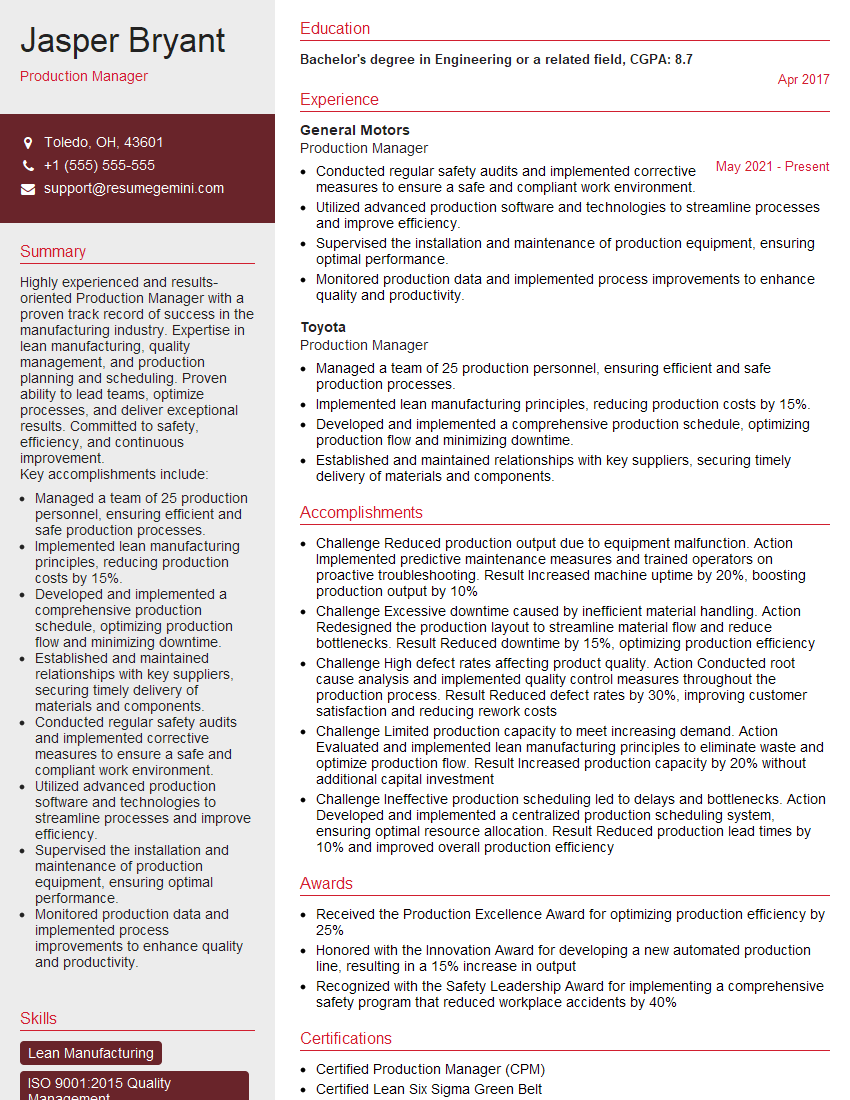
Production Manager Resume Sample
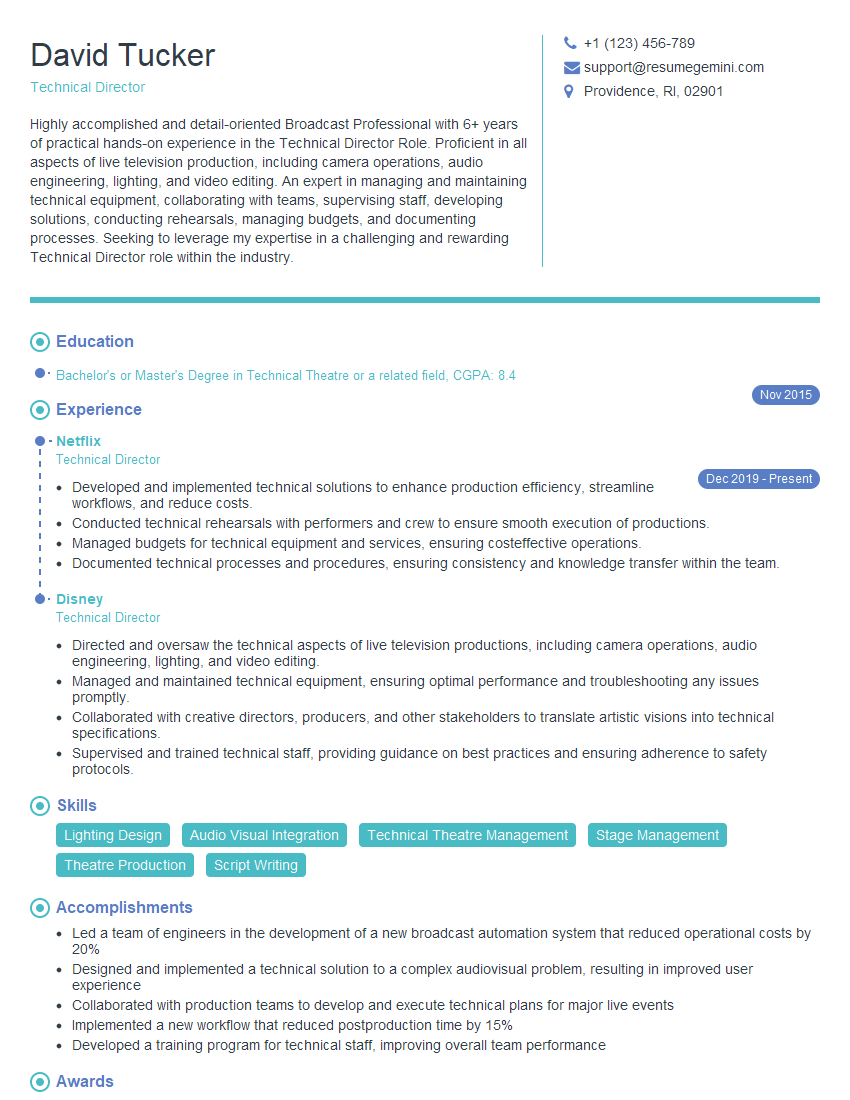
Technical Director Resume Sample
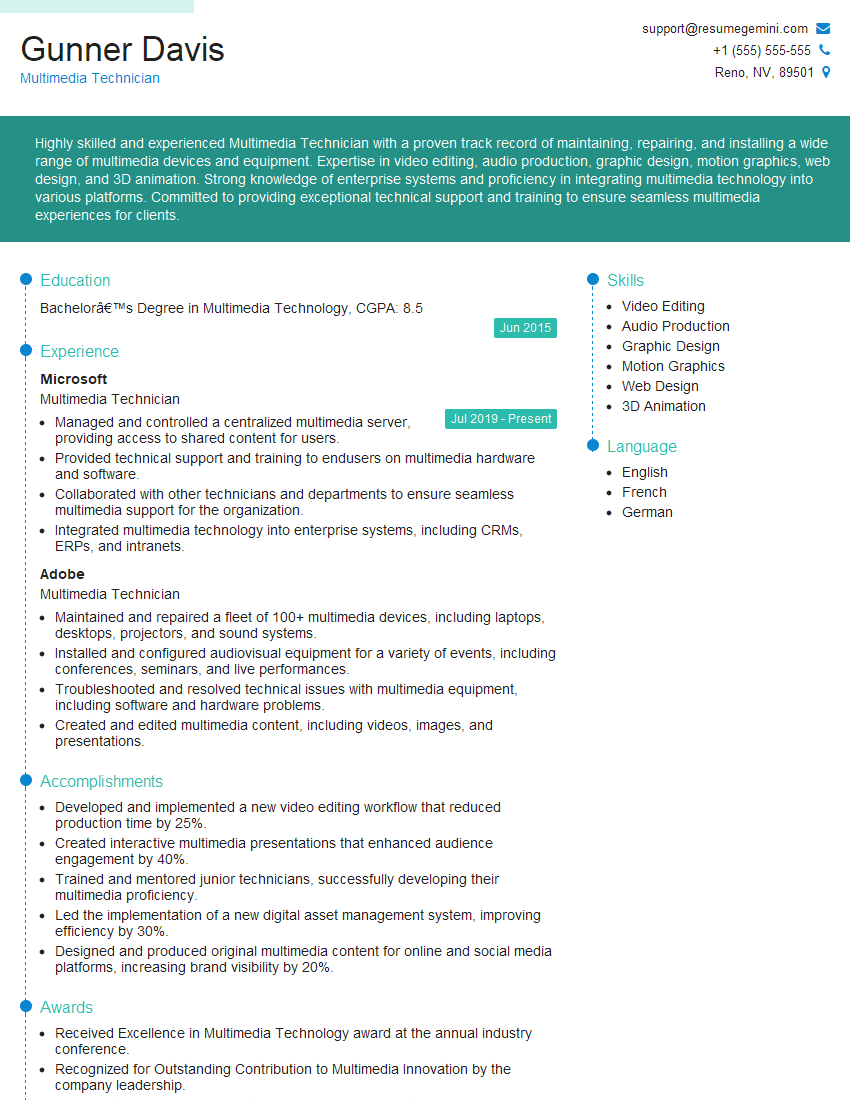
Multimedia Technician Resume Sample
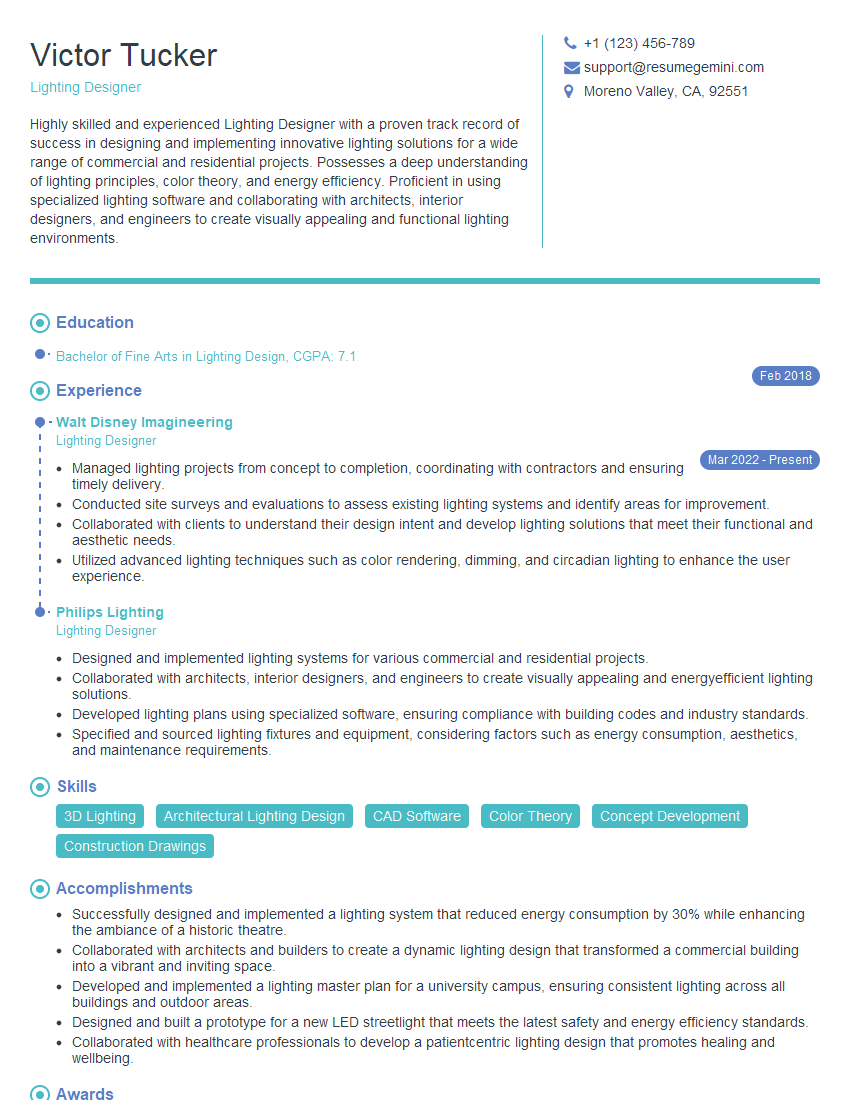
Lighting Designer Resume Sample
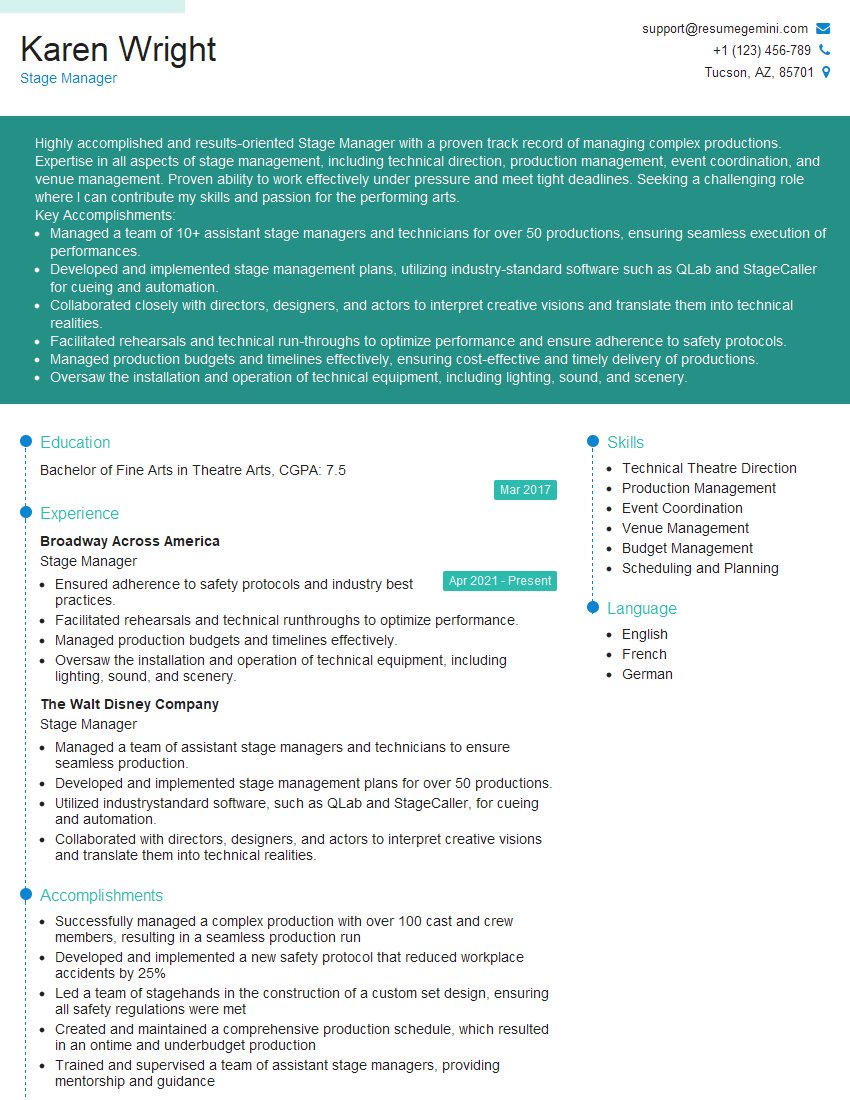
Stage Manager Resume Sample
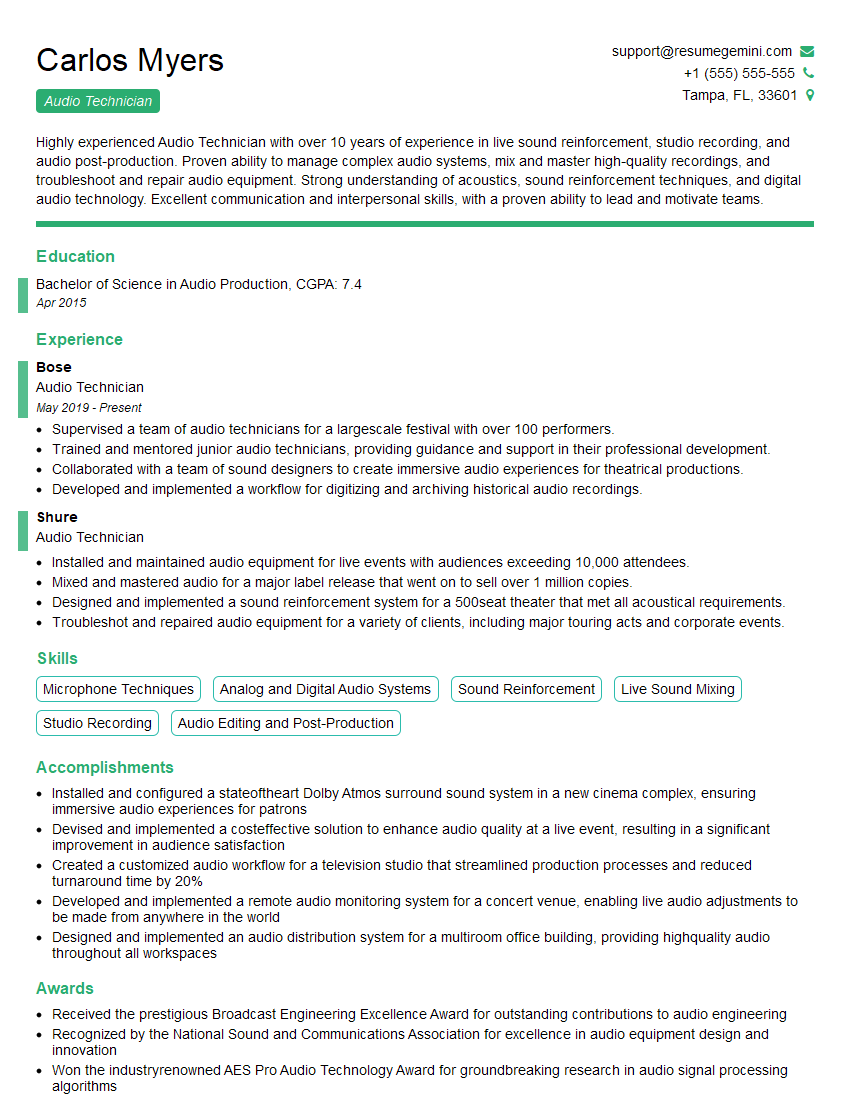
Audio Technician Resume Sample
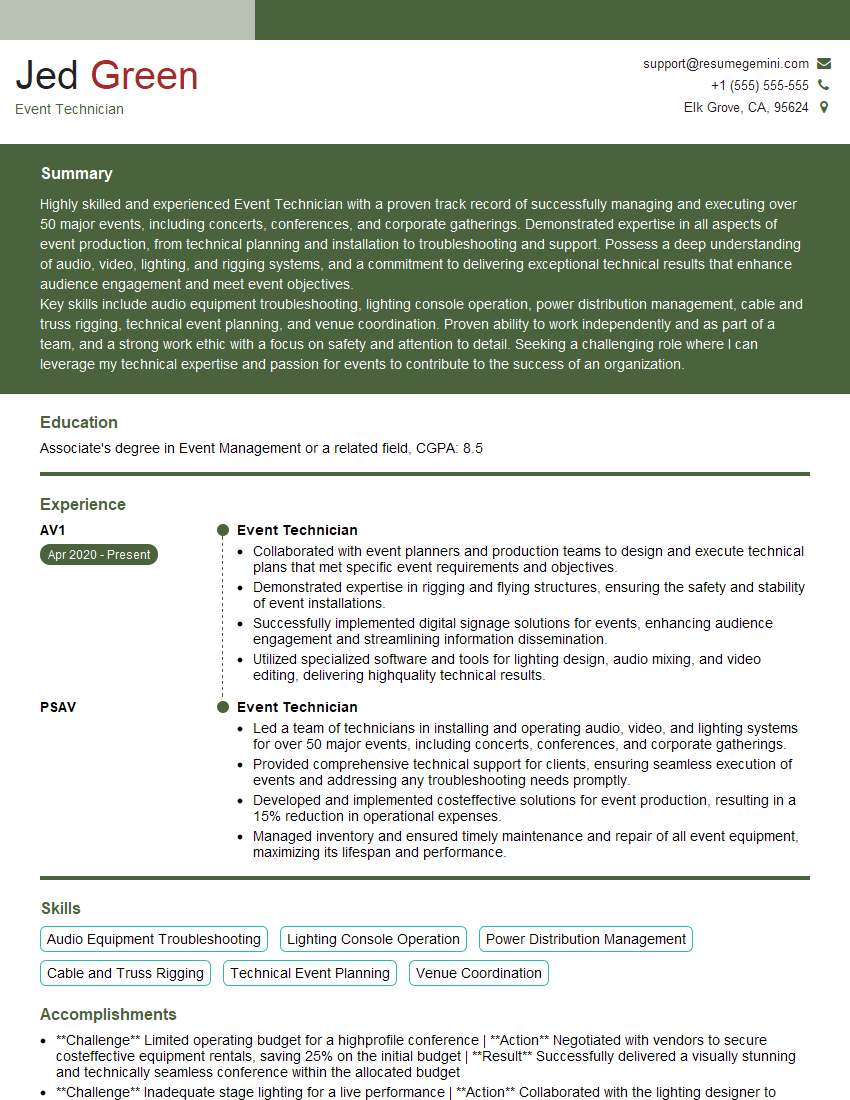
Event Technician Resume Sample
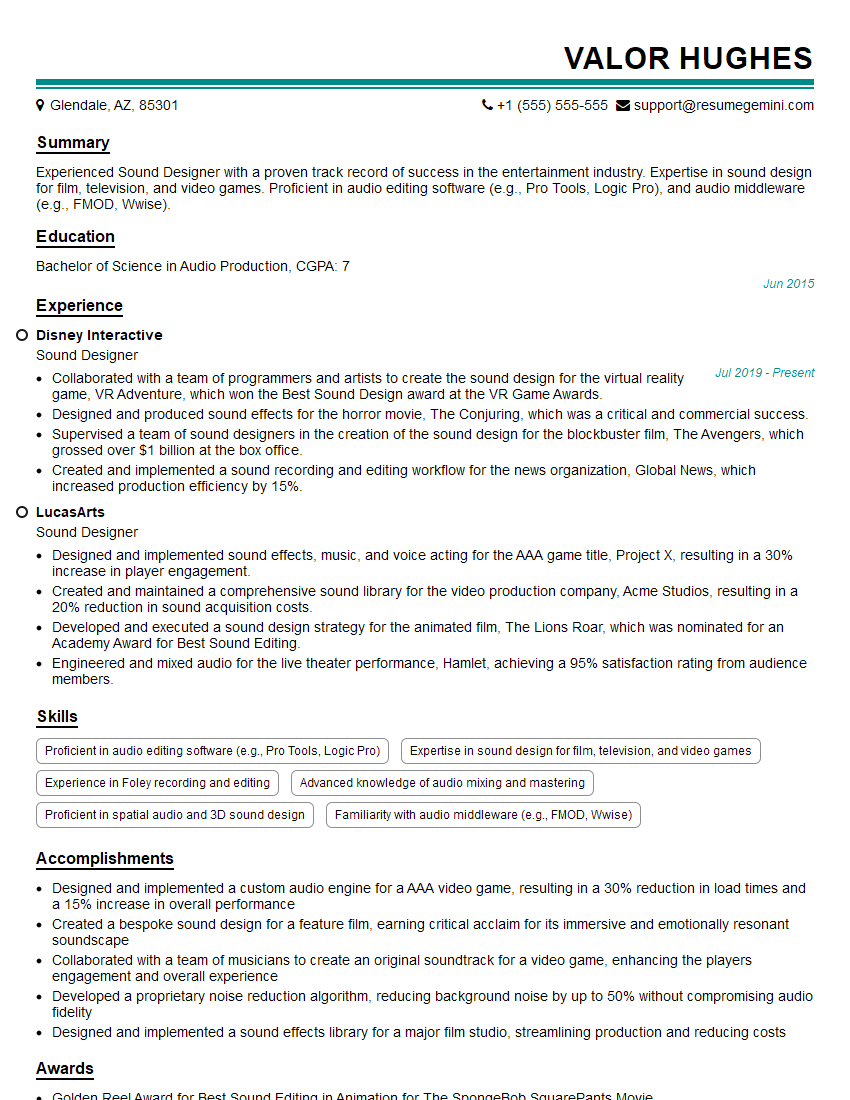
Sound Designer Resume Sample
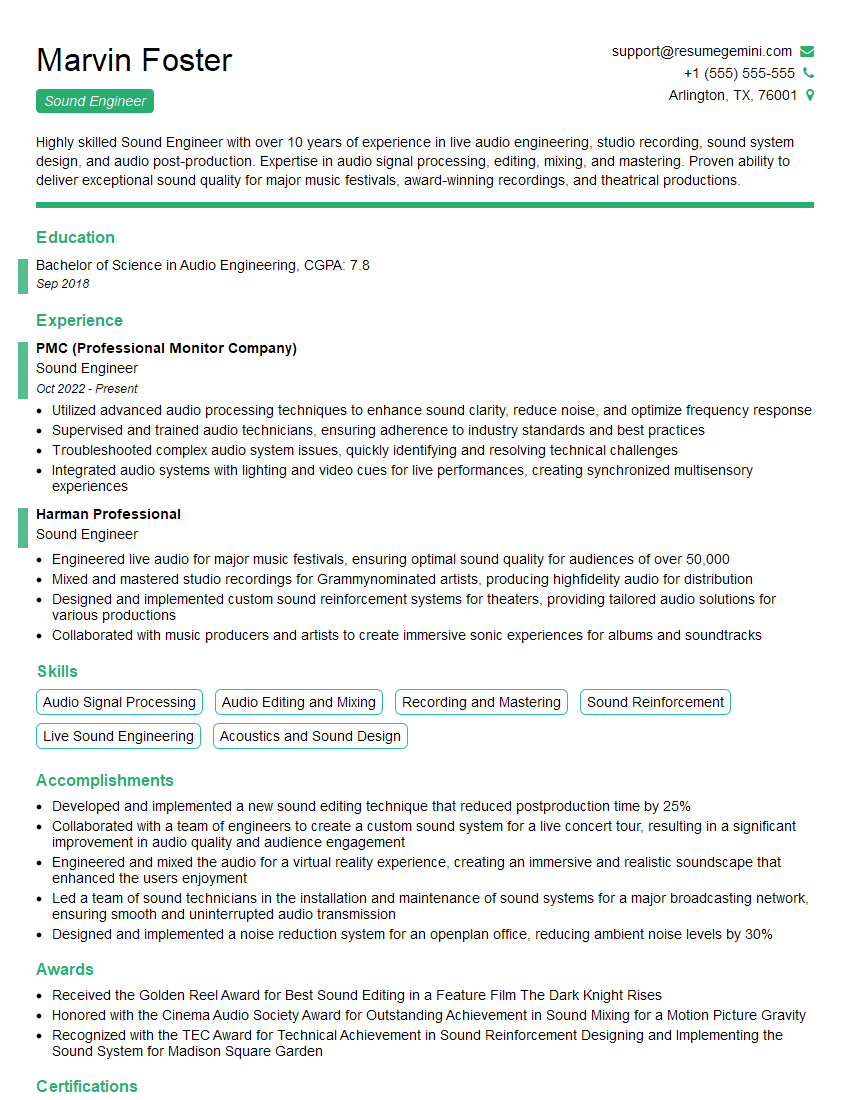
Sound Engineer Resume Sample
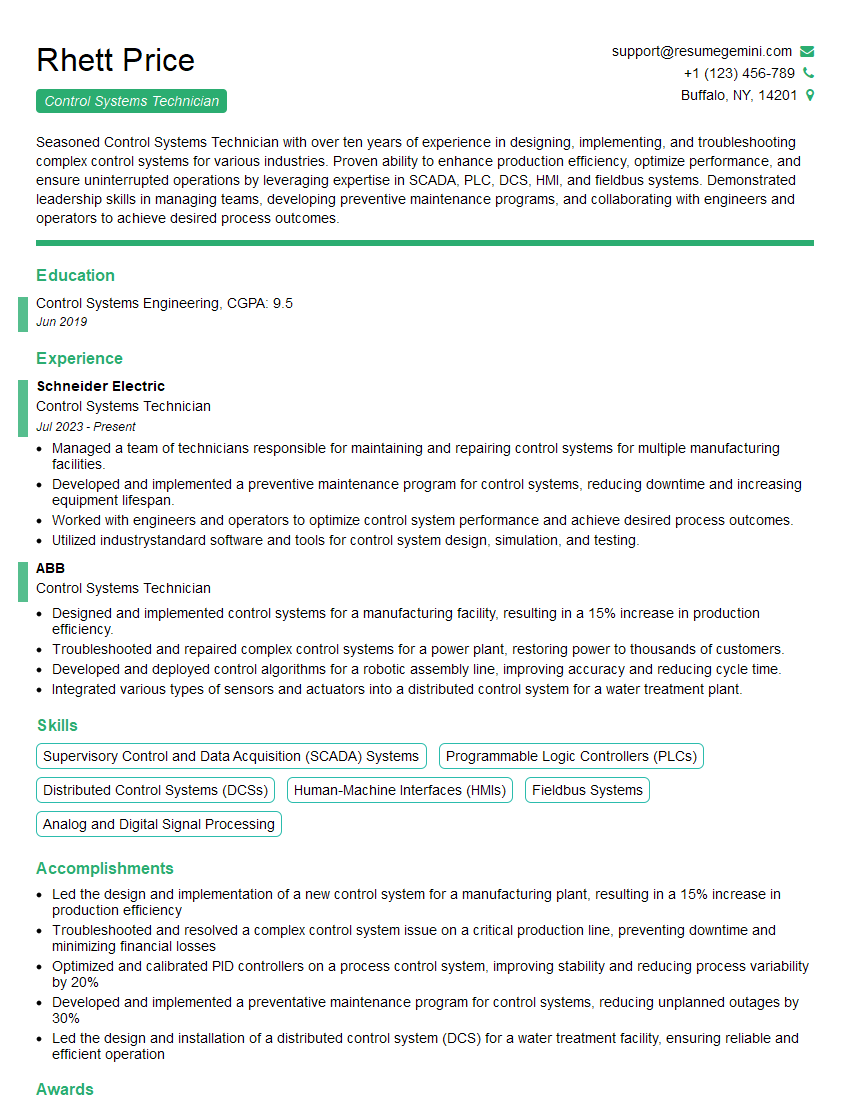
Control Systems Technician Resume Sample
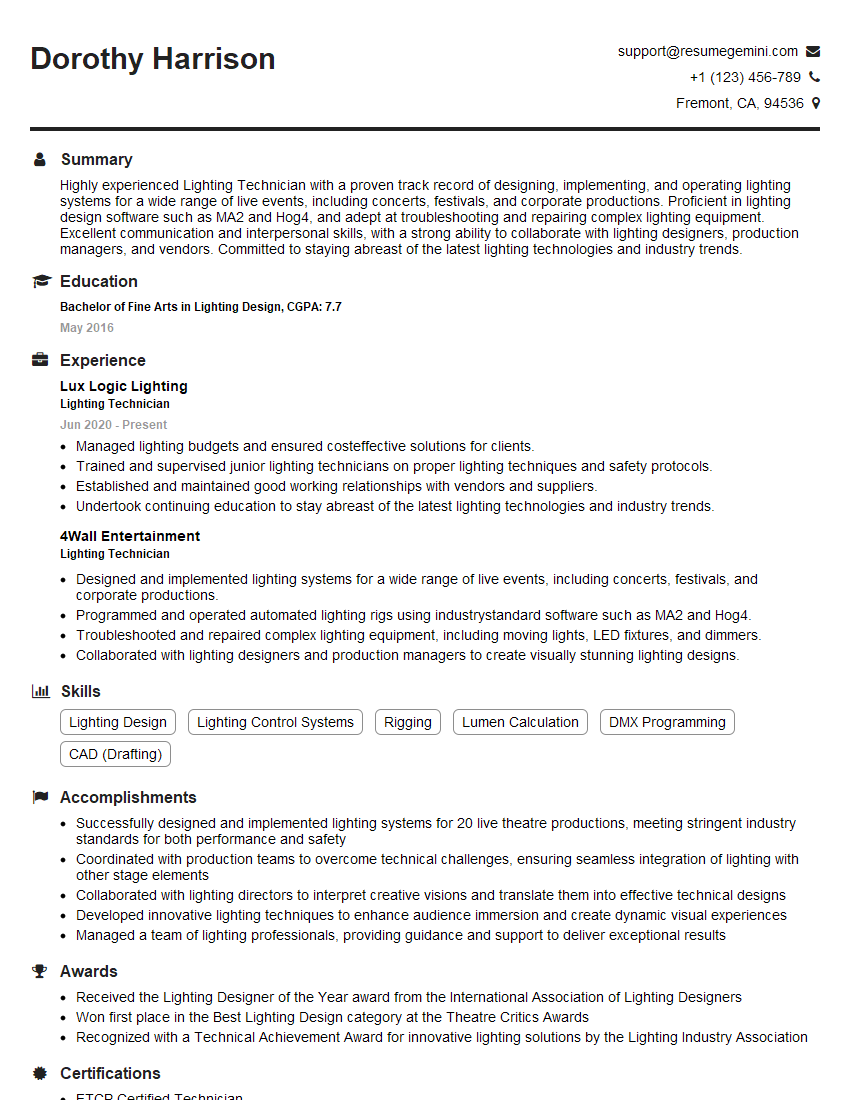
Lighting Technician Resume Sample
Explore more articles
Users Rating of Our Blogs
Share Your Experience
We value your feedback! Please rate our content and share your thoughts (optional).
What Readers Say About Our Blog
Very informative content, great job.
good