Are you ready to stand out in your next interview? Understanding and preparing for Knowledge of Textile Production Processes interview questions is a game-changer. In this blog, we’ve compiled key questions and expert advice to help you showcase your skills with confidence and precision. Let’s get started on your journey to acing the interview.
Questions Asked in Knowledge of Textile Production Processes Interview
Q 1. Explain the differences between woven and knitted fabrics.
Woven and knitted fabrics differ fundamentally in their construction methods, leading to distinct properties. Woven fabrics are created by interlacing two sets of yarns at right angles – the warp (lengthwise) and weft (crosswise). This creates a strong, stable structure with good dimensional stability. Think of a traditional checkered tablecloth – that’s a woven fabric. Knitted fabrics, on the other hand, are formed by interlocking loops of a single yarn. This creates a more flexible and stretchy material. A sweater is a perfect example of a knitted fabric.
- Woven Fabrics: Stronger, more durable, less stretchy, often crisper drape, typically more resistant to snagging.
- Knitted Fabrics: More elastic, softer drape, often more comfortable next to skin, can be more prone to snagging or running.
The choice between woven and knitted fabrics depends entirely on the desired end-use. A shirt might use a woven fabric for durability, while a pair of leggings would likely utilize a knitted fabric for its stretch and comfort.
Q 2. Describe the stages involved in the dyeing process for cotton fabric.
Dyeing cotton fabric is a multi-stage process that ensures even color penetration and lasting results. It typically involves these key steps:
- Preparation: The fabric undergoes pre-treatment, including cleaning (desizing – removing sizing agents added for weaving) and scouring (removing natural impurities like waxes and pectins).
- Dyeing: This is where the actual color is applied. Several methods exist, including:
- Piece dyeing: The entire fabric is dyed in a large bath.
- Yarn dyeing: The yarn is dyed before weaving, resulting in a more even color throughout the garment.
- Garment dyeing: The garment is dyed after construction. This offers unique possibilities in terms of color and texture but often poses greater challenges in terms of controlling shrinkage.
- Washing: After dyeing, the fabric is washed to remove excess dye and chemicals.
- Drying: The fabric is dried to remove moisture.
- Finishing: This can include processes like softening, calendaring (to improve smoothness), or resin finishing to improve wrinkle resistance.
The specific parameters – temperature, time, dye concentration, and pH – are carefully controlled to achieve the desired shade and colorfastness. Think of baking a cake: each ingredient and step matters to get the perfect result. Similarly, in dyeing, precise control is crucial for quality.
Q 3. What are the common quality control checks performed during textile production?
Quality control checks are crucial at every stage of textile production to ensure consistent quality and meet customer expectations. These checks vary by process but commonly include:
- Fiber Testing: Assessing fiber length, strength, fineness, and other characteristics that influence the final fabric.
- Yarn Testing: Evaluating yarn count, strength, evenness, and imperfections. This often involves using instruments to measure the uniformity of the yarn.
- Fabric Testing: Testing for parameters like tensile strength, tear strength, abrasion resistance, shrinkage, colorfastness, and drape. Specialized equipment such as tensile testers and colorimeters are employed.
- Dimensional Stability Checks: Measuring shrinkage or stretching to ensure the fabric maintains its shape after washing or other treatments. This is critical to prevent issues in garment construction.
- Visual Inspection: A skilled inspector visually checks for defects like holes, stains, slubs (thick places in yarn), and other irregularities throughout the manufacturing process.
These checks ensure that only high-quality materials are used and that the final product meets the required standards. A consistent, well-defined quality control system helps minimize waste and maintain a strong reputation in the industry.
Q 4. How do you troubleshoot a problem with fabric shrinkage during finishing?
Fabric shrinkage is a common problem in textile finishing. Troubleshooting involves a systematic approach:
- Identify the type of shrinkage: Is it relaxation shrinkage (caused by internal stresses in the yarns), or residual shrinkage (due to incomplete relaxation during previous processes)?
- Analyze the process parameters: Examine the washing, drying, and finishing conditions. Incorrect temperatures, prolonged exposure to heat or moisture, or improper chemical treatments can all lead to excess shrinkage.
- Review fabric construction: The type of fiber, yarn structure, and fabric weave significantly impact shrinkage potential. Certain fibers, like wool, are inherently more prone to shrinkage than others.
- Test different finishing methods: Experiment with different pre-treatments, such as setting agents, to improve dimensional stability. Controlled shrinkage techniques can help minimize shrinkage during subsequent processes.
- Consult technical data sheets: Refer to the specifications of the fibers and chemicals used to understand their recommended processing conditions.
The goal is to find the root cause – whether it’s a problem with the fabric itself or the finishing process – and implement corrective actions. Careful documentation and analysis are essential for effective troubleshooting.
Q 5. What are the different types of textile finishing techniques?
Textile finishing encompasses a wide array of techniques aimed at enhancing fabric properties and aesthetics. Some common types include:
- Mechanical Finishing: This includes processes like calendaring (improving smoothness and luster), embossing (creating patterns), and shearing (removing fuzz).
- Chemical Finishing: This involves treatments such as mercerization (enhancing luster and strength in cotton), dyeing, and resin finishing (improving crease resistance).
- Water Repellent Finishing: Applying coatings to make fabrics water-resistant or waterproof.
- Flame Retardant Finishing: Treating fabrics to make them less flammable.
- Antimicrobial Finishing: Applying treatments that inhibit the growth of bacteria or fungi.
- Softening Finishing: Treatments that improve the softness and hand feel of the fabric.
The choice of finishing techniques depends on the fabric type, end-use, and desired properties. For instance, a wrinkle-resistant shirt would undergo resin finishing, while a waterproof jacket would require water-repellent treatment.
Q 6. Explain the concept of fabric drape and its importance in garment production.
Fabric drape refers to the way a fabric falls or hangs when it’s not supported. It’s a crucial factor in garment production because it directly influences the garment’s silhouette, fit, and overall aesthetic appeal. A fabric with good drape will flow smoothly and elegantly, while a stiff fabric will tend to hold its shape rigidly.
The drape of a fabric is determined by several factors, including:
- Fiber type: Different fibers have different drape characteristics; for example, silk has an excellent drape, while linen tends to be stiffer.
- Yarn structure: The way yarns are spun and constructed influences drape; fine, smooth yarns usually produce better drape than coarser, textured yarns.
- Fabric structure: The weave or knit structure significantly impacts drape; loose weaves typically result in better drape than tightly woven fabrics.
- Finishing treatments: Treatments like calendaring or softening can affect drape.
Understanding fabric drape is essential for designers to choose the right fabric for a particular garment style. A flowing evening gown would require a fabric with excellent drape, while a structured blazer might necessitate a stiffer fabric.
Q 7. How do you manage production timelines and meet deadlines in a fast-paced textile environment?
Managing production timelines in a fast-paced textile environment requires meticulous planning, efficient communication, and proactive problem-solving. I use a multi-pronged approach:
- Detailed Production Schedules: I create comprehensive schedules, breaking down the entire production process into smaller, manageable tasks with assigned deadlines for each stage. This approach facilitates better tracking and identification of potential delays.
- Regular Monitoring and Reporting: I track progress regularly, using both visual dashboards and detailed reports, to identify any bottlenecks or deviations from the plan. Early identification allows for timely corrective actions.
- Effective Communication: Clear and frequent communication is crucial. I maintain open lines of communication with all teams involved – from procurement to production to quality control – to keep everyone informed and aligned.
- Contingency Planning: Unexpected delays are inevitable. I develop contingency plans to address potential problems, such as material shortages or equipment malfunctions. This reduces the impact of unforeseen disruptions.
- Lean Manufacturing Principles: I leverage lean manufacturing principles to identify and eliminate waste, improve efficiency, and optimize the production flow. This helps streamline the process and improve turnaround times.
By implementing these strategies, I can effectively manage production timelines and consistently meet deadlines, even in the demanding environment of the textile industry.
Q 8. Describe your experience with different types of textile machinery.
My experience with textile machinery spans a wide range, encompassing both traditional and modern technologies. I’ve worked extensively with preparatory machinery like opening, cleaning, and carding machines for fiber processing. My experience also includes spinning machinery such as ring spinning, rotor spinning, and air-jet spinning, each with its own unique characteristics and applications for different yarn types. Furthermore, I’m proficient in weaving machinery, including various loom types – from conventional shuttle looms to high-speed rapier and air-jet looms – and knitting machinery, encompassing both weft and warp knitting techniques. Finally, my expertise extends to finishing machinery such as dyeing, printing, and calendaring machines. For example, I’ve managed the operation and maintenance of a high-speed air-jet loom capable of producing over 1000 meters of fabric per hour, significantly impacting production output. Understanding the intricacies of each machine allows me to optimize production efficiency and fabric quality.
Q 9. What are the key performance indicators (KPIs) used to measure the efficiency of a textile production line?
Key Performance Indicators (KPIs) in textile production are crucial for measuring efficiency and identifying areas for improvement. They are typically categorized into several areas. Production KPIs include metrics such as output per hour (measured in meters or pieces), machine utilization rate (percentage of time a machine is actively producing), and production yield (percentage of usable fabric produced versus total input). Quality KPIs measure the rate of defects, fabric strength, color consistency, and dimensional stability. Cost KPIs include production cost per unit, material waste, and labor cost. Finally, safety KPIs include lost-time incidents, near-miss reports, and safety training compliance. A balanced scorecard approach, considering all these KPIs, provides a holistic view of the production line’s efficiency. For instance, tracking the machine utilization rate alongside the defect rate helps identify whether increased speed is compromising quality, allowing for targeted interventions.
Q 10. Explain the concept of zero-defect manufacturing in the textile industry.
Zero-defect manufacturing in textiles aims to eliminate all defects during the production process. While achieving absolute perfection is practically impossible, the pursuit of zero defects focuses on minimizing flaws to an acceptable level, close to zero. This involves a multi-pronged approach starting from raw material inspection to rigorous quality checks at every stage of production. Implementing statistical process control (SPC), where data is continuously monitored and analyzed to identify trends and prevent defects, is key. Proactive measures like preventative maintenance of machinery and robust operator training reduce human error. Furthermore, implementing a strong quality management system (QMS), such as ISO 9001, provides a framework for continuous improvement. A successful zero-defect strategy hinges on a culture of quality that permeates the entire organization, demanding high standards at every level. For example, adopting advanced technologies like automated optical inspection systems can significantly improve defect detection, leading to a substantial reduction in the final defect rate.
Q 11. How do you ensure compliance with safety regulations in a textile manufacturing facility?
Ensuring compliance with safety regulations in a textile manufacturing facility requires a comprehensive approach. Firstly, a thorough risk assessment identifies potential hazards at each stage of production, covering aspects such as machinery operation, material handling, and chemical exposure. Based on this, appropriate safety measures are implemented, including the provision of personal protective equipment (PPE) such as gloves, eye protection, and hearing protection. Regular safety training programs educate employees on safe operating procedures, emergency response plans, and the use of PPE. Regular machine inspections and preventative maintenance reduce the risk of malfunctions. Furthermore, the facility needs to adhere to all relevant local, national, and international safety standards and regulations. This involves proper documentation of safety procedures, regular inspections by safety officers, and prompt investigation and reporting of accidents. Effective communication channels are vital to ensure employees understand and comply with safety protocols. For example, we implemented a color-coded system for identifying hazardous areas, and monthly safety drills significantly improved emergency response times and employee confidence.
Q 12. What is your experience with different types of textile fibers (cotton, silk, wool, synthetic)?
My experience with textile fibers is extensive, covering natural fibers like cotton, silk, and wool, as well as synthetic fibers such as polyester, nylon, and acrylic. Cotton, a staple fiber, requires specific processing techniques to achieve desired yarn characteristics. Silk, known for its luxurious feel, demands delicate handling to prevent damage. Wool, a resilient fiber, can be processed into various yarns depending on the desired properties. Synthetic fibers offer versatility, with various types possessing unique qualities like strength or elasticity. Understanding the properties of each fiber – its strength, length, elasticity, and dyeing properties – is crucial for selecting appropriate processing parameters. For instance, I’ve successfully managed projects involving blends of cotton and polyester, optimizing the spinning process to achieve the desired fabric drape and strength. This expertise in fiber properties allows for efficient and high-quality fabric production.
Q 13. Describe your experience with different types of textile printing methods.
My experience encompasses various textile printing methods, including rotary screen printing, flat screen printing, digital printing, and inkjet printing. Rotary screen printing offers high speed and efficiency for large-scale production. Flat screen printing provides excellent detail and versatility, suitable for smaller runs and custom designs. Digital printing allows for precise designs and on-demand production, making it ideal for personalized products. Inkjet printing is increasingly utilized for its speed, accuracy, and ability to handle complex designs. Each method has its own advantages and disadvantages in terms of cost, speed, design complexity, and environmental impact. Choosing the right method depends on factors like production volume, design requirements, and budget. For example, I’ve overseen the transition from rotary screen to digital printing in a project, which resulted in reduced setup time and significant improvements in design flexibility.
Q 14. How do you handle production issues or discrepancies related to fabric quality?
Handling production issues related to fabric quality starts with prompt identification of the defect. This often involves visual inspection, but may also include laboratory testing to determine the root cause. Once identified, a thorough investigation follows to pinpoint the source of the problem. This might involve reviewing machine settings, inspecting raw materials, or assessing the operator’s technique. After determining the cause, corrective actions are implemented to prevent recurrence. This could include adjusting machine parameters, replacing faulty equipment, retraining staff, or modifying the production process. A robust system for tracking and analyzing quality issues helps identify patterns and prevent future occurrences. Continuous improvement measures, including regular quality audits and feedback loops, are crucial in maintaining high standards. For instance, I once resolved a recurring issue of inconsistent dye penetration by identifying a problem with the dyeing machine’s temperature control system. Implementing corrective measures and retraining the operators led to a significant improvement in fabric quality.
Q 15. Explain your understanding of lean manufacturing principles in the context of textile production.
Lean manufacturing in textile production focuses on eliminating waste and maximizing efficiency throughout the entire process, from raw material sourcing to finished product delivery. It’s about streamlining operations to produce high-quality textiles faster and cheaper, with less waste and improved worker satisfaction.
Key principles include:
- Just-in-time (JIT) inventory: Receiving materials only when needed, minimizing storage costs and reducing the risk of obsolescence. Imagine a scenario where we only order the exact amount of dye required for the next batch, preventing large dye stockpiles from expiring.
- Value stream mapping: Identifying and eliminating non-value-added steps in the production process. This might involve analyzing the entire process of weaving, from yarn preparation to the final inspection, to find bottlenecks and areas for improvement.
- Kaizen (continuous improvement): Constantly seeking small, incremental improvements in all areas of the production process. This could be as simple as rearranging workstations for improved workflow or implementing a new quality control check.
- 5S methodology (Sort, Set in Order, Shine, Standardize, Sustain): Creating a clean, organized, and efficient work environment. A well-organized warehouse, for example, allows for quicker material retrieval and reduces the risk of damage or loss.
In practice, implementing lean principles in a textile factory might involve using Kanban systems to manage workflow, implementing automated quality control measures, and empowering employees to identify and solve problems.
Career Expert Tips:
- Ace those interviews! Prepare effectively by reviewing the Top 50 Most Common Interview Questions on ResumeGemini.
- Navigate your job search with confidence! Explore a wide range of Career Tips on ResumeGemini. Learn about common challenges and recommendations to overcome them.
- Craft the perfect resume! Master the Art of Resume Writing with ResumeGemini’s guide. Showcase your unique qualifications and achievements effectively.
- Don’t miss out on holiday savings! Build your dream resume with ResumeGemini’s ATS optimized templates.
Q 16. How do you manage inventory and raw materials in a textile manufacturing facility?
Managing inventory and raw materials in a textile facility requires a strategic approach balancing cost-effectiveness with the need for timely production. We utilize a combination of techniques:
- Demand forecasting: Accurate prediction of future demand based on historical data, market trends, and sales forecasts. This ensures we have sufficient raw materials on hand without excessive storage.
- Just-in-time (JIT) inventory management: Minimizing inventory holding costs by ordering materials only when needed. We work closely with our suppliers to ensure reliable and timely delivery.
- Inventory tracking system: Utilizing software to monitor inventory levels in real-time, providing alerts when stock falls below a pre-determined threshold. This helps prevent production stoppages due to material shortages.
- First-In, First-Out (FIFO) method: Ensuring that the oldest materials are used first, minimizing the risk of spoilage or obsolescence, especially critical with dyes and chemicals.
- Regular inventory audits: Periodic physical counts to verify accuracy of inventory records and identify any discrepancies. This maintains data integrity.
Furthermore, we establish strong relationships with reliable suppliers to ensure consistent quality and timely delivery of raw materials. This minimizes disruptions to the production process and maintains a steady flow of materials.
Q 17. What are your experience with different textile testing methods?
My experience encompasses a wide range of textile testing methods, both physical and chemical, crucial for ensuring quality and meeting customer specifications. These include:
- Fiber testing: Analyzing fiber length, strength, fineness, and other properties using instruments like the Uster Tester.
- Yarn testing: Evaluating yarn strength, elongation, evenness, and other parameters using devices such as the tensile tester and evenness tester.
- Fabric testing: Assessing fabric properties like tensile strength, bursting strength, tear strength, abrasion resistance, and colorfastness. This often involves using instruments like a universal testing machine and a colorfastness tester.
- Dimensional stability tests: Measuring shrinkage and other changes in fabric dimensions after washing or other treatments.
- Chemical tests: Analyzing the chemical composition of fabrics, including dye content and the presence of harmful substances.
I am proficient in interpreting test results and using them to identify areas for improvement in the manufacturing process. For example, consistently low tear strength might indicate a problem with the weaving process or the quality of the yarn used.
Q 18. How do you ensure consistency in the color of dyed fabrics?
Maintaining consistent color in dyed fabrics requires meticulous control over several factors:
- Precise dye formulation: Using precise recipes and carefully measuring dye quantities to ensure consistent color batches. This includes employing standardized weighing and dispensing procedures.
- Controlled dyeing process: Maintaining consistent dyeing parameters such as temperature, time, and pH. Utilizing automated dyeing machines with precise temperature and time control helps in this regard.
- Regular calibration of equipment: Ensuring that dyeing machines and measuring instruments are regularly calibrated to maintain accuracy. This includes regular checks on colorimeters and spectrophotometers.
- Standardized quality control checks: Regularly testing dyed fabrics using spectrophotometers and color difference meters to compare the color of the batch to the standard. Any deviation outside the acceptable range triggers corrective actions.
- Use of color standards: Employing color standards and spectrophotometric measurements to ensure consistent color reproduction between different dye batches and production runs.
Furthermore, using a laboratory batch dyeing system to make small test runs can help in fine-tuning the process before mass production. This allows for adjustments and corrections before a full batch is dyed, preventing waste and ensuring the desired color consistency.
Q 19. What software or systems are you familiar with for managing textile production?
My experience includes working with various software and systems for managing textile production, including:
- Enterprise Resource Planning (ERP) systems: Such as SAP or Oracle, for managing the entire production process, from planning and procurement to inventory management and distribution. ERP systems facilitate the tracking of materials, workflow and production progress, thereby enhancing efficiency.
- Manufacturing Execution Systems (MES): For real-time monitoring and control of the production floor, improving efficiency and reducing downtime. An MES can be used for real-time monitoring of machine parameters and identifying production bottlenecks.
- Quality Management Systems (QMS): Such as ISO 9001 compliant systems, for managing quality control and ensuring compliance with industry standards. This facilitates accurate documentation of all quality control checks and helps in continuous improvement.
- Computer-aided design (CAD) software: For designing textile patterns and creating production specifications.
- Specialized textile software: Software specifically designed for managing various aspects of textile production, including yarn planning, dye formulation, and fabric design.
Proficiency in these systems allows for data-driven decision-making, leading to improved efficiency and reduced errors in the textile production process.
Q 20. Describe a time you had to solve a complex production problem.
In a previous role, we faced a significant challenge with inconsistent yarn quality leading to frequent breaks during the weaving process, causing considerable downtime and impacting production targets. This problem impacted both production time and efficiency. To address this, we implemented a systematic approach:
- Root cause analysis: We meticulously investigated the problem, analyzing yarn samples from different suppliers and different production batches using various testing methods (tensile strength, evenness, etc.).
- Supplier engagement: We worked closely with our yarn suppliers to pinpoint the source of the inconsistencies and implement corrective actions on their end.
- Process optimization: We optimized our weaving machine settings and implemented more frequent quality checks during the yarn preparation phase.
- Employee training: We provided additional training to our weaving operators on how to identify and address yarn quality issues effectively.
Through this collaborative effort, we identified a specific supplier’s batch with a higher defect rate, and subsequent stricter quality checks helped prevent similar instances. This experience underscored the importance of proactive quality control, strong supplier relationships, and continuous improvement in solving complex production problems. We improved production by 15% following the solution’s implementation.
Q 21. What are your strategies for improving efficiency in textile production?
My strategies for improving efficiency in textile production revolve around a multi-faceted approach focused on technology, process optimization, and workforce empowerment:
- Automation and digitization: Implementing automation in areas like dyeing, weaving, and finishing can significantly improve speed and consistency while reducing labor costs and human error.
- Lean manufacturing principles: Adopting lean manufacturing principles, such as JIT inventory and Kaizen, can minimize waste, streamline workflows, and enhance overall efficiency.
- Process optimization: Analyzing and optimizing individual production steps to identify bottlenecks and areas for improvement. This might involve using data analytics to identify areas for process refinement.
- Improved quality control: Implementing robust quality control measures throughout the production process can reduce waste, rework, and customer complaints, improving efficiency and reputation.
- Employee training and empowerment: Investing in employee training and empowering them to participate in problem-solving and continuous improvement initiatives.
- Predictive maintenance: Implementing predictive maintenance programs using sensors and data analysis can reduce machine downtime and improve overall production efficiency.
Ultimately, efficiency improvements need a holistic approach – addressing issues from materials management to the final product’s quality control to enhance the whole manufacturing process.
Q 22. Explain your understanding of sustainable textile production practices.
Sustainable textile production prioritizes minimizing environmental impact and ensuring fair labor practices throughout the entire supply chain. It’s about creating a balance between economic viability and ecological responsibility. This involves a holistic approach encompassing raw material sourcing, manufacturing processes, and end-of-life management.
- Eco-friendly fibers: Using organic cotton, recycled materials, or innovative plant-based alternatives like Tencel or hemp reduces reliance on resource-intensive conventional cotton and minimizes pesticide use.
- Water conservation: Implementing technologies like closed-loop water systems and optimizing dyeing and finishing processes significantly reduces water consumption and pollution. For instance, using low-impact dyes and efficient washing techniques are crucial.
- Energy efficiency: Utilizing renewable energy sources and improving machinery efficiency to reduce energy consumption is vital. This could involve investing in energy-efficient equipment and implementing smart manufacturing practices.
- Waste reduction: Minimizing textile waste through careful planning, optimizing cutting techniques, and utilizing leftover materials in new products. Implementing a robust recycling program for textile scraps is also essential.
- Fair labor practices: Ensuring safe and ethical working conditions throughout the supply chain, including fair wages, reasonable working hours, and the absence of child labor. Certifications like Fairtrade and GOTS are often used to guarantee compliance.
For example, a company might source organic cotton, use low-impact dyes, and implement a closed-loop water system in its dyeing process, significantly reducing its environmental footprint while also ensuring fair wages for its workers. This holistic approach is vital for truly sustainable textile production.
Q 23. How do you handle conflict resolution among team members in a production environment?
Conflict resolution is crucial in a fast-paced production environment. My approach involves a combination of proactive measures and effective conflict management strategies.
- Proactive Communication: Open and transparent communication channels help prevent conflicts from arising. Regularly scheduled team meetings, feedback sessions, and clear task assignments can address potential issues early on.
- Active Listening: When a conflict does arise, I prioritize active listening to understand each party’s perspective. This involves empathizing with their concerns and avoiding judgment.
- Mediation: I act as a neutral mediator, guiding the team towards a mutually agreeable solution. This often involves helping them identify common ground and finding compromises.
- Focus on Solutions: The focus should always be on solving the problem, not on assigning blame. I encourage team members to brainstorm solutions collaboratively.
- Documentation: Maintaining a record of the conflict and the agreed-upon resolution is essential for preventing similar situations in the future.
For instance, if two team members have a disagreement about the allocation of resources, I would facilitate a meeting where both could express their viewpoints. We would collaboratively explore different allocation strategies, weighing the pros and cons of each approach, ultimately finding a solution that meets the needs of both parties and the production goals.
Q 24. Describe your experience with different types of textile machinery maintenance.
My experience encompasses maintenance across a wide range of textile machinery, including spinning, weaving, knitting, and finishing equipment. This includes both preventative and corrective maintenance.
- Preventative Maintenance: This involves regularly scheduled inspections, lubrication, and cleaning of machinery to prevent breakdowns. This includes tasks such as checking belt tension, oil levels, and cleaning lint build-up to ensure smooth operation.
- Corrective Maintenance: This involves troubleshooting and repairing machinery malfunctions. This often requires diagnosing the problem, sourcing replacement parts, and performing the necessary repairs. I am proficient in identifying common faults in various types of machinery, and I have experience working with electrical, mechanical, and pneumatic systems.
- Specialized Machinery: I have experience maintaining specialized machinery, such as high-speed air-jet looms or advanced finishing equipment, understanding their unique maintenance requirements.
- Record Keeping: Maintaining accurate and detailed records of all maintenance activities, including the type of repair, time taken, and parts used, is essential for tracking maintenance costs and improving machine efficiency.
For example, I once diagnosed a recurring jamming issue in a high-speed weaving machine by meticulously inspecting the shuttle mechanism and identifying a worn-out component. Replacing the component resolved the issue, ensuring consistent production. My record-keeping allowed me to predict potential future issues based on the previous maintenance history of the machine.
Q 25. How do you implement and manage quality control procedures?
Implementing and managing quality control procedures requires a systematic approach that covers every stage of the textile production process.
- Raw Material Inspection: Thorough inspection of incoming raw materials, ensuring they meet the specified quality standards. This involves checking for fiber length, strength, color consistency, and the presence of impurities.
- In-process Quality Checks: Regular checks during each production stage (spinning, weaving, dyeing, finishing) ensure consistent quality. This often involves using quality control instruments to monitor yarn count, fabric density, colorfastness, and other crucial parameters.
- Final Inspection: A rigorous inspection of finished goods to identify any defects or inconsistencies. This includes visual inspection, dimensional checks, and testing for performance characteristics like shrinkage and strength.
- Statistical Process Control (SPC): Employing SPC techniques to monitor production processes and identify areas for improvement. This involves using control charts to track key quality indicators and identify trends.
- Defect Tracking and Analysis: Maintaining detailed records of detected defects, analyzing their causes, and implementing corrective actions to prevent their recurrence. This is often done using a root cause analysis approach like the ‘5 Whys’ method.
For instance, if consistent color variations were detected in the finished fabric, I would trace the issue back through the process, checking the dye batches, the dyeing process parameters, and the post-dyeing processes, ultimately identifying the root cause of the problem and implementing corrective actions, thereby ensuring future consistency.
Q 26. What is your experience with different types of fabric construction?
My experience encompasses a wide range of fabric constructions, understanding their properties and applications.
- Woven Fabrics: Proficient in understanding various weaves like plain, twill, satin, and jacquard, and their impact on fabric properties such as drape, strength, and texture. I understand the different yarn types and their suitability for specific weaves.
- Knitted Fabrics: Experienced with different knitting techniques like weft knitting (jersey, rib) and warp knitting (raschel, tricot), and their influence on fabric properties, such as stretch and elasticity.
- Non-woven Fabrics: Familiar with non-woven fabric manufacturing methods and their applications, including spun-bonded, melt-blown, and needle-punched fabrics.
- Fabric Finishes: Understanding the impact of various finishes on fabric properties. This includes treatments like mercerization, sanforizing, and various types of dyeing and printing.
For example, I can differentiate between a plain weave cotton fabric, suitable for shirts, and a twill weave denim fabric, ideal for jeans, based on their construction, texture, and durability. This knowledge enables me to select the appropriate fabric construction for a specific application, optimizing both functionality and aesthetics.
Q 27. Describe your knowledge of different textile standards and certifications.
I have a strong understanding of various textile standards and certifications, crucial for ensuring product quality and compliance.
- ISO Standards: Familiar with ISO 9001 (Quality Management Systems) and ISO 14001 (Environmental Management Systems), essential for ensuring consistent quality and minimizing environmental impact.
- Oeko-Tex Standard 100: Understanding of this certification, which ensures that textiles are free from harmful substances and are safe for human use.
- Global Organic Textile Standard (GOTS): Knowledge of this standard, which certifies organic textiles and ensures sustainable production practices.
- Fairtrade Certification: Understanding of this certification, which guarantees fair labor practices throughout the supply chain.
- Other Certifications: Familiar with other relevant certifications such as Bluesign, which focuses on resource-efficient and environmentally friendly textile production.
This knowledge allows me to ensure that our production processes adhere to the relevant standards and certifications, enhancing our products’ credibility and market appeal. For instance, obtaining GOTS certification demonstrates our commitment to sustainable practices, allowing us to access environmentally conscious markets.
Q 28. Explain your approach to continuous improvement in a textile production setting.
Continuous improvement is paramount in the textile industry. My approach focuses on data-driven analysis, employee involvement, and a commitment to innovation.
- Data Analysis: Regularly monitoring key performance indicators (KPIs) such as production efficiency, defect rates, and energy consumption to identify areas for improvement. This involves using data analysis tools to identify trends and patterns.
- Lean Manufacturing Principles: Implementing lean manufacturing principles to streamline processes, eliminate waste, and improve efficiency. This includes techniques like Kaizen (continuous improvement) and 5S (sort, set in order, shine, standardize, sustain).
- Employee Involvement: Encouraging employees to participate in continuous improvement initiatives by sharing their ideas and suggestions. This can involve creating suggestion boxes, implementing employee feedback mechanisms, and involving employees in problem-solving teams.
- Technological Innovation: Staying abreast of the latest technological advancements in textile machinery and production processes, exploring opportunities to adopt new technologies to enhance efficiency and quality.
- Benchmarking: Regularly benchmarking our performance against industry best practices to identify areas where we can improve.
For example, by analyzing production data, we discovered a bottleneck in the dyeing process. Through a Kaizen event involving the dyeing team, we identified and implemented a process improvement that reduced processing time by 15%, boosting overall production efficiency and reducing costs.
Key Topics to Learn for a Knowledge of Textile Production Processes Interview
- Fiber Production & Properties: Understand the characteristics of natural (cotton, wool, silk) and synthetic (polyester, nylon, rayon) fibers. Be prepared to discuss their suitability for different textile applications and their impact on the final product.
- Yarn Manufacturing: Familiarize yourself with spinning processes (ring spinning, open-end spinning, air-jet spinning), their advantages and disadvantages, and the resulting yarn properties. Be ready to discuss yarn count systems and their significance.
- Fabric Formation: Master the various weaving and knitting techniques, including their strengths and limitations. Understand the differences between different fabric structures (plain weave, twill weave, satin weave) and their impact on drape, durability, and appearance.
- Fabric Finishing: Explore the key finishing processes such as bleaching, dyeing, printing, and coating. Be able to discuss the purpose of each process and its influence on the final fabric properties (e.g., colorfastness, wrinkle resistance, water repellency).
- Textile Testing & Quality Control: Learn about common textile testing methods used to assess fabric quality, including strength, abrasion resistance, colorfastness, and shrinkage. Understand the importance of quality control throughout the production process.
- Sustainability & Eco-Friendly Practices: Discuss environmentally friendly manufacturing processes and the growing importance of sustainable textile production. This includes understanding concepts like recycled fibers, water conservation, and reduced chemical usage.
- Textile Machinery & Automation: Gain a basic understanding of the machinery used in different stages of textile production and the role of automation in increasing efficiency and reducing production costs.
- Problem-Solving & Troubleshooting: Be prepared to discuss common problems encountered in textile production and your approach to identifying and resolving them. This demonstrates practical experience and analytical skills.
Next Steps
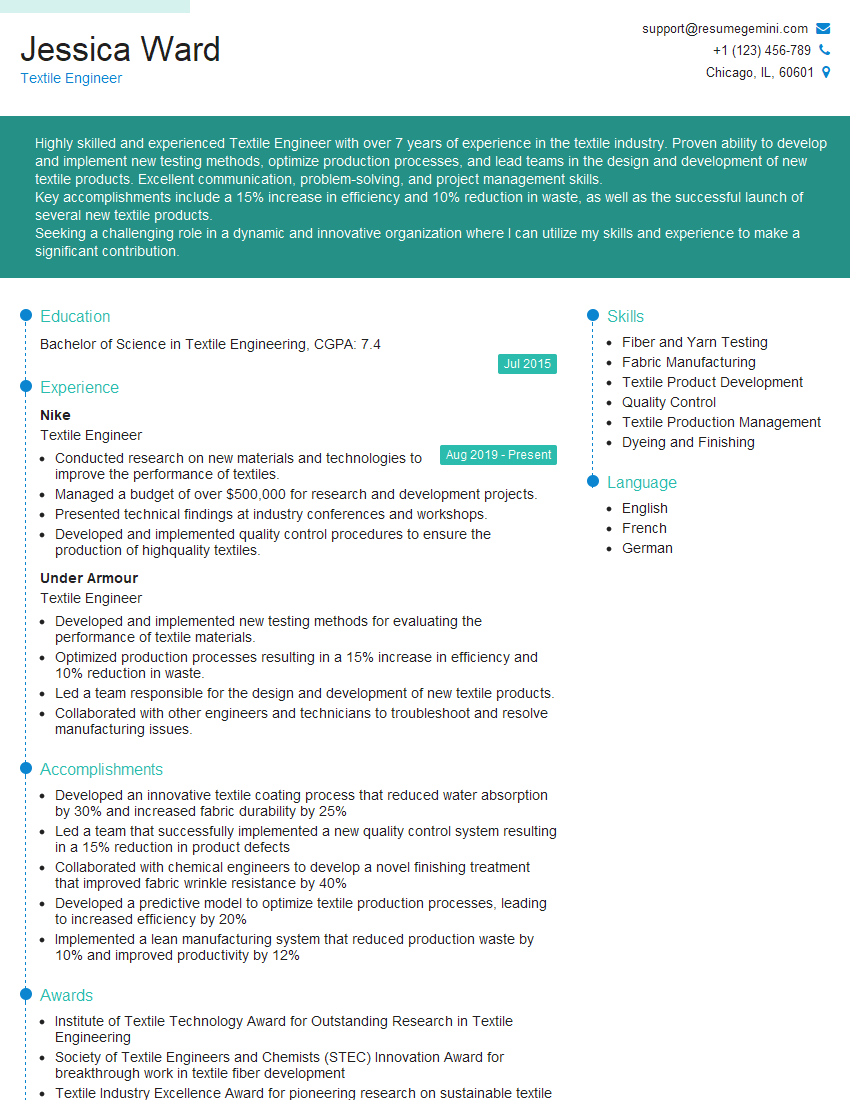
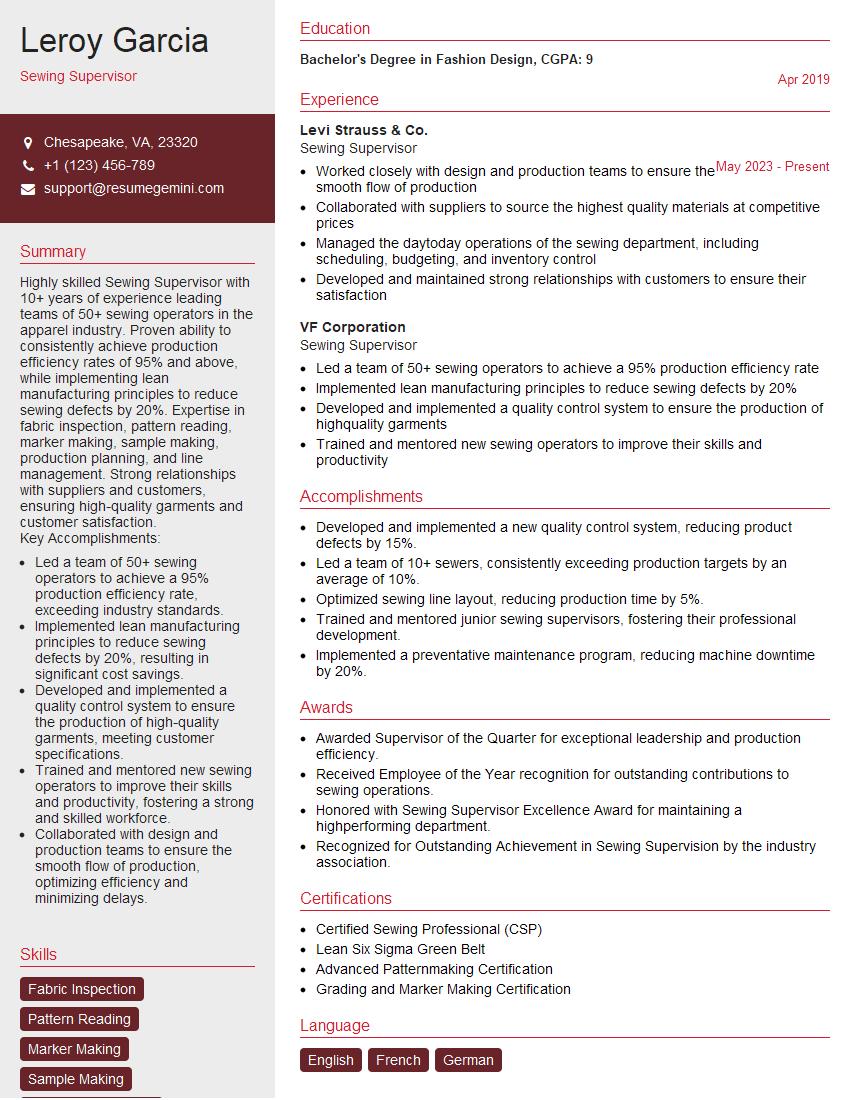
Mastering knowledge of textile production processes is crucial for career advancement in this dynamic industry. A strong understanding of these processes positions you for leadership roles and opens doors to exciting opportunities. To maximize your job prospects, create an ATS-friendly resume that highlights your skills and experience effectively. ResumeGemini is a trusted resource that can help you build a professional and impactful resume. We offer examples of resumes tailored specifically to the Knowledge of Textile Production Processes field to guide you in crafting your own compelling application materials.




Explore more articles
Users Rating of Our Blogs
Share Your Experience
We value your feedback! Please rate our content and share your thoughts (optional).
What Readers Say About Our Blog
Very informative content, great job.
good