Preparation is the key to success in any interview. In this post, we’ll explore crucial Knowledge of tree wound management techniques interview questions and equip you with strategies to craft impactful answers. Whether you’re a beginner or a pro, these tips will elevate your preparation.
Questions Asked in Knowledge of tree wound management techniques Interview
Q 1. Describe the process of assessing a tree wound for severity.
Assessing a tree wound’s severity involves a holistic evaluation, not just its size. Think of it like assessing a human wound – size matters, but depth, location, and the tree’s overall health are equally critical.
- Size and Depth: Larger, deeper wounds obviously pose a greater risk. We measure the wound’s diameter and try to gauge its depth, often using a probe. A wound extending to the heartwood (the central, darker wood) is far more serious than a superficial bark injury.
- Location: Wounds near the base of the tree or on major branches are more threatening than those on smaller, upper branches. They compromise structural integrity more significantly.
- Condition of the surrounding wood: Is the wood around the wound discolored, decayed, or showing signs of fungal infection (like fruiting bodies)? This indicates the extent of the damage and the potential for further decay.
- Tree’s overall health and vigor: A healthy, vigorous tree is better equipped to compartmentalize the wound (isolate the damage and prevent further spread) than a stressed or diseased tree. We assess this by looking at leaf condition, growth rate, and overall presence of pests or diseases.
For instance, a small wound on a healthy oak might be inconsequential, while a similar wound on a stressed elm with decay could be critical and require intervention.
Q 2. What are the different types of tree wounds, and how do they differ in their treatment?
Tree wounds vary greatly. Think of them as different types of injuries – some minor scrapes, others deep gashes.
- Mechanical wounds: Caused by physical impact like lawnmower damage, vehicle collisions, or broken branches. Treatment focuses on cleaning and shaping to promote callus formation.
- Fungal infections: Often start with a wound and then spread inward. Treatment involves removing infected tissue and, sometimes, applying fungicides. Prevention is key here – keeping the tree healthy is crucial to prevent fungal attacks.
- Insect and disease damage: Some insects or diseases create cavities or entry points. Treatment is dependent upon the specific pathogen or insect, and may involve removing infested wood, applying insecticides or fungicides, or even removing the tree if the damage is too extensive.
- Frost cracks: Vertical splits in the trunk, often due to sudden temperature changes. These usually require minimal intervention unless they are very large or exhibit significant decay.
The treatment strategy changes dramatically based on the type of wound. For example, a clean mechanical wound might only need shaping, whereas a fungal infection may require extensive surgery and protective treatment.
Q 3. Explain the principles of proper tree wound dressing.
The principles of proper tree wound dressing are less about actively healing the wound and more about managing the environment around it to allow the tree to heal itself. The tree’s natural compartmentalization process is paramount. Think of it as creating a sterile environment for the healing process.
- Wound Cleaning: Remove any loose bark, debris, or decaying wood to prevent further infection. Sterile tools are a must.
- Proper Shaping: The wound should be shaped to encourage callus tissue formation. Over-pruning can actually increase wound size.
- Avoiding Wound Dressings (in most cases): Contrary to popular belief, wound dressings are not typically recommended as they can trap moisture and promote decay. The only exception might be in cases of severe injury where protection from external pathogens is critical.
- Protecting the area from further damage: Measures to safeguard against further injuries are vital.
A common misconception is that ‘painting’ a wound will help. This is often more harmful than helpful.
Q 4. What are the benefits and drawbacks of different wound dressing materials?
Historically, various materials have been used, but current best practice often involves minimal intervention. Let’s compare a few:
- Paints and sealants: These are generally discouraged. They can trap moisture, preventing the tree from healing naturally and potentially promoting fungal growth. They can also interfere with the tree’s natural compartmentalization process.
- Wound dressings (specialized): Some specialized wound dressings are available, typically for very large wounds or those in high-risk environments. These are designed to protect the wound from pathogens while allowing air circulation.
- No dressing: In most cases, letting the wound heal naturally is the best approach, and actively avoids the negative impacts of moisture-trapping sealants.
The choice depends on the specific wound and tree, but in most instances, avoiding unnecessary materials is best.
Q 5. How do you determine the appropriate size and shape of a wound dressing?
Determining the appropriate size and shape of a wound dressing is rarely necessary. In most cases, leaving the wound open to air is preferable to applying a dressing. However, if a dressing is deemed necessary (due to the severity or location of the wound), the goal is minimal coverage.
The dressing should only cover the exposed wood, if the wound is open, but never extend beyond the edges of the wound itself. The goal is protection from pathogens without impeding the tree’s natural healing processes. We always prioritize the least invasive approach.
Q 6. What are the signs of improper wound care in a tree?
Signs of improper wound care often manifest as accelerated decay or increased infection. Think of it like an untreated human wound; signs of infection are clear indicators of a problem.
- Increased decay around the wound: The discoloration of the wood extends further from the original wound, indicating active decay.
- Presence of fungal fruiting bodies: Mushrooms or other fungal growths are clear signs of fungal infection.
- Excessive weeping or oozing: This can indicate ongoing tissue breakdown.
- Failure to callus over: A healthy tree will attempt to cover the wound with callus tissue. The absence of callus formation is a negative sign.
These are indicative of problems requiring further investigation and may necessitate a change in the management strategy.
Q 7. When is it appropriate to avoid wound dressing?
It’s appropriate to avoid wound dressing in the vast majority of cases. This holds true for most clean, mechanical injuries and small wounds where the tree’s natural compartmentalization process can effectively manage the situation. Remember, the tree’s own defense mechanisms are its strongest asset.
Wound dressings can create more problems than they solve by trapping moisture, promoting decay, and potentially preventing the tree from healing effectively.
Exceptions include large wounds or those in high-risk areas, where a protective barrier may be justifiable, but even then, selecting a breathable dressing is crucial.
Q 8. How do you address wounds caused by different factors (e.g., disease, mechanical damage, animal damage)?
Addressing tree wounds depends heavily on their cause. Understanding the origin is crucial for effective treatment.
- Disease: Wounds caused by diseases like canker or root rot require a different approach than physical damage. Often, the focus is on managing the disease itself, which might involve pruning infected branches, applying fungicides (if appropriate and recommended by a certified arborist), or in severe cases, removing the tree to prevent spread. For example, a canker wound needs careful pruning back to healthy tissue, sterilizing tools between cuts to avoid spreading the infection.
- Mechanical Damage: This includes wounds from lawnmowers, vehicles, or construction. The priority is to clean the wound, removing any loose or damaged tissue to promote compartmentalization (explained below). Wound dressings are generally not recommended unless specifically indicated in extreme circumstances by a professional.
- Animal Damage: Wounds from animals, such as gnawing rodents or deer rubbing, need similar treatment to mechanical damage. Clean the wound and let the tree’s natural defenses take over. Consider protective measures to prevent further damage, such as tree guards or repellents.
Remember, large wounds from any cause can be stressful to a tree, but proper sanitation and letting the tree’s natural processes work is key.
Q 9. Discuss the role of compartmentalization in tree wound healing.
Compartmentalization is a tree’s natural defense mechanism against injury. It’s like the tree’s immune system for wounds. When a tree is injured, it creates physical and chemical barriers to prevent the spread of decay organisms (like fungi) into the healthy parts of the tree.
This process involves four main walls:
- Wall 1: The immediate barrier formed by the cells at the wound margin.
- Wall 2: A barrier formed by the ray cells – which are horizontal cells within the wood.
- Wall 3: A barrier formed by the growth rings around the wound.
- Wall 4: A barrier formed by the bark.
The effectiveness of compartmentalization depends on several factors, including the tree species, the size and location of the wound, and the tree’s overall health. A healthy tree will compartmentalize more effectively than a stressed or diseased one. We do not typically interfere with this process, as actively intervening (except for the removal of damaged tissue) can hinder it.
Q 10. Explain the importance of proper pruning techniques to minimize wound creation.
Proper pruning is essential for minimizing wound size and stress on the tree. It’s about making clean cuts that heal quickly and efficiently, rather than leaving ragged stubs that attract disease.
- Making cuts close to the branch collar: The branch collar is the slightly swollen area at the base of a branch where it joins the trunk or another branch. Cutting outside of this area leaves a large wound that takes longer to heal and can be more susceptible to decay.
- Using sharp tools: Dull tools tear and crush the tissue, leaving ragged wounds that are more vulnerable to infection. Sharp tools create clean cuts that heal more quickly.
- Avoiding topping or heading cuts: Topping involves cutting branches back severely, leaving stubs. These stubs are much more susceptible to disease and decay. It also weakens the tree significantly.
Think of it like getting a clean, precise cut versus a jagged tear on your skin – a clean cut heals faster and with less scarring.
Q 11. How does tree species influence wound management strategies?
Tree species significantly influence wound management strategies. Different species have varying rates of compartmentalization and susceptibility to decay.
- Fast-growing species: These often have faster wound closure rates but may be more susceptible to certain diseases.
- Slow-growing species: These can have slower wound closure but may exhibit better resistance to some decay organisms.
For example, an oak tree, known for its strong compartmentalization, might require less intervention compared to a species that compartmentalizes less effectively. A thorough understanding of the specific tree’s characteristics is important for appropriate strategies. Consulting relevant literature and experienced arborists is invaluable for proper diagnosis and handling.
Q 12. Describe the techniques used to remove damaged or decaying wood from a tree wound.
Removing damaged or decaying wood from a tree wound requires careful techniques to avoid further injuring the tree. The goal is to remove only the compromised tissue, leaving healthy tissue intact to facilitate natural healing.
- Use sharp, sterilized tools: This prevents the introduction of further pathogens and ensures clean cuts.
- Remove only loose or decaying wood: Avoid removing healthy tissue, as this can weaken the tree and impede compartmentalization.
- Work back to healthy tissue: The wound should be cleaned to the point where the wood is firm and resistant to pressure.
- Avoid excessive cavity work: Unless absolutely necessary, extensive cavity work can actually cause more harm than good, especially if improperly done. It’s often best to let the tree manage minor cavities through compartmentalization. A certified arborist can assess the severity and recommend a course of action.
Think of it like cleaning a wound on your skin – you only remove the damaged tissue, leaving the healthy skin to heal.
Q 13. What are the safety precautions you take when managing tree wounds?
Safety is paramount when managing tree wounds. Always prioritize your safety and the safety of others.
- Use appropriate personal protective equipment (PPE): This includes safety glasses, gloves, hearing protection (if using power tools), and appropriate clothing.
- Inspect the tree for hazards: Look for dead or weak branches that could fall, and avoid working under or near trees with unstable structures.
- Use proper climbing techniques (if necessary): If working at height, use proper climbing equipment and techniques and ensure a secure work position.
- Use tools properly and safely: Operate power tools according to manufacturer’s instructions, and ensure you are properly trained in their use.
- Be aware of surroundings: Keep an eye out for overhead power lines, traffic, and other hazards.
Following safety protocols is not just a matter of regulations; it’s crucial for protecting yourself and others from potential harm.
Q 14. How do you monitor the healing process of a tree wound?
Monitoring the healing process involves regular observation to assess the tree’s response to the wound.
- Visual inspection: Check the wound for signs of decay, discoloration, or insect infestation. Look for callus tissue formation, which is a sign of healing.
- Assess overall tree health: A healthy tree will heal more quickly and effectively. Check for signs of stress, such as leaf discoloration or sparse foliage.
- Document observations: Take photos and keep a record of your observations over time to track the healing progress. This allows for comparisons between visits.
- Seek professional advice: If you see signs of infection or slow healing, consult a certified arborist for further assessment and guidance.
Regular monitoring allows early detection of problems and provides valuable insight into the effectiveness of your wound management strategies.
Q 15. Describe common tree diseases and their impact on wound healing.
Tree diseases significantly hinder wound healing, often creating entry points for pathogens and weakening the tree’s natural defense mechanisms. Common diseases include fungal infections like canker diseases (e.g., Phytophthora root rot, anthracnose), bacterial infections (e.g., fire blight), and viral infections. These pathogens can directly damage tissues, preventing proper callus formation—the tree’s natural wound-sealing process. For example, a canker disease can girdle a branch, preventing nutrient flow and making it more susceptible to further damage and decay, effectively halting wound closure.
- Fungal Infections: These often lead to decay, discoloration, and abnormal growths in the wound area, slowing or completely blocking healing.
- Bacterial Infections: These can cause oozing, discoloration, and rapid tissue death, making wound healing extremely difficult.
- Viral Infections: While less common, viral infections weaken the tree, making it more susceptible to wounds and reducing its ability to heal effectively.
Understanding the specific disease affecting a tree is crucial for effective wound management; treatment will vary depending on the pathogen.
Career Expert Tips:
- Ace those interviews! Prepare effectively by reviewing the Top 50 Most Common Interview Questions on ResumeGemini.
- Navigate your job search with confidence! Explore a wide range of Career Tips on ResumeGemini. Learn about common challenges and recommendations to overcome them.
- Craft the perfect resume! Master the Art of Resume Writing with ResumeGemini’s guide. Showcase your unique qualifications and achievements effectively.
- Don’t miss out on holiday savings! Build your dream resume with ResumeGemini’s ATS optimized templates.
Q 16. What are the signs of fungal infection in a tree wound?
Recognizing fungal infections in tree wounds requires a keen eye. Several signs indicate their presence:
- Discoloration: The wound may exhibit unusual colors, like brown, black, or orange, differing from the healthy wood.
- Decay: The wood around the wound might be soft, spongy, or crumbly, indicating wood decay caused by fungi.
- Fungal Structures: Visible fungal fruiting bodies (mushrooms or conks) near or within the wound are a clear indicator of infection. These structures release spores, spreading the fungus.
- Concentric Rings: In some cases, you may observe concentric rings of discoloration in the wood, indicating the gradual spread of the fungus.
- Unusual Odor: A musty or foul smell emanating from the wound can suggest fungal decay.
It is important to note that not all discoloration indicates fungal infection. However, a combination of these signs strongly suggests the presence of a fungal pathogen requiring professional assessment and treatment.
Q 17. How do you address insect infestations in and around tree wounds?
Insect infestations near or within tree wounds often exacerbate the problem, introducing pathogens and hindering natural healing. Management strategies depend on the specific insect and the severity of the infestation.
- Identification: The first step is accurate insect identification to determine the best control method. This may involve consulting an arborist or entomologist.
- Physical Removal: For smaller infestations, manually removing insects and their larvae can be effective. This should be done carefully to avoid further damage to the wound.
- Insecticidal Treatments: Systemic insecticides applied to the tree or targeted sprays applied directly to the wound area can control infestations. Always follow label instructions carefully.
- Beneficial Insects: Introducing beneficial insects that prey on the pest species can provide a natural, long-term solution.
- Wound Protection: Once the infestation is under control, protecting the wound with a suitable dressing can prevent re-infestation.
Remember, insecticide use should be a last resort, prioritized only when other methods fail and when it aligns with environmentally sound practices.
Q 18. Discuss the ethical considerations related to tree wound management.
Ethical tree wound management prioritizes the tree’s health and well-being, and minimizes unnecessary intervention. Key ethical considerations include:
- Minimizing Invasive Practices: Avoid unnecessary pruning or wound treatments, as these can cause more harm than good.
- Respecting Natural Processes: Trees possess natural defense mechanisms. Intervention should be limited to instances where these mechanisms are insufficient.
- Prioritizing Tree Health: Treatment decisions should always prioritize the tree’s long-term health over short-term aesthetic improvements.
- Transparency and Informed Consent: Landowners should be fully informed about the proposed treatment plan, its potential risks and benefits, and the associated costs.
- Using Sustainable Practices: Prefer environmentally friendly products and techniques that minimize impact on the surrounding ecosystem.
An ethical approach often involves careful observation, minimal intervention, and a focus on preventing further damage rather than aggressively treating existing wounds.
Q 19. What are the legal requirements or best practices associated with tree wound care in your region?
Legal requirements and best practices for tree wound care vary by region. In many areas, there aren’t specific laws governing wound management for privately owned trees. However, regulations might exist for trees on public land or those protected under heritage preservation ordinances. Best practices, often established by professional arborist organizations, usually recommend:
- Following Industry Standards: Adhering to the standards set by organizations like the International Society of Arboriculture (ISA).
- Using Certified Arborists: Hiring ISA-certified arborists ensures that work is performed according to established best practices and safety standards.
- Proper Documentation: Maintaining detailed records of all treatments, including the date, methods used, and observations of the tree’s response.
- Avoiding Harmful Practices: Refraining from outdated or harmful techniques, such as applying wound dressings, cavity filling, or excessive pruning.
- Liability Considerations: Understanding liability issues related to tree damage and the responsibility for ensuring public safety.
Local municipalities may have specific regulations concerning the removal or treatment of trees within their jurisdiction. Checking local ordinances is advisable before any significant tree work.
Q 20. How would you address a large, deep wound on a valuable specimen tree?
Managing a large, deep wound on a valuable specimen tree requires a careful, multi-faceted approach focusing on minimizing further damage and supporting the tree’s natural healing processes. This is beyond the scope of DIY and necessitates a certified arborist.
- Assessment: Thoroughly evaluate the extent of the damage, including its depth, length, and the presence of decay or insects.
- Debridement: Carefully remove any loose, damaged, or diseased tissue. This prevents the spread of decay. Healthy tissue should not be removed.
- Wound Cavity Management: In cases where a large cavity exists, the focus is on preventing further decay, not filling the cavity. Air circulation is key. This may involve strategic shaping of the wound margins.
- Support Structures: If structural instability is a concern, cabling or bracing may be needed to prevent branch failure.
- Monitoring: Regular monitoring is essential to observe the tree’s healing progress and address any new issues that may arise.
The goal isn’t necessarily to “heal” the wound completely, but to stabilize the tree, prevent further decay, and prolong its life. The tree’s natural compartmentalization process will eventually encapsulate the damage.
Q 21. What tools and equipment are essential for effective tree wound management?
Effective tree wound management requires specialized tools and equipment, prioritizing safety and precision.
- Sharp Pruning Tools: Clean, sharp pruning shears, loppers, and saws are crucial for making clean cuts that minimize damage to surrounding tissues. Dull tools cause more tearing and crushing.
- Safety Equipment: Safety glasses, gloves, hard hats, and appropriate clothing are necessary to protect against injuries.
- Climbing Gear (If Necessary): For wounds high in the tree canopy, specialized climbing equipment and safety harnesses are required.
- Debridement Tools: Specialized tools may be used to carefully remove decayed wood. This might include chisels, gouges, and specialized knives.
- Wound Dressings (Use with Caution): While generally not recommended, some arborists may use specific wound dressings in limited situations; however, this is often controversial.
- Protective Barriers: If a large wound is near the ground, barriers may prevent physical damage or soil contact.
The specific tools needed will vary depending on the size, location, and nature of the wound. The use of these tools should be performed by properly trained arborists.
Q 22. How do you deal with cavities within a tree trunk?
Dealing with cavities in a tree trunk depends heavily on the size, location, and cause of the cavity. Small cavities, often resulting from minor injuries or branch breakage, might require little to no intervention beyond ensuring proper sanitation and preventing further decay. Larger cavities, however, necessitate a more considered approach.
For larger cavities: The first step is assessing the extent of decay. This often involves using tools like probes and sometimes specialized imaging techniques to determine the cavity’s depth and the health of the surrounding wood. If the decay is localized, we might surgically remove the decayed wood, ensuring a clean, healthy margin around the affected area. This is crucial to prevent the spread of decay. Then, the cavity can be addressed using several methods depending on the size and the tree’s structural integrity, these methods include cavity filling or leaving the wound to heal naturally, allowing the tree to compartmentalize the decay. We always prioritize techniques that minimize stress on the tree and promote natural healing processes.
Example: I once dealt with a large cavity in an ancient oak. After careful assessment, we removed the decayed wood and filled the cavity using a breathable sealant that allows the tree to heal from within. This procedure stabilized the tree and improved its chances of longevity. Important note: We generally avoid filling small cavities, as the tree’s natural defenses are typically sufficient to address them.
Q 23. Explain the difference between pruning cuts and wound dressing.
Pruning cuts and wound dressings serve distinct purposes in tree wound management. Pruning cuts aim to remove dead, damaged, or diseased branches, promoting tree health and shaping. The key is to make clean, precise cuts that minimize injury to the remaining tissue. The goal is to allow the tree to compartmentalize the wound – naturally walling off the injured area to prevent decay.
Wound dressings, on the other hand, are applied to large wounds or pruning cuts where the risk of decay is higher. While there’s ongoing debate regarding the effectiveness of wound dressings, some research suggests that they are not typically necessary and can potentially interfere with the tree’s natural healing process. In my practice, we reserve wound dressings for circumstances where infection risk is heightened or where significant structural damage is present. Even then, we opt for breathable materials that allow for gas exchange to prevent moisture buildup.
In short: Pruning cuts are preventative, aiming to minimize the need for wound management, while wound dressings are reactive, trying to protect already compromised areas. The best approach always prioritizes good pruning technique.
Q 24. What are the long-term implications of improper tree wound management?
Improper tree wound management can have several long-term implications, ranging from aesthetic concerns to severe structural damage. Failure to properly remove decayed wood allows disease to spread further into the tree, weakening it significantly. This can lead to:
- Increased susceptibility to pests and diseases: Open wounds are entry points for pathogens and insects.
- Structural instability: Decay weakens the wood, making the tree more prone to breakage during storms or high winds.
- Reduced lifespan: Chronic infections and decay can drastically shorten a tree’s life.
- Safety hazards: Weak branches or weakened trunks pose safety risks, potentially causing property damage or injuries.
Example: A tree improperly pruned with ragged cuts, that were left unaddressed, might show extensive decay years later, resulting in dangerous instability and needing to be removed – a costly and regrettable outcome preventable with good practice.
Q 25. How do environmental factors (e.g., climate, weather) affect wound healing?
Environmental factors significantly impact wound healing. Climate plays a crucial role; warmer temperatures and sufficient moisture generally promote faster healing. However, excessive moisture can also lead to fungal infections, hindering the process. Weather events like extreme heat, drought, or frost can stress the tree, slowing healing and potentially causing further damage to the wound site.
For instance: A wound exposed to prolonged periods of direct sunlight during summer might experience desiccation (drying out), hindering the tree’s ability to compartmentalize. Conversely, a wound left perpetually damp might become susceptible to rot. Successful management considers these factors; wound protection might involve shading during summer or ensuring good drainage during wet periods.
Q 26. Explain how you would document your tree wound management procedures.
Documentation of tree wound management procedures is essential for maintaining professional standards and legal accountability. My documentation typically includes:
- Date and time of service: Essential for tracking progress.
- Tree species and location: Precise identification is critical.
- Description of the wound: Size, location, cause, and severity.
- Procedures performed: Detailed account of all actions taken (e.g., cavity cleaning, pruning cuts, wound dressing).
- Materials used: Specific details of any sealants, dressings, or other materials.
- Photographs: Before, during, and after photos are invaluable for monitoring progress and addressing liability.
- Client information: Contact details and any relevant communication.
This detailed record helps monitor the long-term health of the tree and serves as evidence of proper care if needed.
Q 27. How do you manage expectations with clients regarding tree wound healing?
Managing client expectations is crucial. Healing time depends greatly on factors beyond my control, including the tree’s species, health, and environmental conditions. I always explain that tree wound healing is a natural process, not a quick fix. I use clear, non-technical language to describe the expected outcome, emphasizing that while we can optimize the conditions for healing, complete closure might not always occur, and it can take time. I might offer a realistic timeframe, based on my experience and the specific circumstances. Open communication and realistic expectations lead to greater client satisfaction.
Q 28. Describe a challenging tree wound management situation you faced and how you resolved it.
I once encountered a large, infected wound on a mature maple tree caused by a vehicle collision. The wound was deep, exposing a substantial amount of damaged wood. Initial assessments indicated a high risk of decay and structural failure. Simply removing the damaged wood was insufficient to stabilize the tree. My solution involved a multi-step process: first, thorough removal of all decayed tissue, taking care to remove any infected parts. Second, using a suitable sealant to protect the exposed wood and prevent further decay. Then, a substantial support structure was installed to support the weakened area while the tree naturally healed. Regular monitoring and follow-up checks were performed to monitor the healing progress and address any potential issues. The combination of surgical wound care, appropriate wound protection and structural support ensured the tree’s survival and prevented further damage.
Key Topics to Learn for Knowledge of Tree Wound Management Techniques Interview
- Wound Biology: Understanding the tree’s natural defense mechanisms against pathogens and decay organisms. This includes knowing the different types of wounds and how they affect the tree’s physiology.
- Wound Closure: Exploring the processes involved in compartmentalization of decay and the factors that influence the rate and effectiveness of wound closure. Practical application: Assessing the need for pruning cuts, and understanding proper pruning techniques to minimize wound size and promote faster healing.
- Pruning Techniques: Mastering various pruning methods (e.g., thinning, raising, reduction) and their implications for wound healing. Consider the impact of tool sharpness and sanitation on wound quality.
- Pathogen Identification and Control: Recognizing common tree diseases and pests that can infect wounds, and understanding strategies for prevention and treatment, such as the use of wound dressings and appropriate fungicides.
- Wound Dressings: Evaluating the effectiveness and suitability of different wound dressings, considering factors like environmental conditions and the tree species. Understanding when dressings are necessary and when they may be detrimental.
- Risk Assessment and Decision-Making: Developing a structured approach to assessing the risk of wound infection and decay, and making informed decisions on the best management strategies. This includes knowing when professional intervention is required.
- Tree Species Specific Considerations: Recognizing that different tree species have varying responses to wounding and different management techniques may be appropriate. Understanding species-specific vulnerabilities to disease and decay.
- Safety Procedures: Highlighting the importance of safe work practices when assessing and managing tree wounds, including appropriate personal protective equipment (PPE) and safe climbing techniques.
Next Steps
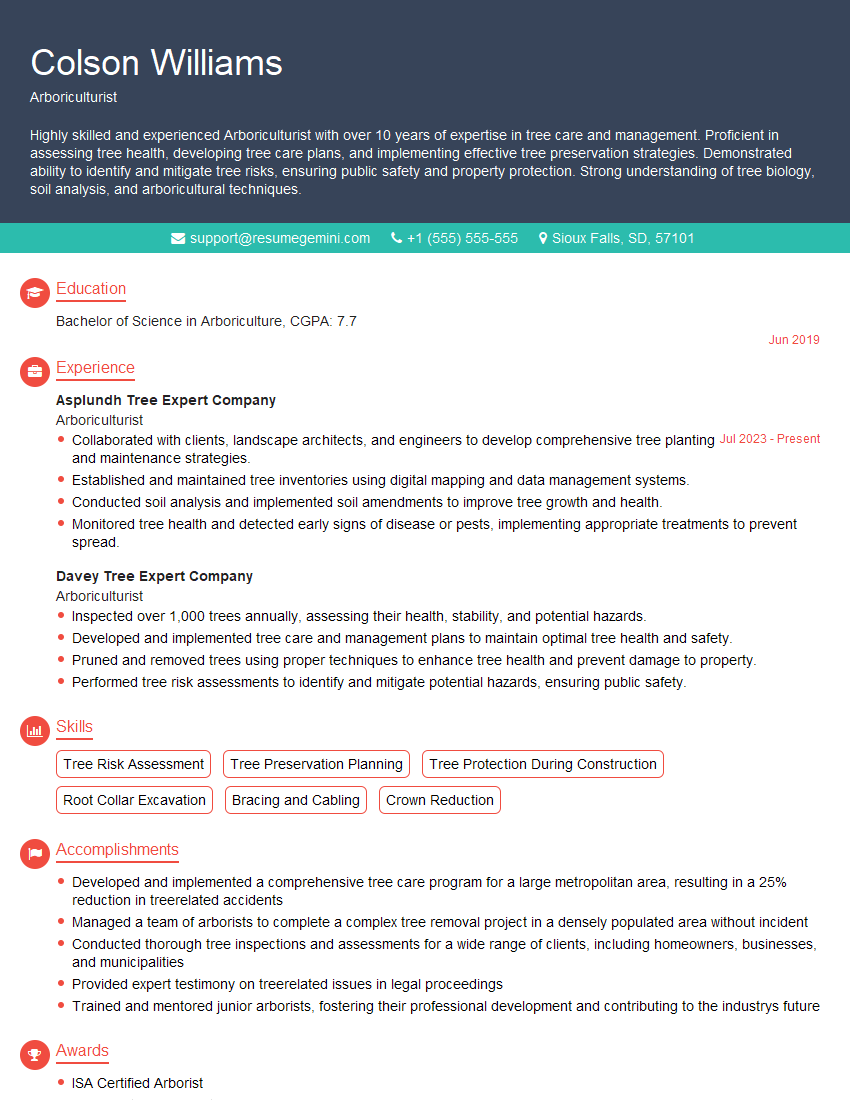
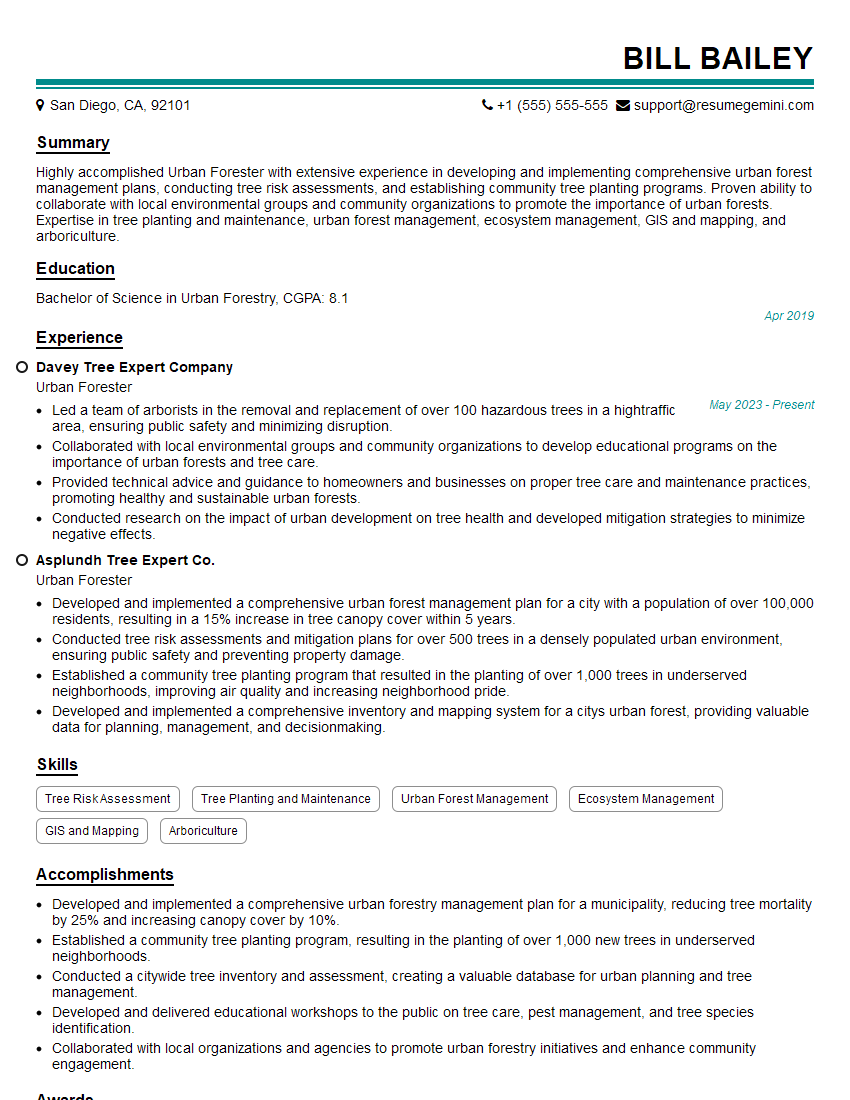
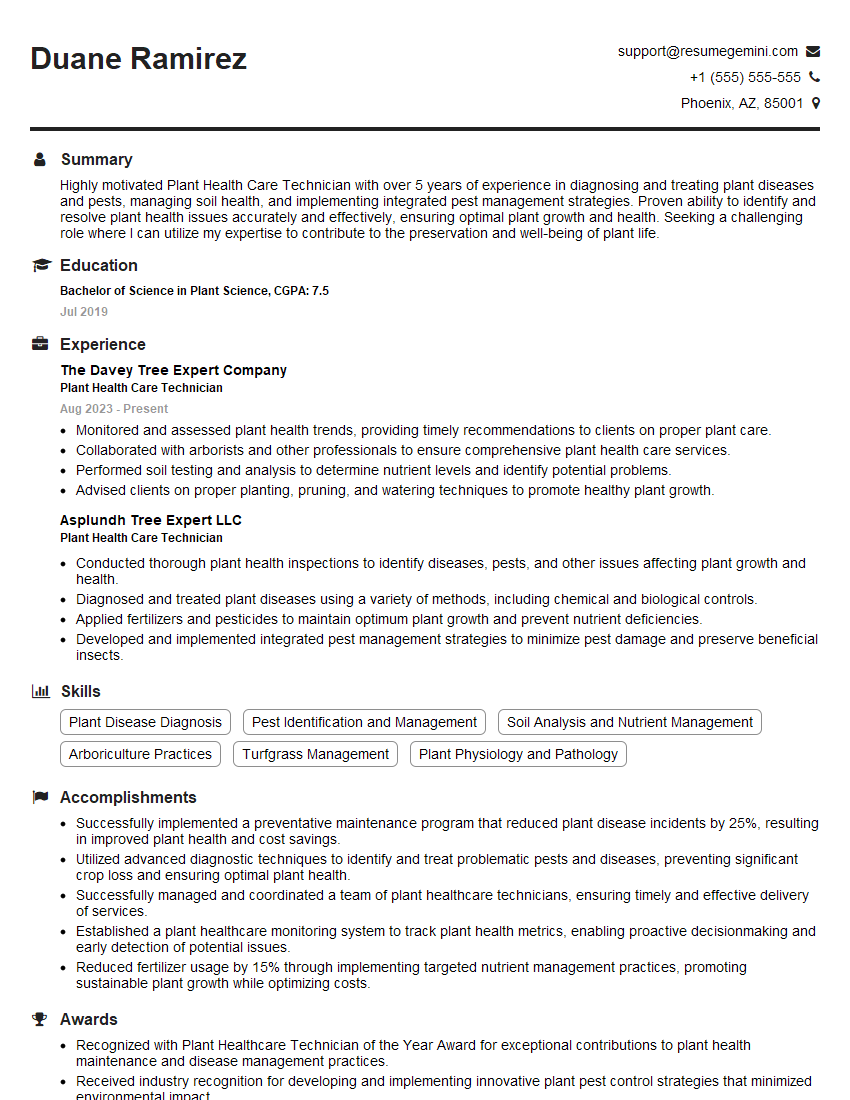
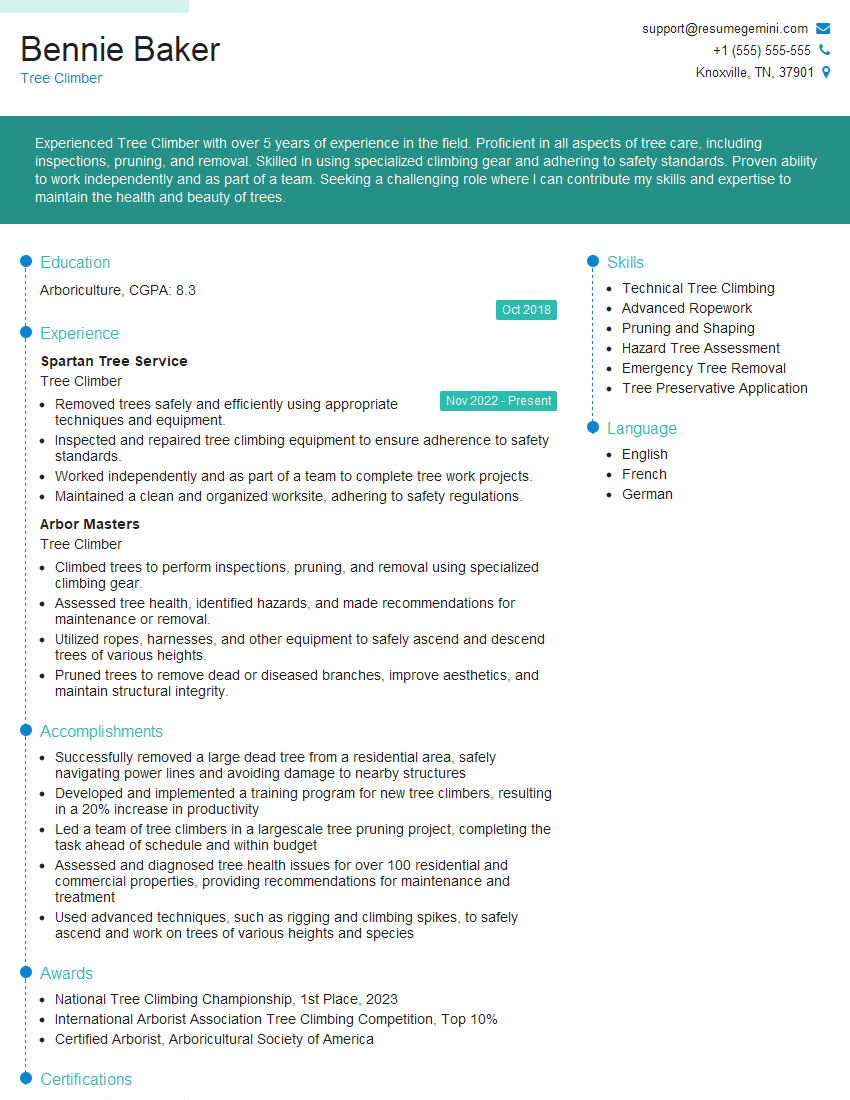
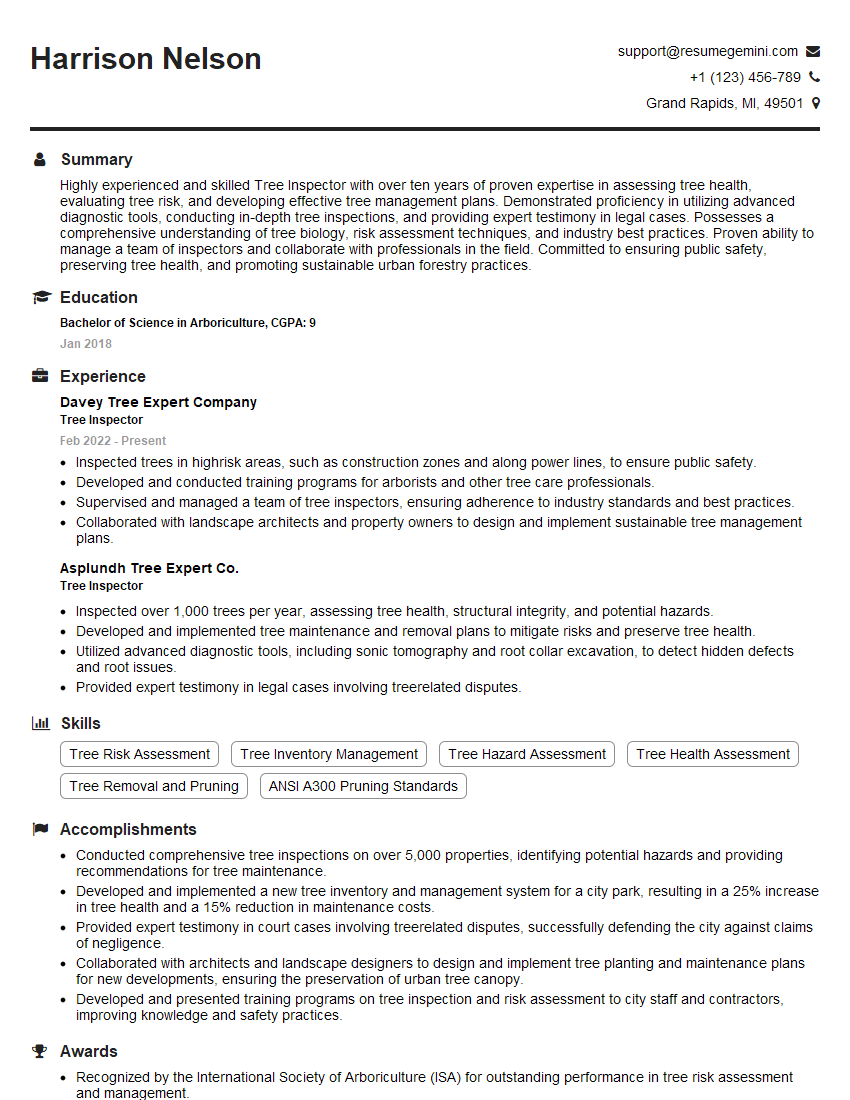
Mastering tree wound management techniques significantly enhances your expertise and marketability within the arboriculture and forestry fields, opening doors to advanced roles and higher earning potential. Creating a strong, ATS-friendly resume is crucial in showcasing your skills to potential employers. ResumeGemini is a trusted resource that can help you build a professional and impactful resume, maximizing your chances of landing your dream job. Examples of resumes tailored to showcasing expertise in tree wound management techniques are available to help guide you.

Explore more articles
Users Rating of Our Blogs
Share Your Experience
We value your feedback! Please rate our content and share your thoughts (optional).
What Readers Say About Our Blog
Very informative content, great job.
good