Feeling uncertain about what to expect in your upcoming interview? We’ve got you covered! This blog highlights the most important Knowledge of Workplace Safety interview questions and provides actionable advice to help you stand out as the ideal candidate. Let’s pave the way for your success.
Questions Asked in Knowledge of Workplace Safety Interview
Q 1. Explain your understanding of OSHA regulations.
OSHA (Occupational Safety and Health Administration) regulations are a comprehensive set of standards designed to protect workers from workplace hazards. My understanding encompasses a broad range, including general industry standards, construction standards, maritime standards, and specific regulations for various industries. These regulations cover a vast spectrum of issues, from hazard communication and personal protective equipment (PPE) to machine guarding and emergency action plans. For example, OSHA’s Hazard Communication Standard (HCS) mandates that employers inform employees about the hazards of chemicals in the workplace through Safety Data Sheets (SDS) and proper labeling. Another key area is fall protection, where OSHA sets specific requirements for fall protection systems in construction and other high-risk environments. I’m also familiar with OSHA’s recordkeeping requirements, including incident reporting and maintaining injury and illness logs. Understanding these regulations requires ongoing learning and staying updated on changes and interpretations.
Q 2. Describe your experience with conducting workplace hazard assessments.
Conducting workplace hazard assessments is a crucial part of my role. My approach is systematic and follows a well-defined process. It begins with a thorough walkthrough of the facility, observing the work processes and identifying potential hazards. This includes considering physical hazards like slips, trips, and falls; chemical hazards; biological hazards; ergonomic hazards; and psychosocial hazards such as stress and workload. I utilize various tools like checklists, job safety analysis (JSA), and the Hierarchy of Controls to analyze identified hazards. For example, during an assessment at a manufacturing plant, I identified a potential ergonomic hazard from repetitive movements on an assembly line. The JSA helped us pinpoint specific tasks contributing to the problem. Based on the assessment, I recommended implementing engineering controls, such as redesigning workstations, and administrative controls, such as job rotation and providing regular breaks, to mitigate the risk. Documentation of the assessment, including findings, recommendations, and corrective actions, is paramount.
Q 3. How do you develop and implement safety training programs?
Developing and implementing safety training programs requires a multifaceted approach. First, I conduct a needs analysis to identify the specific training requirements for each job role and the organization as a whole. This involves considering the hazards identified in the workplace hazard assessments and the employees’ existing knowledge and skills. Training programs are then designed using various methods, including classroom instruction, hands-on training, online modules, and simulations, to ensure engagement and knowledge retention. For instance, I’ve developed a comprehensive training program on lockout/tagout procedures for maintenance personnel, including both theoretical instruction and practical exercises on equipment. I also incorporate regular refresher training and updates to reflect changes in regulations or workplace procedures. Finally, I evaluate the effectiveness of the training programs using methods like post-training assessments and observation of employees in their work environments.
Q 4. What methods do you use to investigate workplace accidents?
Investigating workplace accidents requires a thorough and systematic approach to determine the root causes and prevent future occurrences. My methodology involves several key steps. First, I secure the accident scene and gather initial information from witnesses and involved personnel. Then, I collect evidence, including photographs, videos, and equipment records. I interview witnesses and employees involved, focusing on what happened, how it happened, and what could have been done differently. I also review relevant documentation, such as safety procedures, training records, and maintenance logs. Next, I analyze the collected data to identify contributing factors and root causes, often using tools like fault tree analysis or fishbone diagrams. Finally, I develop corrective actions to prevent similar accidents from happening in the future. A crucial aspect is to ensure that the investigation is objective and unbiased, focusing on facts and data rather than assigning blame.
Q 5. How do you ensure compliance with safety regulations?
Ensuring compliance with safety regulations is an ongoing process that requires proactive measures and continuous monitoring. This includes staying updated on current OSHA standards and any relevant industry-specific regulations. We regularly conduct safety inspections and audits to identify any non-compliance issues. We implement corrective actions immediately for any violations found. Employee training and communication play a vital role; ensuring employees understand and follow safety procedures. Record-keeping is crucial, meticulously documenting all safety-related activities, inspections, training, and incidents. Regular management review ensures continuous improvement. We use a combination of leading indicators (e.g., number of training hours completed, number of safety inspections conducted) and lagging indicators (e.g., number of accidents, severity of injuries) to monitor compliance and identify areas for improvement.
Q 6. Explain your experience with developing and implementing safety policies and procedures.
Developing and implementing safety policies and procedures is essential for establishing a strong safety culture. My experience involves creating comprehensive policies that align with OSHA regulations and best practices. These policies clearly outline employee responsibilities, reporting procedures, and disciplinary actions for non-compliance. I’ve developed policies on various aspects, including hazard communication, lockout/tagout, personal protective equipment (PPE) usage, and emergency response procedures. Policies are communicated effectively through training programs and readily accessible documentation. Procedures are detailed, step-by-step instructions for specific tasks and processes, designed to ensure consistency and safety. Regular review and updates are crucial to ensure that policies and procedures remain relevant and effective, reflecting changes in the workplace or new technologies. For example, I developed a detailed procedure for handling hazardous waste, covering storage, transportation, and disposal, ensuring compliance with all applicable regulations.
Q 7. Describe your experience with safety audits and inspections.
Safety audits and inspections are crucial for evaluating the effectiveness of safety programs and identifying areas for improvement. My experience includes conducting both internal and external audits, adhering to standardized checklists and best practices. I meticulously review documentation, observe work practices, and interview employees to assess compliance with safety regulations and policies. For example, in an audit of a construction site, I checked for proper fall protection measures, ensured scaffolding was erected correctly, and verified that workers were using appropriate PPE. I then document findings, highlighting both areas of compliance and non-compliance. Audits offer insights to proactively address potential hazards, prevent accidents, and enhance the overall safety performance of the organization. Following an audit, I prepare a report with detailed recommendations for corrective actions and further improvements to the safety management system.
Q 8. How do you identify and mitigate workplace hazards?
Identifying and mitigating workplace hazards is a systematic process that begins with proactive hazard identification and concludes with implementing effective control measures. Think of it like a detective solving a case: you need to gather evidence, analyze it, and then create a plan to prevent the crime from happening again.
Hazard Identification: This involves a multi-pronged approach. We use techniques like workplace inspections (walkthroughs, checklists), job hazard analyses (JHA – systematically breaking down a task to identify potential hazards), and incident/near-miss reporting. For example, a JHA for operating a forklift would analyze potential hazards like collisions with other equipment, falling objects, and unsafe lifting practices.
Hazard Mitigation: Once hazards are identified, we prioritize them based on severity and likelihood. Mitigation strategies follow the hierarchy of controls:
- Elimination: Completely removing the hazard. Example: Replacing a hazardous chemical with a safer alternative.
- Substitution: Replacing a hazard with a less hazardous alternative. Example: Replacing a manual task with an automated one.
- Engineering Controls: Modifying the workplace to reduce the hazard. Example: Installing machine guards to prevent worker injury.
- Administrative Controls: Changing work practices to minimize risk. Example: Implementing safety training programs and work permits.
- Personal Protective Equipment (PPE): Providing employees with PPE as a last resort. Example: Providing safety glasses, gloves, and hard hats.
Regular review and updates are crucial, as workplaces evolve and new hazards emerge. This is an ongoing process, not a one-time event.
Q 9. What is your experience with incident reporting and investigation?
Incident reporting and investigation are critical to preventing future occurrences. My experience encompasses all stages, from initial reporting to final corrective actions. I’ve worked with various incident reporting systems, ensuring accuracy and completeness of information. My investigative approach is fact-based, following established procedures and utilizing root cause analysis techniques.
For instance, in a past role involving a near-miss incident – a worker almost being struck by a falling object – we conducted a thorough investigation. This included interviewing witnesses, reviewing safety procedures, examining equipment, and analyzing the sequence of events. The root cause was identified as inadequate training and failure to follow established lockout/tagout procedures. The corrective action plan included enhanced training, updated procedures, and improved communication. We then tracked the effectiveness of our solutions to ensure recurrence prevention.
A well-documented investigation not only determines responsibility but more importantly focuses on identifying system failures that contributed to the incident – these are crucial areas for improvement and prevention.
Q 10. Describe your familiarity with different types of Personal Protective Equipment (PPE).
My familiarity with PPE is extensive, covering various types designed to protect against specific hazards. Think of PPE as a final layer of defense, used only when other controls are insufficient.
- Head Protection: Hard hats, bump caps for protection against impact and falling objects.
- Eye and Face Protection: Safety glasses, goggles, face shields to guard against flying debris, chemicals, and radiation.
- Hearing Protection: Earplugs, earmuffs to reduce noise exposure and prevent hearing loss.
- Respiratory Protection: Respirators, masks for protection against airborne hazards, such as dust, fumes, and gases.
- Hand Protection: Gloves to protect against cuts, abrasions, chemicals, and burns.
- Foot Protection: Safety shoes, boots to protect against impact, punctures, and electrical hazards.
- Body Protection: Aprons, coveralls, suits to protect against chemical spills, heat, and radiation.
Choosing the correct PPE is crucial. It should be appropriate for the specific hazard, fit correctly, and be maintained in good condition. Regular training on PPE use and inspection is essential.
Q 11. How do you communicate safety information effectively to employees?
Effective communication is paramount in workplace safety. It’s not just about providing information; it’s about ensuring that information is understood and acted upon. My approach utilizes a multi-channel strategy tailored to the audience and the message.
Methods:
- Training: Hands-on training sessions, including demonstrations and practical exercises. For example, a fire drill followed by a debrief.
- Toolbox Talks: Short, informal meetings to address specific safety concerns. They keep safety top-of-mind.
- Visual Aids: Posters, signage, videos, and infographics for quick reminders and information dissemination.
- Written Communication: Safety manuals, newsletters, email updates for detailed information and policy updates.
- Interactive Sessions: Q&A sessions, workshops, and feedback mechanisms to encourage engagement and address concerns directly.
- Technology: Utilizing safety apps and digital platforms for streamlined information sharing and reporting.
I ensure that all communication is clear, concise, accessible, and tailored to the understanding of the audience. Regular feedback mechanisms allow for adjustments and improvements, ensuring information is received and understood effectively.
Q 12. Explain your understanding of ergonomics and its importance in workplace safety.
Ergonomics is the science of designing the workplace to fit the worker, not the other way around. It focuses on minimizing physical strain and discomfort by optimizing posture, workstation setup, and work practices. The importance of ergonomics in workplace safety cannot be overstated, as it directly impacts worker health, productivity, and safety.
Importance:
- Reduced Musculoskeletal Disorders (MSDs): Proper ergonomics helps prevent MSDs like carpal tunnel syndrome, back pain, and tendonitis, which are common causes of workplace injuries and lost productivity.
- Improved Productivity: When workers are comfortable and free from pain, they are more productive and efficient.
- Reduced Absenteeism: Ergonomic improvements contribute to a healthier and safer work environment, leading to fewer work-related illnesses and injuries, hence less absenteeism.
- Enhanced Employee Morale: A focus on employee well-being and comfort boosts morale and creates a more positive work environment.
Example: Implementing adjustable chairs, keyboards, and monitor stands to accommodate different body sizes and postures is a simple yet effective ergonomic measure. Regular ergonomic assessments of workstations are critical for identification and correction of risk factors.
Q 13. Describe your experience with lockout/tagout procedures.
Lockout/Tagout (LOTO) procedures are critical safety protocols for controlling hazardous energy sources during maintenance and repair. These procedures ensure that equipment is de-energized and locked out to prevent accidental start-up, resulting in serious injury or fatality. My experience includes developing, implementing, and auditing LOTO programs.
Procedure:
- Preparation: Identifying all energy sources (electrical, mechanical, hydraulic, pneumatic, etc.) associated with the equipment.
- Lockout: Using appropriate lockout devices to disconnect and isolate the energy sources.
- Tagout: Attaching tags to lockout devices with clear instructions and identification of the person performing the work.
- Verification: Ensuring that the equipment is de-energized and safe to work on before beginning any maintenance tasks.
- Release: Following a clear procedure for releasing the lockout/tagout devices and restoring energy to the equipment only when work is completed and the equipment is safe.
Regular training and drills are vital to ensure that all employees involved in maintenance understand and follow the LOTO procedures. It’s crucial to stress the importance of compliance and the potential consequences of non-compliance.
Q 14. How do you manage workplace safety during emergency situations?
Managing workplace safety during emergencies requires preparedness and a well-defined emergency response plan. This involves proactive planning, regular drills, and clear communication channels.
Key elements:
- Emergency Response Plan: A detailed plan outlining procedures for various emergencies, including fire, evacuation, chemical spills, and medical emergencies. This plan should be clearly communicated and readily accessible to all employees.
- Emergency Training: Regular training on emergency procedures, including evacuation routes, assembly points, and the use of emergency equipment (fire extinguishers, first aid kits).
- Emergency Equipment: Ensuring that adequate emergency equipment is available, properly maintained, and easily accessible, including fire extinguishers, first aid kits, and emergency communication systems.
- Communication System: Establishing clear communication channels for disseminating information during emergencies, utilizing alarms, public address systems, and mobile communication devices.
- Post-Incident Review: Following any emergency, a thorough review is conducted to identify areas for improvement in the emergency response plan and procedures.
The success of managing safety during emergencies lies in preparedness and the ability to respond quickly and efficiently using the plan in place.
Q 15. Explain your experience with safety data sheets (SDS) and their utilization.
Safety Data Sheets (SDSs), formerly known as Material Safety Data Sheets (MSDSs), are crucial documents providing comprehensive information about hazardous chemicals. My experience involves not only utilizing SDSs to understand the risks associated with specific substances but also ensuring their accessibility and proper management within the workplace.
For example, in my previous role at a manufacturing plant, I developed a system for organizing and storing SDSs digitally, making them readily available to all employees through a searchable database. This improved compliance with regulations and ensured that employees had quick access to critical safety information. I also conducted regular audits to verify SDS accuracy and ensure that all chemicals used on site had updated SDSs.
Furthermore, I’ve trained employees on how to interpret SDS information, focusing on hazard identification, personal protective equipment (PPE) requirements, and emergency response procedures. Understanding sections like handling and storage, exposure controls, and emergency and first-aid procedures is critical for preventing accidents. We used interactive training modules and real-world case studies to make the training engaging and effective.
Career Expert Tips:
- Ace those interviews! Prepare effectively by reviewing the Top 50 Most Common Interview Questions on ResumeGemini.
- Navigate your job search with confidence! Explore a wide range of Career Tips on ResumeGemini. Learn about common challenges and recommendations to overcome them.
- Craft the perfect resume! Master the Art of Resume Writing with ResumeGemini’s guide. Showcase your unique qualifications and achievements effectively.
- Don’t miss out on holiday savings! Build your dream resume with ResumeGemini’s ATS optimized templates.
Q 16. What is your experience with risk assessment methodologies?
Risk assessment methodologies are fundamental to proactive safety management. My experience encompasses various methodologies, including HAZOP (Hazard and Operability Study), FMEA (Failure Mode and Effects Analysis), and simple risk matrices. My approach focuses on a systematic identification of hazards, assessment of risks, and implementation of appropriate control measures.
For instance, when assessing the risks associated with operating a new piece of machinery, I would conduct a HAZOP study involving a multidisciplinary team. This team would systematically examine the process, identifying potential deviations from the intended operation and their associated consequences. The team would then evaluate the risks associated with each hazard and determine suitable control measures, such as implementing safety interlocks, providing adequate training, or developing specific operating procedures. Following the assessment, I would document the findings and recommendations, ensuring their implementation and monitoring of effectiveness.
I’m adept at adapting methodologies based on the specific context and complexity of the situation. Simple risk matrices might suffice for lower-risk activities, while more comprehensive techniques like HAZOP are necessary for high-risk processes.
Q 17. How do you ensure the effectiveness of safety training programs?
The effectiveness of safety training hinges on several key factors, including relevance, engagement, and ongoing reinforcement. My approach involves designing tailored training programs that address specific workplace hazards and utilize diverse learning methods.
I prioritize interactive training methods like hands-on simulations and real-life case studies to enhance engagement and knowledge retention. For example, when training employees on lockout/tagout procedures, I’ve utilized realistic scenarios and mock equipment to reinforce safe practices. We also incorporate regular refresher training and incorporate feedback mechanisms to ensure continuous improvement. Post-training assessments, including both written tests and practical demonstrations, are crucial for verifying understanding and identifying knowledge gaps.
After implementing a training program, I routinely measure its effectiveness by monitoring accident rates, near-miss reports, and employee feedback. This data allows me to identify areas for improvement and adapt the training program accordingly. I believe that continuous improvement and employee feedback are vital to ensuring long-term safety effectiveness.
Q 18. Describe your experience with working with different regulatory bodies.
My experience with regulatory bodies, such as OSHA (Occupational Safety and Health Administration) and local equivalent agencies, is extensive. I understand and actively maintain compliance with all relevant regulations and standards. This involves staying up-to-date on the latest updates and ensuring that workplace practices align with the legal requirements.
I have a proven track record of conducting regular safety audits and inspections to identify potential non-compliance issues and implementing corrective actions. For instance, when an inspection revealed potential violations of lockout/tagout standards, I immediately initiated corrective actions, including retraining employees and improving safety procedures. This proactive approach minimized the risk of penalties and ensured a safe working environment.
Furthermore, I possess strong communication skills to effectively interact with inspectors and address any concerns or queries promptly and professionally. Building positive relationships with regulatory bodies allows for a collaborative approach to workplace safety.
Q 19. How do you handle conflict situations related to workplace safety?
Conflict situations related to workplace safety are often sensitive and require careful handling. My approach involves a combination of empathy, clear communication, and a focus on finding mutually acceptable solutions.
First, I actively listen to all parties involved, seeking to understand their perspectives and concerns. This step helps to de-escalate tensions and build trust. Next, I clarify the safety concerns, ensuring everyone understands the potential risks involved. Then, I work collaboratively with the parties involved to develop a solution that addresses their concerns while maintaining safety standards. This may involve negotiating compromises, mediating disputes, or implementing additional safety measures.
For example, if a disagreement arose between management and workers regarding the use of particular PPE, I would facilitate a discussion, presenting relevant data and SDS information, to reach a mutually acceptable compromise that ensures both safety and employee comfort.
Q 20. What are your strategies for improving employee engagement in safety?
Improving employee engagement in safety requires a multifaceted approach that fosters a culture of safety. This involves empowering employees to take ownership of their safety and actively participate in safety initiatives.
I incorporate several strategies to enhance engagement, including establishing open communication channels where employees can comfortably voice concerns or suggestions without fear of reprisal. This could involve regular safety meetings, suggestion boxes, or anonymous reporting systems. I also promote employee involvement in safety committees and encourage them to actively participate in risk assessments and hazard identification.
Recognition and rewards for safe work practices are critical. Celebrating achievements and recognizing employees’ contributions create a positive reinforcement cycle that motivates continued safe behavior. For example, we implemented a safety suggestion program where employees received awards for innovative safety improvements, fostering a culture of proactive engagement.
Q 21. Describe your experience with the development and implementation of safety improvement plans.
Developing and implementing safety improvement plans involves a structured approach. It begins with a thorough assessment of current safety performance, identifying areas for improvement and establishing measurable goals.
I typically utilize data from accident reports, near-misses, and safety audits to pinpoint areas requiring attention. This data forms the basis for defining specific, measurable, achievable, relevant, and time-bound (SMART) goals for the safety improvement plan. These goals guide the development of specific actions, responsibilities, and timelines. Once the plan is developed, I ensure its effective implementation through regular monitoring, performance tracking, and adjustments as needed.
For example, when addressing a high rate of slips and falls, we implemented a plan with the SMART goal of reducing slips and falls by 25% within six months. This involved measures like improved housekeeping, floor maintenance, and additional employee training. The progress towards this goal was closely monitored using key performance indicators, and adjustments to the plan were made based on the collected data.
Q 22. How do you measure the effectiveness of safety initiatives?
Measuring the effectiveness of safety initiatives requires a multifaceted approach, going beyond simply counting incidents. We need to track leading indicators (proactive measures) and lagging indicators (reactive measures) to get a complete picture.
Leading Indicators: These predict future incidents. Examples include the number of safety training hours completed, the frequency of safety inspections, employee participation in safety committees, and the number of near-miss reports submitted. A higher number of near-miss reports, for example, might indicate a higher awareness of safety risks, potentially preventing future accidents.
Lagging Indicators: These reflect past events. Examples include the number of accidents, injuries, illnesses, lost-time incidents, and property damage. A decrease in these metrics demonstrates a positive impact of safety initiatives.
Data Analysis: Regularly analyzing this data using charts and graphs allows us to identify trends, pinpoint areas needing improvement, and measure the success of specific interventions. For instance, if we implement a new safety training program and see a significant drop in near-miss reports related to that training’s focus area, it’s a strong indicator of the program’s effectiveness.
Surveys and Feedback: Employee satisfaction surveys and feedback mechanisms provide invaluable qualitative data. Understanding employee perceptions of safety culture and their confidence in safety procedures is crucial for a holistic evaluation.
Ultimately, effectiveness is measured by a demonstrable reduction in workplace hazards and a positive impact on the safety culture, leading to a healthier and safer work environment.
Q 23. Explain your experience with creating and presenting safety reports.
I have extensive experience in creating and presenting safety reports, encompassing various formats tailored to the audience. My reports typically include executive summaries, detailed analyses of incidents, root cause investigations, corrective actions, and recommendations for improvements. For example, in my previous role, I investigated a fall from height incident. My report detailed the circumstances, identified the failure of the safety harness as the root cause, recommended retraining on harness usage, and proposed changes to the inspection protocol for fall protection equipment. This resulted in the implementation of new training and inspection procedures, effectively minimizing similar future incidents.
When presenting these reports, I ensure clear and concise communication using visual aids like charts and graphs to highlight key findings. I am adept at tailoring my presentation style to diverse audiences, from shop-floor workers to executive management, ensuring the information is easily understood and actionable.
Q 24. Describe your knowledge of different types of safety equipment and their applications.
My knowledge of safety equipment is comprehensive and spans various industries. This includes but isn’t limited to:
Personal Protective Equipment (PPE): This includes hard hats, safety glasses, gloves, respirators, hearing protection, safety footwear, and high-visibility clothing. The selection of appropriate PPE is crucial and depends entirely on the specific hazards present in the workplace.
Fall Protection Equipment: This involves harnesses, lanyards, lifelines, and anchor points for preventing falls from heights. Regular inspection and maintenance of this equipment are critical.
Respiratory Protection: This encompasses various respirators, from simple dust masks to self-contained breathing apparatus (SCBA), depending on the type and concentration of airborne hazards.
Fire Protection Equipment: This includes fire extinguishers, sprinkler systems, fire alarms, and emergency escape plans. Regular training on their proper use is paramount.
Machine Guarding: This includes various safety devices like light curtains, interlocks, and emergency stops designed to prevent injuries from machinery.
I understand the importance of selecting the correct equipment for the specific hazard, ensuring proper training in its use, and implementing regular inspection and maintenance schedules to guarantee its effectiveness and prevent equipment failure.
Q 25. How do you address employee concerns or complaints related to workplace safety?
Addressing employee concerns and complaints about workplace safety requires a sensitive and proactive approach. I believe in creating a culture of open communication where employees feel comfortable raising concerns without fear of reprisal.
Active Listening: I start by actively listening to the employee’s concerns, demonstrating empathy and understanding.
Investigation: I thoroughly investigate the complaint, gathering relevant information and evidence.
Action Plan: Based on the investigation, I develop an action plan to address the issue promptly. This might involve implementing corrective actions, providing additional training, or modifying existing safety procedures.
Feedback: I provide the employee with feedback on the actions taken and the timeline for resolving the issue. Transparency and communication are key.
Follow-up: I follow up with the employee to ensure the issue is resolved to their satisfaction and that any necessary changes have been implemented effectively.
By fostering trust and ensuring a timely and effective response, I aim to create a safer and more positive work environment where employees feel valued and heard.
Q 26. Describe your understanding of the hierarchy of hazard controls.
The hierarchy of hazard controls is a framework used to eliminate or minimize workplace hazards, prioritizing the most effective methods. It’s a sequential approach, starting with the most effective control and moving down the hierarchy if the higher level controls are not feasible or sufficient.
Elimination: The most effective way to control a hazard is to eliminate it entirely. For example, removing a hazardous substance from the workplace altogether.
Substitution: Replacing a hazardous substance or process with a safer alternative. For example, replacing a solvent with a water-based cleaner.
Engineering Controls: Implementing physical changes to the workplace to reduce or eliminate the hazard. Examples include installing machine guards, improving ventilation, or providing better lighting.
Administrative Controls: Implementing changes to work practices or procedures to minimize the risk. Examples include implementing job rotation, providing safety training, or establishing work permits.
Personal Protective Equipment (PPE): Providing employees with appropriate PPE as the last line of defense. This is the least effective control measure and should only be used when other controls are not feasible or sufficient.
Following this hierarchy ensures that the most effective control measures are prioritized, leading to a significantly safer work environment.
Q 27. How would you handle a situation where an employee refuses to follow safety regulations?
An employee’s refusal to follow safety regulations is a serious matter requiring a structured approach. My response would depend on the nature of the violation and the employee’s history.
Verbal Counseling: I would begin with a conversation to understand the reason for the refusal. Perhaps there’s a misunderstanding, a lack of training, or a genuine concern about the safety measure.
Written Warning: If the refusal continues, a written warning would be issued, clearly outlining the violation and the potential consequences.
Retraining: Depending on the situation, retraining on relevant safety procedures might be necessary to ensure the employee understands and complies with regulations.
Disciplinary Action: If the refusal persists after all other measures have been exhausted, escalating disciplinary action, up to and including termination, would be considered, in accordance with company policies and legal requirements.
Documentation: Throughout the process, I would meticulously document all interactions and actions taken to ensure a clear record and to protect both the employee and the company.
The goal is not to punish but to ensure compliance with safety regulations to protect the employee and their coworkers. A consistent and fair approach is crucial to maintain a safe and productive work environment.
Q 28. Explain your experience with conducting safety inspections and identifying areas for improvement.
I have extensive experience conducting safety inspections, using a systematic approach to identify hazards and areas for improvement. My process typically includes:
Planning: Defining the scope of the inspection, identifying areas to be inspected, and assembling the necessary equipment and documentation.
Inspection: Thoroughly inspecting the workplace, paying attention to details and using checklists to ensure a comprehensive review. This includes observing work practices, examining equipment, and assessing environmental conditions.
Documentation: Recording all findings, including observations, measurements, photographs, and any potential hazards identified. This documentation forms the basis of my report.
Reporting: Compiling a comprehensive report detailing the findings, including the identification of hazards, risk assessments, and recommendations for corrective actions.
Follow-up: Following up on the implementation of corrective actions to ensure the hazards are mitigated effectively.
For instance, during a recent inspection, I discovered a lack of proper machine guarding on a piece of equipment. My report detailed the hazard, the potential for injury, and recommended the installation of appropriate guards. Following the report, the guards were promptly installed, mitigating the risk.
Key Topics to Learn for Knowledge of Workplace Safety Interview
- Hazard Identification and Risk Assessment: Understanding methods for identifying potential hazards (e.g., ergonomic, chemical, biological, physical) and assessing their associated risks using qualitative and quantitative techniques. Practical application: Describing your experience in conducting a risk assessment and implementing control measures.
- Safety Regulations and Compliance: Familiarity with relevant legislation, standards, and best practices (OSHA, etc.) and the ability to explain how these regulations apply to various workplace scenarios. Practical application: Explaining your understanding of specific regulations and how you ensured compliance in past roles.
- Personal Protective Equipment (PPE): Knowledge of different types of PPE, their appropriate selection based on identified hazards, and their proper use and maintenance. Practical application: Describing scenarios where you selected and implemented appropriate PPE to mitigate risks.
- Incident Investigation and Reporting: Understanding the process of investigating workplace incidents, identifying root causes, and implementing corrective actions to prevent recurrence. Practical application: Explaining your experience in conducting incident investigations and generating reports.
- Emergency Preparedness and Response: Knowledge of emergency procedures, evacuation plans, and the role of safety personnel in emergency situations. Practical application: Discussing your experience with emergency response training and drills.
- Training and Communication: Understanding the importance of effective safety training programs and communication strategies to ensure a safe work environment. Practical application: Describing your experience in delivering safety training or promoting safety awareness initiatives.
- Ergonomics and Workplace Design: Knowledge of ergonomic principles and how they apply to workplace design to minimize musculoskeletal injuries. Practical application: Explaining how you’ve contributed to improving workplace ergonomics in previous roles.
Next Steps
Mastering Knowledge of Workplace Safety is crucial for career advancement in many industries. Demonstrating a strong understanding of safety principles and practices significantly enhances your value to potential employers. To increase your job prospects, create an ATS-friendly resume that effectively showcases your skills and experience. We highly recommend using ResumeGemini to build a professional and impactful resume. ResumeGemini offers a streamlined process and provides examples of resumes tailored to Knowledge of Workplace Safety, helping you present your qualifications in the best possible light. Take the next step towards your dream career – start building your resume with ResumeGemini today!
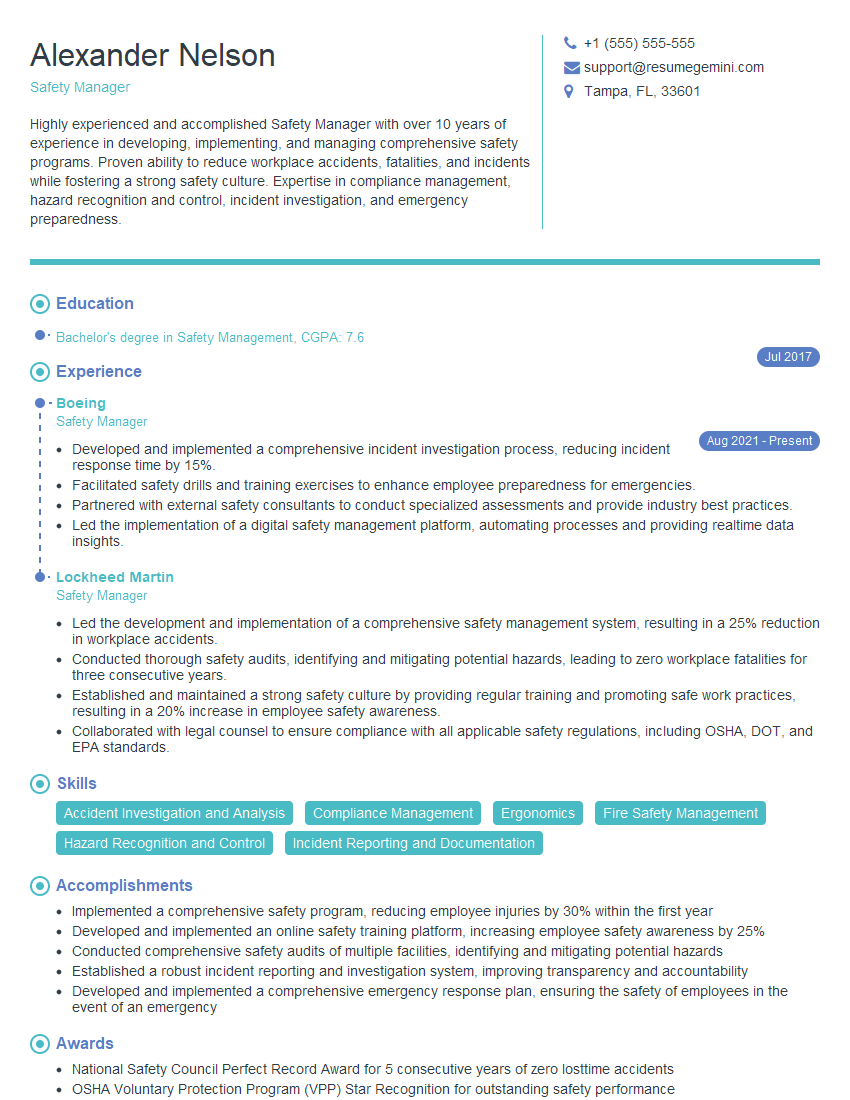
Safety Manager Resume Sample
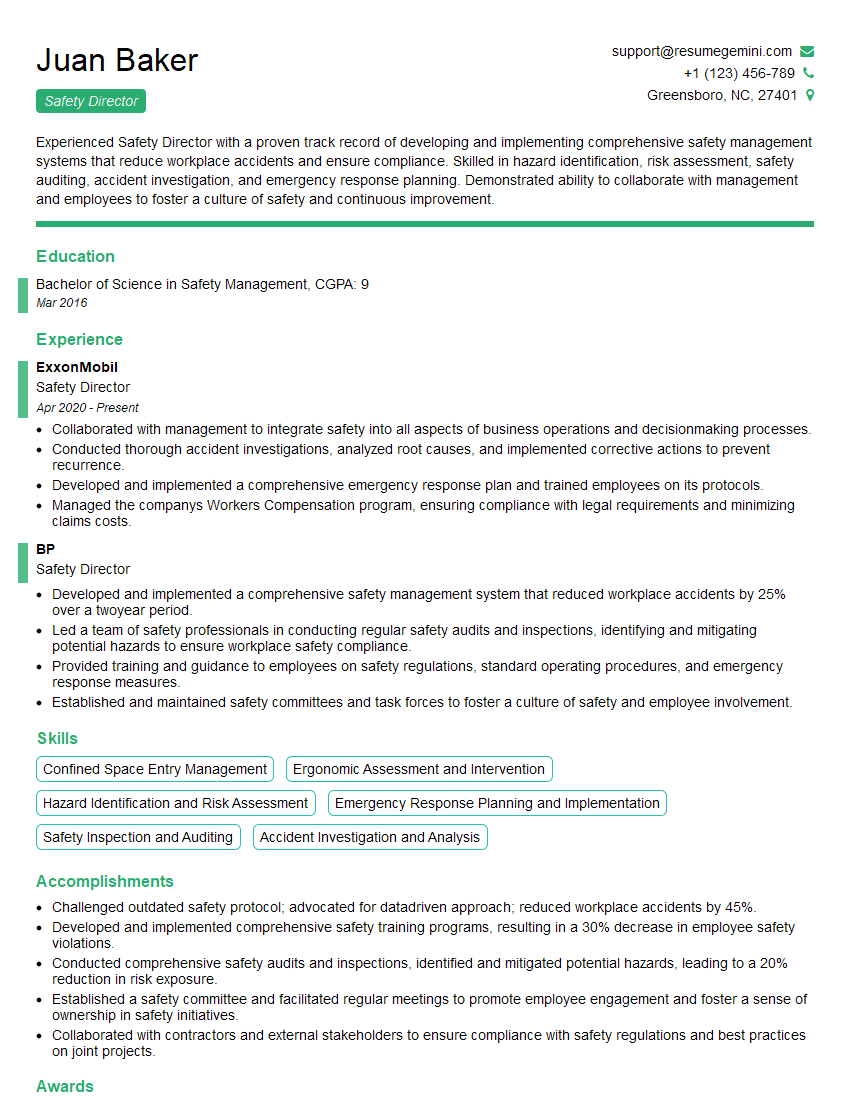
Safety Director Resume Sample
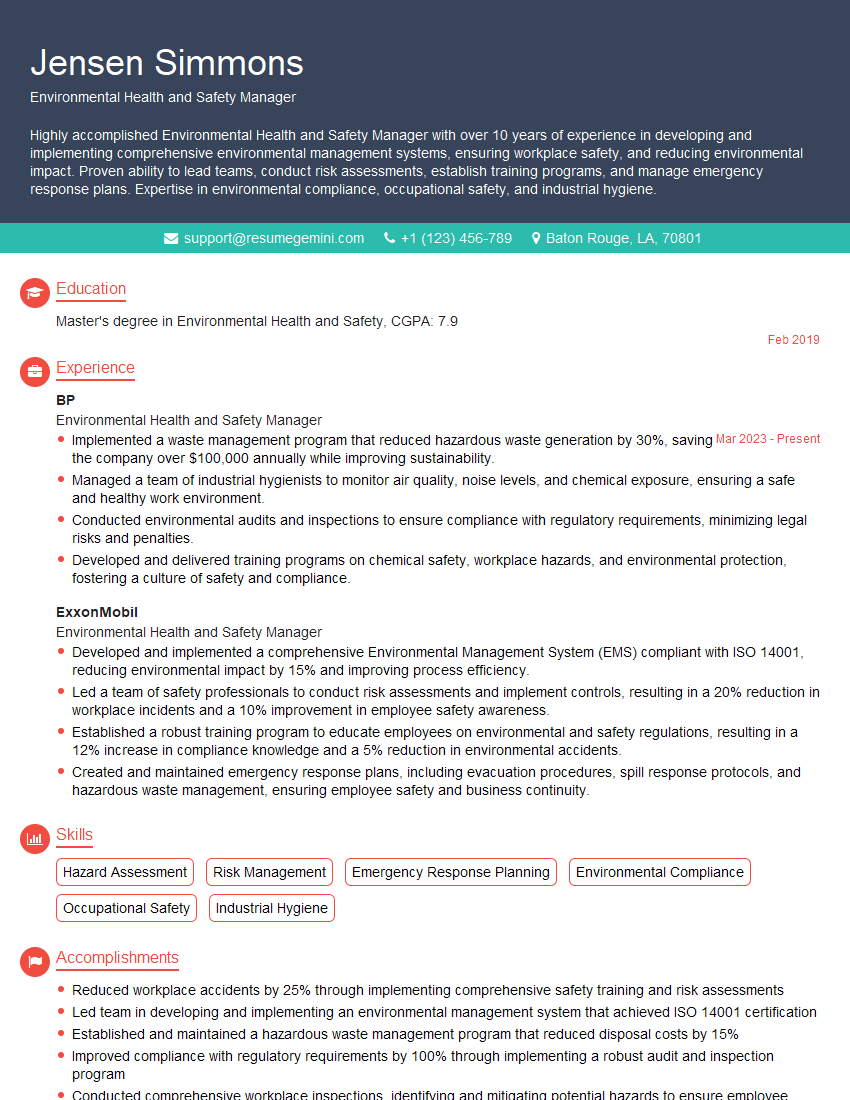
Environmental Health and Safety Manager Resume Sample

Compliance Officer Resume Sample
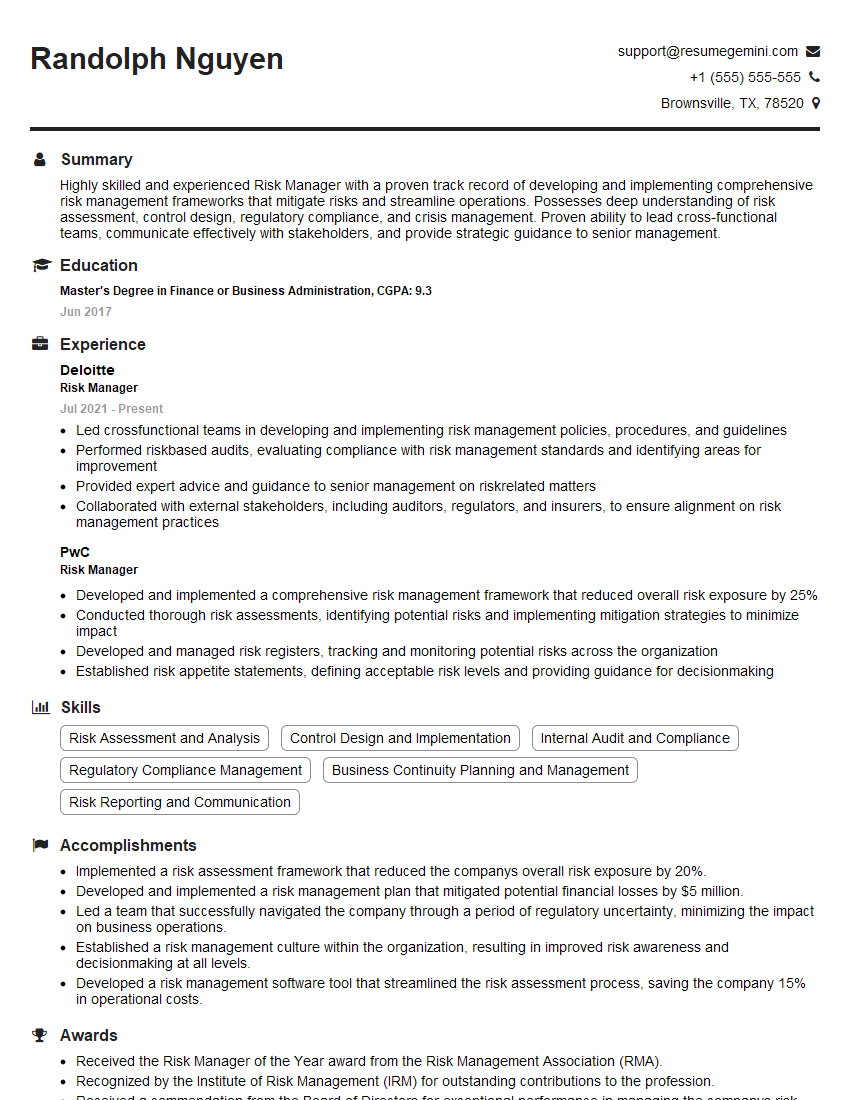
Risk Manager Resume Sample
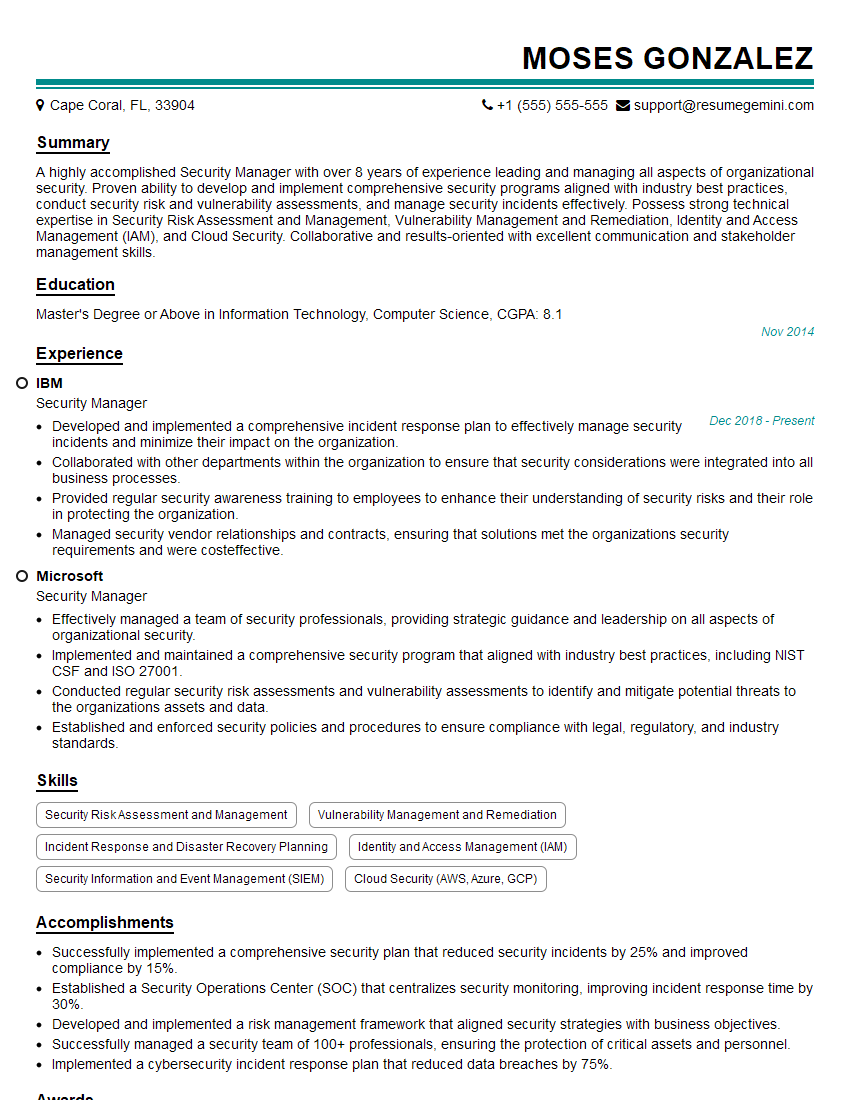
Security Manager Resume Sample
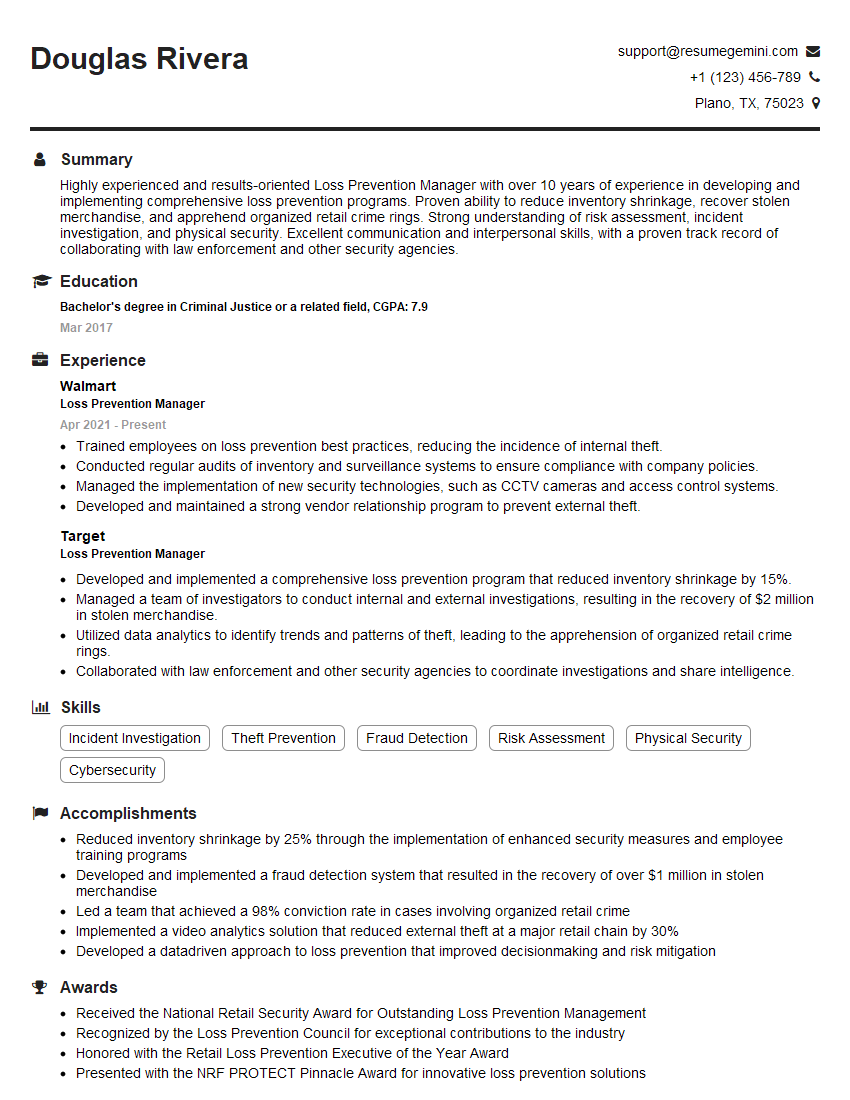
Loss Prevention Manager Resume Sample
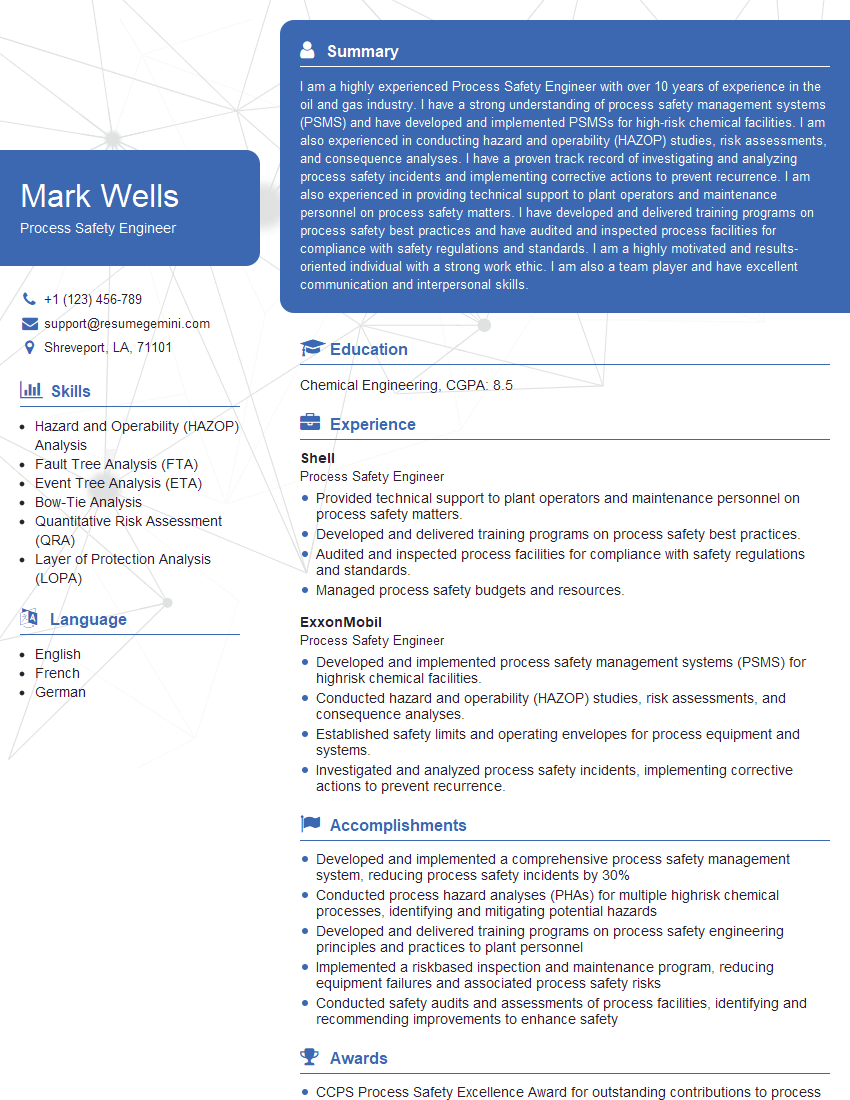
Process Safety Engineer Resume Sample
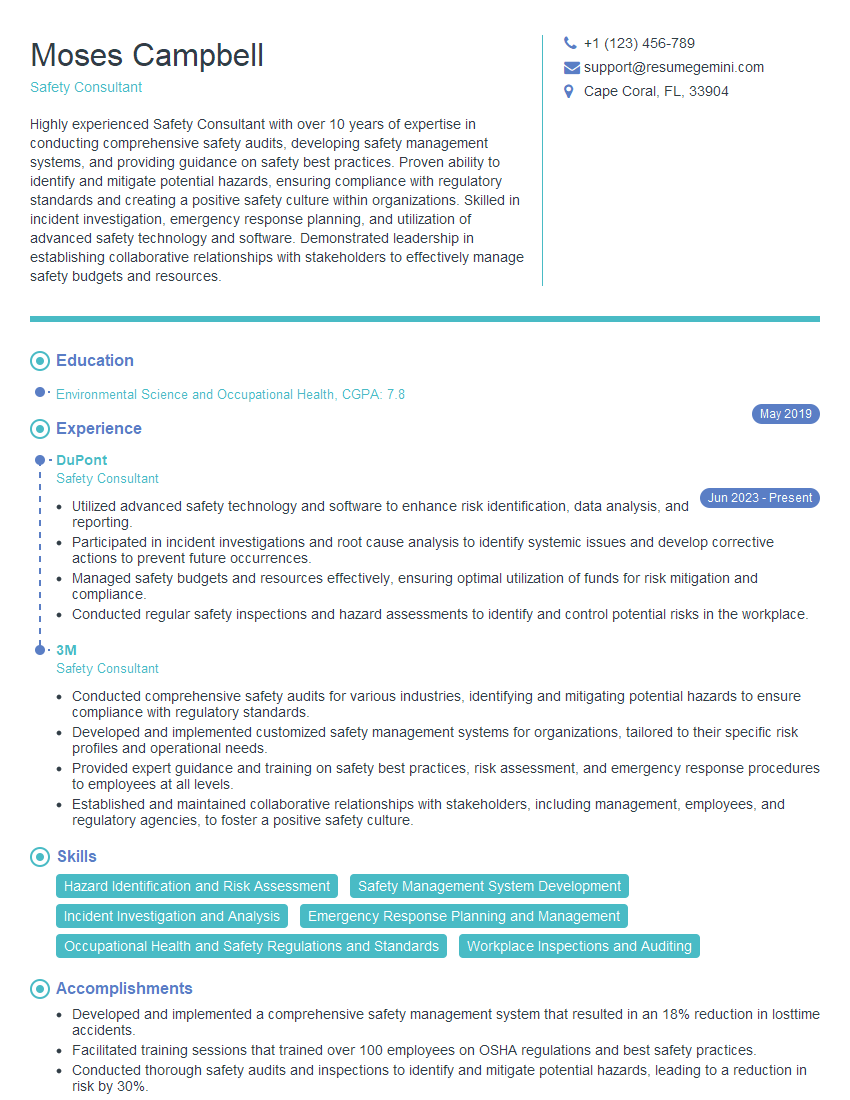
Safety Consultant Resume Sample
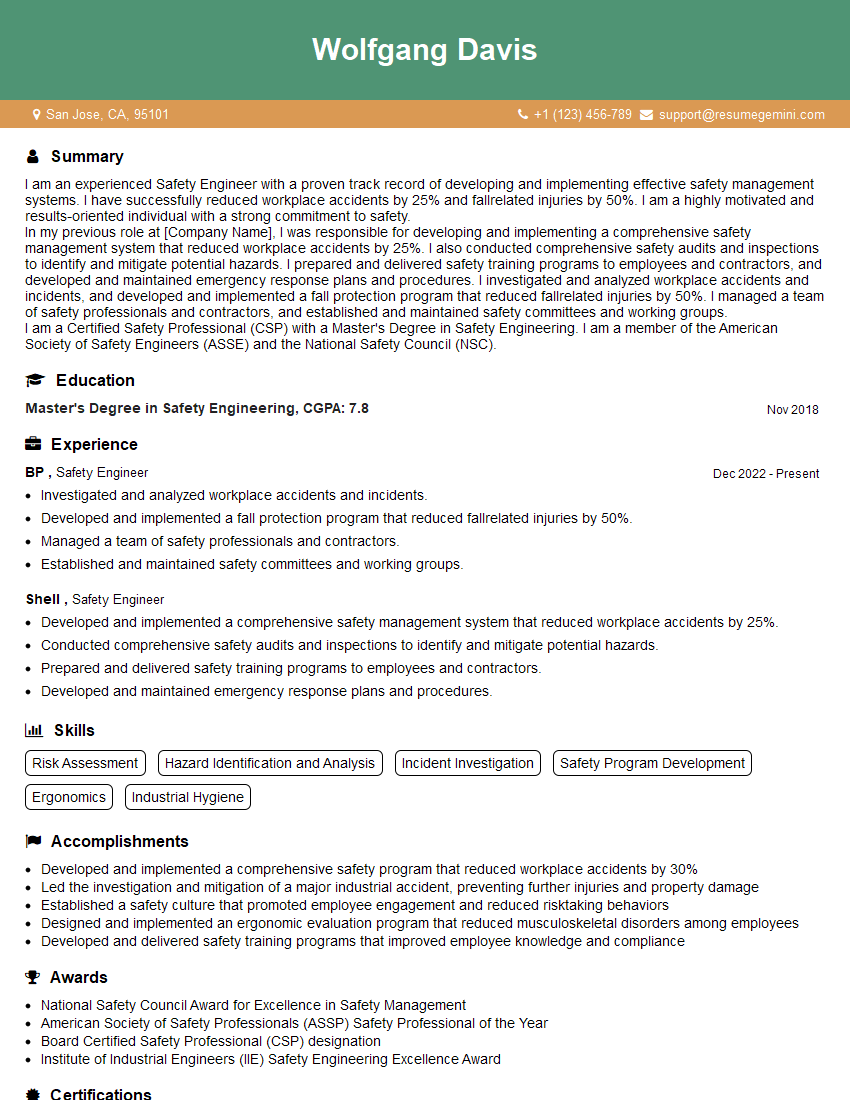
Safety Engineer Resume Sample
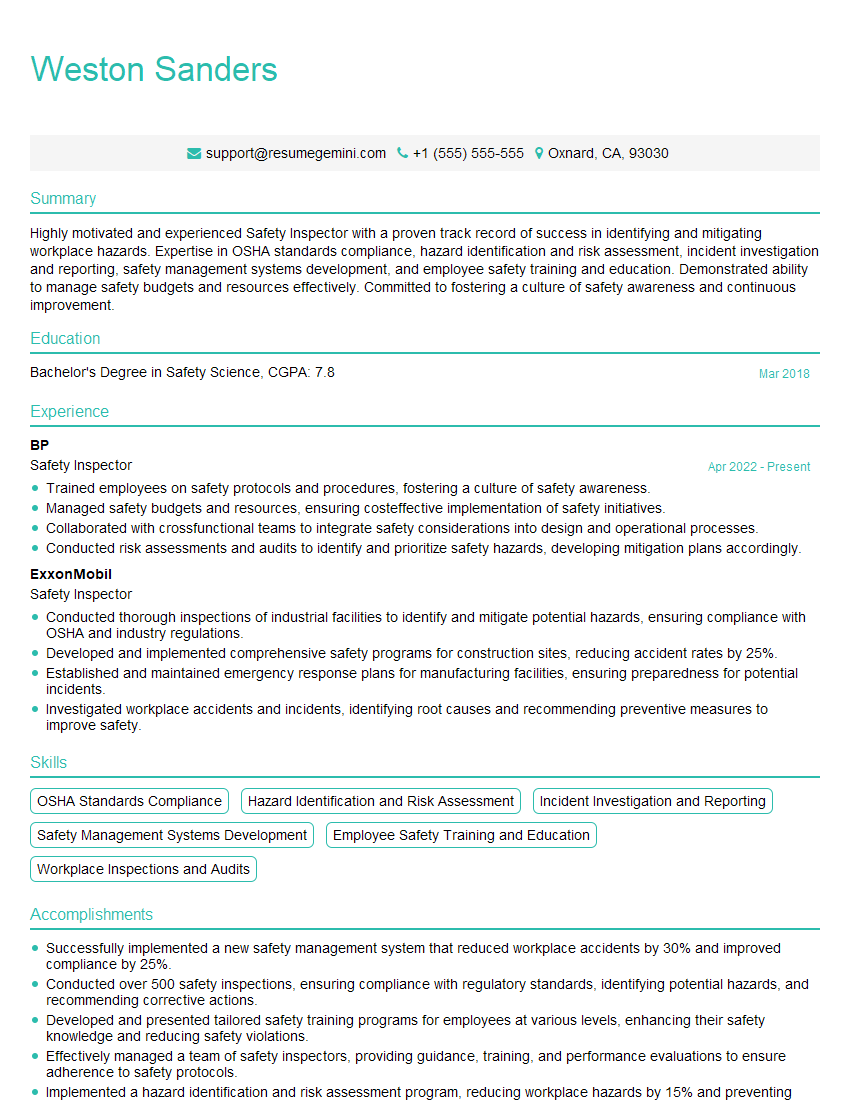
Safety Inspector Resume Sample
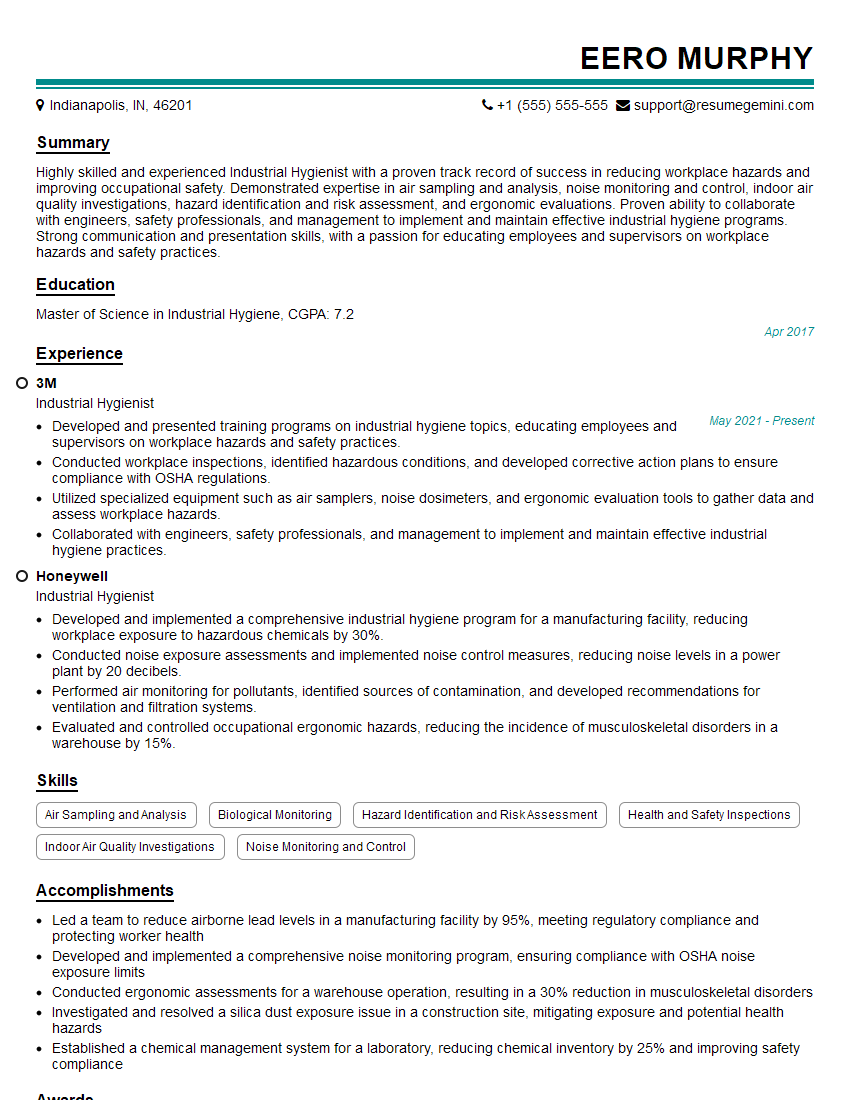
Industrial Hygienist Resume Sample
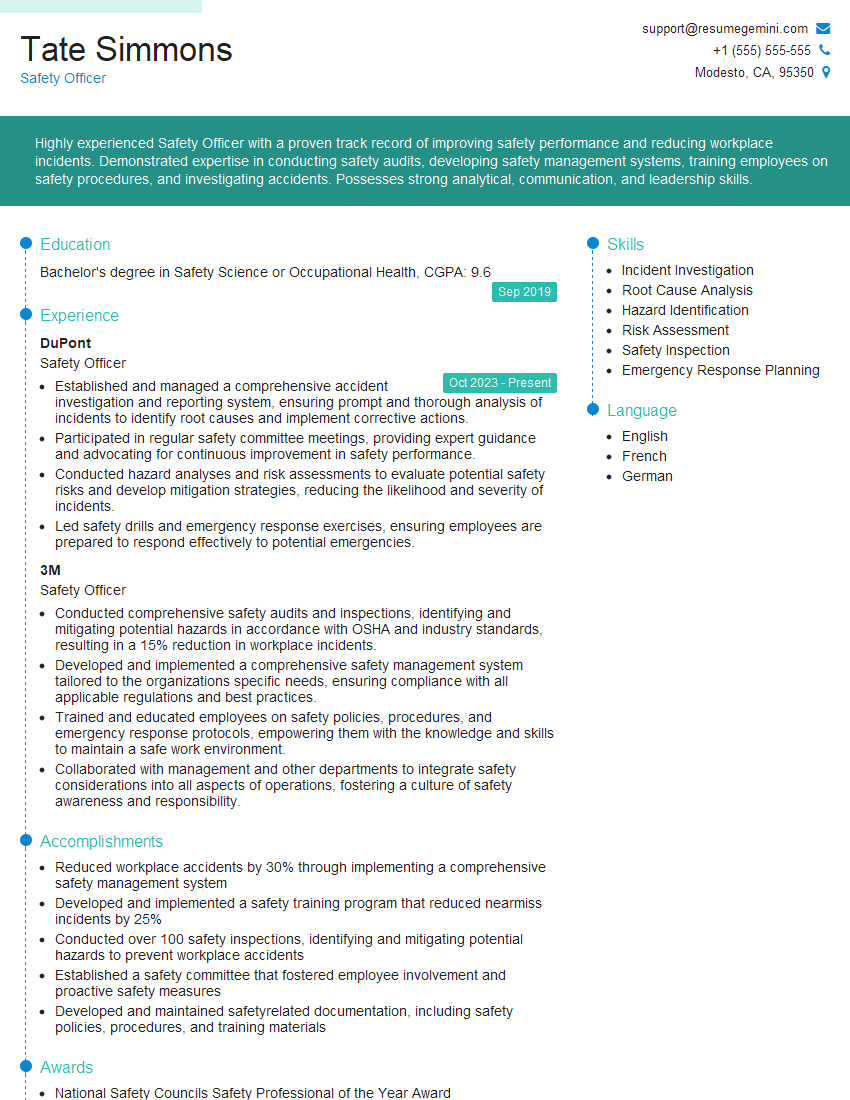
Safety Officer Resume Sample
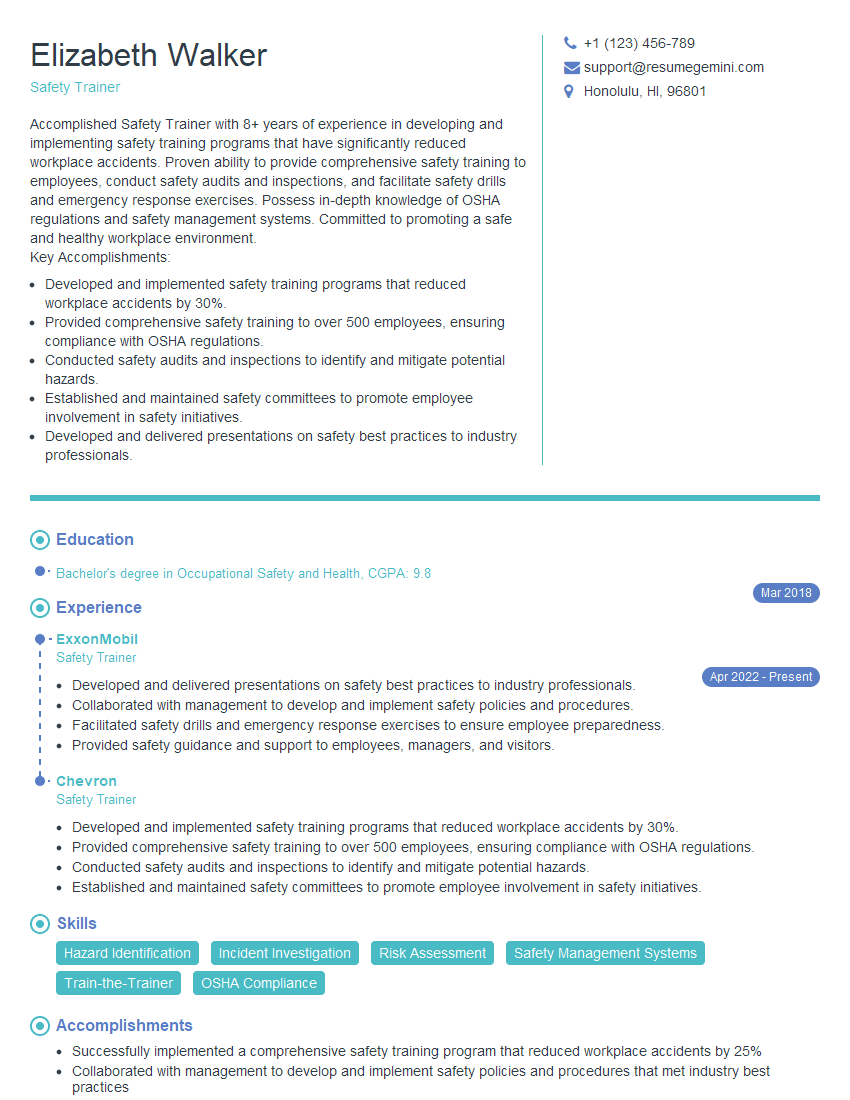
Safety Trainer Resume Sample
Explore more articles
Users Rating of Our Blogs
Share Your Experience
We value your feedback! Please rate our content and share your thoughts (optional).
What Readers Say About Our Blog
Very informative content, great job.
good