Feeling uncertain about what to expect in your upcoming interview? We’ve got you covered! This blog highlights the most important Land Information Systems interview questions and provides actionable advice to help you stand out as the ideal candidate. Let’s pave the way for your success.
Questions Asked in Land Information Systems Interview
Q 1. Explain the difference between vector and raster data models.
Vector and raster data models are two fundamentally different ways of representing geographic information in a Land Information System (LIS). Think of it like drawing a map: you can either draw precise lines and points (vector) or paint it with pixels of different colors (raster).
- Vector Data: Represents geographic features as points, lines, and polygons. Each feature has precise coordinates defining its location and geometry. For example, a road is represented as a line with specific start and end points, a building as a polygon with defined vertices, and a tree as a point. Vector data is ideal for storing features with well-defined boundaries and attributes, such as cadastral parcels, utility lines, or transportation networks. It’s generally smaller in file size than raster data for the same area.
- Raster Data: Represents geographic features as a grid of cells or pixels, each cell containing a value representing a particular attribute. Examples include aerial photographs, satellite imagery, and elevation models (DEMs). Each pixel represents a specific area on the ground and stores information like color, elevation, or temperature. Raster data is good for continuous features like elevation, temperature, or land cover, where precise boundaries aren’t as critical. It can, however, be significantly larger in file size than vector data.
In essence, the choice between vector and raster depends on the type of geographic information being managed and the intended analysis. Often, LIS uses both models, leveraging their respective strengths.
Q 2. Describe your experience with various GIS software (e.g., ArcGIS, QGIS).
My experience with GIS software spans several years and includes extensive use of both ArcGIS and QGIS. In my previous role, I primarily utilized ArcGIS Pro for its advanced geoprocessing capabilities and robust spatial analysis tools, particularly for complex projects involving large datasets and intricate spatial relationships. I’ve used it for tasks such as creating and managing geodatabases, performing overlay analysis, and generating high-quality maps for presentation and reporting. I’m also proficient in QGIS, which I’ve found to be a powerful and versatile open-source alternative. I often use QGIS for quick analysis, data visualization, and tasks requiring scripting. For instance, I’ve used QGIS to process large raster datasets and develop custom plugins to automate repetitive tasks. My familiarity with both platforms allows me to adapt to various project needs and leverage the unique features of each software.
Q 3. How do you ensure data accuracy and integrity in a Land Information System?
Ensuring data accuracy and integrity in a Land Information System is paramount. It involves a multi-pronged approach spanning data acquisition, processing, storage, and analysis. My strategy involves:
- Data Source Validation: Carefully evaluating the reliability and accuracy of all data sources – this includes verifying the source’s credentials, assessing its methodology, and comparing it with other reliable datasets.
- Metadata Management: Implementing a comprehensive metadata system that documents the source, date, accuracy, and limitations of each dataset. This enables traceability and improves data discoverability and reproducibility.
- Data Cleaning and Pre-processing: Applying rigorous procedures to detect and correct errors, outliers, and inconsistencies in data. This can involve spatial checks (e.g., verifying topology), attribute checks (e.g., range and consistency checks), and data transformations.
- Data Validation and Quality Control: Implementing checks and balances to maintain data accuracy throughout its lifecycle, including regular audits and verification of updates. I often employ error detection techniques such as topology rules and attribute checks within GIS software.
- Version Control: Using a version control system to track changes to data and allow for easy rollback to previous versions if needed.
- Data Security: Implementing robust security measures to protect data from unauthorized access, modification, or deletion.
For instance, in a recent project involving cadastral mapping, I implemented rigorous quality control checks, including topology rules to ensure that polygon boundaries matched seamlessly and did not overlap, and attribute checks to confirm data consistency, leading to a significantly improved accuracy rate.
Q 4. What are the common coordinate reference systems used in your region?
(Note: This answer will need to be customized to reflect the specific region. Replace the example below with the appropriate coordinate reference systems for your target region.)
In my region, the most commonly used coordinate reference systems are UTM Zone 10N (Universal Transverse Mercator) and NAD83 (North American Datum of 1983). UTM Zone 10N is a projected coordinate system suitable for large-scale mapping and surveying, while NAD83 is a geodetic datum that serves as the reference framework for geographic coordinates. The choice between these systems depends on the specific application; UTM is preferred for local area projects while NAD83 might be used for broader regional or national applications. We also utilize State Plane Coordinate Systems (SPCS) for high accuracy local surveys.
Q 5. Explain the concept of georeferencing.
Georeferencing is the process of assigning geographic coordinates (latitude and longitude) to points on an image or map that doesn’t already have them. Think of it like adding a location tag to a photograph. It’s essential for integrating diverse data sources into a GIS. This is achieved by identifying common points (control points) between the image and a known reference map or dataset. Then, a transformation algorithm is applied to establish a spatial relationship between the two, effectively ‘geolocating’ the image.
For example, imagine having a historical aerial photo of a city. To use it in a GIS, you’d need to georeference it. You would identify several easily recognizable features (like street intersections or building corners) visible in both the aerial photo and a current base map. You would then input the coordinates of these features from the base map into the GIS software and associate them with the corresponding points in the aerial photo. The software will use these control points to calculate a transformation to align the aerial photo with the geographic coordinate system.
Q 6. How do you handle spatial data projections and transformations?
Spatial data projections and transformations are crucial for handling data from different coordinate reference systems (CRS). Different CRS represent the Earth’s curved surface in different ways, leading to discrepancies in the position of geographic features. GIS software uses projection and transformation functions to convert data from one CRS to another.
For example, data from a satellite image might be in a geographic coordinate system (latitude and longitude), while a local map may be in a projected coordinate system (like UTM). To perform overlay analysis, we would transform the satellite image to the same projection as the map. This is done using various transformation techniques like datum transformations (e.g., NAD83 to WGS84) and map projections (e.g., UTM to Lambert Conformal Conic).
I regularly use the GIS software’s built-in tools to perform these transformations, carefully selecting the appropriate transformation method to minimize distortion and ensure accuracy. Understanding the implications of different projection types and their effects on the accuracy of measurements and analysis is paramount for accurate results.
Q 7. Describe your experience with spatial analysis techniques (e.g., buffering, overlay analysis).
My experience with spatial analysis techniques is extensive. I have employed various techniques including buffering, overlay analysis, network analysis, and proximity analysis to solve real-world problems.
- Buffering: This creates a zone around a feature, useful for identifying areas within a specified distance of a point, line, or polygon. For example, I used buffering to determine the area impacted by a proposed pipeline project, identifying areas within 500 meters of the pipeline for environmental impact assessment.
- Overlay Analysis: This combines multiple layers of spatial data to create new information. For instance, I used overlay analysis to identify suitable locations for a new park by overlaying land use, zoning, and slope datasets to find areas that were both zoned for parks and had gentle slopes.
- Network Analysis: This examines connectivity within a network (like roads or pipelines). I’ve used this to optimize delivery routes or find the closest emergency services to a specific location.
I am proficient in using GIS software to perform these analyses, interpreting results, and communicating findings effectively. My approach always prioritizes selecting the appropriate technique based on the problem at hand and ensuring data accuracy throughout the process.
Q 8. How do you manage and update large datasets in a LIS?
Managing and updating large datasets in a Land Information System (LIS) requires a robust strategy incorporating several key techniques. Think of it like managing a massive library – you need a system for organization, efficient searching, and regular maintenance.
Firstly, database management systems (DBMS) are crucial. These systems, such as PostgreSQL/PostGIS, Oracle Spatial, or SQL Server, offer tools for efficient storage, retrieval, and updating of geospatial data. We use spatial indexes to speed up searches dramatically – imagine instantly finding a specific book in our library instead of having to search shelf by shelf.
Secondly, data versioning is vital. This allows us to track changes over time, revert to previous versions if needed, and manage concurrent edits from multiple users. It’s like having a history of edits for each document in the library, enabling us to undo mistakes or compare different versions.
Thirdly, data compression techniques significantly reduce storage space and improve data transfer speeds. We might use techniques like GeoTIFF compression for raster data or optimized geometry storage for vector data.
Finally, batch processing and automation are essential for handling large-scale updates. Instead of manually updating each record, we use scripts and automated workflows to efficiently process large datasets, similar to using a robotic system for organizing and shelving books in the library.
For example, in a project involving updating cadastral maps, we’d employ a combination of these techniques: PostGIS for data storage, version control to track changes to property boundaries, GZIP compression for efficient storage of aerial imagery, and Python scripts to automate the update process.
Q 9. What is metadata and why is it important in a GIS environment?
Metadata is essentially descriptive information about data. Think of it as the label on a library book – it tells you the author, title, subject, and other relevant information needed to find and understand the book. In a GIS environment, metadata is crucial because it describes the spatial data’s content, quality, and context.
It includes information such as the data’s source, creation date, coordinate system, projection, accuracy, and any limitations. For example, metadata for a soil map would include details about the sampling methods, date of survey, and the accuracy of the soil classifications.
The importance of metadata lies in several aspects:
- Discoverability: Metadata allows users to easily find relevant data within a large collection.
- Interoperability: It ensures that data from different sources can be integrated and used together.
- Quality assurance: It provides information about data quality and limitations, helping users assess the reliability of the data.
- Data management: It aids in organizing and managing large datasets efficiently.
Without proper metadata, GIS data becomes difficult to find, use, and interpret, similar to searching for a book in a library without any labels or catalogue.
Q 10. Explain your understanding of spatial databases (e.g., PostGIS, Oracle Spatial).
Spatial databases are database management systems (DBMS) specifically designed to handle geospatial data. They extend traditional relational database models to efficiently store, manage, and query spatial data types such as points, lines, and polygons. Think of them as specialized libraries designed to efficiently catalog and manage maps and geographical data.
PostGIS is an open-source spatial extension for PostgreSQL, a powerful and widely used relational database. It provides functions for spatial analysis, geometry calculations, and data management. Oracle Spatial is a commercial spatial extension for Oracle Database, known for its scalability and performance, especially suitable for very large datasets.
These spatial databases offer various capabilities, including:
- Spatial indexing: Accelerates spatial queries, enabling quick retrieval of data based on location.
- Geometry operations: Provides functions for performing spatial analysis tasks such as buffering, intersection, and union of geometric objects.
- Spatial data types: Supports various spatial data types like points, lines, polygons, and raster data.
- Transaction management: Ensures data integrity and consistency during concurrent data access and modification.
In practice, I’ve used PostGIS extensively for projects involving urban planning and infrastructure management. Its open-source nature and integration with other open-source GIS tools make it a cost-effective and flexible solution. For very large-scale projects with demanding performance requirements, Oracle Spatial might be a preferable choice due to its scalability and optimization for large datasets.
Q 11. Describe your experience with data visualization and cartography.
Data visualization and cartography are essential aspects of communicating spatial information effectively. My experience involves creating maps and visualizations using various GIS software packages such as ArcGIS, QGIS, and Mapbox. I’m proficient in selecting appropriate map projections, symbology, and labeling to clearly represent the data’s spatial patterns and relationships.
For example, in a project assessing flood risk, I used ArcGIS to create choropleth maps showing flood vulnerability levels across different areas, utilizing color ramps and legends to effectively communicate risk levels to stakeholders. In another project, I used QGIS and Mapbox to create interactive web maps for public access, allowing users to zoom in and explore different data layers relevant to land use and transportation.
My expertise extends beyond creating static maps to encompass:
- Interactive dashboards: Creating dynamic visualizations that allow users to explore data interactively.
- 3D visualization: Representing spatial data in three dimensions to better understand complex spatial relationships.
- Infographics: Combining maps and other visualizations to tell compelling stories about spatial data.
Effective visualization requires not only technical skills but also a strong understanding of the target audience and the intended message, ensuring that the visualizations clearly and accurately communicate the spatial information.
Q 12. How do you ensure data security and privacy within a LIS?
Data security and privacy are paramount in a LIS, as the data often involves sensitive information about land ownership, environmental conditions, and infrastructure. Ensuring data security involves a multi-layered approach.
Firstly, access control is fundamental. This involves implementing robust authentication and authorization mechanisms to restrict access to sensitive data based on user roles and permissions. We use role-based access control (RBAC) to define granular permissions, only allowing authorized personnel to access specific data sets.
Secondly, data encryption protects data both in transit and at rest. Encryption transforms data into an unreadable format, preventing unauthorized access even if the data is intercepted or a system is compromised.
Thirdly, regular backups and disaster recovery plans are crucial. These safeguard the data from loss due to hardware failure, cyberattacks, or natural disasters. We regularly back up data to offsite locations and perform regular disaster recovery drills.
Fourthly, data anonymization and de-identification techniques are utilized to protect sensitive personal information where applicable. This involves removing or modifying personally identifiable information from the datasets.
Finally, adherence to relevant data privacy regulations (e.g., GDPR, CCPA) is critical. We ensure that all data handling practices comply with applicable regulations and protect individual privacy rights.
For instance, in a project involving sensitive cadastral data, we implemented strong password policies, encrypted the database, established a regular backup schedule to a cloud-based server, and anonymized personal identifiers before releasing aggregated data for public access.
Q 13. What is your experience with remote sensing and its applications in LIS?
Remote sensing plays a vital role in acquiring spatial data for LIS applications. It involves capturing information about the Earth’s surface from a distance, typically using satellites or airborne sensors. This data provides valuable insights for various land-related applications.
My experience includes working with various remote sensing data sources, such as:
- Satellite imagery (Landsat, Sentinel): Used for monitoring land cover changes, urban sprawl, deforestation, and agricultural practices.
- Aerial photography: Provides high-resolution imagery for detailed mapping and analysis of urban areas and infrastructure.
I have experience in processing and analyzing remote sensing data using software such as ENVI and Erdas Imagine. This includes image preprocessing (geometric correction, atmospheric correction), classification (supervised and unsupervised), and change detection analysis. For example, in a project assessing deforestation in a tropical rainforest, I utilized Landsat imagery to perform change detection and quantify the extent of forest loss over a decade. The results were then integrated into a GIS database to provide a comprehensive understanding of deforestation patterns and their impact.
Remote sensing provides cost-effective and timely methods for acquiring large-scale spatial data that are essential for many LIS applications, offering an unmatched perspective on the dynamic state of our land resources.
Q 14. Explain your understanding of LiDAR data and its processing.
LiDAR (Light Detection and Ranging) is a remote sensing technique that uses laser pulses to measure distances to the Earth’s surface. It creates highly accurate 3D point clouds, providing detailed information about elevation, terrain, and surface features. Imagine it as a very precise 3D scanner for the Earth’s surface.
LiDAR data processing typically involves several steps:
- Data acquisition: Gathering LiDAR data using airborne or terrestrial LiDAR systems.
- Data preprocessing: This includes filtering noise, correcting for systematic errors, and georeferencing the point cloud.
- Point cloud classification: Assigning points to different classes based on their characteristics, such as ground points, vegetation, buildings, etc. This step is crucial for extracting meaningful information from the point cloud.
- Data product generation: Creating various derived products from the point cloud, such as digital elevation models (DEMs), digital surface models (DSMs), and orthophotos.
- Data integration and analysis: Integrating the processed LiDAR data with other GIS data sources for analysis and decision-making.
I have experience processing LiDAR data using software packages such as ArcGIS Pro, LAStools, and Fusion. For example, in a project focused on landslide hazard assessment, we used LiDAR-derived DEMs to analyze terrain slopes and identify areas with high susceptibility to landslides. The results were then used to create landslide hazard maps that helped inform land-use planning decisions.
LiDAR data is invaluable for numerous applications in LIS, providing high-accuracy spatial data for various tasks from urban planning to infrastructure management and environmental monitoring.
Q 15. Describe your experience with GPS technology and its use in land surveying.
GPS technology, or Global Positioning System, is fundamental to modern land surveying. It relies on a constellation of satellites orbiting Earth to pinpoint locations on the ground. In surveying, we use GPS receivers to capture highly accurate coordinates of points of interest, such as property corners, road intersections, or topographic features. These coordinates form the backbone of our digital maps and spatial databases.
My experience includes extensive use of both real-time kinematic (RTK) GPS and post-processed kinematic (PPK) GPS techniques. RTK GPS provides centimeter-level accuracy in real-time, ideal for precise boundary surveys or construction staking. PPK GPS, on the other hand, involves collecting raw GPS data in the field and processing it later using reference station data to achieve even higher accuracies, often sub-centimeter. I’ve used these techniques on projects ranging from small-scale land parcel surveys to large-scale infrastructure projects, always adapting the methodology to the project’s specific requirements and accuracy needs.
For example, during a recent project involving a large-scale subdivision, we employed RTK GPS to quickly and accurately locate all boundary markers. The speed and accuracy significantly improved efficiency compared to traditional methods, ensuring the project was completed on time and within budget. In another instance, a historical site survey required exceptional precision. PPK GPS allowed us to achieve the necessary accuracy, capturing the precise locations of historical artifacts and structures.
Career Expert Tips:
- Ace those interviews! Prepare effectively by reviewing the Top 50 Most Common Interview Questions on ResumeGemini.
- Navigate your job search with confidence! Explore a wide range of Career Tips on ResumeGemini. Learn about common challenges and recommendations to overcome them.
- Craft the perfect resume! Master the Art of Resume Writing with ResumeGemini’s guide. Showcase your unique qualifications and achievements effectively.
- Don’t miss out on holiday savings! Build your dream resume with ResumeGemini’s ATS optimized templates.
Q 16. How do you handle data inconsistencies and errors in a GIS dataset?
Data inconsistencies and errors are inevitable in any GIS dataset. They can stem from various sources, including inaccurate data entry, different projection systems, outdated information, or discrepancies between different data sources. Addressing these issues is crucial for maintaining data integrity and ensuring reliable analysis.
My approach involves a multi-step process. First, I perform a thorough data audit, visually inspecting the data for obvious errors and inconsistencies using GIS software. This often includes checking for spatial anomalies, such as overlapping polygons or gaps in lines. Secondly, I employ data validation techniques, such as using attribute rules or spatial constraints to identify and flag potential errors. For instance, I might use a rule to ensure that building footprints don’t overlap property boundaries.
Next, I use data cleaning and editing tools within the GIS software to correct identified errors. Simple errors, like typos in attribute tables, can be directly edited. More complex errors might require spatial manipulation or data transformation, including reprojection to a common coordinate system. Finally, I apply quality control checks and perform validation again to ensure the corrected data meets the required standards of accuracy and consistency. A key part of this process involves thorough documentation of all corrections and changes made to the dataset.
Imagine a scenario where different data sources provide conflicting information about the location of a road. A careful analysis of the discrepancies, combined with field verification if necessary, allows for the identification and correction of the error, resulting in a consistent and reliable dataset.
Q 17. Explain your understanding of spatial statistics.
Spatial statistics is a branch of statistics that deals with spatial data. It involves analyzing data that has a location component, exploring spatial patterns, relationships, and dependencies. Unlike traditional statistics that analyze independent data points, spatial statistics accounts for the spatial autocorrelation – the tendency for nearby locations to have similar characteristics.
My understanding encompasses various spatial statistical techniques, including:
- Spatial autocorrelation analysis (e.g., Moran’s I): Used to measure the degree of spatial clustering or dispersion of a phenomenon.
- Spatial regression (e.g., geographically weighted regression): Accounts for spatial autocorrelation in regression models, providing more accurate results than traditional regression.
- Point pattern analysis: Used to study the spatial distribution of points, identifying clusters or patterns.
- Spatial interpolation (e.g., kriging): Estimating values at unmeasured locations based on known values at nearby locations.
I’ve applied spatial statistics in various projects, for instance, analyzing crime hotspots in a city to inform policing strategies, modeling the spread of a disease to predict potential outbreaks, or assessing the environmental impact of a proposed development.
Q 18. What are the key challenges in managing spatial data?
Managing spatial data presents unique challenges due to its complexity and volume. Key challenges include:
- Data volume and complexity: Spatial datasets can be enormous, requiring significant storage and processing capacity. The data’s complexity, involving both geometric and attribute information, further complicates management.
- Data heterogeneity: Spatial data often comes from diverse sources, each with its own format, projection, and accuracy standards, leading to integration difficulties.
- Data accuracy and validation: Ensuring the accuracy and reliability of spatial data is crucial, but validating large datasets can be time-consuming and resource-intensive.
- Data maintenance and updating: Spatial data is dynamic; keeping it up-to-date requires ongoing effort and resources.
- Metadata management: Detailed metadata is essential for understanding and using spatial data effectively, but managing metadata can be a significant task.
- Data security and access control: Protecting the confidentiality and integrity of sensitive spatial data is vital.
Addressing these challenges necessitates a well-defined data management strategy involving data standardization, efficient storage solutions, robust data validation procedures, and appropriate metadata management systems. For instance, using a geodatabase instead of individual shapefiles provides a structured environment to manage large datasets efficiently.
Q 19. Describe your experience with creating and managing web maps.
I have extensive experience in creating and managing web maps using various platforms, including ArcGIS Online, QGIS Server, and Leaflet. My skills encompass the entire workflow, from designing map layouts and symbology to publishing interactive maps and incorporating dynamic data.
I understand the importance of user experience in web mapping. I strive to create clear, intuitive, and visually appealing maps that effectively communicate information to the target audience. This includes careful consideration of map design principles, such as cartographic generalization and appropriate symbolization. I am proficient in integrating various data sources into web maps, including imagery, vector data, and live feeds. This allows the creation of dynamic maps that can be updated with current information.
For example, I recently developed a web map application for a local government displaying real-time traffic conditions, which integrated data from various sources to allow users to plan their commute efficiently. Another project involved creating a web map application for a conservation organization to showcase protected areas, and this project highlighted the importance of user-friendly navigation and clear labeling.
My experience extends to implementing interactive elements within web maps, allowing for data exploration, querying, and analysis. This might include adding pop-up windows, offering map layers, implementing search capabilities, and using various analytical tools directly within the web map.
Q 20. How do you communicate technical information effectively to non-technical audiences?
Effective communication of technical information to non-technical audiences is crucial for GIS professionals. My approach involves translating complex technical concepts into easily understandable terms, avoiding jargon whenever possible. I believe in using clear and concise language, supported by visual aids like maps, charts, and diagrams.
I often employ storytelling techniques to engage the audience and make the information relatable. Instead of presenting dry technical details, I focus on the practical implications and the benefits of the information. For example, when explaining the importance of accurate land records, I emphasize how errors can lead to property disputes or inefficient infrastructure development. I tailor my communication style to the audience’s level of understanding, adjusting the level of detail and complexity as needed.
I find that interactive presentations and demonstrations are extremely effective. Hands-on sessions, where the audience can directly interact with the data and tools, greatly enhances understanding and engagement. For example, when presenting complex spatial analysis results, I use interactive dashboards that allow the audience to explore the data independently.
Q 21. What is your experience with project management within a GIS context?
My project management experience in a GIS context is extensive, encompassing all phases of the project lifecycle from initial planning and scoping to implementation, monitoring, and evaluation. I am adept at using various project management methodologies, such as Agile and Waterfall, adapting the methodology to best suit the project’s specific needs and complexity.
My skills include:
- Scope definition: Clearly defining project goals, deliverables, and timelines.
- Resource allocation: Effectively managing human, financial, and technological resources.
- Risk management: Identifying and mitigating potential risks and challenges.
- Quality control: Implementing rigorous quality control procedures throughout the project to ensure data accuracy and consistency.
- Communication and collaboration: Facilitating communication and collaboration among team members and stakeholders.
- Budgeting and cost control: Developing and monitoring project budgets to ensure financial viability.
I utilize project management software to track progress, manage tasks, and monitor project timelines. I’ve managed numerous GIS projects of varying scales and complexities, demonstrating my ability to successfully deliver projects on time and within budget while adhering to high quality standards.
For instance, I recently led a team that successfully completed a large-scale land use planning project, involving data acquisition, analysis, modeling, and reporting. This required careful coordination of various team members and stakeholders, effective communication, and diligent project monitoring.
Q 22. Describe your knowledge of legal and regulatory frameworks related to land information.
Legal and regulatory frameworks governing land information are crucial for ensuring accurate, reliable, and accessible land data. These frameworks vary by jurisdiction but generally address issues of land ownership, boundaries, rights, and responsibilities. My understanding encompasses several key areas:
Cadastral Systems: I’m familiar with different cadastral systems (e.g., metes and bounds, rectangular survey system, torrens system), understanding their strengths, weaknesses, and implications for data management and accuracy. For example, the complexities of metes and bounds descriptions require rigorous quality control procedures to ensure consistent interpretation.
Property Law: I have a strong grasp of property law principles, including easements, covenants, and zoning regulations. This knowledge is crucial for interpreting land records and ensuring that spatial data accurately reflects legal realities. A recent project involved resolving a boundary dispute using historical deed analysis and GIS overlay.
Data Privacy and Security: I understand the regulations surrounding the privacy and security of land information, including the necessity for secure data storage and access control measures. This includes adhering to standards like ISO 27001 for information security management.
Environmental Regulations: My expertise extends to the integration of environmental regulations and land information. This includes understanding how land use restrictions and environmental impact assessments influence land development and management decisions.
Understanding these frameworks is not just about compliance; it’s about ensuring the integrity and usability of land information for all stakeholders. Inaccurate or inaccessible data can lead to costly errors, legal disputes, and inefficient land management practices.
Q 23. Explain your experience with data integration from multiple sources.
Data integration from multiple sources is a core competency in LIS. It often involves dealing with inconsistencies in data formats, coordinate systems, and attribute schemas. My experience encompasses:
Data Transformation: I’ve used various techniques, including scripting languages (Python with libraries like GDAL/OGR) and GIS software tools (ArcGIS, QGIS) to transform data from different sources into a common format. This often involves projecting data to a consistent coordinate system, cleaning inconsistent attributes, and resolving geometric errors.
Database Management: I have experience working with relational databases (PostgreSQL/PostGIS, Oracle Spatial) and other data formats (shapefiles, geodatabases, GeoJSON) for storing and managing integrated land information. For instance, I designed a PostGIS database to integrate cadastral data, topographic maps, and environmental data for a regional planning project.
Geospatial Data Interoperability: I’m proficient in utilizing standards like OGC (Open Geospatial Consortium) web services (WMS, WFS) to access and integrate data from various online sources. This ensures that the data from diverse sources is compatible and easily integrated.
A challenging project involved integrating data from disparate sources, including legacy paper maps, scanned documents, and digital datasets from various government agencies. Successful integration required careful planning, thorough data cleaning, and the development of a robust metadata system.
Q 24. How do you ensure the quality of data used in land information systems?
Ensuring data quality in LIS is paramount for the reliability of any analysis or decision made using this data. My approach is multi-faceted:
Data Validation: I utilize various techniques, including automated checks and manual review, to identify and correct errors in data attributes and geometry. This includes checks for consistency, completeness, and logical validity of data fields.
Metadata Management: Maintaining comprehensive metadata is crucial for understanding data provenance, accuracy, and limitations. I’ve implemented metadata standards like ISO 19115 to ensure the discoverability and usability of datasets.
Data Lineage Tracking: Tracking the history and transformation of data through its lifecycle is essential for troubleshooting errors and ensuring data integrity. My experience includes using workflow management tools and version control systems to manage data lineage.
Accuracy Assessment: Regularly assessing the accuracy and precision of data using statistical methods (e.g., root mean square error) and visual inspection is crucial. This is particularly important for geospatial data, where positional accuracy is critical.
For instance, in a recent project involving flood risk assessment, the accuracy of elevation data was critically important. We performed a rigorous accuracy assessment by comparing the digital elevation model with ground surveys, resulting in improved precision of the final risk model.
Q 25. What is your experience with spatial modeling and simulation?
Spatial modeling and simulation are essential tools for analyzing and predicting spatial patterns and processes. My experience includes:
Spatial Interpolation: I’m proficient in various spatial interpolation techniques (e.g., kriging, inverse distance weighting) for creating continuous surfaces from point data (e.g., elevation, rainfall). This is valuable for applications like creating digital elevation models or predicting pollutant concentrations.
Network Analysis: I have experience analyzing spatial networks (roads, pipelines) using shortest path algorithms, network flow models, and other network analysis techniques. A recent project involved optimizing emergency response routes using network analysis in ArcGIS.
Agent-Based Modeling: I have utilized agent-based modeling to simulate complex land-use change scenarios. This involves creating individual agents (e.g., households, businesses) with specific behaviors that interact within a spatial environment.
Cellular Automata: My experience extends to using cellular automata for simulating land-cover change and urban growth patterns. This approach is particularly useful for understanding the impact of policies on spatial dynamics.
For example, I used agent-based modeling to simulate urban sprawl in a rapidly growing region. The model helped explore the effects of various planning policies on land use patterns and environmental outcomes.
Q 26. Describe your experience using scripting languages (e.g., Python) with GIS.
Python is an invaluable tool in LIS, offering a powerful and flexible platform for automating geospatial tasks and extending GIS functionalities. My expertise includes:
GDAL/OGR: I utilize GDAL/OGR libraries for reading, writing, and manipulating various geospatial data formats (shapefiles, GeoTIFFs, etc.). This is crucial for data conversion, preprocessing, and analysis.
GeoPandas: I use GeoPandas for efficient geospatial data analysis within the Python environment. This allows me to perform spatial joins, geometric calculations, and other geoprocessing tasks using familiar pandas data structures.
Rasterio: I’m proficient with Rasterio for working with raster data (satellite imagery, elevation models). This allows for efficient manipulation and analysis of large raster datasets.
Matplotlib/Seaborn: I use Matplotlib and Seaborn to create visualizations of geospatial data, making complex information easily accessible and understandable.
# Example: Calculating area of polygons using GeoPandas import geopandas as gpd polygon_data = gpd.read_file('polygons.shp') polygon_data['area'] = polygon_data.geometry.area print(polygon_data)
This code snippet demonstrates the power of GeoPandas for efficient geospatial analysis. Similar scripts are routinely used for automating repetitive tasks and enhancing analysis workflows.
Q 27. How do you stay up-to-date with the latest trends and technologies in LIS?
Staying current with the rapid advancements in LIS requires a multifaceted approach:
Professional Conferences and Workshops: I regularly attend conferences like the ESRI User Conference and other specialized GIS events to learn about new technologies and best practices. These provide opportunities for networking and learning from experts in the field.
Online Courses and Webinars: Online learning platforms such as Coursera, edX, and various vendor-specific training programs offer valuable opportunities for upskilling in new technologies and techniques.
Professional Publications and Journals: I regularly read peer-reviewed journals and industry publications (e.g., GISCafe, GeoWorld) to keep abreast of the latest research and developments.
Open Source Communities: Engaging with the open-source GIS community (e.g., QGIS, PostGIS) provides access to innovative tools and allows for collaboration and knowledge sharing.
By actively engaging in these activities, I maintain a cutting-edge understanding of the rapidly evolving landscape of LIS technologies and best practices.
Q 28. Explain your understanding of the role of LIS in sustainable development.
LIS plays a crucial role in sustainable development by providing the spatial framework for understanding and managing natural and human-made resources. My understanding encompasses:
Environmental Monitoring and Management: LIS supports environmental monitoring and management through the integration of spatial data on land cover, biodiversity, pollution, and other environmental factors. This allows for effective environmental impact assessments and sustainable resource management practices.
Urban Planning and Development: LIS provides critical data for urban planning and development, enabling better land-use planning, infrastructure development, and management of urban growth to enhance sustainability.
Disaster Risk Reduction: LIS is essential for assessing and mitigating disaster risks, including flood modeling, landslide susceptibility mapping, and earthquake vulnerability analysis. This allows for effective disaster preparedness and response strategies.
Climate Change Adaptation: LIS contributes significantly to climate change adaptation strategies by providing data for analyzing climate change impacts, identifying vulnerable areas, and developing adaptation plans.
For example, I participated in a project that used LIS to analyze the impact of deforestation on biodiversity and water resources. The resulting spatial analysis facilitated the development of a sustainable forest management plan that balanced conservation needs with economic development goals.
Key Topics to Learn for Land Information Systems Interview
- Spatial Data Infrastructure (SDI): Understanding the components, principles, and benefits of a well-functioning SDI, including data models and standards.
- Geospatial Data Formats: Familiarity with common formats like Shapefiles, GeoJSON, GeoTIFF, and their applications in different LIS contexts. Practical application: Knowing when to choose one format over another based on project needs.
- Geodatabases and Database Management: Understanding relational database concepts and their application within a geospatial context. This includes data modeling, querying, and managing large datasets within a GIS environment.
- GPS and GNSS Technologies: Understanding the principles of GPS and GNSS positioning, including accuracy considerations and error sources. Practical application: Troubleshooting positioning issues and evaluating data quality.
- GIS Software and Applications: Proficiency in at least one major GIS software package (e.g., ArcGIS, QGIS) and its practical applications in land administration, surveying, or related fields. This includes data manipulation, analysis, and visualization.
- Land Tenure Systems and Cadastral Mapping: Understanding different land tenure systems and their representation in cadastral maps. Practical application: Analyzing land ownership patterns and resolving boundary disputes.
- Spatial Analysis Techniques: Understanding and applying various spatial analysis techniques, such as overlay analysis, buffer analysis, and network analysis, to solve real-world problems.
- Data Modeling and Schema Design: Ability to design efficient and effective data models for representing spatial information, considering data integrity and future scalability.
- Cartography and Map Design: Creating clear, effective, and aesthetically pleasing maps that effectively communicate spatial information.
- Legal Frameworks and Regulations: Understanding relevant legal frameworks and regulations related to land information and surveying practices.
Next Steps
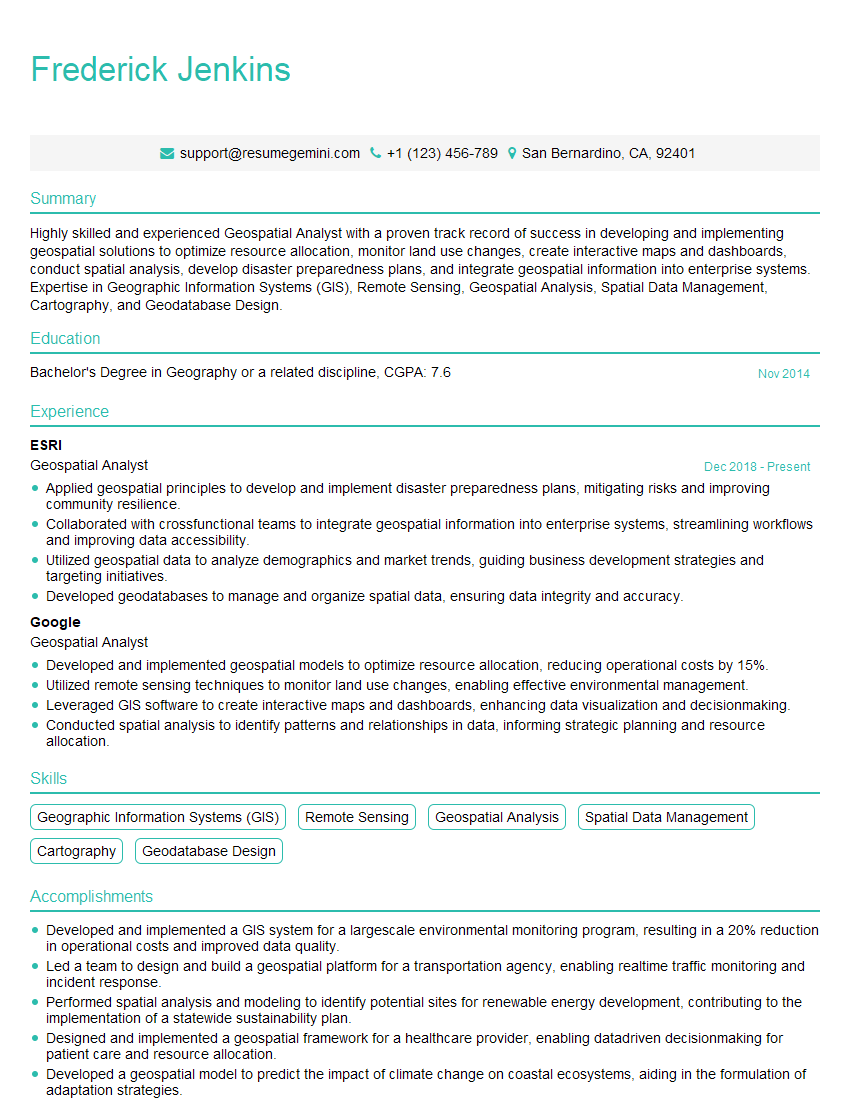
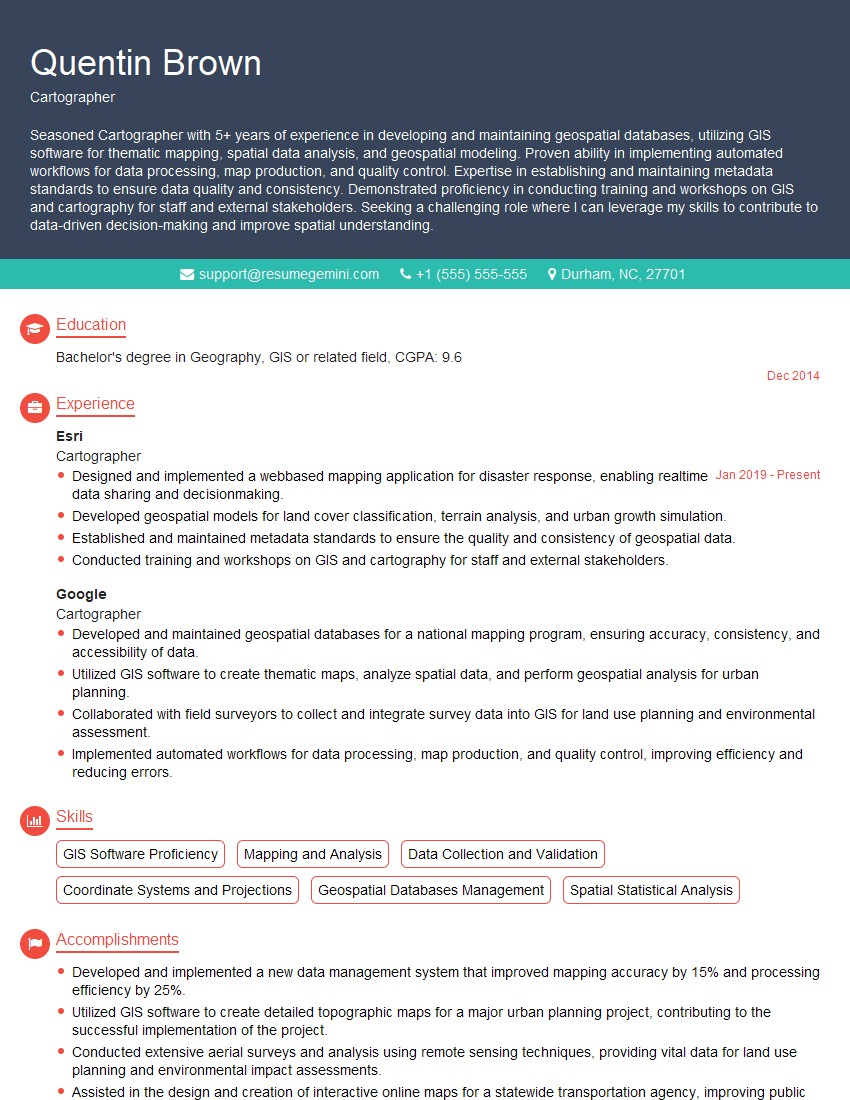
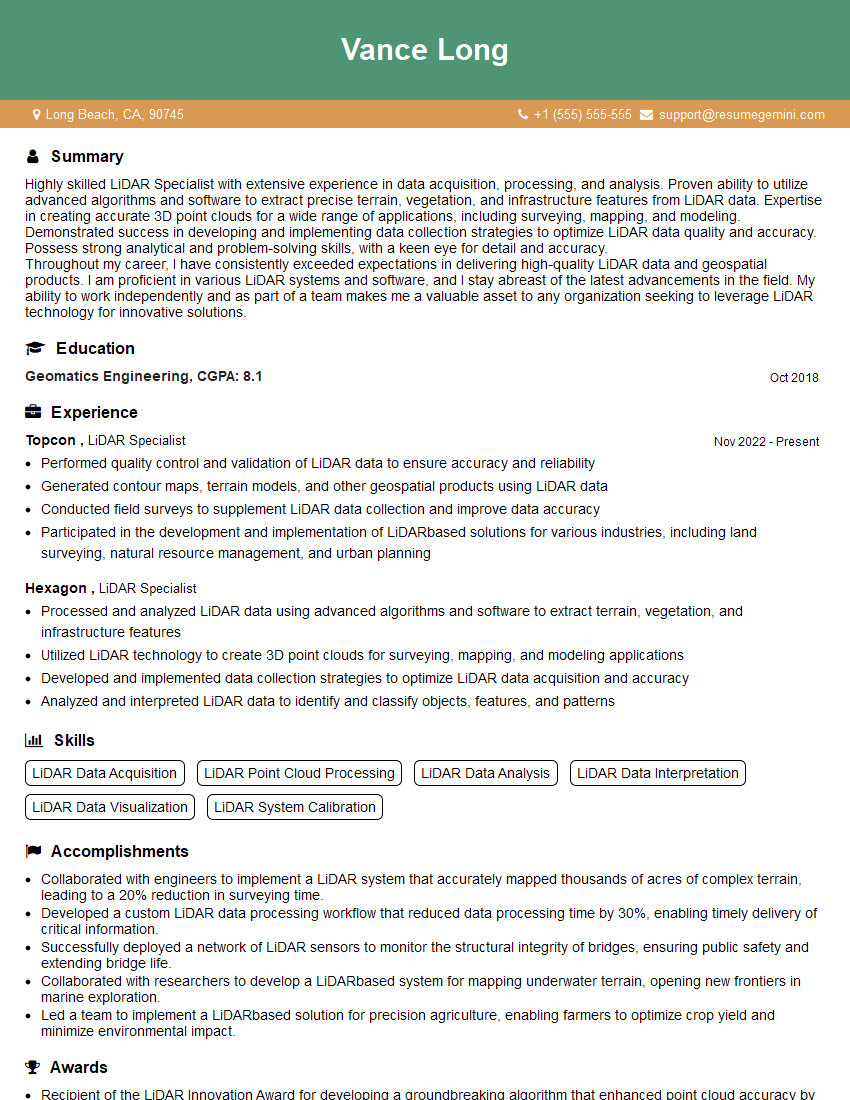
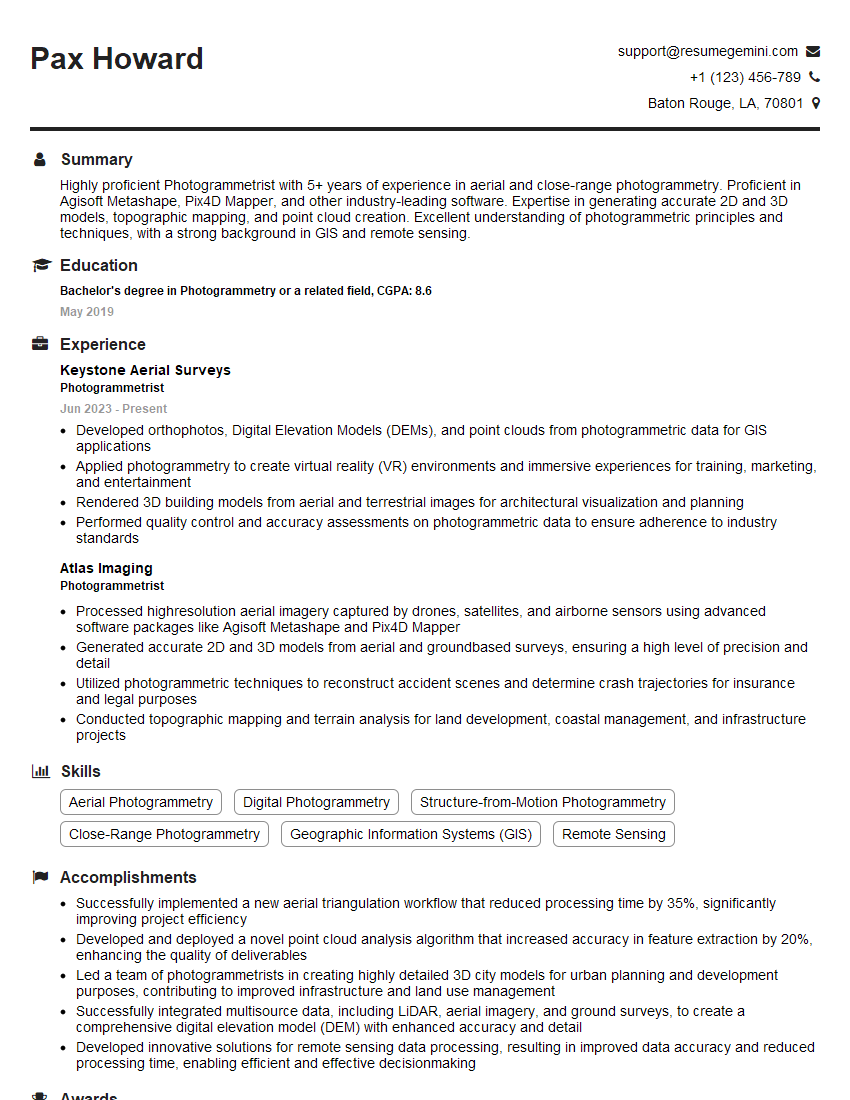
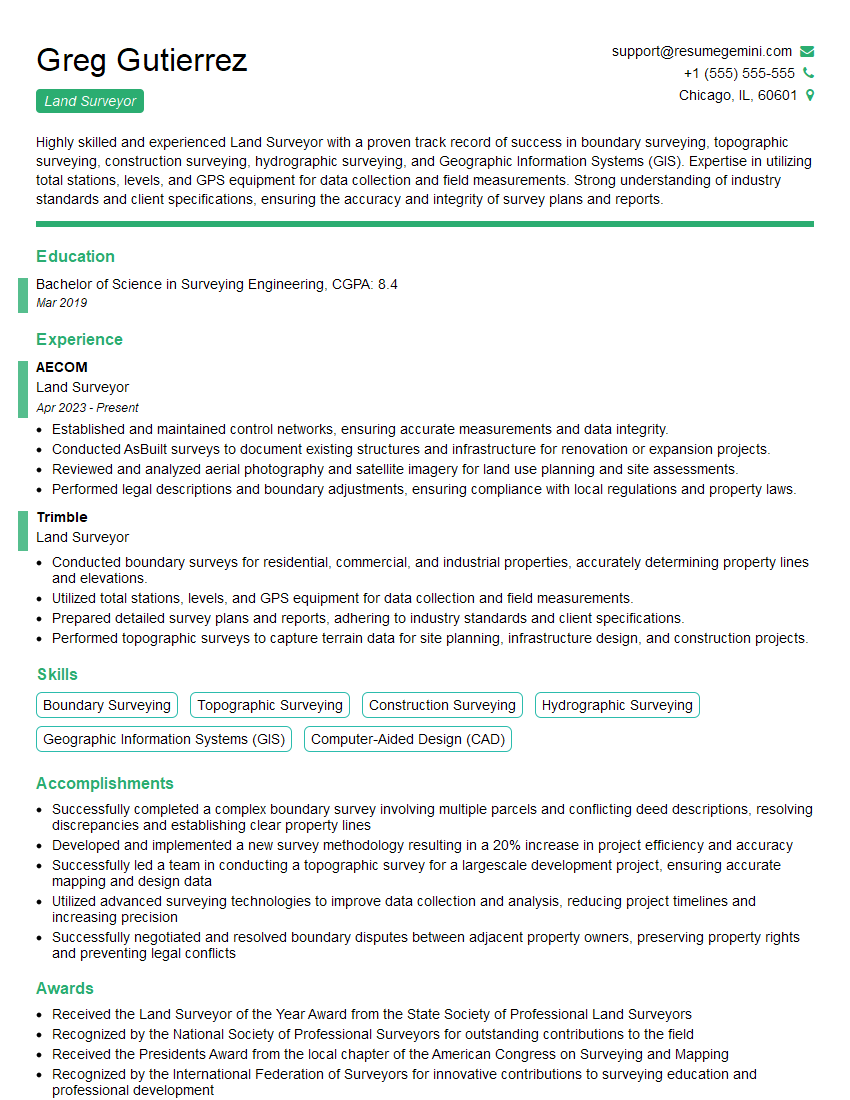
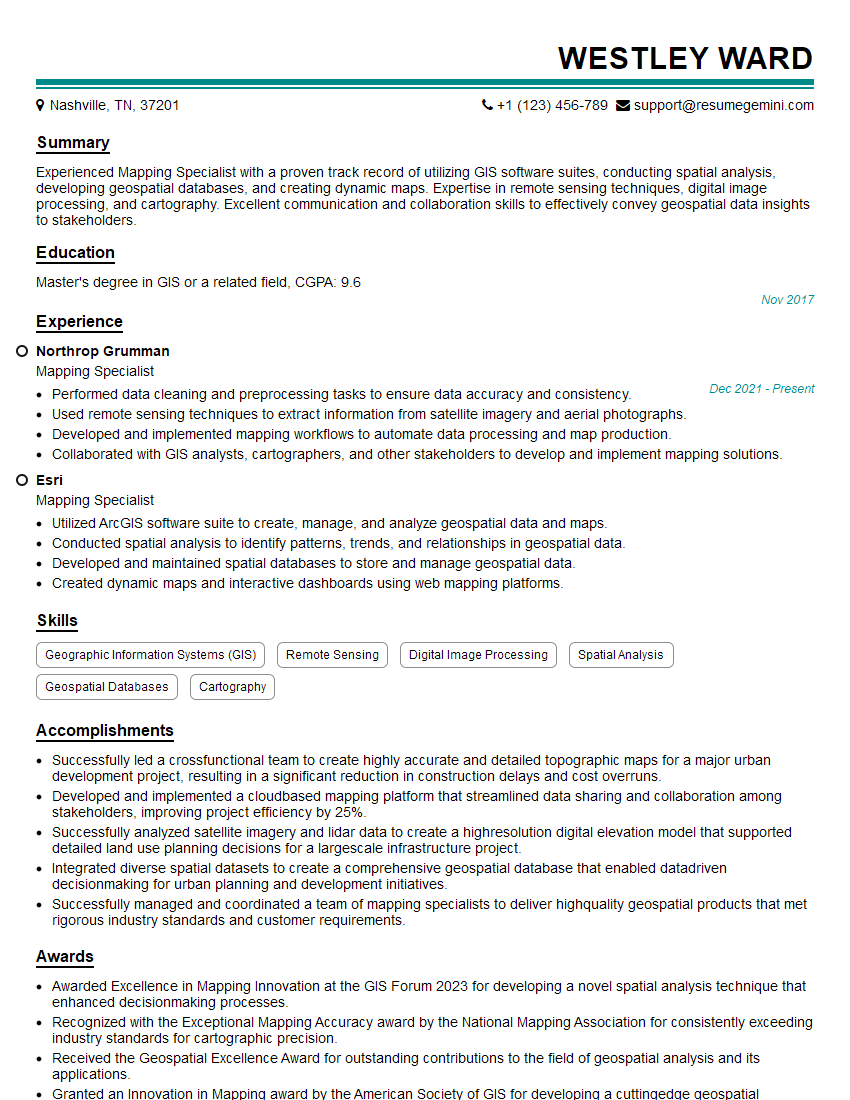
Mastering Land Information Systems opens doors to exciting careers in land administration, surveying, urban planning, and environmental management. To maximize your job prospects, it’s crucial to present your skills effectively. Creating an ATS-friendly resume is key to getting your application noticed by recruiters. We strongly encourage you to leverage ResumeGemini, a trusted resource for building professional resumes, to showcase your expertise in Land Information Systems. Examples of resumes tailored to this field are available to help guide your process.
Explore more articles
Users Rating of Our Blogs
Share Your Experience
We value your feedback! Please rate our content and share your thoughts (optional).
What Readers Say About Our Blog
Very informative content, great job.
good