Unlock your full potential by mastering the most common Language Proficiency (Foreign) interview questions. This blog offers a deep dive into the critical topics, ensuring you’re not only prepared to answer but to excel. With these insights, you’ll approach your interview with clarity and confidence.
Questions Asked in Language Proficiency (Foreign) Interview
Q 1. Describe your experience with different translation methodologies (e.g., direct, indirect, and communicative).
Translation methodologies are approaches to translating a text from a source language to a target language. Three common methodologies are direct, indirect, and communicative translation.
Direct Translation: This method aims for a word-for-word or literal translation. It’s suitable when the source and target languages share similar grammatical structures and cultural contexts. However, it can lead to awkward or unnatural phrasing in the target language. Example: Directly translating the German phrase “Guten Morgen” as “Good morning” works well because the meaning and structure align.
Indirect Translation: This method prioritizes conveying the meaning of the source text, even if it means deviating from a literal translation. It involves paraphrasing and restructuring sentences to fit the target language’s natural flow. It’s particularly useful when dealing with idioms or culturally specific expressions. Example: Translating the English idiom “It’s raining cats and dogs” requires indirect translation. A literal translation wouldn’t make sense; instead, you’d use a target-language equivalent expressing heavy rain.
Communicative Translation: This focuses on ensuring the translated text achieves the same communicative effect on the target audience as the source text. This approach prioritizes clarity, naturalness, and cultural appropriateness over literal accuracy. This methodology is best when targeting a specific audience and their communicative needs. Example: Translating a marketing brochure requires a communicative approach. While retaining the core message, you might adapt the tone and style to appeal to the local market.
Q 2. Explain the difference between consecutive and simultaneous interpretation.
Consecutive and simultaneous interpretation are two main modes of interpreting, differing primarily in how the interpreter processes and delivers the message.
Consecutive Interpretation: The speaker pauses after short segments (sentences or paragraphs), allowing the interpreter to listen, take notes if needed, and then deliver the message in the target language. This offers the interpreter more time for processing and allows for greater accuracy. It’s common in settings like business meetings or legal proceedings.
Simultaneous Interpretation: The interpreter listens to the speaker and delivers the message in the target language at the same time. This requires highly specialized skills and rapid processing capabilities. It’s used in situations where continuous, real-time translation is necessary, such as international conferences or live broadcasts. Often specialized equipment like headsets is employed.
Q 3. How do you handle ambiguity or inconsistencies in source texts?
Ambiguity and inconsistencies in source texts are common challenges. My approach involves a multi-step process:
Identify the problem: Carefully read the text and highlight ambiguous passages or inconsistencies in style, tone, or facts.
Research and Contextualization: Investigate the context of the text. Look for clues within the text itself, background materials, or by contacting the client (if possible) to clarify the intended meaning.
Make informed decisions: Based on my research, I make a judgment call on the most probable interpretation. I will clearly note any assumptions made in a translator’s note, ensuring transparency. Sometimes several potential interpretations need to be presented to the client.
Maintain consistency: Once a decision is made, I maintain consistency throughout the translation. If there are multiple instances of the same ambiguous phrase, I use the same interpretation each time.
For instance, if a legal document has conflicting clauses, I might flag the issue, suggest potential resolutions, and leave the final decision to the legal professional.
Q 4. What strategies do you use to ensure accuracy in your translations?
Ensuring accuracy is paramount. My strategies include:
Thorough Research: I research terminology and cultural nuances to ensure accuracy. I use dictionaries, specialized glossaries, and online resources.
Reference Materials: Utilizing style guides, dictionaries, and thesauruses in both source and target languages is crucial for maintaining consistency and style.
Proofreading and Editing: I employ a rigorous proofreading and editing process, often involving multiple passes to catch errors in grammar, punctuation, and style.
Review and Revision: Where possible, I review and revise my translations based on feedback from peers or clients, ensuring the final product aligns with the intended goals.
Quality Assurance Tools: I use CAT (Computer-Assisted Translation) tools to leverage translation memories and terminology databases. This contributes to consistency and improves efficiency.
Q 5. How do you adapt your communication style to different cultural contexts?
Adapting communication style across cultures is critical for effective translation. I consider several factors:
Formal vs. Informal: Different cultures have varying levels of formality in written and spoken communication. A formal tone might be suitable for official documents in one culture but inappropriate in another.
Direct vs. Indirect Communication: Some cultures favor direct and explicit communication, while others prefer indirect and nuanced approaches. This influences sentence structure and word choice.
Idioms and Expressions: Literal translations of idioms can be nonsensical or offensive. I use culturally appropriate equivalents in the target language.
Tone and Register: The overall tone and register (e.g., humorous, serious, technical) must be adjusted to resonate with the target audience.
Cultural Sensitivity: I remain mindful of cultural sensitivities related to religion, politics, gender, and other sensitive topics. I ensure the translation avoids causing offense or misinterpretation.
For example, a marketing campaign targeting Japan would require a very different approach than one aimed at a U.S. audience.
Q 6. Describe a situation where you had to overcome a language barrier.
During a volunteer trip to a rural community in Guatemala, I needed to assist a local farmer who had injured his leg. I had limited Spanish at the time. Using a combination of gestures, basic Spanish phrases, and my phone’s translation app, I was able to communicate the urgency of the situation to local residents and secure transportation for the farmer to receive medical attention. This experience underscored the importance of adaptability and resourcefulness in overcoming language barriers, highlighting the limitations of technology and the value of basic conversational skills. Even nonverbal communication became an essential tool in ensuring his wellbeing.
Q 7. What are some common challenges in translating technical or legal texts?
Translating technical or legal texts presents unique challenges:
Specialized Terminology: Technical and legal fields have highly specific vocabularies. Accurate translation requires deep subject matter expertise or thorough research using specialized dictionaries and glossaries. A single term might have multiple meanings depending on the context.
Precision and Accuracy: Legal and technical texts require extreme precision. Misinterpreting a single word can have significant consequences. A thorough understanding of both the source and target language legal systems is essential.
Cultural and Legal Differences: Legal and technical concepts vary widely across jurisdictions. Direct translation might not accurately reflect the legal or technical implications in the target language.
Maintaining Consistency: Consistency in terminology is paramount. Using a consistent term throughout the document is crucial for avoiding ambiguity and ensuring a clear understanding.
For example, translating a software license agreement requires not only linguistic expertise but also a solid grasp of contract law and software development practices.
Q 8. How do you stay updated on changes in grammar and vocabulary of your target language?
Staying current with the ever-evolving landscape of grammar and vocabulary in a target language requires a multifaceted approach. It’s not a one-time task but an ongoing process of learning and adaptation.
Following reputable linguistic resources: I subscribe to journals and online publications dedicated to language studies, such as the journals published by the Modern Language Association (MLA) or specialized language academies. These often include articles discussing recent grammatical developments or shifts in vocabulary usage.
Engaging with native speakers: I actively participate in online forums and communities dedicated to the target language, observing how native speakers use the language in natural conversations. This provides invaluable insights into contemporary usage that may not be reflected in traditional textbooks.
Utilizing language learning apps and websites: Many apps (like Duolingo or Babbel) and websites provide updates on current language trends, integrating new words and phrases into their lessons. I actively use these to track changes in informal and formal speech.
Reading contemporary literature and watching current media: This includes novels, news articles, films, and TV shows. Immersion in authentic materials is crucial for understanding colloquialisms and modern language usage patterns.
For example, the evolution of internet slang and the constant addition of new technological terms necessitate continuous monitoring of online resources and interactions with online communities.
Q 9. Explain your proficiency in [Specific Language] using the CEFR framework.
Let’s assume the specific language is Spanish. Using the Common European Framework of Reference for Languages (CEFR), I’d place my proficiency in Spanish at a C1 level (Effective Operational Proficiency). This means I can understand a wide range of demanding, longer texts, and recognize implicit meaning. I can express myself fluently and spontaneously without much obvious searching for expressions. I can use language flexibly and effectively for social, academic, and professional purposes. I can produce clear, well-structured, detailed text on complex subjects, showing controlled use of organizational patterns, connectors, and cohesive devices.
Specifically, I can comfortably engage in complex discussions on abstract topics, understand nuanced humor, and write formal letters or reports with ease. My vocabulary is extensive, encompassing specialized terminology in various fields. While I might occasionally stumble upon highly specialized or archaic terms, my ability to infer meaning and use appropriate contextual clues allows me to overcome such minor challenges.
I am confident in my ability to adapt my language to different contexts and audiences, employing appropriate register and tone. I also have a good grasp of the cultural implications of language use.
Q 10. How would you handle a situation where you encounter a word or phrase you don’t know?
Encountering unknown words or phrases is a natural part of language learning, even at advanced levels. My approach is systematic and relies on context and resourcefulness.
Attempt to infer meaning from context: I carefully examine the surrounding sentences and paragraphs to deduce the likely meaning. Often, the overall message allows for a reasonable guess.
Consult a dictionary or online translator: If contextual clues are insufficient, I promptly look up the word using a reliable dictionary (e.g., the RAE for Spanish). I prefer dictionaries that provide multiple definitions and usage examples.
Use online resources: For less common words or phrases, I explore online resources like WordReference or specialized language forums. These often provide detailed explanations and discussions on usage.
Ask a native speaker: If possible, I consult a native speaker for clarification, especially to understand the nuances of meaning and appropriate usage.
For instance, if I encounter a specialized term in a legal document, I would not only look it up in a legal dictionary but also research its usage in relevant case law to fully grasp its implications.
Q 11. What resources do you use to improve your language skills?
My language skill improvement strategy is multi-pronged, focusing on active engagement and consistent practice.
Immersion: I regularly consume media – news, movies, podcasts – in the target language. This provides a natural context for language acquisition.
Reading: I read widely, encompassing diverse genres like novels, articles, and technical papers, to enhance my vocabulary and understanding of sentence structure.
Active use: I actively seek opportunities to speak the language, whether through conversation partners, language exchange programs, or professional interactions. Speaking is crucial for fluency.
Formal Study: While my language skills are advanced, I occasionally consult language textbooks or online courses to review grammar or learn new vocabulary.
Language learning apps: Tools like Duolingo and Memrise are valuable for vocabulary building and grammar reinforcement.
This holistic approach ensures consistent progress and improvement across all facets of language proficiency.
Q 12. Describe your experience working with translation software (e.g., CAT tools).
My experience with CAT tools (Computer-Assisted Translation) is extensive. I’m proficient in using various CAT tools like SDL Trados Studio, memoQ, and Across. I understand the importance of leveraging their features for efficient and consistent translation.
I’m familiar with features like translation memories (TMs), which store previously translated segments, ensuring consistency across projects and minimizing repetition. I also utilize termbases for maintaining a consistent terminology throughout multiple documents. The ability to manage different file formats and integrate with other software is also a crucial skill I have honed through practical experience. Using CAT tools drastically improves efficiency and quality, particularly on large projects.
For example, I’ve used TMs to translate large volumes of technical documentation, ensuring a uniform tone and consistent usage of specialized terminology. This has saved considerable time and improved the overall quality of the final product. This also reduces potential errors, which are crucial in technical translations.
Q 13. How do you ensure consistency of terminology across multiple documents?
Maintaining consistent terminology across multiple documents is critical for clarity and accuracy, especially in technical or specialized fields. My approach is threefold:
Creating and utilizing a termbase: I build and maintain a central glossary of terms, defining each term and its preferred translation. This termbase serves as the single source of truth for all translations.
Implementing a style guide: A comprehensive style guide outlines the preferred usage of terminology, including any variations or context-specific nuances. This ensures consistency in style and terminology across documents.
Leveraging CAT tools: CAT tools integrate seamlessly with termbases and provide suggestions for consistent terminology, highlighting potential inconsistencies for review and correction. This automated check increases efficiency and improves accuracy.
For example, in translating medical documents, consistent use of medical terminology is paramount. Using a termbase and style guide ensures that “angina pectoris” is always translated consistently and avoids variations that could lead to misinterpretations.
Q 14. How do you manage your time effectively when working under tight deadlines?
Effective time management under tight deadlines is crucial in translation. I employ several strategies to meet project demands without compromising quality:
Thorough planning and estimation: I meticulously analyze project requirements, assessing the scope of work and estimating the time needed for each task. This prevents unexpected delays.
Prioritization: I prioritize tasks based on urgency and importance, focusing on critical sections first. Breaking down large tasks into smaller, manageable chunks is vital.
Time-blocking: I allocate specific time blocks for particular tasks, minimizing distractions. This focused approach enhances productivity.
Effective use of tools: I leverage CAT tools and other software to automate tasks and increase efficiency, freeing up time for more complex aspects of translation.
Communication: Open communication with clients is key. Addressing potential delays proactively helps to manage expectations and find solutions collaboratively.
For example, if facing a tight deadline, I might prioritize translating the most critical sections first, then completing the less critical sections while ensuring I communicate any potential delays proactively with the client.
Q 15. What are your strengths and weaknesses as a translator/interpreter?
My greatest strength as a translator/interpreter lies in my meticulous attention to detail and my deep understanding of both the source and target languages’ nuances. I’m adept at identifying and resolving ambiguities, ensuring accuracy and fluency in the final product. I also possess strong analytical skills, allowing me to decipher complex texts and adapt my style to suit different contexts. For example, I recently translated a legal document requiring a precise understanding of both legal terminology and cultural implications. My weakness, however, is sometimes getting overly invested in perfecting a single sentence, potentially slowing down the overall process. To mitigate this, I’ve implemented time management techniques and regularly review my work against project deadlines.
Career Expert Tips:
- Ace those interviews! Prepare effectively by reviewing the Top 50 Most Common Interview Questions on ResumeGemini.
- Navigate your job search with confidence! Explore a wide range of Career Tips on ResumeGemini. Learn about common challenges and recommendations to overcome them.
- Craft the perfect resume! Master the Art of Resume Writing with ResumeGemini’s guide. Showcase your unique qualifications and achievements effectively.
- Don’t miss out on holiday savings! Build your dream resume with ResumeGemini’s ATS optimized templates.
Q 16. Describe your experience with quality assurance in translation/interpretation.
Quality assurance is paramount in my work. My process involves several key steps. First, I employ a rigorous self-editing phase, utilizing style guides and dictionaries to ensure accuracy and consistency. Second, I utilize specialized CAT tools (Computer-Assisted Translation) which often have built-in QA features such as terminology management and consistency checks. Third, I employ a second pair of eyes – a colleague or editor – for a final review, catching potential errors I might have overlooked. This collaborative approach ensures a higher quality final product. In one project, a colleague pointed out a subtle cultural misinterpretation I had missed, preventing a potential communication error with the client.
Q 17. How do you deal with difficult clients or challenging translation projects?
Dealing with difficult clients or challenging projects requires patience, diplomacy, and clear communication. I begin by actively listening to their concerns and clarifying their expectations. I then clearly explain my process and the rationale behind my translation choices. For instance, if a client requests a fast turnaround on a highly technical document, I’ll openly discuss the potential trade-offs regarding quality to manage expectations. In challenging projects, I prioritize breaking down the task into manageable chunks and focusing on delivering incremental results to maintain momentum and keep the client informed. Proactive communication prevents misunderstandings and builds trust.
Q 18. What is your preferred method for proofreading and editing translated texts?
My preferred method for proofreading and editing involves a multi-stage approach. I first read the text aloud to catch grammatical errors and awkward phrasing. Then, I meticulously check for consistency in terminology, style, and tone, using reference materials as needed. Finally, I perform a final review, focusing on the overall flow and clarity of the text, ensuring it reads naturally in the target language. I often use a combination of digital tools and hard copies to facilitate this process, finding that a change in medium can help to catch subtle errors that might be overlooked otherwise.
Q 19. How do you handle cultural nuances in translation?
Handling cultural nuances is crucial for effective translation. I approach this by deeply researching the cultural context of both the source and target languages. This includes understanding idioms, colloquialisms, and social conventions. For example, direct translations can sometimes be inappropriate or even offensive. Instead, I focus on conveying the intended meaning and emotional tone in a way that resonates with the target audience. I might use culturally appropriate synonyms or adjust sentence structure to better fit the target culture’s communication style. I often consult with native speakers of the target language to ensure accuracy and cultural sensitivity.
Q 20. How would you explain a complex technical concept to someone with limited knowledge of the subject?
Explaining complex technical concepts to a layperson requires clear and concise communication, avoiding jargon. I start by identifying the core concept and breaking it down into smaller, easily digestible parts. I use simple analogies and real-world examples to illustrate the concept. For instance, if I were explaining quantum entanglement, I might compare it to two coins flipped simultaneously, always landing on opposite sides, no matter how far apart they are. Visual aids, such as diagrams or charts, can also be helpful. I constantly check for understanding, adjusting my explanation based on the listener’s feedback to ensure they grasp the core concept before moving on to more complex details.
Q 21. How familiar are you with various language dictionaries and thesauruses?
I am highly familiar with a variety of language dictionaries and thesauruses, both print and online. My go-to resources include specialized dictionaries for specific fields (legal, medical, technical), as well as general-purpose dictionaries like Merriam-Webster and Oxford Dictionaries. For thesauruses, I frequently use Roget’s Thesaurus and online tools to explore synonyms and contextual usage. My familiarity extends to bilingual dictionaries, particularly those incorporating detailed explanations and examples. The choice of dictionary or thesaurus depends heavily on the context and the specific needs of the project. Selecting the right resource is crucial for ensuring accuracy and avoiding unintentional changes in meaning.
Q 22. What is your experience with interpreting for specific contexts (medical, legal, etc.)?
My experience in interpreting spans various specialized contexts, including medical and legal settings. In medical interpreting, I’ve worked in hospitals and clinics, facilitating communication between doctors, nurses, and patients with limited English proficiency. This requires a deep understanding of medical terminology and the ability to convey nuanced information accurately and sensitively, ensuring patient comprehension and informed consent. For example, I once interpreted during a complex surgery where precise and immediate translation was crucial for the surgical team and the patient’s family. In legal settings, I’ve assisted in depositions, court proceedings, and client consultations. This demands a thorough understanding of legal jargon, procedures, and the importance of accurate and impartial conveyance of information. I’ve ensured legal documents are translated with the utmost precision, understanding that even a minor misinterpretation could have serious legal ramifications. My experience in both fields has honed my ability to adapt my interpreting style to the specific demands and sensitivities of each context.
Q 23. How do you maintain confidentiality in your work?
Confidentiality is paramount in my work. I adhere to strict professional ethical guidelines and legal obligations regarding the protection of sensitive information. This includes never disclosing any information I’ve learned during interpretations to anyone not directly involved. I understand the potential legal and ethical consequences of breaching confidentiality and take every precaution to avoid doing so. This starts with signing confidentiality agreements, treating all materials I handle with discretion, and always being mindful of my surroundings to prevent accidental disclosures. For example, I never discuss cases outside of a secure professional setting. Moreover, I utilize secure communication channels for transmitting translated documents and never leave sensitive material unattended. My commitment to maintaining confidentiality is unwavering; it is the cornerstone of trust in my professional relationships.
Q 24. What is your understanding of linguistic register and how do you apply it?
Linguistic register refers to the level of formality and style used in language. It’s crucial for effective communication because choosing the wrong register can hinder understanding and create an inappropriate tone. I understand the nuances of different registers – from formal to informal, technical to colloquial – and adapt my language accordingly. For instance, when interpreting a legal document, I use formal language and precise terminology. But when interpreting a doctor’s instructions to a patient, I adjust the language to be more accessible and less technical. I carefully analyze the context, audience, and purpose of the communication to determine the appropriate register. This includes considering factors like the relationship between the speakers, the setting, and the subject matter. My skill in adjusting register ensures clear and effective communication across diverse contexts.
Q 25. Describe your experience working with a diverse team of individuals.
I thrive in diverse team environments. My experience includes collaborating with individuals from various cultural backgrounds, linguistic abilities, and professional specializations. In my previous role, I worked with a team of translators, interpreters, and project managers from across the globe. This required excellent communication and interpersonal skills, as well as the ability to understand and appreciate diverse perspectives. We regularly exchanged feedback, shared our cultural understanding, and supported each other to ensure successful project completion. My experience in such diverse environments has enhanced my adaptability, problem-solving skills, and ability to build strong working relationships with colleagues from various backgrounds.
Q 26. How do you prioritize tasks in a fast-paced environment?
In fast-paced environments, I prioritize tasks using a combination of techniques. First, I assess the urgency and importance of each task, often using a prioritization matrix to visualize deadlines and impact. This helps me identify tasks that demand immediate attention versus those that can be handled later. Second, I break down larger tasks into smaller, manageable components, making them less daunting and more easily scheduled. Third, I utilize time management tools and techniques like time blocking and the Pomodoro Technique to maximize efficiency and focus. Finally, I’m proactive in communicating potential delays or challenges to stakeholders, ensuring transparency and allowing for collaborative solutions. This combination of planning, organization, and communication ensures I can effectively manage multiple priorities under pressure.
Q 27. How do you deal with feedback on your translation or interpretation work?
I view feedback as an invaluable tool for professional growth. I actively seek feedback on my work and approach it constructively. When receiving feedback, I listen carefully, ask clarifying questions if needed, and reflect on the points raised. I analyze whether the feedback points to systematic issues or one-off occurrences. For example, recurring feedback about specific terminology might indicate a need for further study, while a single comment on tone might simply suggest a minor adjustment. I then implement necessary changes, incorporating feedback into my future work to enhance my skills and accuracy. This iterative process of receiving, analyzing, and applying feedback is essential for continuous improvement in my interpretation and translation abilities.
Q 28. What are your salary expectations?
My salary expectations are commensurate with my experience, skills, and the demands of the position. I am open to discussing a competitive salary range based on the specific responsibilities and compensation structure of the role. I would be happy to provide more specific figures after a deeper discussion about the position’s requirements and the organization’s compensation policies.
Key Topics to Learn for Language Proficiency (Foreign) Interview
- Reading Comprehension: Understanding complex texts, identifying main ideas, and inferring meaning. Practice with diverse materials like news articles, academic papers, and literary excerpts.
- Written Expression: Crafting clear, concise, and grammatically correct written communication. Focus on adapting your writing style to different audiences and purposes (e.g., formal emails, informal reports).
- Oral Communication: Engaging in fluent and articulate conversations, demonstrating effective listening skills, and presenting information clearly and confidently. Practice speaking on various topics and scenarios.
- Vocabulary and Idioms: Expanding your vocabulary beyond basic terms and understanding nuanced language use, including idiomatic expressions. Use flashcards and contextual learning to improve your range.
- Grammar and Syntax: Mastering the grammatical rules and sentence structures of the target language. Identify your weaker areas and focus on targeted practice.
- Cultural Nuances: Demonstrating awareness of cultural context and avoiding potential misunderstandings. Research the cultural aspects relevant to the job and industry.
- Translation & Interpretation: Accurately conveying meaning from one language to another, both written and spoken. Practice with different text types and scenarios.
- Problem-solving in the Target Language: Applying your language skills to solve real-world problems, like resolving a client query or negotiating a contract. Prepare examples demonstrating your ability to handle such situations.
Next Steps
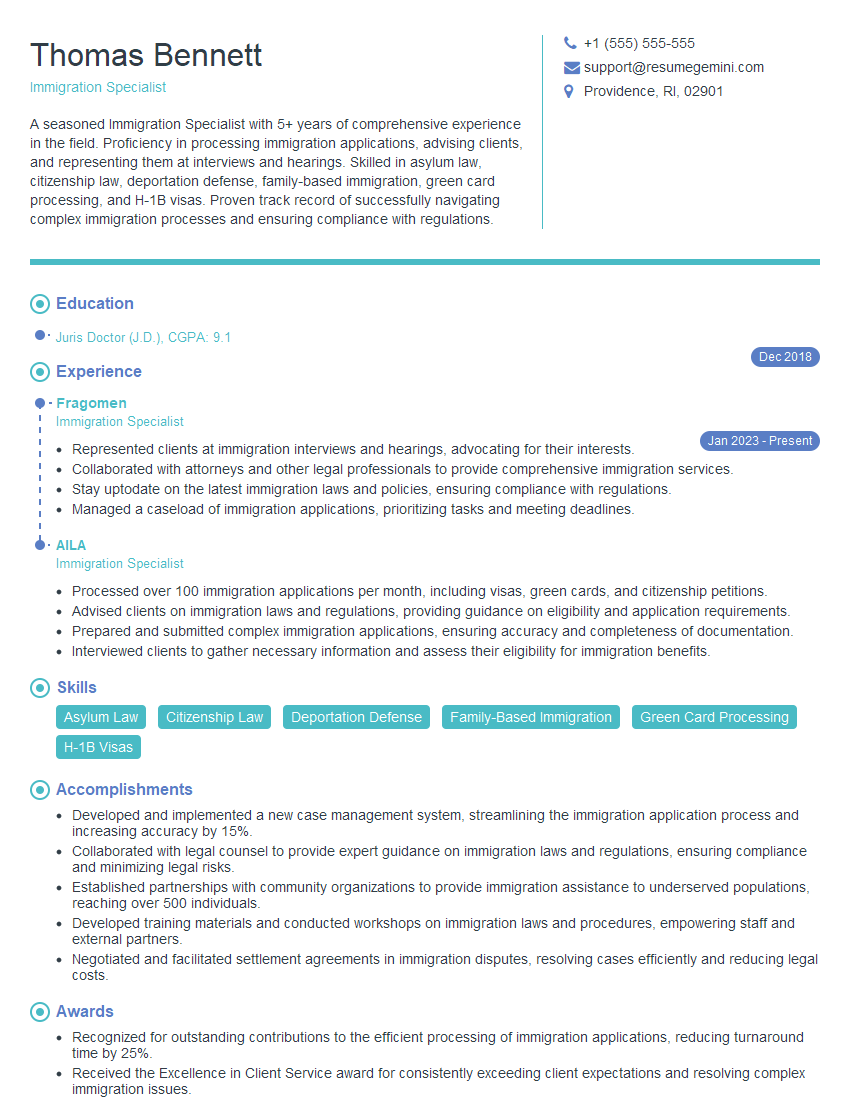
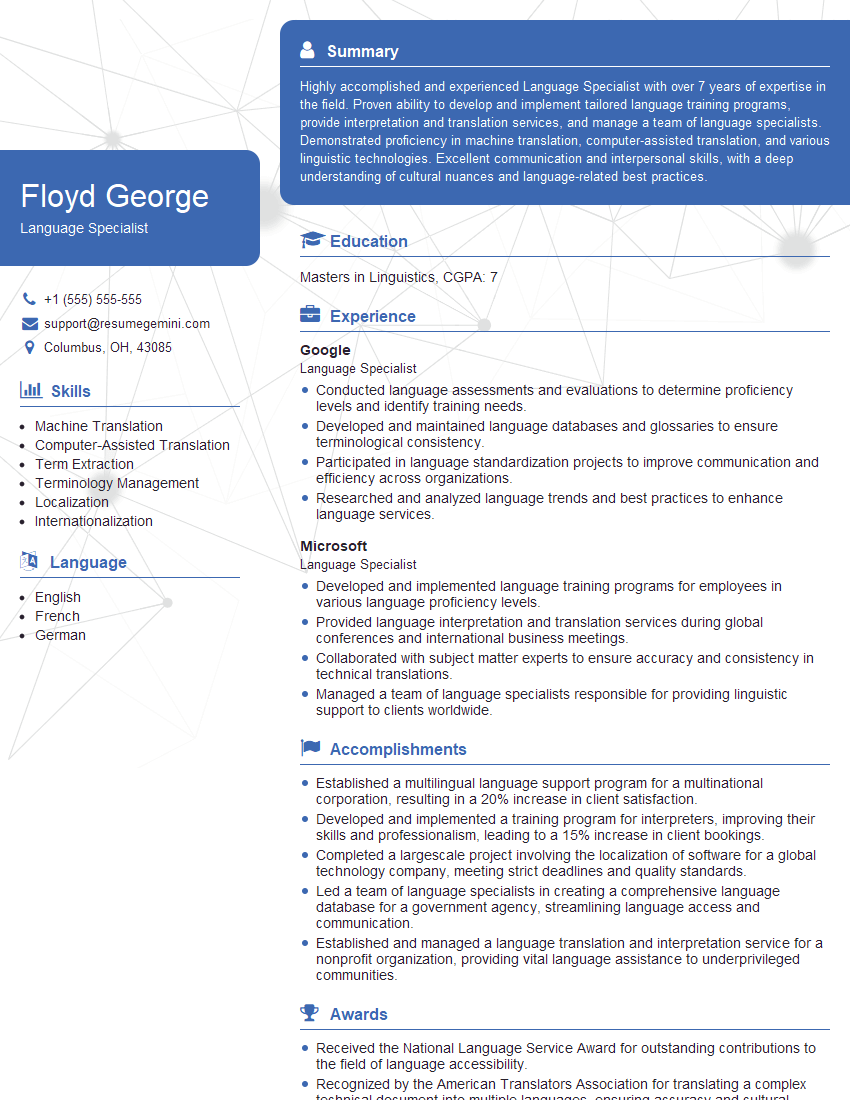
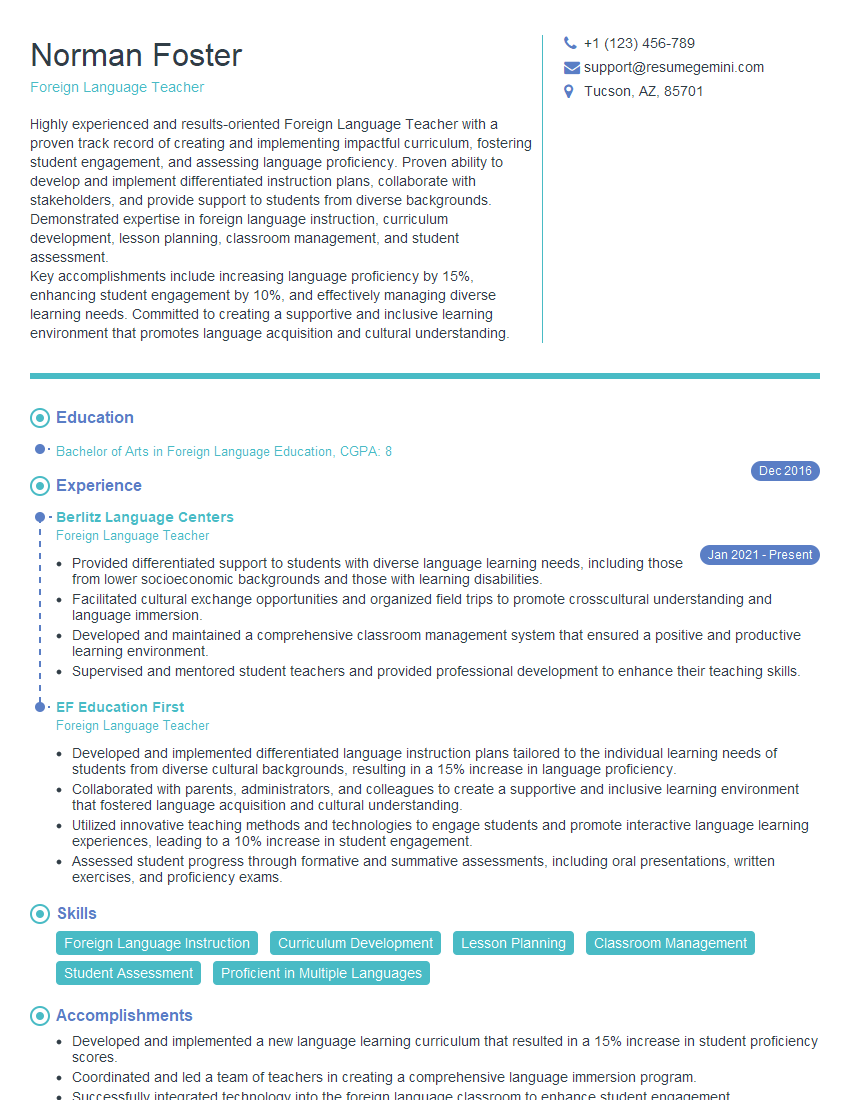
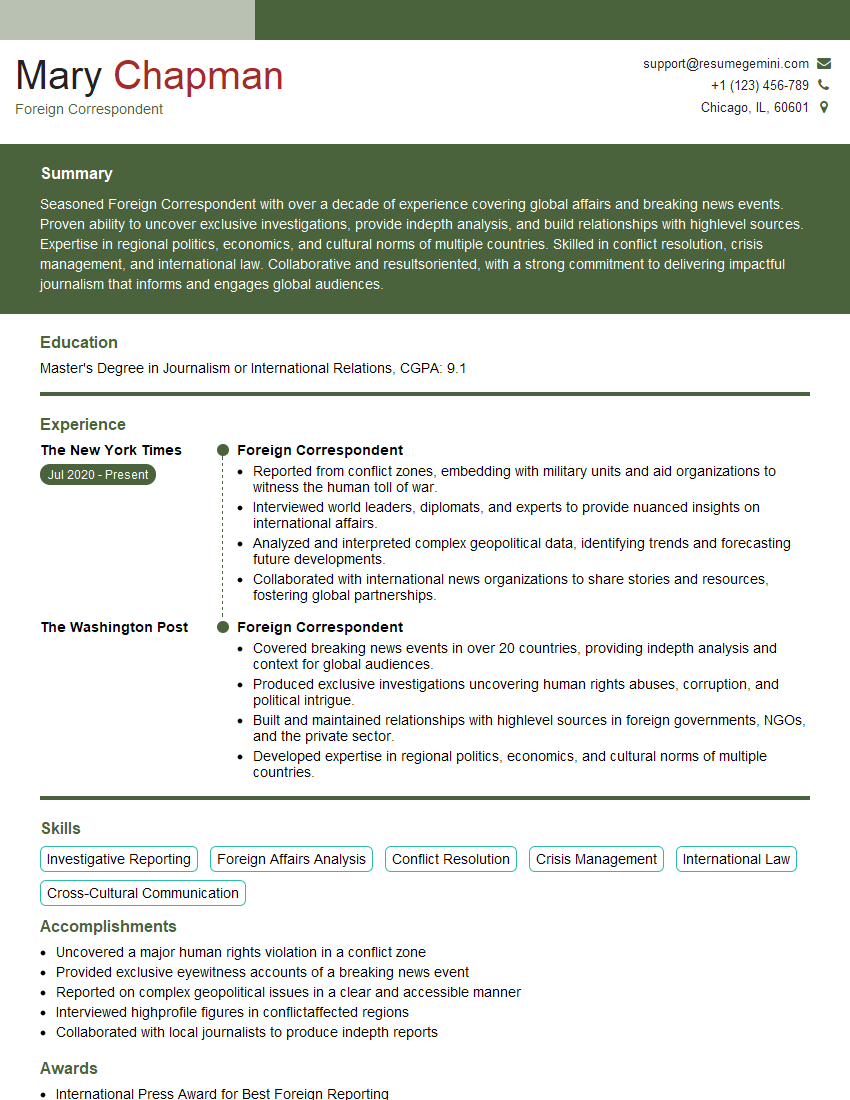
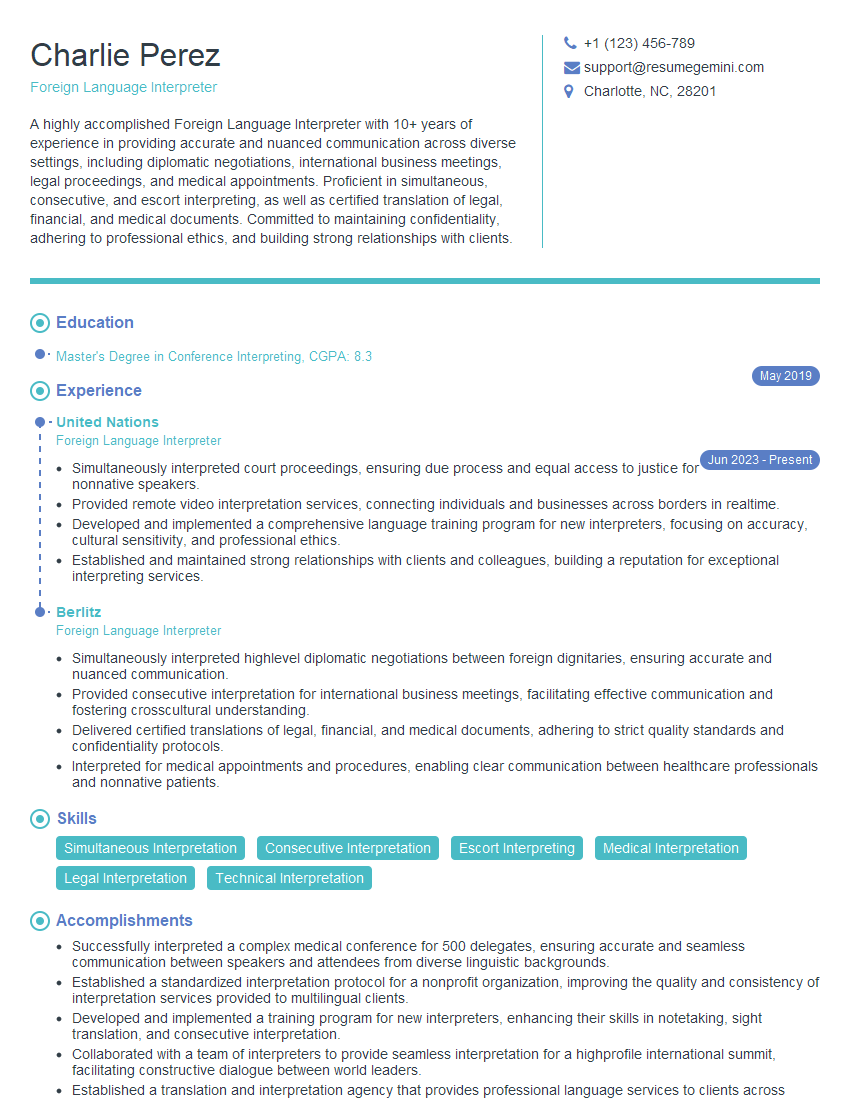
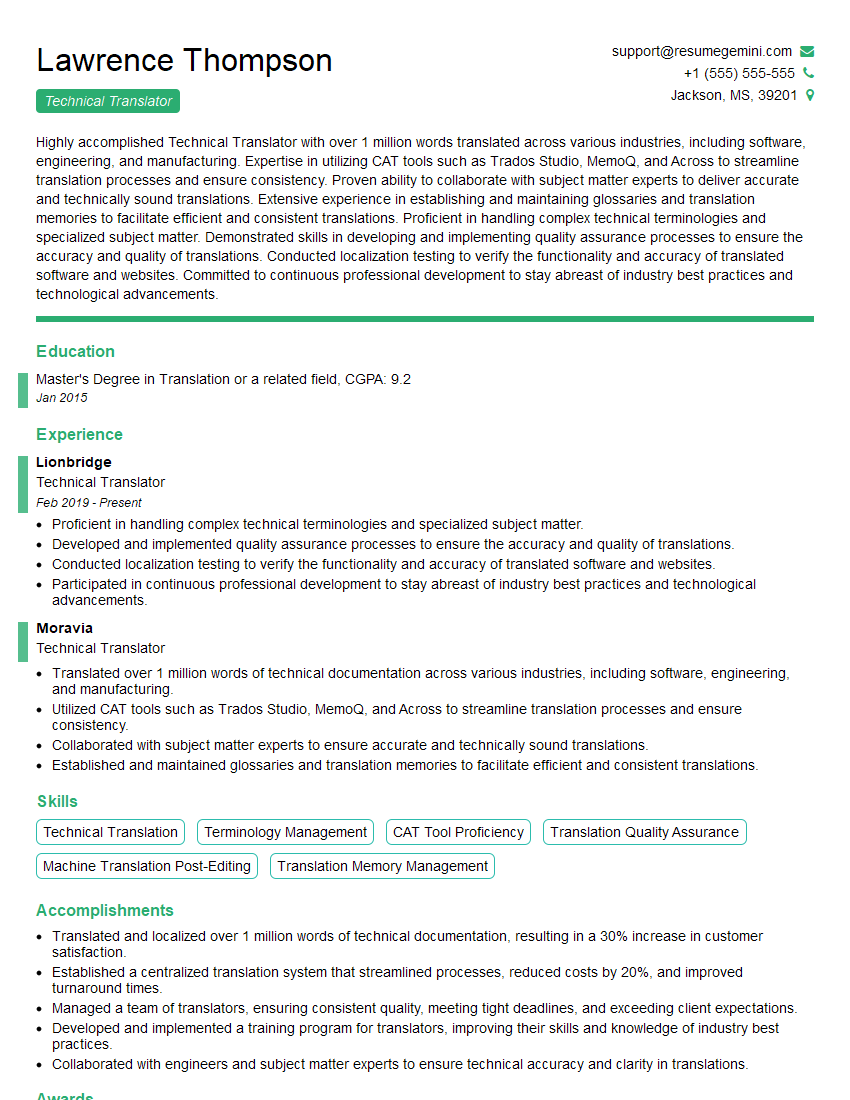
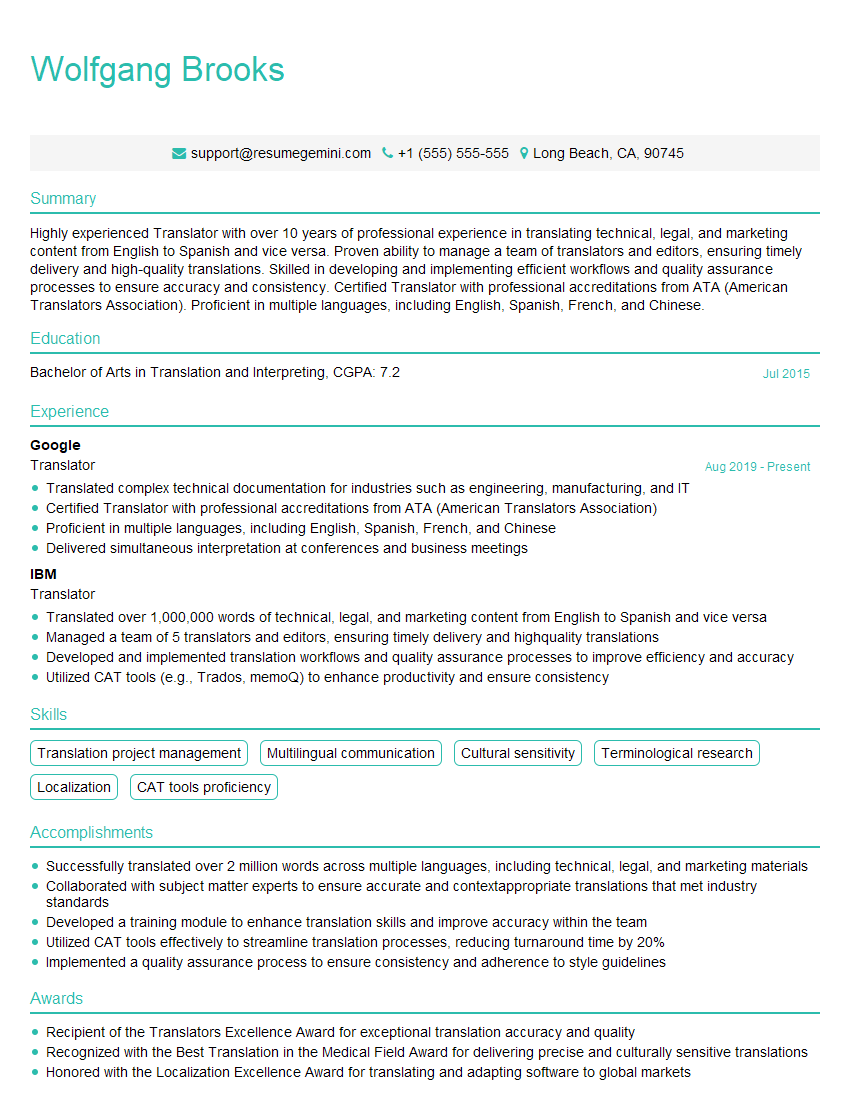
Mastering a foreign language significantly enhances your career prospects, opening doors to international opportunities and showcasing your adaptability and commitment to professional development. A strong resume is crucial for highlighting these skills effectively. To ensure your qualifications stand out, focus on creating an ATS-friendly resume that clearly demonstrates your language proficiency and relevant experience. ResumeGemini is a trusted resource to help you build a professional and impactful resume. Explore their examples of resumes tailored to Language Proficiency (Foreign) to gain valuable insights and inspiration for crafting your own compelling application materials.
Explore more articles
Users Rating of Our Blogs
Share Your Experience
We value your feedback! Please rate our content and share your thoughts (optional).
What Readers Say About Our Blog
Very informative content, great job.
good