Interviews are more than just a Q&A session—they’re a chance to prove your worth. This blog dives into essential Laundry and Stain Removal interview questions and expert tips to help you align your answers with what hiring managers are looking for. Start preparing to shine!
Questions Asked in Laundry and Stain Removal Interview
Q 1. Explain the difference between various fabric types and their appropriate cleaning methods.
Understanding fabric types is crucial for effective laundry. Different fibers react differently to water, heat, and detergents. Here’s a breakdown:
- Natural Fibers: These include cotton, linen, wool, silk. Cotton and linen are generally durable and can withstand machine washing, though linen can wrinkle easily. Wool and silk are delicate and often require hand washing or a gentle machine cycle with a specialized detergent.
- Synthetic Fibers: These are created from chemicals, such as polyester, nylon, acrylic, and rayon. They are usually more resilient and less prone to shrinking than natural fibers. Many synthetics can be machine washed, but always check the care label.
- Blends: Many garments are made from fabric blends, combining the properties of natural and synthetic fibers. The care instructions will depend on the dominant fiber and the blend’s composition.
Cleaning Methods: Always check the garment’s care label for specific instructions. Generally, delicate fabrics like silk and wool should be hand-washed in cool water with a gentle detergent. Machine washing should use appropriate water temperature and cycle settings (delicate, permanent press, etc.) For heavily soiled items, pre-treating stains before washing is essential.
Example: A 100% cotton t-shirt can be machine washed on a warm cycle, while a silk blouse should be hand-washed in cool water to prevent damage.
Q 2. Describe your experience with different types of washing machines (e.g., top-load, front-load, industrial).
My experience encompasses a wide range of washing machines. Each type presents unique challenges and advantages:
- Top-Load Washers: These are generally less expensive and space-saving. They use more water and energy than front-load machines, and agitation can be harsher on delicate fabrics. I’ve found them ideal for durable items and large loads.
- Front-Load Washers: These are known for their energy and water efficiency, and the gentler tumbling action is better for delicate items. However, they can be more expensive and require more space. Proper maintenance, including cleaning the door seal to prevent mold, is crucial.
- Industrial Washers: These high-capacity machines are used in commercial laundries and handle large volumes of laundry. They utilize high temperatures and powerful agitation for sanitation, and I’ve worked with various models, learning their specific operational requirements, including chemical dispensing systems and maintenance protocols.
I am proficient in operating and maintaining all these types, adapting my techniques based on the machine’s capabilities and the laundry’s specific needs.
Q 3. What are the common causes of fabric shrinkage, and how can they be prevented?
Fabric shrinkage is often caused by incorrect washing and drying techniques. Here are some key culprits:
- High Heat: Washing and drying clothes in hot water and high heat can cause fibers to contract, leading to shrinkage. This is particularly true for natural fibers like wool and cotton.
- Agitation: Excessive agitation in the washing machine can also contribute to shrinkage, especially for delicate fabrics.
- Improper Drying: Tumble drying at high heat can significantly shrink clothes. Air drying is often a safer option for many fabrics.
- Washing in the Wrong Water Temperature: Using hot water when cold water is recommended, particularly for wool and other sensitive fabrics, can cause irreversible shrinkage.
Prevention: Always check the care label for washing and drying instructions. Use cold or warm water as recommended. Consider air drying or using a low heat setting in the dryer. For delicate items, hand washing is a safer option.
Example: A wool sweater should never be put in a hot dryer; instead, it should be laid flat to dry to avoid shrinkage.
Q 4. How do you identify and treat various common stains (e.g., grease, blood, ink, wine)?
Stain removal requires a methodical approach. Identifying the stain type is the first step:
- Grease: Use a pre-wash stain remover or dish soap to break down the grease. Rub gently into the stain and launder as usual.
- Blood: Cold water is key! Never use hot water, as it sets the stain. Rinse the area immediately with cold water and apply a cold-water laundry detergent. Soak if necessary, then launder as usual.
- Ink: Rubbing alcohol, hairspray, or specialized ink removers can be effective. Test on an inconspicuous area first. Blot (don’t rub!), then launder.
- Wine: Act fast! Blot up excess wine immediately. Apply a mixture of cold water and white vinegar, or a commercial stain remover, then launder.
General Strategy: Always test any cleaning solution on an inconspicuous area to prevent damage. Blot, don’t rub, to avoid spreading the stain. Pre-treat stains before washing whenever possible. For stubborn stains, consider soaking the garment in a solution of cold water and detergent before washing.
Q 5. Explain your understanding of different laundry detergents and their applications.
Laundry detergents vary significantly in their formulations and intended use:
- Powder Detergents: Generally less expensive, they can be less effective in cold water and may leave residue.
- Liquid Detergents: More effective in cold water and often better for dissolving stains, but can be more expensive.
- Pods/Packets: Convenient and pre-measured, they are often more expensive and may not be suitable for all washing machine types.
- High-Efficiency (HE) Detergents: Specifically formulated for high-efficiency washing machines, which use less water. Using a regular detergent in an HE machine can lead to excessive suds.
- Delicate Detergents: Gentle formulas designed for hand washing or delicate machine cycles, minimizing damage to sensitive fabrics.
Applications: The choice of detergent depends on several factors: fabric type, water temperature, washing machine type, and the level of soiling. Always follow the detergent’s instructions and the garment’s care label.
Q 6. What are the safety precautions you take when handling laundry chemicals?
Safety is paramount when handling laundry chemicals. I always follow these precautions:
- Wear appropriate protective gear: Gloves are essential to protect hands from irritants. Eye protection may also be necessary when handling concentrated chemicals.
- Proper ventilation: Work in a well-ventilated area to avoid inhaling fumes.
- Storage: Store chemicals in their original containers, away from children and pets. Follow all storage instructions on the product label.
- Dilution: Always dilute concentrated chemicals according to the manufacturer’s instructions.
- First Aid: Familiarize myself with the first aid procedures for chemical spills or exposure and keep appropriate materials readily available.
I regularly review safety data sheets (SDS) for all products to stay updated on safe handling practices.
Q 7. How do you handle delicate fabrics requiring special care?
Delicate fabrics require extra care to avoid damage. Here’s my approach:
- Hand Washing: Many delicate items benefit from hand washing in cool water with a gentle detergent. Use a gentle squeezing action rather than rubbing.
- Mesh Laundry Bags: Protect delicate items during machine washing by placing them in a mesh laundry bag.
- Delicate Cycle: If machine washing, use a delicate cycle with cold water and a low spin speed.
- Air Drying: Air drying is usually the safest method for delicate fabrics. Lay flat or hang to dry, avoiding direct sunlight.
- Professional Cleaning: For exceptionally valuable or delicate items, professional dry cleaning might be the best option.
Example: A cashmere sweater should always be hand-washed or dry-cleaned to preserve its shape and softness.
Q 8. Describe your experience with commercial laundry equipment.
My experience with commercial laundry equipment spans over 15 years, encompassing various types and brands, from high-capacity washers and dryers to industrial folding machines and pressing equipment. I’ve worked with both front-loading and top-loading machines, understanding their unique operational characteristics and maintenance needs. This includes experience with both electronic and mechanical controls, allowing me to troubleshoot issues effectively. For instance, I’ve extensively worked with Speed Queen, UniMac, and IPS laundry systems, mastering their specific functionalities and repair protocols. This broad experience ensures I can efficiently manage and maintain a wide range of commercial laundry operations.
Q 9. How do you determine the appropriate water temperature and wash cycle for different fabrics?
Selecting the correct water temperature and wash cycle is crucial for effective cleaning and fabric preservation. It’s a balance between removing stains and avoiding damage. I always consult the garment’s care label first, which provides valuable information. For example, delicate fabrics like silk or wool generally require cold water (below 30°C) and a gentle cycle to prevent shrinking or damage. Cotton and linen, being more robust, can usually handle hotter water (up to 60°C) and a longer, more vigorous cycle. Synthetic fabrics like polyester or nylon often benefit from warm water (around 40°C) and a moderate cycle. For heavily soiled items, a pre-soak in cold water may be necessary, followed by a suitable wash cycle. Ultimately, my approach is to carefully consider the fabric type, soil level, and desired outcome to select the optimal wash parameters.
Q 10. What are the signs of damaged laundry equipment, and what actions should be taken?
Recognizing signs of damaged laundry equipment is crucial for preventative maintenance and avoiding costly repairs. Common signs include unusual noises (loud banging, grinding, or squealing), excessive vibration, leaks (water or detergent), inconsistent temperatures, or failure to drain or spin properly. For example, a persistent knocking sound might indicate a bearing issue in a washer, while inconsistent drying temperatures might suggest a faulty heating element in a dryer. Upon noticing any of these issues, I immediately assess the problem. Minor issues, like a clogged drain filter, can be resolved quickly. However, more serious issues might necessitate contacting a qualified technician. Regular inspections, preventative maintenance schedules, and detailed logs are essential for early detection and timely intervention, preventing major breakdowns.
Q 11. How do you maintain the cleanliness and hygiene of laundry facilities?
Maintaining cleanliness and hygiene in laundry facilities is paramount for both operational efficiency and customer satisfaction. This involves a multi-pronged approach. First, regular cleaning of all equipment, including washing machines, dryers, and folding tables, is critical. This includes removing lint, debris, and detergent build-up. Second, proper disinfection is essential, using EPA-registered disinfectants to eliminate bacteria and viruses. Third, the facility itself should be kept clean and organized, with proper ventilation and waste disposal systems in place. For example, I implement a daily cleaning checklist and a weekly deep cleaning schedule, including cleaning and sanitizing all surfaces, floors, and equipment. This ensures a safe and hygienic environment for both staff and customers, minimizing the risk of contamination and cross-contamination.
Q 12. How do you handle customer complaints related to laundry services?
Handling customer complaints is a crucial aspect of providing excellent laundry service. I always approach complaints with empathy and a commitment to finding a resolution. I listen attentively to the customer’s concerns, asking clarifying questions to fully understand the issue. Whether it’s damage to their clothes, dissatisfaction with the cleanliness, or a problem with the service, I try to ascertain the root cause. If the problem is due to an error on our part, I sincerely apologize and offer appropriate compensation, such as a discount on future services or a replacement of the damaged item. In other cases, I try to educate the customer about factors that could have contributed to the problem, such as improper garment sorting or pre-treatment of stains. The goal is to maintain a positive relationship and retain the customer’s trust in our services.
Q 13. Describe your experience with sorting and classifying laundry.
Efficient sorting and classification of laundry are fundamental for optimal cleaning and to avoid damaging clothes. My approach involves a multi-step process. First, I visually inspect each item, identifying fabric type, color, and degree of soiling. Next, I separate items based on color (whites, lights, darks), fabric type (delicates, heavy-duty), and soil level (heavily soiled, lightly soiled). I meticulously separate items to prevent color bleeding and damage. For example, I’ll never mix reds with whites! This detailed sorting ensures that each garment receives the appropriate wash cycle and prevents cross-contamination. Additionally, I always check for loose buttons or zippers, which could be damaged during washing, and I pre-treat heavily soiled areas to ensure maximum cleaning efficiency.
Q 14. What is your approach to troubleshooting issues with laundry equipment?
Troubleshooting laundry equipment requires a systematic approach. I start by carefully observing the problem, noting any unusual sounds, smells, or visual indicators. Then I consult the equipment’s manual for troubleshooting guides and error codes. If the issue persists, I check basic elements, such as power supply, water supply, and drainage. Simple problems, like a clogged filter or a jammed door, are resolved quickly. For more complex problems, I utilize my knowledge of the equipment’s internal mechanisms to diagnose the fault. For example, I’ve resolved issues related to faulty heating elements, worn-out bearings, and malfunctioning control boards. If I am unable to fix the problem, I will contact a qualified technician with detailed information about the fault.
Q 15. How do you ensure efficient laundry processing workflows?
Efficient laundry processing workflows hinge on optimization at every stage, from sorting and pre-treatment to washing, drying, and finishing. Think of it like an assembly line, but for clothes!
- Streamlined Sorting: We categorize laundry by fabric type (cotton, linen, synthetics, delicates), color (whites, lights, darks), and soil level. This prevents color bleeding and ensures appropriate wash cycles.
- Pre-treatment Efficiency: A designated area for stain pre-treatment minimizes delays. We use a systematic approach, addressing stains immediately before washing to maximize removal efficacy.
- Optimized Wash Cycles: Selecting the right wash cycle based on fabric type and soil level is crucial. We leverage technology, often utilizing commercial washers with pre-programmed cycles tailored for different laundry needs.
- Efficient Drying: Commercial dryers, often equipped with moisture sensors, optimize drying time, saving energy and preventing damage from over-drying. We also consider load size and fabric type to avoid shrinking or wrinkling.
- Organized Folding and Storage: A systematic folding and storage process ensures smooth and rapid order fulfillment. This includes proper handling to minimize wrinkles.
For example, in a high-volume laundry operation, a well-defined workflow can cut processing time by 20-30%, improving turnaround and productivity significantly. We might even use a visual workflow chart to train staff.
Career Expert Tips:
- Ace those interviews! Prepare effectively by reviewing the Top 50 Most Common Interview Questions on ResumeGemini.
- Navigate your job search with confidence! Explore a wide range of Career Tips on ResumeGemini. Learn about common challenges and recommendations to overcome them.
- Craft the perfect resume! Master the Art of Resume Writing with ResumeGemini’s guide. Showcase your unique qualifications and achievements effectively.
- Don’t miss out on holiday savings! Build your dream resume with ResumeGemini’s ATS optimized templates.
Q 16. What are your strategies for reducing energy and water consumption in laundry operations?
Reducing energy and water consumption is paramount for environmental responsibility and cost-effectiveness. We employ several key strategies:
- High-Efficiency Equipment: Investing in energy-star rated washers and dryers with variable speed drives significantly reduces energy consumption. These machines use less water and optimize the wash and drying cycles.
- Optimized Water Usage: Using water-efficient detergents and adjusting water levels based on load size minimize unnecessary water usage. We might also use water recycling systems where feasible.
- Load Optimization: Filling washers and dryers to their optimal capacity, but not overloading, maximizes efficiency. Overloading reduces washing efficacy and prolongs drying times.
- Regular Maintenance: Regular cleaning and maintenance of washing machines and dryers prevents mineral buildup and ensures optimal performance, minimizing energy wastage. Cleaning lint traps regularly in dryers is crucial.
- Lower Water Temperatures: Many stains can be effectively removed with cooler water, reducing energy consumption used for heating.
For instance, by implementing these strategies, a large laundry facility can potentially reduce its water consumption by 30% and energy use by 20%, leading to significant cost savings and environmental benefits.
Q 17. How do you manage inventory of laundry supplies and chemicals?
Inventory management of laundry supplies and chemicals requires a meticulous system to avoid shortages and waste. We use a combination of methods:
- Regular Stock Audits: Periodic checks of stock levels ensure we never run out of essential items like detergents, bleach, stain removers, and fabric softeners.
- Just-in-Time Ordering: We order supplies based on projected needs, minimizing storage costs and reducing the risk of spoilage or obsolescence of chemicals.
- Inventory Software: Utilizing inventory management software allows for real-time tracking of stock levels, automated ordering, and reporting on consumption patterns.
- Proper Storage: Chemicals are stored in designated areas, following safety regulations, to prevent spills and degradation. This also helps with inventory organization and tracking.
- First-In, First-Out (FIFO): We follow the FIFO method for chemicals, ensuring older stock is used before newer stock to minimize expiration issues.
Imagine trying to manage a large laundry operation without knowing how much detergent you have! Inventory management systems prevent those crises and streamline operations. It also allows us to identify potential cost savings by negotiating better prices with suppliers based on our consumption data.
Q 18. What methods do you use for stain pre-treatment?
Stain pre-treatment is crucial for effective stain removal. Our approach is tailored to the specific stain type and fabric:
- Identify the Stain: Determining the stain type (e.g., blood, grease, wine) is the first step. Different stains require different treatments.
- Act Quickly: Fresh stains are much easier to remove than set-in stains. Addressing stains promptly is key.
- Pre-treatment Methods: We employ various techniques:
- Water-based stains (blood, coffee): Cold water rinsing.
- Oily stains (grease, oil): Dish soap application followed by gentle scrubbing.
- Protein stains (blood, egg): Enzymatic stain removers.
- Tannin stains (wine, tea): Boiling water or specialized stain removers.
- Testing: Always test any cleaning agent on an inconspicuous area of the garment first to avoid damage.
For example, a red wine stain on a white shirt requires immediate action. We’d first blot (not rub!) the stain, then apply a stain remover specifically designed for wine, followed by rinsing and washing. Proper pre-treatment vastly increases the likelihood of complete stain removal.
Q 19. Explain the process of ironing different fabric types.
Ironing different fabric types requires adjusting temperature and technique to avoid damage. Here’s a breakdown:
- Cotton: High heat is generally safe for cotton. Start with a medium setting and increase if necessary.
- Linen: Similar to cotton, linen can tolerate high heat. A steam iron works well to remove wrinkles.
- Silk: Silk is delicate and requires low heat. Use a low setting and a pressing cloth to protect the fabric.
- Wool: Wool should be ironed on a low setting, preferably with a pressing cloth, and while slightly damp. Avoid direct heat.
- Synthetics (Polyester, Nylon): Synthetics are usually ironed on a low to medium setting, with a cool iron for delicate fabrics like acetate.
The key is to always check the garment’s care label before ironing. A high temperature on delicate fabrics can lead to irreversible damage like scorching or melting.
Q 20. How do you handle large volumes of laundry effectively?
Handling large volumes of laundry effectively requires a combination of strategies and technology:
- Industrial-Grade Equipment: Investing in high-capacity washers, dryers, and folding machines is essential for throughput. These machines are designed to handle large volumes efficiently.
- Efficient Workflow: A well-defined workflow, as discussed earlier, is critical. This includes proper sorting, pre-treatment, washing, drying, and finishing processes.
- Automation: Automating tasks like sorting and folding can significantly increase productivity. Many modern laundry systems offer automation features.
- Staff Training: Properly training staff on efficient techniques, machinery operation, and safety procedures ensures smooth and effective operation.
- Space Optimization: Designing the laundry space for optimal flow and minimizing unnecessary movement improves efficiency.
Imagine a large hotel with hundreds of guests. Their laundry needs are substantial. A well-organized system, utilizing high-capacity machines and efficient workflow, allows us to handle this volume efficiently while maintaining quality and meeting deadlines.
Q 21. What is your experience with dry cleaning processes?
My experience with dry cleaning encompasses various aspects, from understanding the processes to using and maintaining equipment, and handling different fabric types. Dry cleaning uses solvents instead of water to clean garments.
- Solvent Types: I’m familiar with various dry cleaning solvents, including perchloroethylene (PERC) and hydrocarbon solvents. PERC is being phased out in many places due to environmental concerns, and hydrocarbon solvents are a more eco-friendly alternative.
- Dry Cleaning Machine Operation: I have experience operating various types of dry cleaning machines, including those used for smaller volumes and large-scale commercial operations.
- Spotting and Pre-treatment: I know how to identify and treat various stains before the dry cleaning process using specialized solvents and techniques.
- Fabric Identification: Accurately identifying different fabric types is crucial in dry cleaning, as certain fabrics react differently to solvents and heat.
- Safety Procedures: Dry cleaning involves handling solvents and machinery, so understanding safety protocols and regulations is critical.
For instance, I’ve worked on projects involving the transition from PERC-based dry cleaning to hydrocarbon-based systems in a commercial setting. This required training staff on new procedures and ensuring regulatory compliance.
Q 22. Describe your experience with using different types of laundry equipment.
My experience encompasses a wide range of laundry equipment, from basic top-loading washers and dryers to high-efficiency front-loading models, industrial-sized washers and extractors, and even specialized equipment for delicate items like dry cleaning machines. I’m proficient in operating and maintaining all of these, understanding their specific settings and capabilities. For example, I know that high-efficiency washers use less water and energy, requiring adjustments to detergent amounts and wash cycles compared to traditional machines. Similarly, I understand the nuances of using industrial equipment, including understanding the importance of proper loading to avoid imbalance and potential damage.
I’ve also worked with various finishing equipment, such as commercial presses for crisp shirts and industrial folding machines to improve efficiency and consistency. This broad experience enables me to troubleshoot issues effectively and optimize the laundry process for different volumes and types of garments.
Q 23. Explain your understanding of different fabric finishes and their care requirements.
Understanding fabric finishes is crucial for proper care. Different finishes impact how a garment responds to washing, drying, and ironing. For instance, wrinkle-resistant finishes, often achieved through chemical treatments, require lower heat settings during ironing and may be more sensitive to harsh detergents that could break down the treatment. Water-resistant finishes, commonly found in outdoor gear, need gentle detergents to avoid compromising their water-repellent properties. Similarly, stain-resistant finishes are often effective, but over time, regular washing can reduce their effectiveness.
- Cotton: Can handle higher temperatures and more robust washing and drying cycles.
- Silk and wool: Require delicate cycles, cool water, and gentle detergents to maintain their texture and integrity.
- Linen: While durable, linen can wrinkle easily and may benefit from steam treatments for wrinkle removal.
I always check the garment’s care label for specific instructions before proceeding with any cleaning or finishing process to ensure the longevity and quality of the garment.
Q 24. How do you address color bleeding in laundry?
Color bleeding happens when dyes from newly colored fabrics or improperly dyed fabrics leach into the wash water, staining lighter-colored items. The most effective way to address this is prevention. Always wash new brightly colored items separately, especially the first few times, using cold water and a gentle cycle.
If color bleeding does occur, I’d immediately stop the machine and remove the offending items. I would then re-wash the affected items with a color-catching sheet, which traps loose dyes. These sheets are readily available in most laundry supply stores. If a stain persists after this, a stain remover specifically designed for colored fabrics may be necessary. Finally, thoroughly rinsing the items ensures all the dye is removed. In severe cases, professional cleaning might be required.
Q 25. What is your approach to quality control in laundry operations?
Quality control in laundry operations is paramount. My approach is multi-faceted, starting with careful sorting and inspection of items before washing to identify any pre-existing damage or stains. This allows for pre-treatment or special handling to prevent further issues.
During the washing and drying processes, I monitor machine operation to ensure proper temperatures and cycle times. After processing, I perform a thorough inspection, checking for any remaining stains, wrinkles, or damage. Re-washing or special attention is given to items that don’t meet quality standards. Finally, I implement regular equipment maintenance to ensure optimal performance and prevent damage to the clothes.
Implementing a system for tracking and addressing customer complaints is crucial as this allows for continuous improvement and quality assurance. A detailed record-keeping system allows for traceability of processes and identification of potential issues.
Q 26. How do you handle damaged or stained items?
Damaged or stained items require a case-by-case approach. I first assess the nature and extent of the damage or stain. Simple stains can often be treated with pre-treatment solutions and then washed as usual. More complex stains or damage may require specialized stain removal techniques or even professional dry cleaning.
For example, grease stains require a degreasing pre-treatment, while ink stains might require specialized solvents. Rips or tears might need mending before further processing. If the damage is beyond repair, I document the issue and inform the relevant parties. I always aim to salvage the item whenever possible while always prioritizing the safety of the garment.
Q 27. What are your experience with different types of fabric finishes (e.g., wrinkle-resistant, water-resistant)?
My experience with various fabric finishes extends to understanding their unique care needs. Wrinkle-resistant finishes, for example, often involve chemical treatments that can degrade with repeated high-heat washing or drying, so I’d opt for lower temperatures and shorter cycles. Water-resistant finishes are similarly sensitive; harsh detergents or high heat can compromise their effectiveness. Therefore, I employ gentle detergents and lower drying temperatures for such garments.
I also understand the differences in care for other finishes like stain-resistant treatments. While these are helpful, they aren’t foolproof. I might still need to pre-treat stains promptly to ensure complete removal. Knowing the limitations and care instructions for these finishes is essential for preserving the garment’s quality and extending its life.
Q 28. How do you prioritize tasks in a busy laundry environment?
Prioritizing tasks in a busy laundry environment requires a systematic approach. I typically begin by sorting items based on urgency and care requirements— delicate items are processed first to minimize wait times. I then prioritize items based on the wash cycle requirements; grouping items with similar care instructions to maximize machine efficiency. Urgent orders or those with special requests receive priority attention. I use a combination of visual cues, such as colored tags or labels, and digital tracking systems to manage workflows and ensure timely completion of all laundry tasks.
Effective time management involves anticipating potential bottlenecks, like a broken machine or an unexpected surge in volume, having contingency plans to mitigate delays and maintain consistent turnaround times. Teamwork and clear communication with colleagues is essential to ensure efficient workflow and effective prioritization.
Key Topics to Learn for Your Laundry and Stain Removal Interview
- Fabric Types and Properties: Understanding different fiber compositions (cotton, linen, silk, wool, synthetics) and their reactions to various cleaning methods is crucial. This includes knowing appropriate washing temperatures, drying methods, and potential shrinking or damage risks.
- Stain Classification and Treatment: Learn to categorize stains (e.g., protein-based, oil-based, pigment-based) and apply appropriate pre-treatment techniques. Practice identifying common stains and understanding the chemistry behind their removal.
- Laundry Equipment and Operation: Familiarize yourself with the operation and maintenance of various laundry equipment, including washing machines (different types and cycles), dryers, and pressing equipment. Understanding troubleshooting common issues is a valuable skill.
- Detergents, Bleaches, and Other Laundry Aids: Gain a thorough understanding of different detergent types, their functions, and appropriate usage for various fabrics and stains. Learn about the safe and effective use of bleaches and other laundry additives.
- Professional Laundry Practices: Understand industry best practices for hygiene, safety, and efficient workflow in a commercial laundry setting. This includes knowledge of handling chemicals safely and adhering to relevant regulations.
- Colorfastness and Fabric Care: Knowing how to test for colorfastness and understand the proper care instructions for various fabrics is critical to prevent damage and maintain garment quality.
- Problem-Solving and Troubleshooting: Be prepared to discuss your approach to resolving common laundry issues, such as stubborn stains, fabric damage, and machine malfunctions. Highlight your ability to think critically and find solutions.
Next Steps
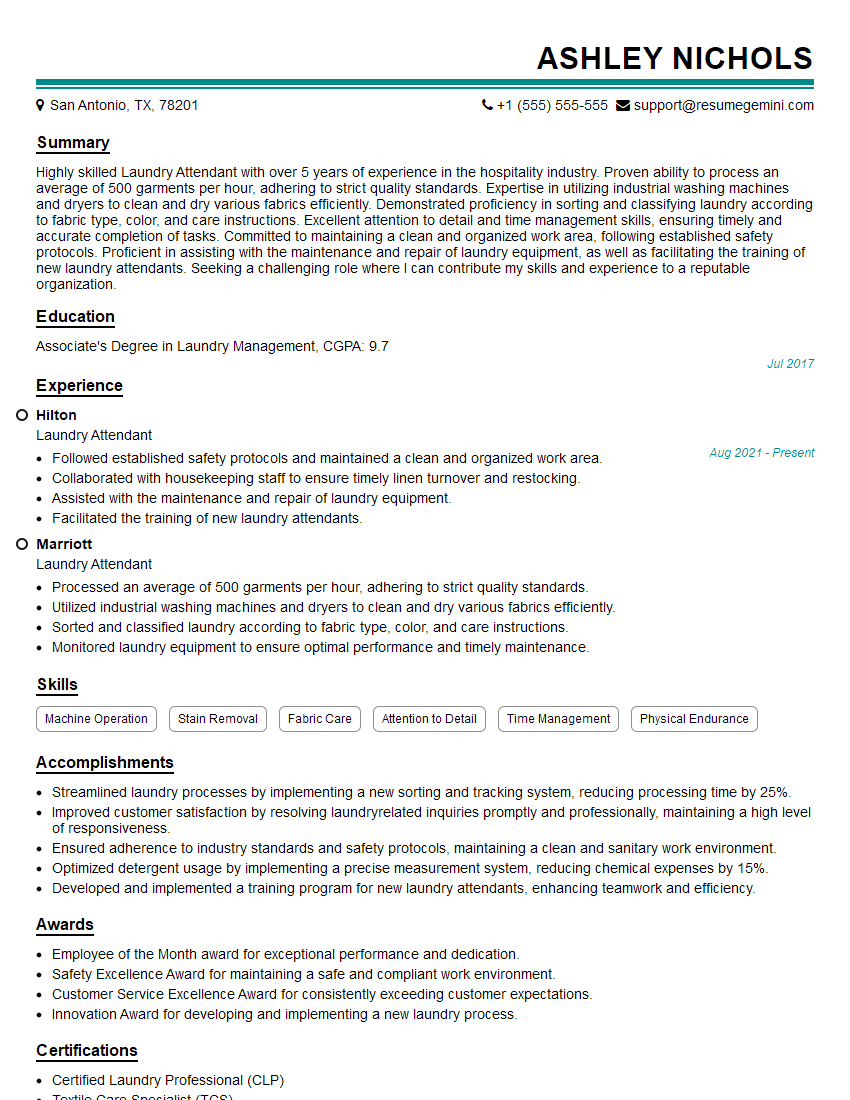
Mastering laundry and stain removal techniques is vital for career advancement in this field. A strong understanding of these concepts demonstrates professionalism and expertise, opening doors to diverse opportunities. To maximize your job prospects, create an ATS-friendly resume that showcases your skills and experience effectively. ResumeGemini is a trusted resource to help you build a professional and impactful resume. We offer examples of resumes tailored to the Laundry and Stain Removal industry to guide you in crafting your perfect application.

Explore more articles
Users Rating of Our Blogs
Share Your Experience
We value your feedback! Please rate our content and share your thoughts (optional).
What Readers Say About Our Blog
Very informative content, great job.
good