The thought of an interview can be nerve-wracking, but the right preparation can make all the difference. Explore this comprehensive guide to Leadership Roles in Music interview questions and gain the confidence you need to showcase your abilities and secure the role.
Questions Asked in Leadership Roles in Music Interview
Q 1. Describe your experience managing budgets in a music-related context.
Managing budgets in the music industry requires meticulous planning and a deep understanding of revenue streams and expenditure. It’s not just about numbers; it’s about balancing artistic vision with financial realities. My experience includes overseeing budgets ranging from small independent projects to larger-scale productions.
For example, in one project, we were producing an independent album. The initial budget encompassed recording studio time, musician fees, mixing and mastering, artwork design, and marketing & distribution. I used a spreadsheet to meticulously track every expense, forecasting potential revenue from album sales, streaming royalties, and live performances. Regular budget reviews allowed for course correction, ensuring we stayed within the allocated funds while maximizing the artistic output.
Another example involved a larger-scale festival. Here, budgeting involved a more complex process, encompassing venue rental, artist fees (negotiated individually), sound and lighting equipment, security, marketing campaigns, insurance, and staff salaries. I employed project management software to track expenses and forecast income from ticket sales, sponsorships, and merchandise. This allowed for better resource allocation and minimized financial risks.
Q 2. How would you handle a conflict between two key members of a musical group?
Conflict resolution is crucial in any collaborative environment, especially in music where creative differences can be intense. My approach is rooted in empathy, active listening, and a focus on finding mutually beneficial solutions.
First, I’d create a safe space for open communication, ensuring both individuals feel heard and respected. I’d encourage them to articulate their perspectives, focusing on the issue rather than personality clashes. Asking clarifying questions like “Can you help me understand your perspective?” can be invaluable.
Next, I’d work towards identifying the root cause of the conflict. Is it a creative difference, a scheduling issue, or a misunderstanding? Once identified, I’d facilitate a collaborative brainstorming session to explore potential solutions. This may involve compromising on creative choices, adjusting schedules, or clarifying roles and responsibilities. Finally, I’d document the agreed-upon solutions and establish clear expectations going forward. Follow-up meetings help ensure everyone remains committed to the resolution.
Q 3. What strategies do you employ for motivating a team of musicians?
Motivating a team of musicians requires understanding that they are individuals with unique creative needs and personalities. My approach involves creating a supportive and collaborative environment, recognizing individual achievements, and providing opportunities for growth.
I believe in fostering a culture of trust and mutual respect, where every team member feels valued and appreciated. Regular feedback sessions, both positive and constructive, are vital. I prioritize open communication, encouraging team members to share their ideas and concerns without fear of judgment. Recognizing individual contributions – be it through public acknowledgment or personalized incentives – is a powerful motivator.
Offering opportunities for professional development – whether attending workshops, collaborating with other artists, or taking on new challenges within the project – helps musicians feel engaged and invested in the long-term success of the project. Celebrating milestones together fosters team spirit and reinforces the collective effort needed to achieve common goals. Think of it as building a musical family; everyone plays their part, and everyone deserves appreciation.
Q 4. Explain your approach to talent scouting and artist development.
Talent scouting and artist development are intertwined processes. It’s about identifying raw talent, nurturing its potential, and guiding artists towards fulfilling their creative visions. My approach involves a combination of proactive searching, networking, and a deep understanding of the music industry landscape.
I actively attend live music events, music festivals, and industry conferences to discover emerging artists. I also leverage online platforms to find talented individuals. Networking with other professionals, such as music agents, managers, and record label executives, expands my reach and allows for access to a broader talent pool.
Once I identify promising talent, the development process begins. This involves providing strategic guidance on everything from songwriting and performance skills to branding and marketing. I mentor artists on how to navigate the industry, negotiate contracts, and build their careers. It’s a long-term investment, based on trust and a shared vision for success. Think of it as gardening; you need to nurture the plant carefully and patiently to see it bloom.
Q 5. How would you navigate negotiating a complex recording contract?
Negotiating complex recording contracts requires a deep understanding of legal terminology, industry standards, and the artist’s best interests. It’s a delicate balance between securing favorable terms for the artist and maintaining a mutually beneficial agreement with the record label.
I would begin by thoroughly reviewing the contract with a legal expert, ensuring a complete understanding of all clauses, including royalty rates, advances, recording budgets, and the length of the contract. I’d then meet with the artist to fully explain the contract’s implications, clarifying any ambiguities or concerns.
During the negotiation process, I would focus on achieving a fair balance. I’d highlight the artist’s unique value and the potential for significant success, justifying a favorable royalty split and advance. I’d use data and market analysis to support the negotiation and advocate for the artist’s long-term career goals. Negotiating requires patience, diplomacy, and a keen ability to find common ground while defending the artist’s interests.
Q 6. Describe your experience with music marketing and promotion strategies.
Music marketing and promotion strategies have evolved significantly with the rise of digital platforms. My approach blends traditional methods with innovative digital tactics to maximize reach and engagement.
Traditional strategies, like radio promotion and print advertising, still hold value, particularly for certain demographics. However, we primarily focus on digital marketing. This includes creating a strong online presence through a professional website, active social media engagement across relevant platforms, and targeted advertising campaigns on platforms like Spotify, YouTube, and social media. We utilize data analytics to track campaign performance and adjust strategies accordingly.
I also believe in cultivating relationships with music bloggers, influencers, and media outlets. Press releases, targeted email campaigns, and securing media coverage are essential components of a comprehensive marketing strategy. Ultimately, the most effective promotion comes from creating high-quality music that resonates with audiences and building genuine connections with fans. It’s a combination of strategic planning and building organic interest.
Q 7. How do you measure the success of a music project or campaign?
Measuring the success of a music project or campaign requires a multi-faceted approach, combining quantitative and qualitative data. It’s not just about sales; it’s about building a lasting connection with the audience.
Quantitative measures include album sales, streaming numbers, concert attendance, social media engagement (likes, shares, comments), and playlist additions. Tracking these metrics provides valuable insights into the project’s reach and impact.
Qualitative measures are equally crucial. These include audience feedback (reviews, comments, surveys), media coverage (positive press, reviews), and the overall impact on the artist’s brand awareness and career trajectory. Measuring brand awareness often involves monitoring mentions across social media and other platforms. Analyzing these elements gives a holistic understanding of how the campaign has resonated with the target audience, beyond simple numbers. It’s about understanding the long-term impact and lasting legacy of the project.
Q 8. What are your strategies for building and maintaining positive relationships with artists?
Building and maintaining positive relationships with artists is paramount. It’s about fostering trust, mutual respect, and a collaborative spirit. Think of it like a partnership, not a boss-employee dynamic.
- Open Communication: Regular, honest, and transparent communication is key. This involves actively listening to their concerns, aspirations, and creative visions. I schedule regular check-ins, not just when problems arise.
- Shared Vision: I work collaboratively with artists to define their goals and develop a strategic plan to achieve them. This ensures we’re both working towards the same objectives.
- Empathy and Understanding: The music industry can be emotionally challenging. I strive to understand the artist’s perspective, even if I don’t always agree with their choices. Showing empathy builds trust and loyalty.
- Clear Expectations: Setting clear expectations from the outset – regarding roles, responsibilities, and deadlines – prevents misunderstandings and fosters a professional working relationship. This includes detailed contracts that are mutually understood.
- Celebrating Successes: Recognizing and celebrating achievements, both big and small, boosts morale and strengthens the bond. This includes acknowledging their hard work and artistic contributions.
For example, with one artist I managed, we faced a creative block during album production. By actively listening and offering alternative approaches, while respecting their artistic vision, we overcame the hurdle and produced their most successful album to date.
Q 9. How do you handle pressure and tight deadlines in a high-stakes music environment?
The music industry thrives on tight deadlines and high pressure. My approach involves a combination of proactive planning, effective delegation, and a calm, decisive demeanor.
- Proactive Planning: I always develop detailed project timelines and contingency plans. This allows us to anticipate potential roadblocks and address them before they escalate into crises.
- Effective Delegation: I build strong teams with clear roles and responsibilities. This distributes the workload effectively and empowers team members to take ownership.
- Prioritization: I prioritize tasks based on their importance and urgency, focusing on what delivers the most significant impact within the given constraints.
- Stress Management Techniques: I employ stress management techniques like regular exercise, mindfulness, and maintaining a work-life balance. This ensures I approach challenges with clarity and focus.
- Communication is Key: Keeping all stakeholders informed throughout the process minimizes anxiety and ensures everyone is on the same page. Transparent communication is essential under pressure.
During a recent tour, we faced a last-minute venue cancellation. By quickly identifying alternative options, communicating transparently with the artist and the team, and leveraging our established network, we successfully rescheduled the concert with minimal disruption.
Q 10. Explain your understanding of copyright law and its implications for music projects.
Copyright law is crucial in the music industry; it protects the intellectual property rights of songwriters, composers, and performers. It covers musical compositions, sound recordings, and performances. Ignoring it can lead to significant legal and financial repercussions.
- Copyright Ownership: Understanding who owns the copyright to a song is critical. It might be the songwriter, composer, publisher, or a combination thereof.
- Mechanical Licenses: These are required to reproduce and distribute copyrighted musical works (e.g., creating a recording). It’s crucial to obtain these licenses from the appropriate Performing Rights Organizations (PROs) like ASCAP, BMI, or SESAC.
- Synchronization Licenses: These are required to use music in visual media such as films or commercials.
- Public Performance Licenses: These are necessary for public performances of copyrighted music, such as in a concert or a radio broadcast.
- Sampling and Fair Use: Sampling other artists’ works requires obtaining permission, unless it falls under the fair use doctrine, which has strict criteria.
A lack of understanding of copyright law can result in expensive lawsuits and damage an artist’s reputation. I always ensure we comply with all relevant copyright regulations and obtain necessary licenses before any project commences.
Q 11. Describe your expertise in artist management, including contract negotiation and tour planning.
My artist management expertise encompasses all aspects of an artist’s career, from contract negotiation to tour planning and everything in between.
- Contract Negotiation: I’m adept at negotiating favorable contracts with record labels, publishers, agents, and other stakeholders. This involves understanding the legal intricacies of music contracts and ensuring the artist receives fair compensation and creative control.
- Tour Planning and Execution: I manage all logistical aspects of touring, including venue booking, transportation, accommodation, marketing, and promotion. I also oversee the tour budget and ensure it remains on track.
- Financial Management: I track income and expenses, manage budgets, and prepare financial reports to ensure transparency and accountability. This involves understanding royalty payments, performance fees, and merchandise sales.
- Public Relations and Marketing: I work with the artist to develop a comprehensive marketing and PR strategy to promote their music and build their brand.
- Artist Development: I work closely with artists to refine their artistic vision, develop their stage presence, and hone their songwriting skills. This includes providing creative input and feedback.
In one project, I secured a highly favorable recording contract for a new artist, negotiating favorable royalty rates and creative control clauses. For another artist’s European tour, I coordinated all logistical aspects, ensuring a smooth and successful tour run that exceeded expectations.
Q 12. How do you stay abreast of current trends and innovations in the music industry?
Staying current in the music industry is critical. My strategies include:
- Industry Publications and Blogs: I regularly read trade publications like Billboard, Variety, and Music Week to stay informed about industry trends, news, and innovations.
- Conferences and Events: Attending industry conferences and events provides valuable networking opportunities and insights into emerging trends.
- Online Communities and Forums: I actively participate in online communities and forums to engage with industry professionals and discuss current developments.
- Data Analysis: Analyzing streaming data and chart performance helps me understand consumer preferences and identify potential opportunities.
- Mentorship and Networking: I maintain a strong network of contacts within the industry and regularly seek advice and guidance from experienced professionals.
For example, I recently incorporated the use of short-form video platforms like TikTok into a marketing strategy, leading to significant increased audience engagement and improved reach.
Q 13. What is your experience with digital music distribution and streaming platforms?
My experience with digital music distribution and streaming platforms is extensive. I’m familiar with major platforms like Spotify, Apple Music, Amazon Music, YouTube Music, and others.
- Distribution Services: I utilize distribution services like DistroKid, TuneCore, and CD Baby to upload music to various streaming platforms efficiently.
- Metadata Optimization: I optimize metadata (artist name, song title, album art, genre, etc.) to improve search results and discoverability on streaming platforms.
- Playlist Curation: I understand the importance of playlist curation and actively pursue placement on relevant playlists to increase audience reach.
- Data Analysis: I regularly analyze streaming data to identify trends, track performance, and make data-driven decisions regarding marketing and promotional strategies.
- Royalties and Reporting: I’m familiar with the royalty payment systems of various streaming platforms and ensure artists receive accurate and timely payments.
In a recent project, I helped an artist secure placement on several high-profile Spotify and Apple Music playlists, which resulted in a substantial increase in their streaming numbers and overall popularity.
Q 14. How would you develop a comprehensive marketing plan for a new artist?
Developing a comprehensive marketing plan for a new artist requires a multifaceted approach that combines various strategies to maximize reach and impact.
- Target Audience Identification: Clearly defining the artist’s target audience is critical to tailoring marketing efforts effectively.
- Branding and Messaging: Creating a strong brand identity and consistent messaging across all platforms is vital for building recognition and establishing credibility.
- Social Media Marketing: Developing a compelling social media presence through engaging content, regular posting, and influencer collaborations is crucial in today’s digital landscape.
- Public Relations: Building relationships with journalists and media outlets to secure press coverage and interviews helps to increase visibility.
- Content Marketing: Creating high-quality audio-visual content like music videos, lyric videos, and behind-the-scenes footage boosts engagement and provides sharable assets.
- Digital Advertising: Utilizing targeted advertising campaigns on platforms like YouTube, Instagram, and Facebook helps to reach specific demographics and increase visibility.
- Email Marketing: Building an email list allows for direct communication with fans, promoting new releases and upcoming events.
- Live Performances: Securing gigs and performances at relevant venues increases visibility and allows direct fan engagement.
A successful marketing plan is dynamic; it requires constant monitoring, analysis, and adaptation based on the results. It’s all about being agile and responsive to changes in the market.
Q 15. What is your approach to managing the creative process within a team?
Managing the creative process in a music team requires a delicate balance between fostering individual expression and achieving a cohesive final product. My approach is built on three pillars: clear communication, structured workflow, and collaborative feedback.
Clear Communication: From the outset, I establish clear goals and expectations. This includes defining the project’s scope, target audience, and desired sonic aesthetic. Regular check-ins, using tools like project management software or even simple shared documents, ensure everyone is on the same page and can voice their concerns promptly.
Structured Workflow: I believe in creating a structured workflow to prevent creative chaos. This might involve breaking down the project into smaller, manageable tasks (e.g., composing individual sections, arranging, recording, mixing), assigning responsibilities, and setting realistic deadlines. Using Gantt charts or Kanban boards can be incredibly helpful in visualizing progress and identifying potential bottlenecks.
Collaborative Feedback: I encourage open and constructive criticism within the team. This means creating a safe space where musicians feel comfortable sharing their ideas and receiving feedback without fear of judgment. I facilitate feedback sessions using techniques like active listening and providing specific, actionable suggestions, rather than just general pronouncements.
For example, in a recent project with a jazz ensemble, we used a shared Google Doc to track individual progress on composition, allowing everyone to see the overall structure taking shape. This transparency minimized misunderstandings and fostered a sense of collective ownership.
Career Expert Tips:
- Ace those interviews! Prepare effectively by reviewing the Top 50 Most Common Interview Questions on ResumeGemini.
- Navigate your job search with confidence! Explore a wide range of Career Tips on ResumeGemini. Learn about common challenges and recommendations to overcome them.
- Craft the perfect resume! Master the Art of Resume Writing with ResumeGemini’s guide. Showcase your unique qualifications and achievements effectively.
- Don’t miss out on holiday savings! Build your dream resume with ResumeGemini’s ATS optimized templates.
Q 16. How do you handle criticism or negative feedback regarding a music project?
Criticism, even negative feedback, is crucial for growth in any creative endeavor. My approach focuses on viewing criticism as an opportunity for improvement rather than a personal attack. I begin by actively listening to the feedback, asking clarifying questions to ensure I understand the perspective. Then, I analyze the feedback objectively: Is it valid? Is it constructive? Does it align with the project’s goals?
Valid Criticism: If the criticism is valid and constructive, I address it collaboratively with the team. This might involve revisiting sections of the music, making adjustments, or exploring alternative approaches. It’s important to demonstrate that I value the input and show how it has improved the final product.
Unconstructive Criticism: If the criticism is unconstructive or solely focused on personal attacks, I address this directly, but professionally. I might reiterate the project’s goals and explain why certain choices were made. I may also remind the person of our shared mission.
For instance, during the mixing stage of a rock album, we received criticism about the lack of punch in the drums. By analyzing the mix and engaging in a collaborative dialogue with the sound engineer, we identified the problem, adjusted the compression and equalization settings, and delivered a considerably improved result. The outcome improved the final product and strengthened team cohesion by demonstrating that adjustments are welcome.
Q 17. How do you ensure the financial stability and profitability of a music enterprise?
Ensuring financial stability and profitability in a music enterprise requires a multifaceted approach encompassing diverse revenue streams, effective budgeting, and smart financial management.
Diversified Revenue Streams: Reliance on a single revenue stream (e.g., album sales) is risky. A successful strategy includes a mix of income sources like live performances, merchandise sales, digital downloads/streaming royalties, sync licensing (music used in film/TV), sponsorships, grants, and crowdfunding.
Effective Budgeting and Forecasting: Creating a realistic budget is essential. This involves meticulously tracking all income and expenses, forecasting future revenue, and identifying potential cost-saving measures. Utilizing accounting software and seeking advice from financial professionals is highly recommended.
Smart Financial Management: This includes negotiating favorable contracts, managing cash flow effectively, investing wisely, and minimizing unnecessary spending. Understanding tax implications is crucial, particularly for independent artists.
For example, I once worked with an artist who diversified their income by creating high-quality merchandise, expanding their reach through targeted social media campaigns for tour promotions, and actively seeking sync licensing opportunities, this strategy resulted in a much more sustainable and profitable business model.
Q 18. Describe your experience with team building and leadership development in a musical setting.
Team building and leadership development in music are crucial for success. My experience involves a blend of practical strategies and relationship-building techniques. I foster a supportive environment where each member feels valued and respected, regardless of their role or experience level.
Team Building Activities: Informal social events (jam sessions, team dinners) help build camaraderie and trust. I also incorporate structured activities that enhance teamwork and communication, such as collaborative songwriting workshops or problem-solving exercises.
Mentorship and Coaching: I actively mentor junior members, providing guidance and support to help them develop their skills and confidence. This includes both technical musical skills and soft skills like communication and collaboration.
Leadership Development: I encourage leadership within the team, empowering members to take initiative and assume responsibility. I provide opportunities for members to lead smaller projects or workshops, allowing them to develop their leadership abilities.
In one instance, I facilitated a collaborative songwriting retreat for a group of emerging artists, fostering creativity through collaborative sessions and shared feedback. This retreat not only created a strong musical output but also forged strong bonds among the participants, demonstrating the power of team building in a creative environment.
Q 19. How do you foster collaboration and innovation within a music production team?
Fostering collaboration and innovation requires creating a culture of trust, respect, and open communication. My approach involves the use of collaborative tools and techniques to generate new ideas.
Brainstorming Sessions: I facilitate structured brainstorming sessions, encouraging free-flowing ideas and avoiding judgment during the initial stages. Techniques like mind mapping or using a shared whiteboard can enhance the process.
Cross-Pollination of Ideas: I encourage cross-functional collaboration by bringing musicians, producers, engineers, and other relevant personnel together to share perspectives. This can lead to unexpected and innovative solutions.
Experimentation and Risk-Taking: I cultivate a culture where experimentation and taking creative risks are encouraged. This can lead to breakthroughs and innovative ideas. A ‘safe-to-fail’ environment is crucial.
In a recent project, we utilized a shared online platform for collaborative songwriting. Each team member could add their ideas, build upon each other’s contributions, and provide feedback in real-time. This innovative approach resulted in a truly collaborative and creative output.
Q 20. What strategies do you employ for building and maintaining positive relationships with external stakeholders (e.g., venues, labels)?
Building and maintaining positive relationships with external stakeholders like venues, labels, and promoters is vital for the success of any music project. My strategy focuses on proactive communication, mutual respect, and a commitment to professional collaboration.
Proactive Communication: I maintain open and consistent communication with all stakeholders, providing regular updates on project progress and addressing concerns promptly.
Mutual Respect and Professionalism: I treat every stakeholder with respect and professionalism, valuing their expertise and contributions. Negotiations are conducted fairly and transparently.
Relationship Building: I make an effort to build personal relationships with key stakeholders, attending industry events, networking, and maintaining regular contact.
Contractual Clarity: Clear and comprehensive contracts are essential to avoid misunderstandings and disputes. I ensure contracts are mutually beneficial and protect the interests of all parties involved.
For example, I cultivated a strong relationship with a local promoter by consistently delivering high-quality performances, meeting deadlines, and maintaining open communication. This led to numerous opportunities for our band and established a reliable partnership.
Q 21. How would you handle a situation where a musician is underperforming?
Addressing underperformance requires a sensitive and professional approach. My strategy combines empathy with clear communication and performance management techniques.
Private Conversation: I would initiate a private conversation with the musician, expressing my concerns and offering support. I’d focus on understanding the reasons for underperformance, whether it’s technical difficulties, personal issues, or creative differences.
Identify the Root Cause: This is crucial. Is it a lack of skills, motivation, or something else entirely? This necessitates active listening and understanding the musician’s perspective.
Develop an Action Plan: Together, we’d develop an action plan that outlines specific goals, deadlines, and support strategies. This might involve additional training, mentoring, or a reevaluation of their role within the project.
Performance Monitoring and Follow-Up: Regular check-ins are crucial to monitor progress and offer ongoing support. I’d focus on positive reinforcement and celebrating successes along the way.
Consider External Factors: Sometimes, external factors such as health issues or personal circumstances impact performance. Showing empathy and understanding in these scenarios is essential.
In a past project, a musician struggled with stage fright. After a private conversation, we developed a plan which included extra rehearsal time, focusing on breathing techniques, and incorporating positive self-talk strategies. Through patience and support, their performance improved dramatically.
Q 22. Describe your approach to risk management in a music-related venture.
My approach to risk management in music ventures is multifaceted and proactive. It begins with thorough due diligence – carefully assessing potential challenges before committing resources. This includes market research to understand audience demand, competitor analysis to identify potential threats, and financial modeling to predict profitability.
I use a framework that considers three key areas: financial risk, operational risk, and reputational risk. Financial risk involves things like securing adequate funding, managing cash flow, and negotiating favorable contracts. Operational risks encompass aspects like production delays, artist availability, and unforeseen technical issues. Reputational risk centers around maintaining a positive public image and avoiding controversies that could damage the project’s credibility.
For example, on a recent album release, we identified the risk of low pre-orders. To mitigate this, we implemented a multi-pronged strategy including a targeted social media campaign, early access for fans via a newsletter, and partnerships with relevant influencers. This approach allowed us to significantly reduce the risk and achieve our pre-order goals. I continuously monitor and adapt my strategies based on performance data and emerging challenges.
Q 23. Explain your understanding of revenue streams and business models in the music industry.
Understanding revenue streams and business models in the music industry is crucial for success. Revenue can be generated through various channels, not just album sales. Traditional models include album/single sales (physical and digital), merchandise, touring, and publishing royalties. However, the landscape has drastically changed with the rise of streaming services.
Modern business models often involve a diversified approach. For instance, an artist might generate revenue through streaming royalties from platforms like Spotify or Apple Music, licensing their music for use in film or television, generating income through merchandise sales on their website, or through live performances. The key is to develop a robust and diversified strategy to maximize income streams. Some artists even leverage crowdfunding campaigns or Patreon subscriptions to fund their projects directly from fans.
Building a successful business model requires a keen understanding of your target audience, your value proposition, and the constantly evolving market. It involves a strategic approach to managing costs and maximizing profits across multiple channels, ensuring financial sustainability for the artist or label.
Q 24. How would you address the challenges of managing diverse musical styles or tastes within a single project?
Managing diverse musical styles or tastes within a single project requires a collaborative and inclusive approach. It’s not about forcing a compromise but rather about celebrating the unique contributions of each artist or genre involved. The key is open communication and mutual respect.
I would begin by establishing clear project goals and objectives, ensuring everyone understands the overall vision. Then, I’d facilitate individual creative freedom within a defined framework. This could involve creating distinct sections for different styles or integrating them in innovative ways that highlight their contrasts and complementarities. For example, I’ve worked on a project where a classical composer collaborated with a hip-hop artist; we achieved a unique blend by using the classical piece as the foundation for a modern hip-hop remix.
Effective project management tools, regular check-ins, and constructive feedback are essential to ensure everyone feels heard and the project maintains a cohesive structure. It’s all about finding creative synergies and fostering an environment where differences are celebrated as strengths.
Q 25. How do you build and maintain strong professional networks in the music industry?
Building and maintaining strong professional networks in the music industry is essential for success. It’s a relationship-driven business, and your network can be your most valuable asset. I cultivate relationships through active participation in industry events, conferences, and workshops.
I prioritize meaningful connections over superficial ones, focusing on building trust and mutual respect. This involves actively listening to others, offering genuine support, and being a reliable partner in collaborations. Online platforms like LinkedIn are also useful, but they should be supplements, not replacements, for face-to-face interactions.
I regularly reach out to colleagues and collaborators, sharing industry news, offering support, and seeking advice when needed. Building and maintaining these relationships takes time and effort, but the rewards – access to opportunities, expertise, and a supportive community – are invaluable.
Q 26. Describe your experience with international collaborations and music projects.
My experience with international collaborations has been rewarding and insightful. I’ve worked on projects involving artists and teams from various countries, including the UK, Japan, and Brazil. These experiences have broadened my perspectives on music production, cultural nuances, and business practices.
The challenges include navigating different legal frameworks, communication styles, and time zones. Effective project management, clear communication, and cultural sensitivity are paramount. I’ve found that establishing strong communication protocols early on, utilizing project management tools, and being flexible and adaptable are crucial for successful international collaborations. For example, a project involving a Japanese artist required us to consider cultural sensitivities in the music video production, and we were able to create a successful product by involving Japanese cultural consultants.
International collaborations foster creativity and expose you to new ideas and perspectives. They also provide valuable insights into global markets and the diverse tastes of audiences worldwide.
Q 27. How do you ensure the ethical and responsible production of music projects?
Ensuring the ethical and responsible production of music projects is a core value for me. This encompasses several aspects, including fair compensation for all involved, respecting intellectual property rights, and promoting inclusivity and diversity.
I prioritize fair contracts that ensure artists and collaborators receive appropriate payment for their contributions. We meticulously source samples and clear any necessary licenses to avoid copyright infringement. I also strive to create inclusive and diverse teams, actively seeking out underrepresented voices and perspectives in the creative process. Sustainability is also a growing concern. We actively consider environmentally friendly practices in our production, transportation, and distribution processes.
Transparency and open communication are vital. All participants understand the project’s objectives, their roles, and the ethical guidelines that govern the process. Maintaining ethical standards builds trust, fosters collaboration, and ultimately creates a more positive and sustainable music industry.
Q 28. What is your approach to mentoring and developing aspiring music professionals?
My approach to mentoring and developing aspiring music professionals is based on practical experience, guidance, and building confidence. I believe in fostering a supportive environment where mentees can explore their potential without fear of failure. I work with mentees to identify their strengths and weaknesses, setting clear goals and creating a development plan tailored to their individual needs.
Mentorship isn’t just about imparting knowledge; it’s about sharing experiences, providing feedback, and offering constructive criticism. I encourage mentees to actively seek opportunities, challenge themselves, and learn from their mistakes. I often organize workshops, networking events, and shadowing opportunities that can help build their skillsets and professional networks. The goal is to equip them with the tools and knowledge they need to navigate the industry successfully.
Regular check-ins and open communication are essential. I encourage open dialogue, allowing them to freely share their challenges and seek guidance without judgment. The focus is on building confidence, empowering them to take ownership of their career paths, and ultimately, achieve their professional goals.
Key Topics to Learn for Leadership Roles in Music Interviews
- Artistic Vision & Strategic Planning: Developing and communicating a compelling artistic vision, aligning it with organizational goals, and creating effective strategic plans for its implementation.
- Team Management & Collaboration: Building high-performing teams, fostering collaboration among diverse individuals (musicians, technicians, administrators), managing conflict effectively, and delegating tasks appropriately.
- Budget Management & Resource Allocation: Understanding and managing budgets, allocating resources efficiently, negotiating contracts, and securing funding for projects.
- Project Management & Execution: Planning, organizing, and executing complex projects (concerts, tours, recordings) within budget and timelines, adapting to unexpected challenges.
- Communication & Public Relations: Effectively communicating with various stakeholders (artists, sponsors, audiences), managing public image, and handling media relations.
- Legal & Contractual Knowledge: Understanding relevant music industry laws, contracts (performance, recording, publishing), intellectual property rights, and risk management.
- Performance Evaluation & Feedback: Developing objective performance metrics, providing constructive feedback, and conducting performance reviews for team members.
- Innovation & Adaptability: Embracing new technologies and trends in the music industry, adapting to changing market demands, and fostering a culture of innovation within the team.
- Leadership Styles & Motivational Techniques: Understanding various leadership styles and adapting your approach to different situations and team members; employing motivational techniques to inspire and engage your team.
- Conflict Resolution & Problem-Solving: Identifying and addressing conflicts effectively, employing problem-solving methodologies to navigate challenges and make sound decisions under pressure.
Next Steps
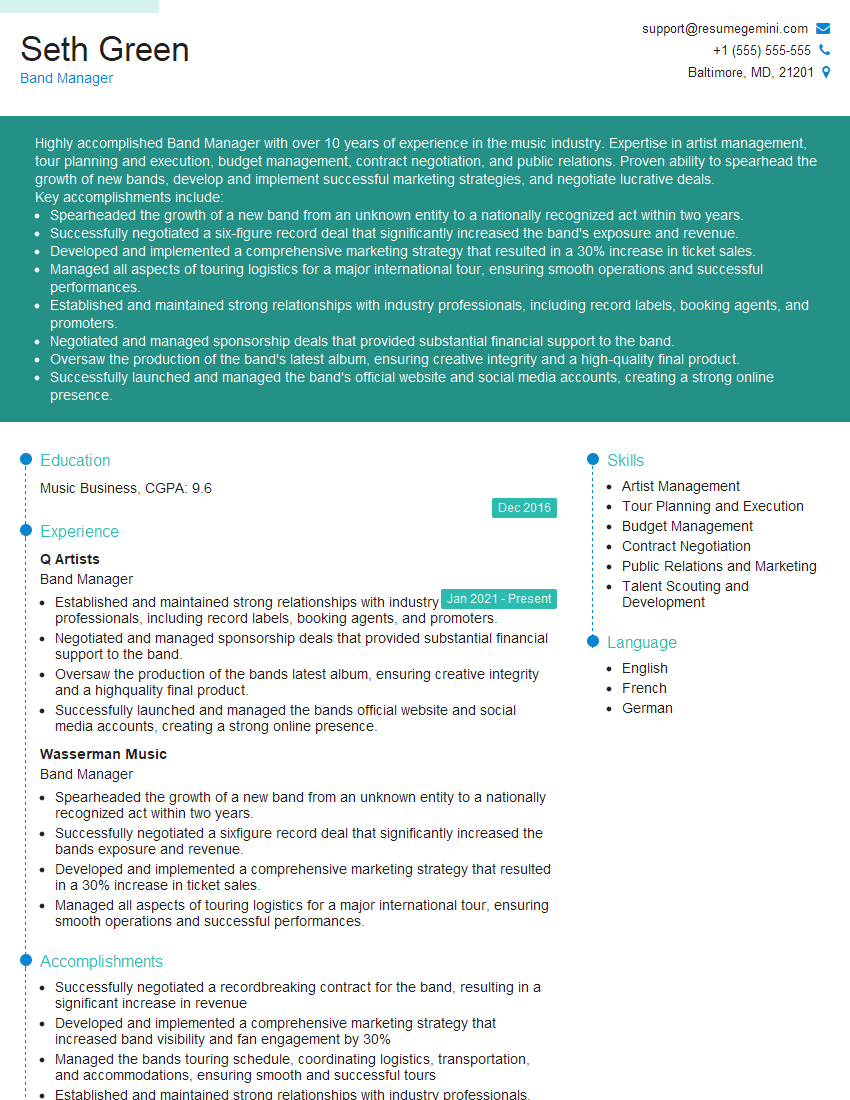
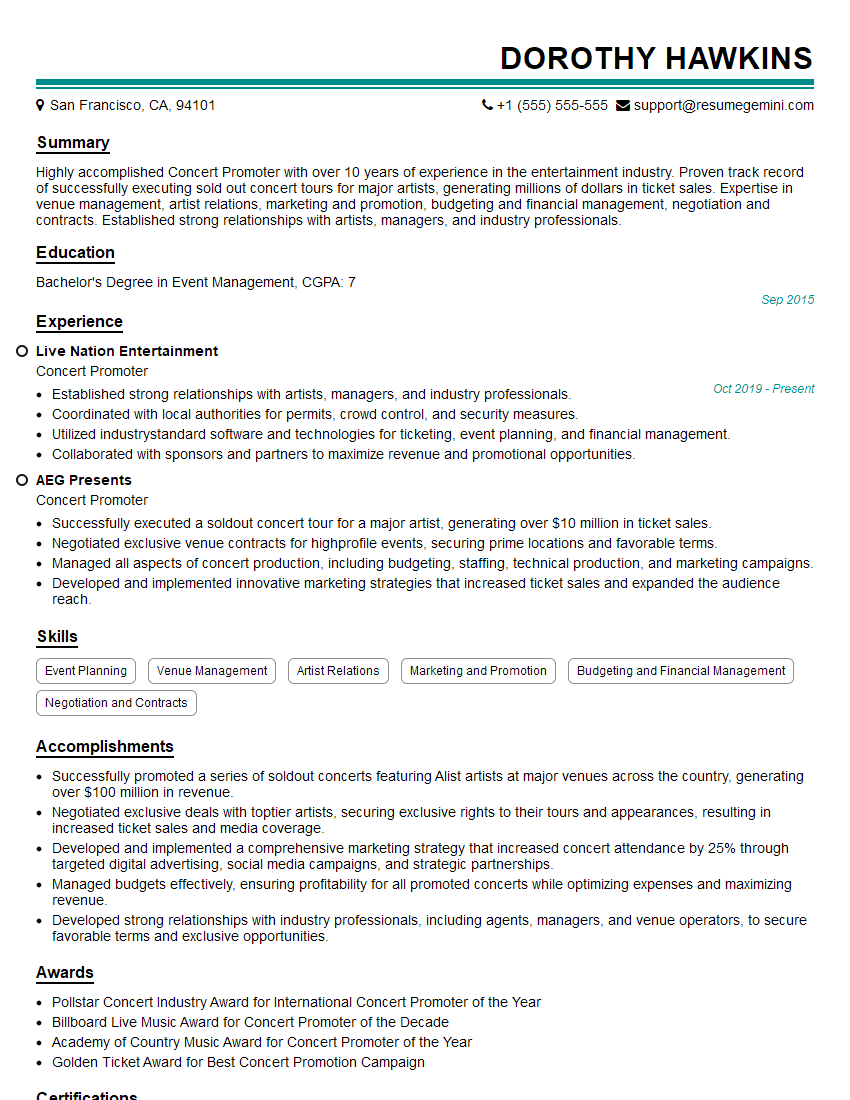
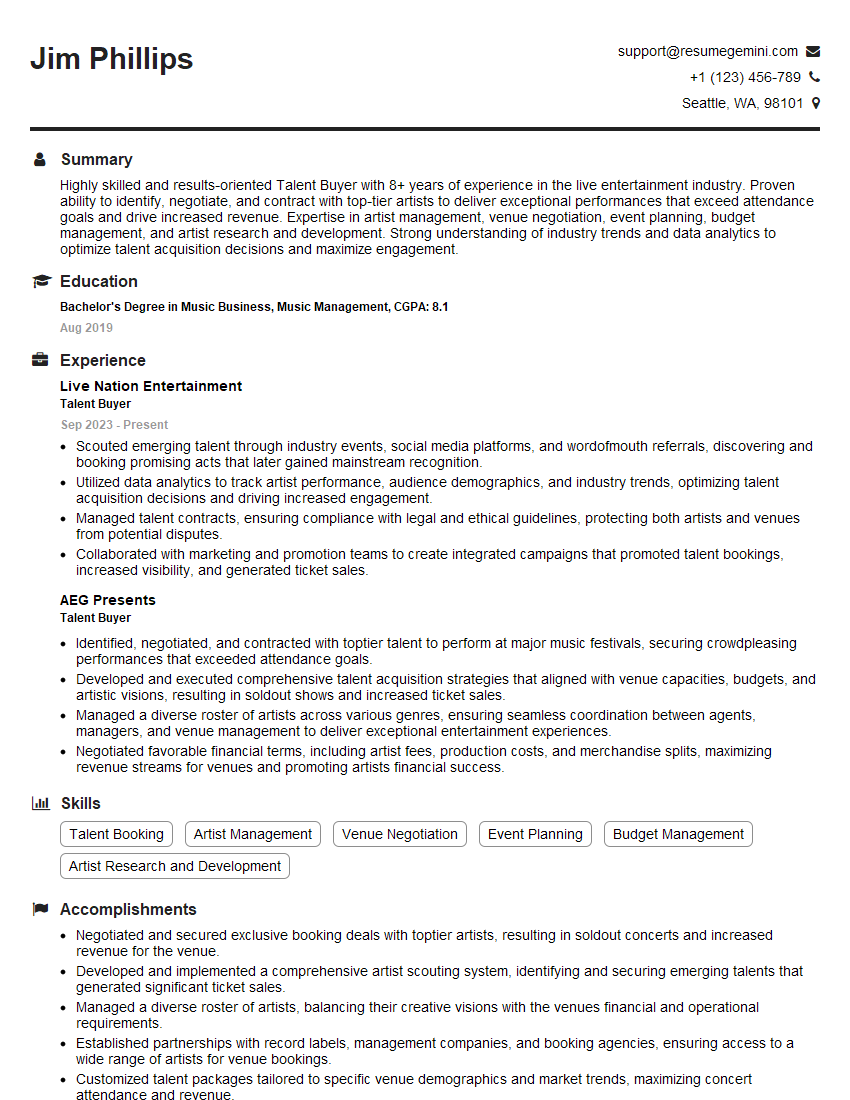
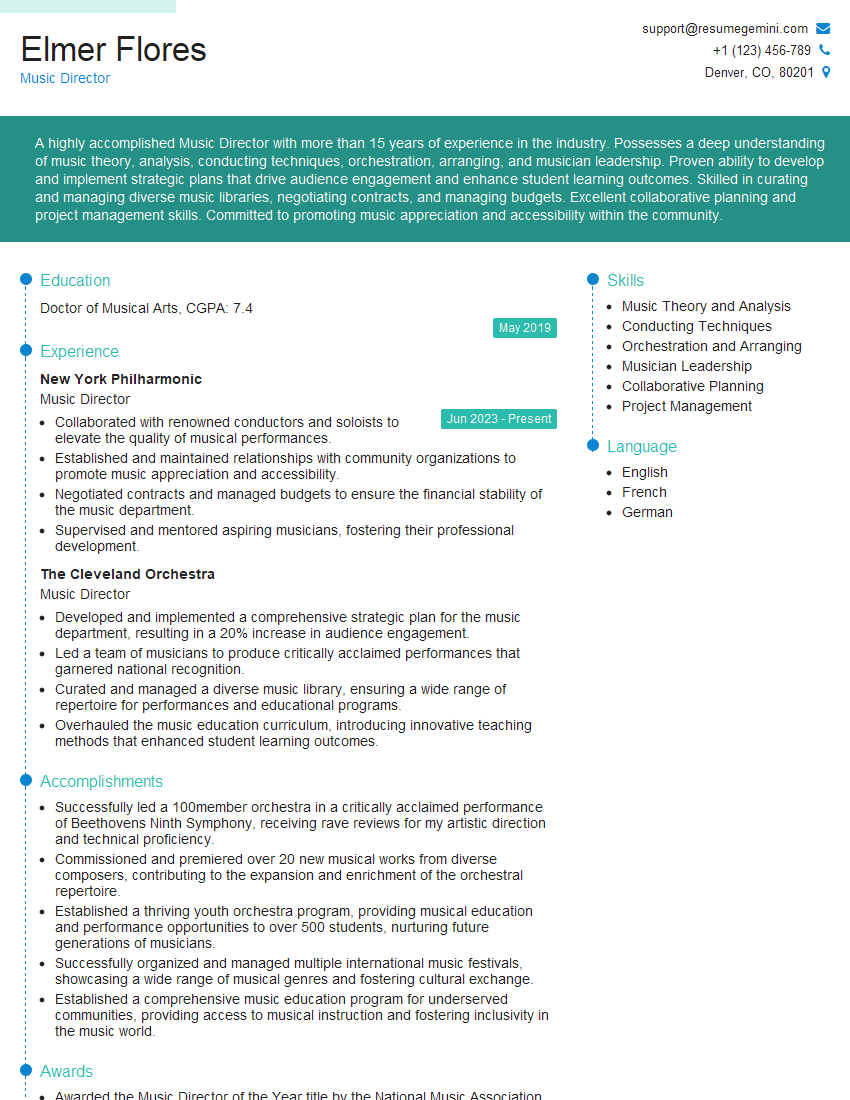
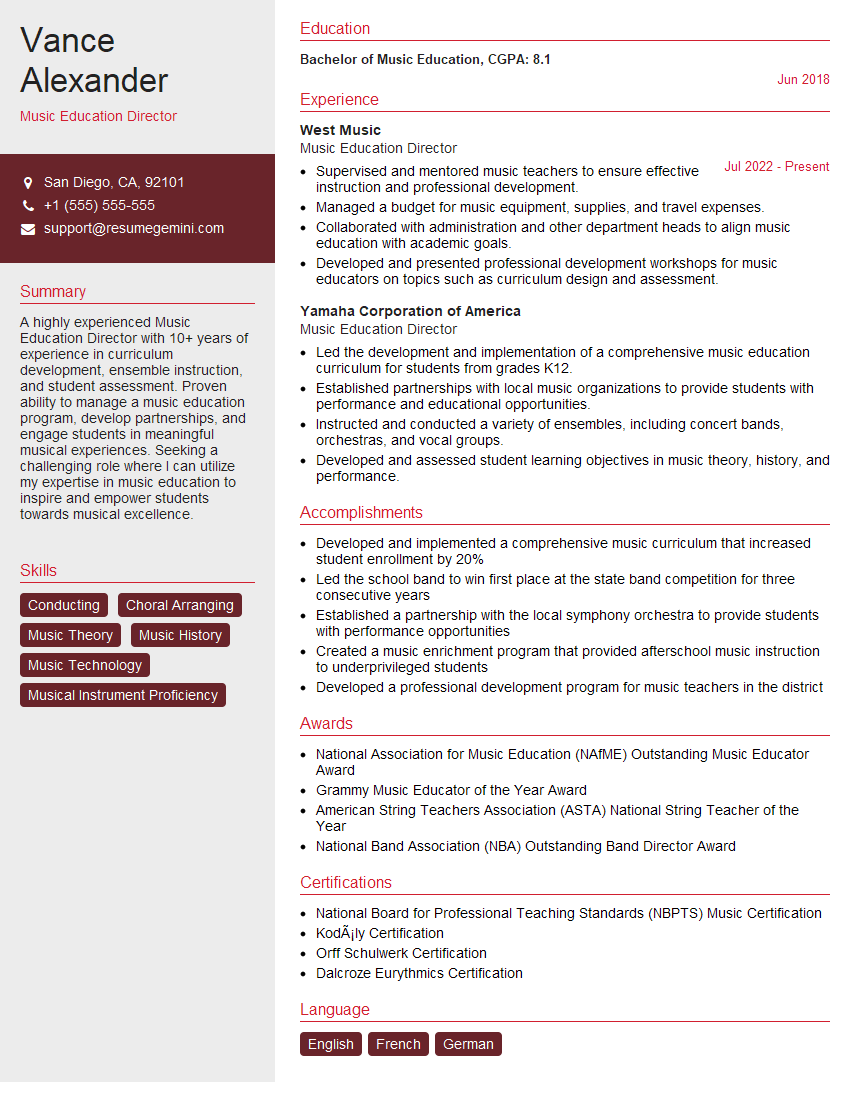
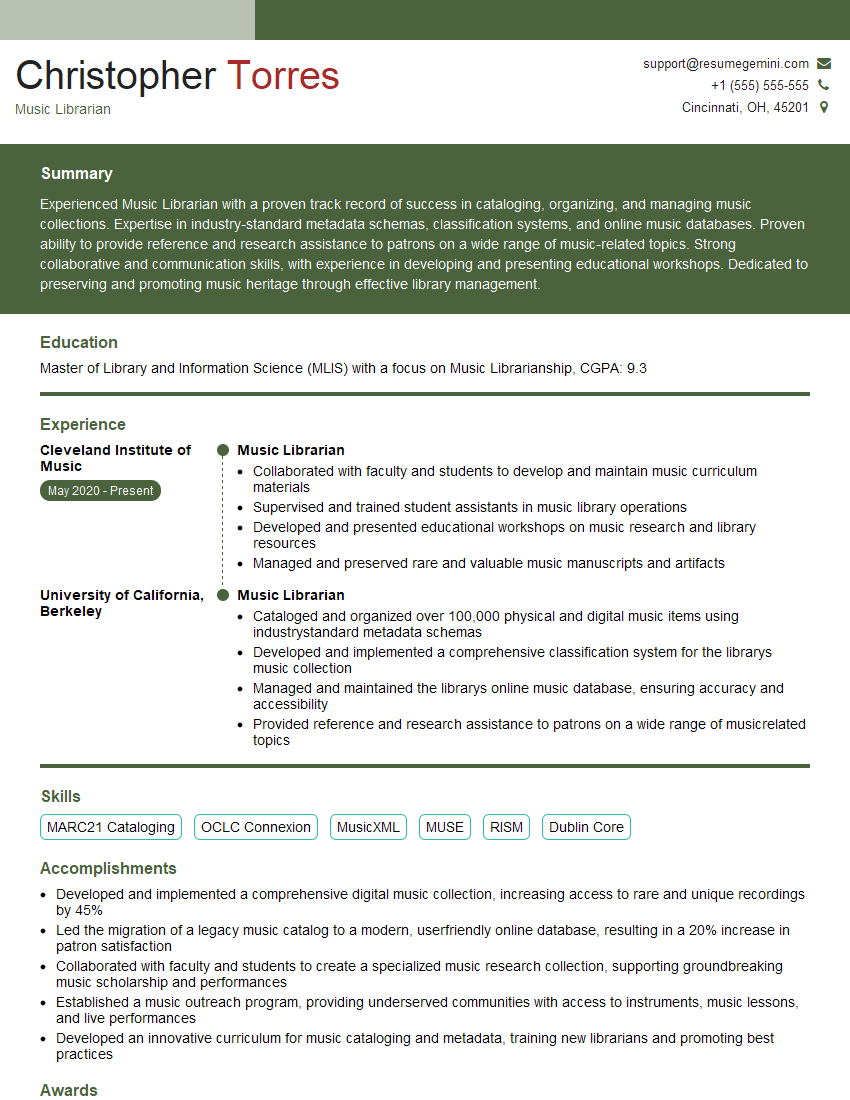
Mastering these leadership skills is crucial for career advancement in the dynamic music industry. A strong and ATS-friendly resume is your key to unlocking these opportunities. To significantly enhance your job prospects, we encourage you to utilize ResumeGemini, a trusted resource for building professional resumes. ResumeGemini provides examples of resumes tailored to Leadership Roles in Music, giving you a head start in crafting a compelling application that showcases your skills and experience effectively. Invest time in building a strong resume – it’s your first impression and a critical step in landing your dream role.
Explore more articles
Users Rating of Our Blogs
Share Your Experience
We value your feedback! Please rate our content and share your thoughts (optional).
What Readers Say About Our Blog
Very informative content, great job.
good