Every successful interview starts with knowing what to expect. In this blog, we’ll take you through the top Supervisor Communication and Collaboration interview questions, breaking them down with expert tips to help you deliver impactful answers. Step into your next interview fully prepared and ready to succeed.
Questions Asked in Supervisor Communication and Collaboration Interview
Q 1. Describe your approach to providing constructive feedback to team members.
My approach to providing constructive feedback centers around the Situation-Behavior-Impact (SBI) model. Instead of focusing on personal attributes, I address specific situations, observed behaviors, and the impact those behaviors had. This helps maintain a professional and objective tone while ensuring the feedback is actionable.
For example, instead of saying “You’re disorganized,” I’d say, “During the last project meeting (Situation), I noticed the deadline wasn’t clearly communicated (Behavior), which resulted in team members starting tasks late (Impact). Perhaps we could explore using a project management tool to improve communication and clarify deadlines.”
I also ensure feedback is timely, delivered privately, and focuses on both strengths and areas for improvement. I always end by asking for the team member’s perspective and collaboratively developing an action plan.
Q 2. How do you handle conflict resolution within your team?
Conflict resolution starts with active listening and understanding the perspectives of all involved parties. I believe in fostering a safe space where team members feel comfortable expressing their concerns without fear of judgment. My approach involves:
- Identifying the root cause: Digging deeper than surface-level disagreements to uncover the underlying issues.
- Facilitating a collaborative discussion: Guiding the team towards a solution through open communication and respectful dialogue.
- Focusing on interests, not positions: Understanding the underlying needs and desires of each individual helps to find mutually beneficial solutions.
- Reaching a consensus: Working towards a solution that everyone can agree on, even if it’s a compromise.
- Documenting agreements: Creating a clear record of the agreed-upon solutions to prevent future misunderstandings.
If the conflict involves serious issues or remains unresolved, I escalate it to upper management for further intervention.
Q 3. What strategies do you employ to foster effective teamwork and collaboration?
Fostering effective teamwork involves creating a culture of trust, respect, and open communication. My strategies include:
- Team-building activities: Engaging in activities that encourage interaction and collaboration outside of work tasks.
- Clearly defined roles and responsibilities: Ensuring everyone understands their contributions and how they fit into the bigger picture.
- Regular team meetings: Providing a platform for communication, updates, and problem-solving.
- Open communication channels: Making it easy for team members to communicate with each other, regardless of hierarchy.
- Recognition and appreciation: Acknowledging and celebrating team accomplishments and individual contributions.
- Mentorship and skill-sharing: Encouraging knowledge transfer and supporting professional development within the team.
Think of it like a sports team – each member has a specific role, but success relies on teamwork, clear communication, and mutual support.
Q 4. Explain your process for communicating project updates to upper management.
My process for communicating project updates to upper management is structured and consistent. I typically utilize a combination of methods to ensure clarity and efficiency:
- Regular status reports: Providing concise, data-driven updates at pre-determined intervals (e.g., weekly or bi-weekly).
- Visual dashboards: Using charts and graphs to present key performance indicators (KPIs) and project progress.
- Executive summaries: Highlighting key achievements, challenges, and risks in a brief, easy-to-understand format.
- One-on-one meetings: Providing more detailed updates and addressing specific concerns or questions.
- Project management software: Leveraging platforms that allow for real-time updates and progress tracking, accessible to upper management.
I tailor my communication based on the audience and their preferences, ensuring the information is relevant and actionable.
Q 5. How do you ensure clear and consistent communication within your team?
Clear and consistent communication requires a multifaceted approach. I focus on:
- Establishing clear communication protocols: Defining preferred methods of communication (e.g., email for formal updates, instant messaging for quick questions) and response times.
- Using a centralized communication hub: Leveraging a shared platform (e.g., project management software, team collaboration tool) for all project-related information.
- Regular check-ins: Holding short, frequent meetings to address questions and concerns and maintain alignment.
- Active listening: Ensuring everyone feels heard and understood.
- Providing regular feedback: Offering both positive reinforcement and constructive criticism to help team members improve.
- Promoting open communication: Creating a safe and inclusive environment where everyone feels comfortable sharing ideas and concerns.
Consistency is key – adhering to established protocols ensures everyone is on the same page.
Q 6. Describe a time you had to communicate difficult news to your team. How did you handle it?
I once had to inform my team that a major client had pulled out of a project due to unforeseen circumstances. This was difficult news, as it impacted our project timeline and team morale. My approach involved:
- Transparency and honesty: I directly addressed the situation, explaining the reason for the client’s withdrawal in a clear and concise manner.
- Empathy and understanding: I acknowledged the team’s feelings and allowed them to express their concerns and frustrations.
- Collaborative problem-solving: I actively involved the team in discussing how we could mitigate the impact of the client’s withdrawal and adjust our plans accordingly.
- Reassurance and support: I reiterated our commitment to supporting each other and highlighted the skills and experience within the team to overcome this challenge.
- Future planning: We developed a revised project plan and discussed how to prevent similar situations in the future.
Open communication and a supportive approach helped the team navigate this challenging situation and maintain morale.
Q 7. How do you adapt your communication style to different personality types?
Adapting my communication style is crucial for effective collaboration. I believe in understanding different communication preferences and tailoring my approach accordingly. For example:
- Direct communicators: I use concise language and get straight to the point.
- Indirect communicators: I use more subtle cues and allow for more open-ended discussions.
- Visual learners: I use charts, graphs, and other visual aids to convey information.
- Auditory learners: I utilize verbal explanations and discussions.
- Kinesthetic learners: I incorporate hands-on activities and practical demonstrations.
I observe individual communication styles, actively listen to their preferences, and adjust my approach to ensure clarity and understanding. It’s about building rapport and ensuring effective communication for every team member.
Q 8. What methods do you use to measure team performance and communication effectiveness?
Measuring team performance and communication effectiveness requires a multi-faceted approach. I don’t rely on a single metric, but rather combine quantitative and qualitative data to gain a holistic understanding.
- Quantitative Measures: These include project completion rates, on-time delivery, defect rates, customer satisfaction scores (if applicable), and response times to communication requests. For example, tracking the average time it takes to resolve a client query gives a clear indication of communication efficiency.
- Qualitative Measures: These are crucial for understanding the *why* behind the numbers. I conduct regular team feedback sessions, utilize anonymous surveys to gauge team morale and communication satisfaction, and analyze meeting minutes for recurring issues or communication breakdowns. For instance, if surveys reveal frustration with unclear instructions, it pinpoints an area needing improvement.
- Communication Audits: Periodically, I might conduct a communication audit. This involves analyzing the flow of information within the team, identifying bottlenecks, and assessing the effectiveness of different communication channels. This is like a health check for our communication system.
By combining these methods, I get a comprehensive picture of team performance and identify areas for improvement, fostering a data-driven approach to enhancing communication and productivity.
Q 9. How do you delegate tasks effectively while maintaining clear communication?
Effective delegation is about more than just assigning tasks; it’s about empowering individuals while maintaining clear communication. My approach involves:
- Clear Expectations: I ensure each task has a clear objective, defined deliverables, deadlines, and associated resources. I avoid ambiguity by using the SMART criteria (Specific, Measurable, Achievable, Relevant, Time-bound).
- Matching Skills & Interests: I carefully consider the team member’s skills and interests when assigning tasks. A motivated team member will be more likely to excel, which enhances both performance and communication.
- Open Communication Channels: I establish clear communication channels for updates, questions, and challenges. This might include regular check-ins, project management software, or dedicated communication channels for specific projects. This prevents information silos and promotes transparency.
- Providing Support & Feedback: I offer consistent support and constructive feedback throughout the process. This doesn’t mean micromanaging, but rather providing guidance and acting as a resource when needed.
For example, when delegating a design project, I wouldn’t just say ‘design the logo’. Instead, I’d specify the target audience, brand guidelines, deadlines, and the preferred file format. This ensures everyone is on the same page, resulting in more efficient collaboration and effective communication.
Q 10. How do you identify and address communication breakdowns within your team?
Identifying and addressing communication breakdowns requires proactive monitoring and a willingness to address issues directly. I typically use these methods:
- Active Listening & Observation: I pay close attention to team dynamics during meetings, observing body language and listening for indications of frustration or confusion. This is the foundation of understanding communication problems.
- Feedback Mechanisms: Regular feedback sessions, both formal and informal, provide opportunities for team members to voice concerns. Anonymous surveys can also help identify underlying issues that individuals might be hesitant to raise publicly.
- Analyzing Communication Patterns: I analyze communication patterns to identify recurring problems. Are emails consistently unanswered? Are meetings unproductive? This data-driven approach pinpoints weaknesses.
- Addressing Issues Directly: When communication breakdowns occur, I address them directly and constructively with the individuals involved, finding solutions collaboratively. This ensures that no issues are swept under the rug.
For instance, if I notice a consistent lack of response to emails, I might suggest using a different communication channel, like instant messaging, for time-sensitive information. If meetings are unproductive, I would review the agenda and meeting processes to improve effectiveness.
Q 11. Describe your experience with using different communication channels (email, meetings, etc.).
I’ve utilized various communication channels throughout my career, and I adapt my approach based on the context and audience.
- Email: Excellent for formal communication, sharing documents, and disseminating information to a large group. However, I avoid lengthy email chains and ensure the subject lines are clear and concise.
- Meetings: Effective for brainstorming, collaborative problem-solving, and building consensus. I ensure meetings are well-structured with a clear agenda, defined objectives, and assigned action items.
- Instant Messaging: Ideal for quick questions, informal updates, and real-time collaboration. I ensure that using instant messaging doesn’t lead to information overload.
- Project Management Software: Essential for tracking progress, managing tasks, and centralizing project-related information. This platform aids transparency and keeps everyone informed.
- Video Conferencing: Beneficial for remote teams, facilitating face-to-face interaction. I make sure these sessions are efficient and the technology is reliable.
Choosing the right channel is crucial. For example, I wouldn’t use email to address an urgent technical issue – instant messaging or a quick phone call would be more appropriate.
Q 12. How do you encourage open and honest communication within your team?
Encouraging open and honest communication requires creating a safe and respectful environment where team members feel comfortable expressing their opinions and concerns without fear of judgment or retribution. Key strategies include:
- Leading by Example: I demonstrate open and honest communication myself. I share my own challenges and vulnerabilities and welcome feedback.
- Active Listening: I make a conscious effort to truly listen to what my team members are saying, without interrupting or forming judgments. This builds trust and encourages openness.
- Constructive Feedback: I provide regular and constructive feedback, focusing on behaviors rather than personalities. I ensure feedback is delivered in a private setting and focus on growth and improvement.
- Psychological Safety: I foster a culture of psychological safety, where team members feel comfortable taking risks, sharing ideas, and admitting mistakes without fear of negative consequences.
- Regular Check-ins: I hold regular one-on-one meetings with team members to foster open dialogue and address concerns promptly.
I believe that building a culture of trust is paramount. For instance, if a team member makes a mistake, I focus on the learning opportunity rather than assigning blame.
Q 13. How do you handle disagreements between team members?
Disagreements are inevitable in any team; however, how they are handled determines their impact. My approach focuses on constructive conflict resolution:
- Active Listening & Understanding: I encourage each party to fully express their perspective, ensuring everyone feels heard. I rephrase their points to ensure understanding.
- Finding Common Ground: I facilitate a discussion to identify shared goals and areas of agreement, focusing on the underlying issues.
- Collaborative Problem-Solving: I guide the team towards a collaborative solution, encouraging brainstorming and compromise. The goal isn’t necessarily to find a perfect solution but one that moves the team forward.
- Mediation, If Needed: If a disagreement cannot be resolved internally, I might act as a mediator, ensuring a fair and impartial process.
- Documentation & Follow-up: I document the agreed-upon solution and follow up to ensure its implementation and effectiveness.
For example, if two team members disagree about the best approach to a project, I’d encourage them to present their arguments, identify their shared objectives, and brainstorm solutions that incorporate the best elements of each approach.
Q 14. What techniques do you use to motivate and engage your team?
Motivating and engaging a team involves understanding individual needs and providing opportunities for growth and recognition.
- Recognition & Appreciation: I regularly acknowledge and appreciate individual and team accomplishments, both big and small. This can be through formal rewards, verbal praise, or informal recognition.
- Empowerment & Autonomy: I empower team members by giving them ownership of their work and allowing them autonomy in their decision-making. This fosters a sense of responsibility and pride.
- Opportunities for Growth: I provide opportunities for professional development, such as training, mentorship, or challenging assignments. This demonstrates commitment to their career growth.
- Clear Goals & Purpose: I ensure the team has a clear understanding of the team’s goals and how their individual contributions contribute to the larger picture. This creates a sense of purpose and shared vision.
- Open Communication & Feedback: I maintain open communication channels and provide regular and constructive feedback. This allows for continuous improvement and helps keep team members informed.
For instance, I might celebrate a successful project completion with a team lunch, or offer a team member the opportunity to lead a new project, allowing them to develop their leadership skills.
Q 15. How do you ensure that all team members understand their roles and responsibilities?
Ensuring every team member understands their role is paramount for efficient teamwork. I employ a multi-faceted approach. First, I utilize a detailed role definition document for each position, outlining key responsibilities, required skills, performance metrics, and reporting lines. This document isn’t static; it’s a living document that evolves as the team and project needs change. Second, I conduct one-on-one onboarding sessions with each new team member, walking them through the document and addressing any questions or concerns. This allows for personalized clarification and ensures they understand their individual contribution to the overall team goals. Third, we frequently hold team meetings dedicated to reviewing responsibilities, clarifying uncertainties, and fostering open communication. For example, in a recent project, we had a dedicated session to address how different team members would integrate their individual contributions into the final product, preventing duplication of effort and ensuring seamless workflow.
Furthermore, I believe in visual aids like organizational charts and process flow diagrams to clarify reporting structures and task dependencies. This helps visualize how individual roles connect within the bigger picture. Regular check-ins and open feedback loops further reinforce understanding and address any evolving needs or changes in roles.
Career Expert Tips:
- Ace those interviews! Prepare effectively by reviewing the Top 50 Most Common Interview Questions on ResumeGemini.
- Navigate your job search with confidence! Explore a wide range of Career Tips on ResumeGemini. Learn about common challenges and recommendations to overcome them.
- Craft the perfect resume! Master the Art of Resume Writing with ResumeGemini’s guide. Showcase your unique qualifications and achievements effectively.
- Don’t miss out on holiday savings! Build your dream resume with ResumeGemini’s ATS optimized templates.
Q 16. How do you provide support and mentorship to your team members?
Providing support and mentorship is crucial for team growth and success. My approach involves a combination of formal and informal methods. Formally, I conduct regular performance reviews, offering constructive feedback and identifying areas for improvement. I also participate in professional development opportunities for my team, sponsoring training courses or workshops relevant to their skills and career aspirations. For example, I recently sponsored a team member to attend a data visualization course, improving their ability to present complex data effectively.
Informally, I foster a culture of open communication and mentorship within the team, encouraging peer-to-peer learning and knowledge sharing. This includes pairing junior team members with more experienced colleagues for guidance and support. I am always available for one-on-one sessions to address specific concerns, offer guidance, and provide constructive feedback. I believe in acting as a coach, helping my team members identify their strengths and weaknesses and develop strategies to enhance their skills. I actively encourage them to take on challenges and learn from both successes and failures. This builds confidence and fosters a sense of ownership and responsibility.
Q 17. Describe your experience with managing remote or virtual teams.
I have extensive experience managing remote and virtual teams. Effective communication is paramount. We rely heavily on project management tools like Asana or Jira to track tasks, deadlines, and progress. Regular virtual stand-up meetings (using tools like Zoom or Microsoft Teams) keep everyone synchronized on daily progress and identify potential roadblocks early. We also utilize asynchronous communication tools like Slack for quick questions and informal updates, allowing for flexibility and accommodating different time zones.
Building trust and rapport is crucial in a remote setting. I make a conscious effort to create a virtual sense of community by encouraging social interaction via virtual coffee breaks or team-building activities. Transparent and open communication, coupled with regular check-ins, ensures everyone feels connected and supported, irrespective of their physical location. For example, during a recent remote project, we held a virtual team-building event focusing on collaborative problem-solving, significantly strengthening team cohesion and understanding.
Q 18. How do you prioritize tasks and communicate priorities effectively to your team?
Prioritizing tasks and communicating them effectively is essential for efficient project management. I utilize a prioritization matrix, often a MoSCoW method (Must have, Should have, Could have, Won’t have), to categorize tasks based on their urgency and importance. This ensures that critical tasks are addressed first. Then, I use a project management tool to visually represent the priorities to the team. Tasks are assigned with clear deadlines and expectations, using a system of labels or statuses that indicate priority (e.g., High, Medium, Low).
Regular communication is crucial. In team meetings, I clearly explain the rationale behind the priorities, answering any questions or concerns. Transparency helps the team understand the ‘why’ behind the prioritization, increasing their buy-in and commitment. I also encourage open dialogue and flexibility; if unexpected issues arise, we reassess priorities as a team to ensure optimal project delivery.
Q 19. How do you handle situations where a team member is underperforming?
Addressing underperformance requires a sensitive yet firm approach. The first step is to understand the root cause. I conduct a private meeting with the team member to discuss their performance objectively, using specific examples rather than generalizations. This conversation aims to identify any underlying issues such as lack of training, unclear expectations, or personal challenges. I utilize a supportive and collaborative approach, focusing on finding solutions rather than assigning blame.
Depending on the cause, I may offer additional training, mentorship, or adjust their workload. A performance improvement plan (PIP) might be implemented, outlining specific goals and expectations, along with a timeline for improvement. Regular check-ins monitor progress, provide support, and offer further guidance. If the underperformance persists despite support, more serious measures, such as disciplinary action, might be considered, always in line with company policies. The focus remains on helping the team member succeed, but also safeguarding team performance and project success.
Q 20. How do you use technology to improve communication and collaboration within your team?
Technology plays a significant role in enhancing team communication and collaboration. We primarily use a combination of tools to cater to different communication needs. For instance, project management software (Jira, Asana) provides a centralized platform for task assignment, progress tracking, and document sharing. This minimizes email clutter and ensures everyone is on the same page. Communication platforms like Slack facilitate quick questions, informal discussions, and rapid problem-solving. Video conferencing tools like Zoom or Microsoft Teams are used for virtual meetings, fostering face-to-face interaction.
Beyond these, we utilize collaborative document editing tools like Google Docs or Microsoft Office 365 to facilitate real-time collaboration on reports and presentations. This allows multiple team members to work simultaneously, minimizing version control issues and promoting knowledge sharing. Knowledge management systems are used to store and share relevant information, ensuring easy access and reducing redundancy. The choice of technology is dictated by team needs and project requirements, ensuring efficiency and seamless collaboration.
Q 21. Explain your process for setting clear expectations and goals for your team.
Setting clear expectations and goals is fundamental to successful teamwork. I employ the SMART goal framework (Specific, Measurable, Achievable, Relevant, Time-bound) to define clear, achievable objectives for both the team and individual members. These goals are collaboratively developed, ensuring team buy-in and understanding. This collaborative approach ensures everyone feels ownership of the goals and is motivated to work towards their achievement.
A detailed project plan outlines how these goals will be achieved, with clearly defined roles, responsibilities, and timelines. Regular progress reviews ensure that we are on track and address any challenges proactively. Open communication channels facilitate feedback and adjustments as needed. For example, in a recent project, we created a shared project roadmap, visually representing the team’s goals, milestones, and timelines. This transparency and clear communication fostered a shared understanding and commitment among the team.
Q 22. How do you ensure that your communication is both effective and efficient?
Effective and efficient communication hinges on clarity, conciseness, and the right channel. I prioritize understanding the audience and tailoring my message accordingly. For instance, a quick email is ideal for updates, while a face-to-face meeting is better for complex discussions needing immediate feedback. I also proactively solicit feedback to ensure understanding and adjust my communication style as needed. This iterative approach ensures my message resonates and avoids misunderstandings, saving time and effort in the long run. For example, instead of sending a long email explaining a new policy, I might create a short video summary and then offer a Q&A session to address individual questions. This makes the information easily digestible and provides opportunities to clarify any confusion.
Q 23. Describe your experience with conducting performance reviews.
Performance reviews are a crucial part of fostering growth and development. My approach involves a collaborative discussion, not just a top-down evaluation. I start by reviewing the employee’s self-assessment, then we discuss their accomplishments, challenges, and areas for improvement. I use the SMART goal framework (Specific, Measurable, Achievable, Relevant, Time-bound) to set clear expectations for the next review period. The process isn’t solely about past performance; it’s about creating a roadmap for future success. I always focus on providing constructive feedback, offering specific examples, and suggesting actionable steps. For example, if an employee consistently misses deadlines, instead of simply saying they’re disorganized, I would discuss the reasons for those missed deadlines and then work with them to develop time management strategies.
Q 24. How do you build and maintain positive relationships with your team members?
Building and maintaining positive relationships is built on trust, respect, and open communication. I actively listen to my team members’ concerns, celebrate their successes, and offer support during challenges. Regular one-on-one meetings are invaluable for understanding individual needs and progress. I strive to create a culture of inclusivity and collaboration, where everyone feels comfortable sharing their ideas and concerns. A small gesture like acknowledging individual contributions in team meetings or offering assistance with a difficult task goes a long way in strengthening relationships. I also recognize that work-life balance is important and encourage my team to take breaks and prioritize their well-being.
Q 25. How do you stay informed about changes within the organization and communicate those changes to your team?
Staying informed is paramount. I actively participate in organizational meetings, read internal communications, and maintain open dialogue with senior management. To communicate changes to my team, I employ a multi-pronged approach. Important updates are communicated through clear, concise emails or announcements followed up with team meetings to discuss the implications and answer questions. I use various communication methods to reach the widest audience: emails for formal announcements, instant messaging for quick updates, and team meetings for in-depth discussions. The key is transparency and consistency. I prioritize clear and timely communication to minimize confusion and ensure everyone is on the same page. For example, when a new software system was being implemented, I scheduled a training session, created FAQs and then made myself available for questions afterward.
Q 26. What strategies do you use to build trust and rapport with your team?
Building trust and rapport requires demonstrating competence, integrity, and empathy. I strive to be transparent in my actions and decision-making. I actively listen to my team’s input, even when it differs from my own, and value their perspectives. I also consistently follow through on my commitments and create a safe environment where people feel comfortable voicing their concerns without fear of retribution. Celebrating successes, both individual and team achievements, reinforces a sense of collective accomplishment and builds stronger bonds. Providing opportunities for professional growth and development shows investment in my team’s future, leading to increased trust and loyalty.
Q 27. Describe a time you had to make a difficult decision that impacted your team. How did you communicate that decision?
I once had to restructure a project team due to unforeseen budget constraints. This was a difficult decision because it meant changing roles and responsibilities for several team members. I communicated this decision in a transparent and empathetic manner. I held a team meeting where I explained the situation clearly, honestly, and directly, addressing potential concerns and anxieties proactively. I acknowledged the difficulty of the changes and allowed ample time for questions and feedback. I emphasized that this decision wasn’t a reflection of individual performance, but rather a necessary adjustment for the company’s overall viability. I provided support and resources to help the team navigate the transition. The open communication mitigated potential negative impacts and fostered understanding.
Q 28. How do you ensure that communication flows effectively both upwards and downwards within your team?
Effective two-way communication is crucial. I encourage open dialogue by holding regular team meetings, conducting one-on-one check-ins, and utilizing various communication tools. Upward communication involves regularly reporting progress, challenges, and insights to management. I use tools like progress reports, team summaries, and direct communication to ensure information flows smoothly. Downward communication involves disseminating information, providing feedback, and ensuring everyone is aligned. I use emails, announcements, team meetings, and regular updates to keep my team informed. Creating a culture of open communication, where feedback is valued and questions are encouraged, facilitates smooth and effective information flow in both directions.
Key Topics to Learn for Supervisor Communication and Collaboration Interview
- Effective Communication Styles: Understanding and adapting your communication style to different team members and situations (e.g., one-on-ones, team meetings, conflict resolution). Practical application: Describe a time you successfully navigated a communication breakdown with a team member.
- Active Listening & Feedback: Mastering the art of active listening to understand perspectives and providing constructive, actionable feedback. Practical application: Explain your approach to giving feedback that motivates improvement rather than discourages.
- Conflict Resolution & Negotiation: Developing strategies for resolving conflicts fairly and efficiently, fostering collaboration even in challenging circumstances. Practical application: Describe a situation where you successfully mediated a conflict within a team.
- Team Building & Motivation: Understanding team dynamics and employing strategies to build strong, cohesive teams and motivate individuals towards shared goals. Practical application: Share an example of a team-building activity you implemented and its positive outcomes.
- Delegation & Empowerment: Effectively delegating tasks, providing appropriate support, and empowering team members to take ownership. Practical application: Explain your approach to delegating tasks to ensure successful completion and team member development.
- Meeting Management & Facilitation: Conducting productive and efficient meetings, ensuring clear objectives, and facilitating open communication. Practical application: Describe your approach to planning and running effective team meetings.
- Performance Management & Coaching: Setting clear expectations, providing regular feedback, and coaching team members to improve performance. Practical application: Explain your process for conducting performance reviews and providing constructive feedback.
- Written Communication (Emails, Reports): Crafting clear, concise, and professional written communications. Practical application: Describe how you ensure effective communication through written reports or emails.
Next Steps
Mastering Supervisor Communication and Collaboration is crucial for career advancement. Strong communication and collaboration skills are highly valued by employers and directly impact team productivity, project success, and overall organizational effectiveness. To significantly increase your chances of landing your dream role, focus on building an ATS-friendly resume that highlights your relevant skills and experiences. ResumeGemini is a trusted resource to help you create a professional and impactful resume. We provide examples of resumes tailored to Supervisor Communication and Collaboration roles to guide you through the process. Let us help you craft a resume that showcases your abilities and secures your next opportunity.
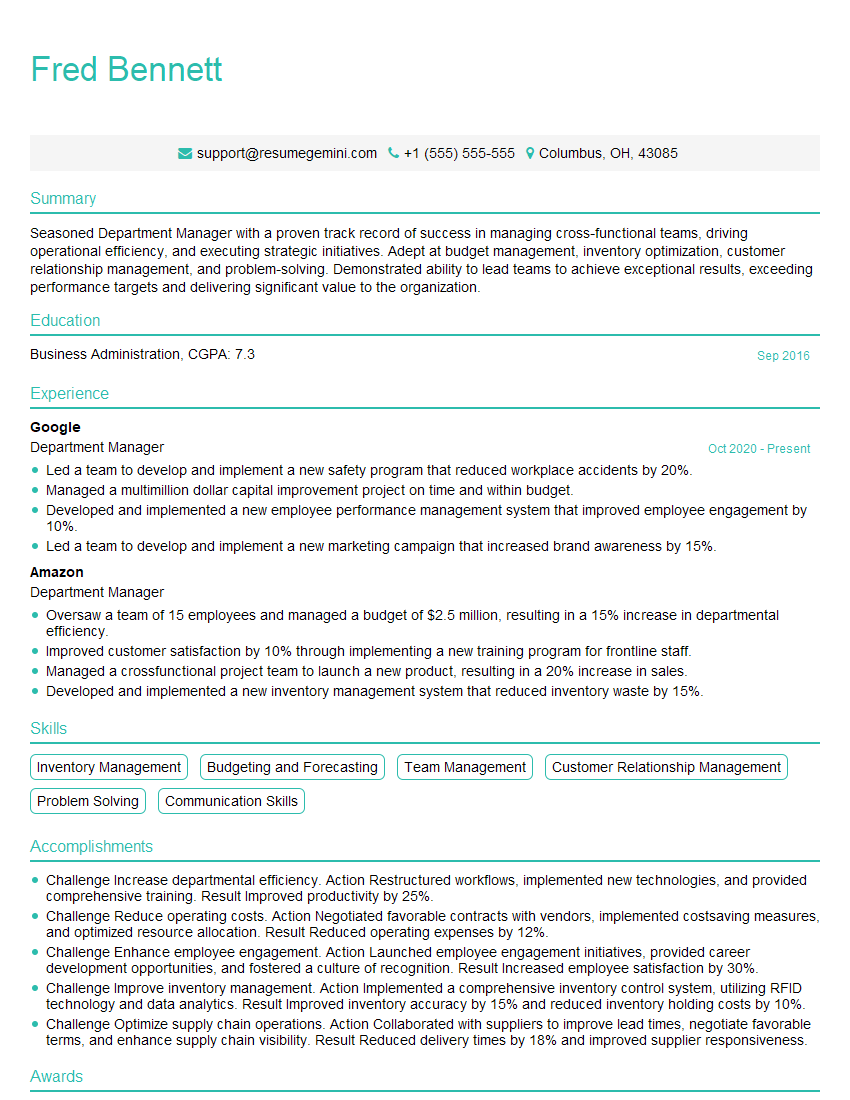
Department Manager Resume Sample
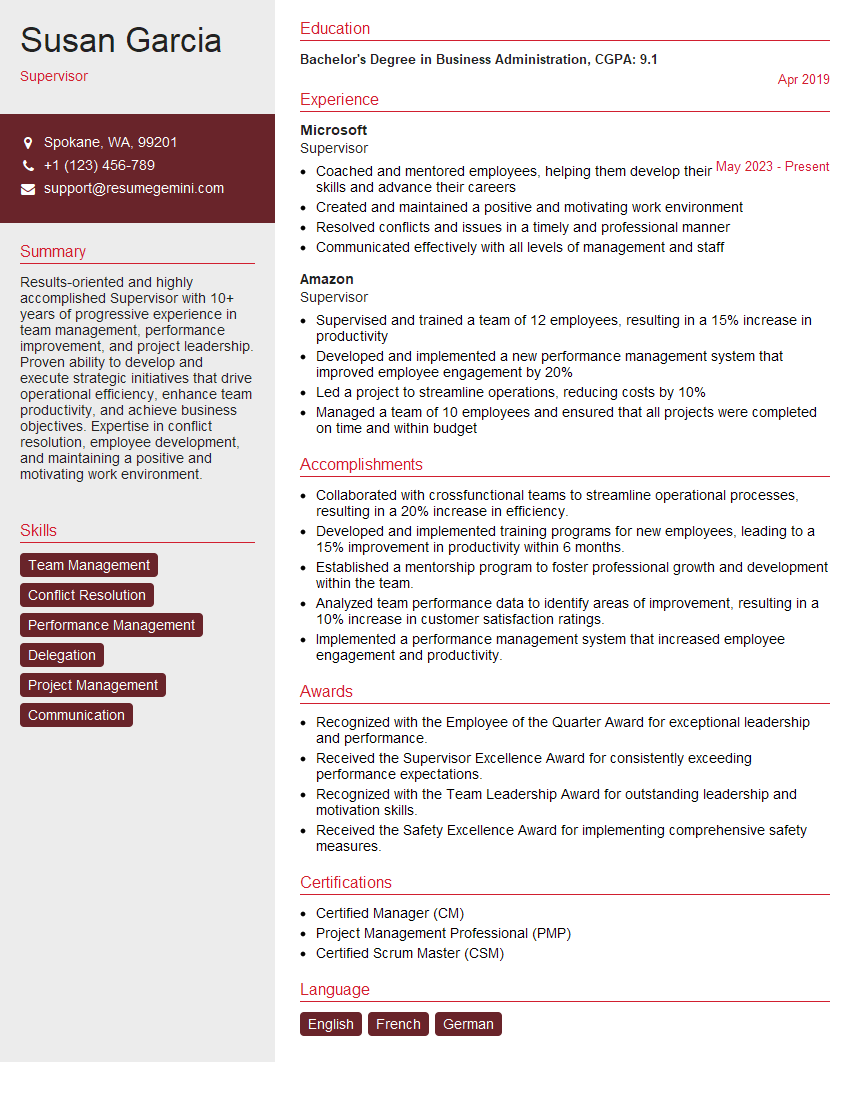
Supervisor Resume Sample
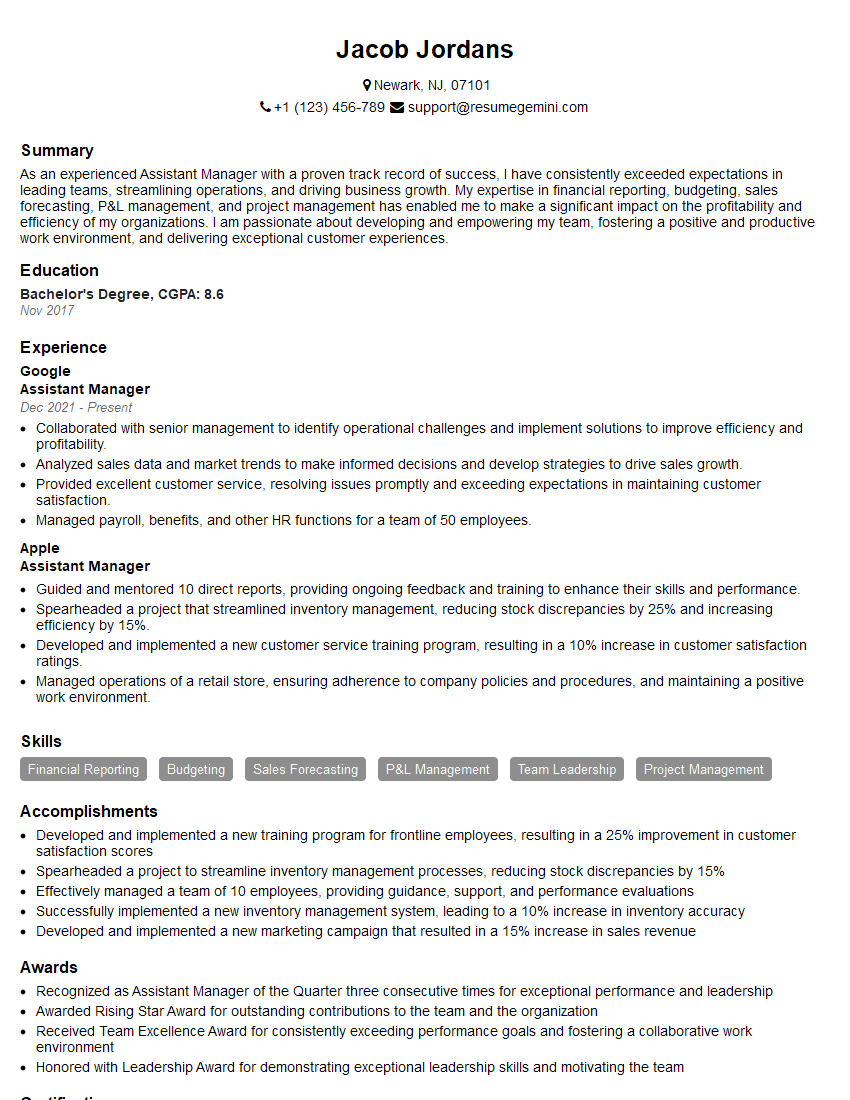
Assistant Manager Resume Sample
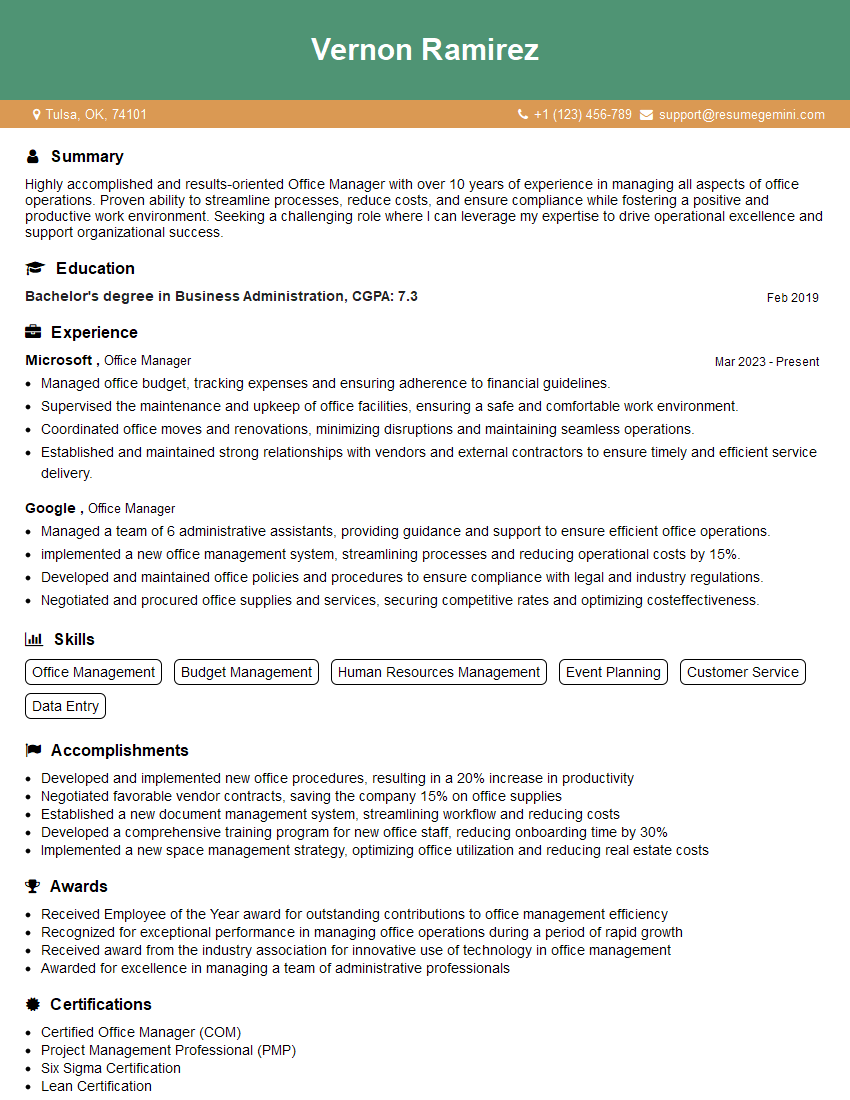
Office Manager Resume Sample

Operations Manager Resume Sample
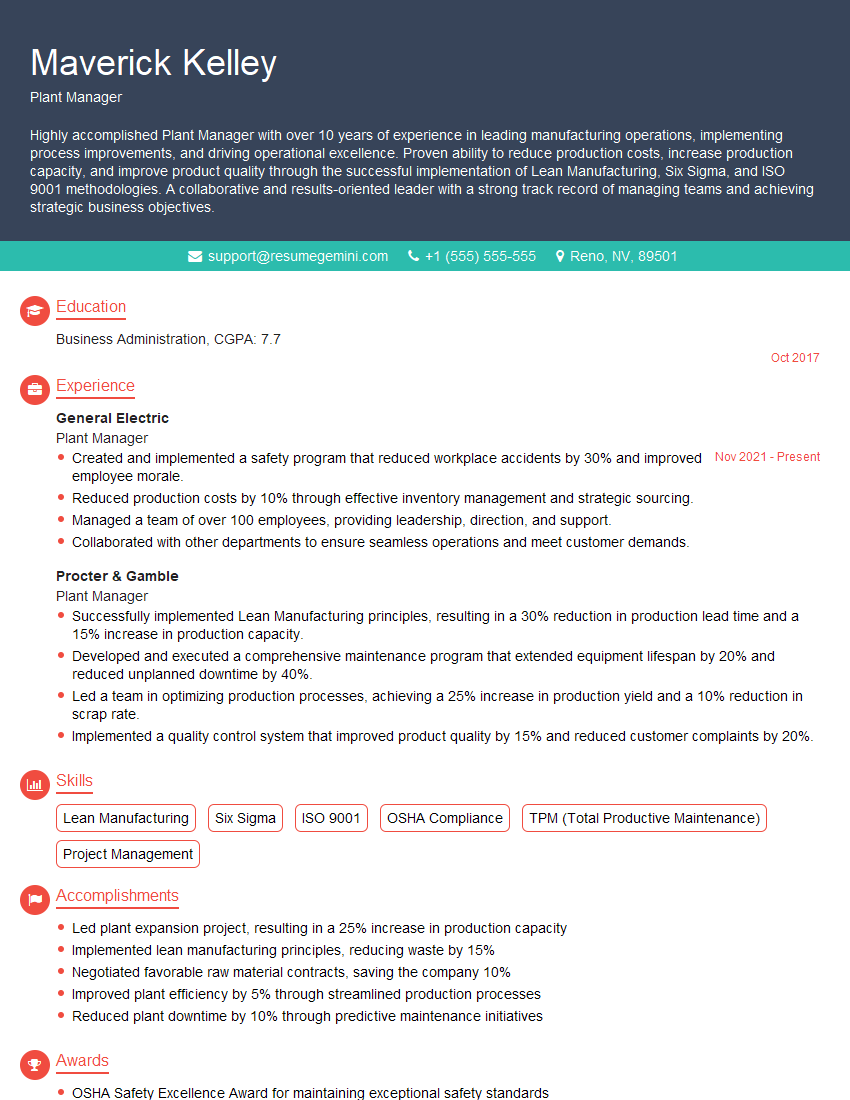
Plant Manager Resume Sample
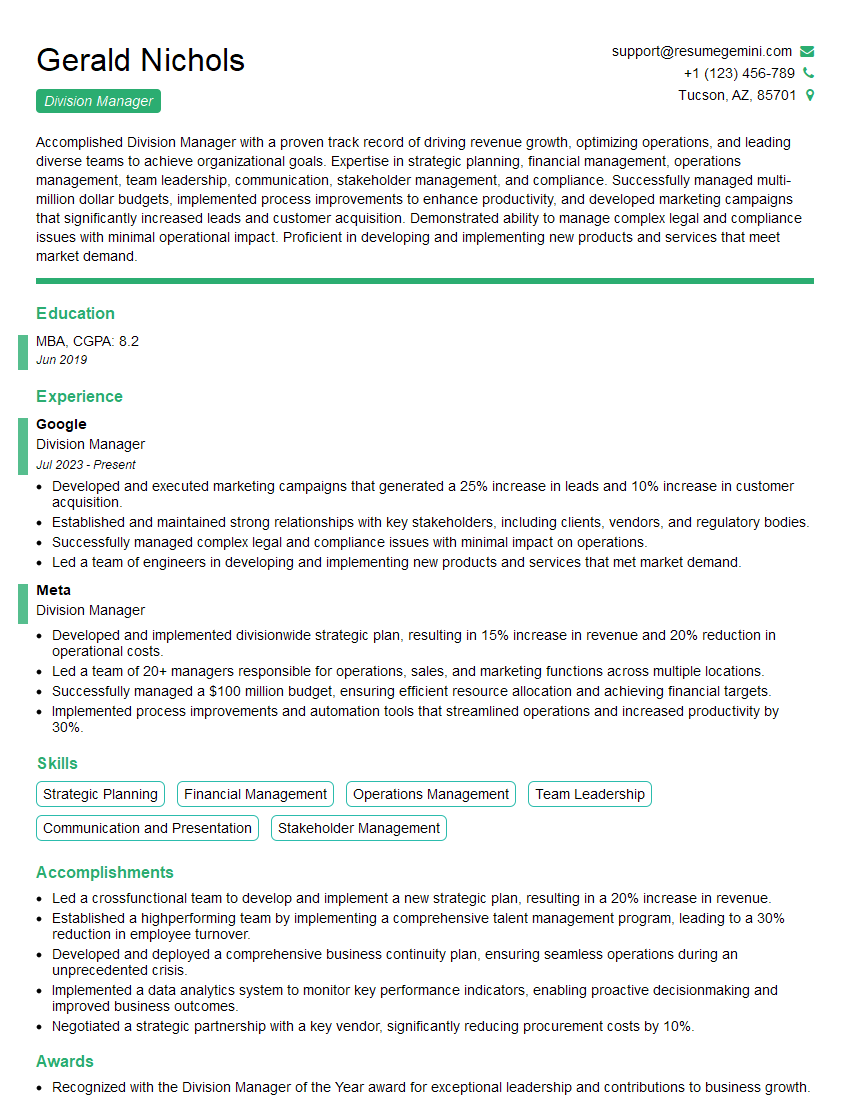
Division Manager Resume Sample
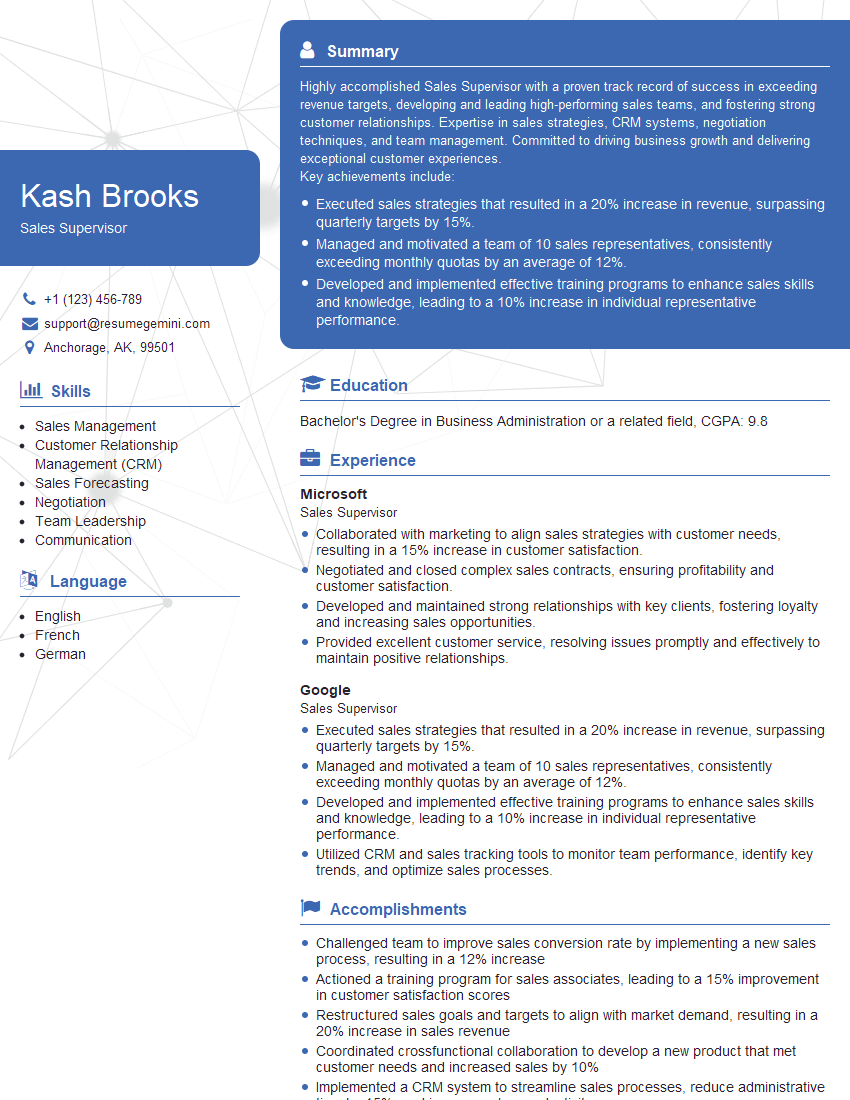
Sales Supervisor Resume Sample
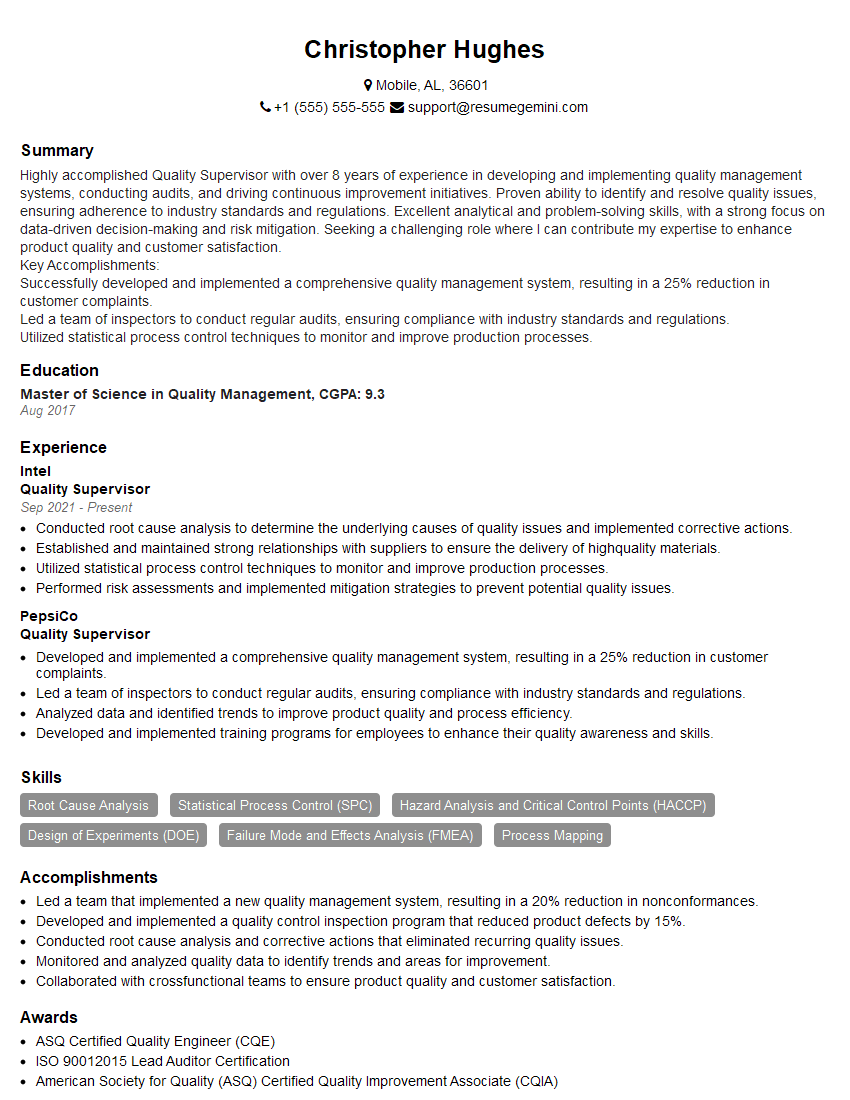
Quality Supervisor Resume Sample
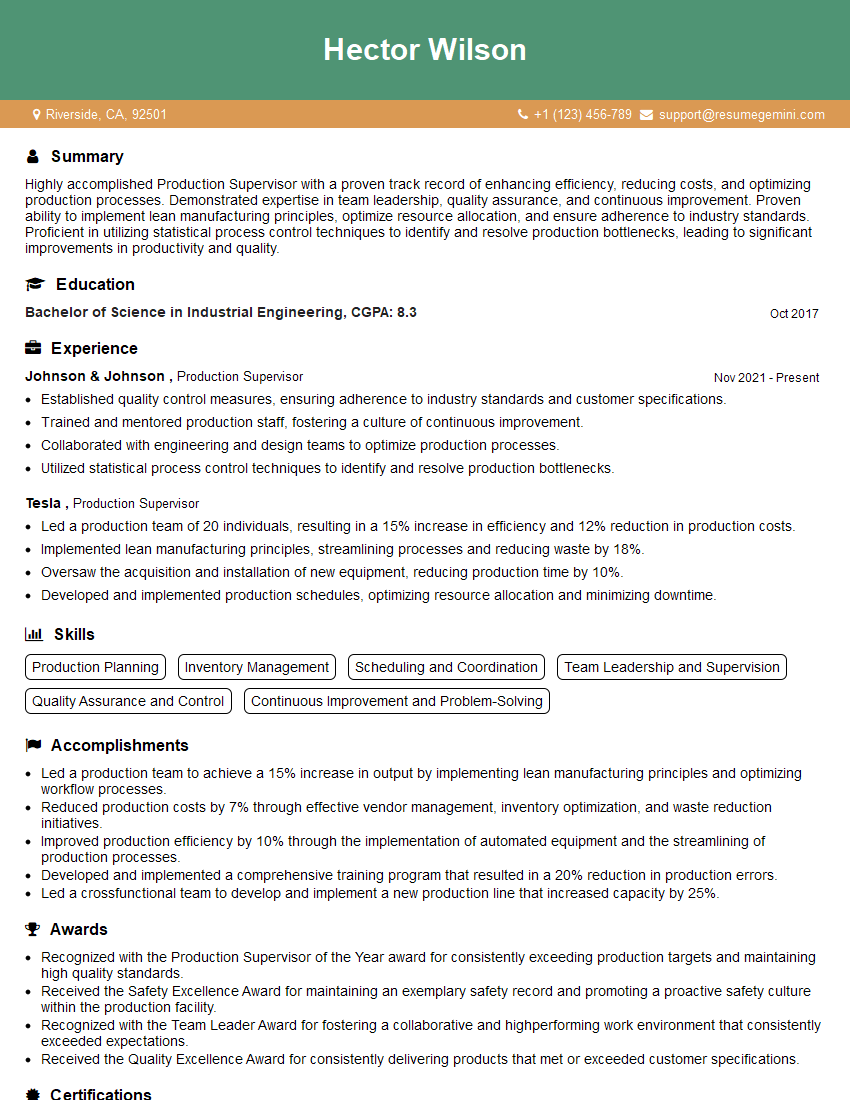
Production Supervisor Resume Sample

Project Manager Resume Sample
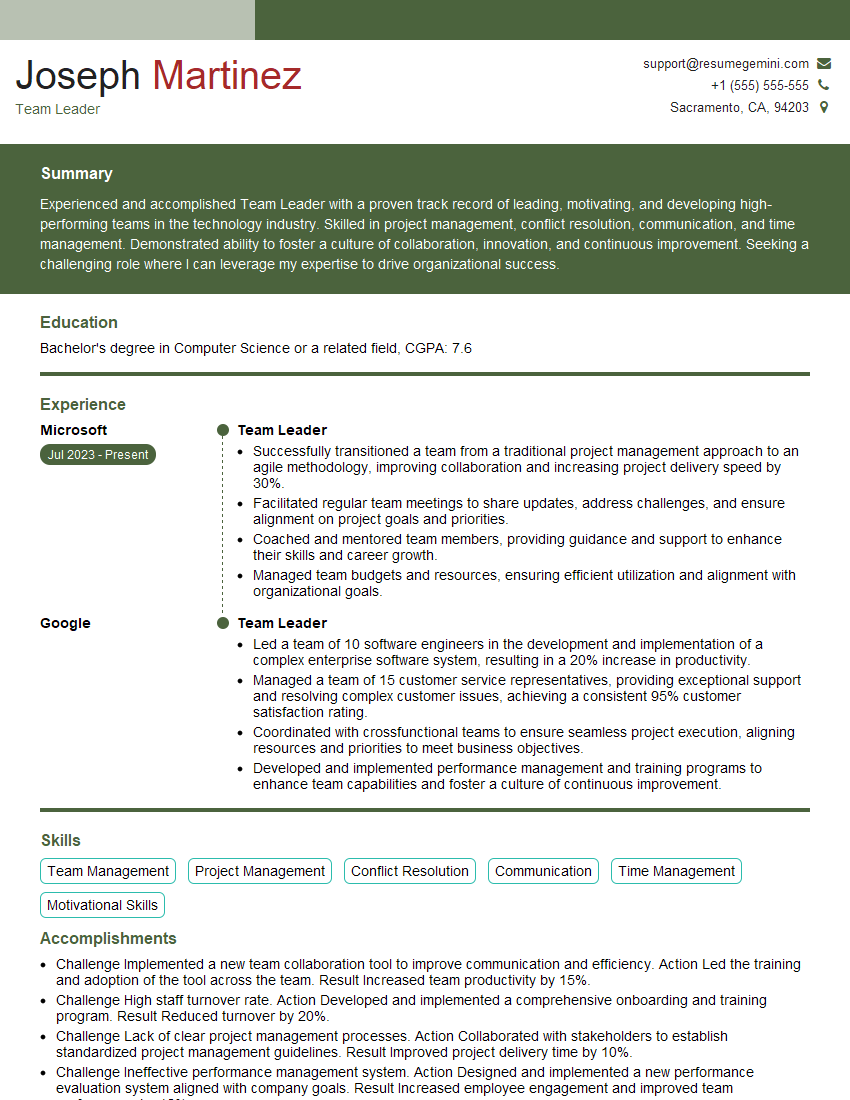
Team Leader Resume Sample
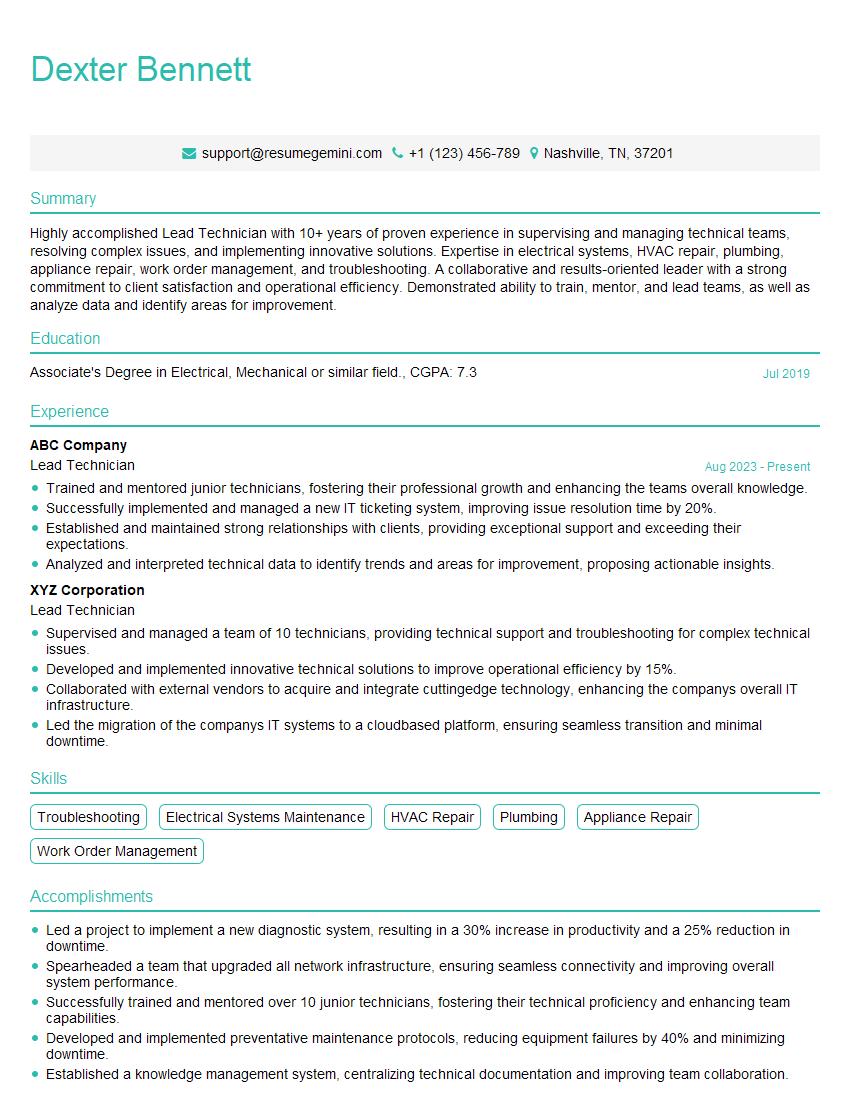
Lead Technician Resume Sample
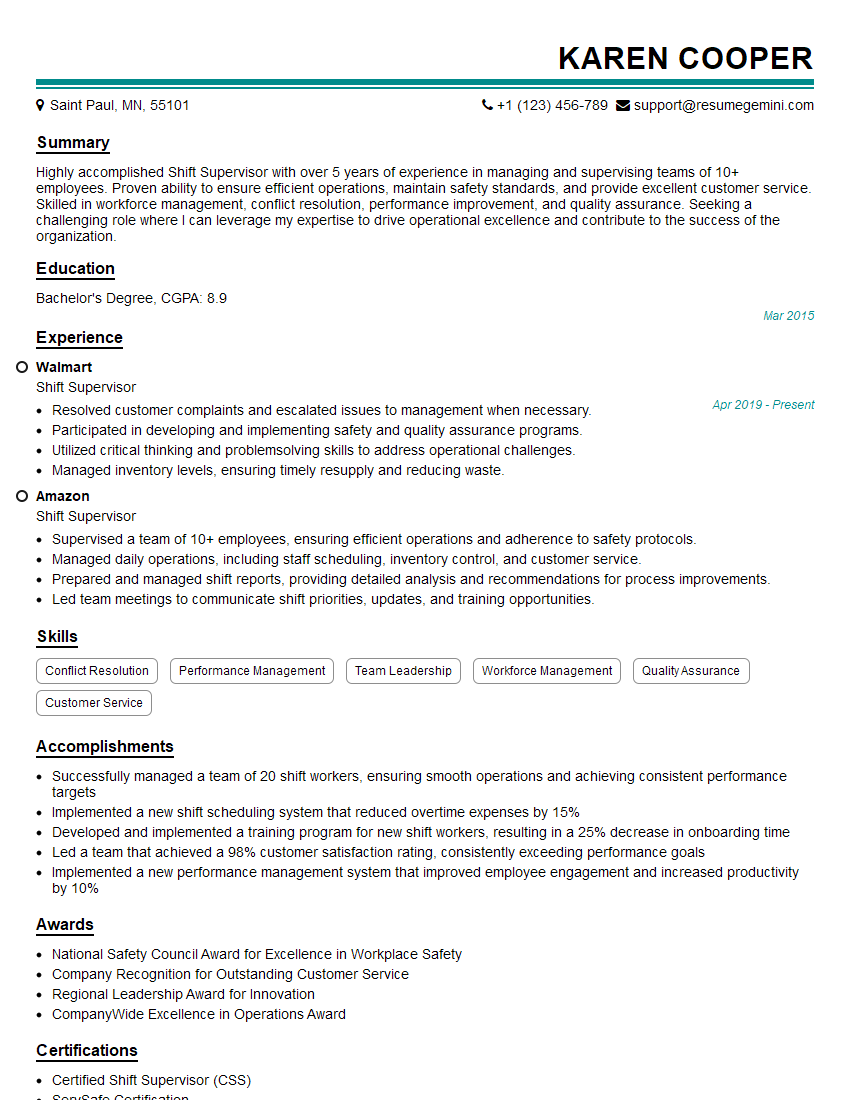
Shift Supervisor Resume Sample
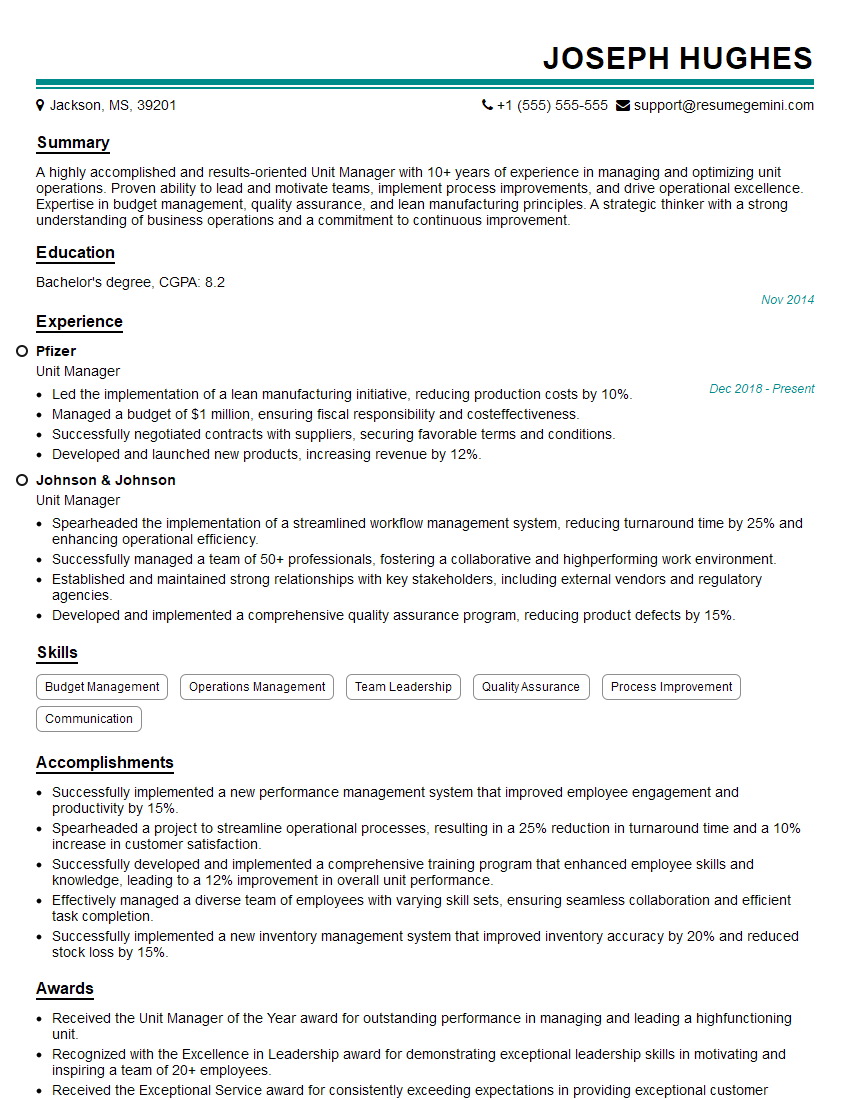
Unit Manager Resume Sample
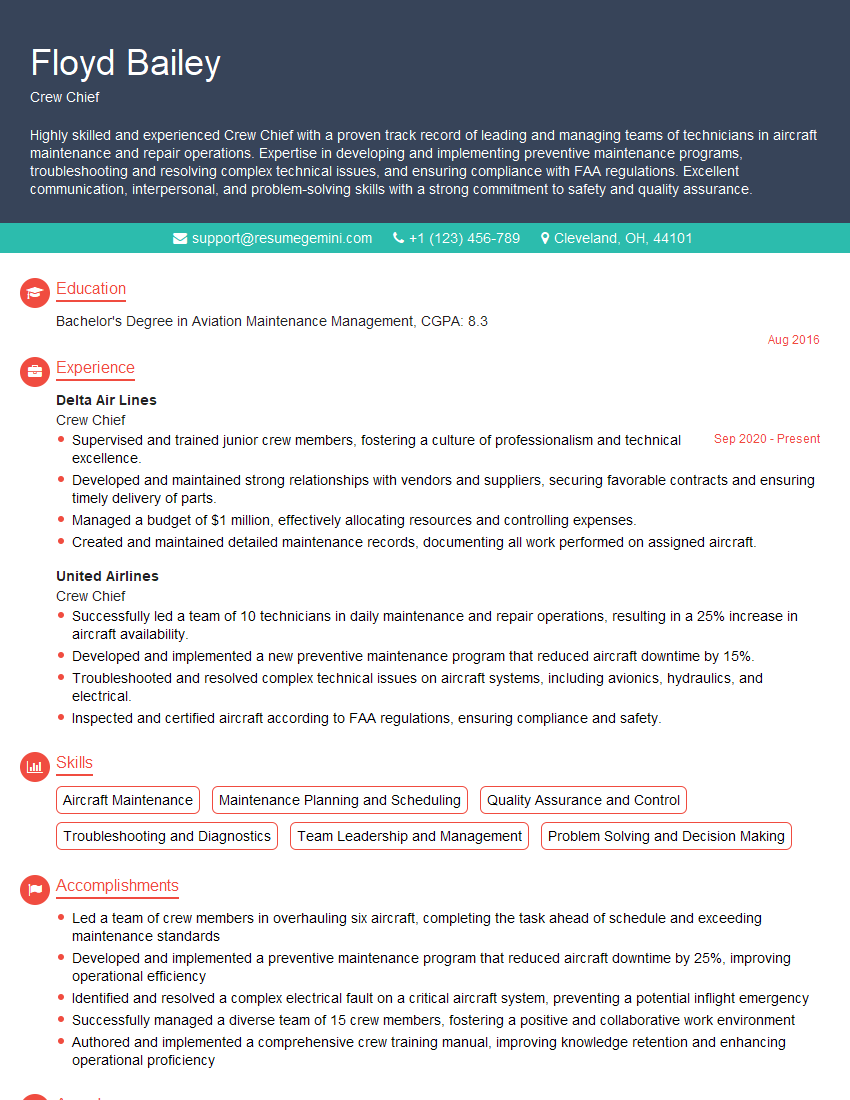
Crew Chief Resume Sample
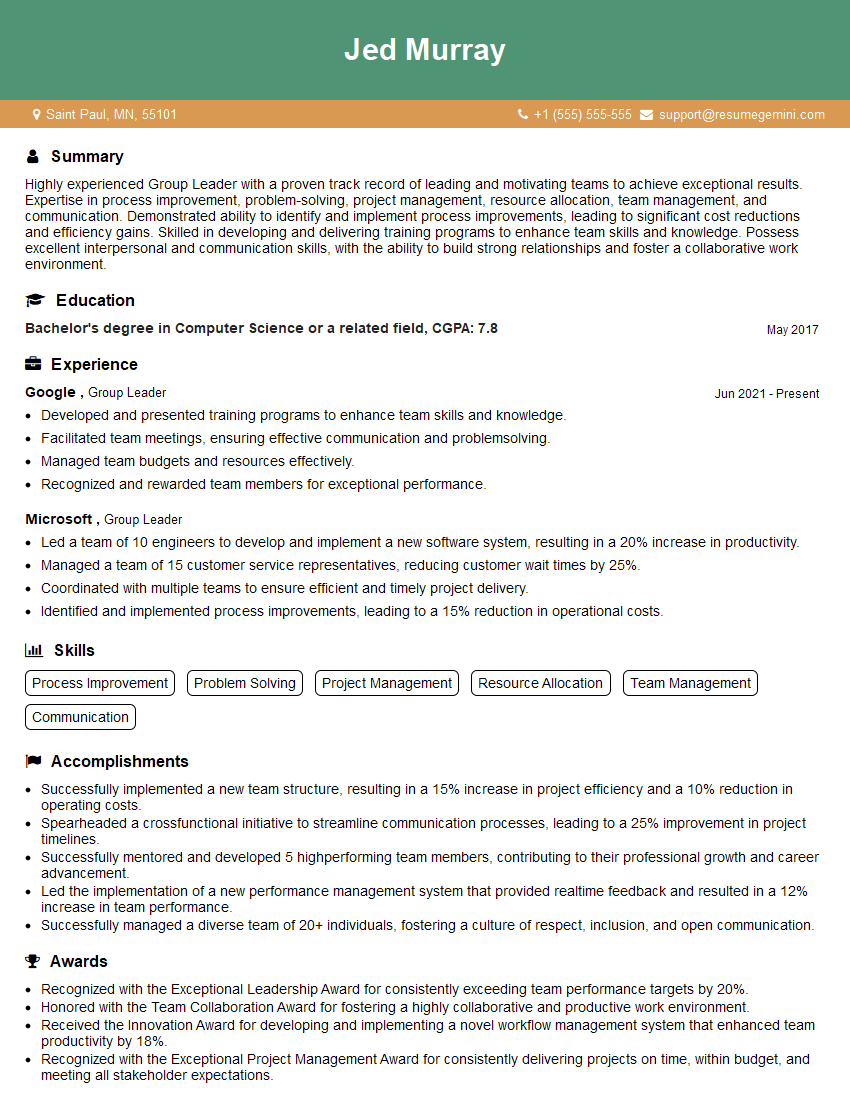
Group Leader Resume Sample
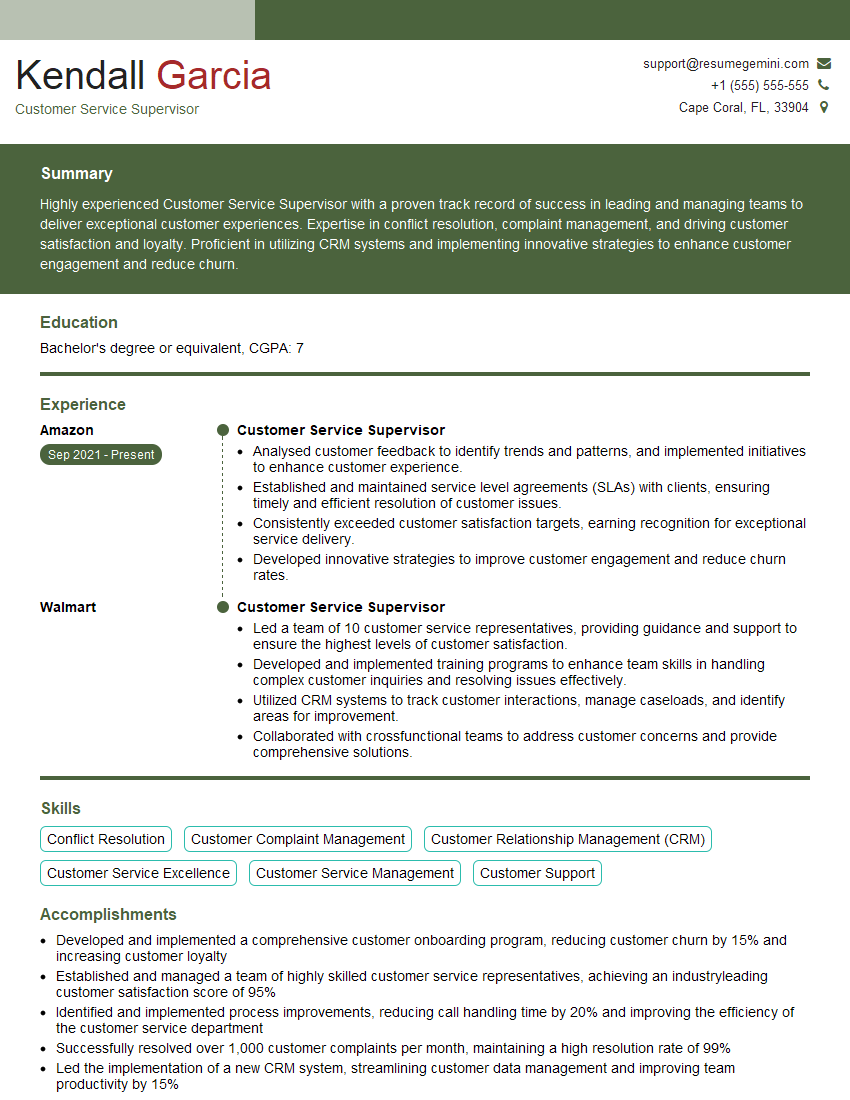
Customer Service Supervisor Resume Sample
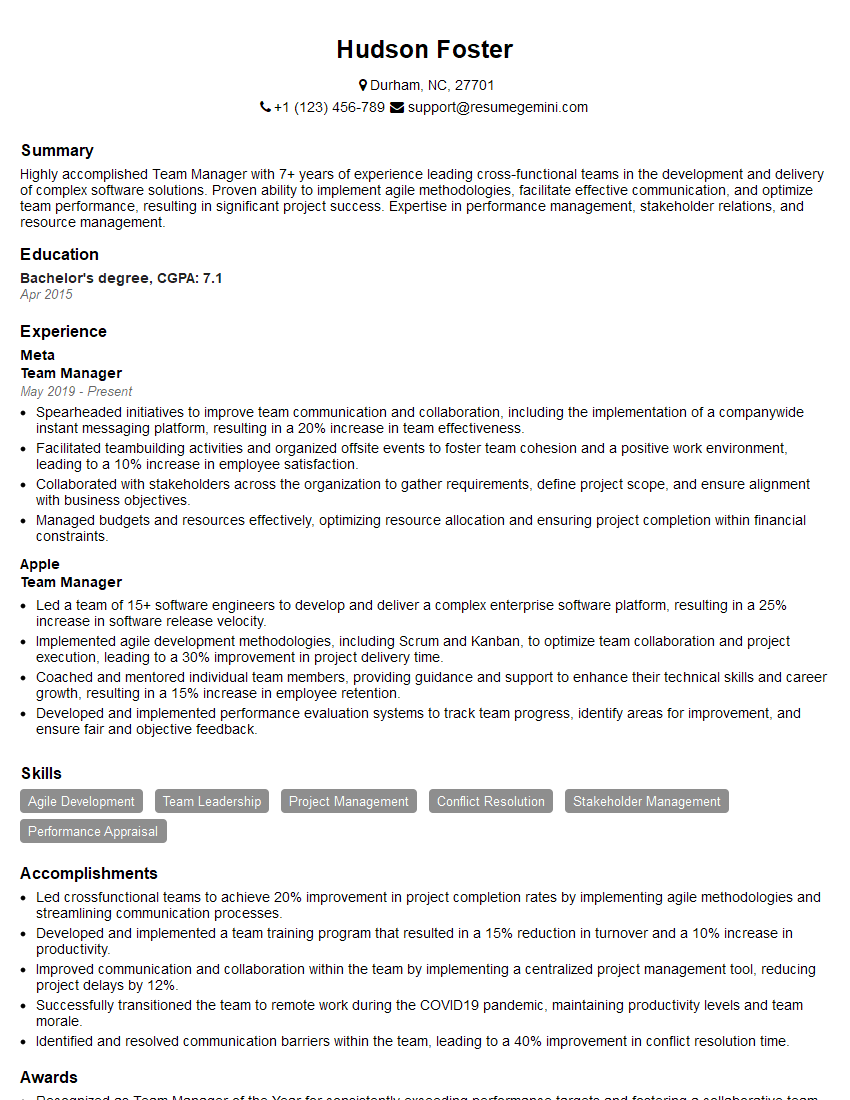
Team Manager Resume Sample
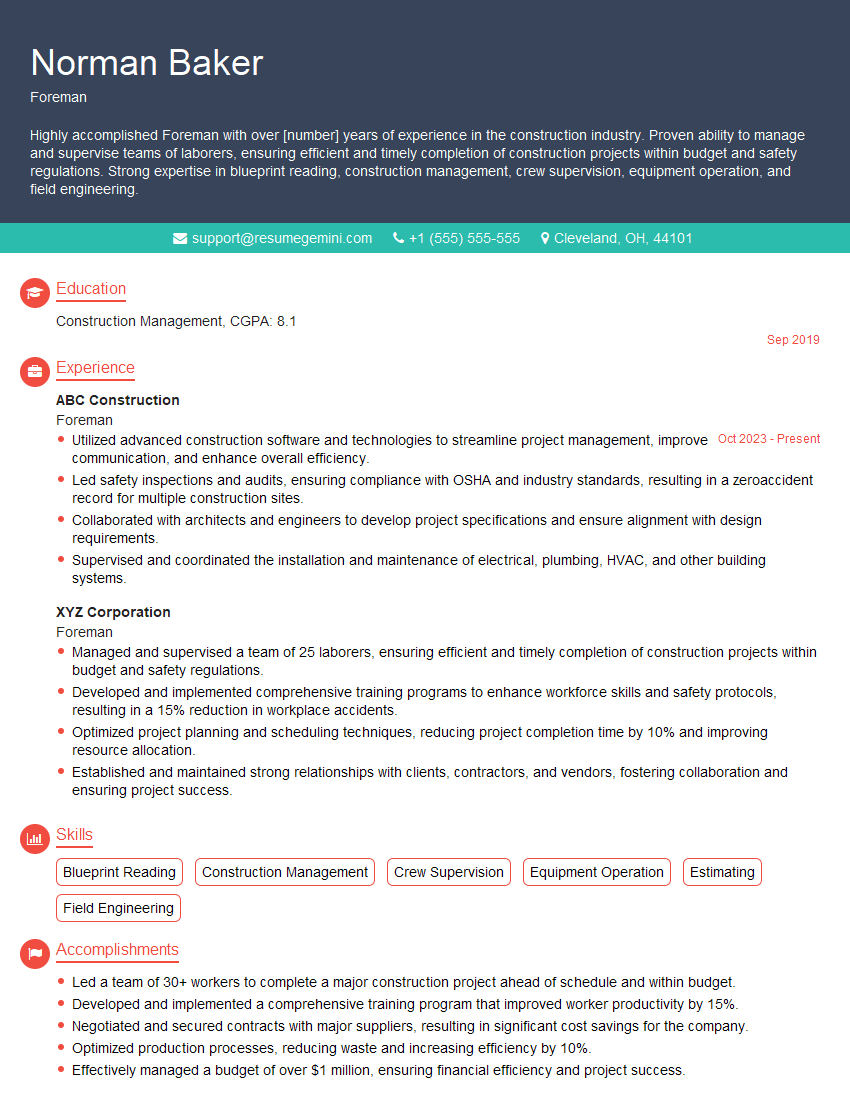
Foreman Resume Sample
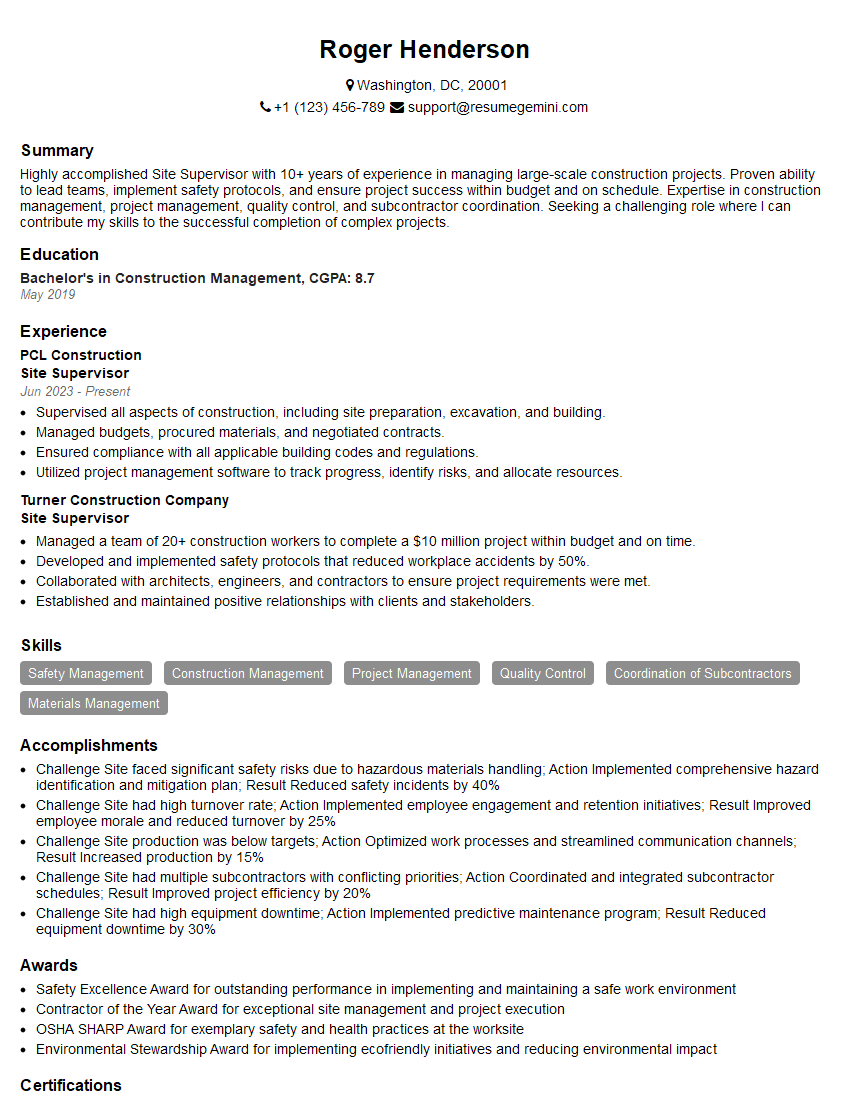
Site Supervisor Resume Sample
- Department Manager
- Supervisor
- Assistant Manager
- Office Manager
- Operations Manager
- Plant Manager
- Division Manager
- Sales Supervisor
- Quality Supervisor
- Production Supervisor
- Project Manager
- Team Leader
- Lead Technician
- Shift Supervisor
- Unit Manager
- Crew Chief
- Group Leader
- Customer Service Supervisor
- Team Manager
- Foreman
- Site Supervisor
Explore more articles
Users Rating of Our Blogs
Share Your Experience
We value your feedback! Please rate our content and share your thoughts (optional).
What Readers Say About Our Blog
Very informative content, great job.
good