The right preparation can turn an interview into an opportunity to showcase your expertise. This guide to Leather Treatment interview questions is your ultimate resource, providing key insights and tips to help you ace your responses and stand out as a top candidate.
Questions Asked in Leather Treatment Interview
Q 1. Explain the different types of leather and their suitability for various treatments.
Leather types vary significantly in their structure and composition, directly impacting their suitability for different treatments. Understanding these differences is crucial for effective leather care.
- Full-grain leather: The highest quality, with the top grain intact. It’s durable and ages beautifully, accepting conditioners and polishes well. However, it’s more prone to showing scratches, so gentle cleaning is key.
- Top-grain leather: The top layer of the hide, sanded to remove imperfections, and often coated with a protective finish. This makes it less porous, limiting the absorption of conditioners but easier to clean. It’s less durable than full-grain and less receptive to deep conditioning.
- Genuine leather: Often a misnomer, this usually refers to split leather (the lower layer of the hide) that may be treated and finished to mimic top-grain. It’s the least durable and typically requires less aggressive cleaning and conditioning.
- Suede/Nubuck: These are split-leather types with a napped or brushed surface. They are incredibly delicate and require specialized cleaning products to avoid damage. Aggressive cleaning or conditioning is detrimental.
- Patent leather: A leather with a glossy, lacquered surface. It’s highly resistant to water and stains but needs only gentle cleaning with a damp cloth, as harsh treatments can damage the finish.
For example, a full-grain leather briefcase can withstand more robust conditioning, while delicate suede shoes require a very gentle cleaning approach using a specialized suede brush and cleaner.
Q 2. Describe the process of cleaning different types of leather (e.g., suede, full-grain).
Cleaning leather requires a tailored approach depending on the type. Always test any cleaning solution on an inconspicuous area first.
- Full-grain leather: A soft, damp cloth is usually sufficient for daily cleaning. For deeper cleaning, use a specialized leather cleaner, followed by a leather conditioner to maintain its suppleness. Avoid harsh chemicals or abrasive cleaners.
- Top-grain leather: Similar to full-grain, but be more gentle since the protective finish is thinner. Avoid excessive moisture.
- Suede/Nubuck: Use a specialized suede brush to lift dirt and debris from the nap. For stains, consider a suede cleaner specifically formulated for this type of leather. Never rub aggressively.
- Patent leather: Use a slightly damp, soft cloth to wipe away dirt. Avoid harsh chemicals and abrasive materials. A gentle leather cleaner can be used sparingly.
Imagine cleaning a fine painting versus a rugged canvas bag—the approach needs to match the material’s delicacy.
Q 3. What are the common causes of leather damage and how can they be prevented?
Leather damage can stem from various sources, many preventable with proper care.
- Exposure to water: Water can cause discoloration, shrinking, and cracking. Always protect leather from rain or spills.
- UV exposure: Sunlight can fade and dry out leather. Keep leather goods out of direct sunlight.
- Abrasion: Scratches and scuffs occur from friction. Protect leather from rough surfaces and use protective bags or cases.
- Improper cleaning/conditioning: Using harsh chemicals or inappropriate products can damage the leather’s surface and fibers. Always use leather-specific products.
- Heat: Excessive heat can cause cracking and discoloration. Avoid leaving leather items near heat sources.
Think of leather like your skin: It needs protection from the elements and proper care to maintain its health and appearance.
Q 4. How would you assess the condition of a leather item before starting a treatment?
Before treatment, a thorough assessment is vital. This involves a visual inspection and a tactile evaluation.
- Visual inspection: Note the leather type, color, any existing damage (scratches, scuffs, cracks), discoloration, and overall condition of the finish.
- Tactile evaluation: Check the leather’s suppleness or stiffness, texture, and any areas of unusual dryness or dampness.
- Testing: Test any cleaning or conditioning product on a hidden area before widespread application.
This process is similar to a doctor examining a patient; a proper diagnosis is needed before treatment.
Q 5. What are the different types of leather dyes and finishes available?
A wide variety of leather dyes and finishes exist, each serving a different purpose and impacting the final look and feel.
- Aniline dyes: Penetrate the leather deeply, resulting in a rich, natural look. They are more susceptible to fading and staining.
- Semi-aniline dyes: Offer a balance between penetration and protection, providing a slightly more resistant finish than aniline dyes.
- Pigmented dyes: Sit on the surface, creating a durable, protective finish. They mask imperfections but can appear less natural.
- Finishes: These can be protective coatings, such as waxes, lacquers, or polymers, applied to enhance durability, water resistance, or shine. They also enhance the leather’s tactile qualities.
Choosing the right dye and finish depends on the leather type, desired effect, and the item’s intended use.
Q 6. Explain the process of dyeing leather, including color matching and application techniques.
Dyeing leather is a meticulous process demanding precision and attention to detail. Color matching is crucial.
- Color Matching: Use a color chart or spectrophotometer to achieve the desired shade. Test the dye on a sample of the leather to ensure accuracy.
- Preparation: Clean and condition the leather thoroughly. Ensure the surface is clean, dry, and free of any previous finishes if necessary.
- Dye Application: Apply the dye evenly using sponges, brushes, or spray equipment, depending on the dye type and desired effect. Multiple coats might be necessary for full saturation.
- Drying: Allow the leather to dry completely in a well-ventilated area away from direct sunlight or heat.
- Finishing: Once dry, apply a suitable finish to protect the dye and enhance the leather’s durability and appearance. This could be a sealant, wax, or other protective coating.
Imagine painting a canvas; careful preparation, precise application, and proper drying are all key for a successful outcome.
Q 7. Describe the steps involved in repairing a scuff or scratch on leather.
Repairing scuffs and scratches on leather depends on the severity of the damage and the leather type.
- Cleaning: Begin by carefully cleaning the affected area to remove any dirt or debris.
- Assessment: Evaluate the depth and extent of the damage. Minor scuffs may require only a leather conditioner or polish. Deeper scratches may need more involved repair.
- Conditioner/Polish: For minor scuffs, apply a leather conditioner or polish, gently rubbing it into the leather with a soft cloth. This can often restore the leather’s natural shine and hide minor imperfections.
- Leather Filler/Repair Kit: For deeper scratches, a leather filler or repair kit can be used to fill the damaged area. Choose a filler that matches the leather’s color as closely as possible. Allow it to dry completely before buffing it smooth.
- Dye (If Necessary): If the scratch is deep and affects the color, you may need to apply a small amount of matching dye to the repaired area to blend it in with the surrounding leather.
- Finishing: Finish by applying a leather conditioner or polish to restore the leather’s suppleness and shine.
Repairing leather is like patching a garment. The right tools and techniques ensure a seamless and invisible repair.
Q 8. How would you approach repairing a tear in leather?
Repairing a tear in leather depends heavily on the size and location of the tear, as well as the type of leather. For small tears, a simple leather repair kit with adhesive and patching material often suffices. For larger tears, more advanced techniques might be needed, potentially involving stitching.
Small Tears: Clean the area thoroughly. Apply a thin layer of high-quality leather adhesive to both sides of the tear, ensuring even coverage. Gently press the edges together, aligning them precisely. Use a weight or clamp to hold the repair in place while the adhesive dries completely. Once dry, you might use a leather colorant to blend the patch with the surrounding leather.
Larger Tears: Larger tears require more robust solutions. You might need to use a leather patching material that closely matches the color and texture of the original leather. Stitching the patch in place, using appropriate thread and needle, is crucial for durability. This requires more skill and specialized tools.
Professional Help: For valuable or delicate items, consulting a professional leather repair specialist is always recommended. They possess the experience and tools to ensure a seamless and long-lasting repair.
Think of it like patching a hole in a garment; small holes can be mended easily, but significant tears require more involved repair methods.
Q 9. Explain the process of conditioning leather to maintain its suppleness and prevent cracking.
Conditioning leather is essential for maintaining its suppleness, preventing cracking, and extending its lifespan. It involves applying a leather conditioner that replenishes the natural oils and moisture lost over time due to use and environmental factors. The process is straightforward but crucial for preserving the beauty and longevity of your leather goods.
Clean the Leather: Begin by thoroughly cleaning the leather to remove dirt, grime, and any previous treatments. Use a specialized leather cleaner appropriate for the type of leather.
Apply Conditioner: Apply a small amount of leather conditioner to a clean cloth or sponge. Work the conditioner into the leather in small, circular motions, ensuring even coverage. Avoid over-saturation.
Let it Absorb: Allow the conditioner to absorb completely for a period specified by the product instructions. Usually, this takes around 15-30 minutes. Avoid using heat to accelerate the process, as this can damage the leather.
Buff (Optional): Once the conditioner has absorbed, gently buff the leather with a soft cloth to restore its shine.
Regular conditioning, ideally every 2-3 months or more frequently for heavily used items, keeps leather supple and resistant to cracking. It’s like moisturizing your skin – necessary for its health and appearance!
Q 10. What are the different types of leather conditioners and which ones are suitable for different leathers?
Leather conditioners come in various forms, each suited for different leather types and finishes. Choosing the wrong conditioner can damage the leather.
Oil-based conditioners: These are ideal for full-grain and top-grain leathers, providing deep conditioning and restoring suppleness. They are particularly beneficial for dry or cracked leather. However, they can darken lighter leathers.
Wax-based conditioners: These offer a protective barrier against water and dirt. They often add a shine to the leather and are suitable for most types of leather. However, they might not be as moisturizing as oil-based conditioners.
Water-based conditioners: These are generally lighter and easier to apply. They are often preferred for delicate or aniline leathers as they won’t darken the leather. They may not provide the same level of deep conditioning as oil-based products.
Silicone-based conditioners: While these provide a quick shine, they are often avoided by leather experts. Silicones can create a film that inhibits the leather’s ability to breathe and may damage it in the long run.
Always test a small, inconspicuous area before applying any conditioner to the entire piece to ensure compatibility and check for color changes.
Q 11. How would you restore the color of faded leather?
Restoring the color of faded leather requires a careful approach. The best method depends on the type of leather and the extent of the fading. Using the wrong product can permanently damage the leather.
Leather Dye: For significant color loss, a leather dye is often necessary. This is a more involved process and requires careful selection of a dye that matches the original color as closely as possible. Application involves multiple thin coats to prevent uneven results and potential damage.
Leather Creams or Wipes: For minor fading, leather creams or color-restoring wipes can be effective. These products often contain pigments that revitalize the color without drastically altering the overall tone. A patch test is essential before full application.
Professional Color Restoration: For valuable or antique pieces, consider seeking professional leather restoration services. Experts have access to specialized dyes and techniques to achieve optimal results without causing damage.
Remember, consistent conditioning can prevent fading in the first place. Keeping leather out of direct sunlight also greatly reduces the risk of discoloration.
Q 12. What are the safety precautions to consider when working with leather treatment chemicals?
Safety is paramount when working with leather treatment chemicals. Always follow these precautions:
Ventilation: Work in a well-ventilated area, ideally outdoors or with adequate ventilation to prevent inhaling fumes.
Gloves: Wear appropriate protective gloves to avoid skin irritation or allergic reactions. Nitrile gloves are commonly recommended.
Eye Protection: Always wear safety glasses to protect your eyes from splashes or fumes.
Read Labels: Carefully read the instructions and safety warnings on all product labels before use. Pay close attention to flammability and toxicity warnings.
Proper Disposal: Dispose of used chemicals and rags responsibly according to local regulations.
First Aid: Be prepared in case of accidents. Have first-aid materials readily available, and know what to do if there’s skin or eye contact with chemicals.
Taking these precautions ensures a safe and effective leather treatment process.
Q 13. How do you handle water damage to leather?
Water damage to leather can lead to discoloration, mold growth, and structural damage. Quick action is crucial.
Blot, Don’t Rub: Immediately blot up excess water with a clean, absorbent cloth. Never rub the leather, as this can spread the water and damage the fibers.
Air Dry: Allow the leather to air dry naturally in a cool, well-ventilated area, away from direct sunlight or heat sources. Stuffing the item with clean, absorbent paper towels can help absorb moisture from the inside.
Condition: Once the leather is completely dry, apply a leather conditioner to restore its suppleness and prevent cracking. This replenishes moisture lost during the drying process.
Professional Help: For severe water damage, particularly if the leather is saturated, seek professional help. They have the tools and expertise to prevent mold and mildew growth and restore the leather’s structure.
Think of it like rescuing a waterlogged plant; gentle, controlled drying and proper nourishment are crucial for revival.
Q 14. How do you identify and treat mold or mildew on leather?
Mold and mildew on leather require prompt attention to prevent permanent damage. These fungi thrive in damp environments and can cause discoloration and structural weakening.
Identification: Mold and mildew appear as fuzzy, often dark-colored patches. They usually have a musty odor.
Cleaning: Use a soft brush to gently remove loose mold or mildew. For persistent mold, a mixture of mild detergent and water can be used. Apply the solution sparingly with a soft cloth and blot gently. Allow the item to air dry completely.
Disinfection: Consider using a mild solution of isopropyl alcohol (70% concentration) to disinfect the affected area. Apply carefully with a clean cloth, avoiding over-saturation. Let it air dry completely.
Professional Cleaning: For heavy mold infestation, professional leather cleaning services are recommended. They have specialized equipment and solutions to remove mold and mildew effectively without causing harm to the leather.
Preventing mold and mildew is crucial. Ensure proper ventilation and avoid storing leather in damp places.
Q 15. Describe your experience with working with different types of leather finishes (e.g., matte, gloss, patent).
My experience spans a wide range of leather finishes, each requiring a unique approach. Matte finishes, prized for their understated elegance, demand gentle cleaning and conditioning to avoid disrupting their subtle texture. Gloss finishes, with their polished sheen, need careful attention to prevent streaking or dulling. I’ve worked extensively with both traditional gloss finishes achieved through multiple coats of wax and resin, and more modern acrylic finishes. Patent leather, with its high-gloss, almost mirror-like surface, presents its own set of challenges. Its smooth, non-porous nature requires specialized cleaners that won’t damage the underlying layers. I’ve honed my skills in restoring scratches and scuffs on patent leather, understanding the delicate balance needed between effective cleaning and preservation of the original finish.
For example, I once restored a vintage handbag with a cracked patent leather finish. Using a specialized patent leather cleaner and conditioner, followed by careful polishing with a soft cloth, I successfully revitalized the bag’s shine and restored its original luster. Contrastingly, working on a pair of matte leather boots required a different technique – I used a mild saddle soap and a soft brush, followed by a conditioning balm to nourish the leather without altering its matte finish.
Career Expert Tips:
- Ace those interviews! Prepare effectively by reviewing the Top 50 Most Common Interview Questions on ResumeGemini.
- Navigate your job search with confidence! Explore a wide range of Career Tips on ResumeGemini. Learn about common challenges and recommendations to overcome them.
- Craft the perfect resume! Master the Art of Resume Writing with ResumeGemini’s guide. Showcase your unique qualifications and achievements effectively.
- Don’t miss out on holiday savings! Build your dream resume with ResumeGemini’s ATS optimized templates.
Q 16. Explain the importance of proper ventilation when working with leather treatment products.
Proper ventilation is paramount when working with leather treatment products because many contain volatile organic compounds (VOCs). These VOCs can be harmful if inhaled in poorly ventilated areas, causing headaches, dizziness, or even more serious respiratory problems. Think of it like painting a room; you wouldn’t do it without opening windows and doors. Leather treatment products are similar; they release fumes that need to escape. This is especially crucial when using solvents or strong cleaning agents.
In my workspace, I always ensure adequate ventilation, either through open windows, a well-functioning ventilation system, or a combination of both. I also recommend using respiratory protection, such as a mask, when dealing with particularly strong or potentially hazardous products. Safety is always my top priority.
Q 17. What are the common problems encountered in leather treatment and how do you solve them?
Common problems in leather treatment are numerous. Water stains, scratches, scuffs, discoloration, and cracking are frequently encountered. Solving these problems requires a diagnostic approach. Water stains, for instance, often require a gentle cleaning with a slightly damp cloth followed by conditioning to restore the leather’s suppleness. Scratches and scuffs might be addressed using leather fillers or conditioners that help blend them into the surface. Discoloration might require specialized cleaning products or even professional dyeing. Cracking, which often indicates dryness and lack of conditioning, requires the application of a rich leather conditioner to replenish lost moisture and improve elasticity.
- Problem: Water Stains. Solution: Gentle cleaning with a damp cloth and a mild saddle soap, followed by conditioning.
- Problem: Scratches. Solution: Leather filler or conditioner to minimize their appearance.
- Problem: Discoloration. Solution: Specialized cleaning products or professional dyeing.
- Problem: Cracking. Solution: Rich leather conditioner to rehydrate and restore flexibility.
Q 18. How do you determine the appropriate treatment for a specific type of leather damage?
Determining the appropriate treatment for specific leather damage requires careful assessment. I begin by identifying the type of leather (full-grain, top-grain, corrected-grain, etc.) as this impacts the treatment strategy. Then, I closely examine the damage – is it a surface scratch, a deep gouge, a water stain, or something else? The extent and nature of the damage dictate the approach. For example, a minor scratch on full-grain leather might respond well to a simple leather conditioner, while a deep gouge might require more intensive repair involving fillers and dyes.
I often use a magnifying glass to inspect the damage closely and assess its depth and severity. I also feel the leather to assess its moisture content and flexibility. This multi-sensory approach helps me accurately diagnose the problem and choose the most effective treatment. It’s like diagnosing a medical condition—you need a thorough examination to prescribe the right cure.
Q 19. What are your preferred methods for removing stains from leather?
My methods for stain removal depend heavily on the type of stain and the leather’s type and finish. For fresh stains, blotting (never rubbing!) with a clean, damp cloth is often effective. For tougher stains, I might use a specialized leather cleaner, always testing it in an inconspicuous area first. I have a range of products specifically designed for different types of stains, including oil-based stains, ink stains, and food stains. Sometimes, a gentle mixture of saddle soap and water works wonders. For stubborn stains, I might consult with other specialists if the item has significant value or sentimental worth.
It’s crucial to avoid harsh chemicals, abrasive cleaners, or excessive moisture, as these can damage the leather. Patience and a gentle touch are key. I always remember that the goal is to remove the stain without compromising the integrity of the leather.
Q 20. Describe your experience with working with antique or vintage leather.
Working with antique or vintage leather is a rewarding but challenging endeavor. These leathers are often delicate and fragile, having experienced decades of wear and tear. My approach involves a careful balance between cleaning and preservation. I avoid aggressive cleaning methods, opting instead for gentle cleaning with specialized products formulated for delicate leathers. I focus more on conditioning and moisturizing to restore suppleness and prevent further damage. Understanding the age and type of the leather is crucial—different tanning methods have resulted in leathers with varying degrees of sensitivity.
For example, I once restored a vintage leather-bound book. The leather was incredibly dry and brittle. I used a specialized leather conditioner designed for aging leather, carefully applying it in small amounts to avoid damaging the delicate cover. The results were remarkable – the leather regained some of its original suppleness and color.
Q 21. How do you maintain the quality and integrity of the leather during the treatment process?
Maintaining the quality and integrity of leather during treatment is my top priority. I always start by assessing the leather’s condition and choosing the gentlest cleaning and conditioning methods possible. I avoid harsh chemicals and excessive moisture. I work in a well-ventilated area and wear appropriate protective gear when necessary. I never rub the leather vigorously, always blotting or using a soft brush to remove dirt and debris. I take great care to test any cleaning or conditioning product in an inconspicuous area before applying it to the entire piece.
Throughout the process, I monitor the leather’s condition, paying close attention to its color, texture, and flexibility. If I see any signs of damage, I immediately adjust my approach. It’s a delicate dance between restoration and preservation, and understanding the leather is key to doing it correctly.
Q 22. Explain your process for assessing the cost and time required for a leather treatment project.
Assessing the cost and time for a leather treatment project involves a multi-step process. First, I conduct a thorough inspection of the leather item, noting its type, condition (e.g., scratches, stains, dryness), size, and the desired treatment. This allows me to determine the complexity of the project. For instance, a simple cleaning and conditioning of a small leather handbag will take significantly less time and cost than a full restoration of a large, antique leather sofa with significant damage.
Next, I consider the specific treatments needed. This could range from simple cleaning and conditioning to more complex repairs, color restoration, or even re-dyeing. Each treatment requires specific products and techniques, impacting both cost and time. For example, removing stubborn stains might necessitate specialized solvents and extra time for testing and application.
Finally, I factor in the labor involved. This includes preparation time (cleaning, assessment), treatment application time, and drying time. I also consider the cost of materials – specialized cleaning solutions, conditioners, dyes, etc. – and overhead expenses. I then provide the client with a detailed estimate outlining the various stages, associated costs, and a realistic timeframe for completion.
For example, I recently provided a quote for restoring a vintage leather jacket. The estimate broke down the cost of cleaning, repairing minor tears with appropriate leather patching, conditioning, and finally, color touch-ups to match the original patina. The timeframe included a detailed schedule from pick-up to delivery, clearly stating each step and its duration. This transparency ensures client satisfaction and realistic expectations.
Q 23. Describe your experience with using specialized leather treatment tools and equipment.
My experience with specialized leather treatment tools and equipment is extensive. I’m proficient in using a variety of tools, from basic cleaning brushes and sponges to more advanced equipment such as ultrasonic cleaners for delicate items, heat guns for setting dyes, and specialized stitching machines for repairs. I also have experience using various types of leather dyes, conditioners, and sealants.
For example, ultrasonic cleaners are indispensable for cleaning intricate designs or delicate leather goods without damaging the surface. The gentle vibrations dislodge dirt and grime effectively, something that would be impossible to achieve by hand cleaning. Similarly, a heat gun allows for precise application of dyes and ensures even color saturation and a professional finish. I carefully select equipment based on the leather type and the specific treatment required, ensuring optimal results and minimal damage.
Furthermore, I understand the importance of proper tool maintenance. Regular cleaning and maintenance extend the life of my equipment and ensure consistent quality in my work. This includes regularly replacing worn-out parts of the stitching machines, keeping cleaning solution containers appropriately sealed to prevent contamination, and properly storing the tools to protect them from damage and wear.
Q 24. How do you ensure the safety and longevity of treated leather products?
Ensuring the safety and longevity of treated leather products is paramount. Safety starts with using appropriate personal protective equipment (PPE) like gloves and masks when handling potentially harmful chemicals. I meticulously follow the manufacturer’s instructions for all products to minimize health risks. Proper ventilation is also crucial during the treatment process, especially when using solvents or strong-smelling products.
For longevity, proper leather care is key. After treatment, I educate clients about appropriate care and storage. This includes recommendations for cleaning, conditioning, and protecting the leather from extreme temperatures, moisture, and direct sunlight. I might suggest the use of specialized leather protectors or conditioners to prevent dryness, cracking, and discoloration. The goal is to extend the lifespan of the treated item and preserve its aesthetic appeal.
For instance, I might advise clients to avoid exposing treated leather items to excessive heat or moisture, which could lead to cracking or mold growth. For delicate leathers, I advise against using harsh chemicals and suggest gentle cleaning methods and regular conditioning. These precautions help to extend the life of the item and ensure its beauty for years to come.
Q 25. Describe your knowledge of different leather care products available in the market.
The market offers a wide array of leather care products, each designed for specific purposes and leather types. These include cleaners, conditioners, protectors, dyes, and repair kits. Cleaners remove dirt, grime, and surface stains. Conditioners restore moisture and suppleness to dry, cracked leather. Protectors create a barrier against water, stains, and UV damage. Dyes restore color or change the color of the leather.
I have extensive experience working with various brands and formulations. I carefully consider the leather type before selecting appropriate products. For example, I wouldn’t use the same cleaner for delicate suede as I would for durable full-grain leather. Some products are specifically formulated for certain types of leather, while others are more versatile. Knowing the composition and properties of the leather is critical in product selection.
It’s important to note that many “all-in-one” products exist. While convenient, they often lack the specialized effectiveness of individual products designed for specific tasks. For example, a leather conditioner designed for supple leather might not effectively address the specific needs of extremely dry and cracked leather.
Q 26. What are the ethical considerations in leather treatment, particularly concerning sustainability?
Ethical considerations in leather treatment, particularly concerning sustainability, are increasingly important. The sourcing of leather itself is a major concern. I prioritize working with responsibly sourced leathers, whenever possible, choosing leather from suppliers committed to sustainable practices and animal welfare. This includes avoiding leather from endangered species and supporting tanneries employing environmentally friendly methods.
Furthermore, the use of environmentally friendly cleaning and treatment products is crucial. I seek out products with minimal environmental impact, avoiding those containing harmful chemicals or excessive packaging. The proper disposal of waste products is also vital. I ensure all waste is disposed of responsibly, complying with all relevant environmental regulations. This includes the careful handling and disposal of solvents and other hazardous materials.
For example, I actively seek out leather cleaning products that are biodegradable and made with plant-based ingredients. These are not only better for the environment but are often gentler on the leather itself. My commitment is to minimize my environmental footprint while delivering high-quality leather treatment services.
Q 27. How would you handle a customer complaint about a leather treatment service?
Handling customer complaints is a crucial aspect of my work. My first step is to actively listen to the customer’s concerns, acknowledging their feelings and validating their experience. I aim to understand the problem fully before offering any solutions. This involves asking clarifying questions and avoiding interruptions. I take detailed notes of the complaint and any supporting evidence provided by the customer.
Next, I thoroughly investigate the complaint. This might involve inspecting the treated item, reviewing my work records, and checking the products used. Based on my findings, I propose a solution, which might involve re-treating the item, offering a partial or full refund, or providing a discount on future services. My goal is to find a fair and mutually agreeable resolution.
For example, if a customer complains about discoloration after a treatment, I would thoroughly investigate the cause – perhaps a reaction to a specific product or an unexpected issue with the leather itself. I would then explain my findings transparently to the customer and propose a solution, such as re-dyeing the item to restore the desired color, or offering a refund or credit.
Q 28. How do you stay updated with the latest trends and techniques in leather treatment?
Staying updated in the field of leather treatment requires continuous learning. I regularly attend industry conferences and workshops to learn about new techniques, products, and best practices. This allows me to stay abreast of innovations in leather care and repair, ensuring that I’m utilizing the most effective and efficient methods.
I also subscribe to industry publications and online resources, keeping myself informed about the latest research and developments. Networking with other professionals in the field is also invaluable, allowing me to exchange ideas, learn from their experiences, and stay informed about emerging trends. Online forums and professional associations are important resources in this respect.
Moreover, I actively experiment with new products and techniques, always mindful of maintaining the highest standards of quality and safety. Continuous learning ensures that I can deliver innovative and effective solutions to meet diverse client needs and the evolving demands of the leather treatment industry.
Key Topics to Learn for Your Leather Treatment Interview
- Leather Types & Properties: Understanding different leather types (full-grain, top-grain, etc.), their characteristics, and how these impact treatment methods.
- Cleaning & Conditioning: Mastering various cleaning techniques for different leather types and applying appropriate conditioners to maintain suppleness and prevent cracking. Practical application includes demonstrating knowledge of specific cleaning agents and their appropriate usage.
- Repair & Restoration: Familiarize yourself with common leather defects (scratches, scuffs, tears) and the techniques used for repair, including filling, coloring, and finishing. Consider the tools and materials involved in these processes.
- Finishing & Dyeing: Learn about different finishing techniques to achieve desired aesthetics and protection. Understand the process of applying dyes and sealants for color restoration and protection.
- Preservation & Maintenance: Discuss preventative measures to extend the life of leather goods. This includes storage methods, environmental considerations (temperature, humidity), and proper care instructions for consumers.
- Chemical & Material Knowledge: Be prepared to discuss the chemical properties of various cleaning agents, conditioners, and dyes, including their safe handling and environmental impact. Understanding the impact of different materials on leather is crucial.
- Troubleshooting & Problem-Solving: Practice identifying and resolving common issues encountered during leather treatment, such as uneven coloring, damage during repair, or allergic reactions to specific chemicals.
Next Steps
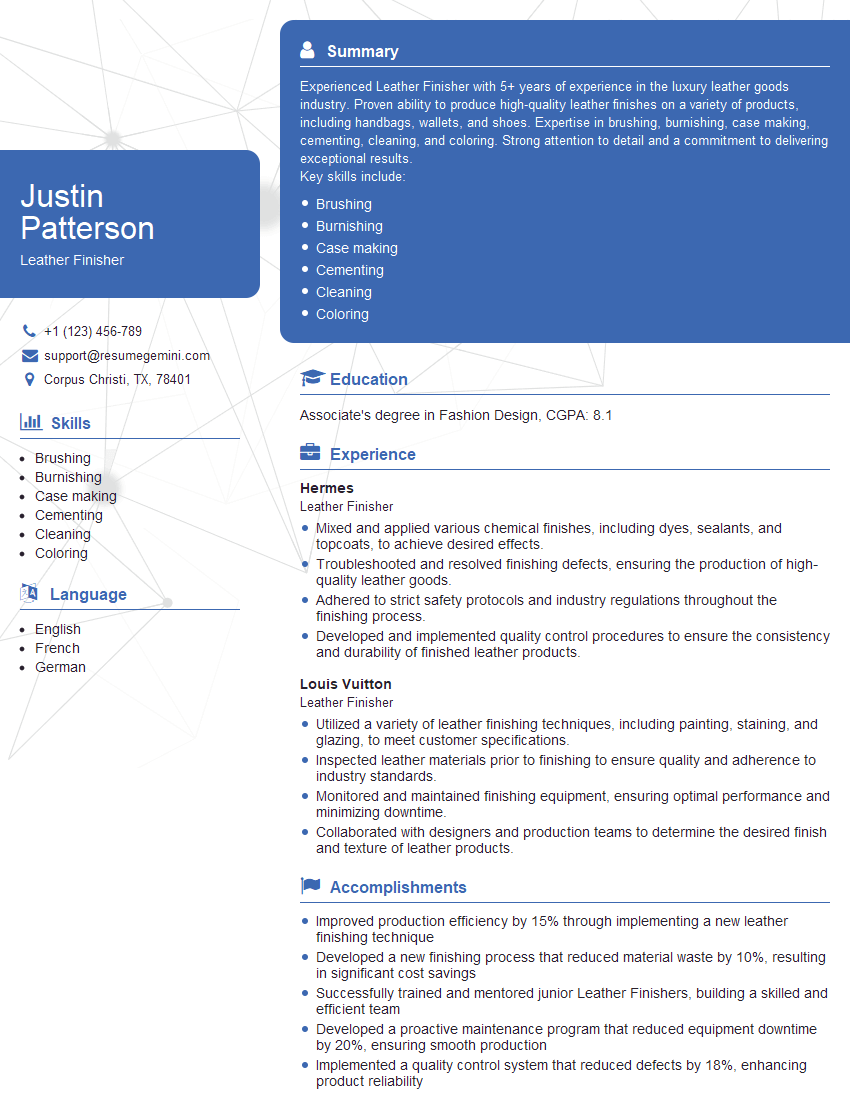
Mastering leather treatment techniques opens doors to exciting career opportunities in the fashion, restoration, and luxury goods industries. To maximize your job prospects, creating a strong, ATS-friendly resume is essential. ResumeGemini can help you build a professional resume that highlights your skills and experience effectively. We offer examples of resumes tailored to the leather treatment field to guide you in showcasing your expertise. Take the next step towards your dream career – build a winning resume with ResumeGemini.
Explore more articles
Users Rating of Our Blogs
Share Your Experience
We value your feedback! Please rate our content and share your thoughts (optional).
What Readers Say About Our Blog
Very informative content, great job.
good