Unlock your full potential by mastering the most common Legal Investigations interview questions. This blog offers a deep dive into the critical topics, ensuring you’re not only prepared to answer but to excel. With these insights, you’ll approach your interview with clarity and confidence.
Questions Asked in Legal Investigations Interview
Q 1. Explain the process of conducting a background check for a legal investigation.
Conducting a thorough background check is crucial in any legal investigation. It involves systematically gathering and verifying information about an individual or entity to establish their background, history, and potential involvement in the matter at hand. The process is multifaceted and typically involves several steps.
- Identifying Information Sources: This initial step involves compiling a list of potential sources of information, including public records (court documents, property records, etc.), commercial databases (LexisNexis, Accurint), social media platforms, and professional references.
- Data Collection: Once sources are identified, the next step is to systematically collect relevant information from those sources. This may involve online searches, reviewing physical documents, or conducting interviews.
- Data Verification: This is arguably the most critical step. Collected information must be verified for accuracy and authenticity. This often involves cross-referencing information obtained from multiple sources to corroborate facts.
- Report Compilation: Finally, the collected and verified information is compiled into a comprehensive report detailing the findings of the background check. This report should be clear, concise, and well-organized, providing a factual summary of the individual’s background relevant to the investigation.
For example, in a case involving alleged fraud, a background check might uncover prior convictions for similar offenses, providing valuable evidence to support the claim. The process is iterative; new information might lead to revisiting previous sources.
Q 2. Describe your experience in interviewing witnesses and gathering statements.
Interviewing witnesses and gathering statements is a cornerstone of legal investigations. My experience involves employing a structured approach that prioritizes building rapport, active listening, and meticulous documentation. I begin by establishing a comfortable and confidential environment for the witness, explaining the purpose of the interview and their rights.
I utilize a combination of open-ended and closed-ended questions to elicit both detailed narratives and specific factual information. I carefully listen for inconsistencies or contradictions, noting body language and tone of voice, which can provide valuable insights. Throughout the interview, I take detailed notes, often recording the interview with the witness’s consent. The recorded statements serve as accurate records of the interview.
Following the interview, I prepare a written statement summarizing the witness’s account. This statement is presented to the witness for review and signature to ensure accuracy and to allow them to make corrections or additions. This meticulous process minimizes errors and ensures the integrity of the evidence gathered.
For example, in a workplace harassment case, I’d carefully question witnesses about specific events, dates, times, and individuals involved. The collected statements would provide crucial pieces of evidence to support or refute the claim.
Q 3. How do you handle conflicting witness testimonies in a legal investigation?
Conflicting witness testimonies are common in legal investigations. Handling these discrepancies requires a methodical approach that goes beyond simply accepting one account over another. The goal is to identify the root cause of the conflict and determine the most credible version of events. My approach involves several key steps:
- Re-interviewing Witnesses: I carefully re-interview witnesses whose accounts conflict, seeking clarification and exploring potential explanations for the discrepancies. Sometimes, a closer examination reveals unintentional misremembering or misinterpretations of events.
- Cross-Referencing Information: I compare the conflicting testimonies with other evidence, such as physical evidence, documents, or other witness statements, to identify inconsistencies and pinpoint areas of conflict.
- Analyzing Witness Credibility: I assess the credibility of each witness by considering factors such as their relationship to the parties involved, their biases, their memory capacity, and the consistency of their statements across interviews.
- Identifying Potential Biases: I carefully consider whether any biases – conscious or unconscious – may be influencing a witness’s recollection or testimony.
- Expert Testimony: In complex cases involving conflicting expert testimony, engaging an independent expert to review and assess the conflicting claims and offer an unbiased opinion may be necessary.
For instance, in a car accident case, conflicting accounts on the speed of the vehicles might be resolved by examining skid marks, damage to the vehicles, and the positioning of debris at the accident scene. The process is about seeking truth through thorough analysis, not just selecting a “winner.”
Q 4. What methods do you use to verify the authenticity of documents?
Verifying the authenticity of documents is paramount in legal investigations. It ensures that the evidence used is genuine and reliable, not forged or altered. I employ a multi-pronged approach, combining technical and investigative techniques. This can include:
- Visual Inspection: A careful examination of the document for signs of alteration, such as inconsistencies in ink, erasures, or changes in font.
- Comparison with Known Authentic Documents: If possible, comparing the questioned document with other known authentic documents from the same source (e.g., comparing handwriting samples).
- Forensic Analysis: Utilizing forensic document examiners who use sophisticated techniques like ink analysis, paper analysis, and handwriting comparison to determine authenticity.
- Metadata Examination: Analyzing the metadata embedded within electronic documents, providing clues about the document’s creation date, author, and modifications.
- Chain of Custody: Tracking the document’s history from its creation to its presentation in the investigation, ensuring its integrity hasn’t been compromised.
For instance, in a contract dispute, verifying the authenticity of the contract through forensic analysis could be vital in proving the existence and validity of the agreement. A forged contract could lead to devastating consequences.
Q 5. Explain your experience with electronic discovery (e-discovery).
Electronic discovery (e-discovery) plays an increasingly vital role in modern legal investigations. My experience encompasses the entire e-discovery lifecycle, from initial identification and preservation of electronically stored information (ESI) to the production of discoverable materials.
I am proficient in using various e-discovery software tools to identify, collect, process, review, and produce ESI. This includes managing large datasets, using keyword searches and advanced analytics to identify relevant information, and applying appropriate privilege review protocols. I also understand the legal and ethical implications of e-discovery, including data privacy regulations like GDPR and CCPA.
For example, in a corporate litigation case involving allegations of insider trading, I would use e-discovery tools to search through emails, databases, and instant messages to identify evidence of communication and transactions relevant to the alleged misconduct. The meticulous nature of e-discovery is paramount to ensuring all relevant ESI is considered.
Q 6. Describe your experience with data analysis in legal investigations.
Data analysis is indispensable in modern legal investigations, allowing for the identification of patterns, anomalies, and connections within large datasets that might be missed through manual review. My experience includes using various data analysis techniques to uncover critical insights from various data sources.
I am proficient in using statistical methods, data visualization tools, and programming languages like Python and R to analyze data from various sources, including databases, spreadsheets, and social media. I have successfully used data analysis to identify patterns of fraudulent activity, trace financial transactions, and correlate seemingly disparate pieces of evidence.
For example, in an antitrust investigation, I might analyze sales data and market share information to identify evidence of price-fixing or collusion among competing companies. The ability to visualize data helps reveal patterns that would be otherwise hidden in a mass of raw numbers.
Q 7. How do you identify and mitigate potential biases during an investigation?
Identifying and mitigating potential biases is crucial for ensuring the objectivity and integrity of a legal investigation. Bias, both conscious and unconscious, can significantly distort the interpretation of evidence and lead to flawed conclusions. My approach involves a multi-layered strategy:
- Self-Awareness: I am acutely aware of my own potential biases and actively work to mitigate their influence on my investigative work. This involves regular self-reflection and seeking feedback from colleagues.
- Structured Methodology: Employing a rigorous and systematic investigative process reduces the impact of subjective interpretation by providing a framework for data collection and analysis.
- Diverse Investigative Teams: Collaborating with colleagues from diverse backgrounds and perspectives provides a check against potential biases.
- Blind Review of Evidence: In certain situations, the review of evidence can be conducted blindly, where the reviewer is unaware of the identities or perspectives of the involved parties, minimizing potential preconceived notions.
- Regular Checks and Balances: Throughout the investigation, colleagues review my findings to identify potential biases and ensure the objectivity of the conclusions.
For example, in an investigation of police misconduct, it’s crucial to avoid bias against or in favor of law enforcement officers. A structured approach and a diverse investigative team help safeguard the investigation’s integrity.
Q 8. Explain your understanding of chain of custody in evidence handling.
Chain of custody refers to the chronological documentation and unbroken trail showing the seizure, custody, control, transfer, analysis, and disposition of physical or electronic evidence. It’s crucial to ensure the evidence’s integrity and admissibility in court. Think of it like a meticulous game of tag – the evidence is tagged with detailed information at each step, recording who handled it, when, and where. Any break in this chain can severely compromise the evidence’s credibility.
- Seizure: Detailed notes are made when the evidence is first collected, including date, time, location, and the individual seizing it.
- Storage: Evidence is securely stored, often in tamper-evident containers, with logging of access and any movements.
- Transfer: Each transfer of evidence is documented, with signatures and dates, creating a clear audit trail.
- Analysis: The analytical process is recorded, including the methods used and the personnel involved.
- Disposition: The final disposition of the evidence, whether it’s returned, destroyed, or retained, is also documented.
For example, imagine a stolen laptop. The officer seizing it must record the serial number, location found, and their badge number. Then, each person who handles the laptop – the forensics expert, the evidence technician, the prosecutor – must meticulously document their handling of it. Failure to maintain the chain of custody could mean the laptop’s data is inadmissible in court, even if incriminating evidence is found.
Q 9. How do you ensure the confidentiality and security of sensitive information?
Confidentiality and security of sensitive information are paramount in legal investigations. My approach involves a multi-layered strategy that includes physical security, access controls, and data encryption. This strategy applies to both paper and digital files.
- Physical Security: Secure storage of physical files in locked cabinets or safes, restricted access to investigation rooms, and shredding of sensitive documents when no longer needed.
- Access Controls: Strict password policies, role-based access controls to digital data, and limited sharing of information on a need-to-know basis.
- Data Encryption: Using encryption software to protect sensitive data both at rest and in transit. Data encryption is vital for emails, storage devices and databases.
- Data Loss Prevention (DLP): Implementing DLP tools and strategies to prevent sensitive data from leaving the organization’s controlled environment.
For instance, in an investigation involving client financial data, I would utilize encrypted hard drives for storage, secure passwords for all access points and would only share data with the necessary team members. Regular security audits and employee training are also essential to reinforce best practices.
Q 10. Describe your experience with forensic interviewing techniques.
Forensic interviewing techniques are critical for obtaining truthful and reliable information from witnesses or suspects. I am proficient in various techniques, focusing on building rapport, using open-ended questions, and carefully observing body language. The goal is to elicit accurate, detailed information without coercion or leading questions.
- Rapport Building: Creating a safe and comfortable environment for the interviewee to build trust and cooperation.
- Open-ended Questions: Employing questions that encourage detailed responses and avoid yes/no answers (e.g., “Tell me about your interaction with the defendant” instead of “Did you see the defendant?”).
- Active Listening: Paying close attention to verbal and non-verbal cues, including body language, tone of voice, and inconsistencies in the narrative.
- Note-Taking: Meticulously recording the interview, including both the questions asked and the responses received.
- Statement Review: Reviewing the recorded statement with the interviewee to ensure accuracy and allowing for clarification.
In a case involving a workplace dispute, for example, I would employ these techniques to ensure that the account given by an employee accurately reflects the events. I’d start by building rapport to ease the employee’s stress and apprehension, employing open-ended questions to obtain a full account of the events, and observing their body language for inconsistencies or signs of deception.
Q 11. What is your approach to investigating financial fraud?
Investigating financial fraud requires a systematic and meticulous approach. It involves tracing financial transactions, identifying patterns of fraud, and gathering evidence to support legal action.
- Financial Statement Analysis: Carefully reviewing financial records (bank statements, accounting ledgers, invoices) to identify inconsistencies or anomalies.
- Transaction Tracing: Tracking the flow of funds through various accounts to understand the movement of money and identify individuals involved.
- Data Analysis: Utilizing data analysis tools and techniques to detect unusual patterns or relationships within large datasets.
- Witness Interviews: Interviewing individuals with knowledge of the financial transactions and their roles in the process.
- Forensic Accounting: Working with forensic accountants to examine complex financial records and reconstruct transactions.
For example, in a case of suspected embezzlement, I would start by analyzing the company’s financial statements to pinpoint discrepancies, then trace the movement of funds to identify the suspect and how they diverted money. Forensic accounting tools and techniques are crucial in such cases to unravel complex financial schemes.
Q 12. How do you handle investigations involving complex legal concepts?
Handling investigations involving complex legal concepts requires a thorough understanding of the relevant laws and regulations and the ability to break down complex issues into manageable components.
- Legal Research: Conducting thorough legal research to understand the applicable laws, regulations, and case precedents.
- Expert Consultation: Consulting with legal experts (lawyers, specialists) to gain a deeper understanding of the legal aspects of the investigation.
- Structured Approach: Developing a structured approach to the investigation, breaking down complex issues into smaller, more manageable components.
- Clear Documentation: Meticulously documenting the investigation, including the legal framework, the evidence collected, and the conclusions drawn.
For instance, in an investigation involving antitrust issues, I’d rely heavily on legal research to understand the specific legal tests and precedents related to anti-competitive behavior. Consultation with a specialized antitrust lawyer would be crucial to ensure the investigation adheres to legal standards and the findings are legally sound.
Q 13. Explain your experience with regulatory compliance investigations.
Regulatory compliance investigations involve examining an organization’s adherence to relevant laws, regulations, and industry standards. My experience involves understanding the specific regulations, conducting thorough reviews, and collaborating with legal counsel.
- Regulatory Framework: Understanding the specific regulations that apply to the organization and the industry.
- Document Review: Reviewing relevant documents (policies, procedures, contracts, records) for compliance with these regulations.
- Interviews: Interviewing relevant personnel to assess their understanding and application of regulatory requirements.
- Gap Analysis: Identifying any gaps or deficiencies in the organization’s compliance program.
- Remediation: Recommending and overseeing the implementation of corrective actions to address identified gaps.
In a regulatory compliance investigation concerning data privacy, for example, I would examine an organization’s data handling practices against relevant regulations such as GDPR or CCPA. This would involve reviewing data processing agreements, assessing employee training programs, and ensuring that data breaches are appropriately managed and reported.
Q 14. Describe your experience with internal investigations within a company.
Internal investigations within a company require a delicate balance between protecting the company’s interests and ensuring fairness and due process for all involved. My approach emphasizes maintaining confidentiality, following established protocols, and producing objective findings.
- Defining the Scope: Clearly defining the scope of the investigation and the specific allegations or concerns.
- Preserving Confidentiality: Maintaining the confidentiality of the investigation and protecting the identities of those involved.
- Following Protocol: Adhering to the company’s established policies and procedures regarding internal investigations.
- Objective Findings: Ensuring that the investigation is conducted in a fair and impartial manner, leading to objective findings.
- Reporting: Preparing a comprehensive report summarizing the findings, conclusions, and recommendations.
In a case of suspected sexual harassment within a company, for instance, my approach would involve securing witness statements, preserving confidentiality, following the company’s internal investigation protocols, and ensuring all parties involved are treated fairly, culminating in a detailed report for management with recommendations for appropriate actions.
Q 15. How do you prioritize tasks and manage multiple investigations simultaneously?
Prioritizing tasks and managing multiple investigations simultaneously requires a structured approach. I utilize project management techniques, often employing a combination of Kanban and prioritization matrices. Each investigation is treated as a separate project with clearly defined objectives, timelines, and allocated resources. I begin by assessing the urgency and potential impact of each case. Cases with imminent deadlines, significant legal implications, or potential for substantial financial losses are prioritized. I then break down each investigation into smaller, manageable tasks, assigning each a level of priority based on its contribution to the overall objective. Tools like project management software help me track progress, deadlines, and resource allocation across multiple cases. Regular review meetings allow for dynamic adjustments to the prioritization based on new information or evolving circumstances. For example, if a new piece of crucial evidence emerges in one case, I may need to temporarily shift resources to expedite that investigation, while ensuring other investigations remain on track.
Think of it like conducting an orchestra – you have various sections (investigations) each with its own tempo and intensity. Effective management means coordinating these sections seamlessly to achieve the best overall outcome.
Career Expert Tips:
- Ace those interviews! Prepare effectively by reviewing the Top 50 Most Common Interview Questions on ResumeGemini.
- Navigate your job search with confidence! Explore a wide range of Career Tips on ResumeGemini. Learn about common challenges and recommendations to overcome them.
- Craft the perfect resume! Master the Art of Resume Writing with ResumeGemini’s guide. Showcase your unique qualifications and achievements effectively.
- Don’t miss out on holiday savings! Build your dream resume with ResumeGemini’s ATS optimized templates.
Q 16. How do you determine the scope of a legal investigation?
Defining the scope of a legal investigation is crucial for efficiency and effectiveness. It begins with a clear understanding of the initial allegation or complaint. We then work collaboratively with the client to define the specific questions that the investigation needs to answer. This includes identifying the relevant time period, individuals involved, and types of evidence to be gathered. For example, an investigation into alleged accounting fraud might initially seem broad, but through careful scoping, we could narrow it down to specific transactions within a defined fiscal year, involving certain employees and departments. We carefully consider legal parameters, including relevant statutes, regulations, and case law, to ensure the investigation remains within legal boundaries. A detailed scope document is prepared, outlining the objectives, methodology, and anticipated deliverables. This document serves as a roadmap throughout the investigation, guiding our activities and helping manage expectations. It is important to allow for flexibility, as new information may emerge requiring adjustments to the scope during the investigation process.
Q 17. What are your strategies for conducting effective interviews?
Effective interviews are the cornerstone of a successful legal investigation. My strategy is built on preparation, rapport-building, and skillful questioning. Before each interview, I thoroughly research the interviewee and their relationship to the matter under investigation. I prepare a list of open-ended questions designed to elicit detailed responses, avoiding leading questions that could bias the responses. During the interview, I focus on creating a comfortable and trusting environment, emphasizing the importance of honesty and transparency. Active listening is crucial; I carefully observe the interviewee’s demeanor and body language, looking for inconsistencies or signs of deception. I use various techniques, such as summarizing and paraphrasing the interviewee’s responses, to ensure clear understanding and build rapport. I always document the interview thoroughly, including date, time, location, and a verbatim record of the conversation. If appropriate, I might even use a recording device, but always ensuring compliance with applicable laws and regulations. Difficult or evasive answers are addressed with follow-up questions, designed to elicit clarification or further information. I treat every interview with respect and professionalism, regardless of the interviewee’s role or behavior.
Q 18. Describe your experience with report writing and presenting findings.
Report writing and presentation of findings are critical for communicating the results of an investigation effectively. My reports are structured, clear, and concise, using plain language avoiding unnecessary legal jargon. Each report follows a consistent format, including an executive summary, methodology, findings, and conclusions. The findings section presents evidence objectively, supporting each conclusion with concrete evidence. Data is presented using charts, graphs, and tables, where appropriate, to enhance readability and understanding. I ensure that all evidence is properly documented and referenced. My presentations are tailored to the audience, using visual aids and clear language to communicate complex information effectively. I’m comfortable presenting findings to diverse groups, including clients, legal counsel, and regulatory bodies. I welcome questions and provide clear and concise answers. A thorough review process ensures accuracy and completeness before any report is finalized or presented.
Q 19. How do you handle challenging or difficult individuals during an investigation?
Handling challenging or difficult individuals requires patience, diplomacy, and a clear understanding of the legal and ethical boundaries. I maintain professionalism and respect at all times, even when faced with hostility or uncooperativeness. I clearly explain the purpose of the investigation and the interviewee’s legal obligations, emphasizing their right to counsel. I attempt to establish rapport through active listening and empathy, seeking to understand their perspective and address their concerns. However, persistent refusal to cooperate or attempts to obstruct the investigation may necessitate escalation, potentially involving legal counsel or law enforcement. For example, if an interviewee repeatedly refuses to answer relevant questions, I may document this refusal in my report. I always strive for a fair and impartial approach, ensuring all individuals are treated equitably, regardless of their behavior or perceived role in the matter.
Q 20. What are some common pitfalls to avoid during a legal investigation?
Several pitfalls can compromise the integrity and effectiveness of a legal investigation. One common mistake is failing to adequately scope the investigation, leading to inefficiency and missed evidence. Another is neglecting to properly preserve and handle evidence, compromising its admissibility in court. Bias can significantly impact the objectivity of the investigation. Improperly conducted interviews, such as using leading questions or failing to adequately document the interview, can weaken the credibility of findings. Failure to maintain proper chain of custody for physical evidence is another critical error. Finally, ignoring relevant legal and ethical considerations, such as data privacy laws or rules of professional conduct, can lead to serious legal consequences. A methodical, well-planned approach, adhering to strict protocols and ethical standards, is crucial to avoid these pitfalls.
Q 21. Explain your understanding of different types of evidence (e.g., documentary, testimonial).
Understanding different types of evidence is fundamental to a successful legal investigation. Documentary evidence includes any written or printed materials, such as contracts, emails, financial records, and reports. These documents must be authenticated to ensure their reliability and admissibility. Testimonial evidence comes from witnesses, either through interviews or sworn affidavits. Its credibility depends on the witness’s reliability and the consistency of their statements. Physical evidence consists of tangible objects relevant to the investigation, like weapons, documents, or other materials found at the scene of an event. Careful handling and chain of custody procedures are crucial to maintain its integrity. Electronic evidence includes data stored on computers, smartphones, and other electronic devices. Special skills and tools are often needed for its extraction and analysis. The admissibility of each type of evidence depends on its relevance, authenticity, and compliance with legal rules of evidence. Each type requires careful handling and documentation to ensure its integrity and admissibility in any subsequent legal proceedings.
Q 22. How do you ensure the accuracy and completeness of your investigative reports?
Ensuring accuracy and completeness in investigative reports is paramount. It’s about building a strong, defensible case, not just compiling information. My approach is multi-faceted, focusing on meticulous documentation, rigorous verification, and a systematic review process.
Detailed Documentation: I maintain comprehensive notes, records of all interviews, chain of custody for evidence, and detailed logs of all investigative activities. This meticulous approach ensures that every step is traceable and verifiable. For example, if I interview a witness, I record their statements verbatim, noting any inconsistencies or hesitations. I then cross-reference their statements with other evidence gathered.
Verification and Cross-referencing: I don’t rely on single sources. Information is cross-checked against multiple sources to validate its accuracy. This could involve comparing witness testimonies with physical evidence, documents, or digital records. Discrepancies are investigated thoroughly.
Systematic Review: Before finalizing any report, I conduct a thorough review, checking for completeness, consistency, and clarity. A second pair of eyes often helps identify potential oversights or biases. This process ensures that the report is not only accurate but also readily understandable for legal professionals and the court.
This rigorous approach safeguards against errors and ensures the report’s reliability, crucial for its use in legal proceedings.
Q 23. What software or tools do you use to assist in your investigations?
Technology plays a significant role in modern legal investigations. I utilize a range of software and tools to enhance efficiency and accuracy. These include:
Case Management Software: I use specialized software to organize case files, evidence, and communication logs, ensuring everything is readily accessible and well-documented. This helps me maintain a clear audit trail.
Forensic Software: For digital investigations, I employ forensic software to recover deleted data, analyze hard drives, and identify digital evidence. This allows for thorough examination of digital footprints.
Data Analysis Tools: Large datasets often require advanced analysis. I utilize data analysis tools to identify patterns, connections, and anomalies that might otherwise be missed. For example, identifying financial irregularities in a fraud case.
Mapping and Geographic Information Systems (GIS): For investigations involving locations, I use mapping software and GIS tools to visualize data spatially, helping understand timelines, movements, and connections between different locations.
The specific tools vary depending on the nature of the investigation, but the core principle is using technology to enhance accuracy, efficiency, and objectivity.
Q 24. Describe your experience with conducting surveillance in a legal context.
Surveillance, when legally permissible and ethically conducted, is a crucial tool in certain investigations. My experience encompasses various methods, always within the strict confines of the law and with adherence to strict ethical guidelines.
I have conducted surveillance using techniques such as:
Physical Surveillance: This involves discreet observation of individuals or locations, often requiring careful planning and adherence to legal requirements. This includes obtaining necessary authorizations and maintaining appropriate distance and observing privacy laws.
Electronic Surveillance: This may include utilizing GPS tracking devices (with proper legal authorization), or monitoring publicly available digital information. All activities are rigorously documented and comply with relevant laws, including privacy regulations like GDPR or CCPA.
In every instance, prior authorization and legal compliance are paramount. I thoroughly document the justification, methods, and results of any surveillance activity. The key is to balance the investigative needs with individual rights and legal limitations.
For example, in a missing person case, surveillance of known associates might provide valuable information. However, all actions must be legally justified and documented.
Q 25. How do you stay updated on changes in relevant laws and regulations?
Staying abreast of legal changes is critical for maintaining the integrity and legality of my investigations. I employ several strategies:
Continuing Legal Education (CLE): I actively participate in CLE programs specifically focused on legal investigations and related areas like evidence law, privacy laws, and cybersecurity. This ensures that my knowledge remains current.
Professional Associations: Membership in relevant professional organizations provides access to updates on legal changes, best practices, and case law through newsletters, conferences, and online resources.
Legal Databases and Publications: I regularly consult legal databases and professional journals to stay informed about new legislation, court rulings, and emerging legal challenges.
Networking: Maintaining connections with legal professionals, such as lawyers and other investigators, facilitates the exchange of information and insights regarding recent developments.
This multifaceted approach ensures that I am always working within the boundaries of the law and employing the most up-to-date techniques.
Q 26. How do you maintain ethical conduct throughout an investigation?
Ethical conduct is the cornerstone of my work. Maintaining ethical standards is not merely a matter of adhering to the law; it’s about upholding the integrity of the profession and ensuring fairness. My commitment to ethical conduct manifests in several ways:
Objectivity and Impartiality: I strive for complete objectivity in my investigations, avoiding bias and focusing solely on the facts. I treat all parties involved with respect and fairness, regardless of my personal opinions or the perceived guilt or innocence of any individuals.
Truthfulness and Accuracy: I meticulously document my findings and ensure they are accurate and truthful. I never fabricate evidence or misrepresent information.
Respect for Privacy and Confidentiality: I strictly adhere to all applicable laws and regulations related to privacy and confidentiality. I protect the privacy of individuals and handle sensitive information with utmost care.
Transparency and Disclosure: I maintain transparency in my methods and fully disclose any potential conflicts of interest.
Ethical breaches can severely compromise an investigation and damage the reputation of all involved. Therefore, my commitment to ethical standards is unwavering and central to my professional identity.
Q 27. Describe your experience working with legal professionals (e.g., lawyers, paralegals).
Collaboration with legal professionals is fundamental to the success of any legal investigation. My experience working with lawyers, paralegals, and other legal professionals is extensive and involves close collaboration throughout every stage of an investigation.
This collaboration typically involves:
Case Strategy and Planning: I work closely with legal counsel to define investigative goals, develop strategies, and determine the scope of the investigation. This ensures that the investigation is focused and relevant to the legal objectives.
Evidence Gathering and Preservation: I collect and preserve evidence according to legal standards and in close consultation with legal counsel to ensure its admissibility in court.
Report Preparation and Review: I prepare detailed investigative reports and work with legal counsel to review and refine them for clarity, accuracy, and legal compliance.
Court Testimony: I am prepared to provide expert testimony in court and work with attorneys to ensure effective presentation of findings.
Effective communication and a shared understanding of legal procedures and evidence standards are crucial to a successful collaborative relationship.
Q 28. How do you manage time effectively and meet deadlines in high-pressure situations?
Legal investigations often involve tight deadlines and high-pressure situations. Effective time management is crucial for successful outcomes. My approach incorporates several key strategies:
Prioritization and Planning: I begin each investigation with a detailed plan that outlines tasks, deadlines, and resource allocation. High-priority tasks are identified and addressed first.
Task Management Tools: I utilize project management tools and software to track progress, manage deadlines, and ensure accountability. This allows for efficient task delegation and monitoring.
Effective Delegation: When appropriate, I delegate tasks to other members of the investigation team to maximize efficiency and leverage expertise.
Flexibility and Adaptability: Unexpected challenges are common in investigations. I am adept at adapting to changing circumstances and adjusting priorities as needed.
Stress Management: High-pressure situations can be taxing. I maintain a healthy work-life balance and employ stress-reduction techniques to maintain focus and productivity.
By combining careful planning with adaptability and effective stress management, I can consistently meet deadlines even in demanding circumstances.
Key Topics to Learn for Legal Investigations Interview
- Regulatory Compliance: Understanding relevant laws and regulations (e.g., Sarbanes-Oxley Act, FCPA) and their implications for investigations.
- Investigative Techniques: Mastering interviewing skills, document review, forensic data analysis, and chain of custody procedures.
- Evidence Gathering and Preservation: Learning best practices for collecting, analyzing, and preserving electronic and physical evidence while maintaining legal admissibility.
- Report Writing and Presentation: Developing clear, concise, and persuasive reports summarizing findings and recommendations for legal action.
- Data Analysis and Interpretation: Utilizing data analysis tools and techniques to identify patterns, anomalies, and potential evidence of wrongdoing.
- Ethical Considerations: Understanding professional responsibilities and ethical dilemmas encountered during investigations, including confidentiality and conflict of interest.
- Legal Frameworks: Familiarity with relevant legal concepts such as discovery, privilege, and the rules of evidence.
- Case Management: Understanding the investigative process, from initial assessment to final report, including time management and resource allocation.
- Problem-Solving and Critical Thinking: Developing the ability to analyze complex situations, identify key issues, and develop effective solutions.
Next Steps
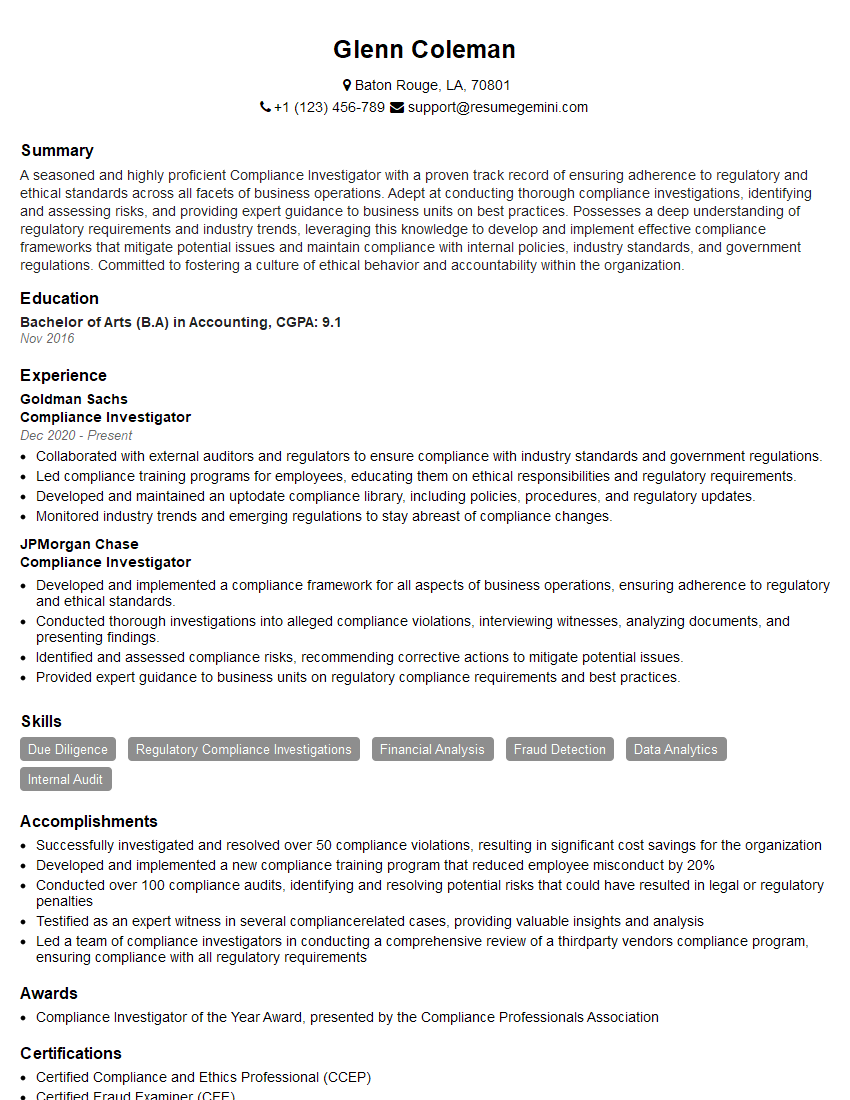
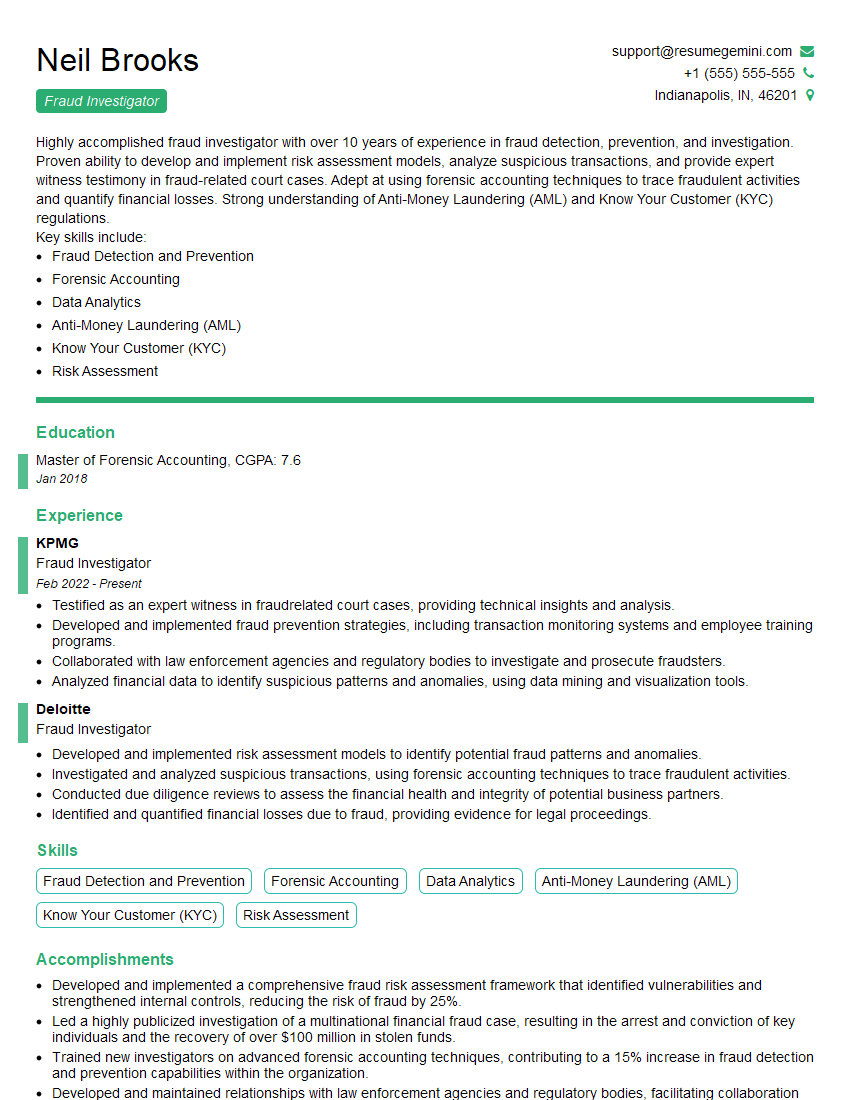
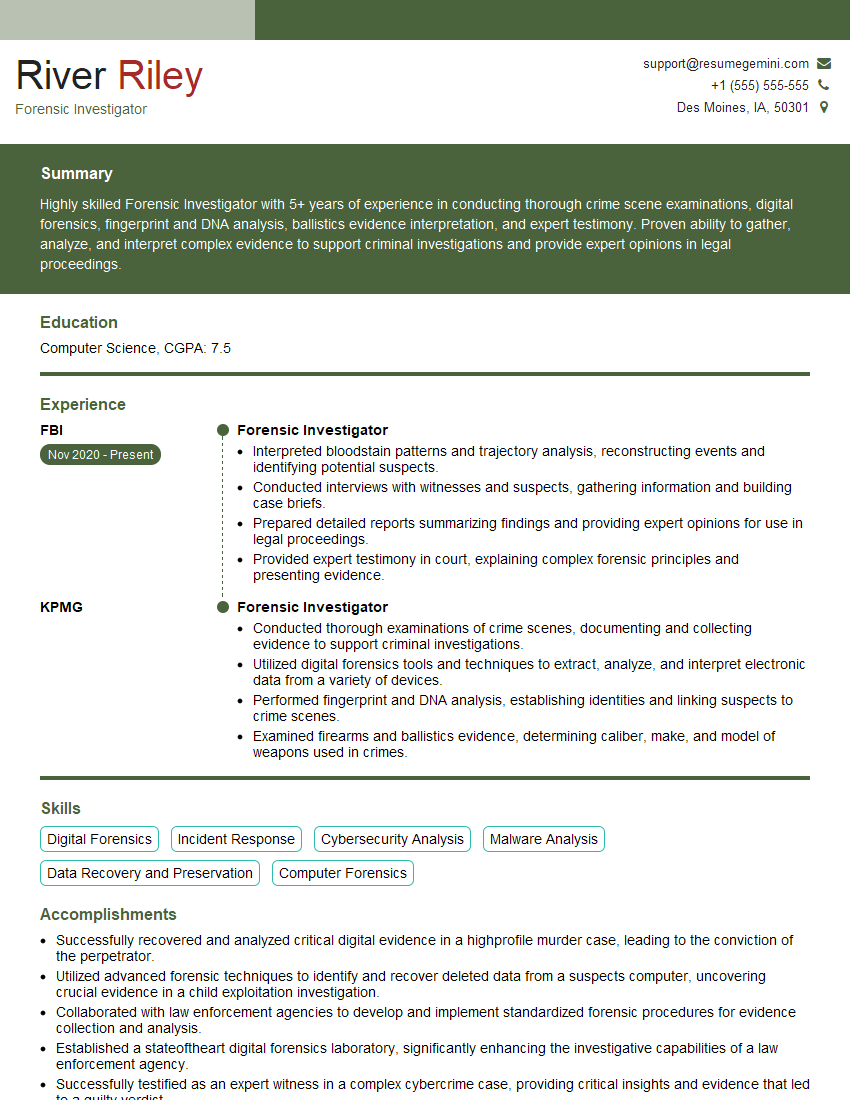
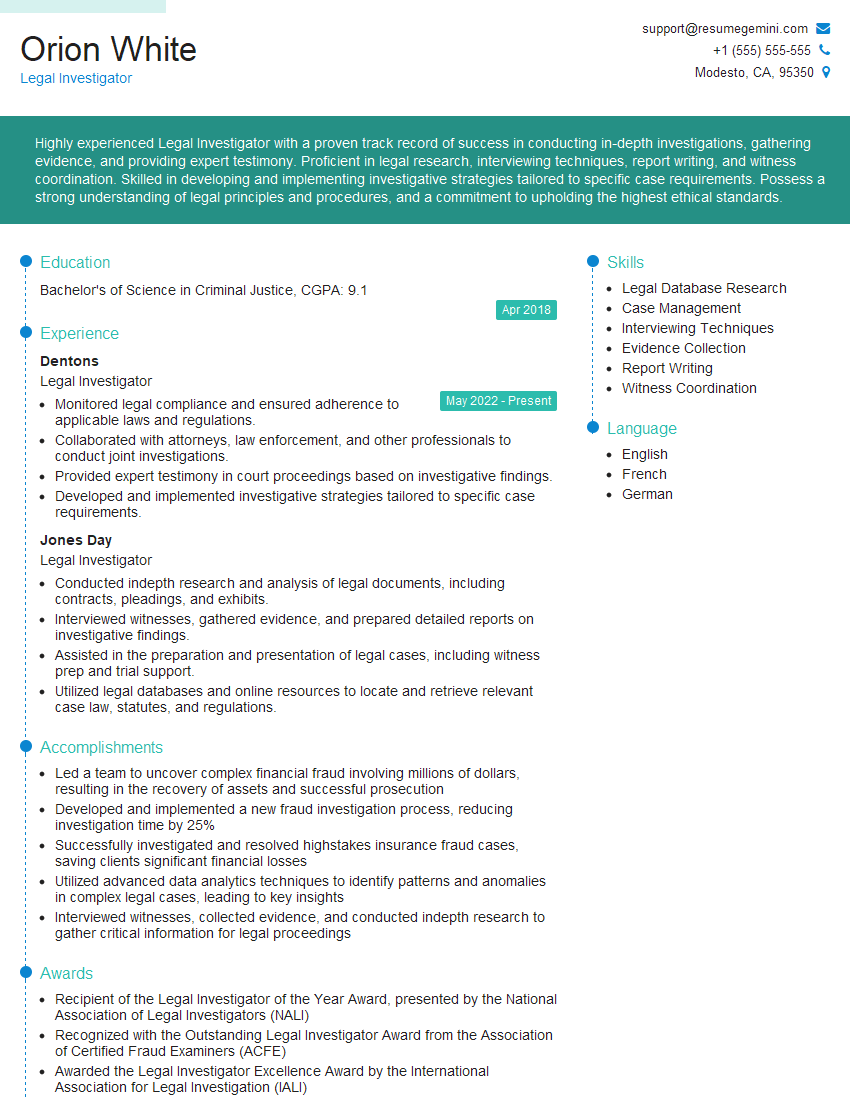
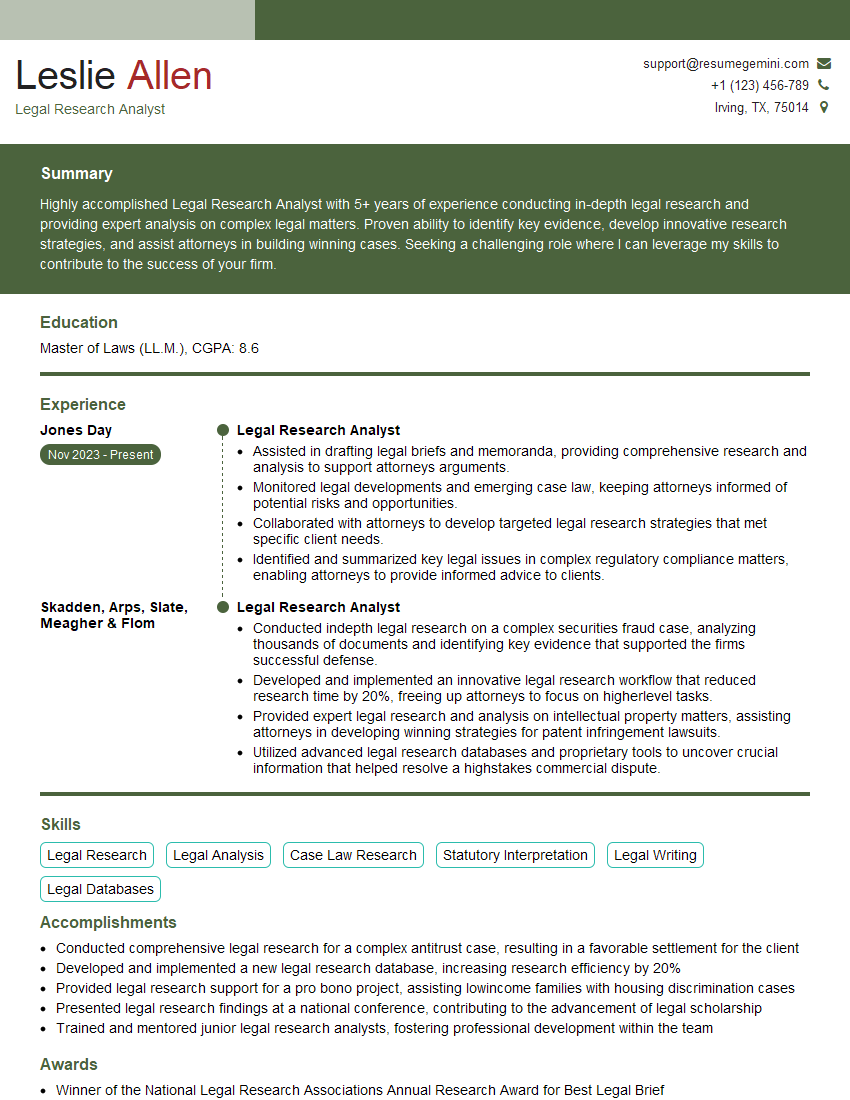
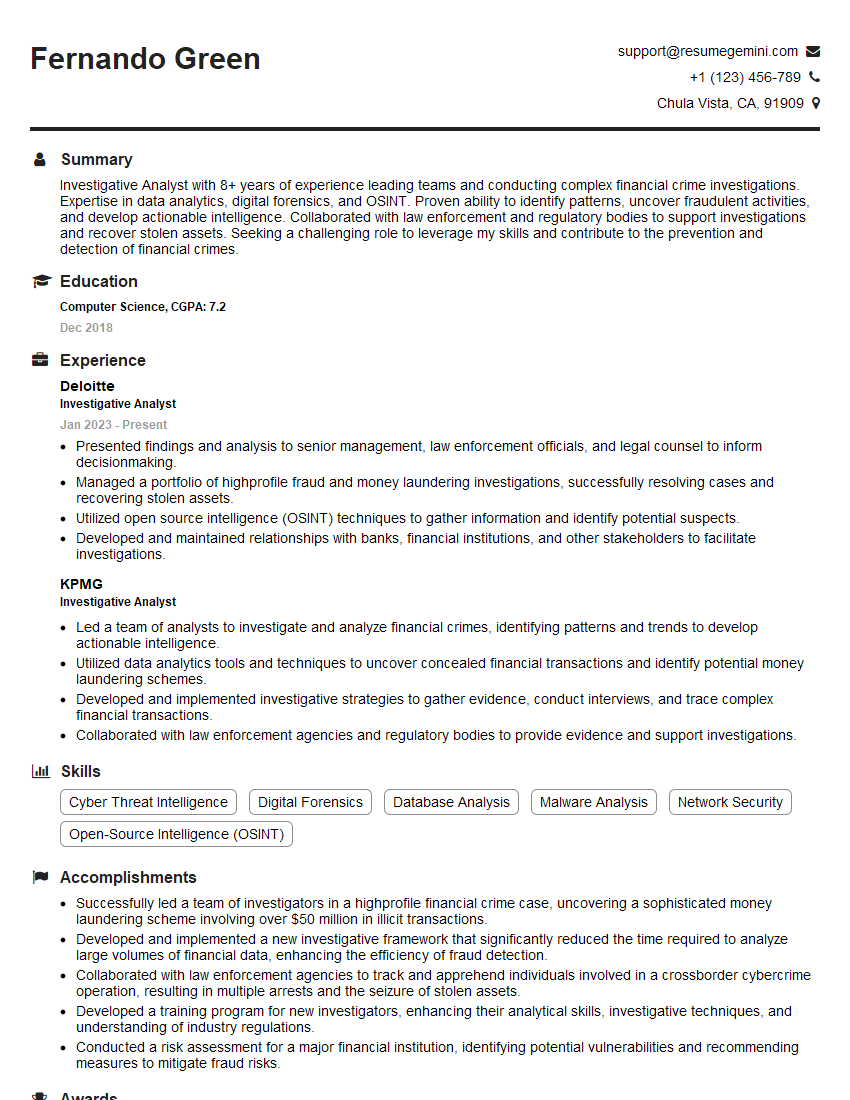
Mastering Legal Investigations opens doors to exciting and impactful careers, offering opportunities for growth and specialization within the legal field. A strong resume is crucial for showcasing your skills and experience to potential employers. To increase your chances of getting noticed by Applicant Tracking Systems (ATS), crafting an ATS-friendly resume is vital. ResumeGemini is a trusted resource to help you build a professional and effective resume tailored to the Legal Investigations field. Examples of resumes specifically designed for Legal Investigations roles are available to help you get started. Invest in your future; invest in your resume.

Explore more articles
Users Rating of Our Blogs
Share Your Experience
We value your feedback! Please rate our content and share your thoughts (optional).
What Readers Say About Our Blog
Very informative content, great job.
good