Feeling uncertain about what to expect in your upcoming interview? We’ve got you covered! This blog highlights the most important Horseback Riding and Vaulting interview questions and provides actionable advice to help you stand out as the ideal candidate. Let’s pave the way for your success.
Questions Asked in Horseback Riding and Vaulting Interview
Q 1. Describe your experience teaching horseback riding to different age groups.
Teaching horseback riding spans a wide spectrum, demanding adaptability to different learning styles and developmental stages. With children, I focus on building foundational skills like balance and coordination through fun games and age-appropriate exercises. For example, we might play ‘horse-and-rider’ games to improve balance and understanding of body posture. With teenagers, I incorporate more advanced techniques and introduce them to different riding disciplines. Adults often have specific goals, whether it’s improving fitness, learning a new skill, or pursuing competitive riding. My approach involves individualised lesson plans tailored to each student’s skill level, experience, and aspirations, always prioritizing safety and positive reinforcement. I find that clear communication and positive encouragement are key to success across all age groups, celebrating small victories to foster confidence and build a strong rider-horse relationship.
Q 2. Explain your understanding of different riding disciplines (e.g., dressage, jumping, western).
The world of equestrian sports encompasses a variety of disciplines, each with unique techniques and challenges. Dressage, often called ‘ballet on horseback,’ emphasizes precision, harmony, and elegance, requiring the horse to perform highly choreographed movements. Jumping involves navigating a course of obstacles, demanding both athleticism from the horse and strategic decision-making from the rider. Western riding, originating from the American West, involves techniques like reining and cutting, requiring different skills focusing on control and responsiveness. Each discipline develops specific rider skills; dressage requires refined balance and subtle aids, jumping needs courage and timing, and western riding demands precise communication and maneuverability. Understanding these disciplines allows me to tailor my teaching to individual student goals and interests, providing a comprehensive riding experience.
Q 3. Detail your knowledge of equine anatomy and physiology.
A strong understanding of equine anatomy and physiology is crucial for safe and effective horsemanship. Knowing the musculoskeletal system helps identify potential soundness issues, explaining, for instance, how conformation (the horse’s physical structure) affects its movement and performance. Understanding the digestive system is vital for recognizing signs of colic or other digestive upsets. Respiratory and cardiovascular systems are also important considerations in assessing a horse’s fitness and overall health. For example, recognising subtle changes in breathing rate or heart rate can signal discomfort or illness. This knowledge allows me to identify potential problems early, make informed decisions regarding a horse’s training and care, and ensures the horse’s well-being is prioritized.
Q 4. What are the common safety precautions in horseback riding and vaulting?
Safety is paramount in both horseback riding and vaulting. In riding, always wearing a properly fitted helmet is non-negotiable. Appropriate footwear with a small heel prevents the foot from slipping through the stirrup. Regularly inspecting tack (saddle, bridle, etc.) for wear and tear is essential, as is ensuring the horse is properly fitted with equipment. In vaulting, a secure base (the horse’s back) and proper spotting by experienced individuals are critical. Vaulters must also wear safety helmets and protective clothing, and the horse must be well-trained and accustomed to the activity. Thorough warm-up routines for both horse and rider are vital to prevent injury. Additionally, clear communication between the rider and other participants is crucial, particularly in group riding and vaulting sessions.
Q 5. How do you handle a horse exhibiting signs of stress or anxiety?
Recognizing signs of stress or anxiety in a horse is critical. These can manifest as increased heart rate, rapid breathing, sweating, pinned ears, tail swishing, or unusual behaviors like pawing the ground or trying to bite. My approach begins with identifying the source of stress: is it related to the environment, the rider, or a physical discomfort? Once identified, I employ calm and reassuring techniques. This could involve removing the stressor, providing a calming environment, or utilizing desensitization techniques if the horse is afraid of a particular stimulus. In some cases, a vet consultation might be necessary. Gentle, consistent handling, coupled with positive reinforcement, helps build trust and confidence, allowing the horse to relax and return to a calm state. Patience and understanding are key in these situations.
Q 6. Explain your experience with different horse breeds and their temperaments.
My experience encompasses a range of horse breeds, each with its distinct temperament and characteristics. For example, Arabian horses are known for their spirited nature and endurance, while Quarter Horses often exhibit a calm and dependable temperament. Thoroughbreds are known for their athleticism and sensitivity, requiring a more experienced rider. Understanding these breed-specific traits allows me to tailor my teaching and training methods accordingly. I adjust my approach to suit the horse’s individual personality, recognizing that a calm, consistent approach works best with nervous horses, while more assertive techniques might be appropriate for confident and spirited breeds. This individualized approach ensures both rider and horse have a positive and productive experience.
Q 7. Describe your approach to teaching basic riding skills (e.g., mounting, dismounting, balance).
Teaching basic riding skills follows a progressive approach, emphasizing safety and proper technique from the start. Mounting and dismounting are initially taught using a mounting block for safety, focusing on correct leg and body positioning. Balance is developed through exercises like walking at the walk, focusing on posture and maintaining an independent seat. I use visual aids and verbal cues to explain proper posture and body alignment. Students learn to control the horse using aids like leg pressure, reins, and weight shifts, always within a safe and controlled environment. Positive reinforcement and encouragement build confidence and help learners progress at their own pace. Regular assessments and individualized feedback ensure students master fundamental skills before advancing to more challenging techniques.
Q 8. How do you assess a rider’s skill level and tailor instruction accordingly?
Assessing a rider’s skill level involves a holistic approach, considering several key aspects. I begin with an observation of their basic riding skills – posture, balance, seat, and independent leg and rein aids. For example, I’ll watch how they control the horse’s gait transitions and their ability to maintain a consistent rhythm. This initial observation helps me gauge their foundation. Next, I assess their understanding of horsemanship principles: awareness of the horse’s reactions, proper communication, and effective use of aids. For example, do they understand and apply the concept of ‘following the horse’s movement’? I then introduce specific exercises to evaluate more advanced techniques. This might involve asking the rider to perform more complex maneuvers like lateral work or collected gaits. This progressive assessment allows me to tailor instruction. For a beginner, the focus will be on fundamental posture, balance, and communication with the horse. For advanced riders, we’ll tackle more intricate exercises, and perhaps refine their existing skills or introduce new challenges. I use positive reinforcement throughout the process, focusing on building confidence and celebrating progress. A detailed feedback session follows each observation, with specific pointers and techniques to further develop their abilities.
Q 9. What is your experience with horse tack and equipment maintenance?
My experience with horse tack and equipment maintenance is extensive. I understand the importance of correctly fitting saddles, bridles, and other equipment to ensure both the horse’s comfort and the rider’s safety. I regularly inspect tack for wear and tear, making necessary repairs or replacements as needed. This includes checking leather for cracks or dryness, stitching for damage, and buckles for functionality. I’m familiar with various cleaning and conditioning methods for different materials, like leather, synthetic fabrics, and metal. For example, I know the importance of regularly oiling leather to prevent cracking and maintain its suppleness. I can also identify problems with equipment such as a poorly balanced saddle, which could impact the horse’s comfort and performance. Understanding how different bits affect a horse’s mouth is crucial, and I adjust the bit to the horse’s unique needs and temperament. Properly maintained equipment contributes to a safer and more effective riding experience, and I’m meticulous about ensuring this.
Q 10. Explain your familiarity with various vaulting exercises and progressions.
My familiarity with vaulting exercises encompasses a wide range, from basic introductory exercises to advanced, competitive routines. Beginners start with fundamental movements like mounting and dismounting, balancing, and simple stretches on the horse’s back. Progressions then involve exercises that build strength, coordination, and balance. These include static holds, such as the ‘flag’ or ‘candlestick’, and dynamic moves like the ‘mill’ or ‘cross-leg seat’. As skill develops, more complex routines are introduced. These involve sequences of movements combined with transitions and elements of acrobatic skills. I am familiar with elements like the ‘iron cross’, ‘handstand’, and various leaps and throws. The progressions are carefully structured to build upon previously learned skills, ensuring a gradual increase in difficulty and complexity, tailored to the individual vaulter’s capabilities and physical condition. For example, a beginner might start with simple stretches on a stationary horse before attempting dynamic movements on a moving horse. Understanding biomechanics is key to effective vaulting instruction. This allows the instructor to aid the vaulter in correct body posture, efficient use of strength, and minimizing the risk of injury.
Q 11. Describe your approach to teaching vaulting to beginners.
My approach to teaching vaulting beginners prioritizes safety and builds confidence from the ground up. We begin with building a strong understanding of the horse, its movements, and its temperament. Then, we focus on fundamental body awareness and balance exercises, performed both on and off the horse. This helps the beginner to develop a feel for the horse’s movement and develop a strong core. We practice mounting and dismounting safely and efficiently, emphasizing correct technique. Simple static exercises on the moving horse, like sitting and kneeling, are introduced gradually. Each progression is built upon previously learned skills. I use clear, concise instructions and demonstrate each exercise. I emphasize proper body alignment and control. Positive reinforcement is a vital part of the process; focusing on accomplishments and celebrating progress fosters confidence. For instance, once a beginner can comfortably maintain balance while walking, we’ll progress to a trot. This step-by-step approach ensures a safe and positive learning experience, making vaulting enjoyable and accessible.
Q 12. How do you ensure the safety of both the vaulter and the horse during vaulting exercises?
Safety is paramount in vaulting. We begin with thorough risk assessments. This includes selecting a suitable horse, preferably one with calm temperament, steady gait, and experience with vaulting. We ensure all equipment, including the horse’s tack, is in perfect condition and properly fitted. Beginners are introduced to vaulting in a controlled environment, starting with basic exercises on a stationary horse before moving to a walking horse. I insist on wearing helmets and appropriate attire, and I emphasize the importance of communication between vaulter and spotter. The spotter, a trained individual, works closely with the vaulter, providing support and guidance during exercises. We ensure the horse has sufficient space to move safely. Careful monitoring of the vaulter’s technique and fatigue level prevents accidents. I continuously assess risks, adapting the exercises based on weather conditions, the vaulter’s fitness, and the horse’s energy. For example, during more advanced exercises, we might use additional safety measures like crash mats or spotters strategically placed around the horse.
Q 13. What techniques do you use to correct common vaulting mistakes?
Correcting common vaulting mistakes involves a combination of observation, feedback, and targeted drills. Common errors include poor posture, weak core engagement, and lack of body awareness. I observe the vaulter carefully, identifying the specific mistake. For example, if a vaulter is leaning too far forward, I’ll provide feedback on maintaining upright posture, perhaps using imagery or physical cues to correct the posture. Targeted exercises then address the root cause of the problem. If core weakness is the issue, we’ll incorporate exercises to strengthen the core muscles. I might use video analysis to illustrate the error and the correct technique. I use positive reinforcement, emphasizing what the vaulter is doing well before addressing the areas needing improvement. Progressive drills are utilized, breaking down complex movements into smaller, manageable steps. We always prioritize safety. If a mistake poses a safety risk, we’ll halt the exercise and work on building the foundational elements necessary for a safe execution of the movement.
Q 14. Describe your experience coaching vaulting teams for competitions.
My experience coaching vaulting teams for competitions is extensive. I’ve worked with teams ranging from youth to adult levels, guiding them through the entire process – from developing routines to refining technique and performance to competition day. My coaching philosophy focuses on building strong teamwork, fostering a positive training environment, and encouraging personal growth. I work with each vaulter individually, addressing their specific strengths and weaknesses, and create routines that showcase their individual talents while working cohesively as a team. We practice consistently, refining the choreography, transitions, and overall presentation. This involves not just the technical aspects of the routine but also the artistry and emotional impact. I’m skilled in preparing the team for the pressures of competition, focusing on mental preparation, performance strategies, and dealing with unexpected challenges. The goal is to cultivate a sense of confidence, camaraderie, and sportsmanship within the team. I emphasize the importance of detailed planning, incorporating flexibility and adaptation to meet the dynamic needs of the competition and the evolving capabilities of the athletes.
Q 15. Explain your knowledge of vaulting music and its role in performance.
Vaulting music is crucial; it’s more than just background noise; it’s the heartbeat of the performance. It dictates the rhythm and tempo of the routine, guiding the vaulter’s movements and enhancing the emotional impact on the audience. A well-chosen piece complements the choreography, building tension, creating moments of grace, and ultimately conveying a story.
For example, a powerful, driving piece might underscore a dynamic, acrobatic sequence, while a lyrical melody could accompany more fluid, expressive movements. The music needs to be carefully selected and edited to match the exact timing and transitions of the routine. Consider the speed changes, the difficulty of the movements, and the overall mood you want to create. Poorly chosen music can disrupt the flow, making the routine appear clumsy or disjointed. I always work closely with my vaulters to find music that resonates with them and their individual routines.
In practice, this involves listening to numerous pieces, considering their structure, instrumentation, and emotional content. I also collaborate with composers or musicians, sometimes commissioning original pieces tailored specifically to a routine’s needs, ensuring a seamless blend of music and movement that captivates both the judges and the audience.
Career Expert Tips:
- Ace those interviews! Prepare effectively by reviewing the Top 50 Most Common Interview Questions on ResumeGemini.
- Navigate your job search with confidence! Explore a wide range of Career Tips on ResumeGemini. Learn about common challenges and recommendations to overcome them.
- Craft the perfect resume! Master the Art of Resume Writing with ResumeGemini’s guide. Showcase your unique qualifications and achievements effectively.
- Don’t miss out on holiday savings! Build your dream resume with ResumeGemini’s ATS optimized templates.
Q 16. How do you motivate students and foster a positive learning environment?
Motivating students in vaulting requires a blend of positive reinforcement, clear communication, and fostering a sense of community. I believe in celebrating small victories, building confidence, and emphasizing individual progress rather than solely focusing on competition. This approach creates a supportive and encouraging atmosphere where everyone feels valued and empowered.
For example, I might highlight a student’s improved balance or a successfully executed new move, emphasizing the effort and dedication behind their achievement. I also encourage peer support and teamwork, fostering a collaborative environment where students learn from each other and celebrate each other’s successes. Open communication is vital. Regular feedback sessions, both individual and group, are essential to address concerns, offer personalized guidance, and ensure everyone feels heard.
Beyond technical skills, I also focus on building self-esteem and resilience. Vaulting, like any equestrian sport, requires facing challenges and overcoming setbacks. I teach my students to view these challenges as opportunities for growth and learning, fostering a positive mindset that enables them to persevere and strive for improvement. This means that celebrating effort and not just results is key in building their confidence and motivation.
Q 17. Describe your experience handling challenging students or situations.
Handling challenging students or situations requires patience, understanding, and a consistent approach. I’ve encountered students who struggle with discipline, fear, or lack of motivation. In such cases, I begin by understanding the root cause of the issue. Is there an underlying fear or anxiety? Is there a lack of confidence? Or is it simply a matter of communication?
Once I identify the issue, I adapt my teaching style to address it. For example, a student struggling with fear of heights might benefit from a gradual progression of exercises, starting with low-level movements and building confidence incrementally. Open communication is paramount; I encourage them to express their concerns and actively work together to find solutions that make them feel safe and comfortable.
In other situations, I might need to establish clear boundaries and expectations. Consistency is crucial. It is about reinforcing rules and routines fairly and consistently, providing clear consequences for inappropriate behavior while always maintaining a respectful and positive atmosphere. If the issue persists, I seek help from the parents, coaches and other support personnel to form a cohesive strategy for the student’s success.
Q 18. What is your approach to addressing horse-related injuries or accidents?
Addressing horse-related injuries or accidents requires immediate action, prioritising safety and well-being. My approach follows a clear protocol: 1. Assess the situation: Determine the severity of the injury and provide immediate first aid if necessary. This includes calling for medical assistance if required. 2. Ensure safety: Secure the area and the horse to prevent further injury. 3. Document the incident: Gather information including witness statements and details of the events leading to the accident. 4. Communicate: Inform relevant parties such as parents, veterinarians, and stable management. 5. Follow up: Ensure the injured party receives appropriate medical care and follow up as required.
For example, a minor fall might require cleaning and bandaging a scrape, while a more serious injury would necessitate immediate medical attention and possibly transport to a veterinary clinic. A crucial part of prevention involves thorough risk assessment and safety protocols. This means regular equipment checks, appropriate safety gear for both riders and horses, and ensuring the riding environment is secure and free of hazards. In cases involving a horse injury, immediate veterinary attention is necessary, alongside careful management of the animal’s recovery.
Q 19. Explain your understanding of horse welfare and ethical considerations.
Horse welfare and ethical considerations are paramount in my approach to vaulting and horseback riding. This encompasses respecting the horse’s physical and emotional well-being, ensuring appropriate training methods, and providing a safe and comfortable environment. Horses should be treated with kindness, patience, and understanding, recognizing their individual needs and limitations.
This means carefully selecting horses suited for vaulting, assessing their physical and mental condition regularly, ensuring their adequate nutrition, rest, and veterinary care. Training methods must be humane and avoid harsh or coercive practices. I believe in positive reinforcement and reward-based training to motivate the horse and foster a strong bond between horse and vaulter. It’s essential to recognize that the horse’s comfort and safety are not secondary but are central to the success of our activities. Ethical decision-making requires continuously evaluating our interactions with the horse, adapting our methods as needed to promote well-being. We regularly monitor for any sign of discomfort or stress and address them appropriately.
Q 20. How do you manage a stable environment and maintain equine health?
Managing a stable environment and maintaining equine health is crucial. It involves a comprehensive approach addressing several key areas: 1. Hygiene: Maintaining cleanliness is essential. This includes regular mucking out of stalls, disinfecting surfaces, and controlling parasites. 2. Nutrition: Providing appropriate feed and water, tailored to the individual horse’s needs and activity levels. 3. Health monitoring: Regular veterinary check-ups, parasite control, hoof care, and vaccination are essential to prevent illness and ensure optimal health. 4. Safety: Ensuring a safe environment, including secure fencing, adequate lighting, and regular equipment checks. 5. Record keeping: Maintaining detailed records of each horse’s health, feeding, and training, ensuring easy access to crucial information.
For example, I regularly inspect horses for any signs of injury or illness. I meticulously maintain feeding schedules, adjusting rations based on individual horse requirements. I establish and enforce strict hygiene protocols to prevent the spread of disease. My goal is to create an environment where horses thrive, not just survive, feeling relaxed, comfortable, and safe, a premise for optimal performance and long-term well-being.
Q 21. Describe your experience with different vaulting apparatus and equipment.
My experience encompasses various vaulting apparatus and equipment. This includes the horse itself, the most crucial piece of equipment, requiring careful selection and assessment of its suitability for vaulting. I’m experienced with different types of saddles, specifically designed for vaulting, providing stability and support for both the horse and the vaulter. These saddles often feature a padded surface to absorb shock and improve grip. I’m also familiar with a range of vaulting apparatuses, including the pommel (the padded handle on the saddle), which is central to many vaulting movements. We also use various handholds, such as the handgrips that allow the vaulter more balance and stability, and the various props used for choreography like long poles or rings.
The proper maintenance of all equipment is essential for both safety and performance. Regular inspection and cleaning are vital. Worn or damaged equipment is immediately replaced to prevent accidents. My understanding extends to the safe usage and storage of all vaulting materials, which includes the safety aspects of the horse-vaulting relationship. Proper equipment selection, based on the vaulter’s skill level and the horse’s conformation, is a key aspect of this.
Q 22. How do you assess the suitability of horses for vaulting?
Assessing a horse’s suitability for vaulting requires a holistic approach, focusing on temperament, physical attributes, and training. We look for calm, steady horses with a reliable, consistent gait – typically a walk and trot, though some advanced groups also use canter. The horse should be well-trained in basic dressage movements, responding readily to subtle cues from the long rein handler.
- Temperament: The ideal vaulting horse is unflappable. They need to remain calm and steady even with multiple people moving around on their back. A nervous or easily startled horse is a significant safety risk.
- Physical Attributes: A strong, muscular build is essential to support the weight of the vaulters. A relatively broad back and even temperament is also highly desirable. The horse should also be of a suitable size for the skill level of the vaulters. Younger horses (around 5-7 years old) that are already well-trained and exhibiting a calm and consistent character are often chosen for training, as they are still physically developing, and this training can build trust and enhance their balance.
- Training: Prior training in dressage is crucial. The horse needs to maintain a consistent rhythm and respond reliably to the handler’s cues, including maintaining an even pace and reacting appropriately to unexpected movements from the vaulters.
I personally prefer to observe a horse under saddle during several sessions before committing, noting how they react to various stimuli and changes in their environment. This helps evaluate their suitability for the intense demands of vaulting.
Q 23. What is your experience with horse training specific to vaulting?
My experience in horse training specific to vaulting spans over 15 years. I’ve worked with horses of various breeds and ages, preparing them for both recreational and competitive vaulting. My training methodology emphasizes building trust and a strong foundation in basic dressage. This includes consistent work on the horse’s balance, responsiveness to cues, and maintaining a rhythmic gait under pressure.
A crucial element of my training is desensitization. We gradually introduce the horses to the movements of the vaulters, starting with basic exercises on the ground and slowly progressing to more complex movements on the horse’s back. This ensures that the horse feels comfortable and secure throughout the process. I’ve found positive reinforcement techniques, such as rewarding calm behavior with praise and treats, to be exceptionally effective in achieving a trusting relationship and improved performance.
For example, I once worked with a young horse that initially displayed some anxiety around the vaulting exercises. Through a systematic desensitization program involving gradual introduction to sounds, movements and weights, and plenty of positive reinforcement, the horse eventually developed confidence and became a successful vaulting horse.
Q 24. Describe your understanding of different vaulting techniques (e.g., handstand, backbend).
Vaulting encompasses a wide array of techniques, demanding both strength and agility from the vaulter. The foundational movements typically include mounting, dismounting, and various balances and transitions.
- Handstand: This involves maintaining a handstand position on the horse’s back, demanding significant upper body strength, balance, and precise timing with the horse’s movement. Different variations exist, including handstands with leg extensions or transitions to other positions.
- Backbend: This requires significant flexibility and core strength. The vaulter arches their back while maintaining balance and control, potentially incorporating movements like leg extensions or headstands.
- Splits: Performing a split on the horse requires both flexibility and strong core stability, while maintaining balance and awareness of the horse’s movement.
- Turns and Rotations: The vaulter might execute these while maintaining balance and stability on the moving horse.
- Tuck Jumps, One-Leg Stands: These exercises challenge balance, precision and timing.
Many routines incorporate transitions between these techniques, often flowing seamlessly, forming complex and visually stunning sequences. Safety is paramount in all exercises; vaulters must be well-trained and aware of their position relative to the horse at all times.
Q 25. How do you create and adapt training plans to meet individual needs?
Creating and adapting training plans is a process that prioritizes individual needs and skill levels. I begin by conducting a thorough assessment of each vaulter, considering their physical fitness, experience, and personal goals.
For beginners, the focus is on building foundational strength, balance, and coordination. The training program will emphasize basic movements, such as mounting and dismounting, and gradually introduce more complex exercises. I use progressive overload, gradually increasing the difficulty of the exercises as the vaulter improves.
For experienced vaulters, training plans might incorporate more advanced techniques and focus on refining existing skills. This could involve developing new routines, increasing the difficulty of existing movements, and improving overall performance.
Regular evaluations and adjustments are crucial. I monitor the vaulter’s progress closely and modify the training plan accordingly. This might involve adjusting the difficulty of exercises, introducing new movements, or emphasizing areas that need improvement. Open communication and collaboration with the vaulter are essential for creating a successful and enjoyable learning experience.
Q 26. Explain your experience with choreographing vaulting routines.
Choreographing vaulting routines is a creative process involving a combination of artistic vision and technical expertise. I begin by considering the overall theme and story I want to tell, whether it is a classical ballet theme or a modern athletic performance. The chosen music heavily influences the choreography’s structure and pace.
I then work closely with the vaulters to create a routine that showcases their individual skills and strengths. The process involves selecting movements that complement each other while ensuring a smooth and fluid progression. This includes considering the horse’s abilities and movement patterns and ensuring the choreography doesn’t compromise their comfort or safety. Safety and flow are paramount considerations. Transitions between movements need to be elegant and safe, minimizing abrupt changes or risks of falls.
For example, a recent routine I choreographed revolved around a story of a phoenix rising from the ashes. This required careful selection of movements symbolizing struggle, resilience, and eventual triumph, all incorporating the specific skills of my team of vaulters. We spent months refining the routine, ensuring all movements were smoothly integrated and displayed both skill and grace.
Q 27. How do you assess the risk involved in different vaulting exercises?
Risk assessment in vaulting is a critical aspect of ensuring safety. I employ a multi-layered approach that considers both the inherent risks associated with the exercises themselves and the external factors that might influence those risks.
Each exercise is analyzed for potential hazards: for instance, a backbend carries a higher risk of injury than a simple mount. The difficulty and complexity of movements are carefully considered, starting with beginner exercises and gradually progressing to more advanced ones as the vaulter’s skills develop. The horse’s behavior, health, and training level also significantly impact risk. A restless or poorly trained horse increases the likelihood of accidents.
Risk mitigation strategies are developed to address potential hazards. This includes employing proper safety equipment (helmets, protective gear), ensuring adequate supervision by qualified instructors, and regularly inspecting equipment. Providing proper training for both horses and vaulters is critical for reducing risks.
Moreover, I regularly update my risk assessment based on emerging factors or new exercises. It is a continuous process of careful evaluation and adaptation to ensure the safety of both the vaulters and the horse.
Q 28. Describe your experience managing a budget or resources within a riding school setting.
My experience in managing budgets and resources within a riding school setting involves careful planning, resource allocation, and diligent tracking. In my previous role, I was responsible for managing the school’s vaulting program budget, encompassing instructor salaries, horse care expenses (feed, farrier, vet), equipment maintenance and purchasing, and competition entry fees.
I began by creating a detailed budget outlining all anticipated expenses and revenue streams. I meticulously tracked actual spending against the projected budget, regularly identifying any discrepancies and addressing them proactively. I also sought sponsorship opportunities for the vaulting team to supplement our budget and enhance our program’s ability to travel to competitions and obtain high-quality equipment. Effective resource allocation was crucial, particularly in deciding how to prioritize spending between different aspects of the program – this involved careful evaluation of what resources would result in the most significant improvements to the program’s quality and safety.
I also oversaw the maintenance and upkeep of vaulting equipment, including ensuring that safety standards were met, and negotiating prices and terms with suppliers.
This involved a proactive approach to inventory management, regular equipment checks, and timely repairs to prevent significant financial losses or safety hazards. Successful budget management resulted in a thriving program with safe and competitive teams.
Key Topics to Learn for Horseback Riding and Vaulting Interview
- Equine Anatomy and Physiology: Understanding horse conformation, biomechanics of movement, and common health issues is crucial for safe and effective riding and vaulting.
- Riding Techniques (Horseback Riding): Mastering basic and advanced riding skills, including posture, balance, aids, and transitions, demonstrates proficiency and control.
- Vaulting Techniques: Understanding fundamental vaulting movements, such as mounts, dismounts, and various exercises on the horse’s back, showcases technical ability and artistry.
- Safety Procedures: Demonstrate knowledge of safe handling practices for horses, appropriate equipment use, and emergency protocols for both riding and vaulting.
- Training Methods: Understanding various training methodologies for both horses and vaulters, including classical dressage principles and positive reinforcement techniques.
- Horse Care and Management: Knowledge of grooming, feeding, stable management, and recognizing signs of illness or injury in horses is essential for responsible horsemanship.
- Risk Assessment and Management: Ability to identify and mitigate potential risks associated with riding and vaulting, emphasizing safety precautions and decision-making skills.
- Coaching and Instruction: Understanding effective coaching techniques, adapting to different learning styles, and providing constructive feedback will be valuable for instructional roles.
- Teamwork and Communication: Highlight your ability to work effectively with horses, fellow riders/vaulters, and instructors, emphasizing clear communication and collaboration.
- Problem-solving: Describe instances where you had to troubleshoot issues related to horse behavior, equipment malfunctions, or unforeseen challenges during training or performances.
Next Steps
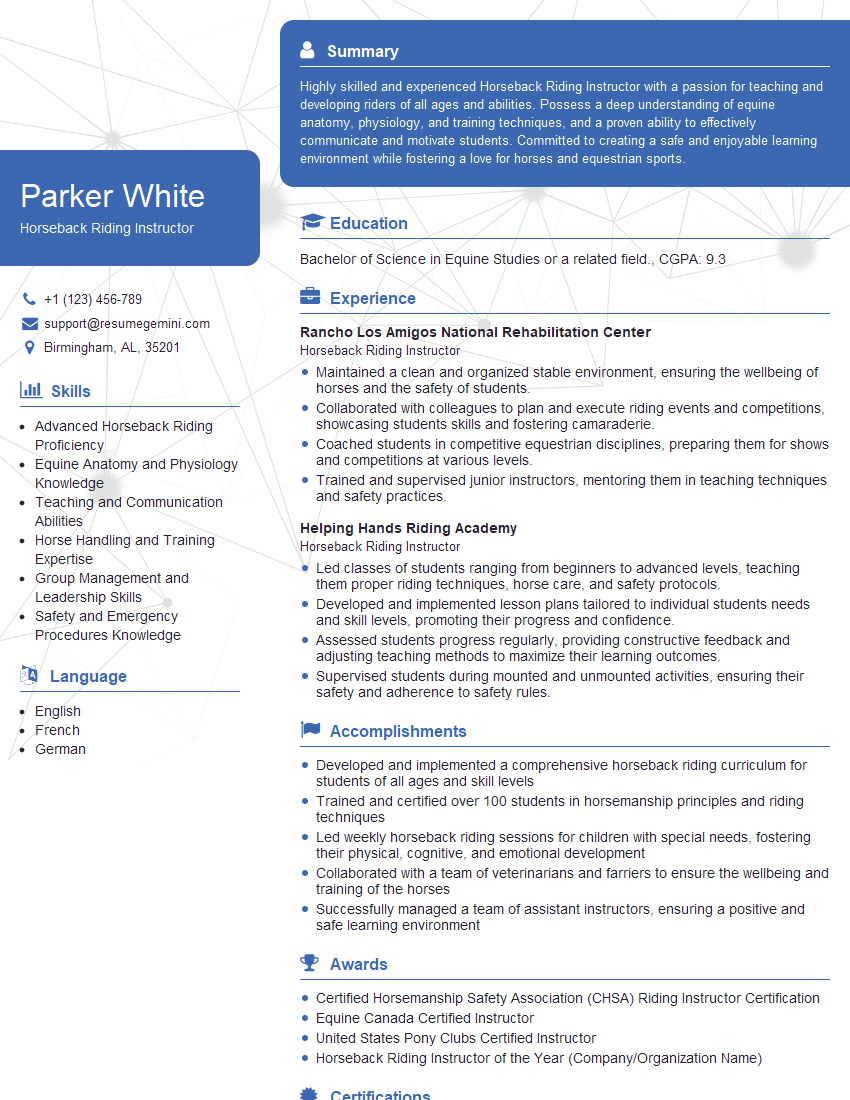
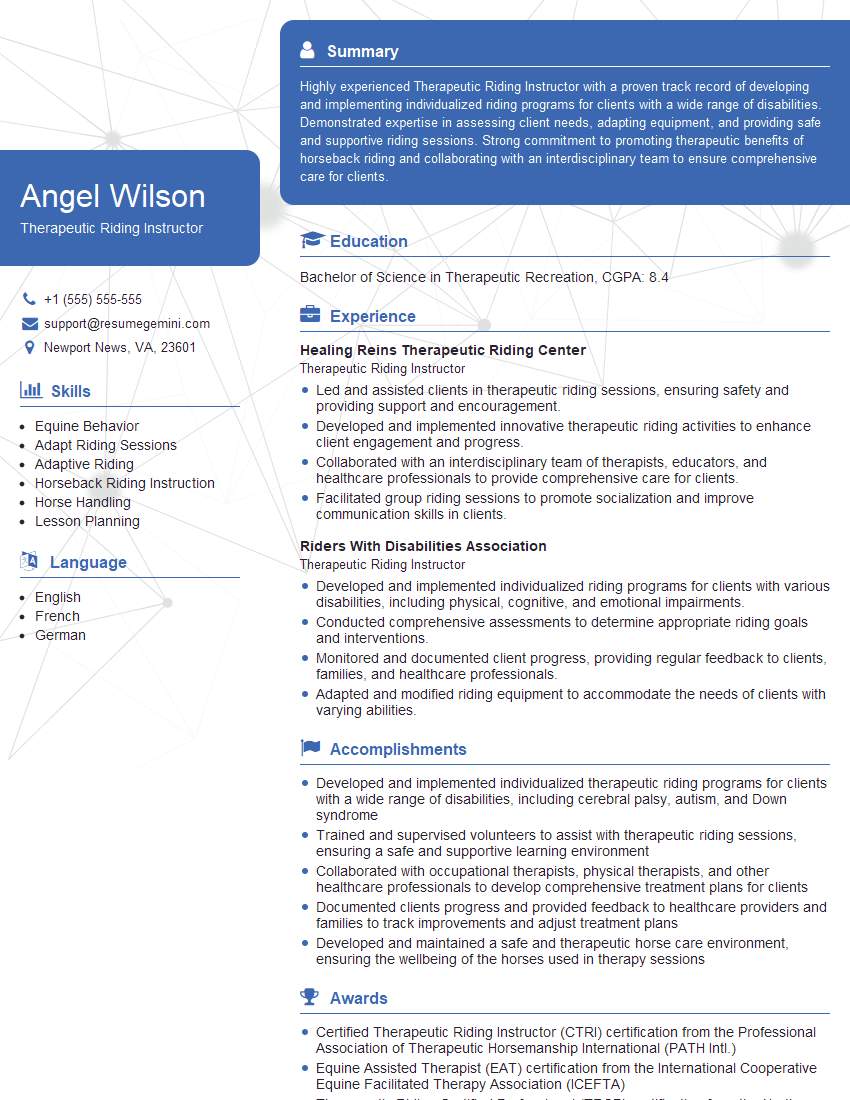
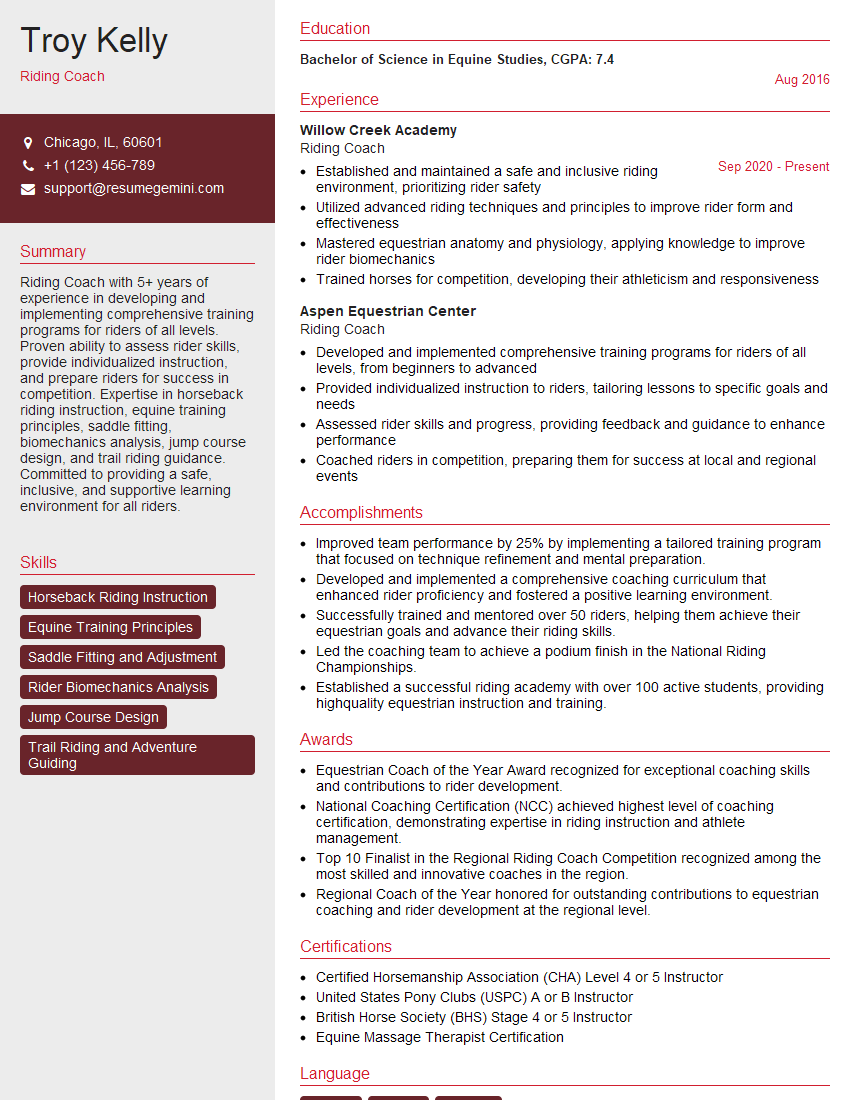
Mastering horseback riding and vaulting opens doors to diverse and rewarding career paths, from professional riding and vaulting to coaching, equine therapy, and stable management. To maximize your job prospects, creating a compelling and ATS-friendly resume is crucial. ResumeGemini is a trusted resource to help you build a professional resume that highlights your unique skills and experience. We provide examples of resumes tailored specifically to Horseback Riding and Vaulting to help you showcase your qualifications effectively.
Explore more articles
Users Rating of Our Blogs
Share Your Experience
We value your feedback! Please rate our content and share your thoughts (optional).
What Readers Say About Our Blog
Very informative content, great job.
good