Cracking a skill-specific interview, like one for Lessons Learned Analysis, requires understanding the nuances of the role. In this blog, we present the questions you’re most likely to encounter, along with insights into how to answer them effectively. Let’s ensure you’re ready to make a strong impression.
Questions Asked in Lessons Learned Analysis Interview
Q 1. Describe your experience in facilitating Lessons Learned sessions.
Facilitating Lessons Learned sessions is about more than just gathering information; it’s about creating a safe and productive environment where team members openly share experiences, both positive and negative. My approach involves careful planning and execution. I begin by establishing clear objectives for the session, ensuring everyone understands the purpose and expected outcomes. This includes defining the scope of the project or event being reviewed. I then select participants strategically, including representatives from different roles and levels of the organization to gain diverse perspectives. The session itself is structured with a combination of techniques: guided discussions using pre-prepared questions, brainstorming activities to uncover hidden insights, and potentially even individual reflection exercises prior to the group meeting. I actively manage the discussion, ensuring all voices are heard, and employing active listening to uncover underlying issues. Finally, I meticulously document the key takeaways, ensuring action items are clearly assigned with responsible parties and deadlines. I’ve found that using visual aids like whiteboards or collaborative online tools can greatly enhance participation and clarity.
For example, in a recent project involving a software rollout, I facilitated a Lessons Learned session that uncovered a critical communication breakdown between the development and marketing teams. This resulted in the implementation of a new cross-functional communication protocol, preventing similar issues in future projects.
Q 2. Explain the difference between a root cause analysis and a lessons learned analysis.
While both root cause analysis (RCA) and lessons learned analysis (LLA) are crucial for improving performance, they have distinct focuses. RCA is a diagnostic process aimed at identifying the underlying cause of a specific problem or failure. Think of it as a detective investigating a crime scene – it’s focused on the ‘why’ of a single event. It employs techniques like the ‘5 Whys’ or fishbone diagrams to drill down to the root cause. On the other hand, LLA takes a broader perspective. It examines an entire project, process, or event – successes and failures alike – to identify what worked well, what didn’t, and what could be improved in future endeavors. It’s less about dissecting a single problem and more about drawing generalizable insights and recommendations for future improvement. LLA often incorporates the findings from RCAs, but it also considers factors beyond the scope of a single incident.
Imagine building a house: RCA would focus on fixing a specific crack in the wall (identifying the cause of the crack), while LLA would look at the overall construction process, learning from both successes (e.g., efficient plumbing) and failures (e.g., the wall crack) to build better houses in the future.
Q 3. What methodologies are you familiar with for conducting Lessons Learned reviews?
I’m proficient in several methodologies for conducting Lessons Learned reviews. These include:
- Structured Interviews: This approach involves conducting one-on-one interviews with key stakeholders using a pre-defined set of questions to ensure consistency and capture diverse perspectives.
- Group Workshops/Facilitated Discussions: These interactive sessions leverage the collective knowledge of the team to identify and discuss lessons learned. Techniques like brainstorming and nominal group technique can be employed.
- After-Action Reviews (AARs): A structured, informal process commonly used in military and other high-risk environments to identify what went well, what went poorly, and what could be improved. It emphasizes a non-blaming, collaborative atmosphere.
- SWOT Analysis: A technique used to identify the Strengths, Weaknesses, Opportunities, and Threats related to the project or event. This helps contextualize the lessons learned within a broader strategic framework.
- Process Mapping and Flowcharts: Visually representing the processes involved allows for easier identification of bottlenecks, inefficiencies, and areas for improvement.
The choice of methodology often depends on the context, available resources, and the complexity of the project.
Q 4. How do you ensure participation and honest feedback during Lessons Learned sessions?
Ensuring participation and honest feedback requires building trust and creating a psychologically safe environment. This starts with careful planning and communication. I make it clear that the purpose of the session is improvement, not blame. Anonymity can be offered for sensitive topics, although I generally find that open dialogue fosters more valuable insights. I actively use facilitation techniques to encourage participation from quieter members, such as round-robin questioning or using breakout groups for smaller discussions. I emphasize the importance of constructive feedback and actively manage any negative or disruptive behavior. Leading by example, I share my own experiences and vulnerabilities to build rapport and demonstrate openness. Finally, I assure all participants that their contributions will be valued and used to improve future projects. The use of a pre-session survey to gather initial input can also help to facilitate a more productive discussion.
Q 5. How do you prioritize lessons learned and determine which require immediate action?
Prioritizing lessons learned involves a multi-step process. First, I categorize them based on impact (high, medium, low) and urgency (immediate, short-term, long-term). This involves considering potential risks, costs, and benefits associated with each lesson. A simple prioritization matrix can be extremely helpful. High-impact, immediate-action items are prioritized first. Next, I use a combination of qualitative and quantitative analysis to refine the list. Qualitative analysis focuses on the severity of the problem and the potential for future occurrence; quantitative analysis might involve looking at financial losses or other measurable metrics. Finally, a collaborative decision-making process involving stakeholders helps to determine the final priority order. The goal is to focus efforts on issues that will have the most significant positive impact, while still addressing important longer-term issues.
Q 6. How do you translate lessons learned into actionable recommendations?
Translating lessons learned into actionable recommendations requires clear, concise, and specific statements. Each lesson learned should be followed by a concrete recommendation that addresses the identified issue. The recommendations should be SMART – Specific, Measurable, Achievable, Relevant, and Time-bound. For example, instead of saying “Improve communication,” a better recommendation would be “Implement a weekly cross-functional meeting with representatives from development and marketing to review project progress and address any communication gaps by Friday of each week.” I also ensure that the recommendations are assigned to specific individuals or teams with clear deadlines and accountabilities. This often involves creating a formal action plan that is communicated widely and tracked for progress. Regular follow-up is critical to ensure the recommendations are implemented and their effectiveness is evaluated.
Q 7. Describe a time you identified a critical lesson learned that prevented a future problem.
During a large-scale system migration project, our Lessons Learned session revealed a significant gap in our disaster recovery plan. While the migration itself went smoothly, we discovered that our backup and restore procedures were insufficient to handle a complete system failure. This was initially overlooked due to the successful migration. The identified lesson learned was the critical need for more robust disaster recovery protocols, including offsite data backups and regular testing of recovery procedures. As a direct result, we implemented a completely revised disaster recovery plan that included rigorous testing and automation. This prevented a potential catastrophic system failure during a subsequent scheduled maintenance update six months later, avoiding significant financial losses and service disruptions. The thoroughness of the new disaster recovery plan meant that the downtime caused by this maintenance was less than 10% of what we would have expected without our changes, preventing a critical incident from impacting the end-user.
Q 8. How do you ensure lessons learned are effectively communicated and implemented?
Effective communication and implementation of lessons learned are crucial for organizational improvement. It’s not enough to simply identify lessons; they must be disseminated to the right people and integrated into workflows. I approach this using a multi-pronged strategy.
- Targeted Communication Channels: Instead of a generic email blast, I tailor the communication to the audience. For instance, technical lessons might be shared via internal wikis or knowledge bases accessible to engineering teams, while high-level strategic lessons are communicated in project review meetings or executive summaries.
- Actionable Steps: Lessons learned shouldn’t be abstract statements. They need to be concrete, including specific recommendations for improvement. For example, instead of ‘improve communication,’ a lesson might be ‘Implement daily stand-up meetings to enhance project transparency.’ I always include clear action items and responsible parties.
- Feedback Loops and Monitoring: I establish mechanisms for tracking the implementation of lessons learned and gathering feedback. This could be through regular check-ins, surveys, or performance reviews. This cyclical process ensures accountability and allows for adjustments as needed. A simple tracking sheet or project management tool is effective here.
- Storytelling: People connect more easily with narratives. I often weave lessons learned into case studies or short anecdotes to make them more engaging and memorable. This helps prevent information from becoming dry and overly technical.
For example, in a recent project where we experienced significant delays due to inadequate resource allocation, the lesson learned wasn’t just ‘better resource allocation,’ but a specific recommendation to use a particular resource planning tool and update resource estimates weekly. This actionable step, coupled with clear communication, resulted in a 20% improvement in resource utilization on a subsequent project.
Q 9. What metrics do you use to measure the effectiveness of a Lessons Learned program?
Measuring the effectiveness of a Lessons Learned program requires a balanced approach, combining qualitative and quantitative metrics. Simply counting the number of lessons identified isn’t sufficient; we must assess their impact.
- Reduction in Re-occurring Issues: Tracking the frequency of similar problems in subsequent projects is a key indicator. A significant decrease suggests effective implementation.
- Improved Project Performance: This could be measured by comparing metrics like on-time delivery, budget adherence, and customer satisfaction across projects before and after implementing lessons learned. For example, calculating the variance in project completion time against the baseline can show improvement.
- Stakeholder Satisfaction: Surveys or feedback sessions can gauge the perceived value of the Lessons Learned program among team members, project managers, and clients.
- Knowledge Base Growth: Monitoring the usage and contribution to the centralized repository of lessons learned shows whether it’s a valuable resource.
- Qualitative Feedback: Gathering feedback from participants on the effectiveness and value of the process itself is vital. This helps to identify any issues with the methodology or implementation.
To quantify these, I often use dashboards or reports to visualize trends. For instance, a simple graph showing the reduction in the number of critical project issues year-over-year is compelling evidence of the program’s impact.
Q 10. How do you handle resistance to participating in Lessons Learned activities?
Resistance to Lessons Learned activities often stems from perceptions of added workload, lack of perceived value, or fear of blame. Addressing these concerns is crucial for successful participation.
- Demonstrate Value: Highlighting past successes attributed to implemented lessons learned helps showcase the program’s value proposition. Sharing quantifiable results is especially convincing.
- Streamline the Process: Make the process as efficient and user-friendly as possible. Use simple, intuitive tools and avoid lengthy, cumbersome forms. A short, focused session is better than a lengthy, drawn-out process.
- Foster a Culture of Safety: Emphasize that Lessons Learned is not a blame-game but a collaborative effort to improve. Focus on learning from mistakes rather than assigning fault.
- Incentivize Participation: Recognize and reward contributions to the Lessons Learned program. This could be through formal recognition, team celebrations, or professional development opportunities.
- Leadership Buy-in: Secure support from project leaders and senior management to ensure the process is prioritized and valued. This sets the tone for the entire team.
In one instance, I encountered resistance due to time constraints. To overcome this, I implemented a quick, informal post-project debrief session during the final team meeting, making it a natural part of the project closure rather than an added task. This significantly increased participation.
Q 11. Describe your experience with different data collection methods for Lessons Learned.
Data collection for lessons learned should be diverse, utilizing methods suited to the context and information needed. A single method rarely captures the full picture.
- Interviews: One-on-one interviews provide rich qualitative data and allow for in-depth exploration of specific issues. Structured interview guides ensure consistency.
- Surveys: Anonymous surveys gather broader feedback efficiently and can reach a larger number of stakeholders. However, responses might lack depth.
- Focus Groups: Focus groups combine aspects of interviews and surveys, fostering discussion and collaboration among participants. However, they can be time-consuming and challenging to facilitate.
- Document Review: Analyzing project documentation, such as meeting minutes, emails, and reports, can uncover valuable information that might be missed in direct feedback.
- Observations: Direct observation of project activities can provide valuable insights into workflow processes and potential bottlenecks, but requires careful planning and ethical considerations.
For a recent project, I used a combination of post-project surveys and facilitated focus groups. The surveys collected high-level feedback on project success and areas for improvement, while focus groups provided deeper insights into the reasons behind specific challenges.
Q 12. How do you document lessons learned to ensure they are easily accessible and understandable?
Effective documentation is crucial for making lessons learned accessible and usable. The goal is to create a knowledge base that is easily searchable, understandable, and readily applicable to future projects.
- Centralized Repository: A dedicated repository, like a shared drive, wiki, or knowledge management system, is essential for organizing lessons learned. Consider using a consistent naming convention and metadata tagging.
- Structured Format: Using a template that includes sections for project context, issues encountered, root causes, lessons learned, and recommended actions ensures consistency and clarity.
- Clear and Concise Language: Avoid jargon and technical terms when possible. Use simple, direct language that is easily understood by everyone.
- Visual Aids: Use charts, graphs, and other visual aids to summarize key findings and make information more digestible. Pictures or screenshots can be useful to illustrate points.
- Regular Updates and Maintenance: The repository should be regularly updated with new lessons learned and reviewed for accuracy and relevance. Obsolete information should be archived or removed.
I’ve found that using a wiki platform is particularly beneficial, as it allows for collaborative editing, version control, and easy searching. This ensures that the repository remains a dynamic and current resource.
Q 13. How do you deal with conflicting accounts or perspectives during a Lessons Learned review?
Conflicting accounts are inevitable in any Lessons Learned review. The key is to facilitate a constructive dialogue that leads to a shared understanding.
- Facilitate Open Communication: Create a safe space where participants feel comfortable sharing their perspectives without fear of judgment. Active listening is critical.
- Neutral Facilitation: The facilitator’s role is to guide the discussion, ensure everyone is heard, and manage conflicts constructively. Avoiding taking sides is crucial.
- Document All Perspectives: Record all perspectives, even those in conflict, to ensure a comprehensive understanding of the situation. This allows for a balanced view of events.
- Seek Common Ground: Focus on identifying areas of agreement and shared understanding. Even when details are disputed, there are often common themes underlying the conflicting accounts.
- Data-Driven Analysis: Use data and evidence to support claims and help resolve discrepancies. Project metrics, timelines, and other records can provide objectivity.
In one case, two team members had vastly different recollections of a critical decision. By reviewing project documentation and minutes from relevant meetings, we were able to reconcile their accounts and identify the root cause of the discrepancy – a lack of clear communication at a crucial juncture.
Q 14. How do you ensure lessons learned are incorporated into future projects or processes?
Integrating lessons learned into future projects and processes requires proactive measures to ensure they aren’t simply forgotten.
- Project Planning Phase: Incorporate lessons learned into the initial planning stages of new projects. Use them to refine risk assessments, resource allocation, and project timelines.
- Process Improvement Initiatives: Use lessons learned to inform process improvements across the organization. This may involve changes to standard operating procedures, templates, or training programs.
- Training and Development: Incorporate lessons learned into training materials for new employees and ongoing professional development programs. This ensures that knowledge is transferred and institutionalized.
- Regular Reviews and Audits: Conduct periodic reviews to ensure lessons learned are being applied effectively and update the repository as needed.
- Automated Tools and Systems: Integrate lessons learned into project management software or other automated systems to facilitate their access and application.
For instance, after a project faced delays due to inadequate testing, we updated our project management methodology to include mandatory test plans and rigorous testing phases at each project milestone. This change was incorporated into our company’s project management training materials and became standard practice across all new projects.
Q 15. What software or tools have you used to manage and track lessons learned?
Throughout my career, I’ve utilized a variety of software and tools for managing and tracking lessons learned, adapting my approach based on project needs and organizational infrastructure. For smaller projects or informal reviews, I’ve successfully used simple shared spreadsheets – think Google Sheets – to document key insights, assigning categories like ‘Problem,’ ‘Solution,’ and ‘Impact.’ This allows for easy collaboration and visibility. For larger, more complex projects, I’ve leveraged dedicated project management software like Jira or Asana. These platforms allow for more structured tracking, integration with other project documentation, and enhanced reporting features. In some cases, I’ve even used specialized lessons learned databases or knowledge management systems that are tailored to capture, organize, and disseminate this valuable information across the organization.
For example, on a recent large-scale software implementation, we used Jira to create specific issues for each lesson learned, linking them to relevant project tasks and milestones. This ensured that lessons were easily accessible and their impact on future projects was readily apparent. The key is choosing a tool that aligns with the scale and complexity of the project and the organizational maturity in managing lessons learned.
Career Expert Tips:
- Ace those interviews! Prepare effectively by reviewing the Top 50 Most Common Interview Questions on ResumeGemini.
- Navigate your job search with confidence! Explore a wide range of Career Tips on ResumeGemini. Learn about common challenges and recommendations to overcome them.
- Craft the perfect resume! Master the Art of Resume Writing with ResumeGemini’s guide. Showcase your unique qualifications and achievements effectively.
- Don’t miss out on holiday savings! Build your dream resume with ResumeGemini’s ATS optimized templates.
Q 16. How do you ensure the confidentiality and sensitivity of information gathered during Lessons Learned reviews?
Confidentiality and sensitivity are paramount when handling lessons learned data. My approach always prioritizes data security and ethical considerations. Before any review begins, I clearly outline the purpose of the review, the intended use of the gathered information, and the confidentiality protocols. This usually includes a signed agreement outlining non-disclosure, particularly for sensitive topics such as performance issues or potential risks. We typically use anonymization techniques to protect individuals, avoiding the use of names and focusing on behaviors or events. All collected data is stored securely, often using password-protected documents and secure cloud storage. Access is strictly controlled, limited only to relevant stakeholders and those directly involved in the review process. Furthermore, regular audits of the collected data and adherence to organizational guidelines regarding data privacy are essential parts of maintaining confidentiality.
For instance, during a post-project review of a product launch, we replaced names with coded identifiers while preserving the essence of the issues raised. This approach preserved the integrity of the feedback while protecting the confidentiality of those involved.
Q 17. Describe your experience with facilitating after-action reviews (AARs).
I have extensive experience facilitating After-Action Reviews (AARs), employing a structured approach to ensure effective learning and actionable outcomes. My approach starts with clear objectives – identifying what we want to learn and what actions we intend to take as a result. I use a neutral and supportive facilitation style, creating a safe space for open and honest discussion. I employ techniques like structured brainstorming and root cause analysis to uncover the underlying causes of successes and failures. Active listening is crucial, ensuring that all participants feel heard and their perspectives are valued. During the AAR, we document key findings, action items, and assigned owners, following up on these items after the meeting to ensure accountability. The final step involves disseminating the key lessons learned throughout the organization in a timely manner, often via reports or presentations.
In one particular AAR for a crisis management incident, the structured approach enabled us to identify several critical weaknesses in our communication protocols. This resulted in the development of new, more efficient emergency communication procedures, directly improving our response capabilities.
Q 18. What are some common barriers to effective Lessons Learned processes, and how do you overcome them?
Several common barriers impede effective lessons learned processes. Time constraints are frequent – teams are often under pressure to move on to the next project without taking the time for proper reflection. Lack of organizational buy-in can also be detrimental; if the importance of lessons learned isn’t communicated and valued at all levels, participation will be weak. Fear of blame or retribution prevents individuals from honestly sharing their experiences. Finally, poor documentation and knowledge sharing systems can lead to the loss of valuable lessons.
To overcome these challenges, I prioritize proactive planning, integrating lessons learned activities into project timelines from the outset. I champion a culture of psychological safety, emphasizing that lessons learned are opportunities for growth, not blame. I utilize effective communication strategies to clearly demonstrate the value of the process and actively involve leadership. I employ efficient documentation and knowledge management systems to ensure lessons learned are easily accessible and readily applied to future projects.
Q 19. How do you adapt your Lessons Learned approach to different project types or organizational cultures?
Adaptability is key. My approach to lessons learned varies depending on the project type and organizational culture. For example, agile projects benefit from iterative reviews and continuous feedback loops. In contrast, waterfall projects may require more formal post-project reviews. Organizational culture also plays a significant role; some cultures are more open and receptive to feedback than others. In more hierarchical structures, I may need to tailor my approach to ensure buy-in from senior management and ensure that feedback reaches all levels.
In one instance, working with a highly bureaucratic organization, I adjusted my communication style to be more formal and ensured that reports were carefully reviewed and approved by senior leadership. In contrast, a more agile organization allowed for more informal discussions and iterative feedback loops, enabling quicker learning and adaptation.
Q 20. How do you measure the impact of implemented lessons learned?
Measuring the impact of implemented lessons learned requires a strategic approach. I use a combination of quantitative and qualitative methods. Quantitative measures might include analyzing project metrics such as cost overruns, schedule delays, or defect rates before and after the implementation of lessons learned. A reduction in these metrics suggests a positive impact. Qualitative measures can involve surveying stakeholders to gauge their perception of improvements or conducting interviews to understand how the lessons learned have influenced project processes and outcomes. I also look at the frequency of recurrence of similar problems, a decrease indicating successful implementation.
For example, after implementing a lesson learned from a previous project about improving communication across teams, we saw a 20% reduction in project rework, a clear indicator of a positive impact. This was further validated by positive feedback from project team members about improved collaboration.
Q 21. What is your experience with different types of bias in Lessons Learned data?
Various biases can skew Lessons Learned data. Confirmation bias, where individuals selectively seek information that confirms their pre-existing beliefs, is a common issue. This can lead to overlooking alternative explanations for project outcomes. Survivorship bias, focusing solely on successful projects and ignoring failures, presents another challenge, providing an incomplete picture. Attribution bias, where individuals attribute success to their own actions and failures to external factors, is another concern. Finally, recency bias might overemphasize recent events and undervalue lessons from past experiences.
To mitigate these biases, I use techniques like structured questionnaires to minimize subjective interpretations, involve a diverse group of stakeholders in the review process to gain multiple perspectives, encourage critical self-reflection, and conduct thorough root cause analysis to explore all possible contributing factors. Regularly revisiting past lessons learned and updating them based on new information also helps to keep the analysis relevant and unbiased.
Q 22. How do you handle situations where lessons learned are not readily apparent?
Sometimes, identifying lessons learned isn’t straightforward. It requires a structured approach to uncover hidden insights. Instead of relying solely on obvious successes or failures, I use several techniques. First, I facilitate structured brainstorming sessions, employing methods like ‘Plus/Delta’ (what went well/what could be improved) or ‘SWOT’ analysis (Strengths, Weaknesses, Opportunities, Threats). These help uncover less obvious learnings. Secondly, I analyze project data – timelines, budgets, risk logs – for trends and anomalies that might indicate underlying issues. Finally, I conduct individual interviews with key stakeholders, encouraging open and honest feedback, even if it points to shortcomings. A careful review of the project’s communication flow can often uncover critical elements that were missed or miscommunicated. This multi-faceted approach ensures a thorough examination, leading to a more complete understanding of what went well and what needs improvement, even in seemingly successful projects.
Q 23. How do you ensure that lessons learned are not just documented, but actually implemented?
Documenting lessons learned is only half the battle; implementation is crucial. I employ a three-pronged strategy to ensure action. Firstly, lessons are translated into clear, actionable recommendations, avoiding vague statements. For example, instead of ‘improve communication,’ a recommendation might be ‘Implement a weekly project status meeting with clearly defined agendas and action items.’ Secondly, these recommendations are assigned to specific individuals with clear deadlines and accountability. I create a tracking system—a simple spreadsheet often suffices—to monitor progress. Finally, I ensure that the lessons learned are integrated into project management templates, training materials, and organizational knowledge bases. This creates a feedback loop, making the learning readily accessible for future projects and embedding it into the organizational culture. Regular reviews and follow-ups are key to ensuring sustained implementation.
Q 24. Describe a time when a lessons learned exercise significantly improved project outcomes.
During a large-scale software implementation project, we experienced significant delays due to insufficient upfront requirements gathering. The initial lessons learned session identified this as a major contributing factor. In the post-project review, this wasn’t just discussed; we documented the specific areas where requirements were incomplete and the resulting issues. We even quantified the cost overruns associated with these shortcomings. For the next phase of the project, we implemented a comprehensive requirements gathering process, involving user workshops and prototyping. This proactive approach significantly reduced ambiguity and resulted in a 25% reduction in development time and a 15% decrease in budget overruns. This demonstrated the direct impact of proactively using lessons learned to improve future project outcomes.
Q 25. How do you stay current with best practices and new techniques in lessons learned analysis?
Staying updated in Lessons Learned analysis requires a multi-pronged approach. I actively participate in professional organizations like PMI (Project Management Institute) and attend conferences and workshops focused on project management and organizational learning. I regularly read industry publications and journals to stay abreast of new methodologies and best practices. Furthermore, I actively seek feedback from peers and mentors, engaging in discussions about their experiences and challenges. Finally, I regularly review and update my personal library of resources on lessons learned, including books, articles, and online courses, ensuring my knowledge remains current and relevant. This continuous learning ensures that I remain at the forefront of the field.
Q 26. What is your preferred method for presenting lessons learned to stakeholders?
My preferred method for presenting lessons learned is a concise, visually engaging report that balances detail with accessibility. I start with a brief executive summary highlighting key findings and recommendations. This is followed by a more detailed analysis, using charts and graphs to visualize data. I avoid overwhelming stakeholders with lengthy text; instead, I use storytelling to connect the lessons learned to real-world project experiences. The report includes actionable recommendations with clear owners and timelines. Finally, I always conclude with a Q&A session, allowing stakeholders to engage in open discussion and clarify any uncertainties. This approach ensures effective communication and encourages buy-in.
Q 27. Describe your experience using a specific lessons learned framework (e.g., A3, 5 Whys).
I have extensive experience using the ‘5 Whys’ technique. This iterative interrogative approach helps drill down to the root cause of a problem. For example, if a project was delayed due to missed deadlines, the 5 Whys might unfold like this:
- Why was the project delayed? Because a key deliverable was late.
- Why was the deliverable late? Because the subcontractor experienced unforeseen challenges.
- Why did the subcontractor experience challenges? Because of insufficient communication regarding requirements.
- Why was communication insufficient? Because the initial contract lacked clarity.
- Why was the contract unclear? Because the requirements gathering process was inadequate.
Q 28. How do you integrate lessons learned into organizational knowledge management systems?
Integrating lessons learned into organizational knowledge management systems is vital for long-term improvement. I ensure that lessons learned are not only documented but also categorized, tagged, and indexed appropriately within the organizational knowledge base. This could be a shared drive, a wiki, or a dedicated knowledge management system. To enhance searchability and accessibility, I use relevant keywords and metadata. Furthermore, I advocate for regular audits of the knowledge base to ensure its accuracy and relevance. I also encourage the use of visual aids like flowcharts or mind maps to enhance understanding and retention. By making the knowledge easily accessible, searchable, and relevant, I facilitate knowledge sharing and the avoidance of repeating past mistakes.
Key Topics to Learn for Lessons Learned Analysis Interview
- Defining Lessons Learned: Understanding the purpose and scope of Lessons Learned Analysis, differentiating it from other post-project reviews.
- Data Collection Methods: Exploring various techniques for gathering information, including interviews, surveys, document reviews, and data analysis.
- Qualitative & Quantitative Analysis: Mastering the art of analyzing both qualitative (e.g., feedback, observations) and quantitative (e.g., metrics, data) data to identify trends and patterns.
- Root Cause Analysis Techniques: Familiarizing yourself with methods like the “5 Whys,” fishbone diagrams, and fault tree analysis to pinpoint the underlying causes of successes and failures.
- Reporting and Communication: Learning how to effectively communicate findings through concise and impactful reports, presentations, and recommendations for future projects.
- Practical Application in Project Management: Understanding how Lessons Learned Analysis improves project planning, risk management, and overall organizational learning.
- Bias Mitigation Strategies: Recognizing and addressing potential biases in data collection and analysis to ensure objective conclusions.
- Implementing Recommendations: Developing actionable recommendations and strategies to prevent past mistakes and leverage past successes in future endeavors.
- Lessons Learned Software & Tools: Familiarity with common software and tools used to facilitate Lessons Learned analysis (mentioning specific tools is avoided to allow for broader preparation).
Next Steps
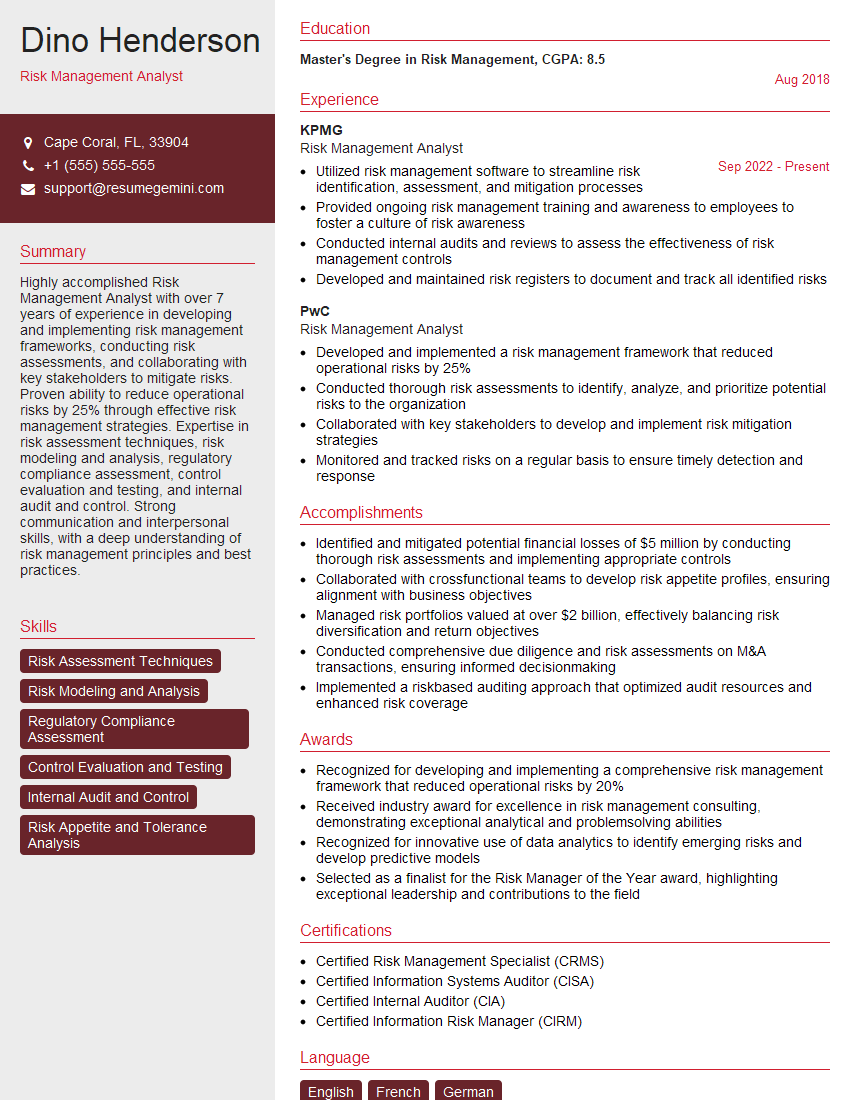
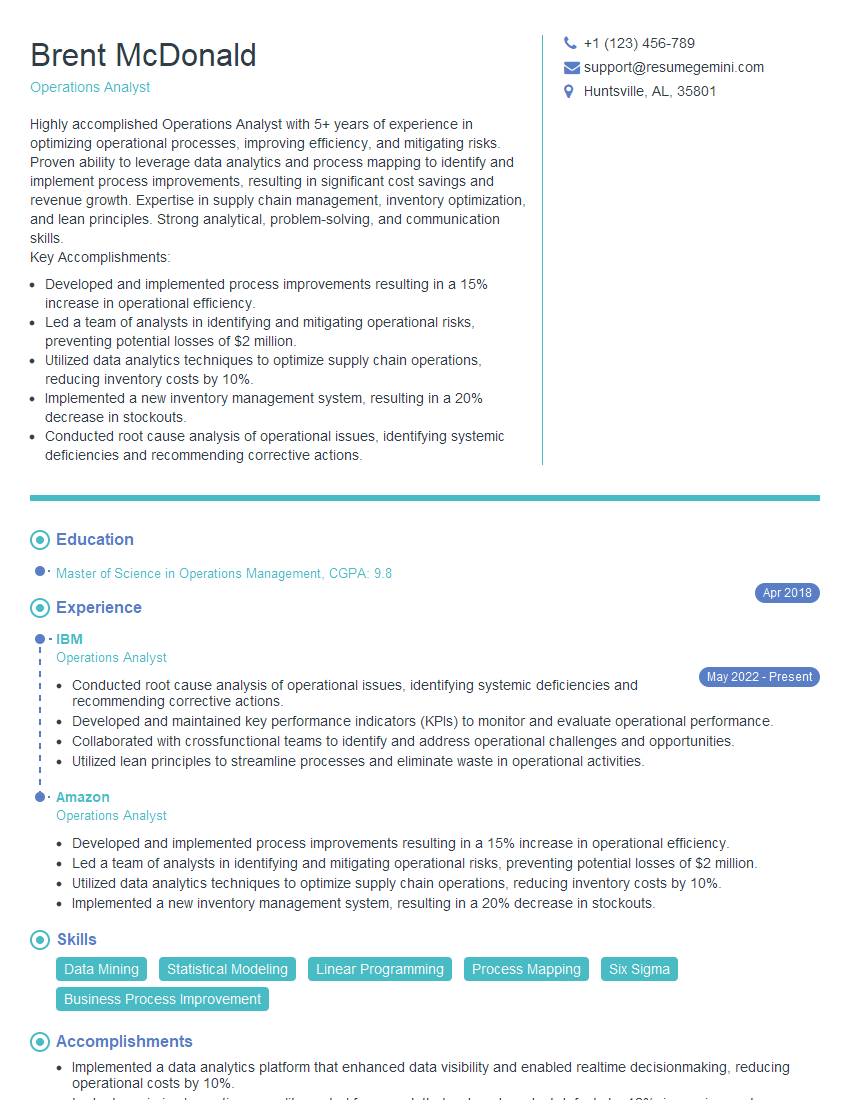
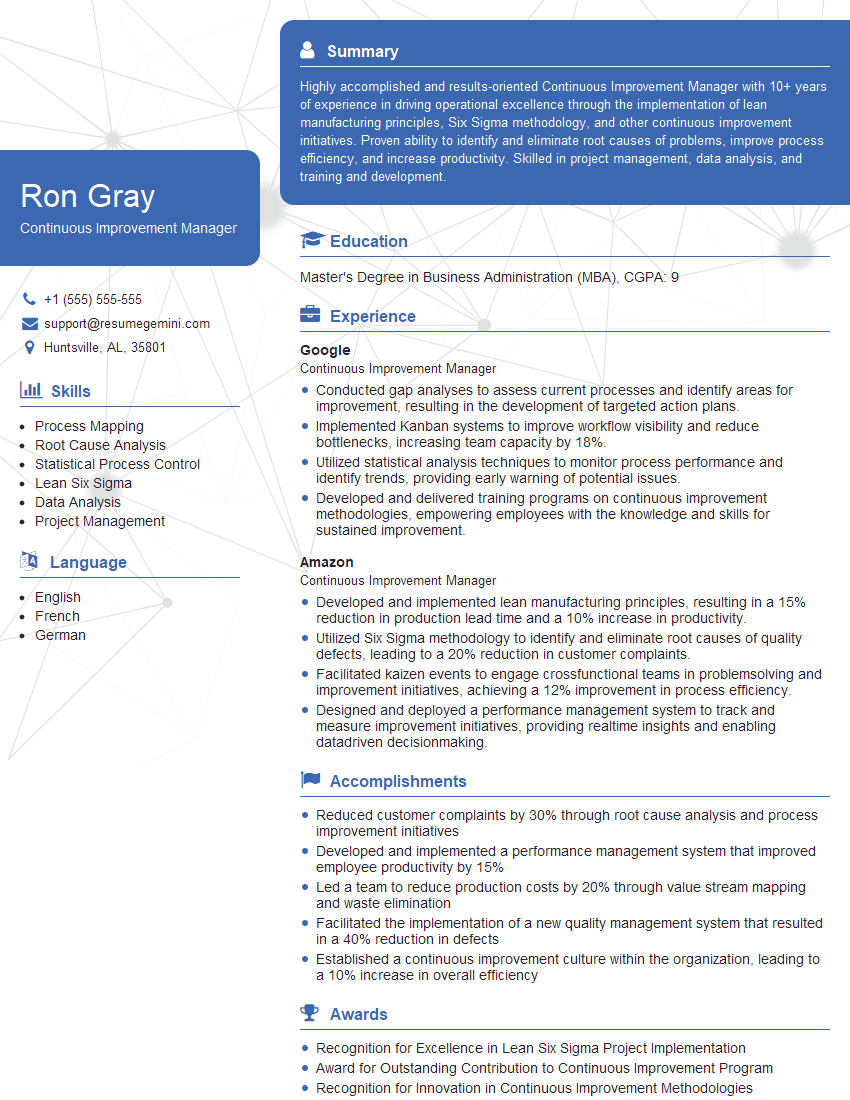
Mastering Lessons Learned Analysis significantly enhances your value to any organization. It demonstrates your ability to learn from past experiences, contribute to continuous improvement, and drive positive change. To increase your chances of landing your dream role, crafting an ATS-friendly resume is crucial. This ensures your qualifications are effectively highlighted to hiring managers. ResumeGemini can help you build a compelling resume that showcases your skills and experience in Lessons Learned Analysis. They provide examples of resumes tailored to this specific field, giving you a head start in your job search. Take the next step and build a resume that stands out.
Explore more articles
Users Rating of Our Blogs
Share Your Experience
We value your feedback! Please rate our content and share your thoughts (optional).
What Readers Say About Our Blog
Very informative content, great job.
good