The thought of an interview can be nerve-wracking, but the right preparation can make all the difference. Explore this comprehensive guide to Lifelong Learning Skills interview questions and gain the confidence you need to showcase your abilities and secure the role.
Questions Asked in Lifelong Learning Skills Interview
Q 1. Describe your approach to identifying your learning needs.
Identifying my learning needs is a continuous process that involves a combination of self-assessment, feedback, and observation. I begin with self-reflection, honestly evaluating my strengths and weaknesses in relation to my current role and aspirations. This might involve using tools like SWOT analysis (Strengths, Weaknesses, Opportunities, Threats) or simply journaling about my recent projects and identifying areas where I felt challenged or lacked proficiency.
Next, I actively seek feedback from colleagues, supervisors, and even clients. Constructive criticism, whether positive or negative, provides valuable insights into areas for improvement. Finally, I observe industry trends and best practices. Reading industry publications, attending conferences, and networking with peers helps me identify emerging skills and technologies that I need to acquire to stay competitive.
For example, if feedback consistently highlights a weakness in data visualization, I would identify that as a key learning need and focus my efforts on improving my skills in that area.
Q 2. How do you prioritize learning goals within time constraints?
Prioritizing learning goals under time constraints requires a strategic approach. I use a combination of techniques including the Eisenhower Matrix (Urgent/Important) to categorize my learning goals and the MoSCoW method (Must have, Should have, Could have, Won’t have) to prioritize them based on their impact.
The Eisenhower Matrix helps me identify urgent tasks that need immediate attention and important tasks that contribute to long-term success. I allocate time accordingly, making sure to dedicate time for important, yet not urgent, learning goals which often get neglected. The MoSCoW method further helps me refine the ‘important’ tasks by determining which are essential, beneficial, or can be deferred.
For instance, if I need to learn a new programming language (important, but not immediately urgent) and need to fix a bug in existing code (urgent and important), I’ll allocate time to the bug fix first, but still schedule dedicated time for learning the new language, perhaps through short, focused sessions.
Q 3. Explain a time you sought out learning resources independently.
Recently, I needed to improve my understanding of Agile methodologies beyond the basic Scrum framework. My company didn’t offer specific training on this topic, so I took the initiative to find resources independently. I started by searching for reputable online courses on platforms like Coursera and edX. I found a course on Agile project management that covered various methodologies, including Kanban and Lean.
The course provided structured learning with videos, quizzes, and assignments, allowing me to learn at my own pace. To solidify my understanding, I supplemented this with relevant books and articles from industry experts. I even joined an online community forum to discuss concepts and learn from others’ experiences. This independent learning significantly enhanced my understanding and helped me successfully implement Agile principles in a project, leading to improved team collaboration and project delivery.
Q 4. What strategies do you use to stay current in your field?
Staying current in my field demands a proactive approach. I employ a multi-faceted strategy that includes regularly reading industry publications (journals, blogs, newsletters), attending webinars and conferences, actively participating in online communities and forums, following influential figures on social media, and engaging in continuous learning through online courses and workshops.
I also actively seek opportunities to network with colleagues and experts in my field, attending industry events and engaging in professional development groups. This allows me to stay abreast of the latest trends, technologies, and best practices. For example, subscribing to industry-specific newsletters ensures I receive updates on new research, tools, and regulatory changes.
Q 5. Describe a recent skill you learned and how you applied it.
Recently, I learned to use advanced data analysis techniques in Python using the Pandas library. I was working on a project that required analyzing a large dataset, and my existing skills were insufficient. I enrolled in an online course focusing on Pandas and data manipulation. This course not only taught me the intricacies of the library, but also provided real-world examples of data cleaning, transformation, and analysis.
I applied this newfound knowledge immediately to my project. By using Pandas, I could efficiently clean the dataset, perform complex data manipulations, and generate insightful visualizations. This resulted in a more efficient and accurate analysis, leading to better-informed decisions and a more successful project outcome. The efficiency gains alone justified the time invested in learning this new skill.
Q 6. How do you evaluate the effectiveness of your learning methods?
Evaluating the effectiveness of my learning methods is crucial. I employ several strategies. Firstly, I regularly assess my progress against my initial learning goals. Do I possess the skills I set out to acquire? Have I reached the desired level of proficiency? I often use self-tests, quizzes, or practical application exercises to gauge my understanding.
Secondly, I seek feedback from colleagues or supervisors on my performance in tasks where I’ve applied my newly acquired skills. Their feedback provides valuable insights into whether my learning has translated into tangible improvements in my work. Finally, I analyze the outcomes of my projects or tasks. Did my enhanced skills lead to better results – improved efficiency, quality of work, or more innovative solutions?
Q 7. How do you adapt your learning style to different learning materials?
Adapting my learning style to different materials is vital for effective learning. I recognize that I’m not a one-size-fits-all learner and adjust my approach based on the material’s format and content. For example, if I’m working with a complex technical manual, I might use a more structured approach, highlighting key points, creating summaries, and practicing application through hands-on exercises.
Conversely, when engaging with a visually rich presentation or video, I might take more detailed notes, create visual aids to reinforce my understanding, and actively participate in any discussions or quizzes offered. I often find that combining different methods (e.g., reading a chapter, watching a related video, then practicing the concepts) enhances my retention and comprehension.
Q 8. What resources do you typically use for professional development?
My professional development relies on a multi-faceted approach. I actively seek out high-quality resources tailored to my needs and career goals. This includes:
Online Courses and Platforms: Platforms like Coursera, edX, and LinkedIn Learning offer structured courses covering a wide array of topics. I specifically look for courses with high ratings and practical applications.
Conferences and Workshops: Attending industry conferences allows me to network with peers and experts, stay abreast of the latest trends, and learn from leading practitioners. I prioritize conferences with hands-on workshops to reinforce learning.
Books and Articles: I regularly read books and peer-reviewed articles in relevant journals to deepen my knowledge and explore emerging research in the field of lifelong learning. I specifically target publications known for their rigor and practical insights.
Mentorship and Networking: Connecting with experienced professionals in my field provides valuable guidance and insights. I actively seek mentorship opportunities and participate in relevant professional networks.
Podcasts and Webinars: These formats offer a convenient and accessible way to learn about new developments and diverse perspectives in the field. I focus on those hosted by reputable organizations and experts.
Q 9. Explain your process for reflecting on your learning experiences.
Reflection is a crucial part of my learning process. I use a structured approach:
Immediate Reflection: After completing a learning activity (course, workshop, reading), I jot down key takeaways, areas of confusion, and potential applications to my work.
Delayed Reflection: A week or two later, I revisit my notes. This allows me to identify patterns, consolidate knowledge, and assess how well I retained the information.
Actionable Insights: I translate my reflections into actionable steps. This might involve applying a new technique, researching a topic further, or adjusting my approach to a task.
Journaling: Maintaining a learning journal helps me track my progress, identify recurring themes, and refine my learning strategies over time. I use it as a resource to refer back to for future professional development.
For example, after completing a course on instructional design, I reflected on the different learning theories covered, focusing on how to apply them in my work. This reflection led me to develop new training materials that were more engaging and effective.
Q 10. How do you overcome learning challenges or setbacks?
Learning is rarely linear; setbacks are inevitable. My approach focuses on resilience and adaptive learning:
Identify the Root Cause: First, I pinpoint what caused the setback. Was it a lack of understanding, insufficient practice, or external factors?
Seek Support: I don’t hesitate to reach out to mentors, colleagues, or online communities for help. Explaining the problem often helps clarify the issues.
Reframe the Setback: I try to view setbacks as opportunities for growth and learning. What can I learn from this experience?
Adjust my Approach: Based on my analysis, I adapt my learning strategy. This might involve seeking additional resources, breaking down complex tasks into smaller steps, or trying a different learning technique.
Practice and Persistence: I believe in the power of consistent effort. I persevere through challenges, focusing on incremental progress rather than perfection.
For instance, when struggling with a complex statistical analysis technique, I sought help from a statistician, broke down the problem into smaller parts, and practiced consistently, ultimately mastering the technique.
Q 11. How do you transfer knowledge gained from one area to another?
Transferring knowledge involves recognizing underlying principles and applying them in new contexts. My approach includes:
Identifying Core Concepts: I begin by extracting the fundamental principles and concepts from one area of knowledge.
Analogical Reasoning: I look for analogies or similarities between the original domain and the new one. How are the underlying principles applicable?
Adapting and Modifying: I adapt and modify the knowledge to fit the specific needs of the new domain. This often requires creativity and problem-solving skills.
Testing and Refinement: I test the transferred knowledge in the new context, iteratively refining my approach based on the results. This is a crucial step to ensure effective transfer.
For example, project management skills learned in software development were easily transferable to leading a team in a marketing campaign. The principles of planning, execution, and monitoring remained the same; the specific tasks simply changed.
Q 12. Describe your experience with different learning modalities (e.g., online, in-person).
I have extensive experience with various learning modalities. Each has its strengths and weaknesses:
In-Person Learning: This provides opportunities for direct interaction with instructors and peers, fostering collaboration and immediate feedback. However, it can be less flexible in terms of scheduling and location.
Online Learning: This offers unparalleled flexibility and accessibility, allowing me to learn at my own pace and schedule. However, self-discipline is crucial, and the lack of face-to-face interaction can be a drawback for some learners.
Blended Learning: This combines the best of both worlds, offering a flexible and interactive learning experience. For example, an online course supplemented with in-person workshops or study groups can be very effective.
I adapt my learning approach depending on the modality. For online courses, I create a structured study schedule and actively engage in discussion forums. For in-person learning, I actively participate in discussions and ask questions.
Q 13. What are some effective techniques for retaining information?
Effective information retention requires a multi-sensory and active approach:
Active Recall: Testing myself regularly through quizzes and practice questions strengthens memory significantly better than passive review.
Spaced Repetition: Reviewing material at increasing intervals improves long-term retention. Apps like Anki can help implement this strategy effectively.
Elaboration: Connecting new information to existing knowledge through examples, analogies, and personal experiences enhances understanding and memory.
Interleaving: Mixing up different topics during study sessions improves learning and retention compared to focusing on one topic at a time.
Teach Someone Else: Explaining concepts to others solidifies understanding and highlights areas needing further review.
Q 14. How do you identify and address knowledge gaps?
Identifying and addressing knowledge gaps is an ongoing process. My strategy involves:
Self-Assessment: I regularly assess my strengths and weaknesses through self-reflection, feedback from colleagues, and performance evaluations.
Gap Analysis: I compare my current knowledge and skills with the requirements of my role and future goals to pinpoint specific areas needing improvement.
Targeted Learning: Once identified, I develop a targeted learning plan to address those gaps, focusing on the most critical areas first. This might involve taking a course, reading relevant material, or seeking mentorship.
Continuous Monitoring: I regularly monitor my progress, adjusting my learning plan as needed to ensure effective closure of the knowledge gap.
For instance, if a performance review highlights a weakness in data visualization, I would research best practices, perhaps taking an online course or attending a workshop to improve my skills in this area.
Q 15. How do you manage information overload while learning new skills?
Information overload is a common challenge in lifelong learning. The key is to develop strategic filtering and processing techniques. Think of it like a gardener tending a garden – you can’t nurture every plant equally. You need to prioritize.
- Curate your sources: Identify reliable and relevant sources of information, and avoid getting bogged down in less credible or irrelevant content. This might involve unsubscribing from unnecessary newsletters, carefully selecting online courses, or prioritizing specific books or journals.
- Employ active learning techniques: Instead of passively consuming information, actively engage with it through note-taking, summarizing, teaching the material to someone else (the Feynman Technique), or creating flashcards. This makes the information more memorable and meaningful.
- Set clear learning goals: Defining specific, measurable, achievable, relevant, and time-bound (SMART) goals helps you focus your efforts and avoid feeling overwhelmed. For example, instead of aiming to ‘learn about AI’, set a goal like ‘understand the basics of machine learning algorithms by completing Coursera’s course X by [date]’.
- Schedule dedicated learning time: Treat learning like any other important appointment. Scheduling specific time slots prevents information from seeping into your leisure time and causing burnout.
- Regular breaks and reflection: Short breaks throughout your learning process can improve focus and retention. Regularly reflecting on what you’ve learned reinforces memory and reveals gaps in understanding.
For example, when learning Python, I focused on specific libraries relevant to my data analysis goals, instead of trying to master every aspect of the language at once.
Career Expert Tips:
- Ace those interviews! Prepare effectively by reviewing the Top 50 Most Common Interview Questions on ResumeGemini.
- Navigate your job search with confidence! Explore a wide range of Career Tips on ResumeGemini. Learn about common challenges and recommendations to overcome them.
- Craft the perfect resume! Master the Art of Resume Writing with ResumeGemini’s guide. Showcase your unique qualifications and achievements effectively.
- Don’t miss out on holiday savings! Build your dream resume with ResumeGemini’s ATS optimized templates.
Q 16. How do you measure your progress in achieving learning objectives?
Measuring progress in lifelong learning requires a multi-faceted approach. It’s not just about grades or certifications; it’s about demonstrable skill improvement.
- Self-assessment: Regularly assess your understanding through practice exercises, quizzes, or mock projects. Honest self-reflection is crucial.
- Objective metrics: When possible, use quantifiable measures. For example, if learning a programming language, track the number of lines of code you write, the number of projects completed, or the speed of task completion.
- Portfolio creation: Develop a portfolio showcasing your work – code samples, writing samples, project presentations, etc. This offers tangible evidence of your growth.
- Seek feedback: Request feedback from mentors, colleagues, or peers. Their input provides valuable external perspectives on your progress.
- Milestone setting: Break down larger learning objectives into smaller, achievable milestones. This provides a sense of accomplishment and keeps you motivated.
For instance, when mastering data visualization, I tracked my progress by creating a series of increasingly complex visualizations, seeking feedback on each one, and measuring my proficiency by the time taken to create them.
Q 17. Describe a situation where you had to learn a new skill quickly.
I once had to quickly learn the basics of Adobe After Effects for a video project with an impending deadline. I had minimal prior experience with video editing software.
My approach involved:
- Identifying core needs: I focused on learning only the features directly relevant to the project, rather than trying to master the entire software.
- Utilizing online resources: I leveraged YouTube tutorials and online documentation, specifically searching for solutions to immediate problems.
- Hands-on practice: I dedicated several hours daily to practicing specific effects and techniques, using the project as a learning framework.
- Seeking help when needed: I didn’t hesitate to ask for guidance from more experienced colleagues whenever I encountered roadblocks.
While the learning curve was steep, this focused approach enabled me to deliver the project successfully on time.
Q 18. What are your preferred methods for collaborating and learning from others?
I prefer collaborative learning methods that leverage diverse perspectives and expertise.
- Peer learning: I find working with others on projects or discussing concepts particularly effective. It helps identify blind spots and fosters deeper understanding.
- Mentorship: I value the opportunity to learn from experienced individuals. Their guidance and feedback accelerate my learning.
- Online communities: Engaging with online communities such as forums or discussion boards provides access to a broader range of expertise and perspectives.
- Knowledge sharing: I actively participate in knowledge-sharing activities – teaching others, presenting my work, or contributing to open-source projects. This reinforces my own learning and strengthens my collaborative skills.
For example, in a recent machine learning project, I collaborated with a team, each member specializing in different areas. The collaborative effort significantly improved the quality and efficiency of the project while enabling cross-pollination of knowledge.
Q 19. How do you maintain your motivation during long-term learning processes?
Maintaining motivation during long-term learning requires a structured approach.
- Setting realistic goals and timelines: Breaking down large objectives into manageable tasks prevents feeling overwhelmed.
- Celebrating small wins: Acknowledging and rewarding progress boosts morale and reinforces positive learning habits.
- Seeking accountability partners: Sharing your learning goals with others creates a sense of responsibility and encourages consistent effort.
- Finding learning buddies: Studying with others fosters motivation and provides opportunities for support and collaboration.
- Connecting learning to passion: Align your learning with your interests and aspirations to enhance intrinsic motivation.
- Varying learning methods: Avoid monotony by utilizing a diverse range of resources and learning techniques.
For example, when studying for a challenging certification, I rewarded myself with small treats after completing each study module, and shared my progress regularly with a friend who was pursuing a similar goal.
Q 20. How do you handle constructive criticism related to your learning?
Constructive criticism is essential for growth. I approach it with a growth mindset, viewing it as an opportunity to improve.
- Active listening: I carefully listen to the feedback, focusing on understanding the critic’s perspective.
- Seeking clarification: If something is unclear, I ask clarifying questions to ensure I fully grasp the feedback.
- Self-reflection: I evaluate the feedback objectively, identifying areas for improvement and acknowledging my strengths.
- Actionable steps: I develop a plan to address the criticism, outlining specific steps to improve.
- Seeking further feedback: After implementing changes, I actively seek feedback to assess the effectiveness of the improvements.
For instance, when receiving feedback on a data analysis report, I focused on understanding the specific areas requiring improvement, re-analyzed the data to address the concerns, and then presented the revised report for further review.
Q 21. How do you integrate new knowledge into your existing skillset?
Integrating new knowledge into existing skills involves creating meaningful connections and applying the new knowledge in practical contexts.
- Identifying overlaps and synergies: Look for connections between the new knowledge and your existing skillset. How can they complement each other?
- Practice and application: Actively apply the new knowledge to real-world problems or projects. This reinforces learning and reveals gaps in understanding.
- Reflective practice: Regularly reflect on how the new knowledge has impacted your existing skills and workflows.
- Skill refinement: Use the new knowledge to refine and enhance your existing skills. For example, learning new statistical techniques can improve your data analysis capabilities.
- Knowledge mapping: Creating a mind map or other visual representation of how new knowledge connects to existing skills helps to make connections more explicit.
For example, after learning about advanced data visualization techniques, I integrated them into my existing data analysis workflow, creating more impactful and insightful reports.
Q 22. What are your strategies for seeking feedback on your learning progress?
Seeking feedback is crucial for effective lifelong learning. My strategy is multifaceted and involves both formal and informal methods. Formally, I actively participate in performance reviews and seek 360-degree feedback, incorporating peer and supervisor input. I also utilize online platforms like LinkedIn Learning to request feedback on projects or presentations I’ve completed. Informally, I frequently ask colleagues and mentors for their opinions on my work, specifically targeting areas where I aim to improve. I ensure I frame my requests for feedback constructively, focusing on specific areas and expressing my commitment to growth. For instance, instead of asking a general ‘How was I?’, I might ask, ‘I’m trying to improve my communication skills during client presentations. Did you find my explanation of the X feature clear and concise?’ This targeted approach ensures I receive actionable insights.
I also actively solicit feedback after completing a learning activity, such as an online course or workshop. I might specifically ask about certain concepts I struggled with or techniques I’m trying to master. I find that regular, structured feedback keeps me accountable and guides my learning journey.
Q 23. How do you determine which learning opportunities are most valuable?
Determining the value of a learning opportunity requires careful consideration. I use a framework that combines personal goals with market demands and future prospects. First, I align learning opportunities with my career goals. I assess whether the skills or knowledge gained directly contribute to my long-term objectives. Second, I research industry trends and anticipate future skill requirements. For example, if AI is becoming increasingly relevant in my field, I prioritize learning opportunities related to AI and machine learning. Finally, I evaluate the credibility and quality of the learning resource. I prefer opportunities with structured curriculum, experienced instructors, and demonstrable outcomes. This could be an accredited university course, a reputable online platform, or a mentorship program. I also consider the time commitment required, ensuring it aligns with my overall schedule and priorities. This multi-pronged approach helps me maximize my learning investment.
Q 24. Describe a time you mentored someone in a new skill.
I mentored a junior colleague, Sarah, who was struggling with project management techniques. She was talented but overwhelmed by the complexities of managing multiple projects simultaneously. I started by understanding her specific challenges. We discussed her current workflow and identified bottlenecks. I introduced her to Agile methodologies, specifically Scrum, demonstrating how to break down large projects into smaller, manageable sprints. I provided her with resources such as online tutorials and relevant articles, encouraging her to explore these further. Our mentoring sessions involved role-playing scenarios, such as dealing with project delays or stakeholder conflicts. I offered constructive criticism, focusing on specific areas for improvement while praising her strengths. The most important aspect was providing ongoing support and encouragement throughout the process. Sarah subsequently improved her project management skills significantly, successfully delivering complex projects on time and within budget. The experience highlighted the importance of patience, personalized guidance, and a supportive learning environment in effective mentorship.
Q 25. How do you use technology to enhance your learning experience?
Technology significantly enhances my learning experience. I leverage a range of tools and platforms. For example, I utilize online learning platforms like Coursera and edX to access structured courses in specialized areas. These platforms often offer interactive exercises, quizzes, and peer-to-peer learning opportunities. I use project management software like Trello or Asana to manage my learning projects, scheduling time for different courses and tracking my progress. Additionally, I actively engage with online communities and forums, such as Stack Overflow or Reddit, to discuss concepts, seek clarification, and learn from others’ experiences. Finally, I leverage podcast apps and audiobooks to absorb information conveniently during my commute or downtime. This blended approach allows me to customize my learning to my specific needs and preferences, maximizing efficiency and engagement.
Q 26. How do you stay updated on emerging trends and technologies in your field?
Staying updated on emerging trends requires a proactive approach. I subscribe to industry newsletters and follow thought leaders on social media platforms like Twitter and LinkedIn. I attend webinars, conferences, and workshops to directly engage with experts and learn about the latest advancements. I also actively participate in professional organizations and networks, engaging in discussions and attending meetings. Furthermore, I regularly read industry publications, journals, and research papers to deepen my understanding of emerging technologies and their potential implications. This multi-faceted approach ensures I remain at the forefront of my field, adapting my skills and knowledge to meet evolving industry demands.
Q 27. Describe a time you failed to learn something and what you learned from the experience.
I once attempted to learn a new programming language, Python, without a structured approach. I jumped in headfirst, trying to tackle complex projects immediately. This resulted in frustration and a lack of progress. I realized my mistake was the lack of a foundational understanding. I then took a structured online course, focusing on the fundamentals before tackling more complex concepts. I also practiced regularly, working on smaller projects to reinforce my learning. The key takeaway was the importance of a systematic learning approach, starting with the basics and gradually increasing the complexity. I also learned the value of seeking help and engaging with online communities when encountering obstacles. This experience reinforced the importance of planning, consistent effort, and seeking support during the learning process.
Q 28. What is your approach to continuous improvement in your professional life?
My approach to continuous improvement is based on a cycle of self-reflection, goal-setting, and action. I regularly evaluate my performance, identifying areas for improvement. Then, I set specific, measurable, achievable, relevant, and time-bound (SMART) goals to address these areas. This could involve mastering a new skill, improving efficiency in a particular task, or enhancing communication abilities. I track my progress, adjusting my approach as needed. I also actively seek feedback, using it to refine my strategies. This iterative process, combined with a commitment to lifelong learning, enables me to continually enhance my professional capabilities and adapt to the ever-evolving demands of my profession.
Key Topics to Learn for Lifelong Learning Skills Interview
- Self-Directed Learning: Understanding your learning style, identifying learning resources, and proactively seeking knowledge to enhance your skillset. Practical application: Describe a time you independently learned a new skill relevant to your career goals.
- Adaptability and Resilience: Embracing change, managing setbacks, and demonstrating the ability to quickly learn and adapt to new situations and technologies. Practical application: Give an example of how you overcame a significant challenge by acquiring new knowledge or skills.
- Critical Thinking and Problem-Solving: Analyzing information objectively, identifying problems, developing solutions, and evaluating outcomes. Practical application: Describe your approach to problem-solving, highlighting analytical skills and decision-making processes.
- Information Literacy and Research Skills: Effectively searching, evaluating, and using information from various sources to support learning and decision-making. Practical application: Explain how you conduct research to support a project or solve a problem.
- Communication and Collaboration: Clearly conveying ideas, actively listening, and working effectively with others to achieve shared goals. Practical application: Describe a successful collaborative project and your role in it.
- Time Management and Organization: Prioritizing tasks, managing workload efficiently, and meeting deadlines. Practical application: Explain how you manage your time effectively, especially when juggling multiple responsibilities.
- Technology Proficiency: Demonstrating competence in using technology for learning, communication, and productivity. Practical application: Highlight your experience with relevant software or online learning platforms.
Next Steps
Mastering lifelong learning skills is crucial for career advancement in today’s dynamic work environment. Employers highly value individuals who can continuously adapt, learn, and grow. To increase your chances of landing your dream job, creating an ATS-friendly resume is essential. This ensures your application gets noticed by recruiters and hiring managers. We recommend using ResumeGemini, a trusted resource, to build a professional and impactful resume that highlights your lifelong learning capabilities. Examples of resumes tailored to showcase Lifelong Learning Skills are available to help you craft the perfect application.

Knowledge Manager Resume Sample
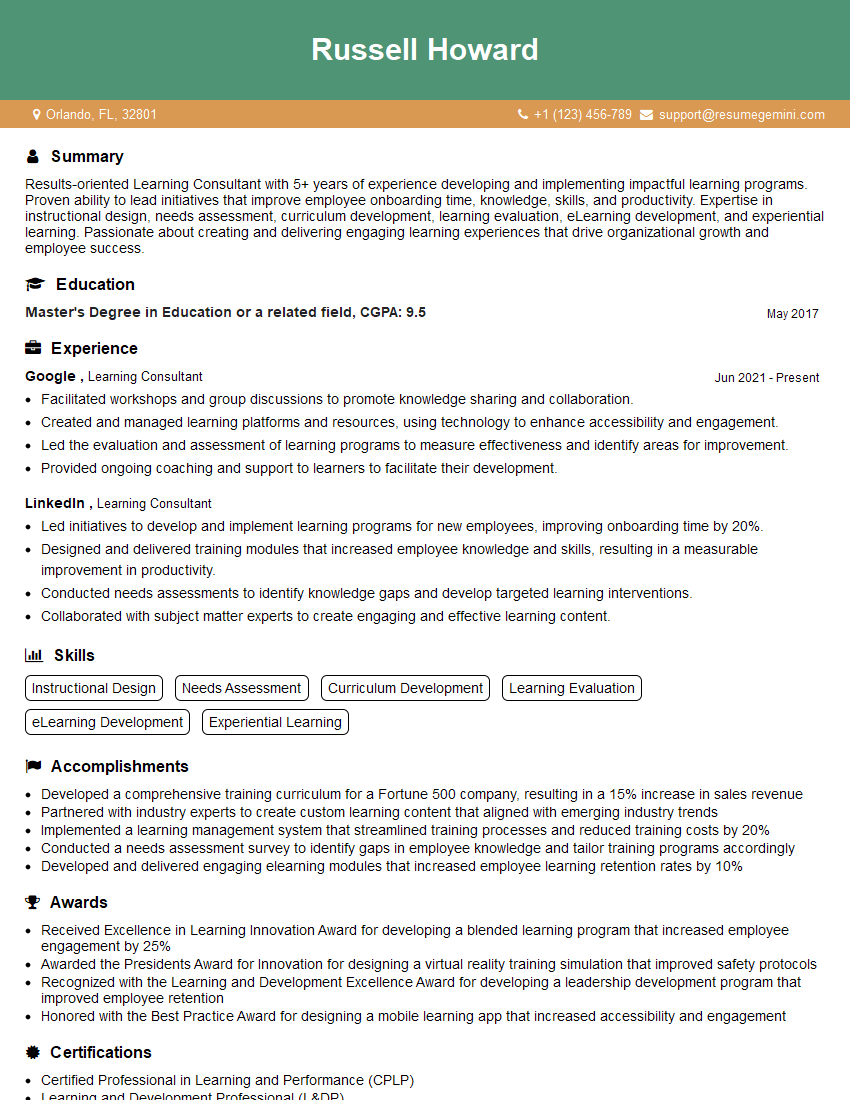
Learning Consultant Resume Sample
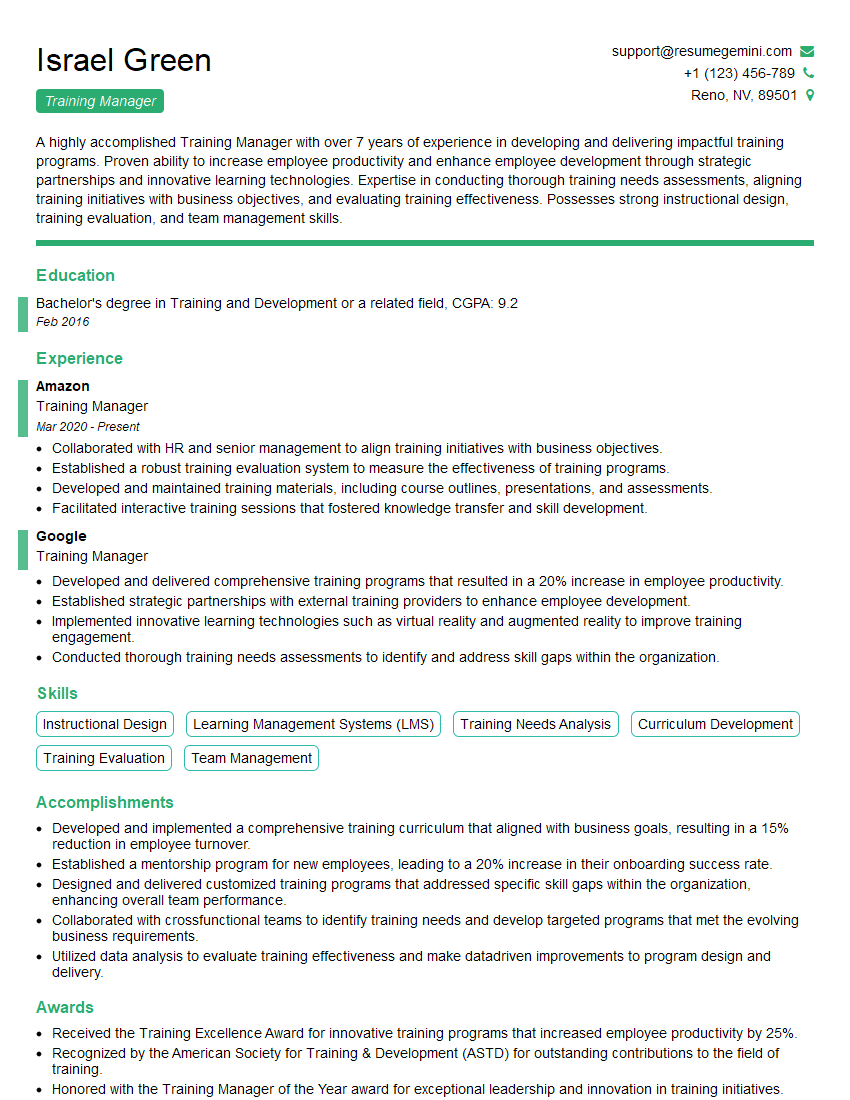
Training Manager Resume Sample
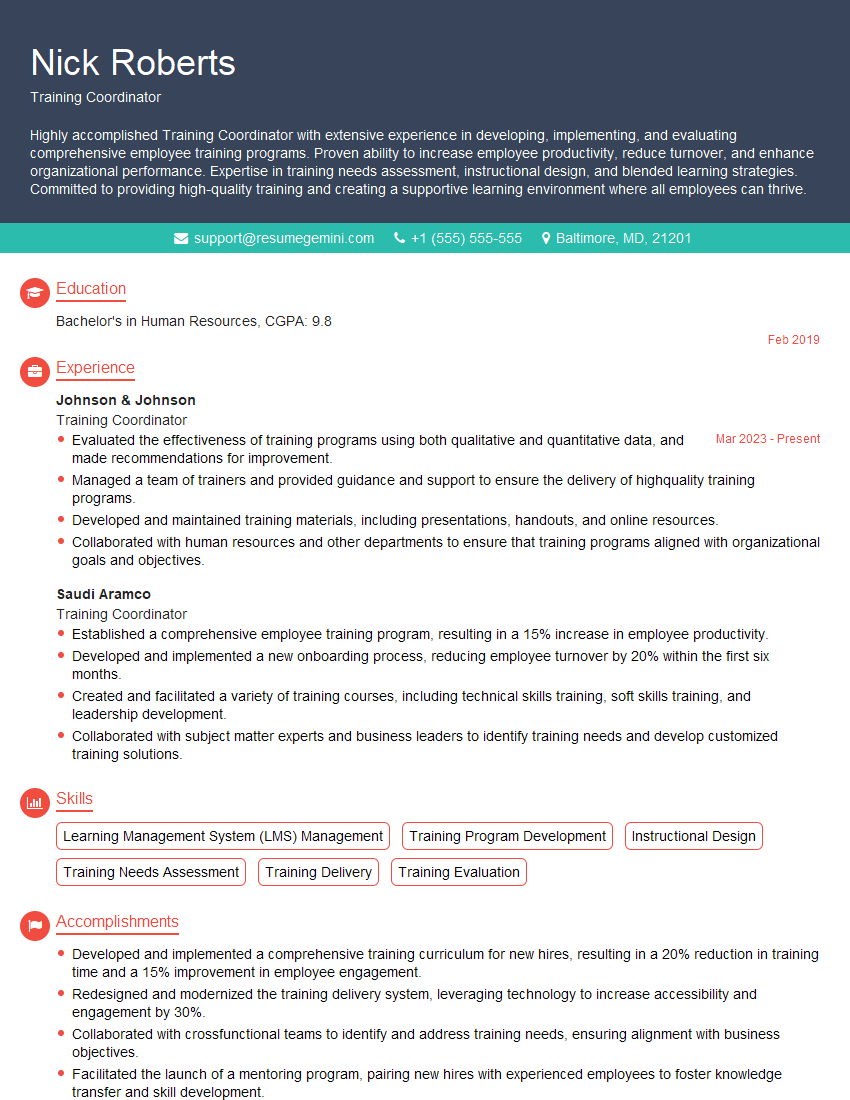
Training Coordinator Resume Sample
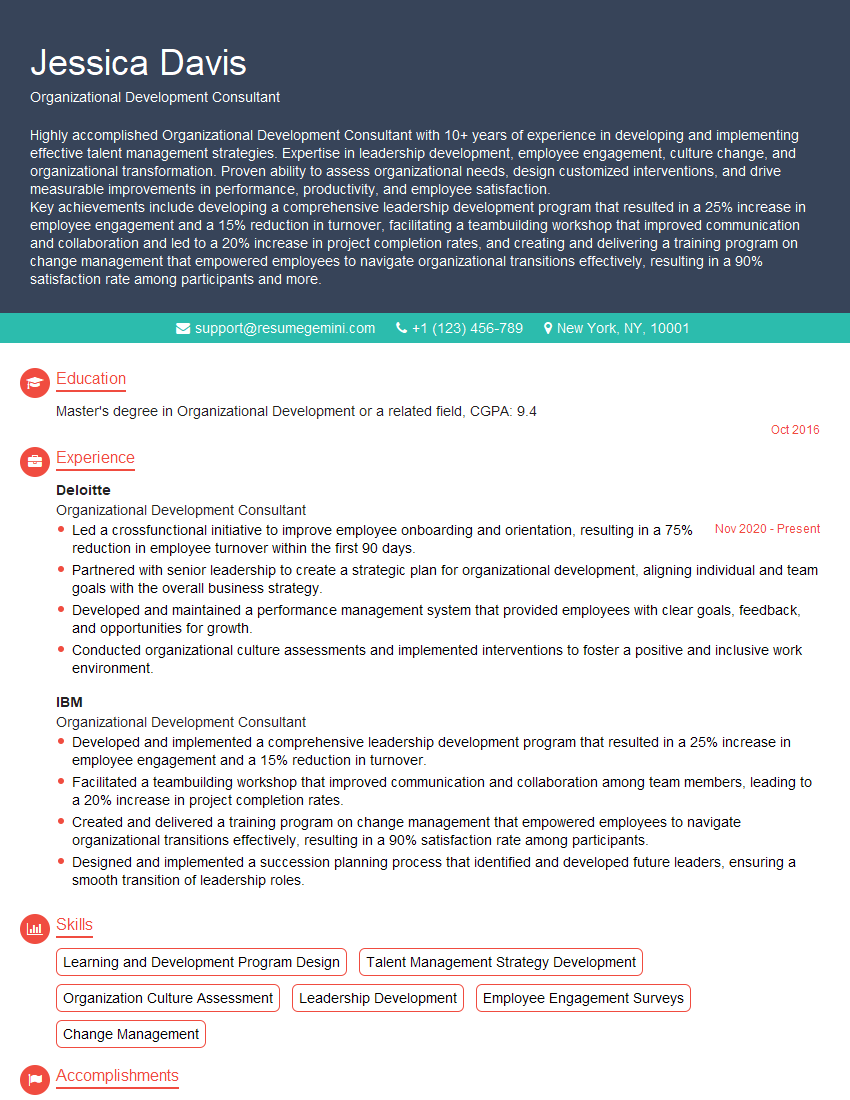
Organizational Development Consultant Resume Sample
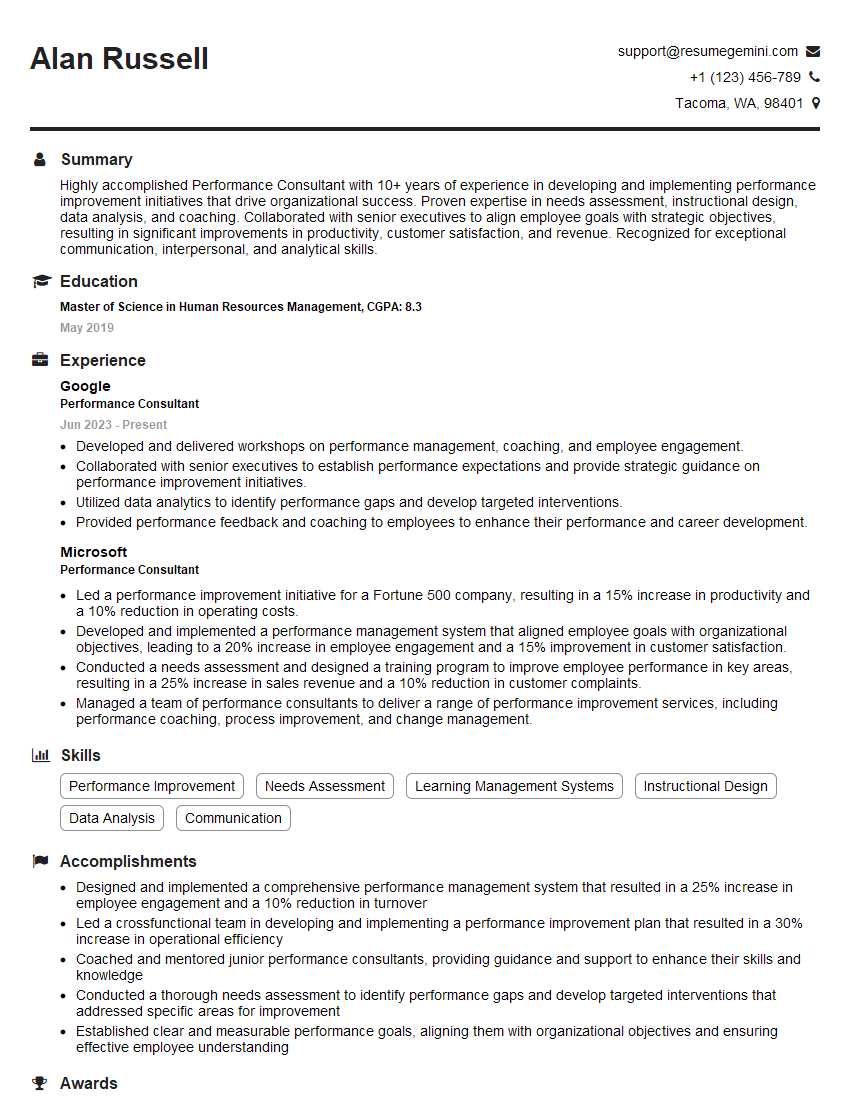
Performance Consultant Resume Sample
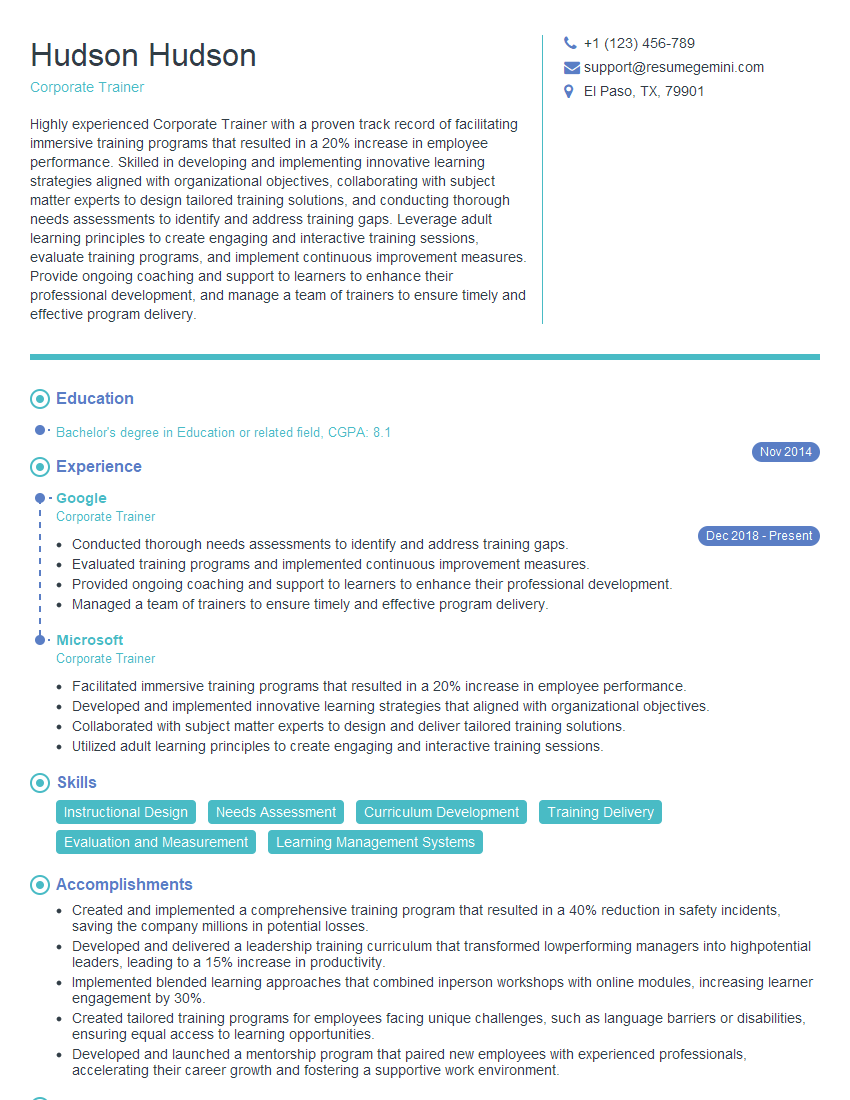
Corporate Trainer Resume Sample

Curriculum Developer Resume Sample

Adult Education Instructor Resume Sample
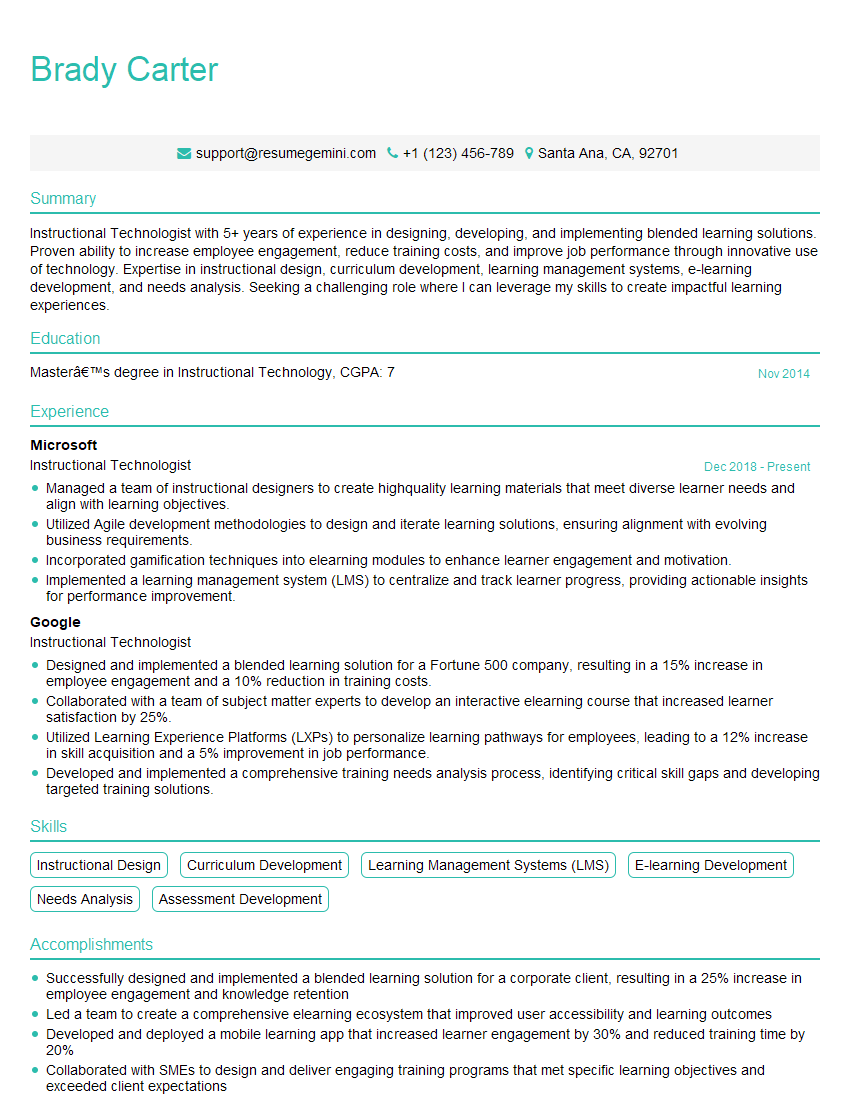
Instructional Technologist Resume Sample
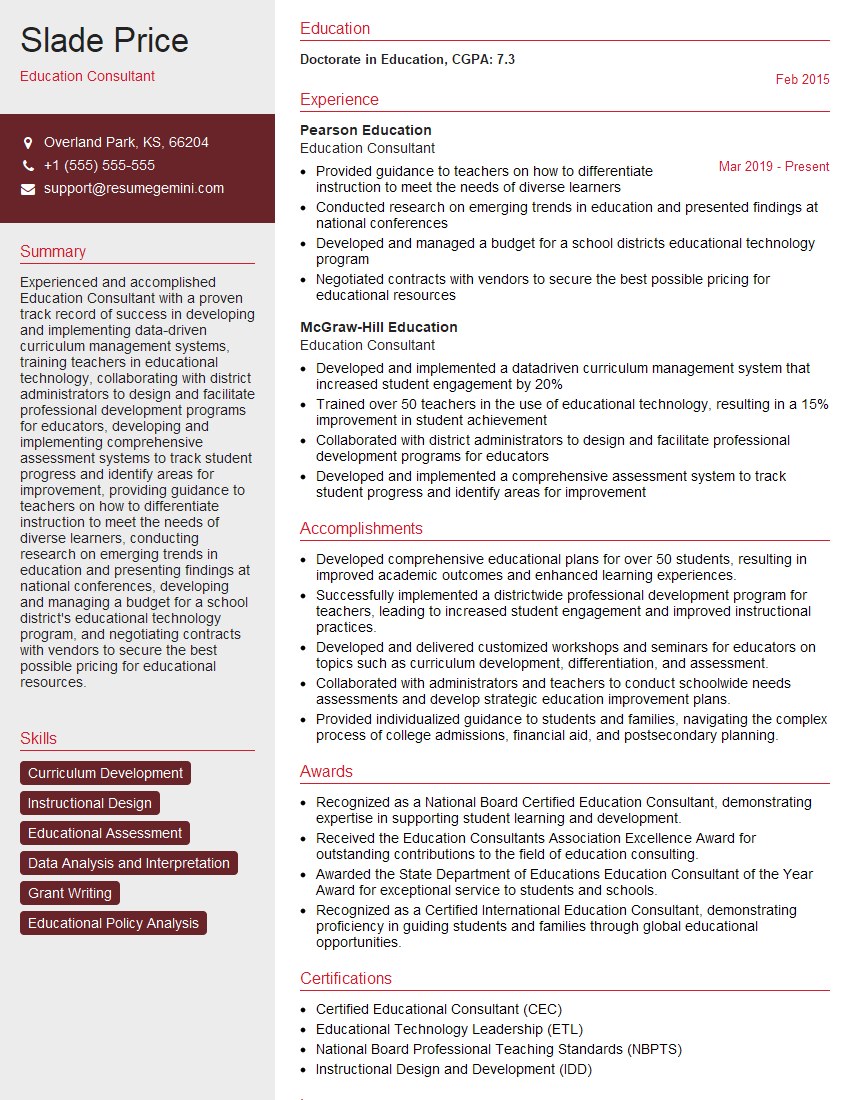
Education Consultant Resume Sample
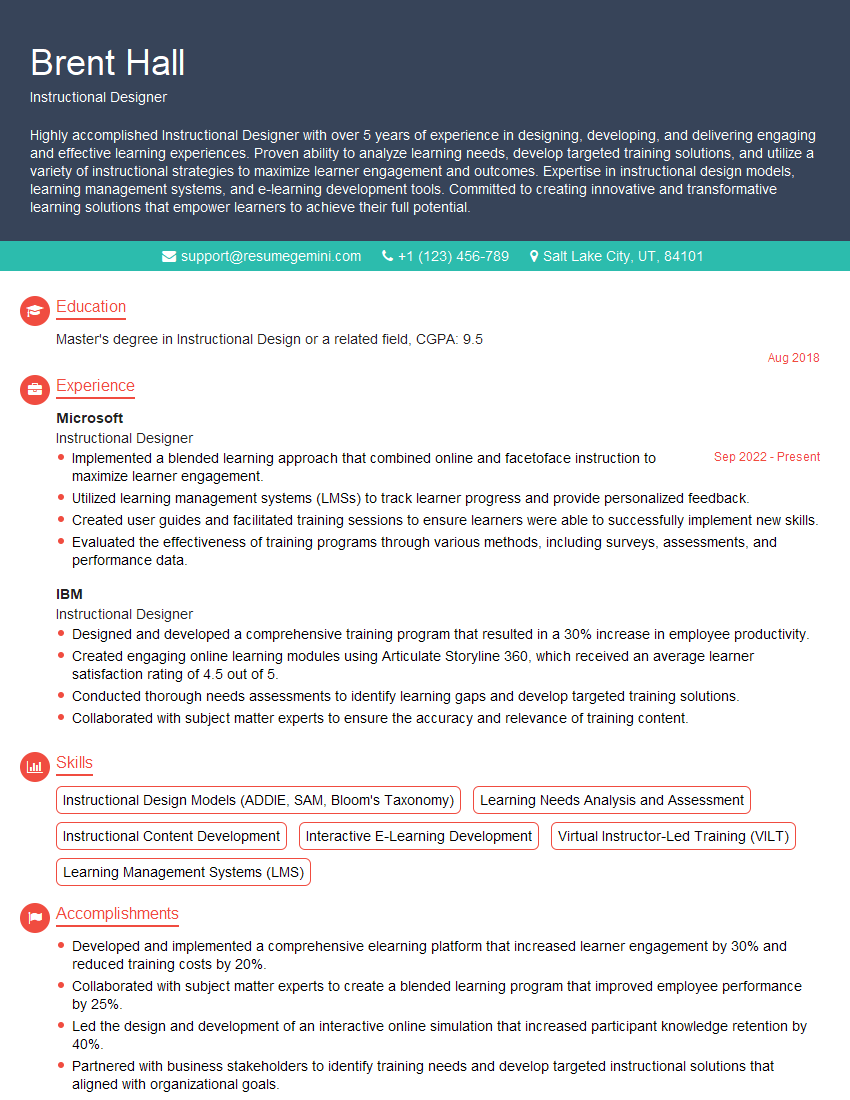
Instructional Designer Resume Sample
Explore more articles
Users Rating of Our Blogs
Share Your Experience
We value your feedback! Please rate our content and share your thoughts (optional).
What Readers Say About Our Blog
Very informative content, great job.
good