Interviews are more than just a Q&A session—they’re a chance to prove your worth. This blog dives into essential Stocking Density Optimization interview questions and expert tips to help you align your answers with what hiring managers are looking for. Start preparing to shine!
Questions Asked in Stocking Density Optimization Interview
Q 1. Define stocking density optimization and its key performance indicators (KPIs).
Stocking density optimization is the process of strategically arranging inventory within a warehouse to maximize storage capacity while maintaining efficient order fulfillment. It’s about finding the sweet spot – storing as much as possible without sacrificing accessibility or operational efficiency. Key Performance Indicators (KPIs) used to measure success include:
- Cubic Utilization Rate: The percentage of available cubic space actually used for storage. A higher rate indicates better density.
- Order Fulfillment Rate: The percentage of orders fulfilled on time and in full. This reflects the impact of density on operational efficiency.
- Picking and Packing Efficiency: Metrics like picking time per order or items picked per hour. High density can negatively affect these if not managed correctly.
- Inventory Turnover Rate: How quickly inventory is sold and replenished. Optimized density can improve turnover by making popular items easily accessible.
- Storage Costs per Cubic Foot: This measures the cost-effectiveness of your storage strategy. Higher density should ideally lower this cost.
Imagine a library; poor stocking density would mean lots of empty shelves, while excellent density means every shelf is full, yet books are still easily found.
Q 2. Explain the relationship between stocking density and warehouse throughput.
Stocking density and warehouse throughput are intricately linked. Higher stocking density, if managed effectively, can lead to higher throughput – meaning more orders processed per unit of time. This is because more inventory is available in a smaller space, reducing travel time for picking and packing. However, excessively high density can become counterproductive. If items are difficult to access due to overcrowding, picking times increase, potentially leading to reduced throughput. Think of a crowded highway – more cars (inventory) doesn’t always mean faster movement (throughput).
Finding the optimal density involves balancing the benefits of increased storage with the potential negative impacts on accessibility and efficiency. A well-designed warehouse considers both to maximize throughput.
Q 3. Describe different methods for calculating optimal stocking density.
Several methods exist for calculating optimal stocking density. These often involve a combination of quantitative and qualitative factors:
- Space Allocation Modeling: This involves using software or spreadsheets to model different storage configurations, considering factors like item size, volume, turnover rate, and order frequency. It allows for testing different scenarios and predicting their impact on KPIs.
- ABC Analysis: This classifies inventory items into A (high-demand), B (medium-demand), and C (low-demand) categories. High-demand items (A) are given priority in easily accessible locations, even if this means slightly lower overall density. This prioritizes faster order fulfillment.
- Simulation Modeling: This uses software to simulate warehouse operations under different stocking density scenarios. It considers factors like worker movements, equipment utilization, and order processing time, providing a comprehensive assessment of the impact of different configurations.
- Rule-Based Systems: These employ predefined rules based on experience and best practices to guide storage assignments. For example, fast-moving items are always placed closer to shipping docks.
The chosen method often depends on the scale and complexity of the warehouse, as well as the available technology and resources.
Q 4. How do you account for seasonal demand fluctuations when optimizing stocking density?
Seasonal demand fluctuations are a critical consideration in stocking density optimization. Ignoring these fluctuations can lead to either insufficient storage during peak seasons or excessive empty space during slower periods. To account for these changes:
- Demand Forecasting: Accurate forecasting of seasonal peaks and valleys is crucial. Techniques like time series analysis, moving averages, or more sophisticated machine learning models can be used.
- Flexible Storage Solutions: Utilizing adjustable shelving, mobile racking, or temporary storage solutions allows for adapting to changing storage needs throughout the year.
- Strategic Slotting: Assign seasonal items to designated areas that can be expanded or contracted as needed. This prevents excessive movement of frequently accessed items.
- Cross-Docking: For products with extremely high seasonal demand, consider a cross-docking strategy where goods are received and shipped directly without long-term storage.
For example, a retailer selling Christmas decorations would increase their stocking density in the fall and reduce it after the holiday season.
Q 5. What are the trade-offs between high stocking density and accessibility?
There’s a fundamental trade-off between high stocking density and accessibility. Higher density means more items stored in a given space, but it often comes at the cost of increased picking times and reduced worker efficiency. If items are stacked too tightly or placed in difficult-to-reach locations, retrieving them becomes time-consuming and may even require specialized equipment. Imagine a tightly packed closet; finding a specific item can be challenging despite maximizing space usage.
The optimal balance depends on the specifics of the operation. For high-volume, low-variety warehouses, higher density might be acceptable, while facilities handling a wide range of items with varying demand may prioritize accessibility even at the cost of some storage space.
Q 6. Explain how slotting optimization impacts stocking density.
Slotting optimization, the process of assigning specific locations for each item in the warehouse, significantly impacts stocking density. Effective slotting ensures that frequently accessed items are placed in easily accessible locations, minimizing travel time for order fulfillment. This allows for a higher overall stocking density without negatively impacting throughput. Conversely, poor slotting can create bottlenecks and reduce efficiency, even with ample storage space.
For instance, placing fast-moving items in the most accessible areas allows for higher density in other areas without compromising order fulfillment speed. The goal is to optimize the entire space based on item velocity, size, and other characteristics.
Q 7. How does technology (e.g., WMS) support stocking density optimization?
Warehouse Management Systems (WMS) are crucial for supporting stocking density optimization. Modern WMS software provides several features that aid in this process:
- 3D Warehouse Modeling: Allows for visualizing the warehouse layout and simulating different stocking configurations to optimize space utilization.
- Real-time Inventory Tracking: Provides accurate data on inventory levels and location, which is essential for making informed decisions about storage allocation.
- Automated Slotting Optimization: Many WMS systems include algorithms that automatically suggest optimal slotting arrangements based on various criteria (e.g., item popularity, size, weight).
- Reporting and Analytics: Offers dashboards and reports that track KPIs related to stocking density, providing insights into the effectiveness of the current strategy and areas for improvement.
- Integration with other systems: Enables seamless integration with other systems like ERP and TMS for a holistic view of the supply chain.
By using data-driven insights, WMS helps to refine stocking density strategies, leading to improved efficiency and reduced costs.
Q 8. Describe a situation where you had to optimize stocking density in a constrained space.
Optimizing stocking density in a constrained space often involves a delicate balance between maximizing storage capacity and ensuring efficient order fulfillment. I once worked with a small, high-volume e-commerce fulfillment center with limited warehouse space. Their existing shelving system was inefficient, leading to wasted space and difficulty locating items.
To address this, we first conducted a thorough inventory analysis, categorizing items based on their size, weight, frequency of picking, and velocity. We then used a combination of space optimization software and manual adjustments to redesign the warehouse layout. This included implementing a variety of shelving types – including vertical shelving, mobile shelving, and even cantilever racking – to optimize storage for different item types. We also implemented a zone-picking strategy, grouping frequently picked items together for faster retrieval. The result was a 25% increase in storage capacity and a 15% improvement in order fulfillment speed, despite the space constraint.
Q 9. What are the common challenges encountered during stocking density optimization?
Common challenges in stocking density optimization include:
- Inaccurate Inventory Data: Outdated or inaccurate inventory counts significantly hinder effective space planning.
- Product Variability: Managing diverse product sizes, shapes, and weights requires flexible and adaptable storage solutions.
- Seasonality: Fluctuations in demand due to seasonality necessitate dynamic stocking strategies that adapt to changing inventory levels.
- Safety and Compliance: Ensuring adherence to safety regulations regarding weight limits and stacking heights is paramount.
- Technology Limitations: Lack of suitable warehouse management systems (WMS) or space optimization software can hamper efficiency.
- Staff Training and Buy-in: Effective implementation requires proper training and communication to gain support from warehouse staff.
Q 10. How do you measure the success of a stocking density optimization project?
Measuring the success of a stocking density optimization project involves both qualitative and quantitative metrics. Quantitative metrics include:
- Increased Storage Capacity: Percentage increase in the number of items stored within the same space.
- Improved Order Fulfillment Rate: Reduction in order fulfillment time and error rate.
- Reduced Labor Costs: Savings achieved through optimized picking and packing processes.
- Inventory Turnover Rate: Improvement in inventory velocity, indicating efficient stock management.
Qualitative metrics focus on improvements in warehouse efficiency, such as easier navigation, better organization, and improved employee satisfaction. Analyzing these data points, before and after implementation, allows for a comprehensive evaluation of project success.
Q 11. Explain the difference between static and dynamic stocking density optimization.
Static stocking density optimization involves a one-time analysis and implementation of a storage layout based on historical data and projected demand. It’s simpler to implement but less adaptable to changes in inventory or demand. Think of it like setting up a library with fixed shelves; the arrangement stays the same unless a major renovation happens.
Dynamic stocking density optimization, on the other hand, involves continuously monitoring and adjusting the storage layout in response to real-time data. This often involves sophisticated WMS and space optimization software that automate the process of rearranging inventory based on factors like demand, velocity, and even real-time location tracking. This is like a dynamically updating digital library, where books’ positions change based on popularity and reader activity.
Q 12. How do you incorporate safety stock considerations into stocking density calculations?
Safety stock, the extra inventory kept on hand to buffer against unexpected demand surges or supply chain disruptions, needs careful integration into density calculations. Ignoring safety stock leads to underestimation of space requirements. I typically incorporate safety stock considerations by:
- Estimating Safety Stock Levels: Using forecasting methods and historical data to calculate appropriate safety stock levels for each item.
- Allocating Space: Reserving dedicated space within the warehouse to store safety stock, considering its turnover rate (which is often lower than regular inventory).
- Software Integration: Utilizing WMS or inventory management software that automatically incorporates safety stock levels into space allocation algorithms.
For example, if historical data suggests a 10% fluctuation in demand, we’d incorporate a safety stock that covers this potential increase. The reserved space for this safety stock is then factored into the overall stocking density calculation.
Q 13. What are some common software tools used for stocking density optimization?
Several software tools aid stocking density optimization. These range from simple spreadsheet programs to sophisticated WMS with integrated optimization modules. Popular options include:
- Warehouse Management Systems (WMS): Many advanced WMS solutions include modules specifically designed for space optimization, allowing for dynamic allocation based on real-time data.
- Space Optimization Software: Dedicated software applications like those offered by various warehouse optimization vendors, focusing solely on creating efficient storage plans.
- Inventory Management Systems (IMS): IMS platforms, often integrated with WMS, provide data on inventory levels, velocity, and demand to inform stocking decisions.
The choice of software depends on factors like warehouse size, inventory complexity, and budget. Simpler systems might suffice for smaller warehouses, while larger operations may require more comprehensive WMS solutions.
Q 14. How do you handle obsolete or slow-moving inventory when optimizing density?
Obsolete or slow-moving inventory presents a challenge to density optimization. Simply ignoring it wastes valuable space. My approach involves:
- Identification and Segregation: Regularly identifying and segregating obsolete or slow-moving items. This might involve ABC analysis (classifying inventory by value and usage) to prioritize high-value items.
- Dedicated Storage Areas: Assigning designated areas for such items, often in less accessible locations to maximize space utilization for faster-moving products.
- Disposition Strategies: Developing strategies for disposing of obsolete items, such as sales, discounts, or recycling. This frees up valuable space for higher-demand inventory.
- Re-evaluation: Periodically reviewing the classification of slow-moving items; sometimes, marketing campaigns or changes in market conditions can revitalize demand.
The goal is to minimize the space occupied by inactive inventory while having a clear plan for its eventual removal.
Q 15. Discuss the importance of data accuracy in stocking density optimization.
Data accuracy is the bedrock of successful stocking density optimization. Inaccurate data leads to flawed calculations, inefficient space utilization, and potentially hazardous conditions. Think of it like building a house on a faulty foundation – it’s unstable and prone to collapse. We rely on precise inventory counts, accurate dimensional data for products (length, width, height, weight), and reliable information on warehouse space dimensions. Even small errors in measurement can compound and significantly impact overall density. For instance, an error of just one inch in the height of numerous pallets could lead to significant underutilization of vertical space in a high-bay warehouse. We utilize various methods to ensure accuracy, including regular cycle counting, barcode scanning, and advanced warehouse management system (WMS) integration with dimensional weight capture during receiving.
Any discrepancy in data, no matter how small it seems, has the potential to negatively affect efficiency and safety. We use data validation techniques and cross-referencing to catch these errors before they impact our optimization strategies.
Career Expert Tips:
- Ace those interviews! Prepare effectively by reviewing the Top 50 Most Common Interview Questions on ResumeGemini.
- Navigate your job search with confidence! Explore a wide range of Career Tips on ResumeGemini. Learn about common challenges and recommendations to overcome them.
- Craft the perfect resume! Master the Art of Resume Writing with ResumeGemini’s guide. Showcase your unique qualifications and achievements effectively.
- Don’t miss out on holiday savings! Build your dream resume with ResumeGemini’s ATS optimized templates.
Q 16. Describe your experience with different warehouse layout designs and their impact on density.
My experience spans various warehouse layout designs, each with a distinct influence on stocking density. I’ve worked with traditional aisle-based layouts, narrow aisle systems, very narrow aisle (VNA) systems, and even more specialized configurations like drive-in/drive-through racking. Each design presents unique opportunities and challenges regarding density. For example, traditional layouts, while offering good accessibility, generally have lower density compared to VNA systems which maximize vertical space but sacrifice maneuverability. Narrow aisle systems strike a balance, offering relatively high density while retaining better accessibility than VNA.
The choice of layout significantly affects the type of material handling equipment we can use, thus impacting density. VNA systems demand specialized forklifts, while wider aisles might accommodate reach trucks or order pickers. I always evaluate the trade-offs between accessibility, order fulfillment speed, and density when recommending a layout. In one project, switching from a traditional layout to a narrow aisle system with higher-density racking increased our storage capacity by 30% without increasing warehouse footprint. The key is to align the layout with the business’s operational requirements and product characteristics.
Q 17. How do you ensure compliance with safety regulations during density optimization?
Safety is paramount. Compliance with OSHA (or relevant regional) regulations is integrated into every stage of density optimization. This includes assessing weight limits for racking, ensuring adequate aisle widths for safe forklift operation (considering turning radius and load dimensions), and implementing proper signage and training programs. We meticulously review load stability guidelines and ensure products are stored correctly to prevent collapses. Regular inspections are critical, and we use a checklist to systematically assess potential hazards, such as damaged racking, unstable stacks, and blocked fire exits.
For example, when optimizing the density of a warehouse storing heavy machinery, we might need to install stronger racking systems with higher load capacities and reduce the density in certain areas to ensure enough maneuvering space for the machinery’s handling equipment. Safety isn’t just a checklist; it’s a continuous process of evaluation and improvement.
Q 18. Explain your understanding of the impact of different storage equipment on density.
Different storage equipment profoundly impacts density. Pallet racking, for instance, offers a high level of selectivity and allows for efficient inventory management, but its density is lower compared to more compact systems. High-density storage solutions like push-back racking, drive-in racking, and flow racking maximize space utilization but might compromise access times. The selection depends on factors such as product turnover rates, order picking methods, and the size and weight of the stored items.
For fast-moving items, we might opt for shelving or carousel systems that prioritize accessibility over sheer density. On the other hand, for slow-moving items, high-density storage is more appropriate. For example, a distribution center storing seasonal goods would benefit from the high density of drive-in racking for those items, whereas their frequently ordered products might require pallet racking for easy access.
Q 19. How would you handle a situation where optimizing density conflicts with order picking efficiency?
Balancing density optimization with order picking efficiency is a constant challenge. A purely density-focused approach can lead to significant delays in order fulfillment. The solution lies in finding a balance – optimizing density strategically, considering picking methods. We employ several techniques to address this conflict. These include:
- Zone optimization: High-density storage can be implemented for slow-moving items in less accessible areas, while frequently picked items are stored in more accessible zones with optimized picking paths.
- Slotting optimization: Strategic placement of products based on their popularity and picking frequency. Popular items are placed closer to picking stations, minimizing travel time.
- Using WMS data: Analyzing order picking data to identify bottlenecks and adjust storage locations accordingly.
It’s often an iterative process; we may need to fine-tune the layout and density based on performance data, making adjustments to improve both density and picking efficiency.
Q 20. Describe a time you had to make a compromise between optimal density and other warehouse goals.
In a recent project for a large e-commerce company, we were tasked with optimizing density in their fulfillment center. Initially, our density optimization strategy focused solely on maximizing storage capacity, which involved utilizing high-density storage solutions and minimizing aisle widths. However, this resulted in a significant increase in order picking times, affecting overall order fulfillment speed. After analyzing the data and feedback from warehouse staff, we realized a compromise was necessary.
We adjusted the plan, prioritizing high-density storage for slow-moving items while retaining wider aisles for faster-moving, frequently picked items. This resulted in a slight reduction in overall storage density, but it significantly improved order picking efficiency, meeting the company’s overall throughput goals. The compromise involved careful balancing – leveraging technology to efficiently manage the inventory and optimizing the picking process in the remaining space. It taught me the importance of considering all operational aspects before implementing a density optimization strategy.
Q 21. How do you incorporate risk management into your stocking density optimization strategies?
Risk management is integral to our density optimization strategies. We identify and mitigate potential risks throughout the process, from data accuracy and equipment failure to safety hazards and operational disruptions. We conduct thorough risk assessments, considering potential scenarios like equipment malfunctions, power outages, and even unforeseen changes in demand patterns.
For instance, we might incorporate redundancy in equipment, ensuring backup power systems, and having contingency plans for handling potential disruptions. We also use simulation software to model different scenarios and identify potential vulnerabilities. Implementing robust safety protocols and regular inspections, as mentioned before, is a key part of our risk management approach. It’s about anticipating problems before they arise and having solutions in place to minimize their impact on operations and safety.
Q 22. What are the ethical considerations related to stocking density optimization?
Ethical considerations in stocking density optimization are crucial. We must balance maximizing efficiency with the welfare of both employees and the products themselves. Overly dense stocking can lead to unsafe working conditions for employees, increasing the risk of injury from cramped spaces or heavy lifting. For products, excessive density can result in damage due to crushing, spoilage (especially for perishable goods), or increased susceptibility to pests. On the other hand, under-stocking leads to inefficiencies and potentially lost sales.
Therefore, a responsible approach involves:
- Employee safety: Ensuring adequate aisle space, proper lighting, and ergonomic considerations are paramount. Regular safety audits are crucial.
- Product integrity: Selecting appropriate shelving and storage solutions to prevent damage, considering temperature and humidity requirements for sensitive goods. Regular stock inspections are needed to identify and address potential problems.
- Sustainability: Minimizing waste through optimized inventory management and preventing product damage helps reduce environmental impact.
- Transparency: Openly communicating the optimization strategy and its impact on employees and product handling to gain their trust and cooperation.
For instance, in a warehouse setting, we might need to prioritize wider aisles even if it means slightly less storage space, to improve employee safety and reduce the risk of accidents.
Q 23. Explain your experience with lean manufacturing principles and their relation to stocking density.
Lean manufacturing principles are deeply intertwined with stocking density optimization. The core tenets of lean—eliminating waste, maximizing value, and continuous improvement—directly translate to a more efficient and effective warehousing and storage strategy. My experience involves applying lean principles such as 5S (Sort, Set in Order, Shine, Standardize, Sustain) to optimize warehouse layout and improve stock accessibility.
For example, I worked on a project where we implemented a Kanban system to manage inventory flow. This reduced unnecessary stock buildup, leading to a significant decrease in storage space needed, improved inventory turnover and minimized the risk of obsolescence. We also used value stream mapping to identify bottlenecks and inefficiencies in the storage and retrieval processes, directly informing our stocking density strategy. By eliminating unnecessary movement and optimizing storage locations based on frequency of access (popular items closer, less-used items further), we significantly improved efficiency, reduced storage costs, and increased worker productivity. This resulted in a 15% reduction in warehouse space requirements and a 10% increase in order fulfillment speed.
Q 24. How do you prioritize different aspects of optimization (e.g., cost, space, speed)?
Prioritizing cost, space, and speed in stocking density optimization requires a balanced approach. It’s rarely a matter of solely focusing on one aspect; rather, it’s about finding the optimal trade-off.
I use a multi-criteria decision analysis (MCDA) framework. This involves:
- Defining clear objectives: Explicitly stating the goals, such as minimizing storage costs, maximizing space utilization, and ensuring a specific order fulfillment speed.
- Assigning weights: Determining the relative importance of each objective (e.g., cost might be weighted higher than speed in a budget-constrained project).
- Evaluating alternatives: Analyzing different stocking density strategies and assessing their performance based on the defined objectives.
- Selecting the optimal solution: Choosing the strategy that best balances the weighted objectives. This might involve using software or decision-support tools to compare various scenarios.
For example, a high-volume, fast-moving consumer goods warehouse might prioritize speed and space utilization over minimizing storage costs per unit, while a low-volume, high-value inventory might prioritize security and minimizing cost.
Q 25. Explain your experience with different forecasting methods and their impact on density planning.
Accurate forecasting is the cornerstone of effective stocking density planning. Inaccurate forecasts can lead to either overstocking (resulting in wasted space and capital) or understocking (causing lost sales and dissatisfied customers). I have experience with various forecasting methods, including:
- Time series analysis: Using historical sales data to predict future demand. Methods like moving averages, exponential smoothing, and ARIMA models are useful.
- Causal forecasting: Considering factors beyond historical sales data, such as seasonality, economic conditions, and marketing campaigns, to improve accuracy.
- Machine learning: Employing algorithms like neural networks or regression models to identify complex patterns and relationships in data for more sophisticated predictions.
My experience shows that combining different methods often provides the best results. For instance, using time series analysis to establish a baseline forecast, and then adjusting this forecast based on insights from causal forecasting or machine learning models, can significantly improve accuracy. Regularly reviewing and updating forecasts based on actual sales data is crucial for maintaining accuracy and adapting to changing market conditions. The choice of method depends on data availability, the complexity of demand patterns, and the level of accuracy required.
Q 26. How do you communicate the results of a stocking density optimization project to stakeholders?
Communicating the results of a stocking density optimization project effectively is crucial for stakeholder buy-in and successful implementation. My approach involves a multi-faceted strategy:
- Executive summary: A concise overview of the project goals, methodology, key findings, and recommendations, tailored to the audience’s level of understanding.
- Visualizations: Using charts, graphs, and maps to clearly illustrate the impact of the optimization, such as reductions in storage costs, space utilization improvements, and speed gains.
- Detailed reports: Providing comprehensive documentation detailing the analysis, methodology, and rationale behind the recommendations for those who require more technical information.
- Presentations: Presenting the findings and recommendations to stakeholders through interactive presentations, emphasizing the benefits and addressing concerns.
- Training: Providing training to warehouse staff on the new processes and procedures resulting from the optimization.
For example, I’ve used interactive dashboards to show stakeholders how different stocking densities impact various key performance indicators (KPIs) in real-time, enabling them to understand the trade-offs and the overall impact of the strategy. I also regularly follow up post-implementation to ensure the strategy is effective and make adjustments as needed.
Q 27. Describe a situation where you had to adapt your stocking density strategy due to unforeseen circumstances.
In one project, we optimized a warehouse’s stocking density based on historical data, anticipating a steady growth in sales. However, an unexpected surge in demand for a specific product line due to a competitor’s recall completely disrupted our carefully planned strategy. This highlighted the importance of flexibility and contingency planning.
Our response involved:
- Real-time monitoring: We implemented a system to closely monitor inventory levels and sales data to quickly identify shifts in demand.
- Agile adjustments: We rapidly adjusted our stocking strategy by temporarily increasing the density for the high-demand product line while slightly reducing density for less-demanded items. This involved re-allocating storage space and temporarily adjusting workflows.
- Communication: We proactively communicated the situation and our adjustments to all stakeholders, ensuring transparency and minimizing disruptions.
- Post-event analysis: Following the surge, we analyzed the event to better understand the drivers and incorporate them into our future forecasting models. This included updating our forecasting algorithms to incorporate the potential for sudden, significant demand spikes.
This experience reinforced the importance of building resilience into our optimization strategies and ensuring we have the ability to adapt quickly to unforeseen circumstances. It also showed the value of flexible warehouse layouts and the ability to re-allocate resources dynamically.
Key Topics to Learn for Stocking Density Optimization Interview
- Understanding Inventory Turnover & its impact on Stocking Density: Explore the relationship between inventory turnover rate, storage costs, and optimal stocking density. Consider the implications of slow-moving versus fast-moving inventory.
- Space Optimization Techniques: Learn about various warehouse layout strategies (e.g., block stacking, random stacking, dedicated storage) and their impact on picking efficiency and density. Understand the role of slotting optimization.
- Data Analysis & Forecasting: Practice analyzing historical sales data, demand forecasting methods, and their influence on stocking decisions. Understand how to use this data to predict future demand and optimize space allocation.
- Inventory Management Systems (IMS): Familiarize yourself with different IMS software and their role in tracking inventory levels, managing stock, and facilitating density optimization. Understand the data integration capabilities and reporting functionalities.
- Cost-Benefit Analysis of Stocking Strategies: Learn to evaluate the trade-offs between increased stocking density (potentially leading to higher storage costs and picking inefficiencies) and reduced storage costs (potentially leading to stockouts and lost sales).
- Safety and Compliance Regulations: Understand relevant safety regulations and compliance requirements concerning warehouse storage and density. This includes aspects like fire safety, load bearing capacity, and accessibility.
- Problem-Solving Approaches: Practice solving case studies related to warehouse optimization, focusing on identifying bottlenecks, proposing solutions, and justifying your choices with data-driven arguments.
Next Steps
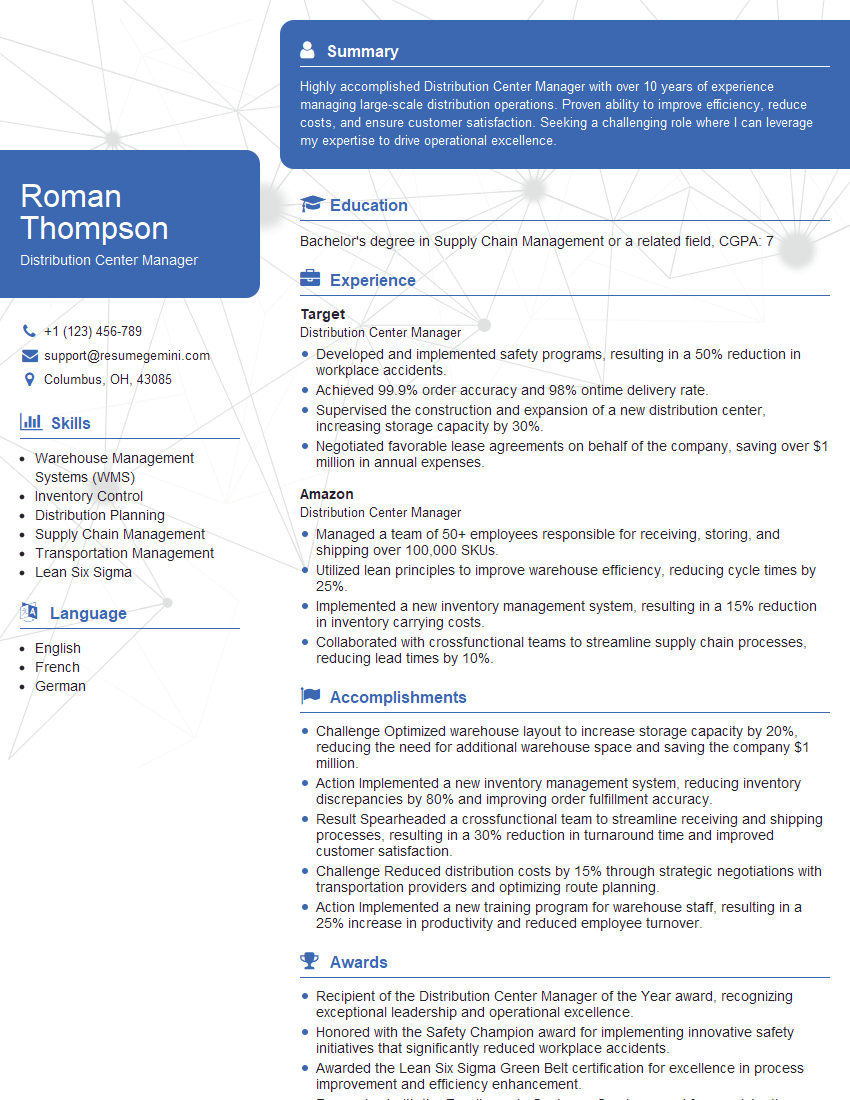
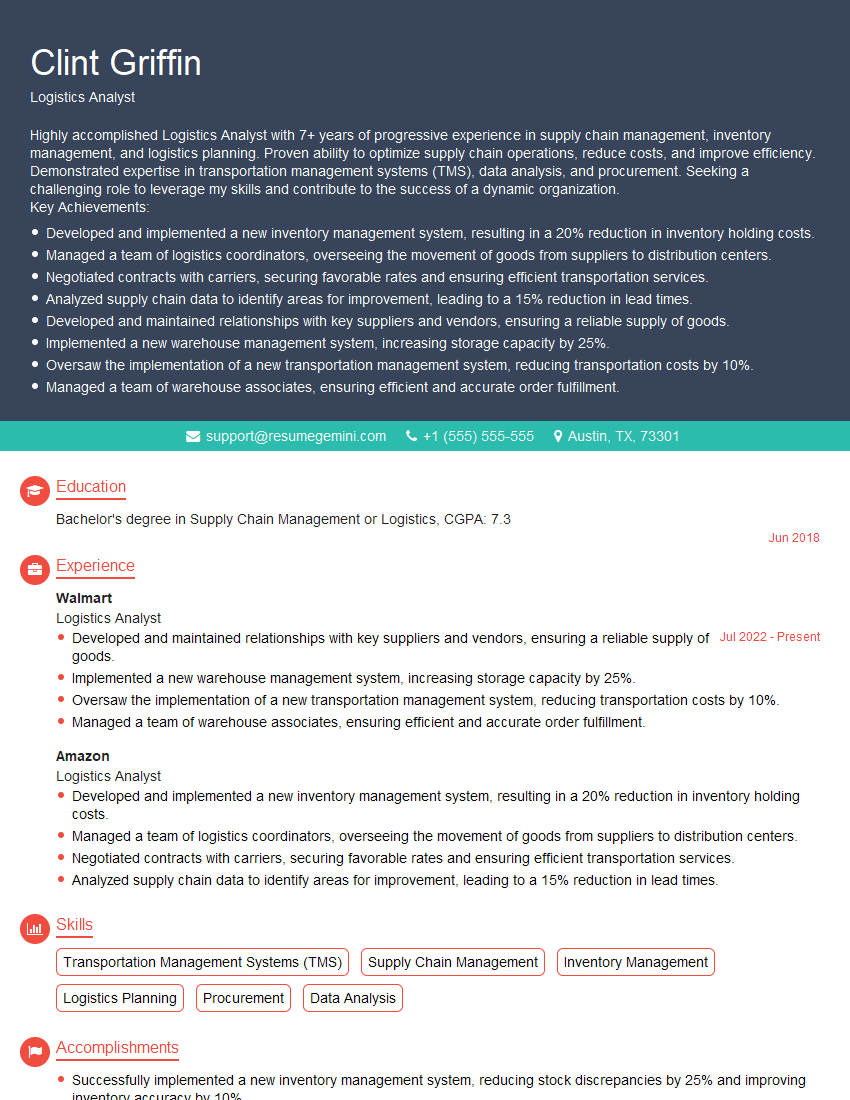
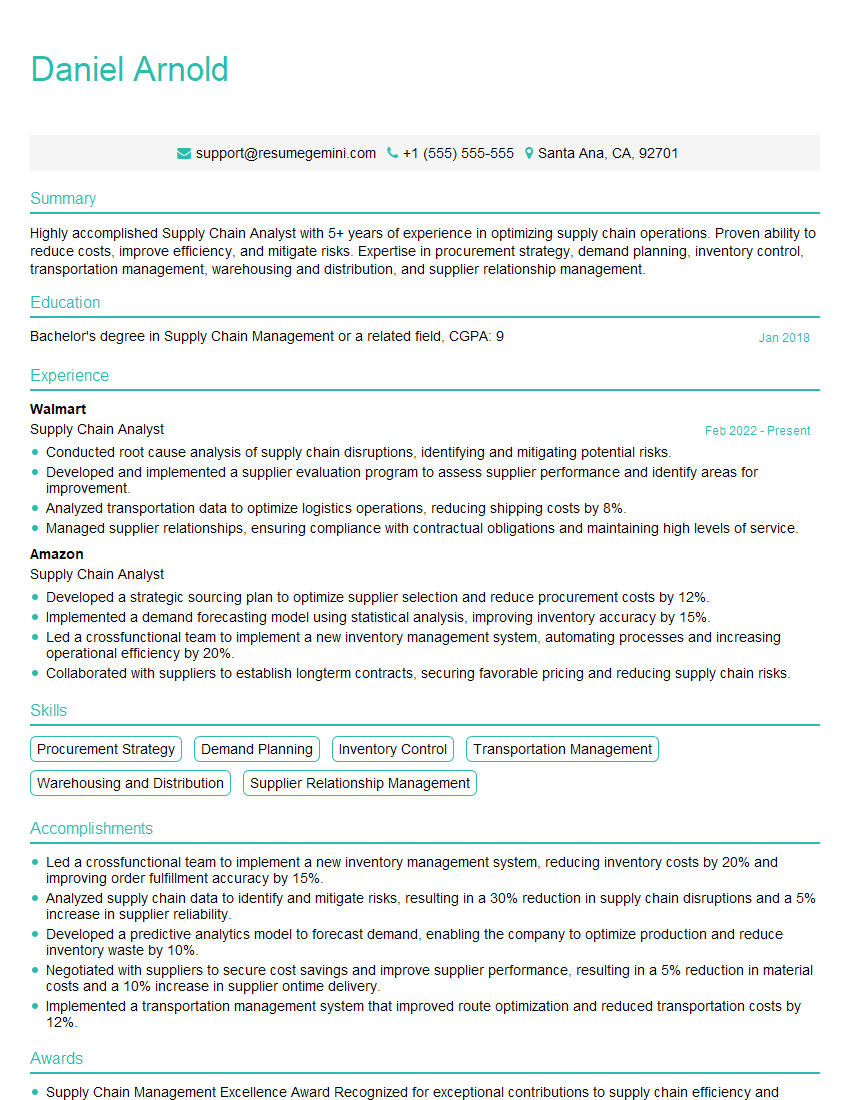
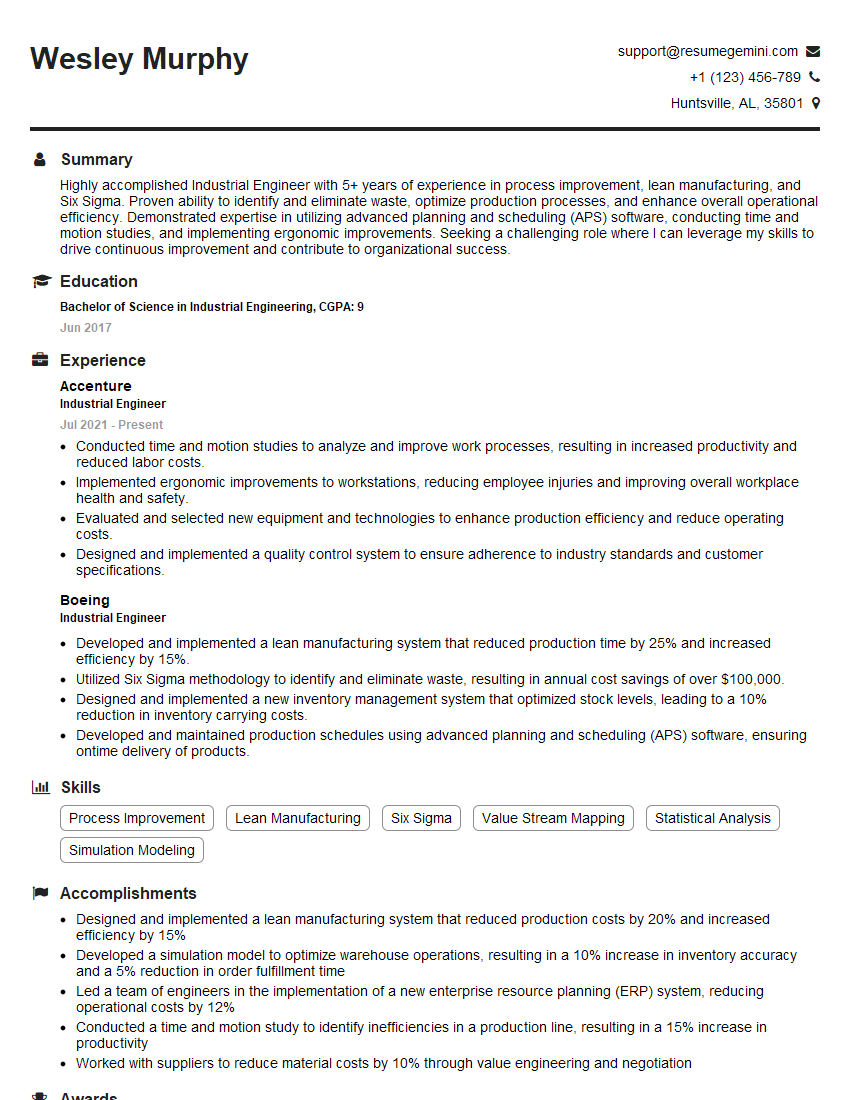
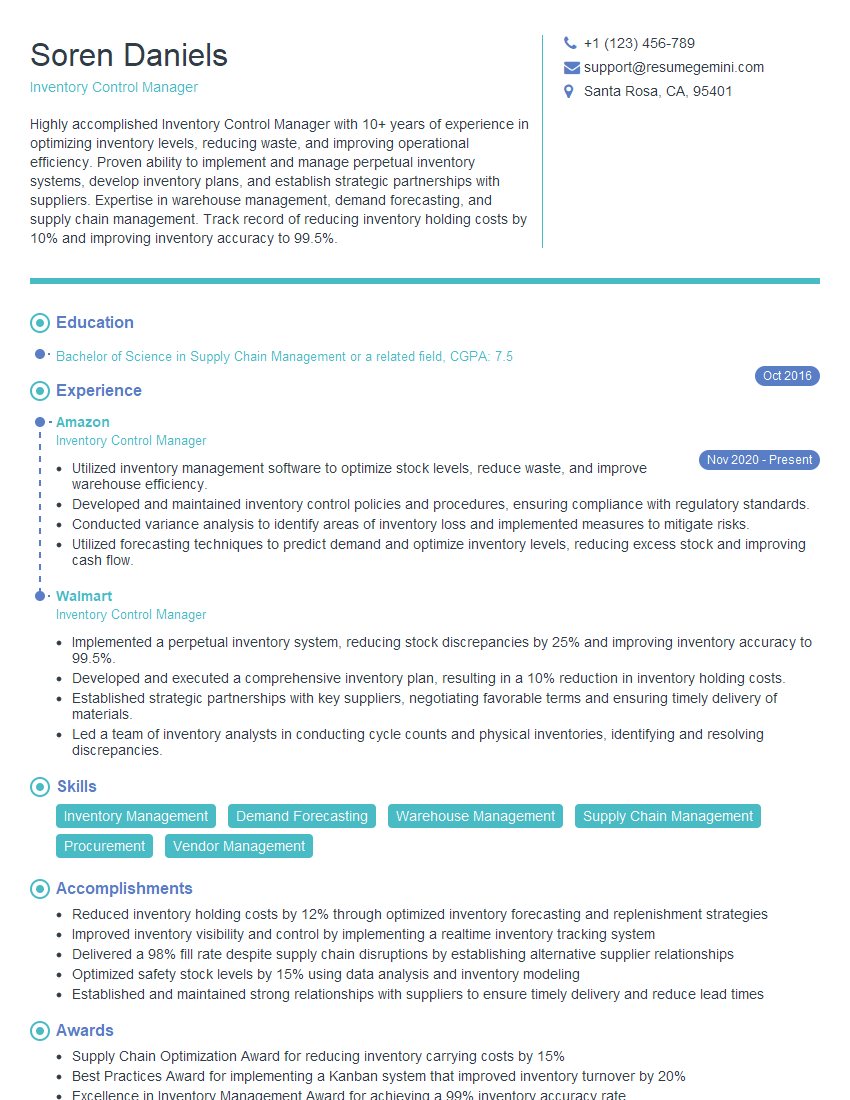
Mastering Stocking Density Optimization opens doors to exciting career opportunities in supply chain management, logistics, and warehouse operations. A strong understanding of these concepts significantly enhances your value to potential employers. To maximize your job prospects, create an ATS-friendly resume that clearly highlights your skills and experience. ResumeGemini is a trusted resource that can help you build a professional and effective resume, tailored to showcase your Stocking Density Optimization expertise. Examples of resumes tailored to this specific field are available to help you craft your perfect application.


Explore more articles
Users Rating of Our Blogs
Share Your Experience
We value your feedback! Please rate our content and share your thoughts (optional).
What Readers Say About Our Blog
Very informative content, great job.
good