Cracking a skill-specific interview, like one for Lighting Set Up, requires understanding the nuances of the role. In this blog, we present the questions you’re most likely to encounter, along with insights into how to answer them effectively. Let’s ensure you’re ready to make a strong impression.
Questions Asked in Lighting Set Up Interview
Q 1. Explain the difference between hard and soft light.
The key difference between hard and soft light lies in the size of the light source relative to the subject. Think of it like this: a small light source close to the subject creates hard light, characterized by strong shadows with defined edges. A large light source, or a small light source far from the subject, produces soft light, resulting in gradual transitions between light and shadow, with softer, less defined edges.
Hard Light Examples: A small spotlight shining directly on an actor’s face, creating harsh shadows. The sun on a clear day, casting sharp, distinct shadows.
Soft Light Examples: A large softbox diffusing light, creating even illumination. An overcast day, providing diffused, soft light.
In filmmaking, the choice between hard and soft light drastically impacts mood and atmosphere. Hard light can create a dramatic, high-contrast look, while soft light often conveys a more gentle, romantic feel.
Q 2. Describe three-point lighting setup.
The three-point lighting setup is a fundamental technique in filmmaking and photography. It uses three lights to illuminate a subject: the key light, the fill light, and the back light. Imagine you’re lighting a portrait.
- Key Light: This is the main light source, providing the primary illumination. It’s usually placed to one side of the subject, creating shadows and defining the shape. Think of it as the ‘hero’ light.
- Fill Light: Placed on the opposite side of the key light, the fill light softens the shadows created by the key light. It’s typically less intense than the key light, preventing overly harsh contrasts.
- Back Light (or Rim Light): Positioned behind the subject, the back light separates the subject from the background, adding depth and dimension. It creates a subtle outline or ‘rim’ of light around the subject, making it pop.
By adjusting the intensity and position of these three lights, you can achieve a wide range of lighting styles. A classic example is a Hollywood style portrait, which emphasizes the key light for a more dramatic effect.
Q 3. What are the common types of lighting fixtures used in film/video production?
The film and video industry utilizes a variety of lighting fixtures, each with its own characteristics and applications.
- Fresnel: Known for their adjustable beam angle and intensity, Fresnels are versatile workhorses, ideal for key lighting and creating focused beams.
- LED Panels: Highly energy-efficient and color-adjustable, LED panels offer great flexibility for various lighting needs, from soft fill to accent lighting. They’re widely used due to their portability and ease of control.
- Softboxes: These are diffusing boxes placed in front of lights, softening harsh light into a more even and pleasing illumination. They are commonly used with strobes or continuous lights for creating soft, flattering light.
- PAR Cans (Parabolic Aluminized Reflectors): These are powerful lights with a wide beam, often used for background illumination or wash lighting large areas.
- Kino Flo: These fluorescent lights are known for their even, soft light and are often used for continuous lighting in sets.
The choice of lighting fixture depends on the specific scene’s requirements, including the desired light quality, intensity, and budget.
Q 4. How do you calculate the light intensity needed for a specific scene?
Calculating the precise light intensity needed for a scene is a complex process, involving several factors. It’s not a simple formula, but rather a process of iterative adjustments based on experience and using light meters.
The process typically involves:
- Determining the desired exposure: This is usually done with a light meter, measuring the light falling on the subject. This gives a baseline luminance or lux reading.
- Considering the distance from the light source: The intensity of light diminishes with the square of the distance (inverse square law). Doubling the distance reduces intensity to one-quarter.
- Accounting for light falloff and diffusion: Softboxes and diffusers reduce intensity, and the distance of the light source must be adjusted to compensate.
- Using light meters and test shots: Continuously measuring and adjusting light levels and making test shots allows a better understanding of how the light interacts with the set and subjects.
Experienced cinematographers and gaffers use their experience and light meters to make these calculations. There are also software tools which can assist in these calculations, such as lighting simulators that can model the light and shadow interactions.
Q 5. Explain the concept of color temperature and its importance in lighting.
Color temperature refers to the color appearance of light, measured in Kelvin (K). It describes the light’s relative redness or blueness. Lower Kelvin values indicate warmer colors (more red/orange), while higher values indicate cooler colors (more blue).
Importance in Lighting: Consistent color temperature is crucial for creating a visually pleasing and believable scene. Mixing different color temperatures can result in an unpleasant or jarring effect. For instance, mixing warm tungsten light with cool daylight-balanced LED panels will cause obvious color discrepancies.
Examples:
- 2700K: Warm, incandescent light, often associated with candlelight or tungsten bulbs.
- 5600K: Daylight-balanced light, common in outdoor settings and often used as a reference point for film and video production.
- 10000K: Very cool blue light, found in overcast skies or some specialized lighting effects.
To maintain consistent color temperature, lighting professionals use color correction gels to match the color of different light sources or adjust the white balance settings in cameras.
Q 6. What is the function of a dimmer board?
A dimmer board, also known as a lighting control console, is a device used to control the intensity of multiple lights simultaneously. Imagine a theatre; instead of manually adjusting each light, a dimmer board lets you adjust the brightness of dozens or hundreds of lights precisely and smoothly.
Functions:
- Intensity Control: Allows precise control of light levels, providing smooth fades and transitions.
- Scene Setting: Enables the storage and recall of pre-programmed lighting configurations for different scenes or moments.
- Special Effects: Facilitates creating dynamic lighting effects, such as chases (lights flashing sequentially) or crossfades (smooth transitions between different lighting states).
Dimmer boards range in complexity from small units for basic control to large, sophisticated consoles with advanced features used in large-scale productions. They are essential tools for achieving nuanced lighting design in various applications such as stage, film, and television productions.
Q 7. How do you troubleshoot a lighting issue on set?
Troubleshooting lighting issues on set requires a systematic approach. Here’s a step-by-step process:
- Identify the Problem: What exactly is wrong? Is a light not working, is the color wrong, or is the intensity off?
- Check the Obvious: Start with the simplest possibilities: Is the light switched on? Is the power cable properly connected? Is the dimmer board functioning correctly?
- Check the Connections: Examine all cables and connections for damage or loose fittings. A loose connection is a common culprit.
- Test Equipment: Use a multimeter to test power supply to the lights. Test individual bulbs or LED panels to isolate faulty components.
- Verify Settings: Check the dimmer board settings, making sure the lights are on the correct channels and that no unintended settings have altered the light levels or color.
- Inspect Bulbs/LEDs: If using traditional bulbs, check if they have burned out. Replace as needed. With LEDs, test the power supply or the LED panel itself.
- Adjust Light Placement: Sometimes, the problem is not a technical fault, but rather that the light needs to be repositioned for better illumination of the scene.
- Use a Light Meter: If dealing with intensity issues, use a light meter to accurately measure the light levels and make adjustments accordingly.
- Consult the Crew: If you are unable to solve the issue, seek assistance from other crew members. Experienced gaffers or electricians often possess valuable expertise that may help identify the problem.
Remember, safety is paramount. Always disconnect power before working on electrical equipment.
Q 8. What safety precautions do you take when working with high-voltage lighting equipment?
Safety is paramount when working with high-voltage lighting equipment. My approach is based on a layered safety system, starting with thorough planning and risk assessment. Before even touching a piece of equipment, I ensure the area is properly cordoned off and clearly marked with warning signs. I always utilize lockout/tagout procedures to prevent accidental power-ups during maintenance or adjustments.
I meticulously check all cables for damage before use and ensure proper grounding. I never work alone; having a spotter is critical for handling heavy equipment or working at heights. Personal protective equipment (PPE) like insulated gloves, safety glasses, and sturdy shoes are non-negotiable. I also familiarize myself with the specific safety protocols of the equipment I’m using, consulting the manufacturer’s instructions carefully. Finally, I regularly attend safety training courses to stay up-to-date on best practices and new technologies.
For instance, on a recent film set, we were using several 10k HMI lights. Before powering them up, we walked the entire set, checking every cable connection for any signs of wear and ensuring all were properly grounded. We designated a safety officer to monitor the area and to ensure that no one approached the equipment without authorization.
Q 9. Explain the difference between tungsten and LED lighting.
Tungsten and LED lighting represent two distinct technologies with significant differences in their characteristics. Tungsten lights, also known as incandescent lights, produce light by heating a tungsten filament until it glows. They offer a warm, familiar color temperature, often around 3200K (for indoor lighting) or 5600K (for daylight balanced lighting), but are energy-inefficient and produce significant heat.
LEDs, or Light Emitting Diodes, on the other hand, produce light by electroluminescence—the emission of light from a semiconductor when an electric current passes through it. They are far more energy-efficient than tungsten lights, generate less heat, have a much longer lifespan, and offer a wider range of color temperatures and color rendering indices (CRI).
In practical terms, tungsten lights are great for creating a classic, warm cinematic look, but they require more power and generate substantial heat, making them less suitable for large-scale productions or confined spaces. LEDs offer flexibility and energy efficiency, making them a popular choice for various applications, including film, television, and stage productions. However, the quality of LED lighting can vary significantly, so it’s important to choose high-CRI LEDs for accurate color reproduction.
Q 10. Describe your experience with different lighting gels and their uses.
Lighting gels are colored filters placed in front of lighting fixtures to alter the color of the light. I have extensive experience using a wide variety of gels, from Rosco and LEE filters to others. The choice of gel depends heavily on the desired mood, atmosphere, and color scheme.
For instance, using CTO (Color Temperature Orange) gels warms up the color temperature of daylight-balanced lights, which is common to match the warmer color temperature of tungsten lights or to create a sunset effect. CTB (Color Temperature Blue) gels, conversely, cool down the light.
Beyond those, I’ve used a wide range of colors, including deep blues for night scenes, warm ambers for cozy interiors, and vibrant greens and reds for specific dramatic effects. I understand the impact different gel densities have on the light output; a heavier density will absorb more light, requiring a brighter source to achieve the desired intensity. I often experiment with layering gels to create custom colors not available individually.
On one project, we needed to create the eerie glow of a swamp at night. We used a combination of deep blue and green gels on our lights, layering them to achieve a subtle but effective effect. The result was a visually stunning and atmospheric scene.
Q 11. How do you create a specific mood or atmosphere using lighting?
Creating a specific mood or atmosphere using lighting is a core aspect of my work. It’s about manipulating the key elements of light: intensity, color, direction, and contrast.
To evoke a feeling of warmth and intimacy, I’d use warmer color temperatures (e.g., amber or orange) and softer, diffused light, possibly using softboxes or diffusion filters. Low intensity and high contrast can create a suspenseful, dramatic effect.
For a feeling of coolness and detachment, I’d use cooler colors (blues and greens) and harder, more directional light, creating harsher shadows. High-key lighting (bright, even lighting with minimal shadow) creates a cheerful and optimistic atmosphere, whereas low-key lighting (mostly shadows with small areas of highlight) is typically associated with drama and mystery.
For example, in a romantic scene, I might use warm-toned lights focused on the actors, creating a soft glow and minimizing harsh shadows. In contrast, a horror scene might involve cool, stark lighting with strong shadows to heighten the sense of unease and fear.
Q 12. What software are you proficient in for lighting design or programming?
I am proficient in several software applications commonly used for lighting design and programming. My expertise includes ETC Eos family (primarily Eos Ti and Gio), Vectorworks Spotlight, and MA Lighting grandMA2.
ETC Eos is a powerful console-based system, ideal for complex shows with intricate cueing and lighting effects. I’m adept at using its programming features, such as creating macros, sequences, and utilizing its extensive library of pre-programmed effects. Vectorworks Spotlight is a versatile CAD software for lighting design; I frequently use it to create detailed lighting plots and visualize the final lighting setup. MA Lighting grandMA2 is another industry-standard console known for its flexibility and powerful features, particularly beneficial for large-scale events and productions.
The choice of software often depends on the scale and complexity of the project. For a smaller-scale production, a simpler software like Vectorworks might suffice. For larger projects with elaborate lighting designs and dynamic cues, the power of ETC Eos or MA Lighting grandMA2 would be essential.
Q 13. How do you manage cables and lighting equipment on a busy set?
Cable management on a busy set is crucial for safety and efficiency. My approach involves a combination of meticulous planning and practical techniques. Before the setup begins, I create a detailed cable plan, carefully mapping the route of each cable to minimize crossings and potential tripping hazards.
During the setup, I utilize cable ties, gaff tape, and cable ramps to keep cables organized and off the ground. Color-coded cables help in quick identification and troubleshooting. I use appropriate cable lengths to avoid unnecessary excess, and I clearly label all cables for easy identification.
To prevent damage to cables, I ensure they are properly protected from foot traffic and heavy equipment. On a recent large-scale television production, we implemented a system of designated cable pathways marked with tape, ensuring that all crew members were aware of the cable locations and avoided walking on them.
Q 14. Explain your experience with lighting for different camera types (e.g., film, digital).
My experience encompasses lighting for both film and digital cameras, understanding that each presents unique challenges. Film cameras are more sensitive to light, requiring a higher light level for proper exposure, especially with lower ISO settings. The latitude of film is often more forgiving than that of digital sensors. The color temperature and color balance are crucial considerations. Consistent color temperature is paramount to avoid color shifts in post-production.
Digital cameras have a wider dynamic range and higher ISO capabilities, providing more flexibility in lighting setups and allowing for lower light levels in some instances. However, digital sensors can be more prone to highlight clipping (loss of detail in bright areas) and shadow noise (graininess in dark areas).
In my work, I tailor the lighting approach to the specific camera type and its limitations. For film, I might use more tungsten lights to achieve a classic look and ensure sufficient light levels, paying close attention to color temperature matching. With digital cameras, I might employ a wider variety of light sources and techniques, taking advantage of their higher dynamic range, while being mindful of potential highlight clipping issues.
Q 15. How do you work with a director or cinematographer to achieve their lighting vision?
Collaborating with a director or cinematographer on lighting is a crucial aspect of filmmaking. It’s a continuous dialogue, starting with pre-production discussions about the overall visual style and mood. We’ll review the script, storyboards, and any existing mood boards to understand their vision. I then translate their artistic vision into a practical lighting plan, considering factors like location, time of day, budget, and available equipment.
For example, if the director wants a specific, moody atmosphere in a scene, we’ll discuss different lighting techniques to achieve that. Maybe we’ll utilize low-key lighting with chiaroscuro (strong contrasts between light and shadow) or employ specific color temperatures to evoke a certain emotion. We might use practical lighting (lamps and candles already in the scene) to add realism, supplementing them with strategically placed key, fill, and back lights to sculpt the scene and achieve the desired look. Throughout the shoot, I remain flexible, making adjustments based on their feedback and any unforeseen challenges. Communication is key; I regularly check in to ensure the lighting aligns perfectly with their creative intentions.
Career Expert Tips:
- Ace those interviews! Prepare effectively by reviewing the Top 50 Most Common Interview Questions on ResumeGemini.
- Navigate your job search with confidence! Explore a wide range of Career Tips on ResumeGemini. Learn about common challenges and recommendations to overcome them.
- Craft the perfect resume! Master the Art of Resume Writing with ResumeGemini’s guide. Showcase your unique qualifications and achievements effectively.
- Don’t miss out on holiday savings! Build your dream resume with ResumeGemini’s ATS optimized templates.
Q 16. Describe your experience with rigging and safety procedures for lighting equipment.
Rigging and safety are paramount on any set. My experience encompasses a wide range of rigging techniques, from simple stands and booms to complex systems using trusses and motors for larger productions. I am proficient in various knots and safety procedures, ensuring all equipment is securely fastened and properly weighted. Before each setup, I conduct a thorough risk assessment, identifying potential hazards like overhead obstructions, unstable ground, and power lines. I always adhere to strict safety regulations, employing safety harnesses, spotters, and appropriate fall protection when necessary.
For instance, when rigging heavy lights high above the set, I would never work alone. A spotter is essential to guide the light during placement and monitor for any shifting or instability. Each cable and connection is meticulously checked for damage and properly secured. Maintaining a clean and organized workspace is equally important; tangled cables are a major safety hazard. Furthermore, I am trained in emergency procedures and know how to immediately respond to any accidents or equipment malfunctions.
Q 17. What are the different types of light modifiers and their effects?
Light modifiers are essential tools for shaping and controlling light. They significantly influence the quality and direction of light, thereby impacting the overall look and feel of the scene. Here are some common types:
- Softboxes: Produce soft, diffused light, ideal for portraits and minimizing harsh shadows.
- Umbrellas: Create a wider, more diffused light than softboxes, often used for larger areas.
- Reflectors: Bounce light back onto the subject, filling in shadows and adding brightness.
- Gels: Colored filters that alter the color temperature and hue of light, creating specific moods or matching color palettes.
- Scrims: Reduce the intensity of light without significantly affecting its quality; often used to control sunlight.
- Diffusers: Soften the light by scattering it more widely, minimizing harsh shadows and creating a more natural look.
For example, using a softbox on a key light provides a flattering, even illumination on a subject’s face, minimizing harsh shadows. Employing a diffusion filter on a bright window light softens it, preventing overexposure and creating a more pleasing light quality. The choice of modifier is determined by the desired lighting style and aesthetic.
Q 18. How do you handle unexpected lighting challenges on location?
Unexpected lighting challenges on location are commonplace. My approach involves a combination of resourcefulness, problem-solving, and quick thinking. The first step is accurate assessment: What is the specific problem? Is it insufficient light, unwanted reflections, inconsistent color temperature, or something else? I’ll then brainstorm solutions based on available resources. This might involve adjusting the existing lighting setup, utilizing available light sources (e.g., strategically placing reflectors to bounce ambient light), or modifying the scene itself to mitigate the issue.
For example, if we’re shooting outdoors and suddenly encounter heavy cloud cover, I might use supplemental lighting units to maintain the desired brightness and color temperature. If unwanted reflections are causing a problem, I might employ flags or cutters to block the light. Communication with the director and crew is essential throughout the process, ensuring everyone is aware of the adjustments and the implications on the overall shot. In some cases, it’s important to be flexible and adjust the shot composition to work with the available light, rather than constantly fighting against it. It’s all about being creative and adaptable.
Q 19. Explain your experience with various lighting control systems.
I have extensive experience with various lighting control systems, including DMX (Digital Multiplex), analog dimmers, and newer wireless systems. DMX allows precise control of multiple lighting fixtures from a central console, ideal for large-scale productions. Analog dimmers provide a simpler, more cost-effective solution for smaller setups. Wireless systems, such as those utilizing DMX over Ethernet or Wi-Fi, offer greater flexibility and convenience, especially in challenging locations.
I am also familiar with various lighting software packages used for pre-visualization and on-set control, such as [Software Name 1] and [Software Name 2]. Understanding these systems is critical for efficient and precise lighting control, enabling adjustments in real-time and ensuring consistency throughout the shoot.
Q 20. How do you ensure consistency of lighting throughout a shoot?
Maintaining lighting consistency is essential for seamless transitions and a cohesive visual narrative. This involves meticulous attention to detail in several areas:
- Color Temperature Matching: Using color meters to ensure all light sources maintain a consistent color temperature throughout the scene and across different shots.
- Light Metering: Regular use of light meters to monitor and adjust light levels, avoiding significant fluctuations between shots.
- Calibration: Calibrating cameras and monitors regularly to ensure color accuracy and consistency.
- Note-taking and Reference Images: Maintaining detailed notes of lighting setups and taking reference images to ensure consistency between takes and days.
- Workflow Procedures: Establishing clear communication and workflows with the crew to avoid accidental changes to the lighting setup.
For instance, if shooting over multiple days, I would take careful measurements of the initial lighting setup and refer to these measurements throughout the shoot to maintain consistency. Any changes would be meticulously documented and communicated to the rest of the crew.
Q 21. What is your experience with HMI lighting?
HMI (Hydrargyrum Medium-arc Iodide) lighting is a powerful and versatile source known for its bright, daylight-balanced output. I have significant experience working with HMI lights of various wattages, from smaller units for close-ups to larger, more powerful fixtures for extensive outdoor scenes. HMI lighting offers excellent color rendering, making it ideal for situations requiring accurate color reproduction. However, they require careful handling because of their high intensity and heat output. I’m well-versed in the safety protocols and operational procedures necessary for using these lights effectively and safely, including proper ballasts and cooling systems.
One challenge with HMIs is their power requirements. For locations without sufficient power, we might need to use generators or implement power distribution strategies to ensure enough power for all the lights. I always prioritize safety when working with HMI lighting; this includes using appropriate safety gear and ensuring proper ventilation to prevent overheating.
Q 22. How do you work with lighting in different weather conditions?
Lighting in varying weather conditions requires adaptability and planning. The key is understanding how natural light interacts with your artificial lighting setup and adjusting accordingly. Overcast days, for instance, will necessitate a brighter setup than a sunny day. Direct sunlight can create harsh shadows and overexposure, demanding the use of diffusion materials like silks or bounce boards to soften the light and fill in shadows. Rainy days can bring challenges like reflections and potential electrical hazards, which need careful consideration for equipment placement and safety protocols. For nighttime shoots, careful consideration needs to be given to ambient light pollution and how it interacts with your artificial light sources. I always conduct a thorough location scout to assess the natural light and anticipate potential weather-related challenges.
Example: During a recent outdoor shoot, we initially planned for a sunny day but encountered unexpected overcast conditions. By increasing the intensity of our key lights and using reflectors to bounce light back onto the subject, we successfully maintained consistent illumination and avoided a washed-out look.
Q 23. Explain your experience with practical lighting (lighting built into the set).
Practical lighting, or built-in set lighting, offers a unique set of advantages and challenges. It’s crucial for seamless integration within the set’s aesthetic, avoiding visible lighting equipment and maintaining a natural look. Working with practical lights demands meticulous planning. We often need to pre-wire and test the lights to ensure proper functionality and brightness, and consider the heat generated by the fixtures, particularly when using incandescent bulbs. Often, we’ll integrate dimmer switches for precise control over intensity and mood.
Example: In a recent film project, we integrated working lamps into a library set to create a warm and inviting atmosphere. We carefully chose lamps that matched the period style, and controlled their intensity to achieve a specific mood and eliminate harsh shadows. This meant careful collaboration with the set designer to ensure compatibility with the overall set aesthetic.
Q 24. How do you deal with color correction in lighting?
Color correction is crucial for maintaining consistency and achieving a desired aesthetic. Different light sources emit different color temperatures, measured in Kelvin (K). Daylight is typically around 5600K, while tungsten lights are closer to 3200K. Inconsistencies create a jarring visual effect. Color correction involves balancing these differences to create a unified color palette. This can be achieved using color correction gels (CTB or CTO gels to convert color temperature), white balance settings on cameras, and post-production color grading.
Example: When mixing daylight and tungsten lighting, I would use a CTO (Color Temperature Orange) gel on the tungsten lights to warm them up and match the cooler daylight. This helps create a consistent and natural look throughout the scene. If using LED lights, white balance adjustment on the camera is equally crucial.
Q 25. What is your experience with lighting for special effects?
My experience with lighting for special effects is extensive, encompassing techniques like gobo projection (using stencils to project patterns onto surfaces), moving lights for dynamic effects, and the use of smoke and fog to enhance light diffusion and beam visibility. I’m proficient in creating dramatic lighting for horror scenes, using deep shadows and contrasting lights, and conversely, using soft, diffused light for romantic or tranquil settings. Understanding the interaction of light and atmosphere is key to creating believable and impactful special effects.
Example: For a recent music video, we used moving lights to create a pulsating effect synced to the music, coupled with smoke to add depth and visual interest to the light beams. This created a dynamic and visually exciting environment.
Q 26. Explain your familiarity with lighting plots and their creation.
A lighting plot is a blueprint for the lighting setup, detailing the position, type, and function of each light fixture. Creating a lighting plot involves careful planning, considering factors like the overall mood, the scene’s requirements, and the available equipment. I typically use specialized software to create these plots, allowing for precise placement of fixtures and visualization of the final lighting design. It includes information such as fixture type, color temperature, gel filters, dimmer settings, and the intended effect of each fixture.
Example: A typical lighting plot would indicate the position of a key light (providing primary illumination), a fill light (softening shadows), and a backlight (separating the subject from the background). Each fixture would be clearly labeled and its settings specified.
Q 27. How do you optimize lighting for energy efficiency?
Energy efficiency in lighting is paramount. My approach focuses on several key areas: selecting energy-efficient lighting fixtures (LEDs are superior to traditional incandescent or halogen bulbs), using dimmers to reduce energy consumption when full intensity isn’t required, implementing intelligent lighting control systems, and maximizing the use of natural light to minimize reliance on artificial sources. Careful planning, including pre-visualization, helps avoid unnecessary energy waste by precisely planning the lighting needs.
Example: In a recent project, we replaced all incandescent bulbs with energy-efficient LEDs, resulting in a significant reduction in energy consumption. We also incorporated a dimming system, allowing us to adjust the intensity of the lights throughout the shoot, further optimizing energy use.
Q 28. Describe your experience with lighting for live events.
Lighting for live events demands speed, adaptability, and precision. It requires a deep understanding of the venue, the audience, and the performers. I’m adept at designing lighting schemes that enhance the performance, creating a visually captivating experience. This includes working with moving lights, automated systems, and coordinating with other technical crews (sound, video) to ensure a seamless and effective show. A successful live event lighting setup requires meticulous pre-planning, rehearsals, and on-the-spot problem-solving capabilities.
Example: I recently worked on a concert lighting setup, utilizing a mix of moving lights and static fixtures to create a dynamic atmosphere that complemented the music. The lighting scheme was carefully synchronized with the music and the artist’s movements to enhance the overall performance.
Key Topics to Learn for Lighting Set Up Interview
- Light Sources and Qualities: Understanding the characteristics of different light sources (incandescent, fluorescent, LED, HMI, etc.), including color temperature, CRI (Color Rendering Index), and light intensity. Practical application: Choosing the appropriate light source for a specific scene or mood.
- Lighting Instruments and Modifiers: Familiarity with various lighting instruments (fresnels, PARs, ellipsoidal spotlights, softboxes, etc.) and modifiers (barn doors, gels, diffusers, reflectors). Practical application: Designing a lighting setup to achieve specific lighting effects (e.g., key light, fill light, back light).
- Color Theory and Color Mixing: Understanding the principles of color theory and how to mix colors using gels and other tools. Practical application: Achieving accurate color representation and creating specific moods through color temperature and gel application.
- Lighting Design Principles: Knowledge of three-point lighting, high-key and low-key lighting, and other fundamental lighting techniques. Practical application: Designing and implementing lighting plans for different shooting scenarios (e.g., interviews, product shots, dramatic scenes).
- Electrical Safety and Procedures: Understanding safe practices for working with electrical equipment, including proper cable management and adherence to safety regulations. Practical application: Ensuring a safe and efficient lighting setup on set.
- Troubleshooting and Problem Solving: Ability to identify and resolve common lighting problems, such as flickering lights, color mismatches, or insufficient illumination. Practical application: Quickly diagnosing and fixing technical issues during a shoot.
- Lighting for Different Media: Understanding the specific lighting needs for different mediums like film, video, photography, and stage productions. Practical application: Adapting lighting techniques based on the specific requirements of the project.
Next Steps
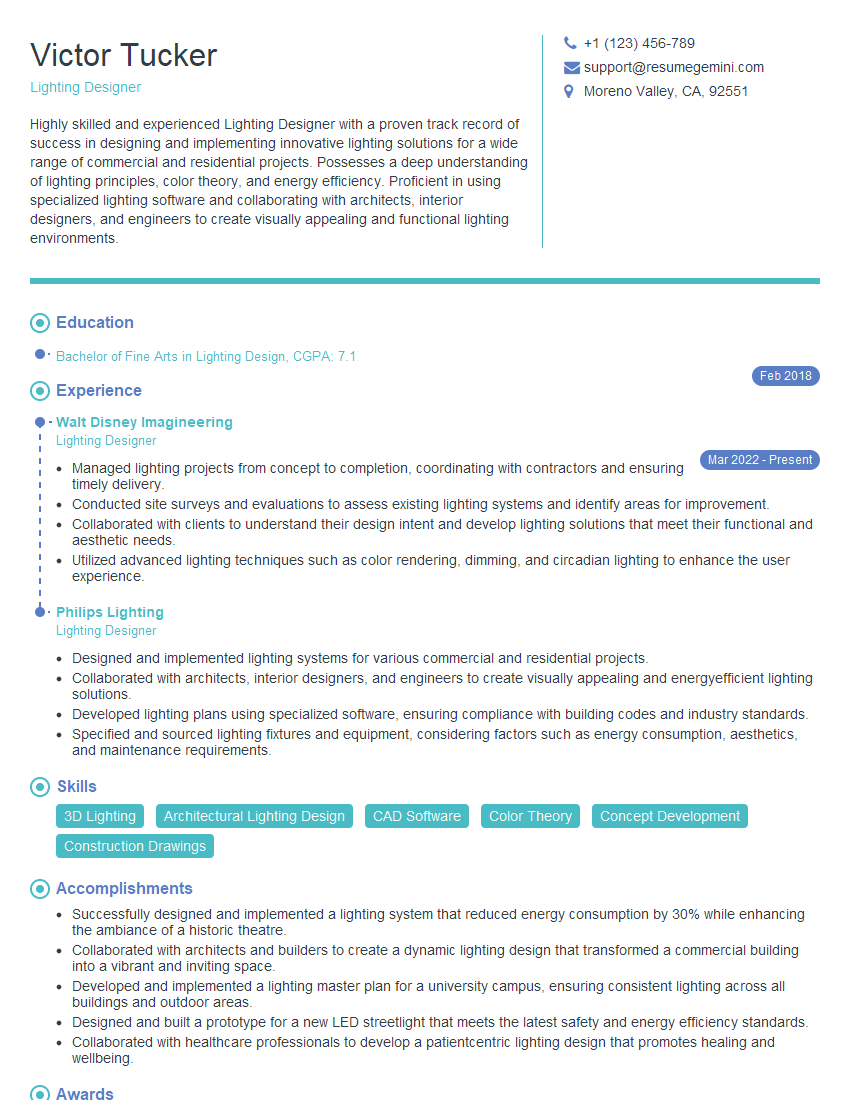
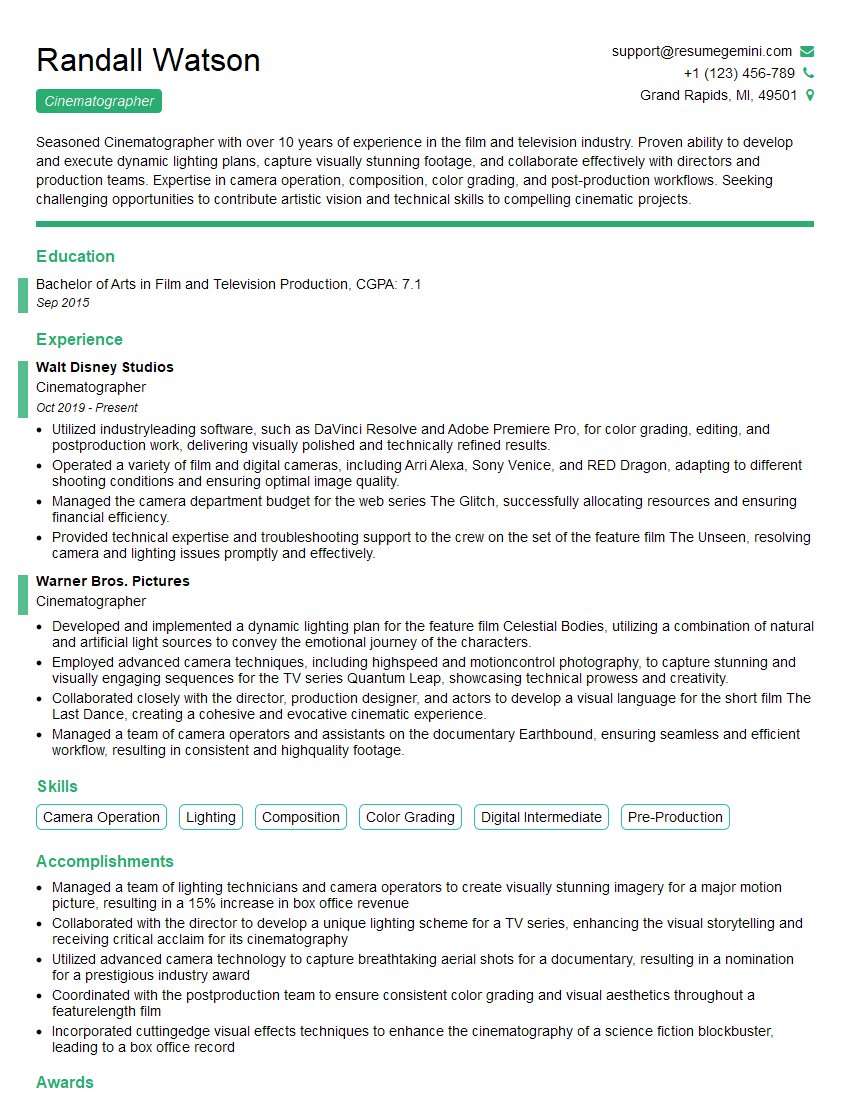
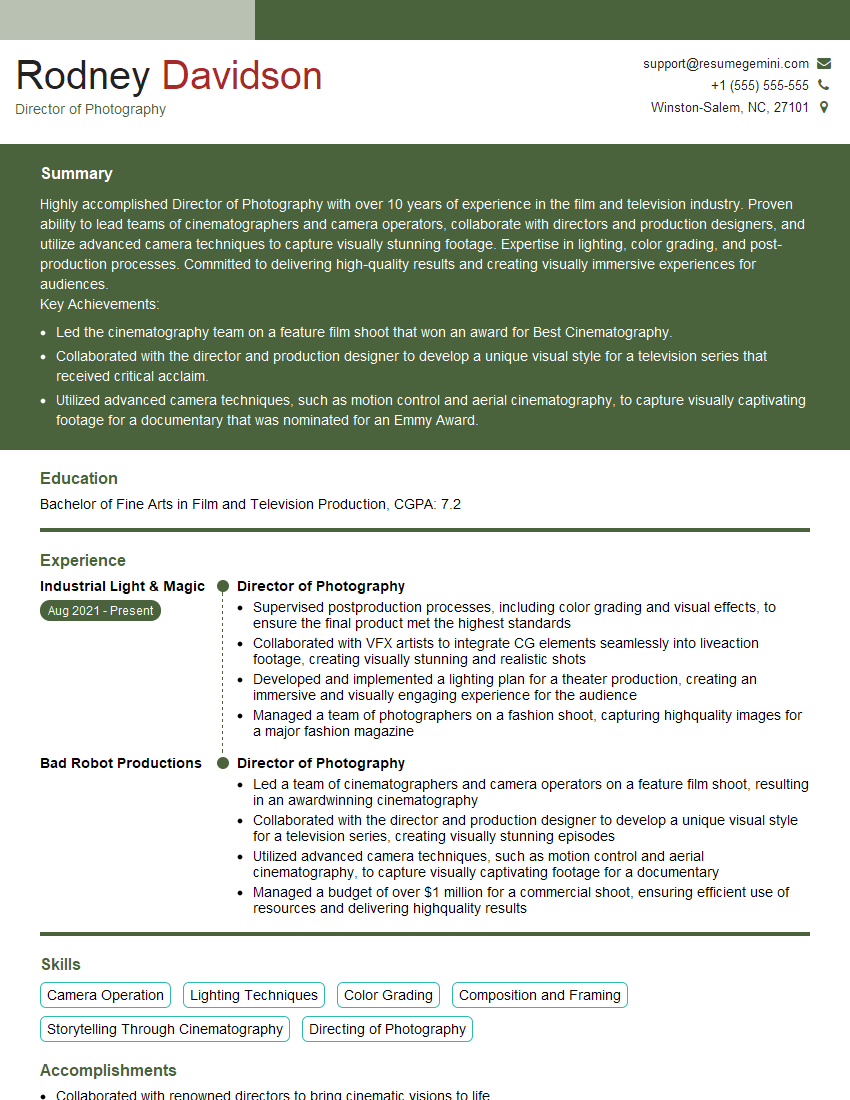
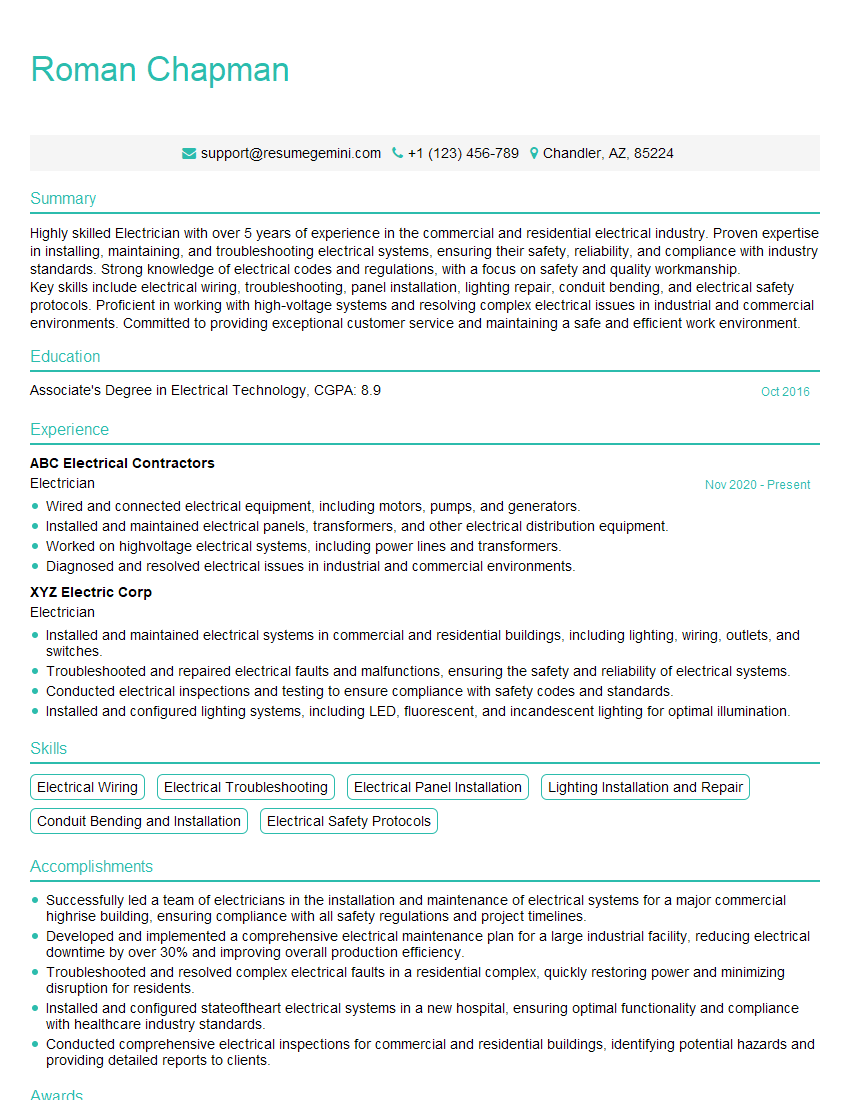
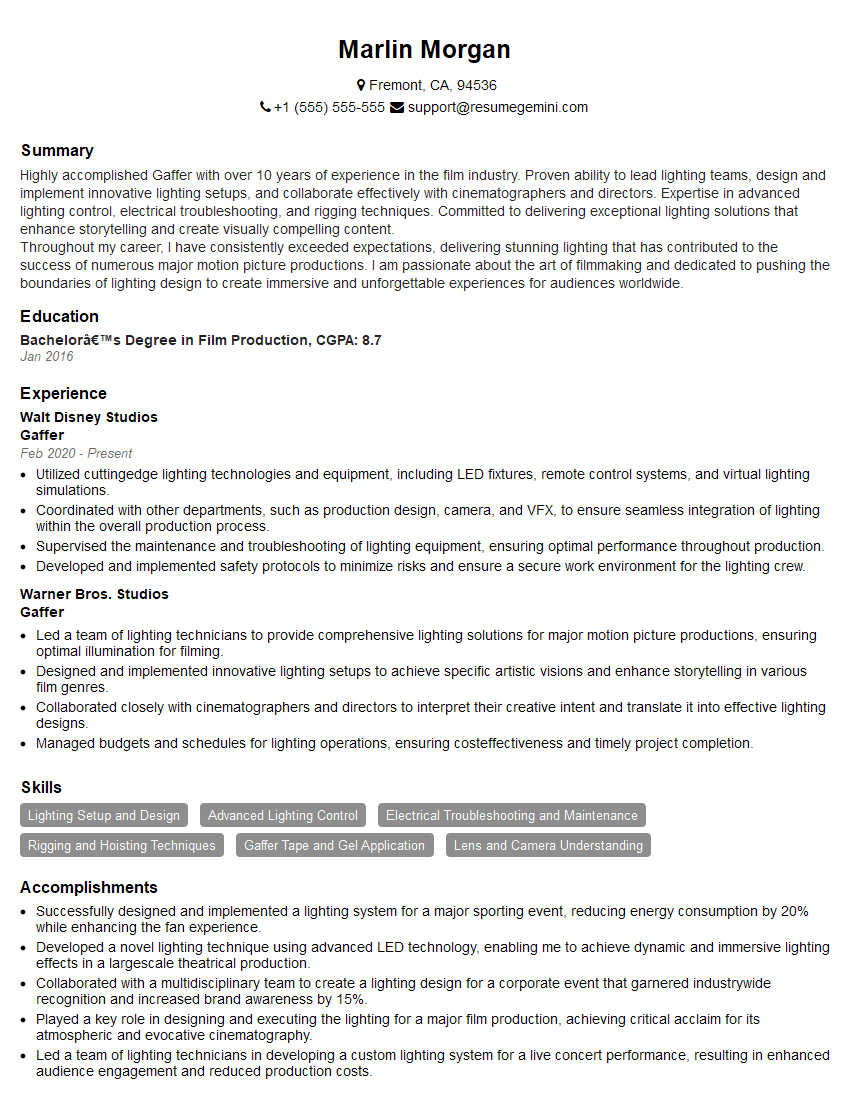
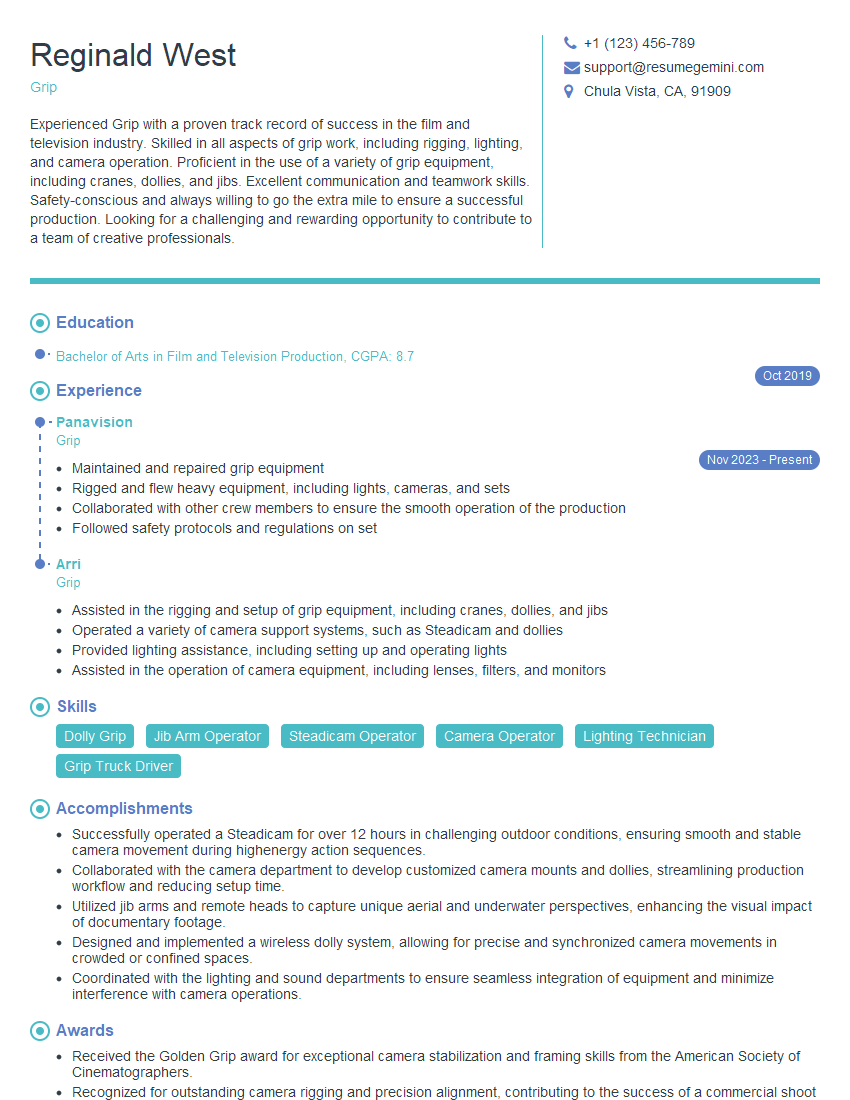
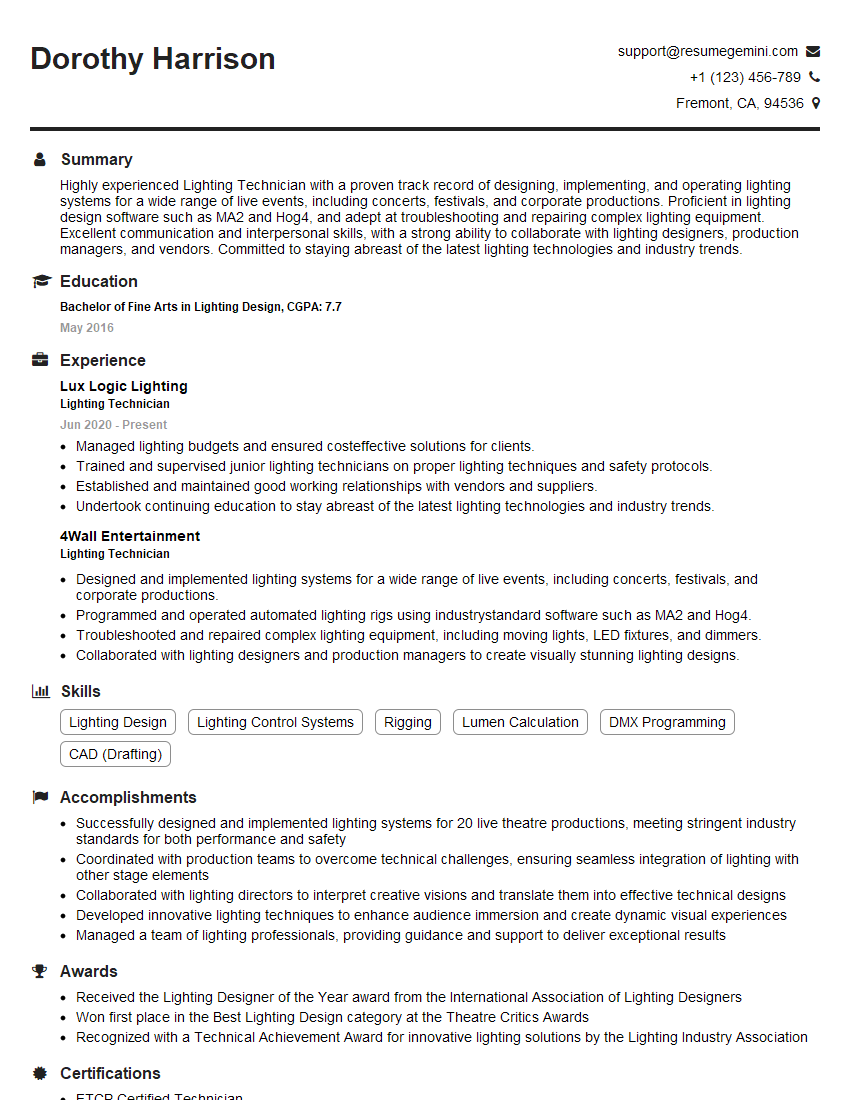
Mastering lighting setup is crucial for career advancement in film, video, photography, and theater. A strong understanding of lighting principles and techniques significantly enhances your value as a professional. To secure your dream role, focus on creating an ATS-friendly resume that highlights your skills and experience effectively. ResumeGemini is a trusted resource for building professional resumes that stand out. Leverage their tools and templates to craft a compelling resume, showcasing your expertise in lighting setup. Examples of resumes tailored to Lighting Set Up are available to help you get started.
Explore more articles
Users Rating of Our Blogs
Share Your Experience
We value your feedback! Please rate our content and share your thoughts (optional).
What Readers Say About Our Blog
Very informative content, great job.
good