Are you ready to stand out in your next interview? Understanding and preparing for Linen Sorting interview questions is a game-changer. In this blog, we’ve compiled key questions and expert advice to help you showcase your skills with confidence and precision. Let’s get started on your journey to acing the interview.
Questions Asked in Linen Sorting Interview
Q 1. Describe your experience with different linen types (e.g., cotton, linen, blends).
My experience with various linen types is extensive, encompassing years of hands-on work in high-volume linen operations. I’m proficient in identifying and handling different fiber compositions, understanding their unique properties and care requirements.
- Cotton: This is a staple in most linen rooms. I’m familiar with various cotton weights, weaves (percale, sateen), and finishes (bleached, dyed). Knowing these distinctions is crucial for proper sorting and processing to prevent damage or premature wear.
- Linen (flax): I understand the luxurious feel and durability of linen but also its susceptibility to wrinkling and its need for specialized care. Identifying genuine linen from blends requires experience in assessing the drape, texture, and even the sound of the fabric.
- Blends: A significant portion of my work involves handling blends of cotton/polyester, cotton/linen, or other combinations. Understanding the blend percentage is crucial for determining the appropriate washing and drying processes to prevent shrinkage or damage. I’ve often encountered blends that require specific handling due to the inclusion of delicate materials such as silk or modal.
For example, I once encountered a batch of what appeared to be 100% cotton sheets, but upon closer inspection – through feel and testing a small, inconspicuous sample – I discovered they were a cotton/polyester blend requiring a lower wash temperature to prevent damage to the synthetic fibers.
Q 2. How do you identify and handle soiled or damaged linens?
Identifying and handling soiled or damaged linens is paramount for hygiene and cost-effectiveness. My process involves a visual inspection, followed by appropriate segregation and documentation.
- Visual Inspection: I carefully examine each piece for stains (blood, bodily fluids, etc.), tears, burns, or excessive wear. The level of soiling dictates how it’s handled – some might need pre-treatment, while severely soiled items are immediately isolated.
- Segregation: Soiled linens are separated from clean ones and placed in designated containers or bags, often color-coded for easier identification of contamination level. Damaged linens are segregated based on the type and extent of damage (e.g., minor tears vs. significant rips).
- Documentation: Any significant damage or unusual soiling is documented, including the type of damage, location, and the item’s inventory number. This information is crucial for tracking issues and informing maintenance or replacement decisions.
For instance, if I find a linen with a significant blood stain, it’s immediately isolated in a biohazard bag and handled according to our safety protocols to avoid cross-contamination.
Q 3. Explain your process for sorting linens by type and condition.
My linen sorting process is methodical and efficient, prioritizing speed without compromising accuracy. It involves a multi-step approach.
- Pre-sorting: Linens are first roughly sorted based on obvious characteristics: clean vs. soiled, towels vs. sheets, etc. This initial step significantly streamlines the subsequent steps.
- Type Sorting: Clean linens are then sorted by type (sheets, pillowcases, towels, gowns, etc.). This is often done by color-coding the designated containers or using specific sorting racks.
- Condition Sorting: Within each type, linens are sorted based on their condition – perfect, slightly worn, and damaged. Slightly worn items may be set aside for repurposing or lower-tier usage.
- Size Sorting (Optional): In some settings, further sorting by size (e.g., twin, double, queen sheets) may be necessary for efficient restocking.
Think of it like organizing a large closet; the initial rough sorting is similar to grouping clothes by type (shirts, pants, dresses) before organizing within each category by color and occasion.
Q 4. What are the key considerations when organizing linen storage?
Organizing linen storage is crucial for maintaining hygiene, efficiency, and linen lifespan. Key considerations include:
- Accessibility: Frequently used items should be easily accessible, while less frequently used items can be stored further back. Shelving and racking systems should be well-designed to maximize space and facilitate retrieval.
- Hygiene: Storage areas must be clean, dry, and well-ventilated to prevent mildew or pest infestations. Linens should be stored properly folded or rolled to avoid wrinkles and keep them fresh.
- Inventory Management: Clear labeling and inventory tracking systems are essential for locating specific items quickly and preventing losses. Consider using barcodes or RFID tags for advanced inventory management.
- Safety: Heavy items should be stored on lower shelves, and the storage area should be adequately lit to prevent accidents. Appropriate fire safety measures should be in place.
For example, I once implemented a color-coded shelving system, with different colors representing different linen types and sizes, dramatically improving efficiency in our linen room.
Q 5. How do you ensure the efficient flow of linens through the sorting process?
Efficient linen flow is achieved through a combination of streamlined processes, appropriate equipment, and staff training.
- Workstations: Having designated workstations for each stage of the sorting process helps avoid bottlenecks and keeps the flow consistent. Clearly defined responsibilities for each workstation further contribute to efficiency.
- Equipment: Using appropriate equipment such as sorting carts, linen chutes, and folding machines can significantly improve speed and reduce manual handling, thereby minimizing wear and tear on the linens and reducing worker fatigue.
- Staff Training: Well-trained staff is key to a smooth process. Employees must be familiar with linen types, sorting procedures, and hygiene protocols to handle linens correctly. Regular training and feedback sessions are crucial.
- Process Optimization: Continuously evaluating the process and identifying areas for improvement is vital. Lean methodologies can be employed to eliminate waste and optimize workflow.
In one instance, we implemented a new conveyor system which automated the transfer of linens between sorting stations, resulting in a 20% increase in throughput.
Q 6. Describe your method for tracking linen inventory.
Accurate linen inventory tracking is vital for cost control and efficient operations. My method incorporates both manual and digital systems.
- Manual Tracking: This involves using count sheets or spreadsheets to record the number of linens received, sorted, and sent to various departments. Regular physical counts are essential to verify the accuracy of the records.
- Digital Tracking: Using a linen management software system provides a more comprehensive and efficient solution. This software can track linen movement, usage, and condition. It’s particularly useful in larger facilities. Features like barcoding or RFID tags can further improve the accuracy and efficiency of inventory tracking.
- Regular Audits: Periodic audits help to identify discrepancies and ensure the accuracy of the inventory records. This may involve comparing physical counts with recorded data and investigating any differences.
For example, in a previous role we implemented a barcoding system for all linens. This not only improved accuracy, but also allowed us to track the lifespan of individual linens, helping us optimize replacement schedules.
Q 7. How do you handle discrepancies in linen counts?
Discrepancies in linen counts are inevitable, but they need to be addressed promptly to maintain inventory accuracy. My approach involves a systematic investigation.
- Verify Counts: The first step is to double-check all counts, both manual and digital, to rule out simple recording errors.
- Investigate Possible Causes: Discrepancies could result from various factors: loss or damage, incorrect recording, theft, or misplacement of linens. A thorough investigation is needed to pinpoint the cause.
- Review Procedures: If discrepancies are frequent, a review of linen handling and tracking procedures is necessary to identify potential weaknesses and implement corrective measures. This might involve improved training for staff or updating inventory management systems.
- Documentation: All discrepancies, investigations, and corrective actions must be thoroughly documented to prevent future recurrences.
For instance, we once found a significant discrepancy that was traced to a labeling error. By addressing this error, we prevented similar discrepancies in the future. Regular audits and staff training are crucial to avoid such issues.
Q 8. What safety procedures do you follow when handling linens?
Safety is paramount in linen handling. My approach is multifaceted, prioritizing both personal safety and the prevention of contamination. This begins with proper personal protective equipment (PPE). This includes wearing gloves to protect against potential irritants or pathogens present in soiled linens, and in some cases, safety glasses to prevent eye injury from stray pins or needles.
Beyond PPE, I strictly adhere to safe lifting techniques to prevent back injuries. We use carts and dollies for larger loads, avoiding manual handling of excessively heavy items. Additionally, we maintain a clean and organized work environment to minimize trip hazards and falls. Any spills are immediately cleaned up, and regular maintenance checks ensure equipment is operating safely. Finally, a robust reporting system is in place for any accidents or near misses, promoting continuous improvement in safety procedures.
For example, during a particularly busy shift, a coworker almost tripped on a loose rug. Immediately, we reported it and the rug was secured. Reporting ensures that such incidents don’t repeat, promoting a culture of safety.
Q 9. How familiar are you with industrial laundry equipment?
I’m highly familiar with a wide range of industrial laundry equipment, from washers and extractors to dryers and feeders. My experience includes both operation and maintenance of these machines. I understand the different cycles, settings, and potential issues associated with each type of equipment. For example, I’m proficient in operating high-capacity industrial washers, understanding how to adjust water temperature, spin speed, and detergent levels depending on the linen type and soiling level. I’m also trained in recognizing and troubleshooting common problems like imbalances or malfunctions.
Moreover, I’m knowledgeable about preventative maintenance procedures, crucial for prolonging the lifespan of the equipment and preventing costly breakdowns. This includes regular cleaning, lubrication, and inspections to identify potential issues before they escalate. I have experience with various brands of equipment, and I am always eager to learn about new technologies and improvements in industrial laundry equipment.
Q 10. Explain your experience with linen par levels and stock replenishment.
Linen par levels and stock replenishment are critical for efficient linen management. A ‘par level’ refers to the minimum quantity of each linen item that needs to be available at all times to meet anticipated demand. My experience involves establishing these par levels based on historical data, anticipated occupancy rates, and future events or special needs (like a large conference).
Stock replenishment is then guided by these par levels. I use inventory management techniques to monitor stock levels and trigger reordering when items fall below the established par level. This process involves close collaboration with the laundry service and internal stakeholders to ensure a smooth flow of clean linens. This helps avoid shortages which can impact the service level and increase operational costs. For example, if we were to anticipate a significant increase in patient volume at a hospital, I would adjust the par levels upwards in advance to ensure sufficient linens are available. We also regularly review and adjust par levels based on actual consumption data to optimize stock and minimize waste.
Q 11. How do you prioritize tasks when facing a high volume of linens?
Prioritizing tasks during high-volume periods requires a systematic approach. I use a combination of urgency and importance to categorize tasks. The most urgent tasks, like those directly impacting patient care or guest service, are addressed first. For example, if we suddenly have a shortage of clean bed linens during a peak occupancy period, that becomes the highest priority.
I utilize a process that combines urgency and importance. The Eisenhower Matrix (Urgent/Important) is quite effective. Urgent and important tasks are addressed immediately, important but not urgent tasks are scheduled, urgent but not important tasks are delegated if possible, and neither urgent nor important tasks are eliminated or postponed.
Furthermore, effective communication with the team is key. I clearly communicate priorities to the team and ensure everyone understands their roles in achieving the overarching goal of efficiently processing the linen load.
Q 12. Describe your experience with using linen management software.
I have extensive experience using linen management software. This includes inputting data on linen inventory, tracking linen movement (from soiled to clean, and to different locations), generating reports on linen usage and costs, and forecasting linen needs. The software I have experience with allows for automation of several tasks like ordering and generating reports. This greatly improves efficiency and accuracy compared to manual tracking.
For instance, one software I’ve used generated automated alerts when linen stock reached a pre-defined low level, triggering the restocking process automatically which ensures we are never caught short. The data collected by the software provides detailed insights into our linen consumption, allowing for data-driven decisions regarding par level adjustments and cost optimization. The ability to track linen lifecycle from procurement to disposal enhances efficiency and cost effectiveness.
Q 13. What is your approach to maintaining cleanliness and hygiene in the linen room?
Maintaining cleanliness and hygiene in the linen room is crucial for preventing cross-contamination and ensuring the quality of the linens. My approach involves a multi-pronged strategy. This starts with regular cleaning and disinfection of all surfaces, including floors, walls, and equipment. We use appropriate disinfectants to eliminate bacteria and viruses.
Proper waste disposal is essential. Soiled linens are handled carefully, immediately placed into appropriate containers, and promptly transported to the laundry. We follow strict protocols to prevent the spread of contamination. Furthermore, pest control measures are implemented to keep the linen room free from insects and rodents.
Regular inspections are performed to identify and address any potential hygiene issues promptly. This includes visual inspections as well as more thorough checks to ensure proper ventilation and temperature control. All staff are trained on proper hygiene protocols, emphasizing handwashing and the use of PPE. For example, if a spill occurs, we immediately clean it up using appropriate cleaning agents and follow a strict protocol to prevent any potential hazards.
Q 14. How do you identify and address linen quality issues?
Identifying and addressing linen quality issues requires a keen eye for detail and a systematic approach. I start by regularly inspecting linens for damage, stains, tears, and fading. Any issues are documented and categorized, allowing us to track trends and identify root causes.
For example, if we see a recurring pattern of staining on a particular type of linen, this could indicate a problem with the cleaning process or the type of detergent being used. Understanding the source allows for corrective actions such as adjusting cleaning protocols or replacing damaged items.
We maintain a system for tracking linen lifespan, identifying items that are nearing the end of their useful life. This information helps with budgeting for replacements and maintaining a consistent quality of linens. Collaboration with laundry services is crucial. Open communication helps to address any issues concerning cleaning practices or potential equipment problems. This proactive approach ensures the maintenance of high linen quality standards and cost-effectiveness.
Q 15. How do you ensure the timely delivery of clean linens?
Timely delivery of clean linens hinges on a well-orchestrated system encompassing efficient sorting, processing, and distribution. Think of it like a perfectly choreographed dance: each step must flow seamlessly into the next.
We begin with a robust inventory management system that tracks linen usage and anticipates demand. This allows us to schedule laundering and restocking proactively, minimizing delays. For example, if we notice a spike in towel usage after a major conference, we adjust our laundry schedule accordingly. Next, we optimize our sorting process by categorizing linens (sheets, towels, pillowcases, etc.) quickly and accurately, streamlining the flow through the washing, drying, and folding stages. Finally, a precise delivery schedule, tailored to the needs of each department or client, ensures linens reach their destination on time and in optimal condition. Delayed deliveries are meticulously investigated, and process improvements are implemented to prevent recurrence.
Career Expert Tips:
- Ace those interviews! Prepare effectively by reviewing the Top 50 Most Common Interview Questions on ResumeGemini.
- Navigate your job search with confidence! Explore a wide range of Career Tips on ResumeGemini. Learn about common challenges and recommendations to overcome them.
- Craft the perfect resume! Master the Art of Resume Writing with ResumeGemini’s guide. Showcase your unique qualifications and achievements effectively.
- Don’t miss out on holiday savings! Build your dream resume with ResumeGemini’s ATS optimized templates.
Q 16. What are the common challenges you face in linen sorting, and how do you address them?
Common challenges in linen sorting include mismatched sets, damaged linens, and incorrect labeling. Dealing with these requires a multi-pronged approach.
- Mismatched sets: We implement a color-coding system and barcode scanning to identify and reunite sets efficiently. Think of it like a detective tracking down missing puzzle pieces. If a sheet is found without a matching set, it is flagged for review and, if possible, paired later. If not, it may be moved to a secondary area for repurposing.
- Damaged linens: A designated area for damaged items helps streamline the repair or disposal process. Thorough inspection during sorting allows us to quickly identify tears, stains, or other damage, preventing these from entering circulation. Regular equipment maintenance also helps reduce the risk of damage during washing and drying.
- Incorrect labeling: Clear labeling protocols and staff training are crucial. We use standardized labels and train our staff to use barcode scanners to prevent mislabeling errors. We also implement regular audits to ensure labeling accuracy.
Addressing these challenges involves a combination of preventative measures, technological solutions, and diligent staff training, all aiming to maintain a smooth and efficient sorting process.
Q 17. Describe your experience with different folding and stacking techniques for various linens.
My experience encompasses a variety of folding and stacking techniques tailored to different linen types. The goal is always to maximize space, minimize wrinkles, and maintain a professional appearance.
- Sheets: I’m proficient in both the ‘hospital corner’ method, crucial for maintaining a crisp and hygienic look in healthcare settings, and simpler, faster methods for hotels or other environments. The choice depends on the specific needs and time constraints.
- Towels: Different folds are used depending on the towel size and intended use. Larger bath towels might be folded in thirds, while smaller hand towels may be folded in half. Consistent folding ensures a uniform and tidy appearance.
- Pillowcases: A simple, neat fold is preferred. We train staff to ensure consistent presentation that minimizes creases and maximizes storage efficiency.
The specific folding technique is often dictated by the client’s needs or internal standards, and we always adapt our approach to optimize the entire process, from sorting to storage.
Q 18. How do you handle urgent requests for specific linens?
Handling urgent linen requests requires prioritization and efficient communication. Imagine it’s a fire drill – we need to respond quickly and strategically.
Upon receiving an urgent request (e.g., a sudden increase in patient volume at a hospital), we immediately locate the requested items. If the linens are already clean and folded, they are dispatched immediately. If laundering is needed, we prioritize that specific order in our processing system. We maintain open communication with the requester, providing regular updates on the expected delivery time. A dedicated ‘urgent’ queue in our system helps prioritize these requests above others.
Clear communication and a well-organized system ensure urgent needs are met promptly without compromising the efficiency of our overall operations.
Q 19. What is your understanding of infection control protocols in relation to linen handling?
Infection control is paramount in linen handling. We adhere strictly to protocols designed to prevent the spread of pathogens. This is like implementing a strong, multi-layered security system to protect against harmful intrusions.
Our protocols include:
- Proper handling of soiled linens: Soiled linens are handled minimally and placed in designated bags to prevent contamination. We emphasize proper hand hygiene.
- High-temperature washing: Linens are washed at temperatures high enough to kill most bacteria and viruses.
- Regular disinfection of equipment: All equipment, from washing machines to carts, is regularly disinfected to maintain a hygienic environment.
- Staff training: All staff are trained in proper hygiene protocols, including handwashing, glove usage, and safe handling of potentially contaminated materials.
Regular audits and reviews ensure our infection control practices are effective and up-to-date with best practices.
Q 20. Describe your experience working in a fast-paced environment.
I thrive in fast-paced environments. Think of it as a high-energy orchestra, where every player needs to perform their part in perfect harmony and at the right time. My experience in high-volume linen processing has honed my ability to work efficiently under pressure, prioritizing tasks effectively, and adapting to unexpected changes. For example, during peak seasons, such as the holiday rush for hotels or a surge in patients in a hospital, I leverage my organizational skills and team management experience to maintain our productivity without compromising the quality of our work.
I’m adept at multi-tasking and delegating responsibilities when necessary, ensuring that all tasks are completed accurately and on time, even under pressure. Maintaining a calm and organized approach in high-stress situations is a key strength that helps me to guide and support my team.
Q 21. How do you ensure accuracy and efficiency in your work?
Accuracy and efficiency are the cornerstones of my work. These are achieved through a combination of systematic processes, technological tools, and a commitment to continuous improvement.
- Systematization: We use standardized procedures for every step, from sorting and folding to packaging and delivery. This minimizes errors and maximizes consistency.
- Technology: Barcode scanners and inventory management software help track linens accurately and prevent loss or misplacement. We can easily trace any linen item throughout the entire process.
- Continuous Improvement: Regular audits and feedback sessions help identify areas for improvement. We constantly refine our processes to optimize workflow, efficiency, and error prevention. We analyze data to identify bottlenecks and make data-driven decisions to enhance our workflow.
Through careful planning, consistent execution, and a proactive approach to quality control, we maintain a high standard of accuracy and efficiency in all our operations.
Q 22. How do you handle disagreements or conflicts with colleagues?
Disagreements are inevitable in any team, but in linen sorting, efficiency and accuracy are paramount. My approach focuses on constructive communication and finding mutually beneficial solutions. I begin by listening actively to understand my colleague’s perspective, ensuring I’ve fully grasped their point of view before responding. Then, I clearly explain my perspective, focusing on the facts and impact on the overall workflow. If a compromise isn’t immediately apparent, I suggest we collaboratively brainstorm solutions. For instance, if a colleague prioritizes a different sorting method than I do, we might trial both methods for a week, tracking efficiency and error rates to determine the best approach. This data-driven approach ensures objectivity and minimizes further conflict. Ultimately, I believe in fostering a respectful environment where open dialogue and a commitment to problem-solving prevail.
Q 23. Describe a time you had to adapt to a change in procedures.
Our laundry facility recently implemented a new linen tracking system using barcodes. Initially, the transition was challenging; the new system was complex, and there was a steep learning curve. To adapt, I volunteered to participate in the initial training sessions, actively sought clarification on any ambiguous aspects, and meticulously studied the new procedures. I then created a simple, step-by-step guide for my colleagues, highlighting key functionalities and troubleshooting common issues. I also offered to assist anyone struggling to adapt. By proactively engaging in the change and supporting my team, we smoothly transitioned to the new system, improving our linen management significantly.
Q 24. How do you maintain a positive attitude during stressful situations?
Maintaining a positive attitude during stressful situations in linen sorting, such as a large backlog or a sudden rush order, requires a multi-pronged approach. Firstly, I focus on breaking down large tasks into smaller, manageable steps. This makes the overall workload less daunting. Secondly, I prioritize tasks based on urgency and importance. This helps me stay focused and avoid feeling overwhelmed. Thirdly, I take short breaks throughout the day to clear my head and refocus my energy. Finally, I remember the importance of teamwork. By encouraging and supporting my colleagues, and celebrating even small victories, we foster a more positive work environment that helps everyone navigate stressful periods more effectively. Think of it like a relay race: each step contributes to the overall success, and celebrating each handoff keeps everyone motivated.
Q 25. How would you handle a situation where you find a piece of linen with a stain?
Discovering a stained linen item requires immediate action to prevent cross-contamination and ensure proper cleaning. My first step is to immediately isolate the stained item in a designated area to prevent it from contaminating other linens. Then, I carefully note the type of stain (e.g., blood, food, etc.), its location, and the fabric type of the linen item. This information is crucial for effective stain treatment. Next, I follow the facility’s established protocol for handling stained linens. This often involves using pre-treatment solutions before processing it through the appropriate washing cycle (guided by the washing instructions – see answer 5). If the stain is particularly stubborn or if there’s any doubt about its removal, I consult with a supervisor or experienced colleague to ensure its proper cleaning and disposal if needed. Documenting the entire process is critical for maintaining hygiene standards and traceability.
Q 26. What is your experience with different washing instructions and symbols?
My experience with washing instructions and symbols is extensive. I am proficient in interpreting various symbols, including those indicating washing temperature (e.g., 30°C, 40°C, 60°C), washing methods (e.g., gentle cycle, delicate wash), bleaching (e.g., no bleach, bleach allowed), drying methods (e.g., tumble dry low, line dry), and ironing (e.g., iron at high temperature, iron at medium temperature, no ironing). I understand the implications of each symbol and ensure that all linens are processed according to the manufacturer’s recommendations. Incorrect treatment can cause damage or shrinkage to the linens and may even result in a health hazard. For example, the symbol indicating a maximum temperature of 40°C should be adhered to stringently to prevent linen damage and maintain the integrity of the fibers.
Q 27. Describe your knowledge of various linen sizes and their typical uses.
Knowledge of linen sizes and their typical uses is fundamental. Common sizes include bath sheets (typically large and absorbent), hand towels (smaller, for hand drying), face cloths (small, for facial cleansing), pillowcases (standard and king sizes, matching pillow size), fitted sheets (designed to fit specific mattress dimensions), flat sheets (larger, used as a top sheet or blanket), and duvet covers (designed for various duvet sizes). Understanding these variations is vital for correct sorting and storage, optimizing space and maintaining organizational efficiency. For instance, larger sheets will have specific storage locations to prevent the mixing with smaller ones. We must be able to quickly locate each size when there is an order for a specific type of sheet.
Q 28. How do you ensure compliance with all relevant health and safety regulations?
Compliance with health and safety regulations is a top priority. I am familiar with and strictly adhere to all relevant guidelines related to handling linens, including those regarding hygiene, infection control, and personal protective equipment (PPE). This includes the proper handling of potentially contaminated linens, using appropriate PPE such as gloves and aprons, and ensuring correct disposal of waste. Regular training on safety protocols is critical, and I actively participate in any refresher courses. Furthermore, I always report any unsafe conditions or potential hazards immediately to my supervisor, ensuring a safe and compliant working environment for all. Regular inspections of machinery and work areas are done to ensure safety and efficiency, further reducing any potential hazard.
Key Topics to Learn for Linen Sorting Interview
- Linen Identification and Classification: Understanding different types of linen (e.g., sheets, towels, uniforms), their materials, and appropriate sorting categories.
- Sorting Techniques and Procedures: Mastering efficient sorting methods based on color, size, type, and condition; knowledge of industry best practices and safety protocols.
- Quality Control and Damage Assessment: Identifying stains, tears, and other damage; understanding procedures for handling damaged linen and reporting quality issues.
- Inventory Management and Tracking: Familiarity with linen tracking systems, understanding inventory counts, and reporting discrepancies.
- Equipment Operation and Maintenance: Safe and efficient operation of sorting machinery (e.g., conveyor belts, sorters); basic understanding of routine maintenance.
- Hygiene and Sanitation: Adherence to strict hygiene and sanitation protocols to prevent cross-contamination and maintain a clean work environment.
- Teamwork and Communication: Effective communication with colleagues and supervisors; ability to work collaboratively in a fast-paced environment.
- Problem-solving and Troubleshooting: Identifying and resolving issues related to sorting, processing, or equipment malfunctions; applying logical thinking to improve efficiency.
Next Steps
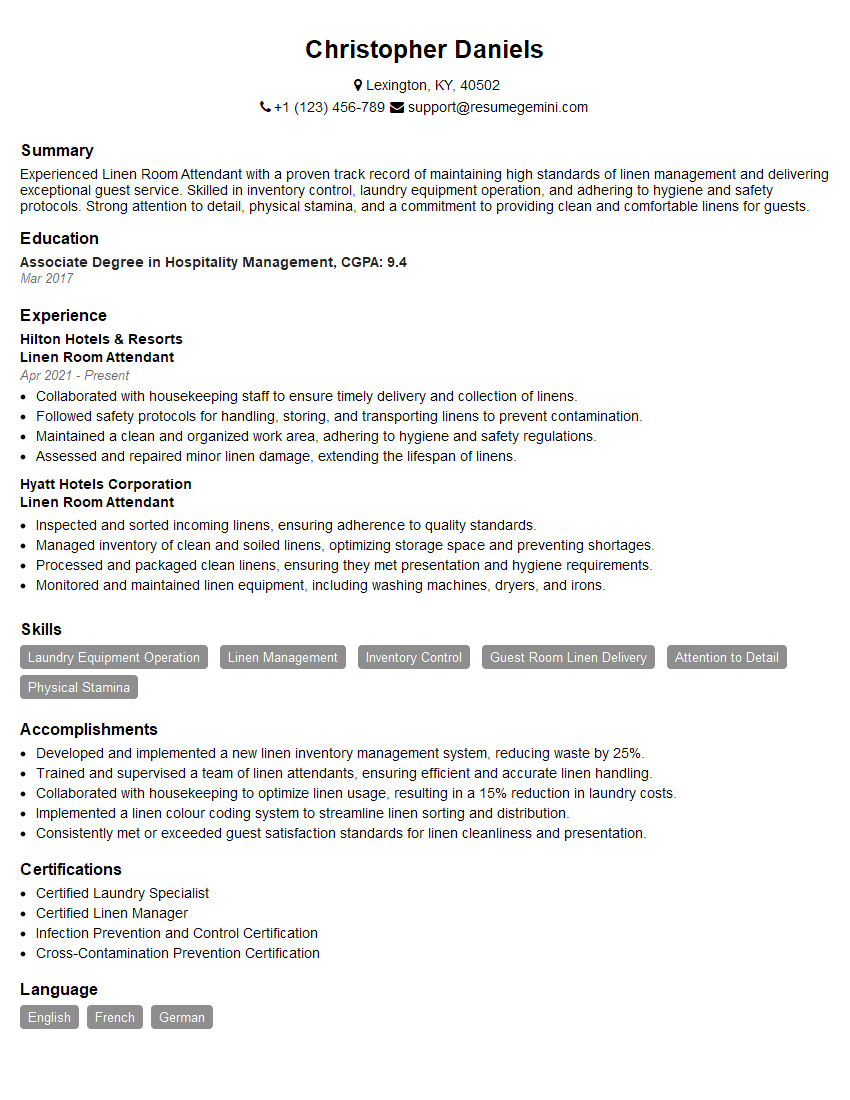
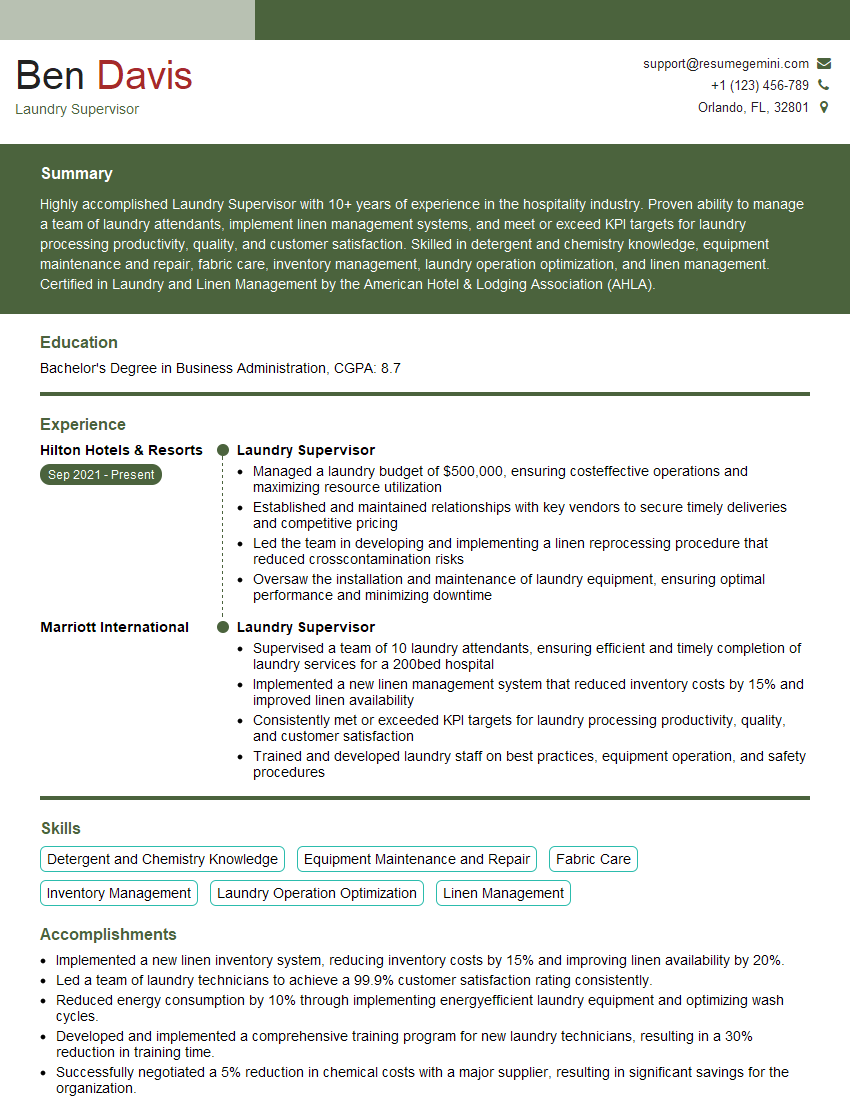
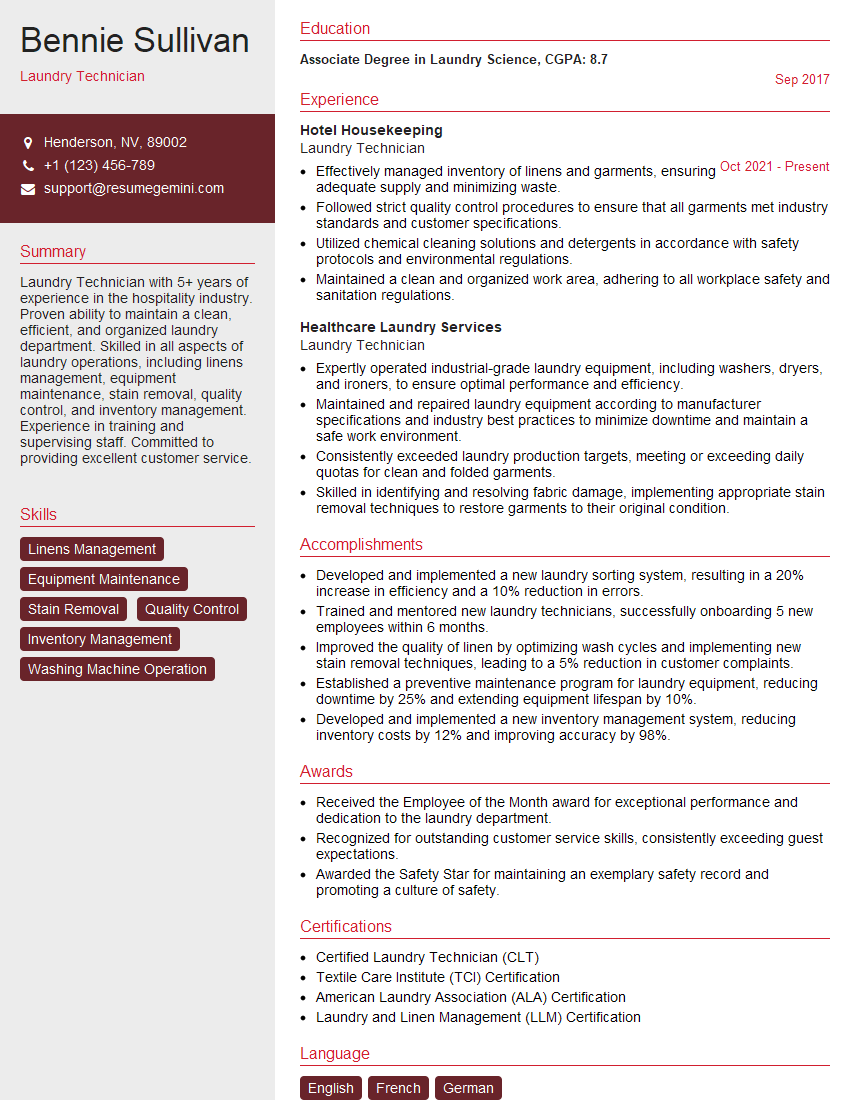
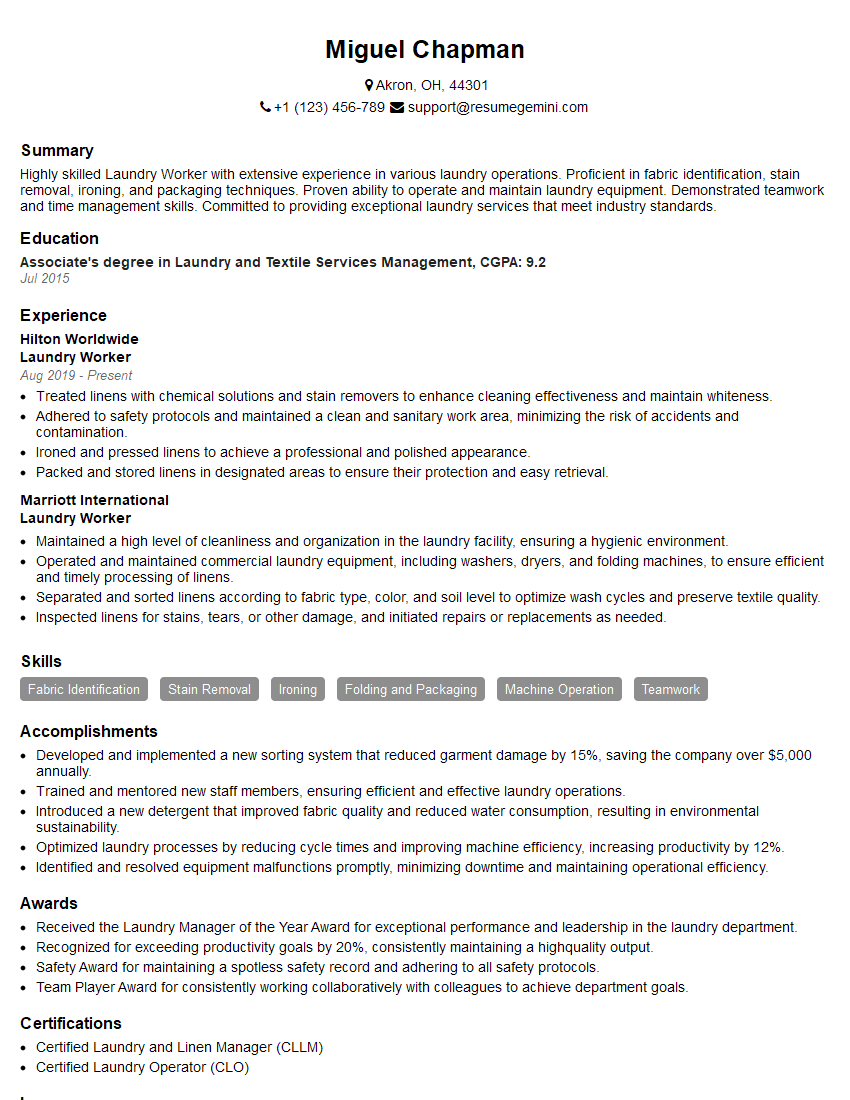
Mastering linen sorting skills opens doors to various roles within the hospitality, healthcare, or laundry industries, offering opportunities for career advancement and specialization. To significantly boost your job prospects, creating an ATS-friendly resume is crucial. ResumeGemini is a trusted resource to help you build a professional and impactful resume that highlights your skills and experience. Examples of resumes tailored to Linen Sorting are provided to guide you in crafting your application materials.
Explore more articles
Users Rating of Our Blogs
Share Your Experience
We value your feedback! Please rate our content and share your thoughts (optional).
What Readers Say About Our Blog
Very informative content, great job.
good