Every successful interview starts with knowing what to expect. In this blog, we’ll take you through the top Radiological Control interview questions, breaking them down with expert tips to help you deliver impactful answers. Step into your next interview fully prepared and ready to succeed.
Questions Asked in Radiological Control Interview
Q 1. Define ALARA principle and explain its practical application.
The ALARA principle, short for “As Low As Reasonably Achievable,” is a fundamental guideline in radiological protection. It emphasizes that radiation exposure should be kept as low as possible, taking into account economic and social factors. It’s not about eliminating all radiation exposure – that’s often impractical – but about minimizing unnecessary exposure.
Practical Application: Imagine a hospital using a medical isotope for diagnosis. ALARA dictates that they should optimize shielding around the device, use the lowest effective dose to get a clear image, and employ proper procedures to limit worker exposure. They might use shorter exposure times, maximize distance from the radiation source, or utilize additional shielding materials, all while balancing the need for effective diagnosis with radiation safety.
For example, a technician might use lead aprons and gloves when handling radioactive materials. While completely eliminating exposure is impossible, this minimizes exposure to the technician.
Q 2. Describe the different types of ionizing radiation and their relative biological effectiveness.
Ionizing radiation is radiation that carries enough energy to ionize atoms or molecules, meaning it can strip electrons from them. This ionization process can damage biological tissues and DNA. There are several types:
- Alpha particles: Heavily ionizing, short-range particles. They pose a significant internal hazard if ingested or inhaled but are easily stopped by a sheet of paper or skin. Their Relative Biological Effectiveness (RBE) is high (around 20).
- Beta particles: Moderately ionizing, longer-range particles than alpha particles. They can penetrate skin but are usually stopped by thin sheets of metal. Their RBE is around 1.
- Gamma rays and X-rays: Electromagnetic radiation, highly penetrating. They require thick shielding (e.g., lead) for protection. Their RBE is around 1.
- Neutrons: Uncharged particles that interact strongly with atomic nuclei, causing significant damage. They require special shielding (e.g., water, concrete, boron). Their RBE varies greatly depending on energy.
Relative Biological Effectiveness (RBE) compares the biological effectiveness of different types of radiation. It’s a relative scale; a higher RBE means a given radiation dose produces more biological damage. Alpha particles, due to their high ionization density, have a high RBE.
Q 3. Explain the concept of half-life and its importance in radiological control.
Half-life is the time it takes for half of the radioactive atoms in a sample to decay. This is a fundamental concept for radiological control because it dictates how long a material remains radioactive and, consequently, how long it poses a hazard.
Importance in Radiological Control: Knowing the half-life is crucial for determining storage times, disposal methods, and safety procedures. For example, a material with a short half-life will decay quickly, reducing its hazard more rapidly. Materials with long half-lives require longer-term management and careful handling to minimize exposure risks over many years. Imagine managing waste from a nuclear power plant. Understanding the half-lives of the radioactive isotopes present dictates the long-term storage and disposal strategies required.
Q 4. What are the different methods used for radiation monitoring?
Radiation monitoring employs various methods to assess radiation levels and protect personnel. Methods include:
- Area monitoring: Using instruments like Geiger-Müller counters or ionization chambers to measure ambient radiation levels in a specific location.
- Personal monitoring: Employing dosimeters (e.g., film badges, thermoluminescent dosimeters – TLDs) to measure the radiation dose received by individuals.
- Environmental monitoring: Analyzing samples (soil, water, air) to determine the presence and levels of radioactive contaminants.
- Wipe tests: Using swabs to check surfaces for radioactive contamination.
These methods are selected based on the type and intensity of radiation being monitored and the level of accuracy required.
Q 5. How do you calculate radiation exposure?
Calculating radiation exposure involves determining the absorbed dose and then weighting it by the type of radiation to account for its biological effectiveness. The unit of absorbed dose is the Gray (Gy), which represents the energy absorbed per unit mass of tissue. The unit of equivalent dose is the Sievert (Sv), which accounts for the RBE.
The calculation varies depending on the radiation type and the specific situation, but it generally involves the following:
- Measuring the absorbed dose (Gy): This is typically done using radiation detectors, as mentioned earlier.
- Determining the radiation weighting factor (Wr): This factor reflects the RBE of the specific radiation involved (e.g., Wr = 1 for X-rays and gamma rays, Wr = 20 for alpha particles).
- Calculating the equivalent dose (Sv): This is done by multiplying the absorbed dose by the radiation weighting factor: Equivalent Dose (Sv) = Absorbed Dose (Gy) x Wr
For example, an absorbed dose of 0.1 Gy from gamma radiation would result in an equivalent dose of 0.1 Sv (0.1 Gy x 1).
Q 6. What are the regulatory requirements for handling radioactive materials?
Regulatory requirements for handling radioactive materials are stringent and vary depending on the material’s type, activity, and intended use. Generally, they involve:
- Licensing and permits: Obtaining the necessary licenses and permits from the relevant regulatory authorities (e.g., the Nuclear Regulatory Commission (NRC) in the US or equivalent agencies in other countries).
- Safety training: All personnel handling radioactive materials must receive adequate training on radiation safety practices.
- Containment and shielding: Appropriate containment and shielding measures must be in place to prevent the release of radioactive materials into the environment and to protect personnel.
- Waste management: A comprehensive waste management plan must be implemented to safely handle and dispose of radioactive waste.
- Monitoring and surveillance: Regular monitoring of radiation levels and personnel dose is required to ensure compliance with regulations.
- Reporting and record-keeping: Detailed records of all activities involving radioactive materials must be maintained.
Non-compliance can lead to significant fines and legal consequences.
Q 7. Explain the different types of radiation detectors and their applications.
Various radiation detectors exist, each suited to specific applications:
- Geiger-Müller (GM) counters: Simple, portable detectors that measure radiation intensity. They are widely used for area monitoring and contamination surveys. Good for detecting many types of radiation but don’t provide precise dose measurements.
- Ionization chambers: More accurate for measuring higher radiation levels and providing dose measurements, often used for area monitoring in high-radiation environments.
- Scintillation detectors: Highly sensitive detectors capable of measuring various types of radiation. They use a scintillating material that emits light when radiation interacts with it, which is then detected by a photomultiplier tube. Used for spectroscopy and precise radiation identification.
- Thermoluminescent dosimeters (TLDs): Passive dosimeters that measure the accumulated radiation dose over time. They are commonly used for personal monitoring.
- Proportional counters: These detectors provide energy discrimination capabilities, distinguishing radiation types based on the energy deposited. They’re often used in specialized applications.
The choice of detector depends on the type of radiation being measured, the required sensitivity, and the application’s specific needs.
Q 8. Describe the process of decontamination after a radiological incident.
Decontamination after a radiological incident is a crucial process aimed at removing radioactive material from personnel, equipment, and the environment. It’s a systematic approach, varying in complexity depending on the nature and extent of the contamination. The process generally involves these steps:
- Initial Assessment: This involves determining the type and level of contamination using radiation detection instruments like Geiger counters or survey meters. This helps to define the scope of the decontamination effort and the appropriate methods to be used.
- Isolation and Control: The contaminated area is isolated to prevent further spread of contamination. This might involve establishing a perimeter, controlling access, and using air filtration systems.
- Removal of Loose Contamination: This often begins with simple methods like vacuuming, brushing, or wiping with damp cloths. This removes the easily removable surface contamination.
- Washing and Decontamination: More thorough cleaning using water, detergents, and specialized decontaminants may be necessary. The choice of cleaning agent depends on the type of radioactive material and the surface being decontaminated. For example, different detergents might be used for clothing versus metal surfaces.
- Disposal of Waste: Contaminated materials, including clothing, tools, and cleaning solutions, are treated as radioactive waste and disposed of according to regulations. This requires proper packaging, labeling, and transportation to a licensed disposal facility.
- Monitoring and Verification: After decontamination, radiation levels are measured again to verify the effectiveness of the process. This ensures that the area and personnel are safe before returning to normal operations.
For instance, imagine a spill of radioactive liquid in a laboratory. Initial assessment would involve identifying the extent of the spill. Loose contamination would be removed with absorbent materials. Then, thorough washing with a specialized detergent would follow, and all waste would be meticulously bagged and labeled for disposal.
Q 9. What are the different types of personal protective equipment (PPE) used in radiological control?
Personal Protective Equipment (PPE) in radiological control is critical for minimizing radiation exposure to personnel. The specific PPE depends on the anticipated level of radiation and the type of radioactive material involved. Common types include:
- Respirators: These protect against inhalation of airborne radioactive particles. Types range from simple dust masks to sophisticated air-purifying respirators or supplied-air respirators (SARs) for higher levels of protection.
- Protective Clothing: This can include disposable coveralls, gloves, shoe covers, and protective aprons made of materials that minimize penetration of radiation. Lead aprons are commonly used for protecting against higher-energy radiation.
- Radiation Dosimeters: These devices measure the amount of radiation absorbed by individuals. They provide essential data for monitoring radiation exposure and ensuring that safety limits are not exceeded. Different types exist, such as thermoluminescent dosimeters (TLDs) and electronic personal dosimeters (EPDs).
- Protective Eyewear: Safety glasses or goggles offer protection against splashes and airborne particles, particularly relevant if working with radioactive liquids.
For example, during a response to a nuclear power plant accident, personnel might wear full-body Tyvek suits, respirators with air supply, and radiation dosimeters to protect against potential exposures to a wide spectrum of radioactive materials.
Q 10. How do you assess the risk associated with a radiological source?
Assessing the risk associated with a radiological source involves considering several factors in a structured way. A common approach uses the ALARA principle (As Low As Reasonably Achievable). Key aspects of the risk assessment include:
- Source Identification: Determining the type of radioactive material, its activity (measured in Becquerels or Curies), and its physical form (solid, liquid, gas).
- Exposure Pathways: Identifying how radiation could reach individuals. This includes external exposure (direct radiation from the source), inhalation of radioactive particles, and ingestion of contaminated food or water.
- Exposure Time: The longer the exposure to a radioactive source, the higher the dose received.
- Distance: Radiation intensity decreases rapidly with distance from the source. Increasing the distance is an effective way to reduce exposure.
- Shielding: Using shielding materials (lead, concrete, water) to absorb radiation and reduce exposure.
- Radiation Level Measurement: Employing radiation detection instruments to quantify radiation levels in the area and ensure they are within acceptable limits.
Imagine you are assessing a lost radioactive source. First, identify the source (e.g., a sealed cesium-137 source). Then, assess the pathways (external exposure to the source, potential contamination of the surrounding area). Next, measure radiation levels at different distances. Finally, decide on control measures, including shielding, and the need for decontamination.
Q 11. Explain the concept of shielding and its role in radiation protection.
Shielding is the use of materials to reduce exposure to ionizing radiation. Different materials are effective against different types of radiation. The effectiveness of shielding depends on the energy of the radiation, the thickness of the shield, and the density of the material.
- Types of Shielding Materials: Common shielding materials include:
- Lead: Highly effective against gamma rays and X-rays.
- Concrete: Effective against gamma rays and neutrons.
- Water: Effective against gamma rays and neutrons.
- Steel: Effective against beta particles and low-energy gamma rays.
- Shielding Design: The design of shielding considers the geometry of the radiation source and the surrounding environment. It aims to minimize exposure pathways and maximize shielding effectiveness.
For example, in a medical X-ray room, lead shielding is used in the walls, ceiling, and door to protect personnel outside the room. In nuclear reactors, thick concrete shields are used to protect workers from the intense radiation emitted during operation.
Q 12. What are the different methods used to control airborne radioactive contamination?
Controlling airborne radioactive contamination involves preventing the spread of radioactive particles through the air. Methods include:
- Ventilation: Using exhaust fans and ventilation systems to remove contaminated air from a building or area. This often involves HEPA (High-Efficiency Particulate Air) filtration to trap radioactive particles.
- Airborne Particle Control: Techniques to reduce the generation of airborne particles, such as using dampening techniques when handling radioactive powders.
- Respirators: Providing personnel with respirators to prevent inhalation of airborne radioactive particles.
- Containment: Keeping radioactive materials in sealed containers or glove boxes to prevent the release of airborne particles.
- Air Monitoring: Continuously monitoring air for the presence of radioactive particles to detect any releases.
For example, in a nuclear fuel reprocessing facility, specialized ventilation systems with HEPA filters are crucial for managing airborne contamination. In a laboratory handling radioactive materials, the use of glove boxes and laminar flow hoods prevents the release of airborne particles into the work environment.
Q 13. Describe the emergency procedures to follow in case of a radiological accident.
Emergency procedures for a radiological accident are designed to protect people and the environment. The specific procedures vary depending on the nature and scale of the accident, but generally include:
- Evacuation: Quickly evacuating people from the immediate vicinity of the accident to minimize exposure to radiation. This is often based on pre-defined emergency plans and evacuation routes.
- Shelter-in-Place: If evacuation isn’t feasible, people might be instructed to remain indoors and take shelter to minimize exposure.
- Contamination Control: Establishing a perimeter around the contaminated area to prevent further spread of contamination. This involves setting up checkpoints and controlling access to the area.
- Medical Assistance: Providing medical assistance to those who have been exposed to radiation.
- Radiation Monitoring: Conducting radiation monitoring of the affected area to assess the extent of contamination and guide response efforts.
- Decontamination: Decontaminating personnel and equipment exposed to radiation. This might involve washing, using specialized decontaminants, and replacing clothing.
- Communication: Establishing clear communication channels to keep people informed about the situation and provide instructions.
A well-rehearsed emergency response plan is crucial. For example, drills and training exercises help personnel understand their roles and responsibilities during a radiological accident. This ensures a swift and effective response.
Q 14. What is the importance of radiation dosimetry and how is it performed?
Radiation dosimetry is the measurement of radiation dose received by individuals. It’s vital for monitoring radiation exposure, ensuring compliance with safety standards, and assessing potential health effects. Accurate dosimetry is essential for occupational radiation safety.
- Methods of Dosimetry:
- Personal Dosimeters: These devices, worn by individuals, measure the radiation dose received. They include film badges, thermoluminescent dosimeters (TLDs), and electronic personal dosimeters (EPDs). TLDs, for example, store energy from radiation exposure and release it as light when heated, allowing for dose calculation.
- Area Monitoring: Radiation survey meters are used to measure radiation levels in the environment. This helps in assessing the risk to personnel and informing appropriate safety measures.
- Dose Interpretation: The measured dose is compared to regulatory limits (e.g., annual dose limits for radiation workers). Exceeding these limits may trigger further investigation and medical evaluation.
For example, in a nuclear power plant, workers routinely wear dosimeters to monitor their radiation exposure. Regular dosimeter readings are compared to regulatory limits, and if a worker’s exposure approaches the limit, corrective actions are taken to reduce their exposure. Similarly, area monitoring informs control measures and work practices to minimize exposure risks.
Q 15. Explain the concept of internal and external radiation exposure.
Radiation exposure can be categorized into two main types: internal and external. External exposure occurs when a source of ionizing radiation is outside the body, and radiation emitted from this source interacts with the body. Think of it like standing near a campfire – you feel the heat (radiation) without the embers actually touching you. Internal exposure, on the other hand, happens when radioactive material is ingested, inhaled, or absorbed through the skin, entering the body’s systems. This is like accidentally swallowing a small hot coal – the heat (radiation) comes from within your body.
Examples of external exposure include medical X-rays or exposure to gamma radiation from a sealed source. Internal exposure can occur from ingestion of contaminated food or inhalation of radioactive dust or gas. The severity of both types of exposure depends on factors such as the type and energy of the radiation, the duration of exposure, and the distance from the source.
Career Expert Tips:
- Ace those interviews! Prepare effectively by reviewing the Top 50 Most Common Interview Questions on ResumeGemini.
- Navigate your job search with confidence! Explore a wide range of Career Tips on ResumeGemini. Learn about common challenges and recommendations to overcome them.
- Craft the perfect resume! Master the Art of Resume Writing with ResumeGemini’s guide. Showcase your unique qualifications and achievements effectively.
- Don’t miss out on holiday savings! Build your dream resume with ResumeGemini’s ATS optimized templates.
Q 16. What are the legal and ethical considerations in radiological control?
Radiological control is governed by a strict framework of legal and ethical considerations, prioritizing the protection of individuals and the environment. Legally, regulations are enforced through national and international bodies, setting limits on radiation exposure for workers and the public. These regulations dictate practices like the licensing of radioactive materials, waste disposal, and emergency response protocols. Failure to comply can result in severe penalties.
Ethically, the field necessitates a strong commitment to ALARA (As Low As Reasonably Achievable). This principle guides every action, aiming to minimize radiation exposure to all individuals, even if it’s below regulatory limits. Transparency and informed consent are crucial, particularly in medical applications involving radiation. Professionals must uphold the highest standards of integrity, ensuring safety without compromising the beneficial uses of radiation in medicine, research, and industry.
Q 17. Describe the process of preparing a radiological control program.
Developing a robust radiological control program involves a systematic approach. First, a thorough hazard assessment is crucial, identifying all potential sources of radiation and their associated risks. This includes evaluating existing equipment, processes, and potential accidents. Next, a control strategy is developed, outlining specific measures to mitigate identified hazards. This may involve administrative controls (e.g., work permits, training programs), engineering controls (e.g., shielding, containment), and personal protective equipment (e.g., lead aprons, respirators).
The program also needs monitoring procedures, including regular radiation surveys, personnel dosimetry, and environmental sampling. This data is used to assess the effectiveness of controls and make necessary adjustments. Emergency preparedness is another critical component, establishing clear response plans for accidental releases or spills. Finally, training and documentation are paramount – regularly training personnel and maintaining thorough records are essential to ensure compliance and continuous improvement.
Q 18. How do you manage waste generated from radioactive sources?
Radioactive waste management is a highly regulated and crucial aspect of radiological control. Waste is categorized based on its radioactivity level (high-level, low-level, etc.), which determines disposal methods. High-level waste, which is highly radioactive and requires long-term isolation, might be vitrified (converted into glass) for safe storage in deep geological repositories. Low-level waste, emitting low levels of radiation, can be disposed of in specially designed landfills, incinerated, or treated to reduce its radioactivity.
The entire process adheres to strict regulations and involves careful handling, packaging, transportation, and monitoring to prevent environmental contamination and protect public health. This includes adhering to strict labeling procedures, utilizing specialized containers, and employing licensed transportation companies. Proper documentation and record-keeping are crucial for accountability and future management.
Q 19. What are the different types of radiation surveys and their purposes?
Radiation surveys are essential to assess the presence and levels of ionizing radiation in a given area or object. Several types of surveys exist, each with a specific purpose:
- Area Surveys: Using instruments like Geiger-Müller counters or scintillation detectors, these assess the radiation levels in a specific area, identifying hot spots or potential contamination.
- Wipe Tests: These involve swabbing a surface and analyzing the collected material to detect radioactive contamination.
- Personnel Monitoring: This utilizes dosimeters (e.g., film badges, thermoluminescent dosimeters) to measure the radiation dose received by individuals working with radioactive materials.
- Environmental Monitoring: This includes sampling air, water, and soil to determine the presence and level of radioactive contaminants in the environment.
The choice of survey type depends on the specific circumstances and the nature of the potential radiation hazard.
Q 20. Explain the difference between contamination and irradiation.
Contamination refers to the presence of unwanted radioactive material on surfaces, objects, or within living organisms. It’s like having radioactive dust settle on your clothing; the radioactivity is physically present and can be transferred. Irradiation, on the other hand, describes exposure to ionizing radiation without the radioactive material becoming part of the exposed object or organism. It’s like standing near a source of radiation; you are exposed but not contaminated.
A crucial difference is that contamination involves the physical presence of radioactive material which can spread, while irradiation involves energy transfer only. Decontamination procedures (cleaning) are necessary for contamination, while shielding or limiting exposure time are sufficient for irradiation.
Q 21. What are the effects of ionizing radiation on human health?
Ionizing radiation’s effects on human health depend on several factors including dose, dose rate, type of radiation, and the part of the body exposed. At low doses, the effects might be stochastic, meaning the probability of effects increases with dose but their severity is independent of the dose. This can lead to an increased risk of cancer or genetic mutations. Higher doses can cause deterministic effects, where the severity of the effect increases with dose. This can include acute radiation syndrome (ARS), characterized by nausea, vomiting, and potentially death at high doses, as well as skin burns, cataracts, and sterility.
The body’s response to radiation exposure is complex. DNA damage is a central concern as it can lead to cell death or mutations. The severity of the consequences depends on the ability of the body’s repair mechanisms to counteract the radiation-induced damage. Understanding these effects is paramount in setting radiation protection standards and ensuring the safe use of radioactive materials.
Q 22. Describe the role of quality assurance in radiological control.
Quality assurance (QA) in radiological control is paramount to ensuring that radiation protection programs are effective and reliable. It’s a systematic process that verifies the accuracy, consistency, and overall effectiveness of all aspects of radiation safety, from instrument calibration to personnel training. Think of it as a continuous check-up on the health of your radiation safety program.
- Instrument Calibration and Maintenance: Regular calibration of radiation detection instruments is critical. QA ensures that these instruments are providing accurate readings, reducing the risk of under- or overestimation of radiation levels.
- Personnel Training and Competency: QA includes regular assessments of radiation worker training and competency to ensure they are adequately equipped to handle radiation safety responsibilities. This might include written tests, practical demonstrations, and observations in the field.
- Procedure Review and Improvement: QA encompasses regular reviews of radiation safety procedures to ensure they are up-to-date, effective, and comply with all relevant regulations. This could involve analyzing past incidents or near misses to identify areas for improvement.
- Data Management and Record Keeping: Maintaining accurate and complete records of radiation measurements, personnel dosimetry results, and other relevant data is a cornerstone of QA. This enables tracking, trend analysis, and identification of potential issues.
For example, if a Geiger counter consistently reads higher than expected when compared to a reference instrument, the QA process would identify this discrepancy, leading to recalibration or replacement of the faulty device. This prevents potential overexposure or misinterpretation of radiation levels.
Q 23. How do you ensure the accuracy and reliability of radiation measurements?
Ensuring the accuracy and reliability of radiation measurements is foundational to radiological control. We employ several key strategies:
- Instrument Calibration: Regular calibration against traceable standards is essential. This involves comparing the instrument’s readings to those of a known, accurate source. Calibration certificates are meticulously maintained.
- Cross-Calibration: Comparing readings from multiple instruments of different types helps verify the accuracy of individual devices and identify potential discrepancies.
- Quality Control Samples: Using standardized sources or phantoms allows for routine checks on instrument performance and the consistency of measurement techniques. These checks provide ongoing verification of the data’s reliability.
- Proper Instrument Use: Correct techniques in using the instruments (e.g., appropriate distance, angle, and background subtraction) are crucial. Training is vital to guarantee consistent and accurate measurements.
- Environmental Considerations: Understanding and accounting for environmental factors that could affect measurements (e.g., temperature, humidity) is vital. We always document such conditions.
Imagine measuring radiation near a large piece of metal. The metal might scatter radiation, affecting the instrument reading. Understanding this scattering effect and accounting for it in our measurements enhances accuracy.
Q 24. What are the limitations of different radiation detection instruments?
Different radiation detection instruments have specific limitations. Understanding these limitations is critical for accurate interpretation of data.
- Geiger-Müller Counters: Simple, portable, and useful for detecting the presence of radiation, but they are not energy-specific and may not accurately measure the radiation dose.
- Survey Meters (ionization chambers): More accurate for measuring dose rates than Geiger counters, but also not energy-specific. Different types exist for different radiation types (e.g., alpha, beta, gamma).
- Proportional Counters: These offer better energy resolution than Geiger counters, allowing for the identification of different radiation types. They are more sensitive to low levels of radiation, but less portable.
- NaI(Tl) Scintillation Detectors: Highly sensitive to gamma radiation and offer good energy resolution. They’re useful for identifying different gamma-emitting isotopes, but are less sensitive to beta and alpha radiation.
- Thermoluminescent Dosimeters (TLDs): Passive dosimeters that measure the accumulated radiation dose over a period, but they require processing in a specialized lab, giving a delayed result.
For instance, a Geiger counter might indicate the presence of radiation but not the type or the precise dose rate. Using a NaI(Tl) scintillation detector might then be necessary to further characterize the radiation source. Choosing the appropriate instrument for the task is paramount.
Q 25. What is your experience with specific radiation detection equipment (e.g., Geiger counters, survey meters)?
I have extensive experience using various radiation detection instruments including Geiger-Müller counters, ionization chambers, and scintillation detectors. My experience ranges from routine surveys to complex investigations.
- Geiger Counters: I’m proficient in using Geiger counters for quick surveys to determine the presence and approximate level of radiation in an area. I’m familiar with various models and their specific capabilities and limitations.
- Survey Meters: I’ve utilized various survey meters, including those measuring different types of radiation (e.g., alpha, beta, gamma). I am adept at interpreting the data and using appropriate correction factors.
- Scintillation Detectors: I have experience using scintillation detectors, particularly in situations requiring better energy resolution to identify specific radionuclides or analyze complex radiation fields.
In one instance, I used a Ludlum Model 3 survey meter to characterize the radiation field around a sealed source for decommissioning purposes. I carefully documented the readings at multiple points and angles, noting environmental factors to ensure data integrity.
Q 26. Explain your understanding of different radiation protection standards and regulations (e.g., ICRP, NRC).
My understanding of radiation protection standards and regulations is based on a strong foundation in ICRP (International Commission on Radiological Protection) recommendations and national regulations such as those from the NRC (Nuclear Regulatory Commission) in the US. The ICRP provides internationally recognized recommendations on radiation protection principles, while national regulatory bodies like the NRC enforce these principles through specific regulations.
- ICRP Recommendations: These recommendations form the basis for radiation protection practices worldwide. Key principles include justification, optimization, and dose limitation. These principles aim to ensure that any radiation exposure is justified by the benefits received, optimized to be as low as reasonably achievable (ALARA), and kept below defined limits.
- NRC Regulations: The NRC, in the US, translates the ICRP recommendations into specific regulations governing the use of radioactive materials, radiation-producing machines, and the protection of workers and the public. These regulations address areas such as licensing, operational procedures, emergency planning, and waste disposal.
- Other Regulatory Bodies: Globally, many other regulatory agencies, such as the IAEA (International Atomic Energy Agency), have their own specific regulations, but all align with the fundamental principles set by ICRP.
For example, the NRC sets limits on annual radiation doses for radiation workers, which are based on the ICRP’s recommendations. Understanding these limits and how they are applied is crucial in managing radiation safety effectively.
Q 27. Describe a situation where you had to troubleshoot a problem related to radiation safety.
During a decommissioning project, a survey meter indicated unusually high radiation levels in a specific area. Initial investigations using a Geiger counter confirmed the elevated readings but didn’t reveal the source. The problem-solving process was as follows:
- Re-verification: We first re-checked the survey meter calibration and repeated the measurements to rule out instrument error.
- Detailed Survey: A more thorough survey was conducted using a higher-resolution scintillation detector, mapping the radiation field precisely.
- Source Identification: The scintillation detector identified the presence of a specific gamma-emitting isotope, which helped us pinpoint the potential source. This led us to a previously undocumented sealed source hidden behind some shielding.
- Corrective Action: Once identified, we safely removed the source, following all proper handling and disposal procedures.
- Post-Action Survey: A final survey confirmed that the radiation levels returned to background levels.
This experience highlighted the importance of using multiple instruments, methodical investigation, and detailed record-keeping in troubleshooting radiation safety issues.
Q 28. How do you communicate radiation safety information effectively to different audiences?
Effective communication of radiation safety information is critical. It needs to be tailored to the audience’s level of understanding.
- Technical Audiences: For radiation protection professionals, I use precise technical language and data to convey information. Detailed reports, presentations, and discussions of technical aspects of radiation safety are effective here.
- Non-Technical Audiences: For the general public or non-radiation workers, I employ simple, clear language, avoiding jargon. Analogies and visual aids help in explaining complex concepts. Focus is placed on minimizing potential risks and assuring safety.
- Training Sessions: Interactive training sessions incorporating both theoretical and practical elements are highly effective for teaching radiation safety procedures. I use hands-on demonstrations and practical exercises to reinforce concepts.
- Written Materials: Clear and concise safety manuals, SOPs (Standard Operating Procedures), and other written materials are essential. These should be easily accessible and regularly reviewed.
For example, when explaining radiation to the public, I might use analogies like comparing radiation exposure to sunlight exposure to make the concepts more relatable and less frightening.
Key Topics to Learn for Your Radiological Control Interview
Preparing for a Radiological Control interview requires a multifaceted approach, blending theoretical knowledge with practical experience. This section outlines key areas to focus your studies.
- Radiation Protection Principles: Understand the fundamental principles of radiation protection, including ALARA (As Low As Reasonably Achievable), time, distance, and shielding. Be prepared to discuss these concepts in detail and apply them to various scenarios.
- Radiation Detection and Measurement: Familiarize yourself with different types of radiation detectors and their applications. Practice interpreting radiation readings and understanding the limitations of various instruments. Be ready to discuss calibration and maintenance procedures.
- Radiation Safety Regulations and Standards: Thorough knowledge of relevant regulations and standards (e.g., those from the NRC, IAEA, or your country’s equivalent) is crucial. Be prepared to discuss specific regulations and how they apply to practical situations.
- Contamination Control: Understand the principles of contamination control, including techniques for preventing, detecting, and remediating contamination. This includes surface monitoring, decontamination procedures, and waste management.
- Emergency Response Procedures: Familiarize yourself with emergency response protocols for radiological incidents. Be prepared to discuss your understanding of evacuation procedures, emergency equipment, and personal protective equipment (PPE).
- Dosimetry and Personnel Monitoring: Understand the principles of dosimetry and how personnel radiation exposure is monitored and recorded. Be prepared to discuss different types of dosimeters and their limitations.
- Practical Problem Solving: Practice applying your knowledge to real-world scenarios. Consider hypothetical situations and how you would approach them using your understanding of radiation safety principles and regulations.
Next Steps: Launching Your Radiological Control Career
Mastering Radiological Control opens doors to a rewarding and impactful career, offering opportunities for growth and specialization. A strong resume is your key to unlocking these opportunities. Creating an ATS-friendly resume that highlights your skills and experience is essential for getting your application noticed.
To significantly improve your job prospects, we recommend using ResumeGemini. ResumeGemini provides a user-friendly platform to craft a compelling resume tailored to the specific demands of the Radiological Control field. Examples of resumes optimized for this industry are available to guide you. Take the next step towards your dream job – build a powerful resume with ResumeGemini today!
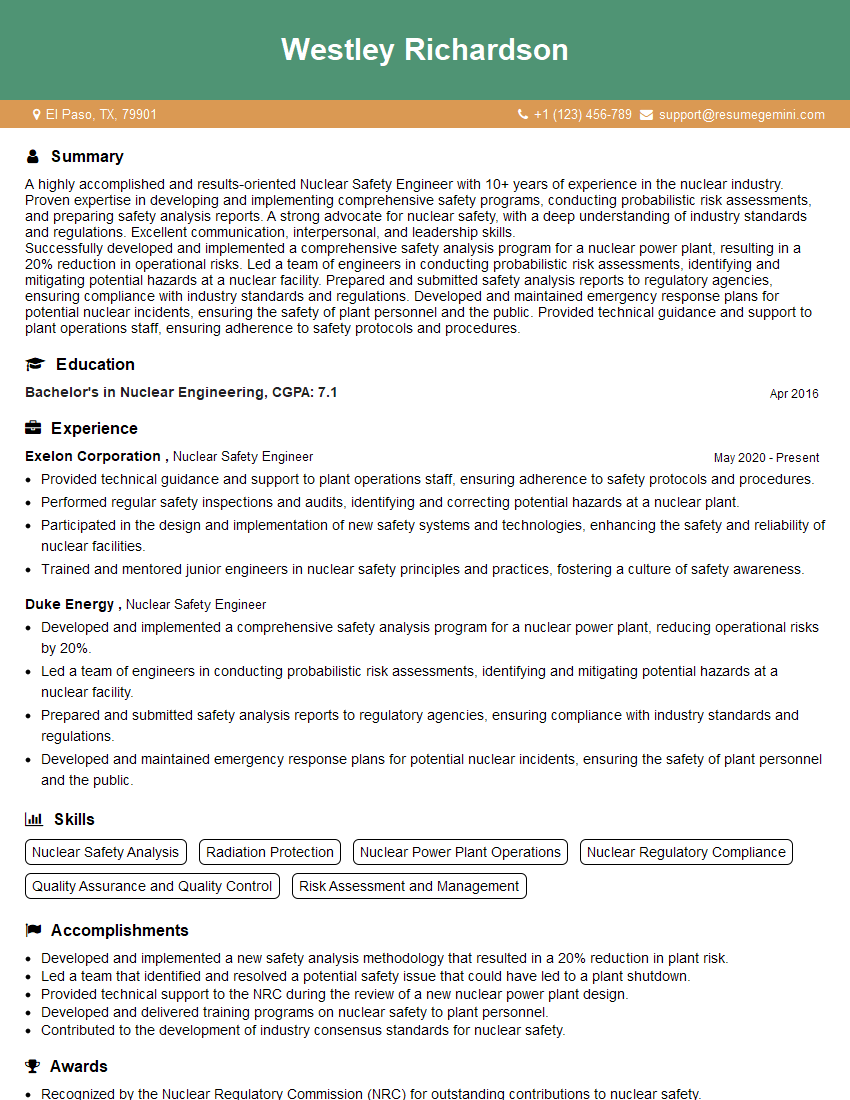
Nuclear Safety Engineer Resume Sample
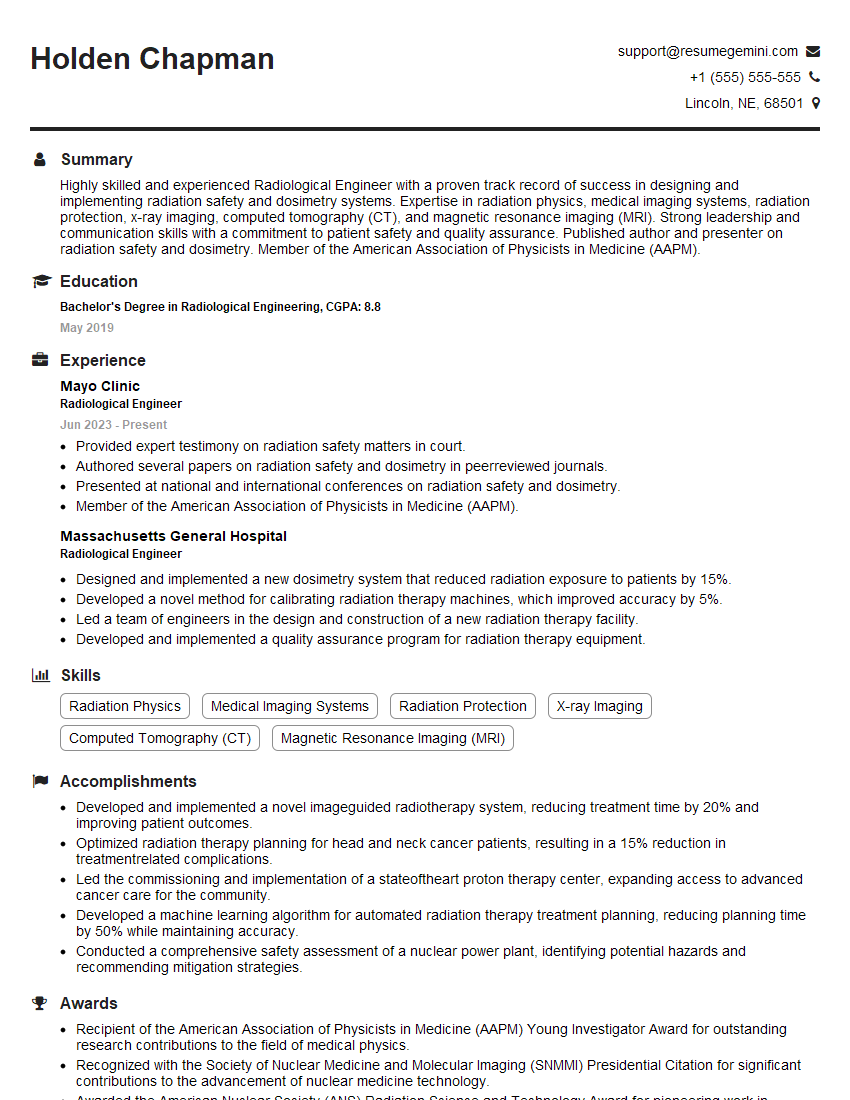
Radiological Engineer Resume Sample
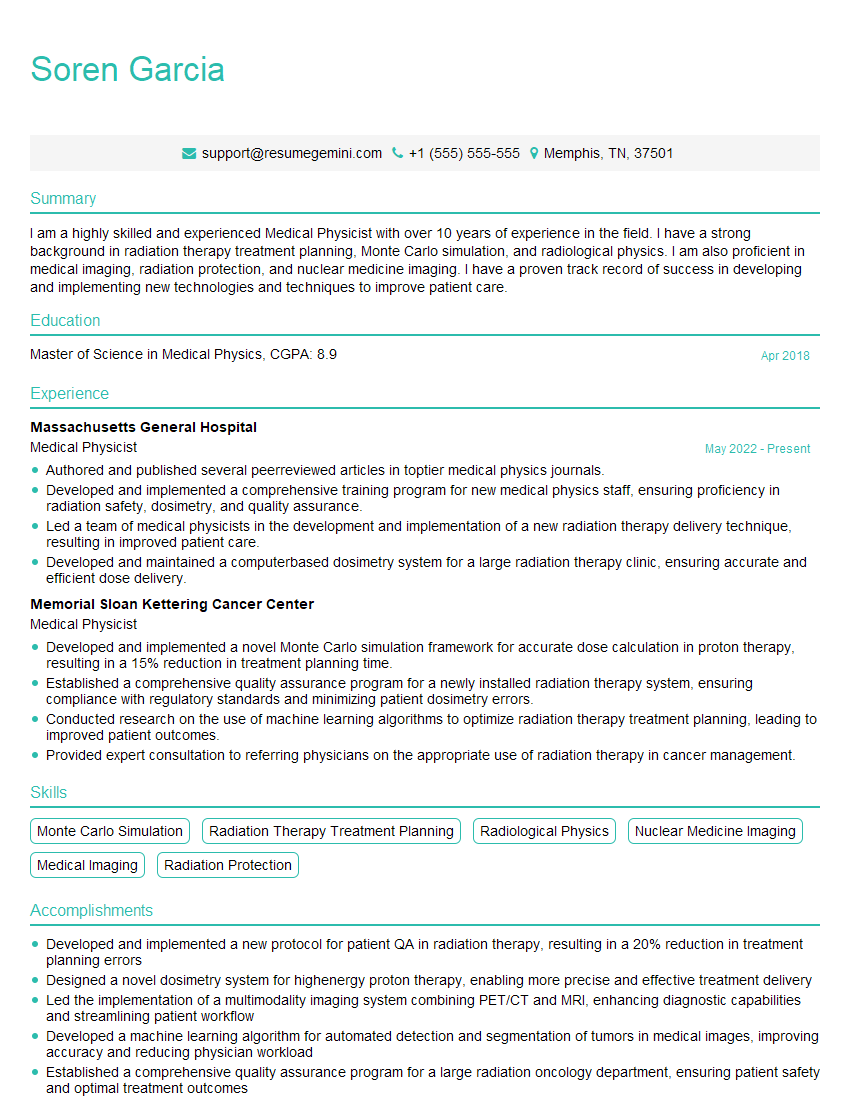
Medical Physicist Resume Sample

Health Physicist Resume Sample
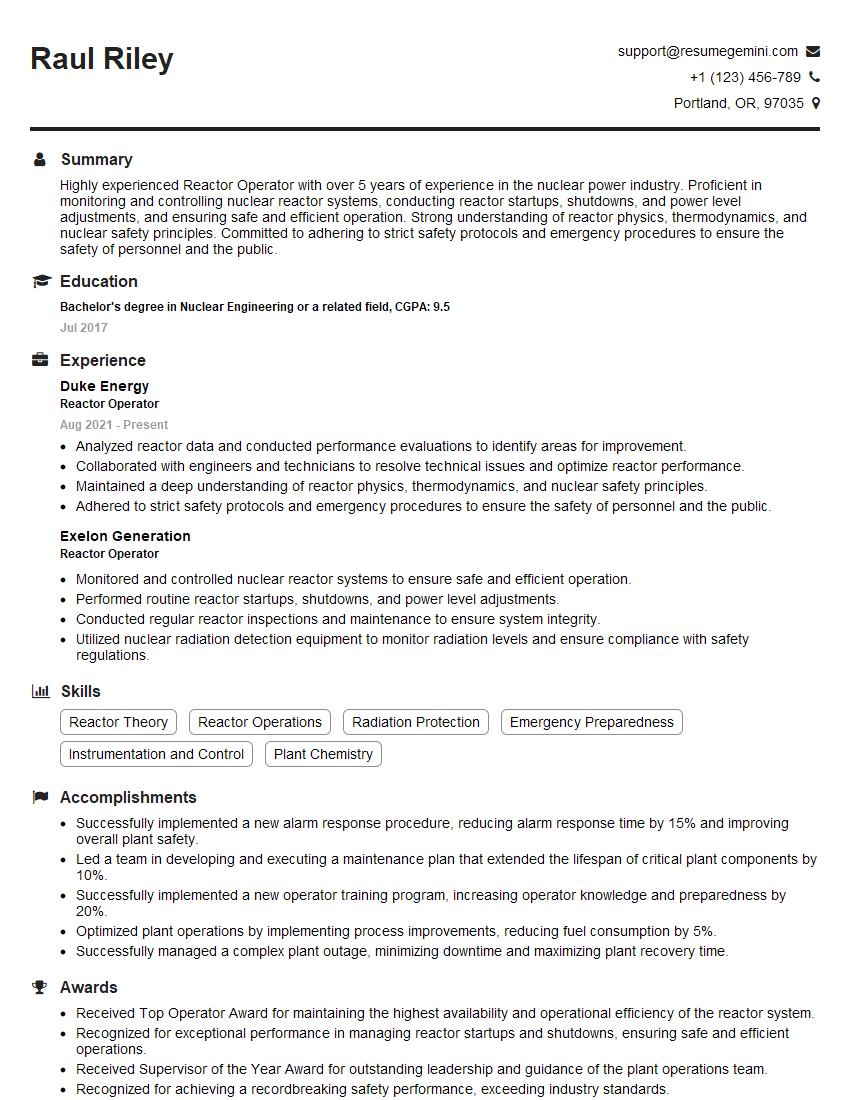
Reactor Operator Resume Sample
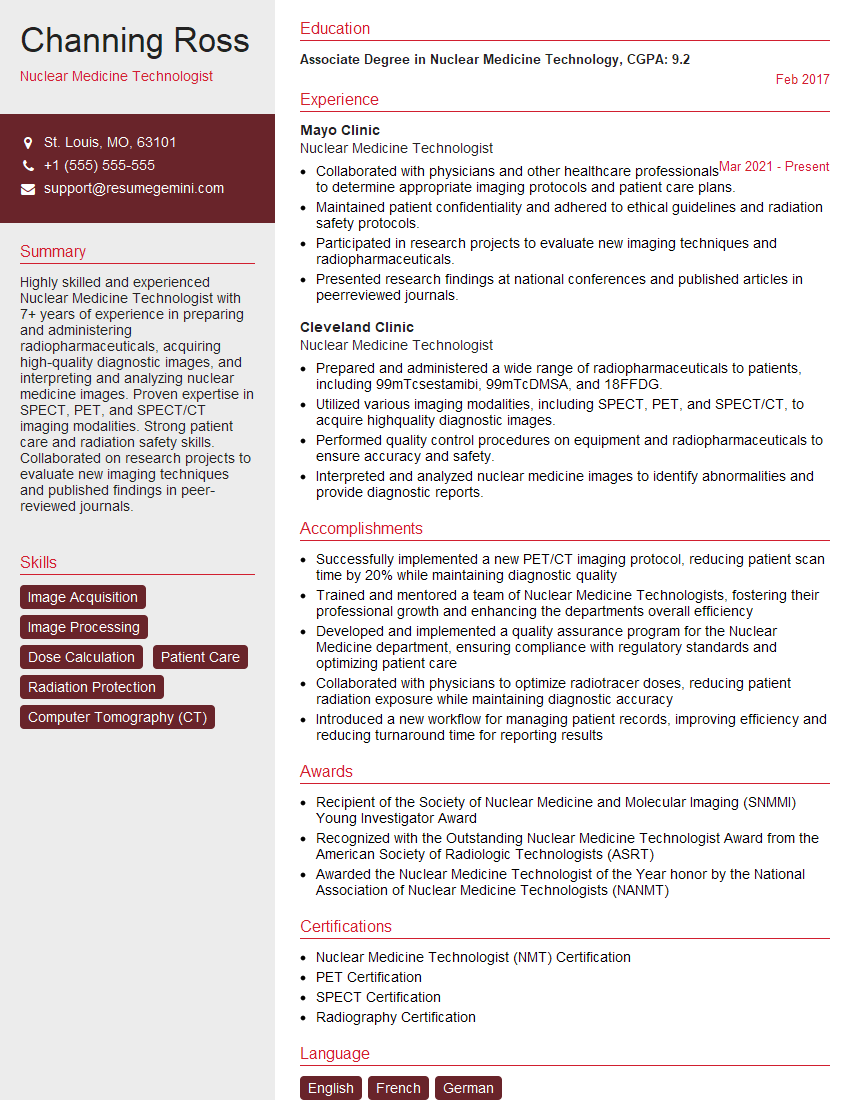
Nuclear Medicine Technologist Resume Sample

Radiation Safety Officer Resume Sample
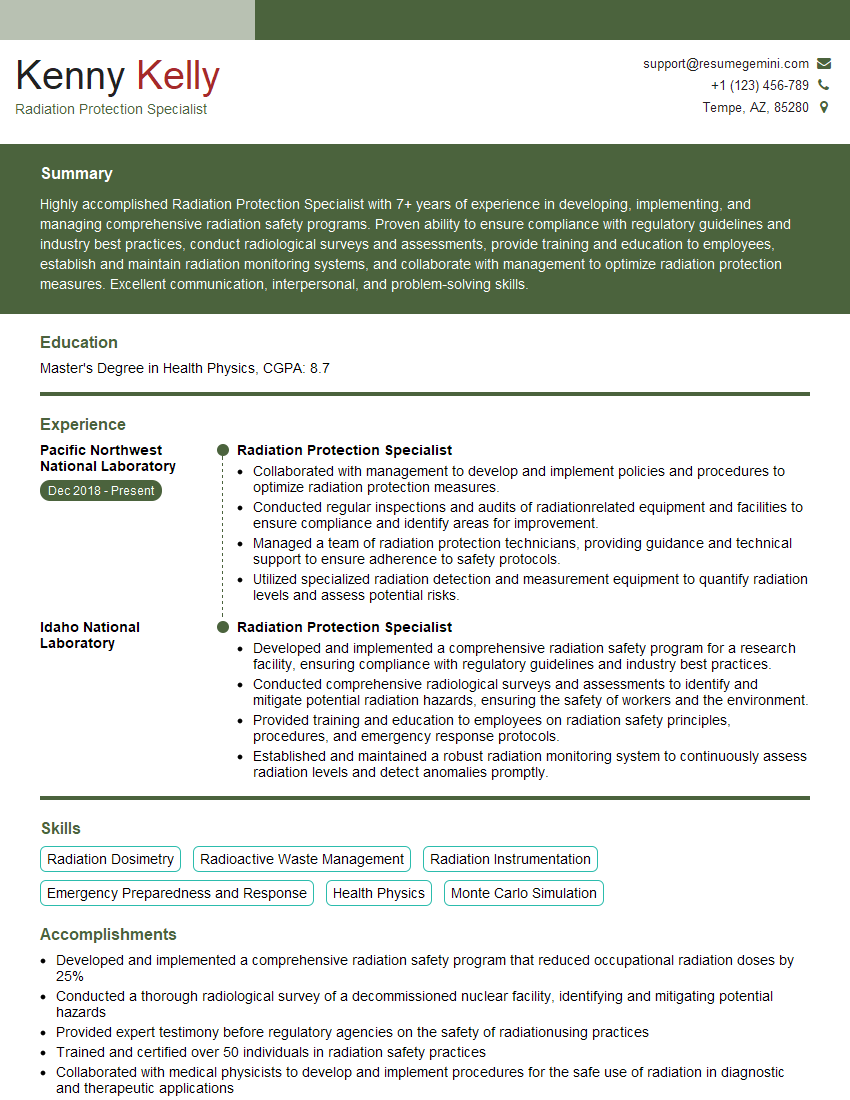
Radiation Protection Specialist Resume Sample
Explore more articles
Users Rating of Our Blogs
Share Your Experience
We value your feedback! Please rate our content and share your thoughts (optional).
What Readers Say About Our Blog
Very informative content, great job.
good