Preparation is the key to success in any interview. In this post, we’ll explore crucial Linguistic Proficiencies interview questions and equip you with strategies to craft impactful answers. Whether you’re a beginner or a pro, these tips will elevate your preparation.
Questions Asked in Linguistic Proficiencies Interview
Q 1. Explain the difference between descriptive and prescriptive grammar.
Descriptive grammar is like being a linguistic anthropologist – you observe how people actually speak and write, documenting the patterns and structures they use without judging whether they’re ‘correct’ or not. Think of it as a scientific description of a language’s current state. Prescriptive grammar, on the other hand, is like a style guide or a rulebook. It dictates how people *should* speak and write according to established norms, often based on historical usage or perceived elegance. It aims to enforce consistency and clarity, sometimes prioritizing formality over actual usage.
For example, descriptive grammar would note that many people say ‘Me and my friend went to the park,’ even though prescriptive grammar dictates ‘My friend and I went to the park.’ The descriptive grammarian observes the real-world usage; the prescriptive grammarian focuses on the ‘correct’ form according to established rules.
Q 2. Describe the concept of linguistic relativity (Sapir-Whorf hypothesis).
The Sapir-Whorf hypothesis, also known as linguistic relativity, proposes a fascinating idea: the structure of a language significantly influences how its speakers perceive and conceptualize the world. It’s not about language *limiting* thought, but rather *shaping* it. A strong version suggests that language *determines* thought – that we can only think what our language allows us to express. A weaker version posits that language merely *influences* thought, making certain concepts easier to grasp or express than others.
Imagine a language with numerous words for shades of blue, like some languages in the Arctic regions. This linguistic richness might lead speakers to be more attuned to subtle differences in color than someone whose language only has a few general words for blue. Conversely, a language lacking a specific word for a concept might make it harder for speakers to grasp or easily discuss that concept. The debate continues on the extent of this influence, but the hypothesis highlights the close connection between language and cognition.
Q 3. What are the main branches of linguistics?
Linguistics is a vast field, but some major branches include:
- Phonetics: The study of speech sounds – how they are produced, transmitted, and perceived.
- Phonology: The study of sound systems in languages – how sounds are organized and function within a language.
- Morphology: The study of word formation – how words are built from smaller units (morphemes).
- Syntax: The study of sentence structure – how words are combined to form phrases and sentences.
- Semantics: The study of meaning in language – how words, phrases, and sentences convey meaning.
- Pragmatics: The study of language use in context – how meaning is affected by social factors, speaker intent, and situational factors.
- Psycholinguistics: The study of the mental processes involved in language use, encompassing aspects of comprehension, production, and acquisition.
- Sociolinguistics: The study of the relationship between language and society – how social factors affect language use and variation.
- Historical Linguistics: The study of language change over time – tracing the evolution of languages and their relationships.
- Computational Linguistics: The application of computational methods to linguistic problems, including natural language processing and machine translation.
Q 4. Explain the difference between syntax and semantics.
Syntax and semantics are both crucial for understanding language, but they address different aspects. Syntax deals with the *structure* of sentences – the arrangement of words and phrases according to grammatical rules. Semantics, on the other hand, focuses on the *meaning* conveyed by those sentences. Think of syntax as the grammar and semantics as the meaning.
For example, the sentence ‘The cat sat on the mat’ is syntactically well-formed; it follows the Subject-Verb-Object order. Its semantics is also clear: it describes a cat sitting on a mat. However, a grammatically incorrect sentence like ‘Cat the mat on sat’ is syntactically malformed, and its meaning is obscured. Conversely, a sentence like ‘Colorless green ideas sleep furiously’ is syntactically correct but semantically nonsensical. The sentence follows grammatical rules, but the combination of words creates a meaningless statement. Both syntax and semantics are essential for fully understanding the communicative intent of a sentence.
Q 5. Define morphology and give an example of a morpheme.
Morphology is the study of the internal structure of words and how words are formed. A morpheme is the smallest unit of meaning in a language. It can be a word (like ‘cat’) or a part of a word (like the ‘-s’ in ‘cats’, indicating plurality).
Let’s take the word ‘unbreakable’. It’s composed of three morphemes: ‘un-‘ (meaning ‘not’), ‘break’ (meaning ‘to fracture’), and ‘-able’ (meaning ‘capable of’). Each morpheme contributes to the overall meaning of the word. Understanding morphology is essential for analyzing word formation processes and deciphering the meaning of unfamiliar words.
Q 6. What are some common challenges in machine translation?
Machine translation (MT) faces several significant challenges:
- Ambiguity: Words and sentences can have multiple meanings depending on context, leading to inaccurate translations. For example, the word ‘bank’ could refer to a financial institution or the side of a river.
- Idioms and Figurative Language: Literal translations of idioms and metaphors often result in nonsensical output. The meaning of an idiom (‘raining cats and dogs’) is not derived from the literal meaning of its constituent words.
- Cultural Differences: Different cultures have different ways of expressing ideas, making direct translation challenging. Humor, politeness conventions, and social norms can vary dramatically across languages.
- Lack of Contextual Information: MT systems struggle with understanding the broader context of a sentence or text, which is crucial for accurate translation.
- Handling of Rare or Specialized Vocabulary: Technical terms and jargon specific to particular fields pose difficulties for MT systems with limited exposure to such vocabulary.
Addressing these challenges requires advancements in algorithms, larger and more diverse datasets, and improved methods for incorporating contextual information and cultural knowledge into MT systems.
Q 7. How do you approach translating culturally specific terms?
Translating culturally specific terms requires a nuanced approach combining linguistic skill with cultural sensitivity. A direct translation often fails to capture the essence or even meaning. The best approach involves:
- Understanding the cultural context: Thoroughly researching the background and significance of the term is crucial to identifying the most appropriate way to convey its meaning in the target language.
- Considering the target audience: The translation needs to be comprehensible and relatable to the target audience. A highly specialized term might need simplification or explanation for a general audience.
- Employing various translation techniques: Depending on the term, different techniques might be more appropriate, including functional equivalence (conveying the same function), descriptive equivalence (explaining the concept), or borrowing (using the term directly, often with an explanation).
- Using footnotes or glossaries: For complex terms that cannot be easily translated, providing additional information via footnotes or glossaries can offer clarification without disrupting the flow of the text.
For instance, translating the Japanese concept of ‘amae’ (a form of dependence and indulgence) requires more than just finding a direct equivalent. A translator might use a descriptive approach, explaining the concept and its cultural implications in the target language.
Q 8. Discuss the importance of context in interpretation.
Context is paramount in interpretation because it dictates meaning. Words and phrases rarely possess inherent, fixed meanings; their interpretation hinges entirely on the surrounding linguistic and situational elements. Imagine the word “bank.” In isolation, it’s ambiguous. But within the sentence, “I deposited money in the bank,” we understand it refers to a financial institution, whereas in “The river eroded the bank,” it refers to a river’s edge. This difference highlights the crucial role of context in disambiguating language and ensuring accurate interpretation.
Consider a situation where a speaker says, “It’s cold in here.” The interpretation could range from a simple request to adjust the thermostat to a more complex social cue, depending on the speaker’s tone, the relationship between speaker and listener, and the setting. Is it a formal meeting or a casual conversation? A chilly office or a sweltering summer day? Understanding this context is essential for accurate interpretation.
- Linguistic context: The surrounding words, sentences, and paragraphs.
- Situational context: The physical setting, the participants, and the overall purpose of the communication.
Ignoring context leads to misinterpretations, communication breakdowns, and potentially serious consequences, particularly in professional settings like legal proceedings or international diplomacy.
Q 9. Explain the difference between simultaneous and consecutive interpretation.
Simultaneous and consecutive interpretation are two distinct modes of interpreting spoken language. In simultaneous interpretation, the interpreter renders the source language message into the target language almost simultaneously, usually with the aid of specialized equipment like headsets and booths. This is common in conferences and meetings where real-time translation is crucial. Think of the UN General Assembly – interpreters are working constantly, delivering a near-instant translation.
Consecutive interpretation, on the other hand, involves the interpreter listening to a section of speech in the source language, taking notes, and then delivering the interpretation in the target language after the speaker has finished that section. This method allows for more precise translation as the interpreter can take time to process the message and choose the most accurate wording. It is frequently used in smaller meetings, legal settings, or interviews where a higher degree of accuracy is required.
The key difference boils down to timing: simultaneous is real-time, while consecutive involves a slight delay. The choice between the two methods depends on the context and the specific needs of the situation.
Q 10. What strategies do you employ to ensure accuracy in translation?
Ensuring accuracy in translation demands a multi-faceted approach. My strategies include:
- Deep understanding of both source and target languages: This is fundamental. It goes beyond vocabulary and grammar; it requires a grasp of cultural nuances, idioms, and registers.
- Thorough research and verification: I always verify facts, names, and figures using reputable sources, particularly when dealing with specialized texts. This prevents the propagation of misinformation.
- Contextual analysis: As discussed earlier, meticulously analyzing the context is critical to understanding the intended meaning.
- Employing translation memory tools (TM) and glossaries: These tools help maintain consistency and reduce errors by storing previously translated segments and terminology.
- Peer review and editing: Having another skilled translator review my work offers a fresh perspective and catches potential errors I might have overlooked. It is a crucial quality control step.
- Iterative process: Translation is rarely a linear process. I often revisit and refine my work to ensure clarity, precision, and natural flow in the target language.
For instance, translating a technical manual requires understanding the underlying technology and using precise technical terms in the target language. Similarly, translating literature demands sensitivity to style, tone, and literary devices.
Q 11. Describe your experience with CAT tools (Computer-Assisted Translation).
I have extensive experience using CAT tools such as SDL Trados Studio, memoQ, and Across. These tools significantly enhance translation efficiency and quality. They offer features like:
- Translation memory (TM): Stores previously translated segments, allowing for consistent terminology and faster translation of recurring phrases.
- Term bases and glossaries: Maintain consistent use of terminology across projects.
- Quality assurance (QA) checks: Identify inconsistencies and potential errors like unmatched tags or inconsistencies in terminology.
- Computer-assisted review: Streamlines the review and editing processes.
Using CAT tools allows me to manage large projects effectively, maintain consistency, and significantly reduce turnaround time. The built-in QA features help minimize errors and ensure higher quality translations. For example, if a client needs a series of documents translated, the TM can ensure consistent use of terminology and style across all the documents. This is particularly important in industries like legal and technical translation where consistency and accuracy are paramount.
Q 12. How do you handle ambiguity in a text?
Ambiguity in a text arises when a word, phrase, or sentence can have multiple meanings. Handling this requires a careful and systematic approach:
- Identifying the source of ambiguity: Is it due to vague wording, missing information, or cultural differences?
- Analyzing the context: Scrutinizing the surrounding text to infer the intended meaning. This involves considering linguistic and situational context, as mentioned before.
- Researching potential meanings: If context alone is insufficient, research is crucial to determine the most likely meaning.
- Consulting with subject matter experts: If the ambiguity involves specialized terminology or technical aspects, seeking expert advice can clarify the intended meaning.
- Choosing the most appropriate meaning: Based on the analysis and research, I select the interpretation that best fits the overall context and intended message.
- Adding a note to the client if necessary: When ambiguity remains irresolvable, I inform the client of the potential multiple interpretations and make a clear recommendation for the most likely meaning.
For example, a phrase like “He went to the bank” requires clarification. Depending on the context, it might refer to a financial institution or the side of a river. Researching the surrounding text and the overall theme of the document can usually resolve such ambiguity.
Q 13. Explain the concept of linguistic universals.
Linguistic universals are features or properties that are common to all or most human languages. These universals suggest underlying cognitive structures that shape language acquisition and development. They are often categorized as:
- Absolute universals: Features found in all languages (e.g., all languages have nouns and verbs).
- Statistical universals: Features found in most languages (e.g., most languages have Subject-Verb-Object sentence structure).
- Implicational universals: If a language has feature X, it also has feature Y (e.g., if a language has a grammatical gender system, it usually also has articles).
Understanding linguistic universals is important for various reasons: they provide insights into the cognitive basis of language, assist in language typology and comparison, and can aid in language acquisition and teaching by identifying common patterns and potential areas of difficulty.
For example, the existence of nouns and verbs as fundamental grammatical categories across languages is a strong indication of shared cognitive structures related to categorization and action. This knowledge can be helpful in teaching languages by highlighting common grammatical elements across languages.
Q 14. What are some common errors in second language acquisition?
Common errors in second language acquisition stem from various sources, including:
- Interference from the native language (L1): Speakers often transfer grammatical structures, pronunciation patterns, or vocabulary from their native language to the target language, leading to errors. For example, a Spanish speaker learning English might say “*I goed to the store*” due to interference from the past tense marker in Spanish.
- Overgeneralization of rules: Learners sometimes overextend grammatical rules, applying them to situations where they are inappropriate. For instance, a learner might say “*He goed*” because they are overgeneralizing the past tense marker.
- Incorrect pronunciation: Phonetic differences between languages can lead to difficulties in accurate pronunciation. For example, differentiating between /l/ and /r/ sounds can be challenging for learners whose native language does not distinguish between these sounds.
- Vocabulary acquisition challenges: Learning new vocabulary is a continuous process, and learners often make errors due to incomplete knowledge or incorrect word choice.
- Lack of exposure and practice: Insufficient exposure to the target language and limited opportunities for practice hinder language acquisition and can lead to errors.
Addressing these errors requires targeted instruction, corrective feedback, and extensive practice, but it’s crucial to remember that errors are a natural part of the language learning process, and they provide valuable information about the learner’s understanding.
Q 15. How would you assess the linguistic proficiency of a candidate?
Assessing linguistic proficiency requires a multifaceted approach, going beyond simple fluency tests. I employ a combination of methods tailored to the specific needs of the role. This typically includes:
- Written tests: These assess grammatical accuracy, vocabulary range, stylistic appropriateness, and comprehension through tasks like essays, translations, or summarizations. For example, I might ask a candidate to translate a technical document, focusing on accuracy and the appropriate register.
- Oral interviews: These evaluate fluency, pronunciation, and the ability to express complex ideas clearly. I’d use open-ended questions requiring nuanced responses to gauge communication skills. For instance, I might ask them to discuss a current event in the target language.
- Practical tasks: Simulating real-world scenarios is crucial. This could include editing a text, interpreting a conversation, or preparing a presentation in the target language. A practical task might be adapting marketing materials for a new audience.
- Portfolio review (if applicable): Examining previous work allows for an evaluation of the candidate’s style, consistency, and overall quality of output. This helps understand their experience and strengths.
The weighting of each method depends on the specific job requirements. A translator needs stronger written skills, while an interpreter needs stronger oral skills. Combining these methods gives a comprehensive picture of a candidate’s linguistic capabilities.
Career Expert Tips:
- Ace those interviews! Prepare effectively by reviewing the Top 50 Most Common Interview Questions on ResumeGemini.
- Navigate your job search with confidence! Explore a wide range of Career Tips on ResumeGemini. Learn about common challenges and recommendations to overcome them.
- Craft the perfect resume! Master the Art of Resume Writing with ResumeGemini’s guide. Showcase your unique qualifications and achievements effectively.
- Don’t miss out on holiday savings! Build your dream resume with ResumeGemini’s ATS optimized templates.
Q 16. What are some ethical considerations in linguistic work?
Ethical considerations in linguistic work are paramount. They revolve around accuracy, transparency, cultural sensitivity, and respecting the source text and its creators. Key ethical issues include:
- Accuracy and fidelity: Maintaining the meaning and intent of the source text is crucial. Misinterpretations or inaccurate translations can have serious consequences, from miscommunication in business deals to legal problems in contracts.
- Transparency: Being upfront about any limitations or uncertainties regarding the source text or the target audience. It’s unethical to present a translation as perfect if it’s not.
- Cultural sensitivity: Respecting the cultural nuances of both source and target languages is essential. This includes avoiding culturally insensitive expressions or interpretations.
- Plagiarism and copyright: Properly attributing sources and avoiding plagiarism is fundamental. Translations should always respect the intellectual property rights of the original authors.
- Confidentiality: Many translation projects involve sensitive information. Maintaining client confidentiality is non-negotiable.
Adhering to these ethical principles ensures the integrity and reliability of the linguistic work, preserving the trust and respect between linguists and their clients.
Q 17. Discuss different translation strategies (e.g., domestication, foreignization).
Translation strategies are approaches used to adapt a text from one language to another while preserving its meaning and impact. Two significant strategies are domestication and foreignization:
- Domestication: This approach aims to make the translated text feel natural and easily accessible to the target audience. It prioritizes readability and cultural relevance in the target language. This often involves adapting idioms and cultural references to the target culture. For example, a direct translation of “raining cats and dogs” might not be understood in a culture without this idiom; a domestication strategy would use a culturally equivalent expression in the target language.
- Foreignization: This strategy prioritizes preserving the cultural and linguistic features of the source text, even if it means sacrificing some fluency or naturalness in the target language. This can be used to create a sense of authenticity and highlight the source culture. For example, a foreignization approach might retain a specific cultural reference from the source text, even if it requires an explanatory footnote for the target audience.
The choice between domestication and foreignization depends on the purpose of the translation and the target audience. A children’s book might benefit from domestication, while a literary translation might prioritize foreignization to maintain the author’s unique voice.
Q 18. How do you manage large translation projects?
Managing large translation projects requires meticulous planning, organization, and efficient communication. My approach involves:
- Project Breakdown: Dividing the project into manageable segments to assign to different translators based on their expertise and specialization.
- Translation Memory (TM) and Computer-Assisted Translation (CAT) Tools: Utilizing TM and CAT tools for consistency and efficiency. These tools store previous translations, suggesting consistent terminology and speeding up the process. Examples include SDL Trados Studio and memoQ.
- Quality Assurance (QA): Implementing a multi-layered QA process, including automated checks and reviews by different linguists to ensure accuracy and consistency.
- Project Management Software: Employing project management tools like Asana or Trello for task assignment, progress tracking, and communication with the team.
- Clear Communication: Establishing clear communication channels and regular updates with the client to ensure transparency and address any issues promptly.
A well-defined workflow, coupled with the right tools and effective communication, is crucial for successful large-scale translation projects.
Q 19. Describe your experience with terminology management.
My experience with terminology management involves creating and maintaining consistent terminology databases for various projects. This includes:
- Terminology Extraction: Identifying key terms from source texts and documentation.
- Terminology Validation: Verifying the accuracy and appropriateness of terms using reliable sources.
- Terminology Database Creation: Building and maintaining terminology databases using specialized software such as MultiTerm or TermBase.
- Terminology Consistency: Ensuring consistent use of terminology throughout the project, including across different translators and documents.
- Collaboration and Training: Collaborating with clients and other linguists to create and maintain shared terminology databases and providing training on their usage.
Effective terminology management ensures consistency, avoids ambiguity, and contributes significantly to the overall quality and professionalism of the translation output.
Q 20. What are some key factors to consider when localizing software?
Localizing software involves adapting it to a specific target market, going beyond simple translation. Key factors to consider include:
- Language: Accurate and culturally appropriate translation of all text strings within the software.
- Cultural Adaptation: Adjusting the software to align with the target market’s cultural norms and preferences. This might involve changes to date/time formats, currency symbols, and even user interface design.
- Right-to-Left (RTL) Support: For languages written from right to left (e.g., Arabic, Hebrew), ensuring proper support for text layout and user interface elements.
- Input Methods: Supporting different input methods and keyboard layouts for the target language.
- Images and Icons: Replacing images and icons that may not be culturally relevant or appropriate for the target market.
- Legal and Regulatory Compliance: Ensuring the software complies with all relevant legal and regulatory requirements in the target market.
Successful software localization requires a collaborative approach between developers, translators, and cultural experts, ensuring a positive user experience and market acceptance.
Q 21. How familiar are you with different linguistic theories?
I’m familiar with a range of linguistic theories, including:
- Generative Grammar (Chomsky): Understanding the underlying rules and structures of language helps in analyzing complex sentences and identifying potential translation challenges.
- Cognitive Linguistics: This perspective emphasizes the role of cognition in language use and helps in understanding how meaning is constructed and interpreted. This is vital in interpreting metaphors and idioms.
- Corpus Linguistics: This theory utilizes large collections of text data to analyze language usage patterns. It’s extremely valuable for identifying preferred terminology and ensuring naturalness in translations.
- Pragmatics: Understanding how context influences meaning is vital for accurate translation, especially in interpreting implied meanings and resolving ambiguities.
- Translation Studies: This field focuses specifically on the process and theories of translation, offering frameworks for analyzing and evaluating different approaches to translation.
These theories provide a solid foundation for my work, enabling me to approach translation tasks with a nuanced understanding of language and meaning. My understanding of these theories is not just theoretical; I actively apply them in my daily work to improve the accuracy and quality of my translations.
Q 22. Explain your understanding of discourse analysis.
Discourse analysis is the study of how language is used in real-world contexts to create meaning. It goes beyond analyzing individual sentences and focuses on the larger units of language, such as conversations, interviews, or written texts. We look at how these larger units are structured, how participants interact, and how meaning is collaboratively constructed.
For example, consider a simple conversation: “A: It’s cold in here.” “B: I’ll close the window.” A simple discourse analysis would examine not just the literal meaning of each sentence, but also the implied meaning – A is expressing discomfort, B is responding helpfully, and the overall interaction shows cooperation. A more complex analysis might delve into the conversational implicature – perhaps A subtly implies B should have noticed the cold earlier.
In professional settings, discourse analysis is crucial for understanding communication in fields like marketing (analyzing advertising copy), law (interpreting witness statements), and education (studying classroom interactions). It helps to identify underlying power dynamics, implicit biases, and the effectiveness of communication strategies.
Q 23. How do you stay up-to-date with developments in linguistics and translation?
Staying current in linguistics and translation requires a multifaceted approach. I regularly subscribe to and read leading journals such as the International Journal of Corpus Linguistics and the Target journal. I also actively participate in professional organizations like the American Translators Association (ATA) and attend their conferences and webinars. These provide access to cutting-edge research, new technologies, and networking opportunities with other professionals. Furthermore, I maintain an active online presence, following key researchers and organizations on social media and participating in relevant online forums and discussion groups. Finally, continuous professional development is key; I regularly undertake relevant online courses and workshops focusing on new translation technologies and evolving linguistic theories.
Q 24. Describe a time you had to overcome a linguistic challenge.
During a translation project involving a legal document from archaic French, I encountered numerous obsolete terms and grammatical structures. My initial translations lacked accuracy and fluency because my usual dictionaries and resources proved insufficient. To overcome this, I had to delve into specialized historical dictionaries and legal glossaries. I also consulted with a colleague specializing in historical linguistics. By systematically researching each problematic term and its historical context, and cross-referencing with multiple sources, I was able to produce a highly accurate and nuanced translation that met the client’s stringent requirements. This experience highlighted the importance of adaptability and resourcefulness in overcoming unforeseen linguistic challenges.
Q 25. What are your strengths and weaknesses as a linguist/translator/interpreter?
My strengths lie in my meticulous attention to detail, my broad linguistic knowledge encompassing several languages, and my excellent research skills. I am adept at quickly adapting to different linguistic styles and registers. I also possess strong analytical skills which are invaluable in identifying and resolving ambiguities. A potential weakness could be my tendency towards perfectionism, which can sometimes impact project timelines. However, I am actively working on improving my time management skills through the application of project management methodologies.
Q 26. Explain your approach to quality assurance in translation.
My approach to quality assurance in translation involves a multi-stage process. It begins with a thorough understanding of the source text and its intended audience. I then employ a rigorous self-editing process, paying close attention to accuracy, consistency, and fluency. This is followed by a comprehensive review for grammatical errors, stylistic inconsistencies, and terminological accuracy. I utilize Computer-Assisted Translation (CAT) tools to ensure consistency across the entire document. Finally, a second proofread is conducted by a colleague with expertise in the target language. This collaboration provides an additional layer of quality control, ensuring that the final translation is of the highest possible standard.
Q 27. How do you handle feedback on your work?
I view feedback as an invaluable opportunity for professional growth. I actively solicit feedback from clients and colleagues, and I approach it constructively. I carefully consider all comments, analyzing what aspects of my work require improvement. I am always open to learning from my mistakes and implementing changes to enhance my skills and future performance. I believe that constructive criticism is essential for producing high-quality work.
Q 28. What are your salary expectations?
My salary expectations are commensurate with my experience, skills, and the demands of the role. I am open to discussing a competitive salary range based on industry standards and the specific requirements of the position.
Key Topics to Learn for Linguistic Proficiencies Interview
- Phonetics and Phonology: Understanding speech sounds, their production, and how they are organized in a language. Consider practical applications in speech therapy or language teaching.
- Morphology: Analyzing word structure, including morphemes and their combinations. Explore how morphological analysis aids in understanding language evolution and dialectal variations.
- Syntax: Studying sentence structure and grammatical relationships between words. Practice analyzing different sentence structures and their implications for meaning.
- Semantics: Examining word and sentence meaning, including lexical semantics and compositional semantics. Consider how ambiguity and context affect meaning interpretation.
- Pragmatics: Understanding how context influences language use and interpretation, including speech acts and implicature. Reflect on how pragmatic knowledge is crucial for effective communication.
- Psycholinguistics: Exploring the cognitive processes involved in language comprehension and production. Consider the role of memory and processing speed in language tasks.
- Sociolinguistics: Investigating the relationship between language and society, including language variation and change. Analyze the social factors influencing language use and attitudes towards different dialects.
- Computational Linguistics: Familiarize yourself with the application of computational methods to linguistic problems, such as natural language processing and machine translation. Consider the ethical implications of these technologies.
- Corpus Linguistics: Understanding the use of large text corpora for linguistic research. Consider how corpus data can be used to investigate language use and change.
Next Steps
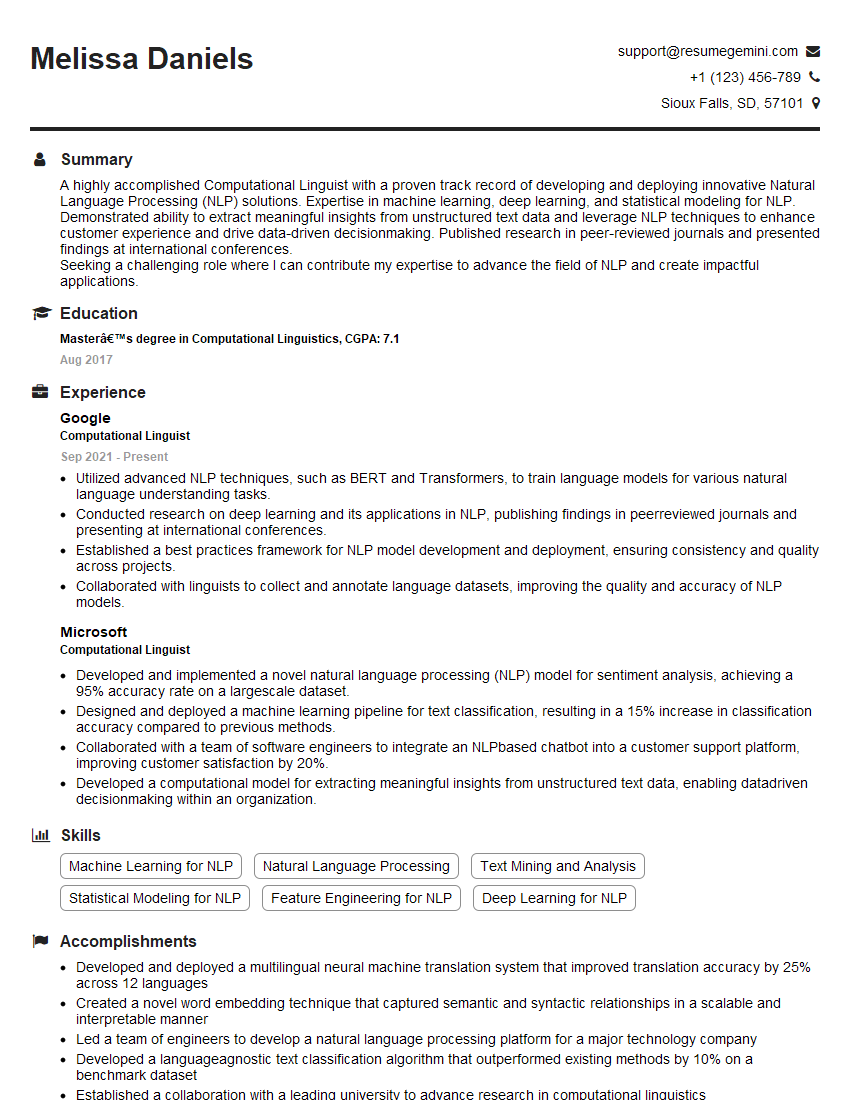
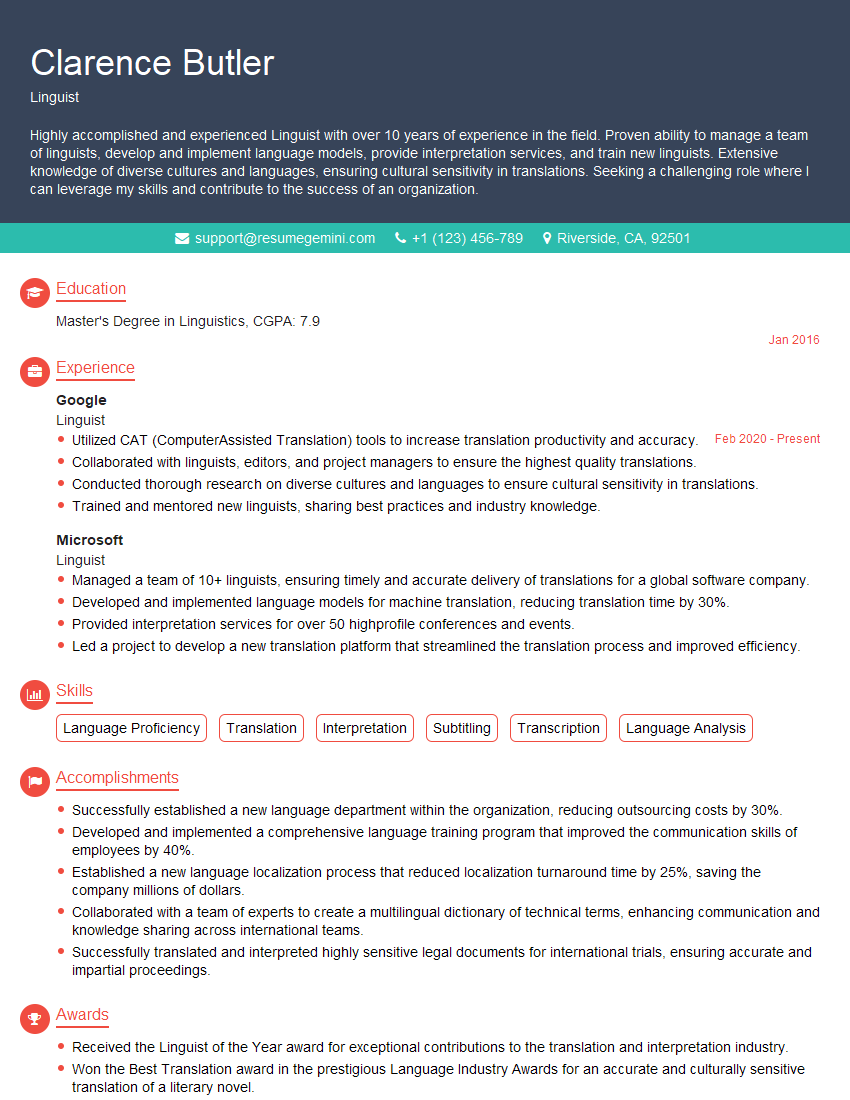
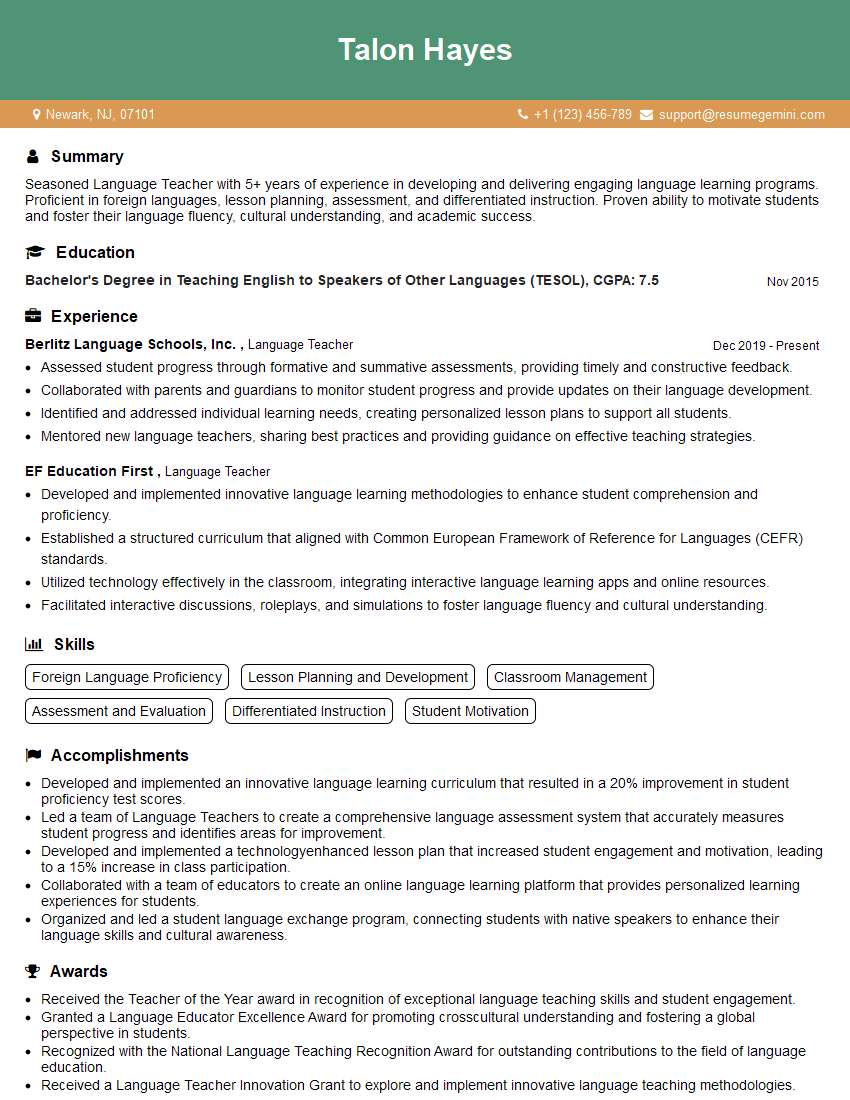
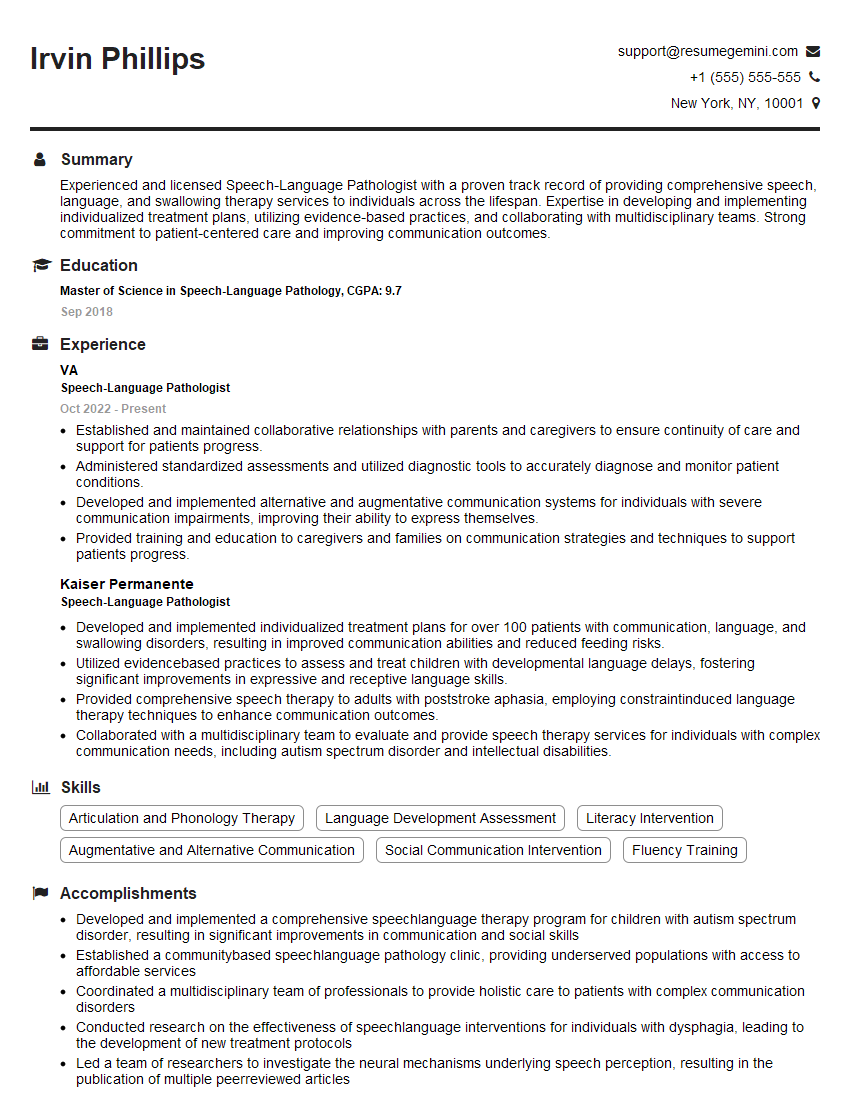
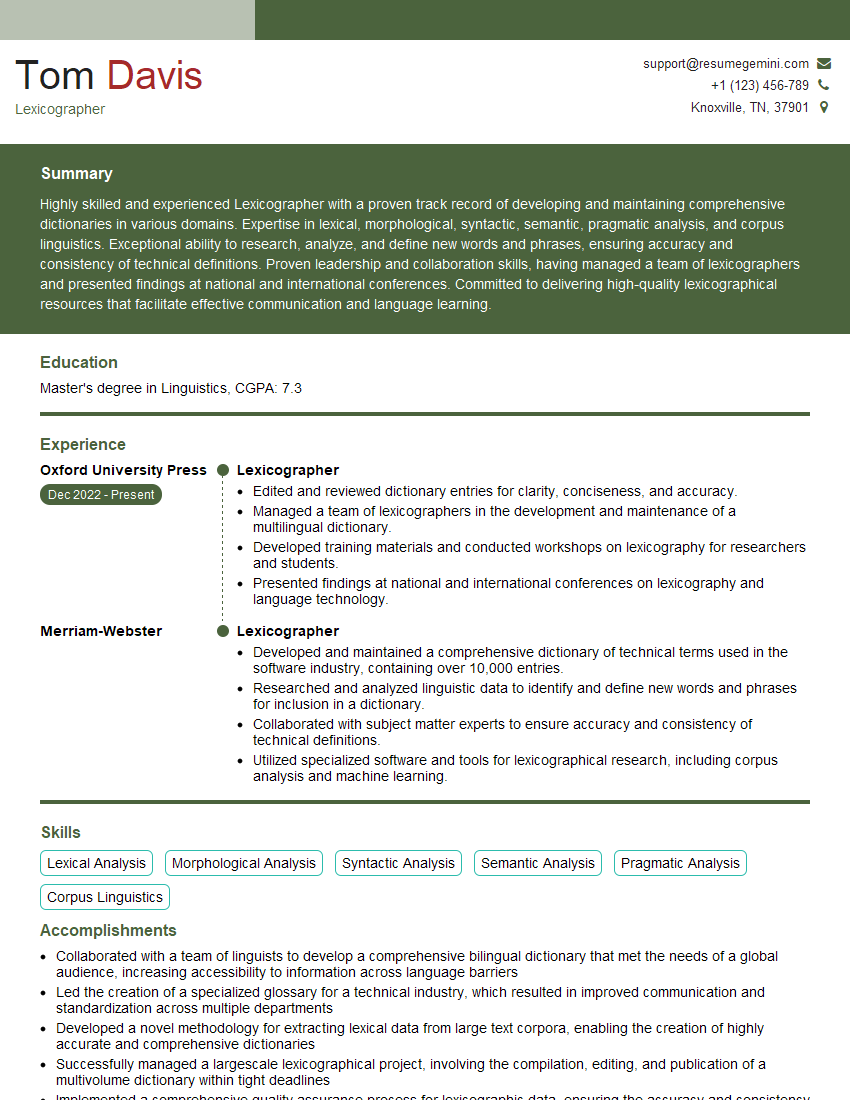
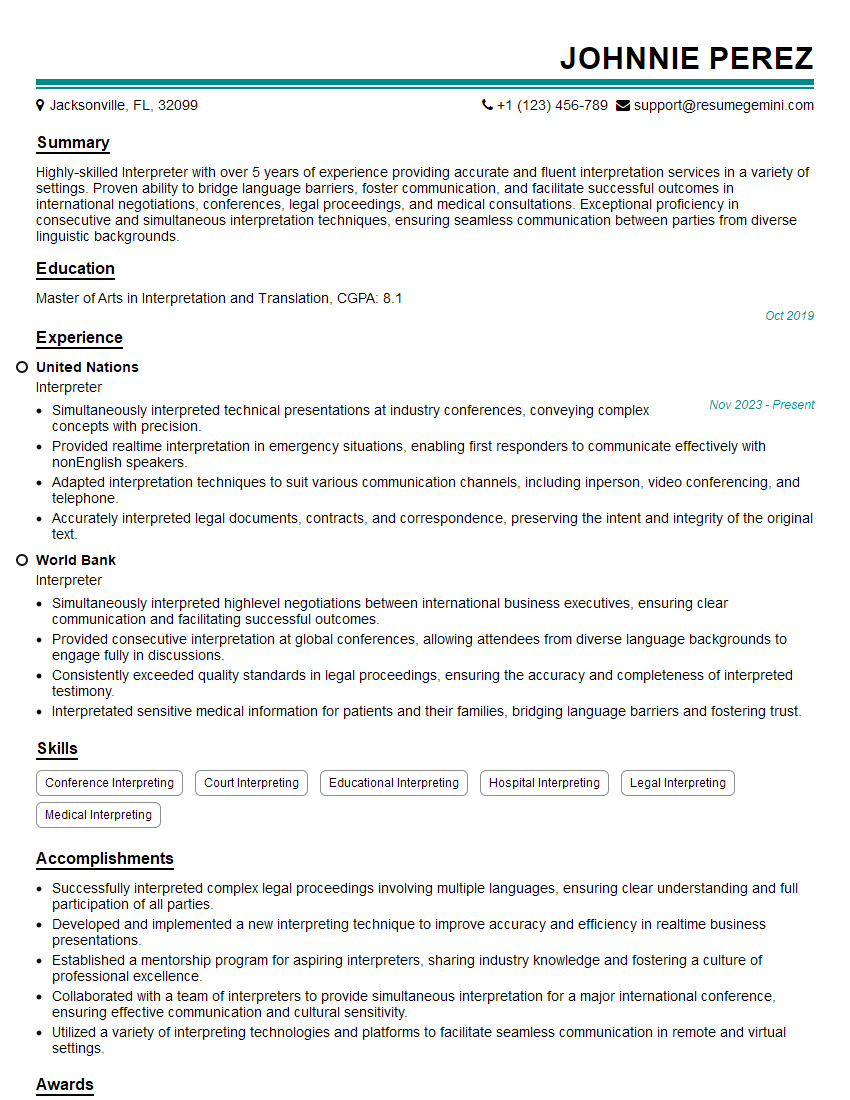
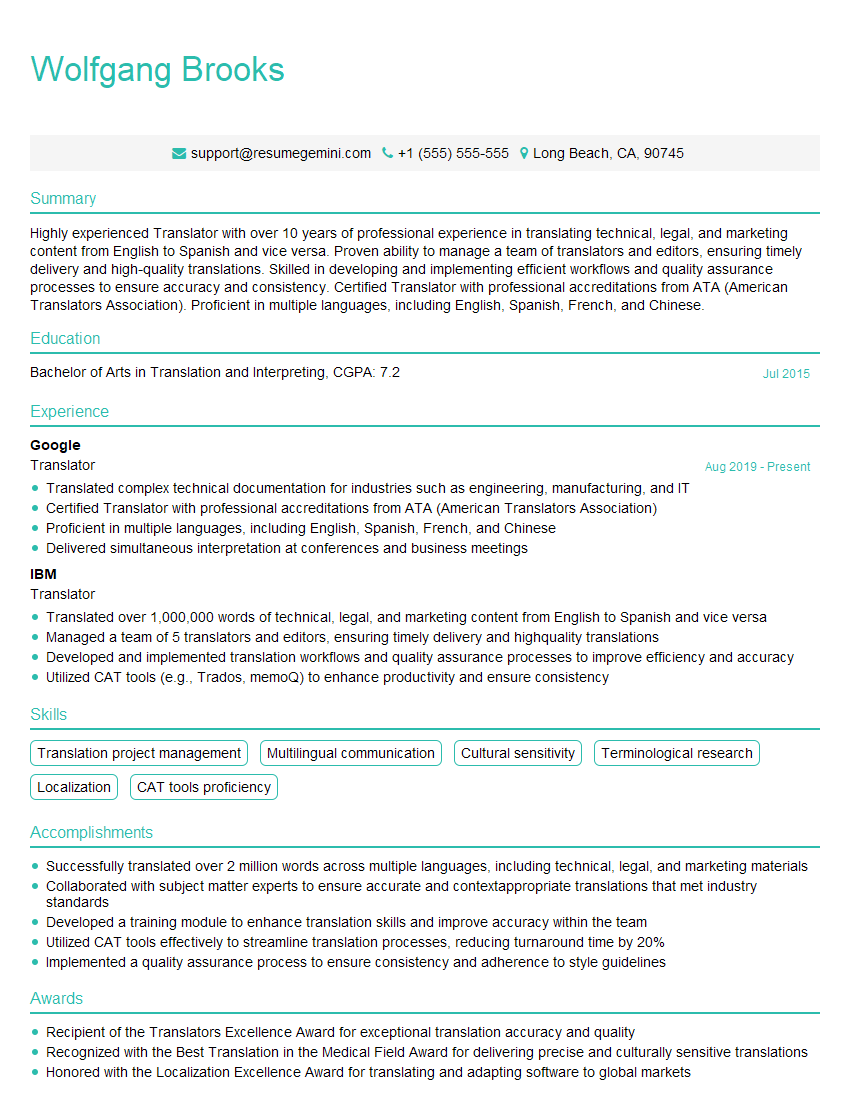
Mastering Linguistic Proficiencies opens doors to diverse and rewarding careers in academia, technology, and beyond. A strong understanding of these concepts demonstrates analytical skills and a deep appreciation for the complexities of human language – highly valued attributes in today’s job market. To maximize your job prospects, create an ATS-friendly resume that effectively highlights your skills and experience. We highly recommend using ResumeGemini, a trusted resource for building professional resumes. ResumeGemini provides examples of resumes tailored to Linguistic Proficiencies to help you craft a compelling application that grabs recruiters’ attention.

Explore more articles
Users Rating of Our Blogs
Share Your Experience
We value your feedback! Please rate our content and share your thoughts (optional).
What Readers Say About Our Blog
Very informative content, great job.
good