Preparation is the key to success in any interview. In this post, we’ll explore crucial Lip-Sync Performance interview questions and equip you with strategies to craft impactful answers. Whether you’re a beginner or a pro, these tips will elevate your preparation.
Questions Asked in Lip-Sync Performance Interview
Q 1. Describe your experience with various lip-sync techniques.
My experience with lip-sync techniques spans a wide range, from basic phonetic mirroring to advanced techniques incorporating subtle facial expressions and body language. I’ve mastered techniques such as:
- Phonetic Lip-Sync: This involves precisely matching the mouth shape to each syllable of the audio track. It’s fundamental and requires meticulous attention to detail.
- Emotional Lip-Sync: This goes beyond simple phonetics, incorporating facial expressions and micro-expressions to convey the emotion of the song or dialogue. This requires a deep understanding of acting and emotional expression.
- Character Lip-Sync: This is the art of embodying a character through lip-sync, using vocal inflections and body language to create a believable portrayal. I’ve worked extensively on developing this skill, using various character archetypes to practice nuanced performances.
- Stylized Lip-Sync: This can involve exaggerated movements or unique stylistic choices to match a particular genre or artistic vision. For example, a comedic performance might use broader movements while a dramatic one would be more subtle.
I’ve honed these skills through years of practice, including working with diverse audio tracks, ranging from pop songs to dramatic monologues.
Q 2. How do you maintain synchronization between audio and your lip movements?
Maintaining synchronization between audio and lip movements is paramount. My process involves several steps:
- Precise Timing: I meticulously analyze the audio track, identifying key sounds and syllable breaks. I often use a metronome or specialized software to help maintain consistent timing.
- Repetition and Practice: I practice the lip-sync repeatedly, focusing on precision and consistency. I often record myself and review the footage to identify areas needing improvement. This iterative process is crucial for achieving perfect synchronization.
- Visual Aids: I frequently use visual aids, such as slow-motion playback of the audio track, to pinpoint the precise movements required for each syllable.
- In-ear Monitoring: During performance, in-ear monitoring is essential to maintain synchronization and hear the audio clearly, compensating for any potential delays or background noise.
Think of it like learning a complex dance routine – precise timing and endless repetition are key to perfect execution.
Q 3. Explain your process for memorizing and performing complex lip-sync routines.
Memorizing and performing complex lip-sync routines involves a structured approach:
- Breakdown: I start by breaking down the routine into smaller, manageable sections. This allows me to focus on mastering each part individually before integrating them.
- Repetition and Chunking: I use repetition and the ‘chunking’ technique, memorizing small segments at a time and gradually combining them. This method is far more efficient than trying to memorize the entire routine at once.
- Visual Cues: I often create visual cues or flashcards to assist with memorization. This could involve writing down key mouth shapes or using visual representations of specific sections.
- Full Run-Throughs: Once individual sections are mastered, I perform full run-throughs to ensure seamless transitions and timing.
- Performance Practice: Finally, I incorporate performance practice, rehearsing in front of a mirror or audience to simulate the actual performance environment.
For instance, in a recent project with a fast-paced song, I broke it into 8-bar sections, mastering each before combining. The combination of focused practice and visual cues was crucial for successful performance.
Q 4. How do you handle unexpected technical difficulties during a performance?
Handling unexpected technical difficulties requires adaptability and a quick thinking approach. My strategies include:
- Problem Identification: I quickly assess the nature of the problem – is it audio related, visual, or something else?
- Improvisation: I can improvise and adjust the performance subtly if the audio sync is slightly off. This might involve adjusting the timing of my movements or using body language to compensate.
- Communication: If the issue is significant, I communicate with the technical team to get support and resolve the problem as swiftly as possible. This might involve restarting the audio or adjusting playback settings.
- Maintaining Composure: I maintain a calm and professional demeanor, reassuring the audience and ensuring the show continues seamlessly.
For example, once during a live performance, there was a sudden interruption in the audio. I quickly made eye contact with the audience, smiled reassuringly and used a few seconds to subtly communicate the technical issue and regain sync once the sound returned. The audience remained engaged, and the show went on smoothly.
Q 5. Describe your experience with different performance styles (e.g., comedic, dramatic).
My experience encompasses a range of performance styles:
- Comedic Lip-Sync: This requires exaggerated facial expressions, comedic timing, and body language to enhance the humor of the audio track. I’ve performed comedic lip-sync in various sketches and shows, often using props or character work to enhance the comedic effect.
- Dramatic Lip-Sync: This style requires subtler movements and a strong focus on emotional expression. I’ve used this in projects that demanded a more serious or intense portrayal, focusing on portraying nuanced emotions through subtle movements and facial expressions.
The key difference lies in the level of subtlety and exaggeration; comedic lip-sync is outwardly expressive, while dramatic lip-sync uses more internalized emotion.
Q 6. How do you adapt your lip-sync to different audio tracks?
Adapting my lip-sync to different audio tracks necessitates a flexible approach. I focus on:
- Analyzing the Audio: I carefully analyze the rhythm, tempo, and vocal nuances of each track. Different genres require different approaches; a pop song will need a different style than a rap track.
- Adjusting My Technique: Based on the audio analysis, I adjust my lip-sync technique. For example, a fast-paced track demands quick and precise movements, while a slower track allows for more subtle expressions.
- Practicing with Variety: To build adaptability, I consistently practice lip-syncing to diverse audio tracks. This helps me develop a versatile technique that can be applied across many styles.
For example, a recent project involved a range of music styles — from a heavy metal song to a slow ballad. Adapting my lip-sync technique to meet the unique demands of each style was pivotal to delivering authentic performances.
Q 7. How do you portray emotion and character through lip-sync alone?
Portraying emotion and character through lip-sync alone involves harnessing the power of subtle cues:
- Facial Expressions: Micro-expressions, subtle changes in eyebrow position, and eye movements are crucial for conveying complex emotions. Even the slightest twitch of a muscle can convey a feeling of nervousness or excitement.
- Body Language: Posture, subtle head movements, and hand gestures can amplify the emotional impact of the lip-sync. A slumped posture might indicate sadness, while an upright posture conveys confidence.
- Timing and Rhythm: The pace and rhythm of my lip-sync can also convey emotion. A slow, deliberate movement might suggest sadness, while faster movements might indicate excitement or tension.
Imagine a scene of sorrow; the performer wouldn’t just move their lips, they’d also subtly lower their head, perhaps a single tear forming in the corner of their eye. These details are pivotal in lip-sync acting.
Q 8. Describe your experience working with directors or choreographers.
Collaborating with directors and choreographers is crucial for a successful lip-sync performance. It’s a collaborative process where I bring my technical skills and they bring the artistic vision. I’ve worked with directors who prefer a highly detailed, meticulously planned approach, requiring numerous rehearsals and adjustments to ensure perfect synchronization. Others prefer a more improvisational style, allowing for creative freedom within a defined framework. For example, one director focused intensely on micro-expressions to convey emotion, while another prioritized maintaining consistent energy levels throughout the entire performance. With choreographers, the focus shifts to body language, movement, and how it complements the lip-sync. Effective communication is key – understanding their expectations and offering my input on technical feasibility ensures a smooth and creatively fulfilling experience.
In one project, a choreographer incorporated complex, fluid arm movements that were initially challenging to synchronize with the rapid lyrics. Through close collaboration, we developed a system of breaking down the movements into smaller, manageable units, allowing me to master them individually before integrating them into the larger performance. This highlights the importance of patience and open communication in working towards a common goal.
Q 9. How do you manage stage fright or performance anxiety?
Stage fright is a common experience, even for seasoned performers. My approach is multifaceted. Firstly, thorough preparation is essential – the more comfortable I am with the material, the less anxious I feel. This includes meticulously practicing the lip-sync, choreography, and the emotional expression required. Secondly, I use mindfulness techniques like deep breathing exercises before a performance to calm my nerves. Thirdly, I focus on positive self-talk, reminding myself of my capabilities and past successes. Finally, visualizing a successful performance helps boost confidence.
In one instance, I was performing in a large venue with a significant audience. I felt a surge of anxiety right before going on stage. Using deep breathing and visualizing a positive outcome, I managed to channel my nervousness into focused energy. This positive experience reinforced the effectiveness of these techniques.
Q 10. What software or tools do you use to prepare for lip-sync performances?
Several software and tools are invaluable in preparing for lip-sync performances. I primarily utilize video editing software like Adobe Premiere Pro or Final Cut Pro to precisely align my lip movements with the audio track. This involves meticulous frame-by-frame analysis and adjustment. Audacity, a free audio editor, is useful for isolating specific audio segments for targeted practice. I also use a mirror for practicing facial expressions and ensuring consistent eye contact. Additionally, recording myself during rehearsals allows me to review my performance and identify areas for improvement.
For example, using Premiere Pro’s slow-motion capabilities, I can pinpoint discrepancies between my lip movements and the audio, making minute corrections that dramatically enhance the realism of the lip-sync. This attention to detail is critical for achieving a professional result.
Q 11. What is your approach to practicing and refining your lip-sync skills?
My approach to practice is systematic and iterative. It begins with breaking down the audio into manageable chunks, focusing on mastering each section before moving on. I then practice the lip-sync repeatedly, paying close attention to subtle nuances in pronunciation and facial expressions. Recording myself helps identify areas needing improvement. I incorporate feedback from rehearsals and adjust my technique accordingly, constantly striving for accuracy and expressiveness. This cycle of practice, feedback, and refinement is crucial for achieving a flawless performance.
I find it helpful to record my rehearsals at different speeds – slower speeds allow for precise corrections, while faster speeds simulate the performance environment. This combination helps me to become confident and comfortable with the material.
Q 12. How familiar are you with various microphone techniques for lip-sync?
While lip-sync performances don’t involve vocal projection in the traditional sense, microphone techniques are still critical. Understanding how proximity to the microphone affects sound levels is important, particularly when performing with background music or sound effects. If a lapel microphone is used, ensuring its placement doesn’t interfere with facial expressions or movements is vital. Likewise, awareness of potential feedback issues from nearby speakers is crucial. The goal isn’t necessarily to amplify the voice, but to manage the audio levels to complement the visual performance.
In a recent project, the use of a handheld microphone was initially planned. However, during rehearsal, we discovered it detracted from the visual fluidity. Switching to a strategically placed lapel mic eliminated this problem, seamlessly integrating sound and visuals. This underscores the need for adaptability and preparedness.
Q 13. Explain your understanding of facial expressions and their role in lip-sync.
Facial expressions are integral to a compelling lip-sync performance. They bridge the gap between the audio and the visual, conveying emotion and adding depth to the performance. Subtle changes in eyebrow arching, eye movements, and mouth shape (beyond lip syncing itself) are crucial for realistic and engaging presentation. The key is to match the emotion of the song to the facial expressions, creating a harmonious blend that captivates the audience. For example, a happy song should be accompanied by smiling and bright eyes, while a sad song might call for a more somber expression.
I often analyze the performance of skilled actors and singers, studying how they seamlessly blend facial expressions with their vocal delivery. I then translate this observation into the techniques required for a lip-sync performance. This is crucial for conveying authenticity and immersion.
Q 14. How do you ensure consistent energy and precision throughout a long performance?
Maintaining consistent energy and precision during extended performances requires careful planning and execution. Prioritizing hydration and physical conditioning are vital. Regular breaks during rehearsals can help prevent fatigue. Strategically planned pauses within the performance allow for breath control and re-energizing. Mentally, maintaining focus through visualization and positive self-talk also play a significant role. Maintaining steady eye contact with the audience can help sustain engagement.
During a particularly long performance, I found that incorporating small, almost imperceptible shifts in body position between musical sections effectively helped to combat fatigue and maintain dynamic energy. These small adjustments made a significant difference in audience engagement and my overall performance.
Q 15. Describe your process for receiving and interpreting directorial feedback.
Receiving directorial feedback is crucial for a successful lip-sync performance. My process begins with active listening; I ensure I understand the director’s vision completely. I then ask clarifying questions to address any ambiguities. For example, if the director mentions wanting a ‘more playful’ delivery, I’d ask about the specific nuances of that playfulness – should it be mischievous, goofy, or subtly ironic? I take detailed notes, often visually mapping out the director’s cues, paying special attention to emotional cues and timing suggestions. Following the feedback session, I practice incorporating these suggestions, and I always follow up to confirm my interpretation is aligned with the director’s intent. This iterative process ensures a collaborative and effective approach to achieving the desired performance.
Career Expert Tips:
- Ace those interviews! Prepare effectively by reviewing the Top 50 Most Common Interview Questions on ResumeGemini.
- Navigate your job search with confidence! Explore a wide range of Career Tips on ResumeGemini. Learn about common challenges and recommendations to overcome them.
- Craft the perfect resume! Master the Art of Resume Writing with ResumeGemini’s guide. Showcase your unique qualifications and achievements effectively.
- Don’t miss out on holiday savings! Build your dream resume with ResumeGemini’s ATS optimized templates.
Q 16. What are your strengths and weaknesses as a lip-sync performer?
One of my greatest strengths is my ability to maintain precise lip synchronization while also conveying genuine emotion. I’ve developed a keen eye for detail and can accurately replicate subtle mouth movements. I find that having a strong background in acting is immensely helpful. A weakness I’m actively working on is mastering quick tempo changes within a song. While I can maintain sync at various speeds, rapid shifts in pace occasionally cause a slight delay, something I’m addressing through focused practice drills and slowed-down playback analysis. This involves breaking down complex lip-sync sequences into smaller, manageable sections, gradually increasing the speed until I achieve seamless synchronization.
Q 17. Describe a time you had to overcome a challenge in a lip-sync performance.
During a performance of a particularly fast-paced musical number, the audio system malfunctioned, causing a significant delay in the audio feed. This threw my timing completely off. Instead of panicking, I relied on my experience and instantly slowed down my performance, maintaining eye contact with the audience and subtly adjusting my lip movements to account for the delay. I mentally mapped out the remaining song based on the visual cues I had memorized. While the sync wasn’t perfect, I managed to salvage the performance by maintaining composure and adapting to the unforeseen circumstances. This taught me the importance of adaptability and quick thinking, skills that are invaluable in a live performance setting.
Q 18. How do you handle feedback from audiences or clients?
I view audience and client feedback as invaluable learning opportunities. I actively seek both positive and constructive criticism. I believe in carefully assessing feedback, separating subjective opinions from objective observations. For example, a comment like “the performance was too energetic” is subjective but can be helpful. I analyze it, considering whether it points to a genuine issue in the energy level, or perhaps a mismatch between my interpretation and audience expectations. I approach this data-driven way, noting recurring comments to adjust my approach for future performances. I always thank individuals for their input, showing appreciation for their time and perspective.
Q 19. What is your preferred method for learning new lip-sync routines?
My preferred method involves a multi-faceted approach. First, I begin with meticulous analysis of the audio track, slowing it down to understand the nuances of pronunciation and mouth movements. Then, I practice in front of a mirror, focusing on precise lip synchronization. Finally, I incorporate character work, ensuring that the emotions conveyed align seamlessly with the song’s narrative. This structured approach combines technical precision with artistic expression, contributing to a powerful and nuanced performance.
Q 20. How comfortable are you performing in various settings (stage, studio, etc.)?
I am highly comfortable performing in various settings. My experience spans from intimate studio sessions to large-scale stage productions. The key is adaptability and understanding the unique demands of each environment. For example, performing on a stage requires projecting energy and precision to a wider audience, while a studio setting often demands a more controlled and nuanced performance. I adjust my approach based on factors like lighting, sound, and audience proximity, maintaining focus and professionalism in any setting.
Q 21. Describe your experience with character work and building believable characters through lip-sync.
Character work is integral to my lip-sync performances. It allows me to move beyond mere imitation and create believable and engaging characters. I begin by thoroughly researching the character’s background and motivations. Then, I experiment with different vocal tones, body language, and facial expressions to create a distinct personality. For instance, portraying a melancholic character would involve subtle shifts in my expression, conveying sadness through my eyes and controlled lip movements, even in a upbeat song. I use the song itself as a tool to showcase the character’s emotional journey and internal conflict. The result is a lip-sync performance that transcends mere imitation and becomes a full-fledged character portrayal.
Q 22. How do you maintain the integrity of a performance while adapting to a live audience?
Maintaining the integrity of a lip-sync performance while adapting to a live audience is a delicate balancing act. It requires a deep understanding of your choreography and the ability to read the energy of the room. Think of it like a conversation – you have a script (your performance), but you need to respond to the audience’s cues (their reactions, energy levels).
My approach involves several key strategies. First, I meticulously rehearse the performance until it’s second nature. This frees me to focus on audience engagement during the live performance. Second, I incorporate subtle variations in my performance that allow for improvisation without compromising the core choreography. For example, I might adjust the intensity of my facial expressions or slightly alter the timing of specific movements to match the audience’s engagement. Third, I make extensive use of eye contact and facial expressions to create a connection with individual audience members, creating a sense of intimacy that prevents the performance from feeling generic. Finally, I actively listen to the audience’s response; if there’s a lull, I might subtly adjust my energy levels to reignite their enthusiasm. It’s a continuous process of observation and adaptation.
Q 23. How would you handle a situation where the audio is out of sync?
Dealing with unsynchronized audio is a critical skill for any lip-syncer. My immediate response would depend on the severity of the issue. If it’s a minor, intermittent glitch, I’ll try to maintain composure and subtly adjust my timing, relying on my well-rehearsed performance to guide my adjustments. I would try to ‘ride the wave’ of the audio, maintaining the rhythm and emotional intent. Think of it as improvisational acting, but with the constraints of precise lip movements.
For a major, persistent sync problem, I would need to signal the technical crew immediately. We might have a pre-arranged signal, such as a specific hand gesture, to alert them without disrupting the performance. Depending on the situation, a brief pause or a carefully planned section of movement that masks the sync issue might be employed. My goal would always be to minimize disruption and maintain the integrity of the performance to the best of my ability, possibly with the help of the team to rectify the audio issue as seamlessly as possible.
Q 24. Discuss your approach to collaborating with other performers or crew members.
Collaboration is paramount in any performance, especially lip-sync. I believe in clear, open communication and mutual respect. My approach begins before rehearsals even start. I actively participate in pre-production meetings with other performers and crew members to understand the overall vision, clarify individual roles, and address potential challenges proactively. I value diverse perspectives and actively solicit feedback from my fellow performers and the crew on my performance and any aspects of the production that may affect it. During rehearsals, I maintain a positive and supportive atmosphere, contributing my expertise while being receptive to constructive criticism. I believe in a collaborative problem-solving approach; for example, if there are challenges with choreography or costuming, I am willing to brainstorm solutions with the team. On the day of the performance, I support my fellow performers and ensure that we are all synchronized and working cohesively to create a strong team performance.
Q 25. What is your understanding of the history and evolution of lip-sync performance?
The history of lip-sync performance is surprisingly rich and diverse. It’s evolved from its early days in vaudeville and silent films, where it was a necessity due to the limitations of sound technology, into a sophisticated art form today. Early forms often relied on mime and exaggerated gestures to compensate for the lack of audio. Think of Charlie Chaplin, whose masterful physical comedy transcended the need for dialogue.
With the advent of recorded music and improved audio technology, lip-sync transitioned into a performance medium where artists could carefully craft their visual presentation alongside pre-recorded tracks. The rise of music videos and reality television shows like “RuPaul’s Drag Race” have elevated lip-sync to new heights, showcasing creative choreography, innovative costumes, and an emphasis on dramatic storytelling. This evolution reflects the changing relationship between music, performance art, and visual media, as lip-sync becomes less of a technical necessity and more of an intentional artistic choice.
Q 26. What are some notable lip-sync performances that inspire you?
Many lip-sync performances have inspired me. From the iconic performances of early screen stars like Marilyn Monroe in her classic films to more contemporary artists, I draw inspiration from various styles and approaches. I find the precision and emotional depth of performances by dancers such as those featured in music videos of artists like Beyoncé particularly inspiring. They demonstrate a level of mastery in technical execution combined with a powerful emotional connection to the music. The creativity and theatricality of many drag performers on “RuPaul’s Drag Race” also constantly push boundaries and redefine what is possible in lip-sync performance. In essence, I find inspiration in performances that seamlessly blend technical skill with compelling emotional expression, creating an unforgettable spectacle.
Q 27. How do you stay current with trends and innovations in lip-sync technology?
Staying current with trends in lip-sync technology involves continuous learning and exploration. I regularly attend industry workshops and conferences, networking with other professionals and keeping abreast of new technologies. I actively follow online forums, blogs, and social media channels dedicated to performance technology and visual effects. This allows me to learn about the latest software and hardware, such as advanced motion capture systems, augmented reality tools, and other technologies that could enhance the performance and provide new avenues for creativity. For example, experimenting with virtual backgrounds or integrating interactive elements into a performance could create incredibly immersive and unique experiences.
Q 28. What are your salary expectations for this role?
My salary expectations are commensurate with my experience and the demands of this role. Considering my expertise in lip-sync performance, my proven ability to adapt to various settings, and my collaborative work style, I am seeking a competitive salary within the industry standard. I am open to discussing a detailed compensation package that accurately reflects my contributions to your team.
Key Topics to Learn for Lip-Sync Performance Interview
- Character Development & Portrayal: Understanding how to embody a character through subtle nuances in facial expression, body language, and emotional conveyance while lip-syncing.
- Vocal Technique & Breath Control: Mastering the art of breathing and vocal projection to ensure seamless synchronization with the audio track, even during demanding choreography.
- Stage Presence & Performance Dynamics: Learning how to command attention, engage the audience, and maintain a captivating performance throughout the lip-sync routine. This includes understanding pacing, energy levels, and audience interaction techniques.
- Choreography & Movement: Developing and executing precise and expressive choreography that complements the music and the character portrayal, showing versatility in different dance styles.
- Audio Synchronization & Timing: Perfecting the ability to synchronize lip movements precisely with the audio track, handling variations in tempo and rhythm with confidence and precision.
- Costume & Styling: Understanding how costumes and styling choices enhance character development and contribute to the overall performance aesthetic. This includes understanding the importance of costume maintenance and quick changes.
- Improvisation & Problem Solving: Developing the skills to adapt to unexpected technical difficulties (e.g., audio issues) or audience reactions and maintain composure and performance quality.
- Rehearsal Techniques & Preparation: Developing efficient rehearsal strategies, including effective memorization techniques, and understanding the process of perfecting timing and execution.
Next Steps
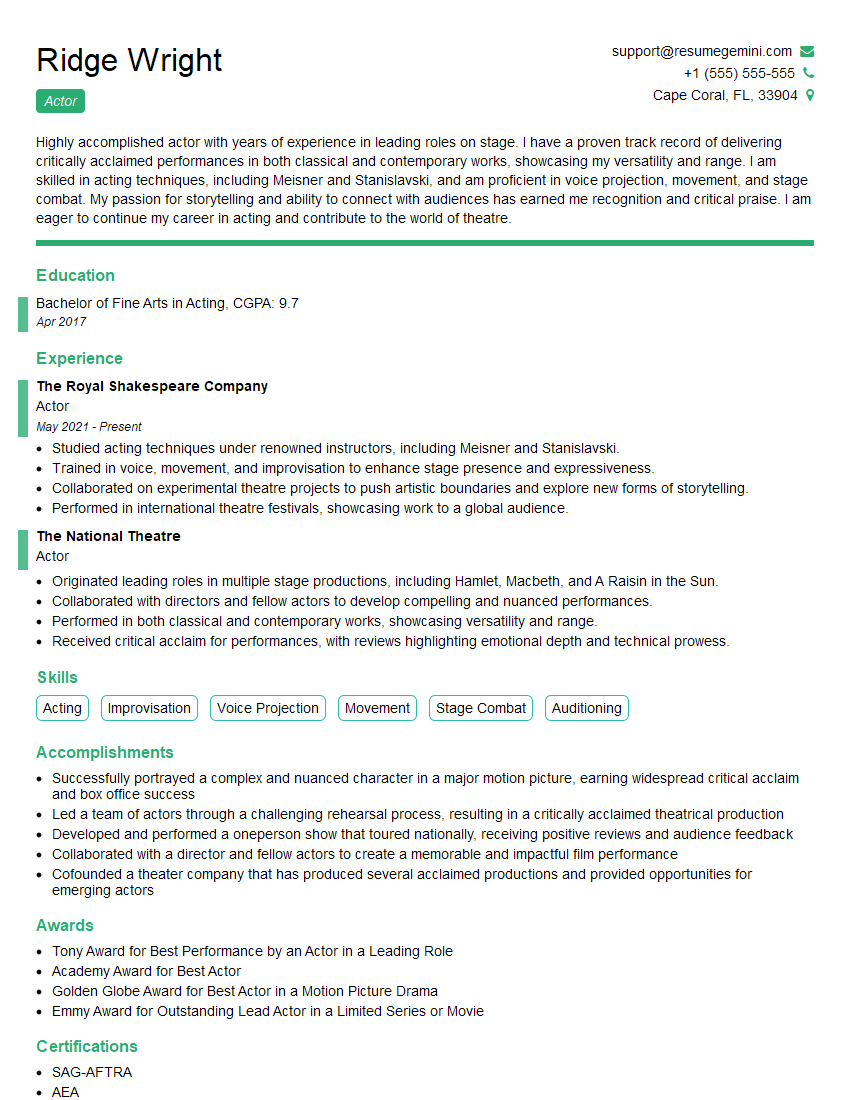
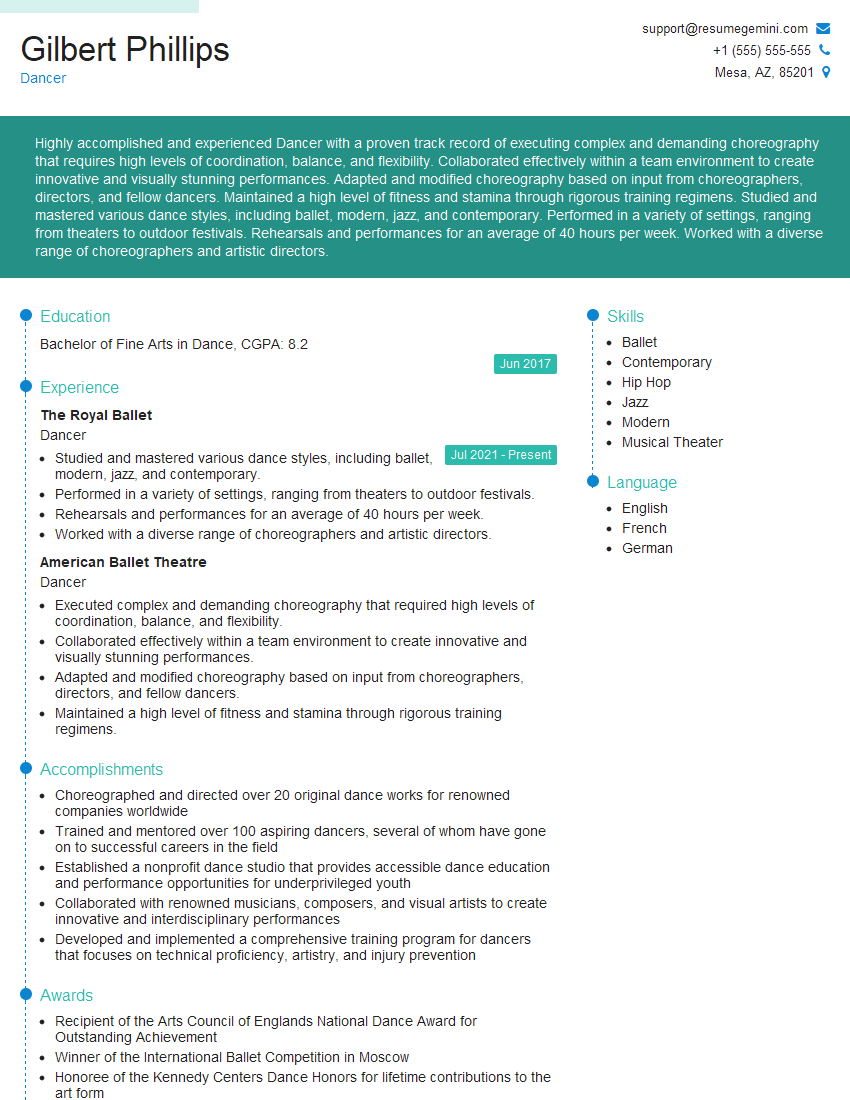
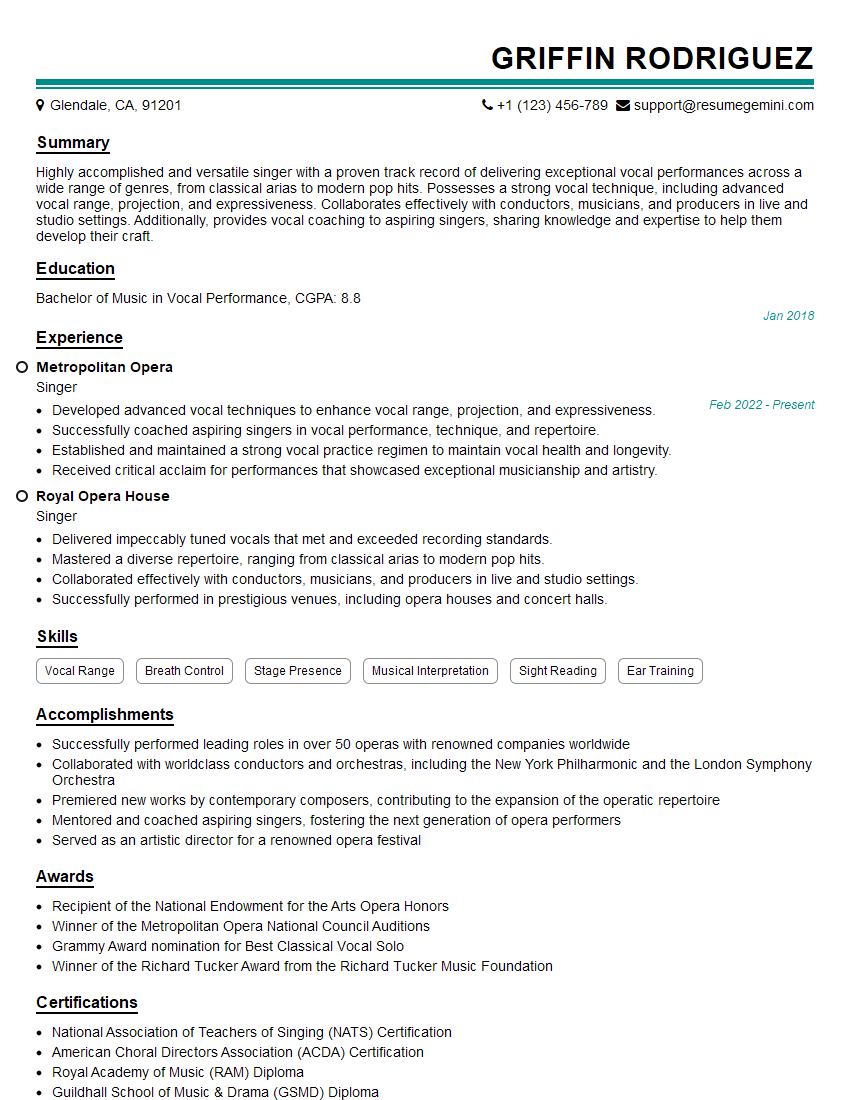
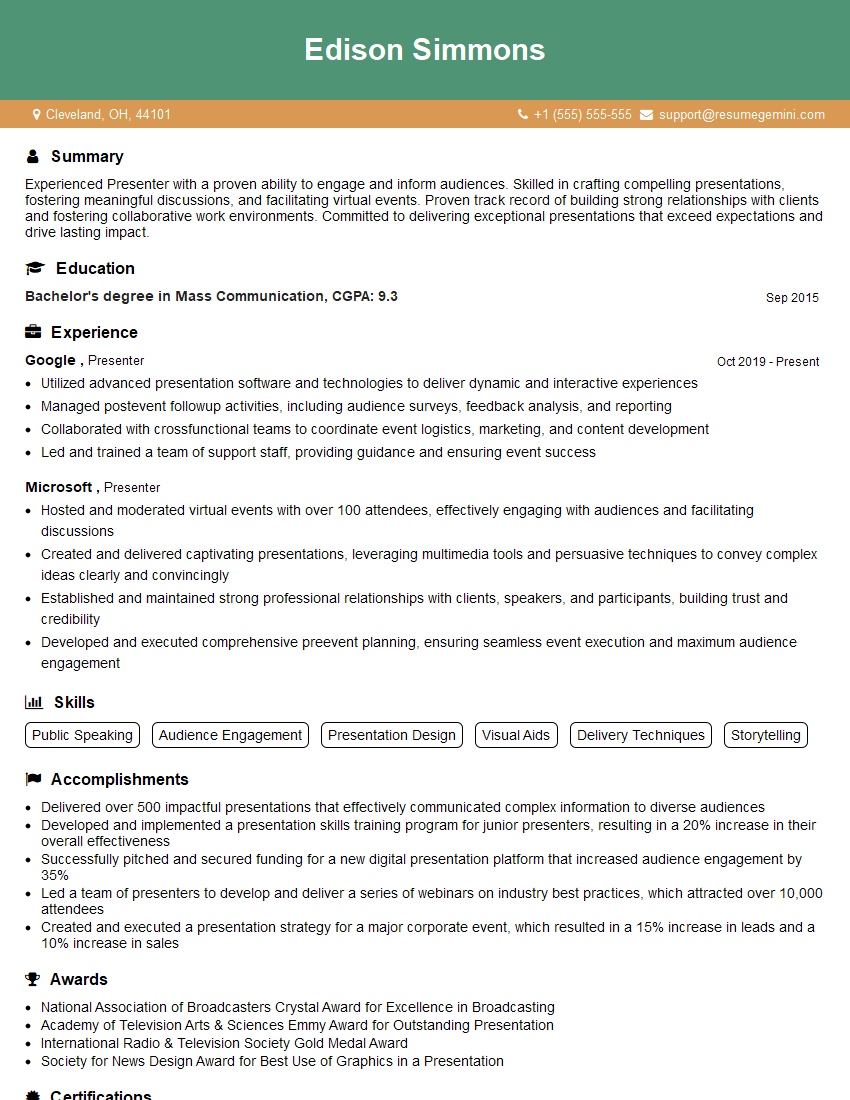
Mastering Lip-Sync Performance opens doors to exciting opportunities in entertainment, corporate events, and beyond. Your ability to captivate audiences and deliver a polished performance is highly valued. To maximize your job prospects, crafting an ATS-friendly resume is crucial. ResumeGemini is a trusted resource to help you build a professional resume that highlights your skills and experience effectively. Examples of resumes tailored to Lip-Sync Performance are available, showcasing how to best present your unique abilities to potential employers.
Explore more articles
Users Rating of Our Blogs
Share Your Experience
We value your feedback! Please rate our content and share your thoughts (optional).
What Readers Say About Our Blog
Very informative content, great job.
good