The thought of an interview can be nerve-wracking, but the right preparation can make all the difference. Explore this comprehensive guide to Load and Unload Timber interview questions and gain the confidence you need to showcase your abilities and secure the role.
Questions Asked in Load and Unload Timber Interview
Q 1. Describe your experience with different types of timber loading equipment.
My experience encompasses a wide range of timber loading equipment, from the most basic to highly specialized machinery. I’m proficient with forklifts of various capacities – from smaller, nimble units ideal for maneuvering in tight spaces to larger models capable of handling heavy timber packs. I’ve also worked extensively with loaders such as telescopic handlers and articulated loaders, which offer excellent reach and maneuverability for loading timber onto trucks or stacking in high piles. Furthermore, I’m familiar with crane operations, particularly the safe rigging and lifting of oversized or unusually shaped timber. Finally, I have experience using specialized grapple attachments, which significantly improve the speed and efficiency of handling bundles of timber. My experience isn’t just limited to operating these machines; I also have a solid understanding of their maintenance and safety protocols.
For example, in a previous role, we used telescopic handlers to load long, slender timber onto flatbed trailers, ensuring the load was evenly distributed to prevent shifting during transit. The reach of the handler allowed us to efficiently load the entire trailer without repositioning the truck. Another example is my expertise in using a crane to lift large, pre-fabricated timber structures, which required precise coordination and meticulous attention to safety procedures.
Q 2. Explain the safe operating procedures for a forklift in a timber yard.
Safe operation of a forklift in a timber yard requires strict adherence to established procedures. Before starting any operation, a thorough pre-operational check is crucial, inspecting tires, hydraulics, lights, and the load-carrying mechanism. The operator should always wear appropriate personal protective equipment (PPE), including safety boots, high-visibility clothing, and a hard hat. Operating speeds should be adjusted according to the environment and load; slow and steady movements are essential to prevent accidents. The load’s weight and center of gravity must be carefully considered. Overloading the forklift is strictly prohibited and is a major cause of accidents. The operator should always ensure the forks are properly positioned under the load, and the load is secured to prevent shifting or falling. When maneuvering the forklift, maintaining visibility is crucial. Awareness of surroundings, including other personnel and potential obstacles, is paramount. Lastly, never operate a forklift without the necessary training and certification.
Imagine this scenario: You’re loading a stack of heavy timber onto a truck. Before you even start the engine, you visually inspect the forklift, ensuring everything is in working order. You then carefully position the forks under the center of the timber stack, lift it slowly, and move to the truck, keeping a safe distance from other workers and avoiding any obstacles in the yard. You carefully position the load and set it down, ensuring it’s stable and won’t shift before moving on to the next load. This methodical approach, emphasizing safety and attention to detail, is crucial for preventing workplace accidents.
Q 3. How do you ensure the safe and efficient loading of timber onto trucks?
Safe and efficient timber loading hinges on several key elements. Firstly, it begins with a well-organized yard where timber is neatly stacked and readily accessible. Next, the appropriate loading equipment must be selected according to the type and size of the timber. Proper load securing is vital. This usually involves using straps, chains, or nets to prevent movement during transit. The load must be evenly distributed to maintain stability and prevent overloading the truck’s axle weight limits. Finally, a final inspection is crucial to ensure everything is properly secured before the truck leaves the yard. Documentation of the load, including weight and type of timber, is also an important step in ensuring compliance with regulations.
For example, when loading smaller dimensions of timber, I might choose to use a forklift, securing each layer with load straps. However, for longer, heavier pieces, a crane or a specialized grapple would be more appropriate. The ultimate goal is to efficiently maximize the truck’s capacity while adhering to safety standards and preventing damage to the timber.
Q 4. What are the different methods for unloading timber from trucks?
Unloading timber from trucks also employs various methods depending on factors like timber type, size, and the receiving area. The most common method is using a forklift to remove the timber from the truck, stacking it carefully in the designated storage area. For larger timber, cranes are frequently used for lifting and placing them precisely. Roll-off trailers allow for rapid unloading via a hydraulic tilting mechanism. In some cases, manual unloading might be necessary for smaller loads. Safety is always paramount, requiring appropriate personal protective equipment and careful coordination amongst the unloading crew.
Consider a situation where a truck carrying large logs arrives at the mill. A crane would be deployed to efficiently unload these logs, carefully placing them onto a designated pile. In contrast, a smaller truck delivering dimensional lumber would likely be unloaded using a forklift, stacking the packages in a organized manner.
Q 5. How do you identify and handle damaged or defective timber?
Identifying and handling damaged or defective timber is crucial to prevent further issues and maintain quality. Damaged timber often shows visible signs such as cracks, splits, insect infestation, or discoloration. Defective timber might have knots or other imperfections that affect its structural integrity. Proper identification is critical; damaged timber needs to be separated from sound timber to prevent contamination or accidents. It should be clearly marked and handled separately, potentially designated for a different use or disposal, depending on the extent of the damage. This prevents the use of compromised materials in construction or other applications.
For example, if a load of timber arrives with some pieces showing significant cracks, they would be immediately separated from the undamaged pieces. These damaged pieces would be marked clearly and set aside for either repair or disposal, ensuring they are not accidentally used in a project.
Q 6. Explain your understanding of timber stacking and storage techniques.
Efficient timber stacking and storage are crucial for maintaining timber quality and optimizing yard space. Proper stacking prevents damage and decay. It involves creating stable stacks with adequate ventilation to reduce the risk of rot or insect infestation. Stacks should be evenly distributed to prevent uneven pressure. The height and dimensions of the stacks should be determined by the timber type and the stability of the stacking method. Clear pathways must be maintained for safe movement of equipment and personnel. Finally, appropriate protective coverings can be employed in certain climatic conditions to shield the timber from the elements.
Think of it like building a brick wall. Each layer must be carefully laid, and the entire structure requires a stable base. Similarly, timber stacks need a firm base and each layer should be carefully positioned to prevent collapsing and ensure proper ventilation.
Q 7. Describe your experience with inventory management in a timber yard.
Inventory management in a timber yard requires accurate tracking of timber quantities, types, and grades. This is typically done using a combination of physical inventory checks and digital systems. Barcoding or RFID tagging can automate inventory tracking, providing real-time visibility of stock levels. This enables effective management of incoming and outgoing shipments and helps predict future demands. Regular inventory cycles are vital to account for any discrepancies or losses. Data analysis of inventory movement allows for informed decisions about purchasing, storage, and sales.
In a previous role, we used a barcoding system combined with a computerized inventory management software. This allowed us to precisely track every piece of timber, from the moment it arrived until it was sold. This resulted in minimized waste, streamlined operations, and optimized stock levels, leading to increased profitability.
Q 8. How do you maintain accurate records of timber loading and unloading?
Maintaining accurate records in timber loading and unloading is crucial for traceability, inventory management, and legal compliance. We employ a multi-faceted approach.
- Digital Weighbridge Integration: Our weighbridge system automatically records the weight of incoming and outgoing timber loads, generating a unique timestamped record. This data is instantly transferred to our central database.
- Barcoding and RFID Tracking: Each timber bundle or shipment is identified with a unique barcode or RFID tag. This allows for precise tracking throughout the entire process, from the forest to the final destination. This system eliminates manual entry errors and provides real-time inventory updates.
- Detailed Load Manifests: Before loading, we create detailed manifests specifying the timber species, quantity, dimensions, and destination. This document is signed by both the loading and receiving parties. Any discrepancies are noted, and the manifest becomes a critical part of the record. A copy is retained both digitally and physically.
- Regular Audits and Reconciliation: We conduct regular audits to compare physical inventory with digital records. This helps identify any potential discrepancies and allows for timely corrections. The reconciliation process ensures data integrity.
This layered approach ensures accuracy and provides a comprehensive audit trail, vital for resolving any disputes and maintaining efficient operations.
Q 9. What safety measures do you implement to prevent accidents during timber handling?
Safety is paramount in timber handling. We implement a robust safety program incorporating the following:
- Personal Protective Equipment (PPE): All personnel are required to wear appropriate PPE, including safety helmets, high-visibility clothing, safety boots, gloves, and eye protection. This is mandatory throughout the loading and unloading process.
- Safe Lifting Practices: We strictly adhere to safe lifting techniques using appropriate lifting equipment and ensuring proper load stabilization. Workers are trained regularly on the correct use of lifting equipment and load securing techniques to prevent strains and injuries.
- Regular Equipment Inspections: All lifting equipment (cranes, forklifts, etc.) is inspected regularly to ensure its safe operating condition. We maintain detailed inspection records, and any faulty equipment is immediately removed from service.
- Designated Loading Zones: Clearly marked and designated loading and unloading zones minimize congestion and the risk of accidents. We ensure clear signage and traffic management strategies, particularly in busy areas.
- Risk Assessments and Method Statements: We conduct thorough risk assessments before commencing any loading or unloading operation, identifying potential hazards and developing appropriate control measures. Detailed method statements outline the safe procedures to be followed.
- Emergency Response Plan: A comprehensive emergency response plan is in place, ensuring swift and efficient response to any accidents or incidents. This includes emergency contact numbers and designated first-aid personnel.
Safety training is continuous and mandatory. We conduct regular safety briefings, focusing on specific hazards and best practices. Our commitment to safety is unwavering and forms the cornerstone of our operations.
Q 10. How do you handle different timber species and their specific handling requirements?
Different timber species have unique properties impacting their handling. For example, some species are more brittle than others, requiring extra care during loading and unloading to prevent breakage.
- Moisture Content: Higher moisture content timber is heavier and more prone to damage. We adjust our handling procedures accordingly, using gentler loading techniques and ensuring adequate support to prevent warping or cracking.
- Density and Strength: We consider the density and strength properties of each species when determining the appropriate lifting equipment and securing methods. Heavier, denser timber necessitates stronger straps and more secure fastening.
- Species-Specific Handling Instructions: We maintain a comprehensive database of handling instructions for various timber species, outlining specific precautions and best practices. This information guides our team in safely managing each type of timber.
- Segregation and Protection: We segregate different species to prevent cross-contamination and potential damage. We use protective materials, such as dunnage, to prevent abrasion or damage during transit.
For instance, handling delicate hardwoods like mahogany requires significantly different techniques compared to handling robust softwoods like pine. Our expertise ensures that each species is treated with the care and attention it needs, minimizing losses and maintaining quality.
Q 11. Describe your experience with using load straps and chains for securing timber loads.
Load straps and chains are essential for securing timber loads. Proper use is crucial for safety and preventing damage during transport.
- Selection of Straps and Chains: We select straps and chains based on the timber’s weight, dimensions, and species. The strength rating of the securing equipment must exceed the load’s weight. We always use equipment certified to the relevant safety standards.
- Proper Tensioning: The straps and chains must be tensioned appropriately to prevent slippage or shifting during transport. We use tensioning devices to ensure even distribution of the load and prevent damage.
- Secure Attachment Points: We ensure that the straps and chains are attached securely to both the timber load and the transport vehicle, using appropriate fastening points and avoiding sharp edges. We avoid over-tightening to prevent damage to the timber.
- Regular Inspections: Before each use, we visually inspect the straps and chains for any signs of wear, tear, or damage. Damaged equipment is immediately replaced.
- Safe Working Load (SWL): We always remain mindful of the safe working load (SWL) of the straps and chains. Never exceeding the SWL is crucial for preventing equipment failure.
Incorrect use can lead to load shifting, damage to the timber, and serious safety hazards. We prioritize proper training and regular supervision to guarantee safe and efficient securing practices.
Q 12. What is your experience with using different types of lifting equipment?
My experience encompasses a wide range of lifting equipment, including:
- Forklifts: Used extensively for loading and unloading timber onto and off trucks and trailers. We use forklifts of appropriate lifting capacity to prevent overloading and damage.
- Overhead Cranes: Essential for handling heavier and larger timber loads. Our operators are highly skilled and certified in operating these cranes safely and efficiently.
- Mobile Cranes: Used for lifting and positioning exceptionally large timber loads. These are typically employed in specialized projects or situations requiring higher lifting capacity.
- Loader Cranes (on trucks): These integrated cranes offer efficient loading and unloading directly from the transport vehicle, reducing handling time and improving efficiency.
- Mechanical Grapples: We utilize these for more efficient handling and movement of stacked timber. They minimize manual handling and improve safety by reducing strain on operators.
For each piece of equipment, we adhere strictly to manufacturer’s operating instructions and safety guidelines. Regular maintenance and operator training are critical for safe and efficient operation.
Q 13. How do you assess the weight and stability of timber loads?
Assessing the weight and stability of timber loads is crucial for safe handling and transport. We use a combination of methods:
- Weighbridges: Precise measurement of the total load weight using certified weighbridges. This ensures the vehicle’s weight capacity is not exceeded.
- Volume Calculation: For irregular loads, we calculate volume using standard measurement techniques and then estimate weight based on the timber species and density. This method is supplemented by weighbridge measurements where possible.
- Load Distribution: We ensure even weight distribution across the transport vehicle to maintain stability and prevent overloading of any single axle. We strategically arrange the timber to achieve this.
- Visual Inspection: Experienced personnel visually inspect the load to check for any signs of instability, such as uneven stacking or protruding pieces. Any potential hazards are immediately addressed.
- Load Securing Assessment: We verify that the load securing devices are correctly installed and effectively restraining the timber, preventing movement during transit. We check for sufficient tension and proper attachment points.
By combining these methods, we ensure that the timber load is both within the vehicle’s capacity and safely secured, minimizing the risk of accidents or damage during transit.
Q 14. Describe your experience working with different types of timber transport vehicles.
My experience encompasses various timber transport vehicles, each with specific requirements:
- Flatbed Trailers: Common for transporting long lengths of timber. Securing methods need to account for the length and weight, employing effective lashing and bracing techniques.
- Articulated Lorries: Used for bulk transport, requiring careful weight distribution to ensure stability and avoid exceeding axle weight limits. Load distribution is paramount.
- Containerized Transport: Suitable for smaller timber bundles or processed timber, requiring careful stacking and securing within the container to prevent shifting during transport.
- Specialized Timber Carriers: These vehicles, equipped with features such as hydraulic lifting systems or specialized load-securing mechanisms, maximize efficiency and safety for specific types of timber transport.
The selection of transport vehicle depends heavily on the type, quantity, and destination of the timber. Understanding the unique characteristics of each vehicle and its safe operating limits is essential for efficient and safe timber transportation.
Q 15. How do you deal with unexpected delays or challenges during timber loading/unloading?
Unexpected delays in timber loading and unloading are inevitable. My approach is proactive and multi-faceted. First, I assess the nature of the delay. Is it due to equipment malfunction, weather conditions, logistical issues (e.g., late arrival of trucks), or unforeseen damage to the timber? Once identified, I implement a solution tailored to the specific problem.
- Equipment Malfunction: If a loader breaks down, I immediately initiate the reporting procedure and contact maintenance. In the meantime, I might re-allocate tasks to other crew members to minimize downtime, perhaps focusing on tasks that don’t require the faulty equipment.
- Weather Conditions: Heavy rain or snow can halt operations. In these cases, we prioritize safety. Work may be temporarily suspended until conditions improve, or we may utilize covered areas or implement alternative loading/unloading methods if feasible.
- Logistical Issues: Late truck arrivals can be mitigated through effective communication with dispatchers and drivers. We might adjust the loading schedule to accommodate delays, ensuring a smooth flow as soon as the trucks arrive.
- Damaged Timber: Damaged timber requires careful handling to avoid further injury or delays. We prioritize separating the damaged timber and reporting it to supervisors. We may also need to adjust our loading strategy to accommodate the damaged loads.
Throughout the process, I maintain open communication with supervisors and colleagues, keeping them updated on the situation and any adjustments made to the plan. This ensures transparency and collaboration to minimize the impact of the delay.
Career Expert Tips:
- Ace those interviews! Prepare effectively by reviewing the Top 50 Most Common Interview Questions on ResumeGemini.
- Navigate your job search with confidence! Explore a wide range of Career Tips on ResumeGemini. Learn about common challenges and recommendations to overcome them.
- Craft the perfect resume! Master the Art of Resume Writing with ResumeGemini’s guide. Showcase your unique qualifications and achievements effectively.
- Don’t miss out on holiday savings! Build your dream resume with ResumeGemini’s ATS optimized templates.
Q 16. What are your strategies for maximizing efficiency during timber handling?
Maximizing efficiency in timber handling involves careful planning, optimized processes, and skilled teamwork. My strategies focus on several key areas:
- Pre-Planning and Organization: Efficient loading begins long before the first log is moved. This includes thorough assessment of the timber, its type, size and condition, and the available loading space. A well-organized staging area, with timber sorted by size and type, drastically reduces handling time.
- Optimized Equipment Usage: Choosing the right equipment for the job is crucial. Using a grapple loader for large logs and smaller equipment for smaller pieces saves time and avoids unnecessary maneuvering. Regular maintenance ensures the equipment operates at peak performance.
- Effective Crew Coordination: A well-coordinated team is essential. Clear communication and assigned roles (e.g., one person operates the loader, others secure the load) minimizes confusion and maximizes productivity. Training and clear work instructions are key for efficiency.
- Minimizing Wasted Movement: Planning the loading sequence to minimize wasted movement for both equipment and personnel is critical. This includes optimizing the path of the loader and the placement of the logs to reduce unnecessary travel.
- Technology Integration: Using technology, like loading optimization software, can help to visualize and plan efficient load patterns, further reducing time and potential damage.
For example, on one project, we implemented a new stacking method that reduced the loading time by 15% compared to our previous approach.
Q 17. How do you communicate effectively with colleagues and supervisors during timber operations?
Effective communication is the backbone of safe and efficient timber operations. I use a combination of methods to ensure everyone is informed and understands their responsibilities.
- Pre-shift briefings: Before commencing any operation, I participate in briefings to discuss the day’s tasks, potential hazards, and any changes in the work plan. This ensures everyone is on the same page.
- Clear and concise instructions: When directing colleagues, I provide clear, concise instructions, avoiding jargon and ensuring everyone understands the task. Visual aids or demonstrations can also be helpful.
- Regular updates to supervisors: I regularly update my supervisors on progress, challenges, and any safety concerns. This proactive approach ensures timely interventions and avoids potential problems from escalating.
- Open communication channels: I maintain open communication channels with my colleagues, encouraging them to voice concerns or suggest improvements. This fosters a collaborative environment and ensures everyone feels comfortable raising potential safety risks.
- Non-verbal cues: Effective non-verbal communication plays an essential role, especially in noisy environments. Using hand signals and clear visual cues assists in coordination and safety.
For instance, when facing a complex loading scenario, I used diagrams to explain the optimal sequence to my team, resulting in faster and safer loading.
Q 18. Describe a time you had to resolve a problem related to timber loading or unloading.
During the unloading of a shipment of logs, we encountered a problem with a load that was improperly secured. Several logs shifted during transit, creating an unstable and potentially dangerous situation.
My first step was to immediately halt the unloading process and assess the situation. I ensured the area was secured and no one was in danger. Then, I collaborated with the crane operator and other team members to develop a plan for safely removing the unsecured logs. This involved carefully repositioning the unstable logs, ensuring they were properly secured before continuing the unloading process.
We carefully documented the incident, noting the cause (inadequate securing of the initial load) and the steps taken to rectify the situation. This information was then shared with supervisors and the transportation team to prevent similar incidents in the future. The issue highlighted the importance of thorough load securing procedures, which were reviewed and reinforced across the team.
Q 19. How do you ensure compliance with all safety regulations and company policies?
Ensuring compliance with all safety regulations and company policies is paramount. My approach is based on a combination of understanding, adherence, and proactive engagement.
- Thorough knowledge of regulations: I maintain up-to-date knowledge of all relevant safety regulations, including those related to the use of machinery, personal protective equipment (PPE), and safe working practices. Regular training and refreshers are essential.
- Strict adherence to procedures: I strictly adhere to all company policies and safety protocols, including pre-start checks, wearing appropriate PPE, and following established procedures for loading and unloading operations.
- Proactive risk assessment: I actively participate in and contribute to risk assessments, identifying and mitigating potential hazards before they escalate. This includes reporting any unsafe conditions or practices immediately.
- Safe working practices: I always prioritize safe working practices, ensuring colleagues are aware of hazards and following safe procedures. I don’t hesitate to stop work if safety concerns arise.
- Reporting and record-keeping: I meticulously maintain accurate records and reports of all safety incidents, near misses, and corrective actions. This data contributes to continuous improvement in safety practices.
For example, if I notice a colleague not wearing appropriate safety gear, I address this promptly, reminding them of the company’s policies and ensuring they have the necessary equipment. This proactive approach minimizes risks and fosters a culture of safety.
Q 20. Describe your experience with preventative maintenance of timber handling equipment.
Preventative maintenance is crucial to avoid costly downtime and ensure safe operation of timber handling equipment. My experience involves a multi-faceted approach.
- Regular inspections: I perform regular daily and weekly inspections of the equipment, checking for wear and tear, leaks, loose components, and any signs of damage. These inspections are meticulously documented.
- Scheduled maintenance: I adhere to the manufacturer’s recommended schedule for routine maintenance, including lubrication, filter changes, and fluid checks. This proactive approach helps prevent major breakdowns.
- Reporting issues promptly: I immediately report any issues or concerns, no matter how minor, to the maintenance team. This ensures that problems are addressed before they escalate into more serious issues.
- Cleanliness and storage: Maintaining the equipment in a clean and organized state is essential for preventing premature wear and tear. Proper storage also protects equipment from damage.
- Operator training: Proper operator training is also crucial. Operators who are trained to understand and perform basic maintenance tasks can identify issues earlier and contribute to overall equipment health.
For example, during a routine inspection, I noticed a leak in a hydraulic hose. Reporting this immediately prevented a potential major hydraulic failure and costly repair.
Q 21. What are the common hazards associated with timber handling, and how do you mitigate them?
Timber handling presents several significant hazards. Understanding these hazards and implementing effective mitigation strategies is paramount.
- Falling logs: Falling logs pose a significant risk of serious injury or fatality. Mitigation strategies include proper log stacking and securing techniques, using safety barriers, and ensuring sufficient space around the operation.
- Crushing injuries: Heavy machinery and logs can cause crushing injuries. Safe operating procedures, use of appropriate PPE (e.g., steel-toe boots, hard hats), and adherence to safety zones significantly reduce this risk.
- Sharp objects: Logs often have sharp edges, splinters, and protruding nails. Gloves, protective clothing, and careful handling minimize cuts and punctures.
- Entanglement: Loose clothing or hair can become entangled in machinery. Appropriate attire (e.g., tucked-in clothing, long hair tied back) reduces this risk.
- Equipment malfunction: Mechanical failures can lead to accidents. Regular preventative maintenance and prompt reporting of issues are essential.
- Environmental hazards: Weather conditions (rain, snow, ice) can make the work environment slippery and dangerous. Appropriate precautions and temporary suspensions of work are vital.
We implement comprehensive safety training that covers all of these hazards, emphasizing the importance of risk assessment and the use of proper PPE and procedures. Regular safety briefings reinforce these key safety concepts.
Q 22. How do you conduct pre-shift inspections of timber handling equipment?
Pre-shift inspections of timber handling equipment are crucial for safety and operational efficiency. Think of it like a pre-flight check for an airplane – you wouldn’t take off without one! My inspection process involves a systematic check of all vital components. This includes:
- Visual Inspection: Checking for any visible damage to the equipment, such as cracks, leaks, or loose bolts on the forklift, crane, or any attachments. I pay close attention to the tires, hydraulics, and lifting mechanisms.
- Functional Check: Testing all operational functions. This means verifying the smooth operation of the steering, brakes, lift mechanisms, and any specialized attachments (e.g., grapple, rotating clamp). I always test the emergency stops and safety features.
- Fluid Levels: Checking and topping off hydraulic fluid and engine oil as needed. Low fluid levels can lead to equipment failure and safety hazards.
- Documentation: Completing a pre-shift inspection checklist to document the findings and ensure all issues are addressed before operation. This checklist becomes a vital record for maintenance and safety reporting.
For example, during one inspection, I noticed a small hydraulic leak on a forklift. Addressing this minor issue immediately prevented a potential major breakdown later, saving time and resources. A proactive approach to pre-shift inspections is key to preventing accidents and ensuring smooth operations.
Q 23. What are the different types of timber defects, and how do they affect handling?
Timber defects significantly impact handling and safety. Identifying them is crucial to avoid damage and accidents. Common defects include:
- Knots: These are branches embedded in the wood. Large knots can weaken the timber, making it prone to breakage during lifting and stacking.
- Splits and Checks: These are cracks or separations in the wood, reducing its strength and stability. They can easily worsen during handling.
- Decay: Rotting wood is extremely weak and unreliable. It poses significant safety risks as it may break unexpectedly.
- Insect infestation: Infested timber can be significantly weakened and may crumble during handling.
- Warping and Bending: Irregular shapes make it difficult to handle timber safely and can lead to unstable stacks.
The way these defects affect handling depends on their severity and location. For instance, a small knot might not pose a problem, but a large, loose knot in a piece of timber being lifted could cause it to snap. I always inspect the timber carefully before handling, rejecting any significantly defective pieces to avoid accidents and ensure load stability.
Q 24. Explain your understanding of load capacity and weight distribution.
Load capacity refers to the maximum weight a piece of equipment, such as a forklift or crane, can safely lift. Weight distribution is how that weight is balanced across the load-bearing surfaces of the equipment. Understanding both is paramount for safe timber handling. Imagine trying to lift a heavy box – if the weight isn’t distributed evenly, you’ll risk tipping over. The same principle applies to timber handling.
Load capacity is specified by the manufacturer and must never be exceeded. Weight distribution is influenced by factors such as the type of timber, its dimensions, and how it’s loaded onto the equipment. Proper weight distribution is achieved by ensuring the load’s center of gravity is as close as possible to the equipment’s center of gravity. Improper weight distribution can lead to overloading, equipment instability, and accidents. Before lifting any load, I always check both the load capacity and ensure proper weight distribution to guarantee safe operation.
Q 25. How do you ensure the stability of stacked timber to prevent collapse?
Preventing timber stack collapse requires careful planning and execution. Think of it like building a house of cards – each layer needs to be supported correctly. My approach includes:
- Stable Base: Ensuring a level and firm foundation for the stack. An uneven surface can lead to instability.
- Proper Layering: Alternating the orientation of the timber layers to interlock and create a more stable structure. Imagine laying bricks – alternating them creates a stronger bond.
- Avoiding Overhanging Loads: Ensuring that the timber in each layer is evenly distributed and does not overhang excessively. Overhanging loads shift the center of gravity, making the stack unstable.
- Suitable Timber: Using straight, undamaged timber with consistent dimensions. Damaged timber is much more likely to cause problems.
- Appropriate Stack Height: Restricting the height of the stack to avoid exceeding the capacity of the base and creating an unstable structure.
For example, in a recent project, we were stacking long, heavy timber. To ensure stability, we used shorter timber as a base, created a sturdy layered structure, and regularly checked for any potential issues.
Q 26. Describe your experience with using load indicators and load measuring devices.
Load indicators and load measuring devices are essential tools for safe timber handling. They provide real-time information about the weight of the load, preventing overloading and promoting safety. I have extensive experience using various types, including:
- Load cells: These are integrated into the lifting mechanism and directly measure the weight. They provide an accurate reading displayed on a digital gauge.
- Load pins: These are installed in the lifting system and measure the load by measuring the strain on the pin.
- Indicator systems: These systems combine load cells or pins with a visual and/or audible warning system to alert the operator if the load exceeds the safe limit.
These devices greatly improve safety by providing immediate feedback on the weight of the load and preventing accidental overloading. I rely heavily on this data to ensure every lift is performed within the safe operational limits of the equipment.
Q 27. How do you adapt your loading/unloading techniques to different weather conditions?
Weather conditions significantly affect timber handling. Adapting to these conditions is crucial for safety and efficiency.
- Rain: Wet timber is heavier and more slippery, increasing the risk of accidents. I would reduce the load size and proceed with extra caution, using additional securing measures like straps.
- Wind: Strong winds can cause unstable loads to sway or even topple. Extra care is needed to avoid lifting in high winds, and securing measures should be enhanced.
- Snow and Ice: These conditions make the ground slippery and reduce visibility. The risk of slips and falls is increased and careful handling is required.
- Extreme Temperatures: Extreme heat or cold can affect the timber’s properties, potentially making it more brittle or prone to cracking. Careful consideration of these factors is required.
I always assess the weather conditions before commencing any lifting operations and adjust my techniques accordingly. Safety is paramount, and adapting to weather conditions is a crucial aspect of this.
Q 28. What is your experience with using specialized timber handling attachments for forklifts or cranes?
Specialized timber handling attachments significantly improve efficiency and safety. My experience includes working with:
- Grapples: These are hydraulically powered attachments that allow for the efficient picking up and handling of timber bundles. They reduce the manual handling required and improve efficiency.
- Rotating clamps: These attachments provide a secure grip and the ability to rotate the timber, enabling more precise placement.
- Carriage clamps: These are designed to securely hold large stacks of timber in a single grab.
- Forklift extensions: These add to the reach and capacity of the forklift, enabling the handling of longer timber lengths.
These specialized attachments are incredibly valuable, enhancing efficiency, minimizing manual handling risks, and enabling the safe movement of timber in various shapes and sizes. The choice of attachment is determined by the specific characteristics of the timber being handled.
Key Topics to Learn for Load and Unload Timber Interview
- Safety Procedures and Regulations: Understanding and adhering to all relevant safety protocols, including proper lifting techniques, use of personal protective equipment (PPE), and hazard identification.
- Timber Handling Techniques: Practical knowledge of different timber types, their handling requirements (e.g., avoiding damage, preventing breakage), and safe loading/unloading methods for various sizes and weights.
- Equipment Operation and Maintenance: Familiarity with machinery used in timber loading and unloading (forklifts, cranes, loaders) including basic operation, safety checks, and recognizing signs of malfunction.
- Logistics and Inventory Management: Understanding the flow of timber from delivery to storage, inventory tracking, and efficient organization within a warehouse or yard.
- Load Securing and Transportation: Knowledge of proper techniques for securing loads to prevent shifting or damage during transport, adhering to weight limits and regulations.
- Problem-solving and Troubleshooting: Ability to identify and resolve potential issues during loading and unloading, such as damaged timber, equipment malfunctions, or logistical challenges. This includes quick thinking and effective communication with supervisors.
- Environmental Considerations: Understanding environmental best practices related to timber handling, such as minimizing waste and preventing soil erosion.
Next Steps
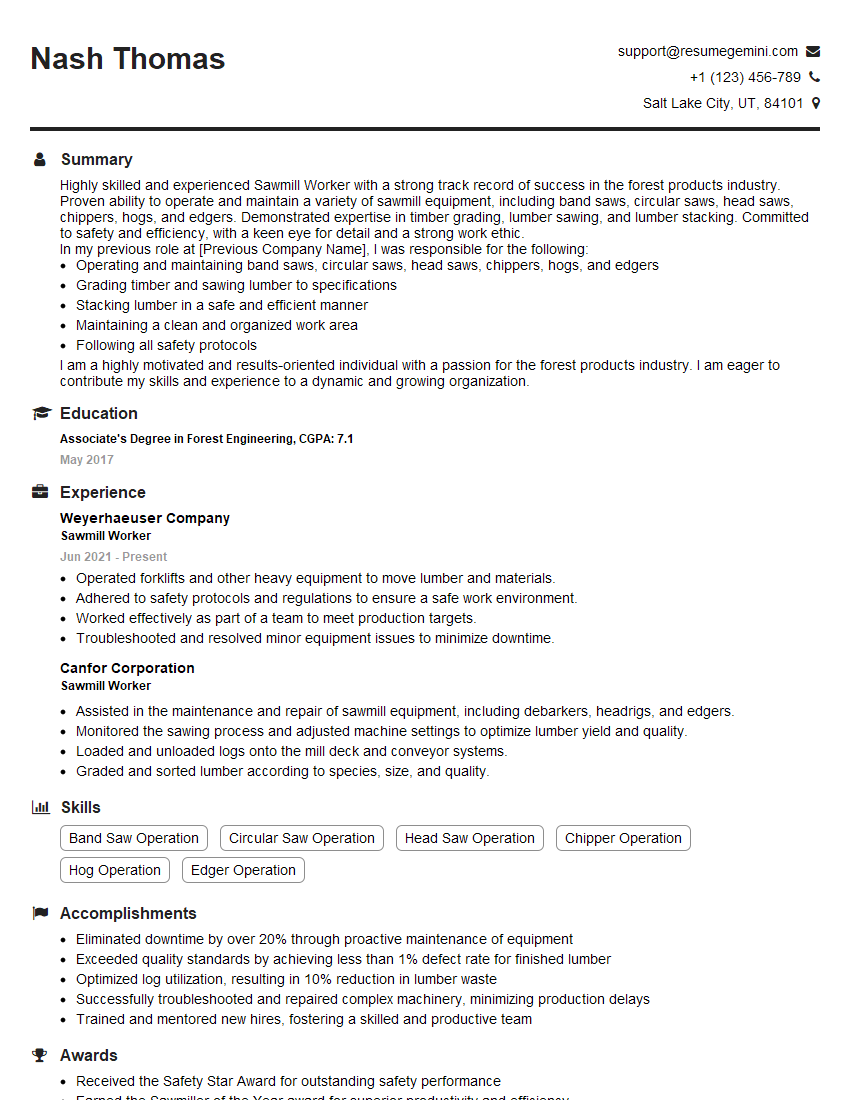
Mastering the skills involved in loading and unloading timber opens doors to a rewarding career with opportunities for advancement and specialization. A strong understanding of safety, efficiency, and logistics will significantly enhance your job prospects. To make the most of your job search, creating an ATS-friendly resume is crucial. ResumeGemini is a trusted resource that can help you build a professional and effective resume tailored to highlight your skills and experience. Examples of resumes tailored to the Load and Unload Timber industry are available, further enhancing your application’s impact. Invest in your career success by crafting a standout resume – it’s your first impression with potential employers.

Explore more articles
Users Rating of Our Blogs
Share Your Experience
We value your feedback! Please rate our content and share your thoughts (optional).
What Readers Say About Our Blog
Very informative content, great job.
good